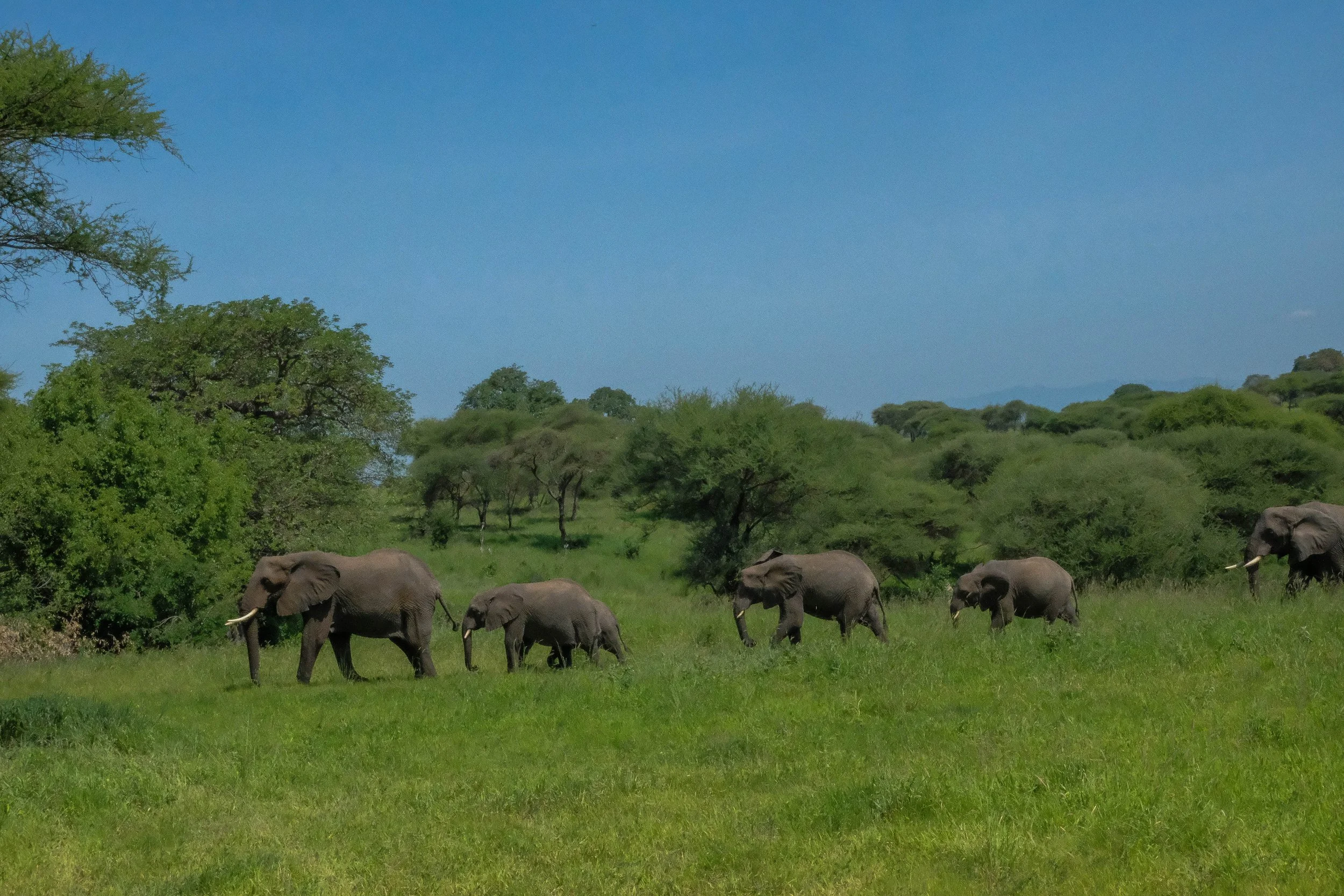
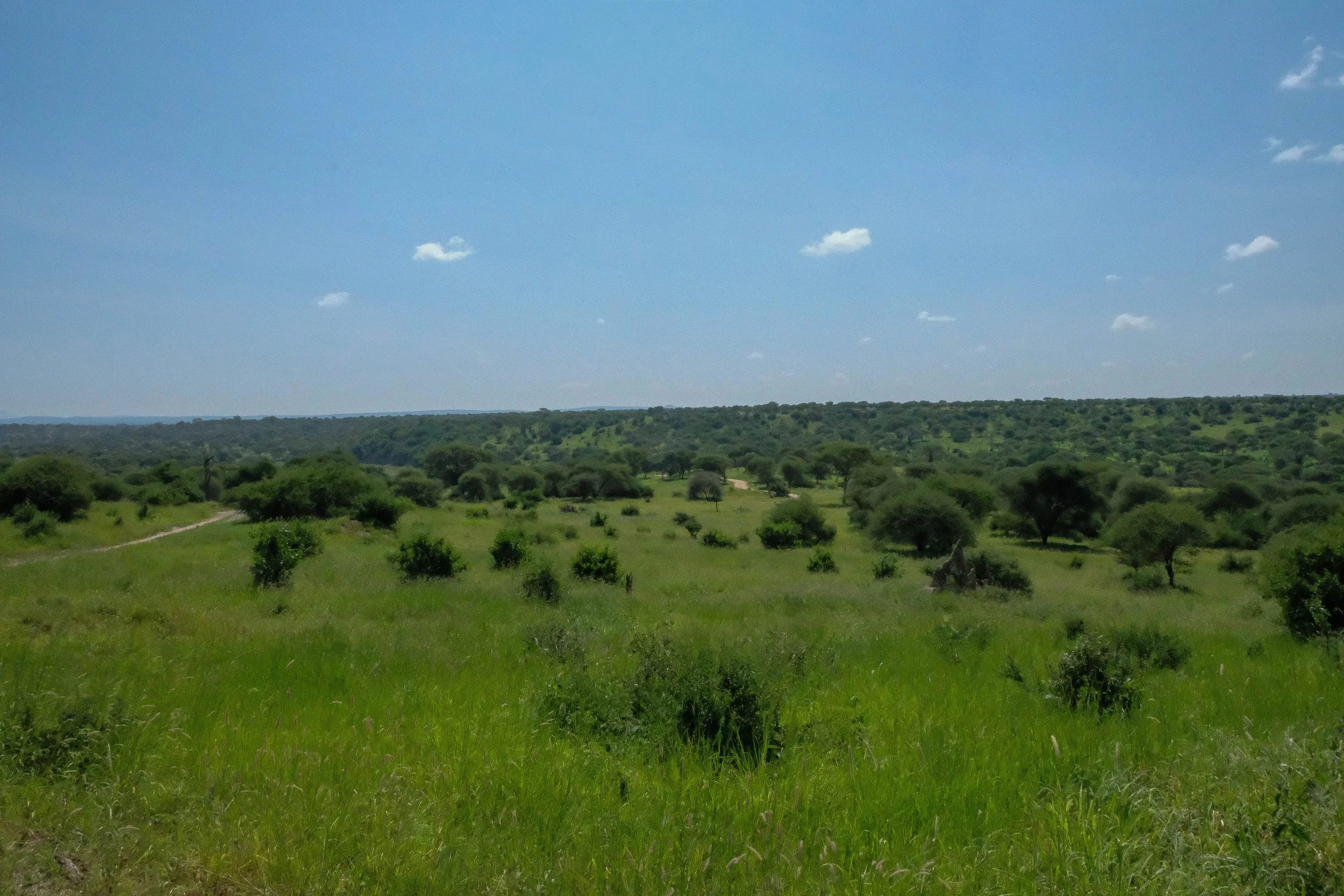
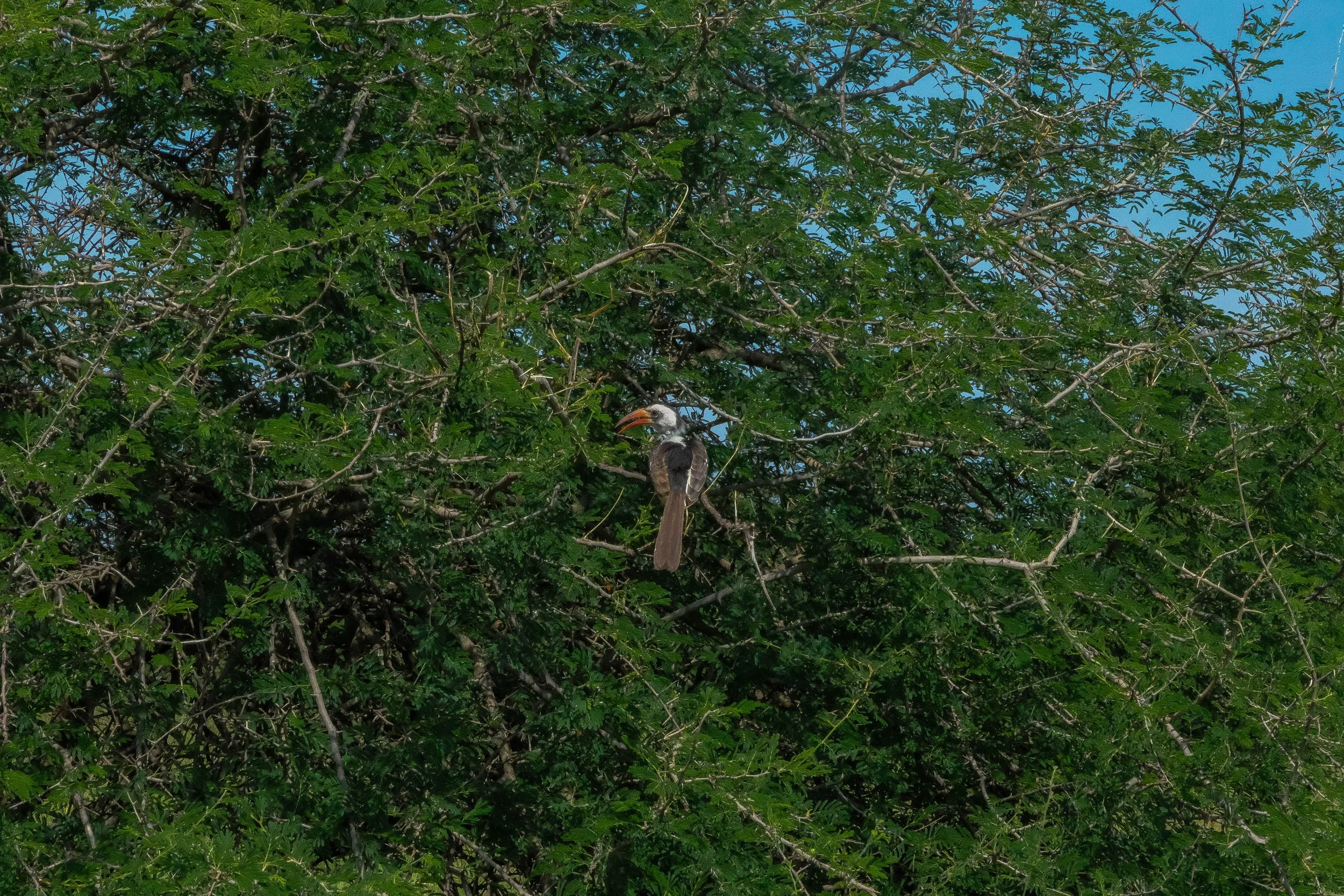
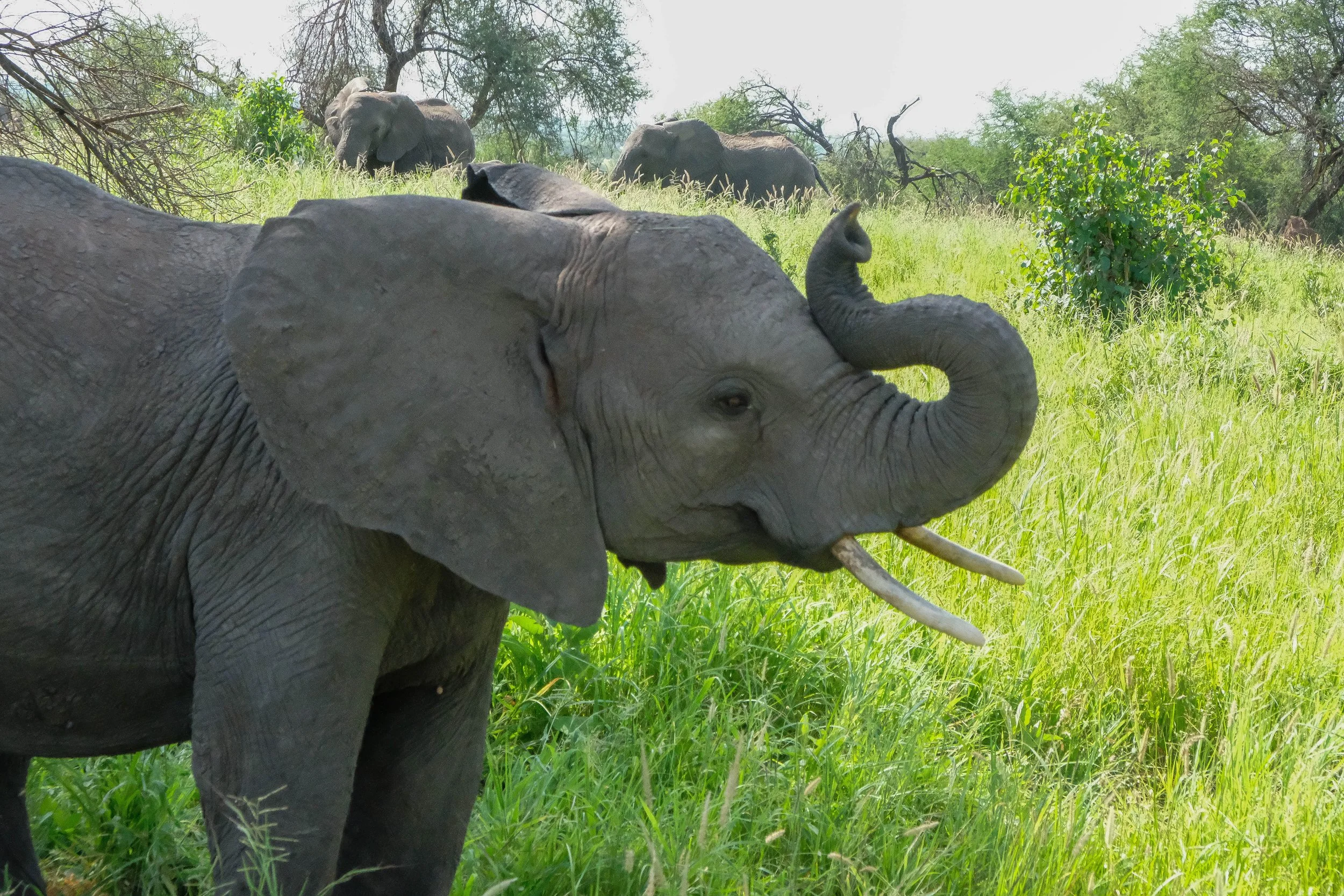
Tanzania
Lemosho Route in Kilimanjaro National Park | December 2023
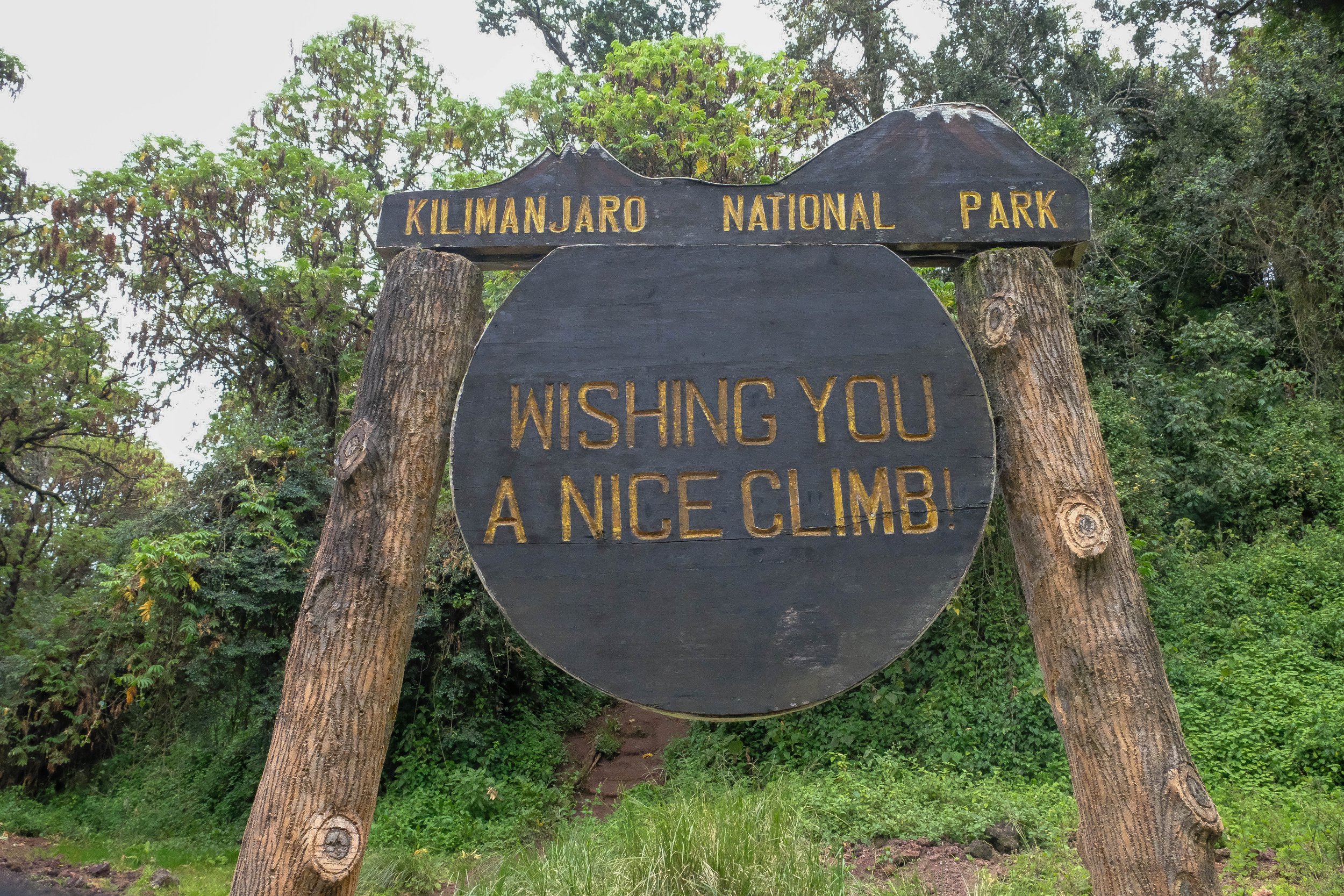
Day 1: Lemosho Gate to Forest Camp | 3.7 miles | 7,500 ft - 8,695 ft
December 20 dawned with our dear friends safely arrived in Tanzania, our bags packed and ready, and a big bus pulled up in front of the hotel to carry us and the rest of our team to the Lemosho Trailhead. The landscape slowly morphed from city to village to rolling agricultural hills. Potatoes and carrots grew out of the rich soil in large fields and I spotted our first black and white colobus monkey (which we henceforth referred to as “skunk monkeys” due to their fur which resembled skunks) in the trees.
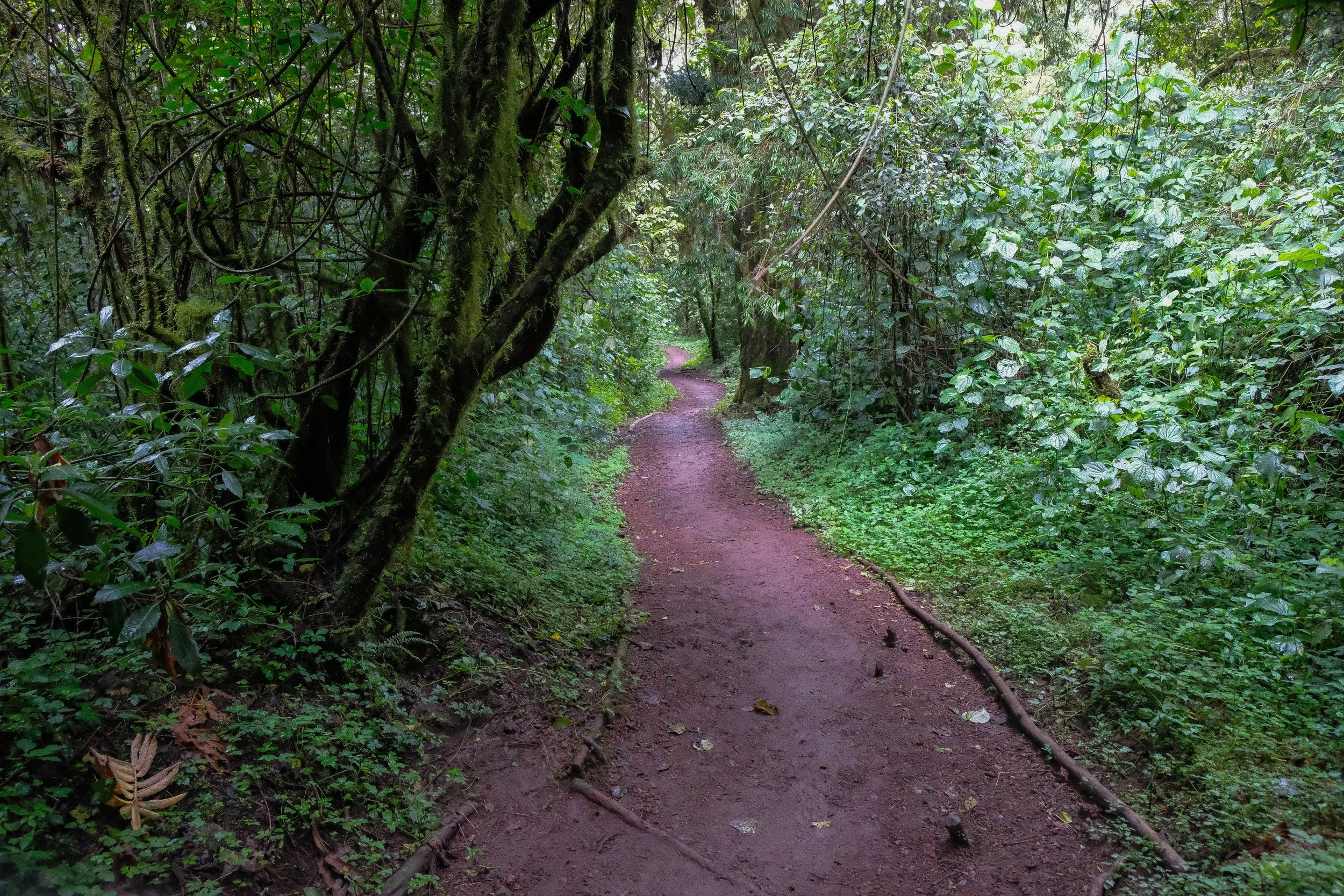
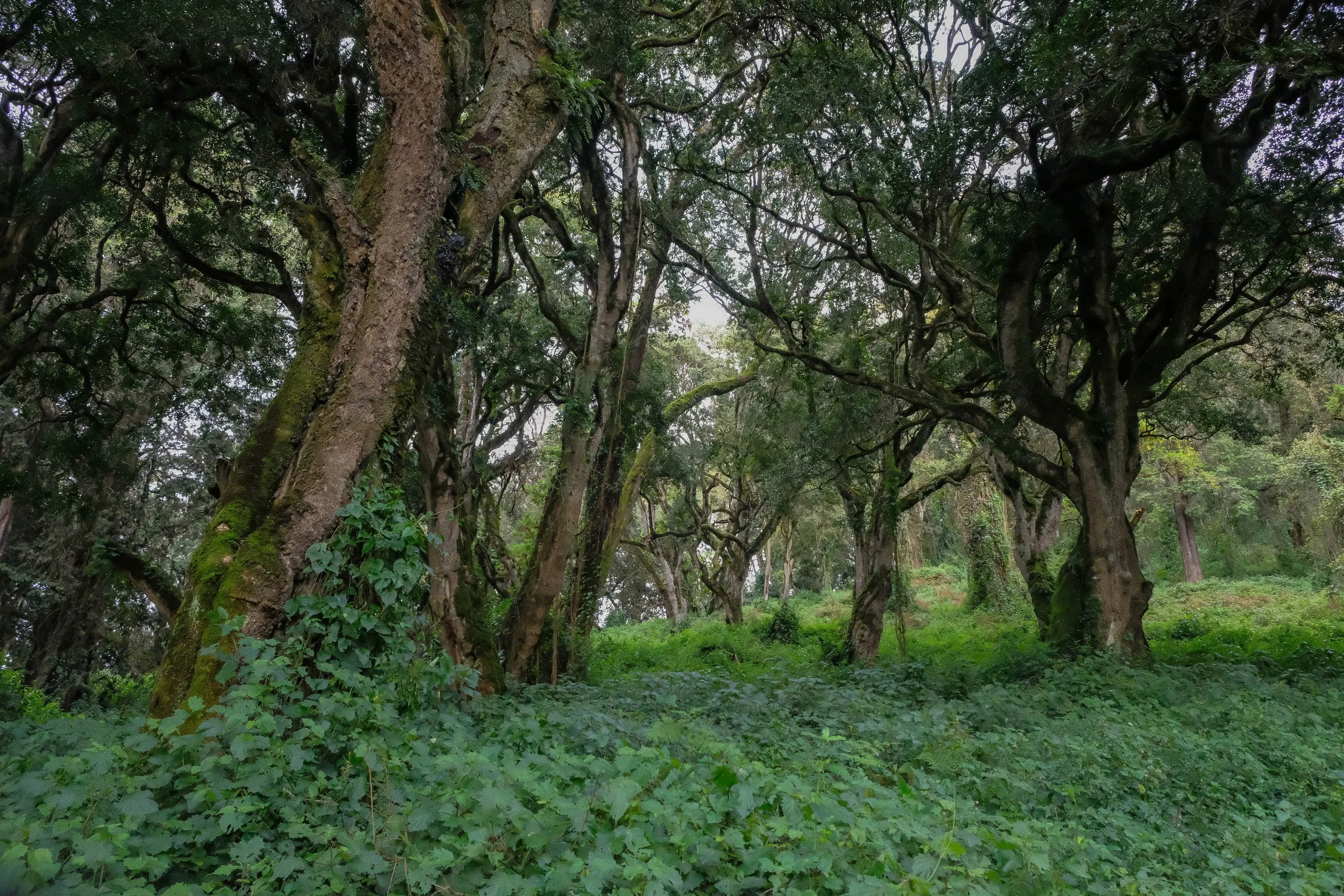
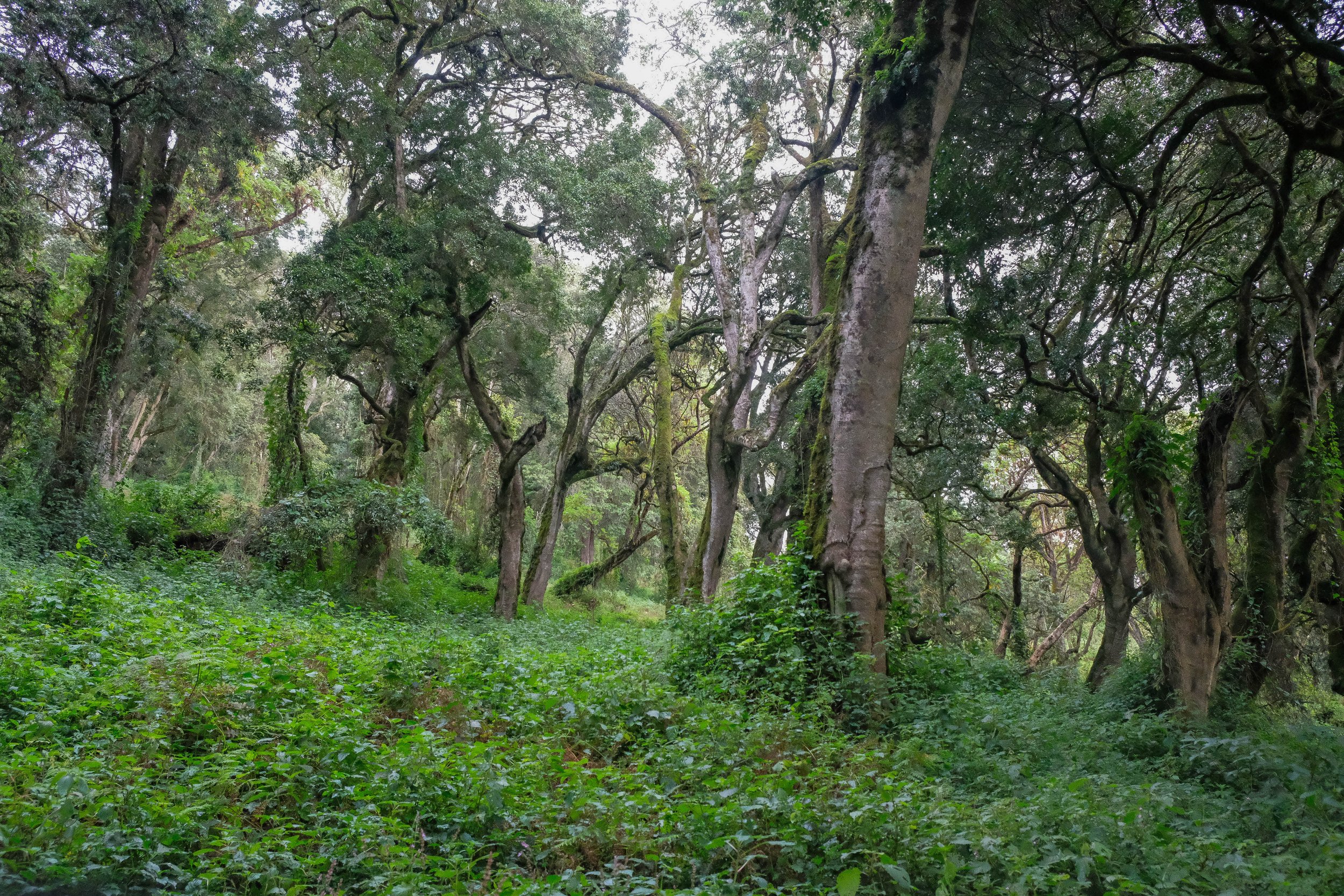
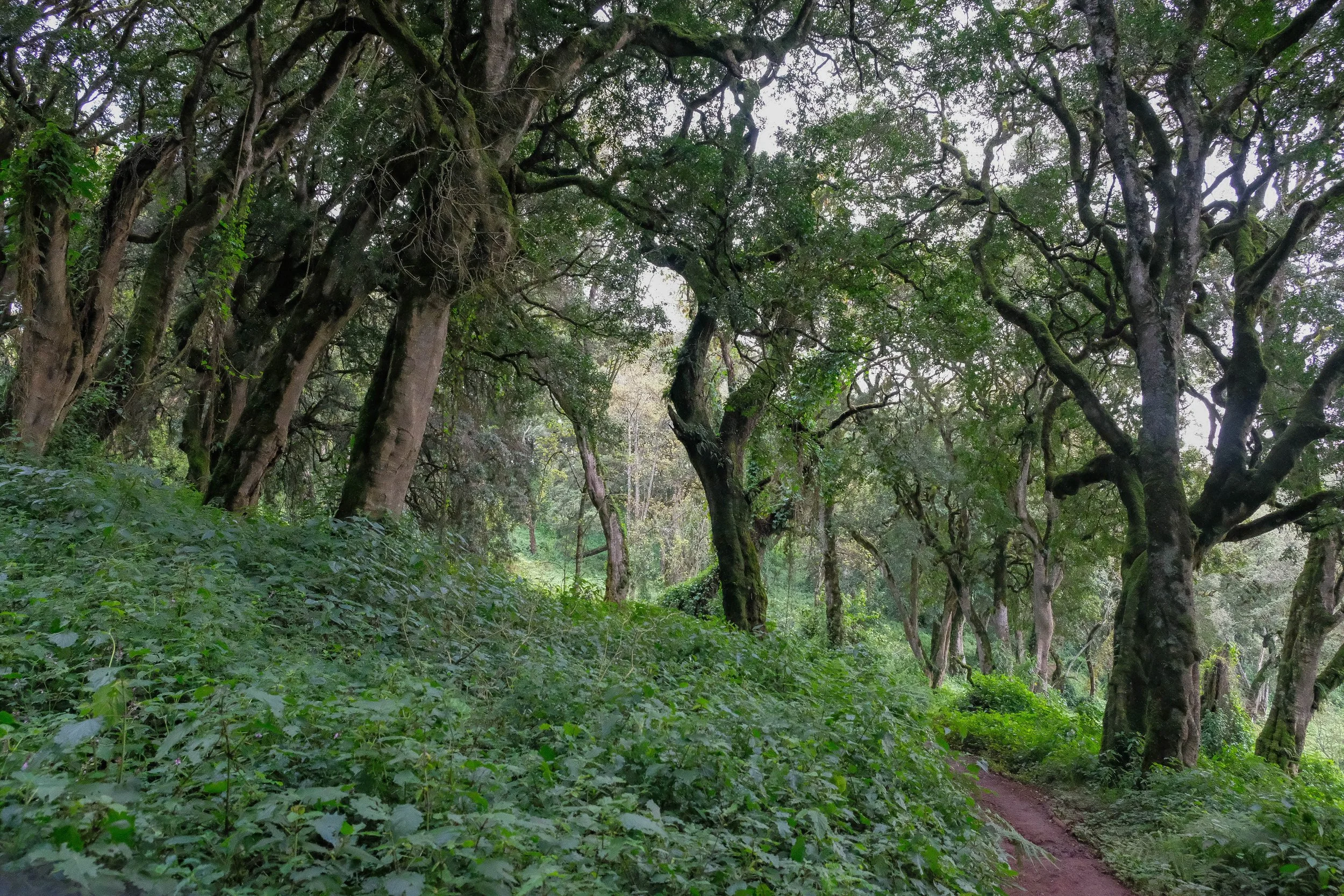
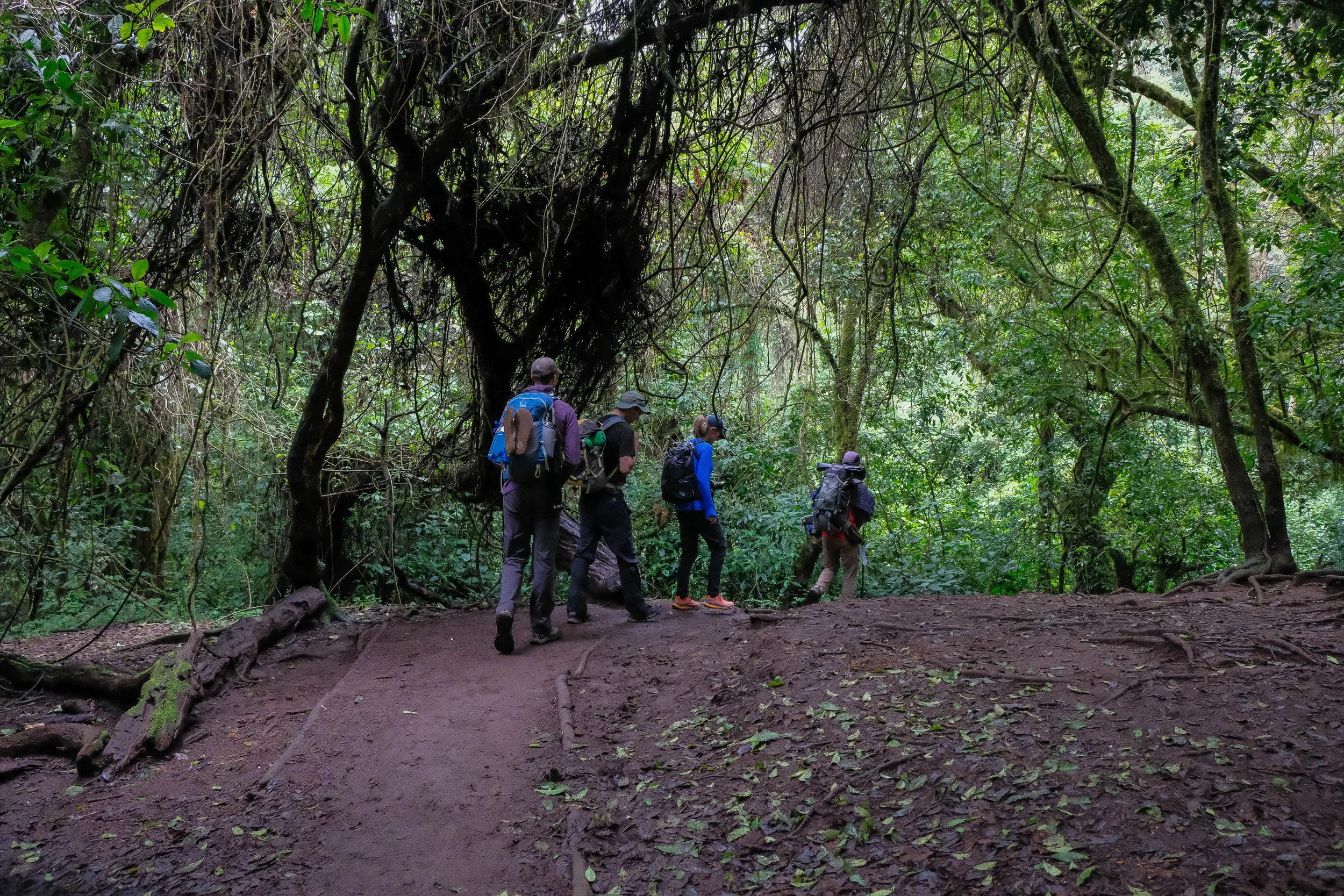
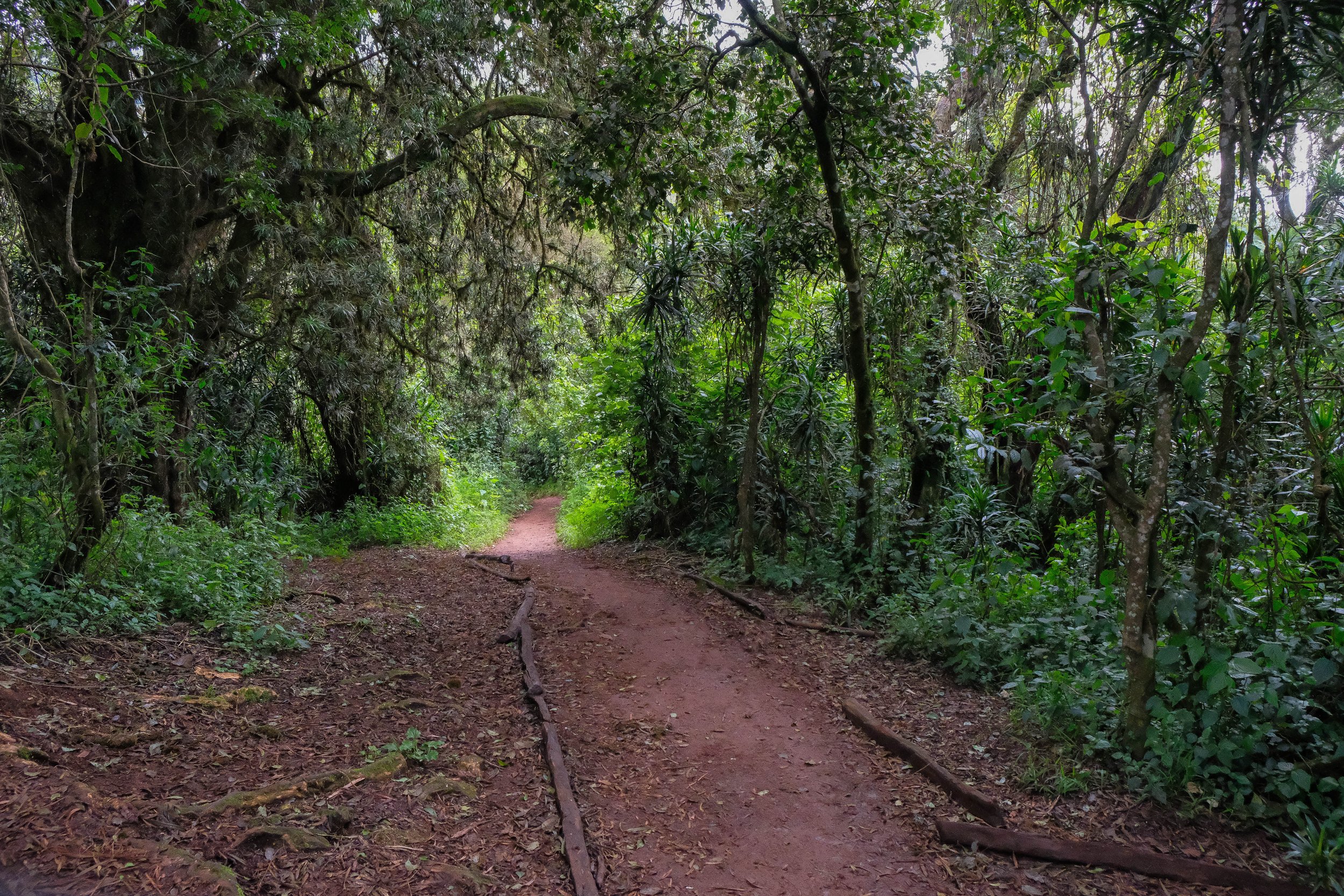
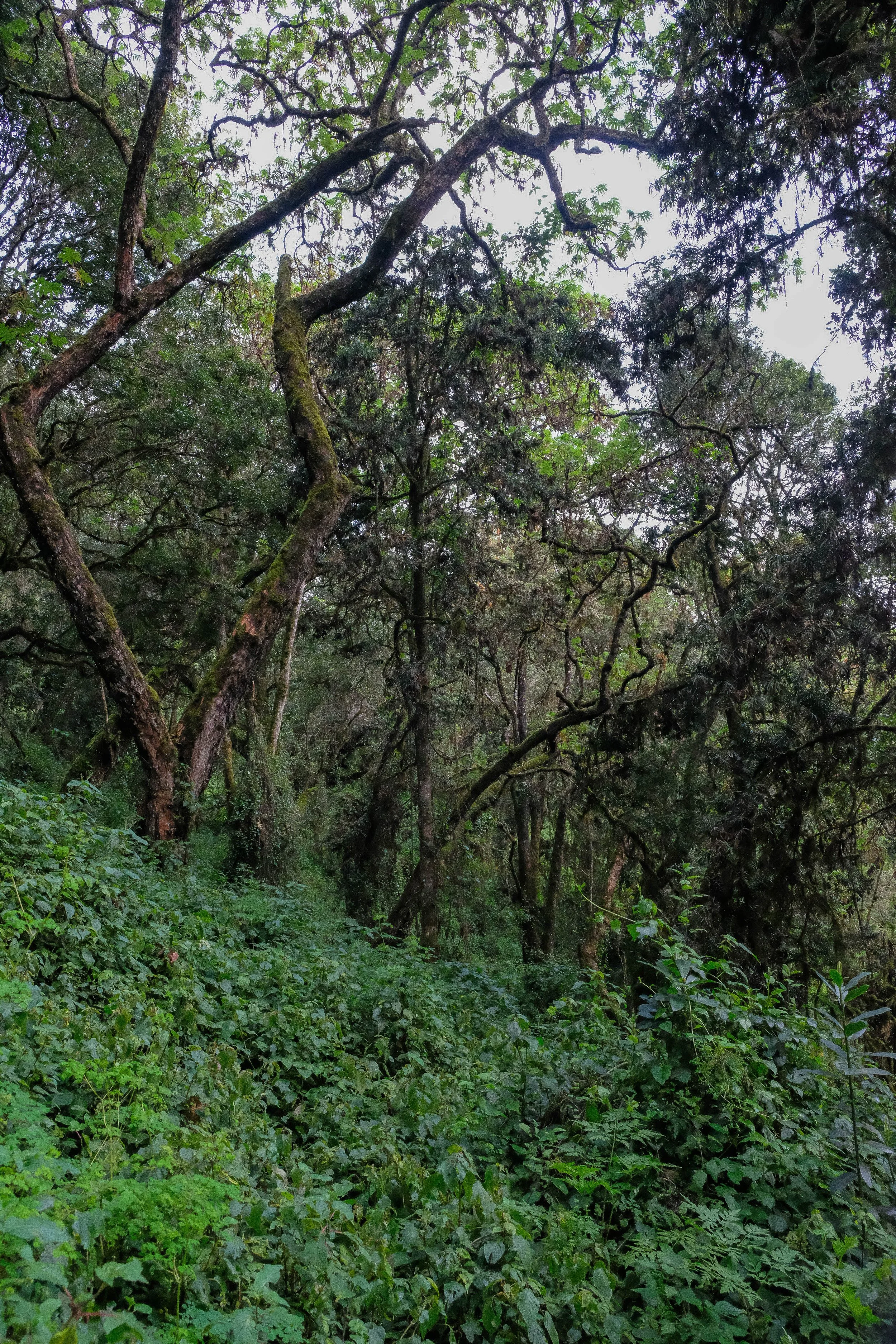
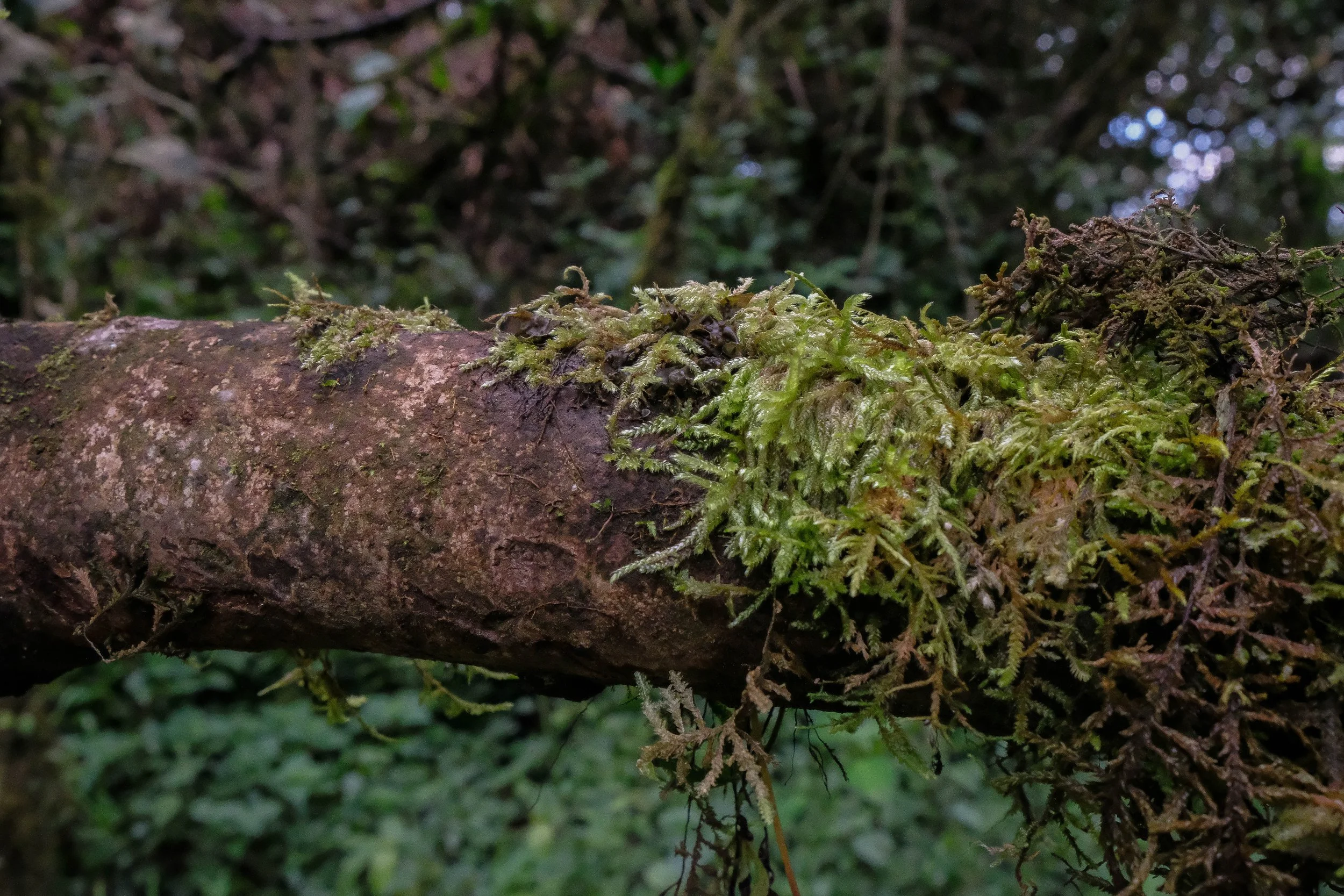
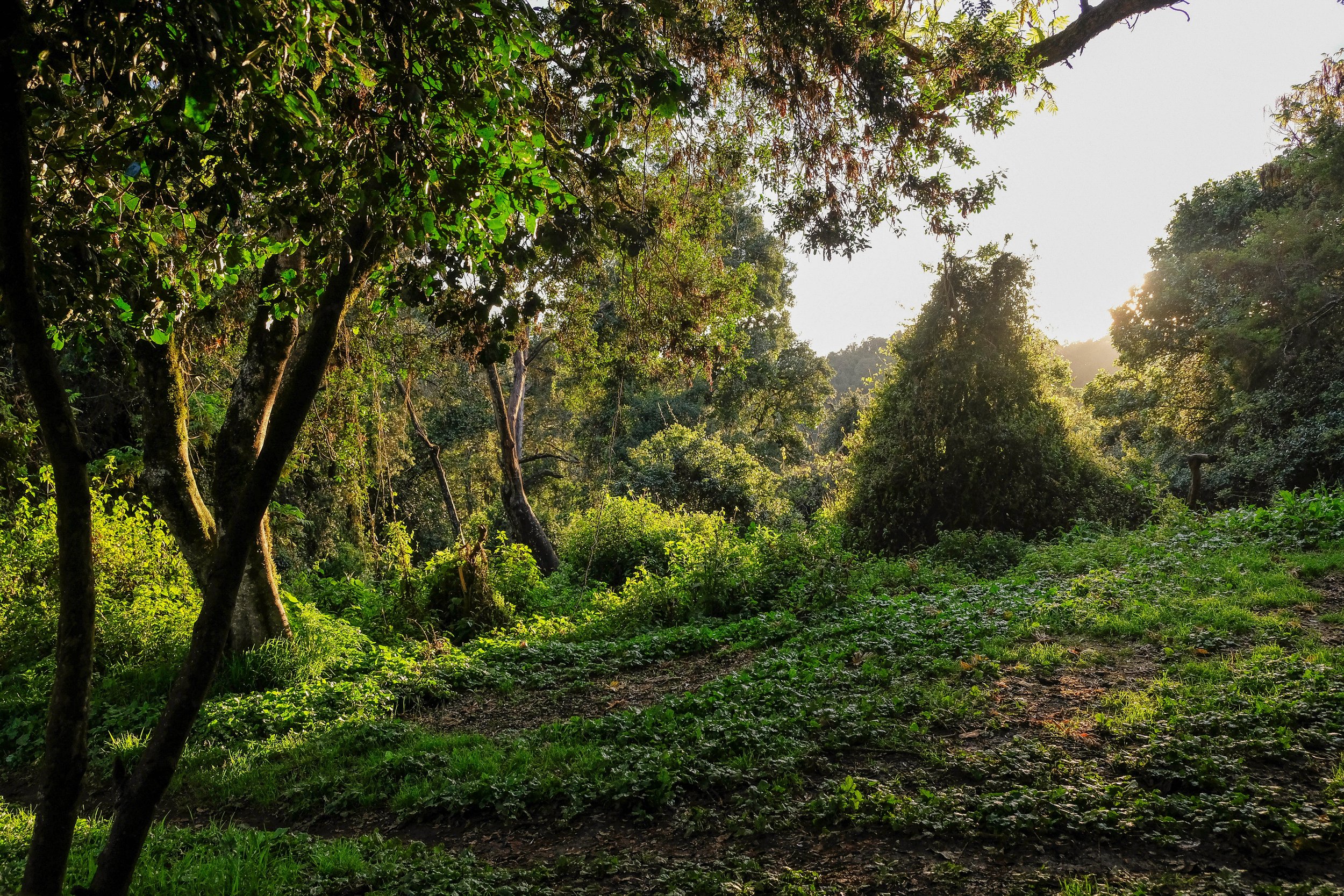
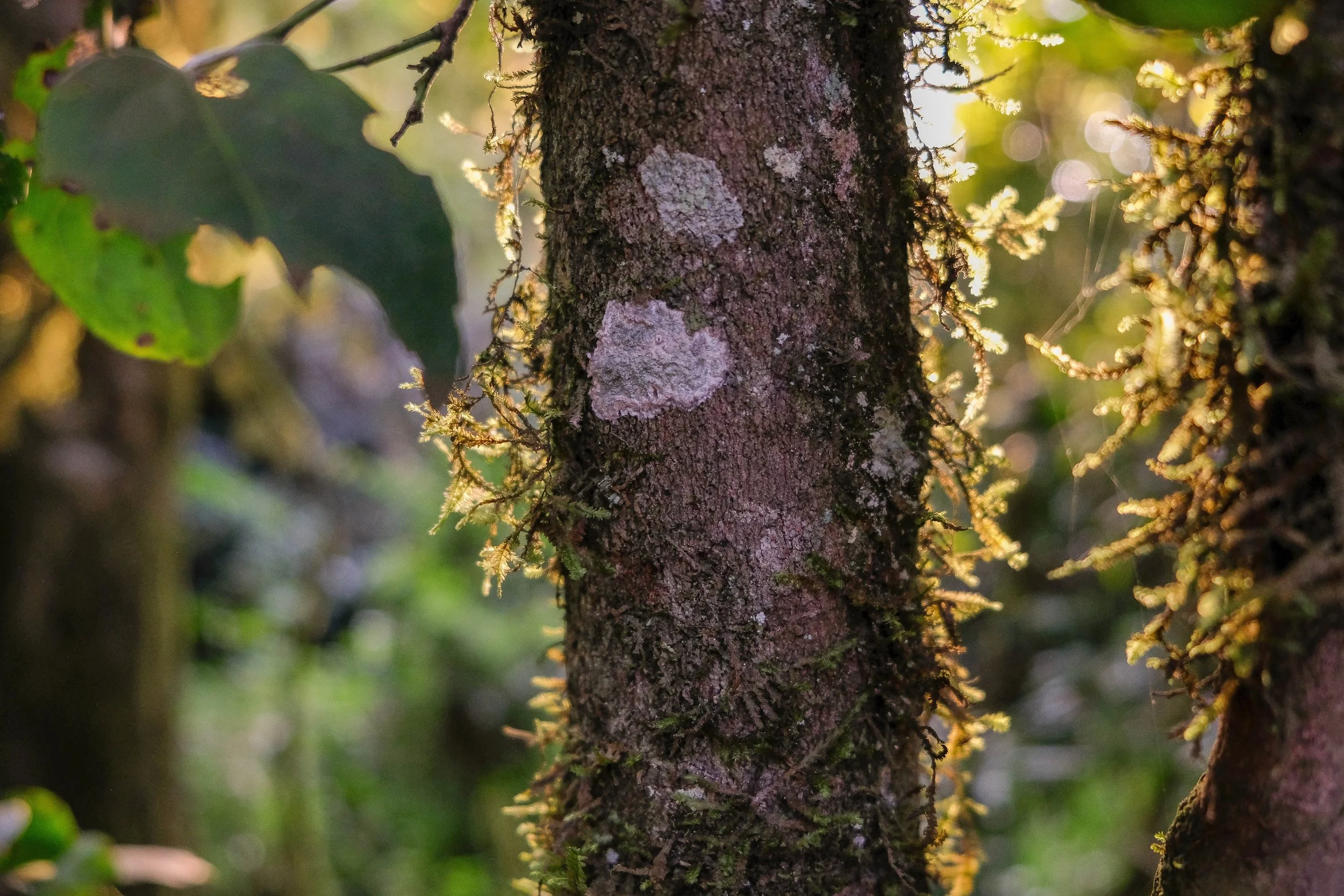
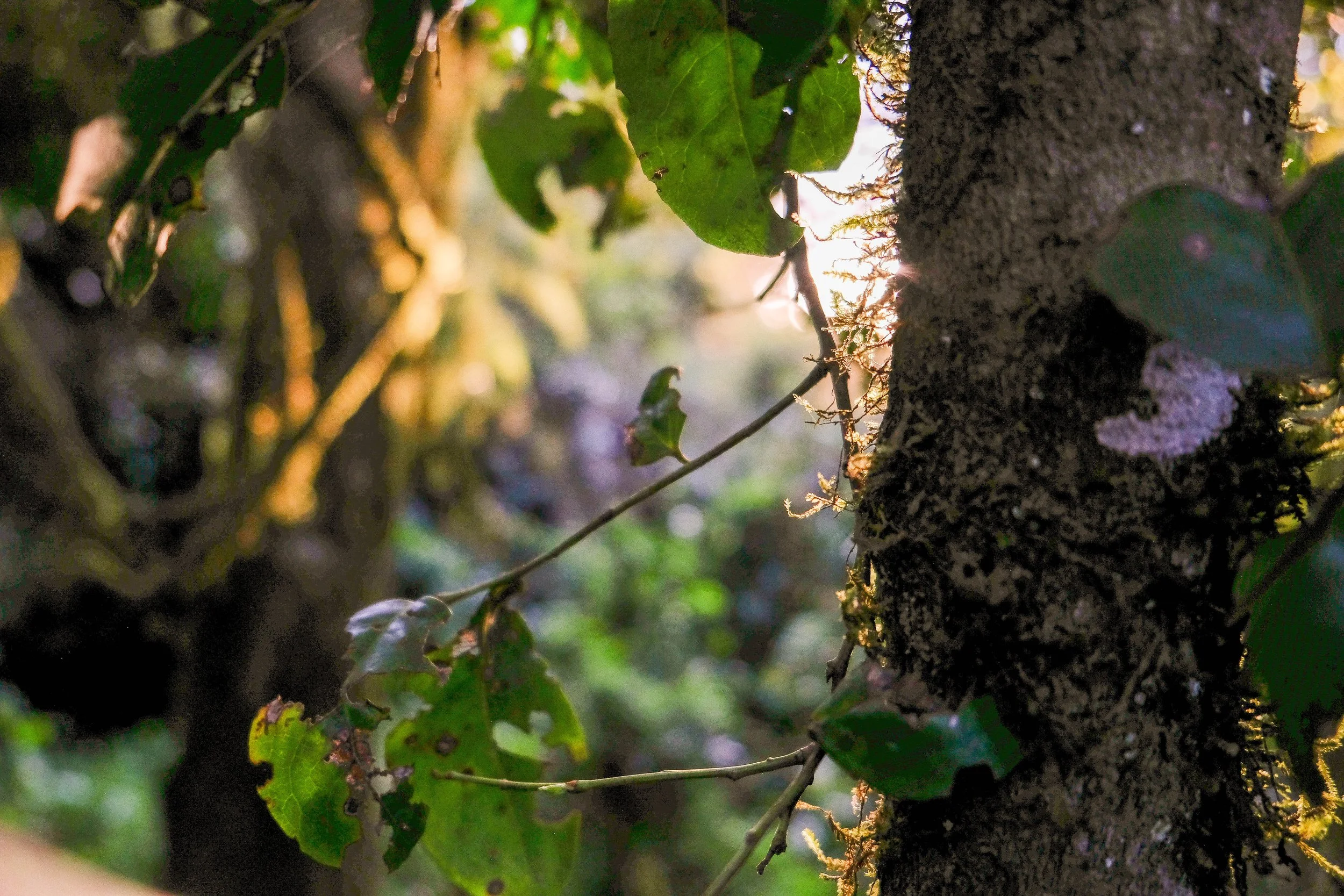
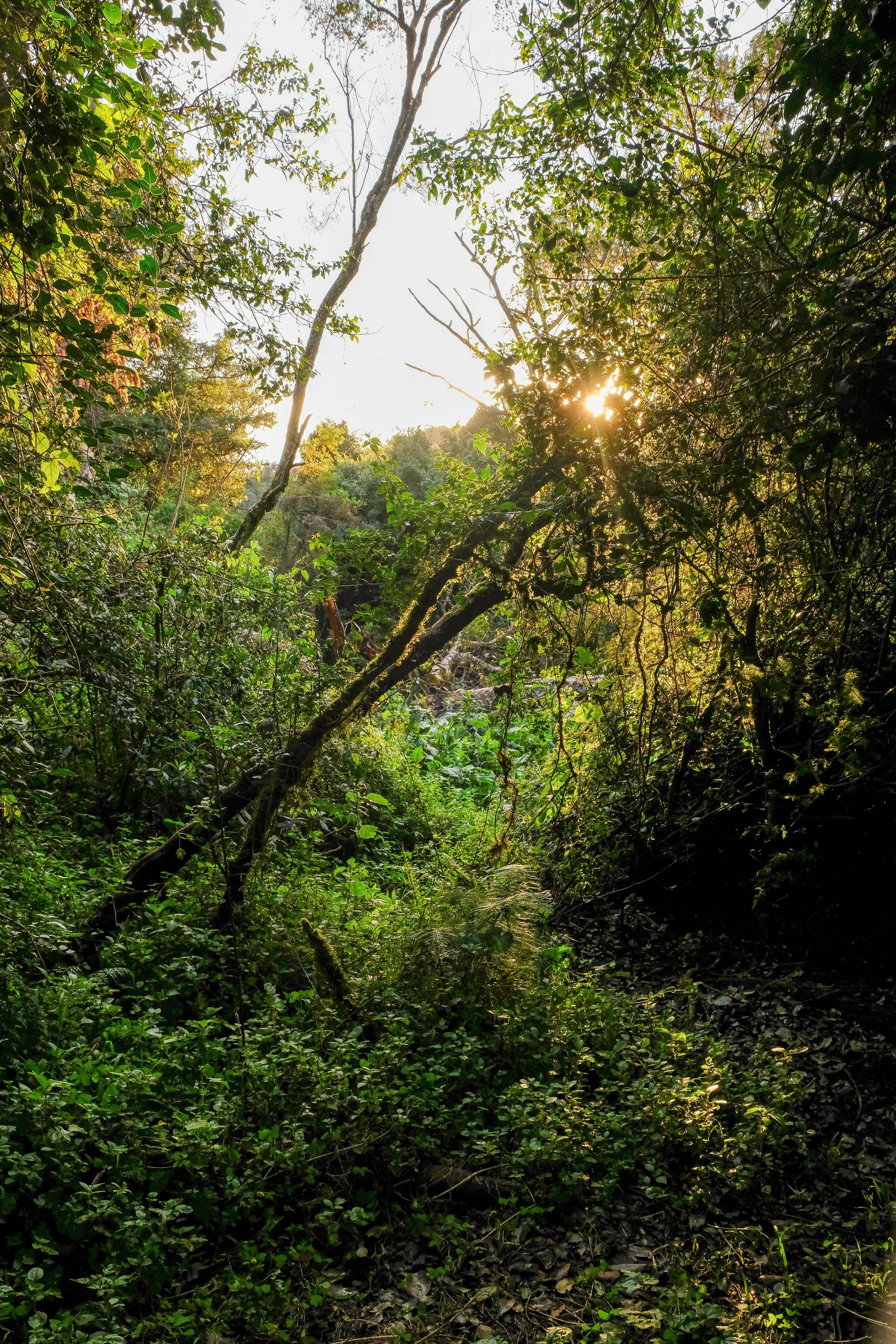
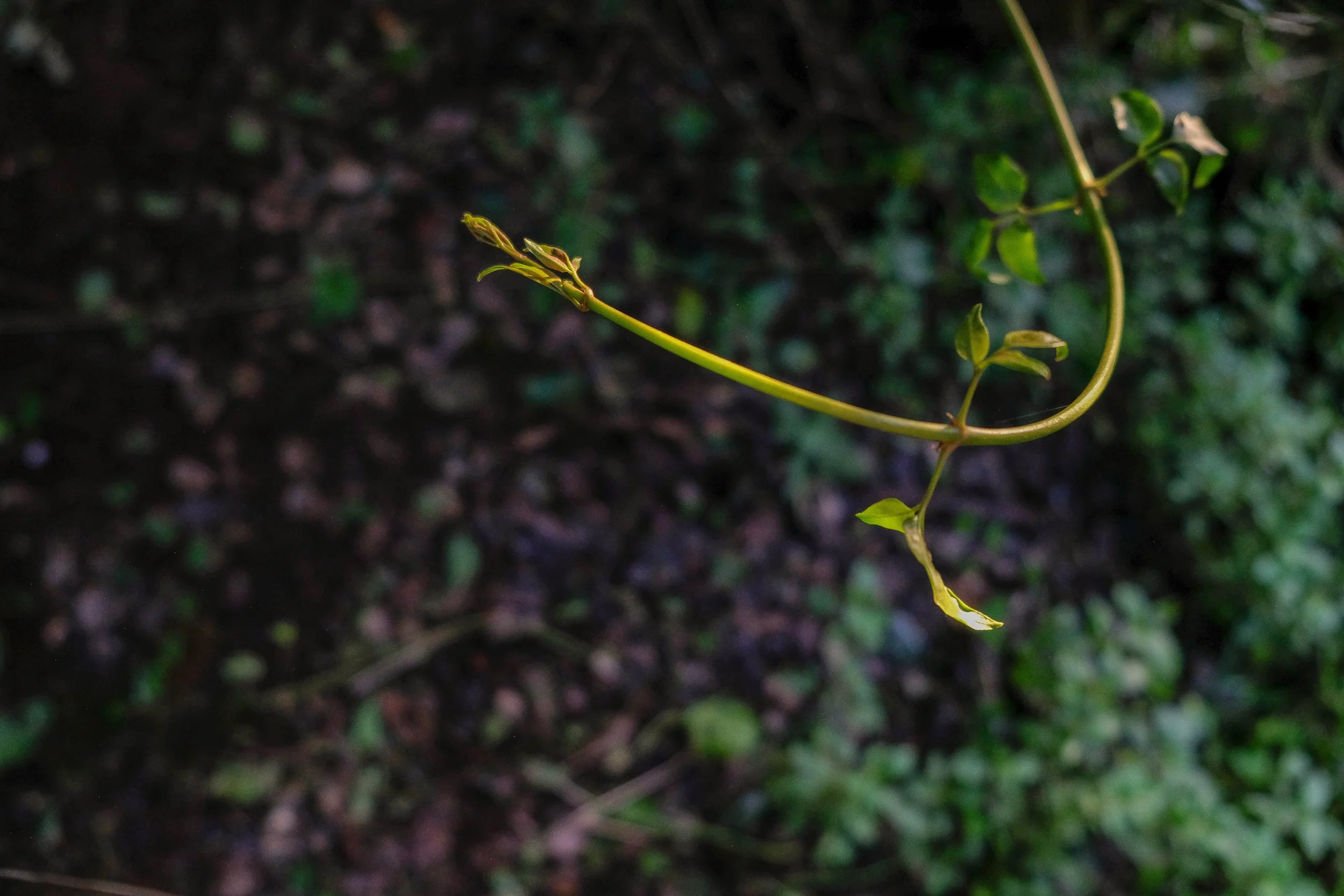
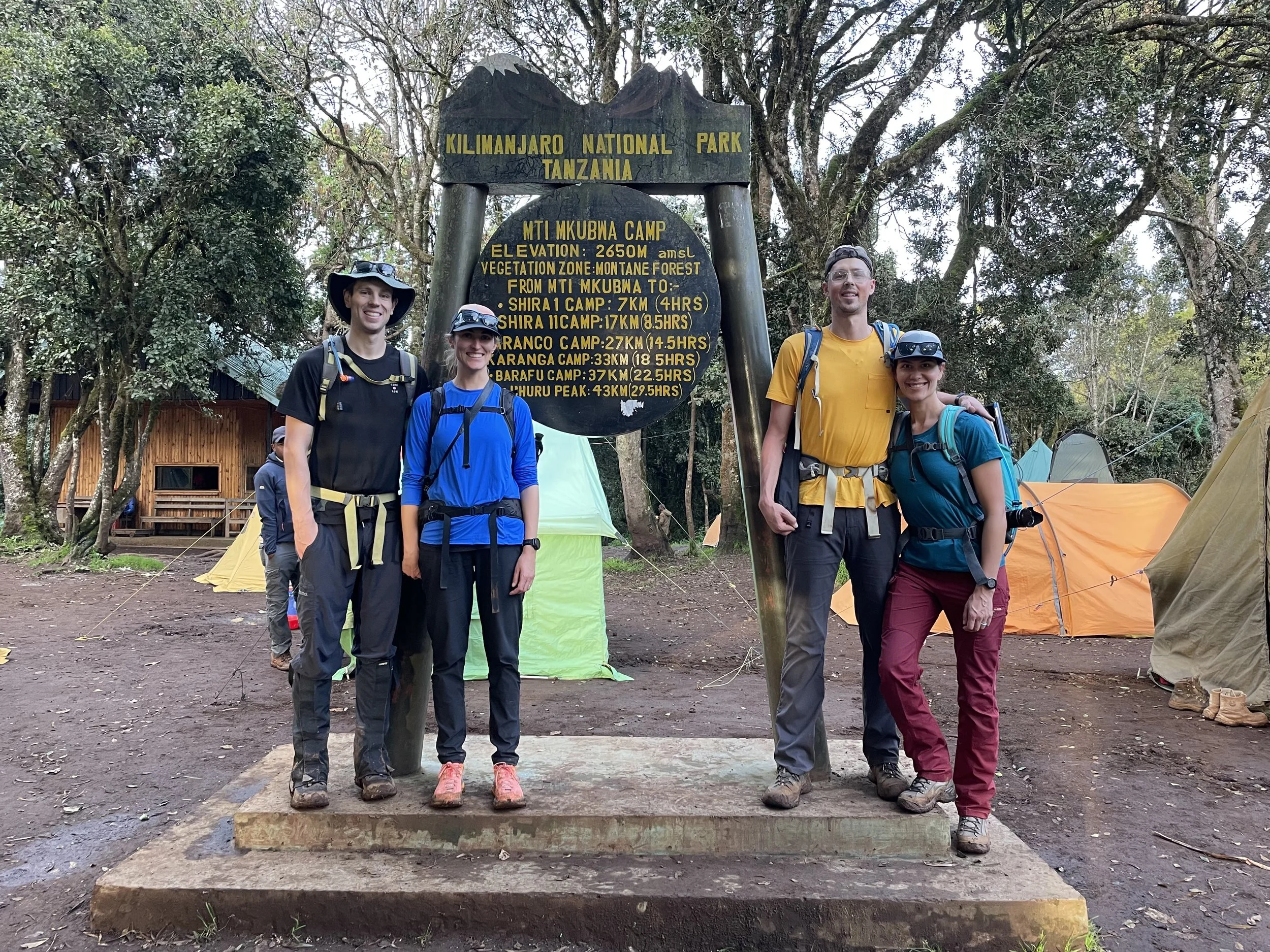
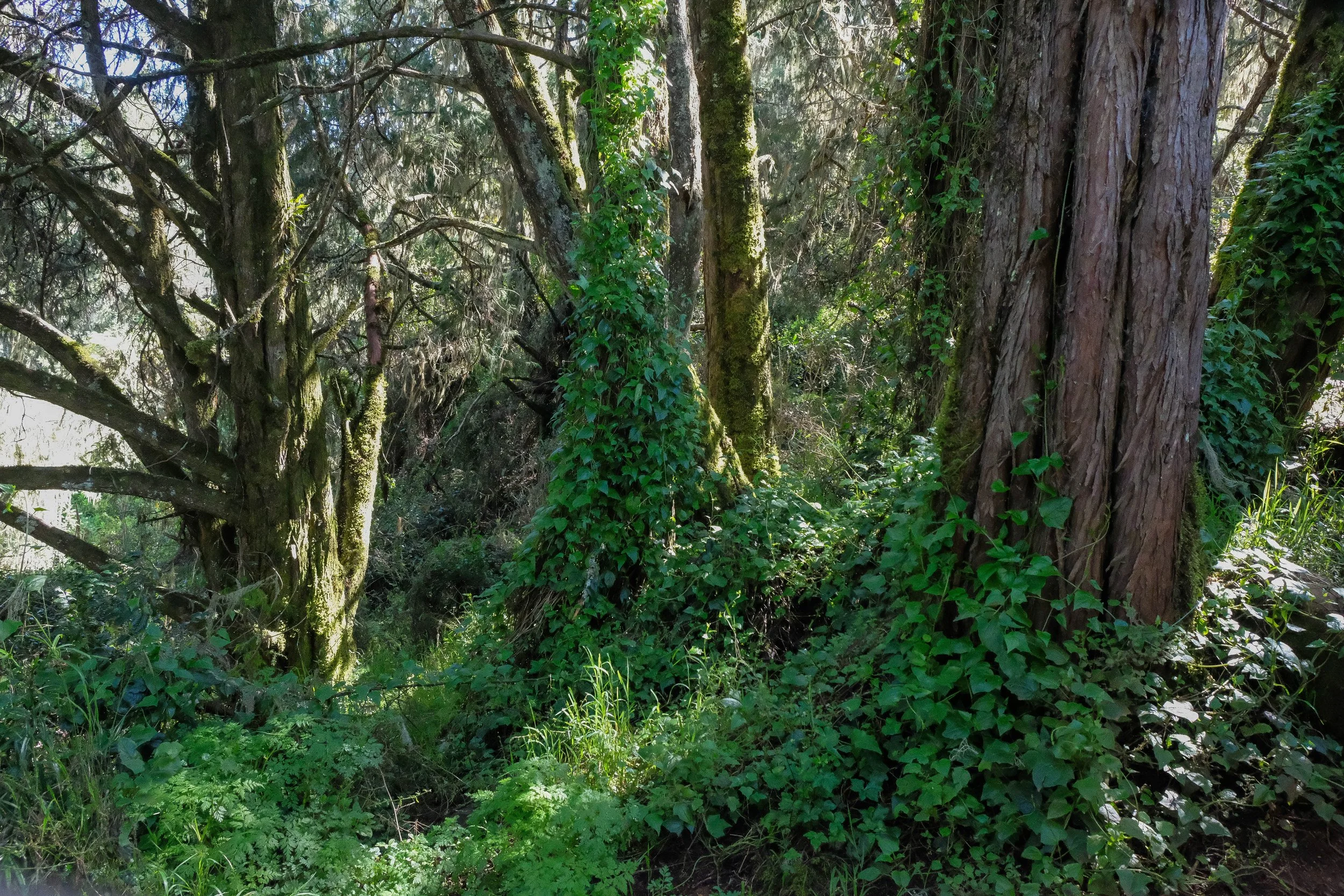
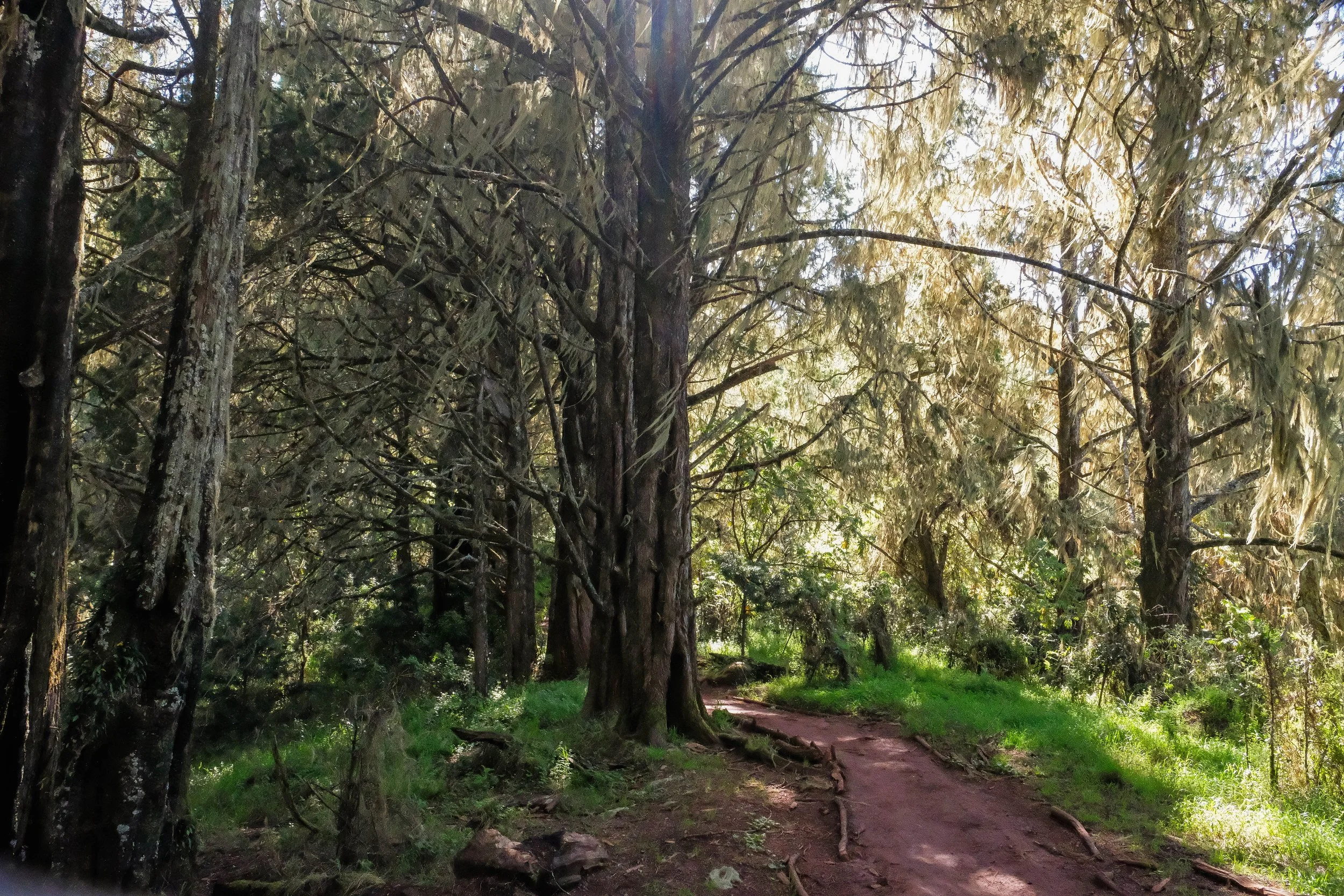
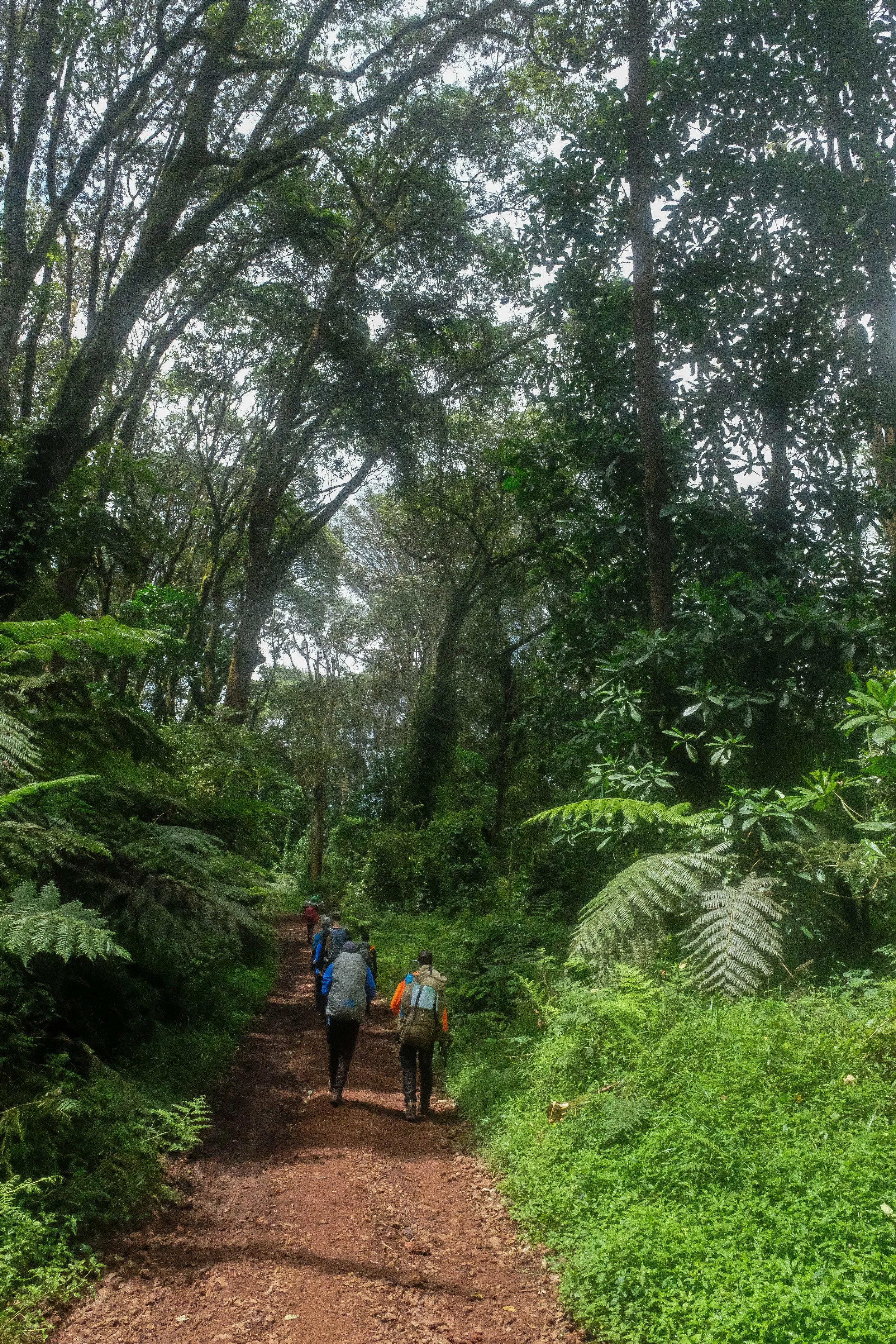
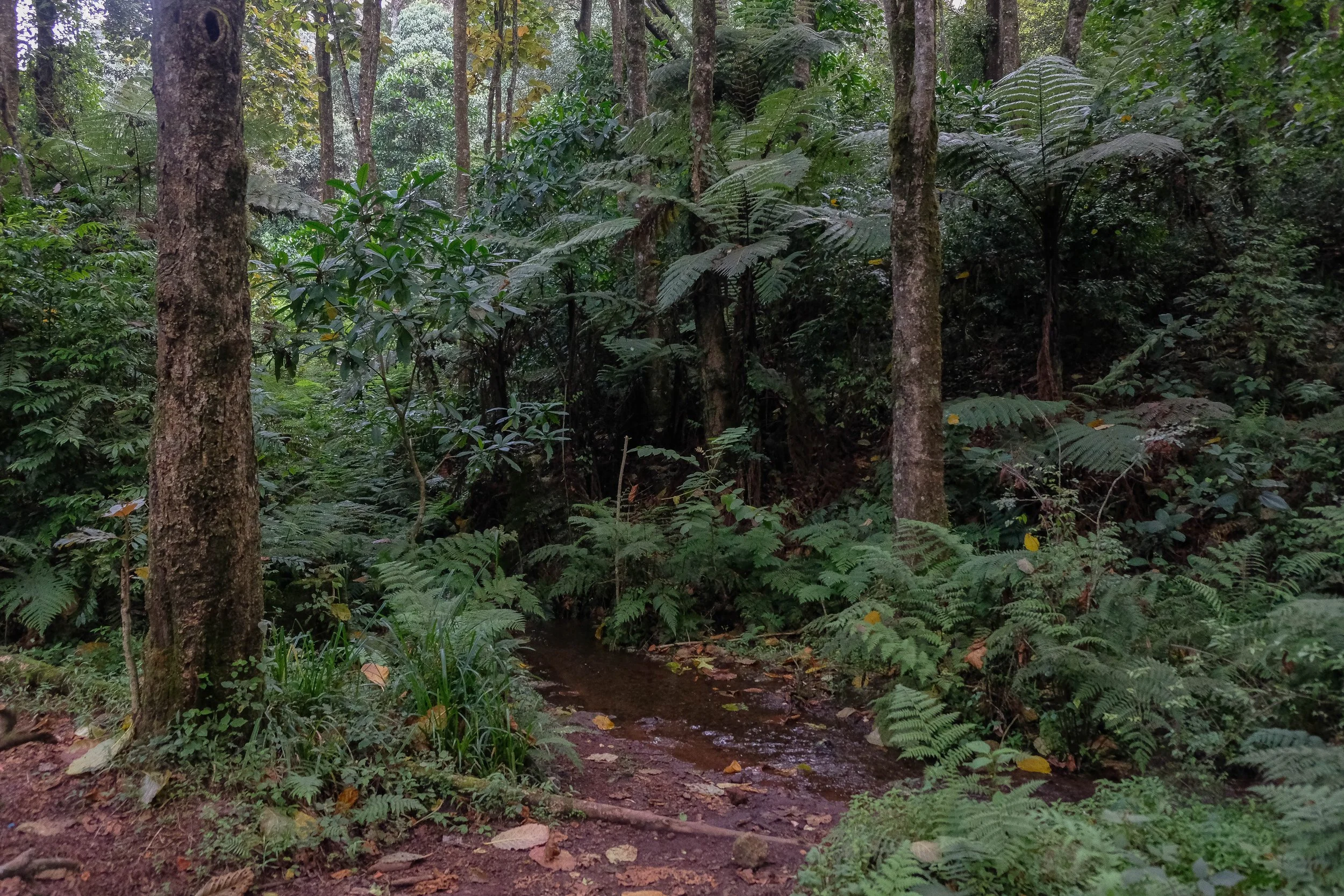
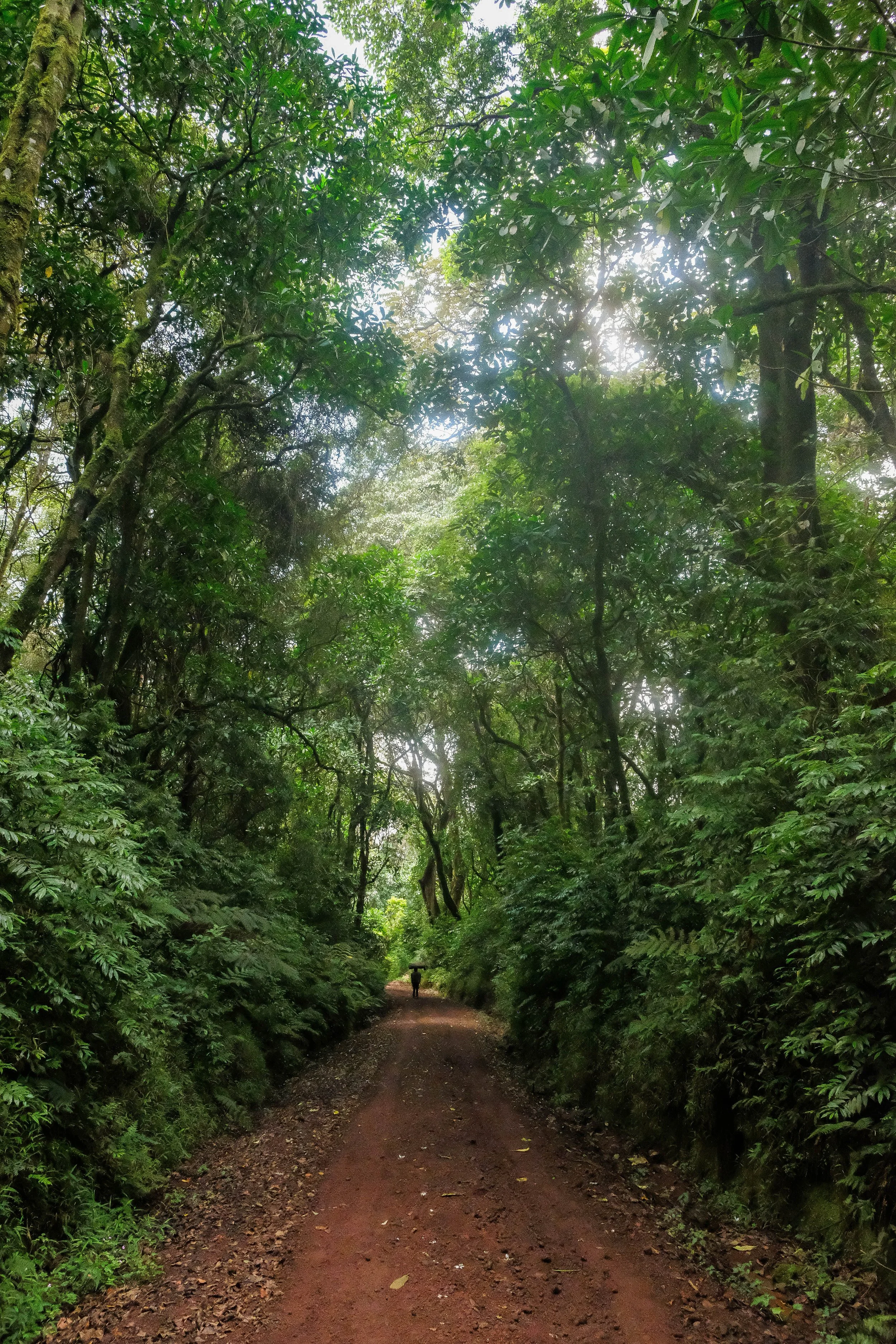
After lunch, we set out on the trail to Forest Camp. It was a beautiful, dense rainforest, with muddy sections of trail and monkeys swinging through the trees around us, to James’s endless delight. Our spirits were high and it felt amazing to be out of the bus, stretching our legs, and (finally!) walking through this glorious landscape. We practiced Swahili words and phrases and continued getting to know our guides—Balaka, Isaya, and Jovin—with whom we’d spend the most time this week.
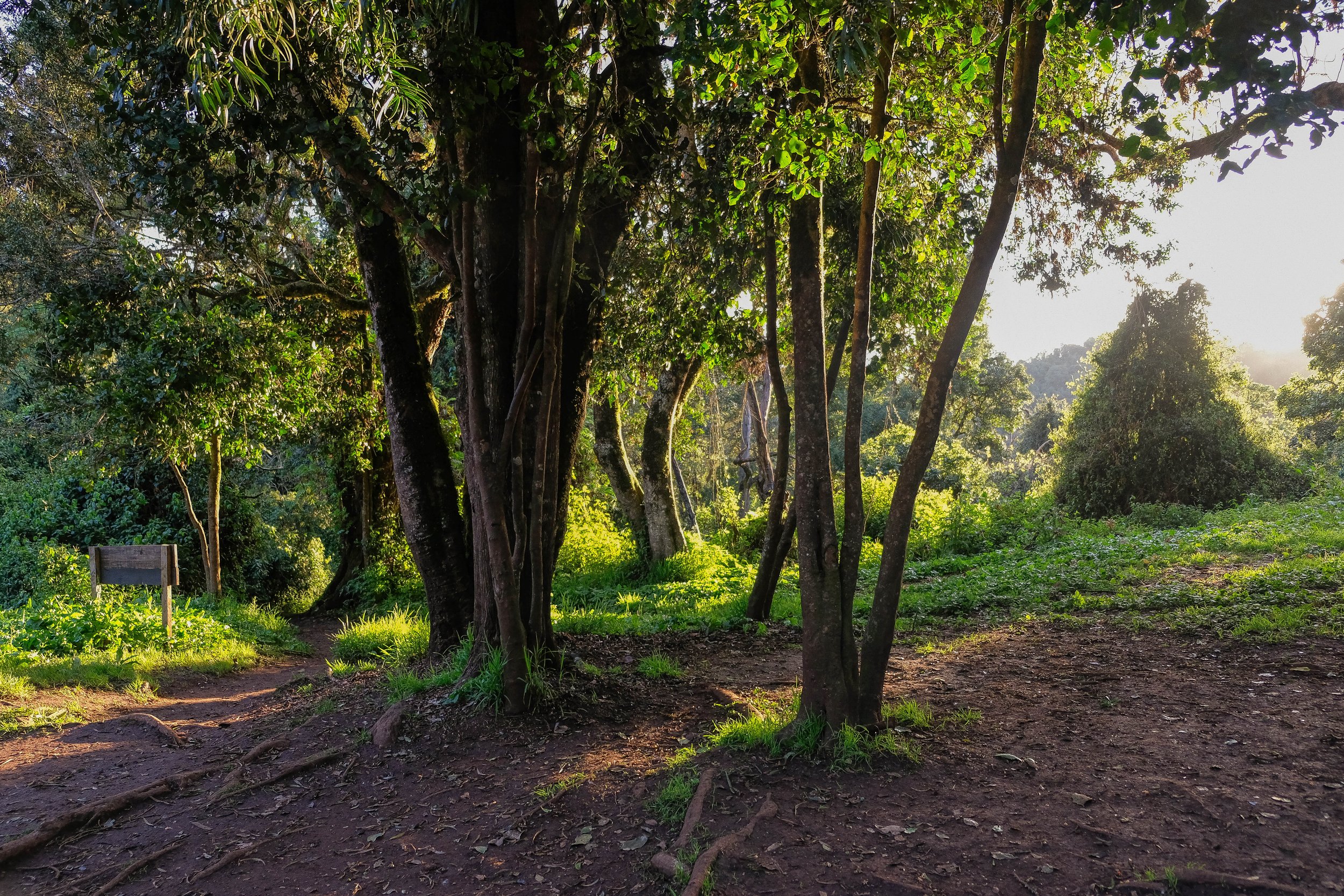
We reached the bustling camp as the sun was setting, casting everything around us into brilliant gold and emerald green hues. This was our first introduction to the unbelievable spread of delicious food we would receive throughout the week: a far cry from our usual camping meals back home (ie, freeze dried dinners and lots of Larabars). It’s impossible to put into words the generosity and care that we were given from the entire team during this climb, but suffice it to say that it was significant and humbling to receive.
After our evening briefing about the following day, which was conducted nightly and included a check of our oxygen percentage, heart rate, and any symptoms (something our group quickly turned into a competition for the highest oxygen levels), we finished our cups of tea and honey, brushed our teeth under trees filled with monkeys, and slipped into our sleeping bags for our first night on the mountain.

Day 2: Forest Camp to Shira I & II | 11.8 miles | 8,695 ft - 12,630 ft
Our first full day on the mountain began with blue monkeys creeping through the trees over our heads, cassava pancakes that I can’t stop raving about, and an introduction to “bed tea.” Bed tea, which was actually coffee in our case, is when we were given the gentlest half-hour warning to wake up, pack our bags, and be ready for the start of that day’s hike. Eresto, a member of our team with the most contagious positive energy I’ve ever encountered, brought a tray of mugs with a selection of coffee, tea, and drinking chocolate and a carafe of hot water to our tent. “Good morning, kaka (brother)! Good morning, dada (sister)!” he singsongs quietly but cheerfully through the side of our tent. “How did you sleep? Like a lion?”
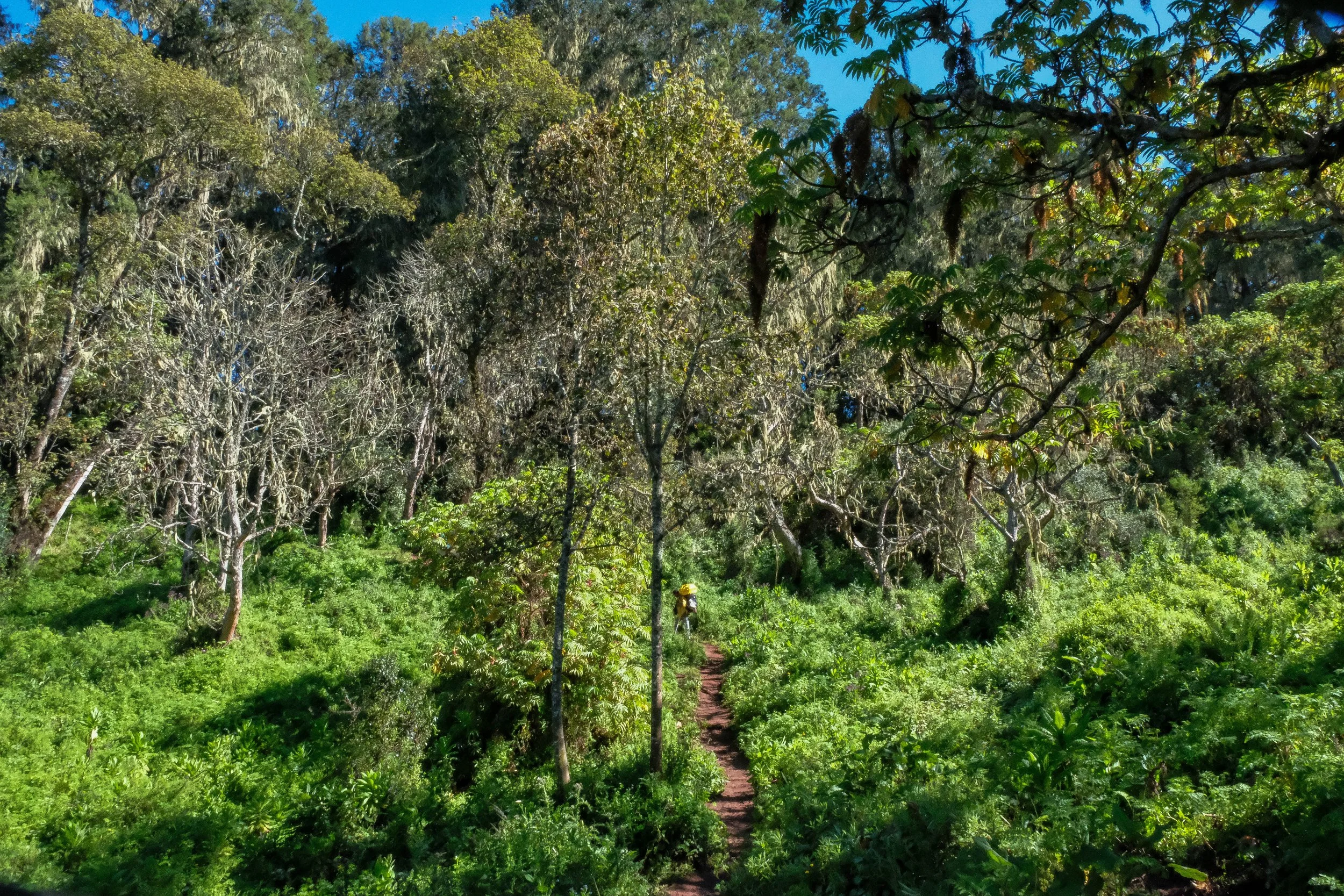
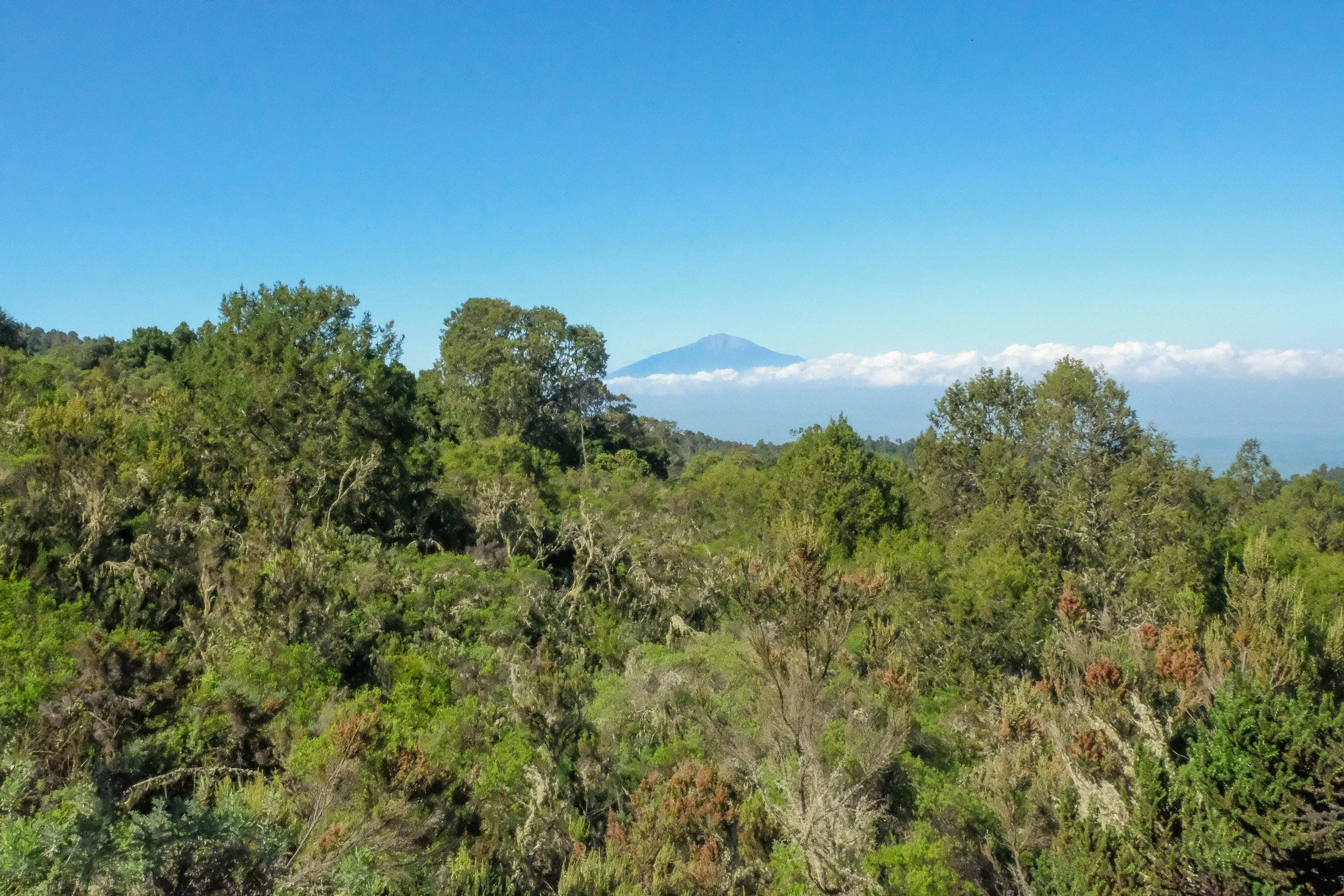
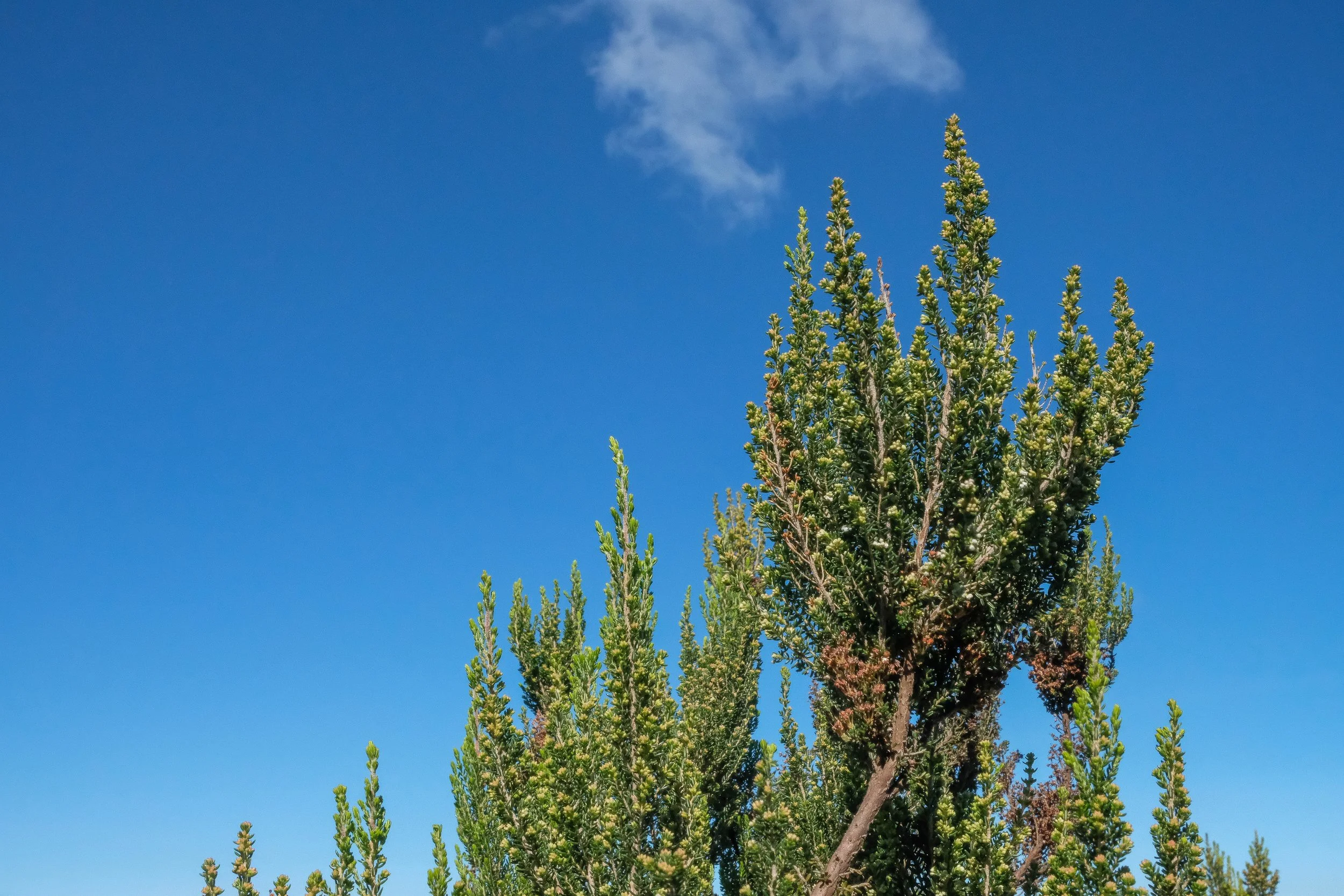
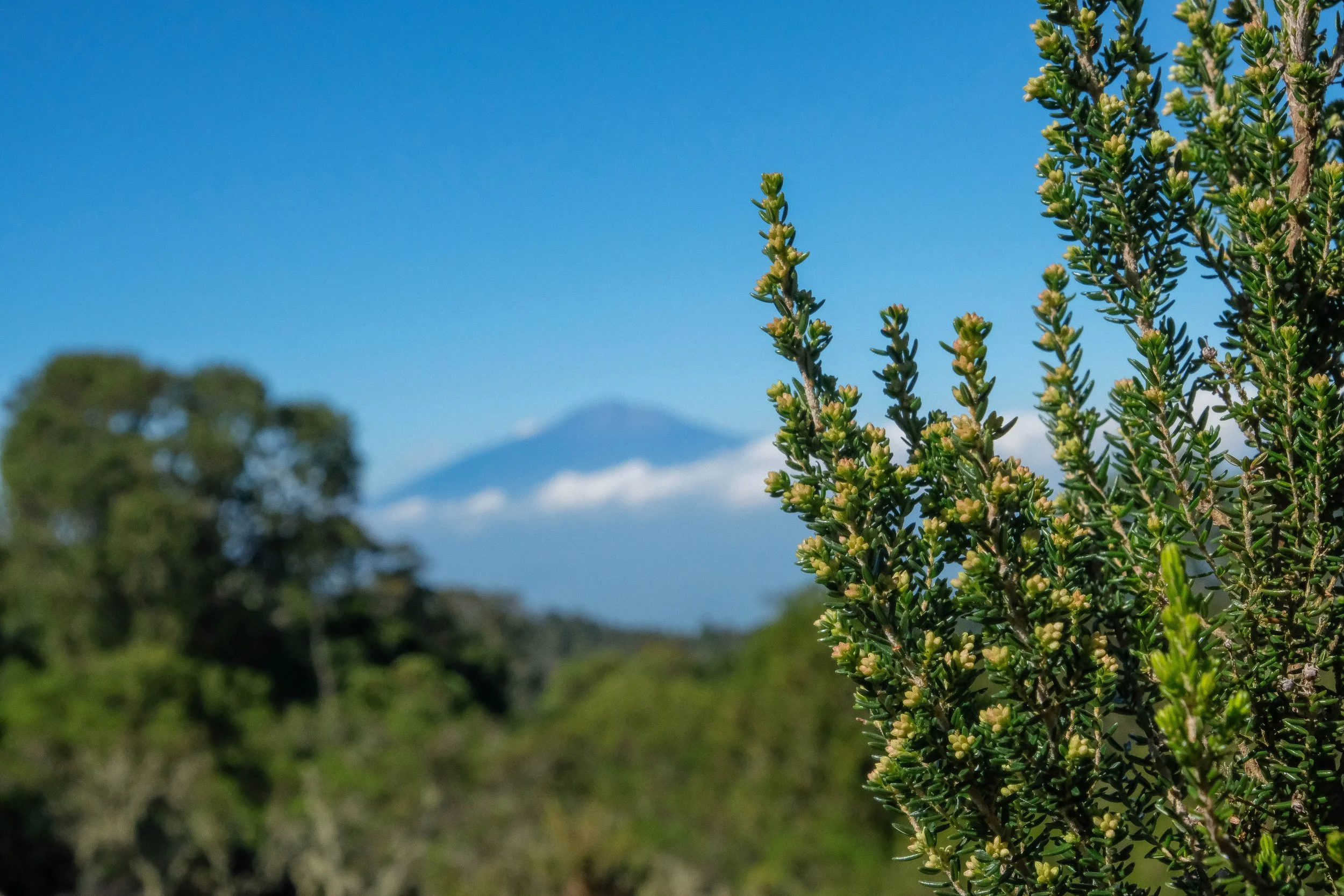
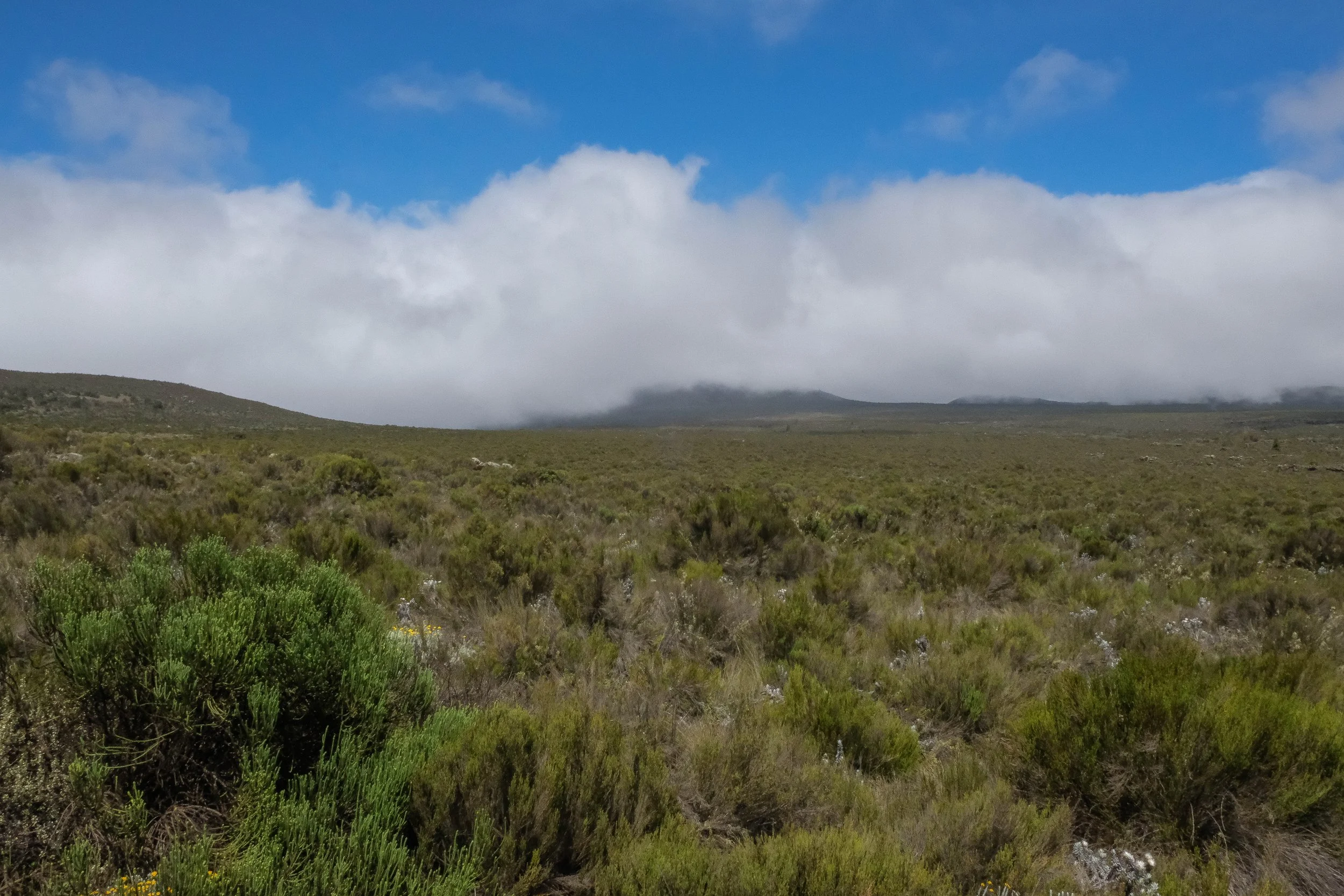
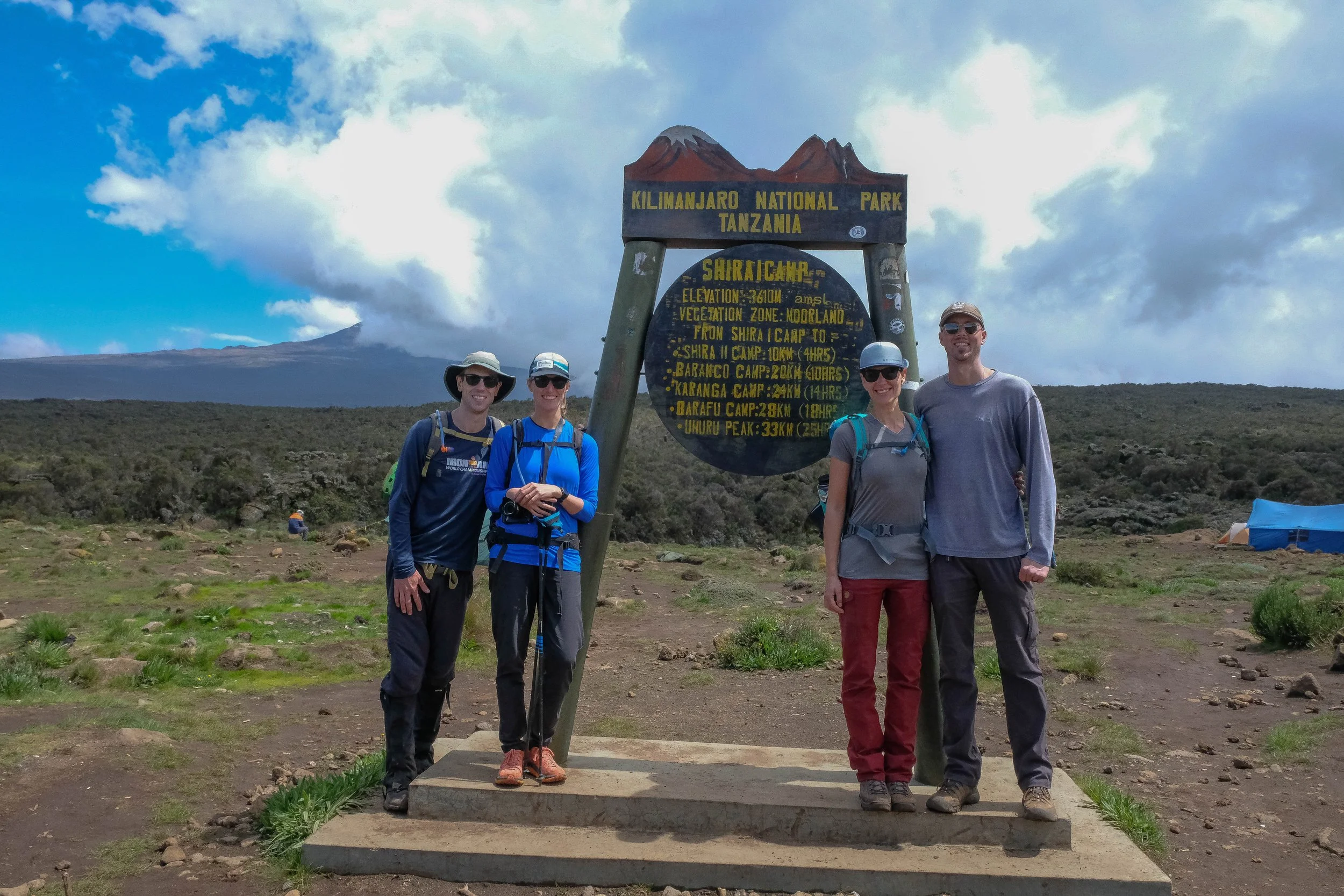
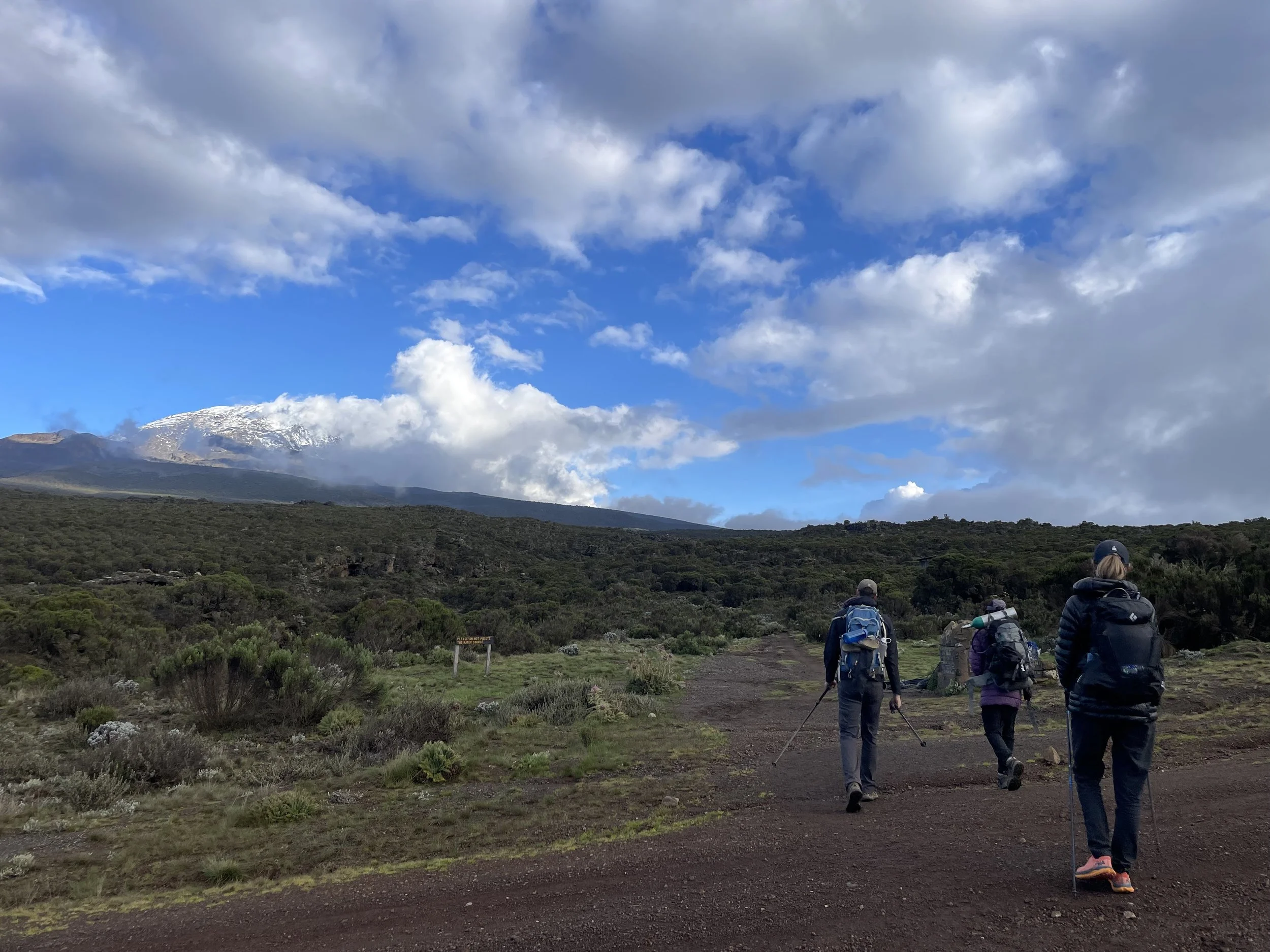
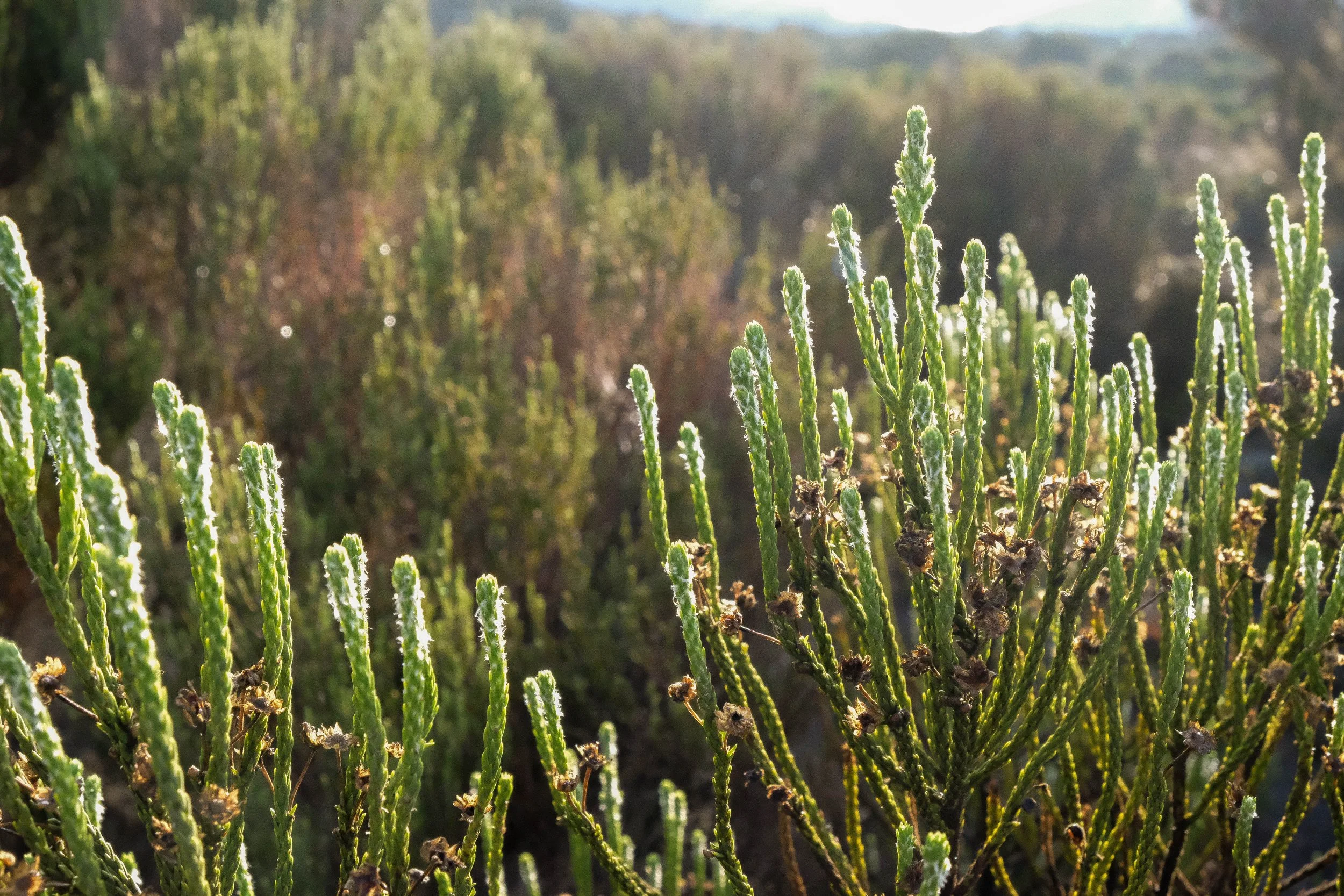
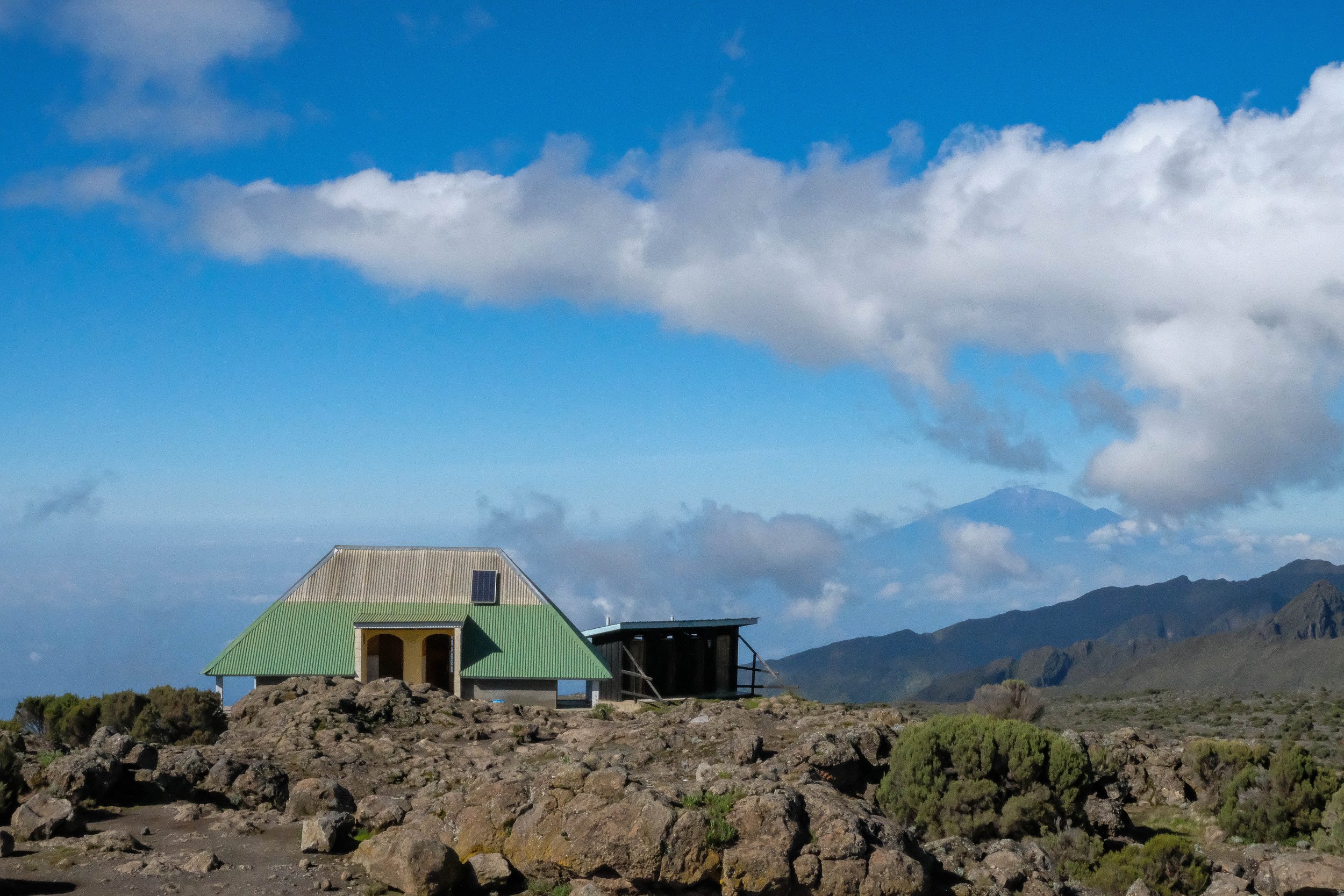
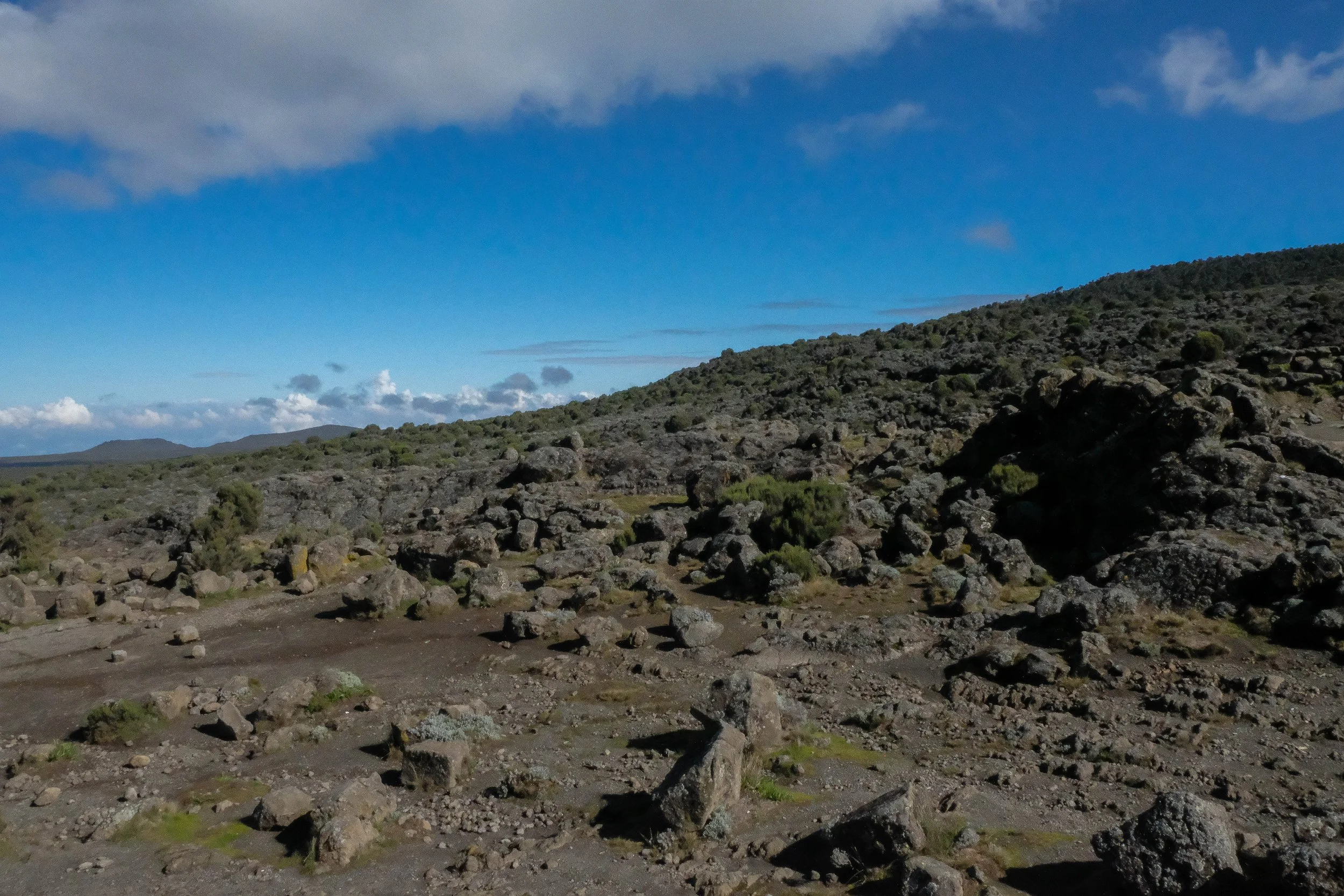
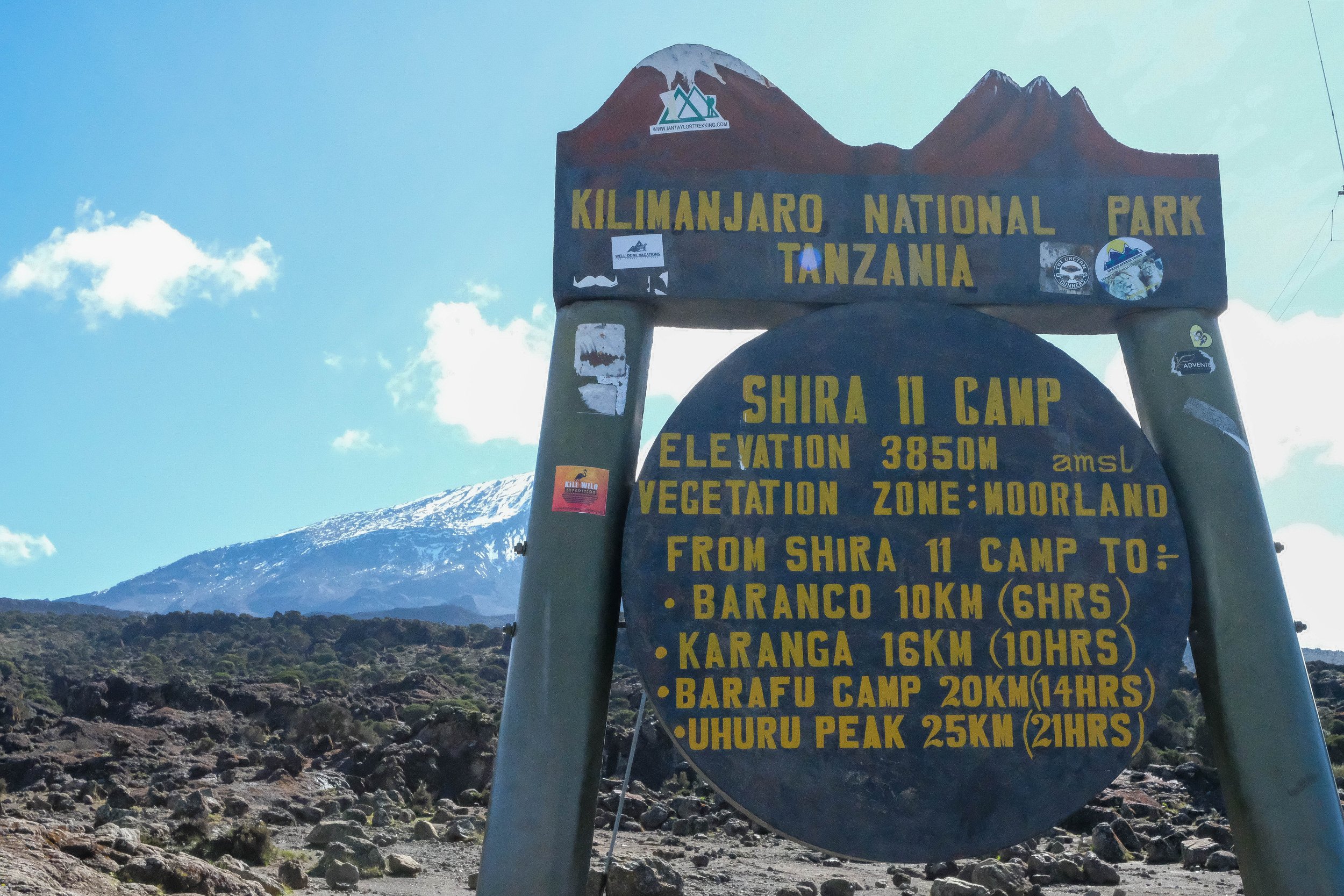
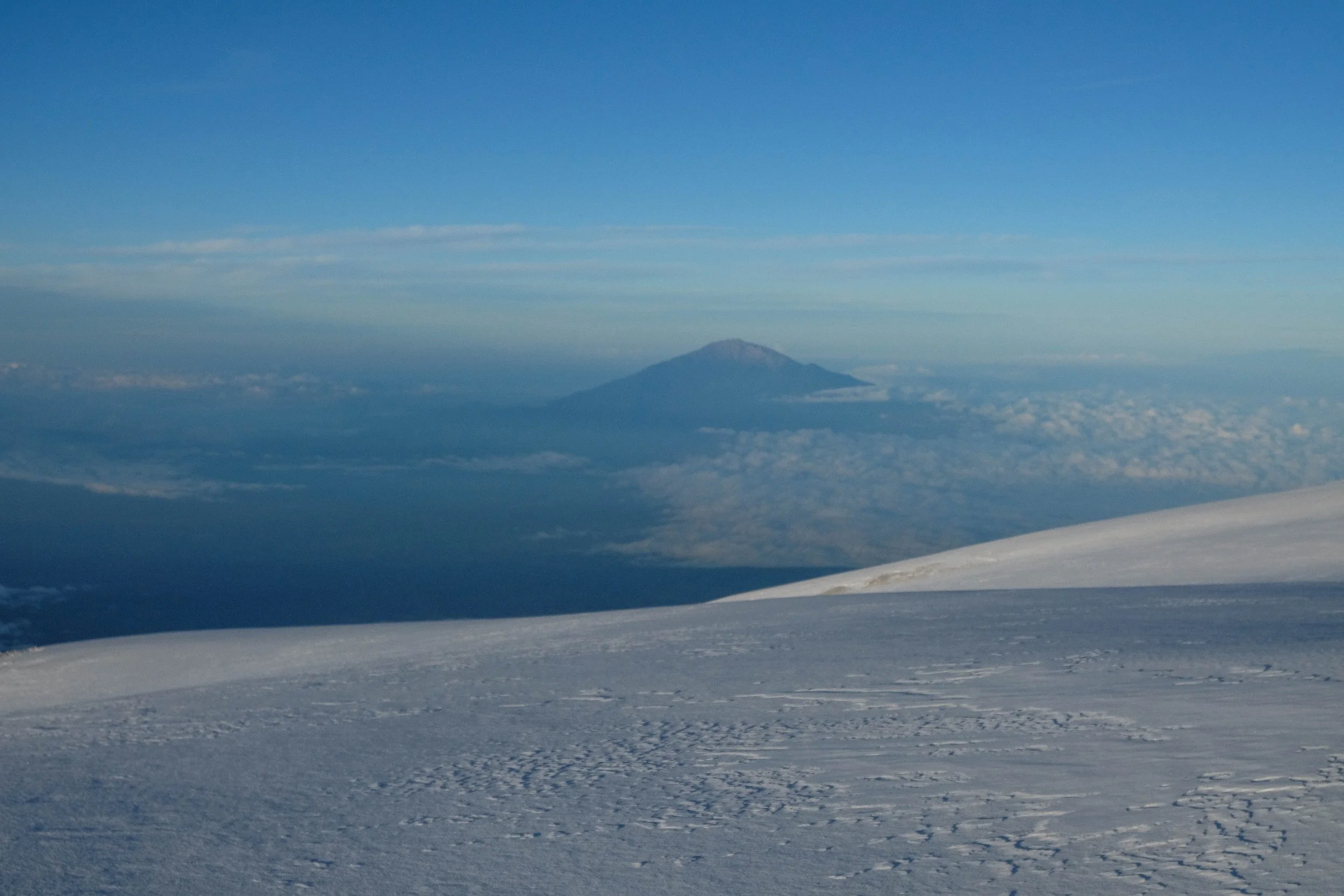
This was one of our biggest days of hiking, as we’d made the decision with our guides to combine two days into one early on in the trek, to give us more rest and recovery time closer to summit day. The first part of the day found us slowly wending our way out of the rainforest—leaving behind the shade of the trees, the monkeys, and the muddy trail—and into the next climate zone: Moorland. Mt. Meru was visible and I rejoiced that we’d reached the portion of the trek where the views were more wide open and far reaching.
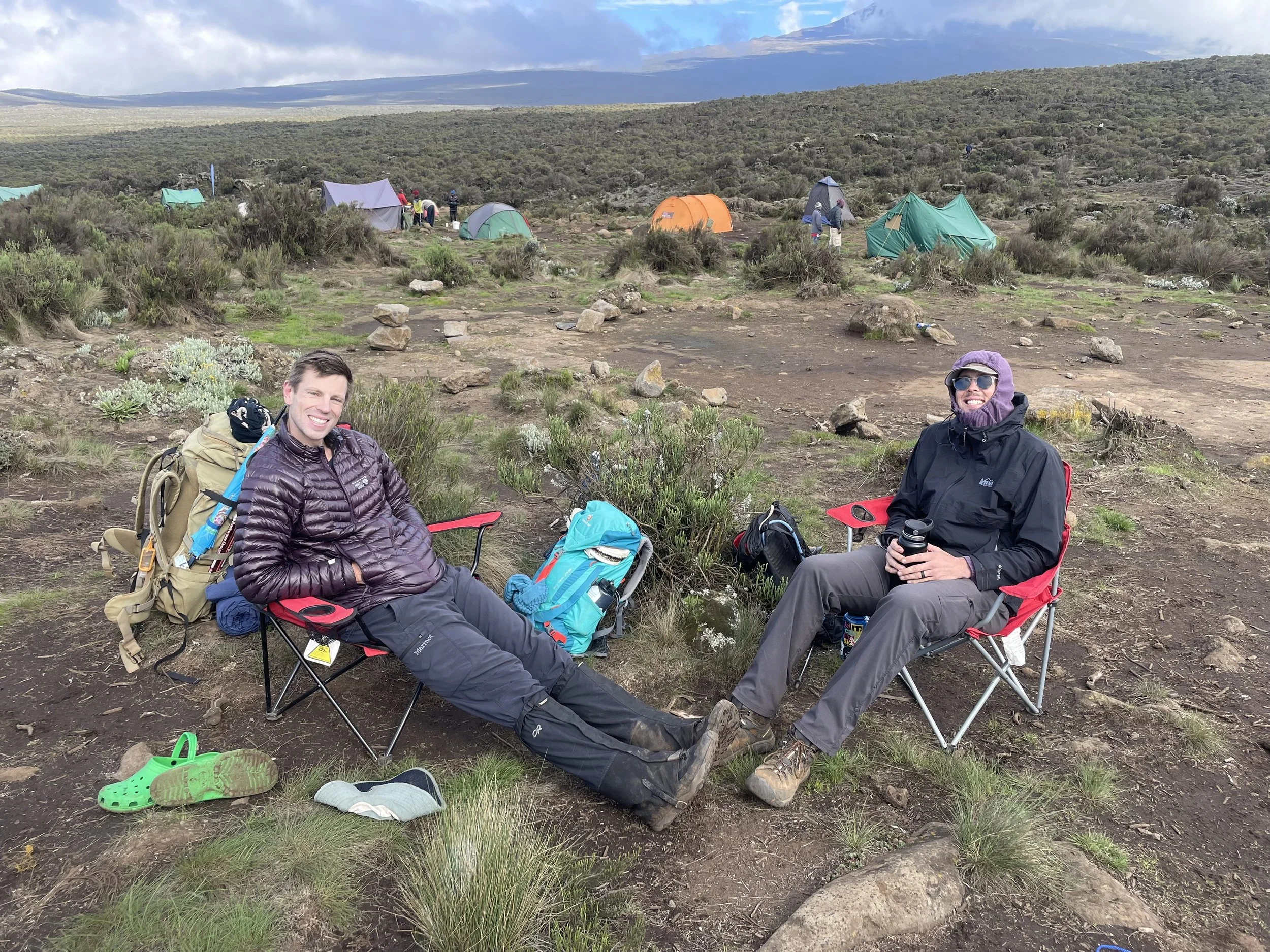
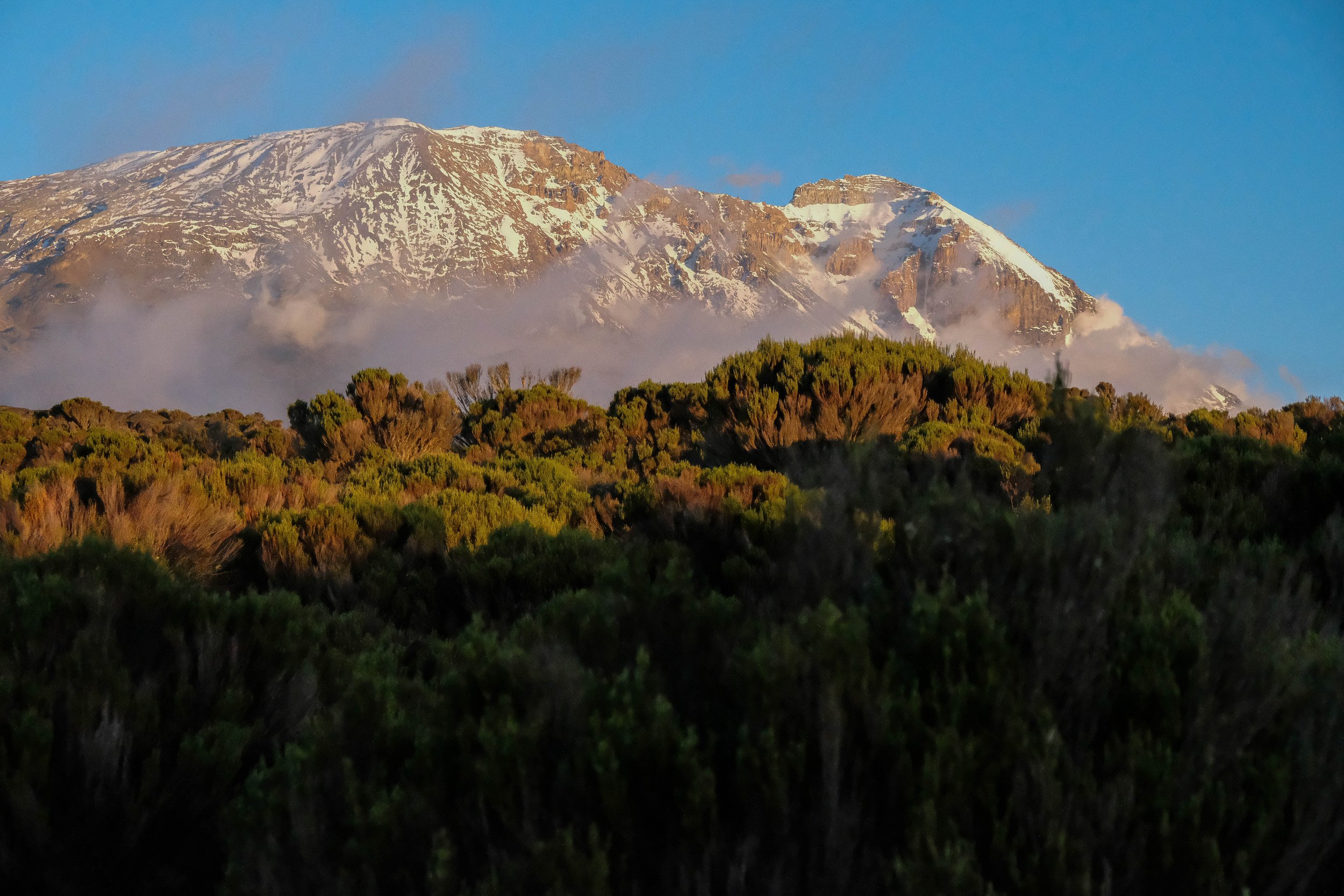
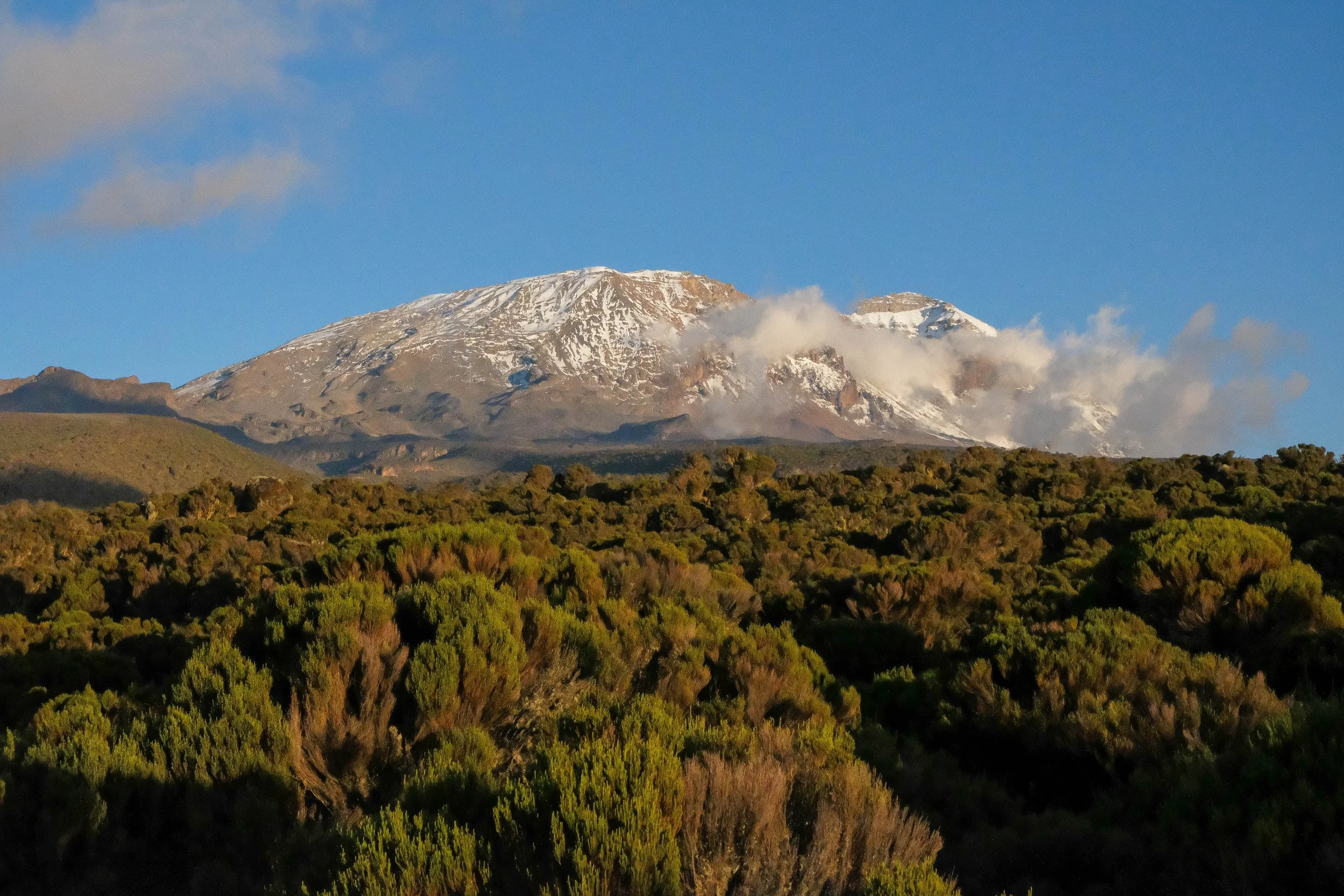
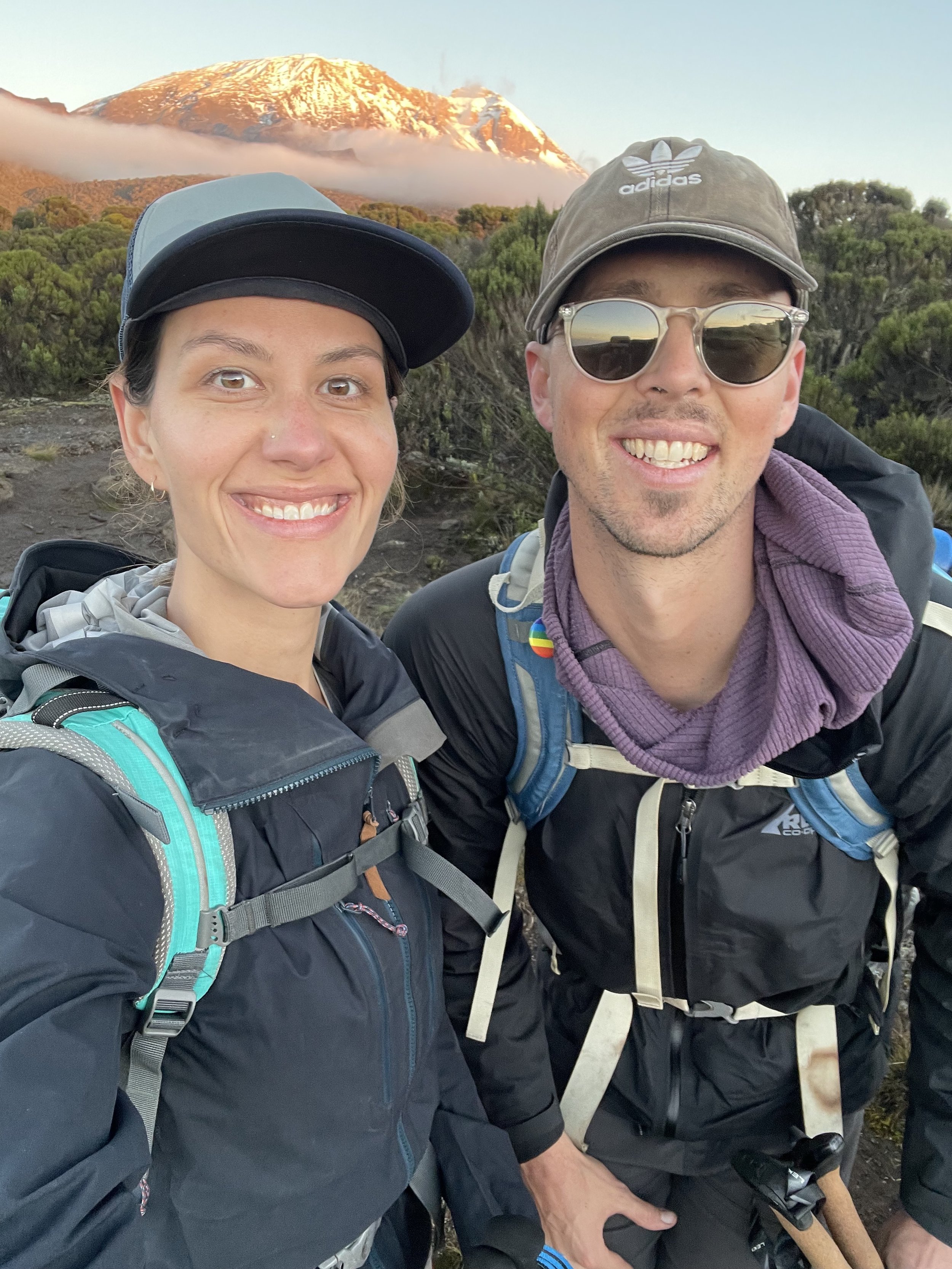
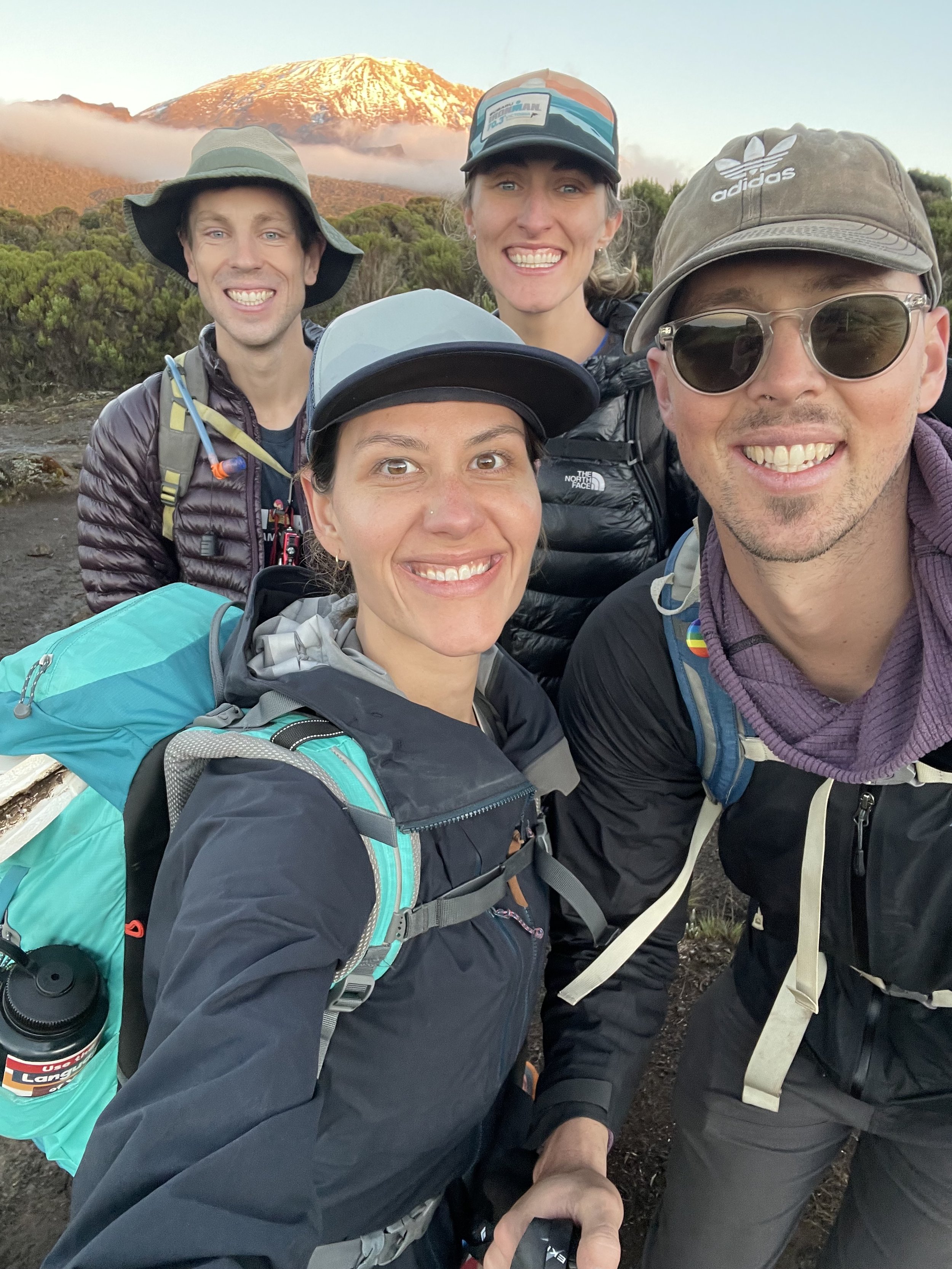
We first made our way to Shira I camp for a midday lunch and rest, then packed up a second time and set out for Shira II in the mid-afternoon. My favorite memory of this day was as dusk fell and the clouds around Kilimanjaro began to clear for our first view of the summit since we’d started the trek. It was topped with crisp white snow, glowing orange and pink in the sunset, dominating the horizon to our left.
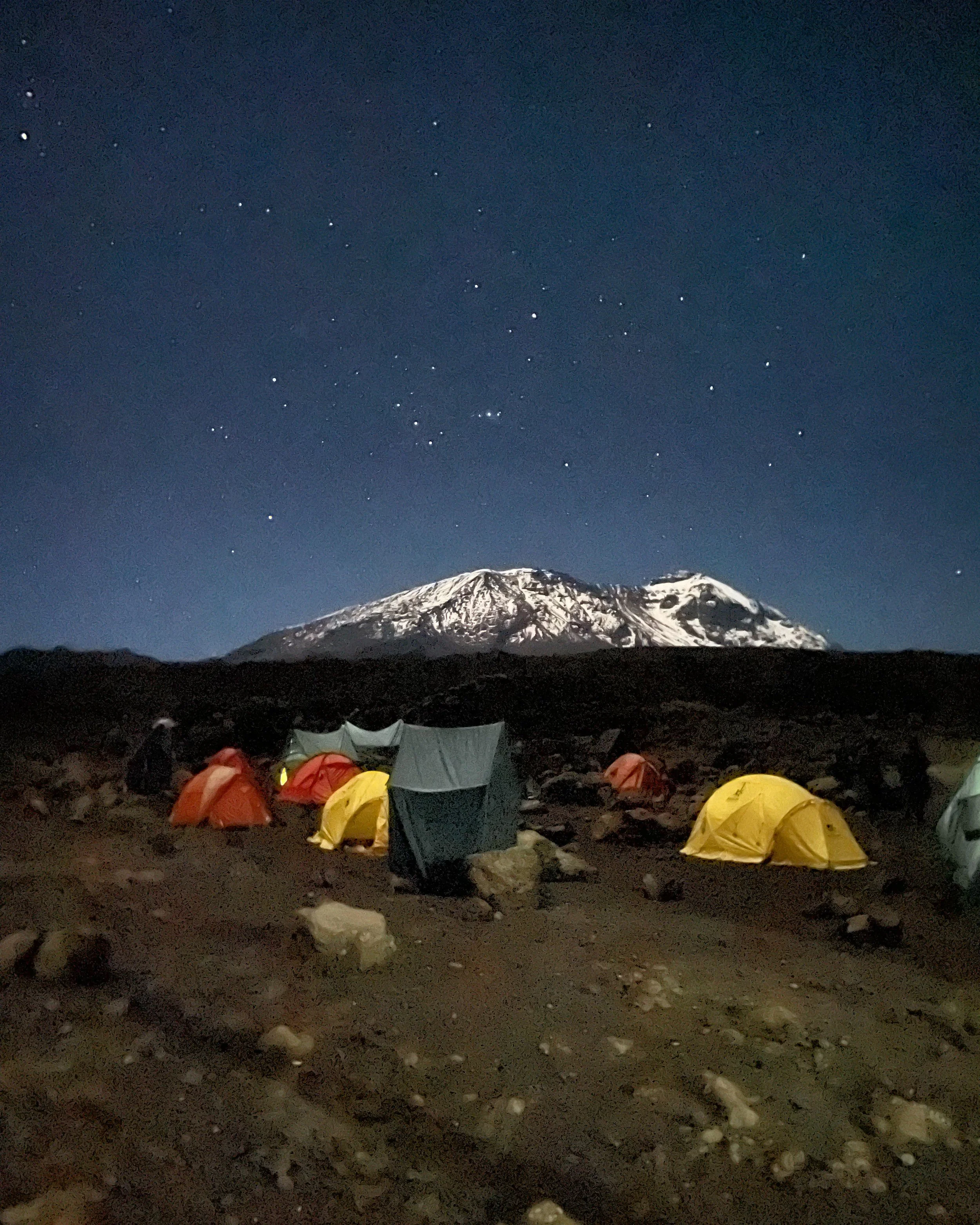
Other core memories of Shira II include James unfortunately developing a mild fever (which thankfully broke quickly with rest, warmth, and ibuprofen), the velvety night sky filled with twinkling stars, and an almost full moon lighting up Kilimanjaro in a silvery glow. This was one of the coldest nights on the mountain, but it was snug and warm in our tents as we drifted off to sleep.
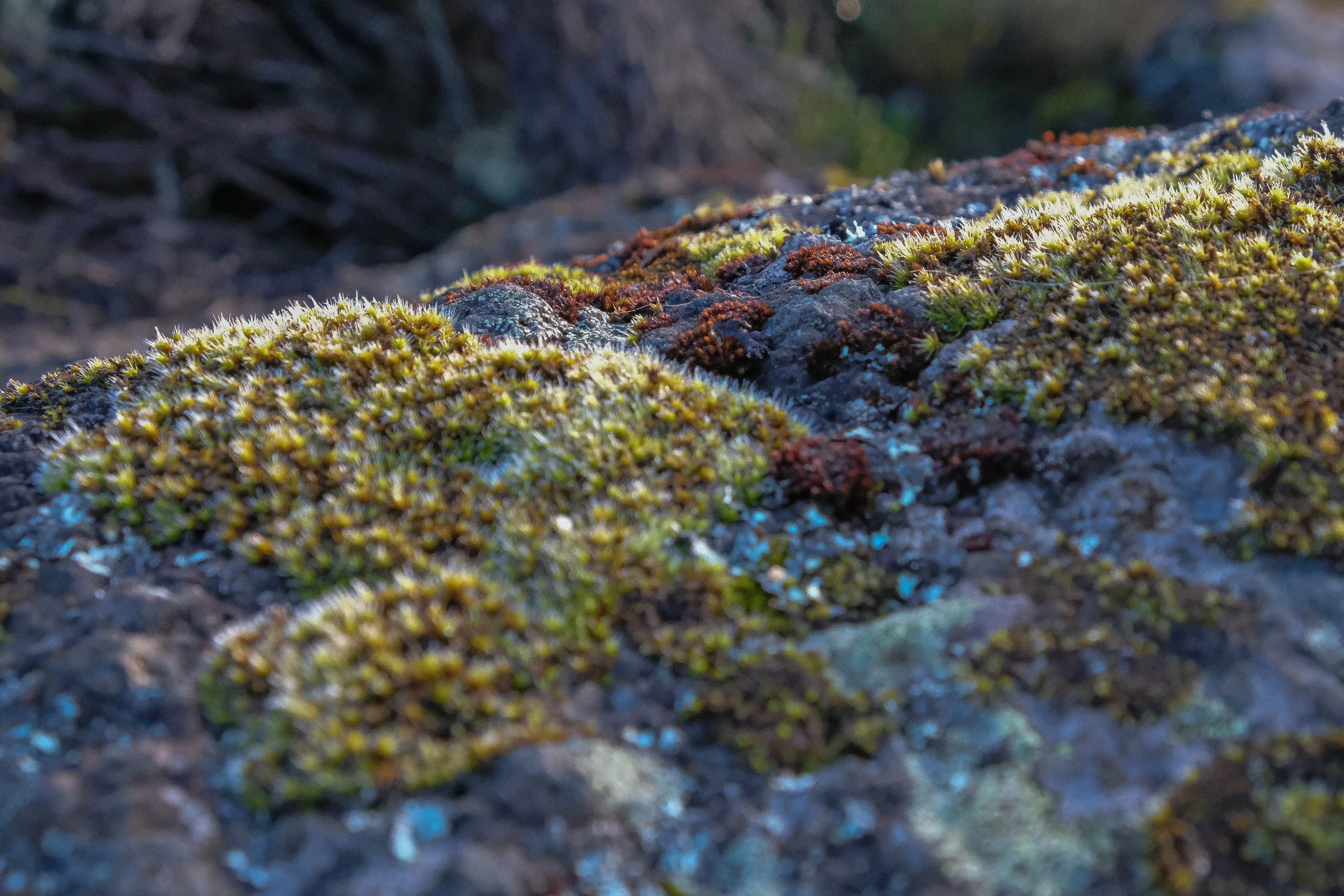
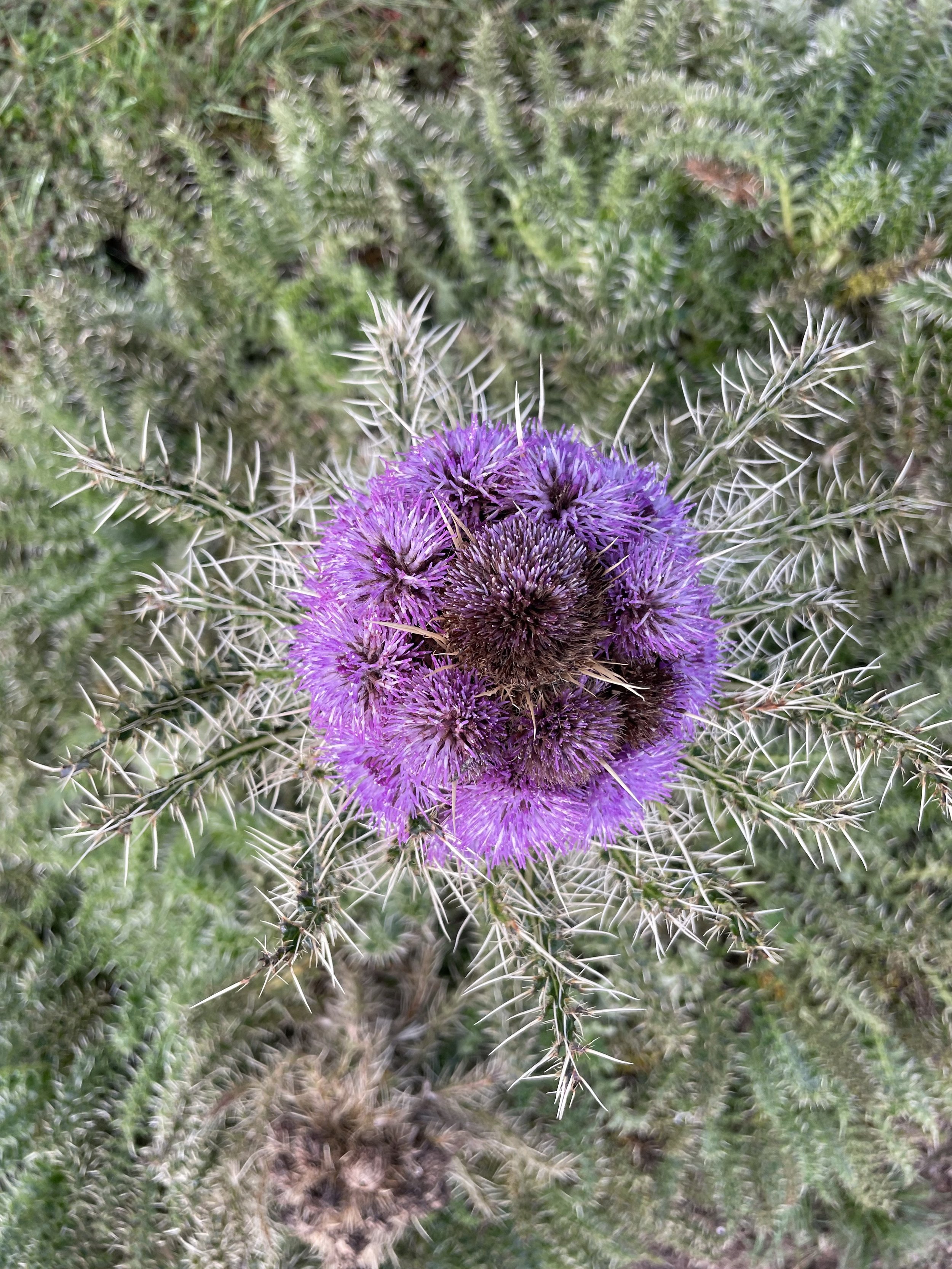
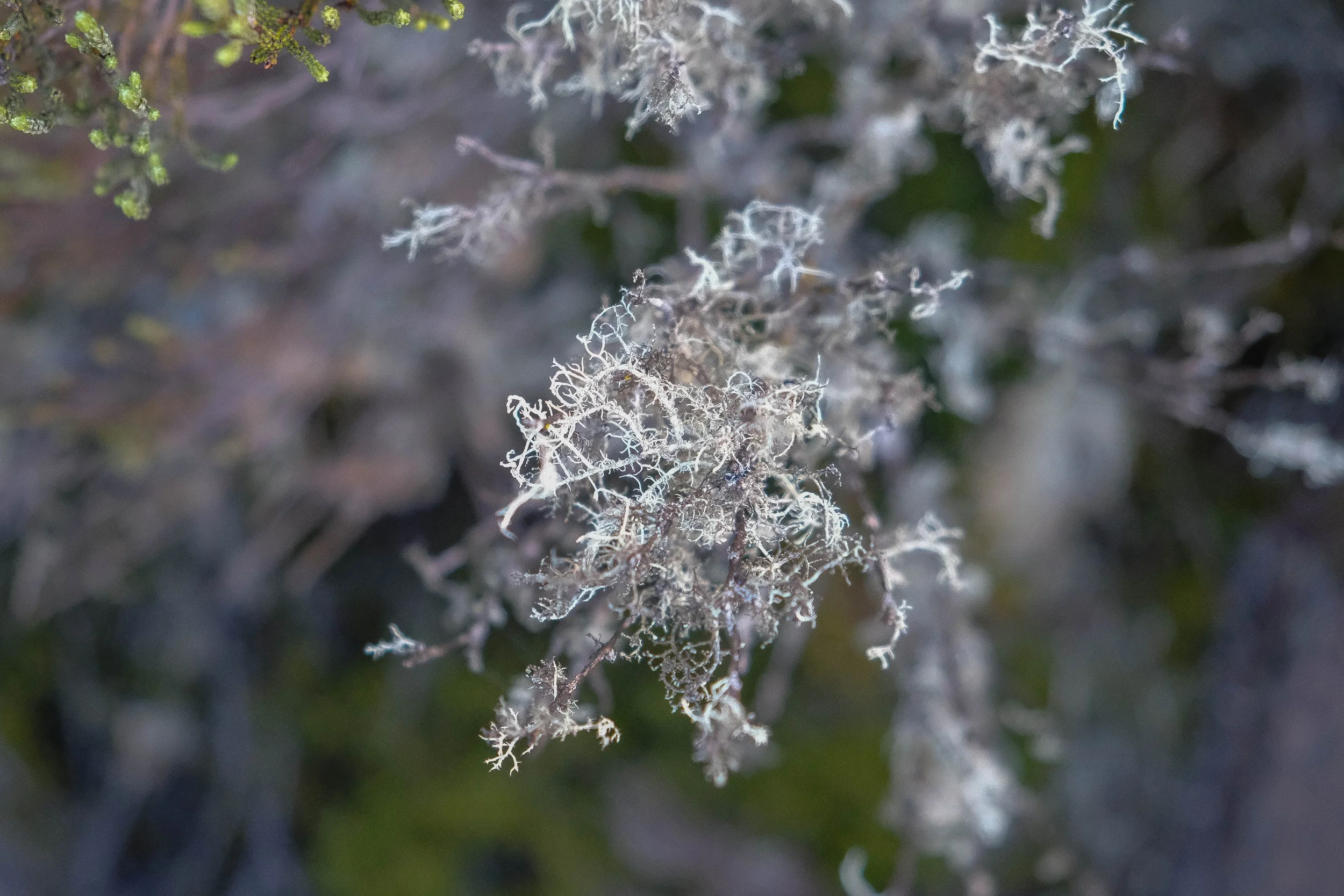
Day 3: Shira II to Lava Camp to Baranco Camp | 5.6 miles | 12,630 ft - 15,220 ft - 13,070 ft
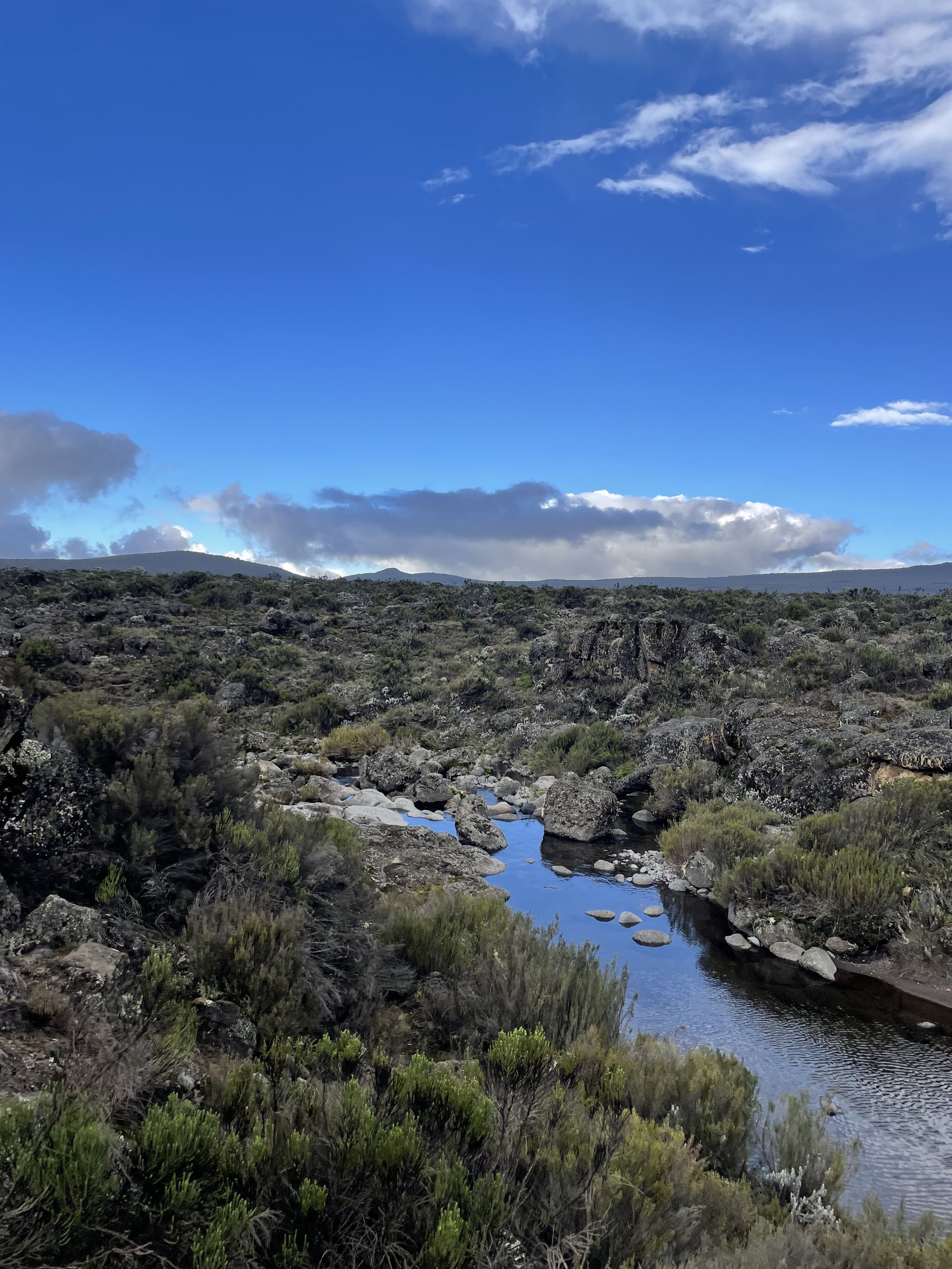
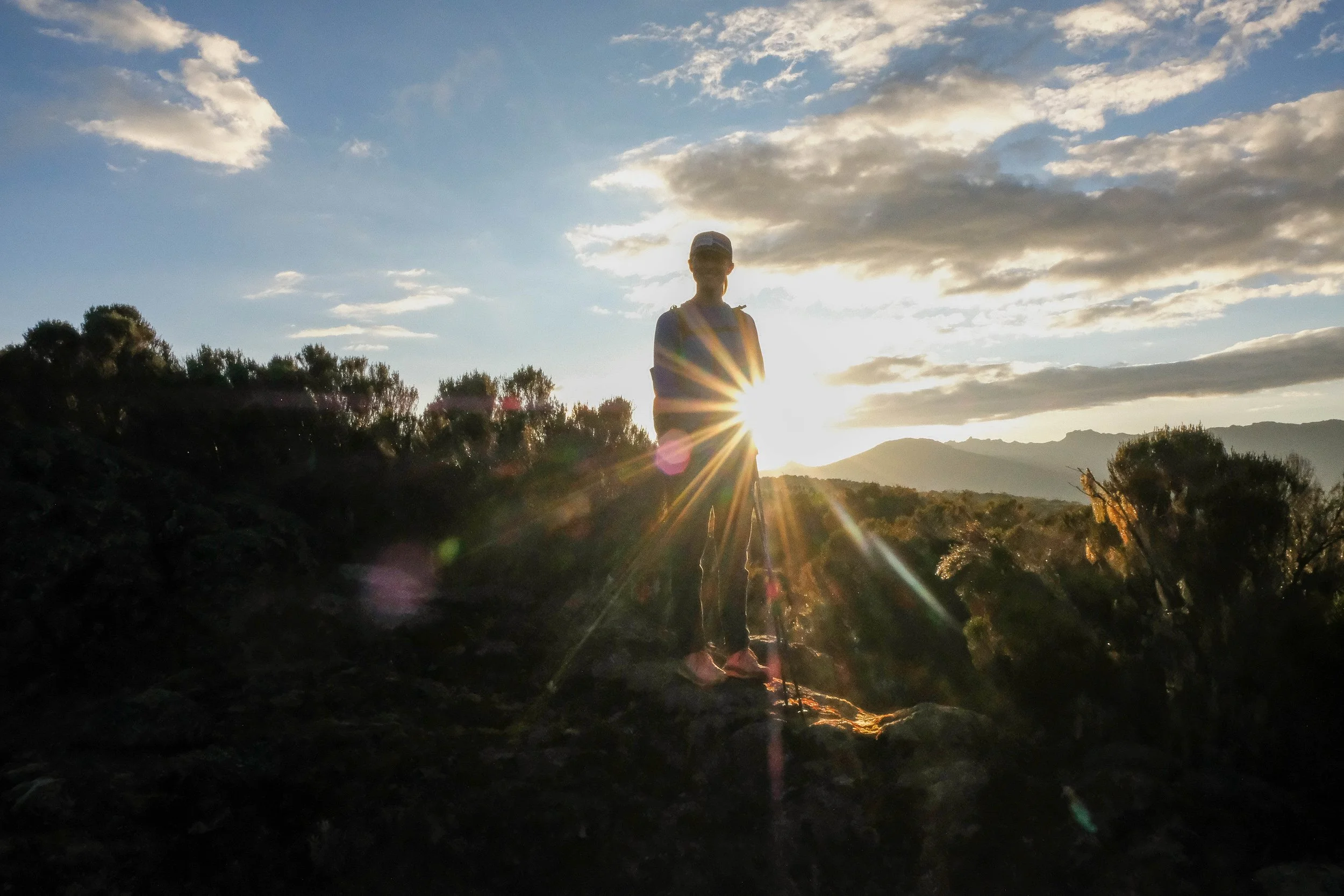
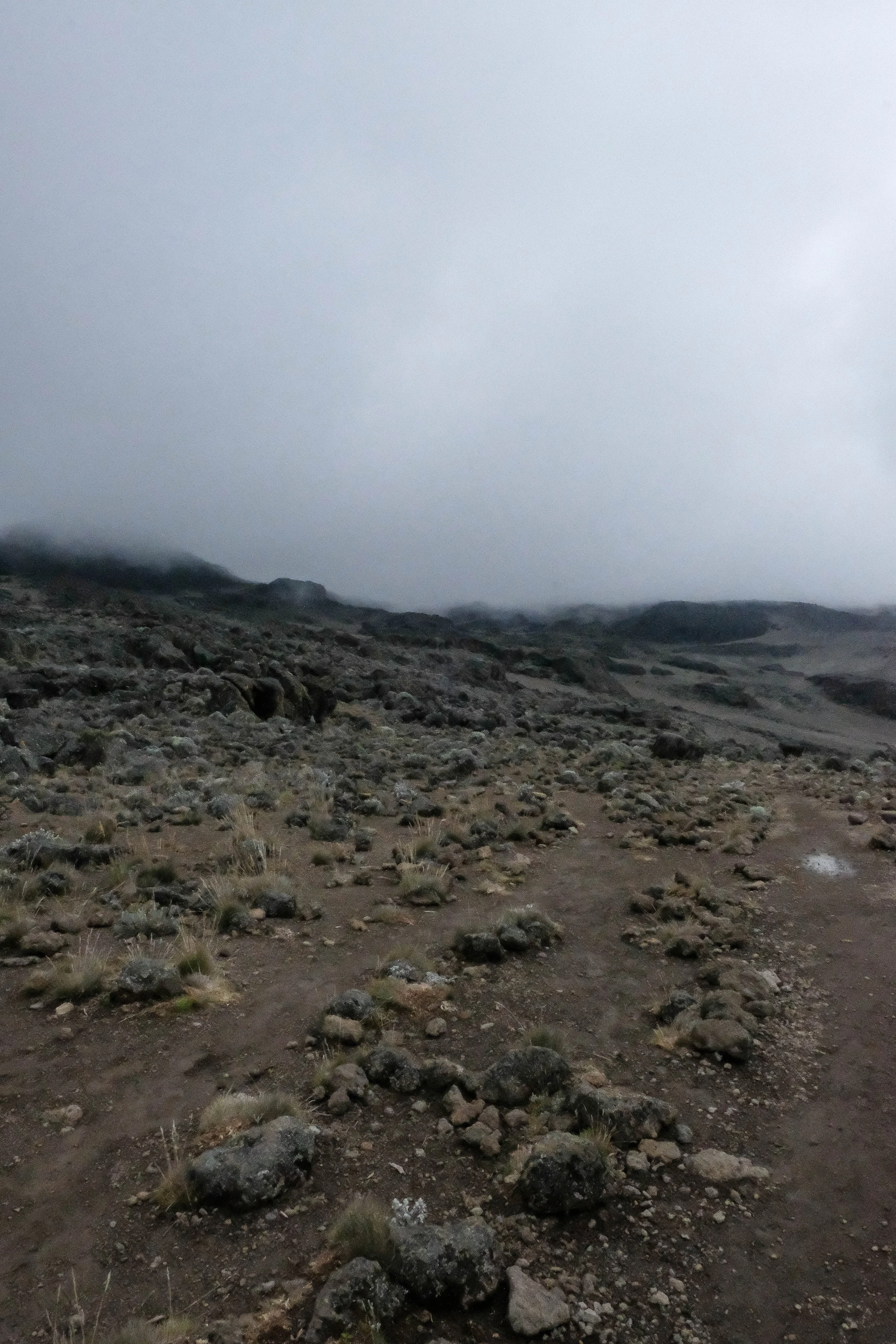
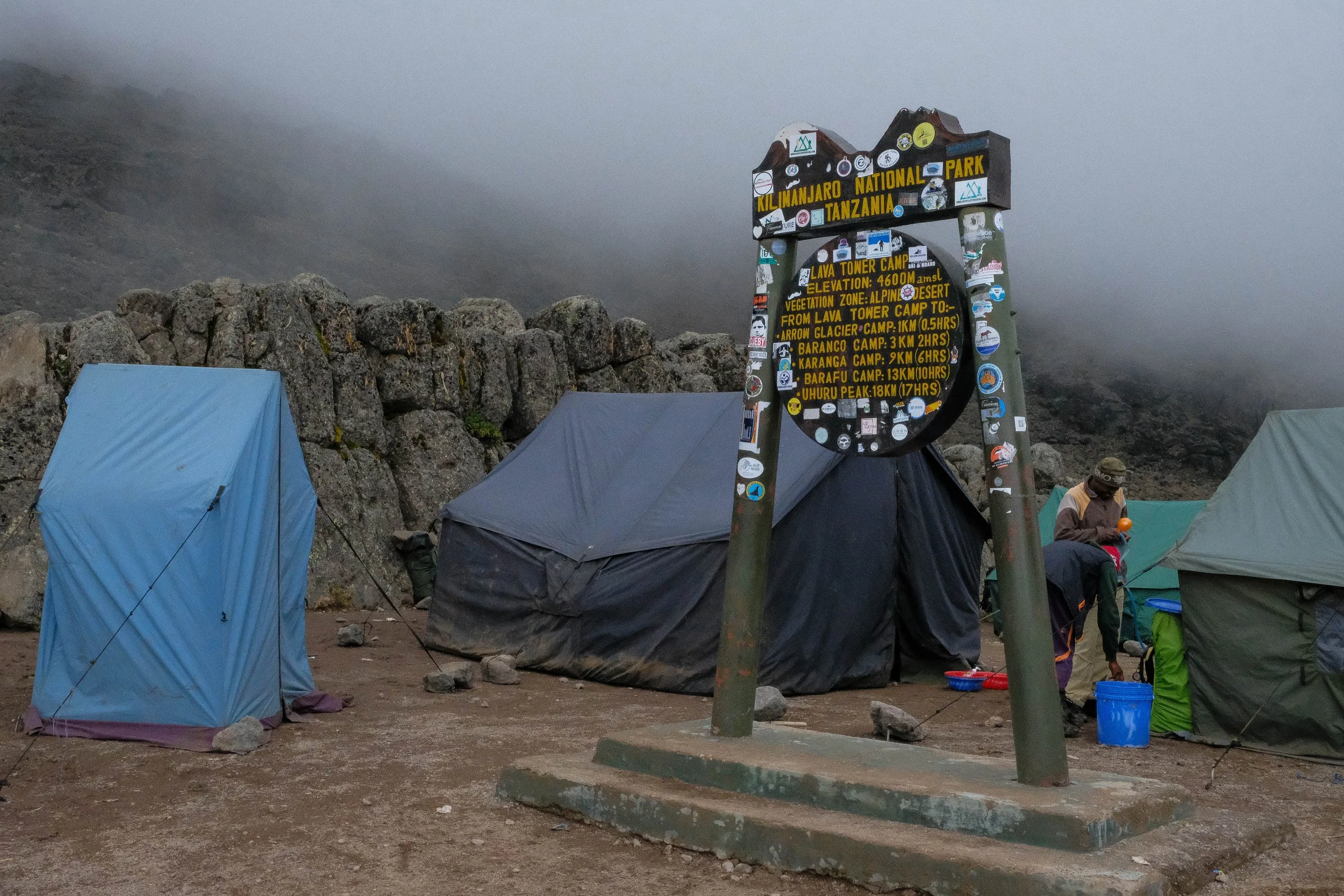
We enjoyed a later start on Day 3 with a wake-up call at 7:30. The sun was shining brightly, illuminating Kilimanjaro above us and the plateau sweeping away below us. After a delicious breakfast, we set out through the semi-desert landscape toward Lava Camp, which was situated in the alpine desert at over 15,000 ft. Our goal was to spend an acclimatization lunch break there before continuing down to Baranco Camp to sleep.
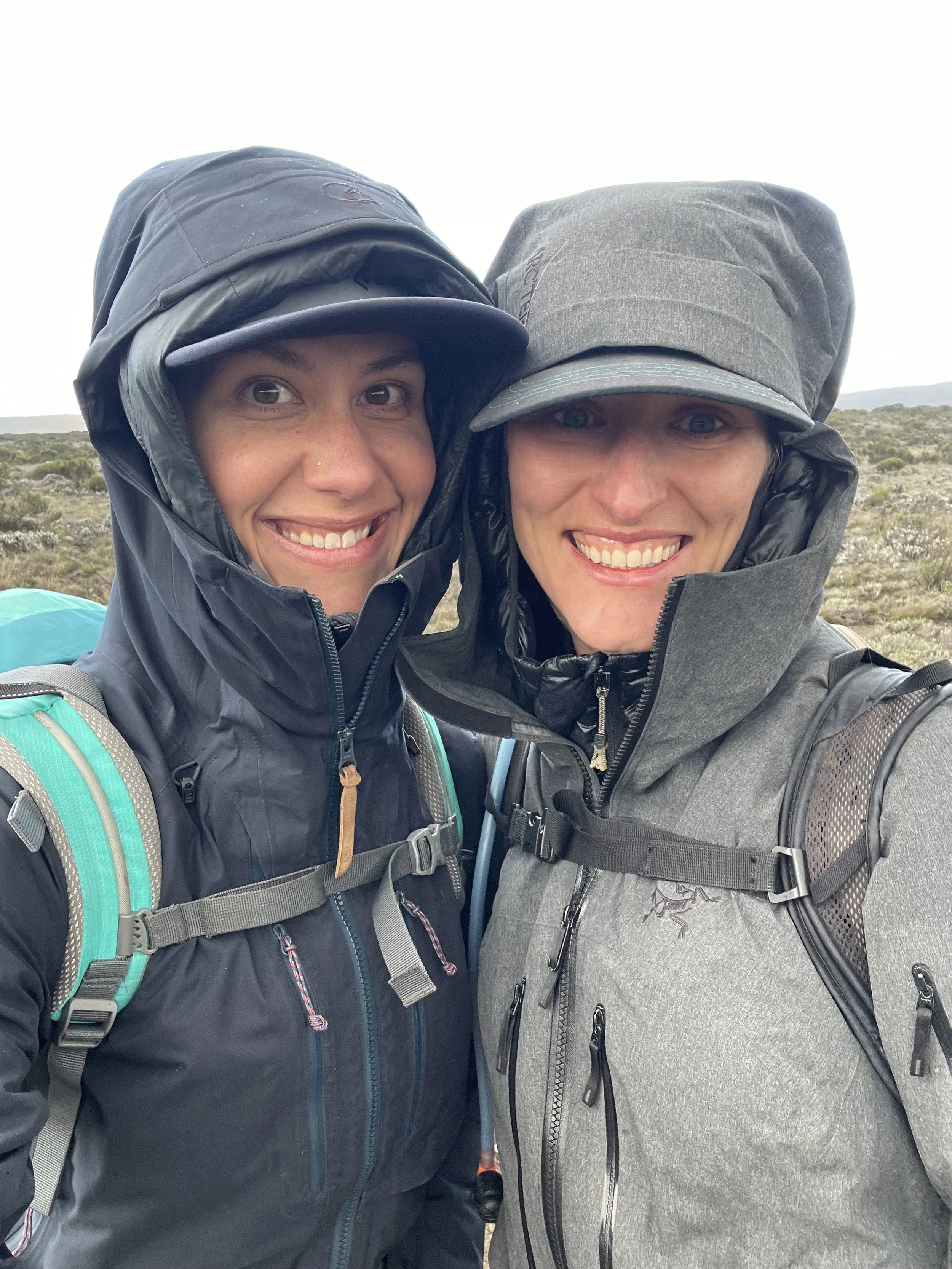
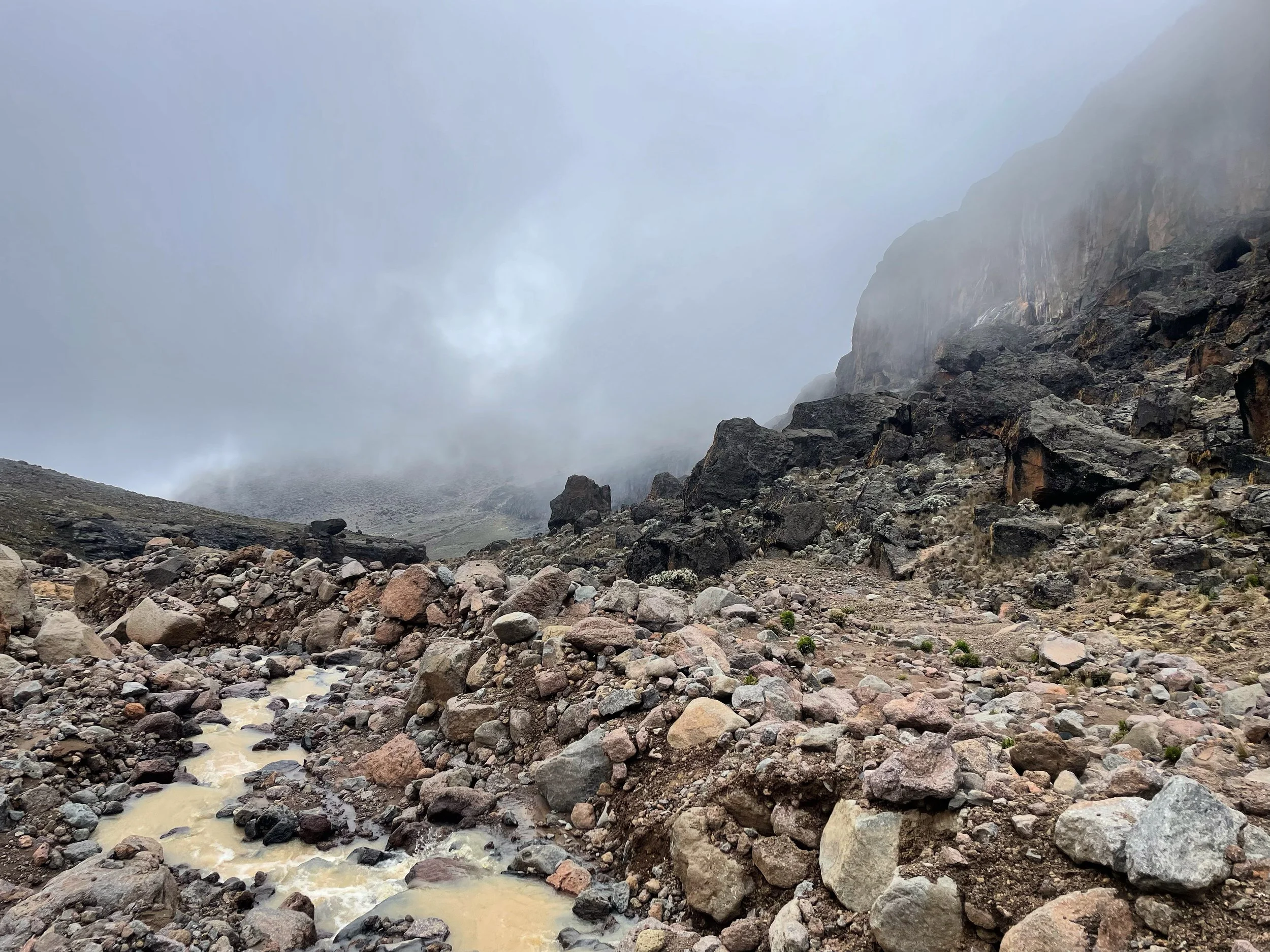
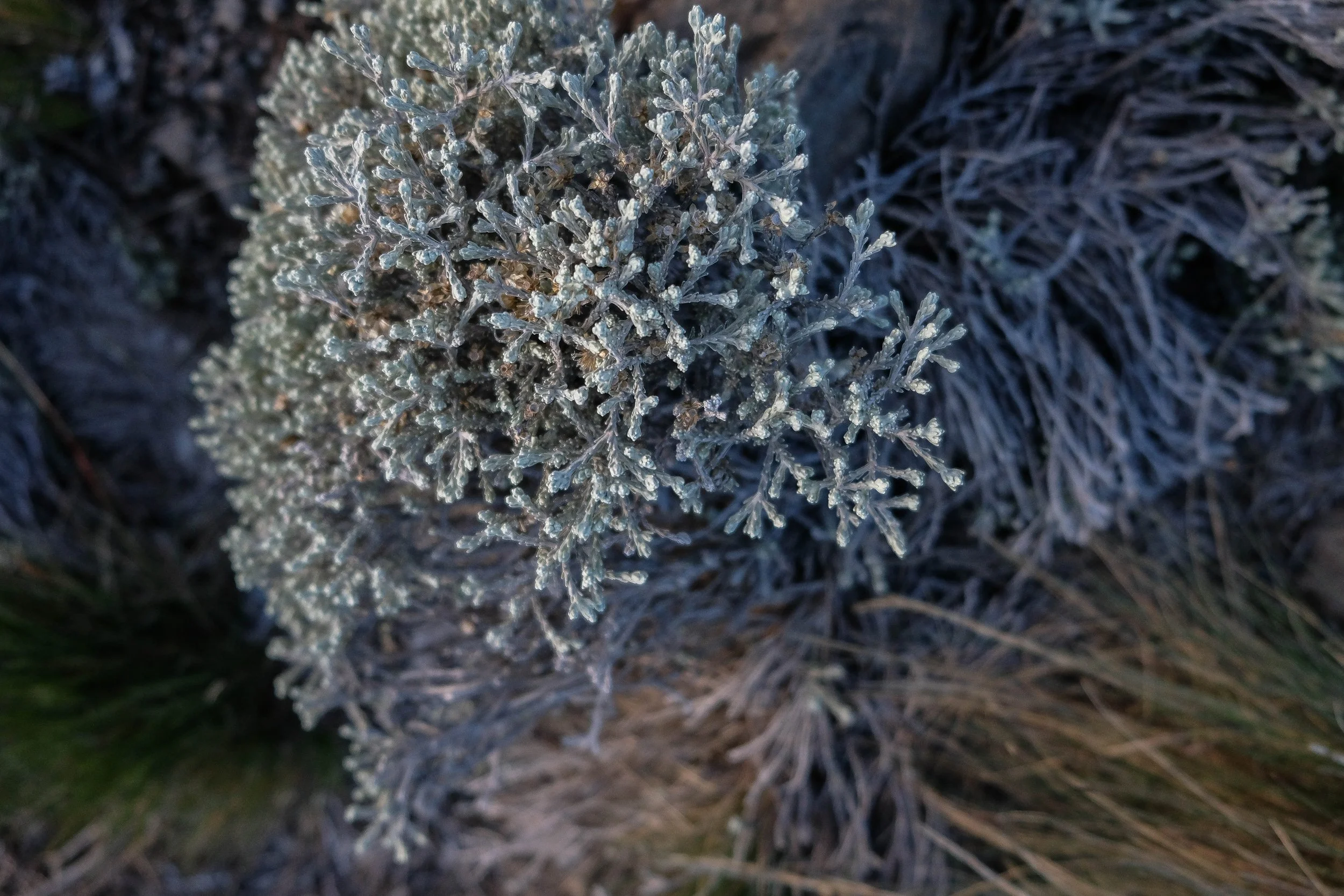
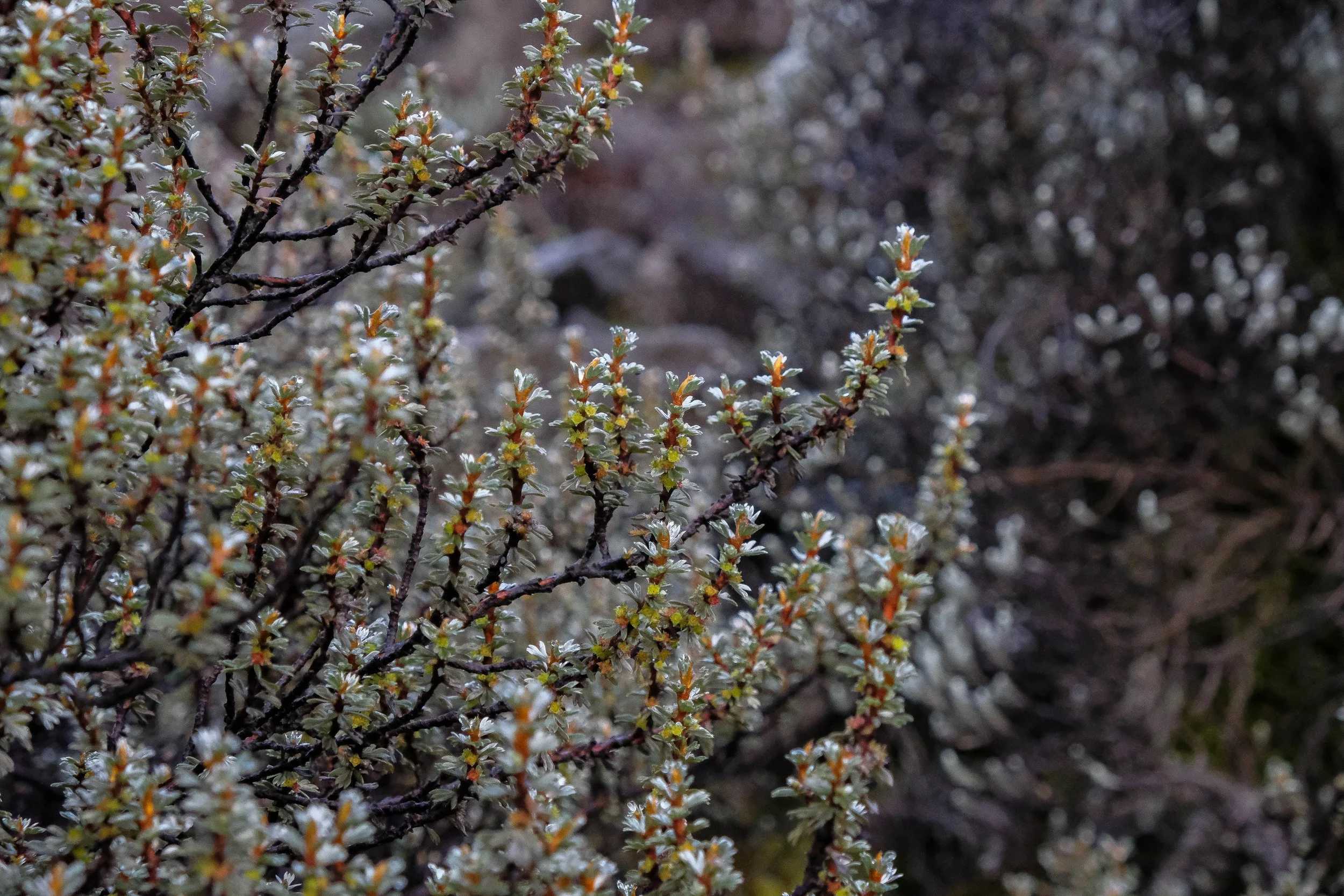
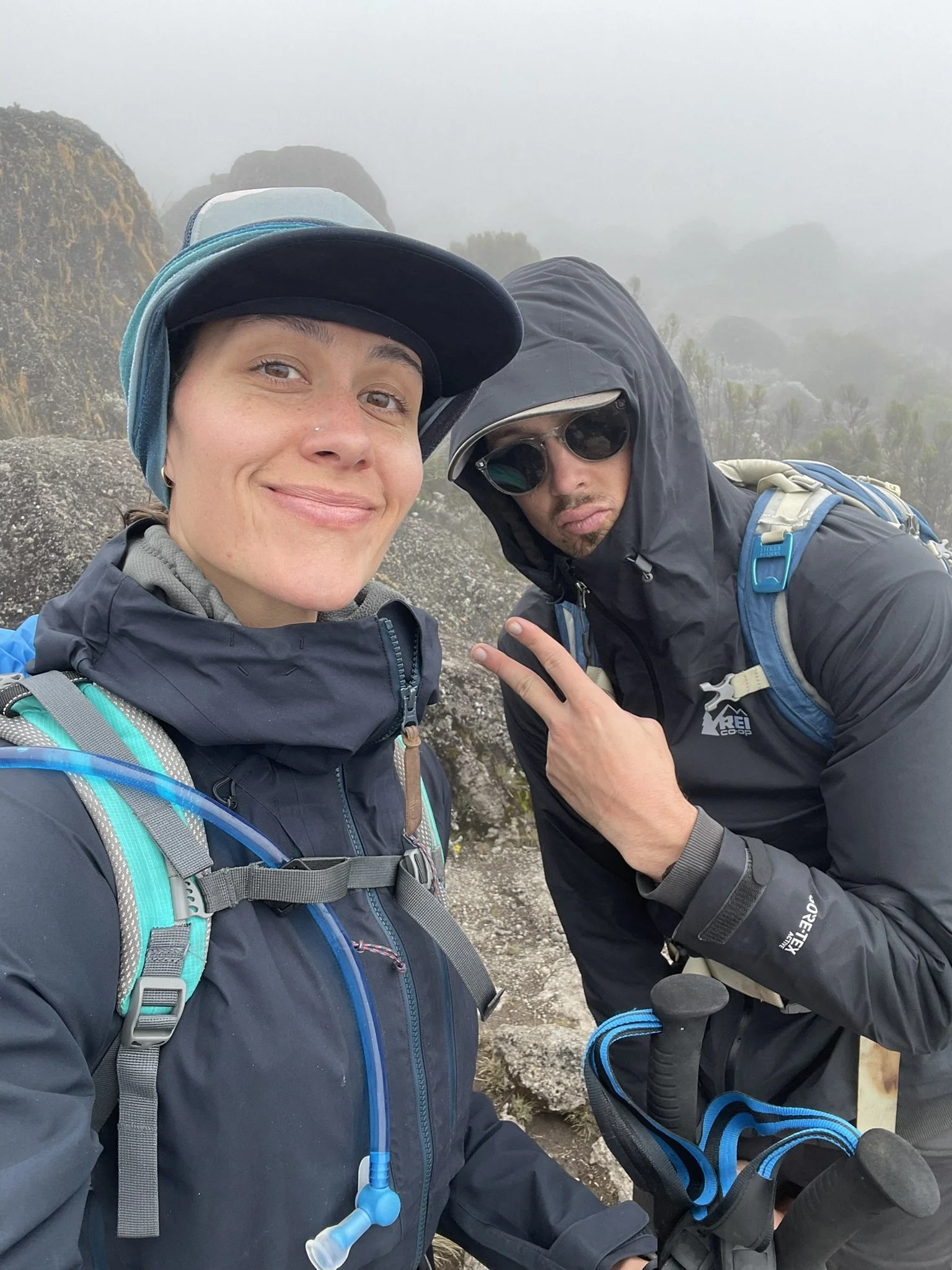
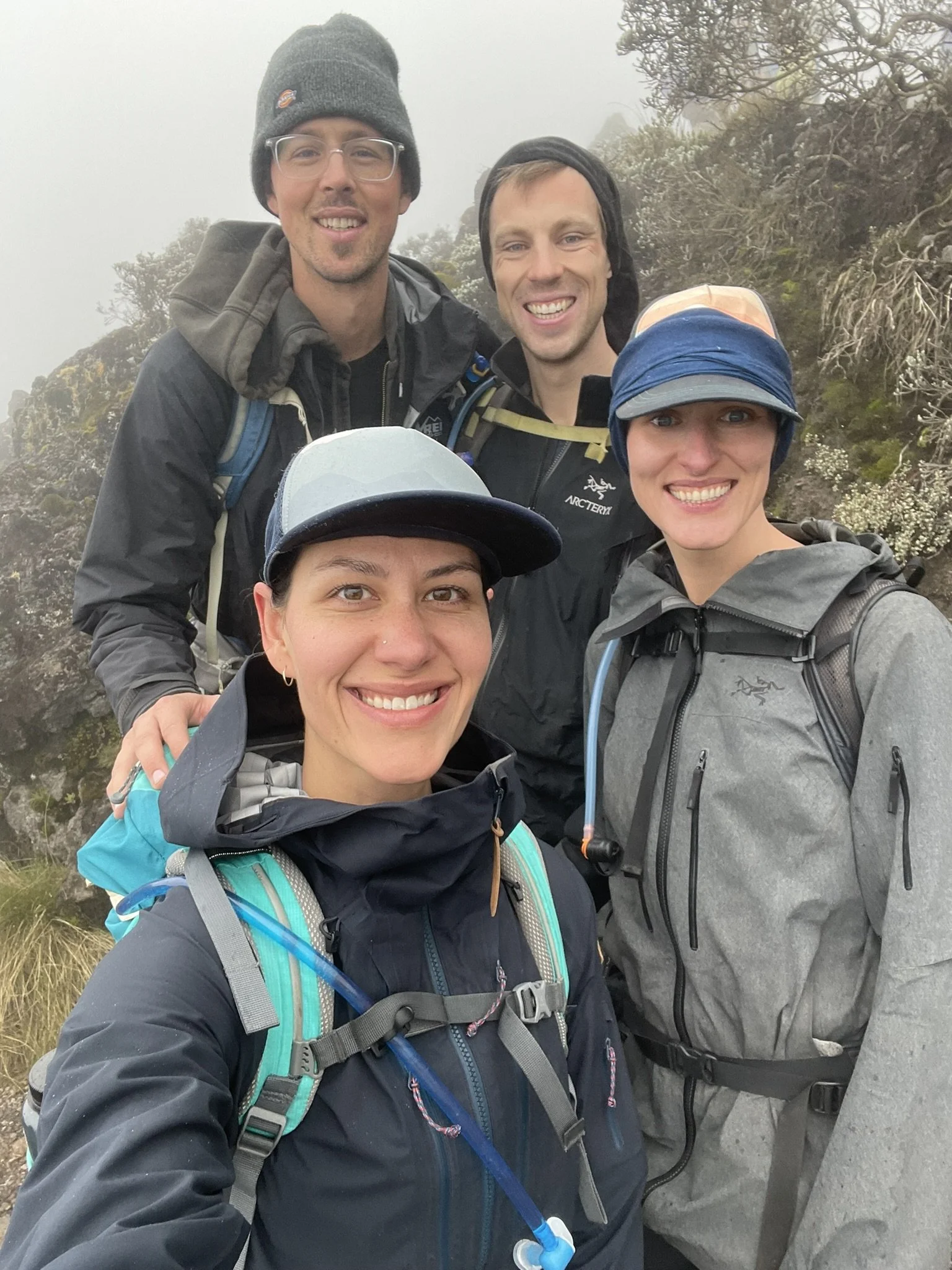
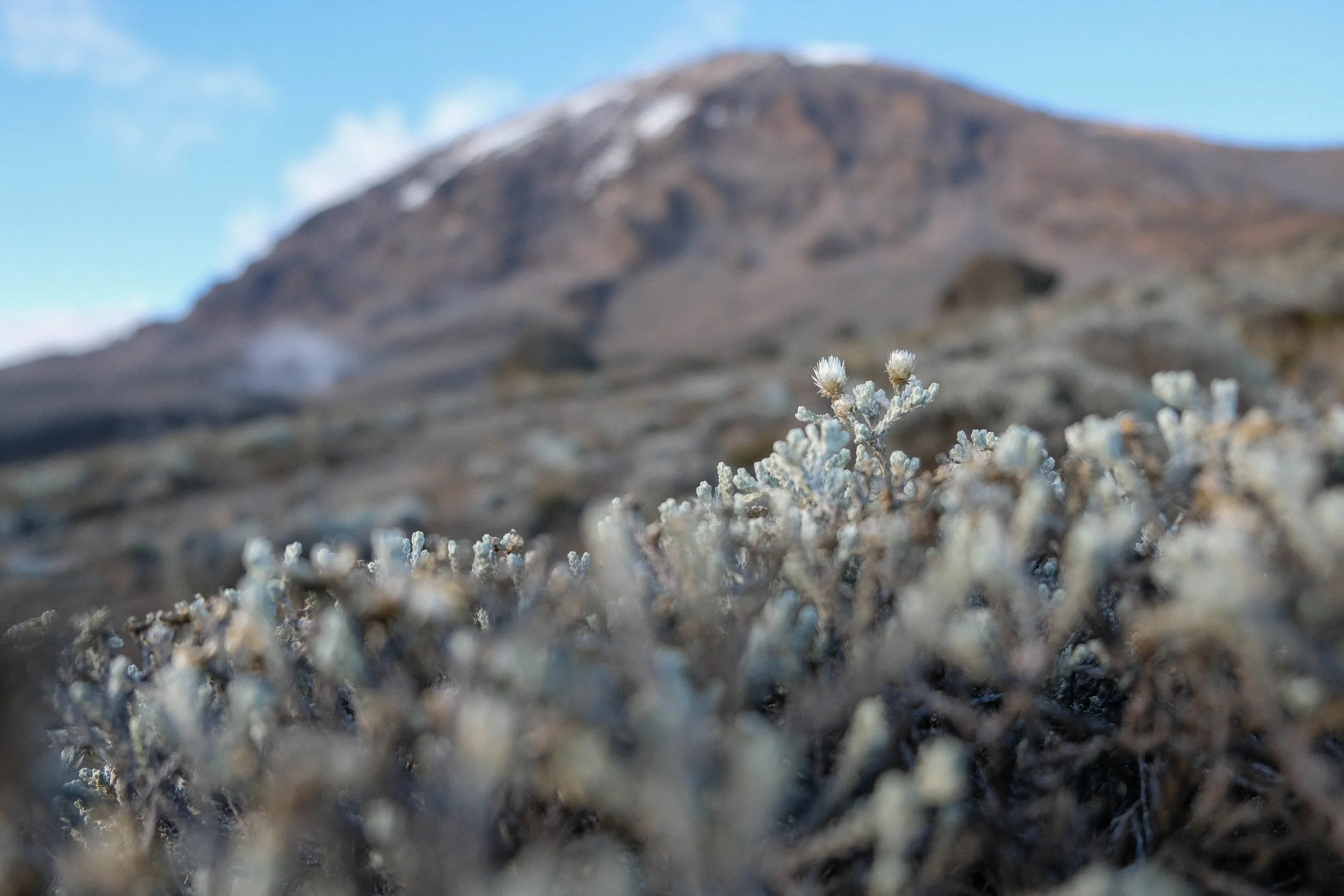
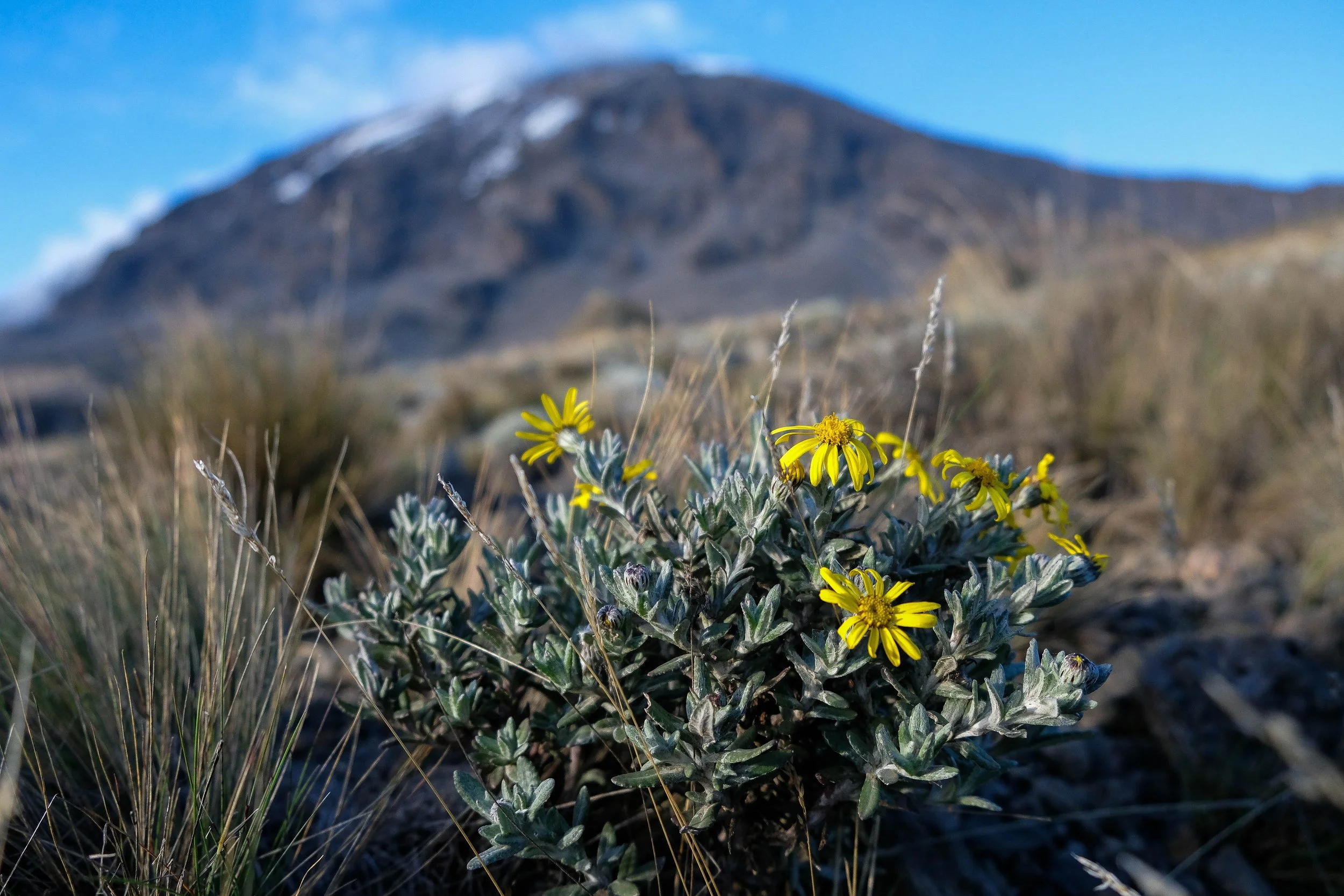
The sun disappeared and we spent the majority of the day in and out of mist and clouds. Little birds and tiny, hardy mountain flowers graced our path. I remember moments where I could almost tangibly feel my gratitude that I was exactly where I was at that very moment. We sang and even danced our way up the rocky slopes to Beyoncé (classic). It hadn’t taken our guides long to realize all they needed to do to get me and Alida fully hyped was to ask: “Who runs the world?” To which we brandished our hiking poles to the sky and enthusiastically proclaimed: “GIRLS!”
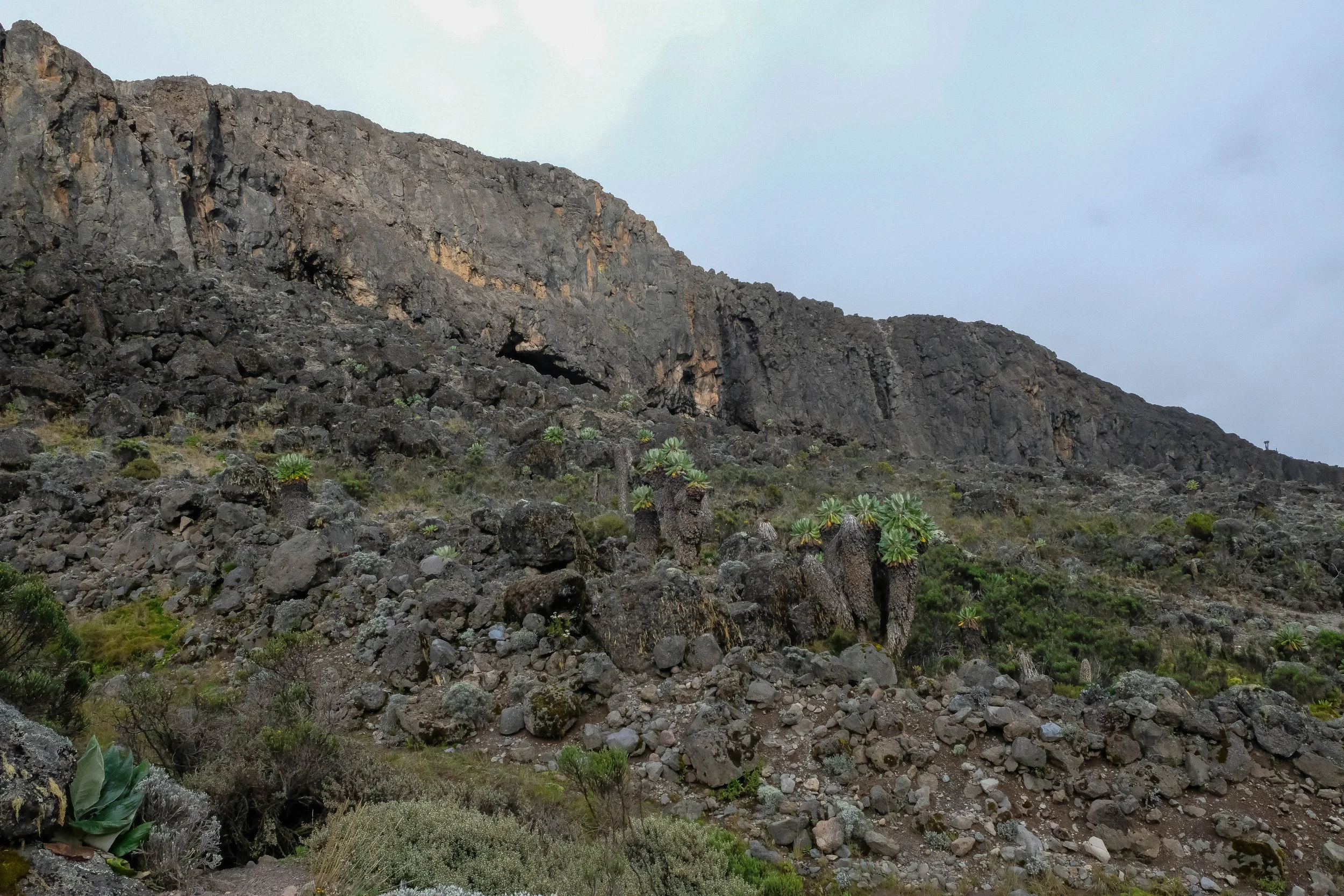
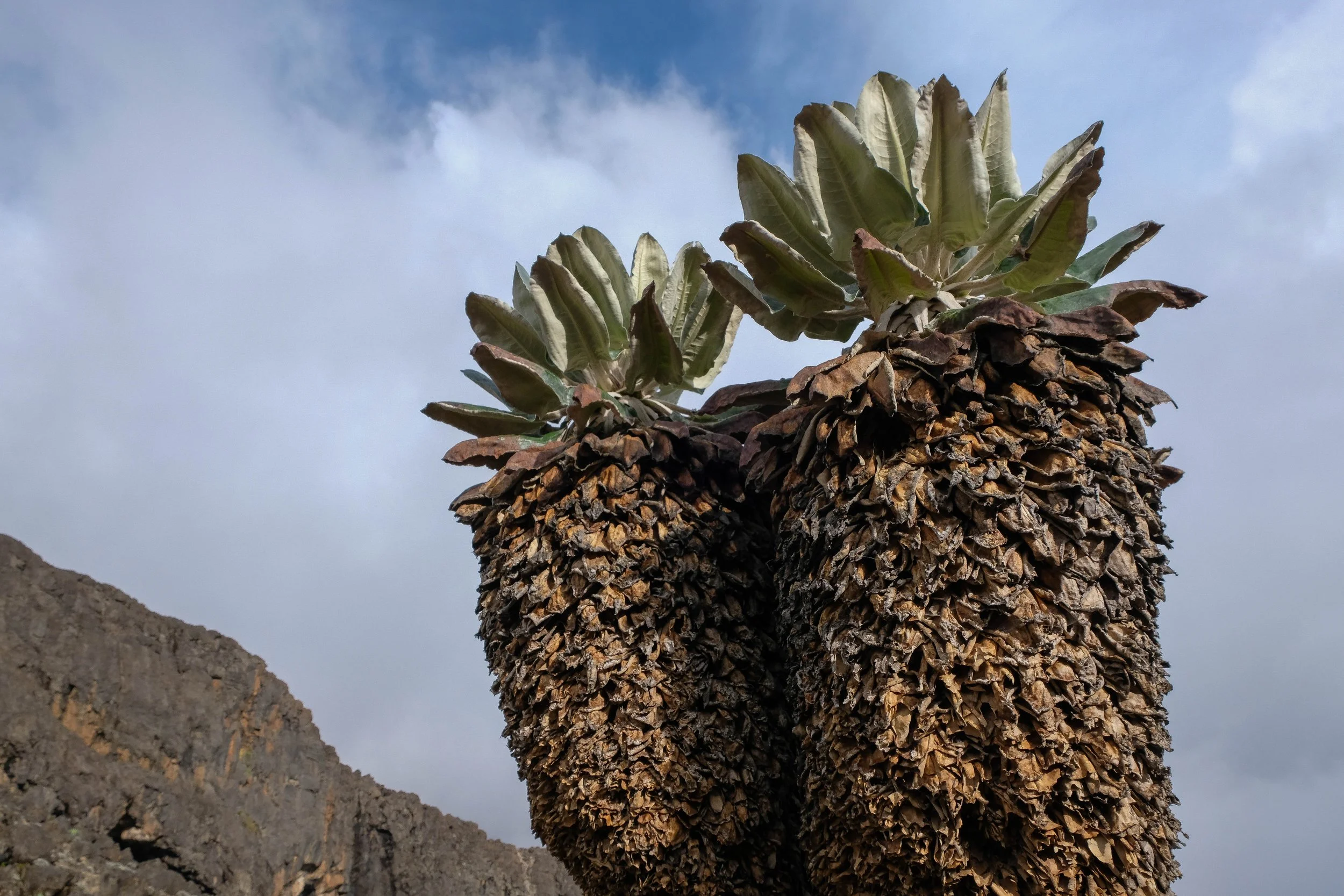
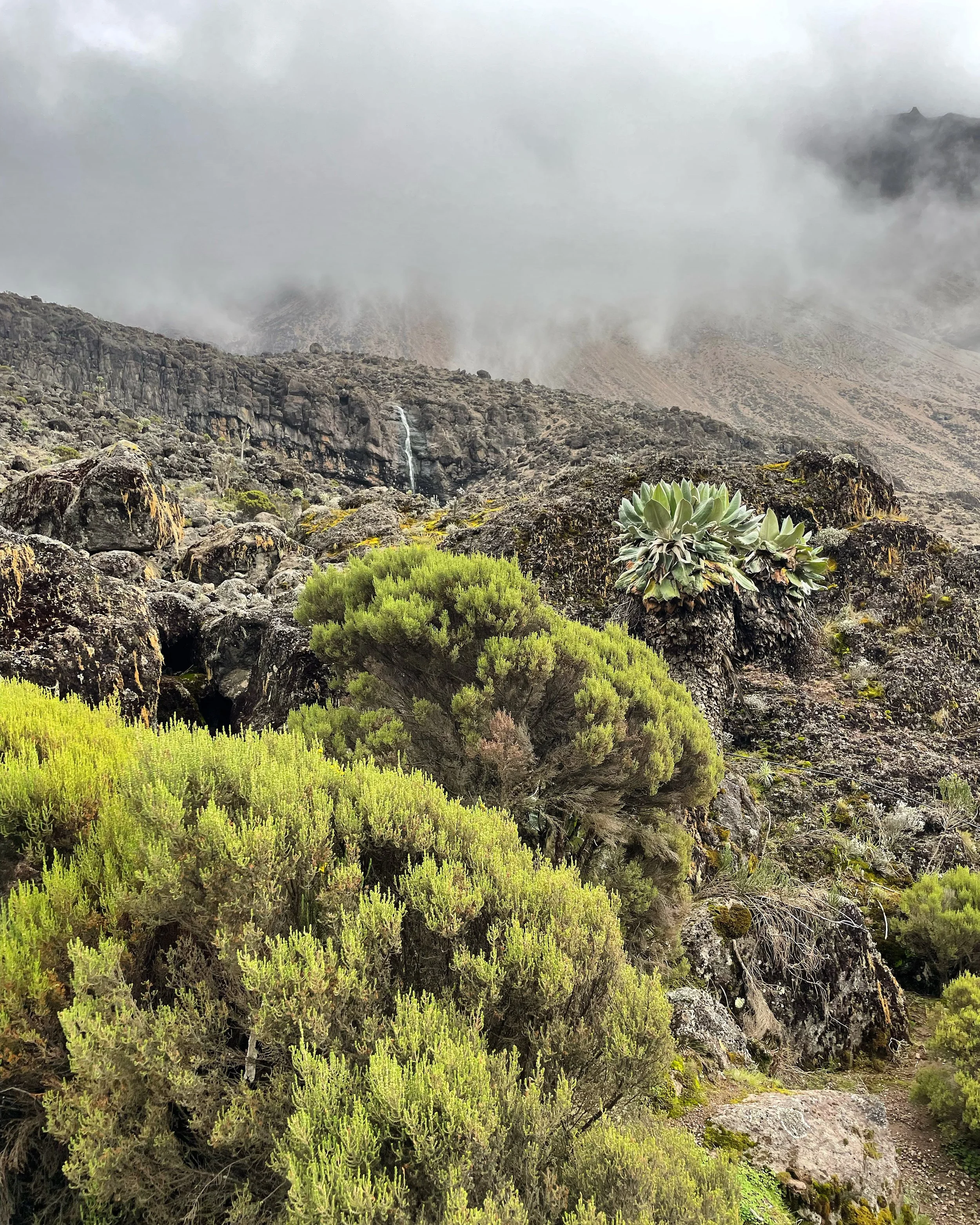
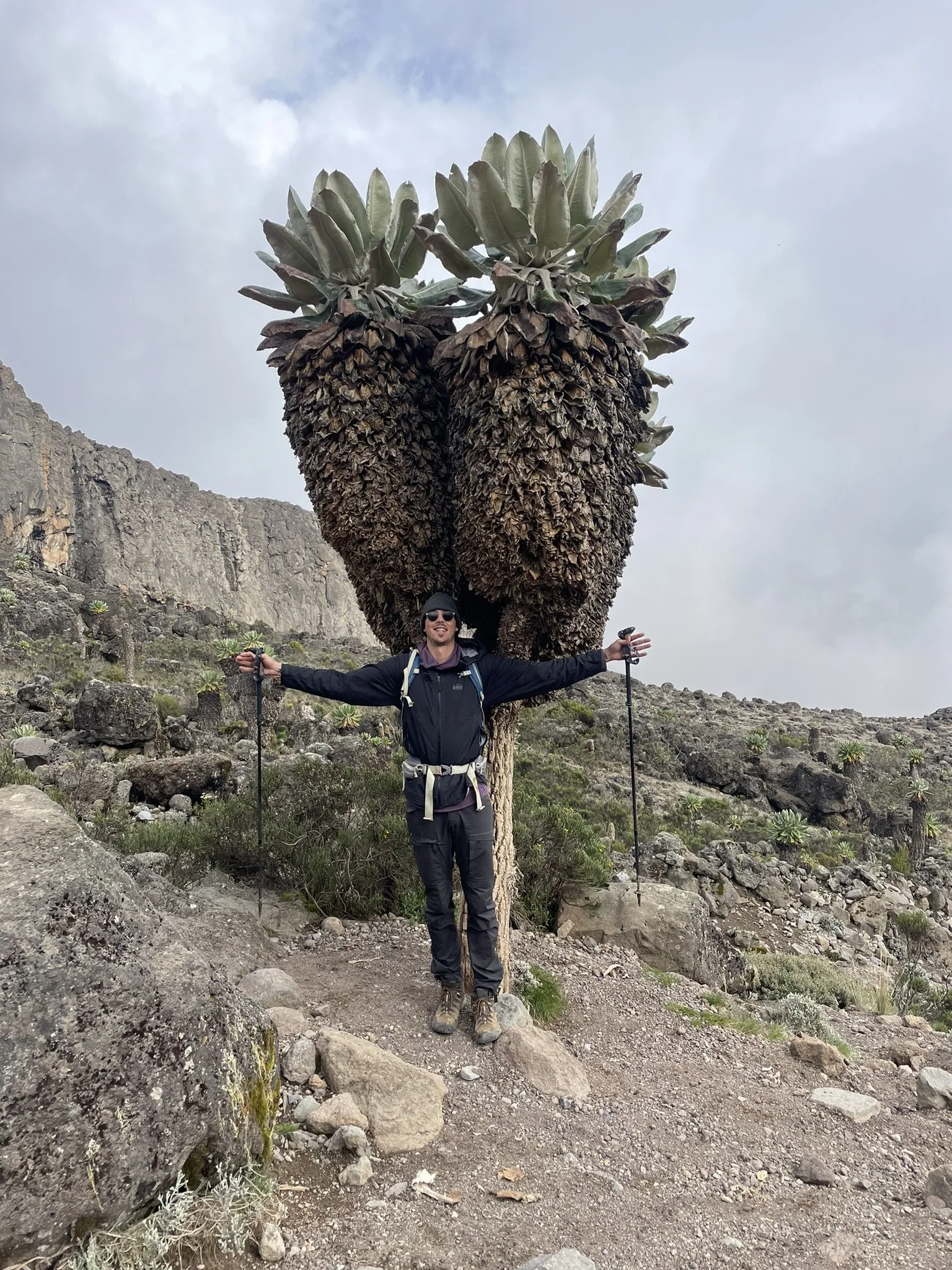
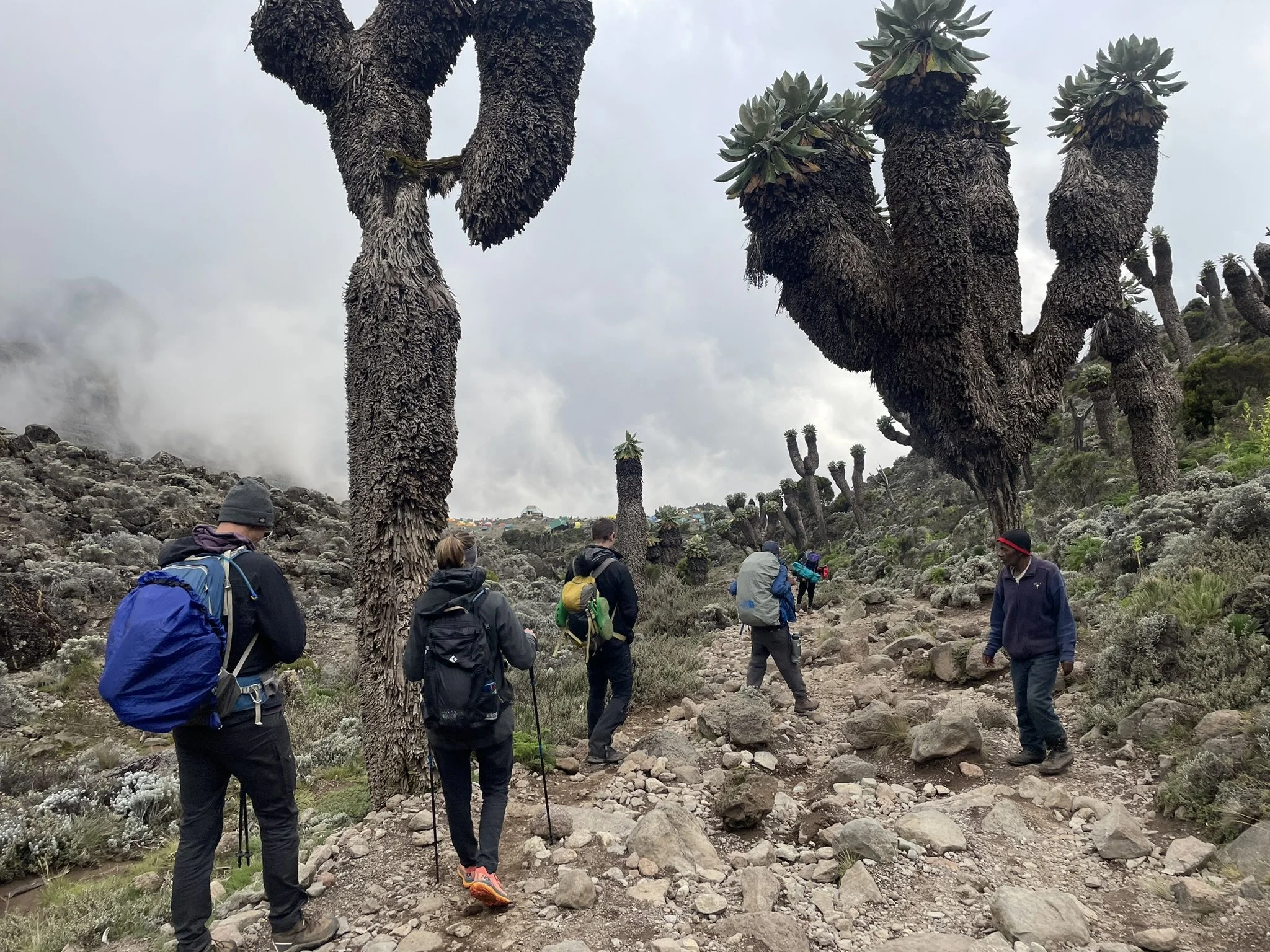
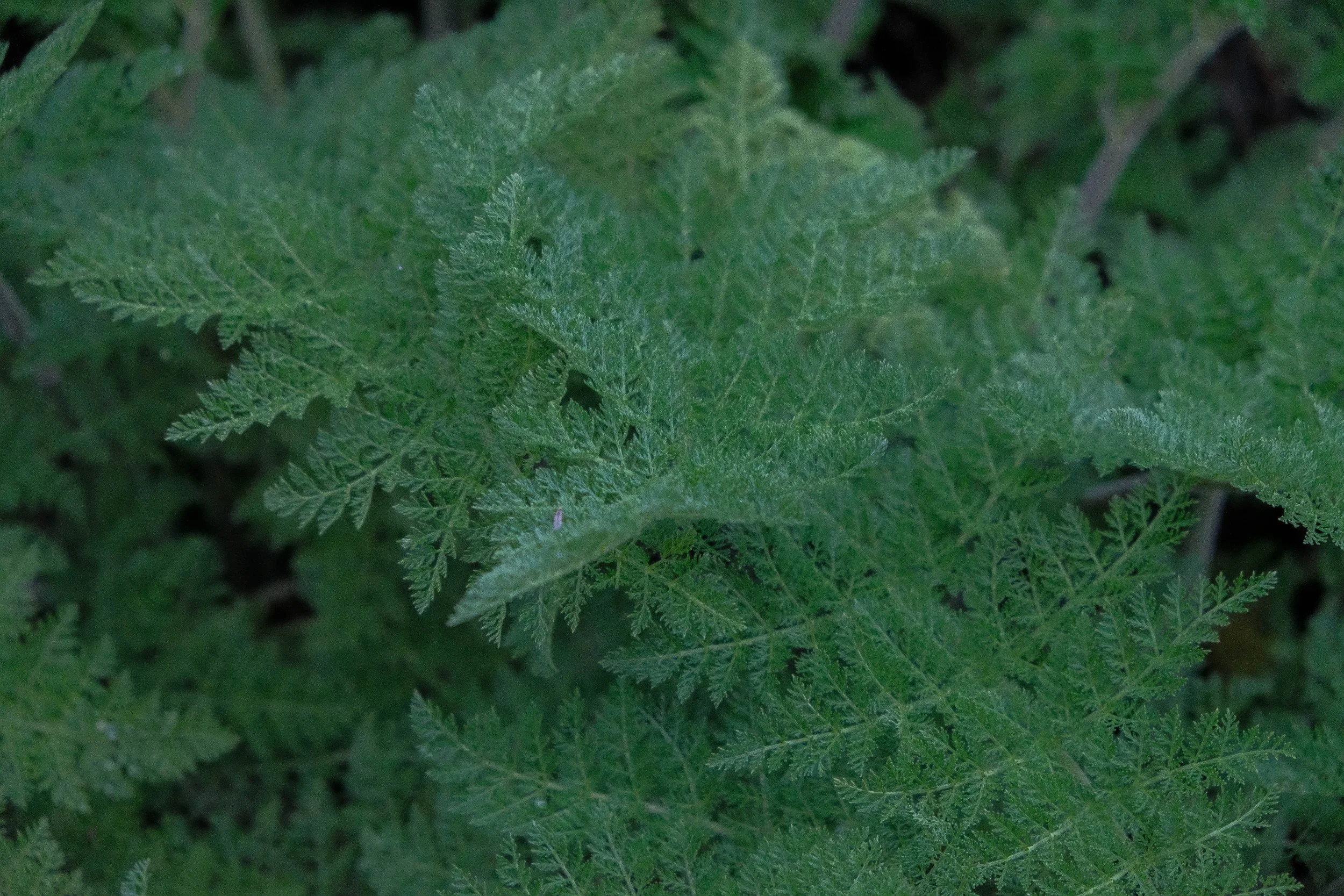
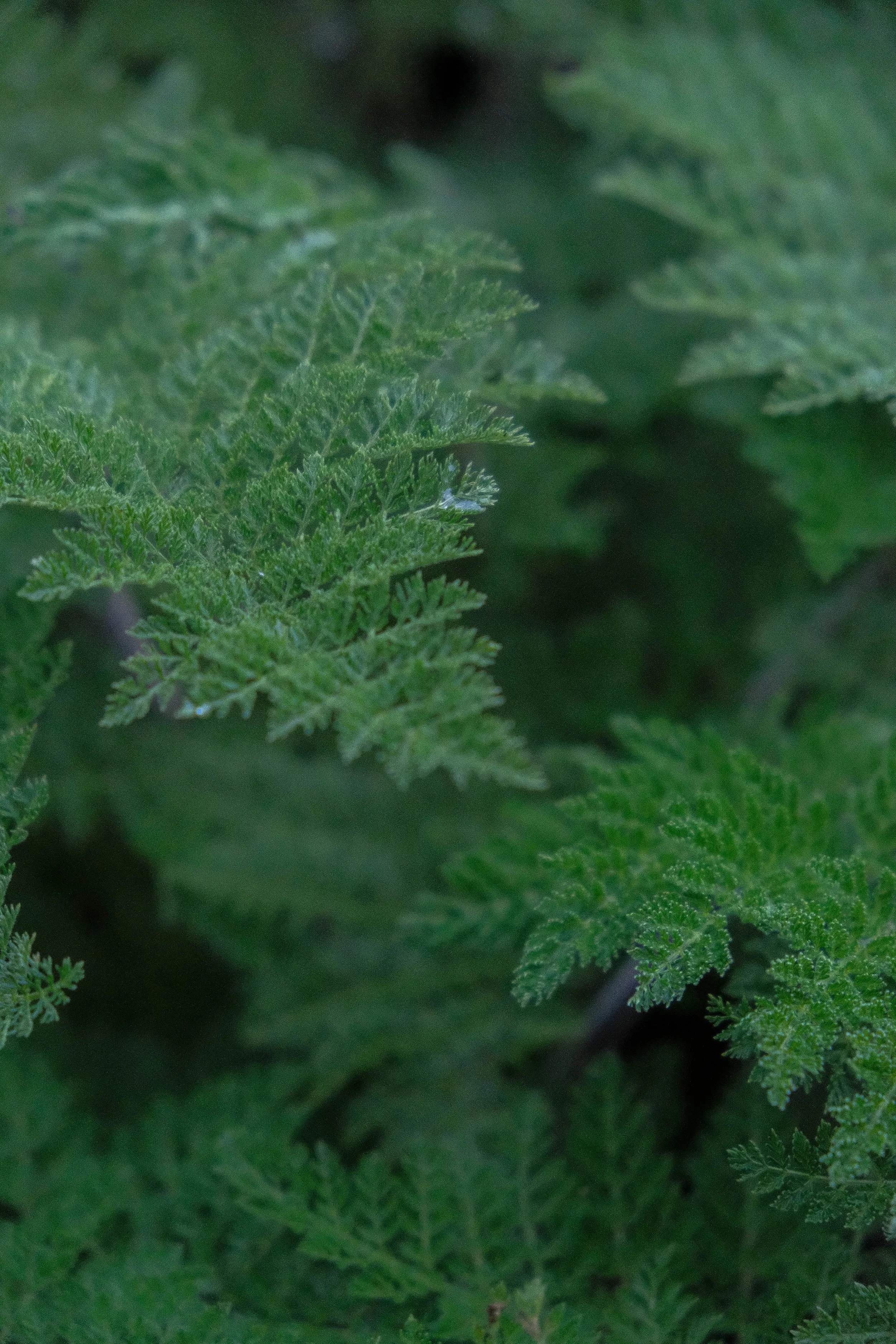
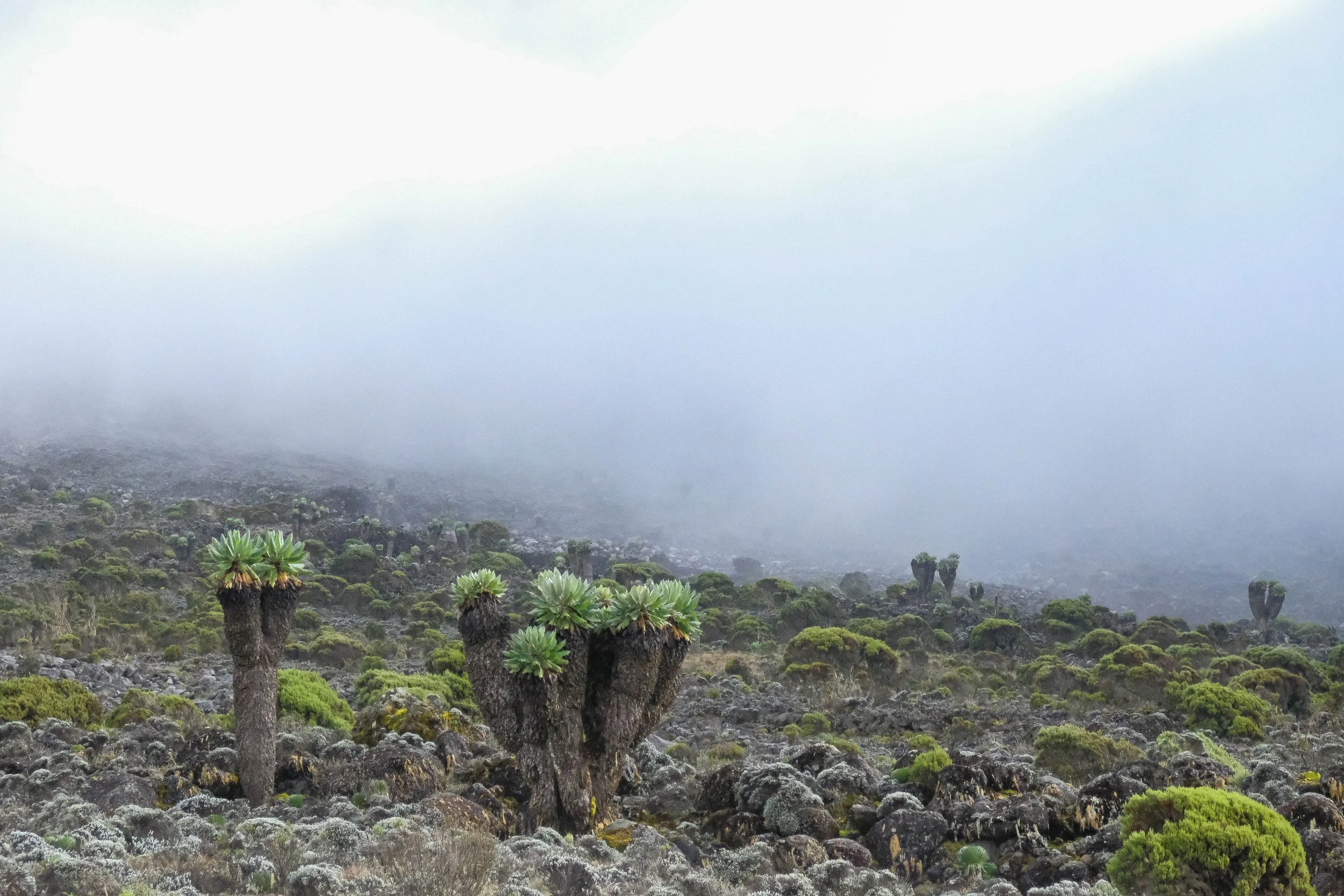
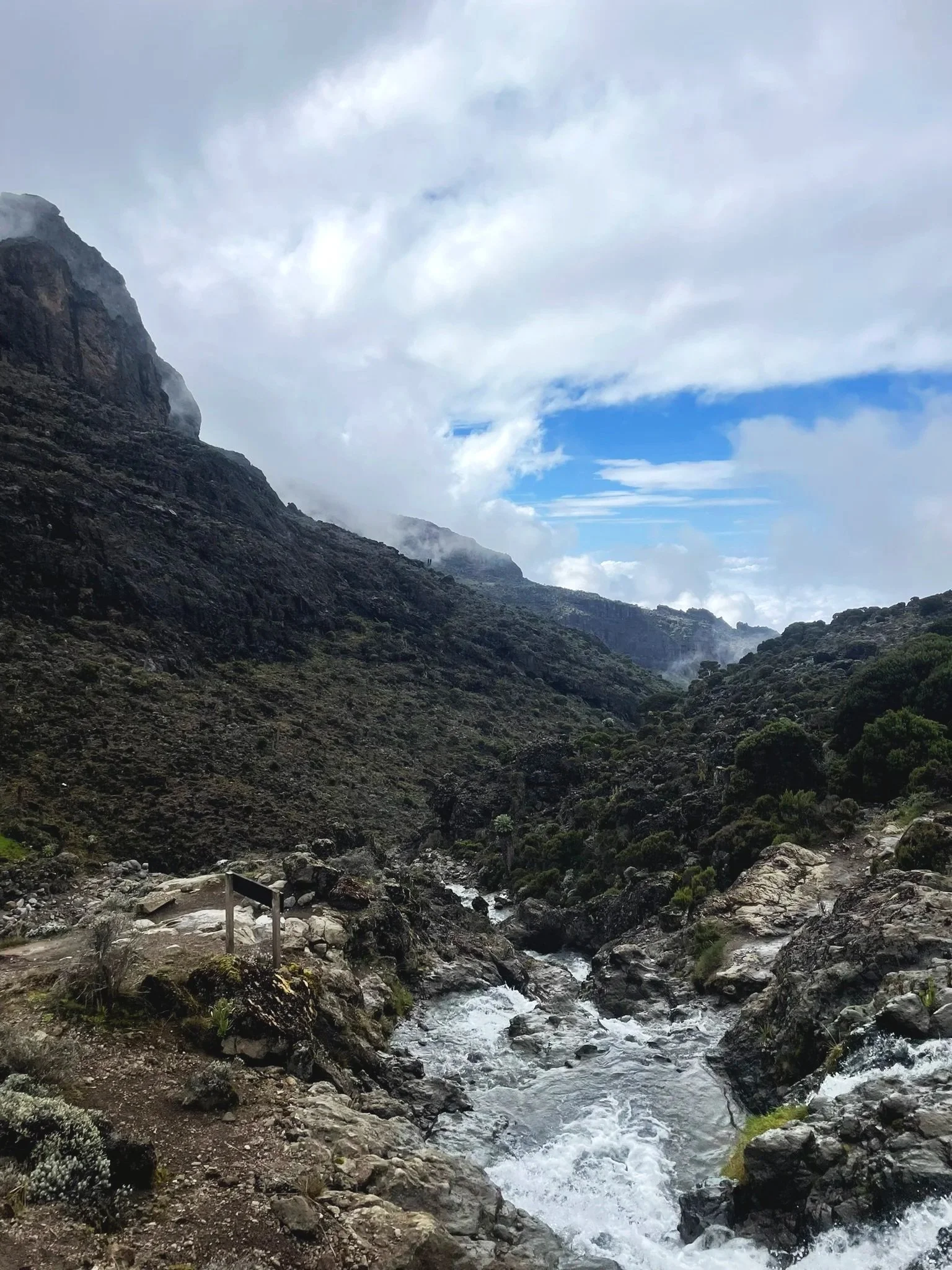
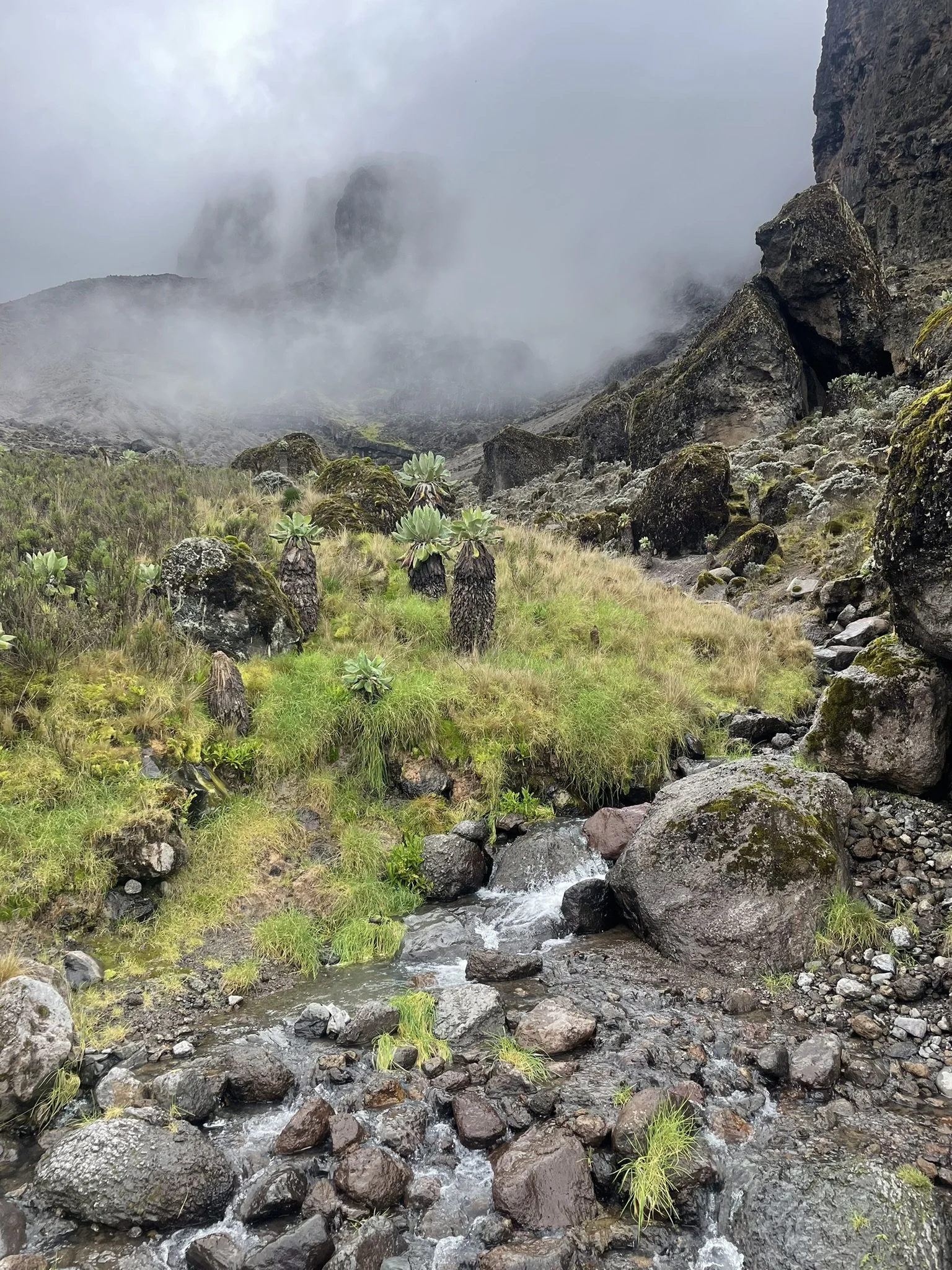
After a lunch at Lava Camp—a misty place that couldn’t decide what temperature it wanted to be—we began our descent to Baranco Camp. The landscape began to green as we followed the path down into an absolutely beautiful valley: ribbons of waterfalls cascading down cliff faces to our left, a river flowing far beneath us, the iconic endemic Dendrosenecio Kilimanjari trees (aka “Dr Seuss trees”) everywhere, and our first view of the imposing Baranco Wall.
After dinner, tea, spoonfuls of Nutella that suddenly tasted like the world’s best snack (altitude does strange things to your taste buds and appetite) and our evening briefing, we all went to bed early: tired yet contented from another full day.

Day 4: Baranco Camp to Karanga Camp | 3.5 miles | 13,070 ft - 13,225 ft
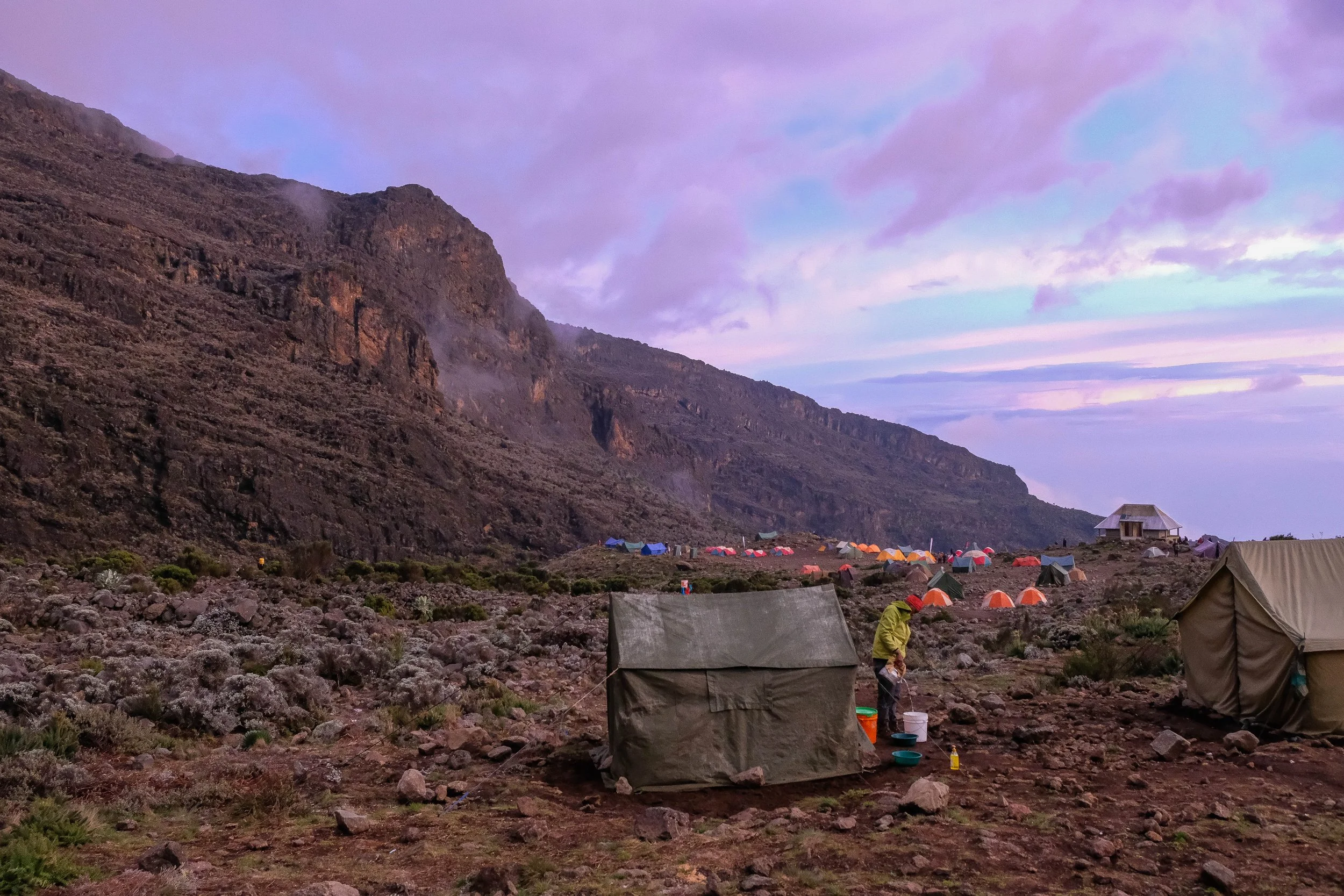
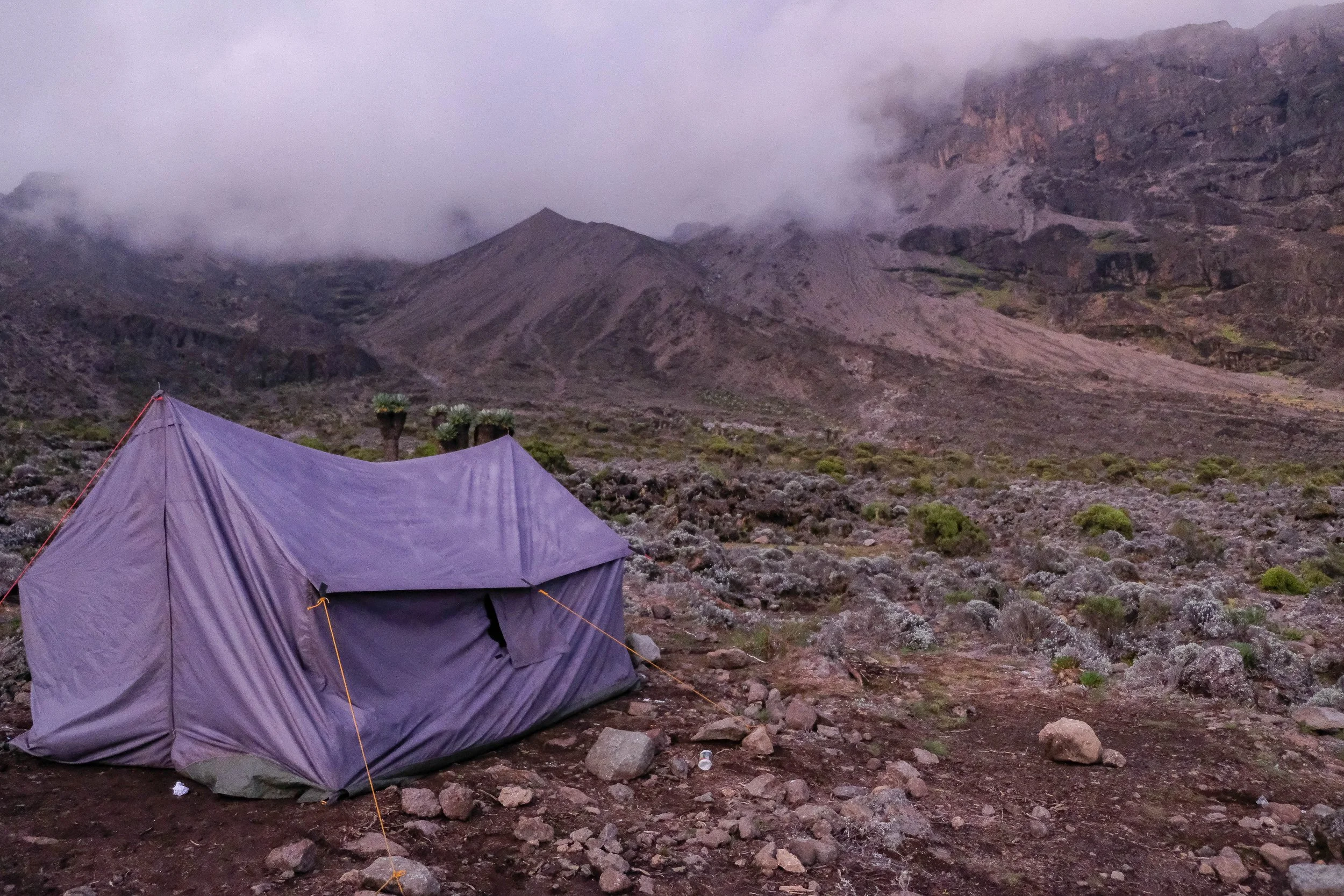
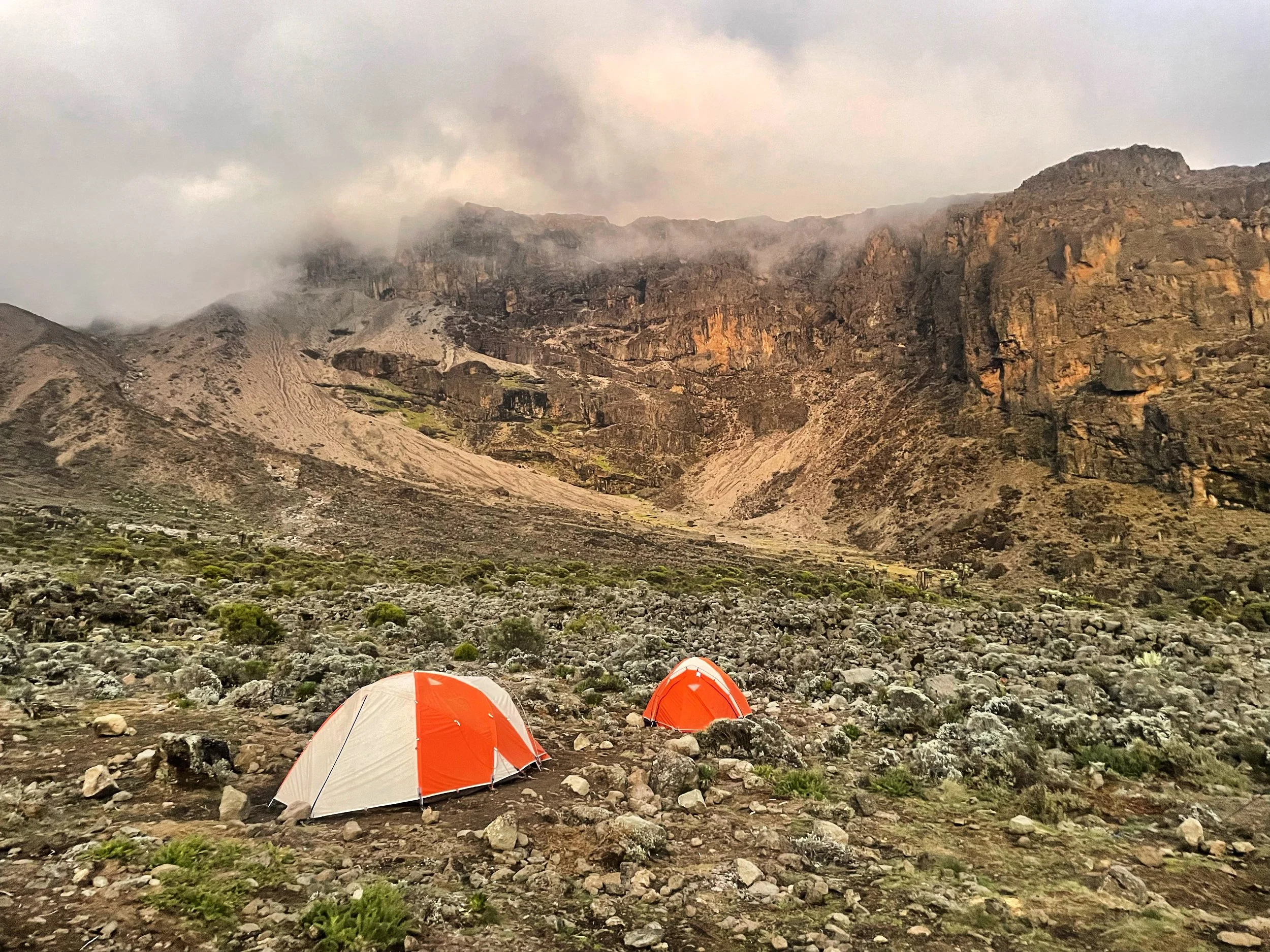
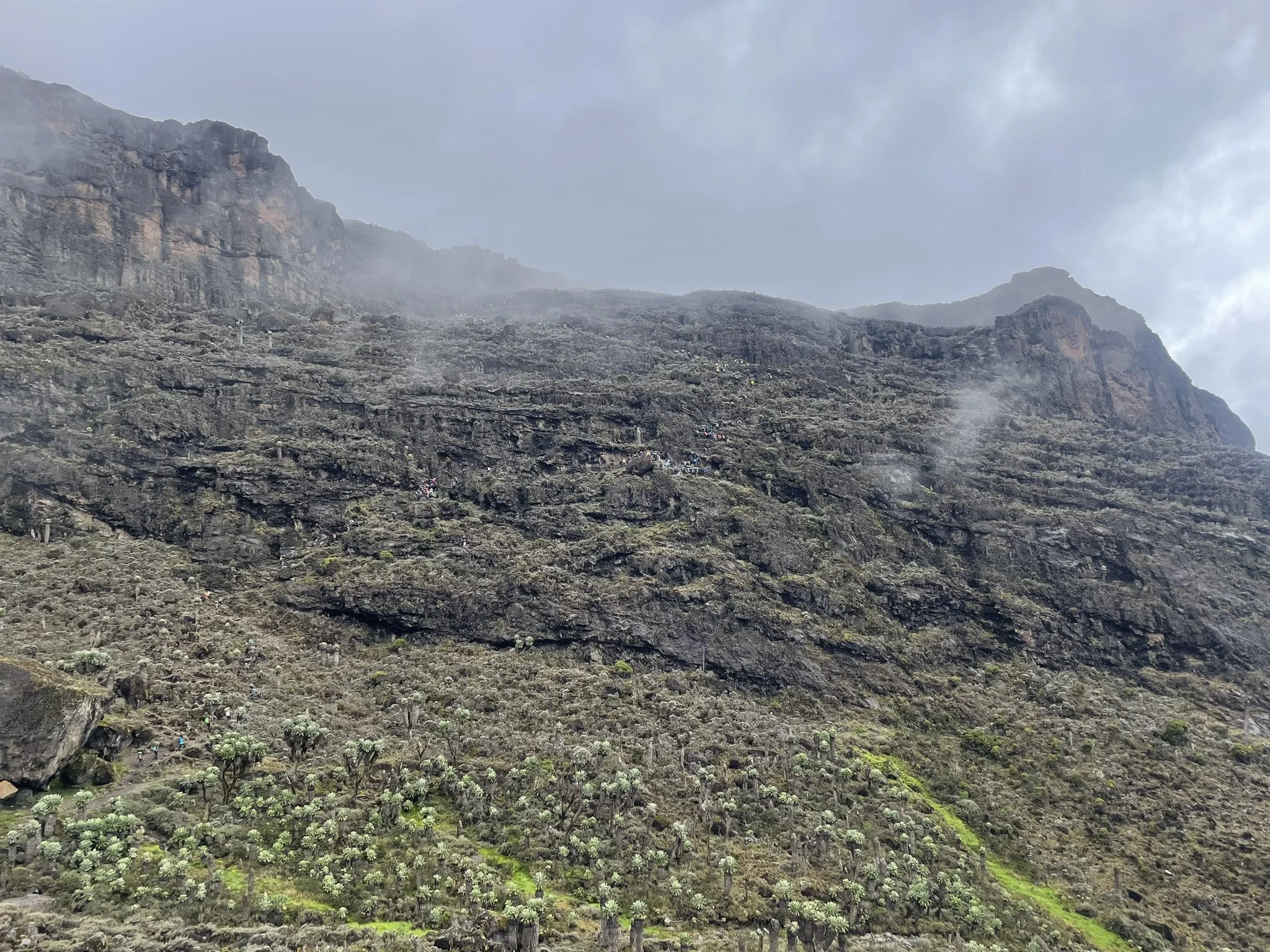
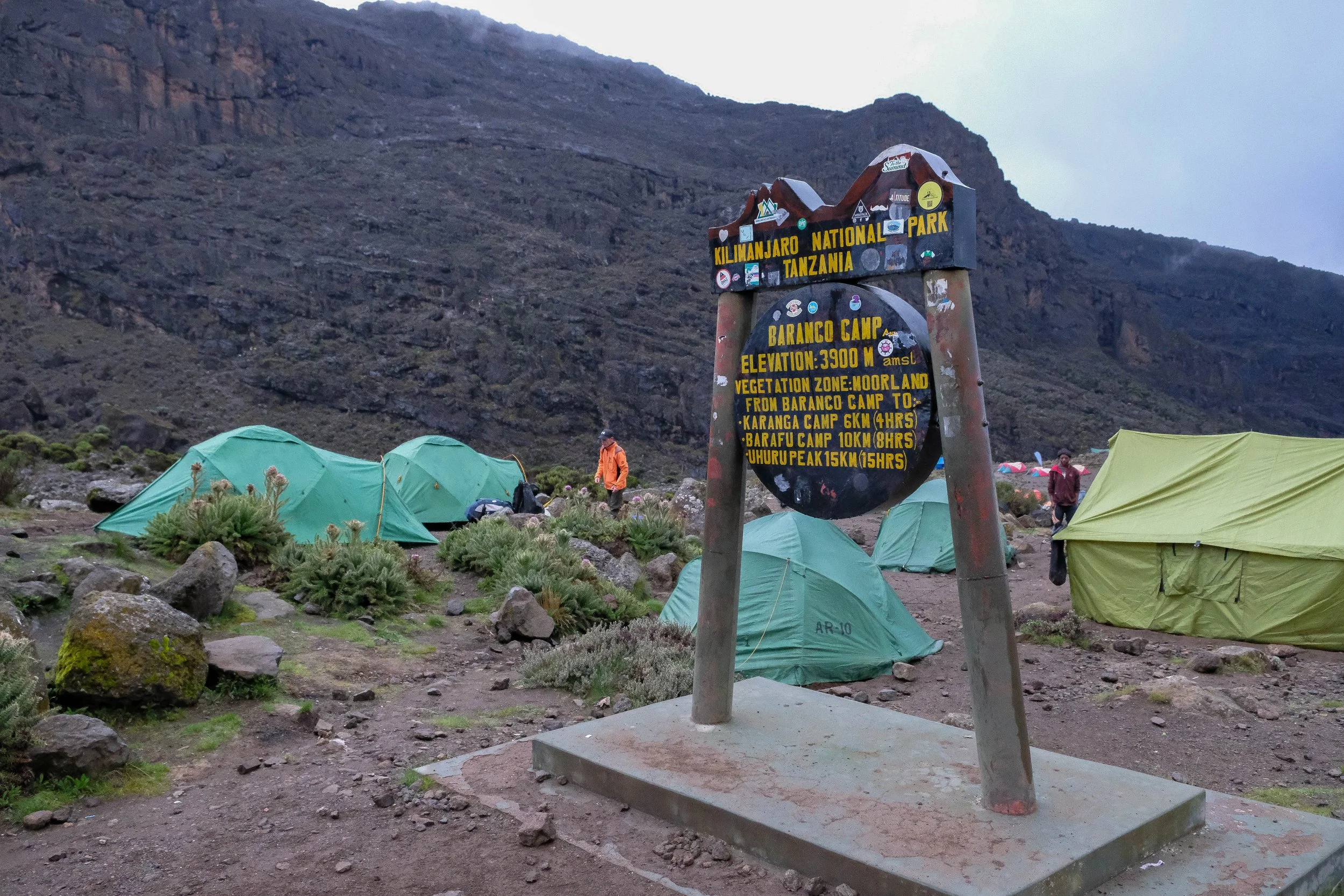
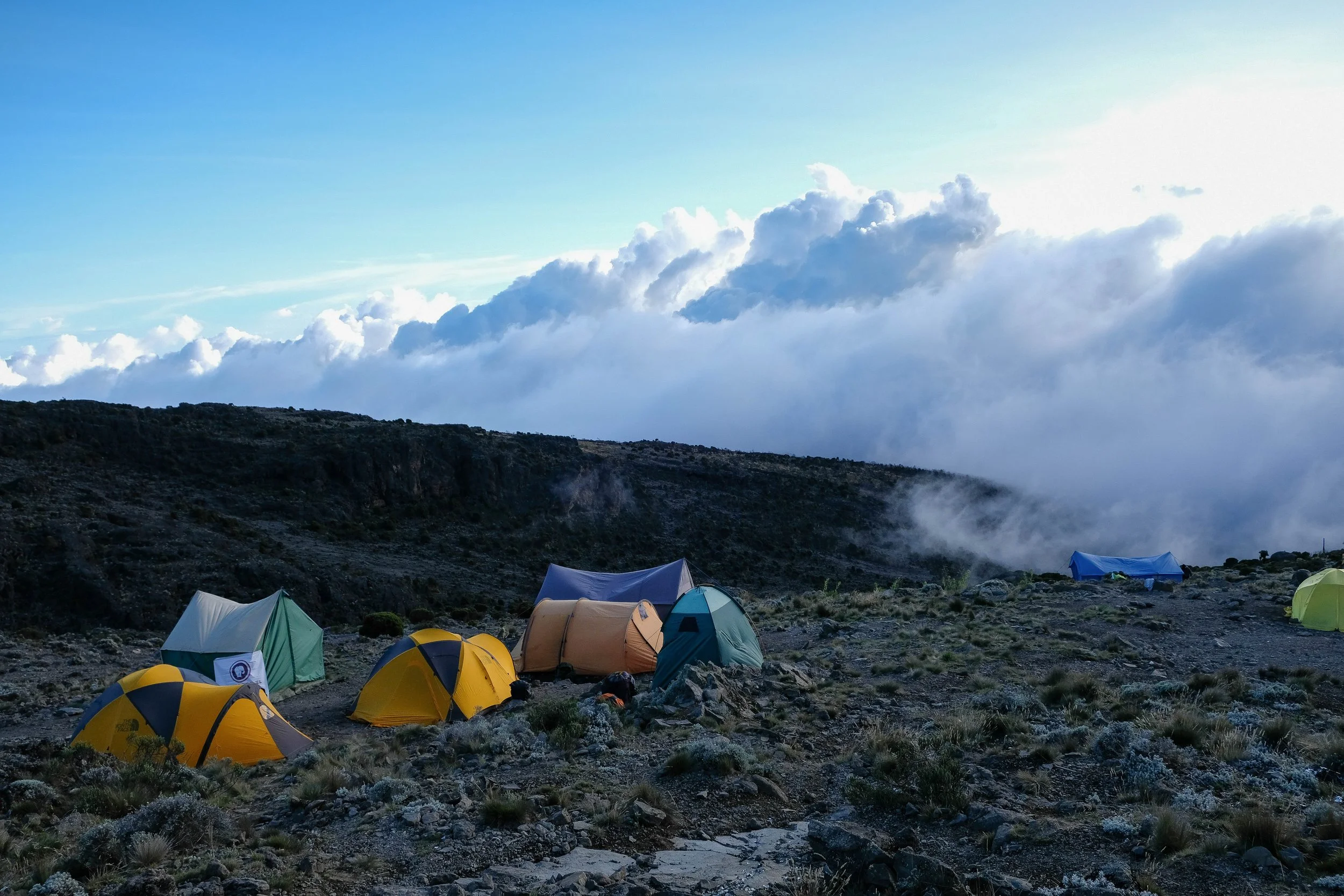
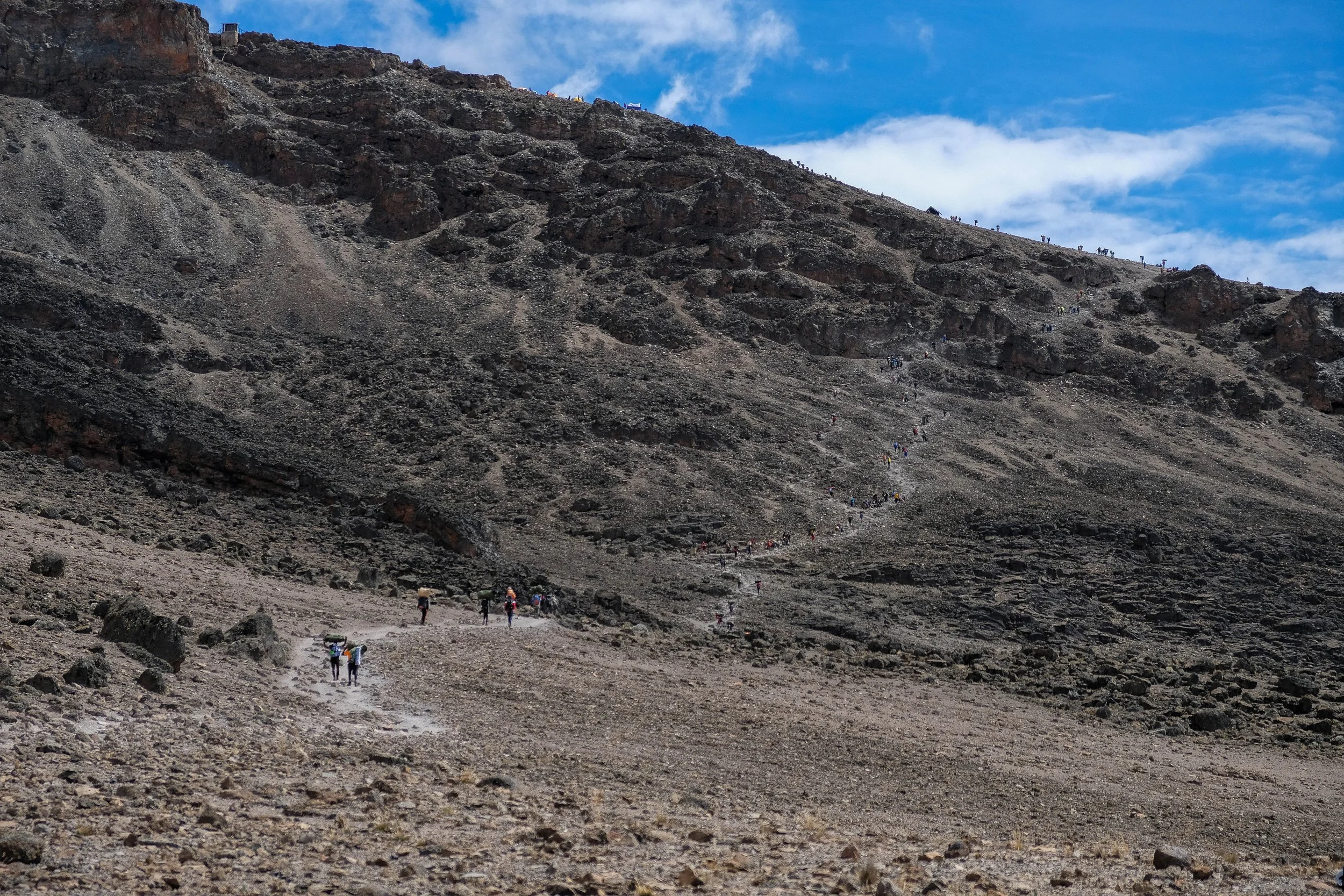
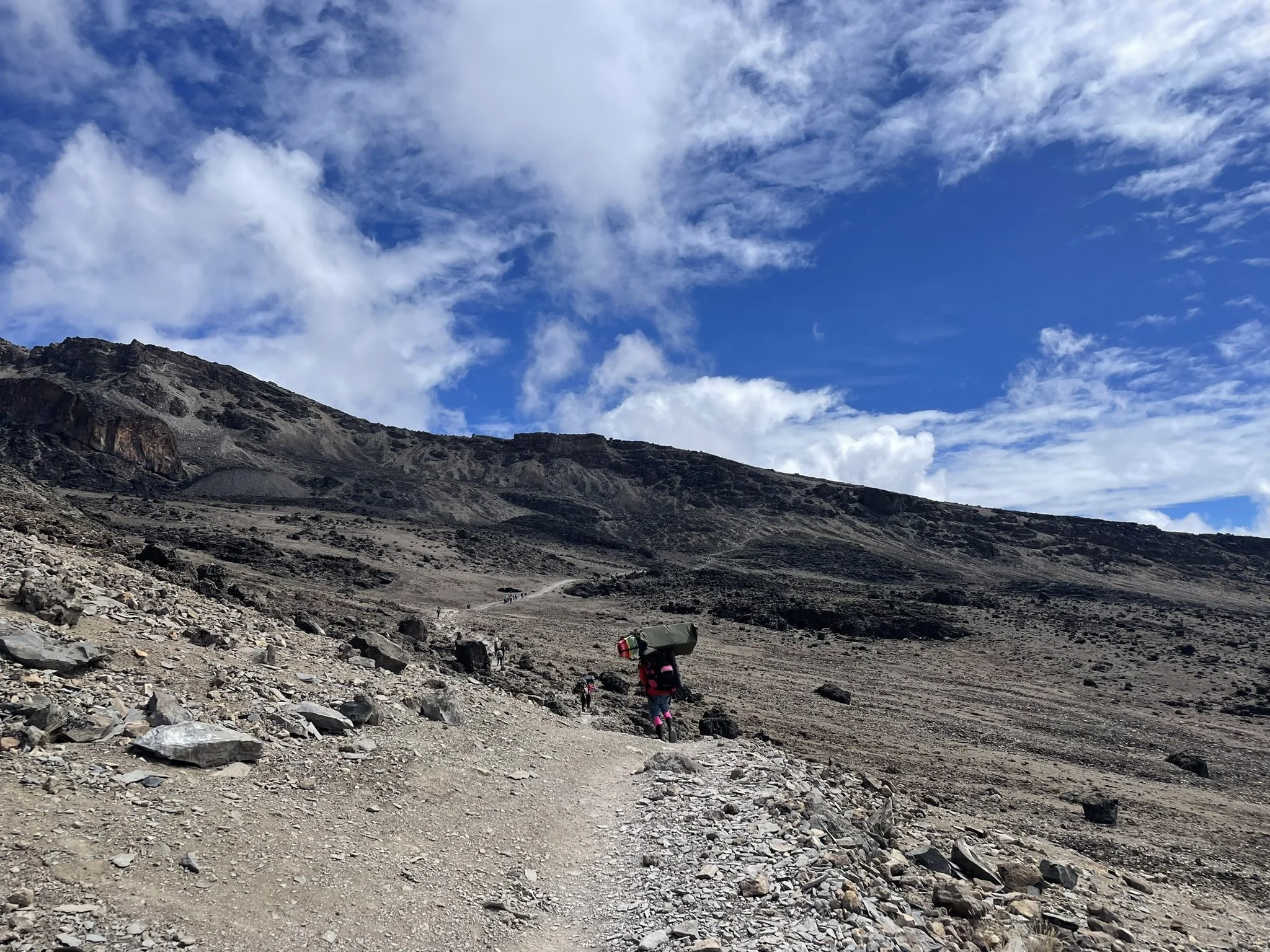
Baranco Camp was the largest we’d stayed at by far; hundreds of multicolored tents dotted the hills overlooking a river. I rose early and noticed a few people had already crossed the river and begun their ascent of the iconic Baranco Wall — which looks like a sheer rock face but in actuality contains a fairly straightforward trail with some scrambling but no technical climbing to ascend the thousand foot wall. I felt excited to get started, but also reflective and a little bittersweet. This was the first morning I’d felt a strong sense of how quickly time was passing. It made me really value every rock beneath my feet and beautiful, misty vista before me: what a gift to be there.
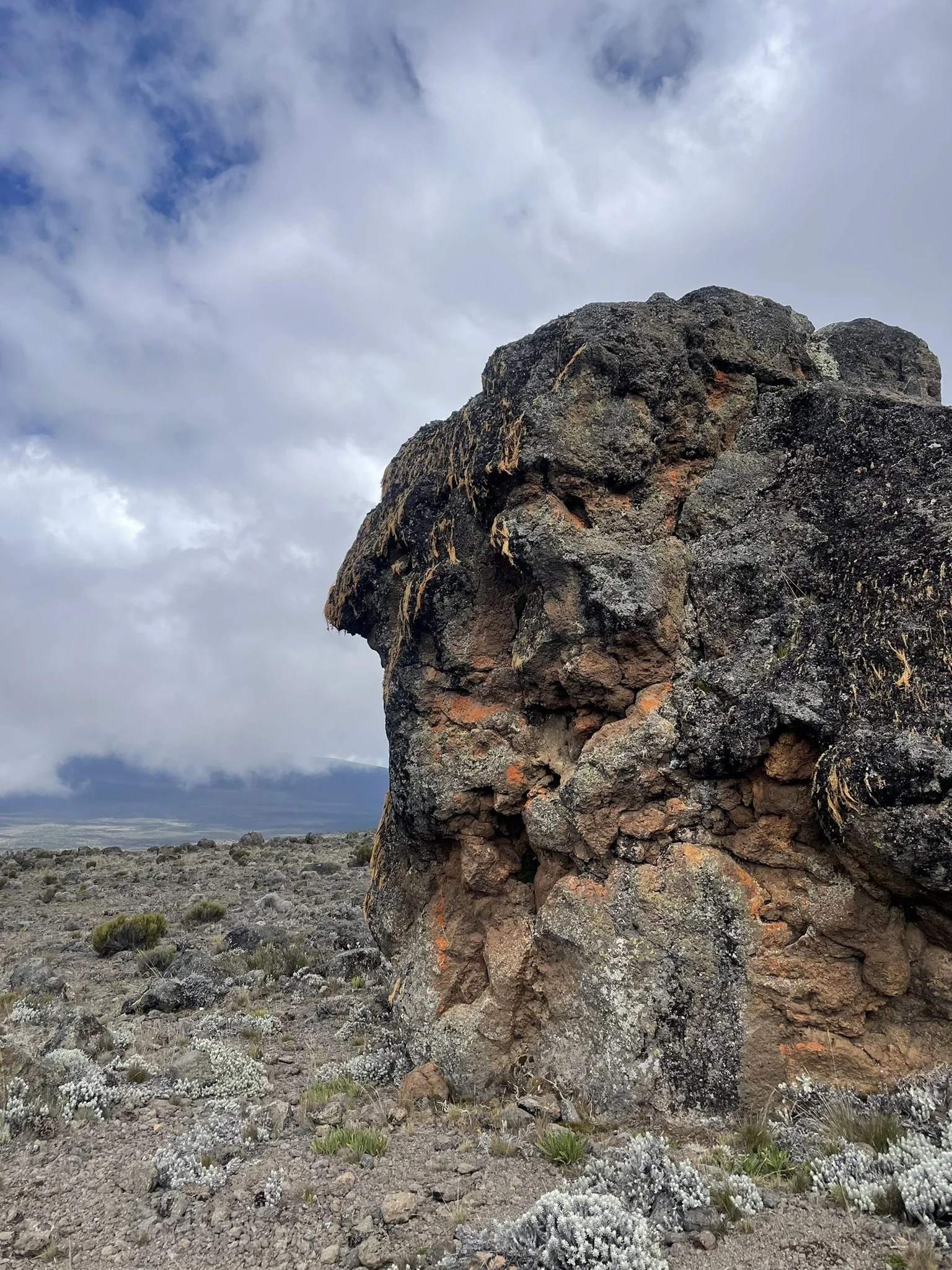
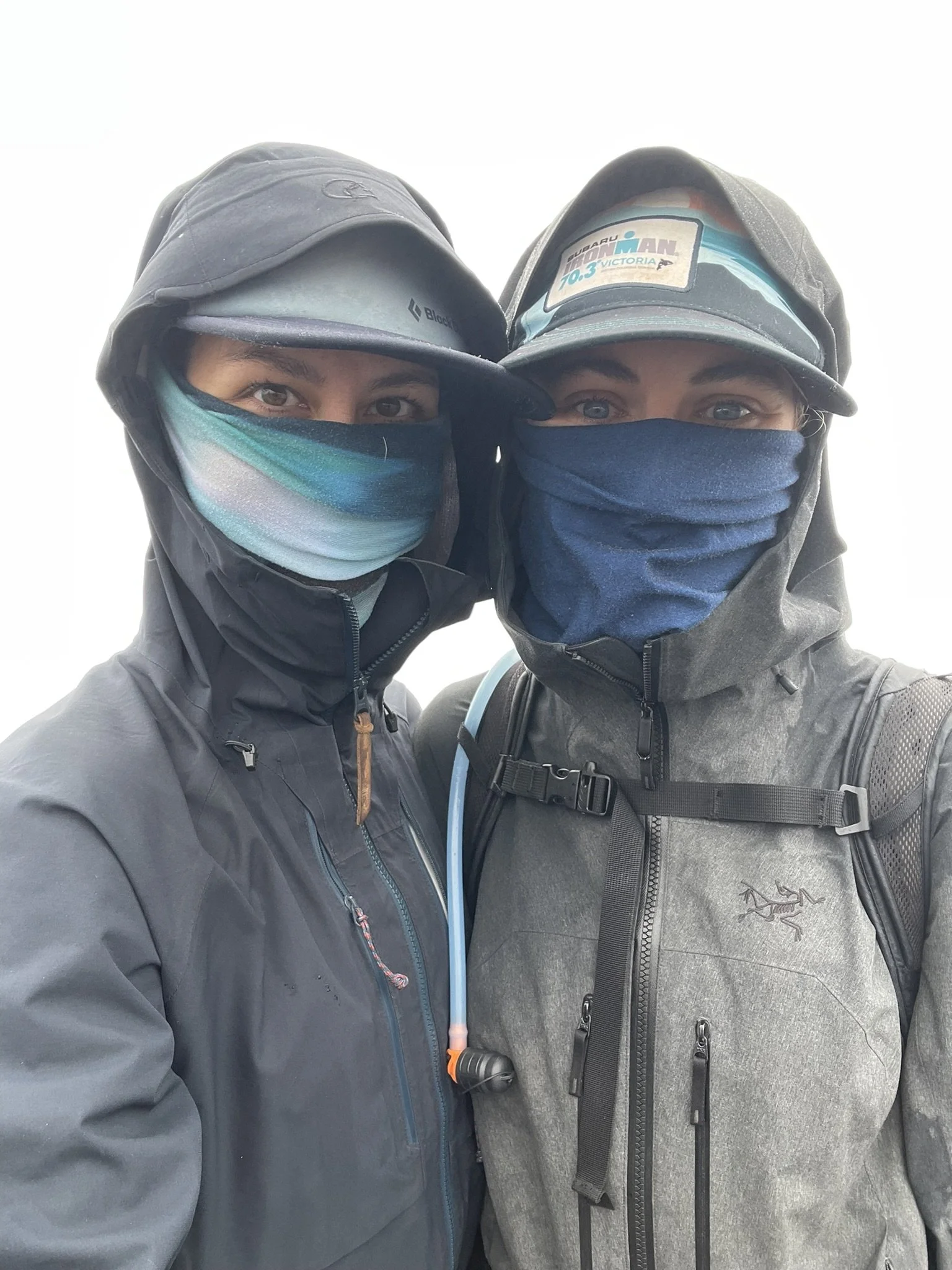
Despite a quick glimpse of Kili while walking around, mist was our destiny for the day. We scrambled our way up the wall, joining a trail of porters, guides, and climbers. We kissed the air next to Kissing Rock, got caught in a mild rain shower, and thus learned that each of our guides had packed umbrellas for just such a moment — a sight we’d never seen on a mountain in North America. Genius.
After reaching the top, we descended into another valley, crossed the Karanga River, and had one last steep climb to reach Karanga Camp.
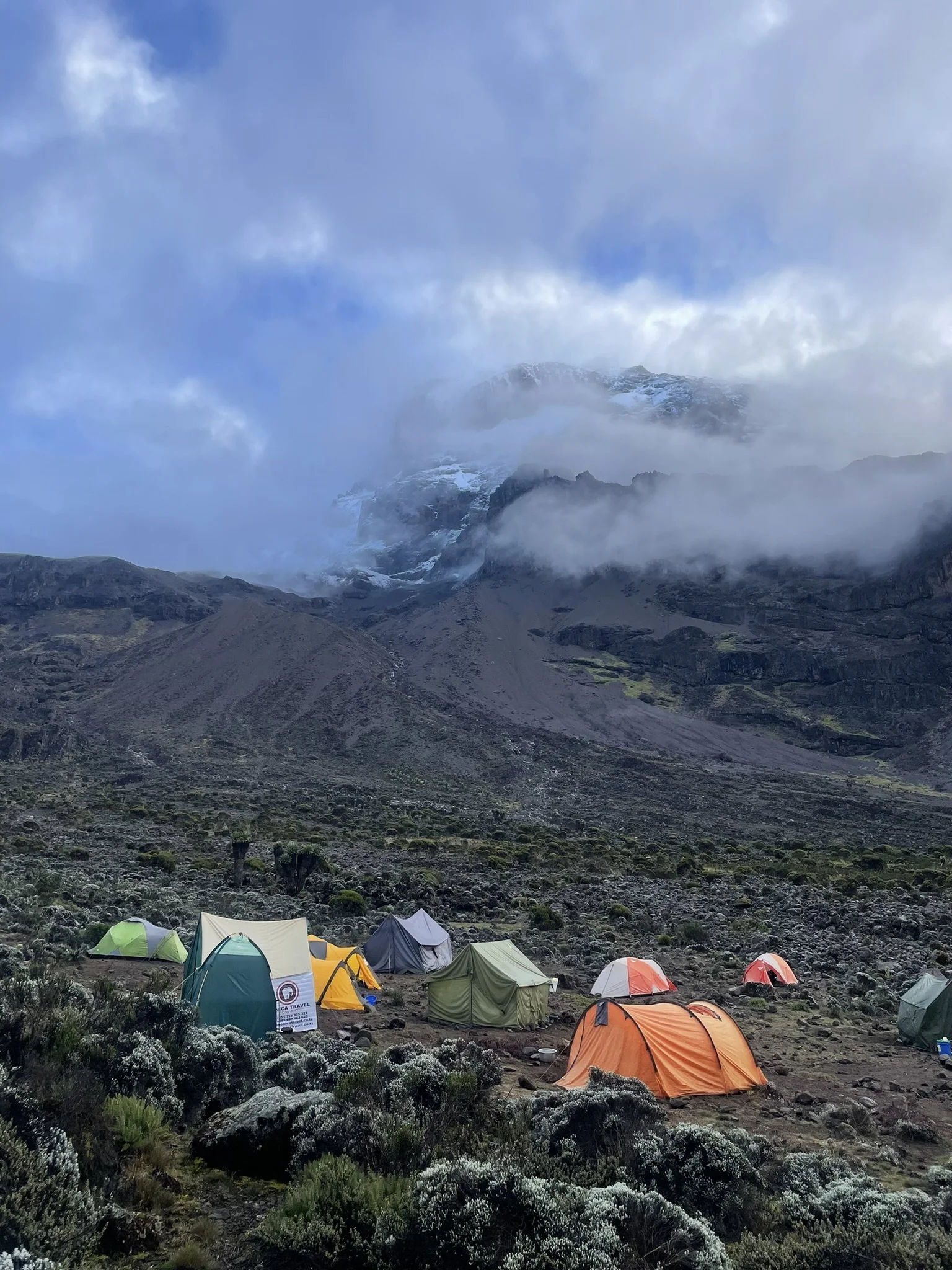
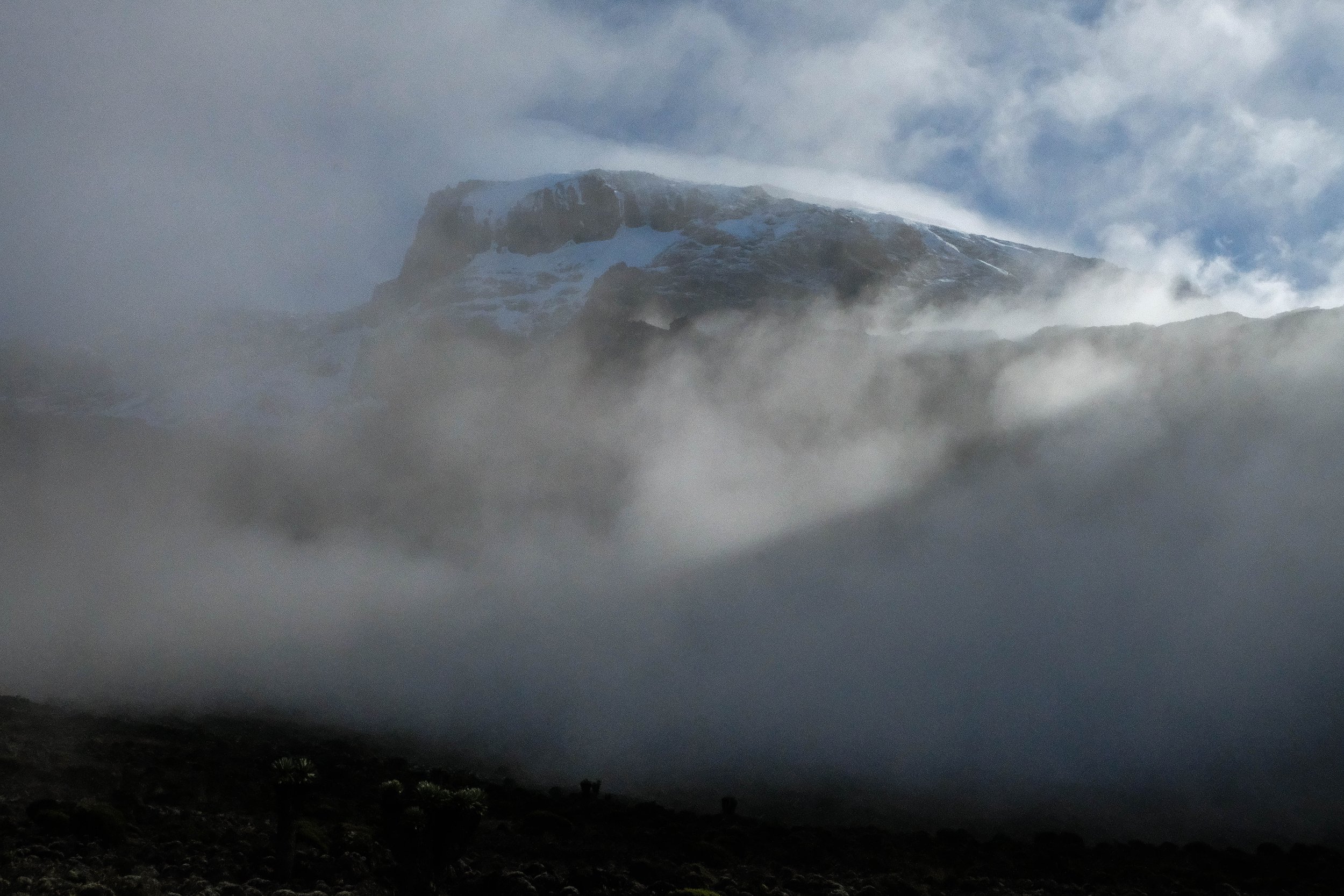
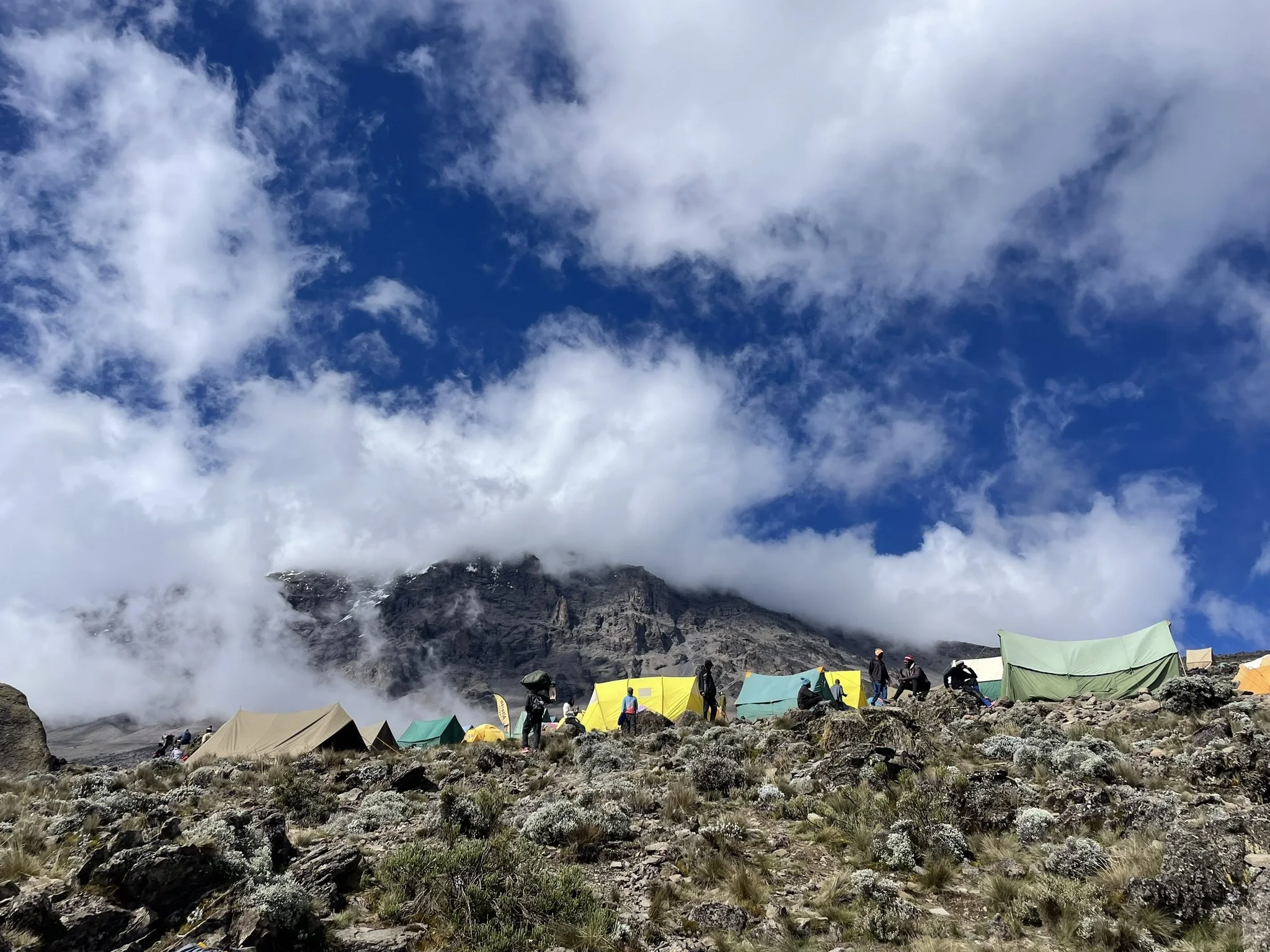
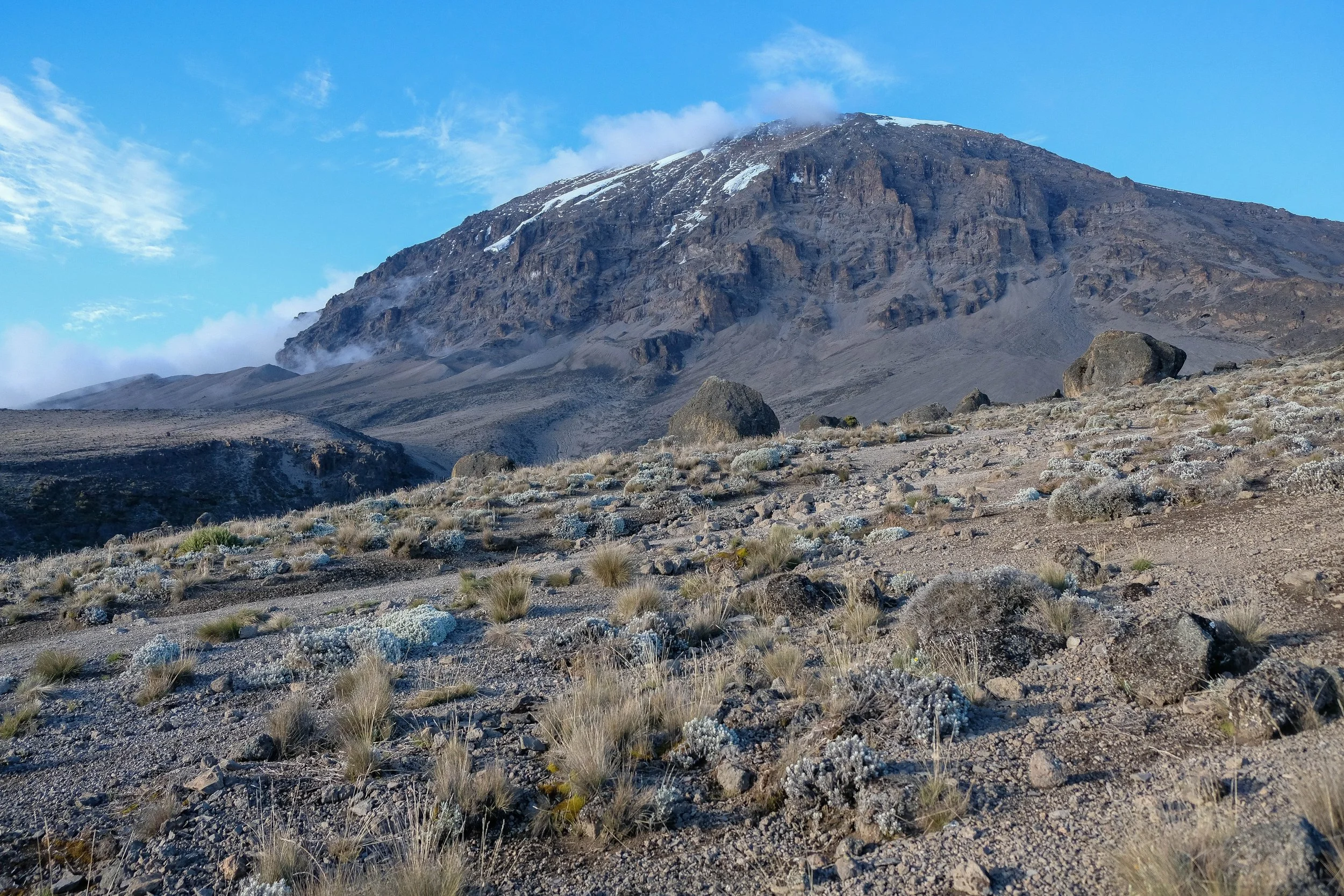
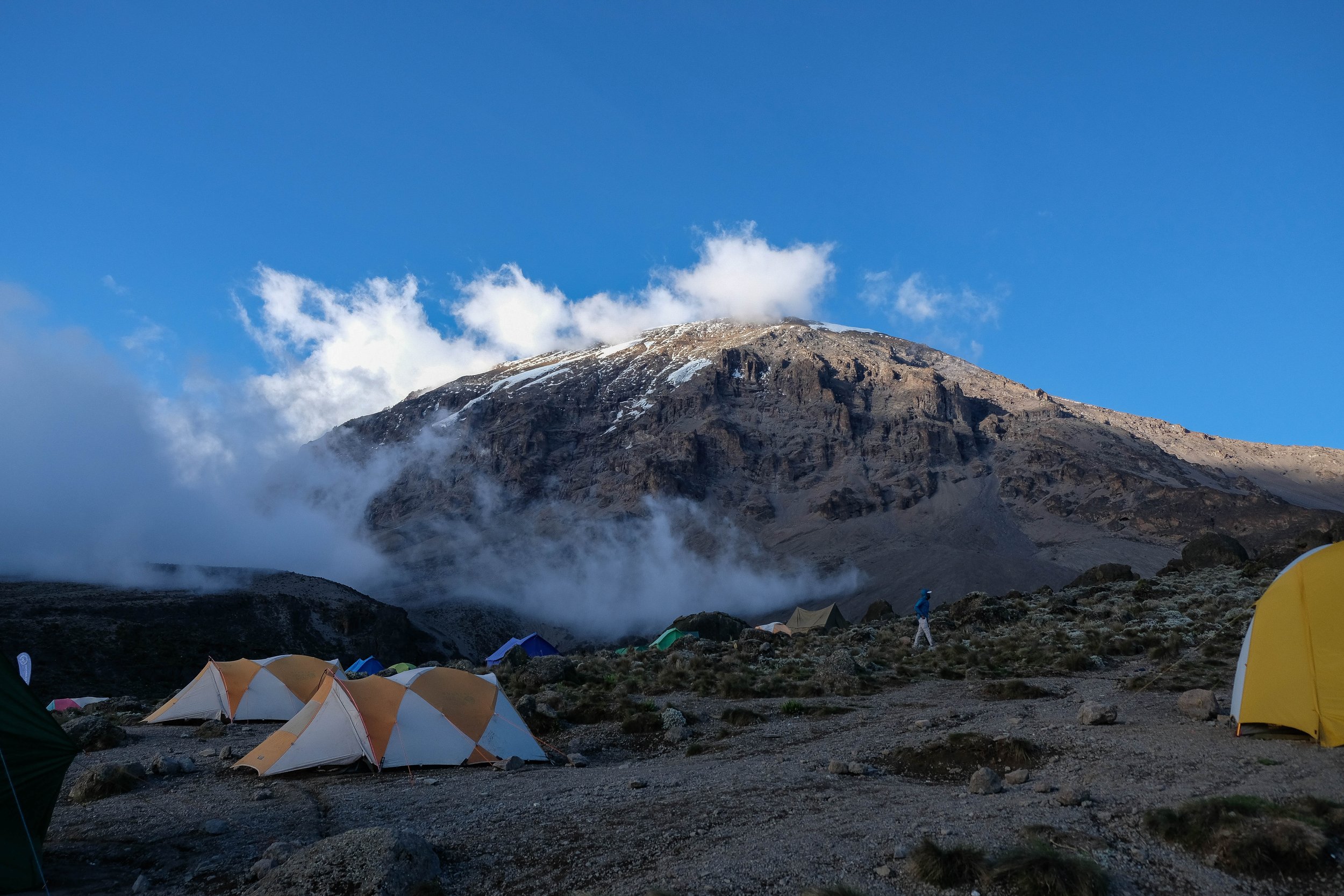
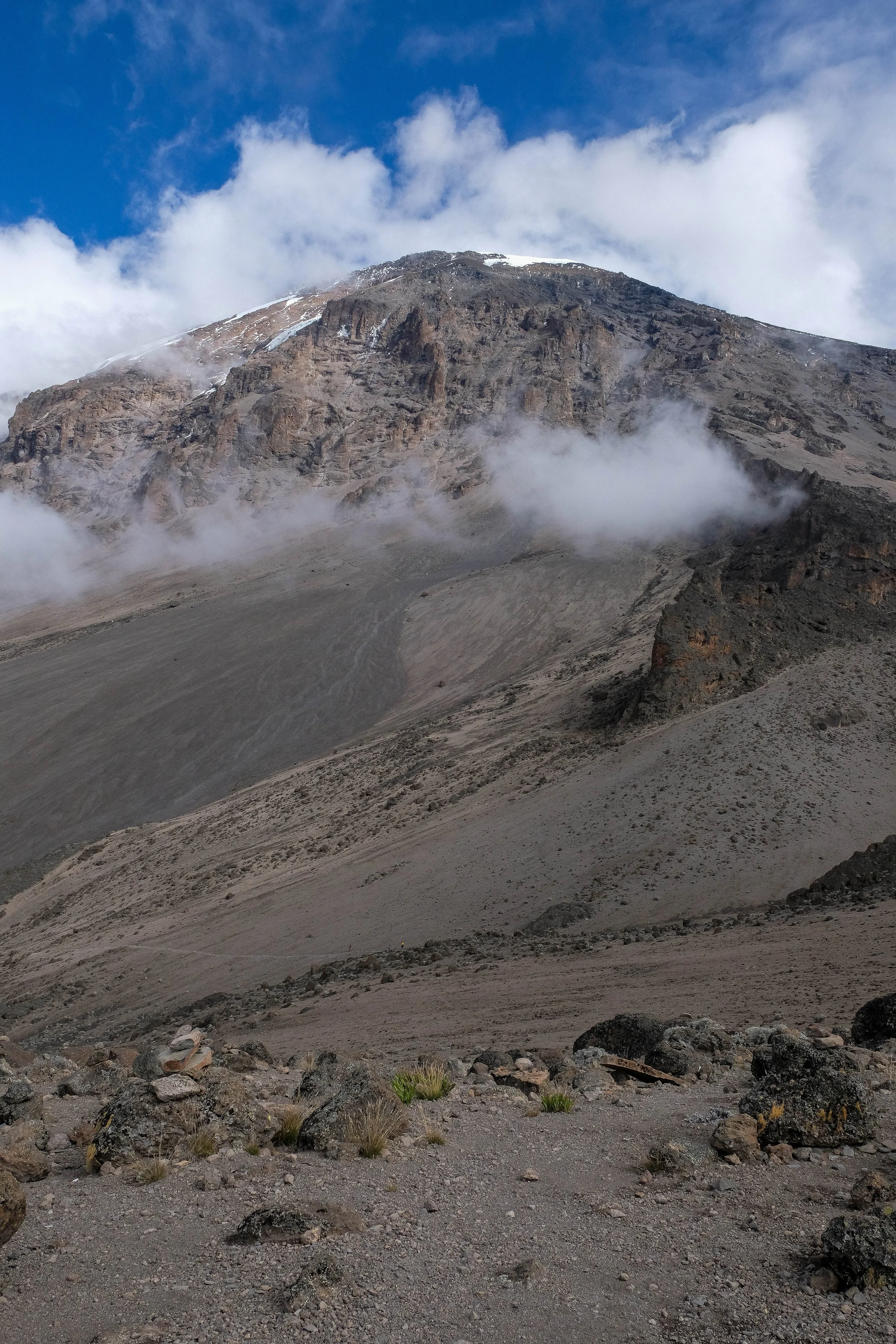
The afternoon was the most relaxing one we’d had thus far. We napped for a while, then a little before dinner I left the tent and went for a walk away from the camp. The day’s mist had finally rolled back and you could see Kilimanjaro looming closer than ever. It was quiet, perfectly clear, and cloudless all the way to the summit, revealing a massive glacier perched near the top. I sat on a rock and stared at it, completely enamored. I couldn’t believe I was there.
Suddenly, a series of cracks and booms echoed through the air. At first I thought it was thunder or a rockfall, but soon realized: it was the glacier ice cracking.
When I think of Karanga Camp, this is what I see: Little me, sitting there alone, the moon rising in the dusty blue sky, wonderstruck as I listen to the ancient ice cracking. 🌙
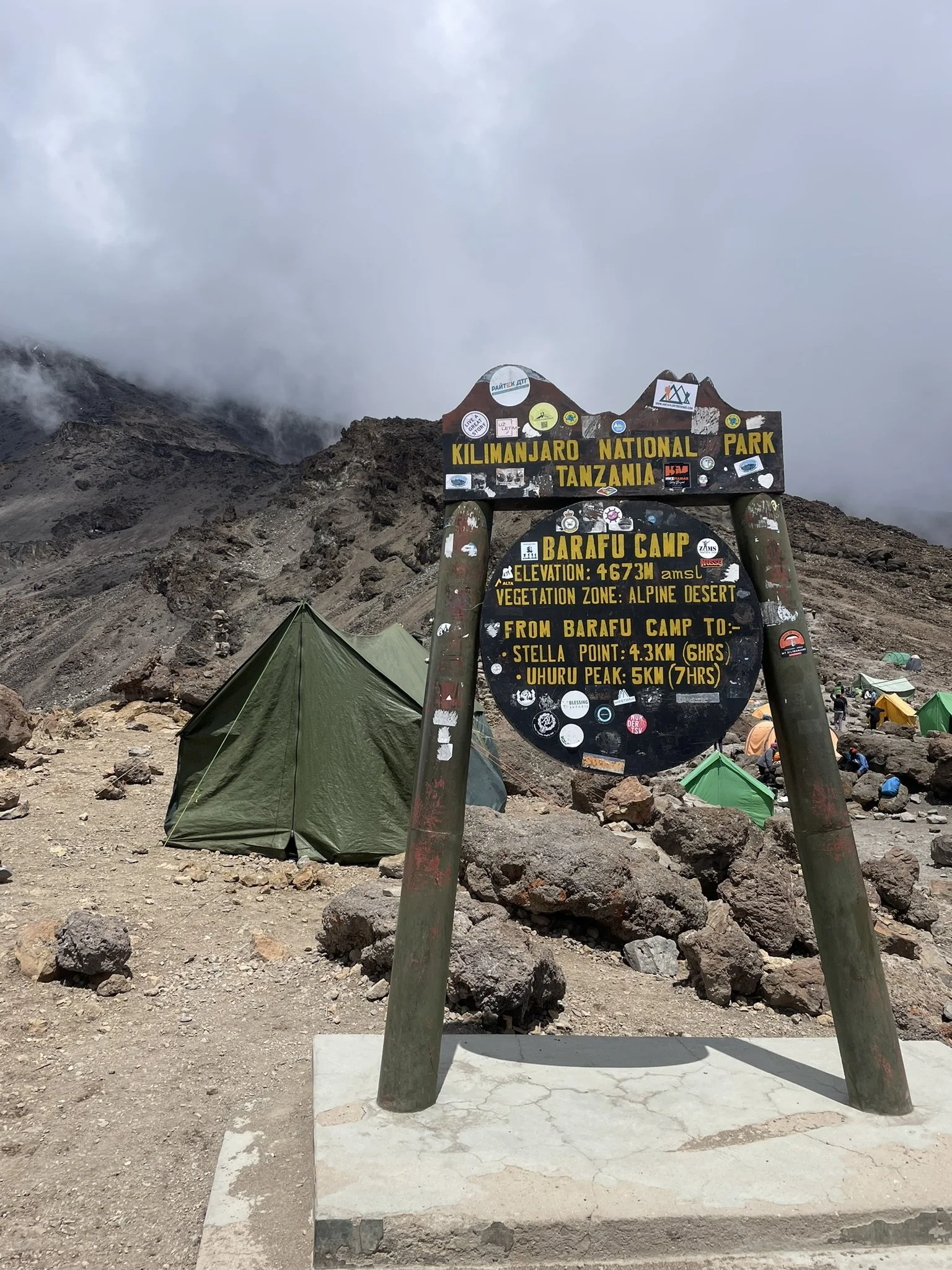
Day 5: Karanga Camp to Barafu Camp | 2.8 miles | 13,225 ft - 15,360 ft
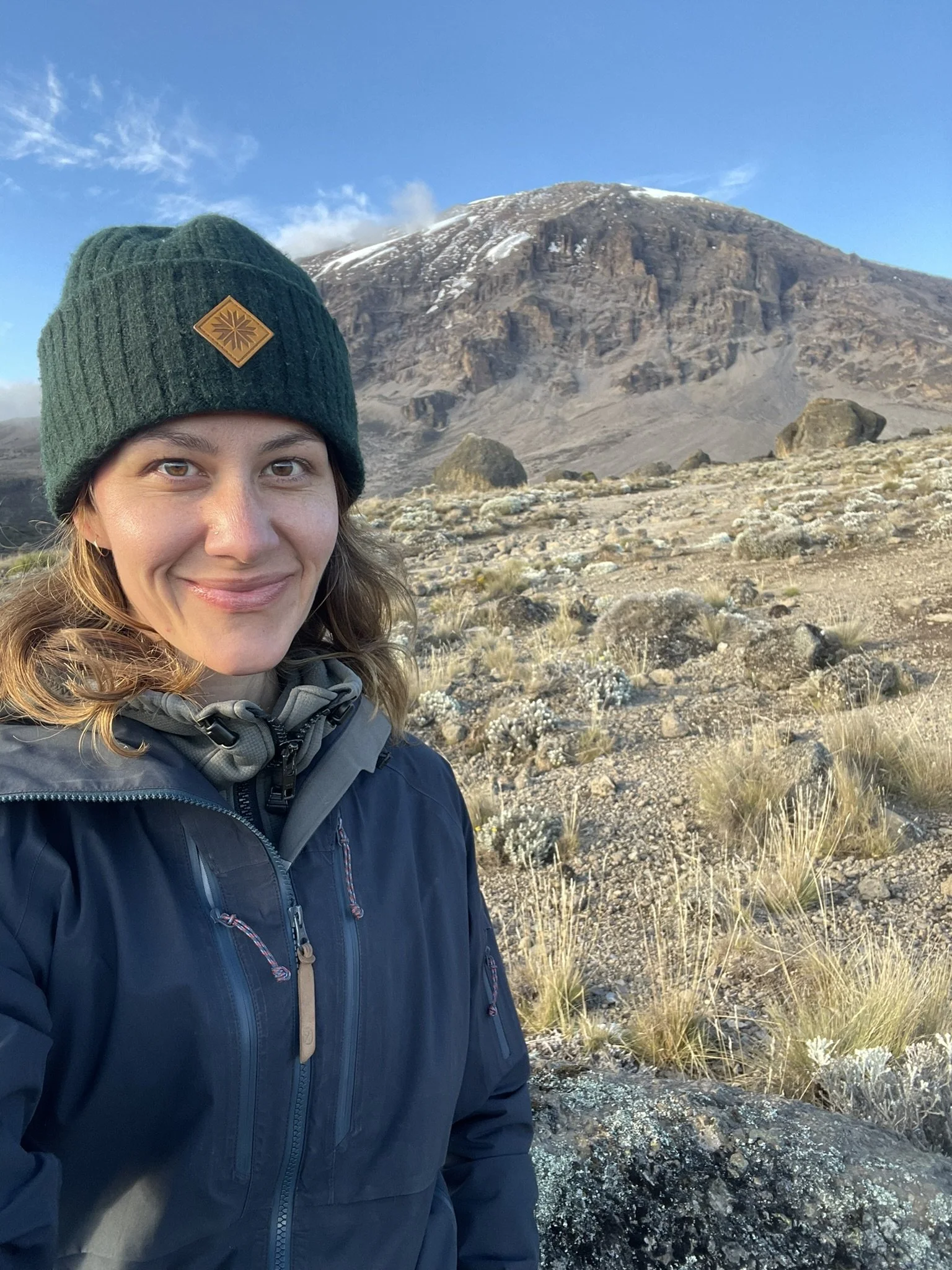
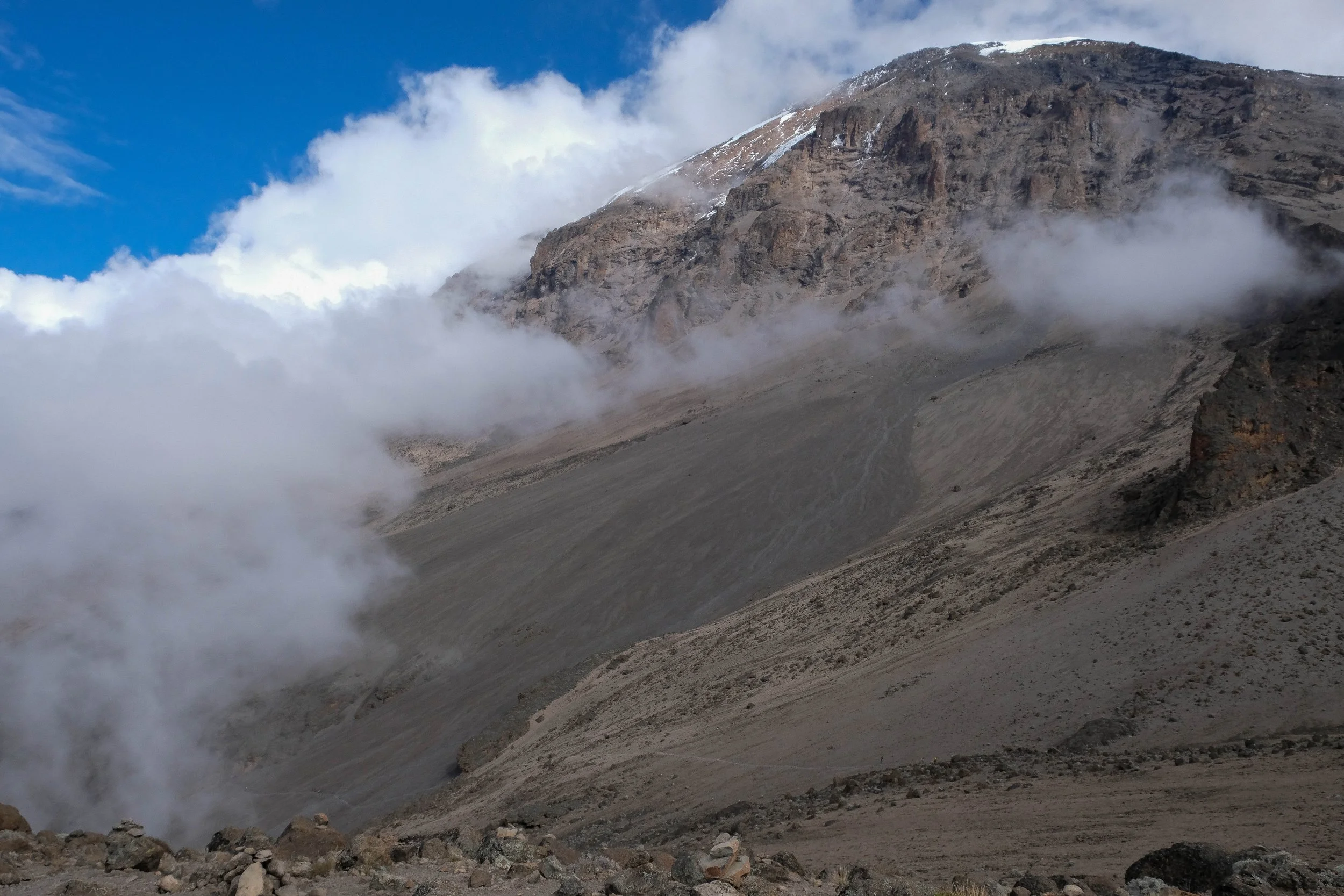
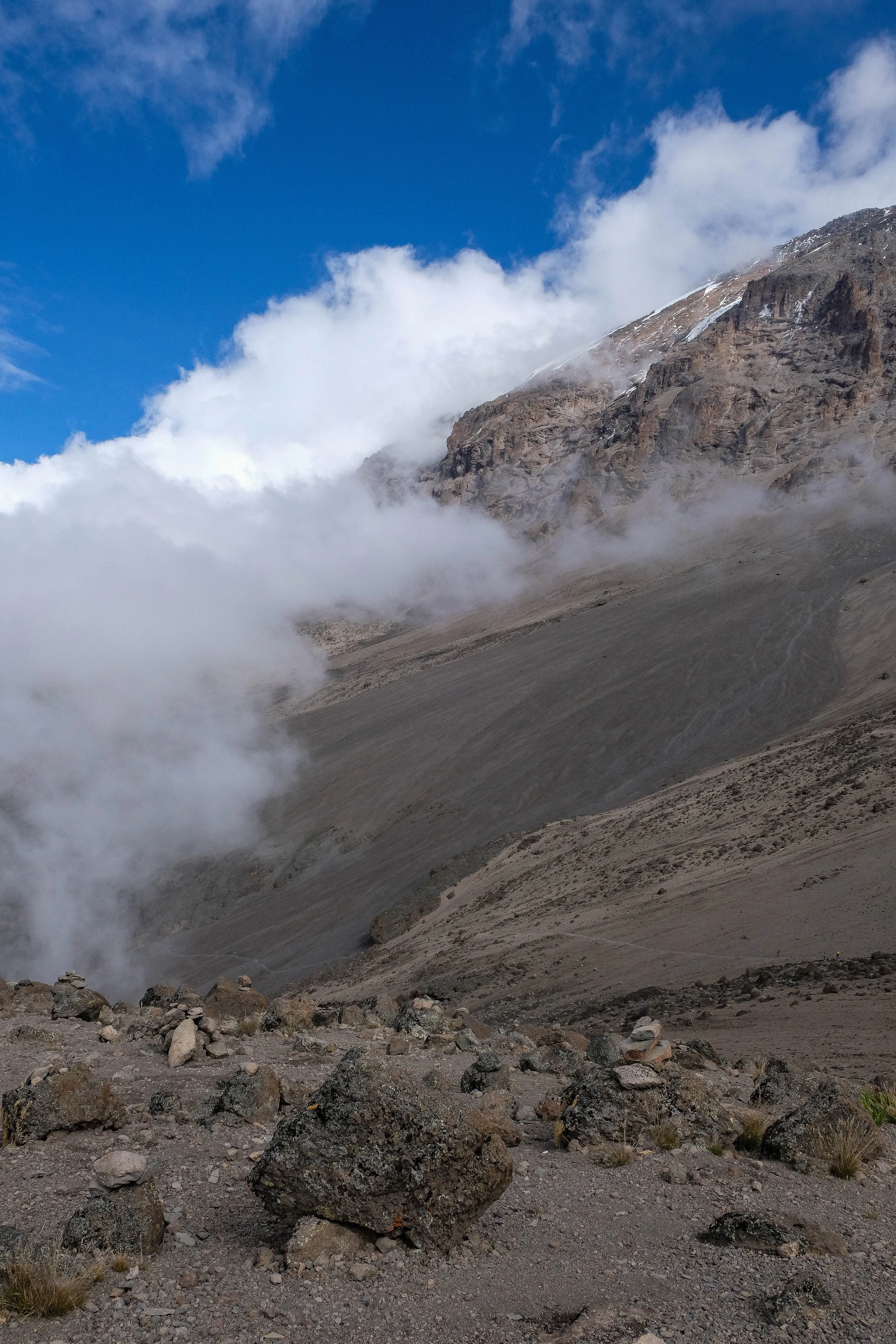
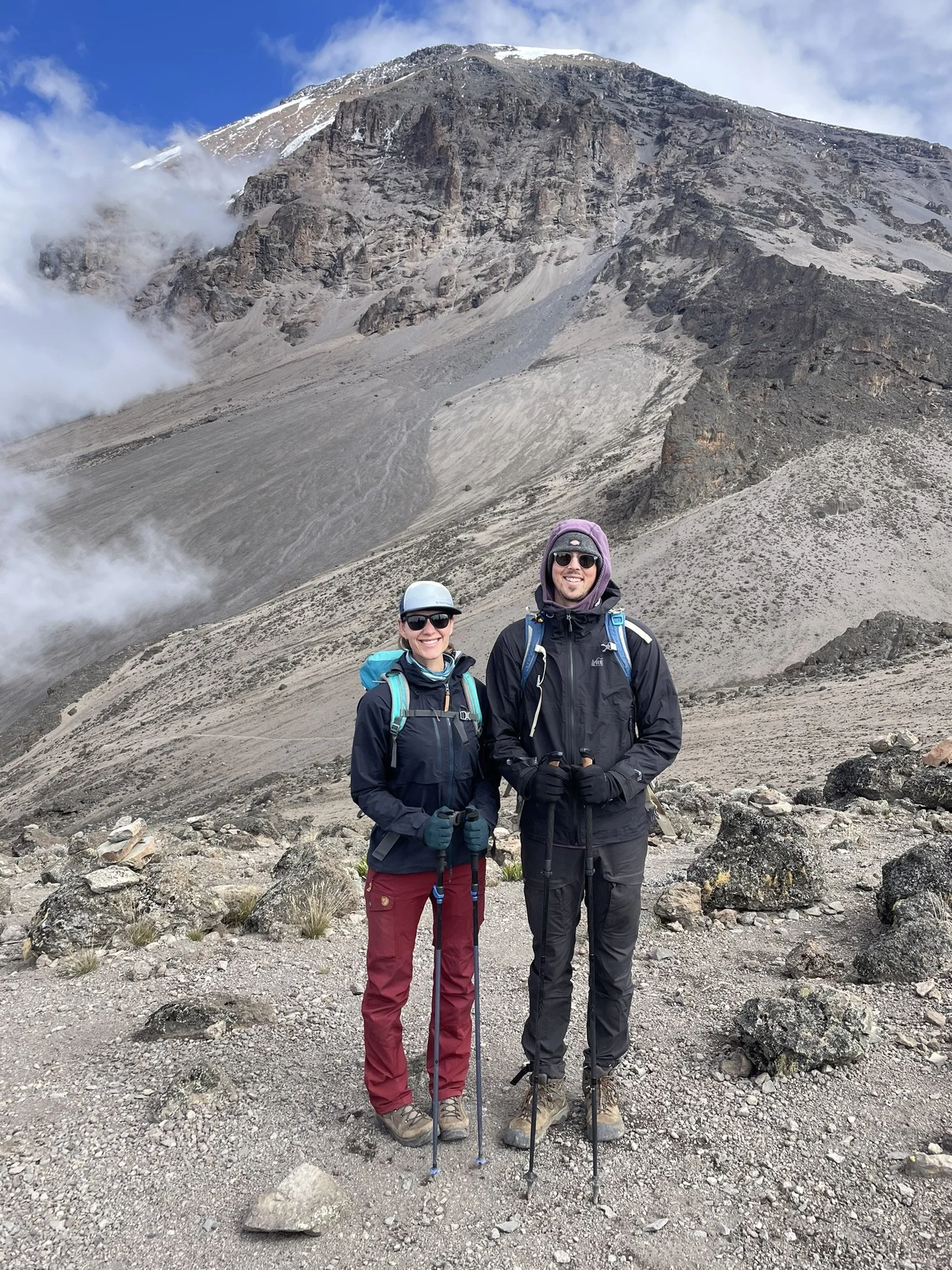
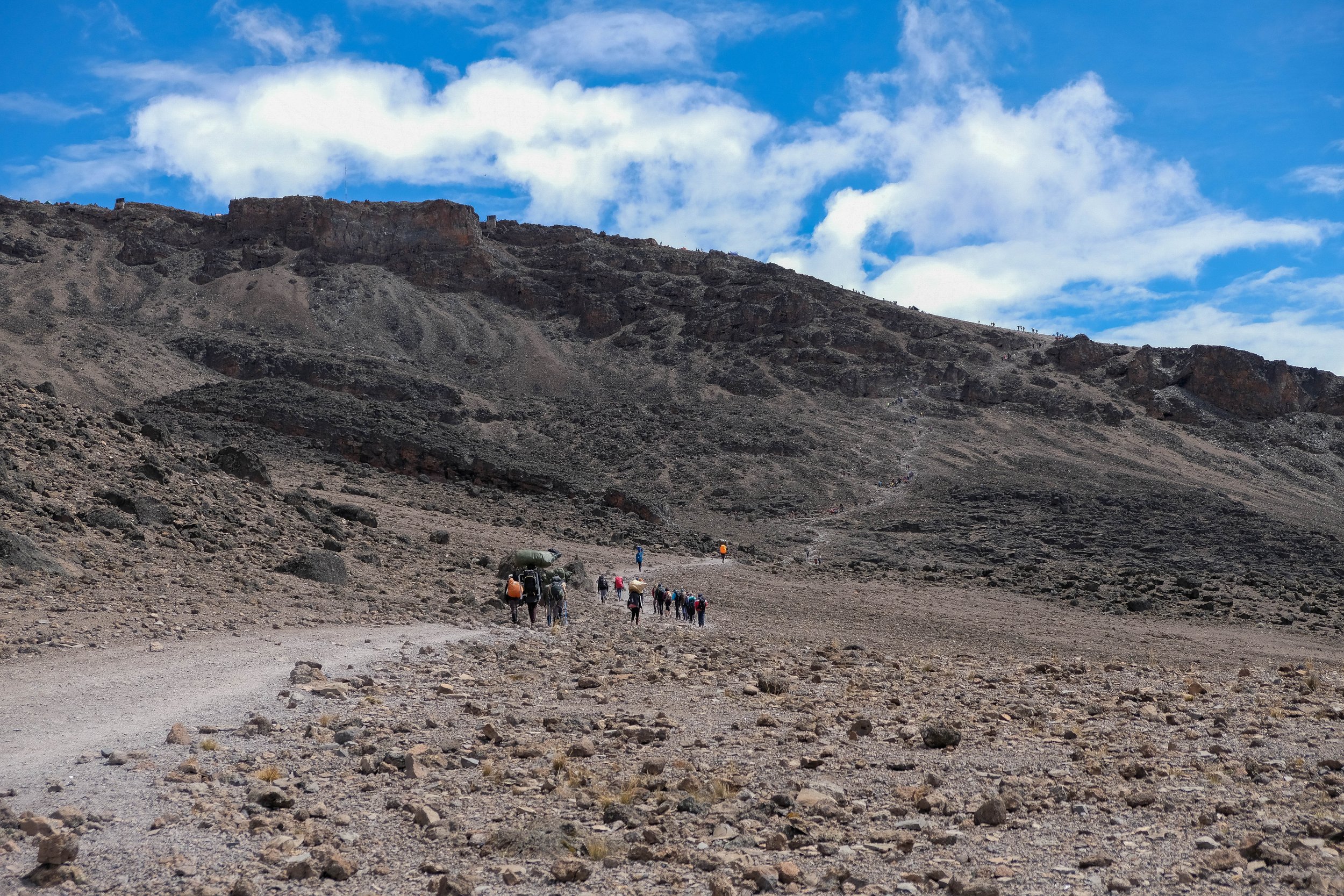
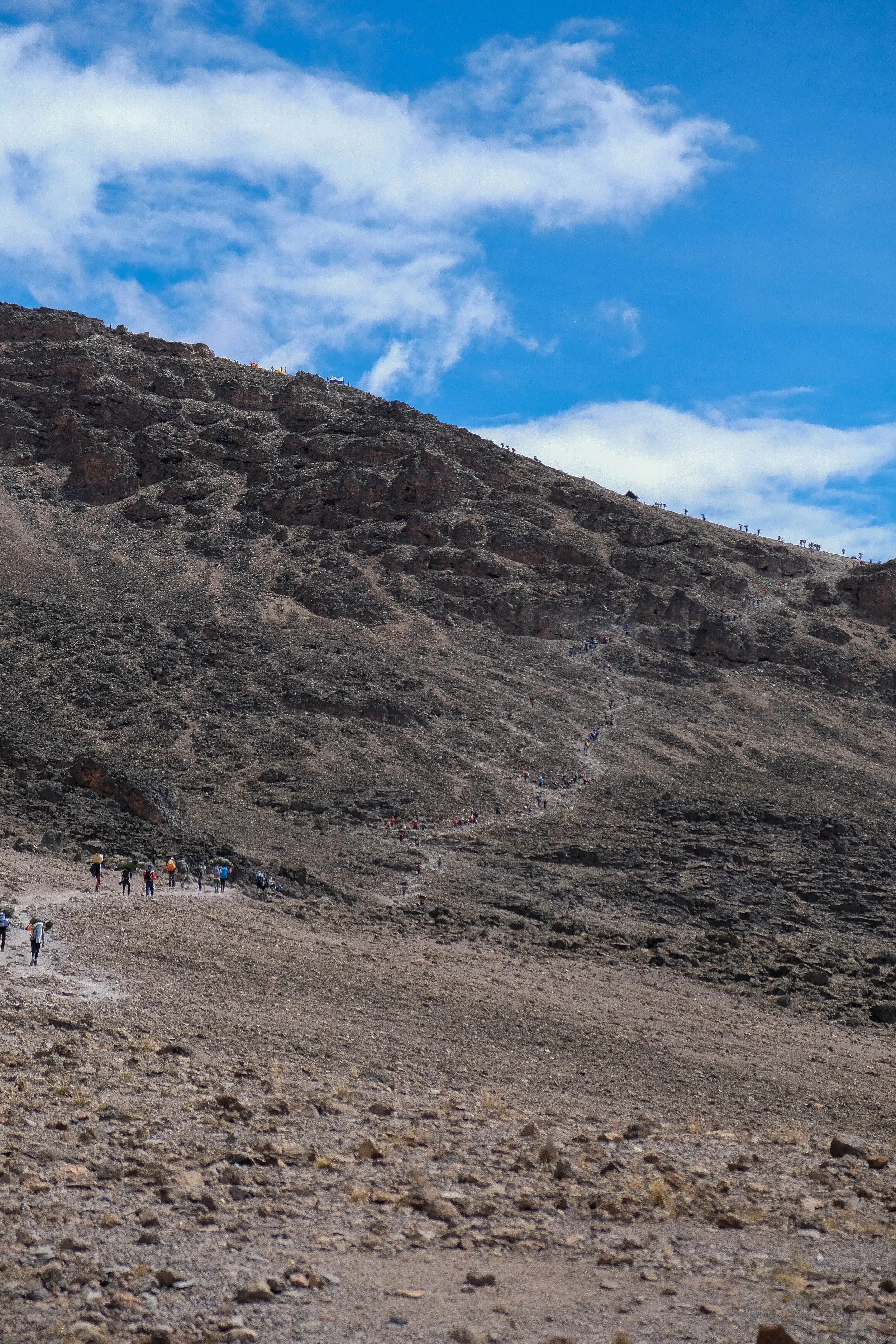
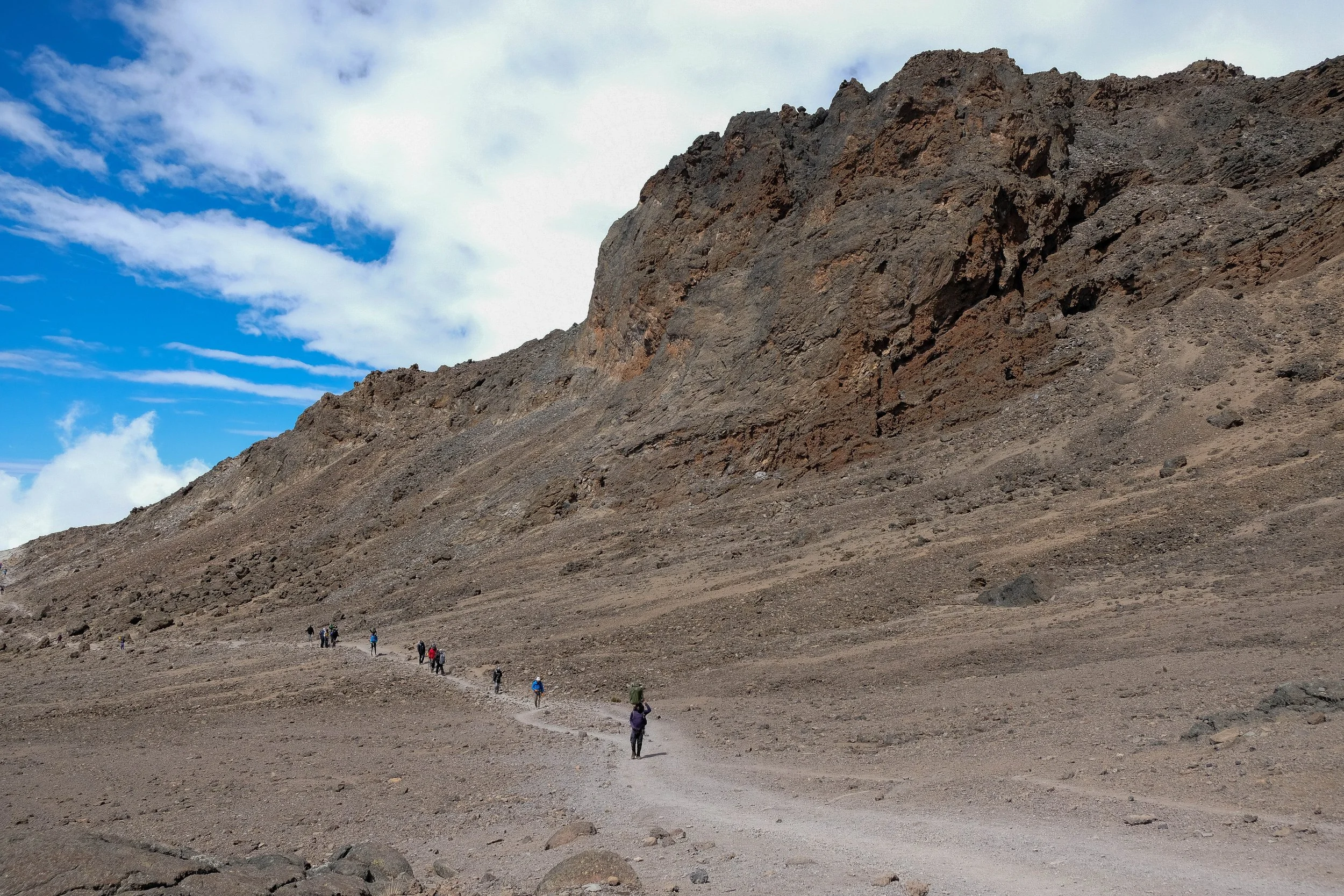
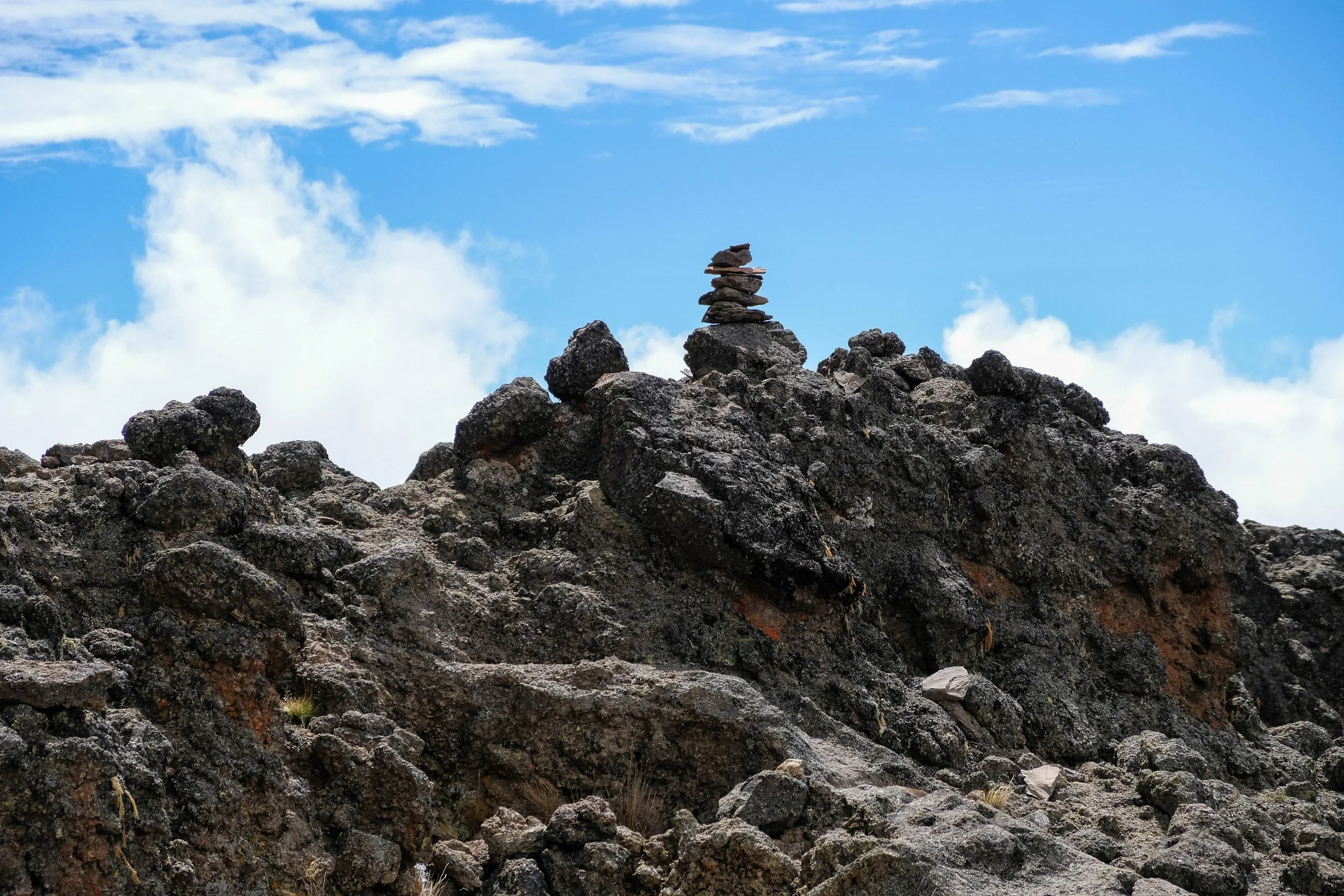
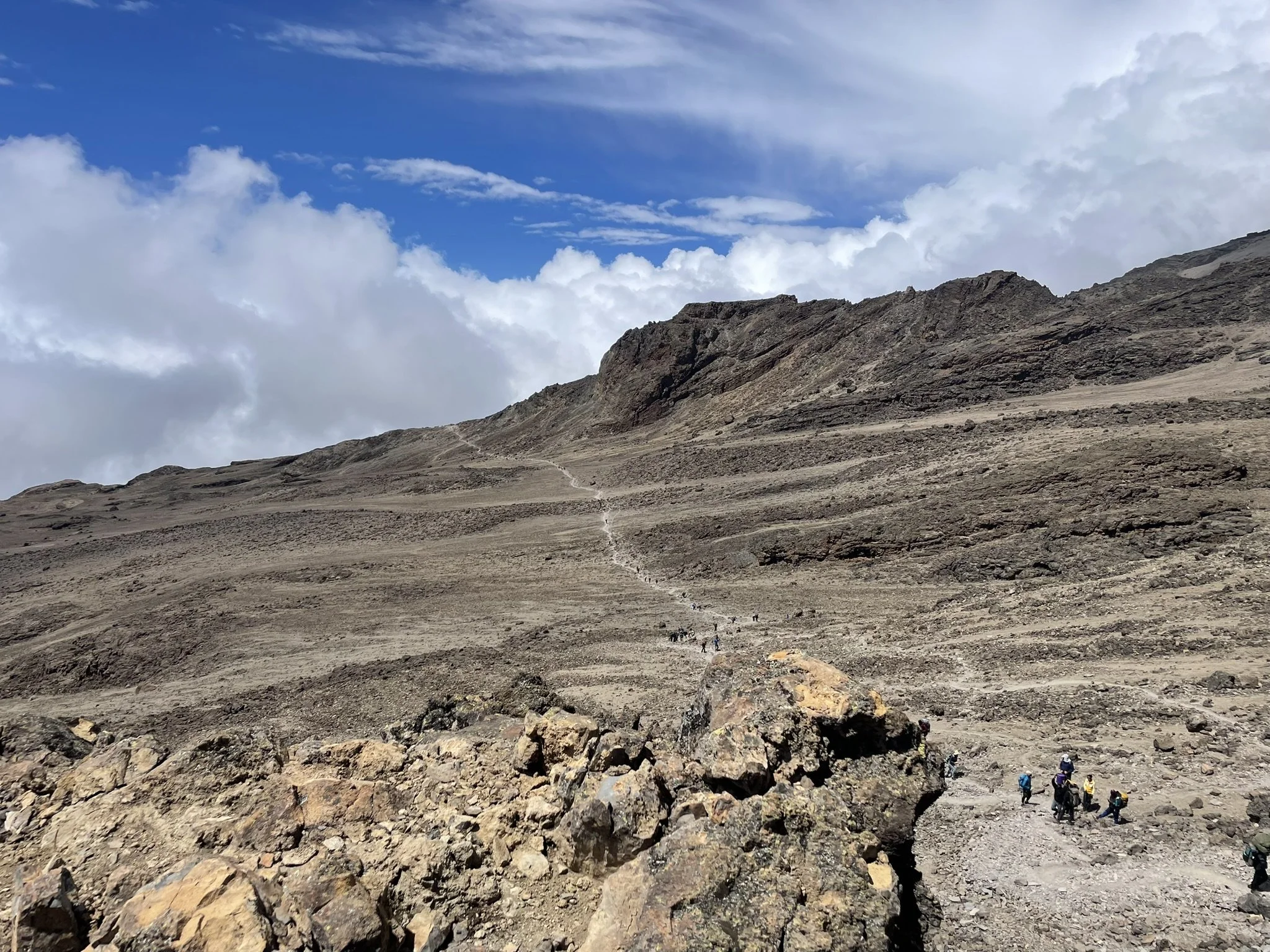
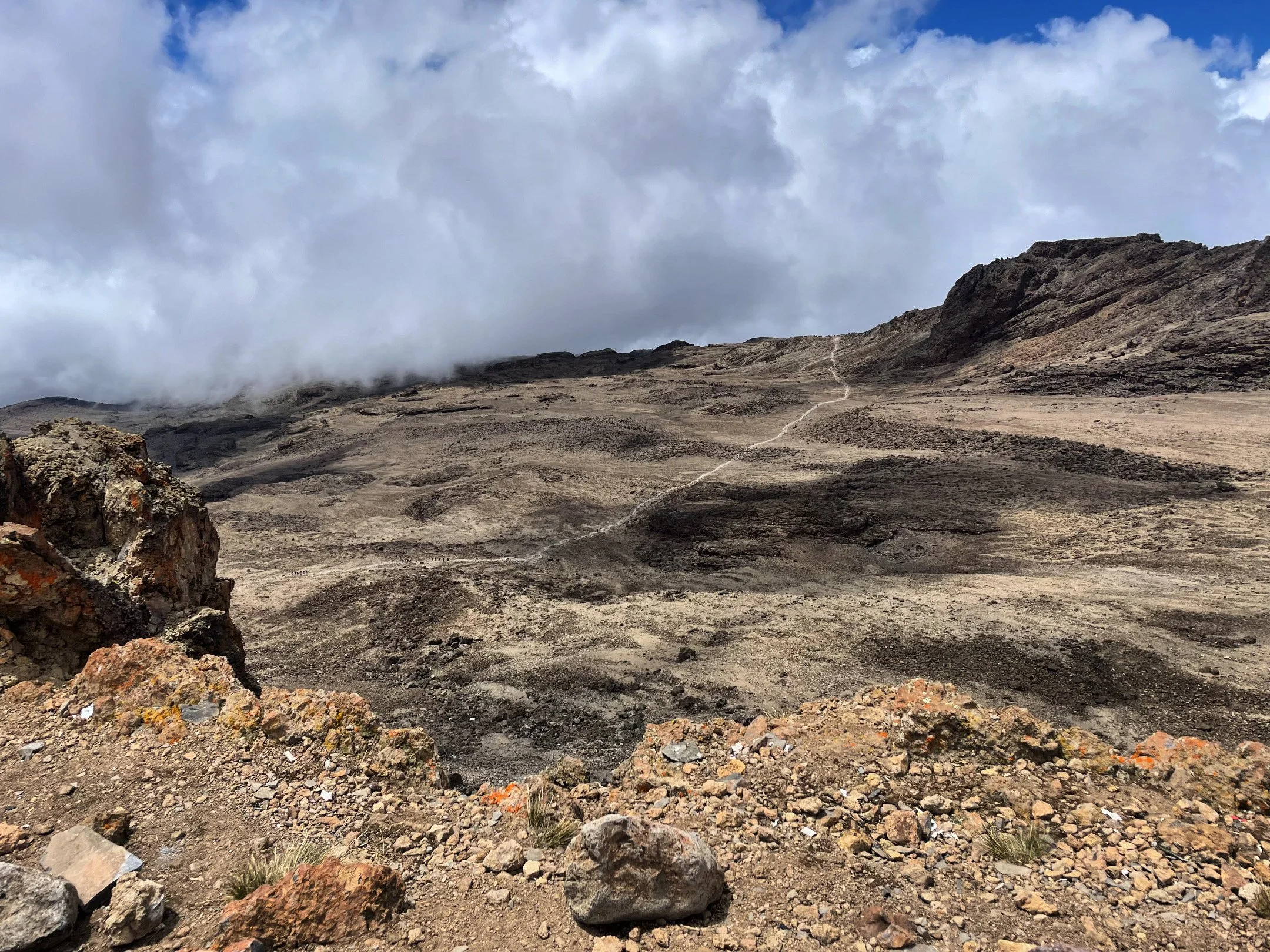
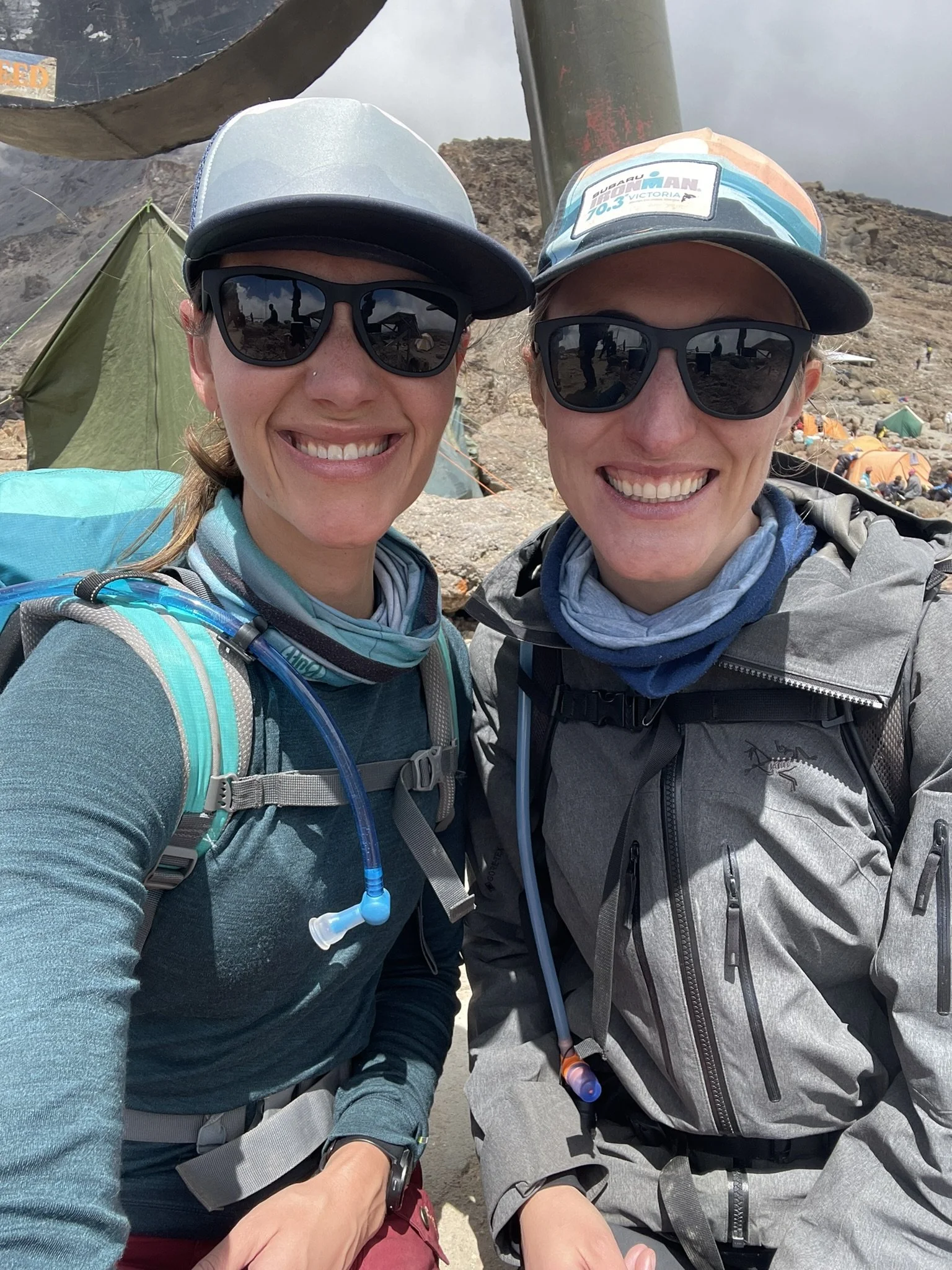
We tackled a short, steep hike from Karanga Camp to Barafu Camp—our base camp for the push to the summit. It was a bluebird day with alpine desert views that reminded us of Colorado’s 14ers. Rock, shale, and scree made up the trail. I remember light conversations with each other and growing anticipation as Kili loomed high above us on the left. The fact that we were approaching base camp made everything feel much closer and more immediate. We knew we’d have an unusual afternoon of trying to sleep early to prepare for our wake-up call at midnight.
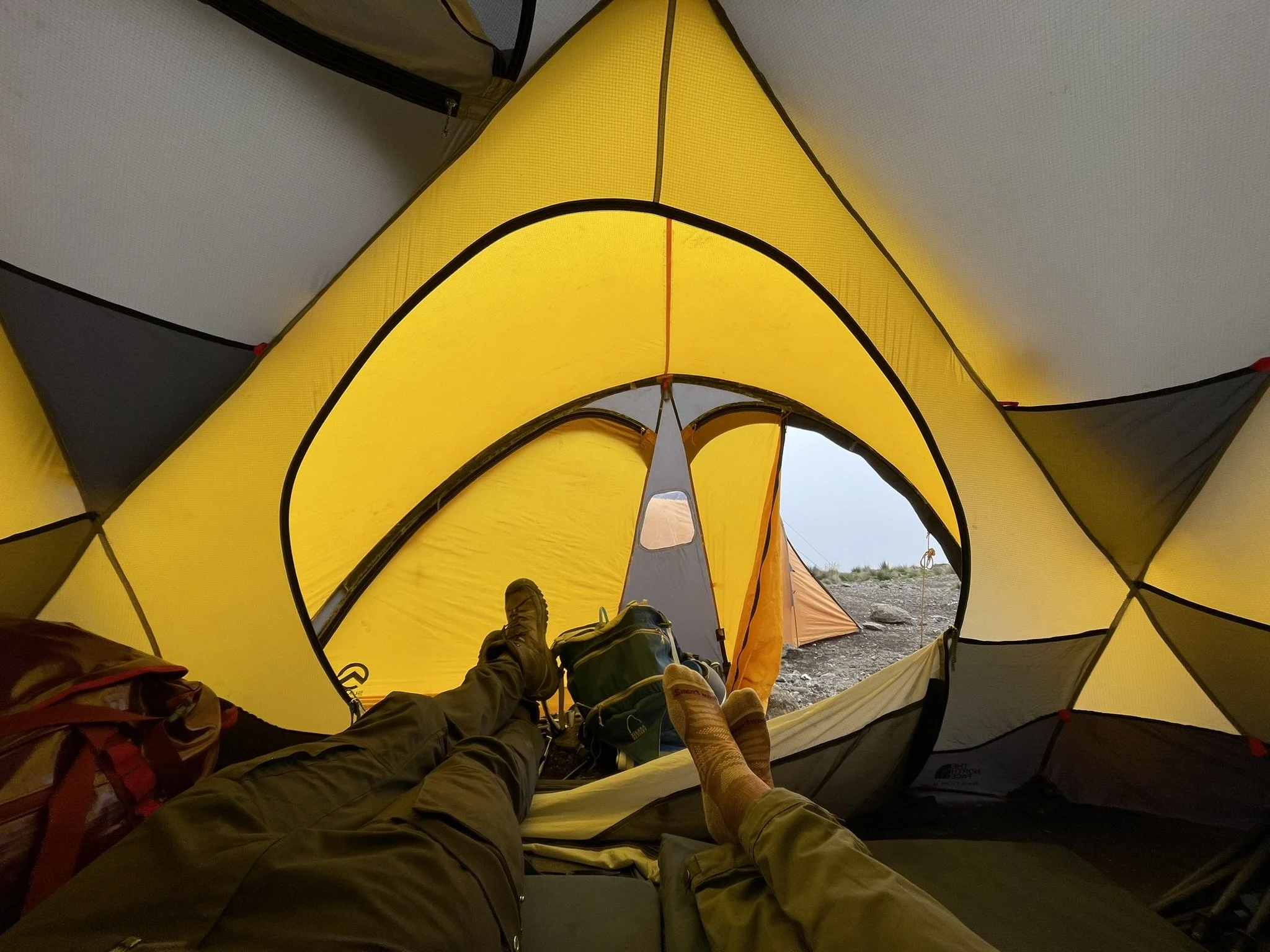
The camp was buzzing with energy when we arrived. Everyone there was either returning from their summit attempt or arriving to make the attempt the next morning, as we were. We picked our way across the uneven ground, trying not to fall on patches of sliding shale, until we finally reached our site. Our twin yellow North Face tents were neatly positioned side by side and we dropped our bags inside before lunch and our summit morning briefing with our guides.
“Pole pole” and “take one step and then another and then another” are the main instructions that I recall. They reviewed the clothing layers we should wear and bring with us and reminded us to rest as much as we could before midnight.
We rested for about three hours before a quick dinner and back to bed. I slept, but not deeply. It wasn’t long before I heard Eresto outside our tent—12am on the dot:
“Gooood morning, brother and sister. It’s time to climb, Jamesy and Emily.”
Day 6: Barafu Camp to Uhuru Peak to Mweka Camp | 11.2 miles | 15,360 ft - 19,362 ft - 10,170 ft
Part 1
We gathered for a snack of popcorn and peanuts before performing one last gear check, flicking on our headlamps, and beginning the ascent a little after 1am. We fell into a comfortable rhythm, our pace slow but steady. Every hour, we stopped for five minutes—a quick chance to eat half a Larabar, take some sips of water, suck on an electrolyte chew.
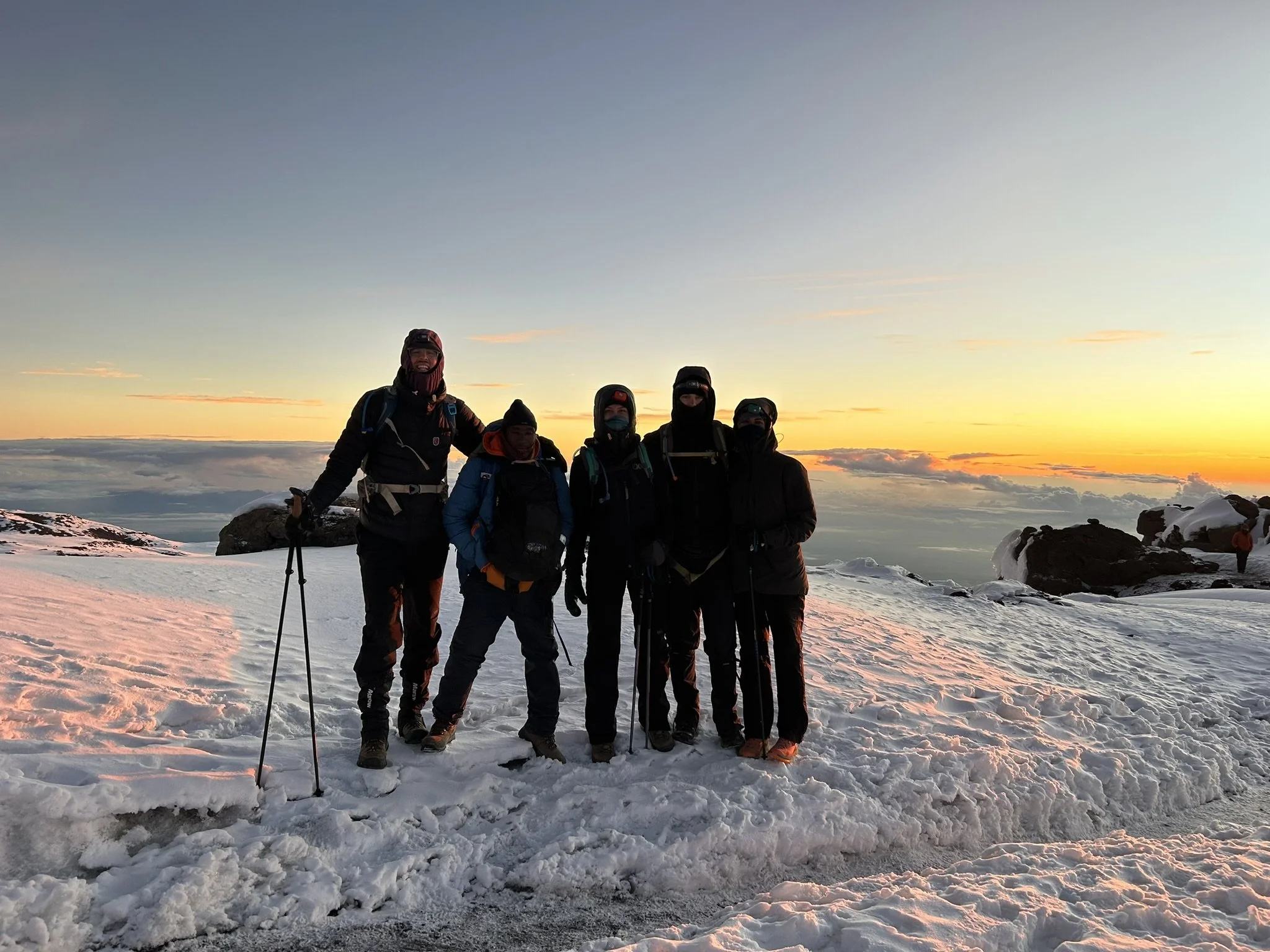
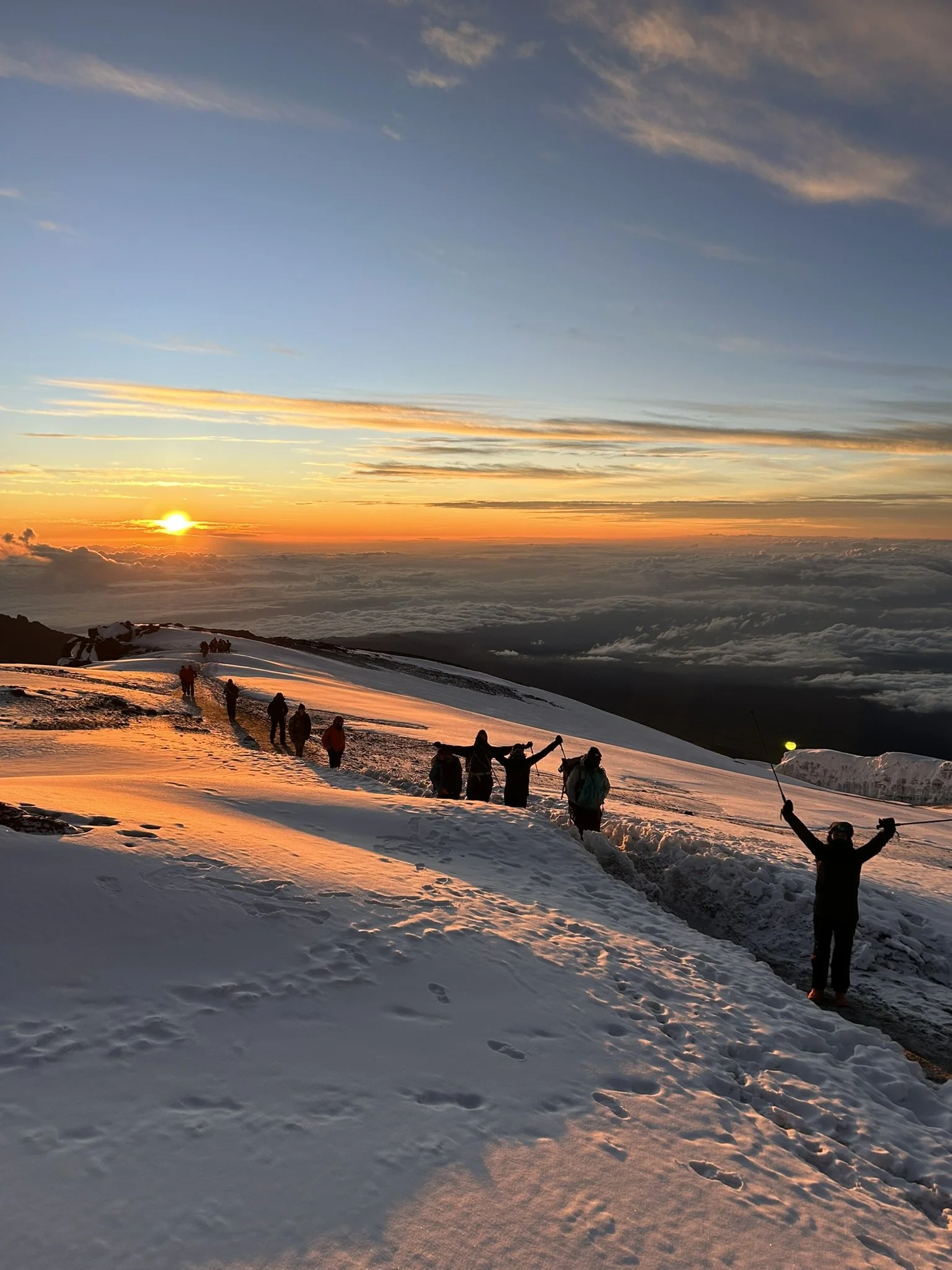
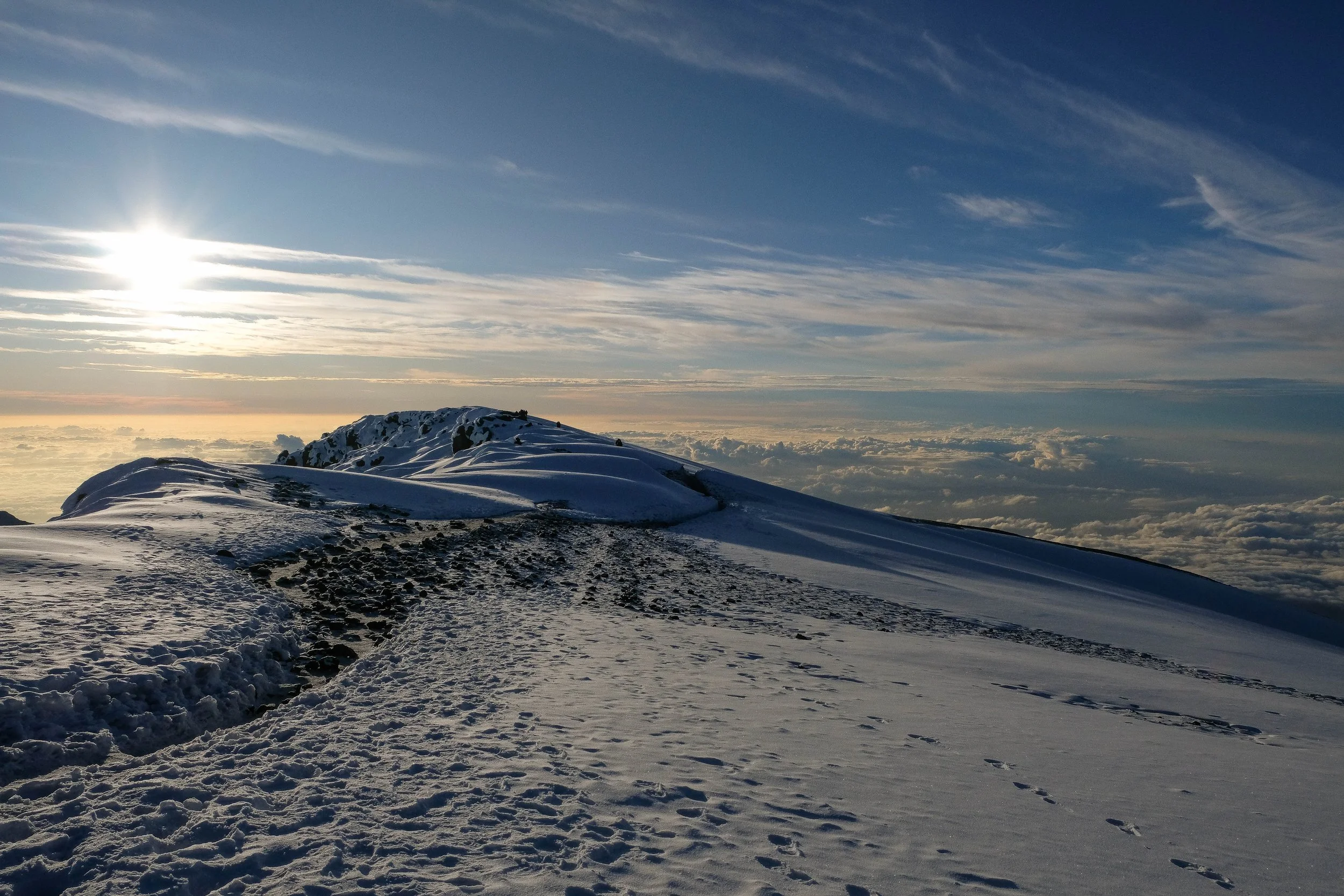
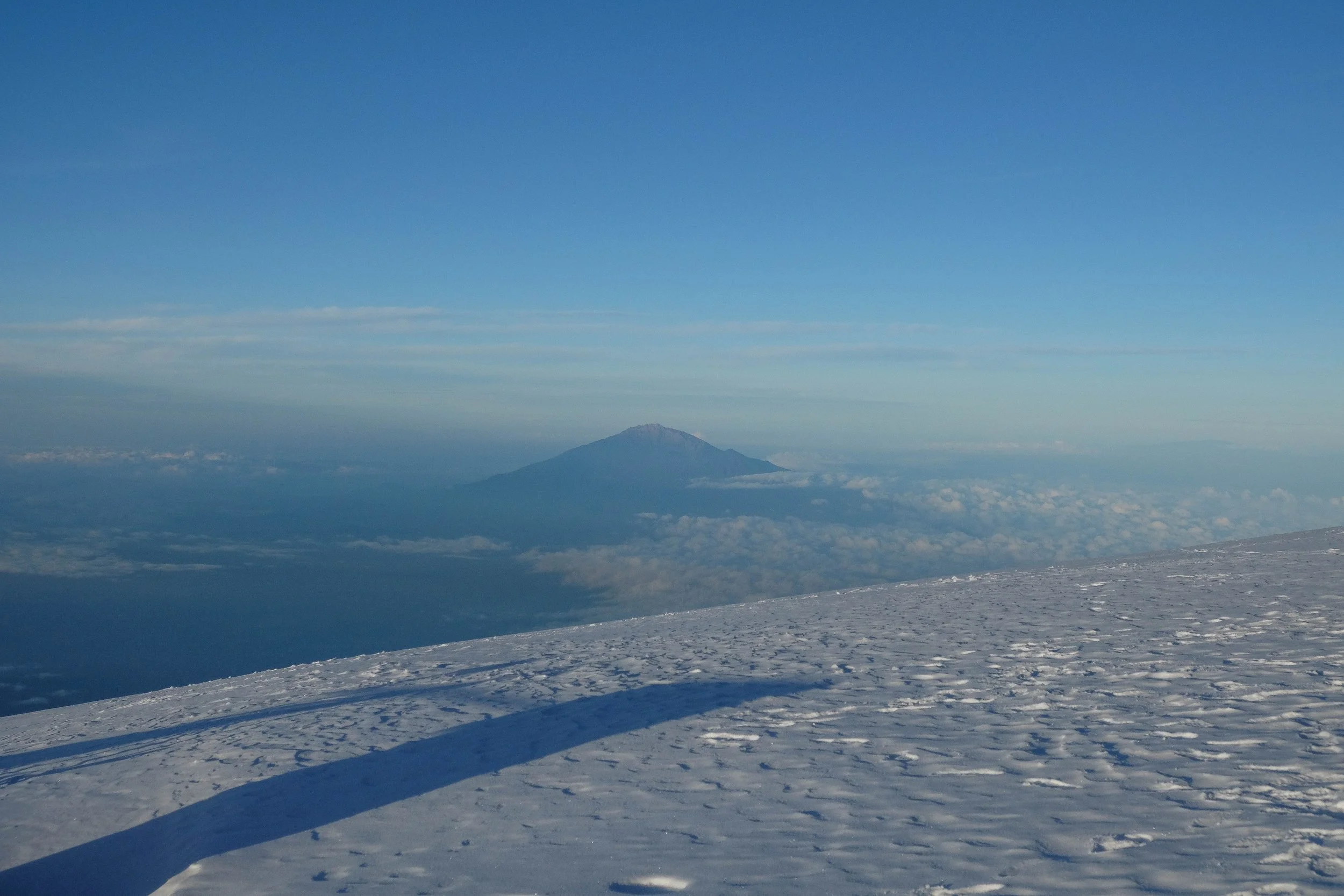
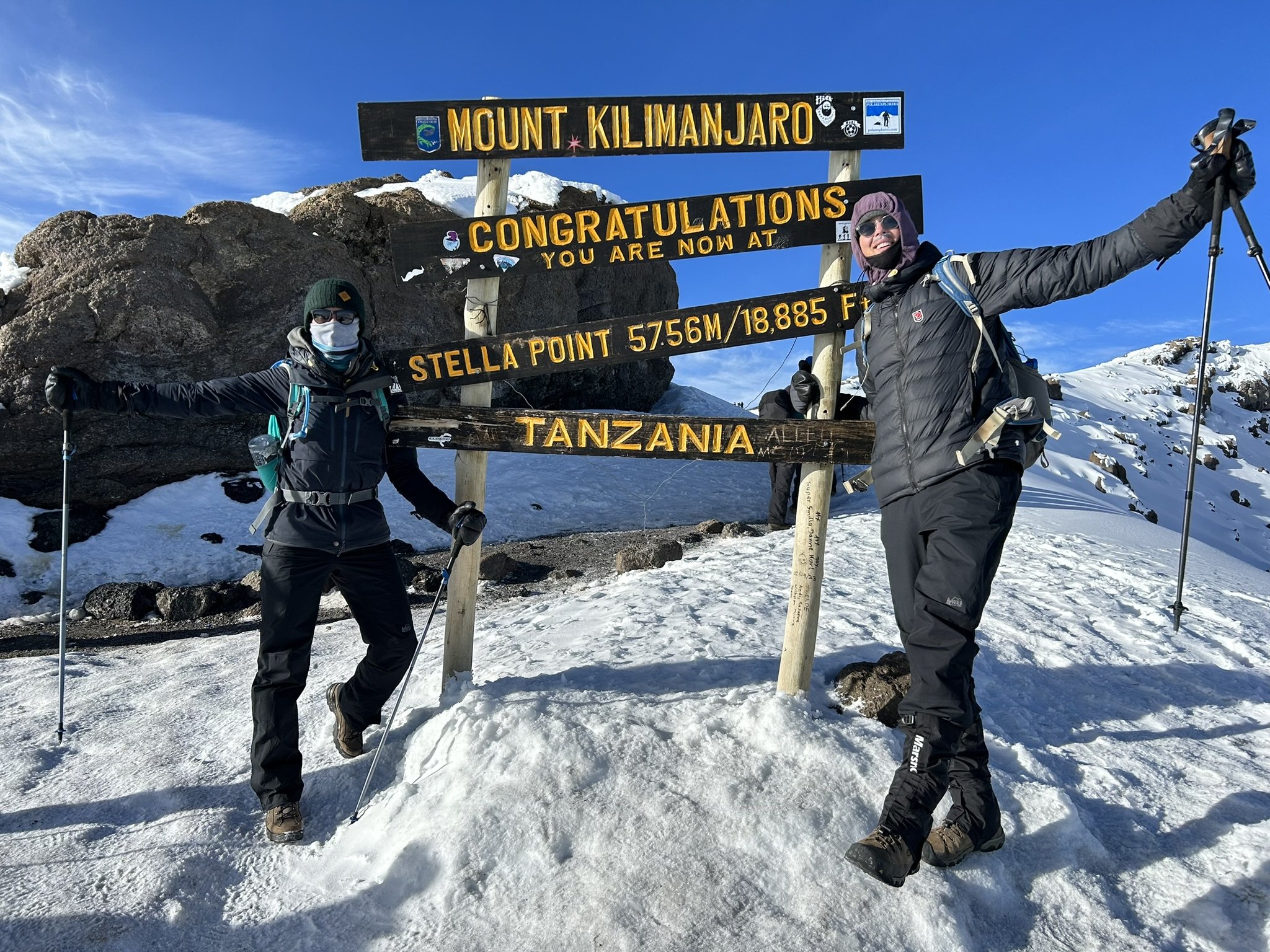
It went faster than I expected, this meditative trek up the final stretch of mountain. Suddenly it was 3am, then 5am, then a sliver of crimson light began to emerge on the curved horizon below us. Just before 6am, we pushed up one last steep section and suddenly emerged over the ledge of the crater: Stella Point, the beginning of the end.
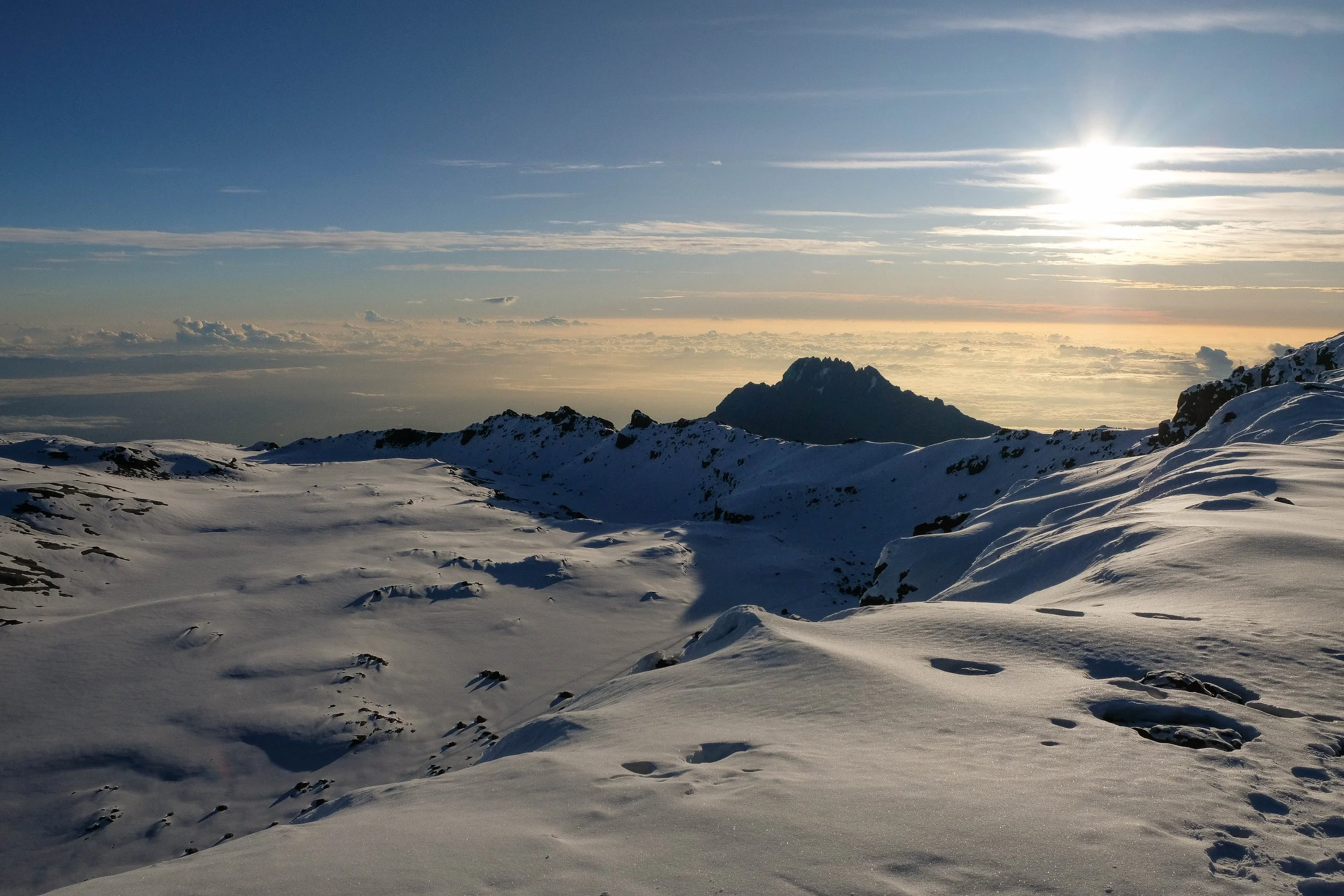
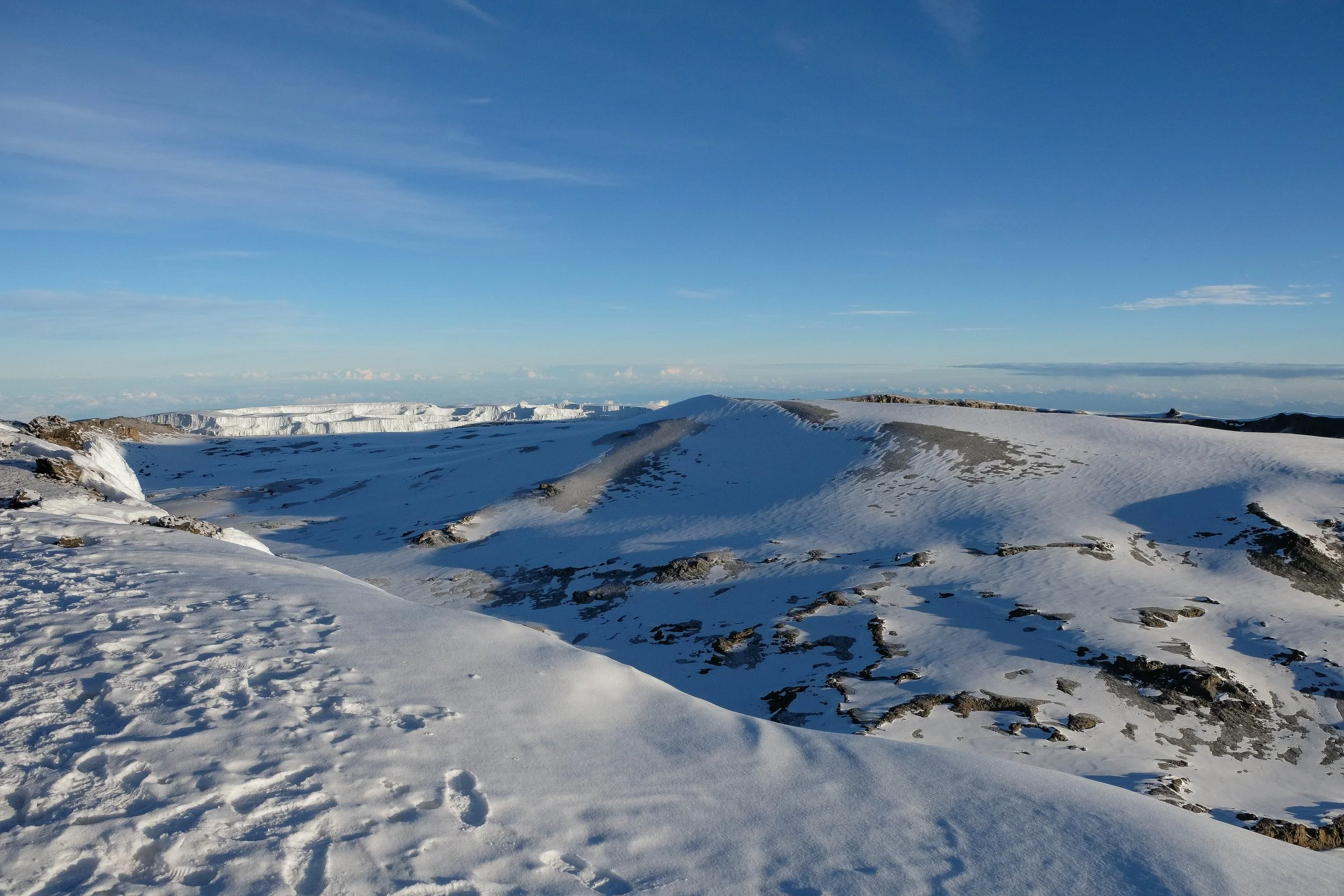
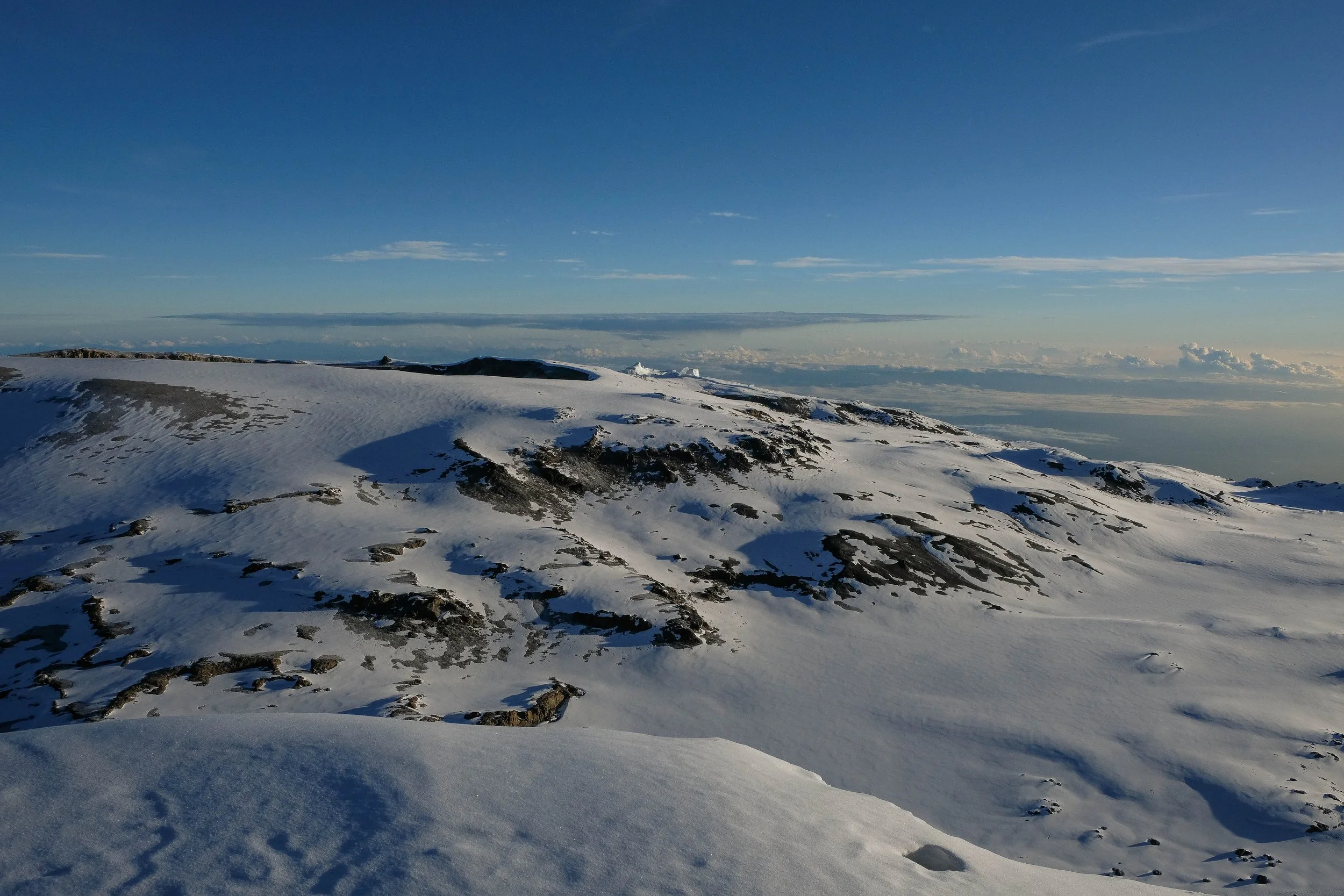
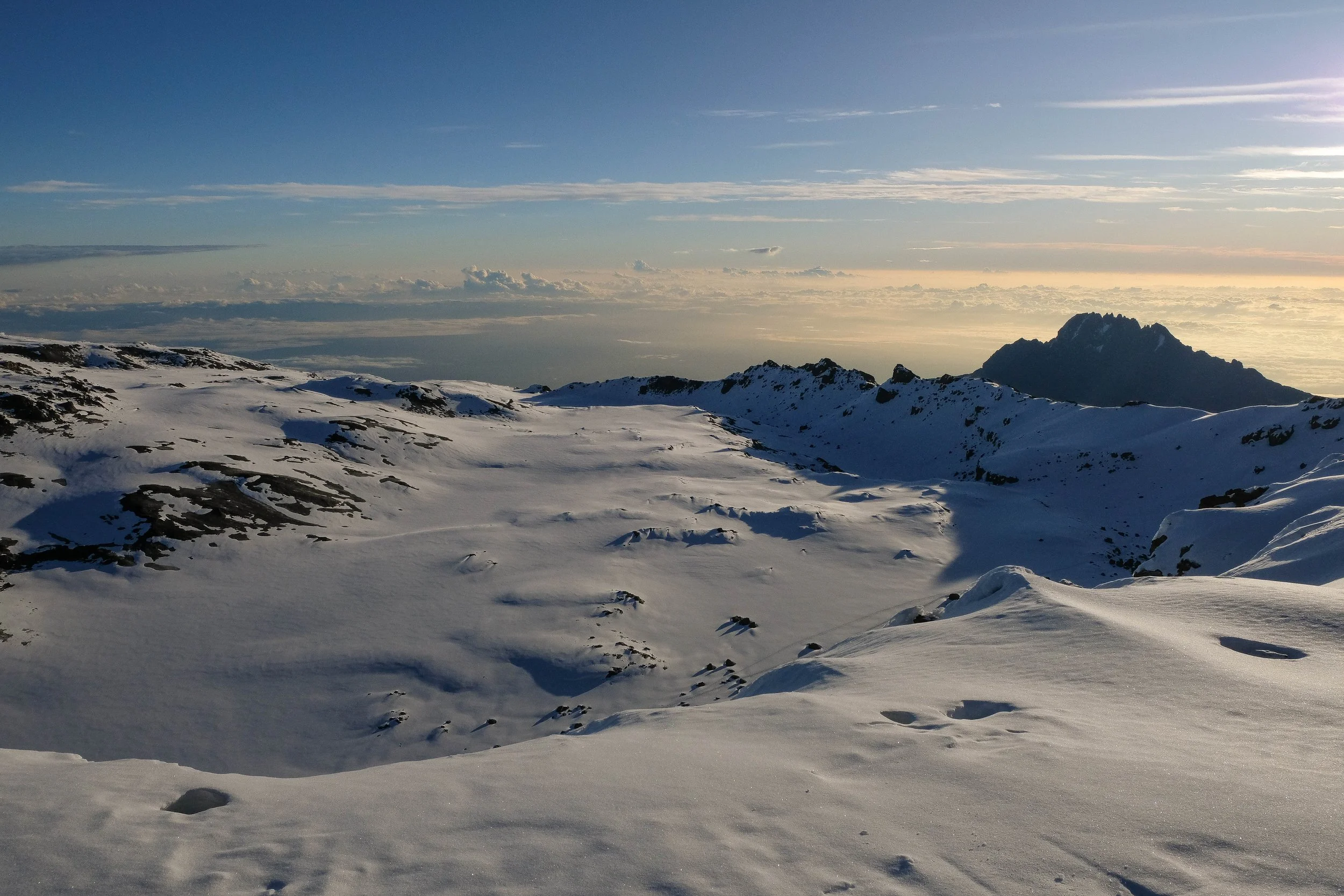
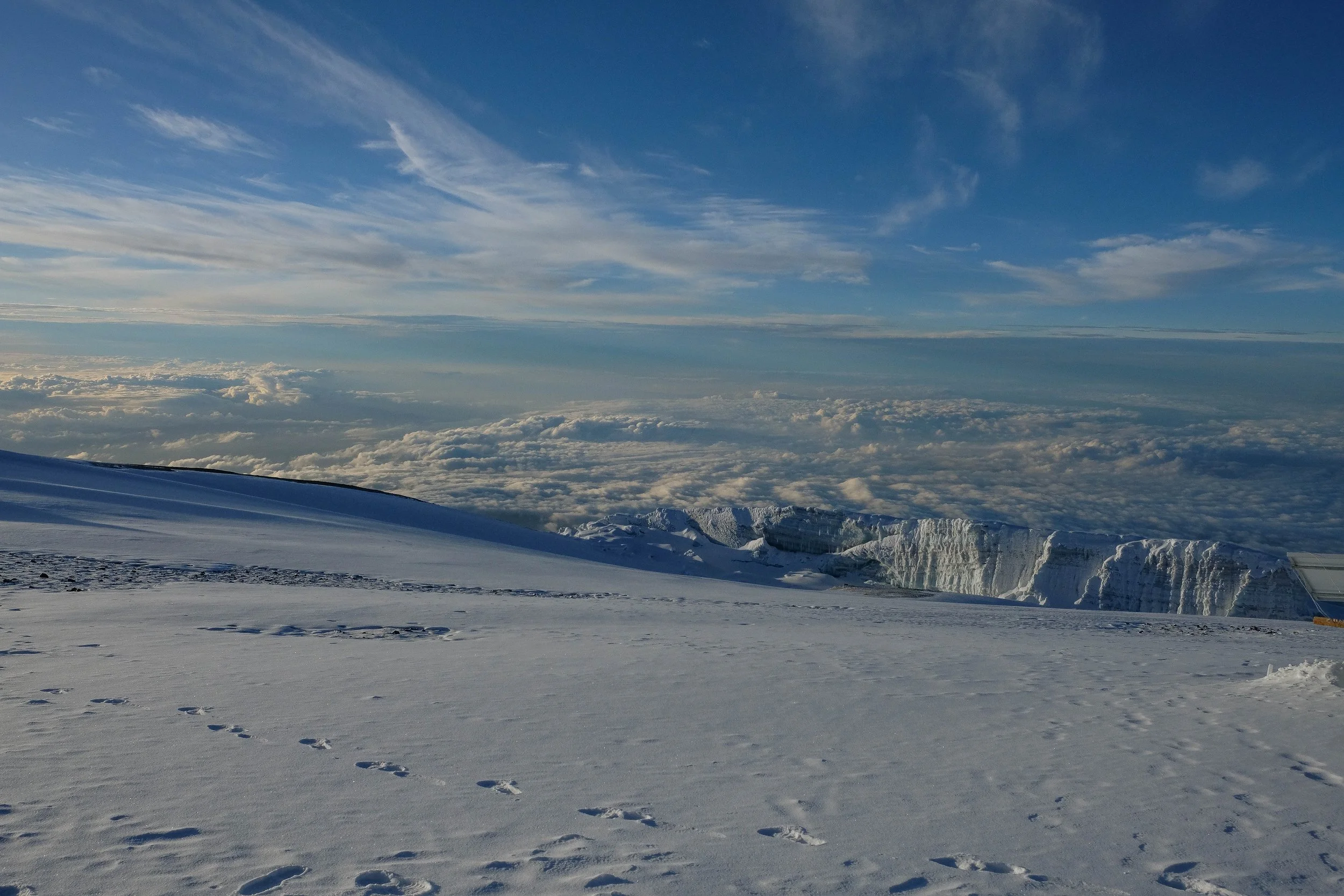
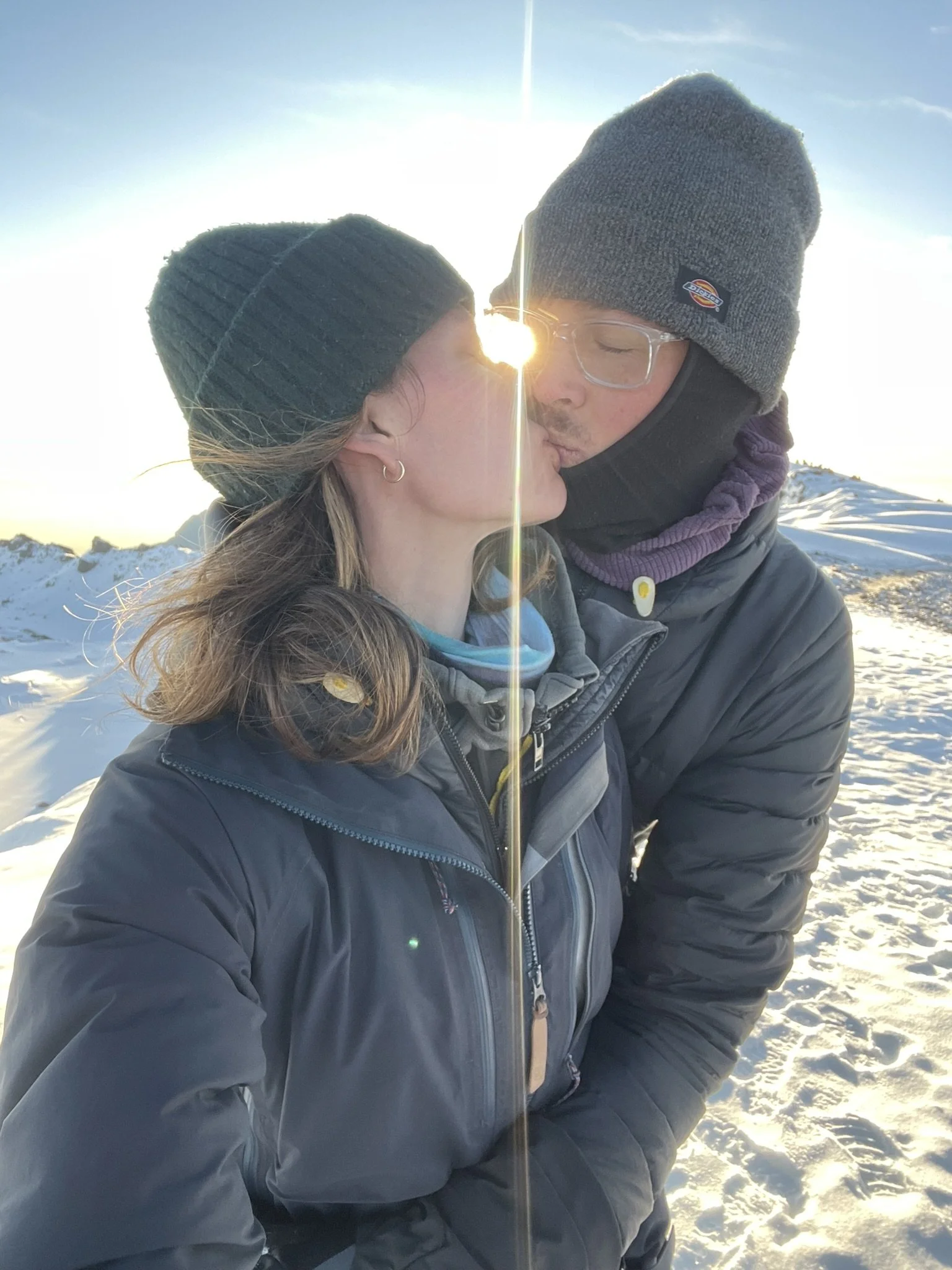
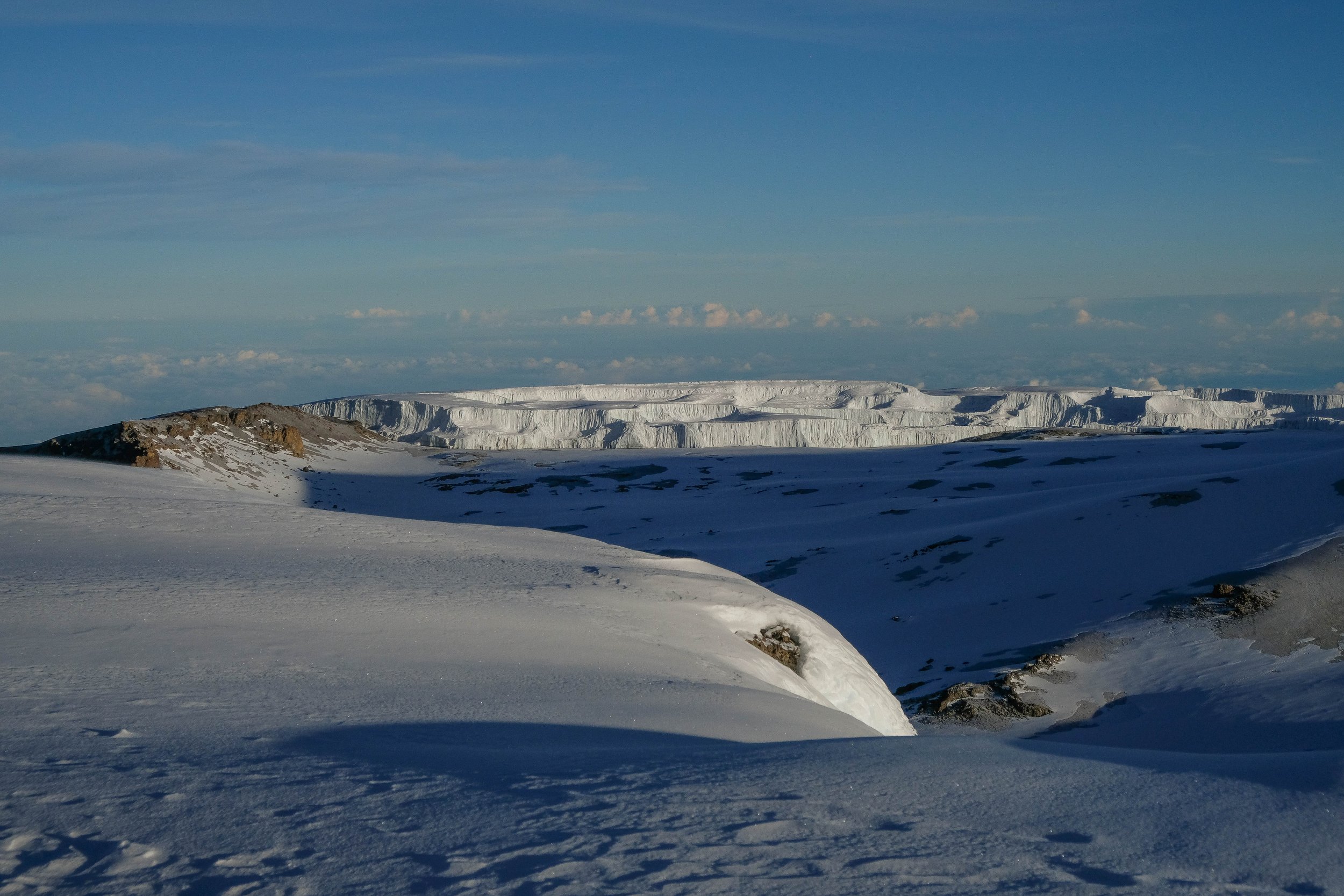
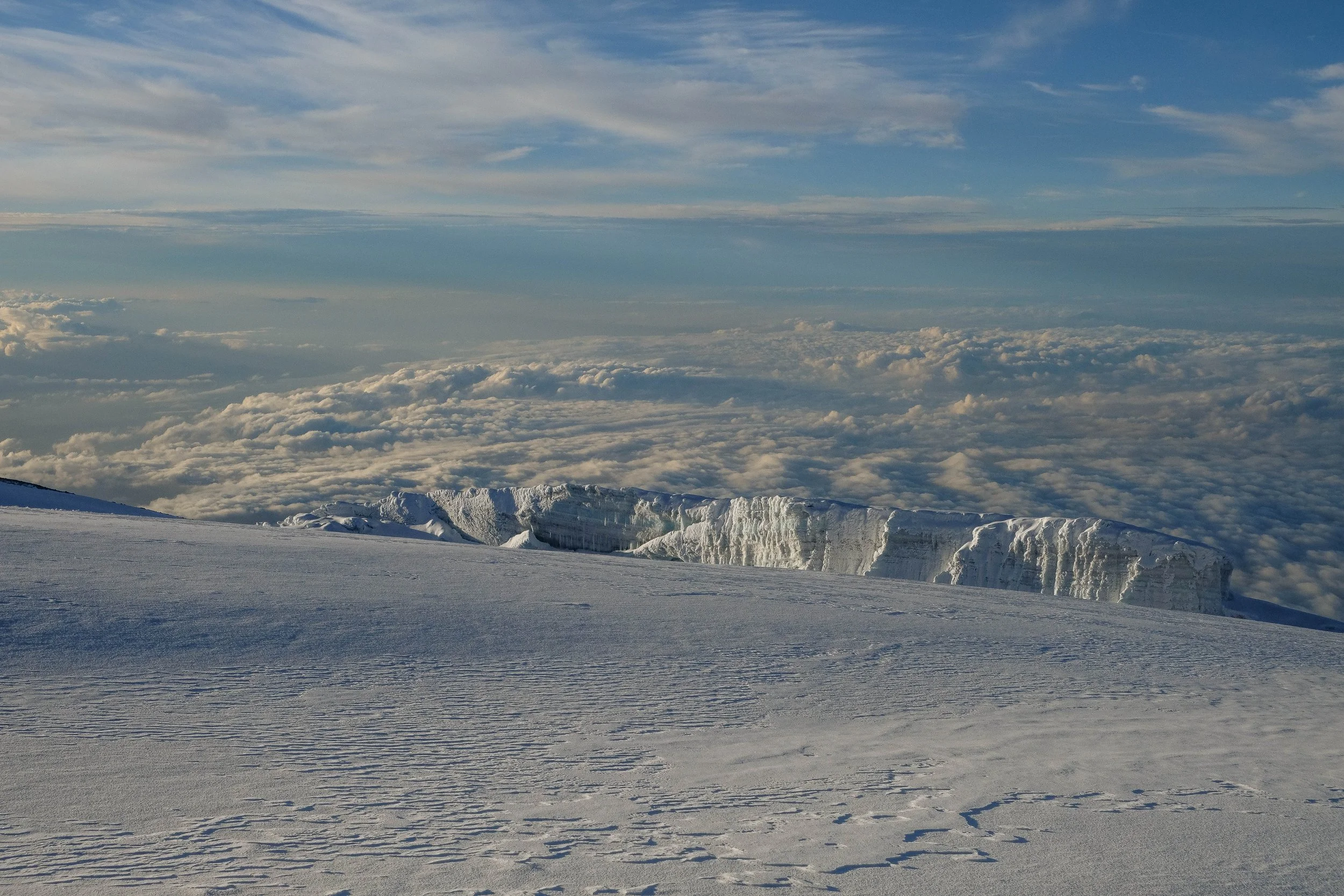
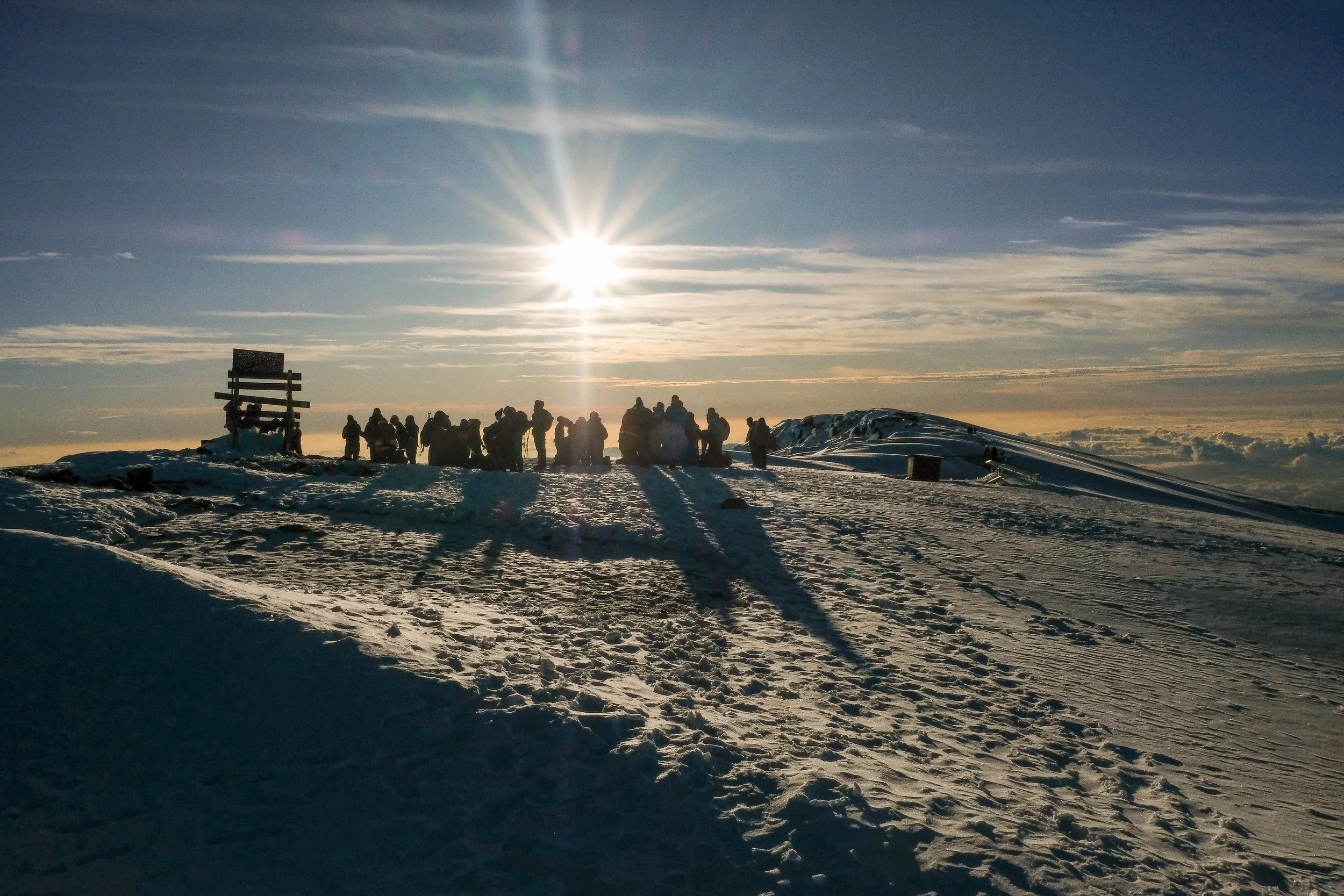
A wave of emotions passed through me—joy, elation, euphoria; disbelief, awe, wonder. The rays of the rising sun extended across the sky, visible beams shooting all the way across the bowl of the heavens. The crater, brimming with fresh white snow, swooped away beneath us to the right; to our left was a glacier, glistening pink and orange in the light of the sun; ahead of us was a narrow trail through the thigh-high snow, guiding us around the edge of the crater for the final leg of our journey to Uhuru Peak. I cried and laughed as the wind whipped around us: this was really happening, this was real.
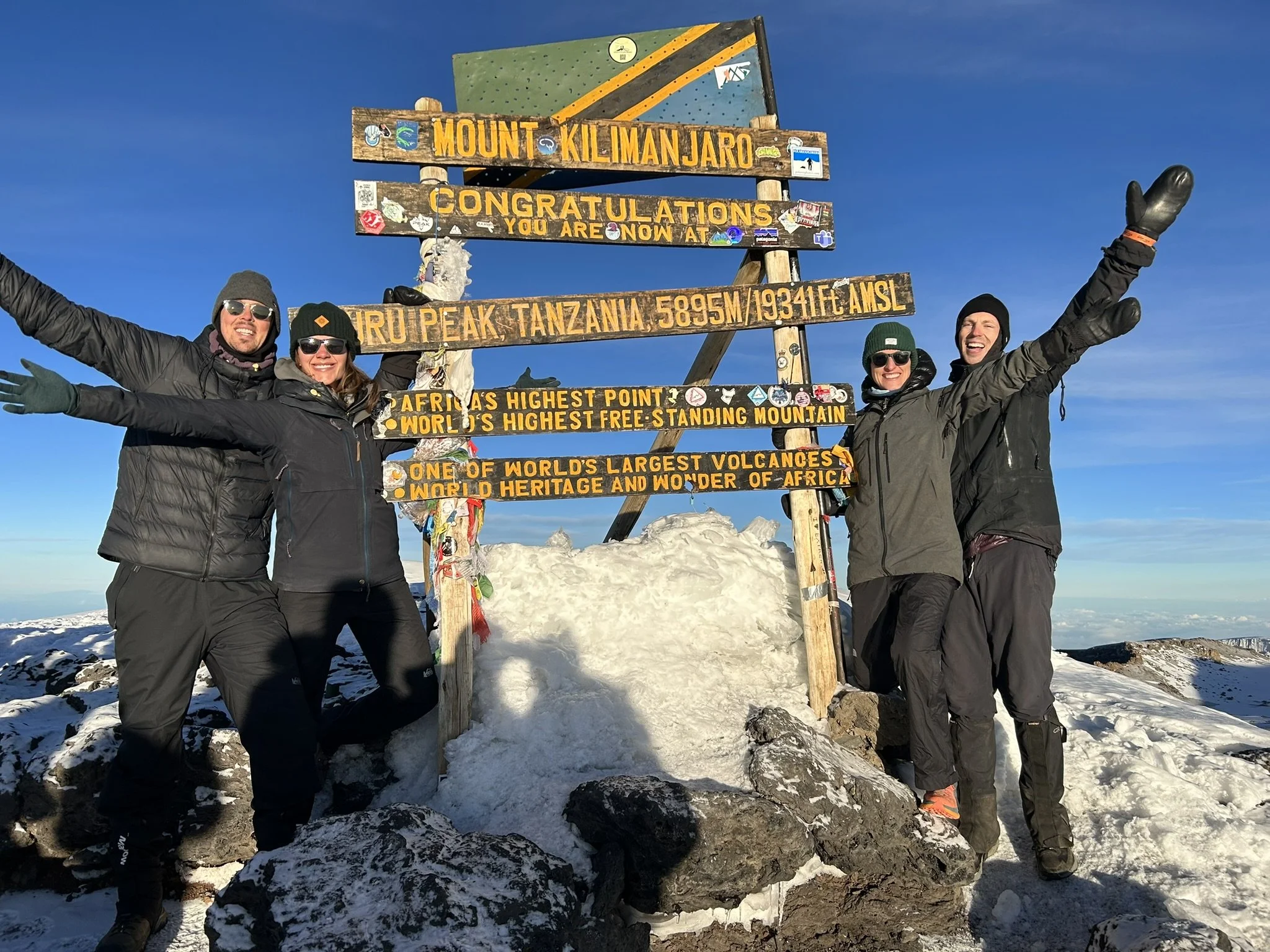
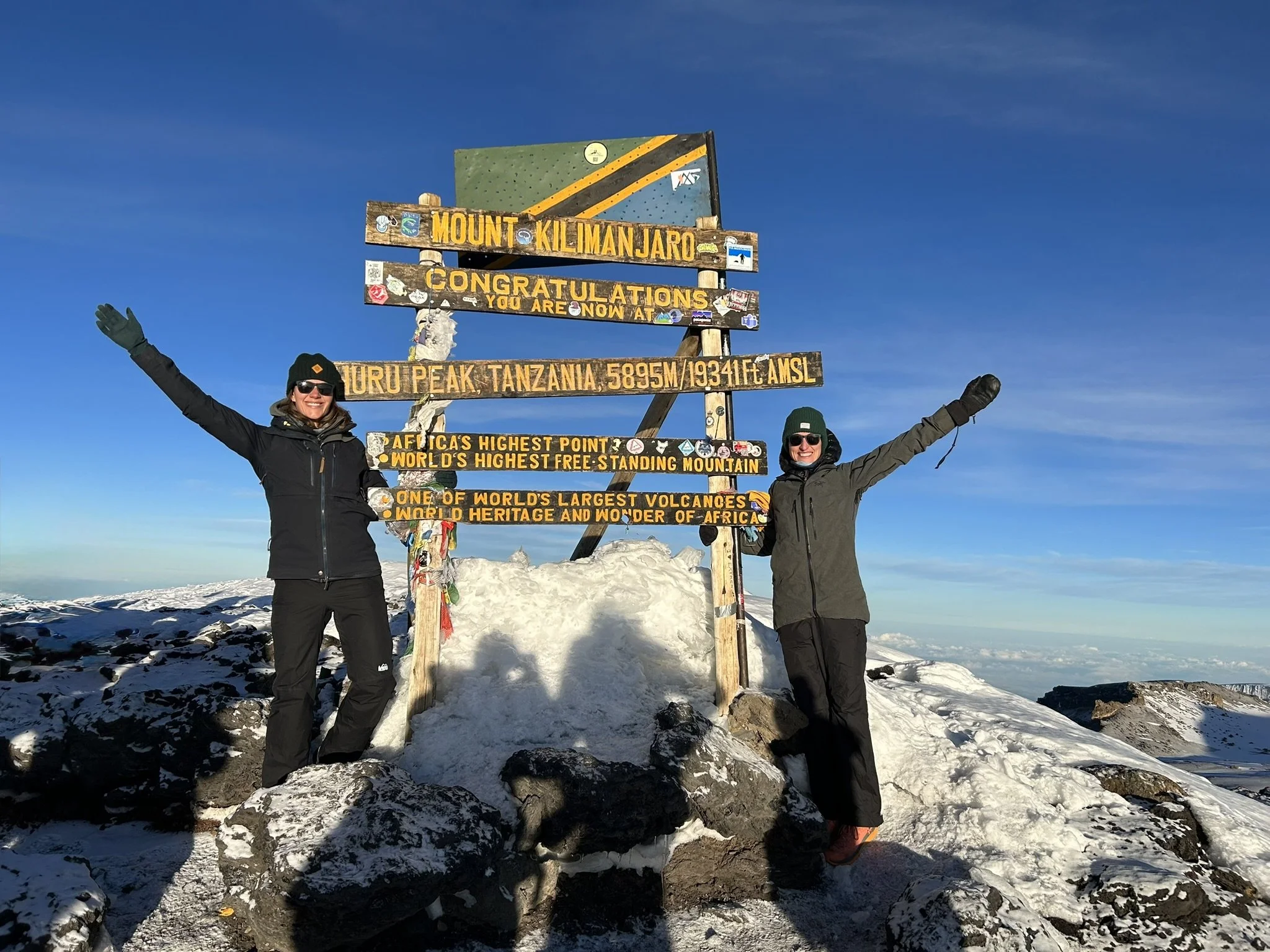
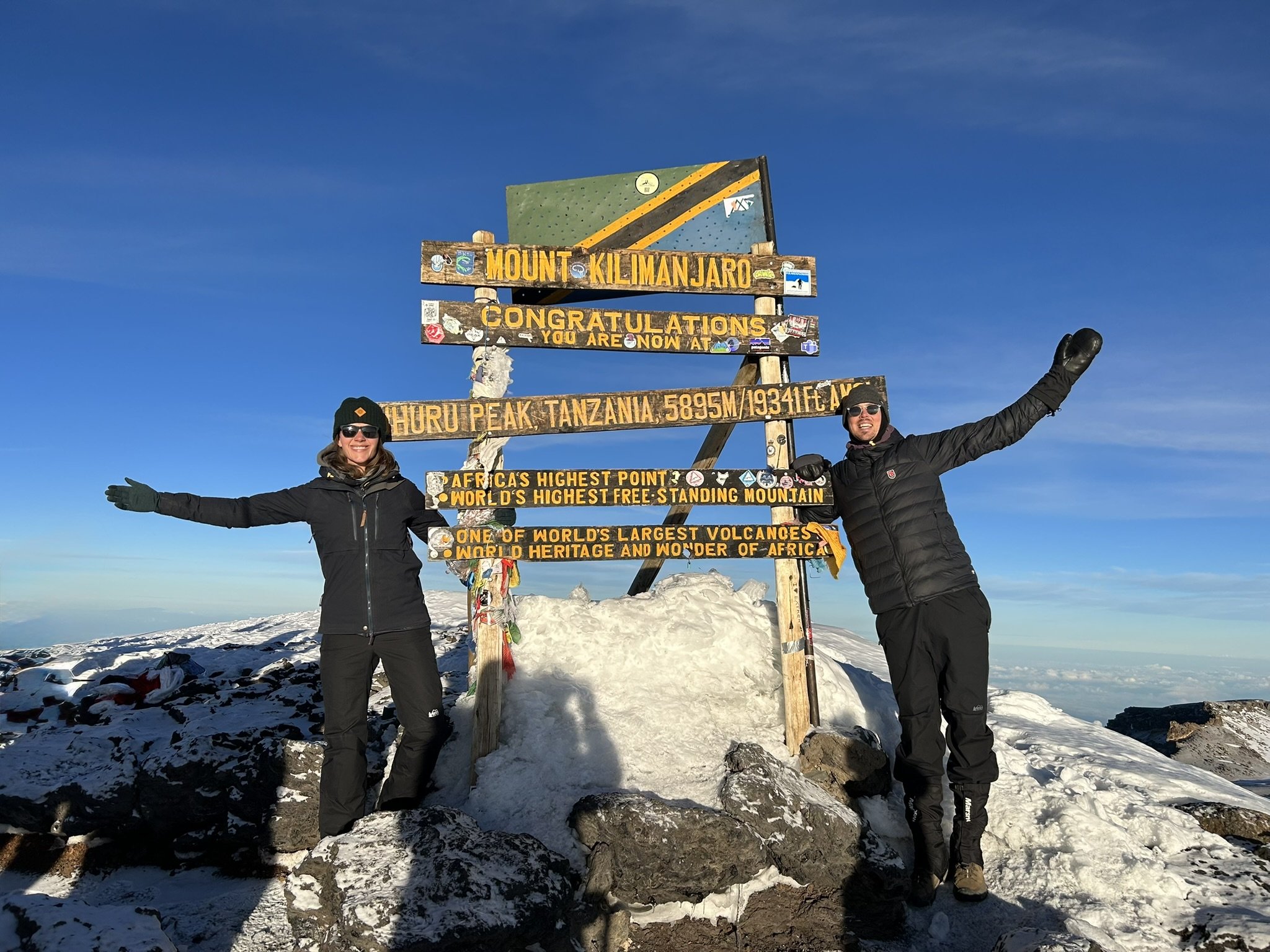
The 30 minutes between Stella Point and Uhuru Peak were magical, a sacred time to hold the beauty and emotion close. And then there it was, the iconic Uhuru Peak sign in the distance, perfectly lit in golden sunlight. I hope I never forget what it felt like to see that sign at long last, the fulfillment of a long-held and cherished dream.
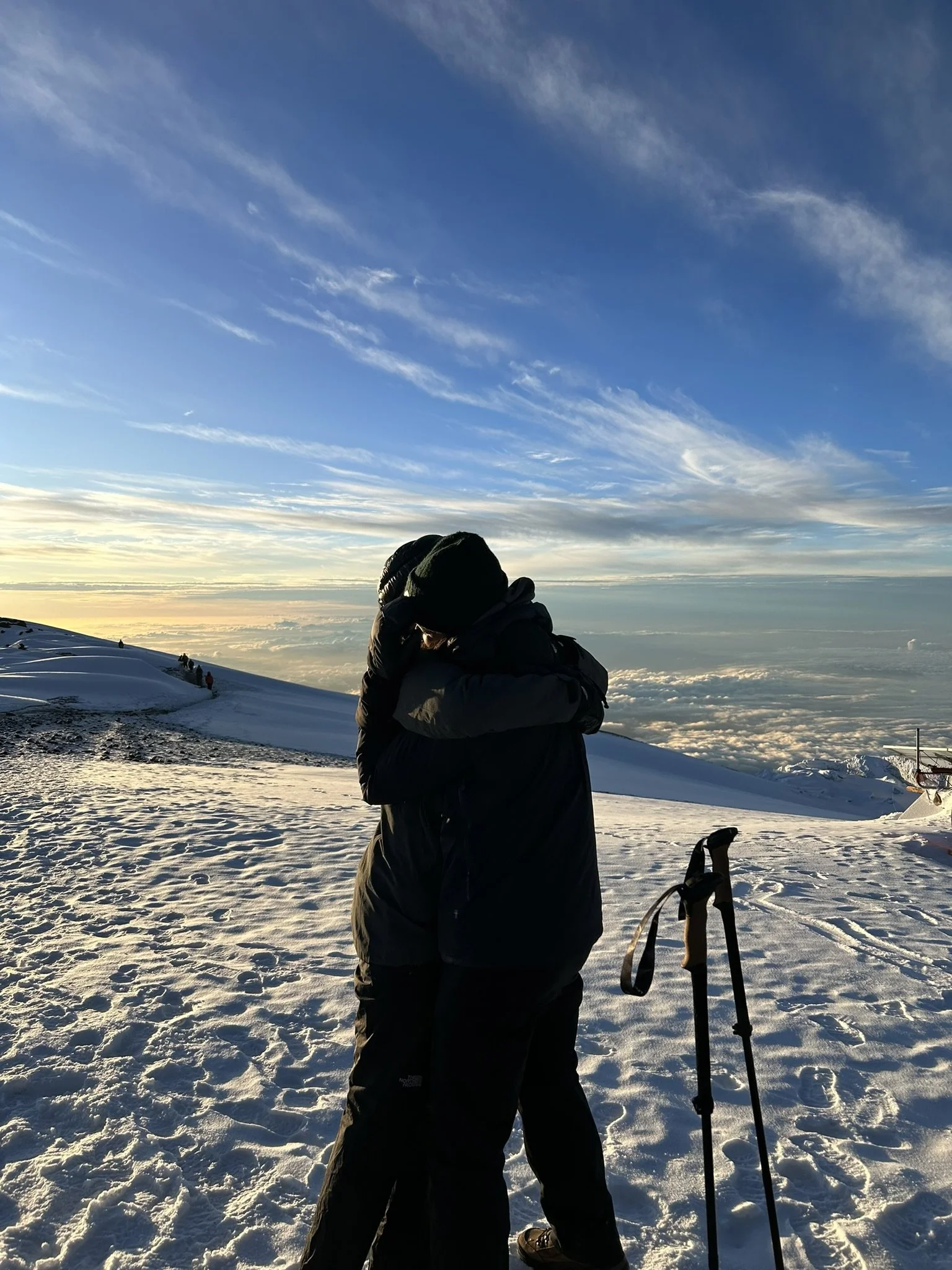
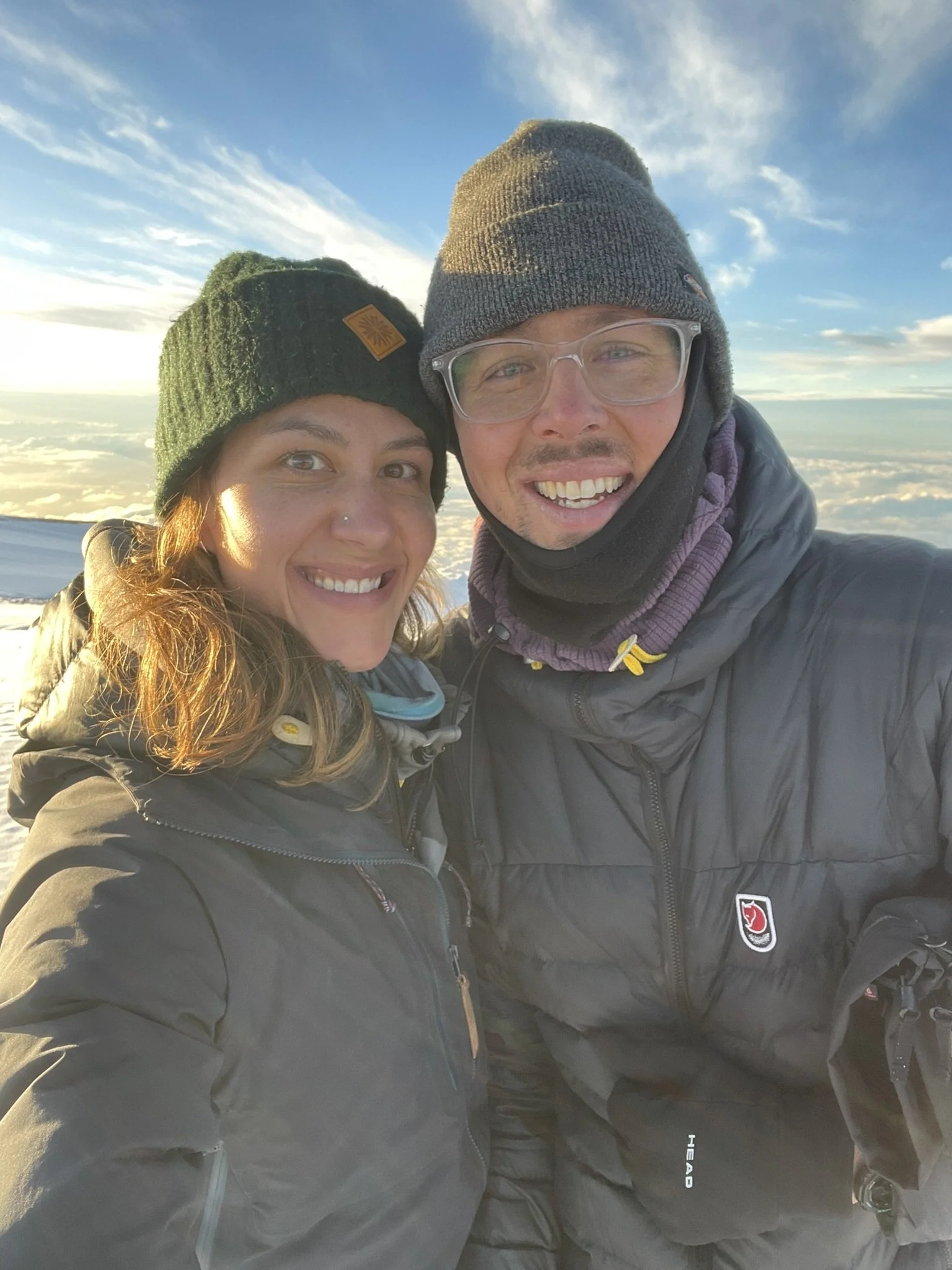
There wasn’t a dry eye in our group as we reached the summit, hugged and high fived. Alida and I shared a tearful embrace, reveling in the fulfillment of a shared dream of more than a decade. “We did it!”
Nims Purja says: “On the summit, your soul becomes part of the mountain. It makes you feel alive.”
I felt that surge of life and know this in my bones: Part of my soul remains on the hauntingly beautiful summit of Kilimanjaro. 🏔️
Part 2
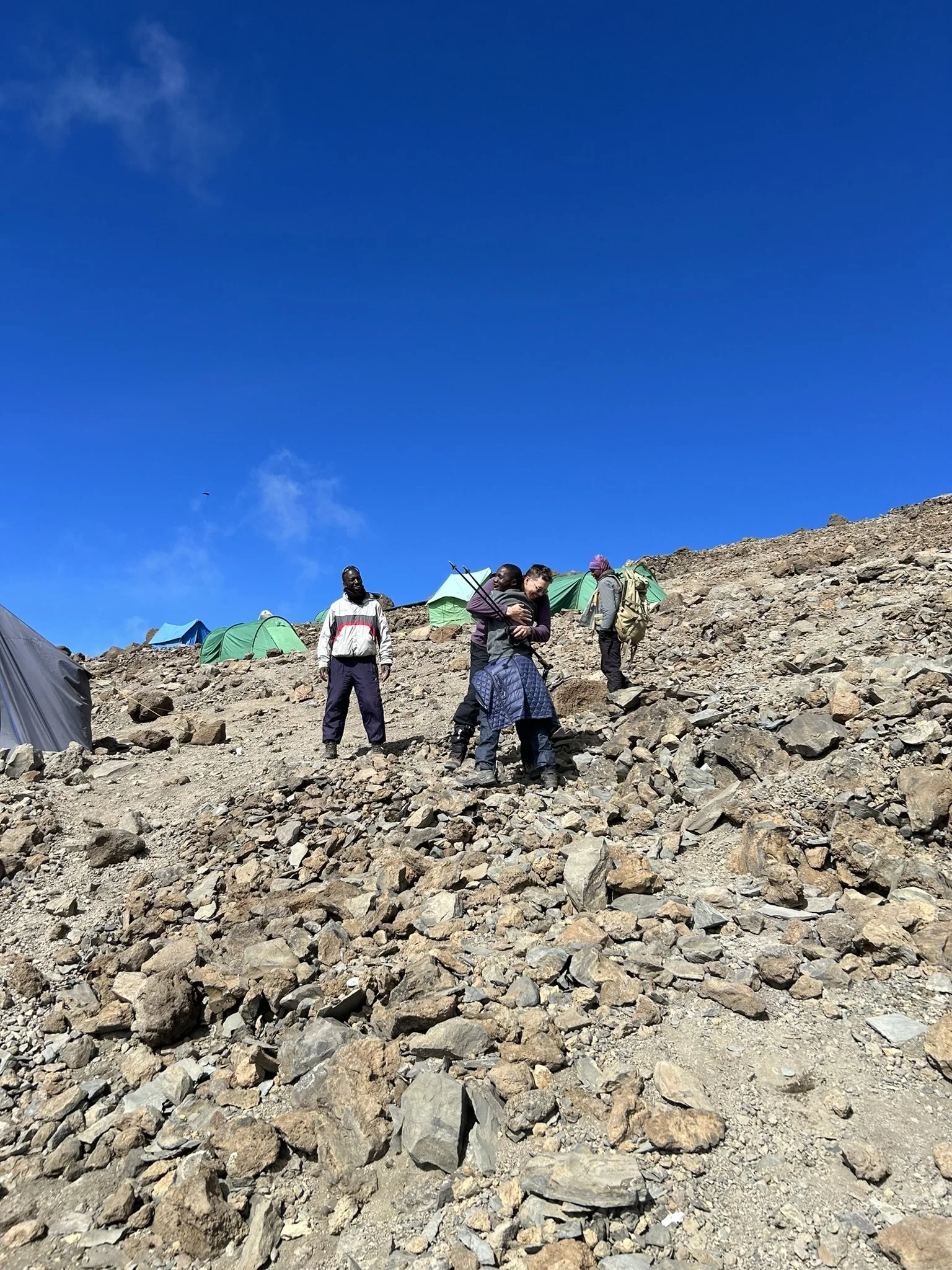
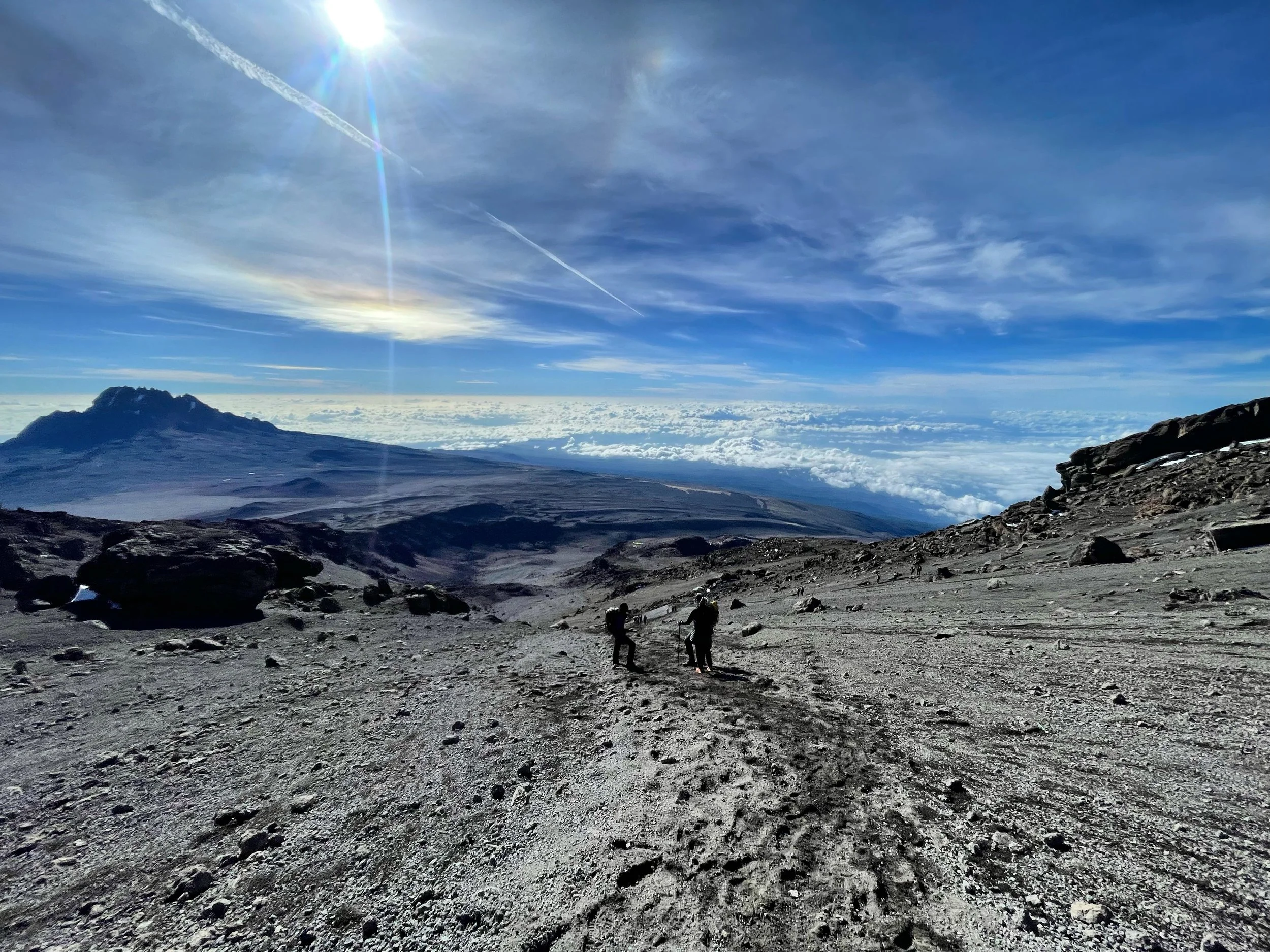
High on adrenaline and euphoria, we descended from Uhuru Peak back down to base camp. Our pace was quick and we shed the majority of our layers in the first thirty minutes. Between the altitude, lack of sleep, and direct sunlight, we all developed splitting headaches by the time we reached the camp again. Food and an hour of rest cured the headaches, but we still had a long way to go before finishing our day. We had been awake for about 13 hours already but mentally locked in for another huge descent of 4000+ ft.
After about an hour on the trail, rain clouds rolled in and thunder rumbled. We’d seen weather change quickly in the past, so expected this to blow over. We were wrong.
A torrential downpour opened up and lasted more than two hours. It turned the path into a flash flood that we tried to descend as quickly but safely as possible. Suddenly, a deafening thunder clap boomed right over us and lightning struck close by, closer than I’ve ever felt or ever want to feel again, the electricity humming in the air. Everyone ducked for cover and began to run faster down the trail, eventually splitting our group into two for the remainder of the afternoon. As we ran, we learned that a porter in another group was struck by lightning during the descent (he was alive, thankfully, we were told), instantly sobering news that hung heavier over us than the grey clouds that furiously emptied themselves onto our heads.
Between my phone, James’s phone, and my camera there exists only one photo of this afternoon, and it was taken before the storm. It’s the weakest photographic offering of the entire experience, but it gets a post because it’s impossible to discuss summit day without remembering the vast swings of emotion and effort we experienced between the first and second half of the day.
We finally made it to our last camp and went to bed damp and exhausted mentally and physically from two high adrenaline challenges in one day, grateful to be alive, and holding the full emotional spectrum of the day in our hearts, minds, and bodies.
Day 7: Mweka Camp to Mweka Gate | 6 miles | 10,170 ft - 5,500 ft
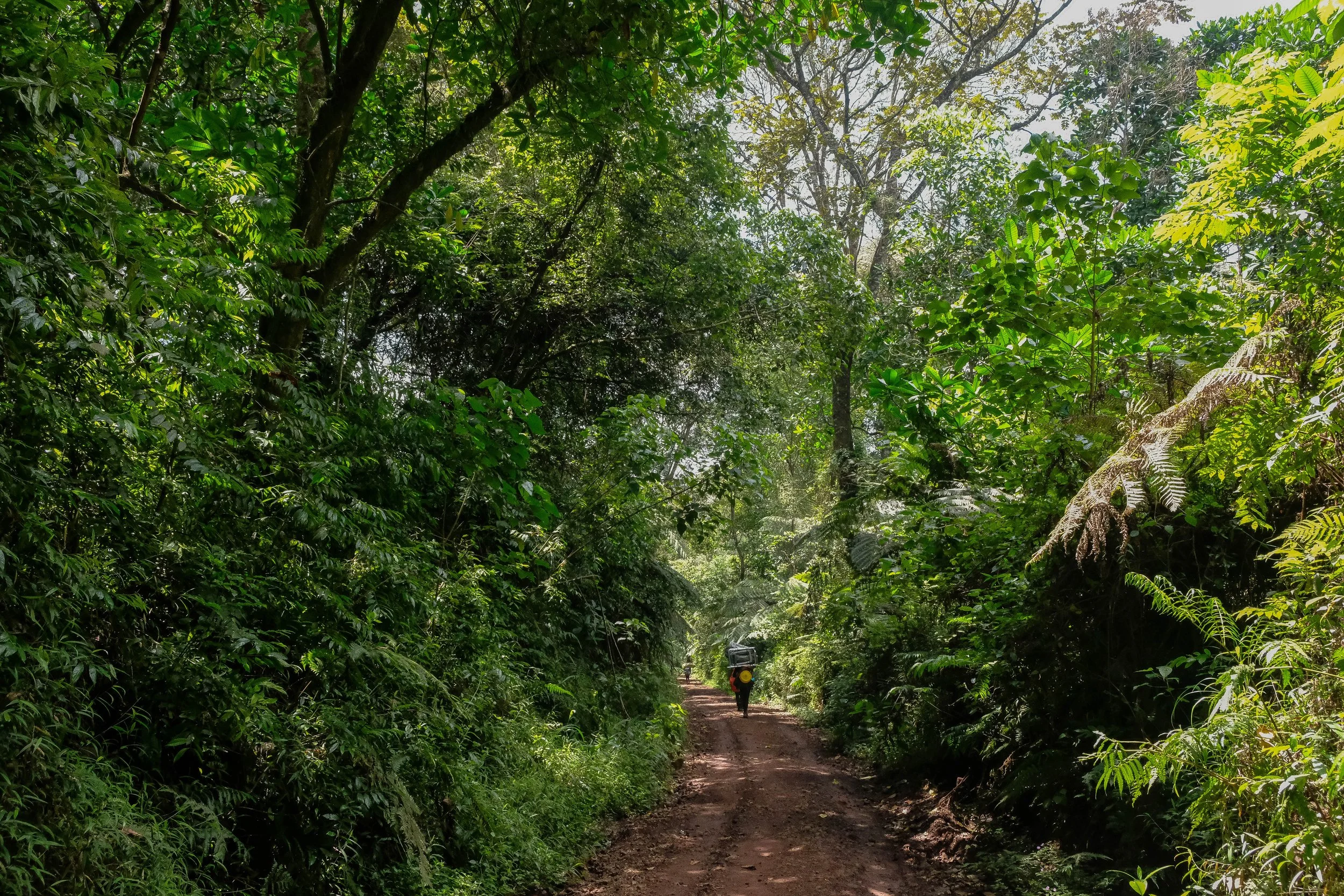
Our final morning dawned with sunlight filtering through the branches of the trees, drying the last bits of dampness off our gear.
After breakfast, we gathered with every member of our team—porters, cook, and guides, the people who made this experience possible—to close out our time together before the hike out. We shared words of gratitude, song, and dance. I was and am profoundly impacted by what a team experience this trek was. Out of respect for privacy, that team isn’t represented in the images I have shared (except for our guides with their permission). But I would be remiss not to state very clearly that we were guests in Tanzania and on Kilimanjaro, and it was only through the hospitality and generosity of this team that we were able to experience this beautiful place. We’re deeply grateful to every person who made this possible.
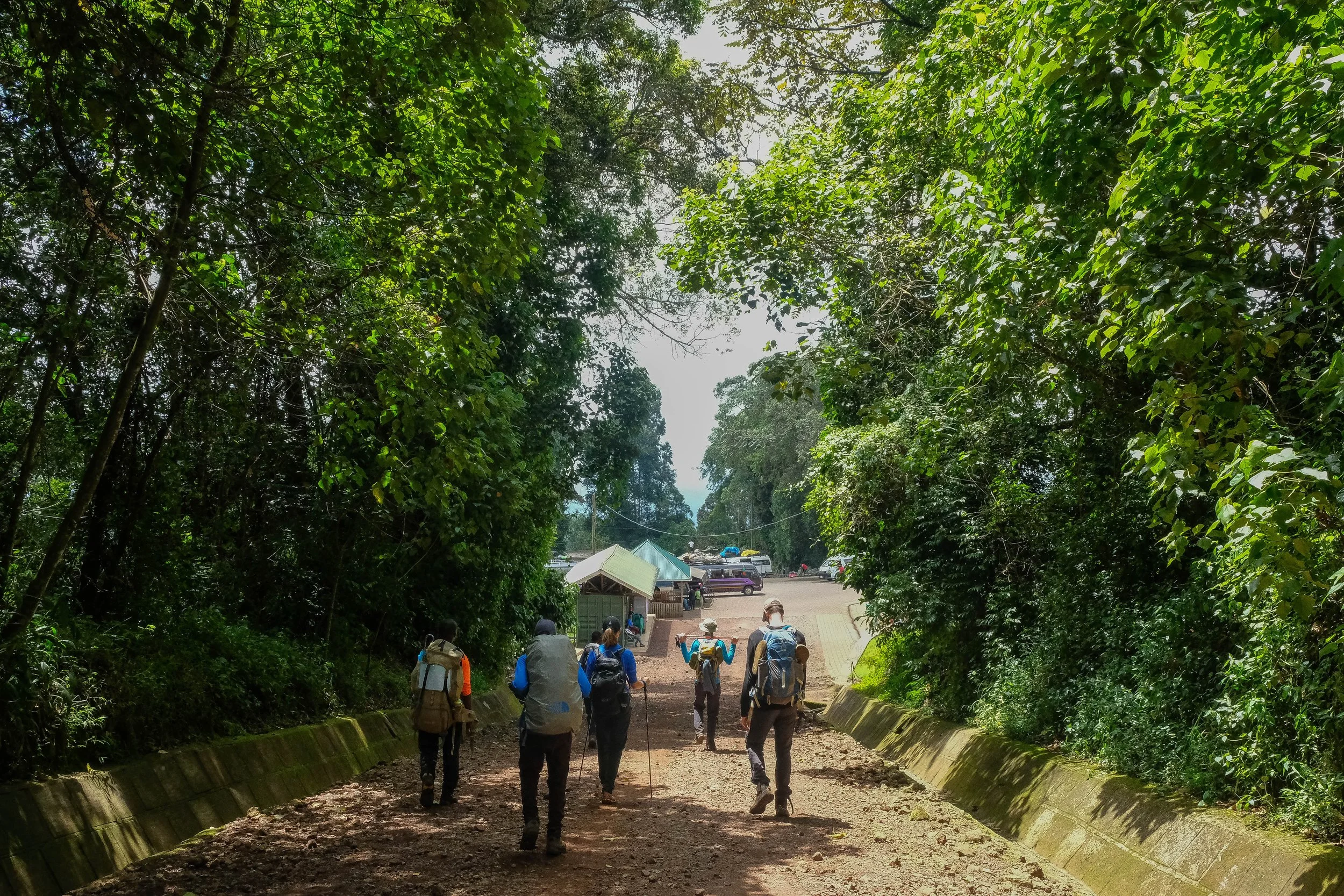
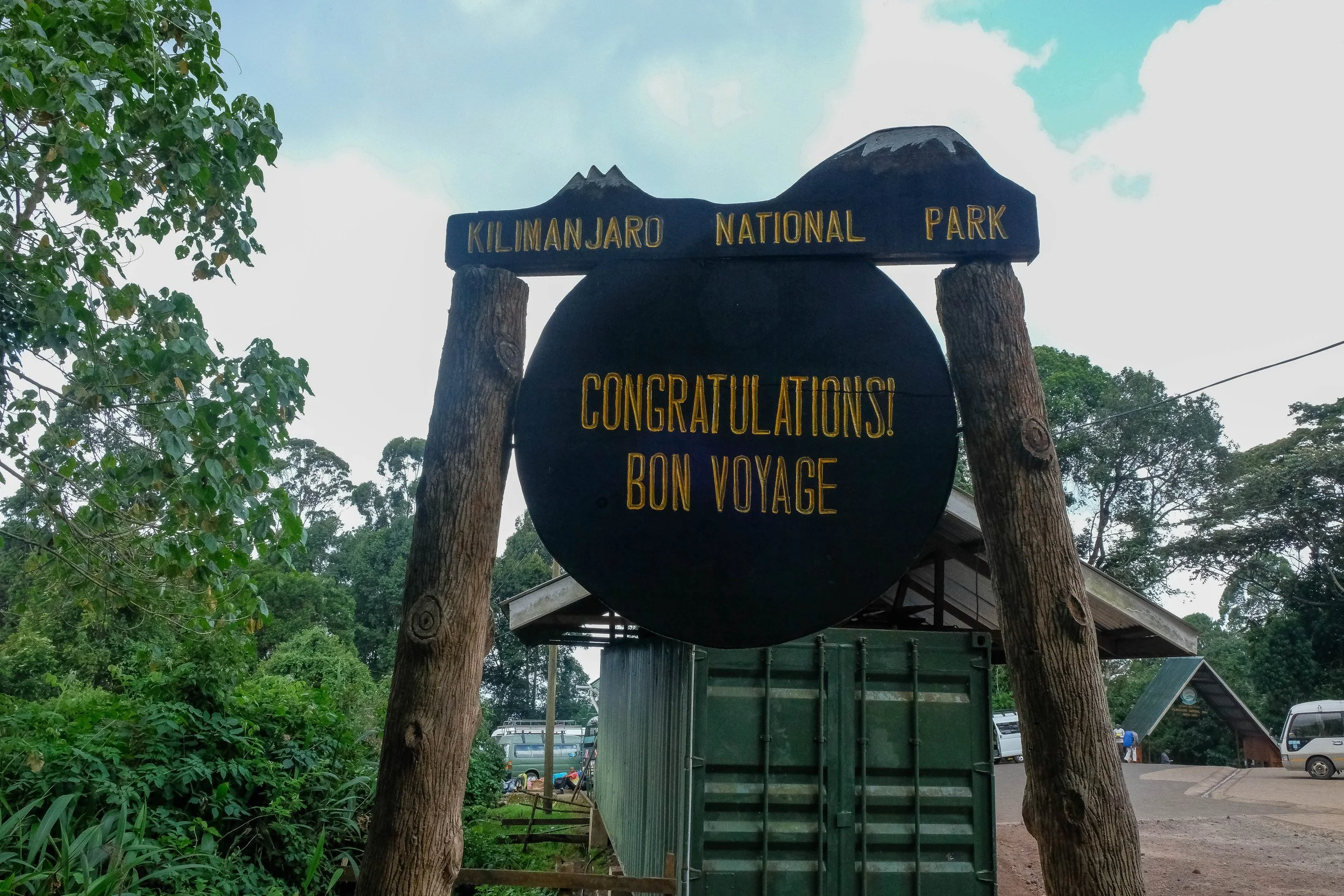
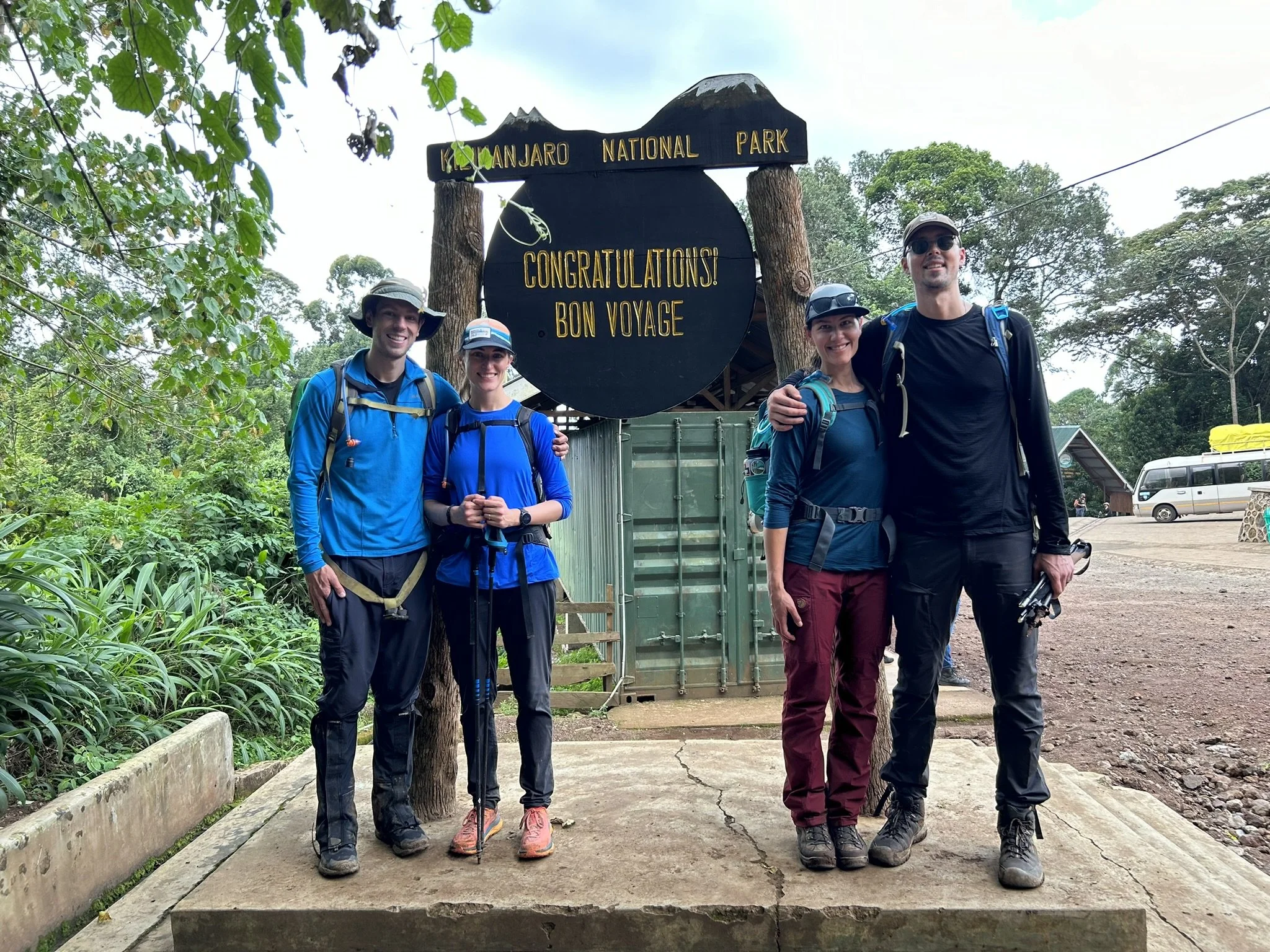
The hike itself was easy, lush, and increasingly bittersweet as we descended the final stretch of mountain. Everything was green. The monkeys were back in the trees. The air grew warmer and more oxygen-rich. When I saw the final sign emerging through the trees, I almost wanted to cry: a mixture of “thank goodness I’m so close to a shower” and “I wish this never had to end.”
It was such a special seven days we’d spent on this mountain, with no connection to the outside world. Nothing but the wind and sky and rain and sun, the conversation of our group, the silence and stars and spaces where little mattered but the careful placement of each foot. It was hard to leave that, yet it was impossible to avoid. Our time had come to say goodbye after an incredible adventure.
Thank you, Kilimanjaro, for all you held: the joyful tears, the conversations shallow and deep, the dancing, the meditation, the awe, the wonder. You were a dream fulfilled that I’ll certainly never forget. 🩵
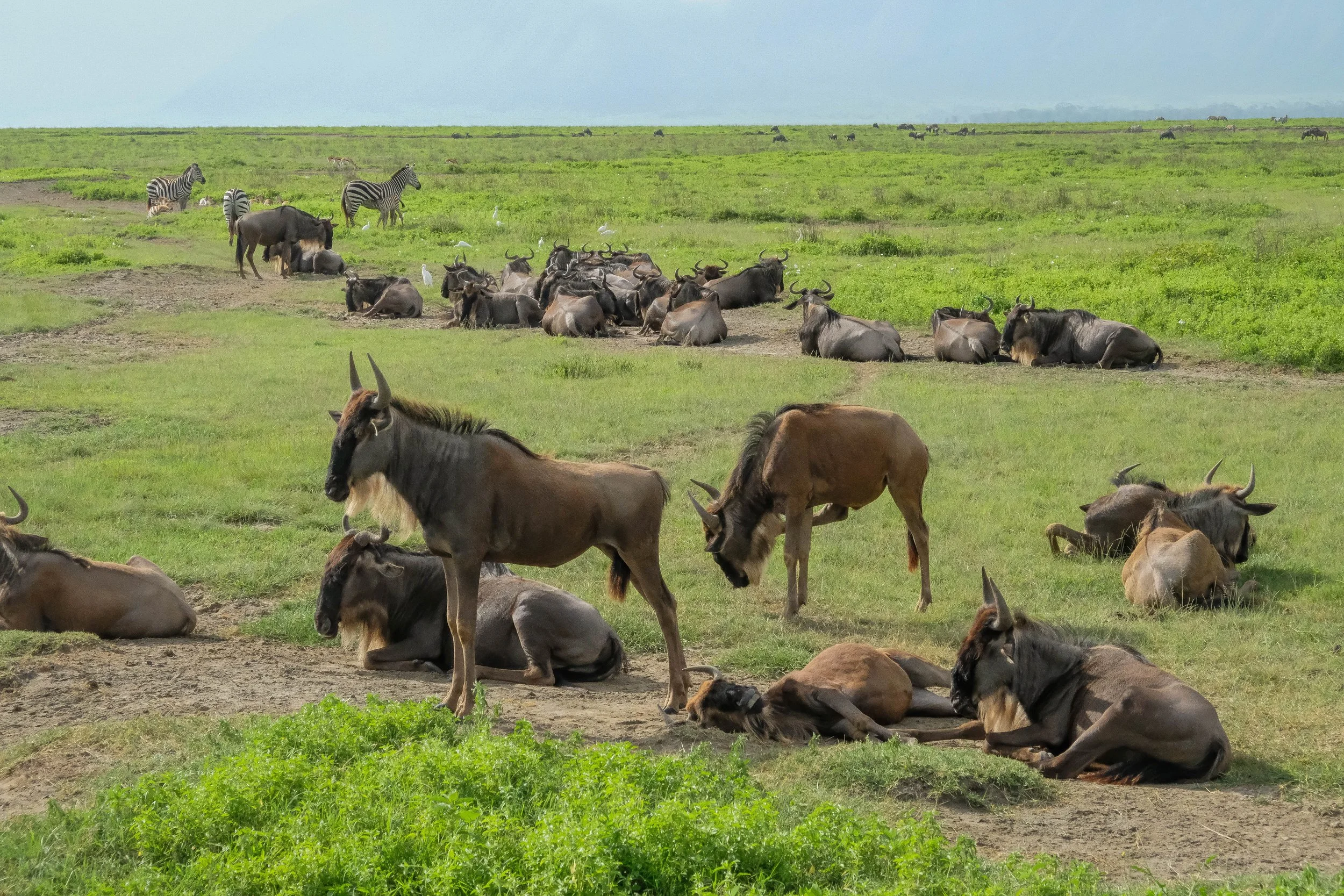
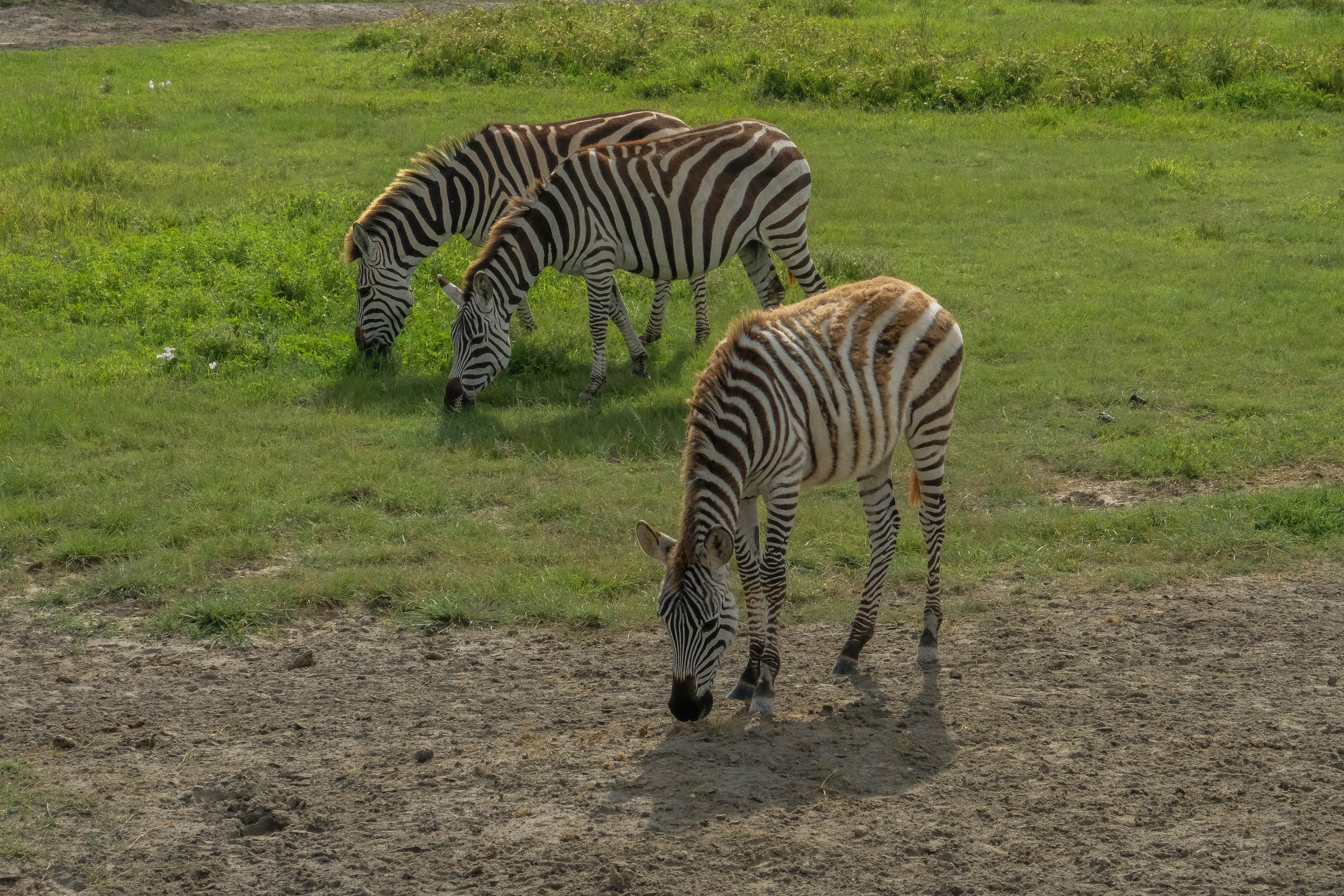
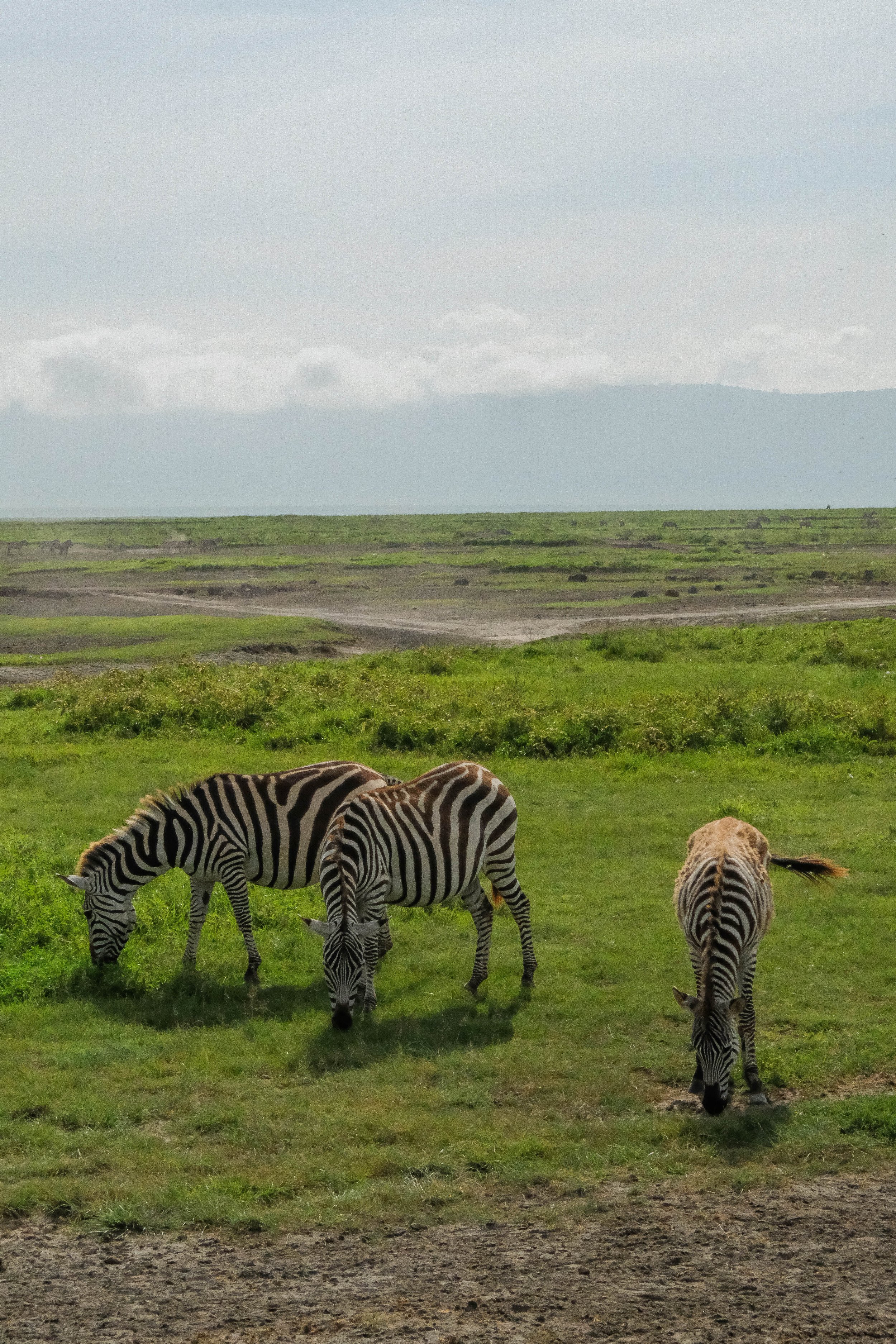
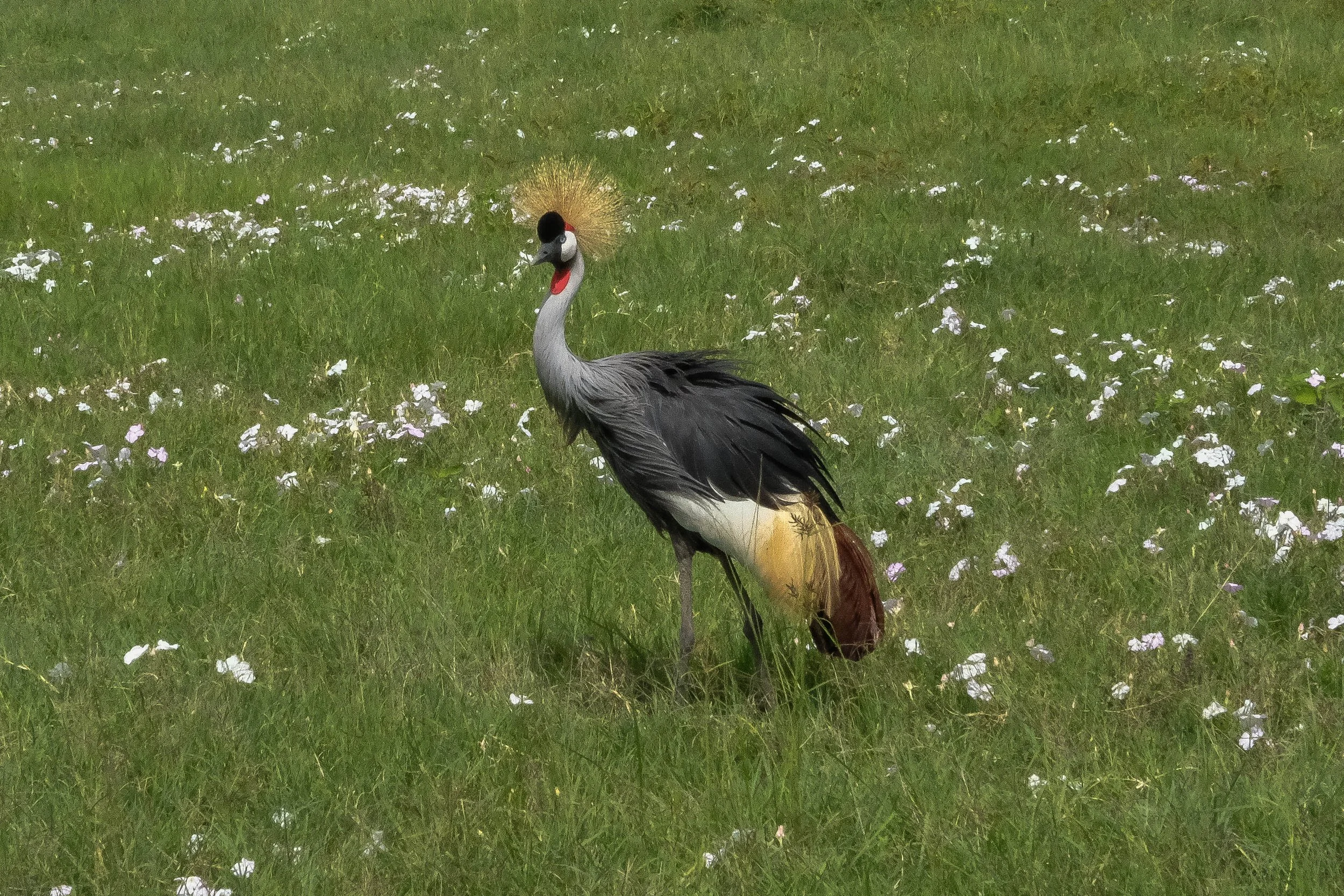
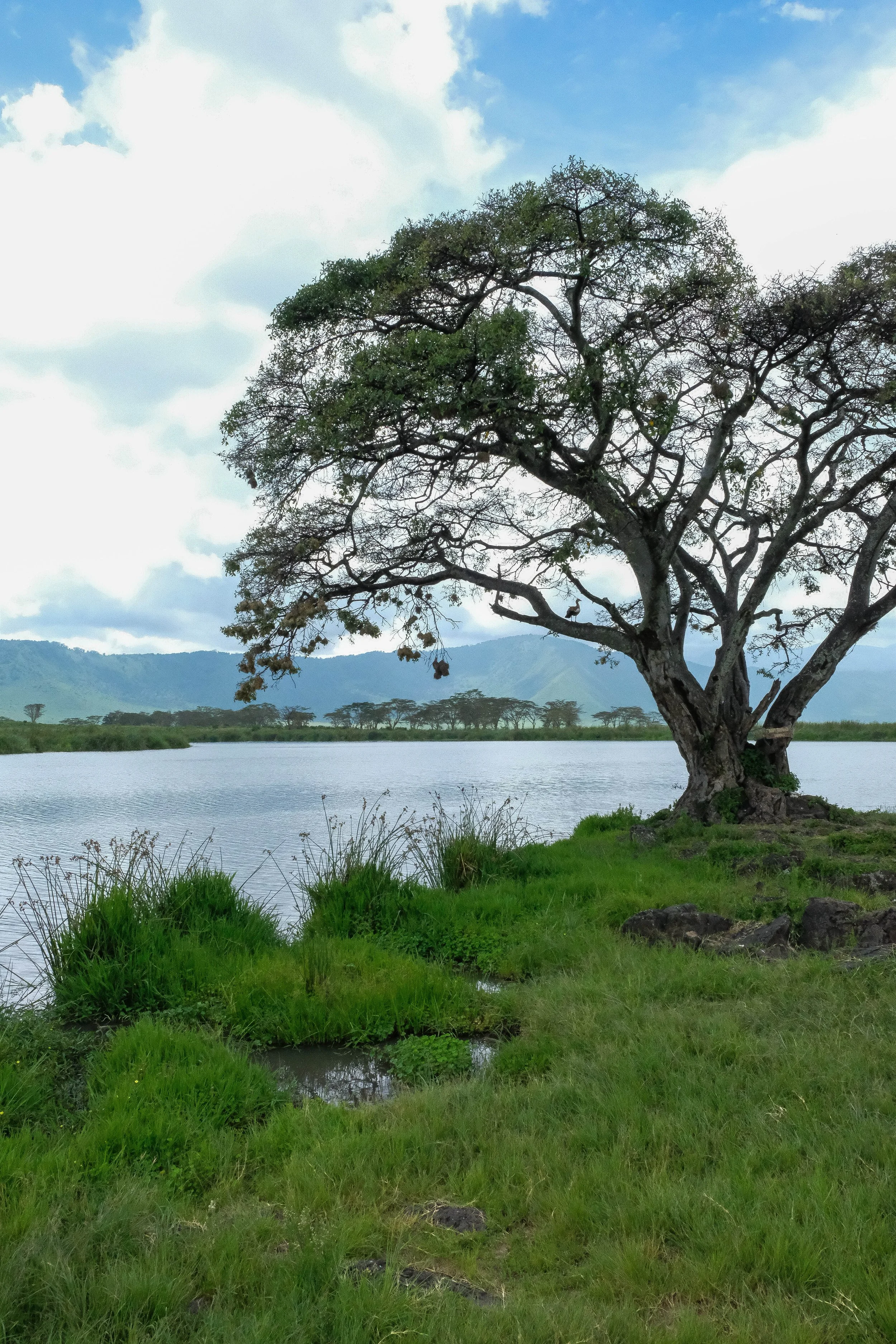
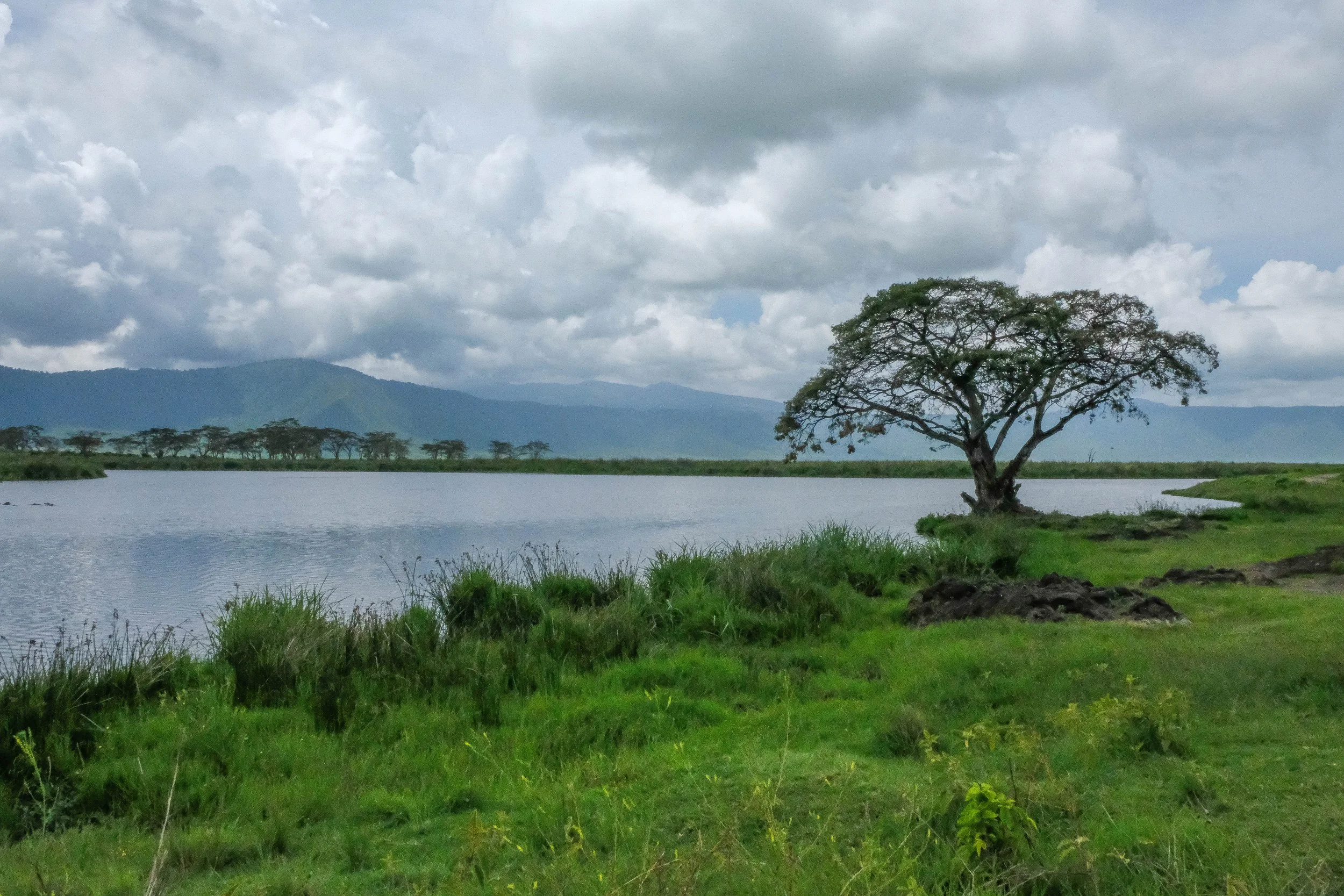
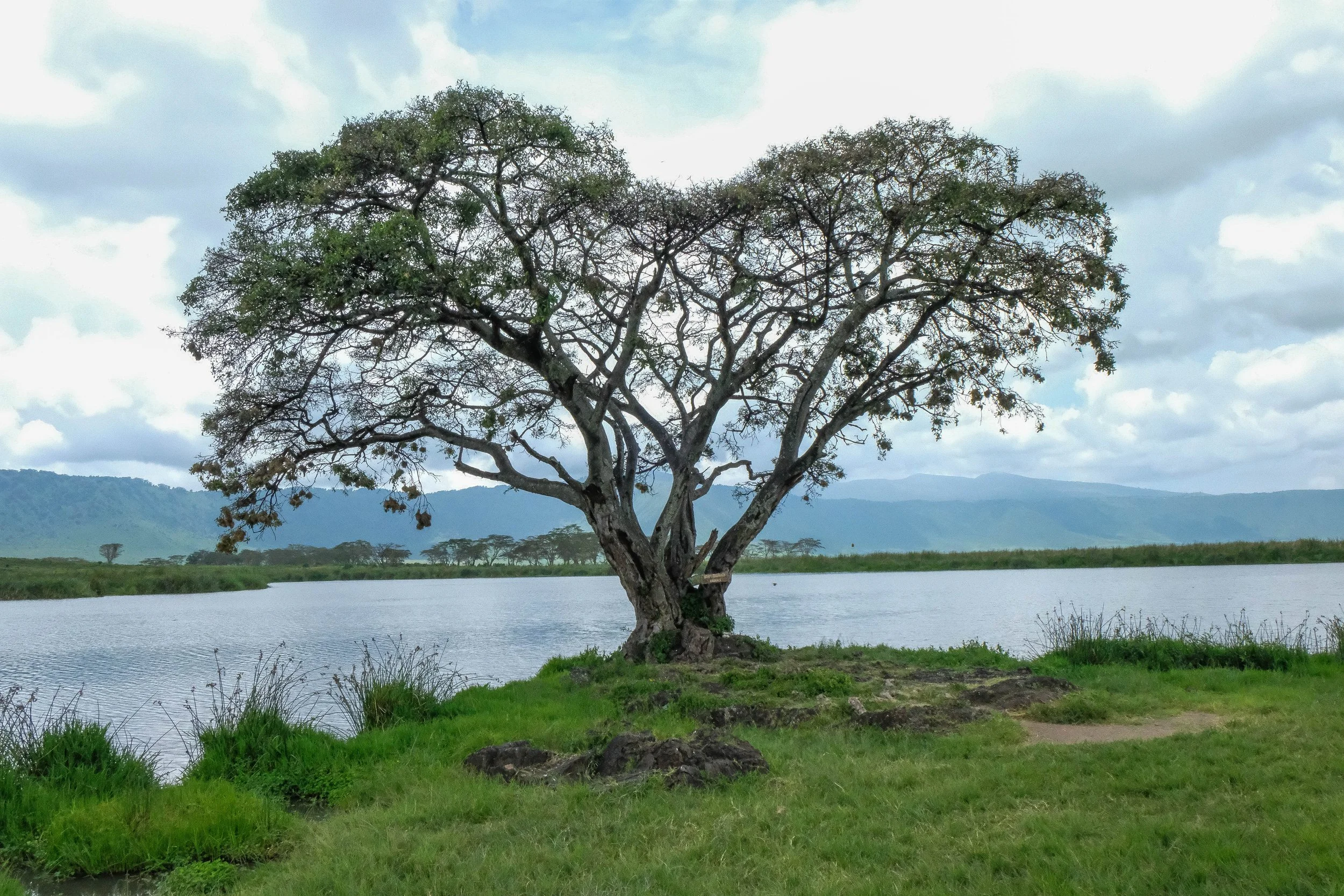
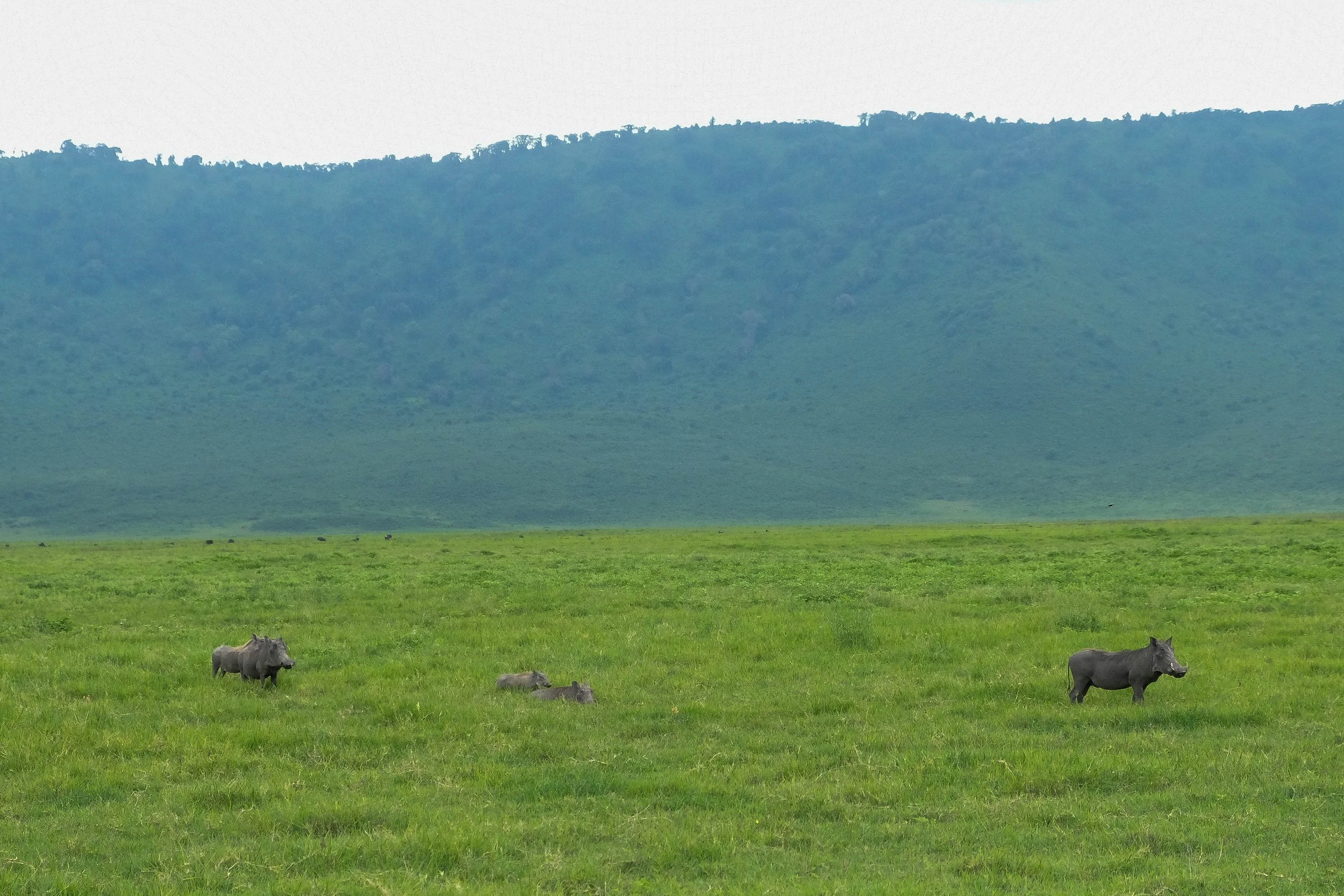
Tarangire National Park & Ngorongoro Crater Conservation Area