Shenandoah
Park 26 | Multiple visits
Second Visit | August 2026
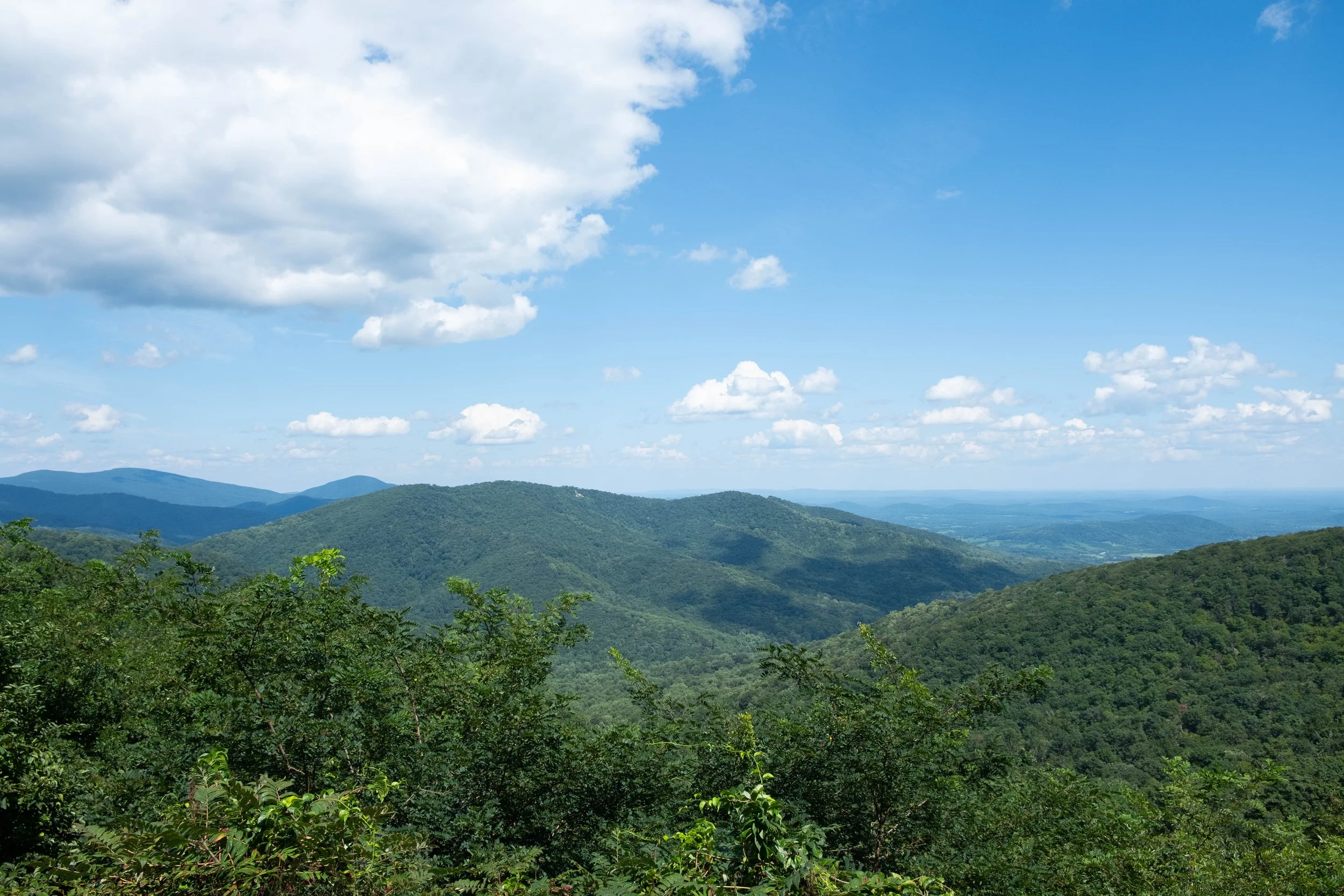
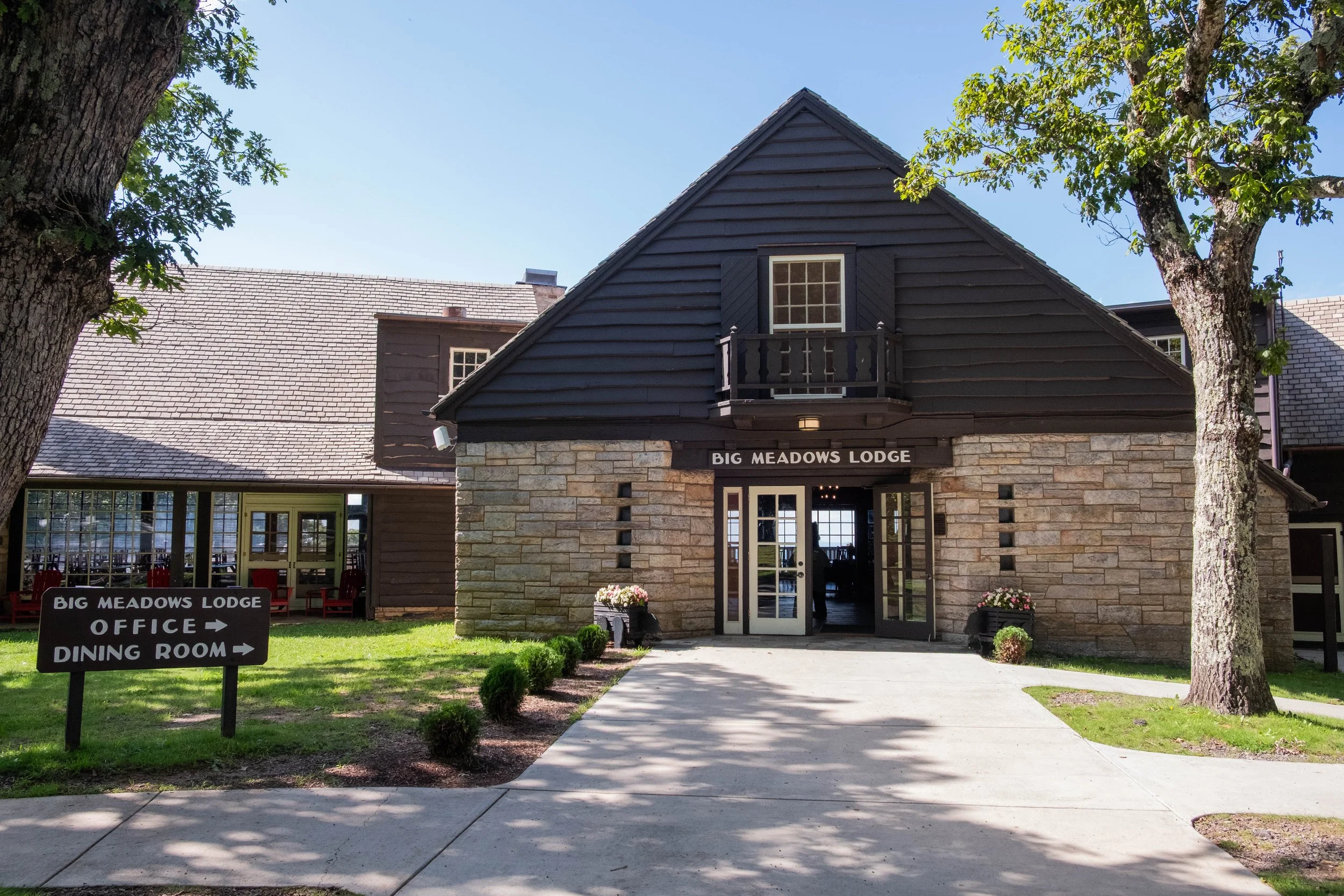
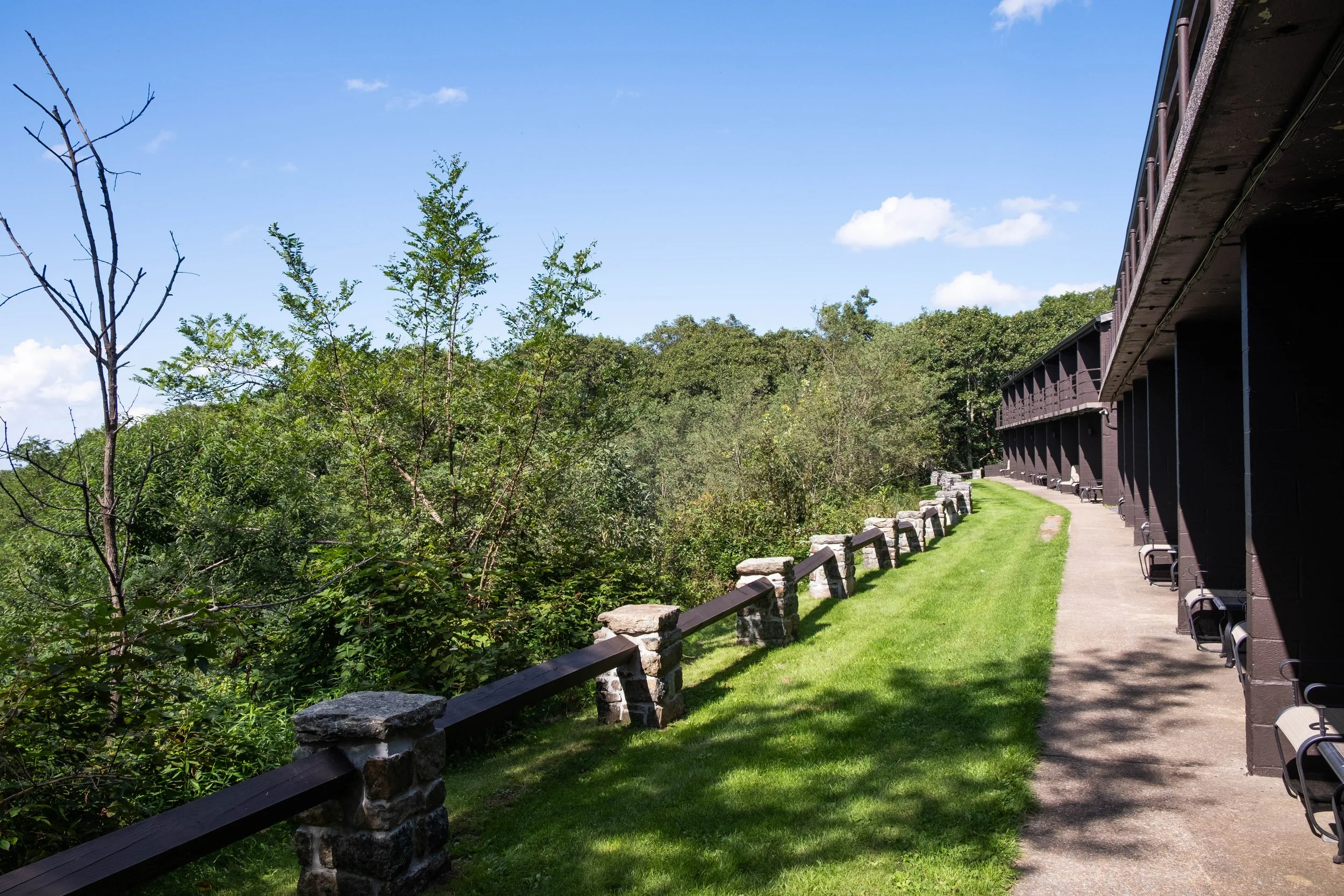
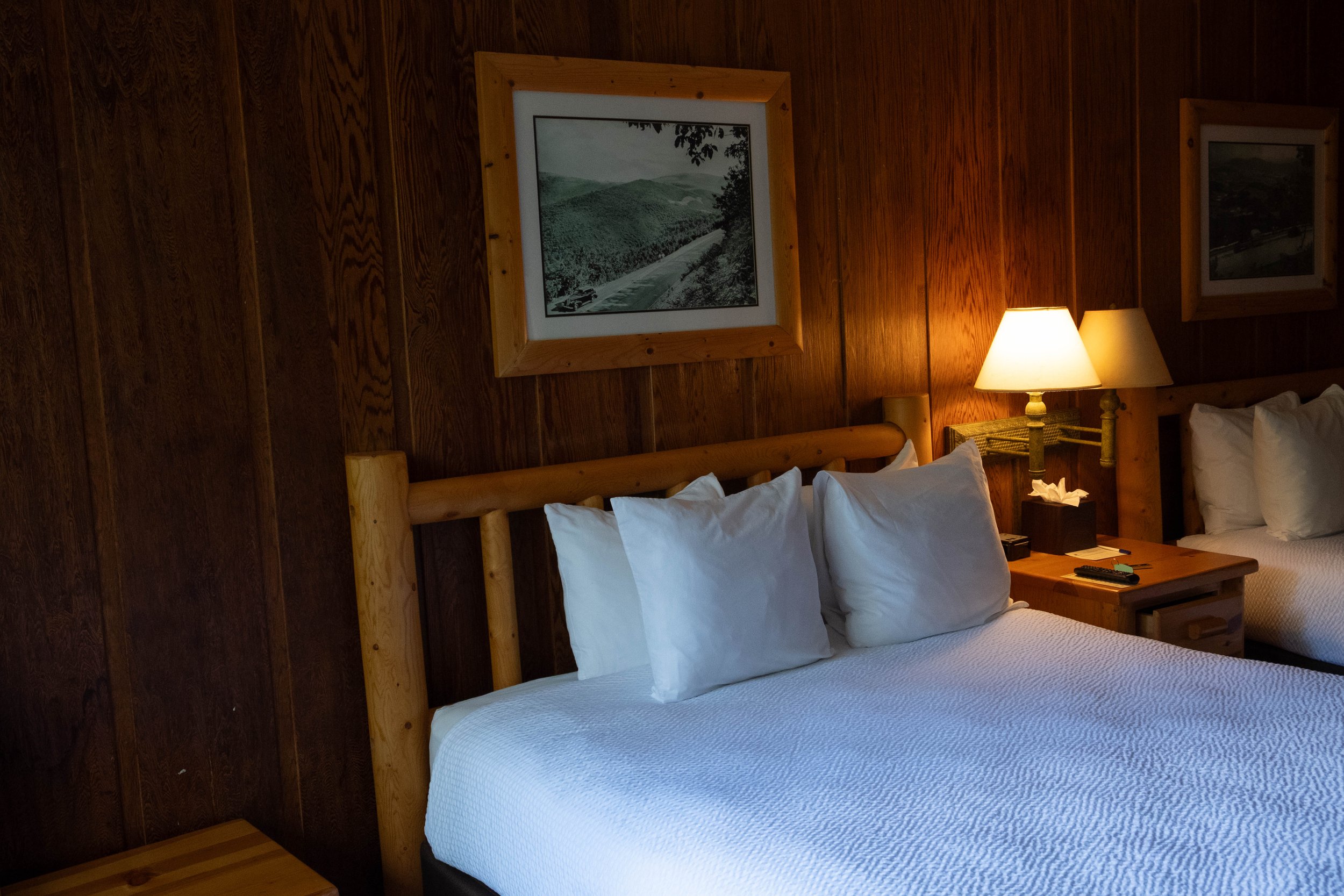
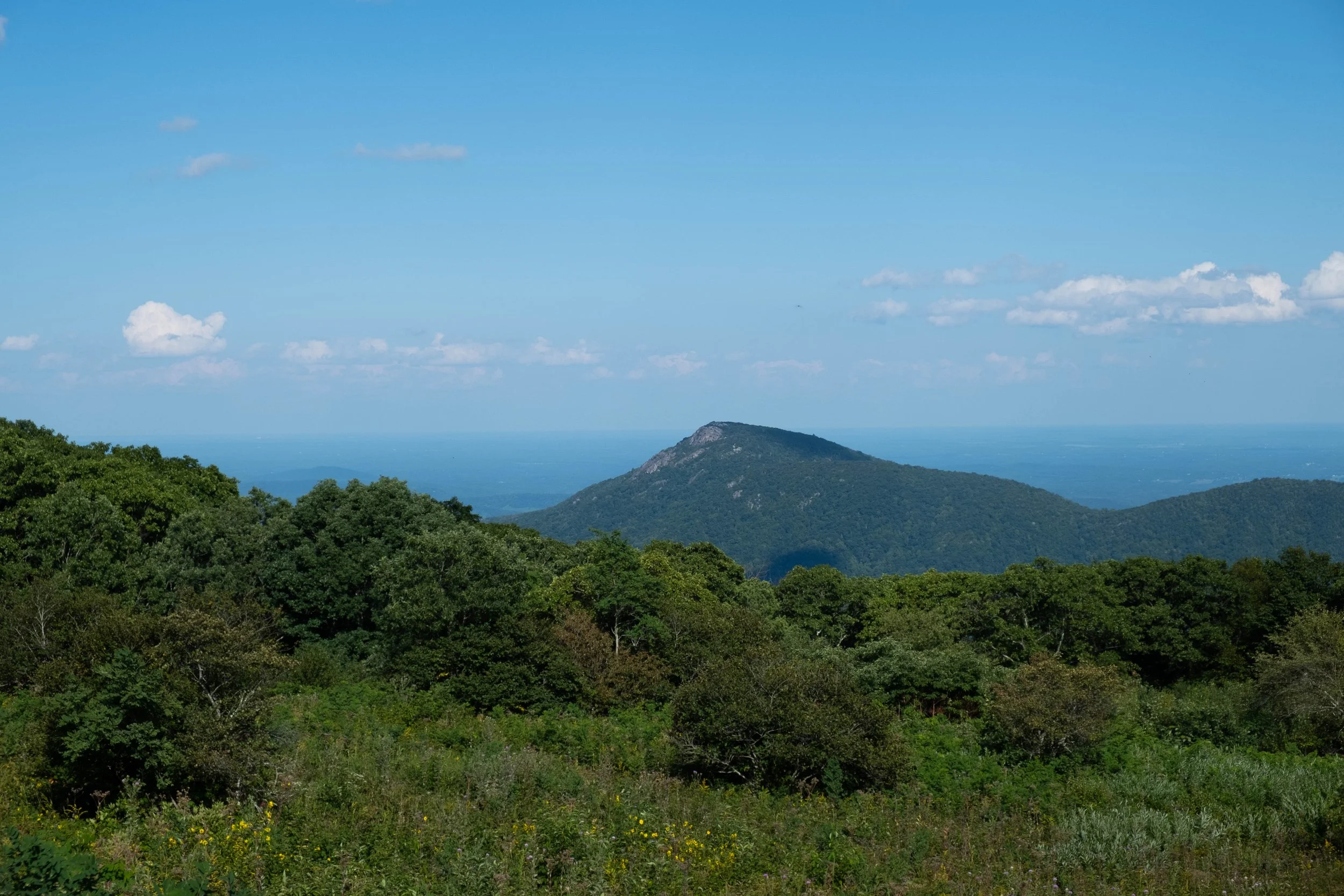
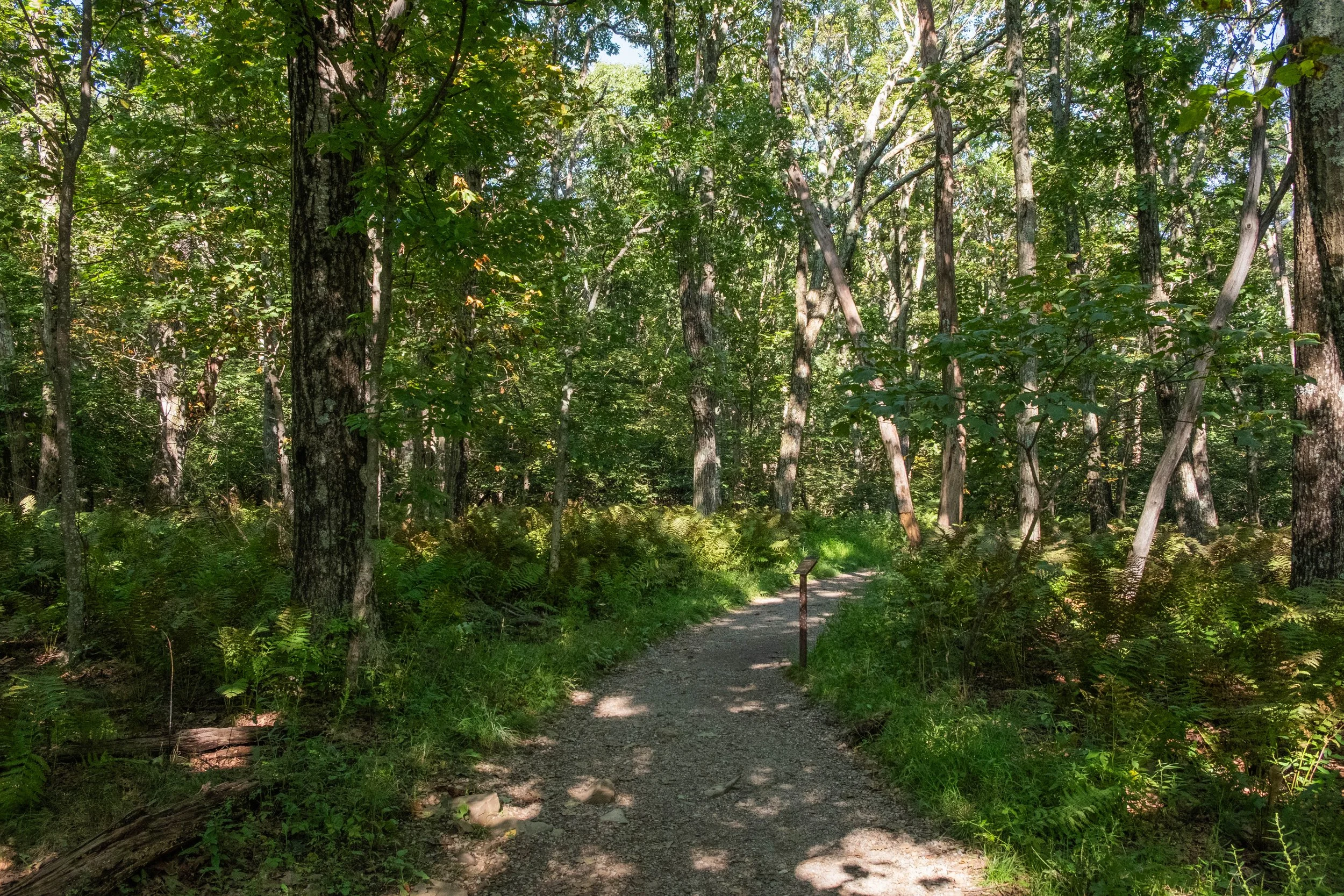
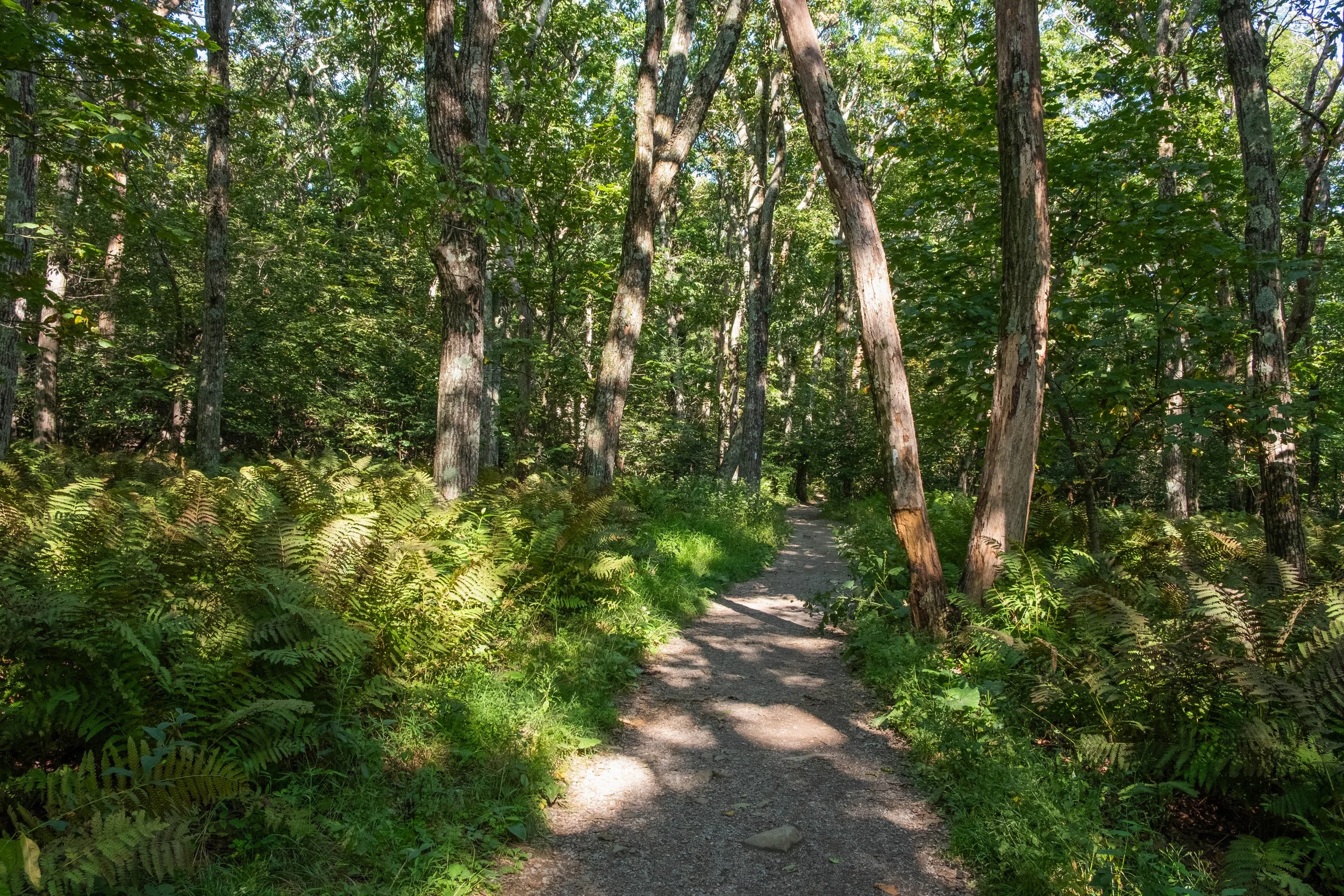
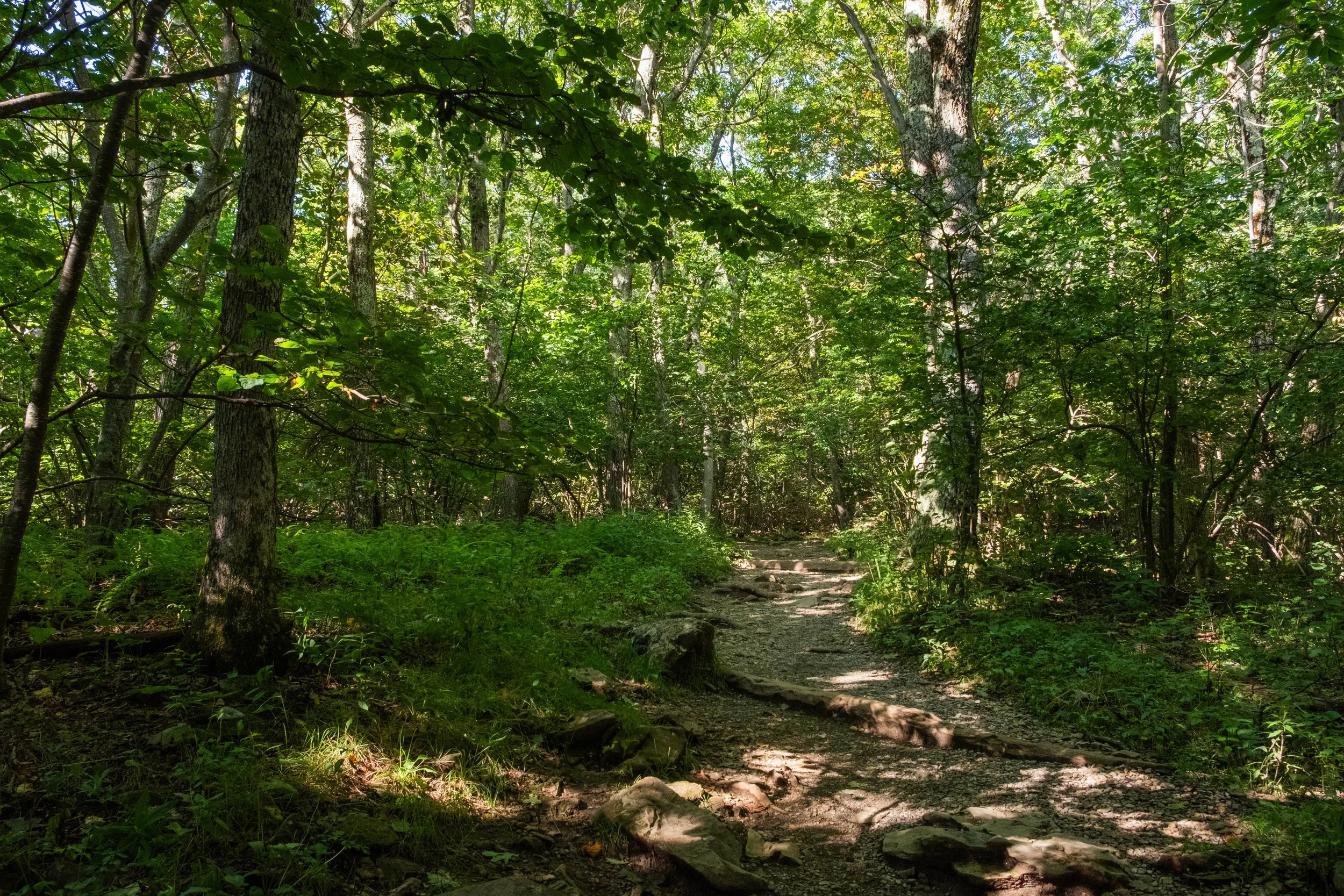
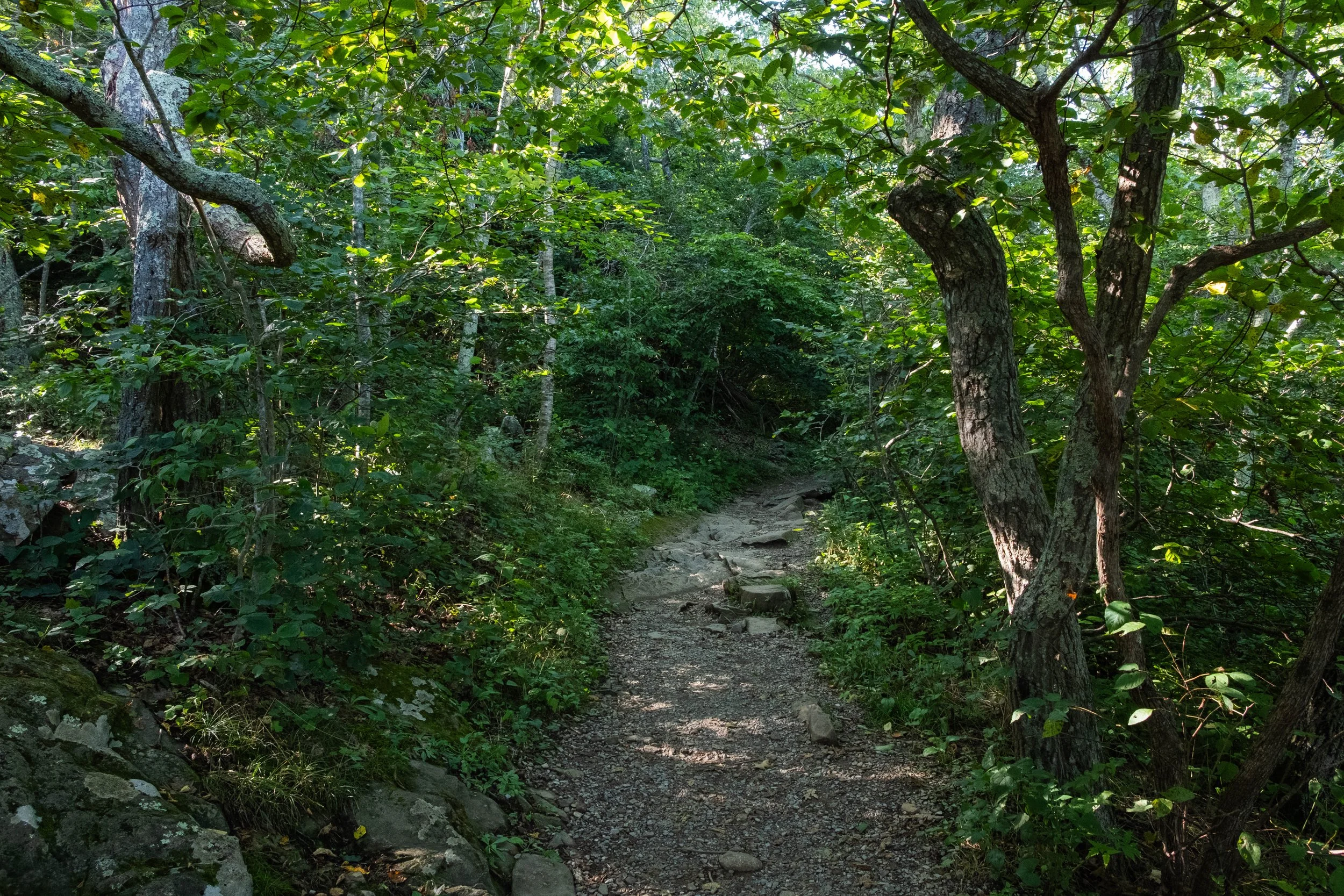
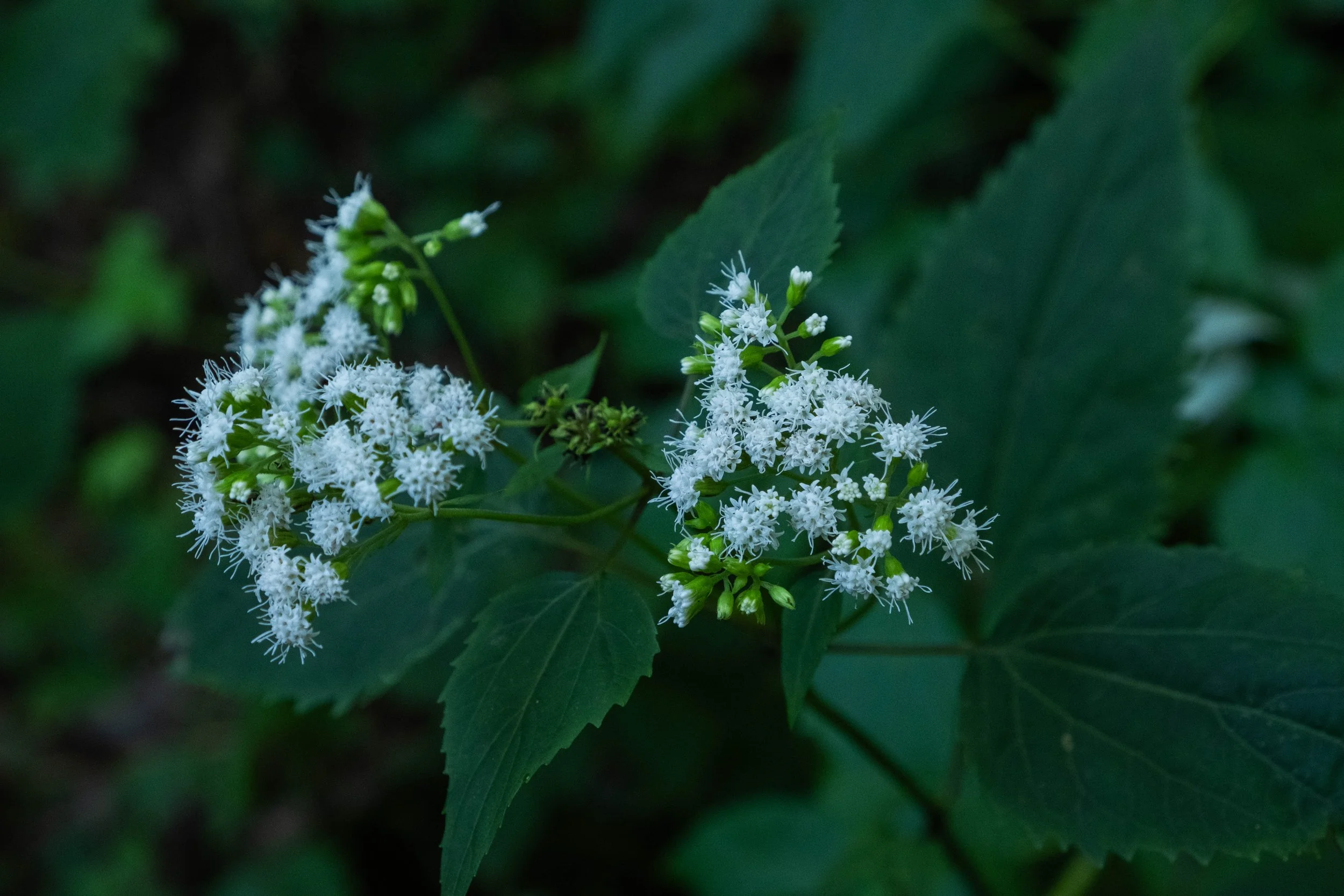
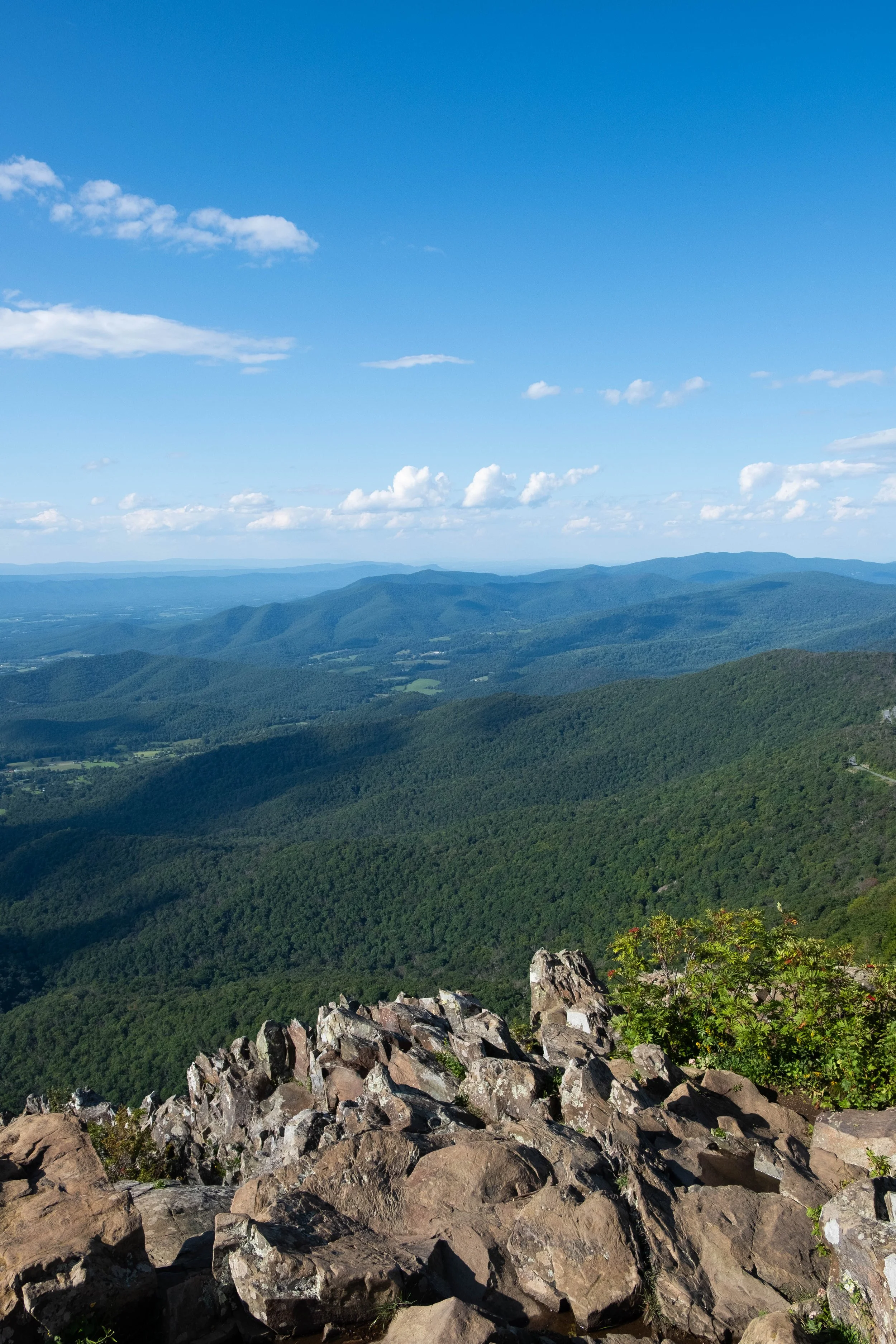
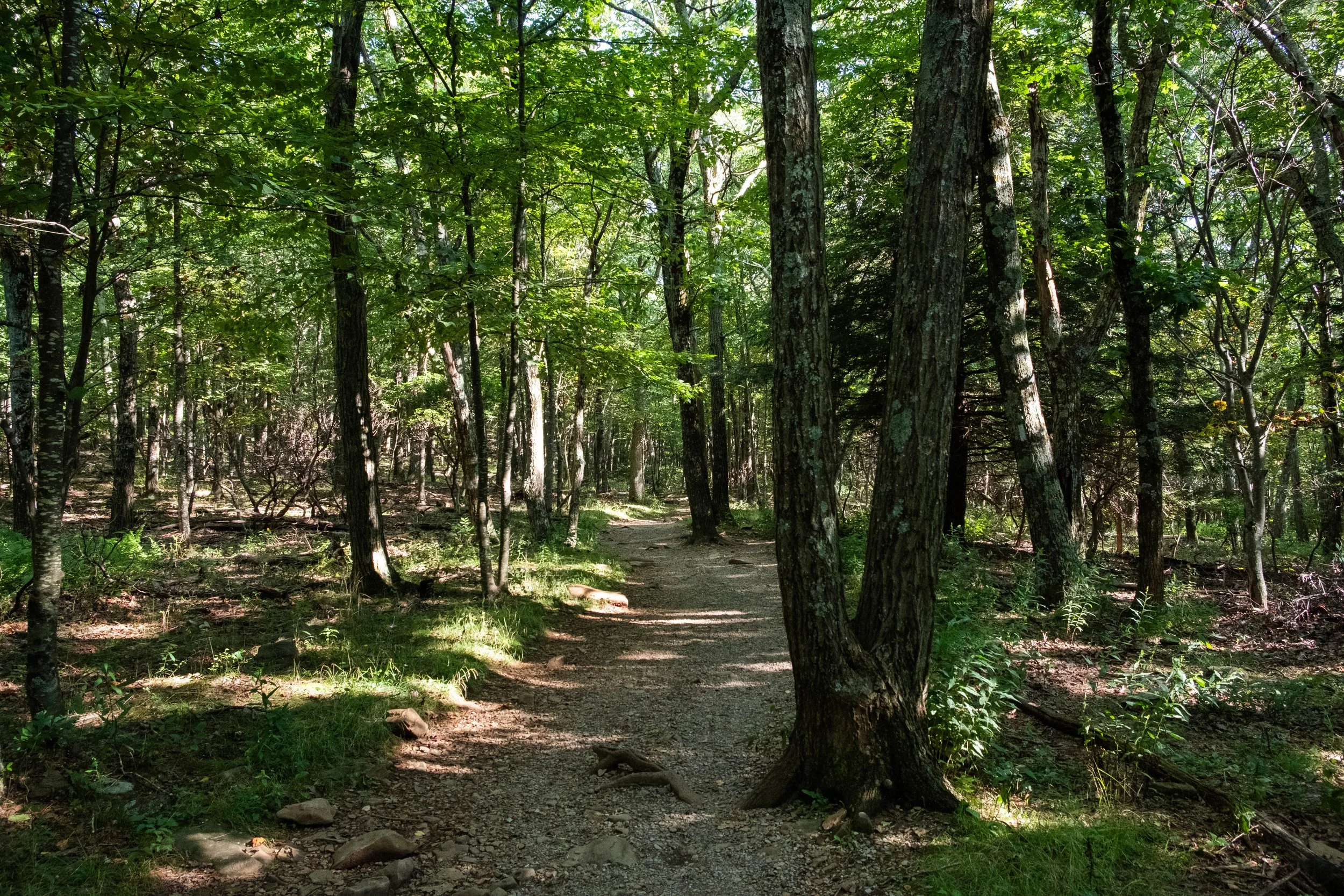
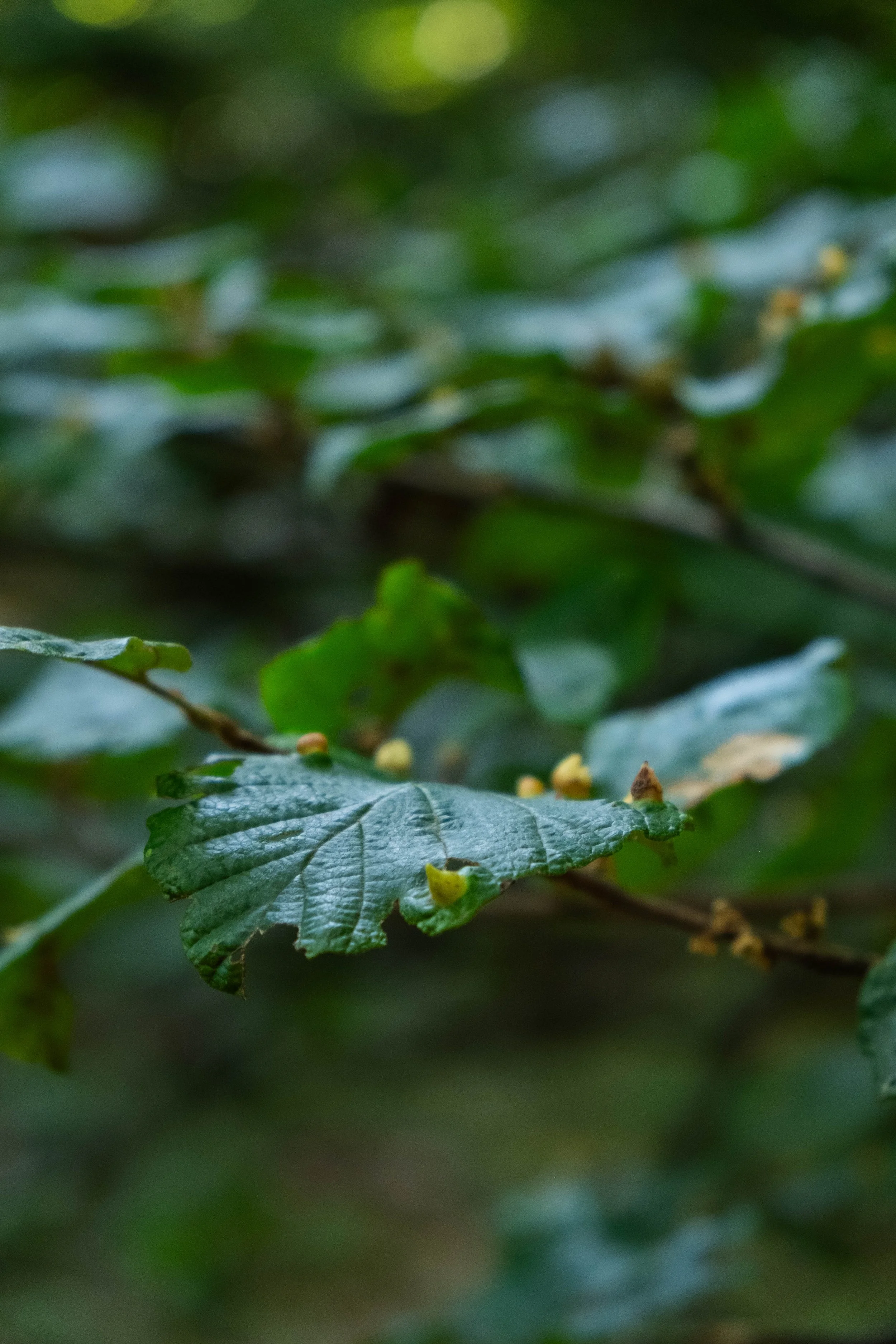
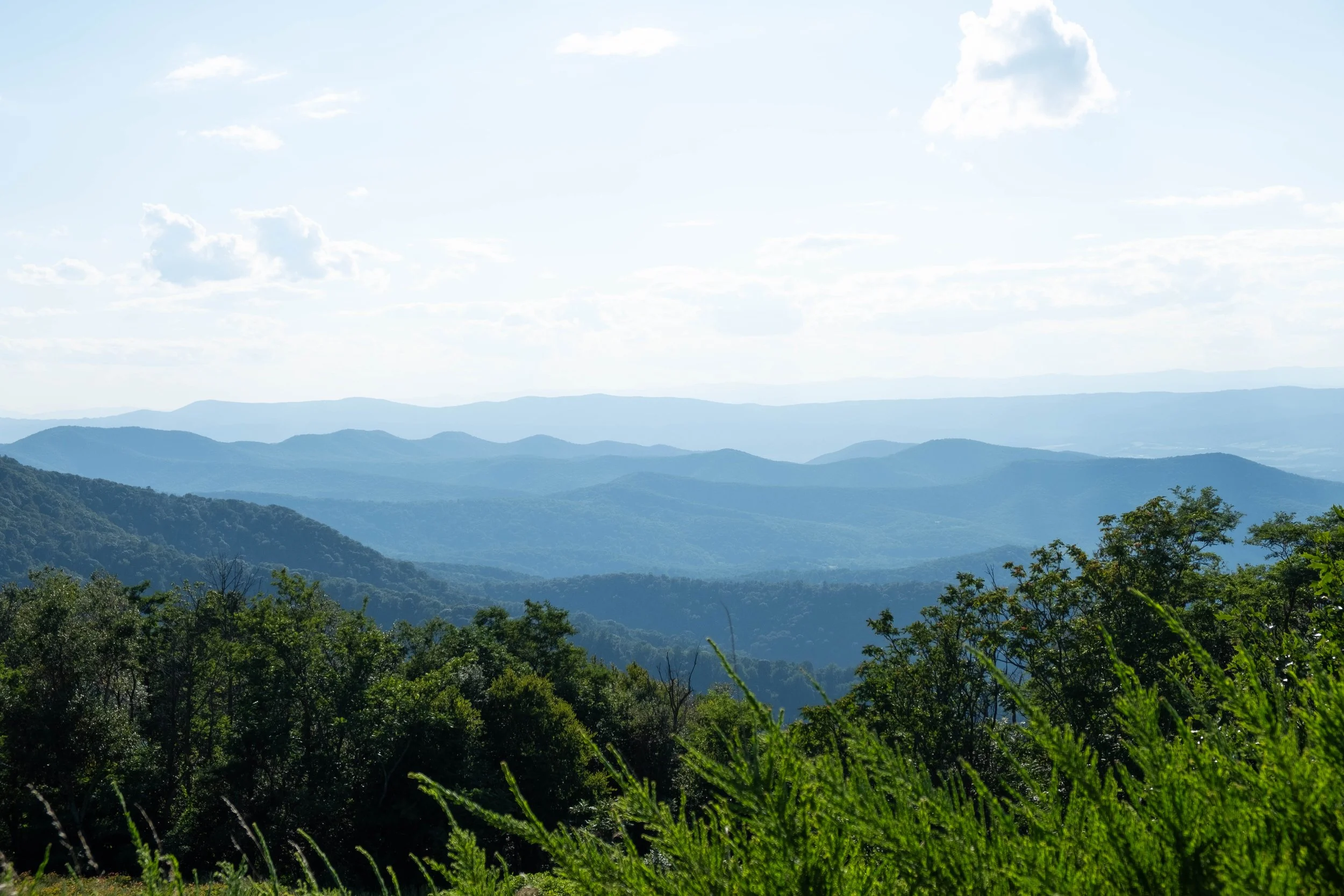
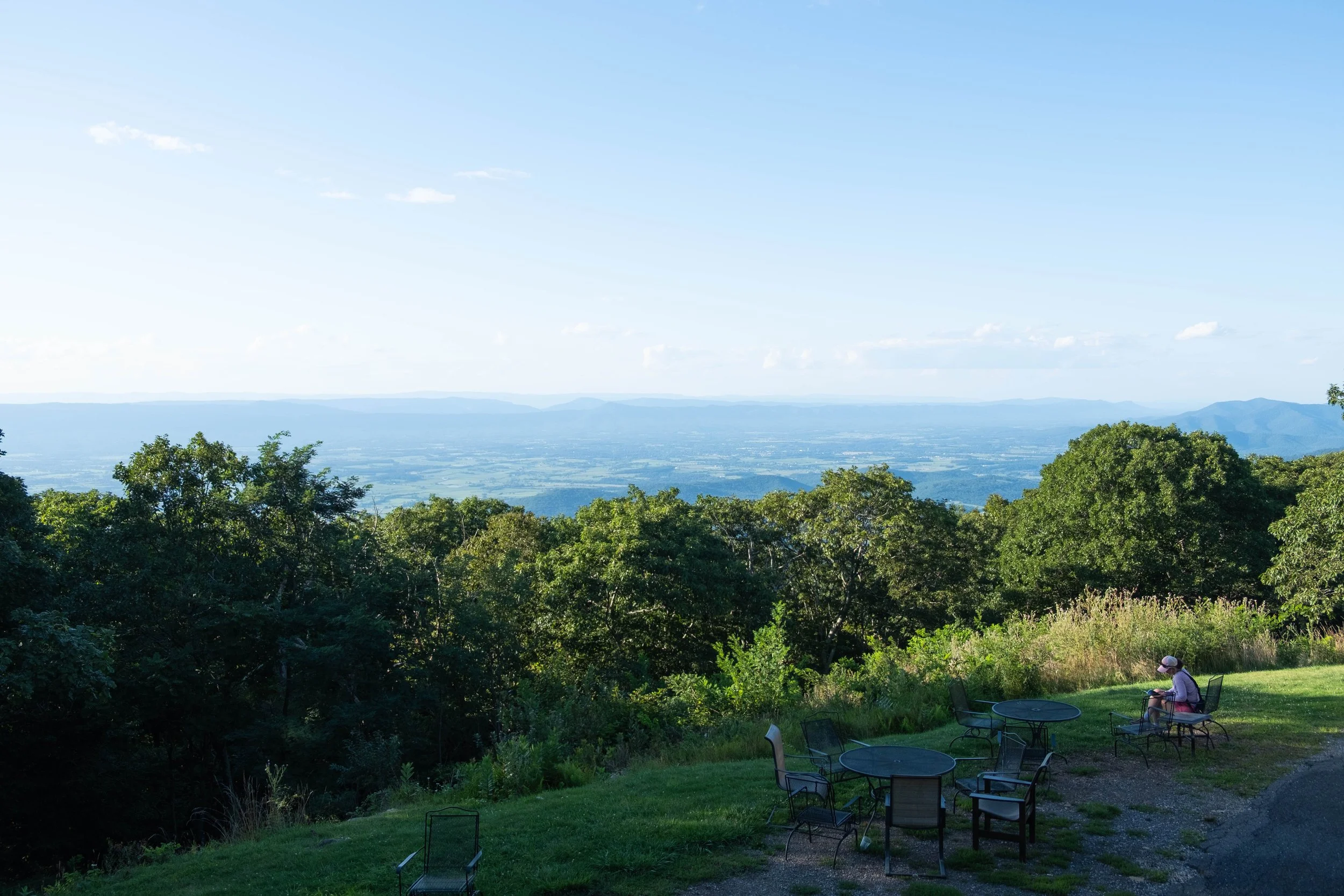
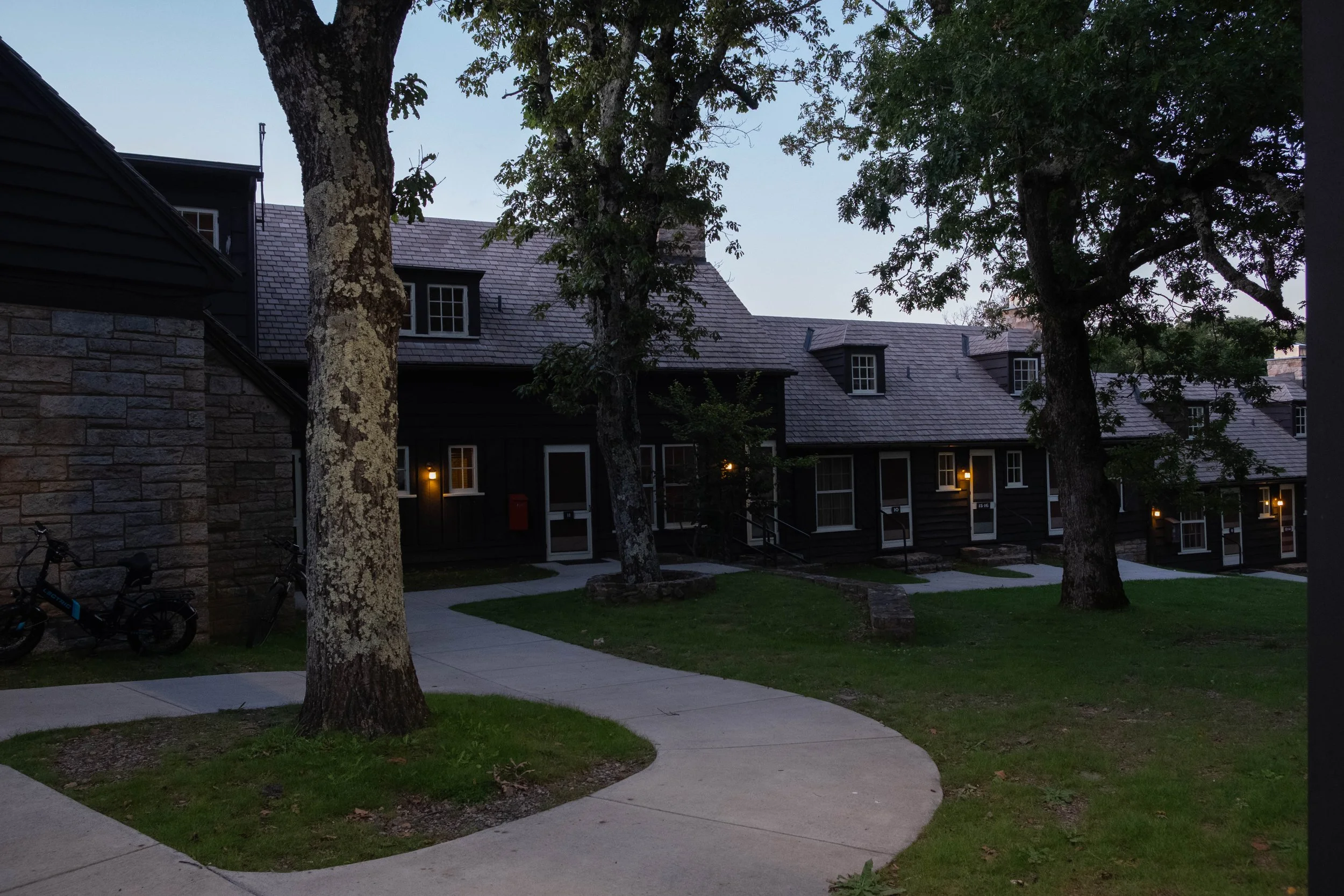
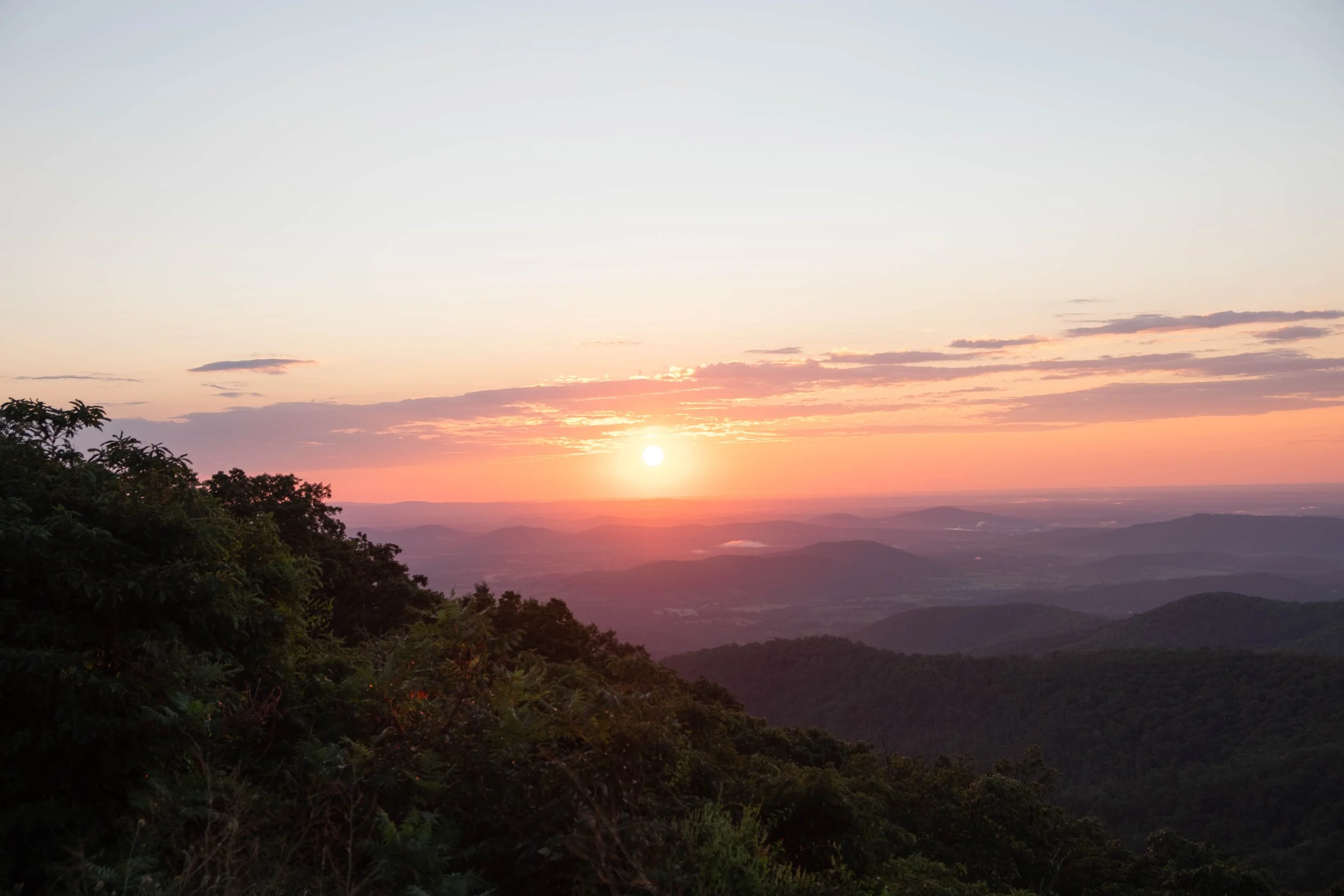
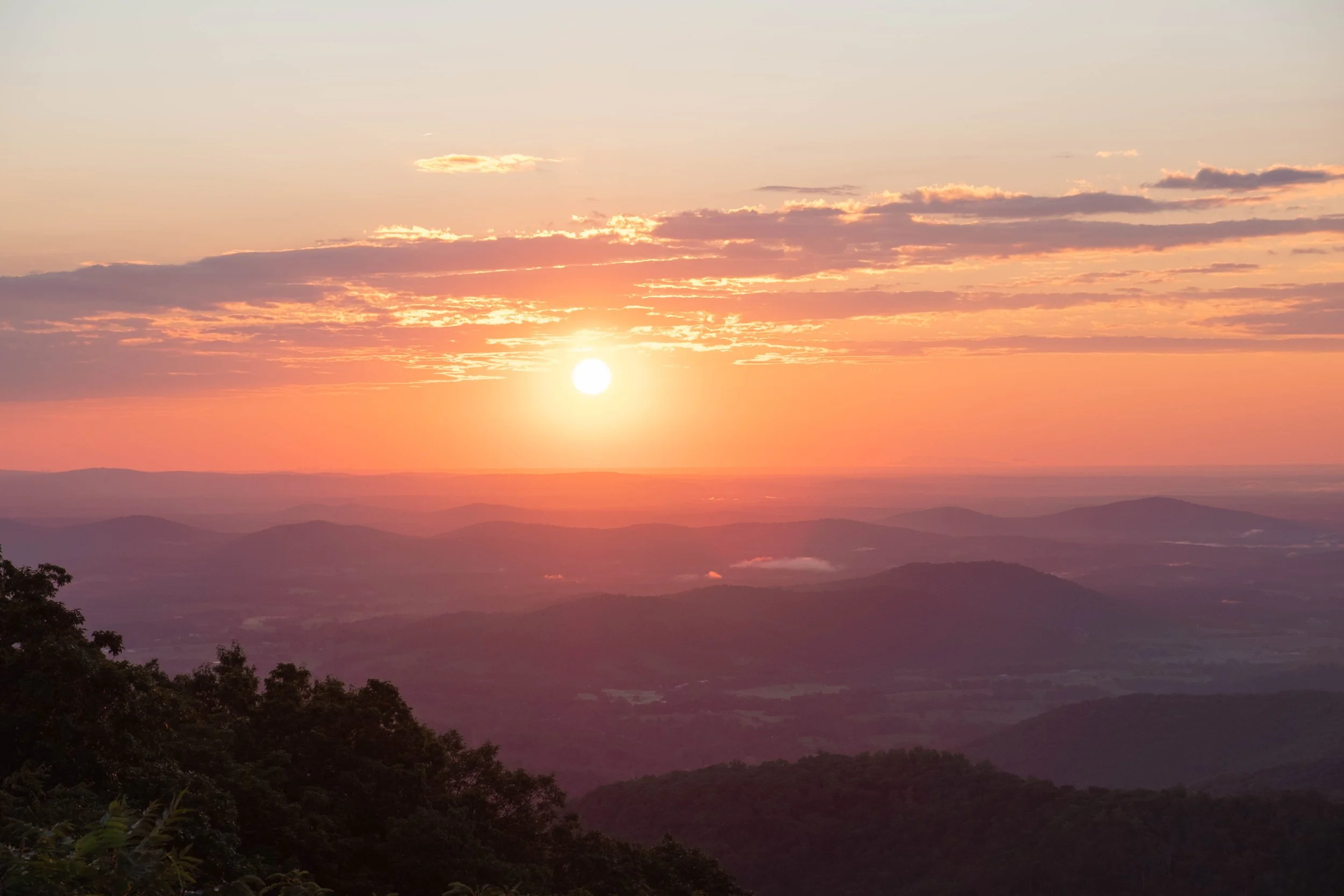
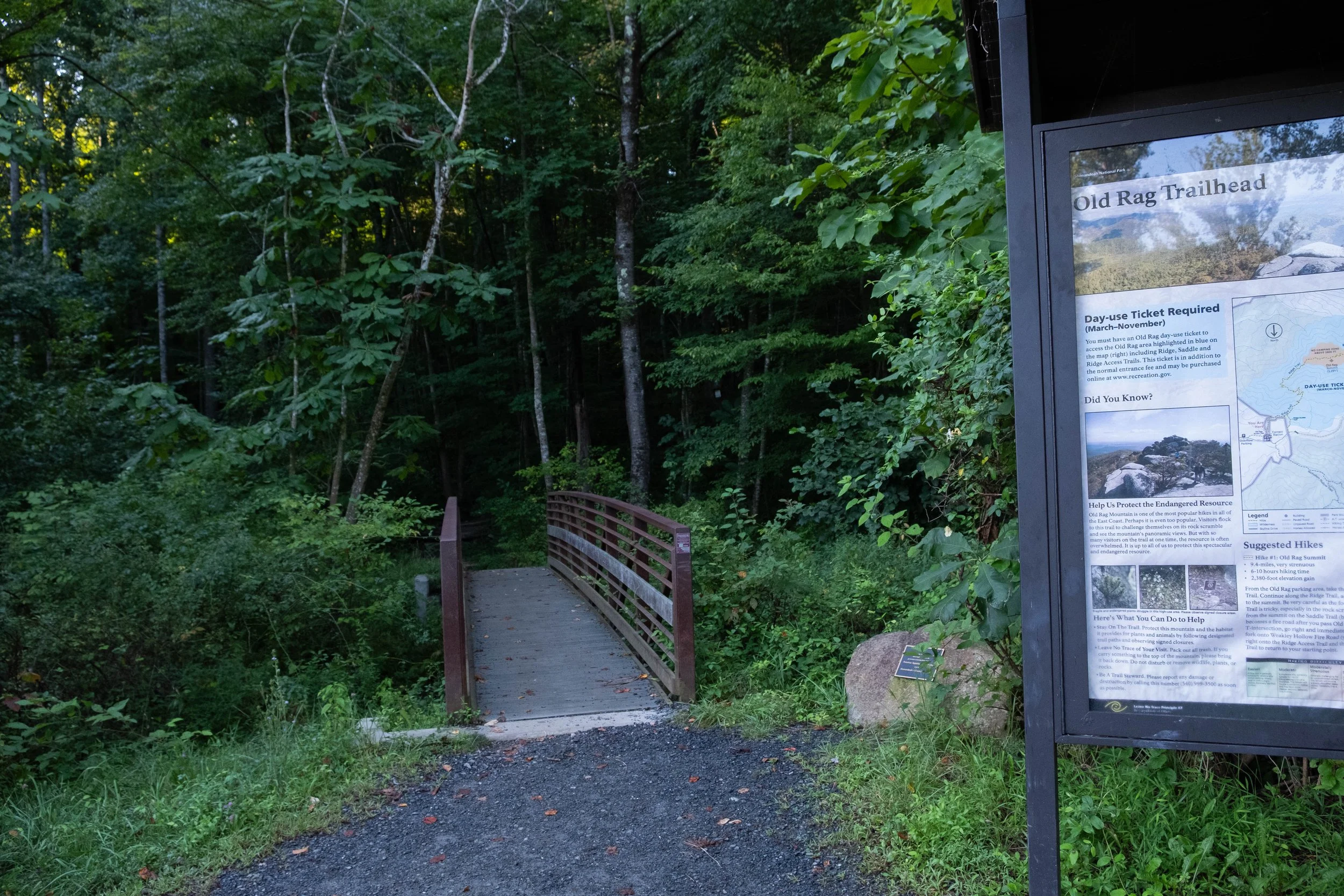
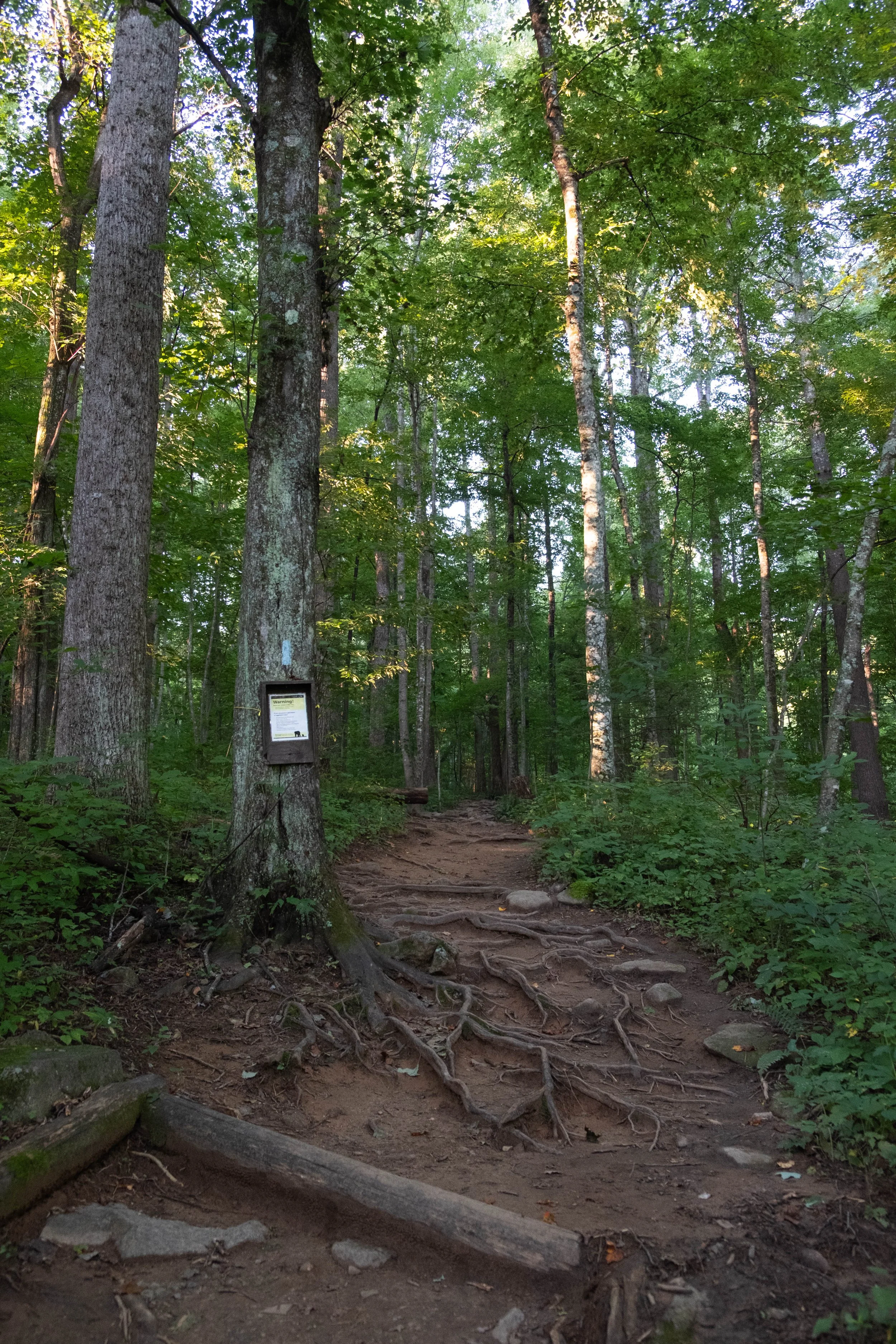
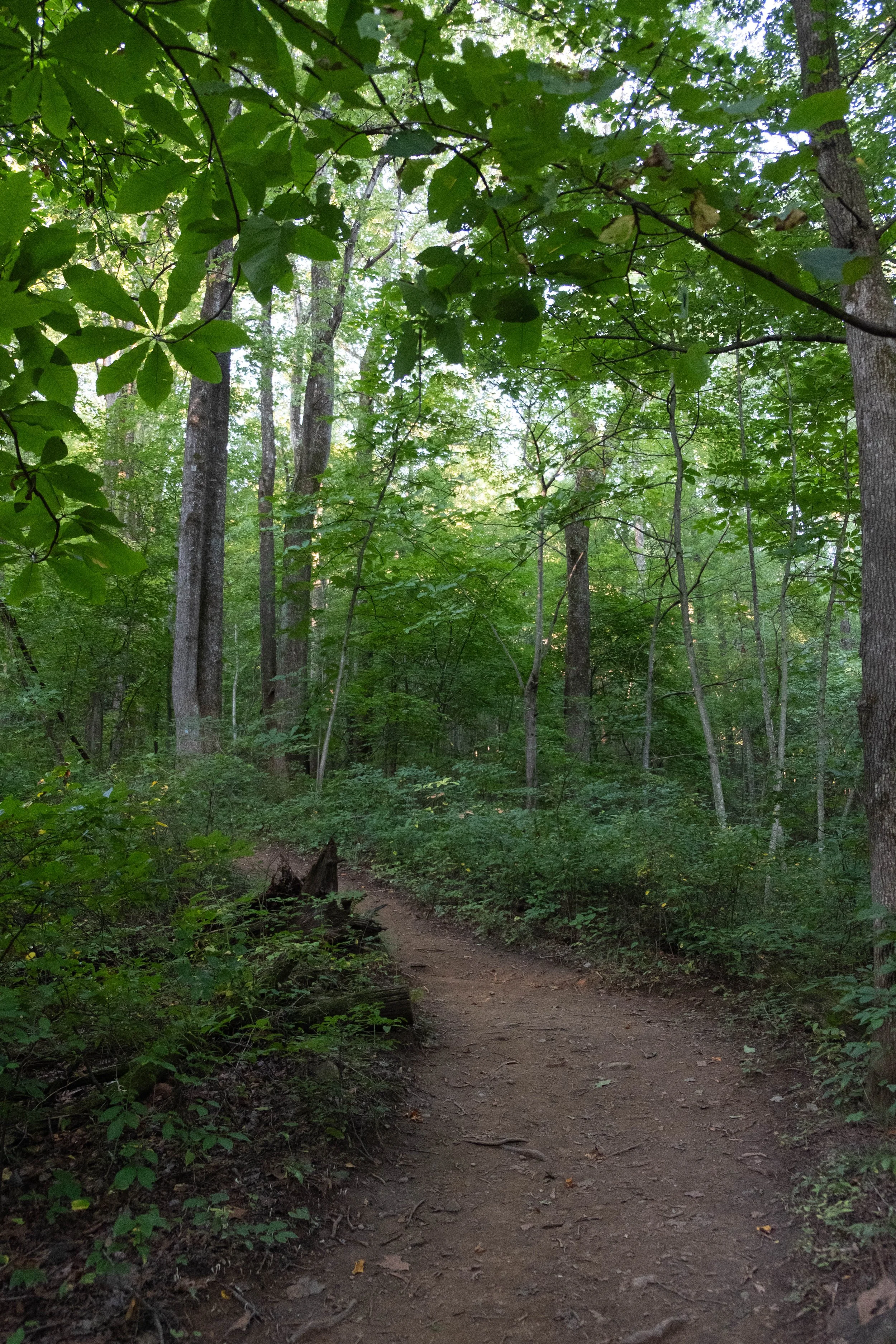
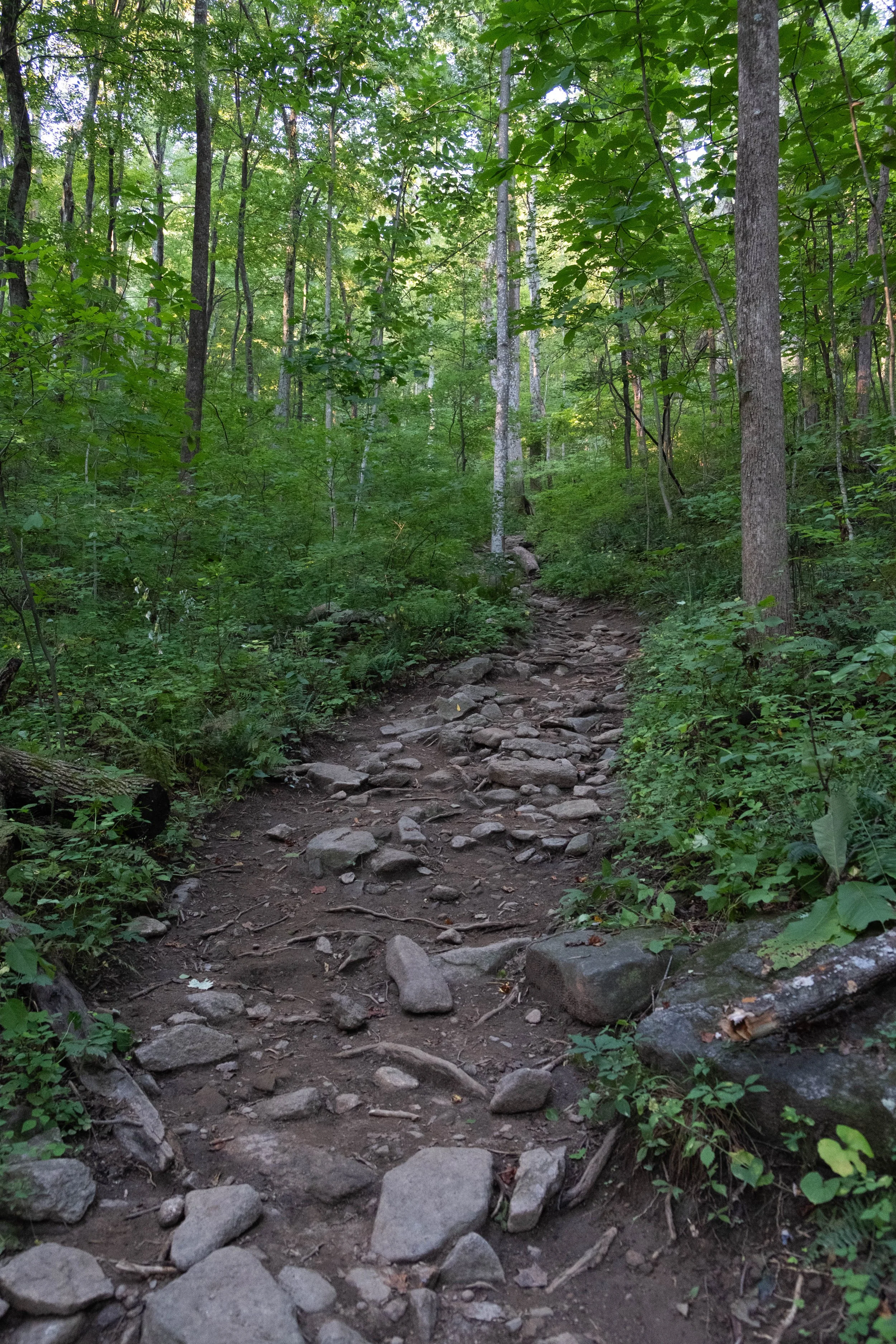
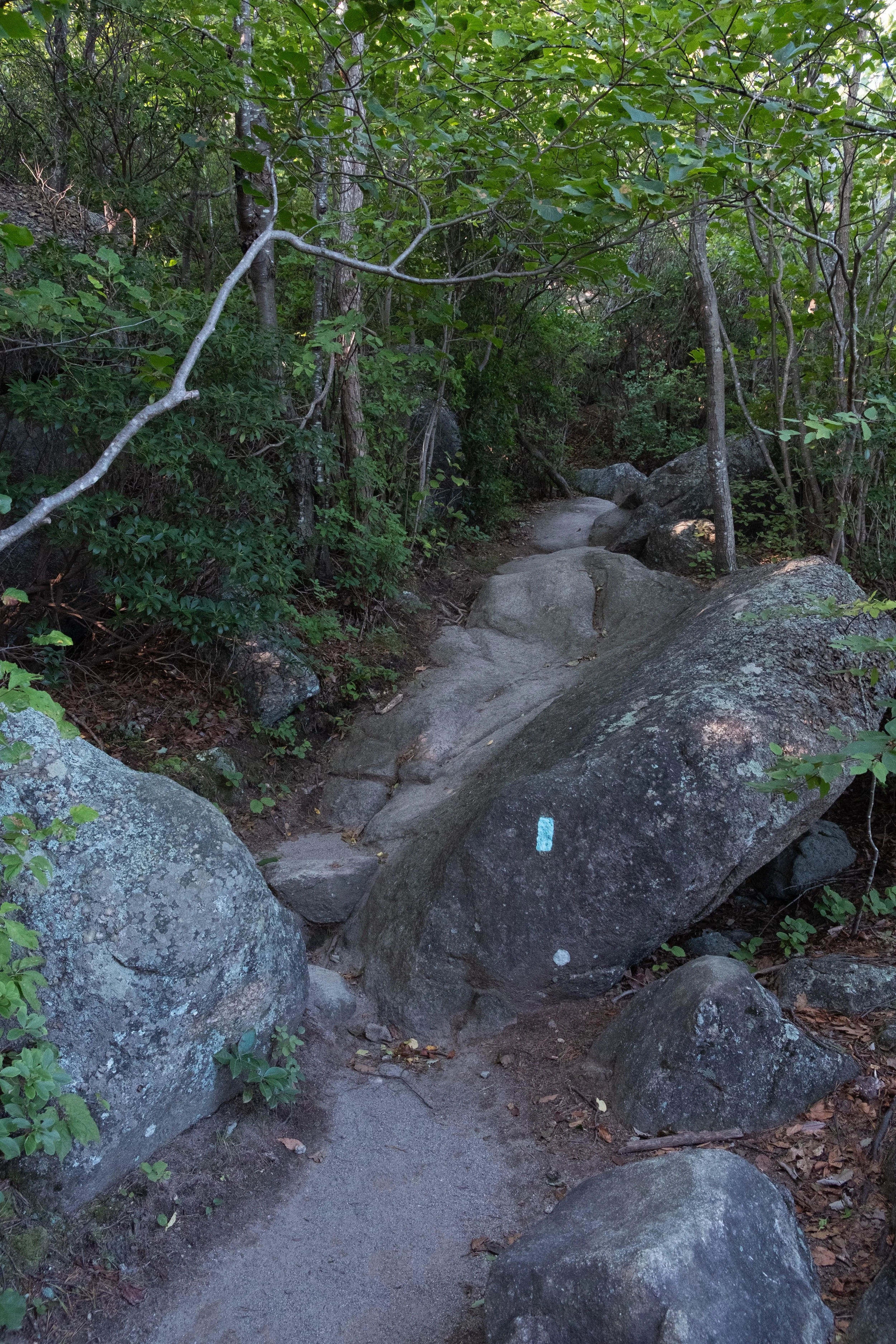
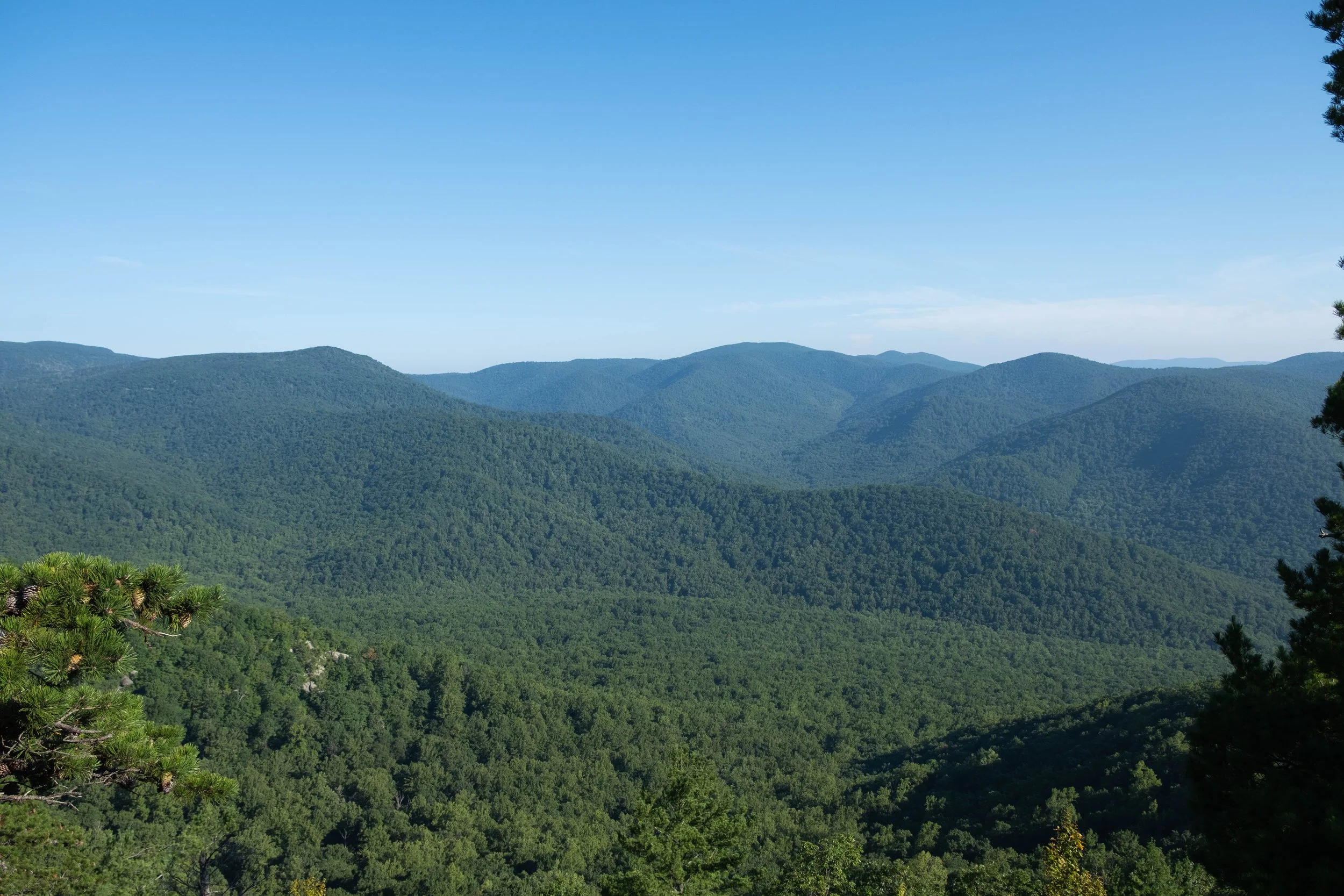
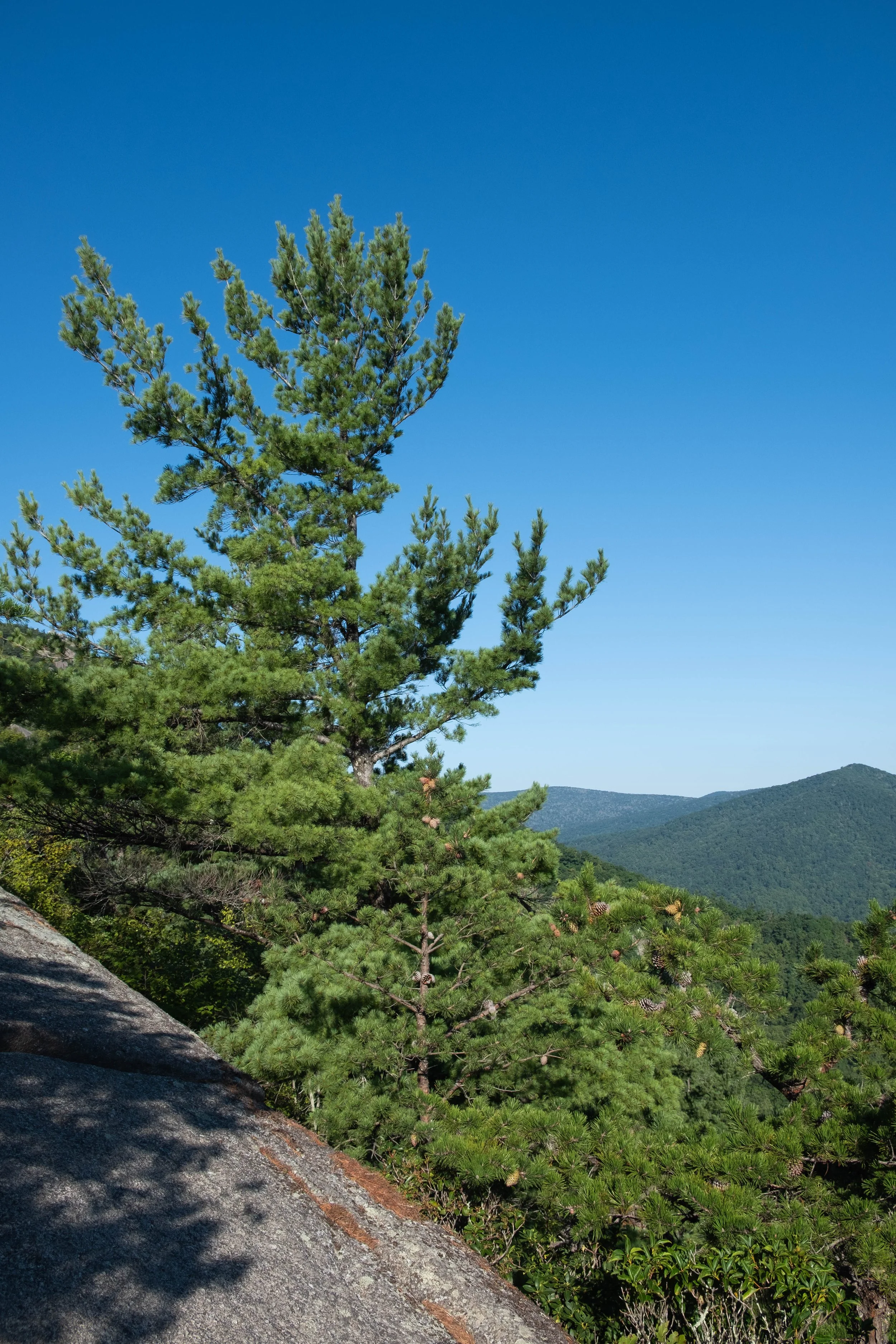
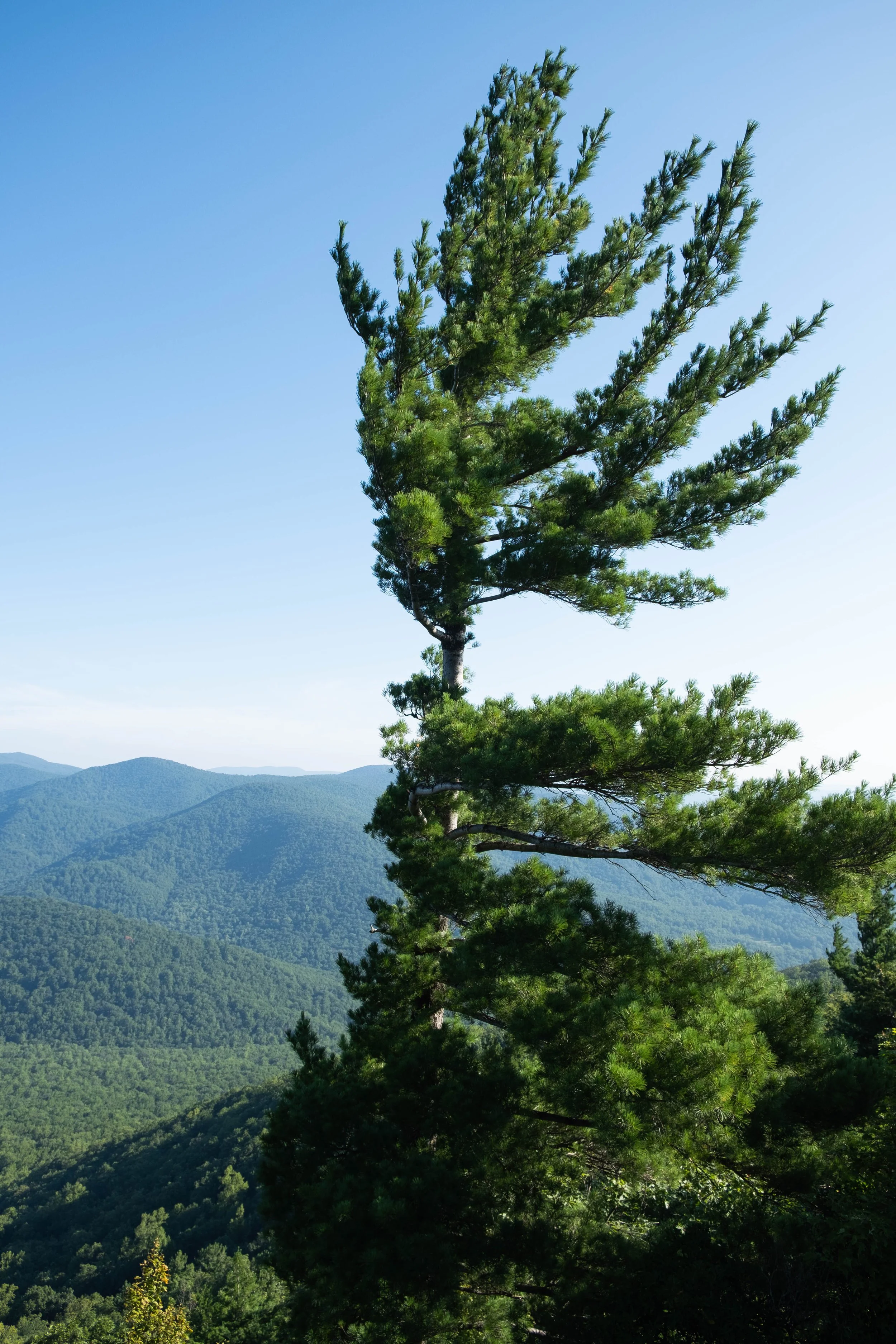
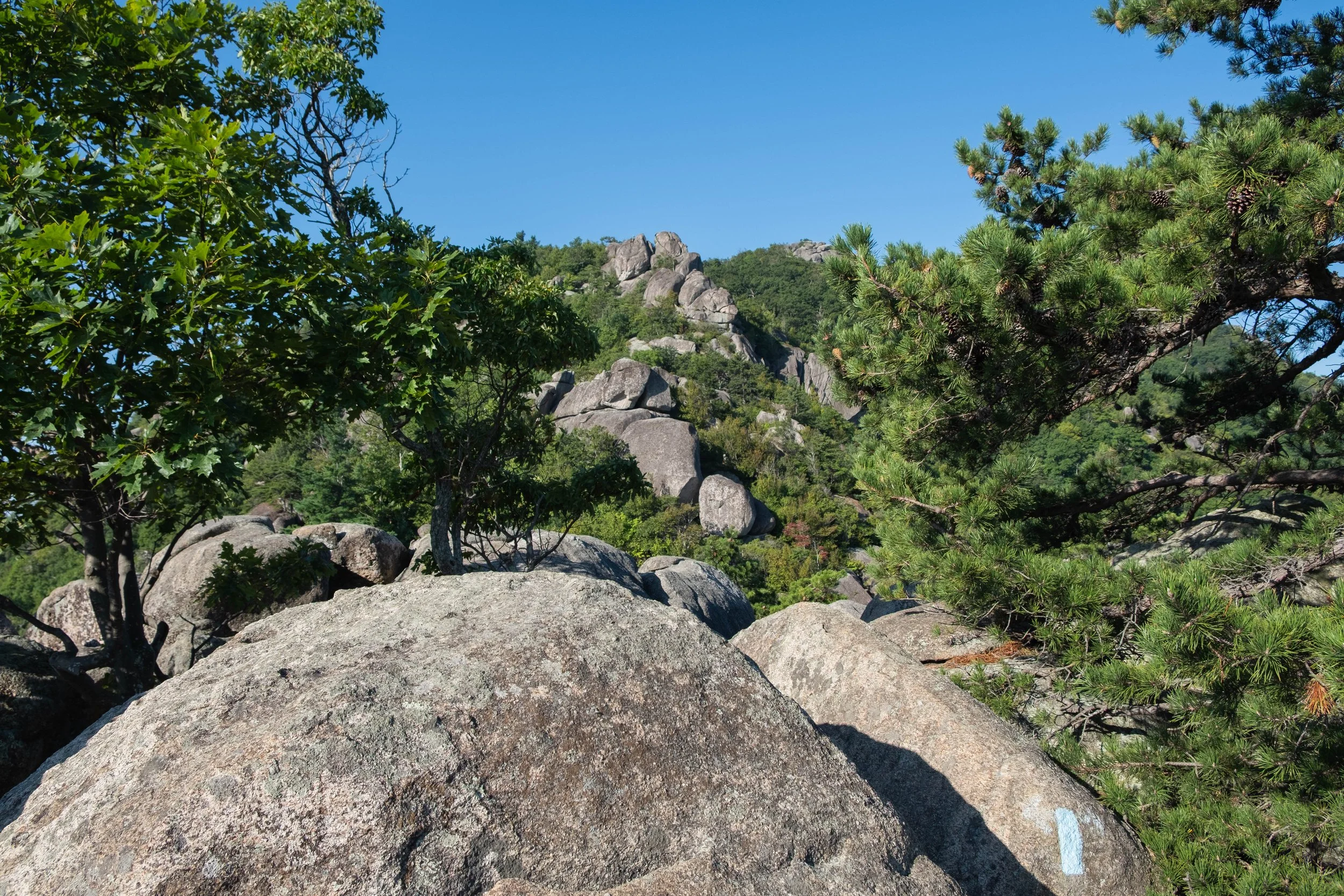
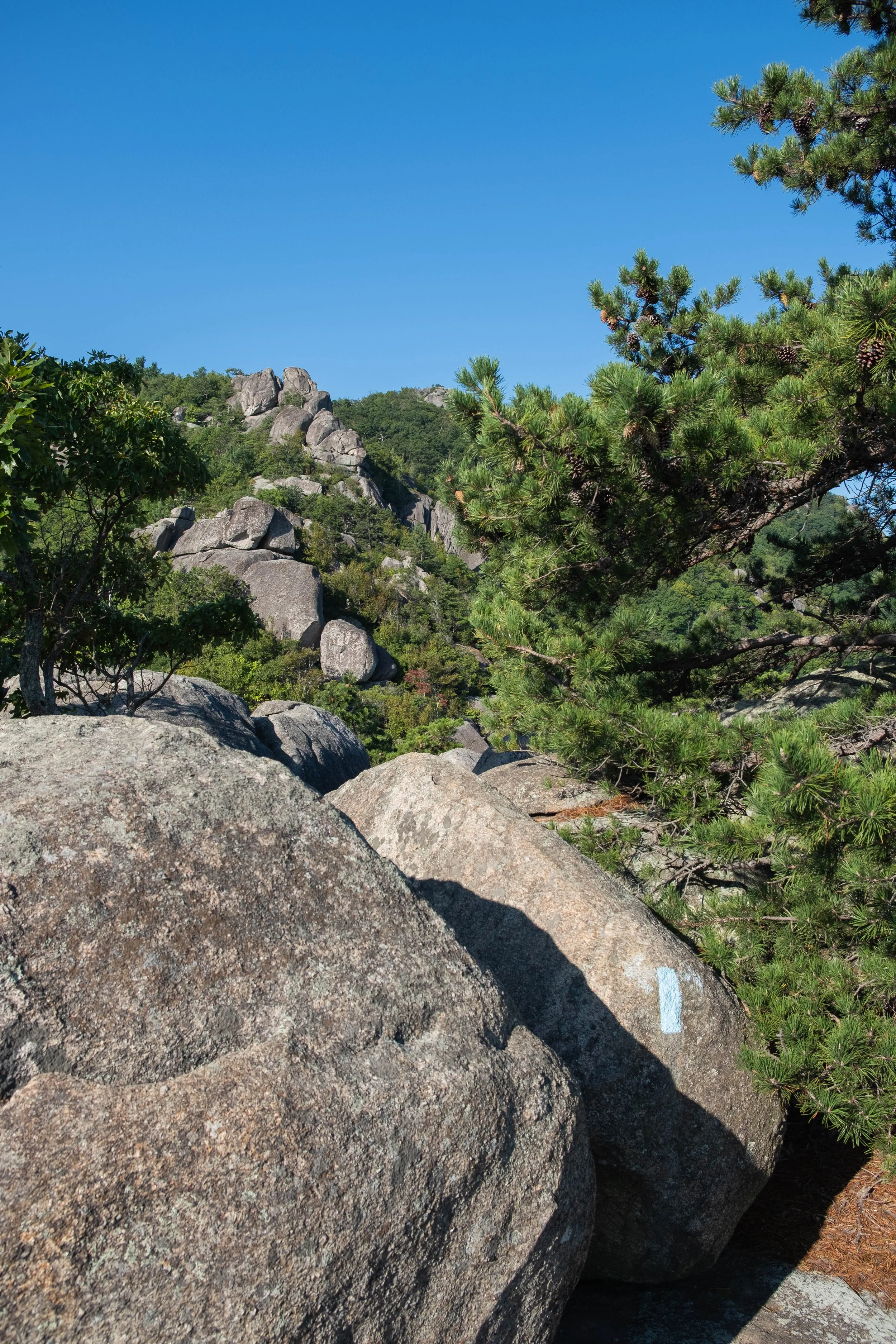
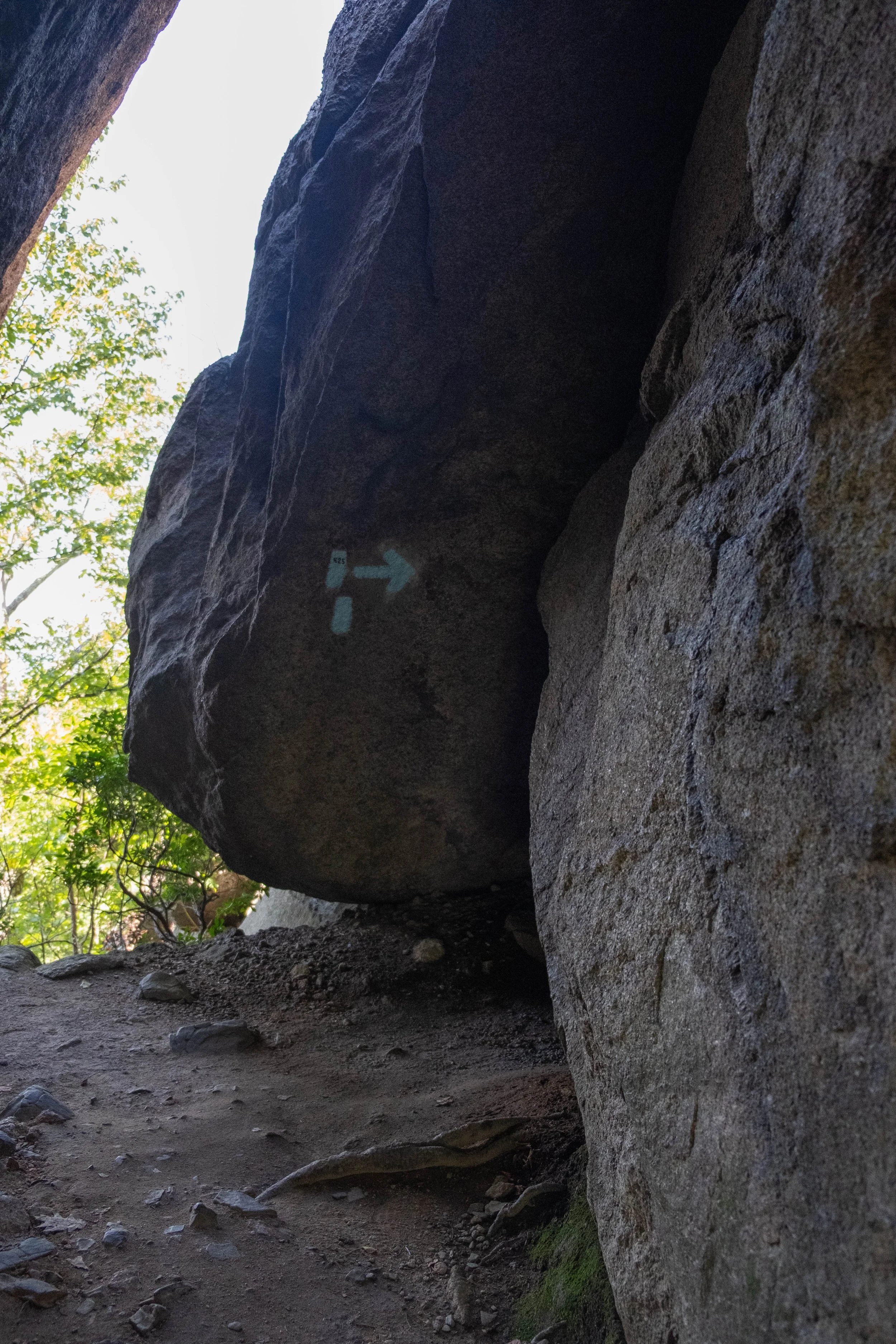
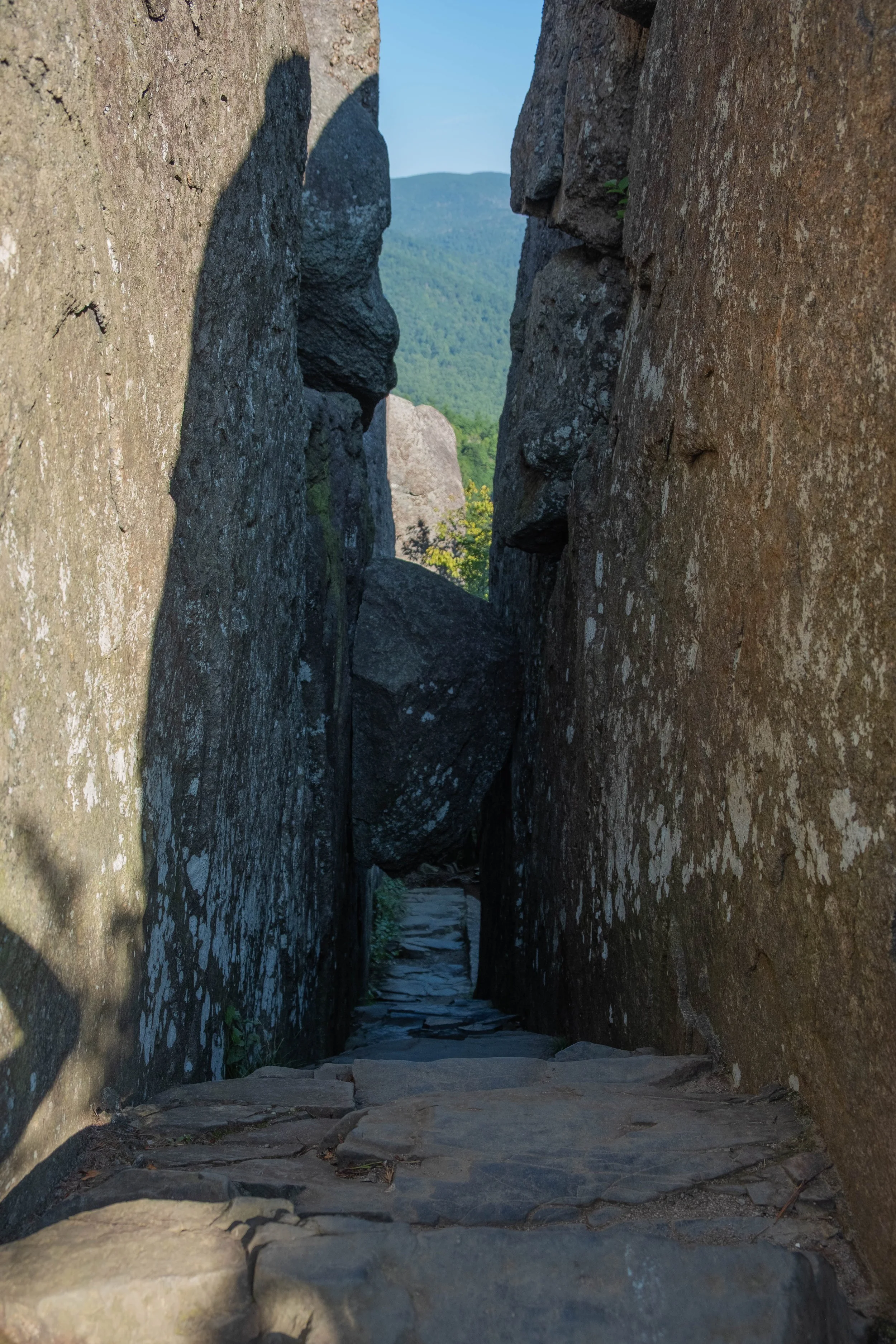
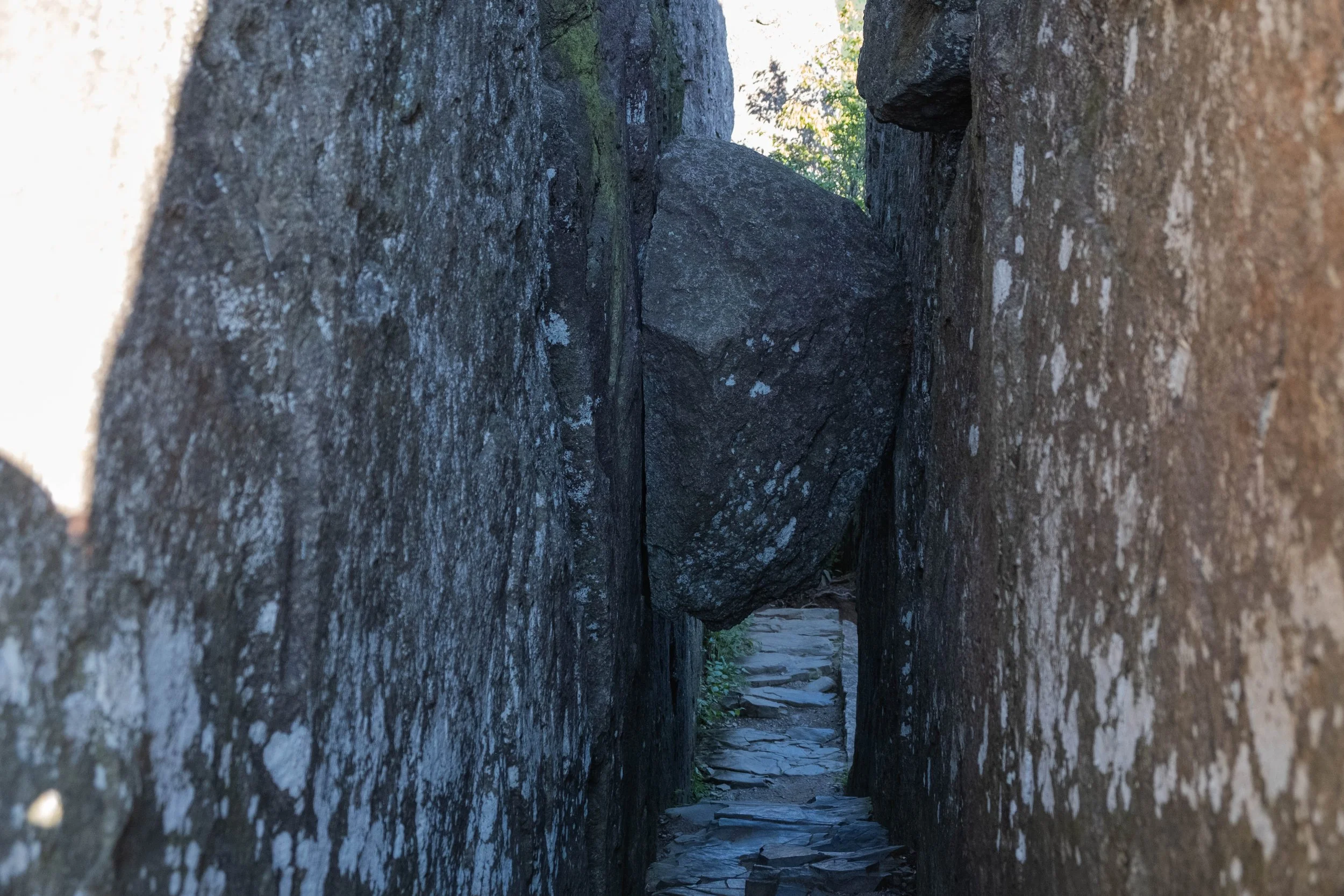
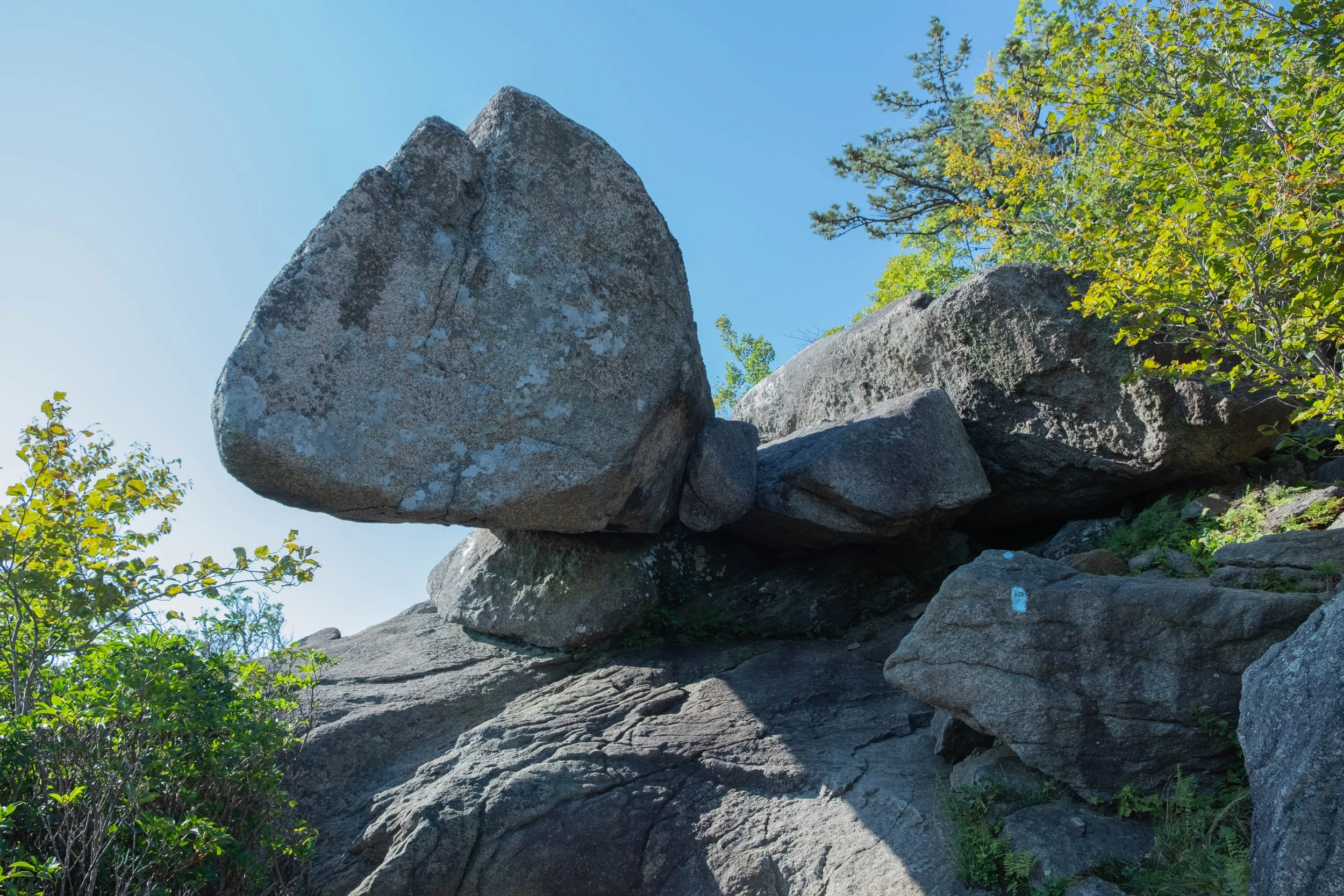
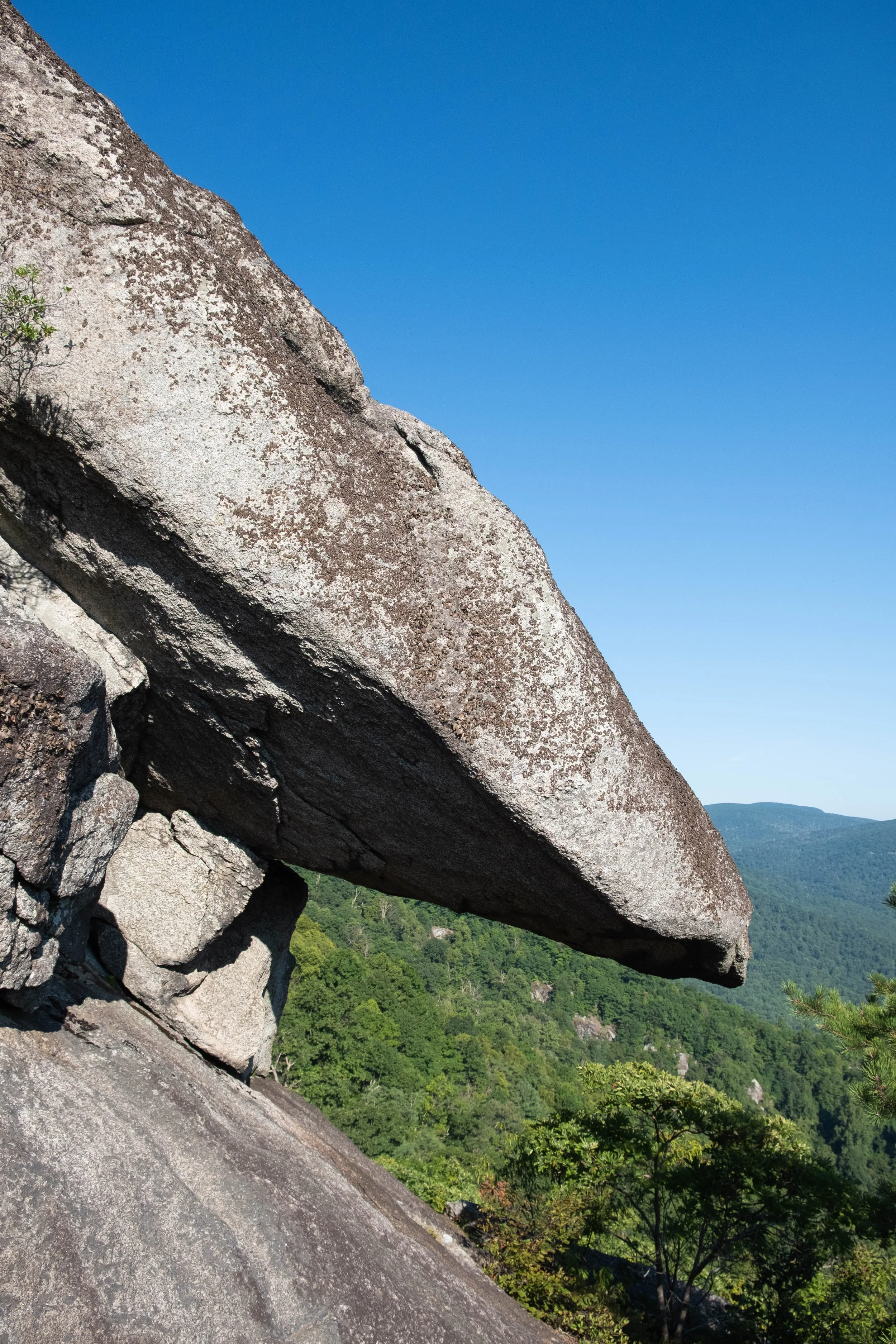
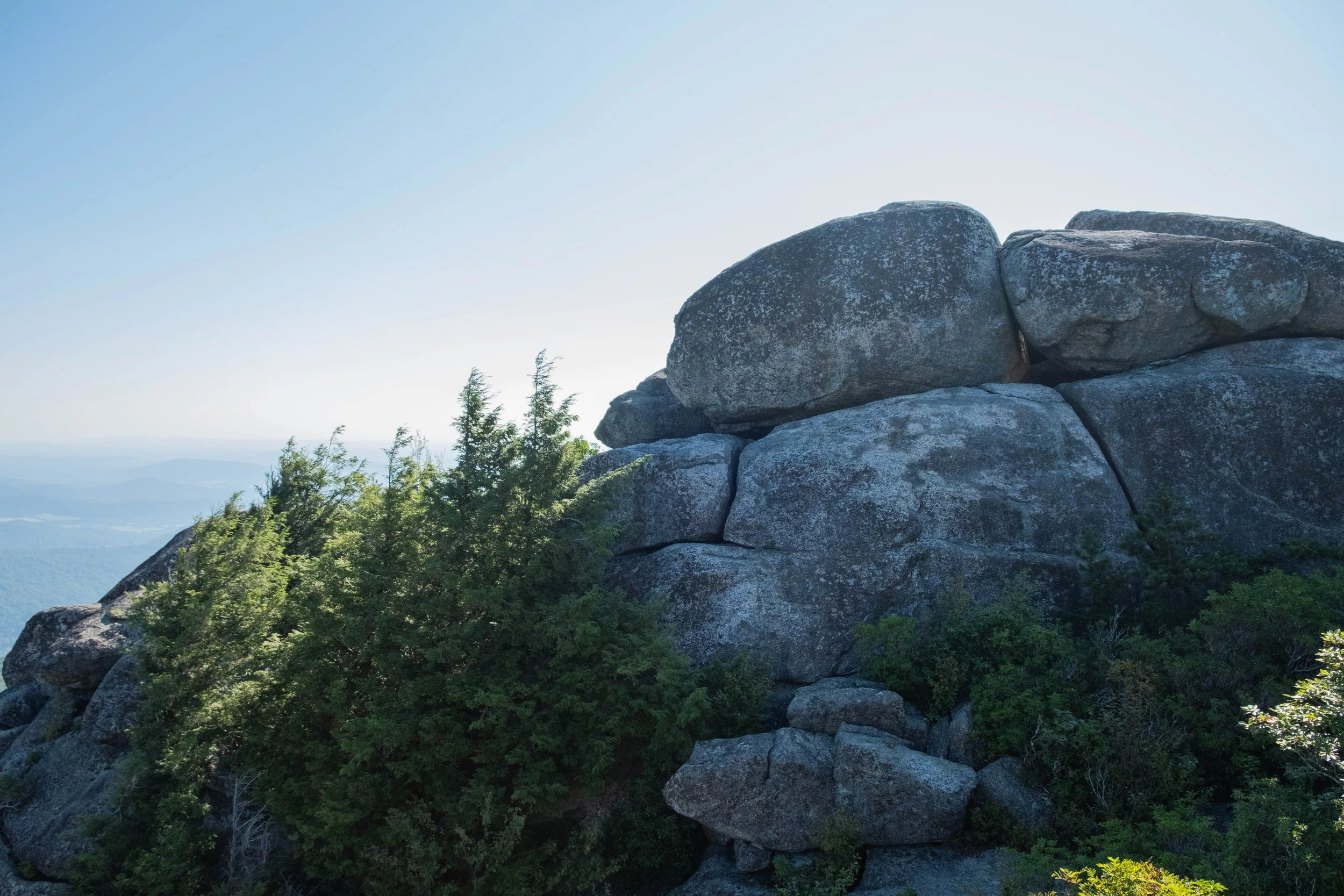
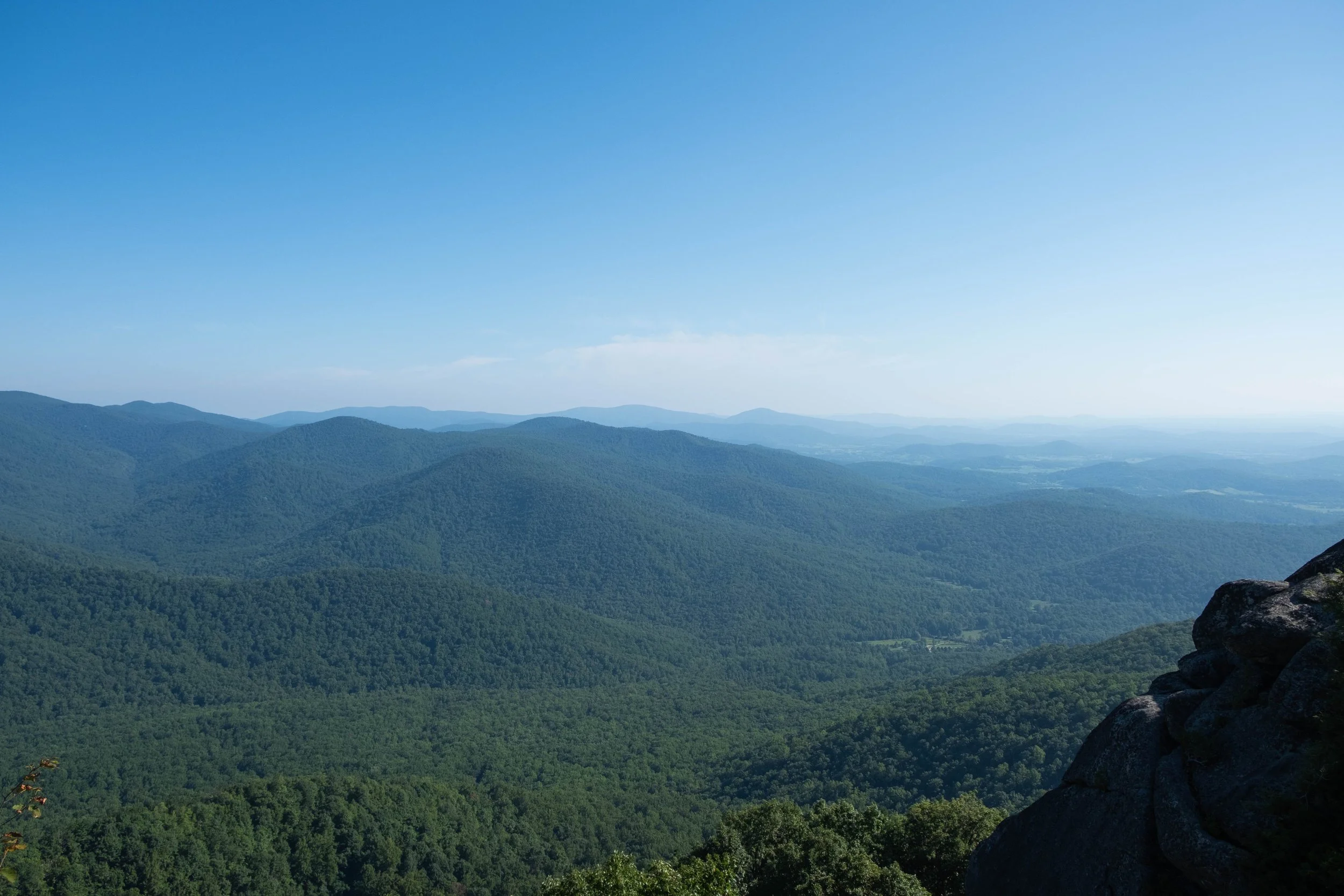
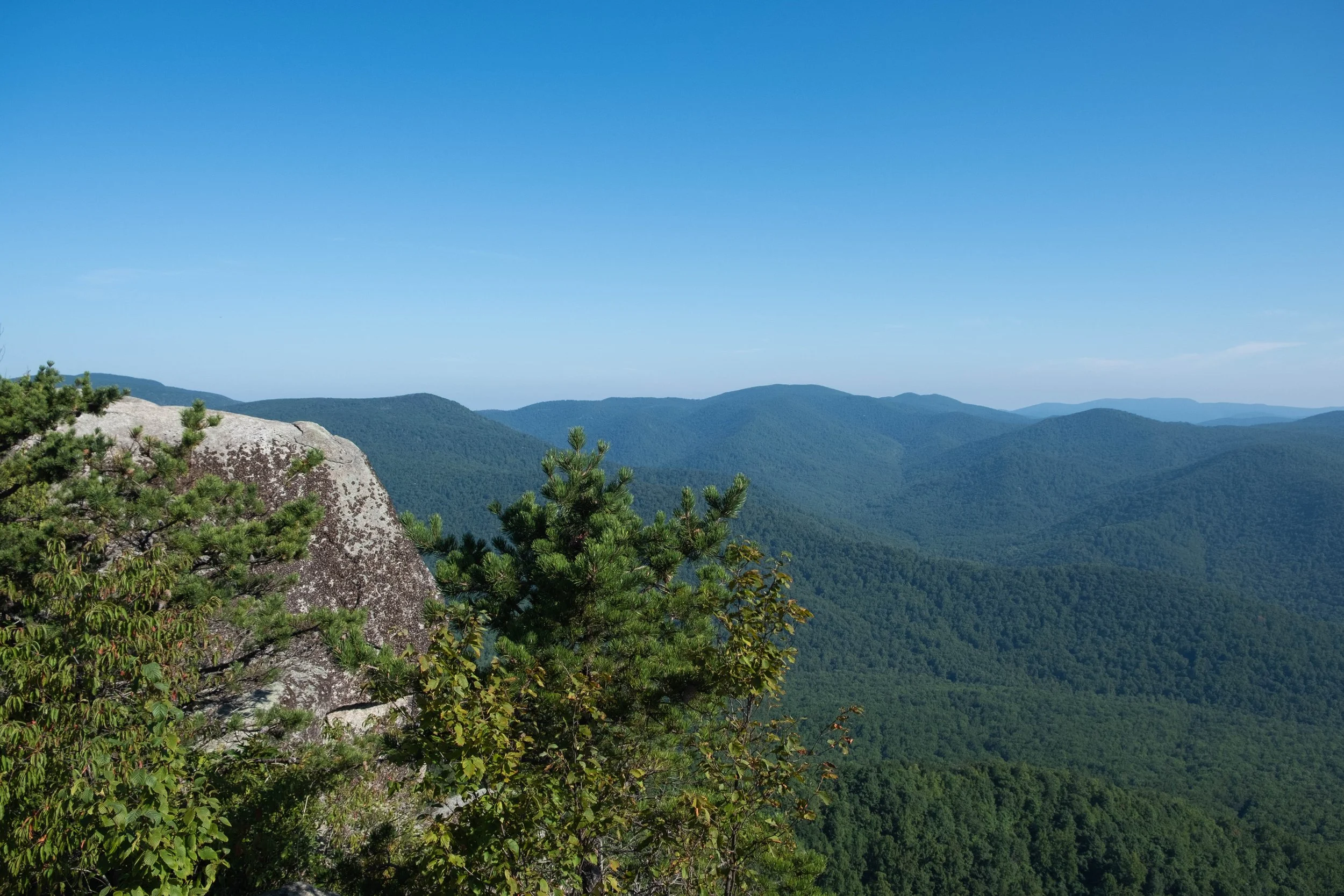
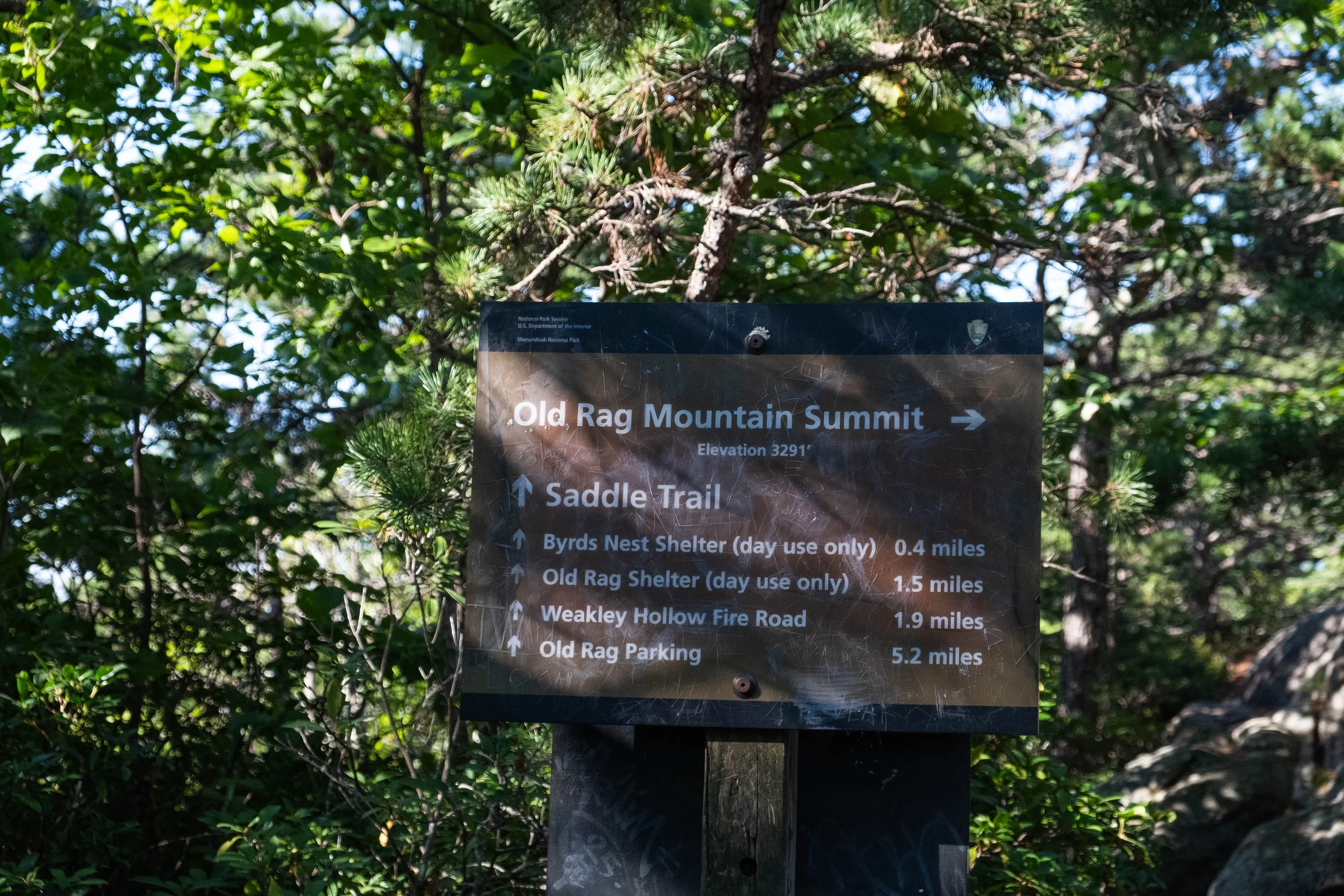
I (Emily) squeezed in a whirlwind 24-hour solo trip to Shenandoah the day before a work conference in DC: Hiking Stony Man Trail; perusing a visitor center; grabbing dinner and a glass of Shenandoah Viognier at Big Meadows Lodge where I also had a room reserved for the night; and waking early to drive an hour to hike the Old Rag Mountain loop, which is most famous for its one-mile scramble near the summit. I would say that overall, this trip helped redeem the park from my memories of the barren landscape we’d first seen several years before when we visited at the end of November. In August, the hills are lush and green. I could see where their name — Blue Ridge Mountains — came from as I stood on the summit of Old Rag and took in the layers upon layers of mountains stretched out below. Big Meadows Lodge was also a great spot to spend an evening and I was surprised by how cool and refreshing the evening air got as the sun slipped away for the night.
Some things that remain not-my-favorite: I stopped at a different visitor center this trip from the one we visited on our first trip, but was still underwhelmed by the information provided about the first inhabitants of the land. I did learn a little about how Shenandoah National Park was segregated until around 1950, which caused me to dig into this history more beyond what was included in the visitor center. In summary, many of the premier spots in the park, including Big Meadows where I spent the night, were reserved for white visitors. Lewis Mountain was reserved as a picnic area and rest stop for Black visitors. A replica sign (you can see a photo of it here) that designated these segregated areas was in the visitor center, as were copies of letters written by the NAACP and other visitors protesting this unjust treatment of visitors on federal lands. I can’t recall seeing such clearly racist signage at the other national parks we’ve visited, so this was yet another sobering reminder of the long history of injustice in this country, and the ways in which structures like the National Park Service have often propped up this racist legacy.
It also reminded me of one of the reasons that I value visiting these parks, which are often located in corners of the country I would not choose to explore without the “excuse” of a national park. With each visit to some new-to-me part of North America, I have found myself confronted by histories I may not have otherwise learned, which then contributes to the kaleidoscope of information that is constantly evolving my relationship with this continent. Most of my European ancestors have lived in what is now known as Canada and the United States for more than 400 years. I have become more and more convinced that an honest, personal reckoning with what this place is, and who came before me, and what my ancestors were a part of, is vital to expanding my own ability to see and name this land’s true (hi)story. And from that reckoning, to do my best to live and act in ways that expand, not constrict, who is seen, welcomed, and honored here.
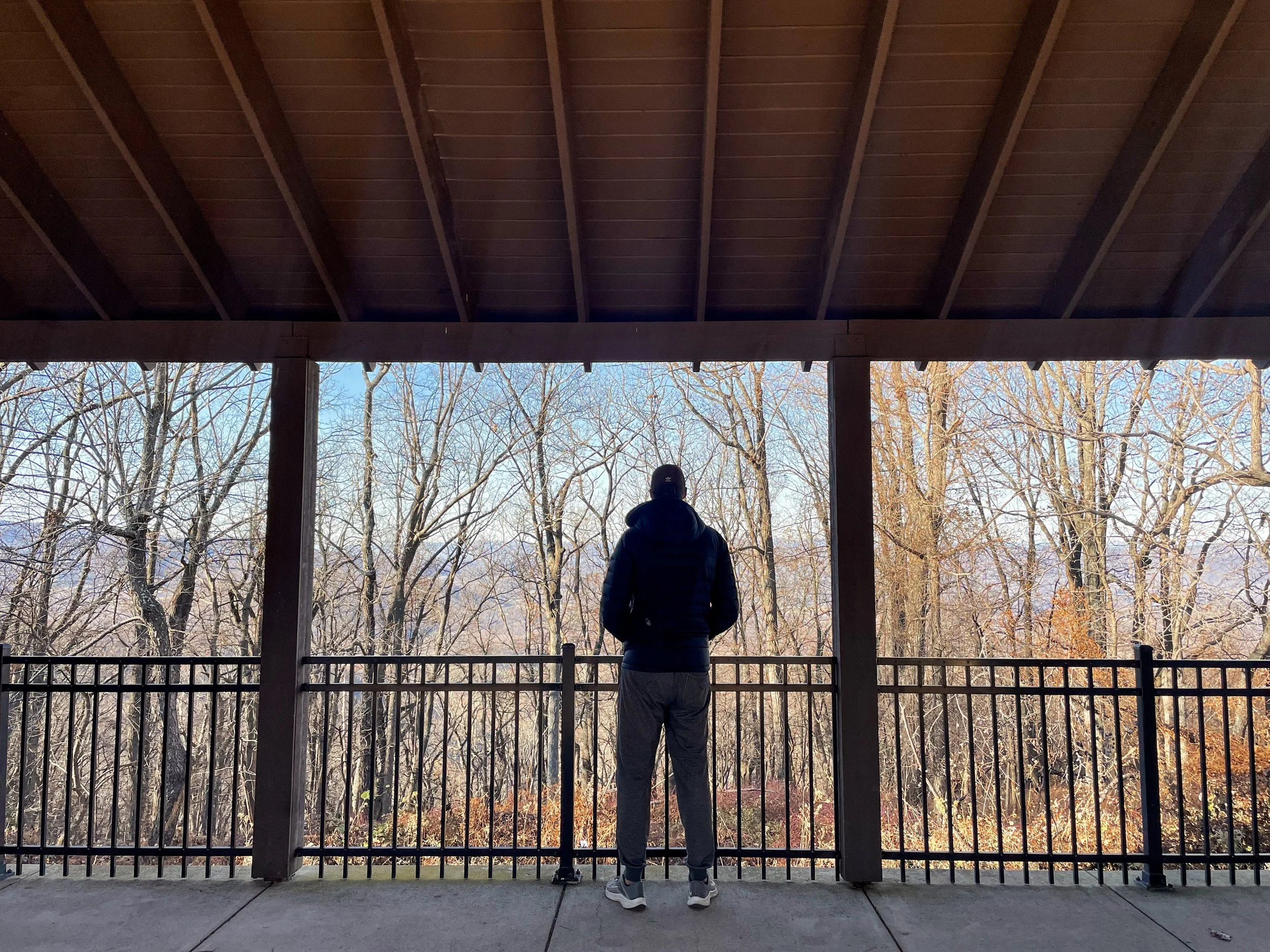
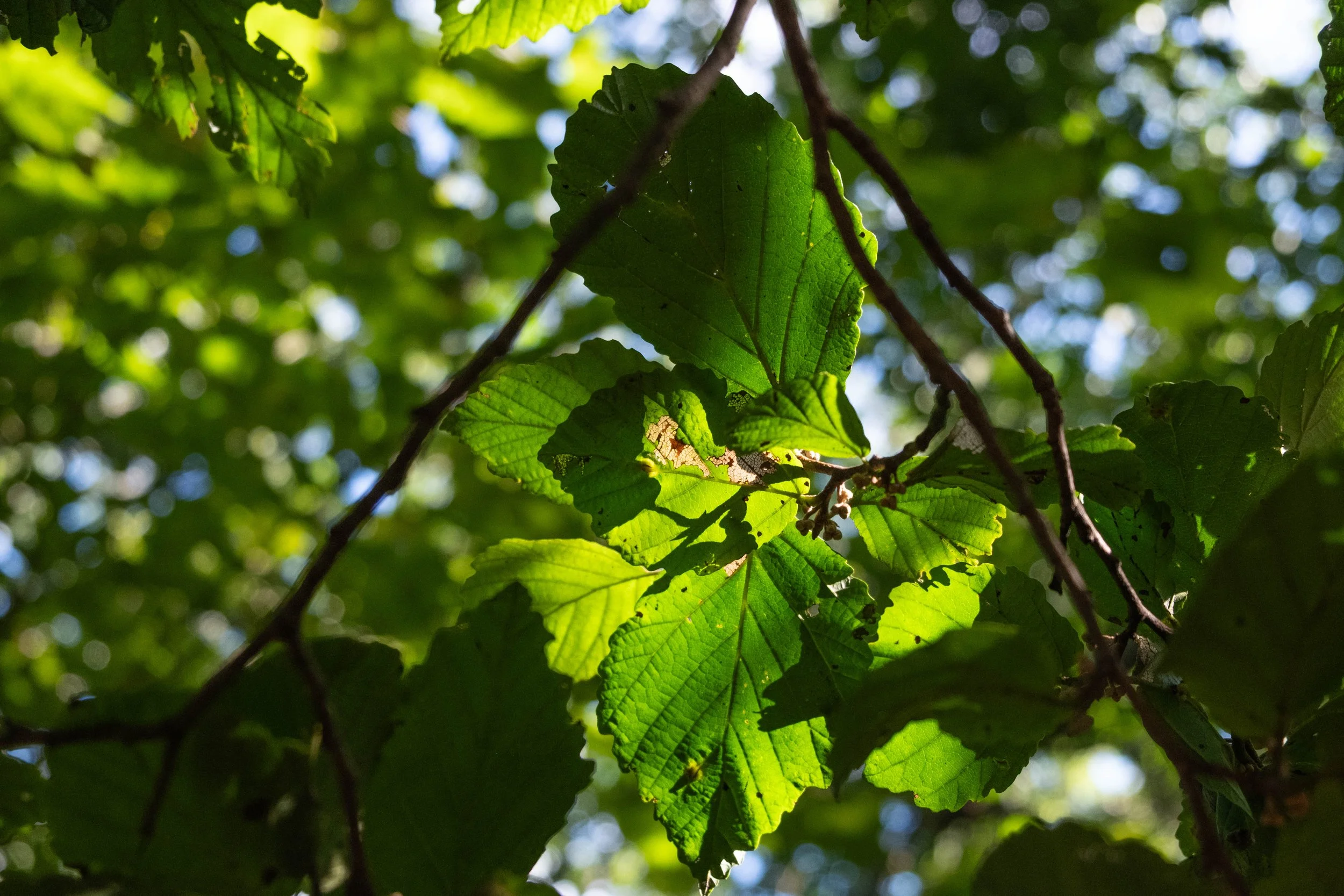
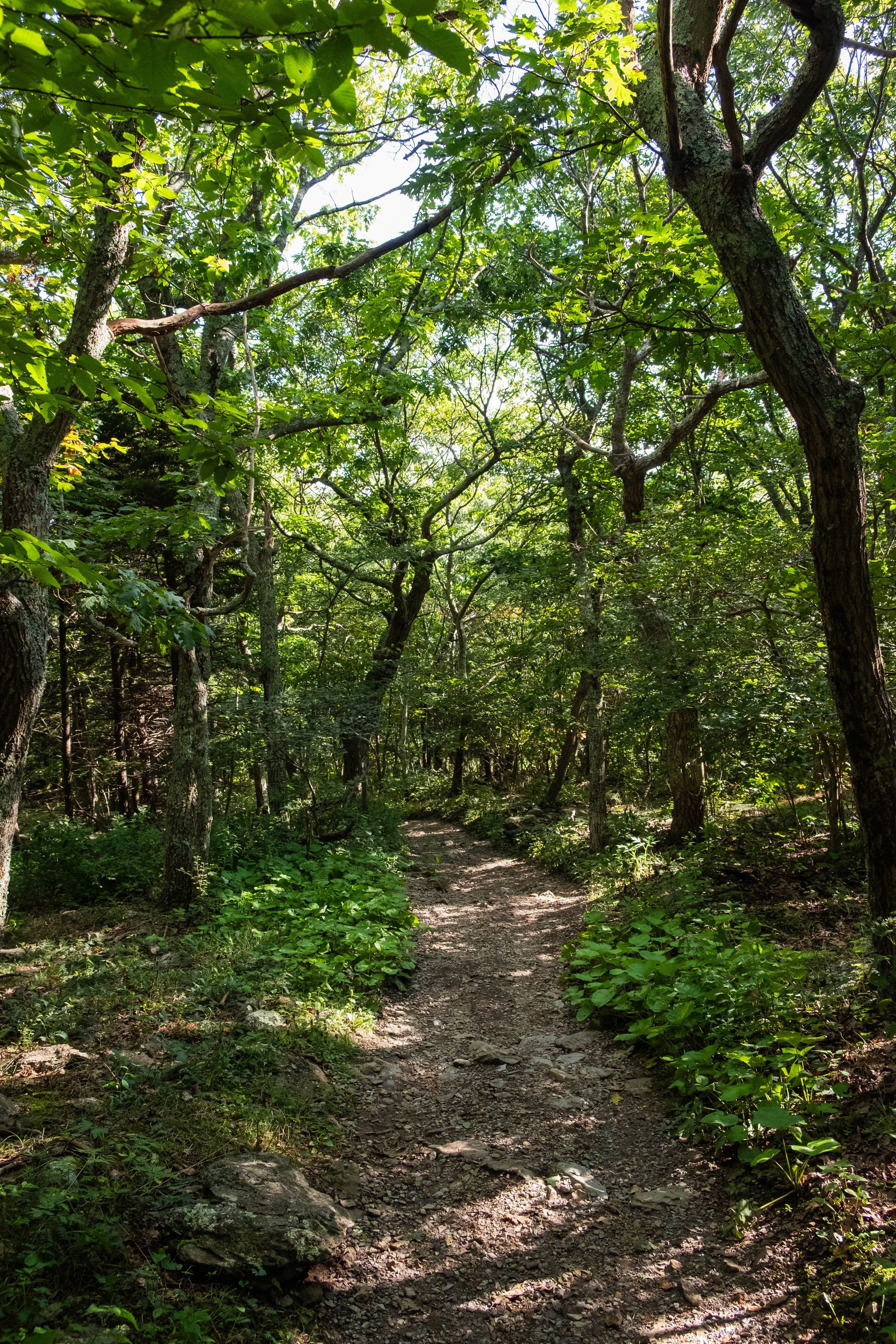
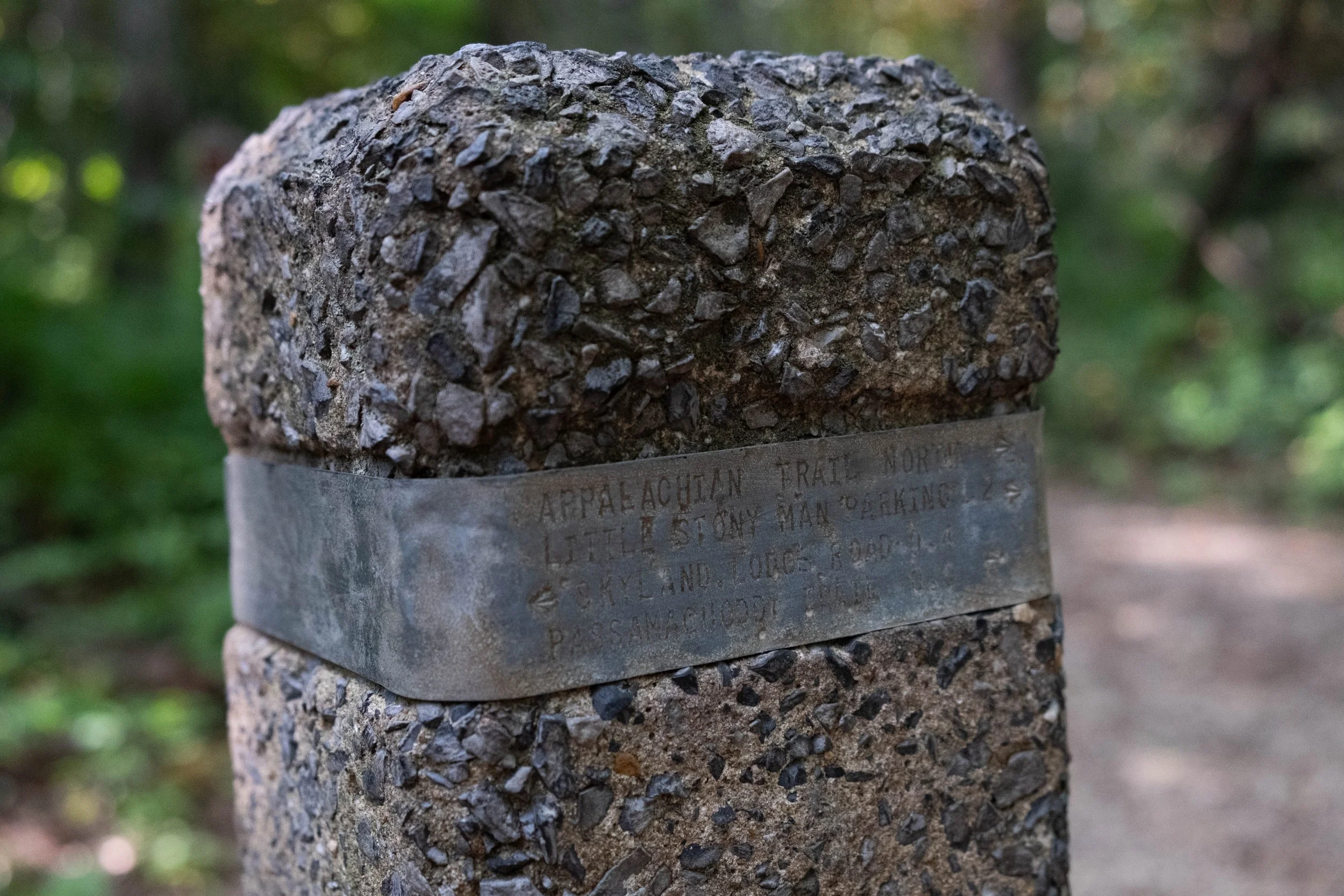
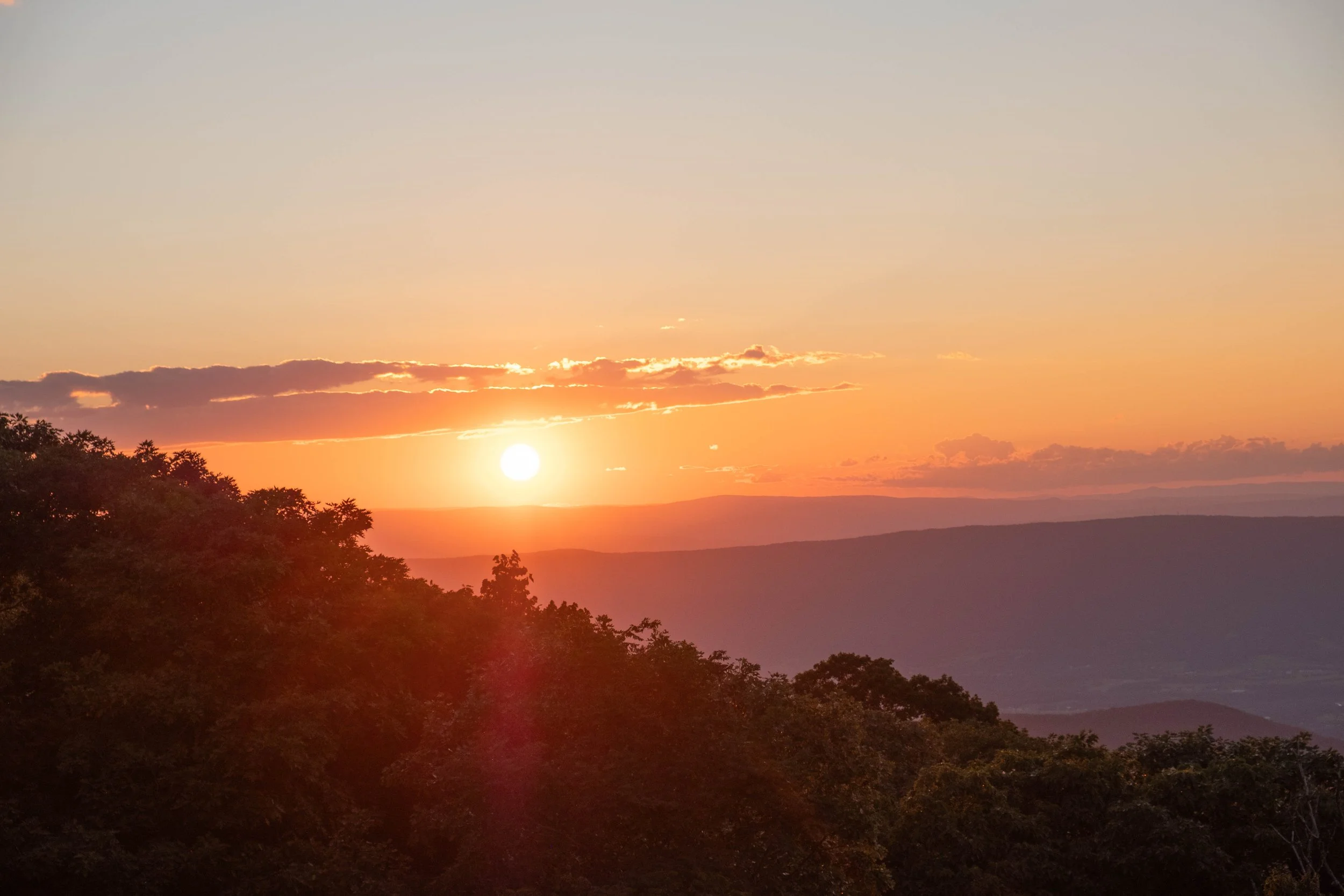
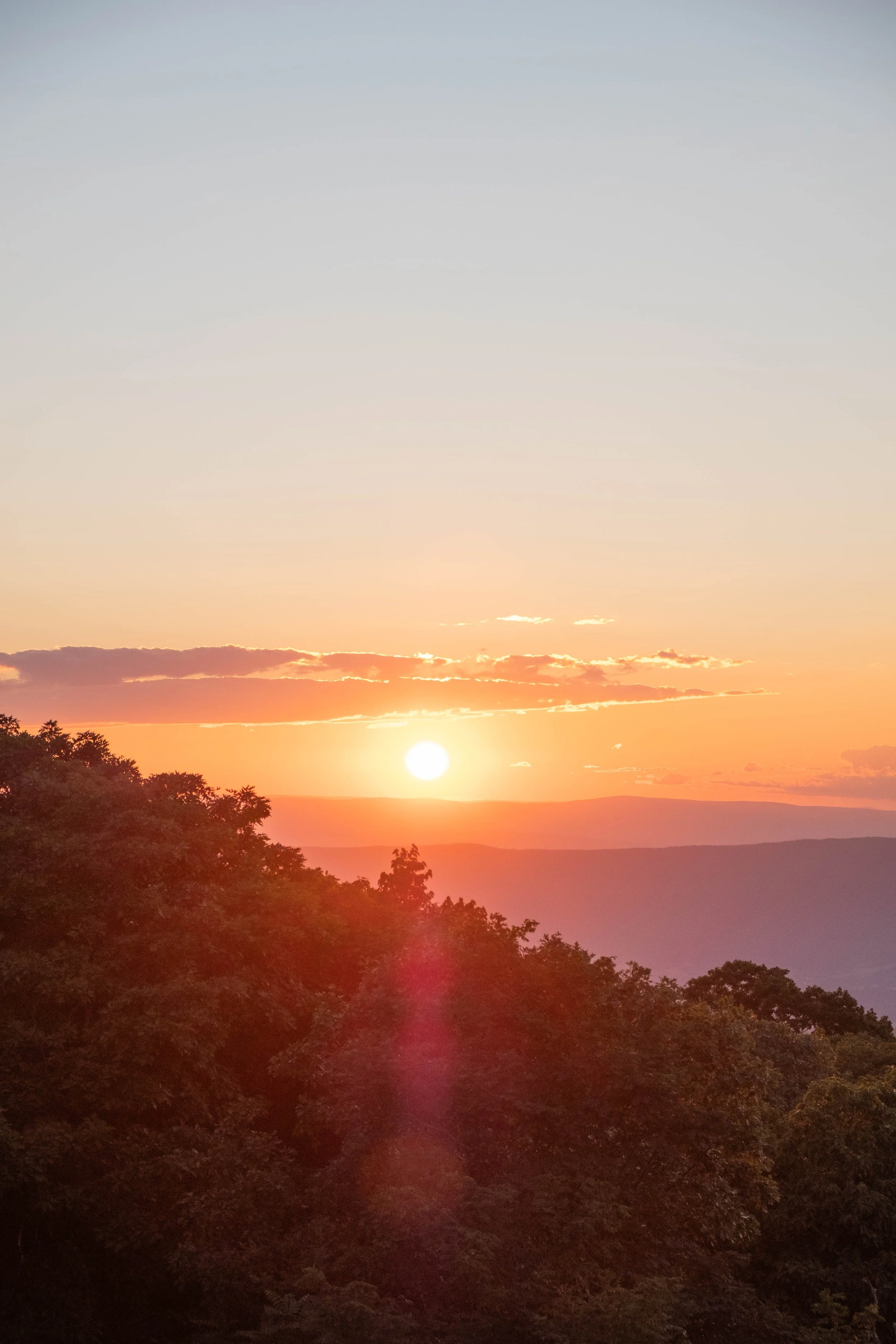
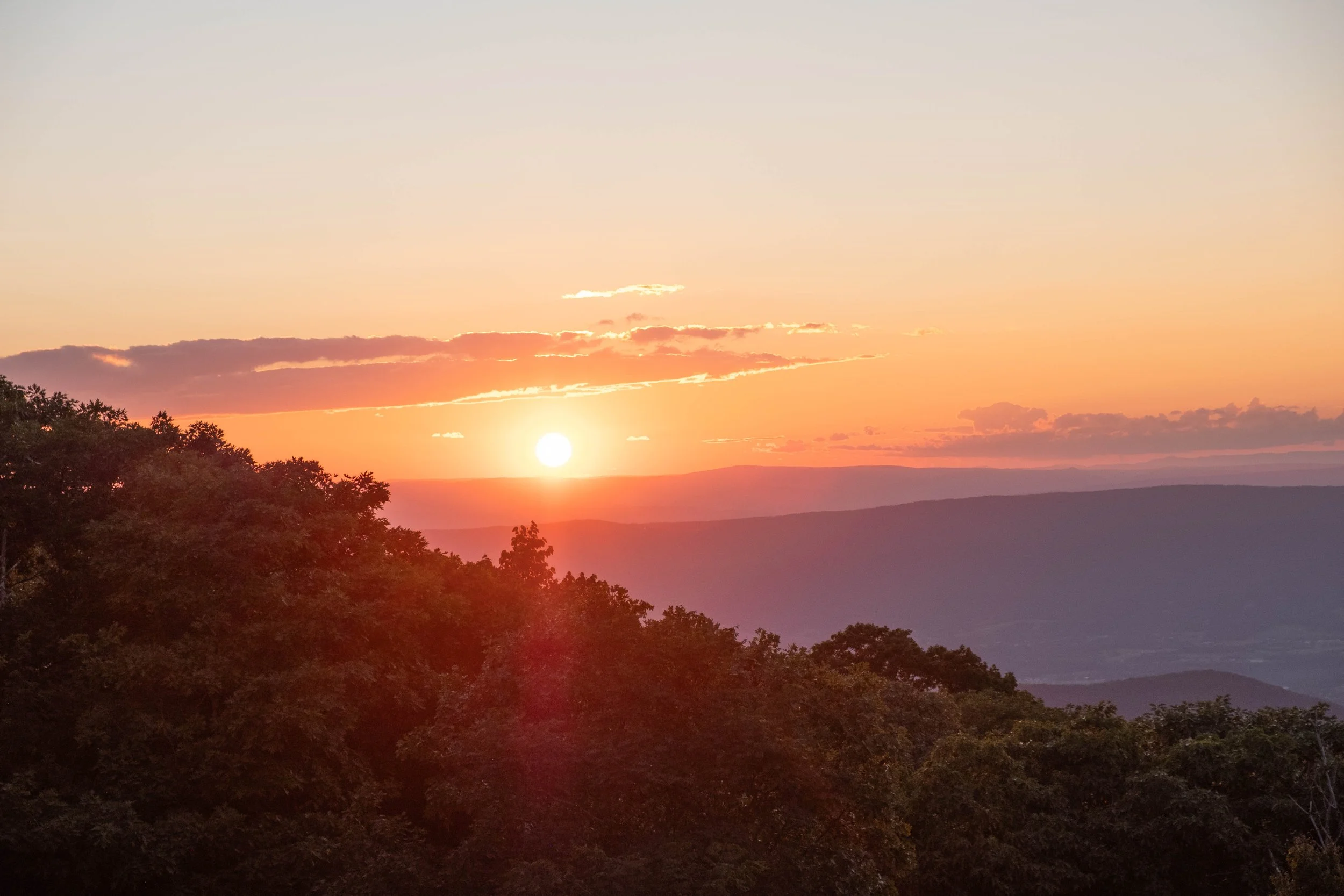
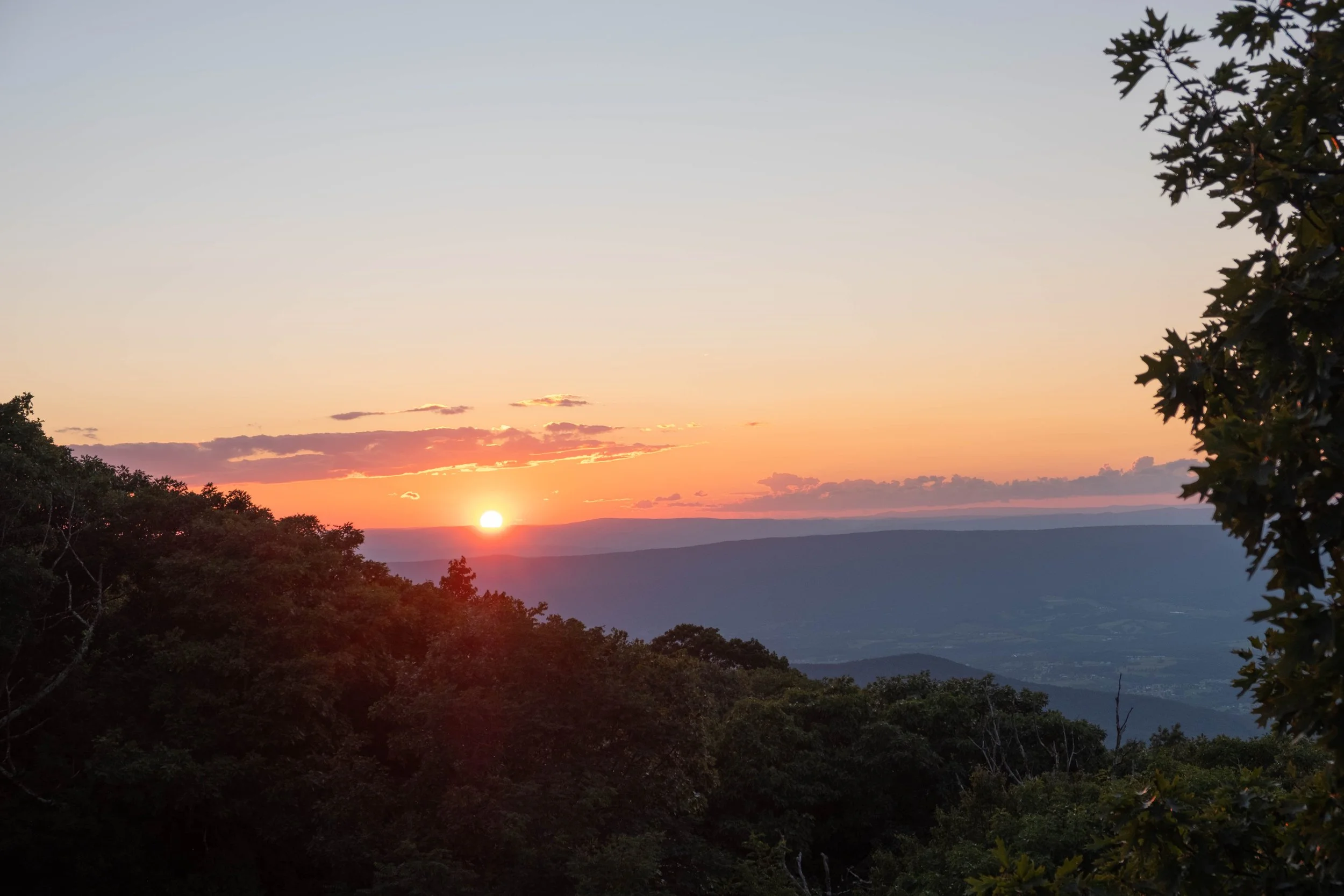
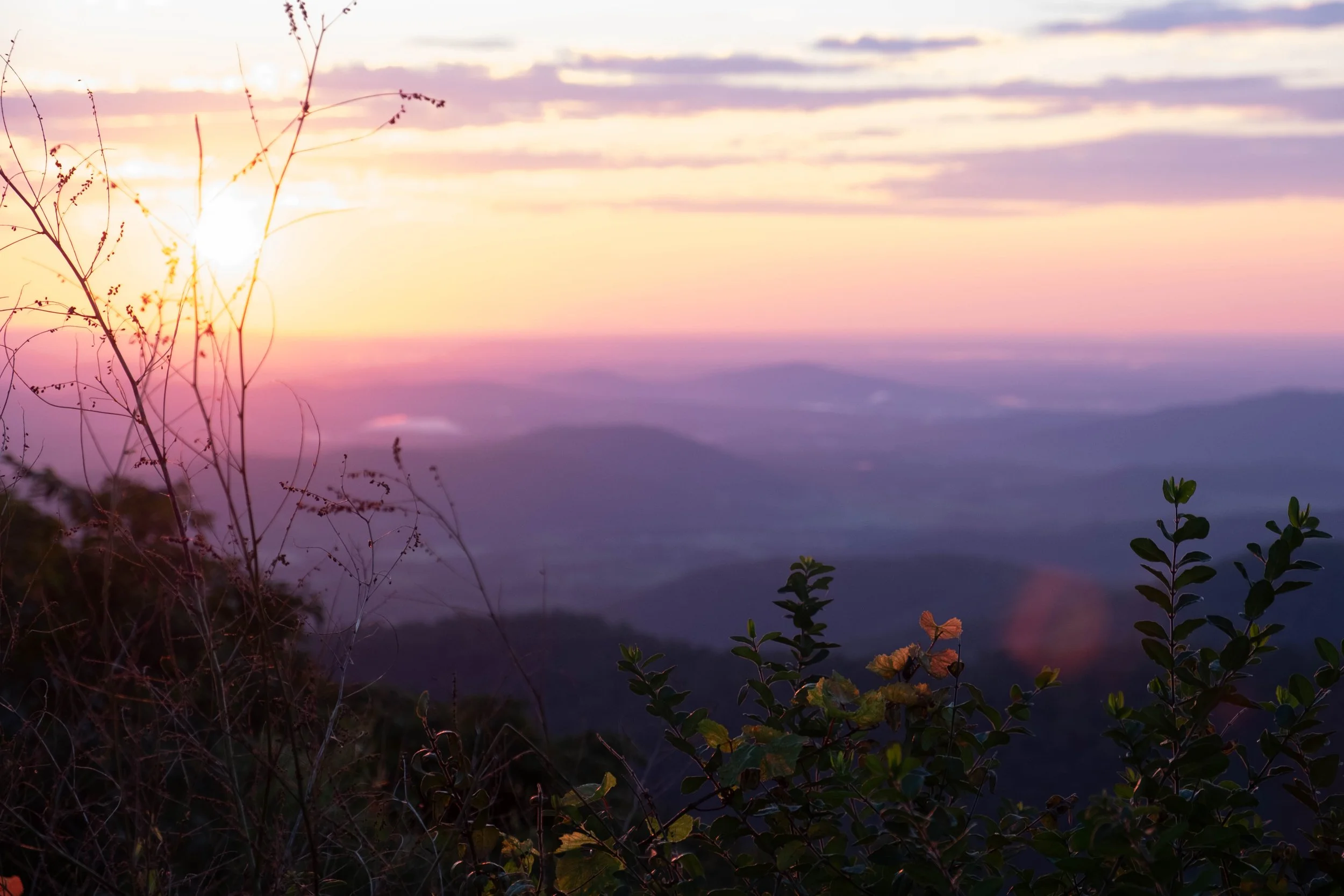
Pictured below:
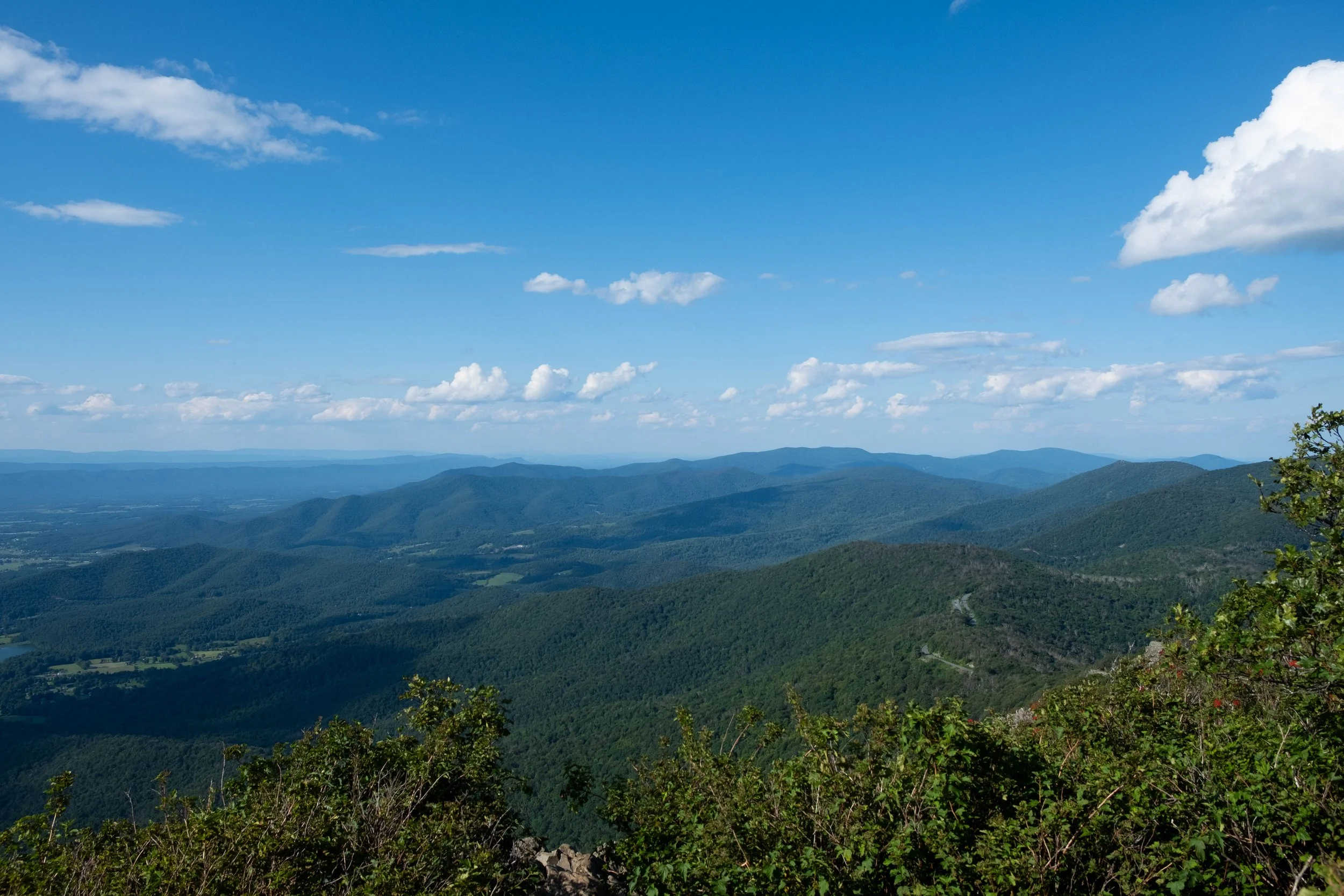
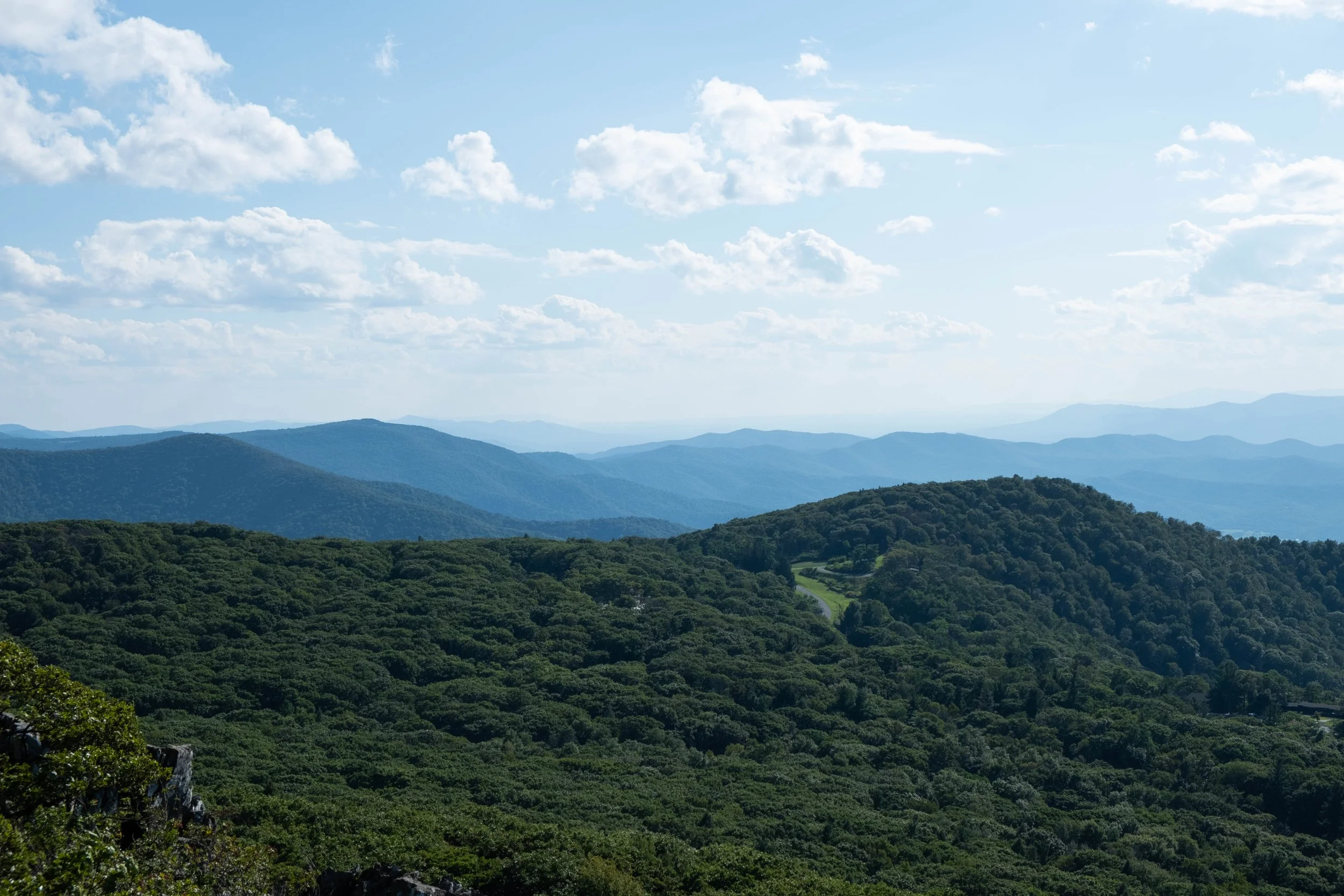
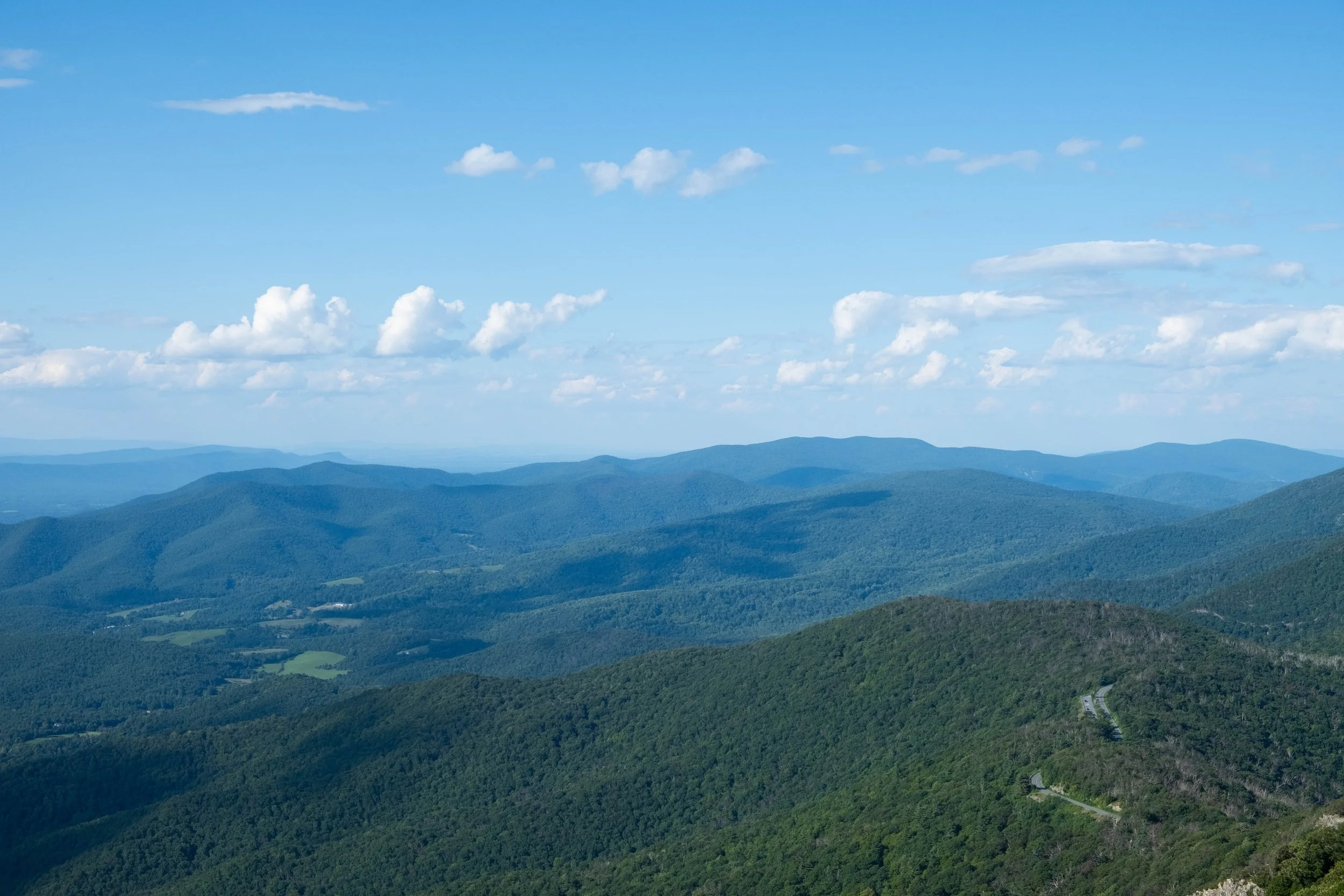
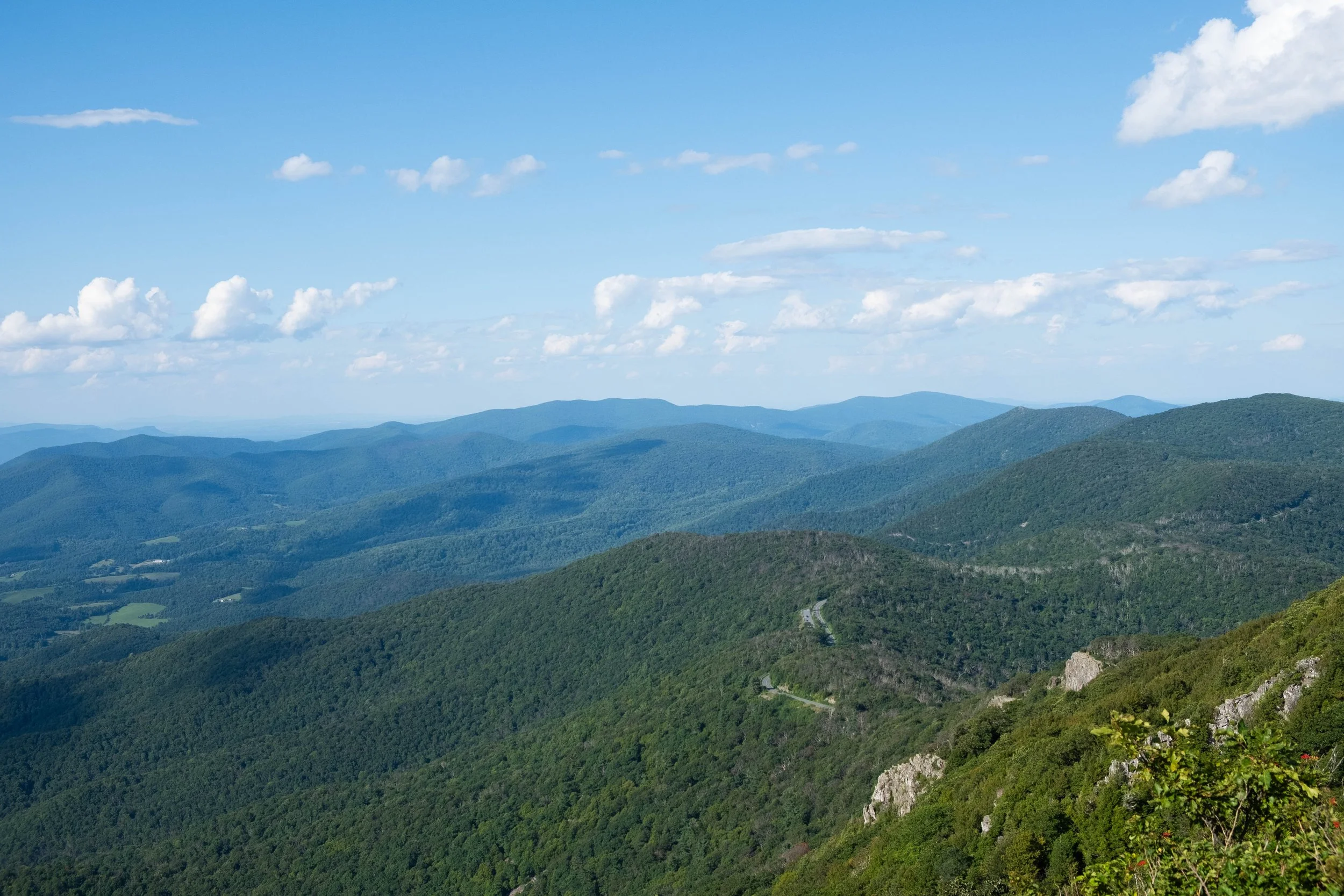
Views from Big Meadow Lodge.
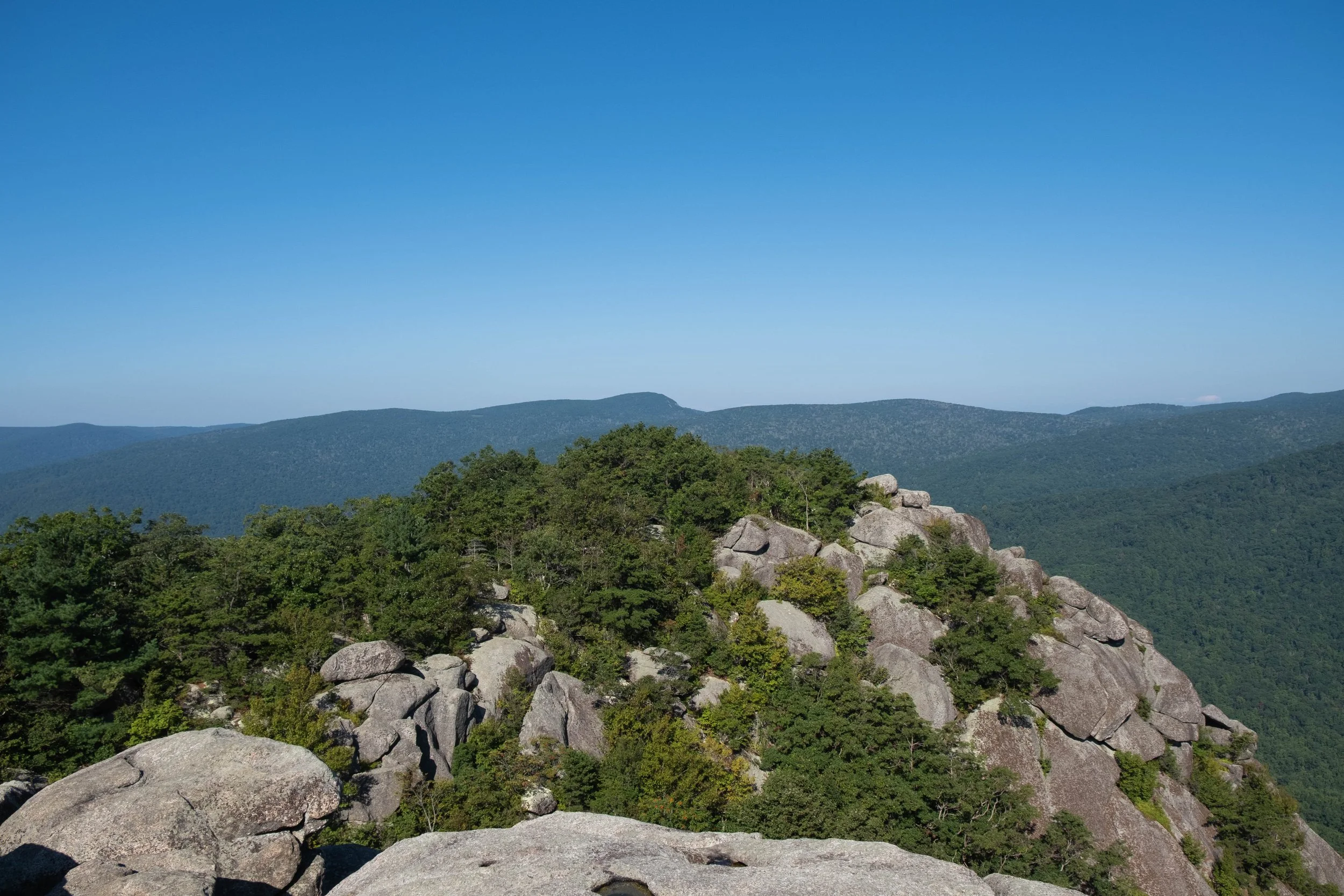
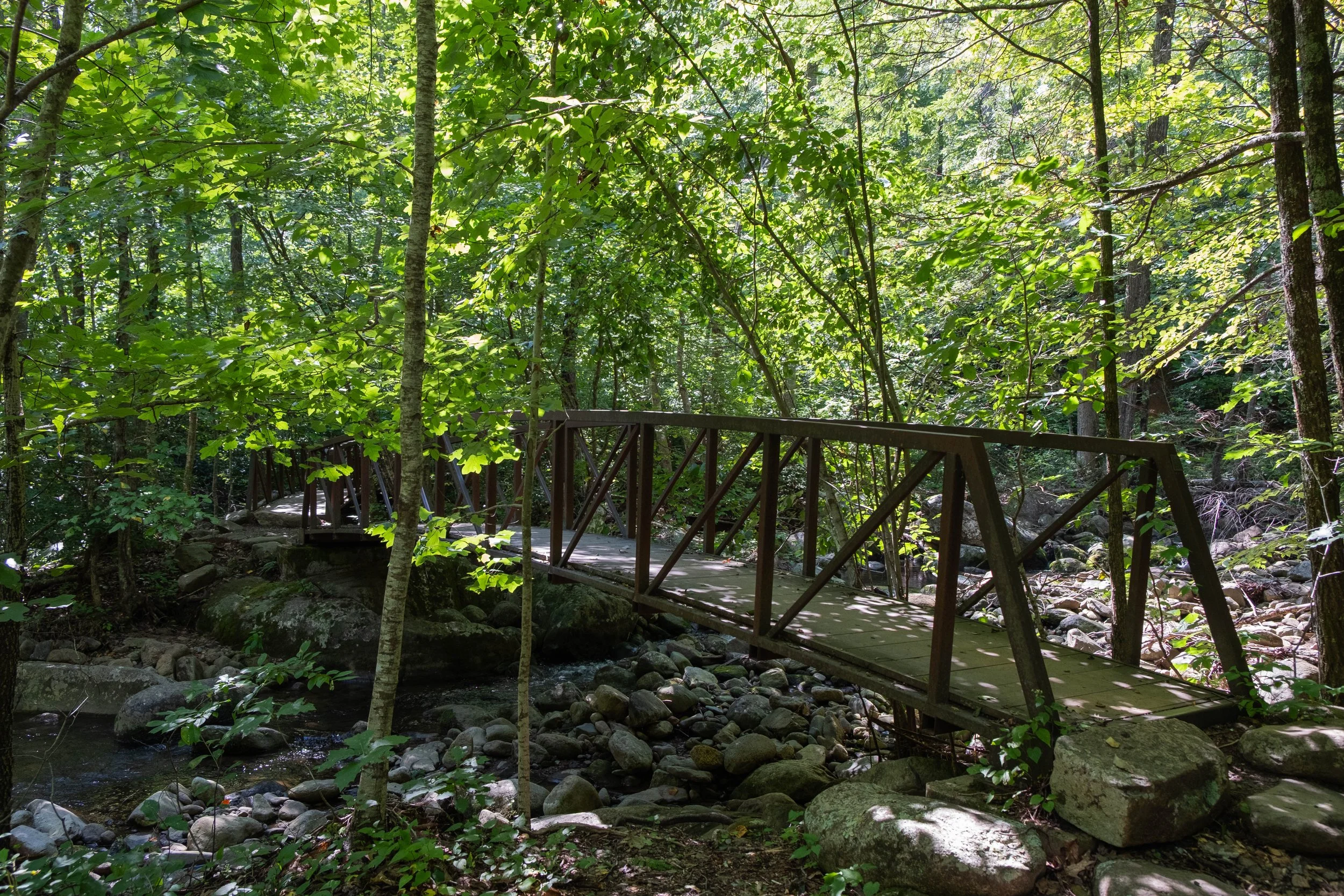
Stony Man Trail and an overlook of Old Rag Mountain.
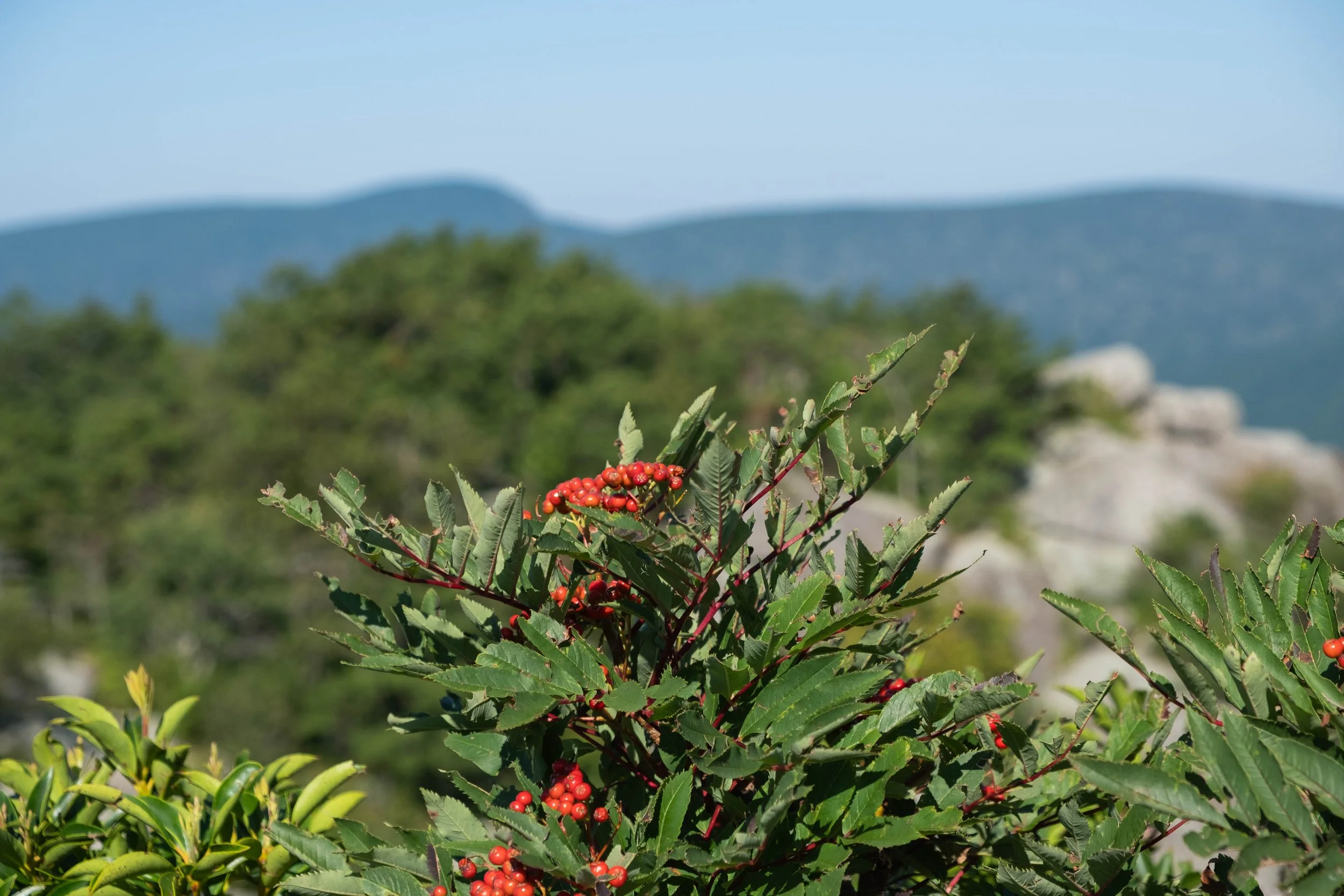
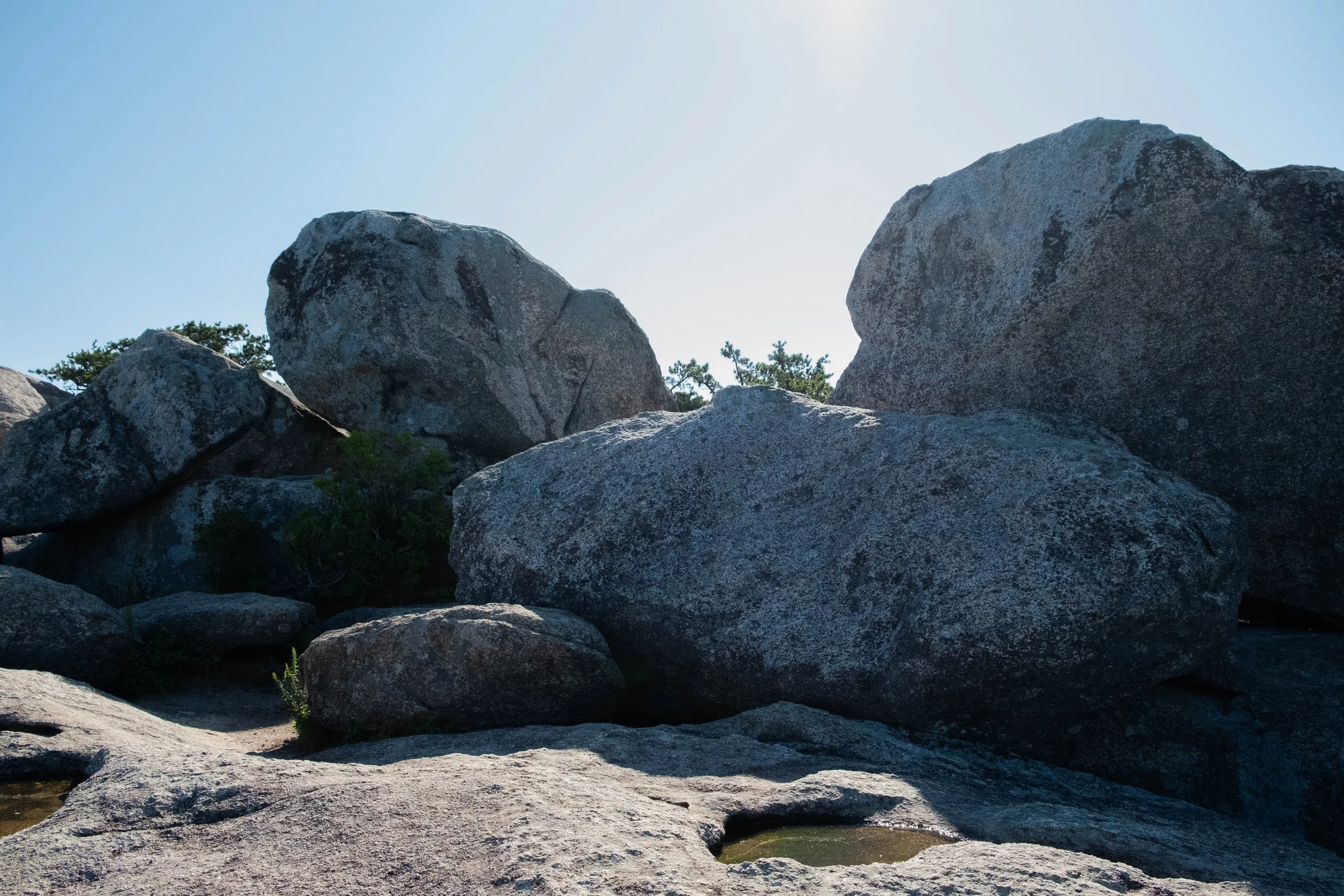
Old Rag Mountain Loop and sections of the scramble (so fun!).

First Visit | November 2022
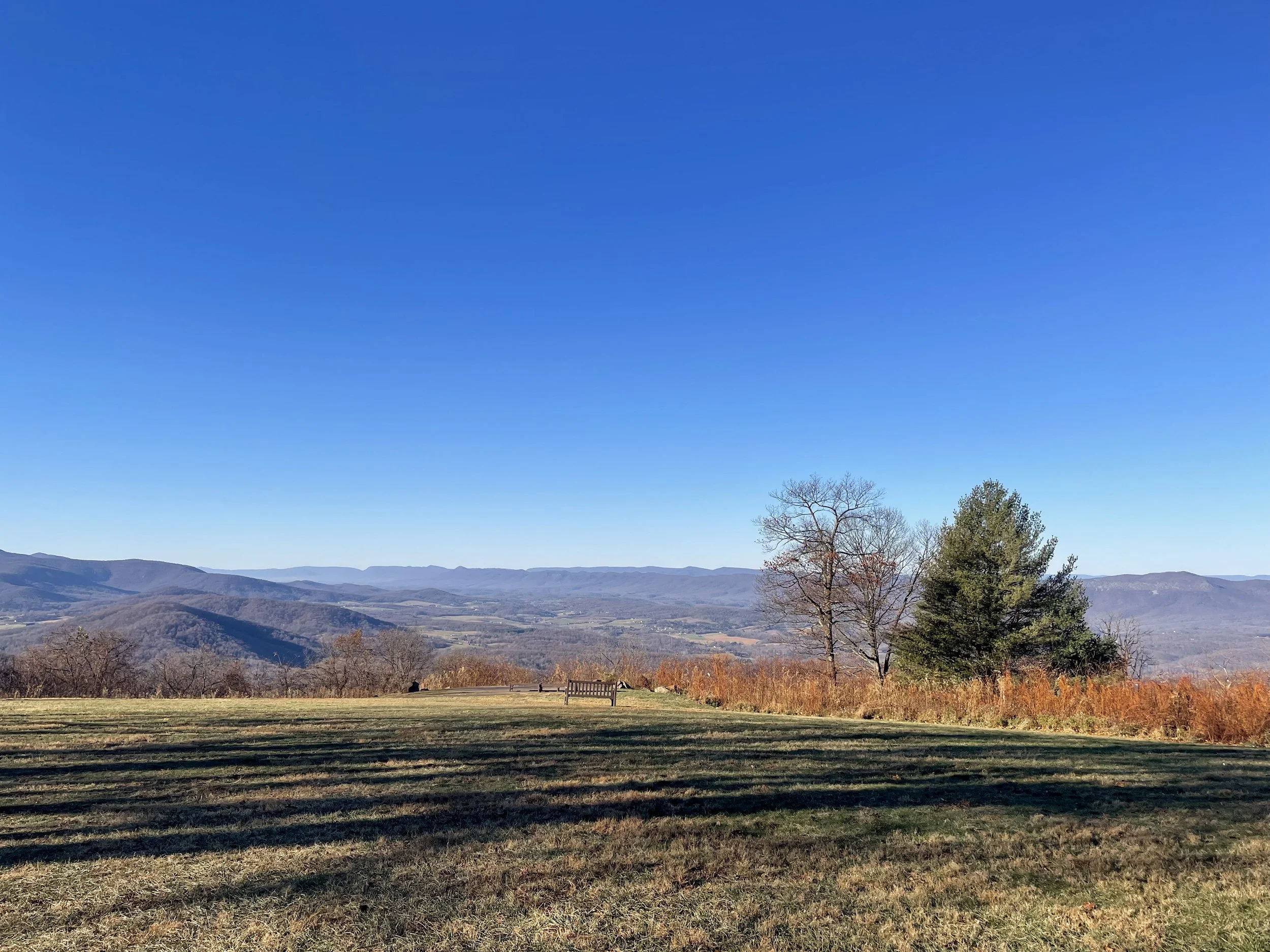
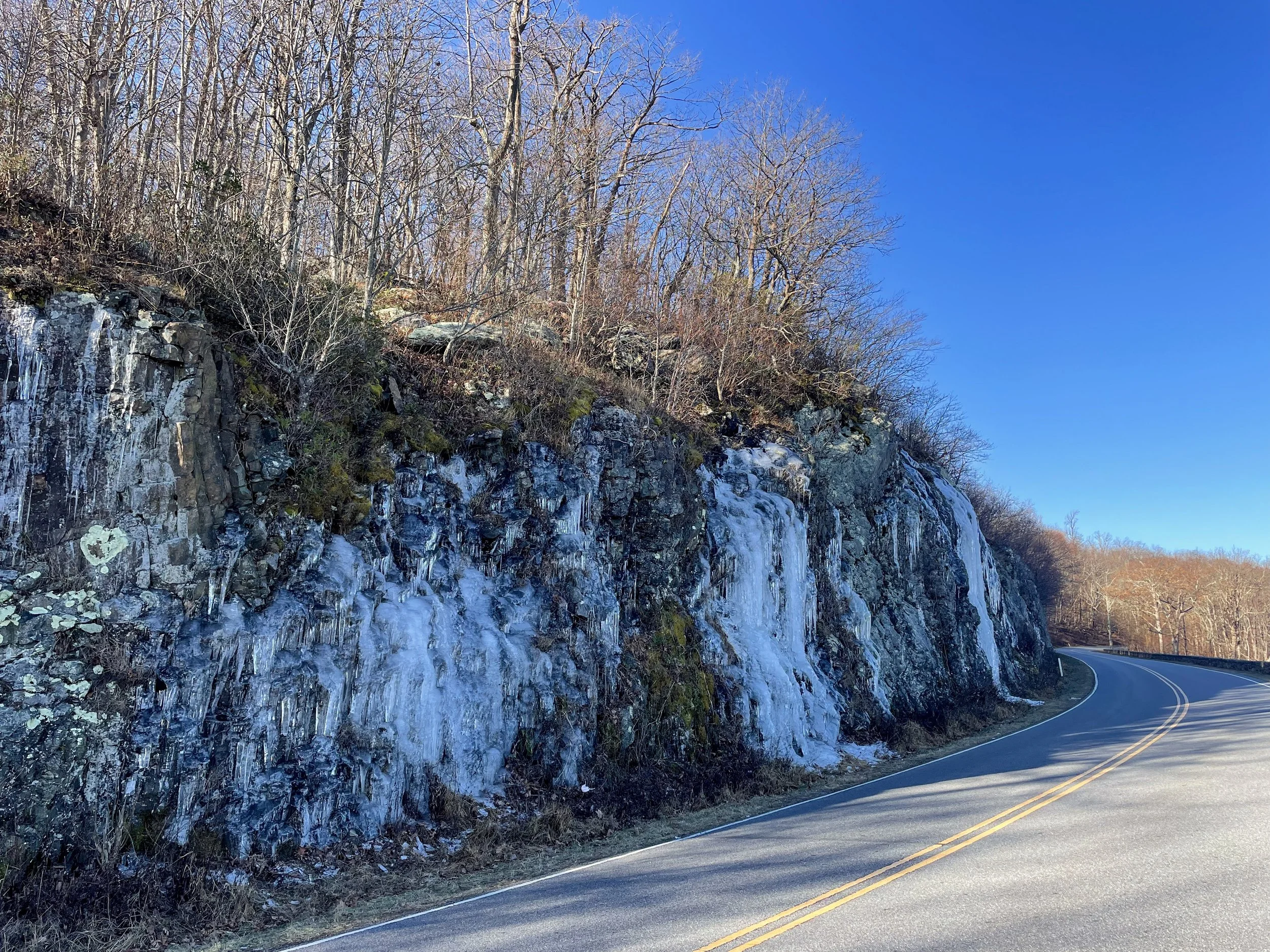
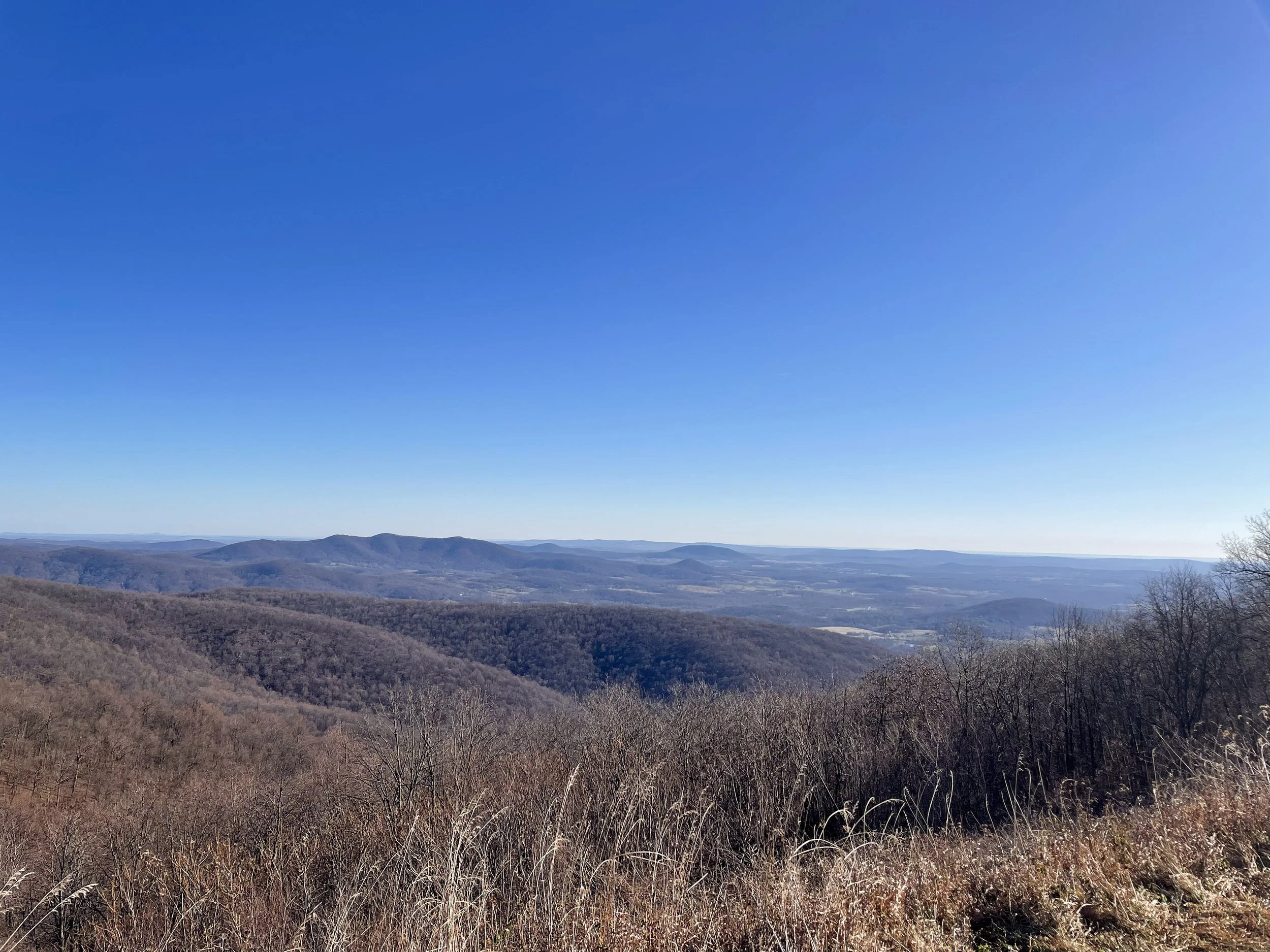
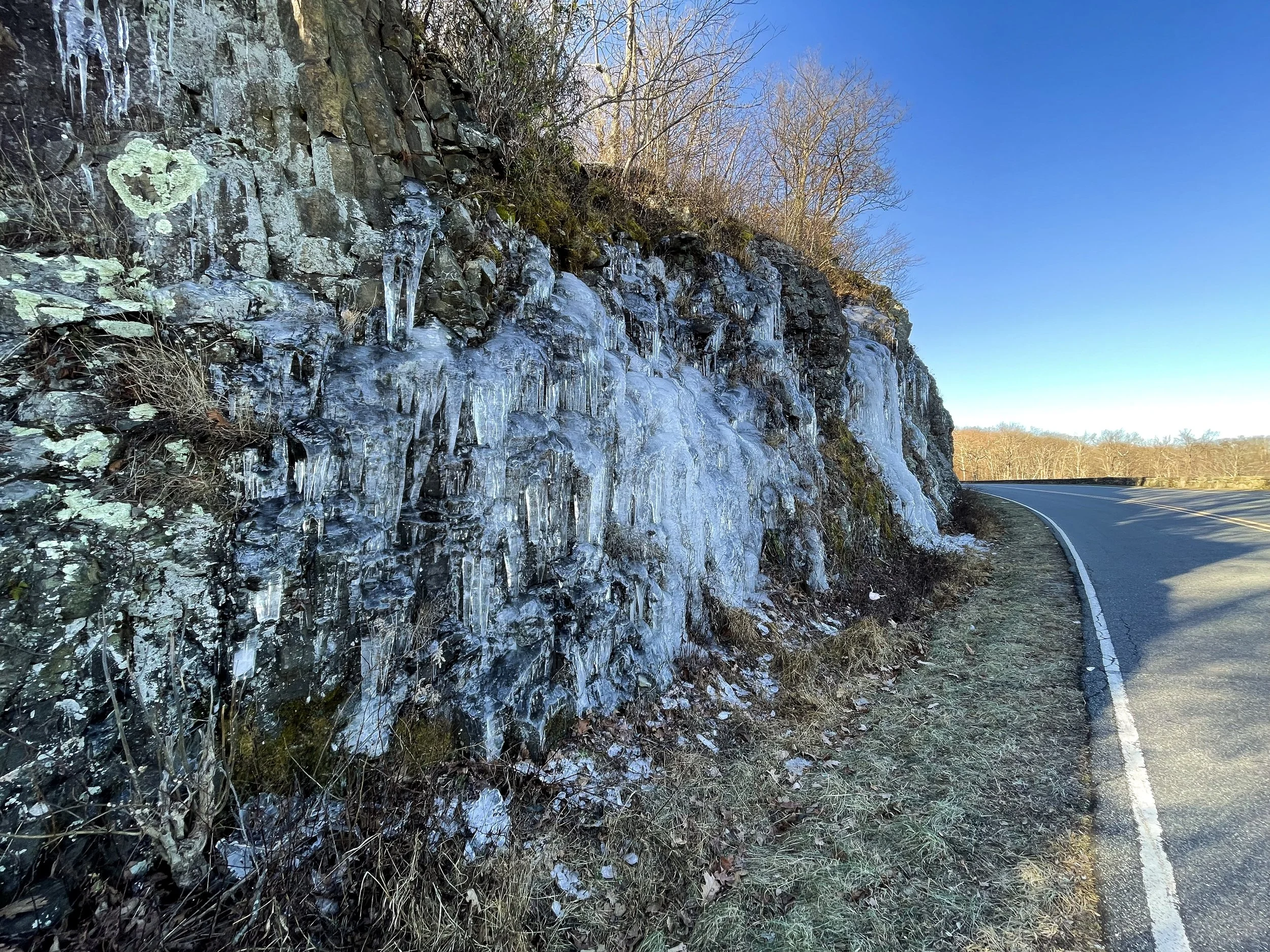
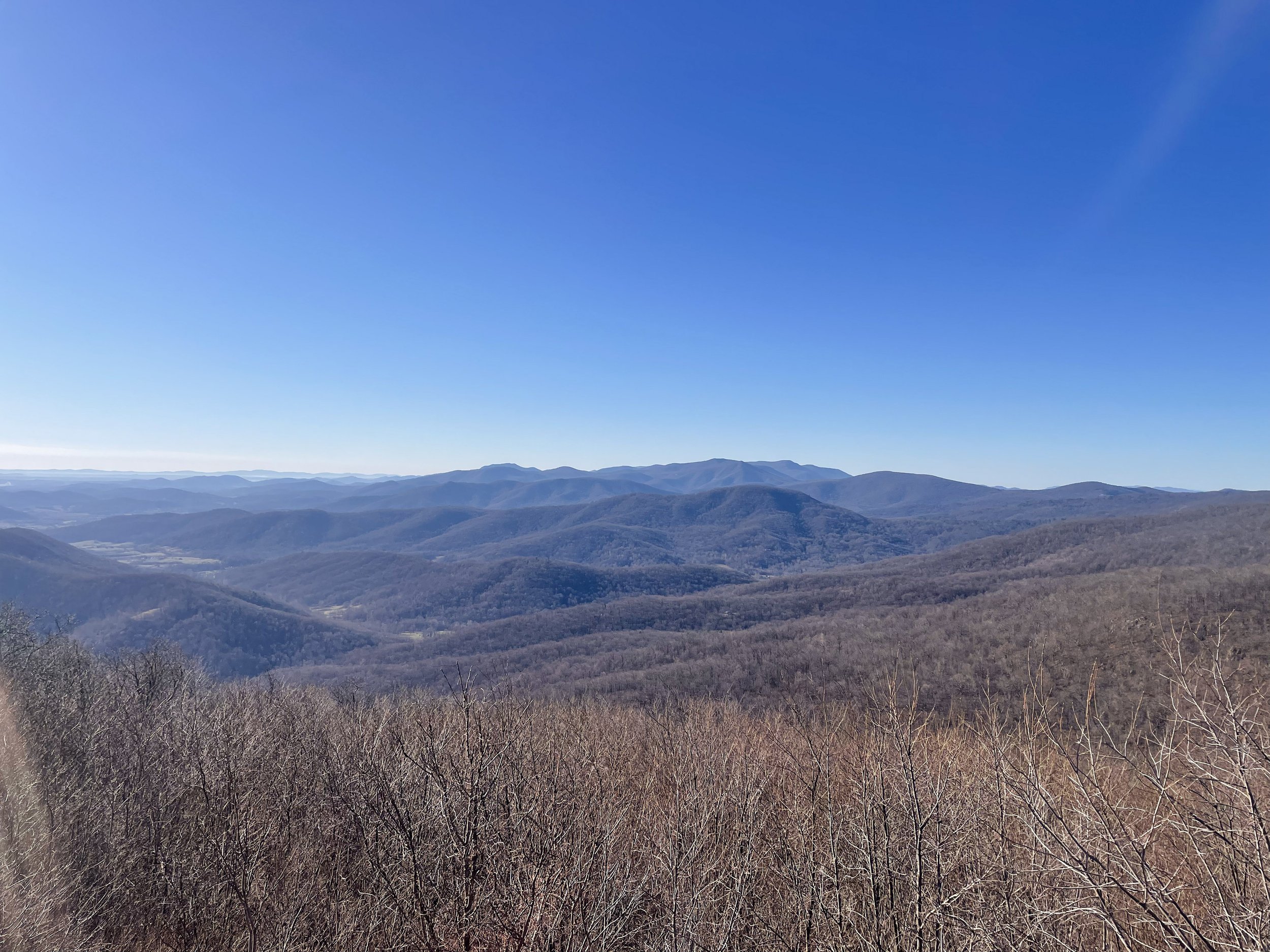
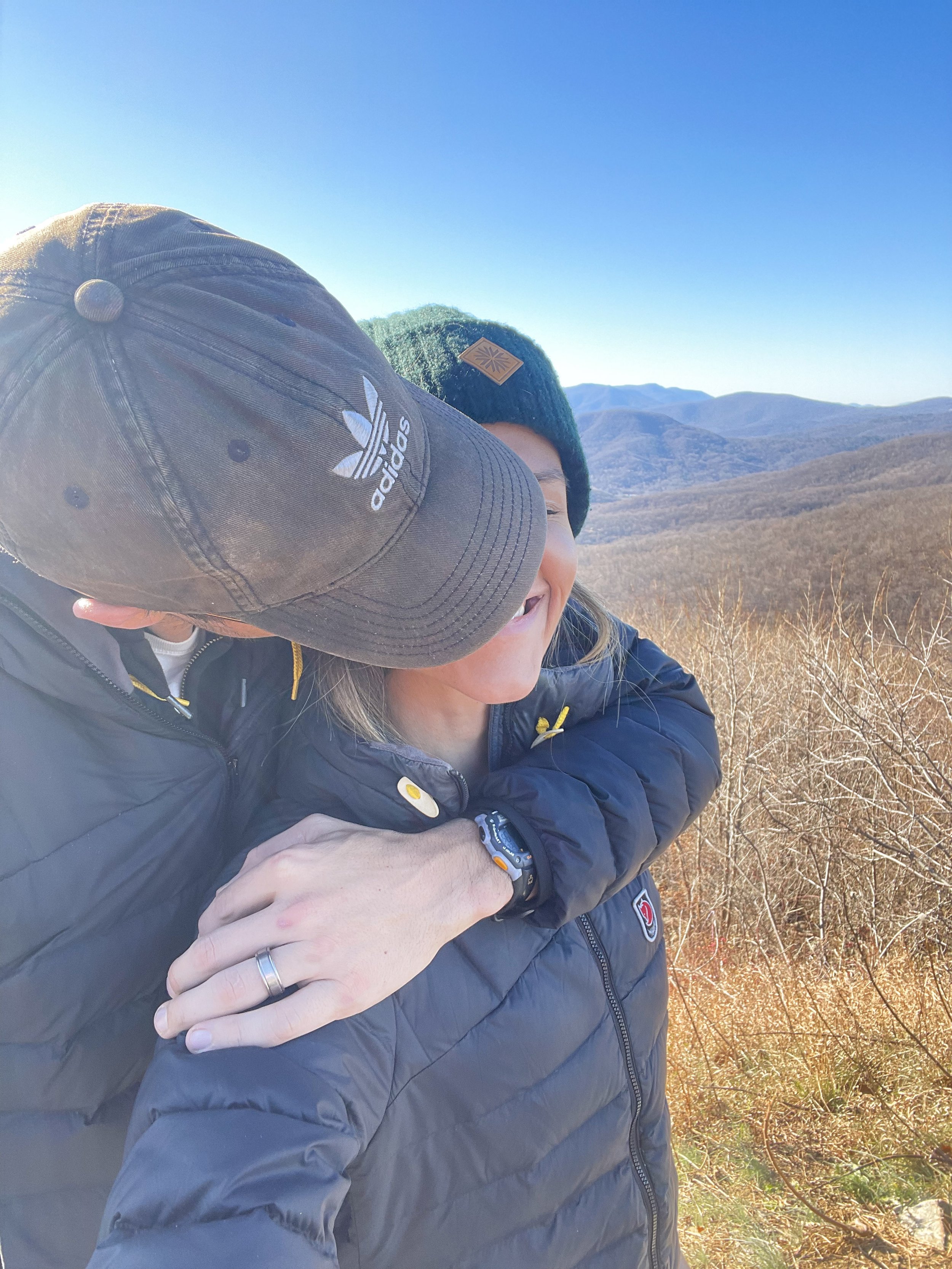
We embarked on a day trip to Shenandoah during a visit to see friends in Maryland. It was cold, quiet, and a bit barren; it likely would have been more impressive if we’d visited a month earlier to see the trees ablaze with their autumn leaves. It was still pretty, but it felt we were missing some of the real beauty of this place. With over 500 miles of trails to explore, leading to countless waterfalls and views of the surrounding mountains, we could imagine this would be a much different place in another season.
In addition to not getting the best taste of this place from a natural beauty standpoint, we also found ourselves frustrated by the visitor center we stopped at on our way into the park from the north. When discussing human inhabitants of the park, it focused entirely on the displacement of coal mining communities that was undertaken in order to build the park. This is certainly a sobering bit of history, but there was no acknowledgement of the first inhabitants of this land or their displacement from the region, which felt like a big miss to us.
Would we go back? We’d be open to it, particularly at a different time of year, but wouldn’t plan an entire trip around a visit.
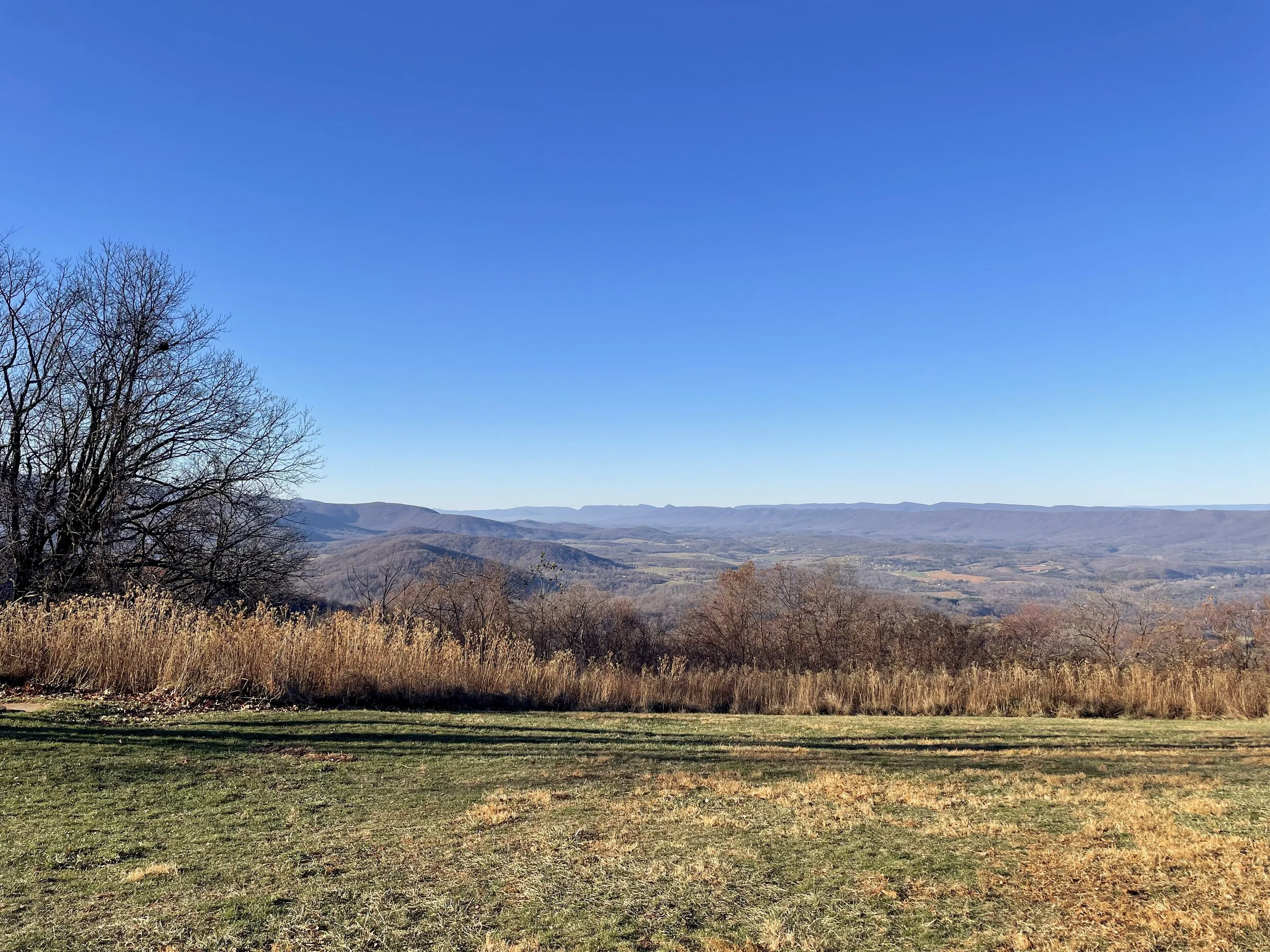
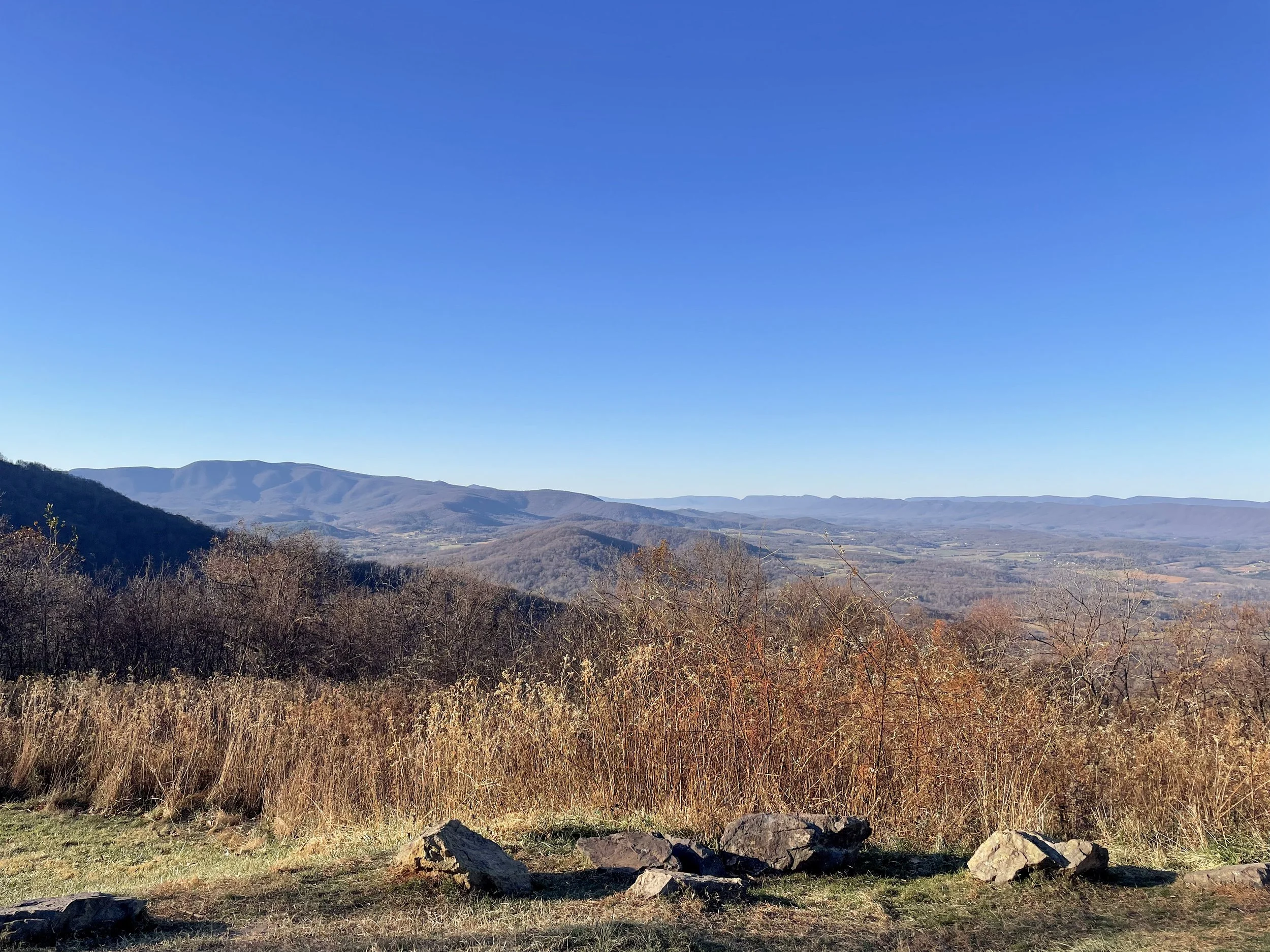
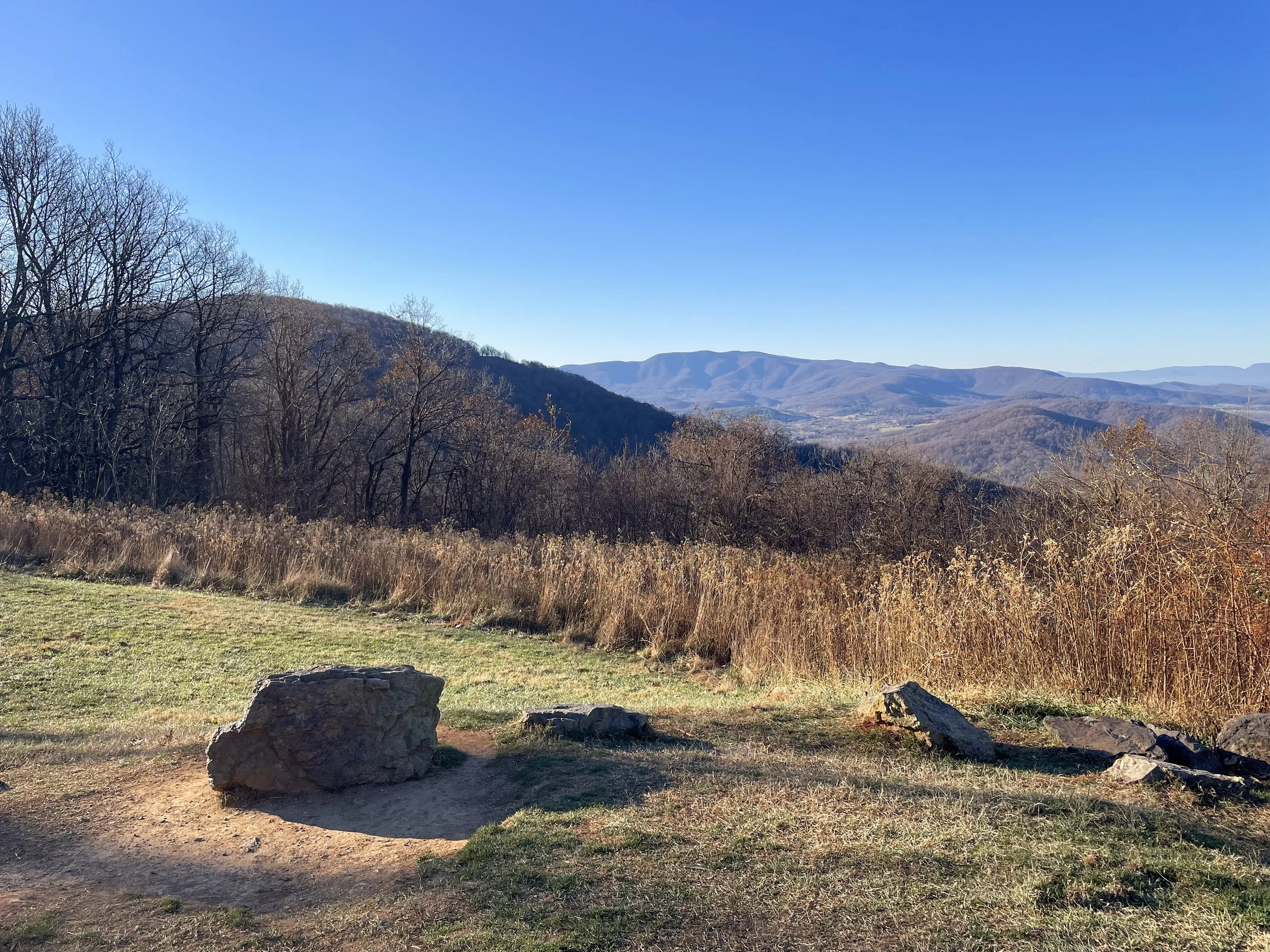
Pictured below:
Views from overlooks along Skyline Drive, the main road that snakes through the 105-mile length of the park.