Badlands
Park 36 | May 2025
Part + Park 2 (of 3) of our Memorial Day road trip.
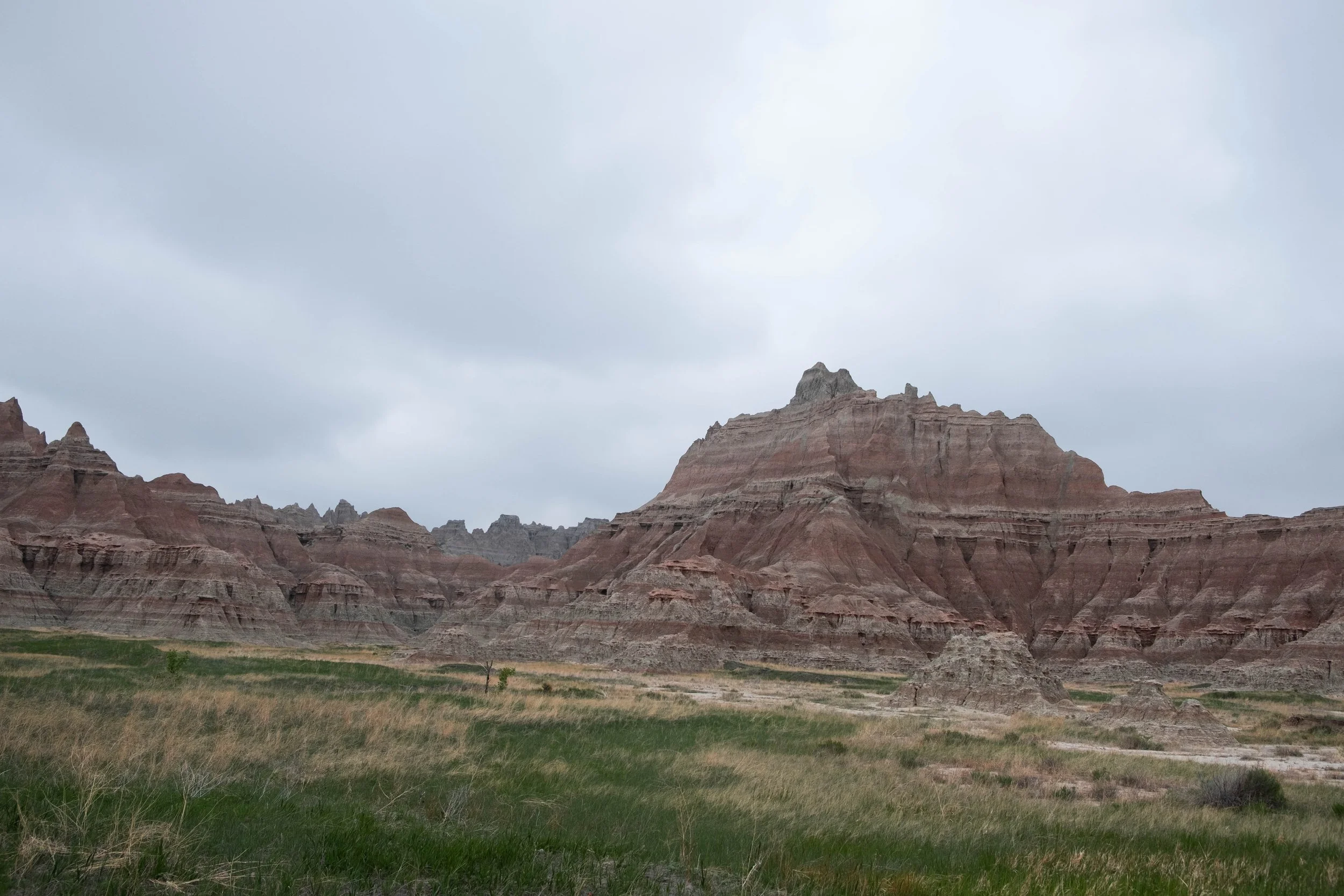
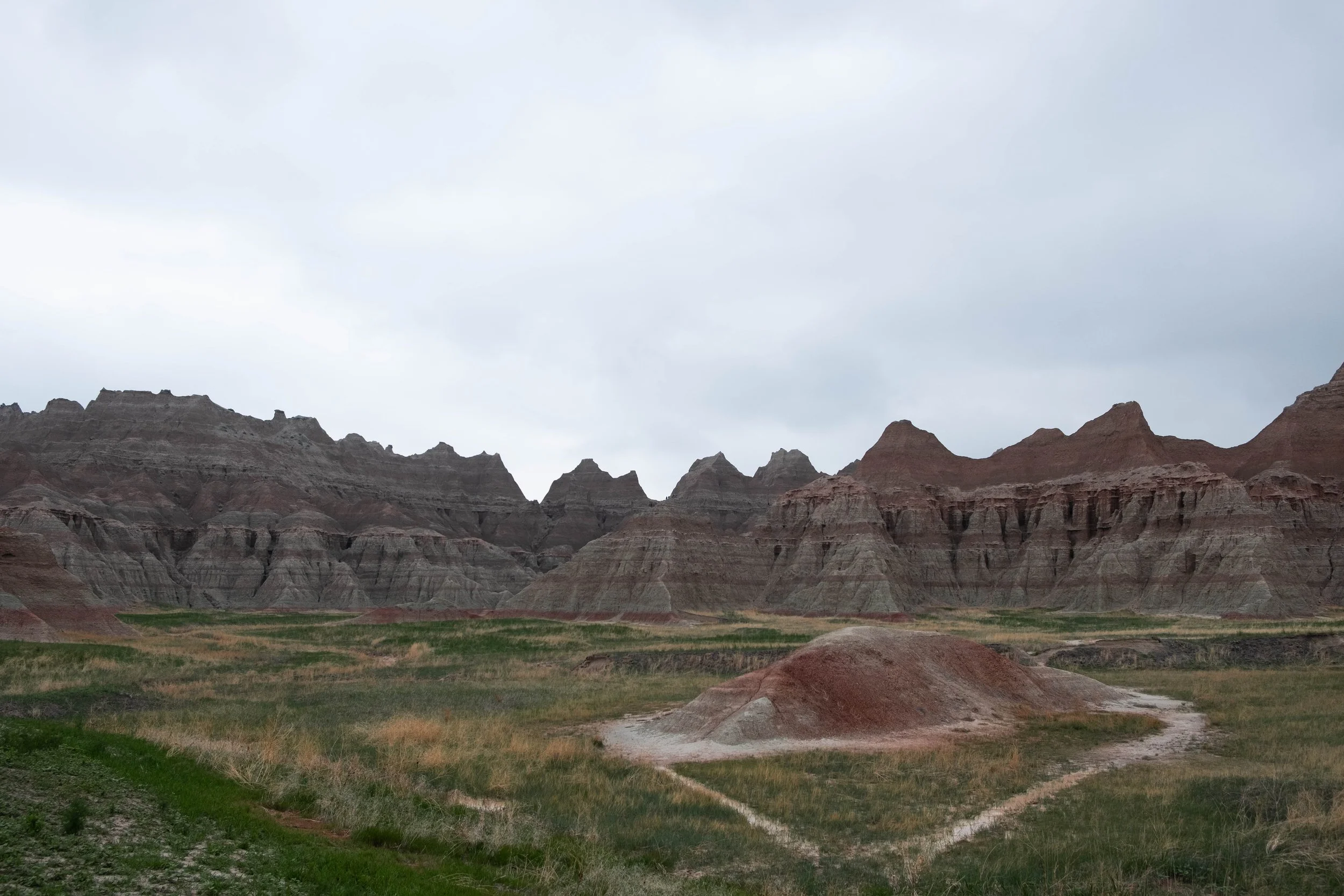
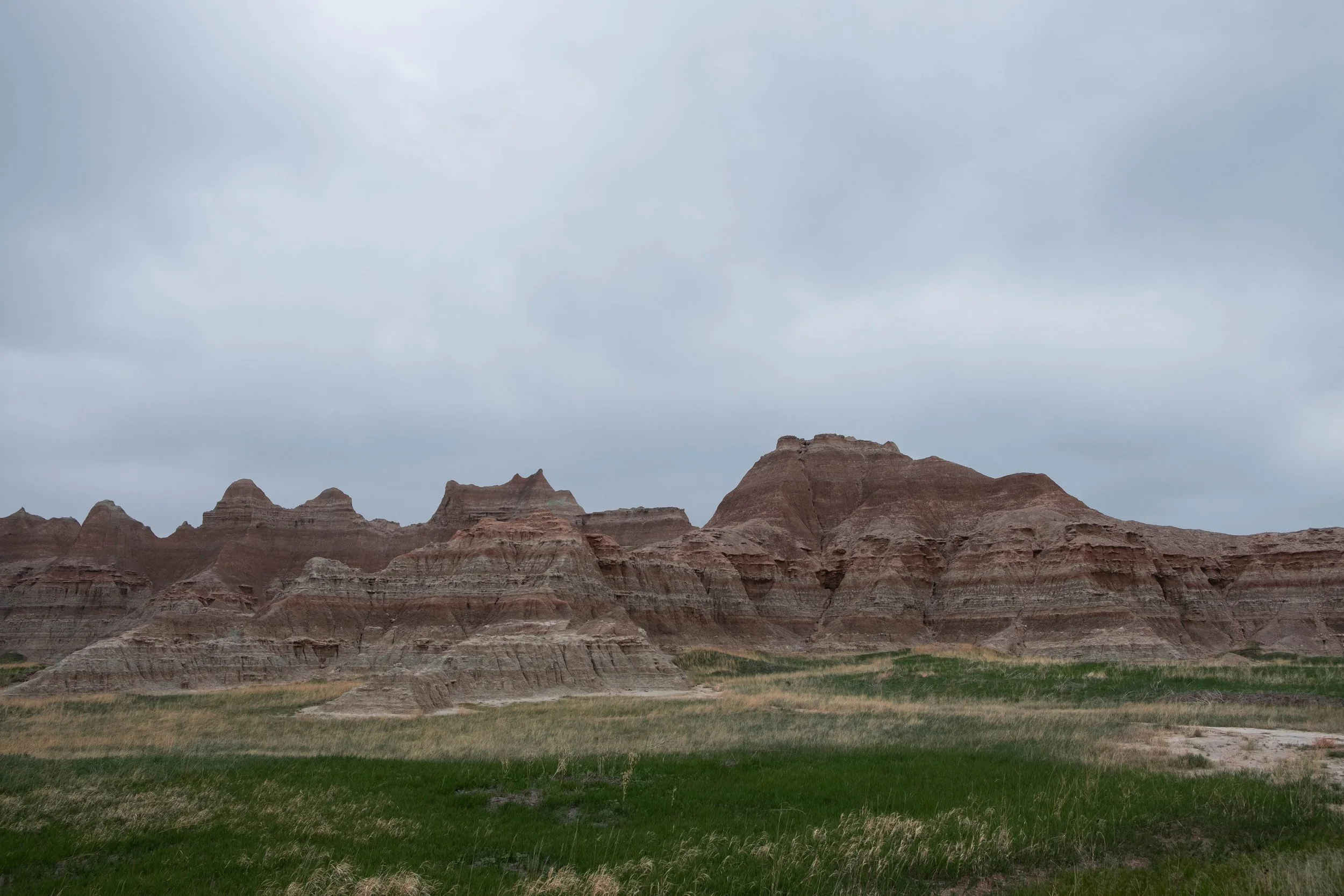
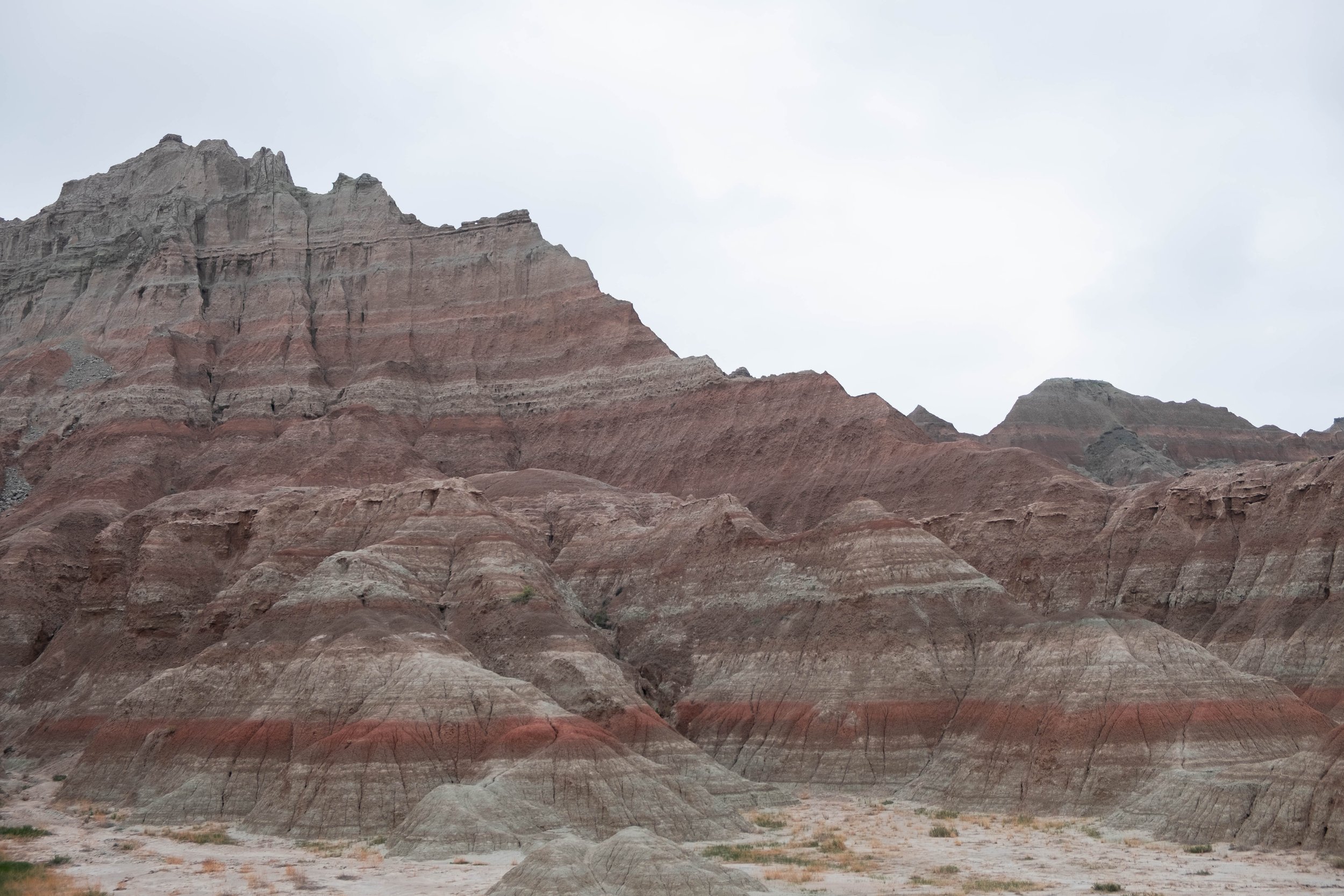
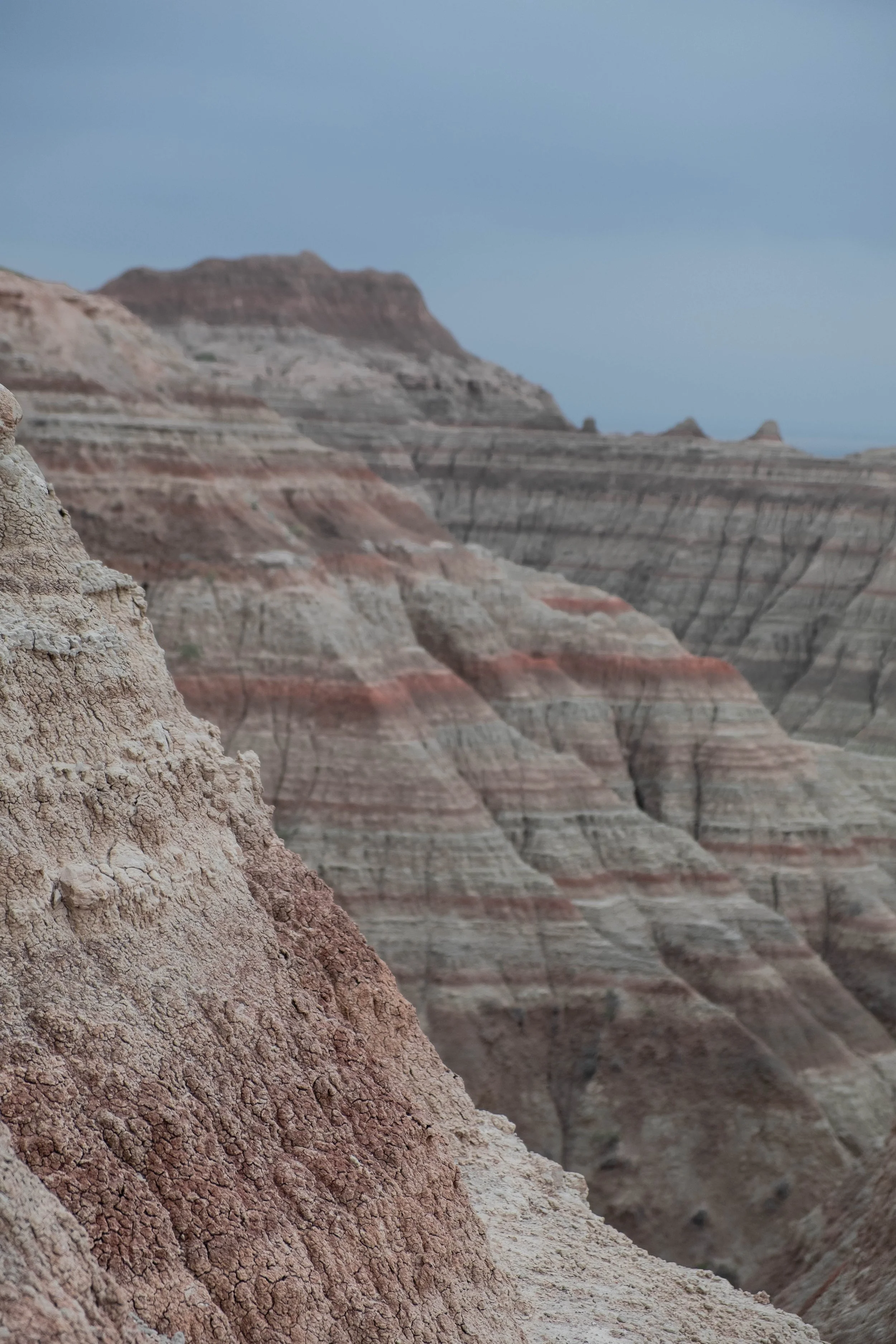
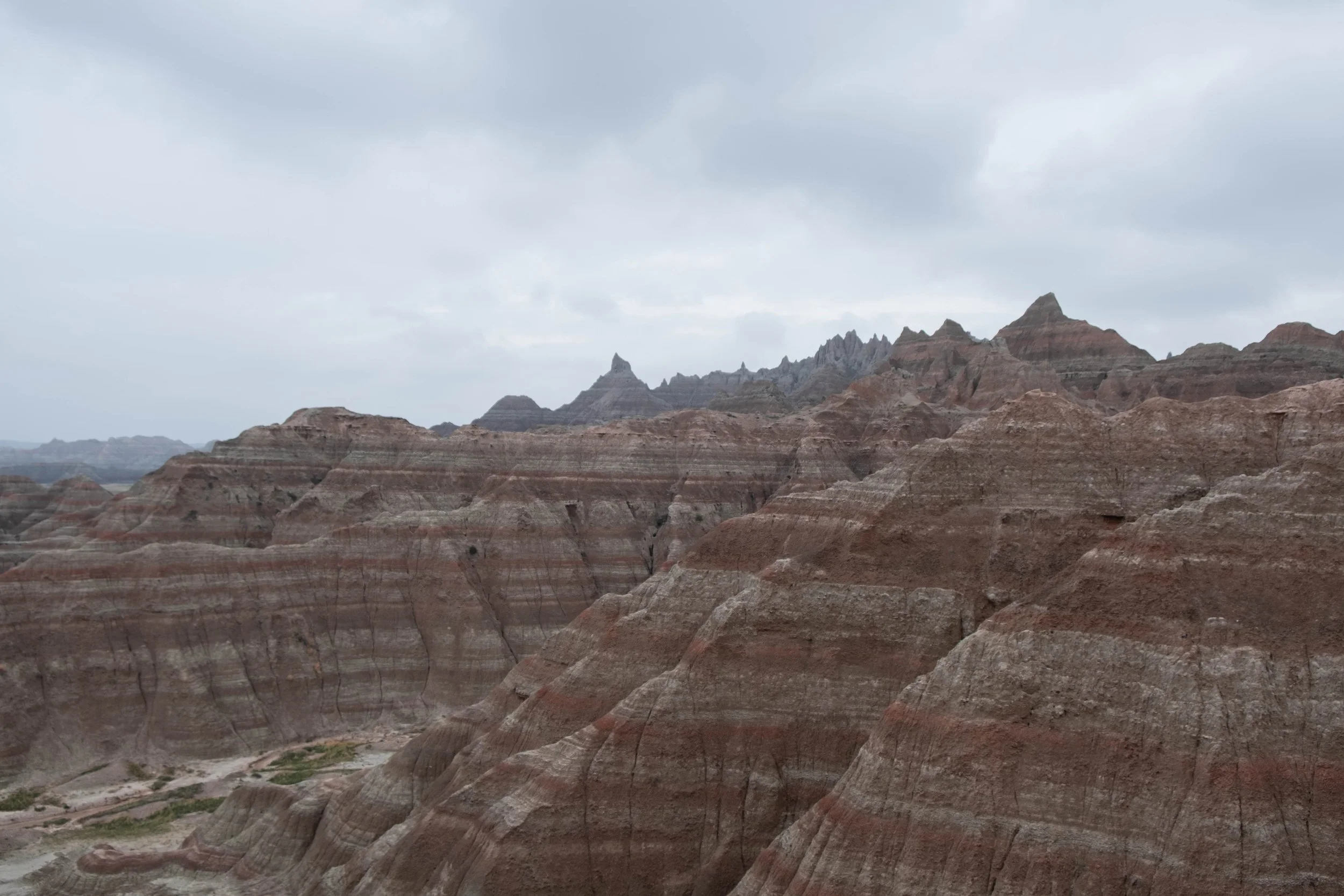
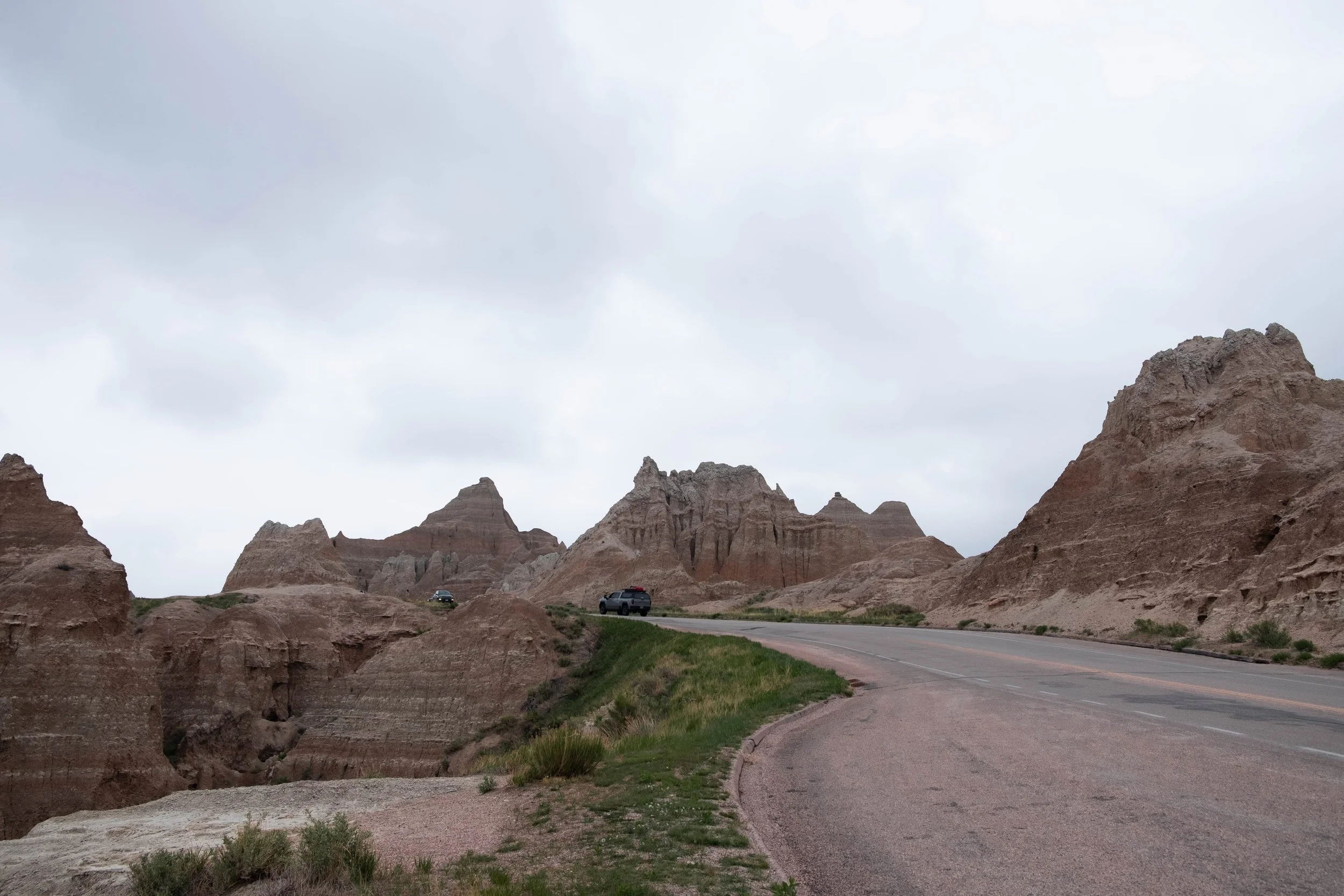
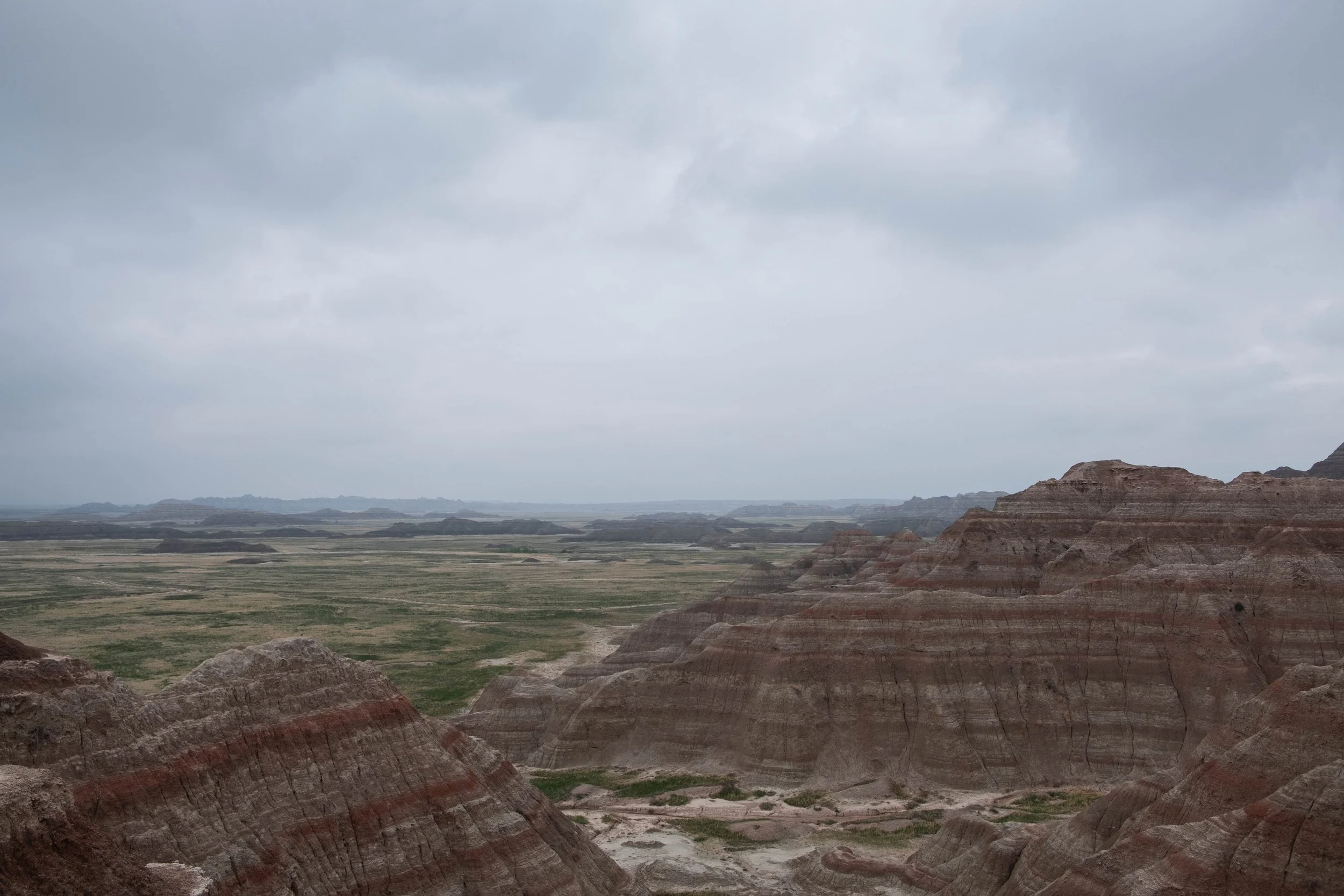
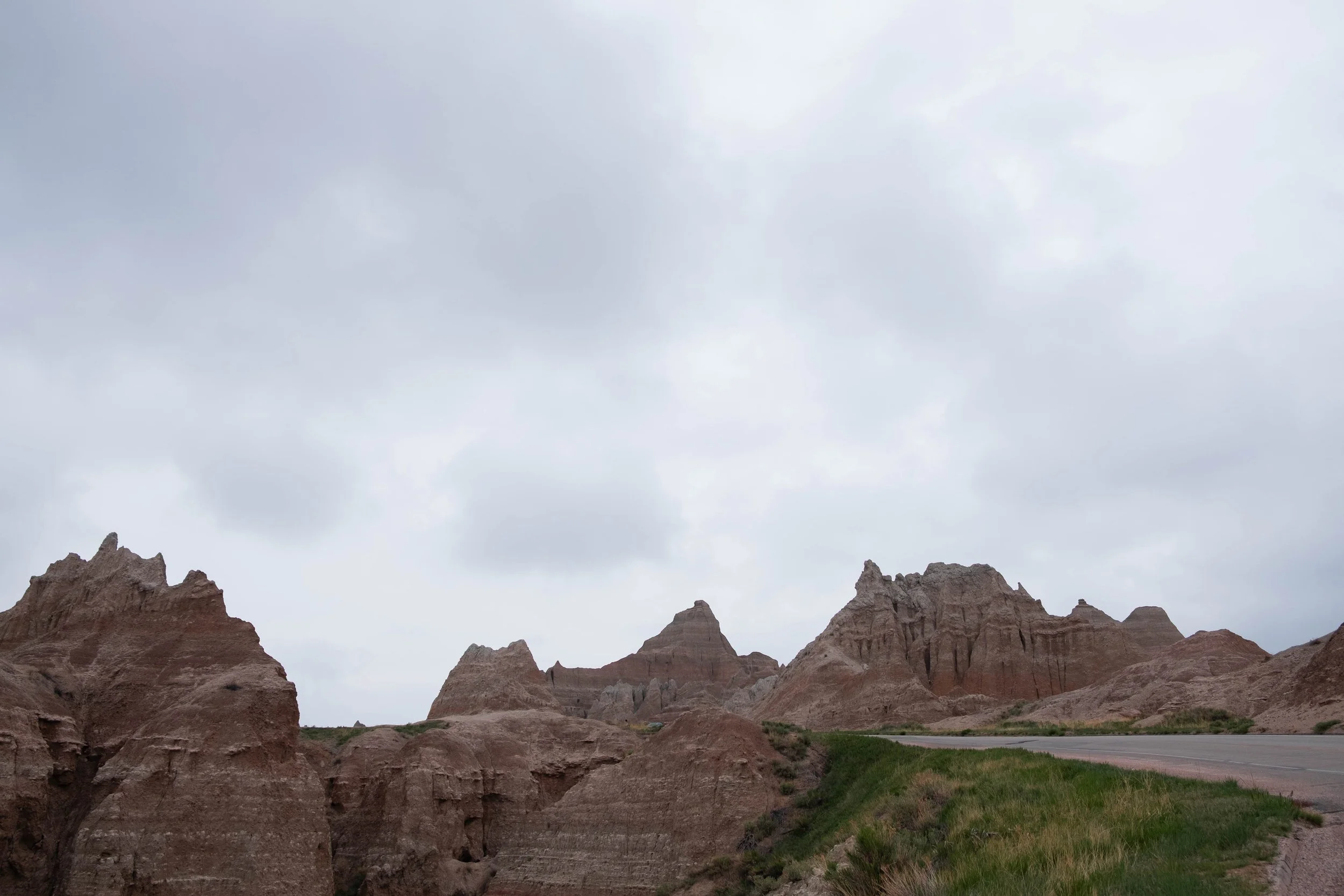
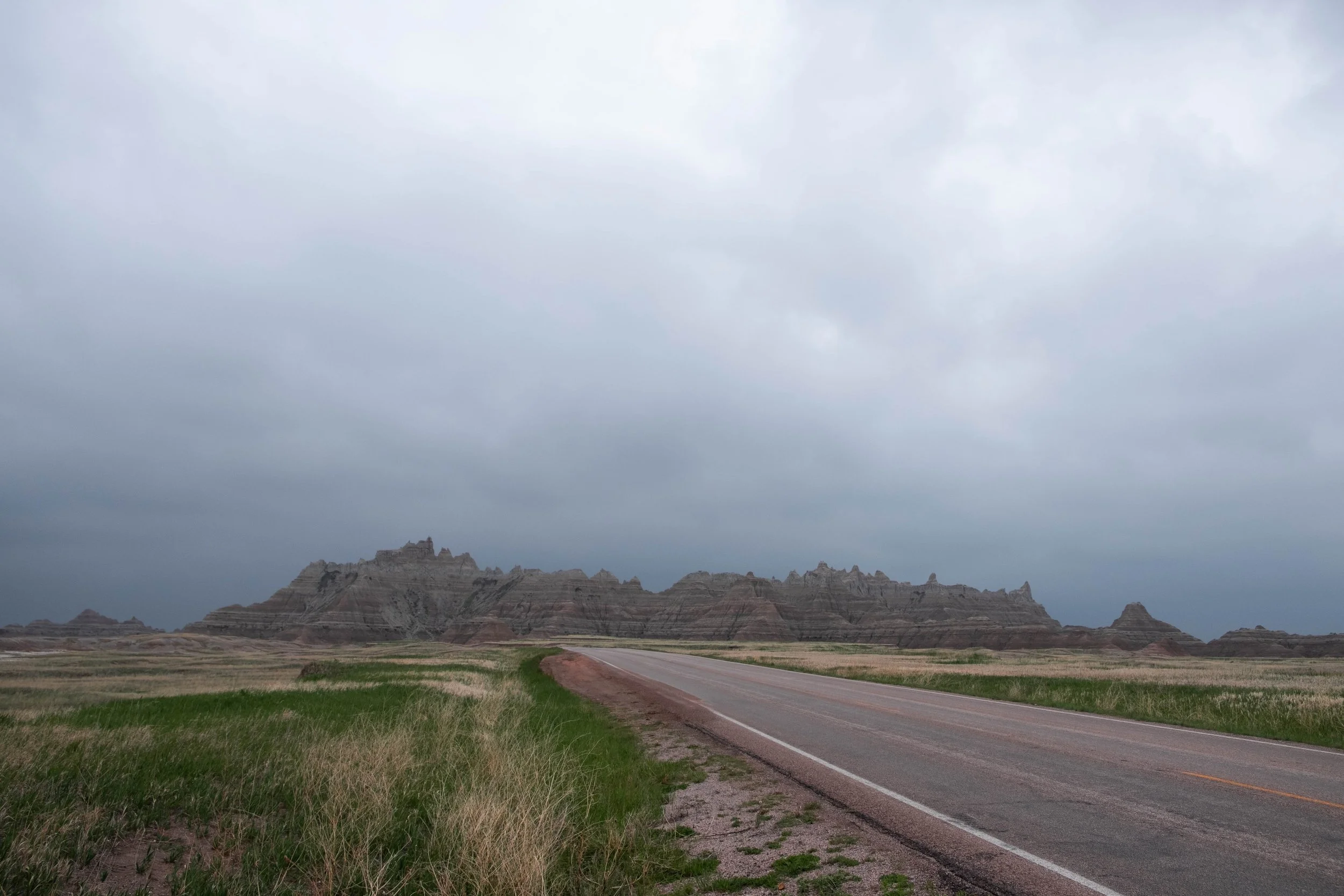
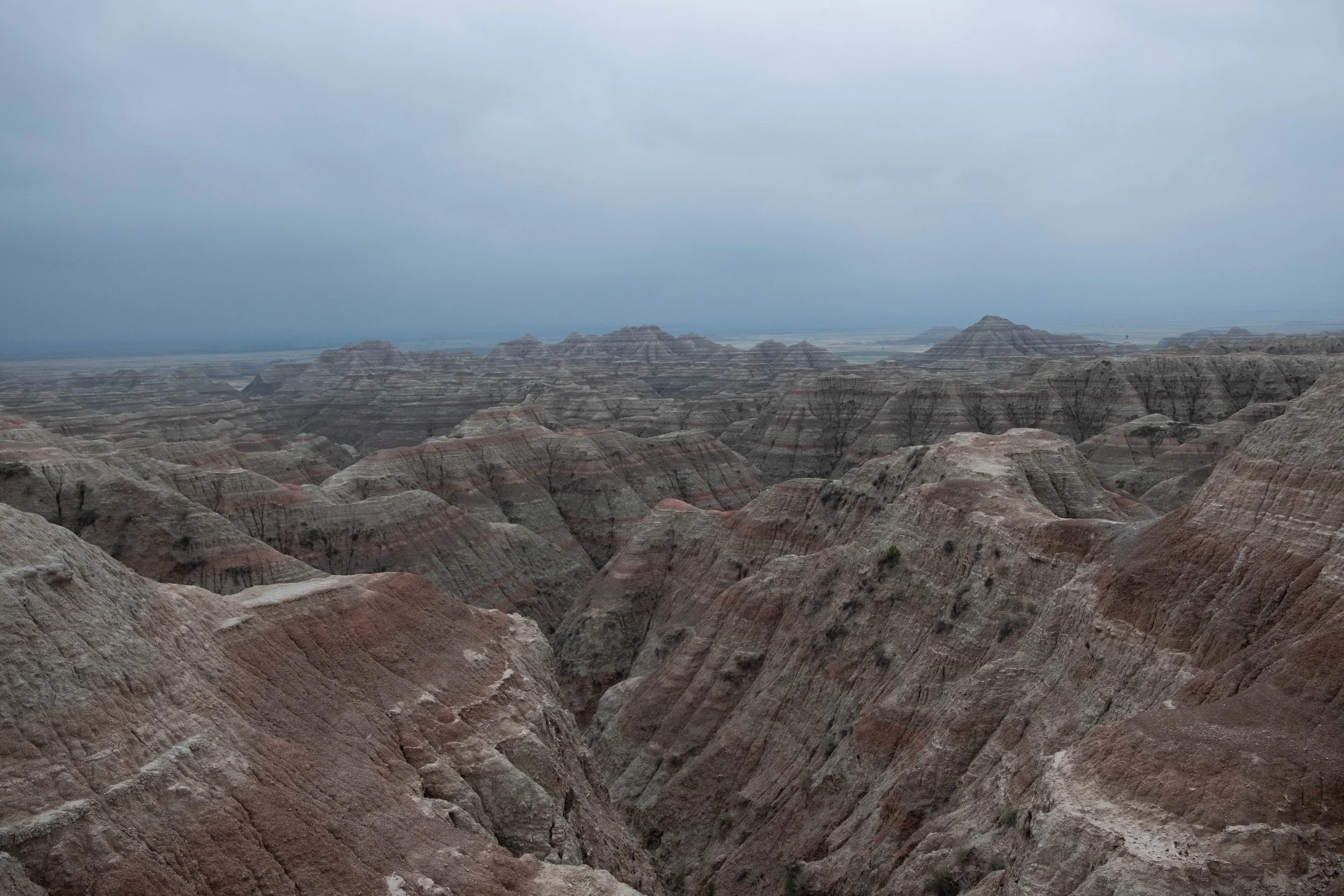
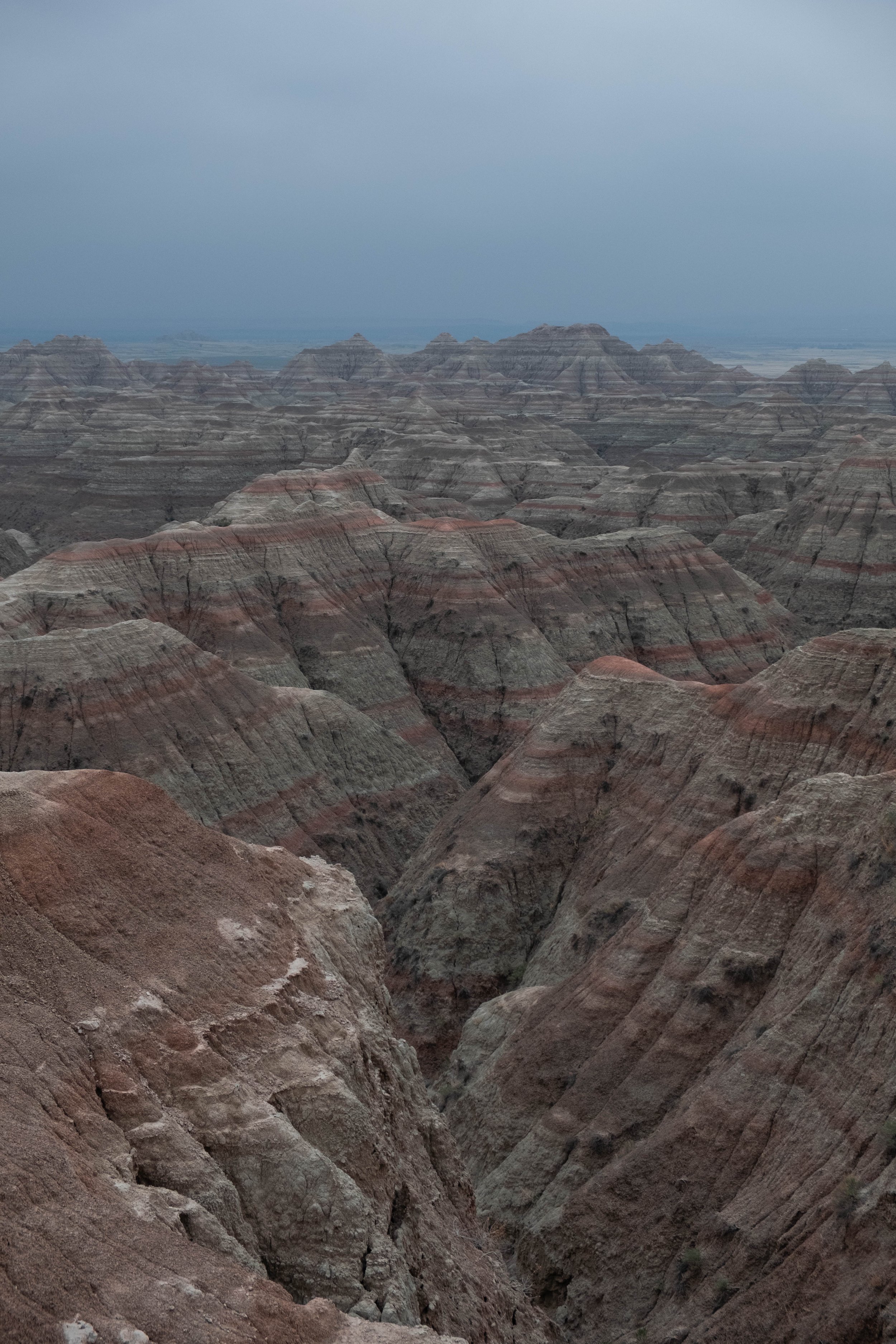
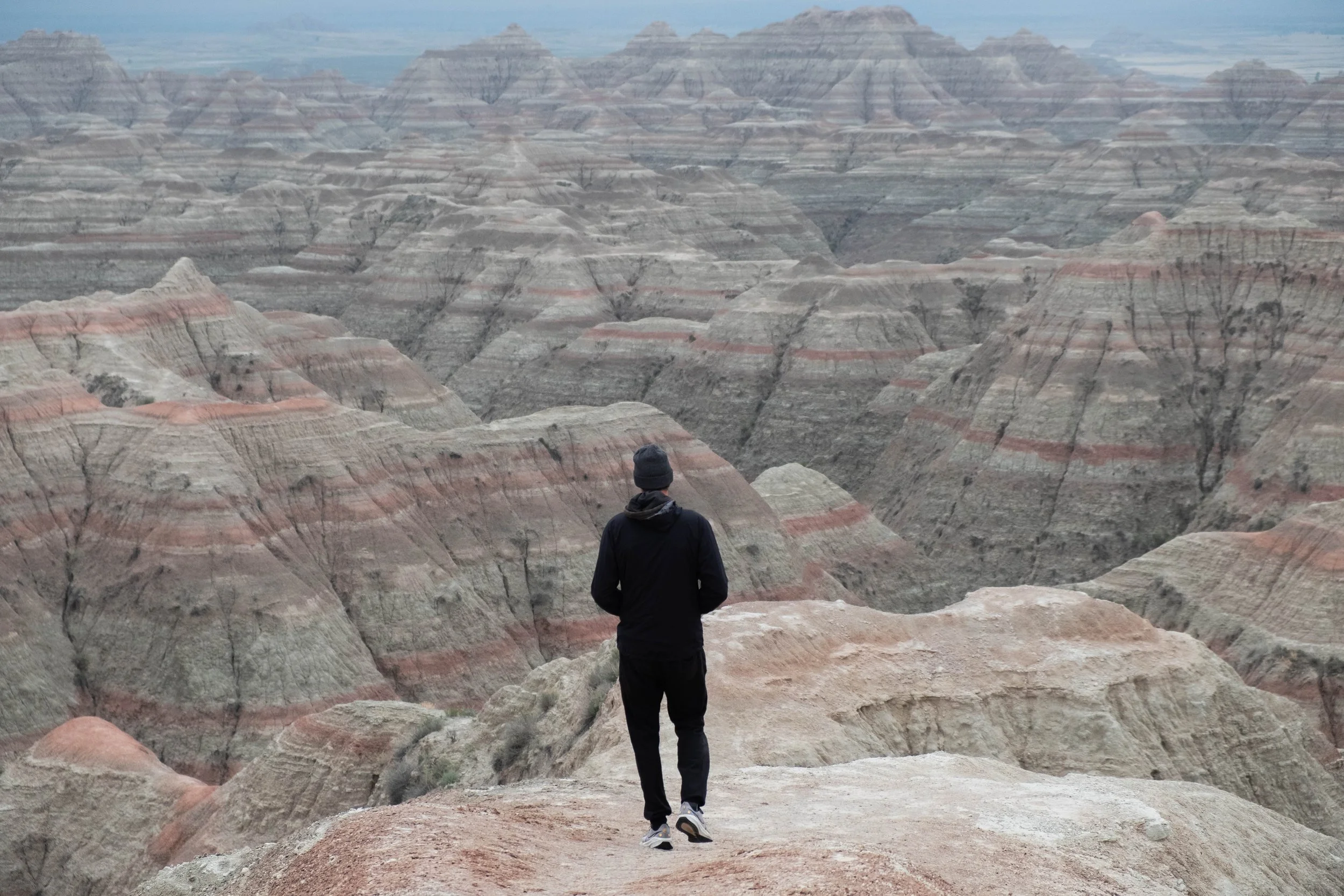
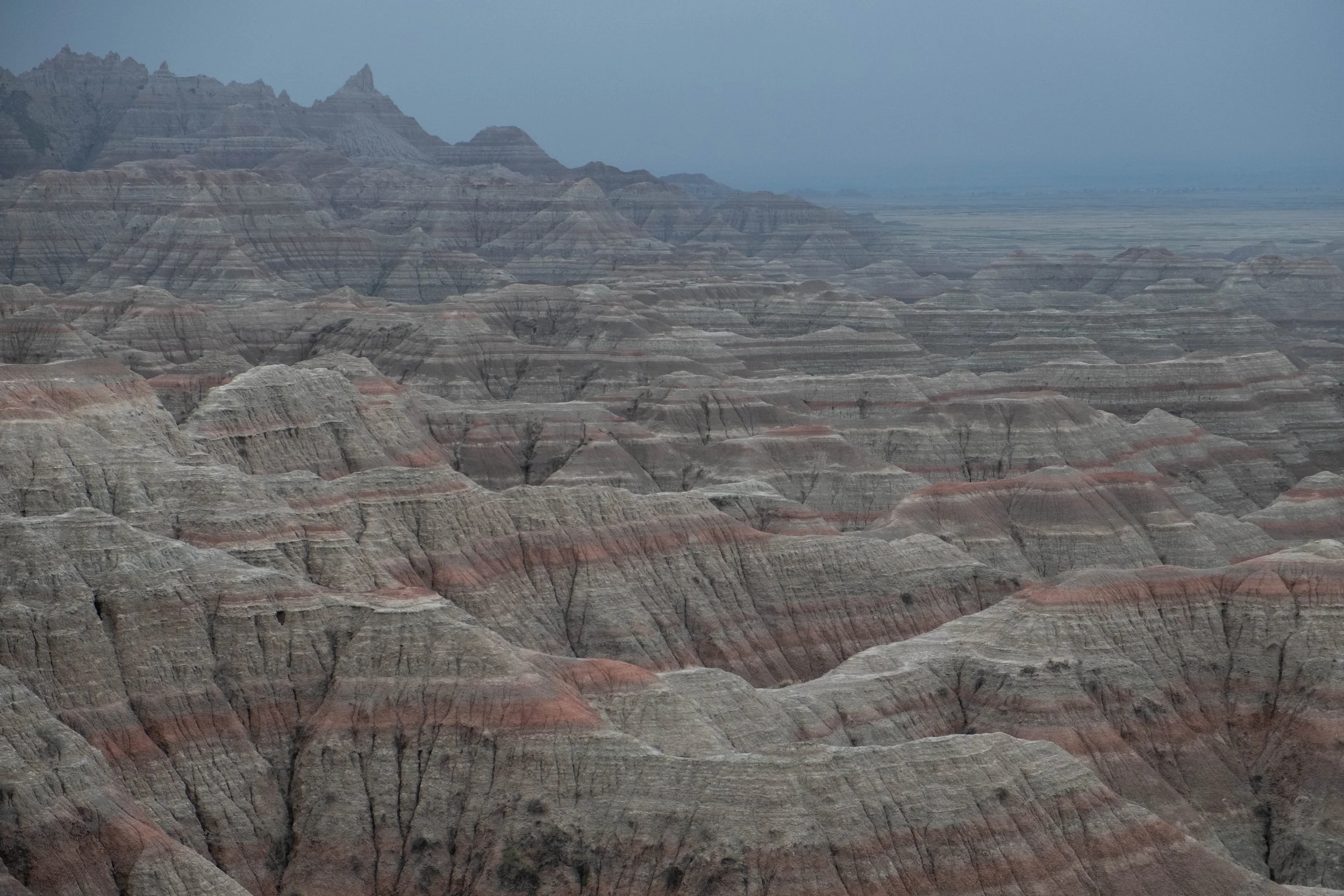
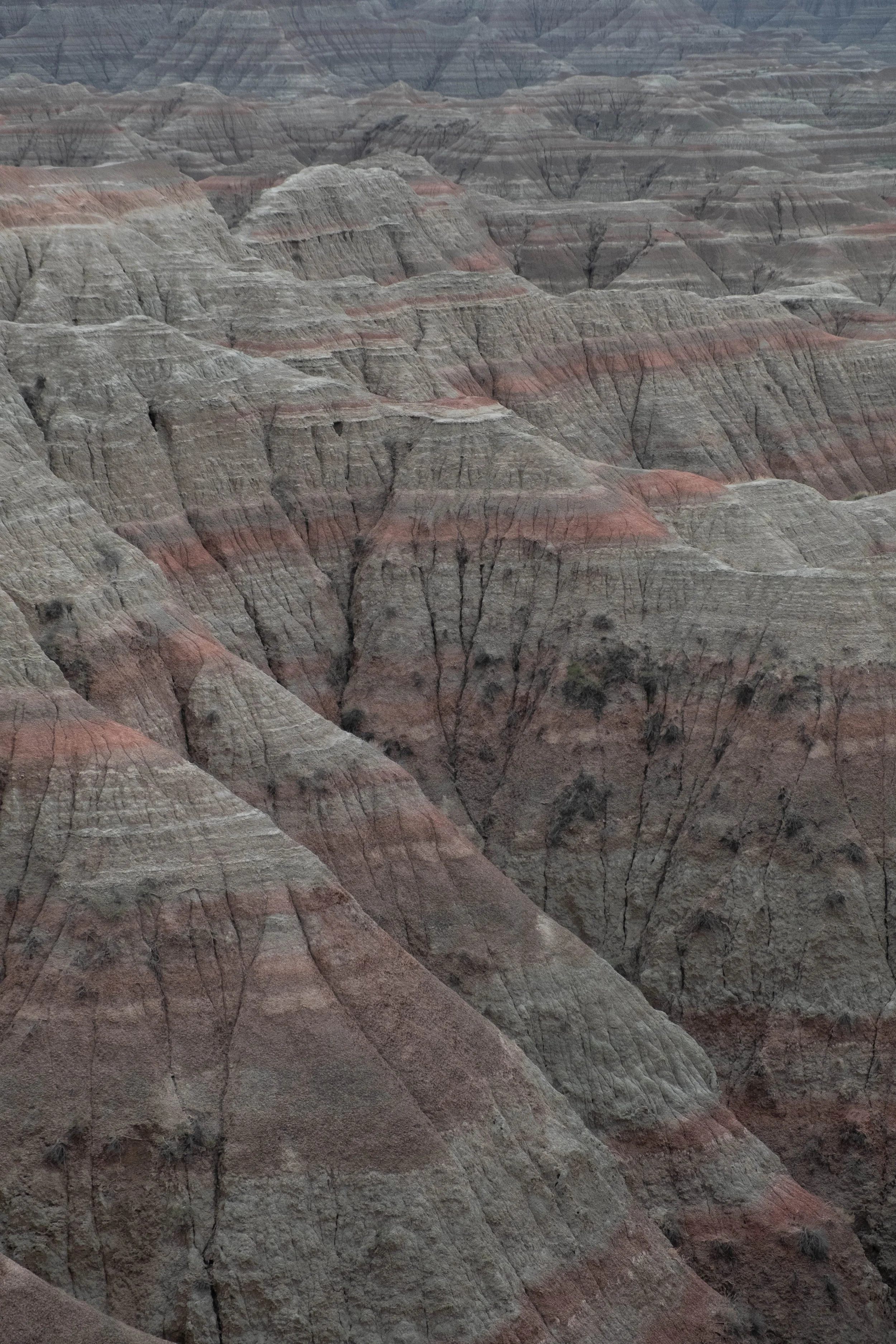
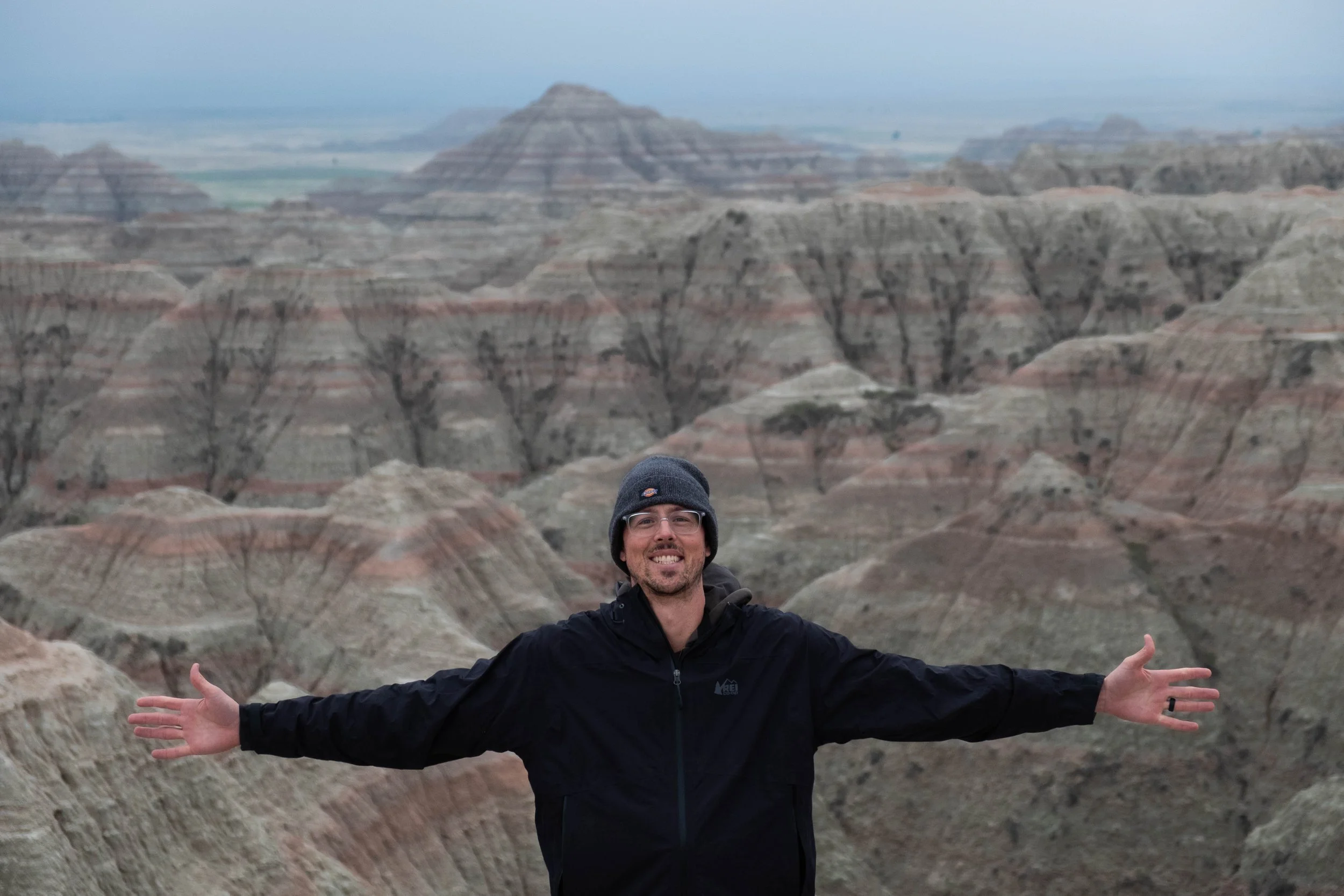
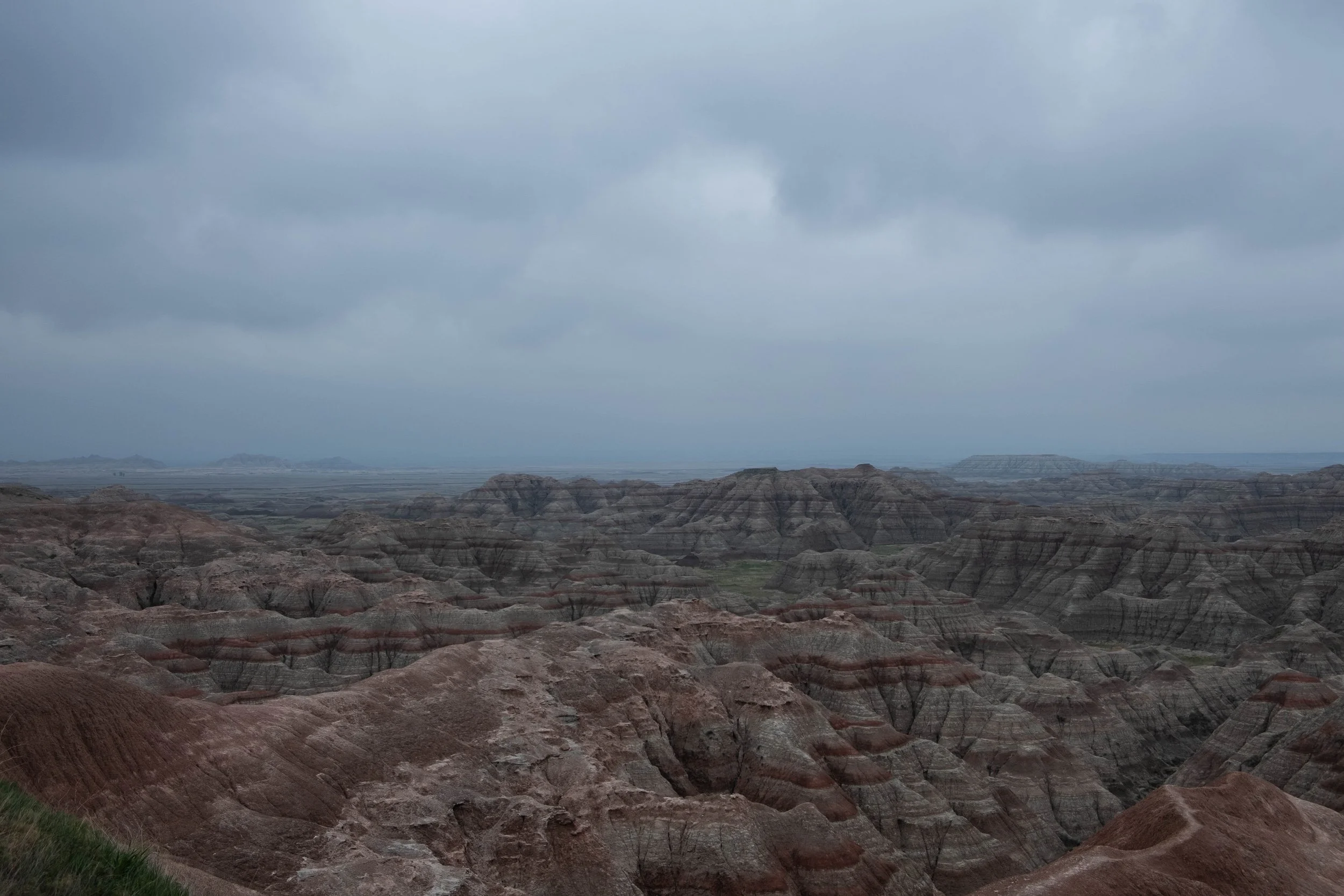
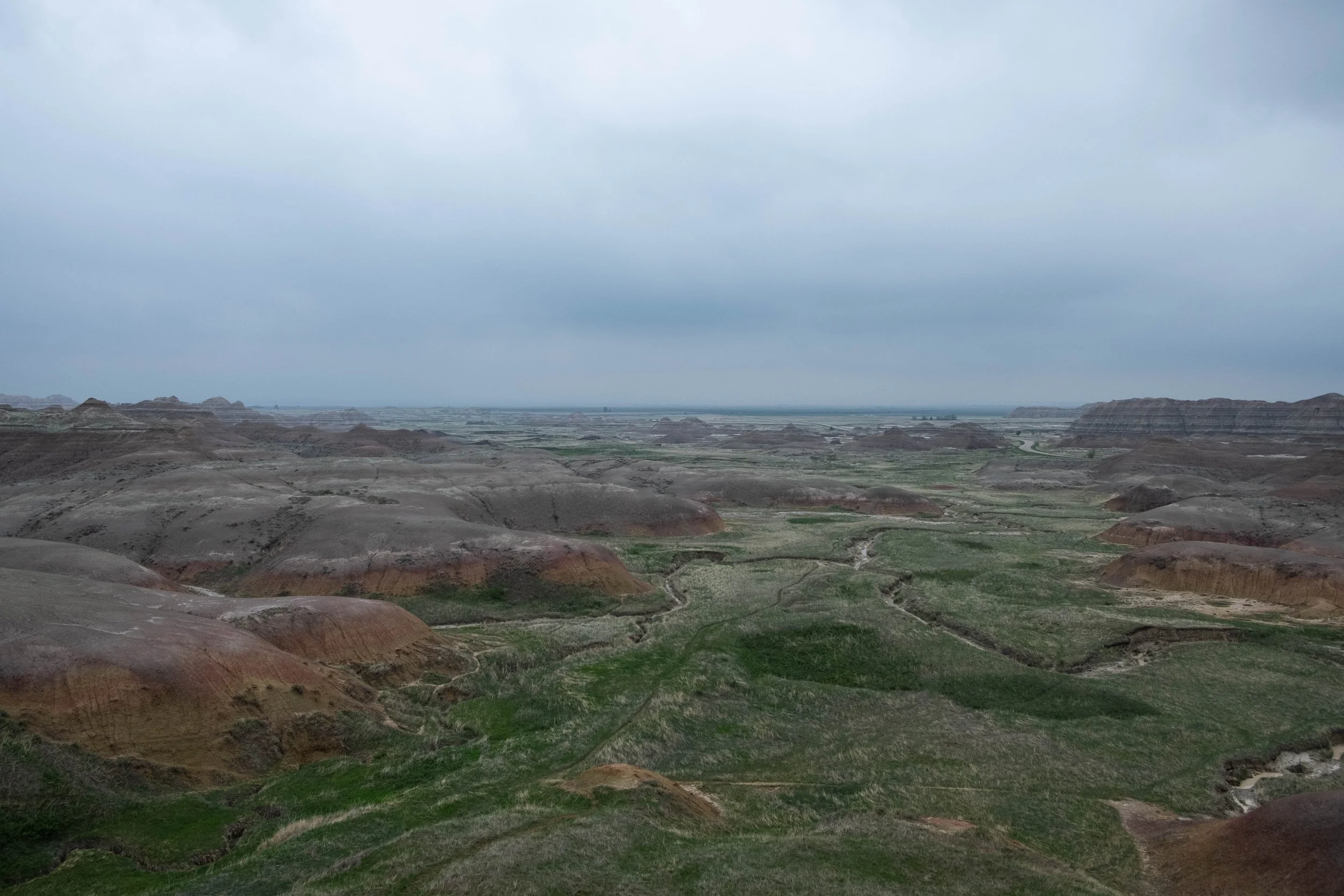
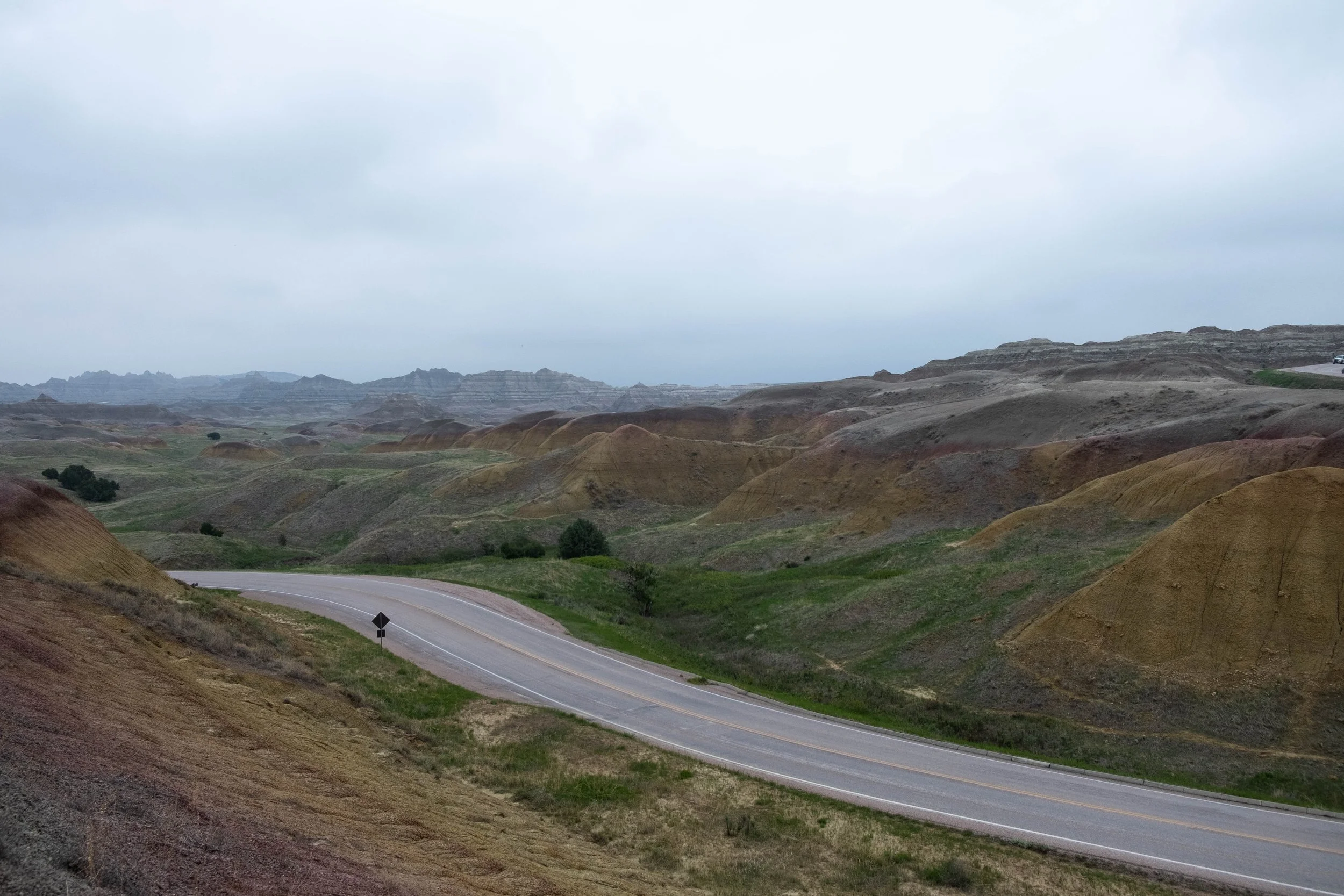
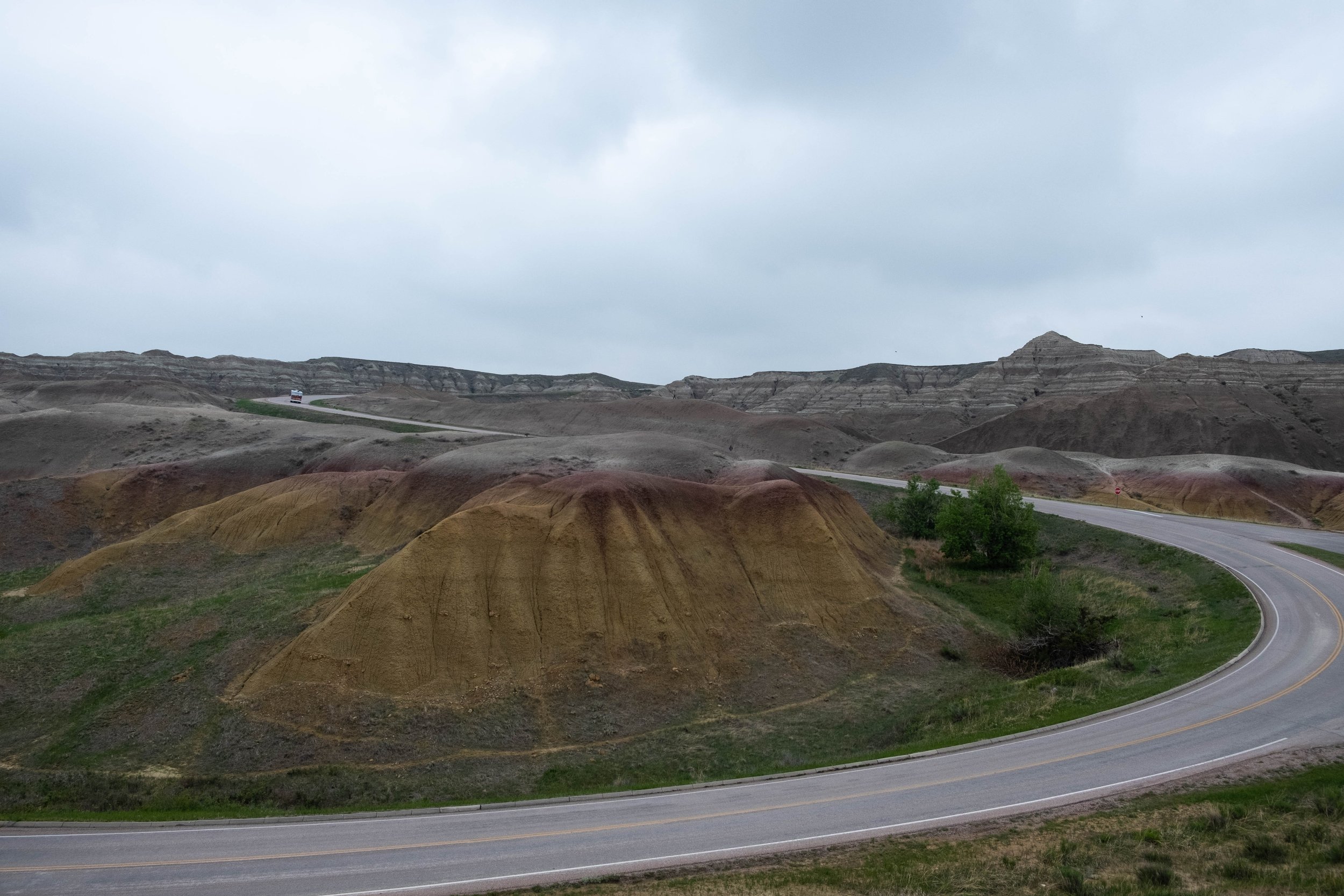
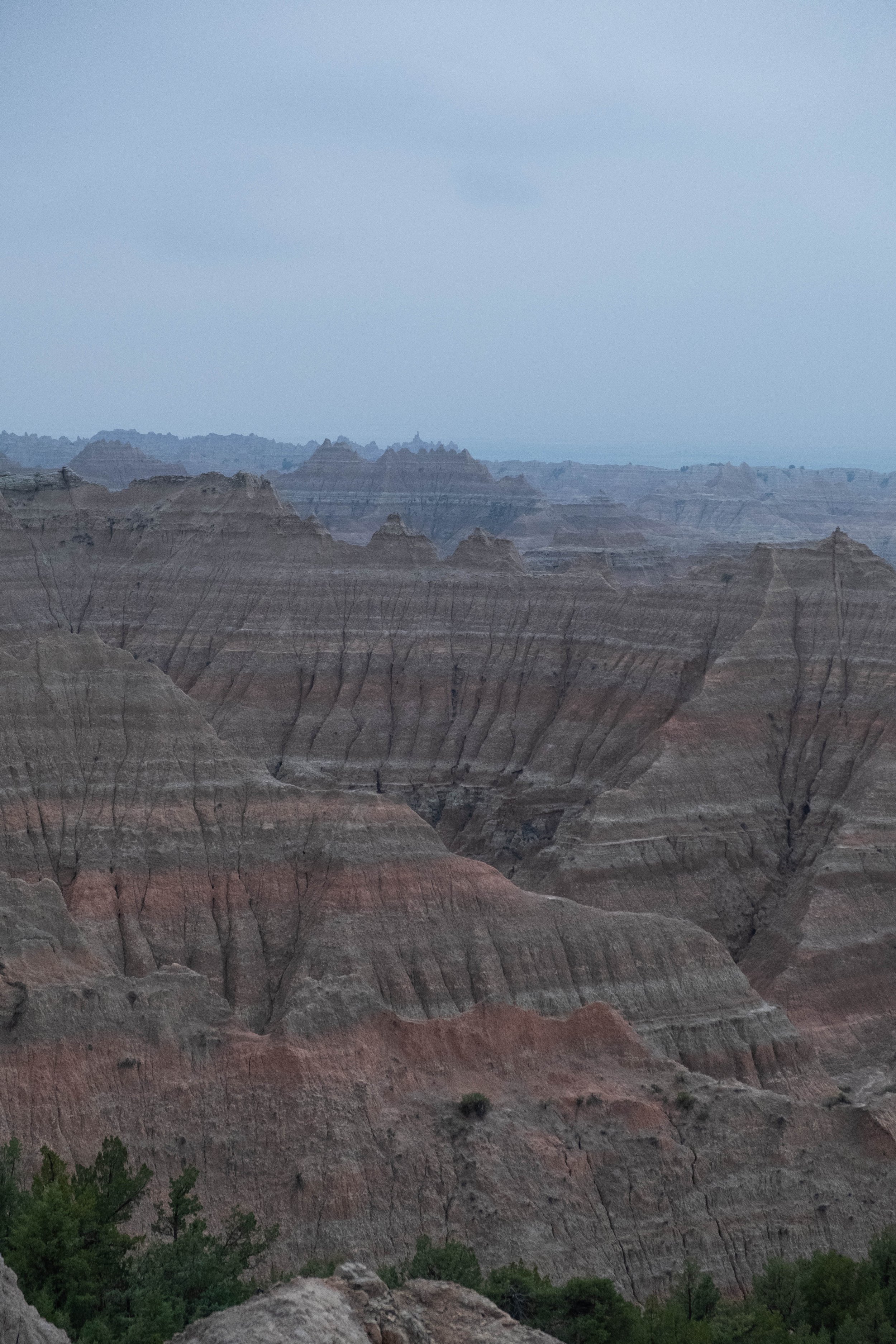
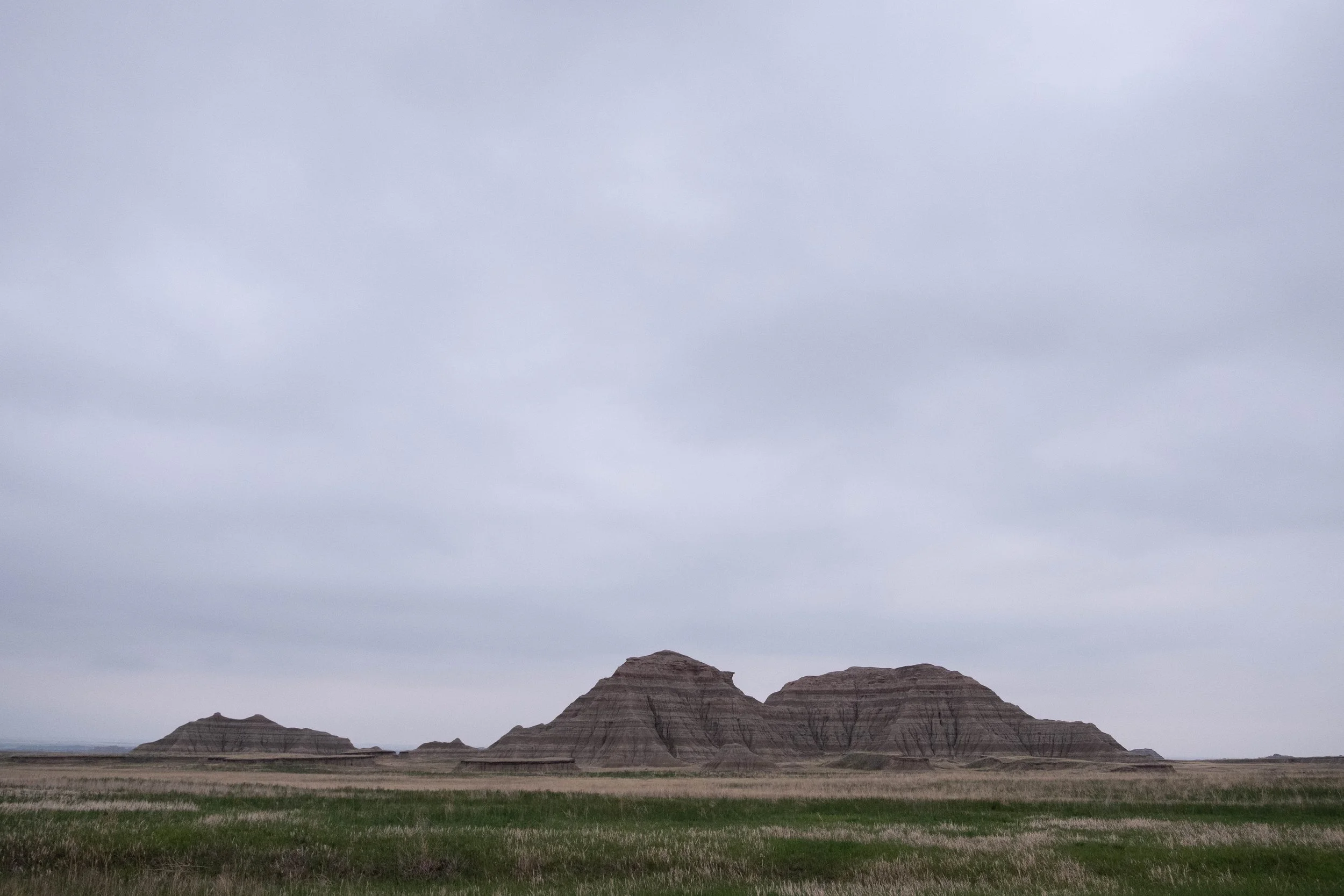
Although the low-hanging rainclouds never broke, which meant we didn’t get the see the colors of this place fully come alive, there was a haunting beauty that stuck with us as we wended our way through these ever-changing ridges and spires. The precipitation coated the wet clay pinnacles with a faint sheen, a subtle warning to take care when walking on and around these surprisingly soft and ever-shifting walls. We spent much of the windswept afternoon driving to different trailheads to explore the area and look for wildlife.
Once darkness began to fall, we drove toward the nearby town of Wall. Billboard after billboard announced that we were close to Wall Drug, a sprawling complex filled from floor to ceiling with knick-knacks and known for its restaurant serving doughnuts, ice cream, pie, and hotdogs. When we arrived, the tiny town was buzzing with crowds of tourists. We found a parking spot and briefly entered this self-proclaimed “souvenir destination” and “pure mid-western experience,” mostly in search of ibuprofen — although in full disclosure, J did also leave with both an ice cream cone and a doughnut.
Wall Drug is a true oddity, a place that sat uneasily with us. Its excessive Americana decor and unfettered celebration of a particular image of the American West felt gaudy, out-of-place, garish. The bright lights and frenzy of Wall Drug was thrown into even sharper relief after we left and drove past a small, dilapidated building just a couple blocks away, with a worn sign that read “The Story of Wounded Knee.” A quick Google revealed that this used to be a museum that told the story of the Wounded Knee Massacre, but it has been permanently closed since 2023. There are hopes to re-open the museum at some point in the nearby Black Hills, but no date has been announced as of when I’m writing this in early 2026.
Some of the content from the museum is available online, and visitor reviews from the last 20 years (many of which we read on Google and Travel Advisor) reveal how impactful the narrative-style exhibits were. According to the website, the museum “presents a carefully researched, thoroughly documented history of the flight of Big Foot’s band of Miniconjou Lakota through the wintry South Dakota landscape, their capture by the 7th Calvary, and the horrors of the morning of December 29, 1890, when up to 300 Lakota men, women, and children died in a hail of bullets from rifles and Hotchkiss guns.” The museum had intentionally been placed in Wall to make it easily accessible to people who were visiting Badlands National Park as well as the nearby site of the Wounded Knee Massacre.
We spent a lot of time on the drive back to the park reflecting on how very American this contrast felt: A underfunded museum that told a vitally important story about this land, the Lakota, and a heinous act of violence perpetrated, permitted, and protected by settler colonialism, now shuttered in the shadow of a behemoth tourist trap that does nothing but paper over history in ways that favor the victors. The Wall Drugs of the world transform places filled with moral reckoning and prairie grasses into sanitized gimmicks that prioritize comfort and pleasure over truth. Have a doughnut, buy a souvenir, eat some good ol’ American apple pie! The result is a little town in South Dakota that is known more for its kitsch than for its actual story: The horror and the beauty, the songbirds and the bison, the badlands and the ever-blowing winds, the stories that make it what it is.
The Badlands were Park 36 for us. Our goal to go to all the US national parks is somewhat arbitrary (aren’t most goals, to a certain extent?) and can even be problematic. We try to hold that lightly and use this imperfect medium to orient ourselves towards learning and growth. Having the excuse of visiting these parks has drawn us to corners of the country that we wouldn’t have sought out or visited otherwise. Witnessing the political and cultural differences, the way certain narratives are supported or suppressed, and the stunning natural variety across this country continues to broaden our knowledge and desire to understand the whole story of this deeply flawed place we were born in. There is always something new we come away with after each park and the Badlands were no exception.
Pictured below:
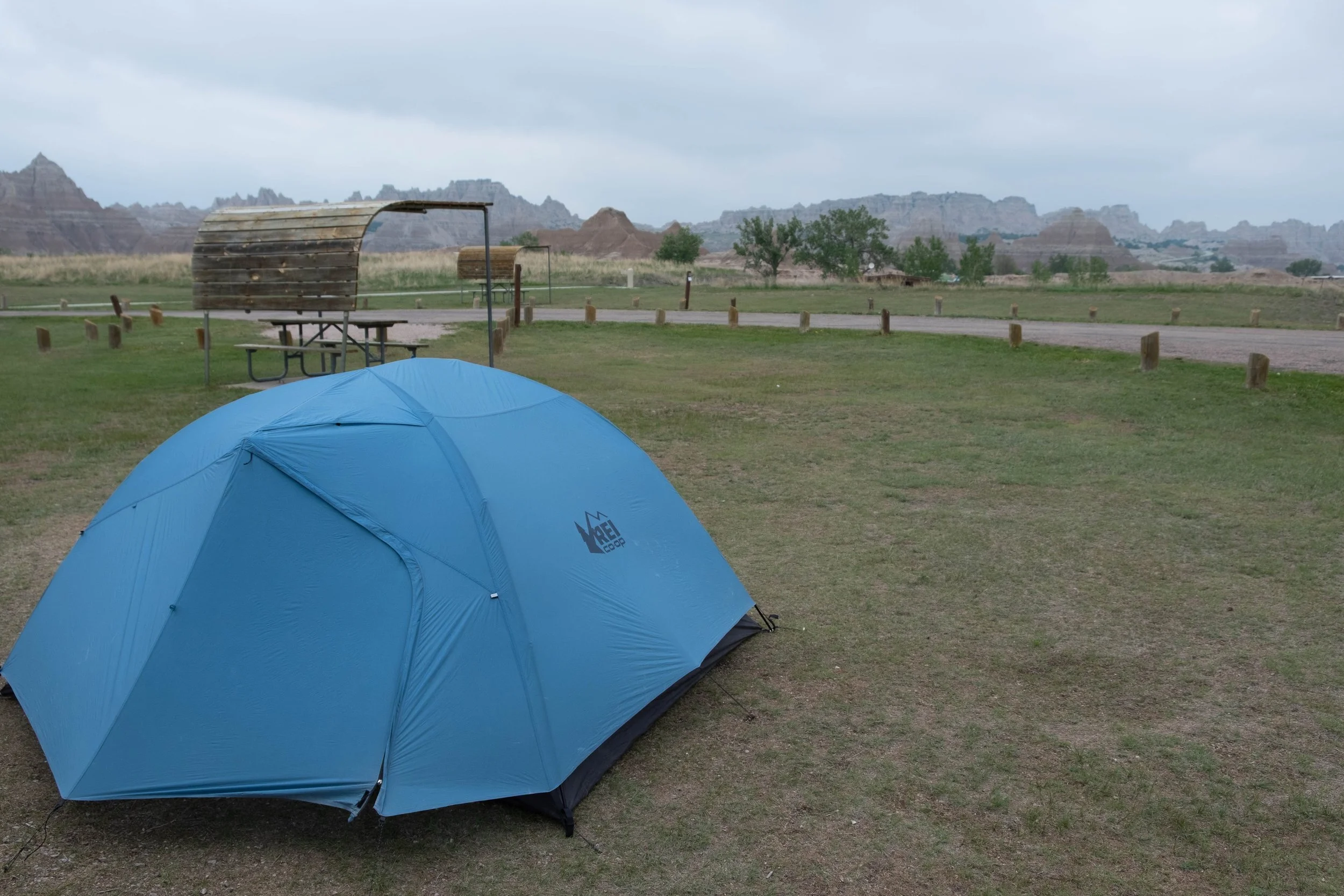
Our windswept, soon to be drenched, yet somehow still comfortable campsite.
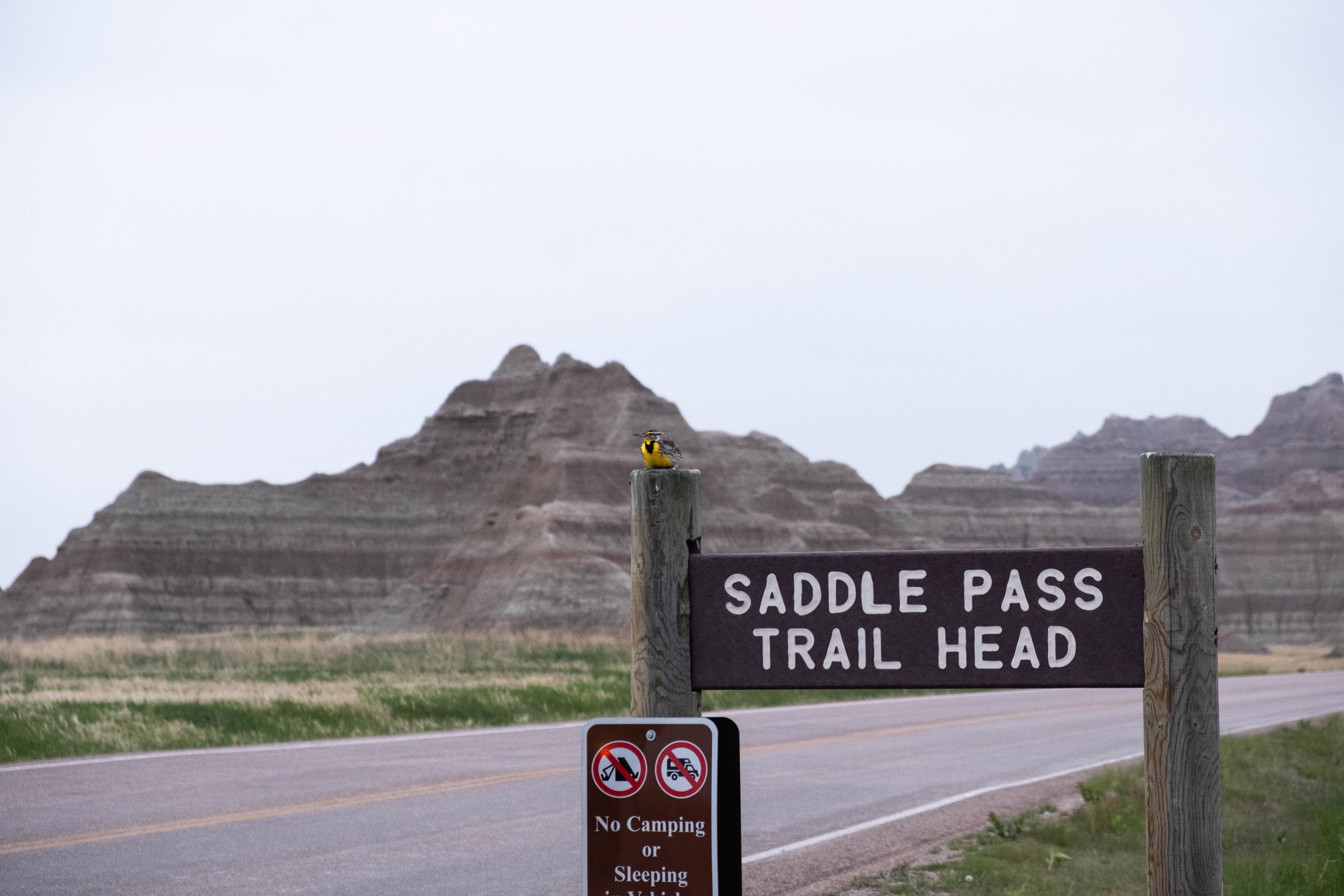
Views from the drive between the NE Entrance to the Pinnacles Entrance.
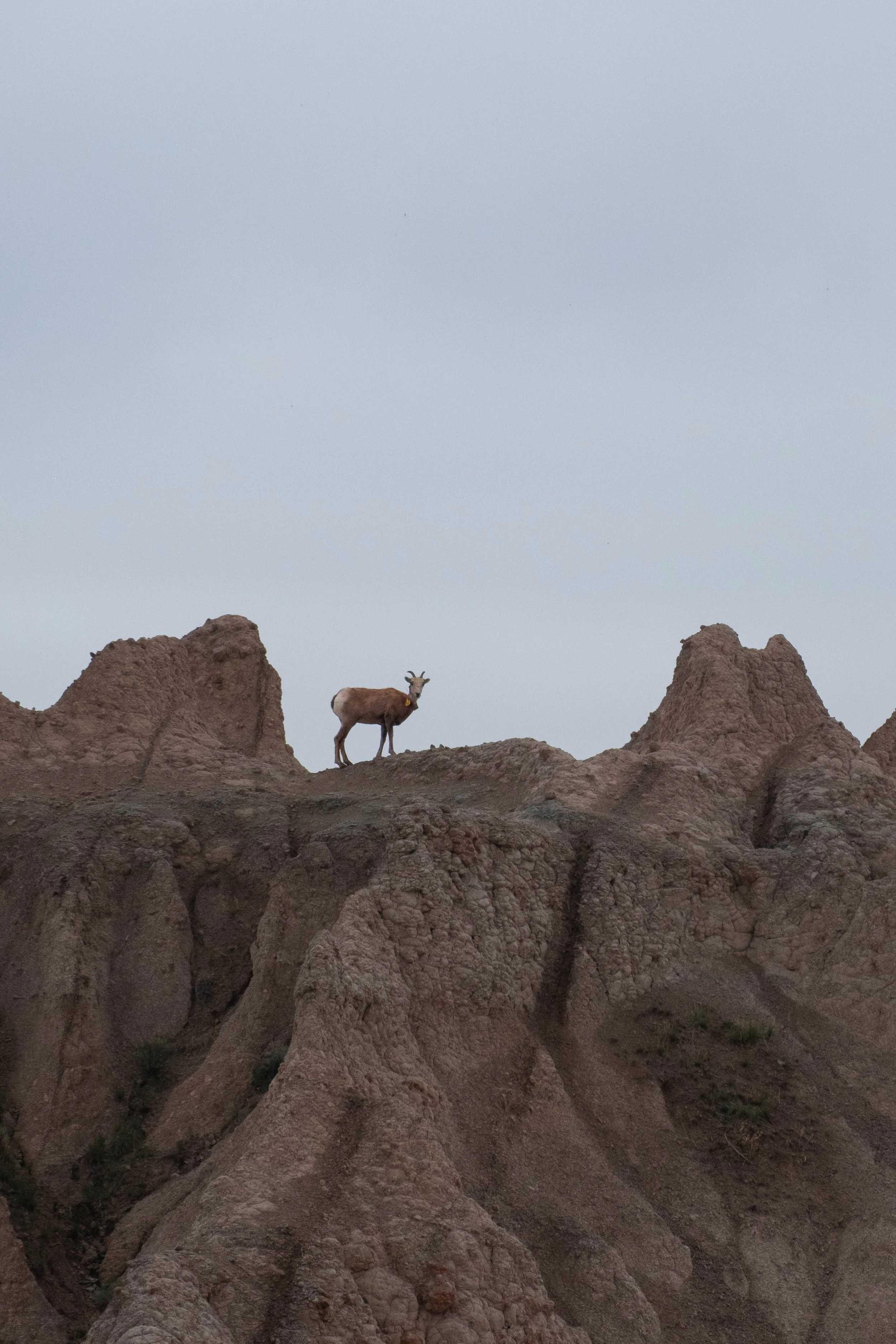
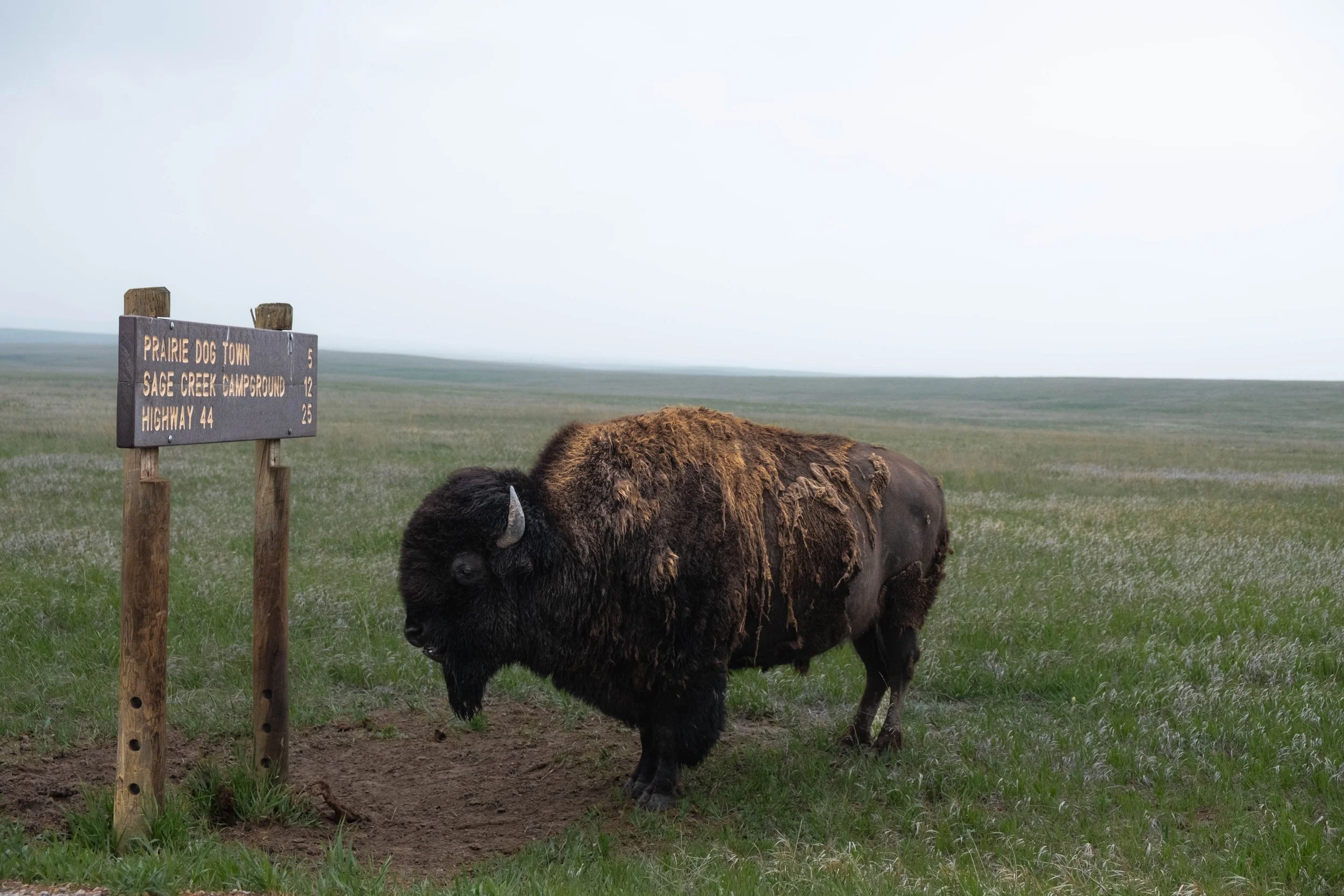
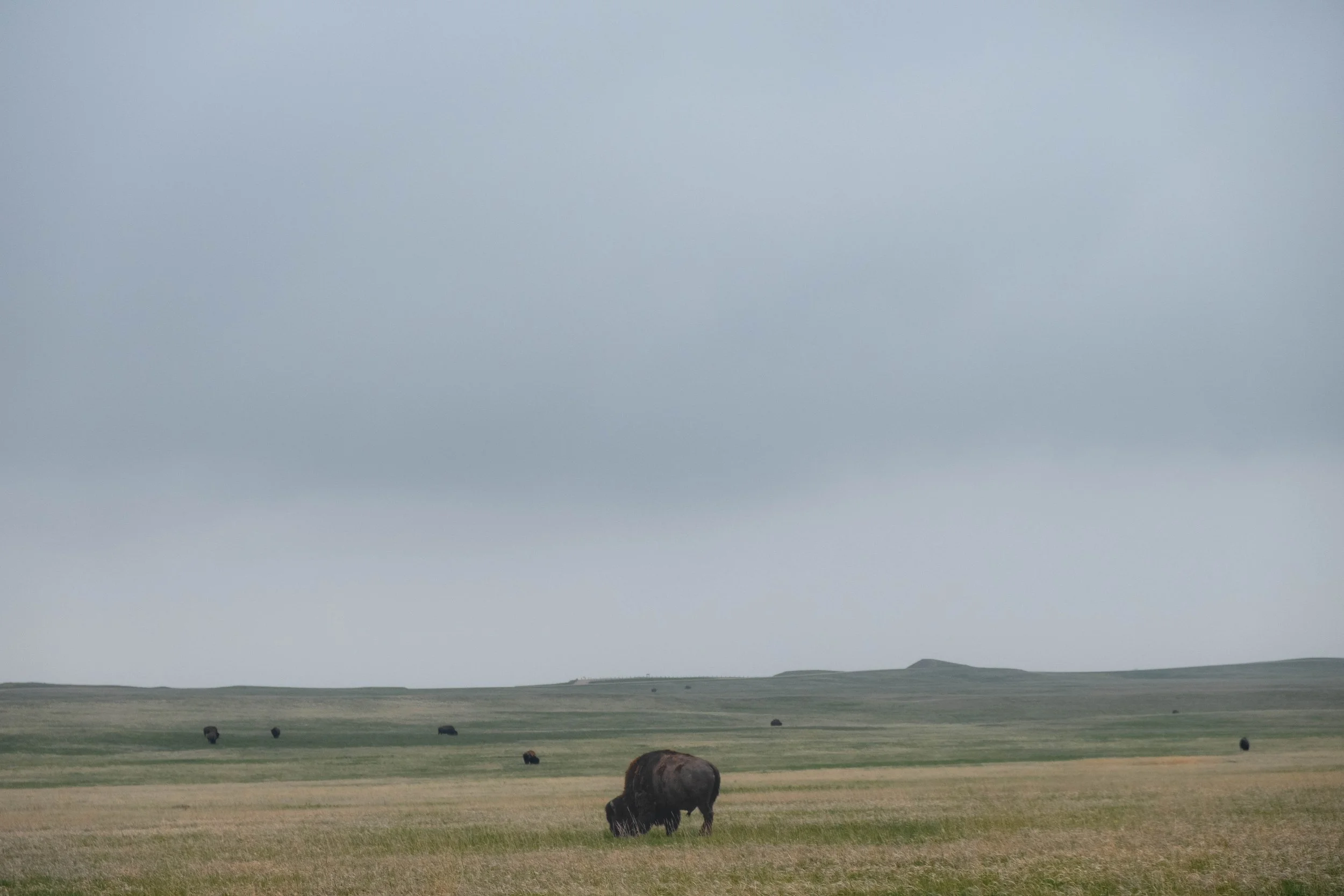
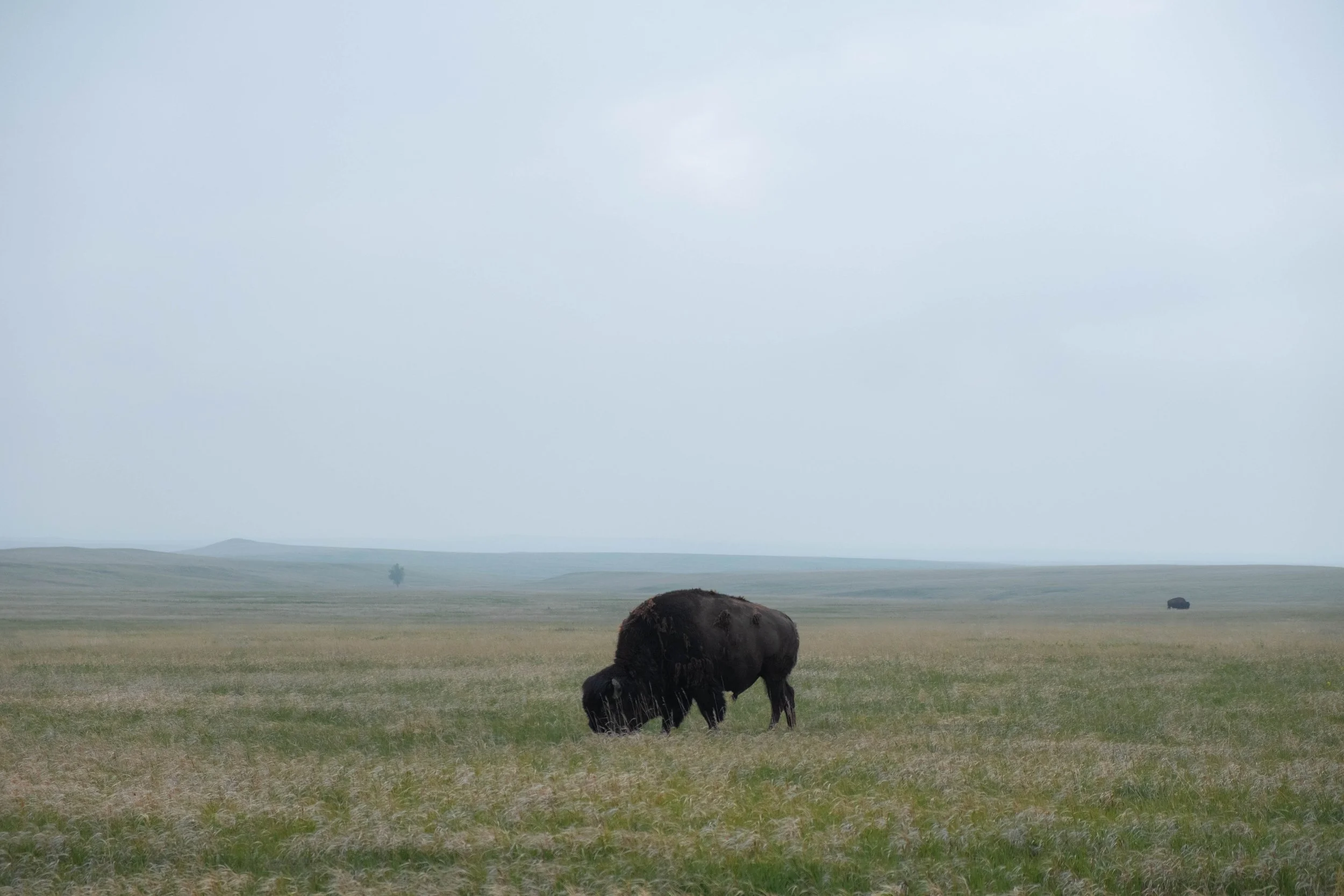
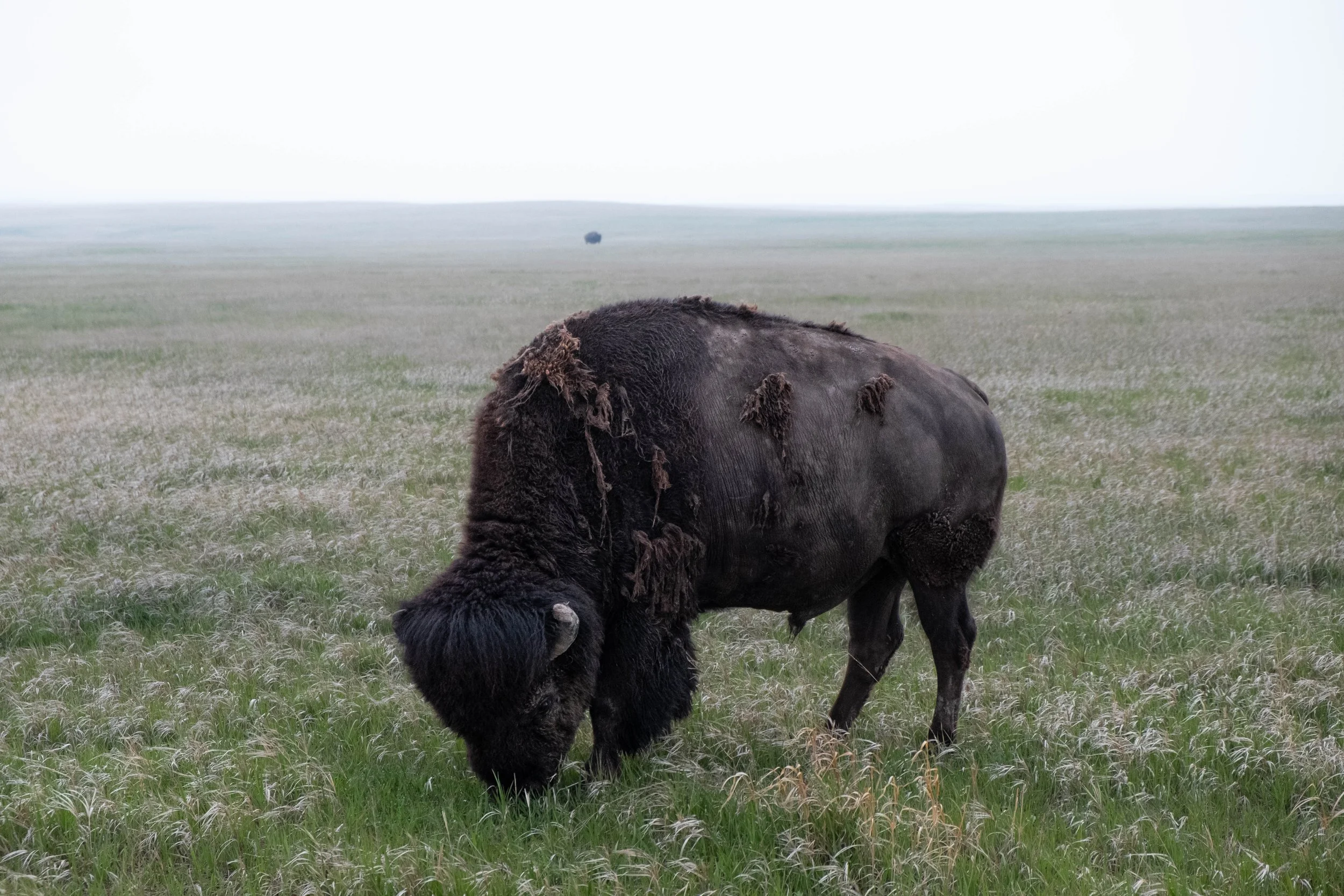
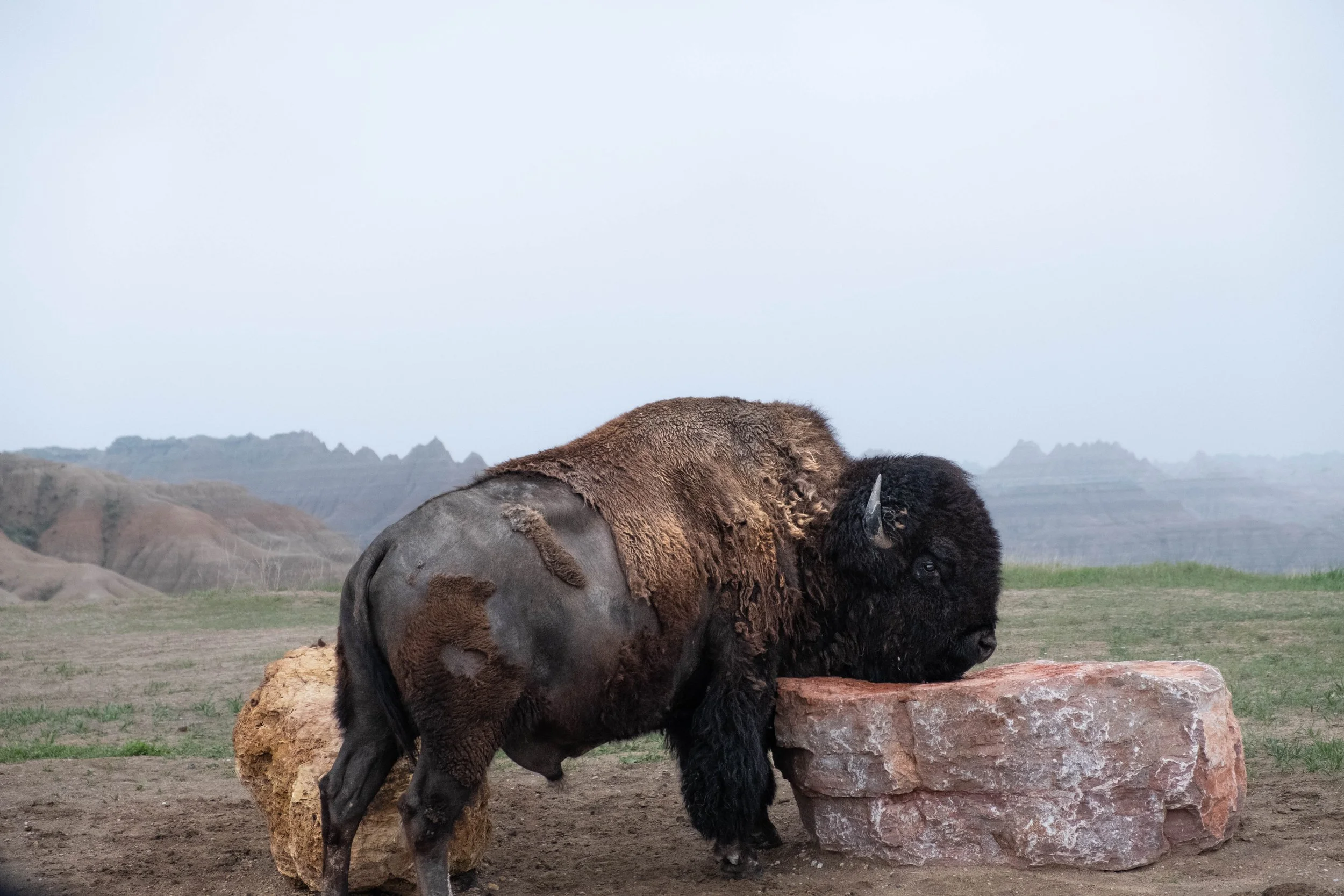
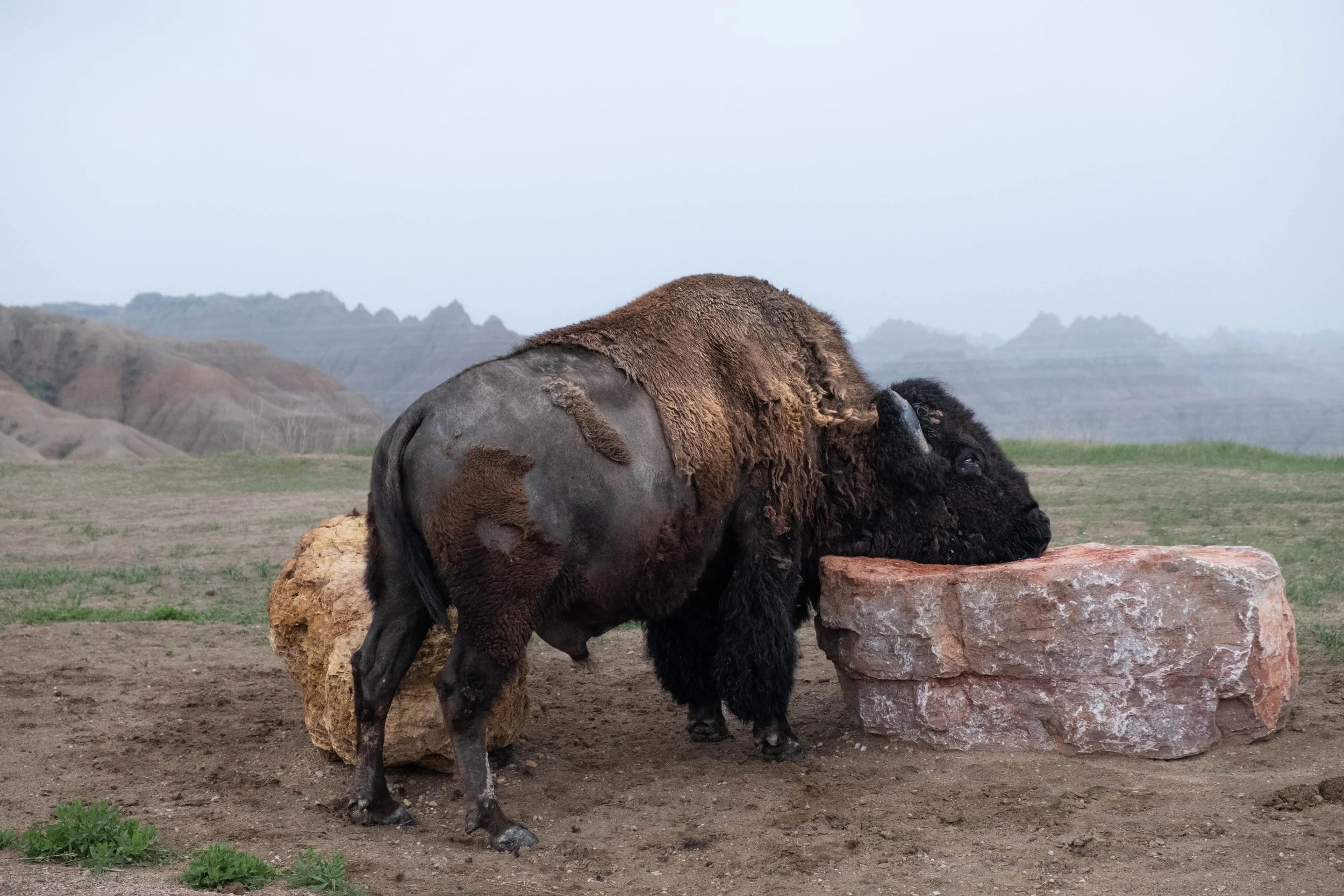
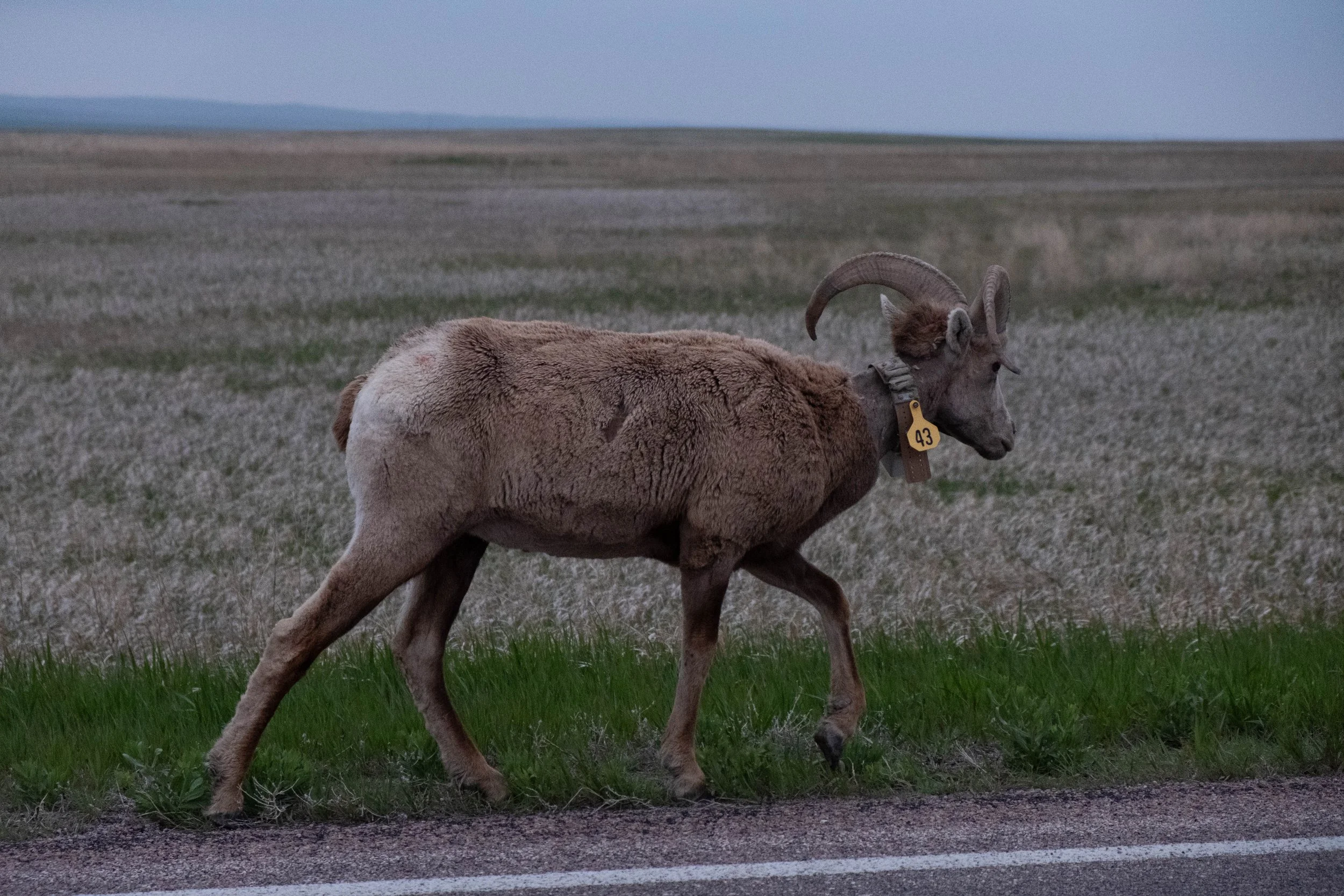
Bison, bison, and more bison — plus a few bighorn sheep.