Theodore Roosevelt
Park 35 | May 2025
Part + Park 1 (of 3) in our Memorial Day weekend road trip, which ended up being characterized by one word: Rain.
Theodore Roosevelt National Park is a 9-hour drive straight north of Denver, the highways running along the borders of Wyoming, South Dakota, Montana, and North Dakota. We decided to start this long weekend off at the park furthest from us, then work our way back to Colorado by way of the two South Dakota parks. Unfortunately, as the time grew closer for our trip, the developing forecast looked ominous: Heavy rain predicted from the moment our trip was to begin until the last day (after which there were to be clear skies and sunshine, naturally). Nevertheless, the campsites were booked and we had limited time off this year, so decided to go for it regardless.
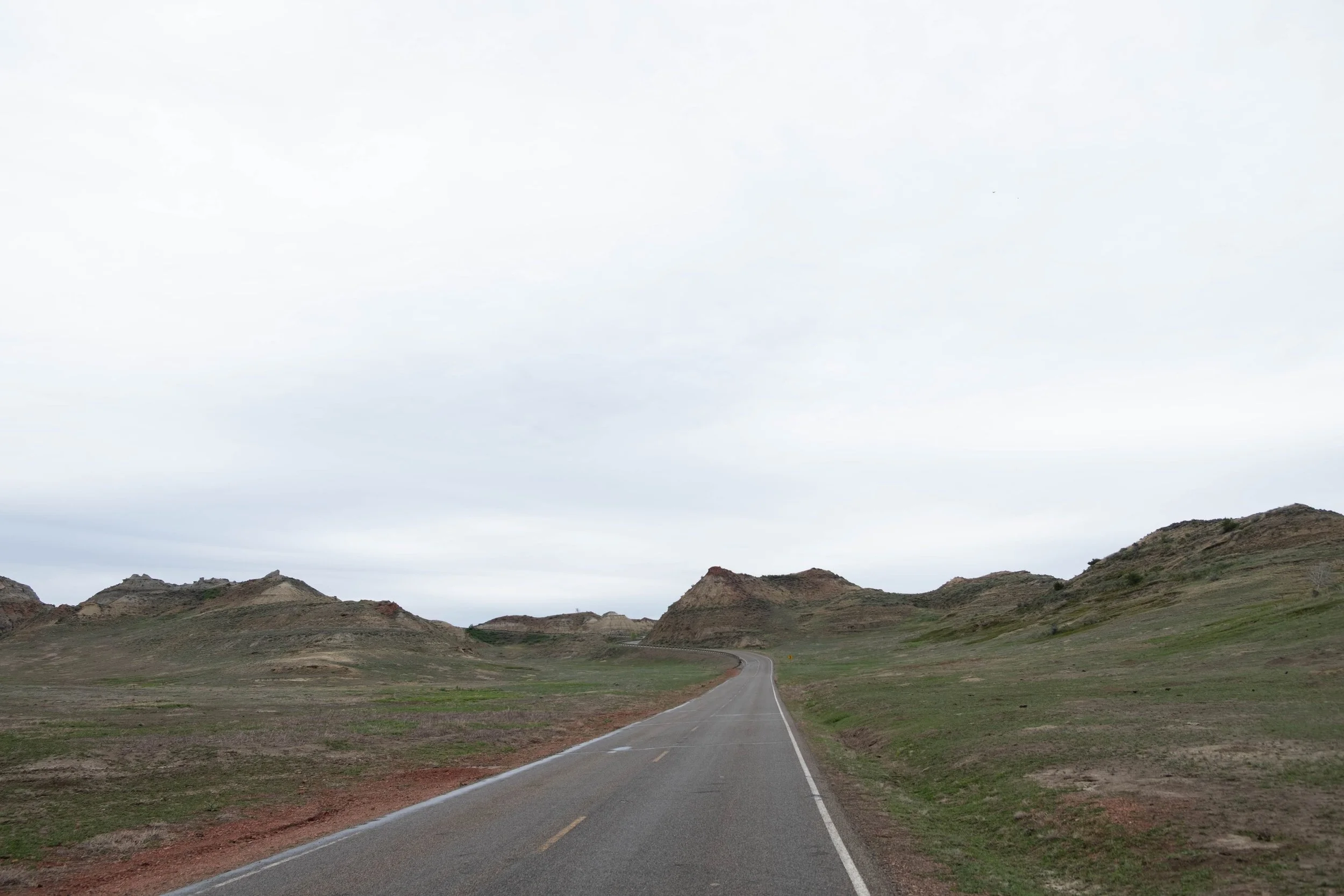
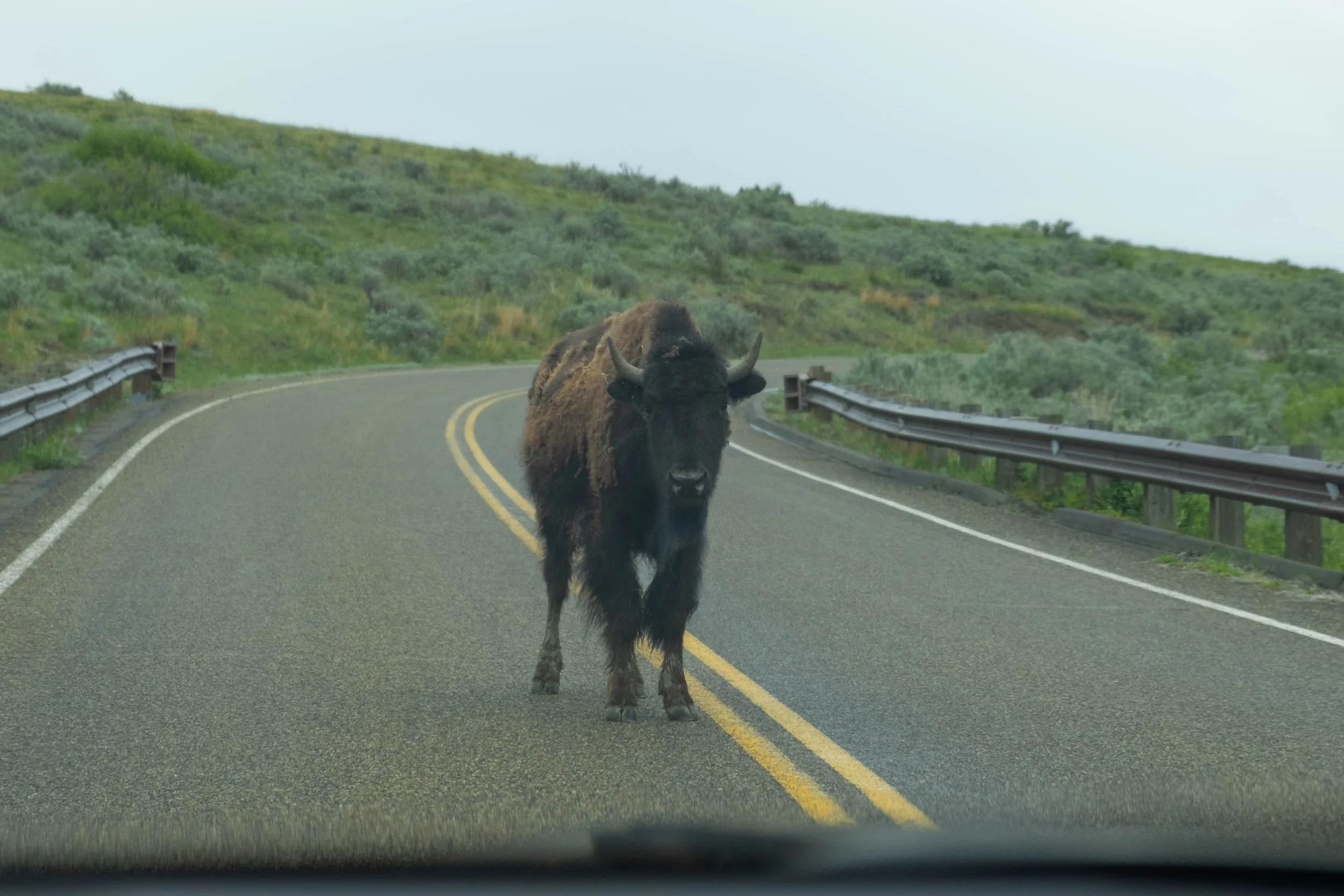
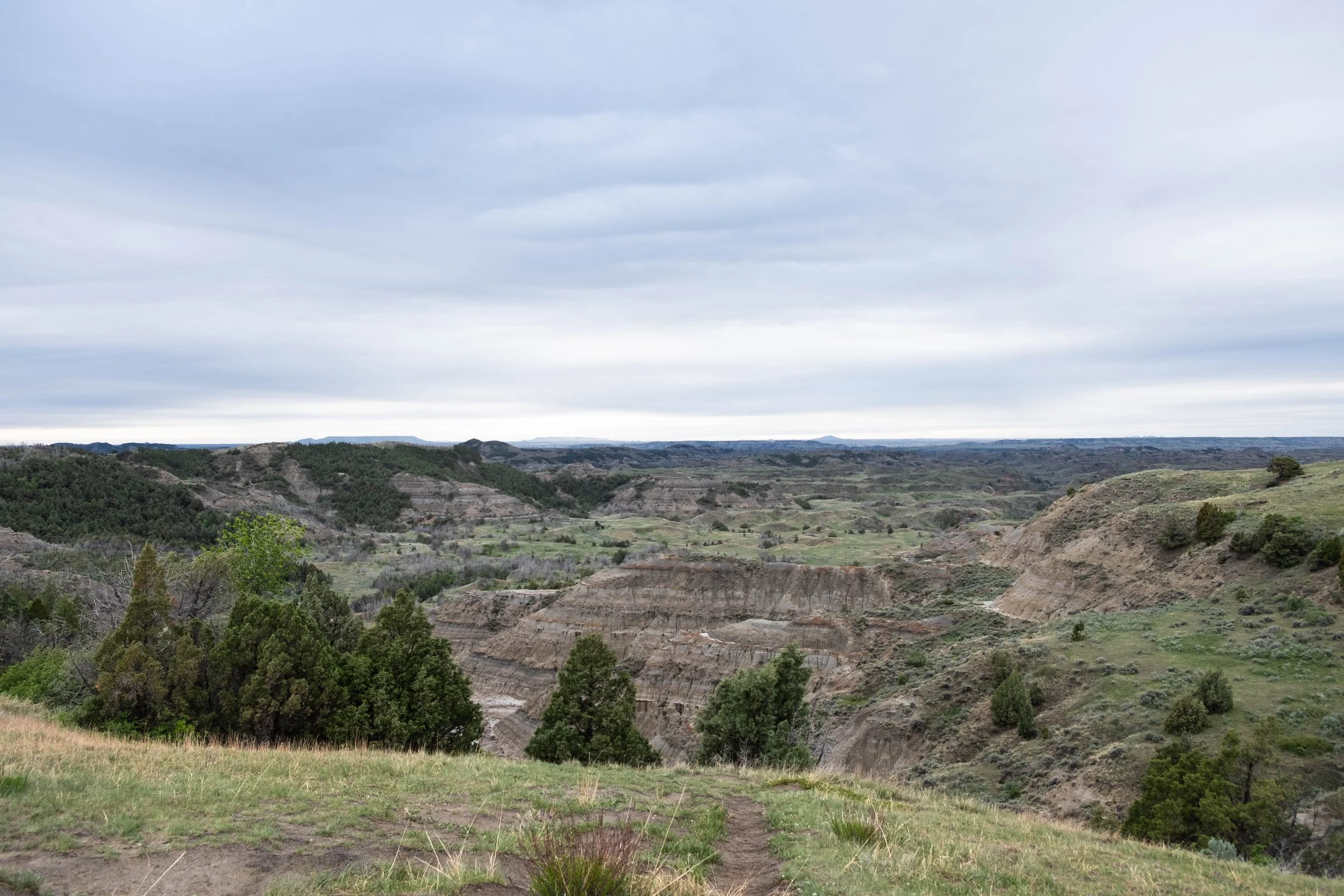
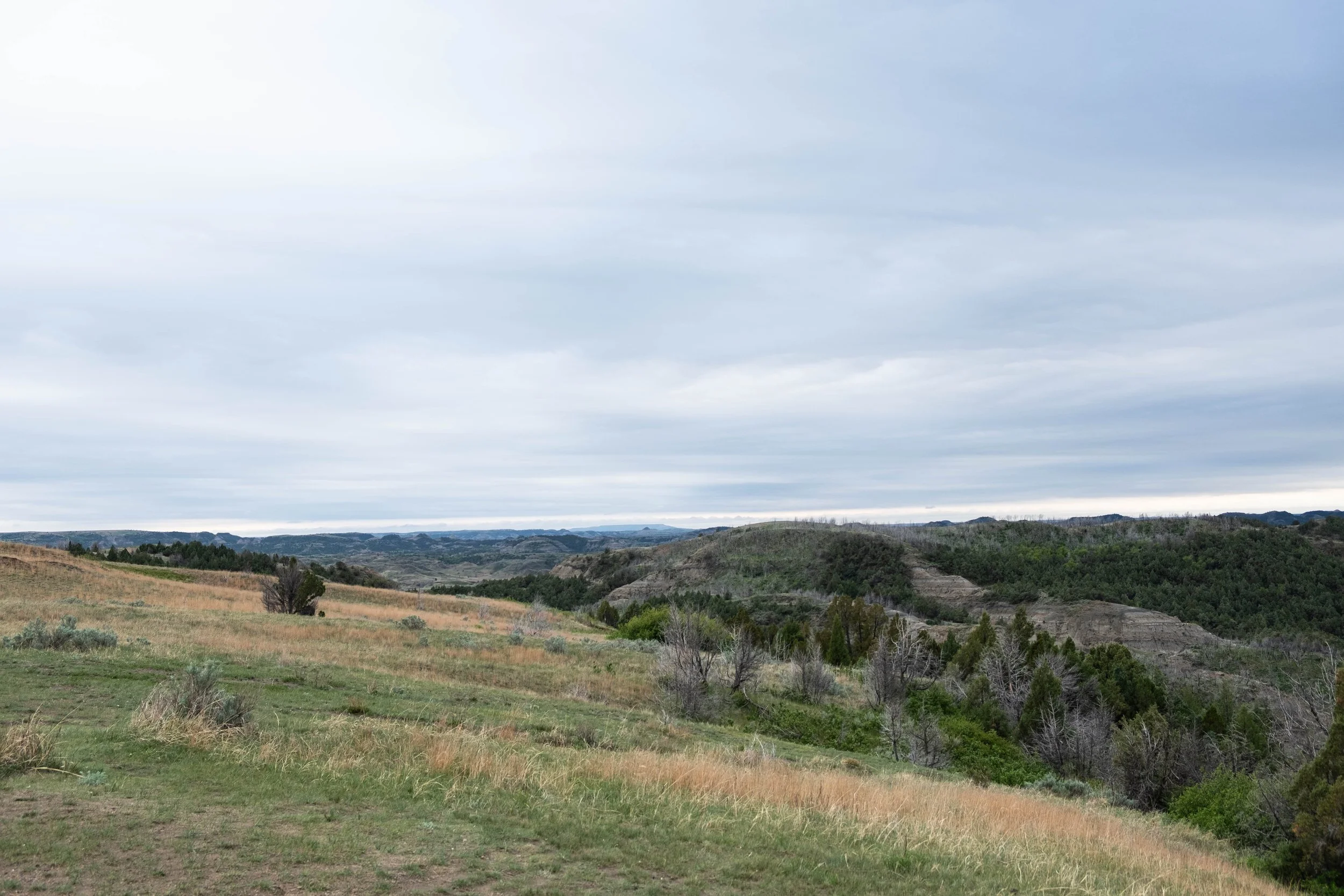
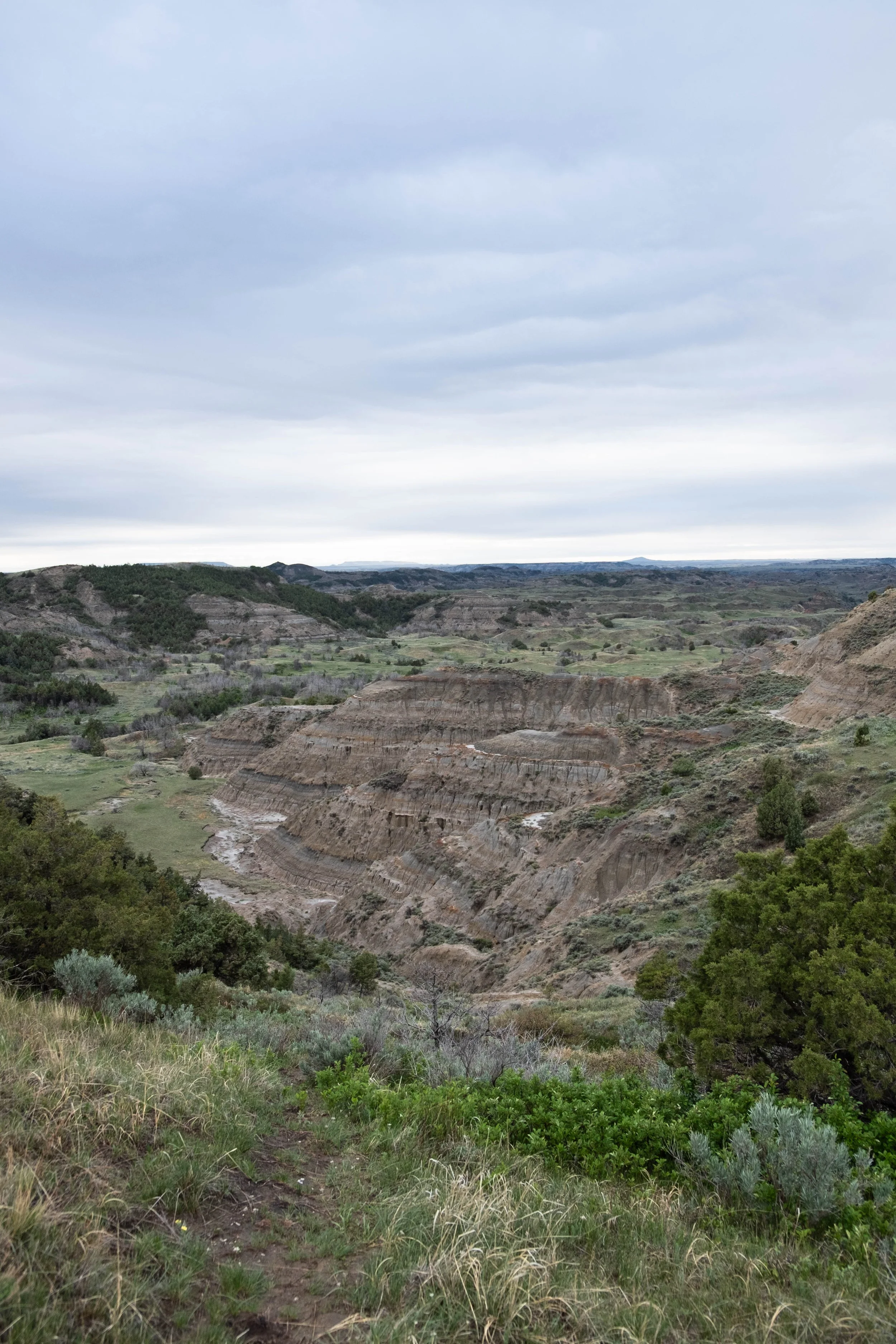
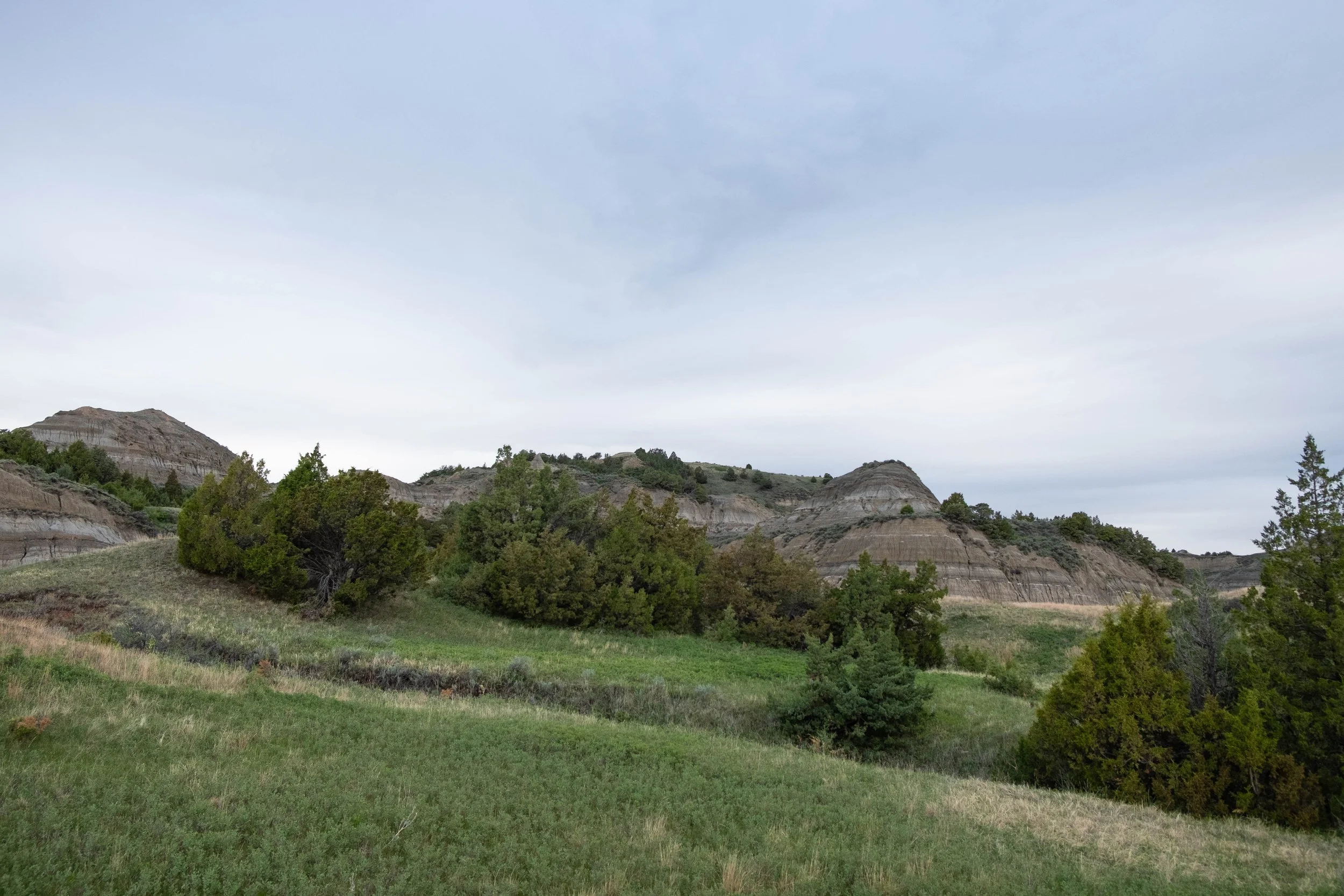
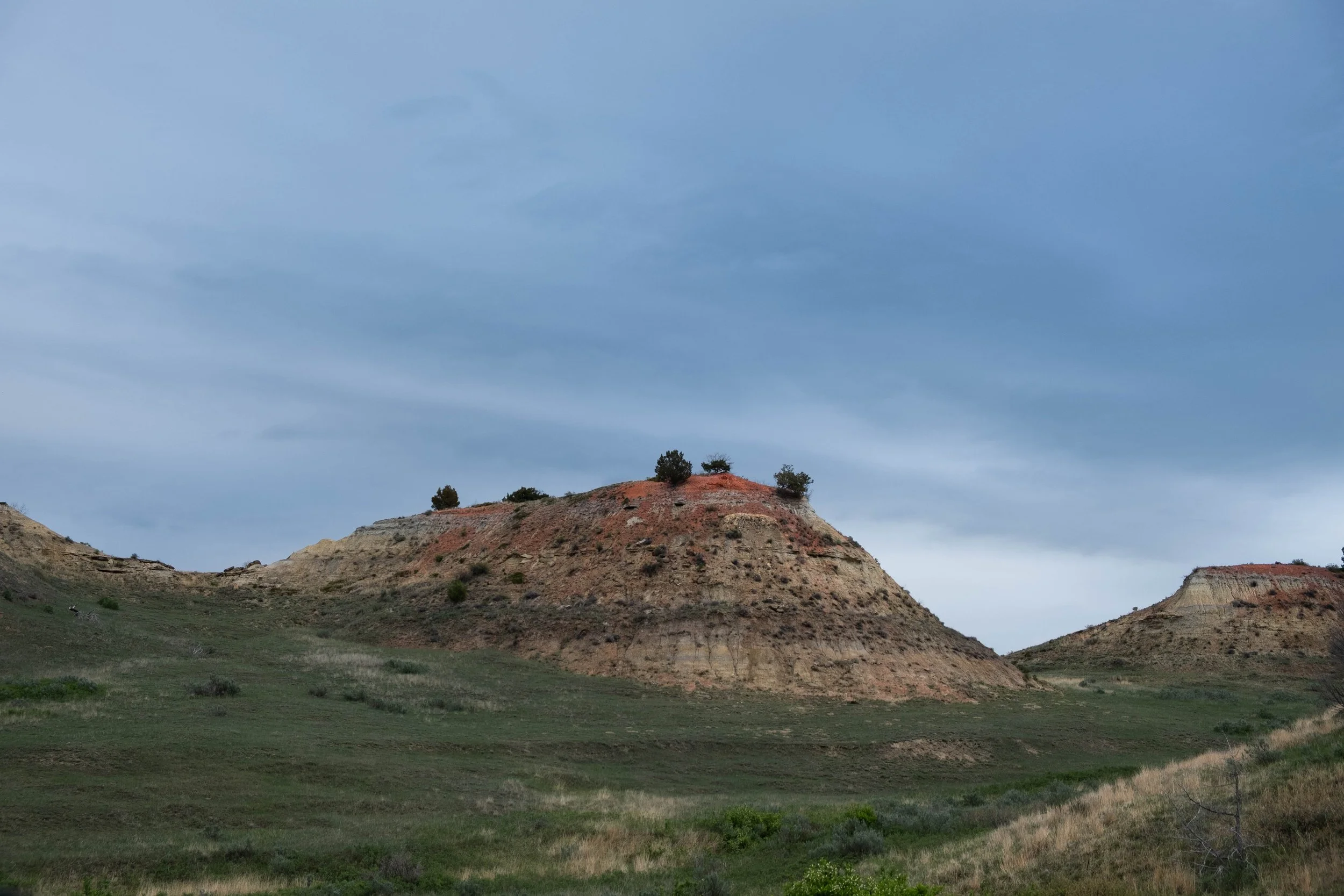
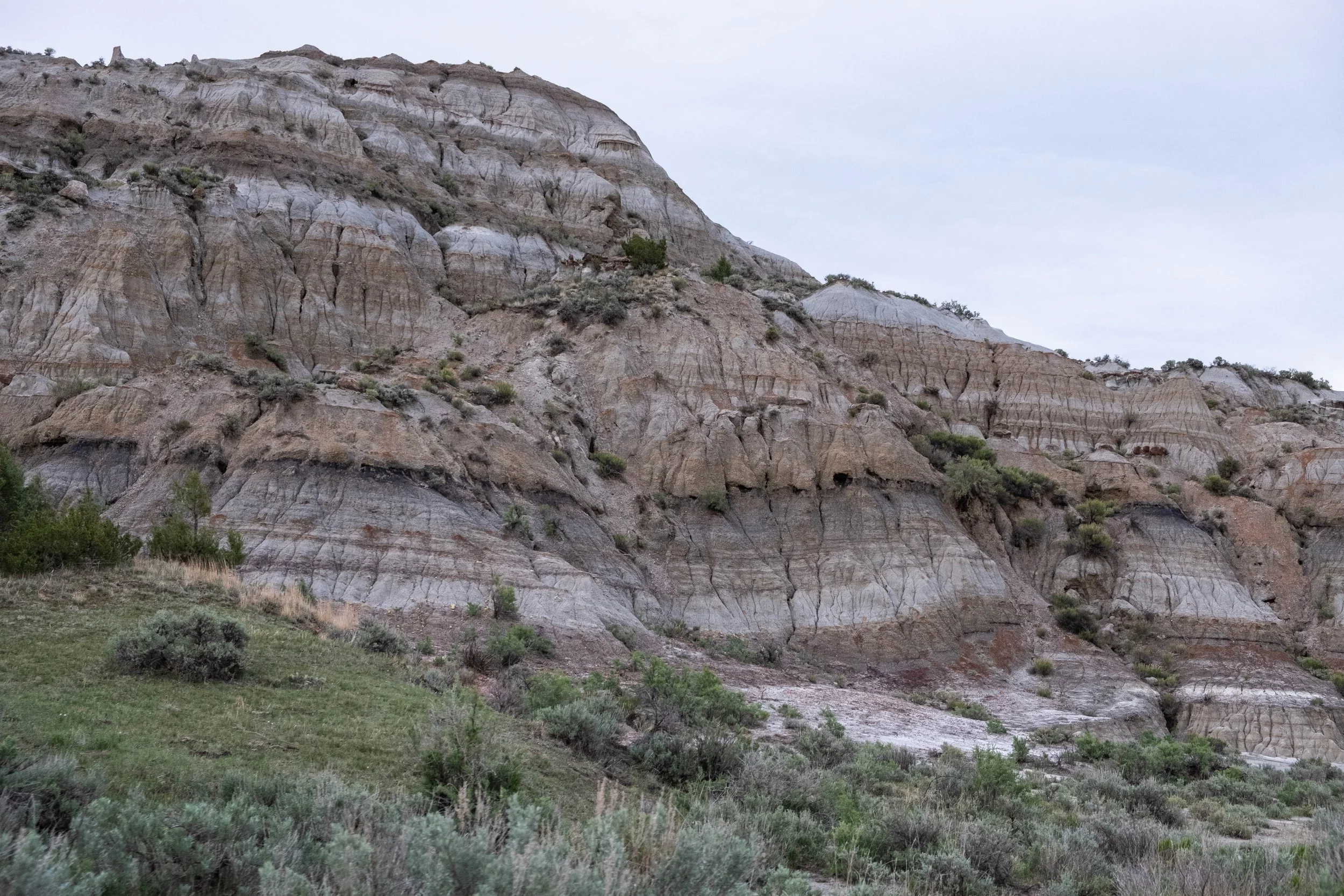
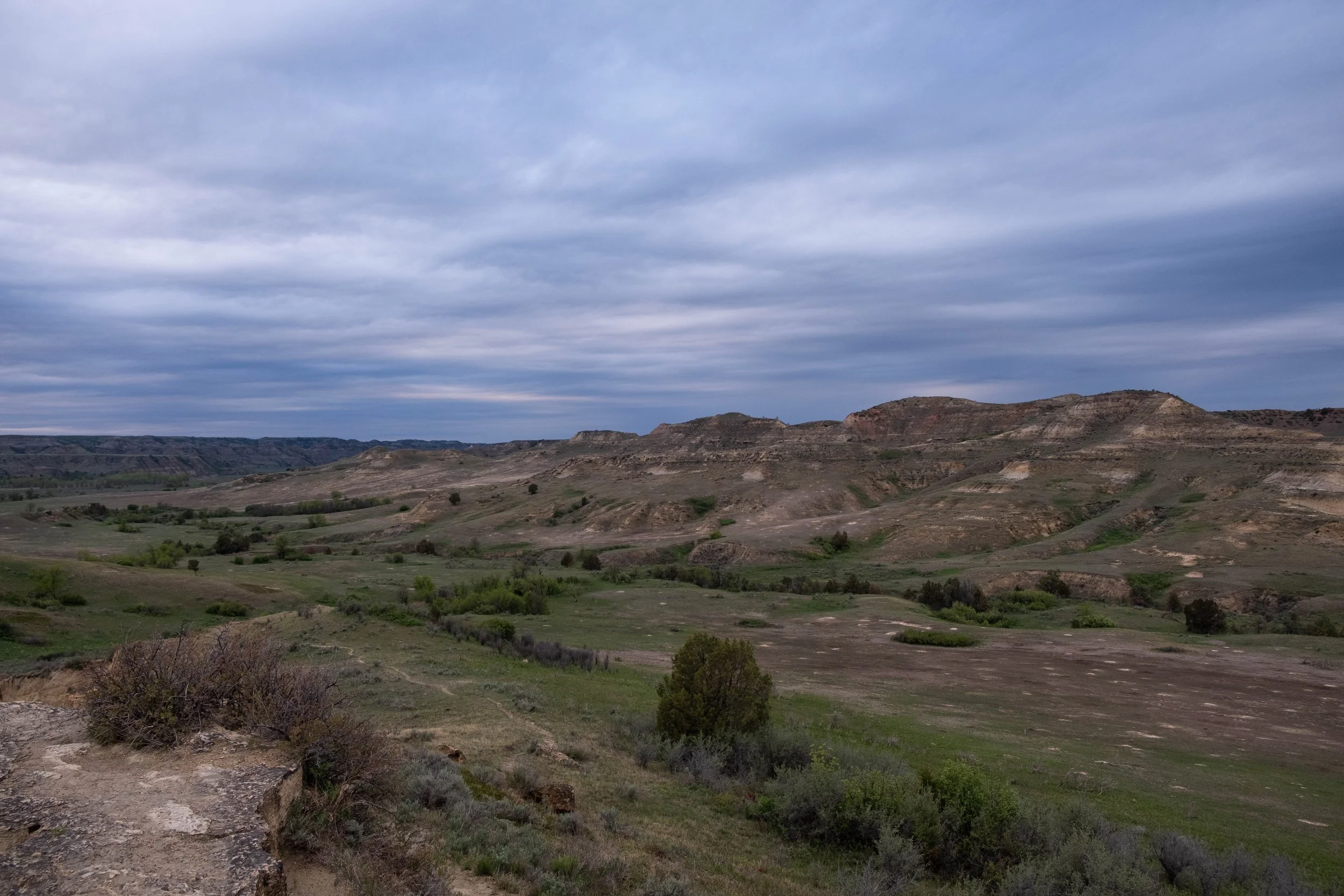
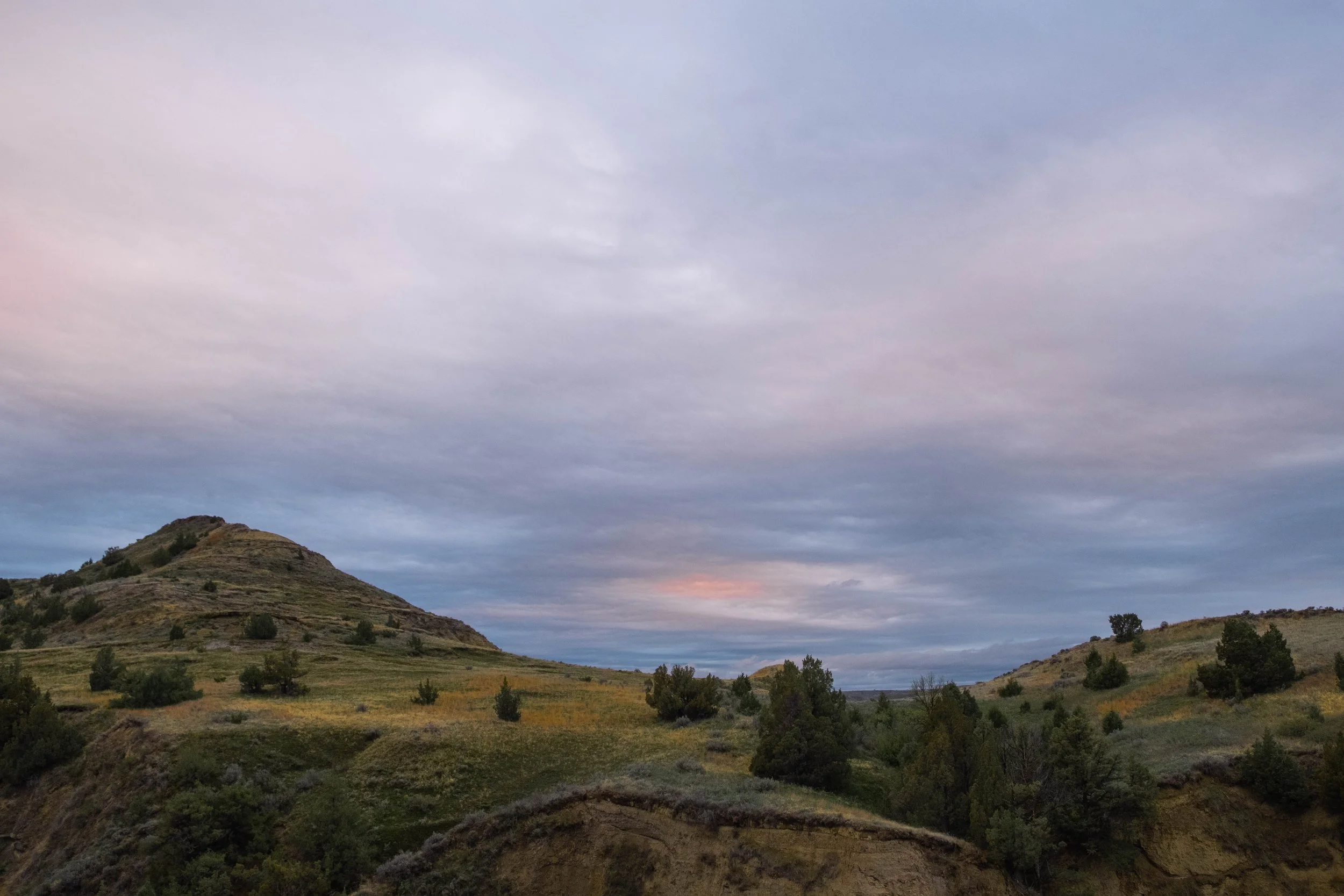
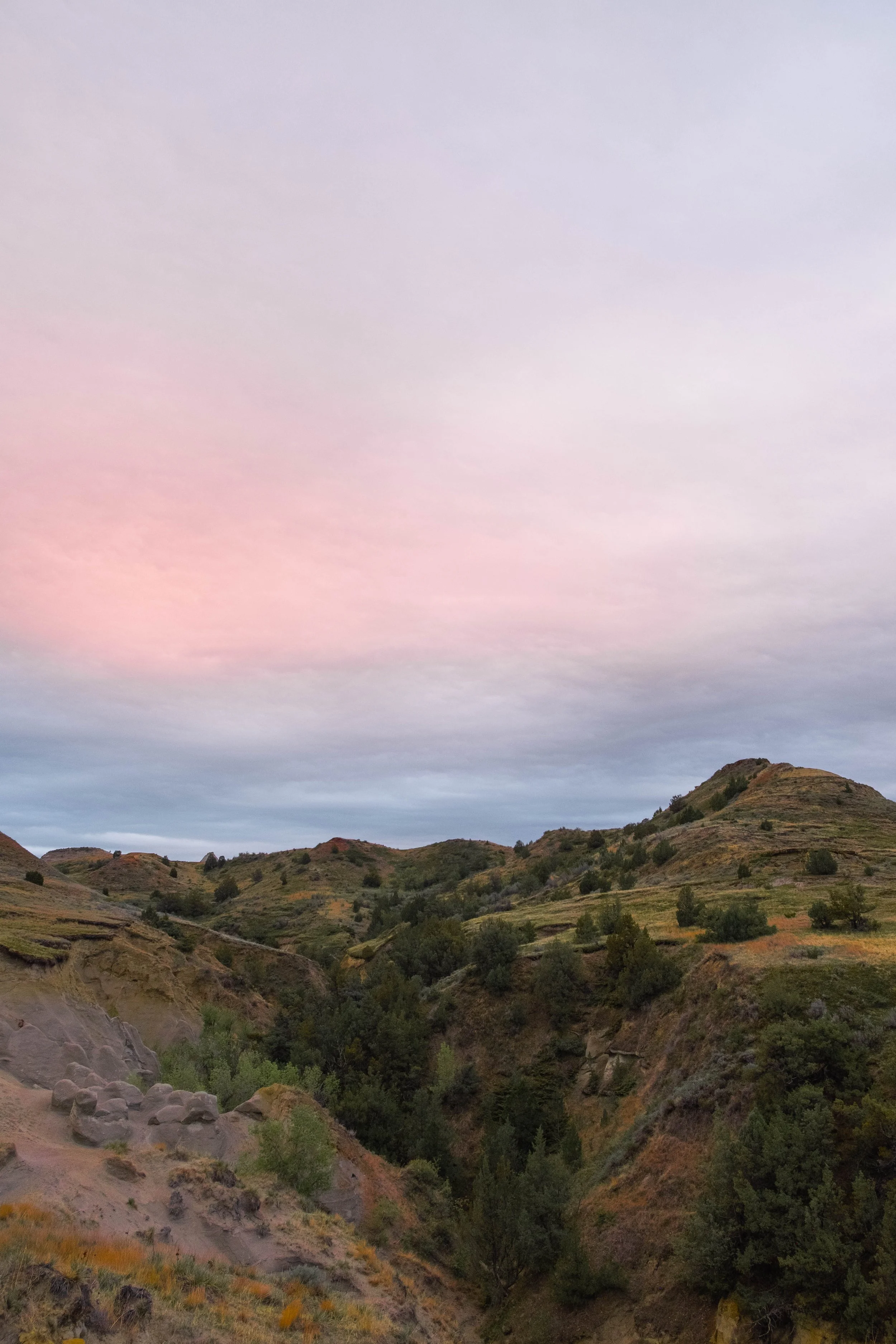
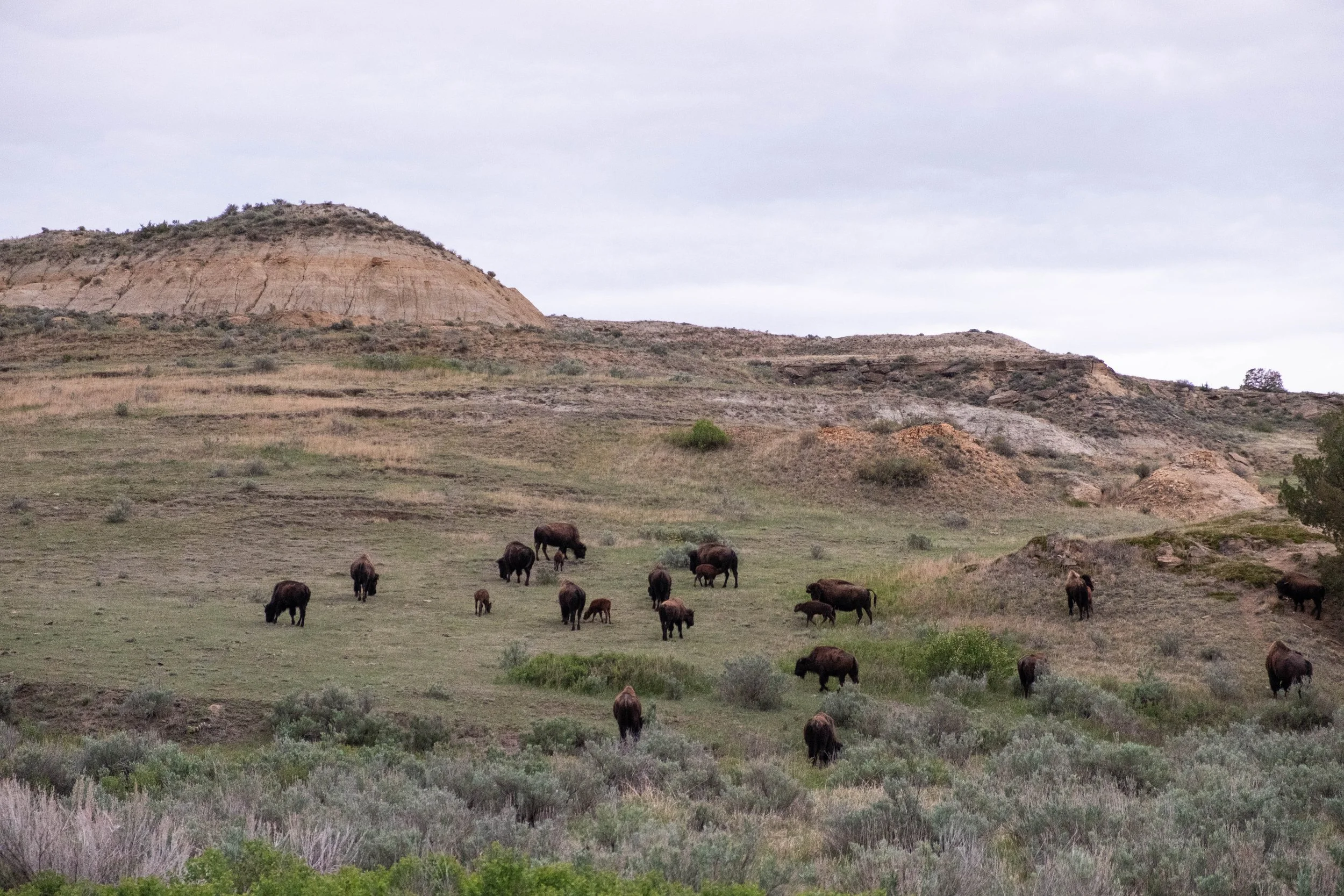
This first park emerged from the North Dakota landscape rather suddenly. After miles of flat, often treeless vistas, we came upon its rolling hills and plateaus dotted with bison, jagged gorges and swooping valleys, and the endless rustle of the wind fingering through the prairie grasses as the day stretched into the afternoon. We pitched our tent at the campground before hurrying off to explore as much of the Scenic Loop Drive as we could before darkness fell.
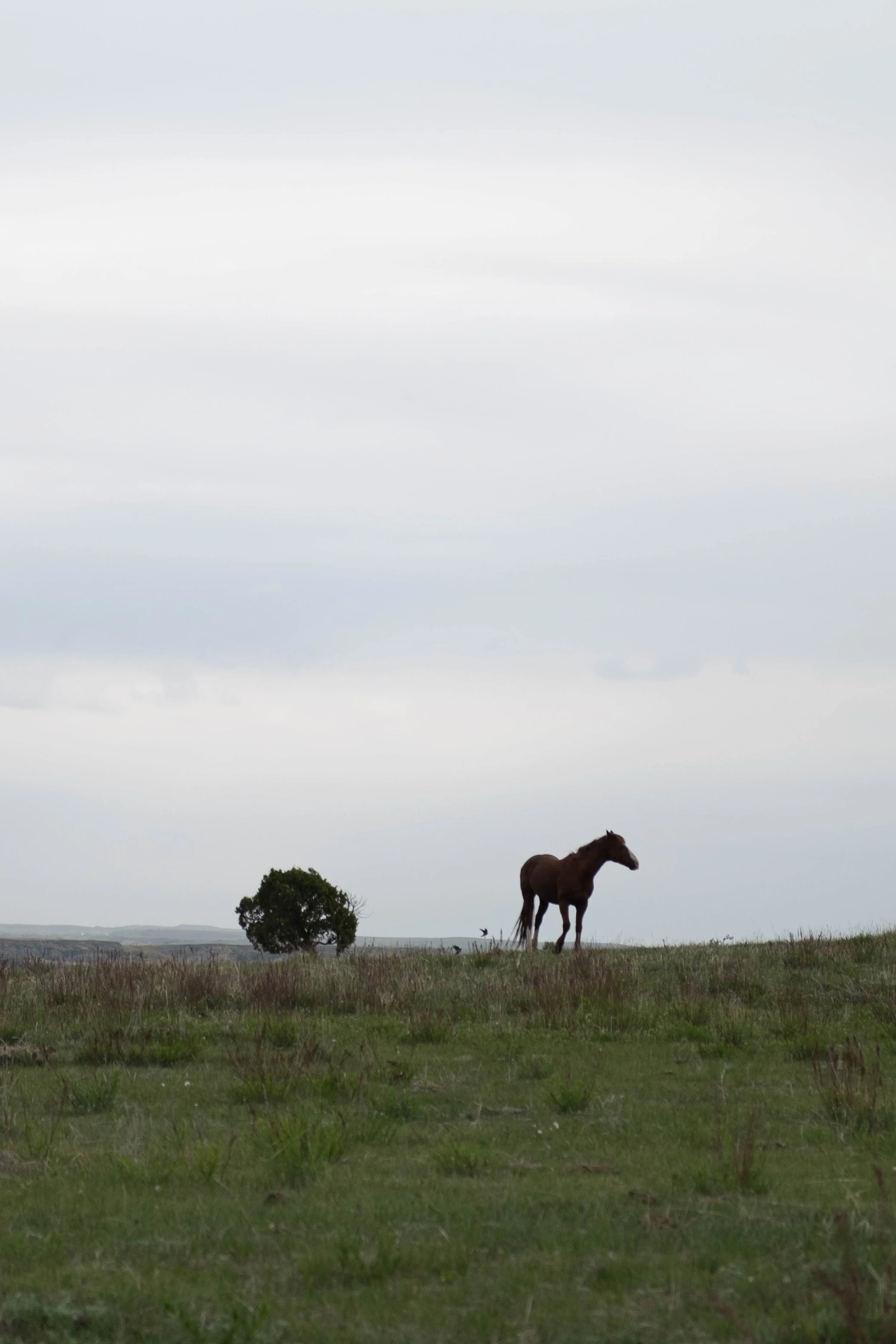
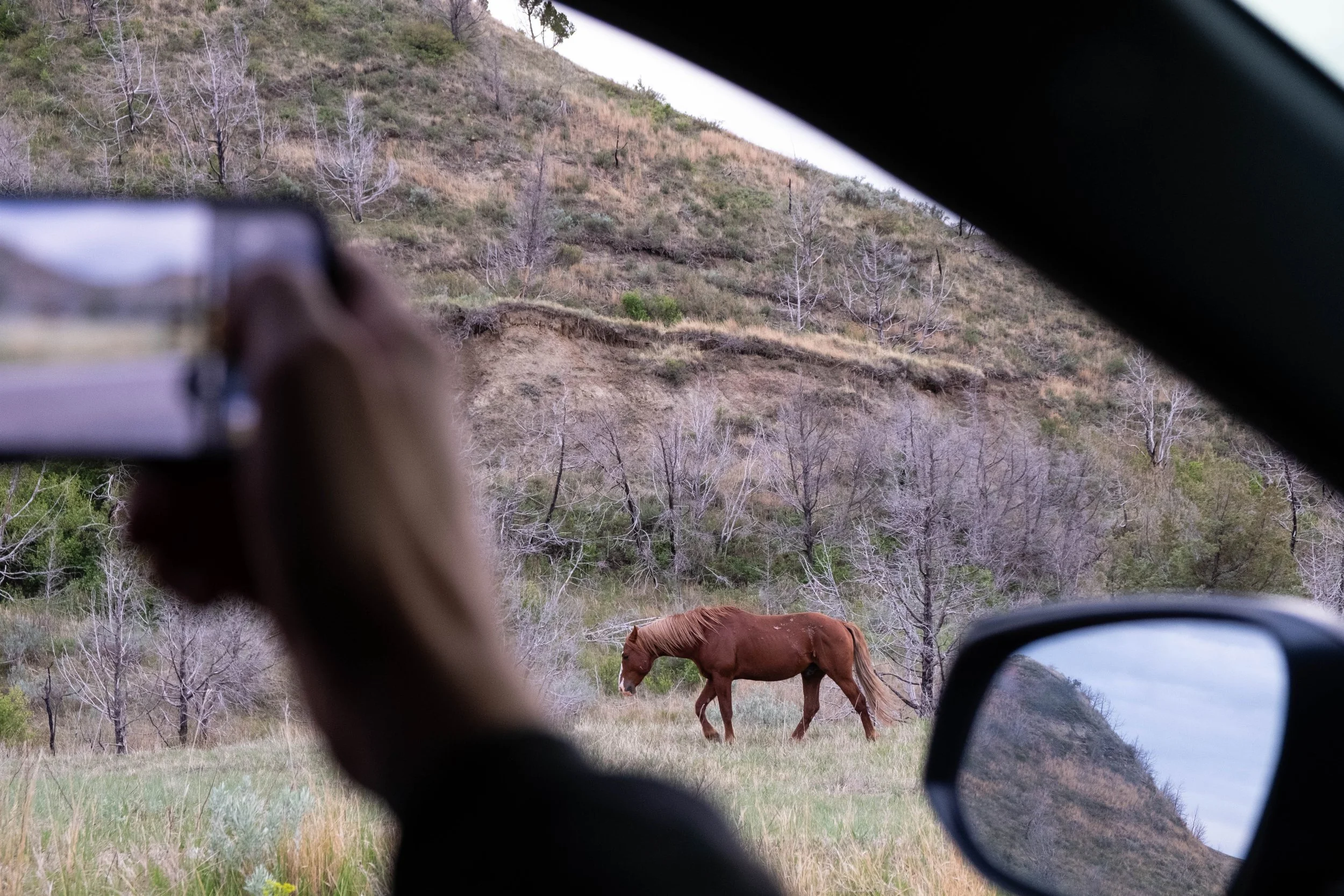
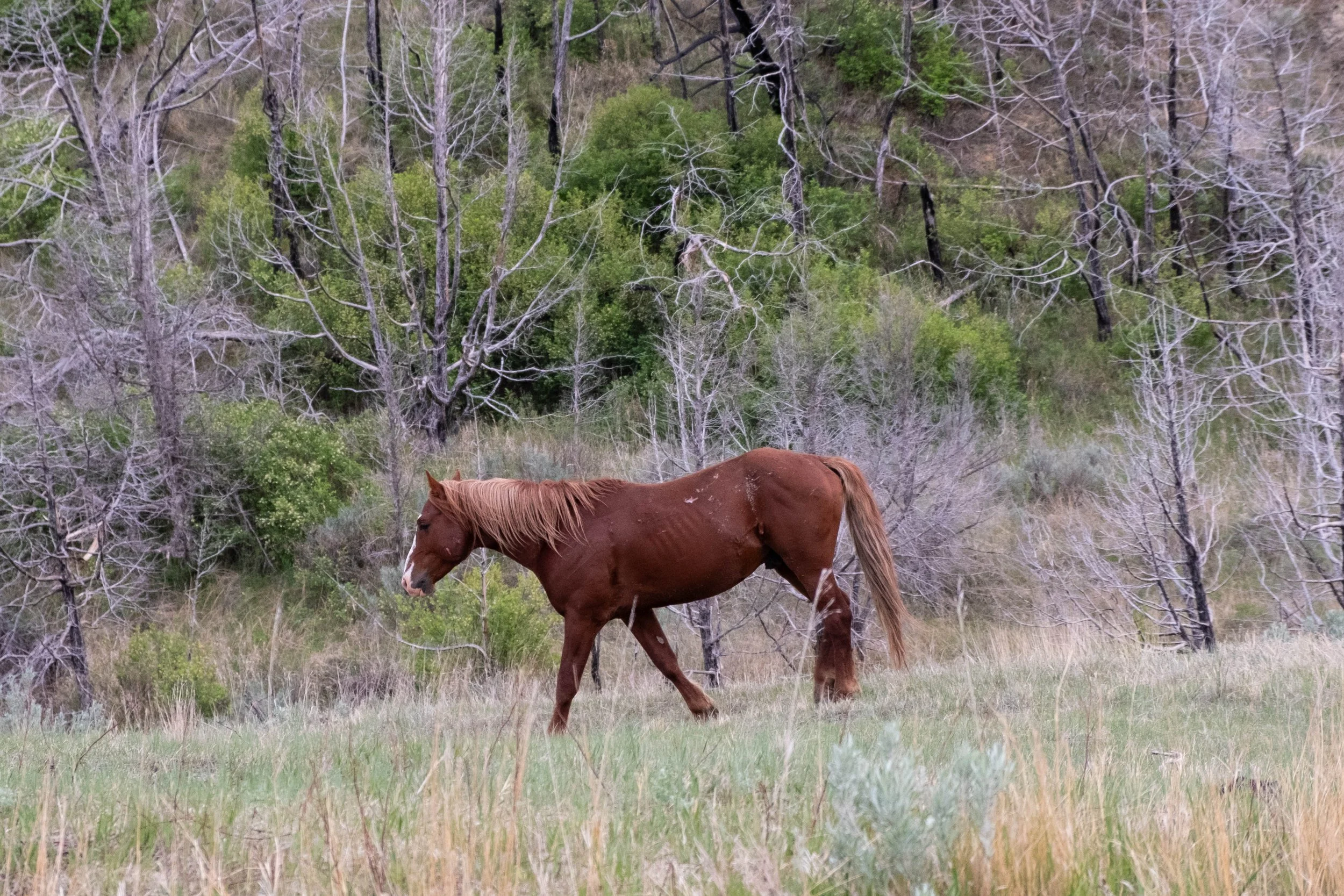
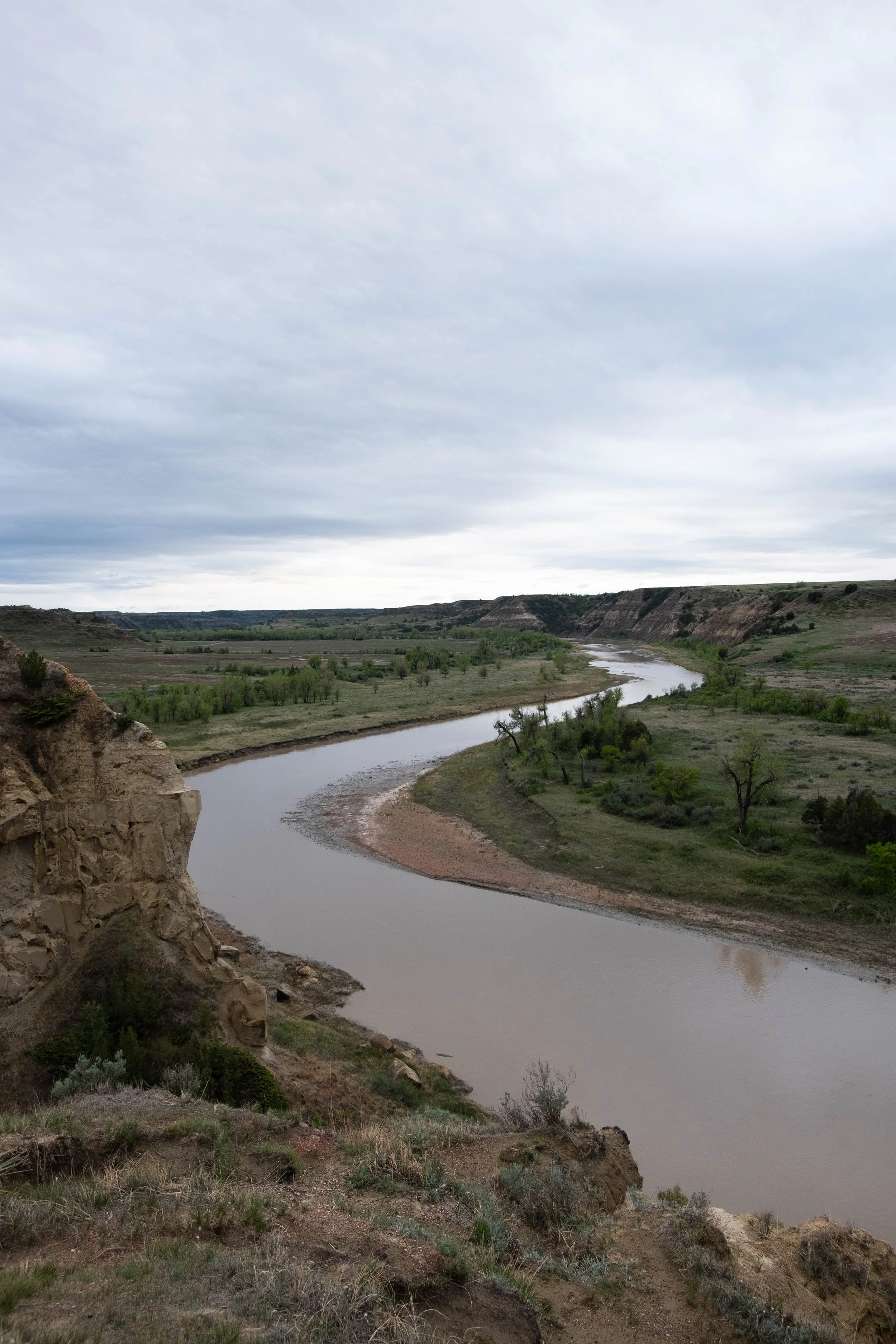
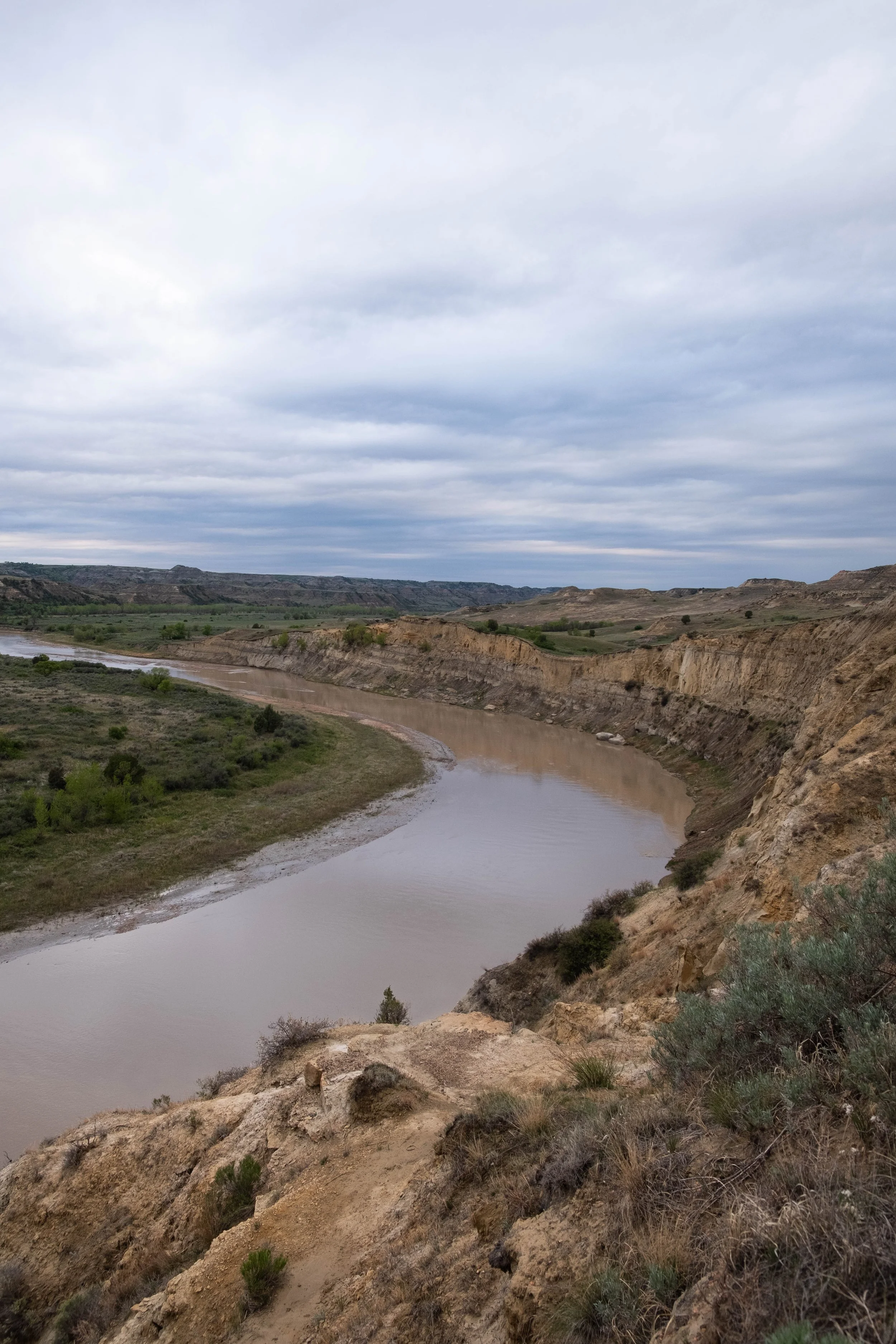
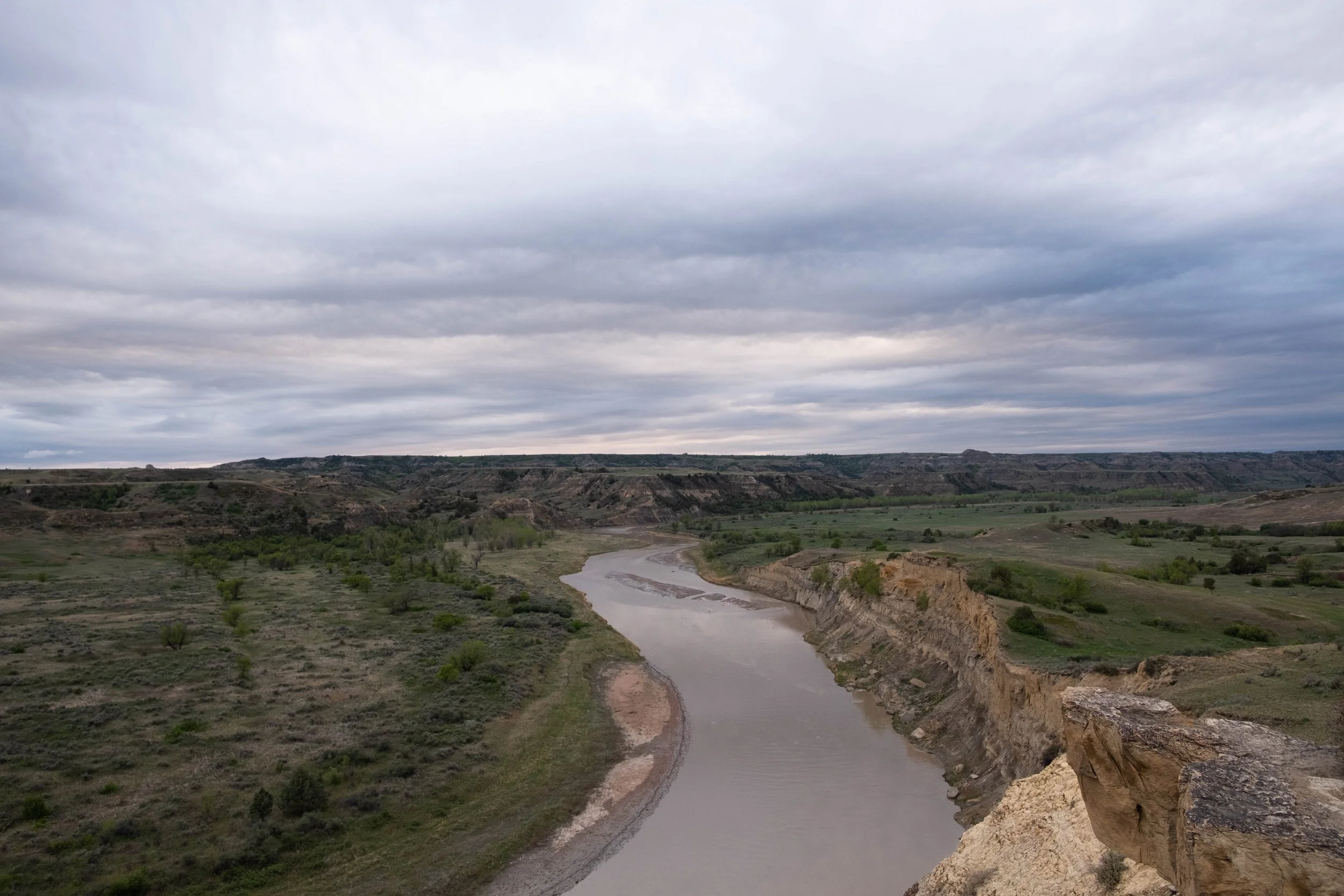
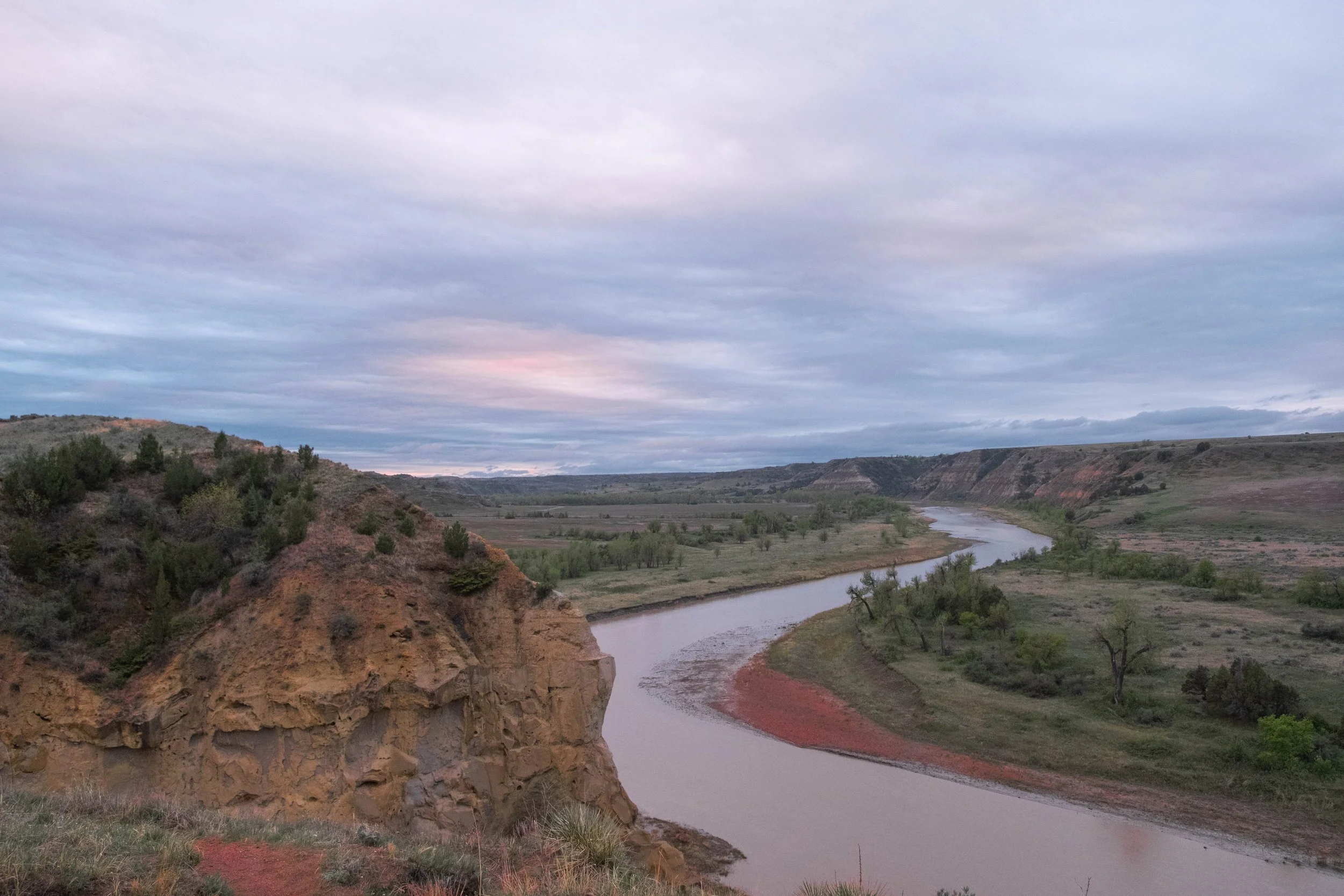
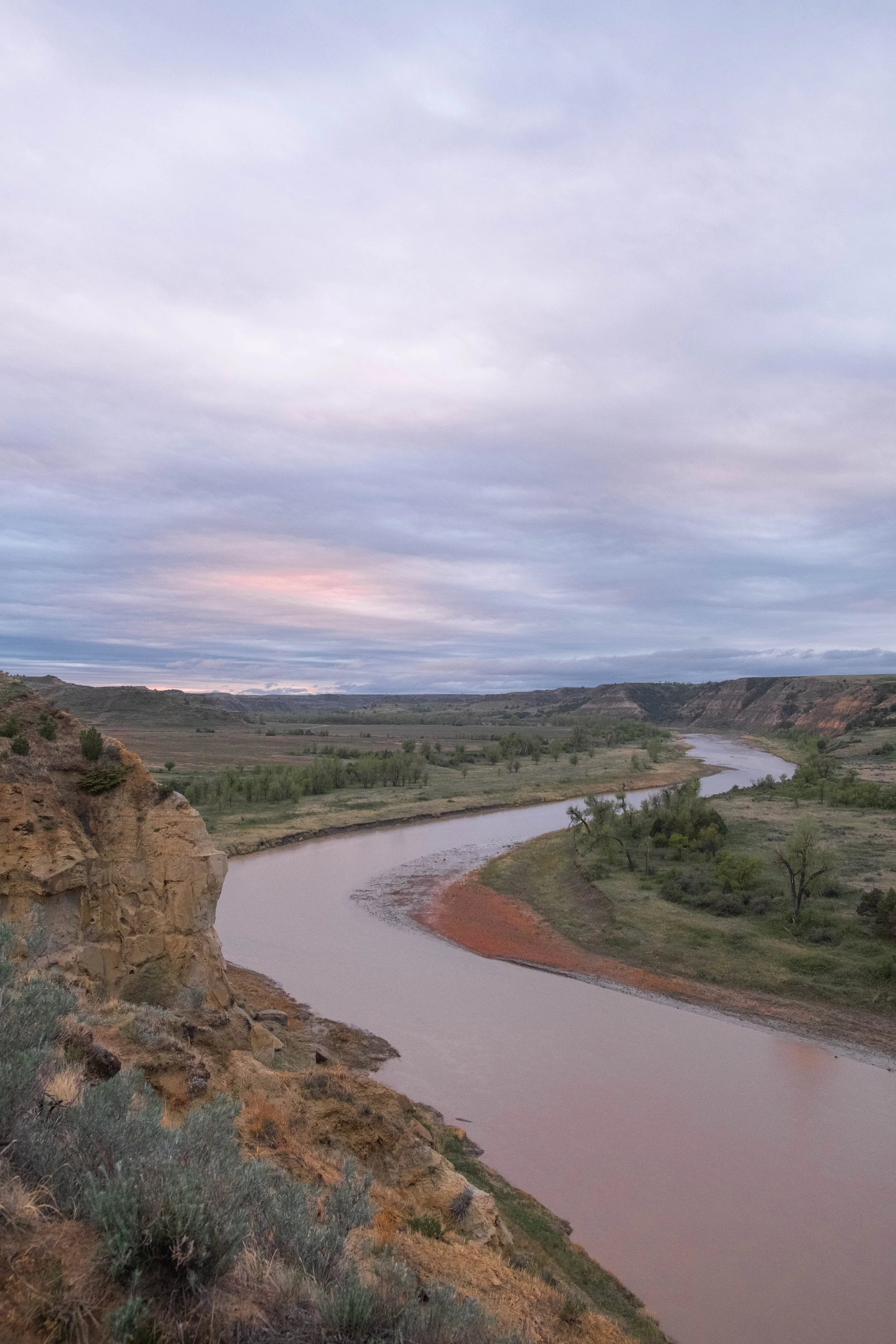
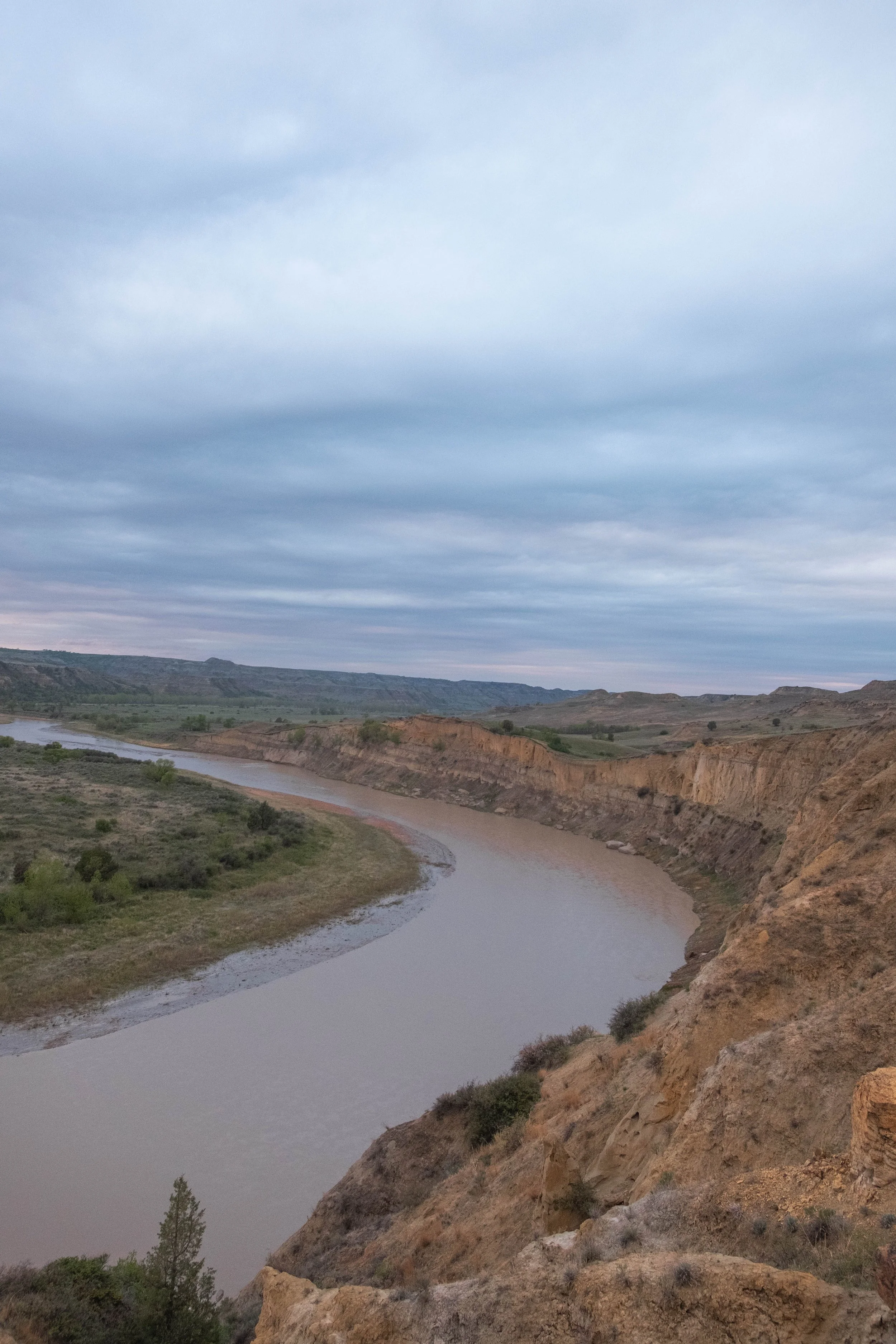
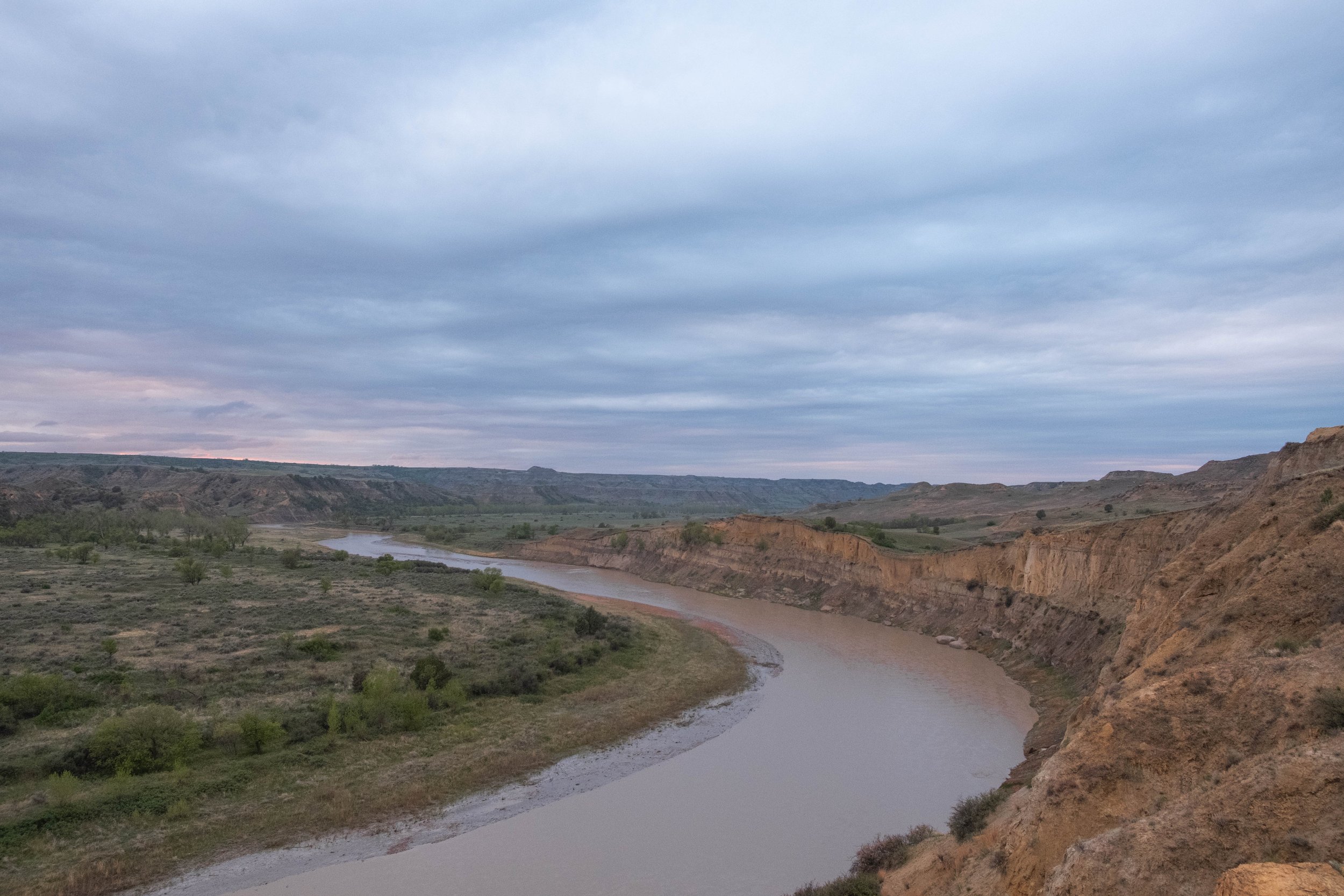
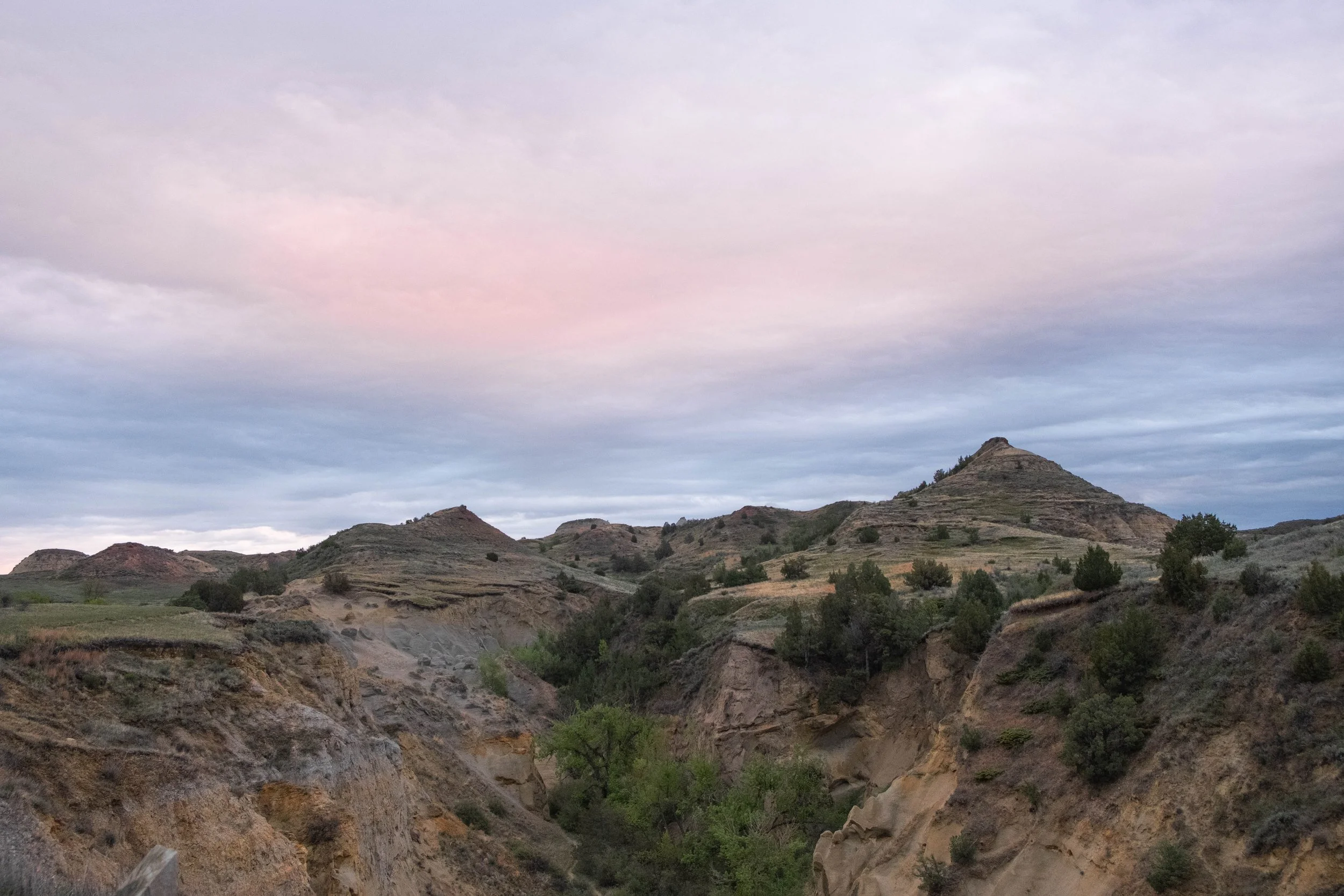
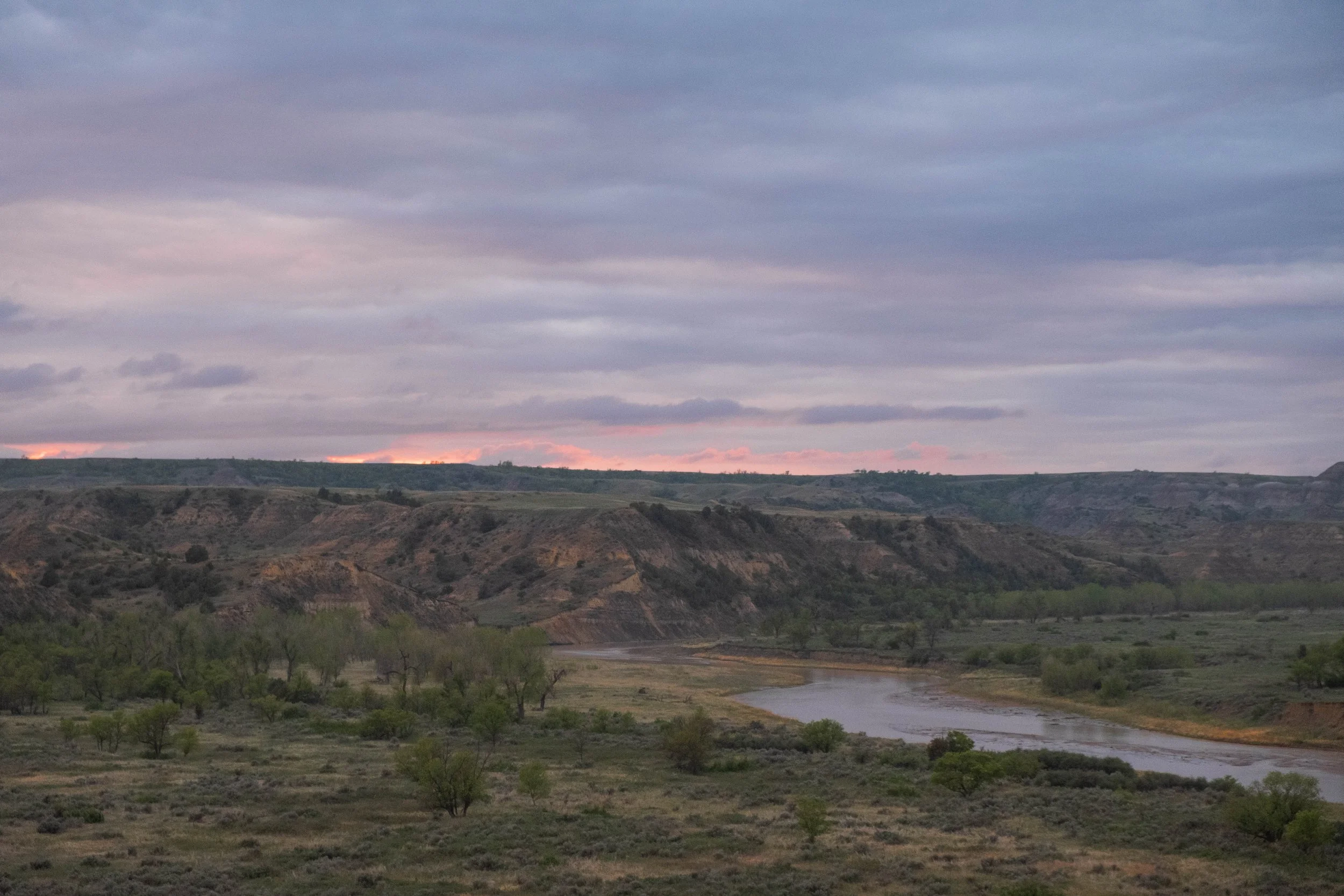
What ensued was an incredibly peaceful evening filled with more wildlife encounters than either of us had expected. Baby bison frolicked on the hills. Prairie dogs squealed as they stood straight and rigid on the stoop of their underground homes. Wild horses walked right past us. A coyote trotted across a meadow beneath us when we stopped at a trailhead, the song of its kin beginning to fill the air as daylight dimmed. We spent sunset — which was quite subtle, the low-hanging clouds tinted with the tiniest bits of pink and peach — at an overlook by the Little Missouri River. It was quiet. The wind sighed. The coyotes’ cries filled the lonely open spaces with speech we couldn’t apprehend but filled me with something like wistfulness.
This is the only national park that is named after a person. It’s clear the National Park Service wants to honor the memory of Theodore Roosevelt, who is often hailed as the “conservation president” following his formative experiences in this region that ultimately led him to formally protect large swathes of land across the United States. Some of these areas became national parks — Olympic, Crater Lake, Mesa Verde, the Grand Canyon — places which hold many beloved memories for me and countless others. Yet this protectionism and conservationism is inextricably bound to the forced removal, disenfranchisement, and displacement of countless Indigenous peoples, many of whom had (and have) intimate knowledge of and sacred connections with these lands.
Broadly speaking, (white-led) conservation views Nature as untouched “wilderness” in need of protection. In practice, while this may sometimes preserve land from things like fracking or widespread construction, it also contributes to a narrative that dismisses the Indigenous peoples and Sovereign Nations who first lived on and tended these lands. The very concept of wilderness implies that there never was human presence in these lands (or, if there was, it implies that they must be removed in order to preserve the land), thus contributing to the ongoing erasure of Native peoples from these lands and waters that are their home.
We gave the visitor center at this park lower marks because it did not present a nuanced portrayal of Theodore Roosevelt, the conservation movement, or the difficult but necessary truths about how the story of these parks is rooted in theft and violence, under the guise of protectionism. The result of these decisions is unspeakable injustice. And these decisions have yielded parks and monuments and memorials that I often find myself seeking out for respite, reflection and connection. Both things are somehow true at the same time and this is the ultimate tension of the NPS when we visit.
Final thoughts: One redeeming factor of this visitor center? If you sit and watch the 15-minute video introducing you to the park, it is voiced by none other than the great Terry Tempest Williams.
Pictured below:
Our creative use of the jalepeño kettle chips on the avocado toast.
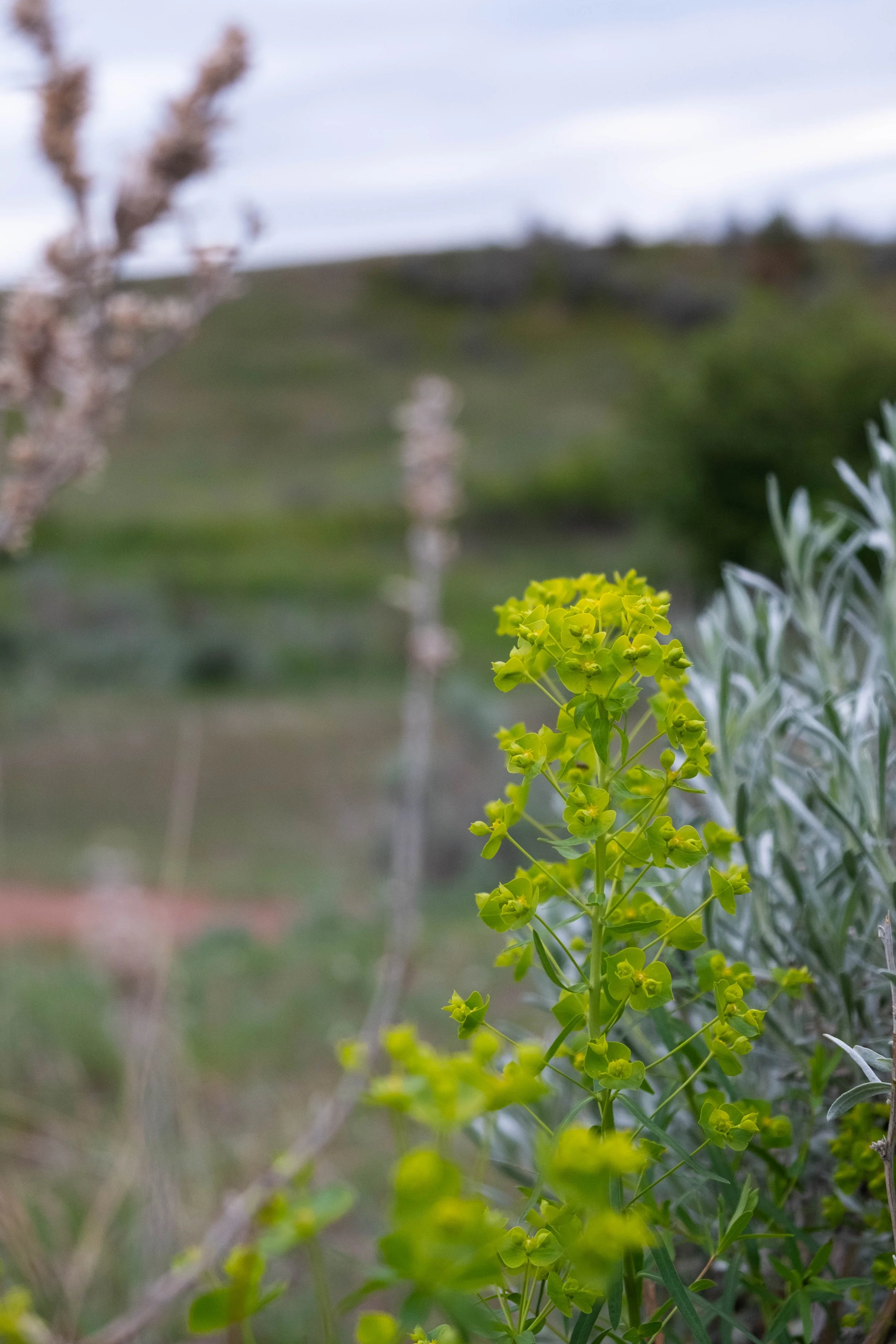
Views from the Scenic Drive of the South Unit — bison, wild horses(!), prairie dogs, and coyotes were all spotted (the coyotes sadly not pictured, but we enjoyed their evening songs).
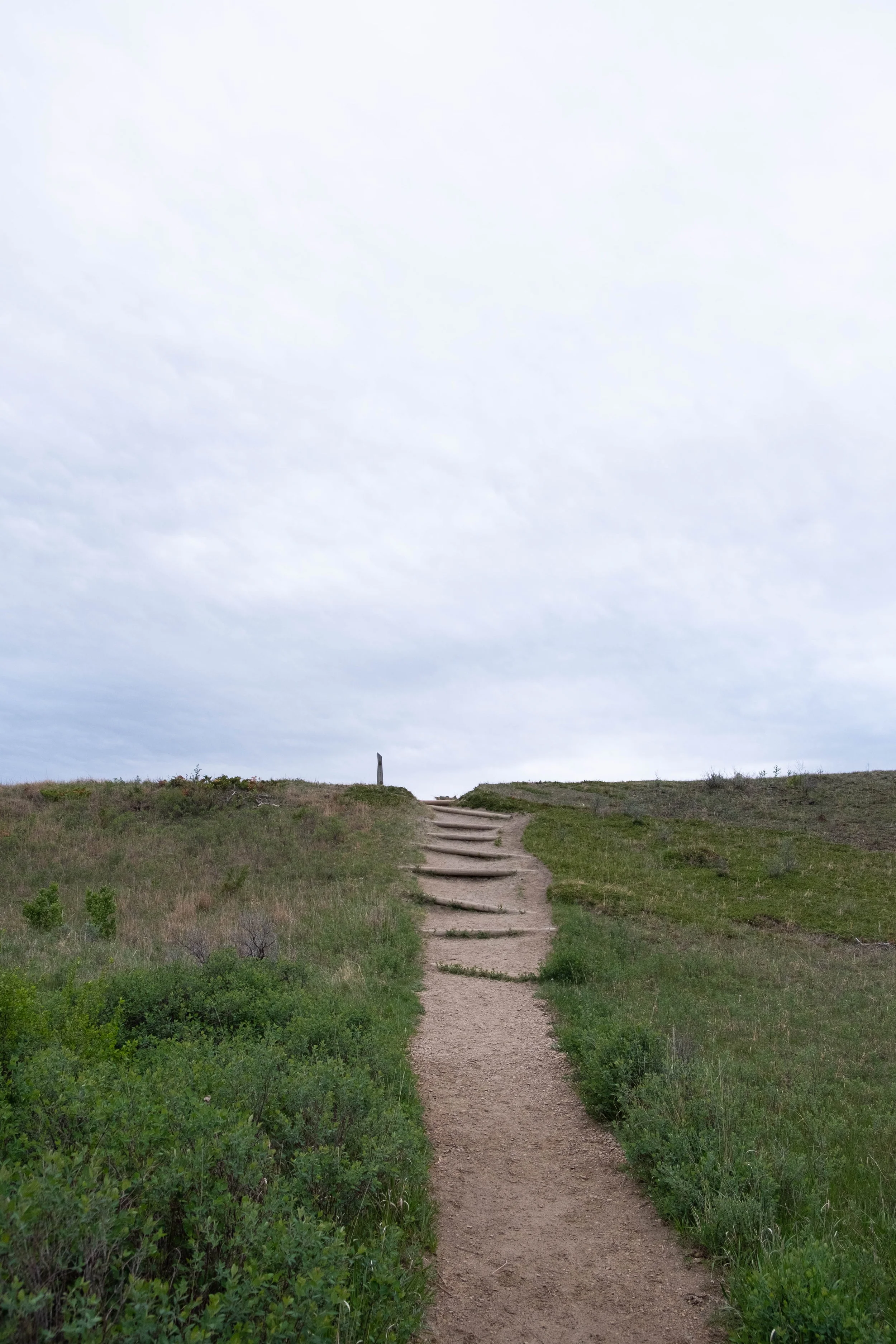
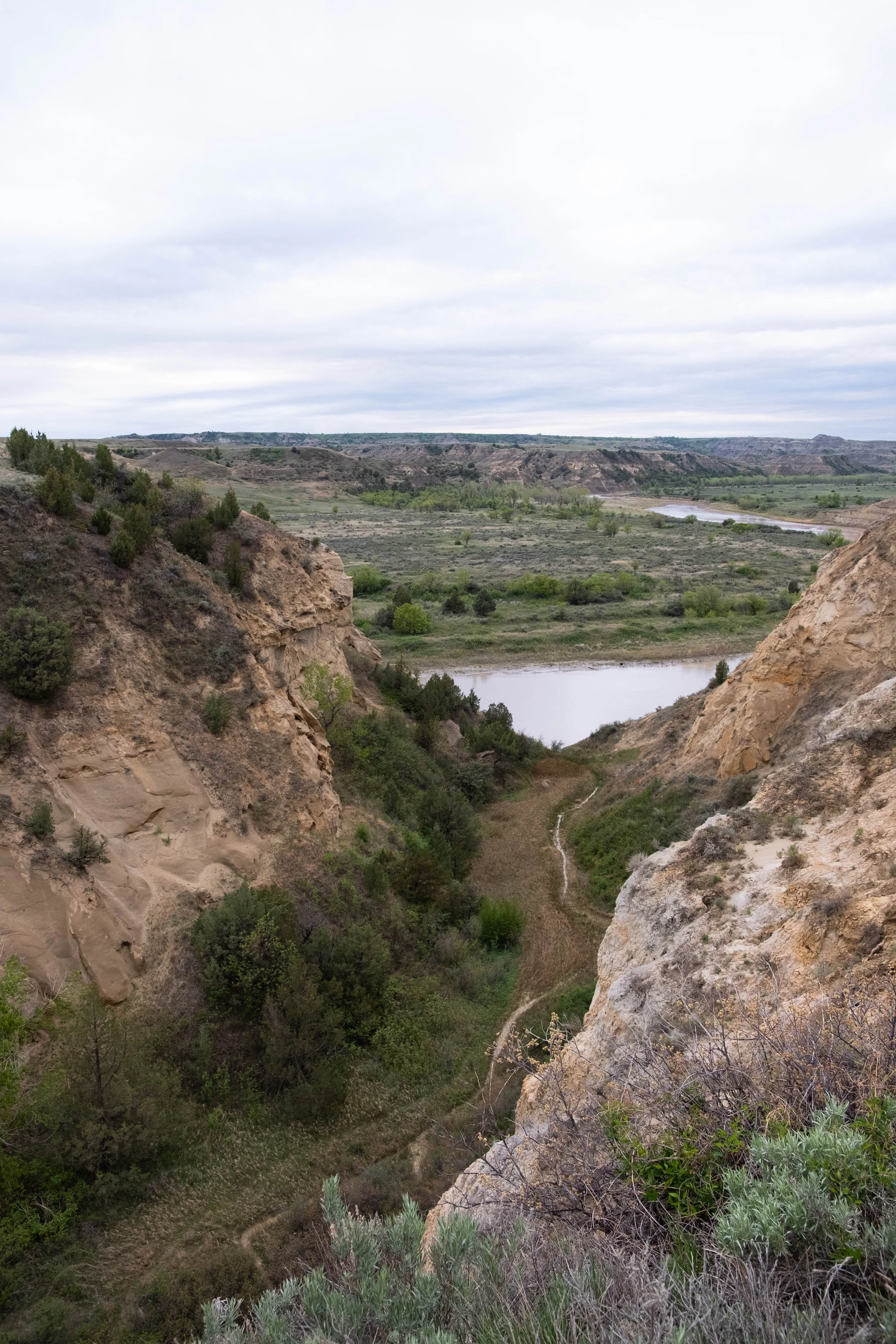
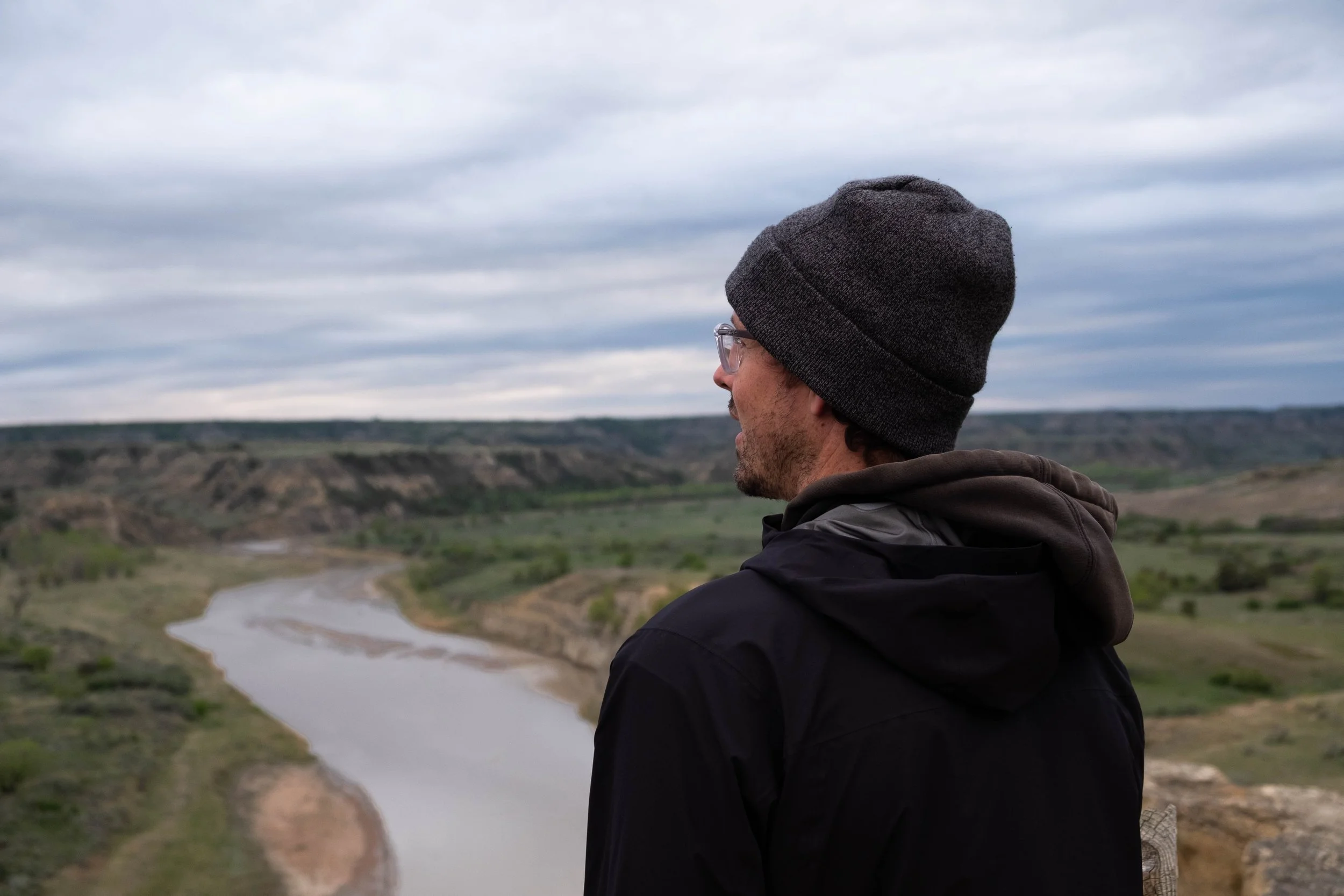
Overlook of the Little Missouri River from Wind Canyon Trail.