National Parks
When we were dating, we set the lofty goal of visiting all 63 U.S. National Parks.
Today, we’re married, we have a dog, and we’re at 39 parks (and counting).
The catalogue below doesn’t just remind us of the landscapes we’ve had the privilege to explore — showcasing so much breathtaking beauty and diversity — but also of the ways we’ve changed, grown, and evolved throughout the years.
National Parks are one of those things we hold with a great deal of tension. While they have held some of our dearest memories and favorite adventures, they are simultaneously impossible to disentangle from the legacy of violence, colonization, broken treaties, and land theft that led to the establishment of the United States as it is now understood. They can be places where the story of this country is told with honesty or is erased, as we’ve seen with recent actions to remove NPS signs and educational features, many of which discuss the enslavement of Black people; Indigenous sovereignty; LGBTQ+ rights and history; climate change; and the long struggle for equality and justice in this country.
Visiting these places is a political act. We strive to overtly recognize the political aspect of each park and visit the land and the waters with a sense of reverence, awareness, respect, and learning. We use these trips to educate ourselves on the history of each place from perspectives outside those either promoted or removed by the National Park Service (although we’ve been witness to some pretty cool partnerships between NPS and Tribal Nations in several parks that made their mark on us).
This is not and never will be enough to make up for the destructive practices that led to the creation and maintenance of these parks in the first place. And yet still: Our hope is that experiential education via embodied interaction with these spaces is the first step toward reinventing the way we view them, telling more truthful (hi)stories, listening to and following Indigenous leadership and ways of knowing, and forging pathways toward restoring public lands into the stewardship of Indigenous peoples.
Olympic
Park 20 | June 2021
Sometimes J & I try to list our top five favorite National Parks, or the five we’d like to return to if we could. It always feels impossible to choose favorites. Each park is unique and I don’t like to compare them. That said… Olympic is always in my top five.
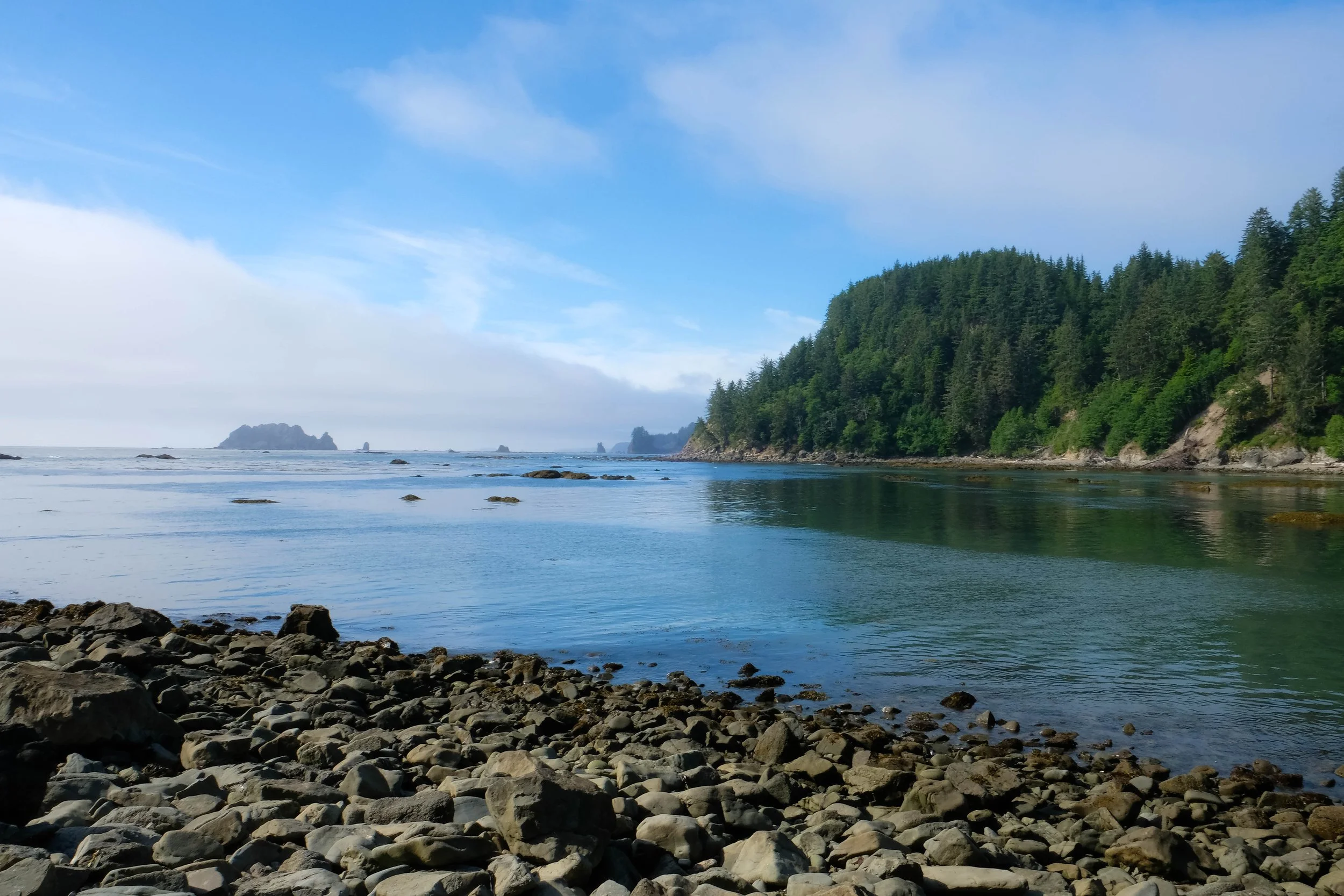
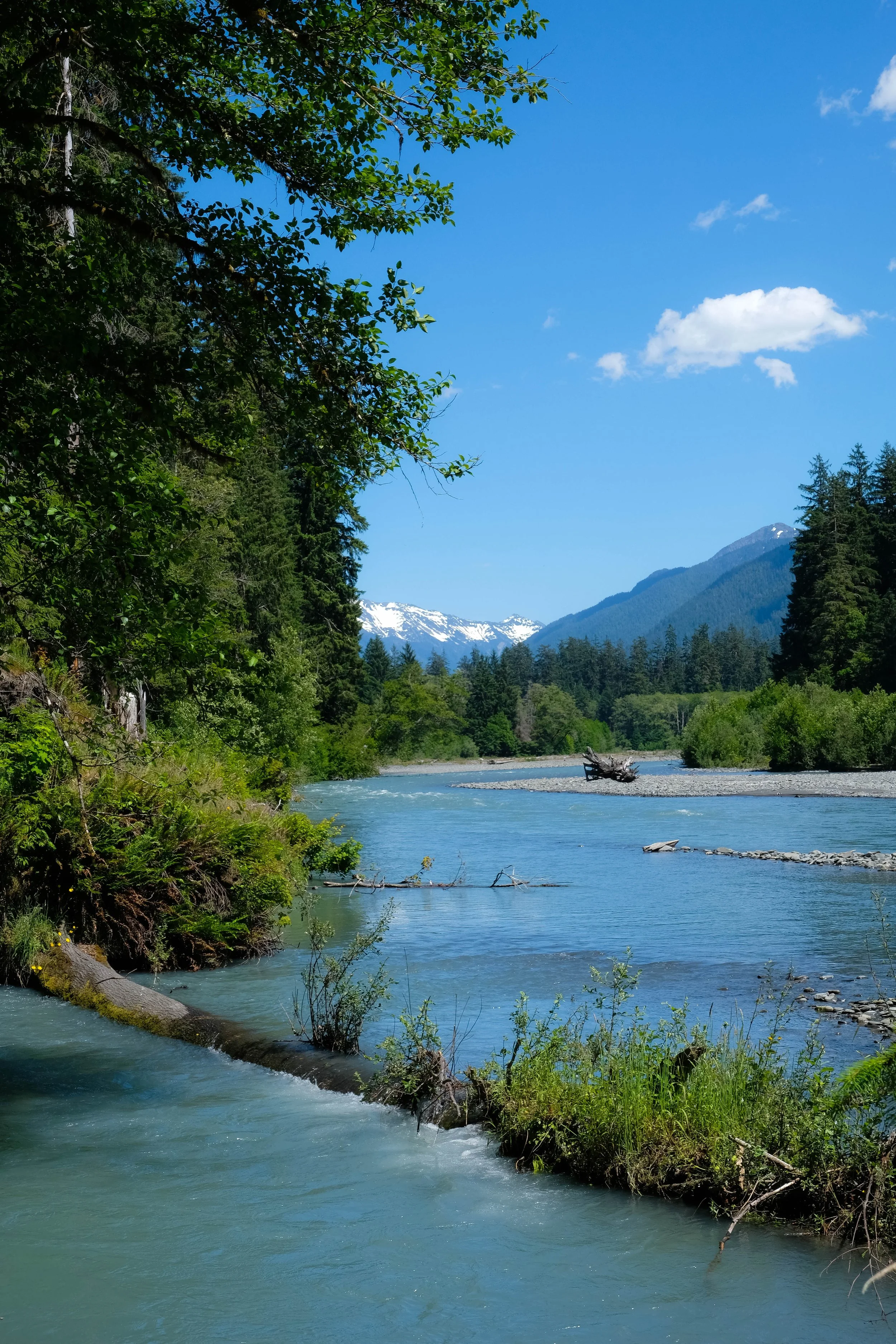
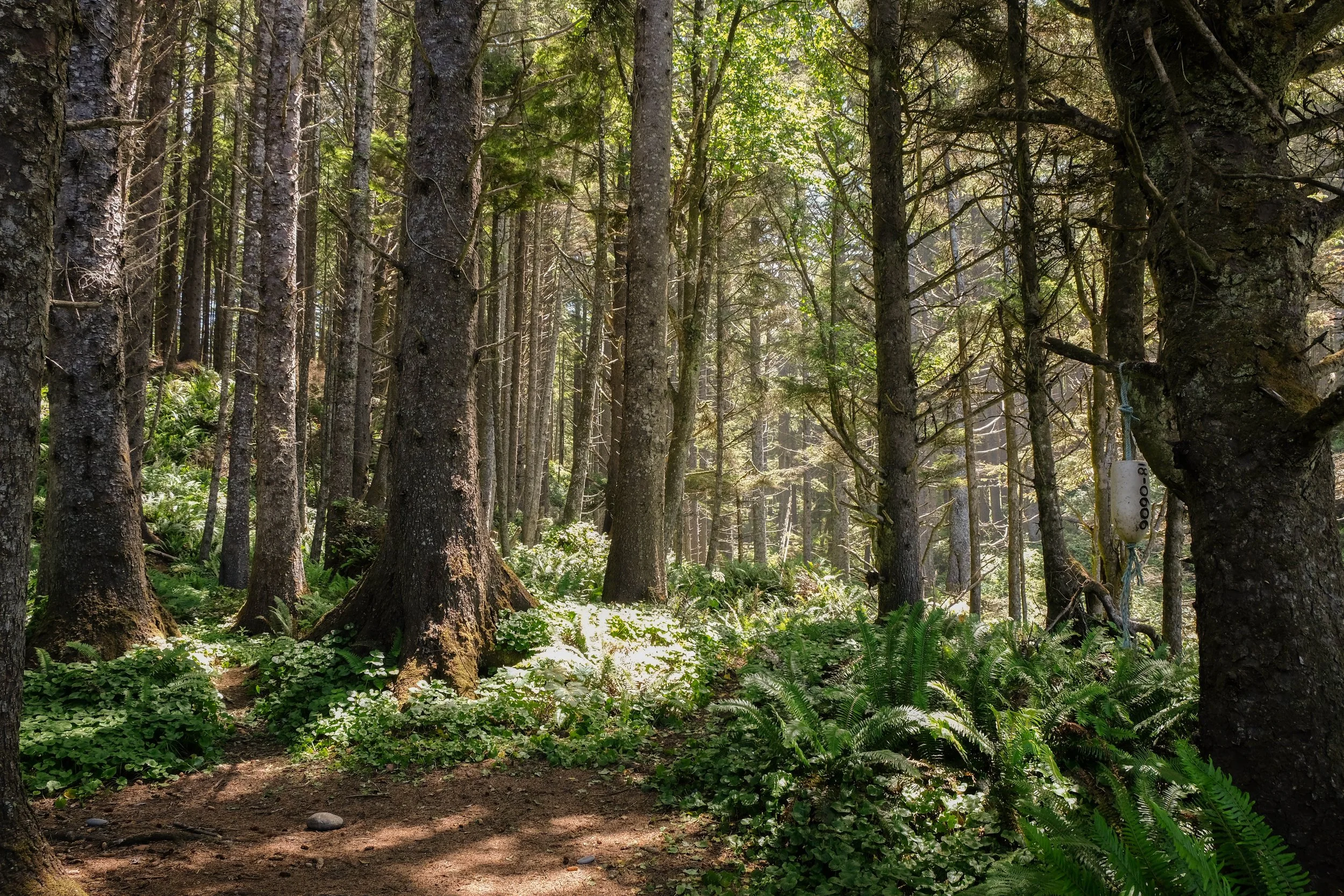
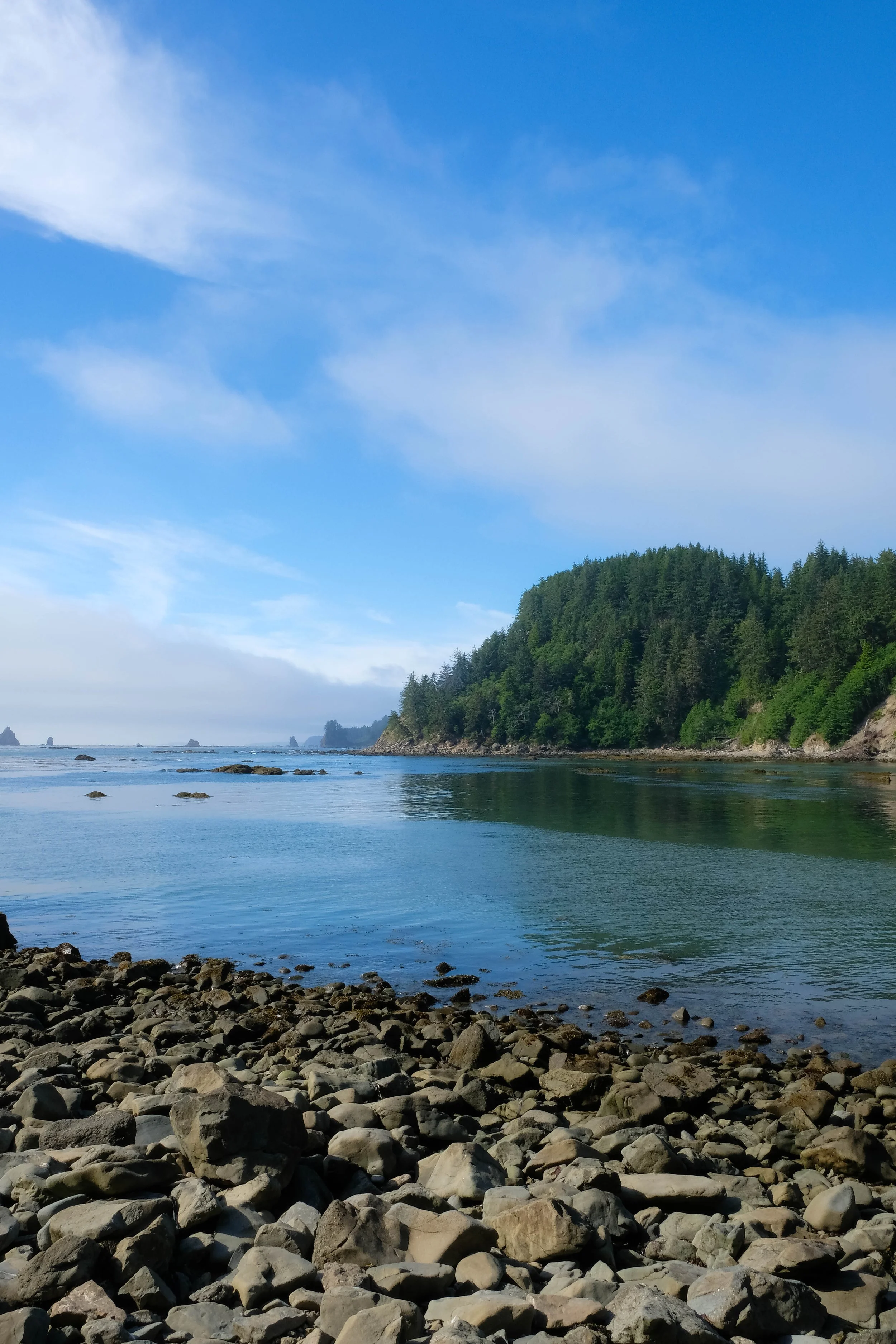
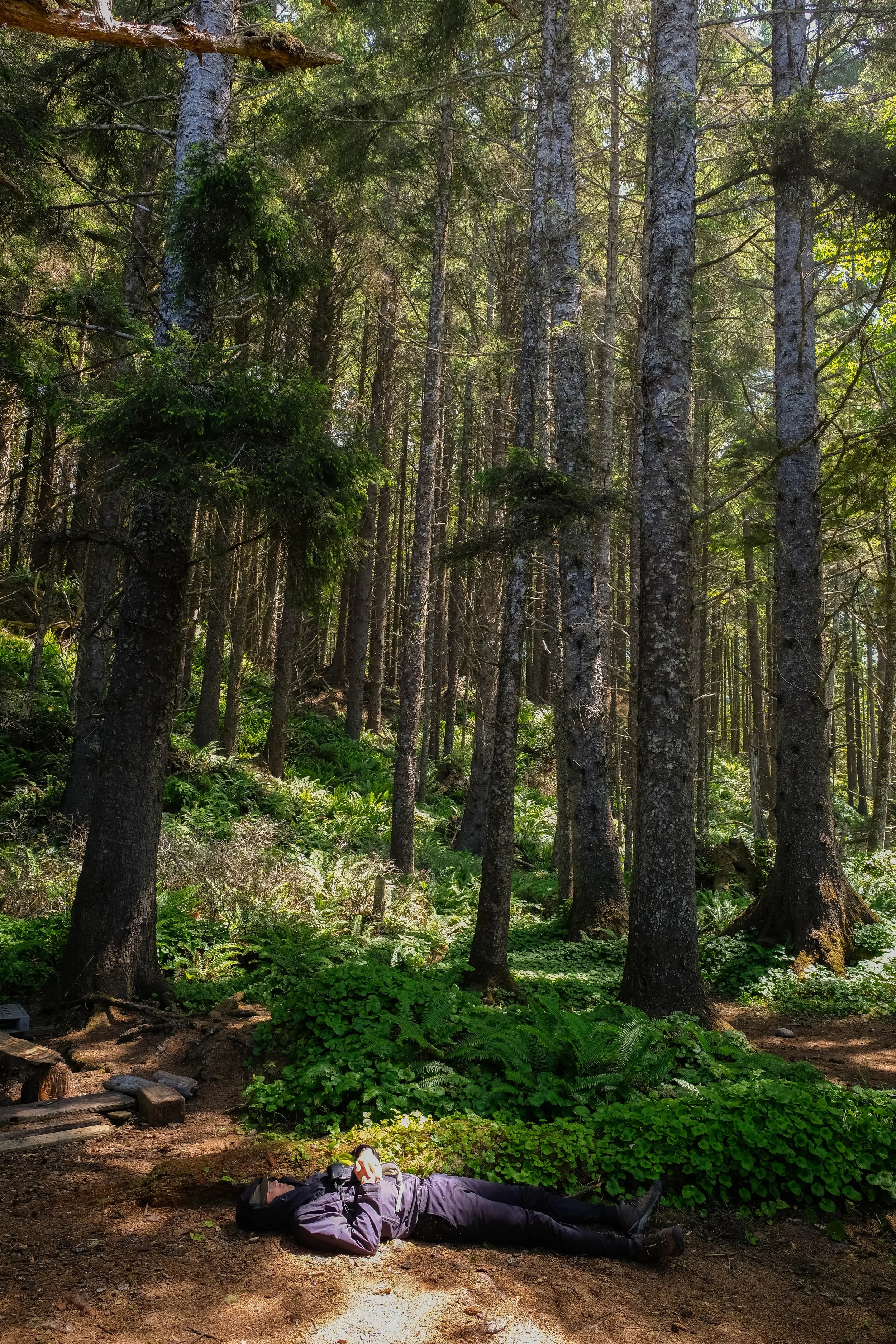
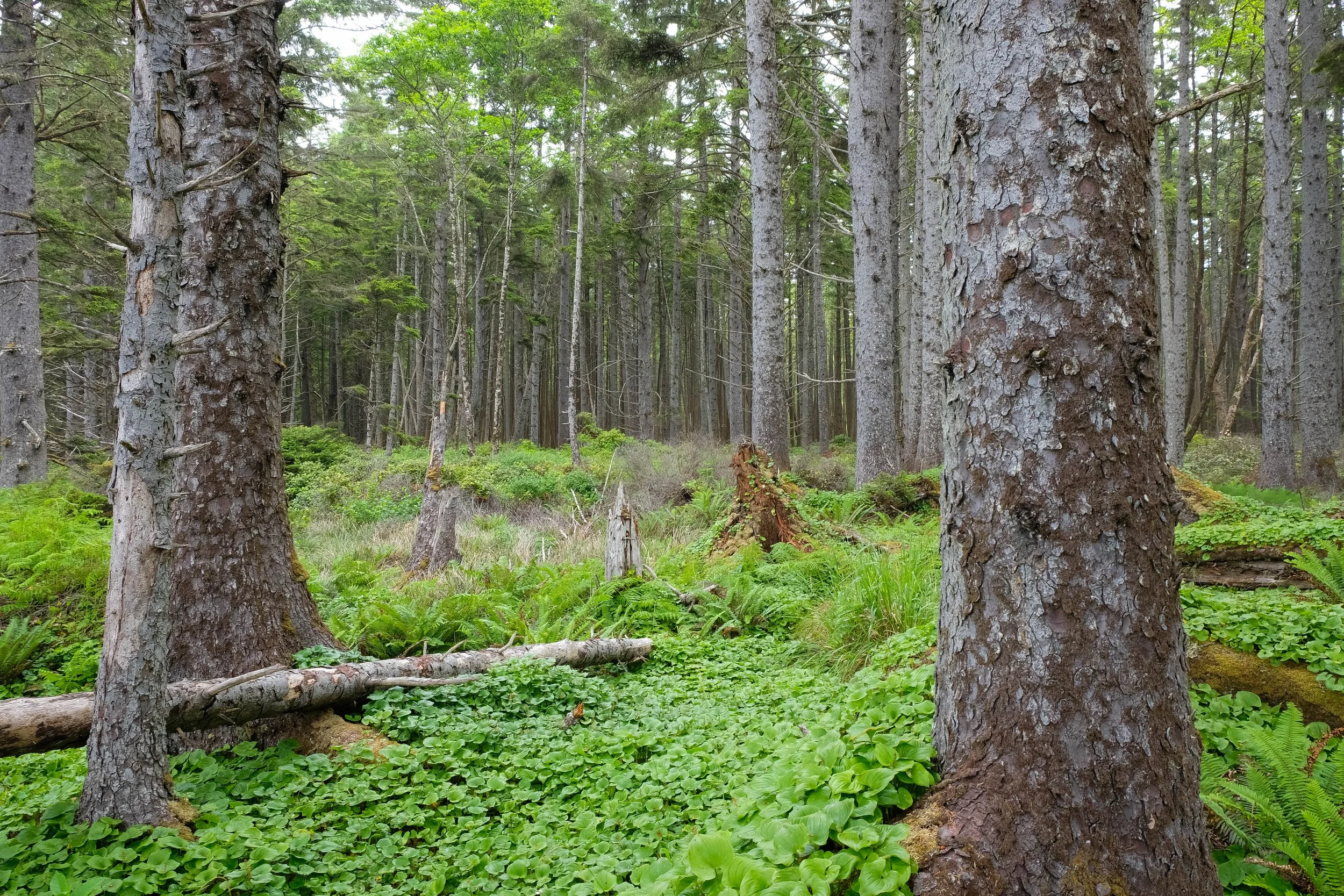
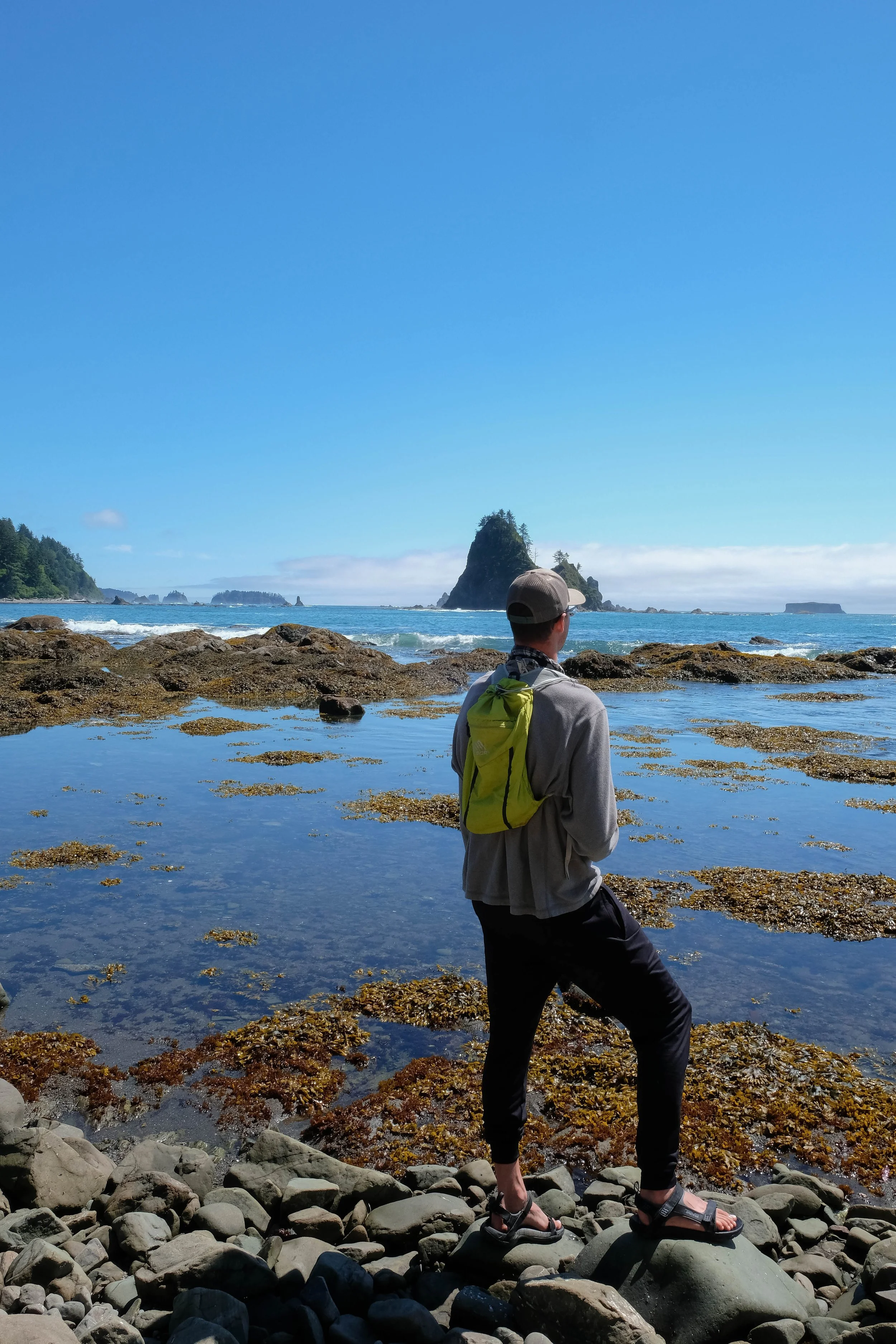
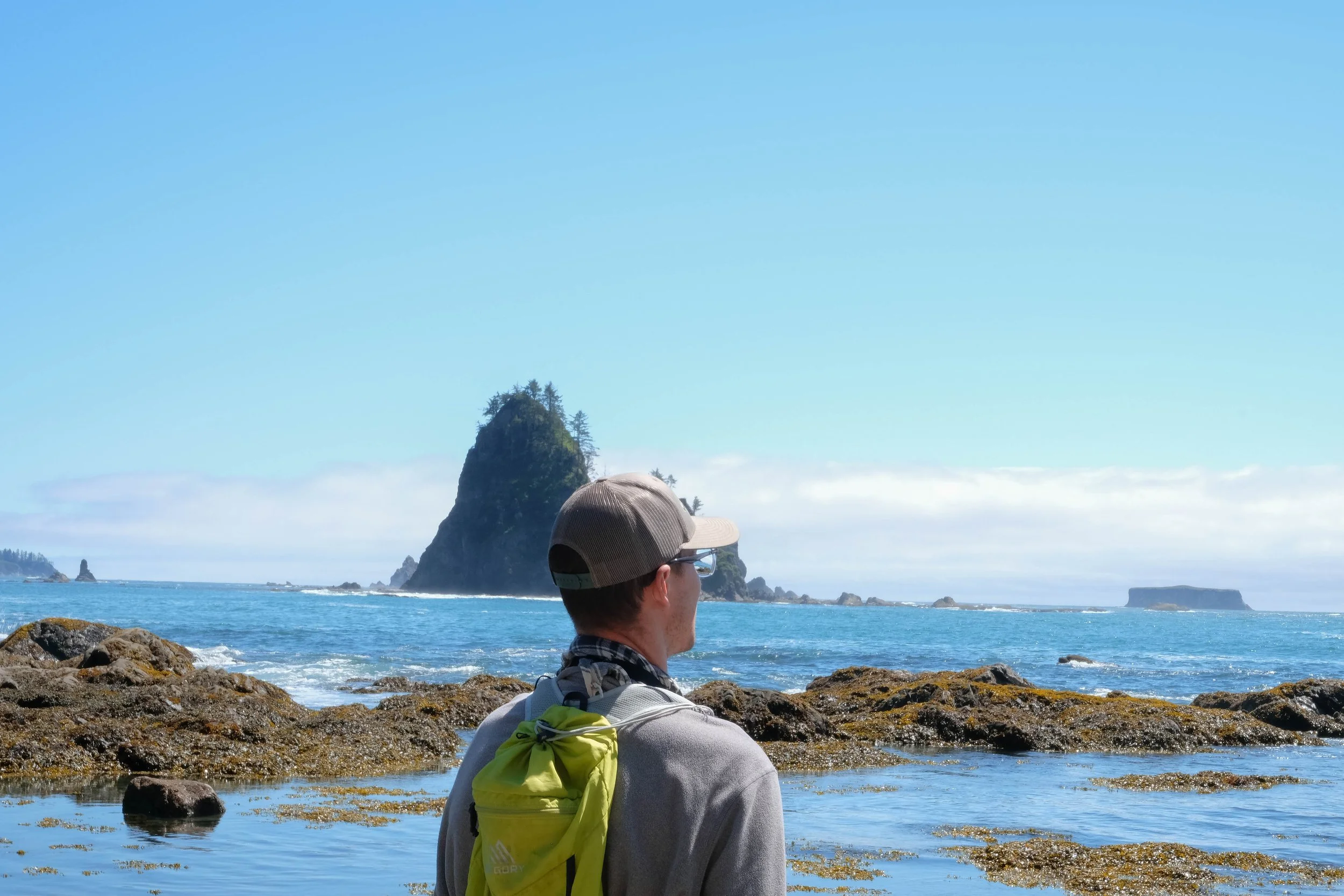
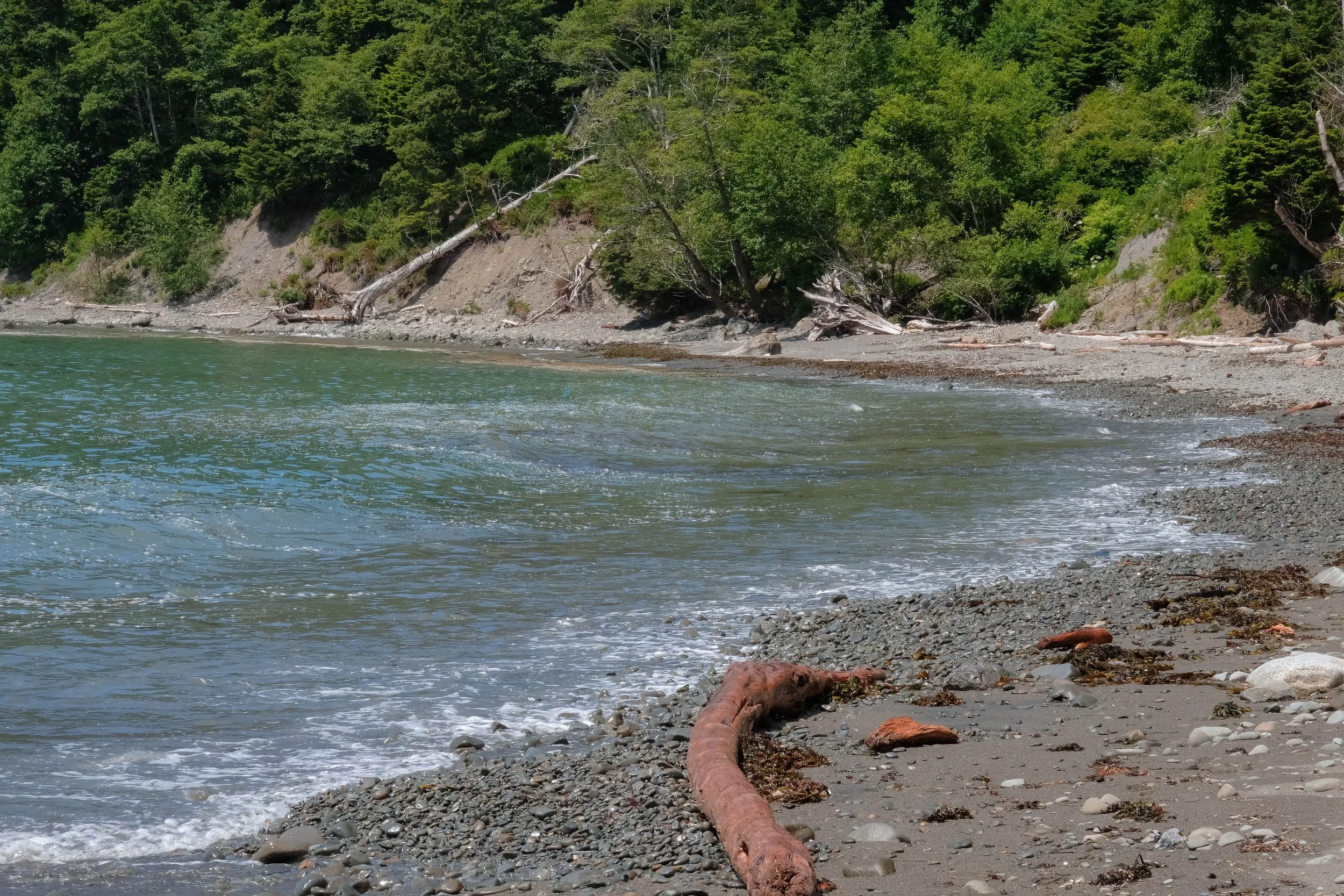
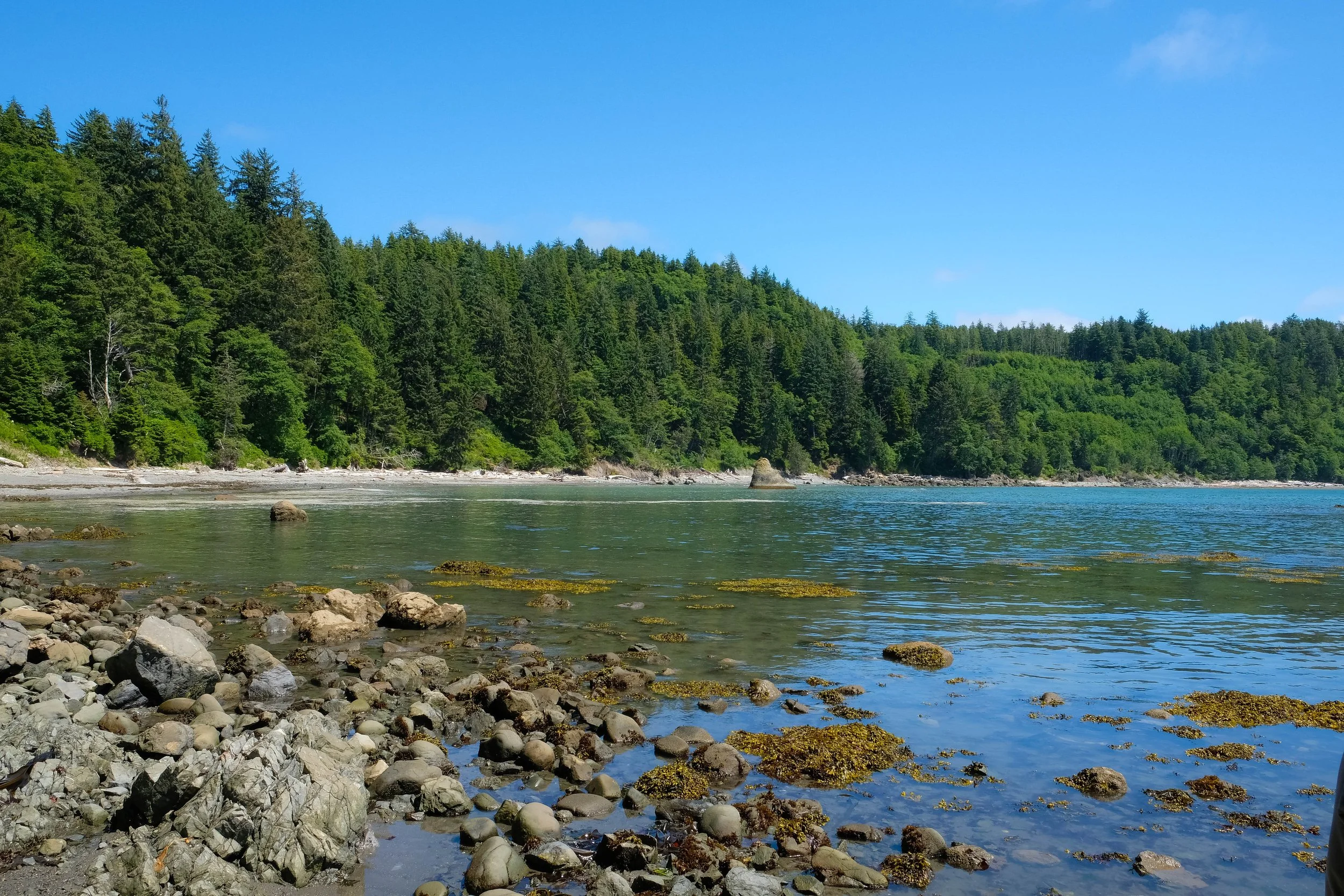
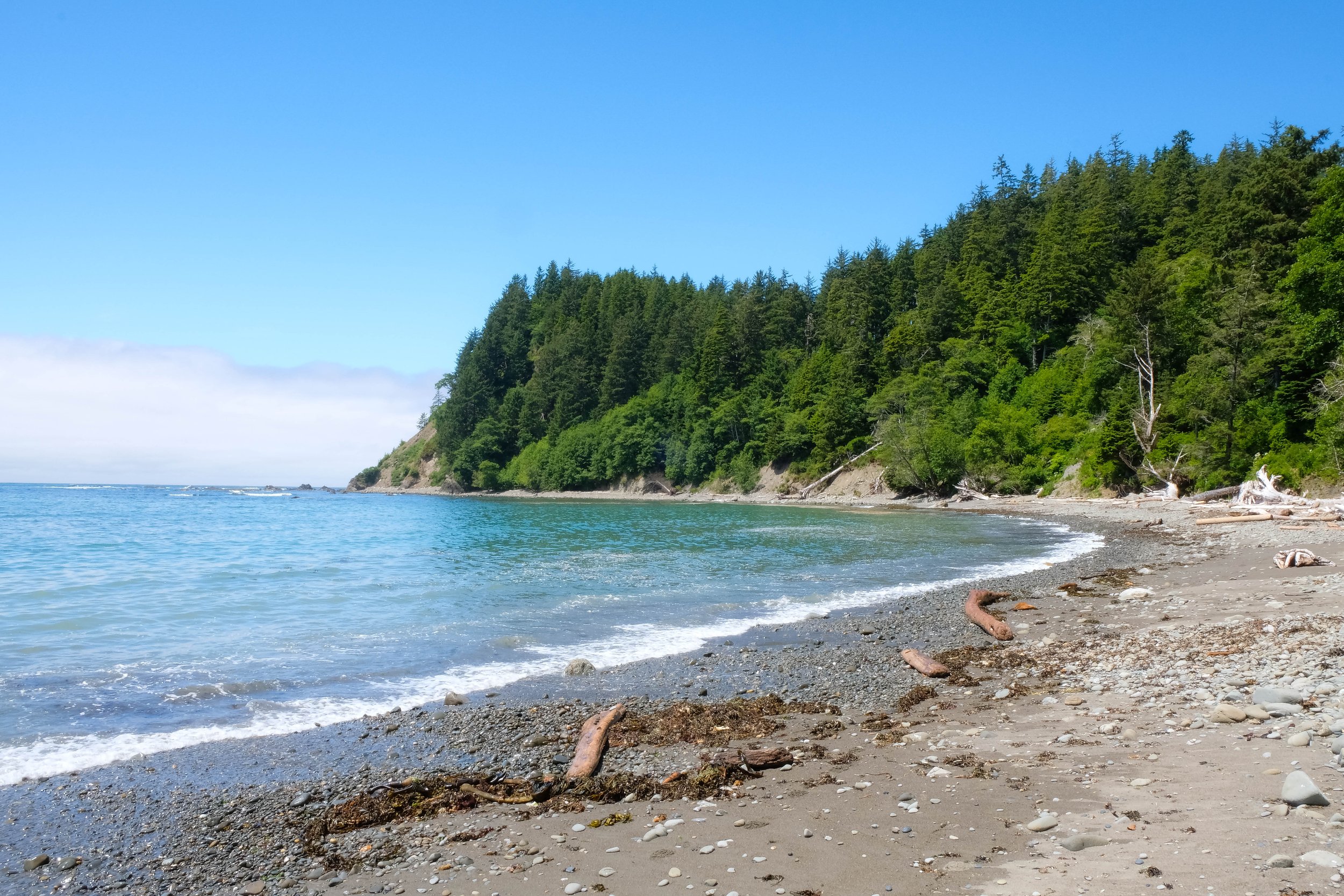
We first visited in 2021, over our birthday week, and it has since been one of the top parks I’ve longed to return to and continue exploring. Olympic might actually be a perfect place (dramatic, I know, but bear with me). It is generally cited as the national park with the most diverse ecosystems within its boundaries. The concentration of northwest coastline, old growth temperate rainforest, and mountains absolutely enthralls me — somehow, all my favorite things (ocean! forest! mountains!) are present on this beautiful peninsula. Visitors have the opportunity to spot orcas and elk, bears and sea otters, butterflies and foxes. We saw a deer hopping along the beach and raccoons scavenging in the ocean during low tide. You can trek through or ski down the mountains and soak in Sol Duc Hot Springs and backpack the coast and be visited by snowshoe hares in the rainforest.
Have I drawn up potential retirement plans to someday move to this general vicinity? I mean, yes. What is not to love about this place?
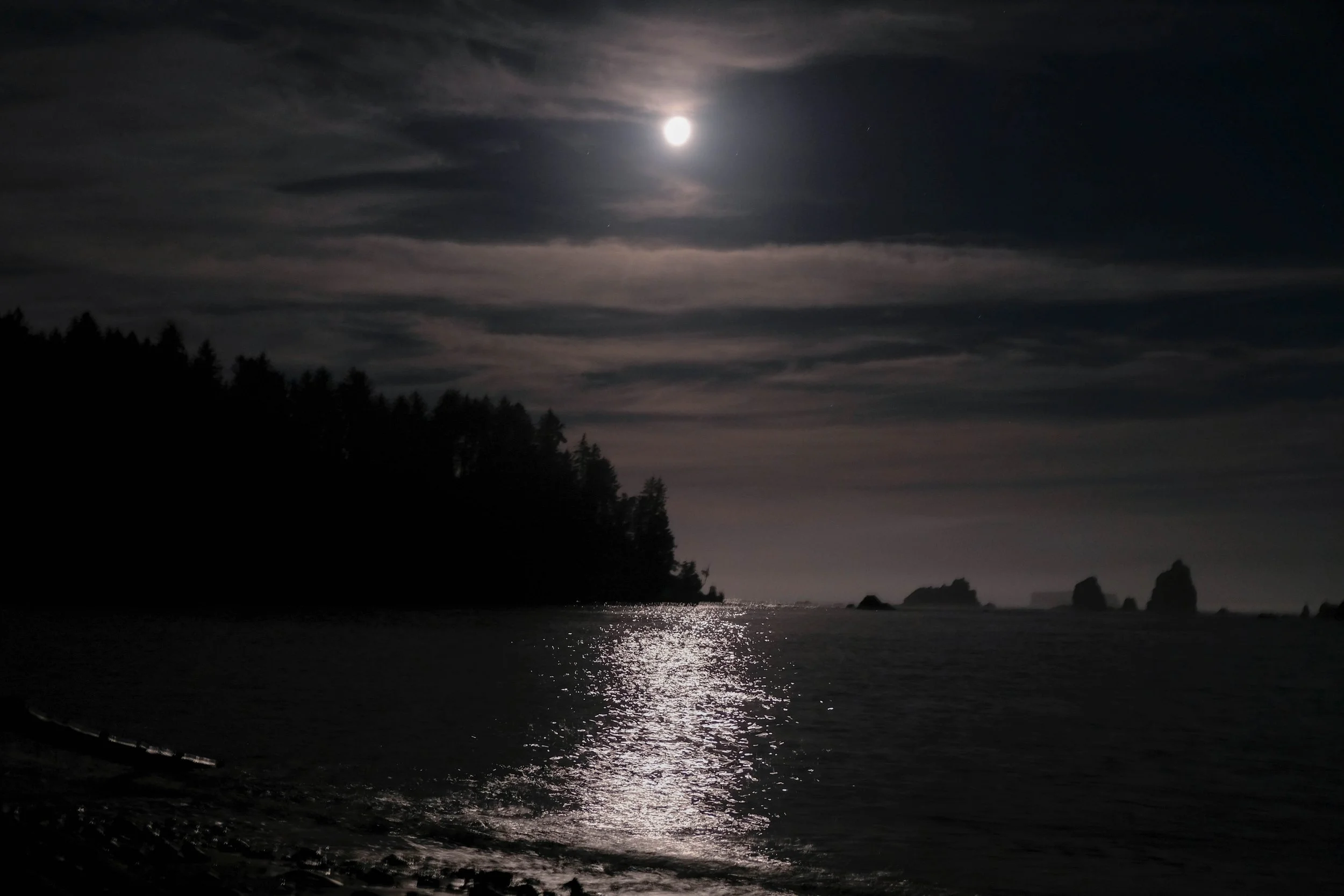
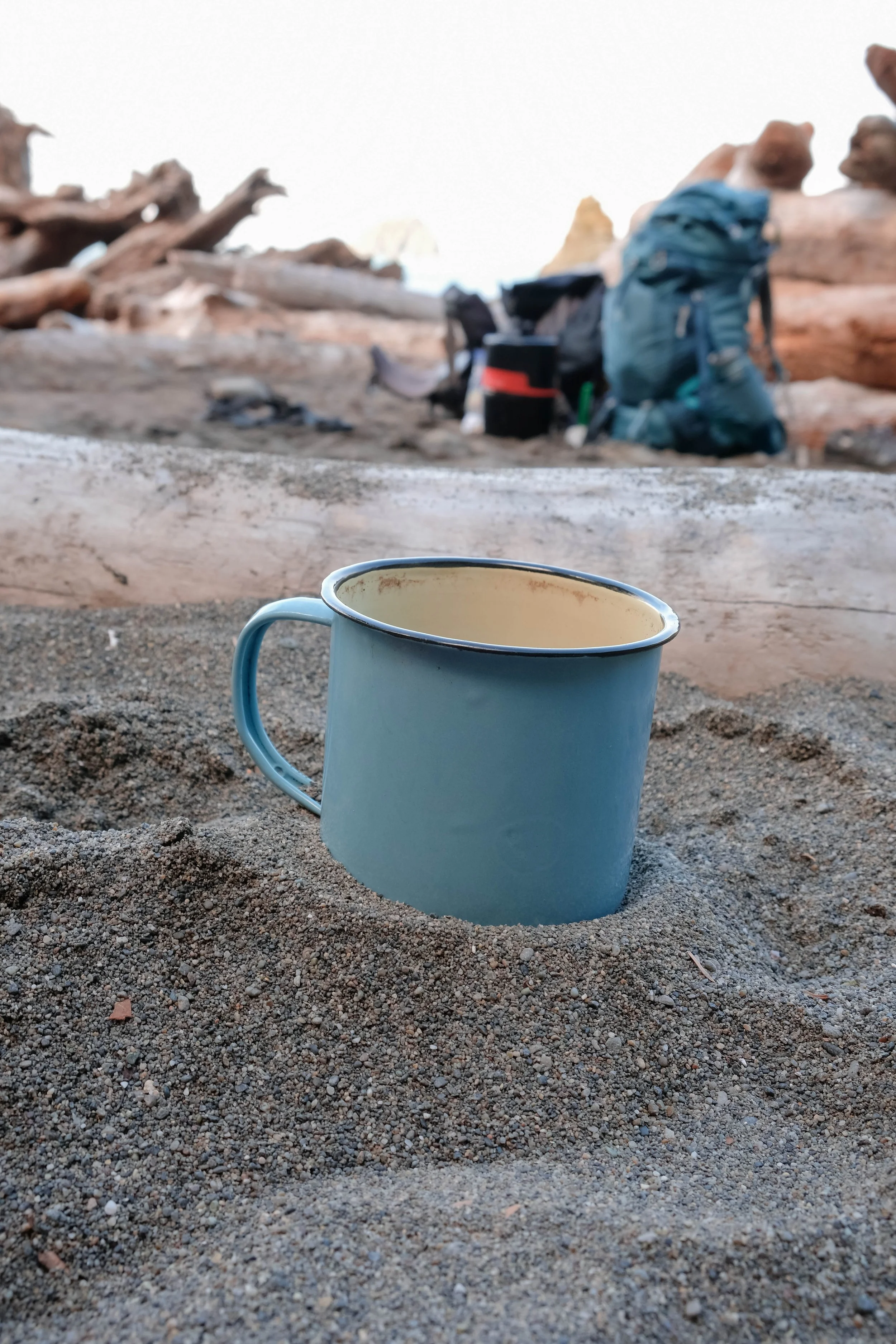
Strong memories from our days there include seeing said snowshoe hares gently moving through the forest ferns on our first evening of camping, their noses quivering tentatively; the full moon rising over the ocean from our beach campsite; and pulling ourselves up and over the headlands via hanging ropes and ladders along the coast. I sincerely hope to return to explore more of the mountainous regions, backpack further up the coast, visit/stay at the hot springs, and delve deeper into the Hoh Rainforest. Someday, hopefully!
Pictured below:
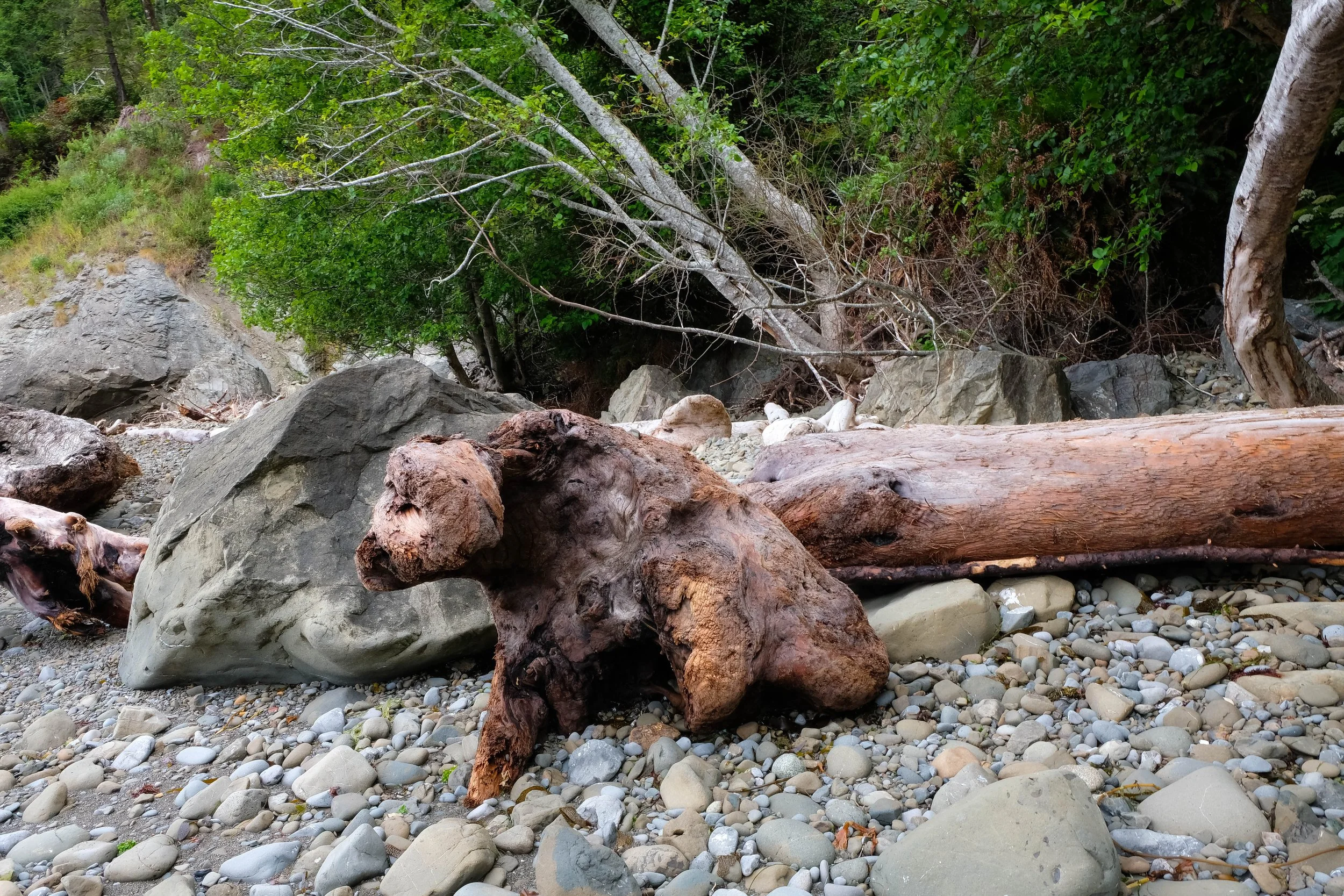
Hoh River and Hoh Rainforest.
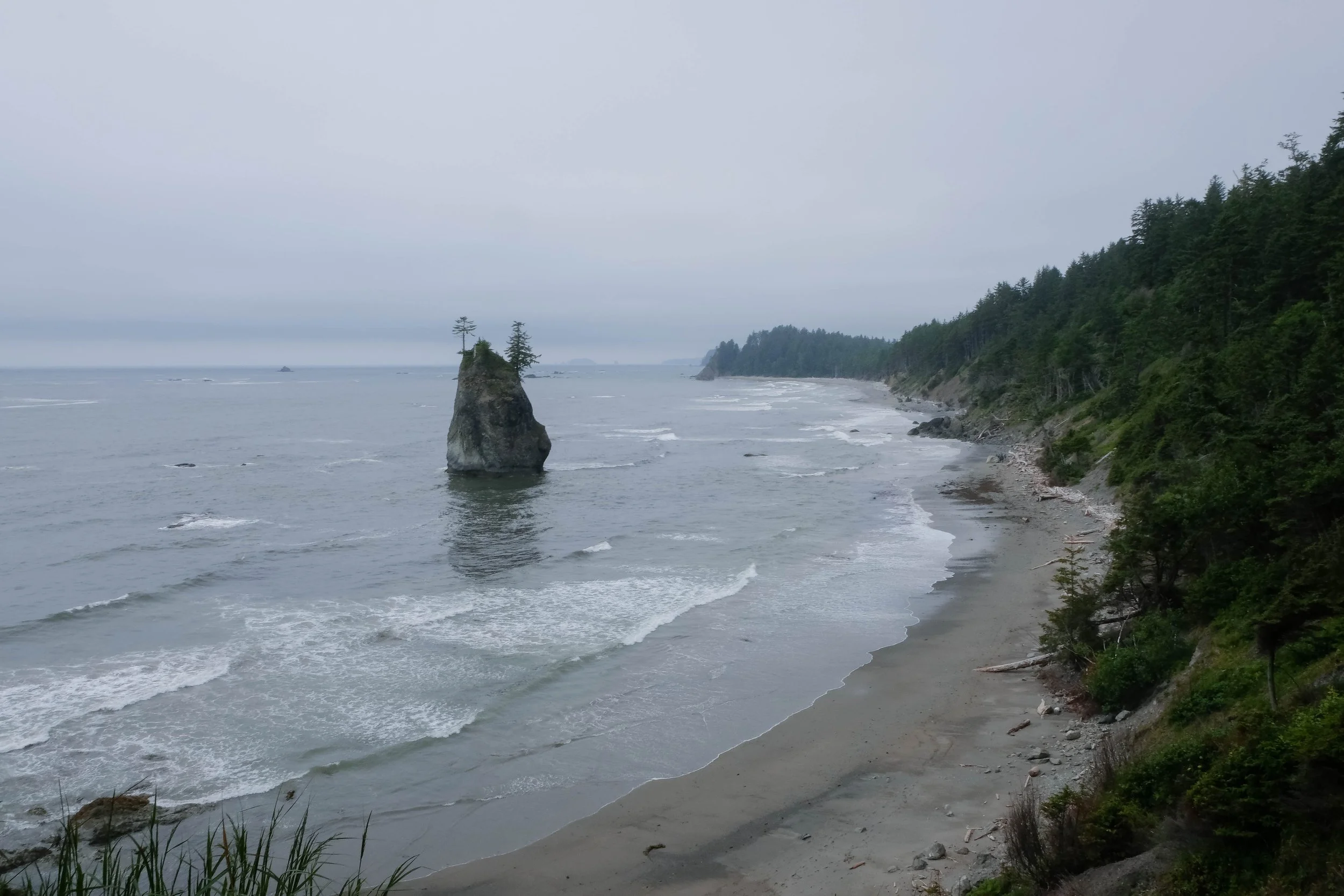
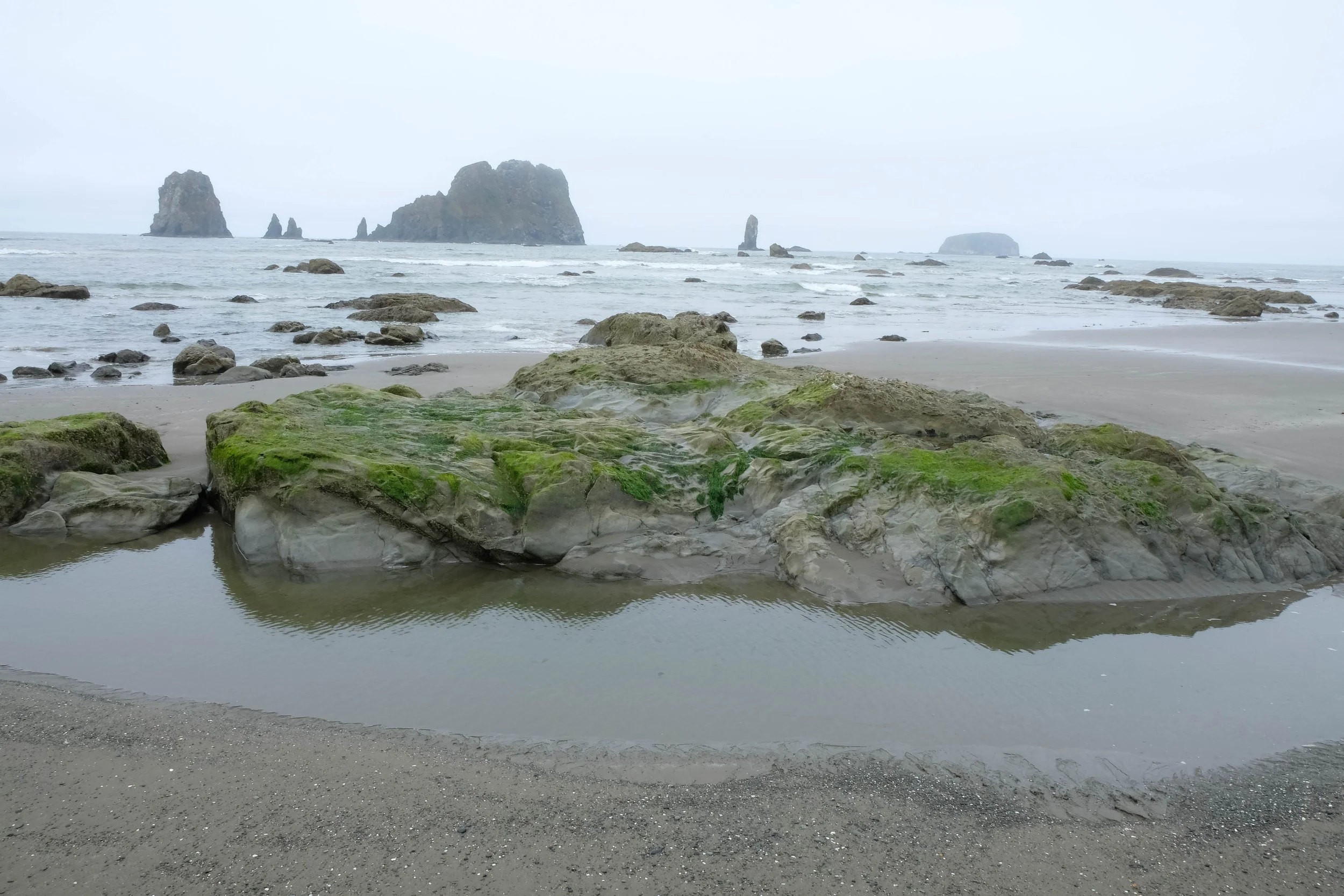
Rialto Beach, Chilean Memorial beach campsite + surrounding area.
A few snaps from a day hike further north up the coast toward the Norwegian Memorial.
Guadalupe Mountains
Park 19 | Multiple visits
Trip 1 | April 2021
Part + Park 3 (of 3) on a spring break road trip.
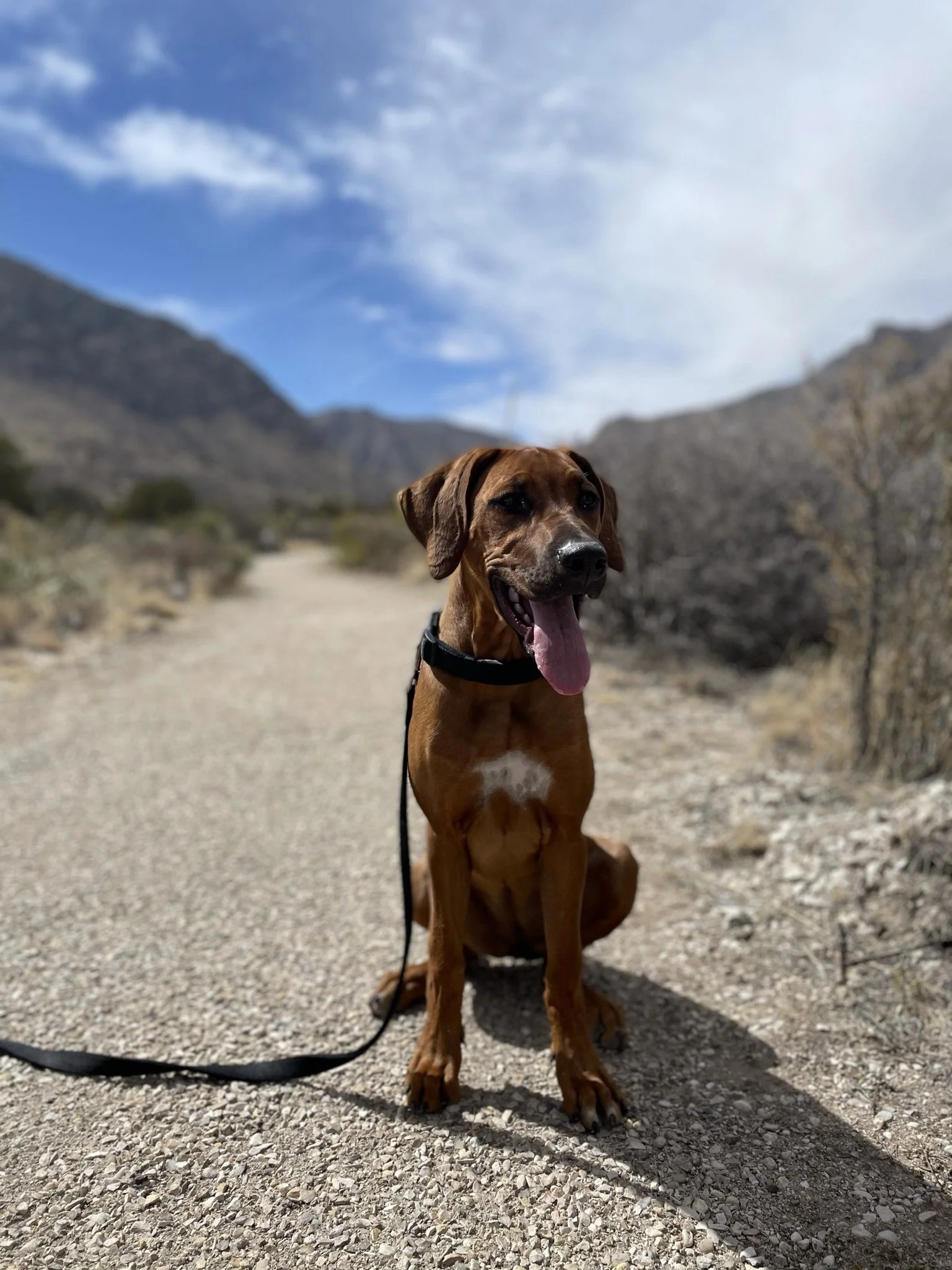
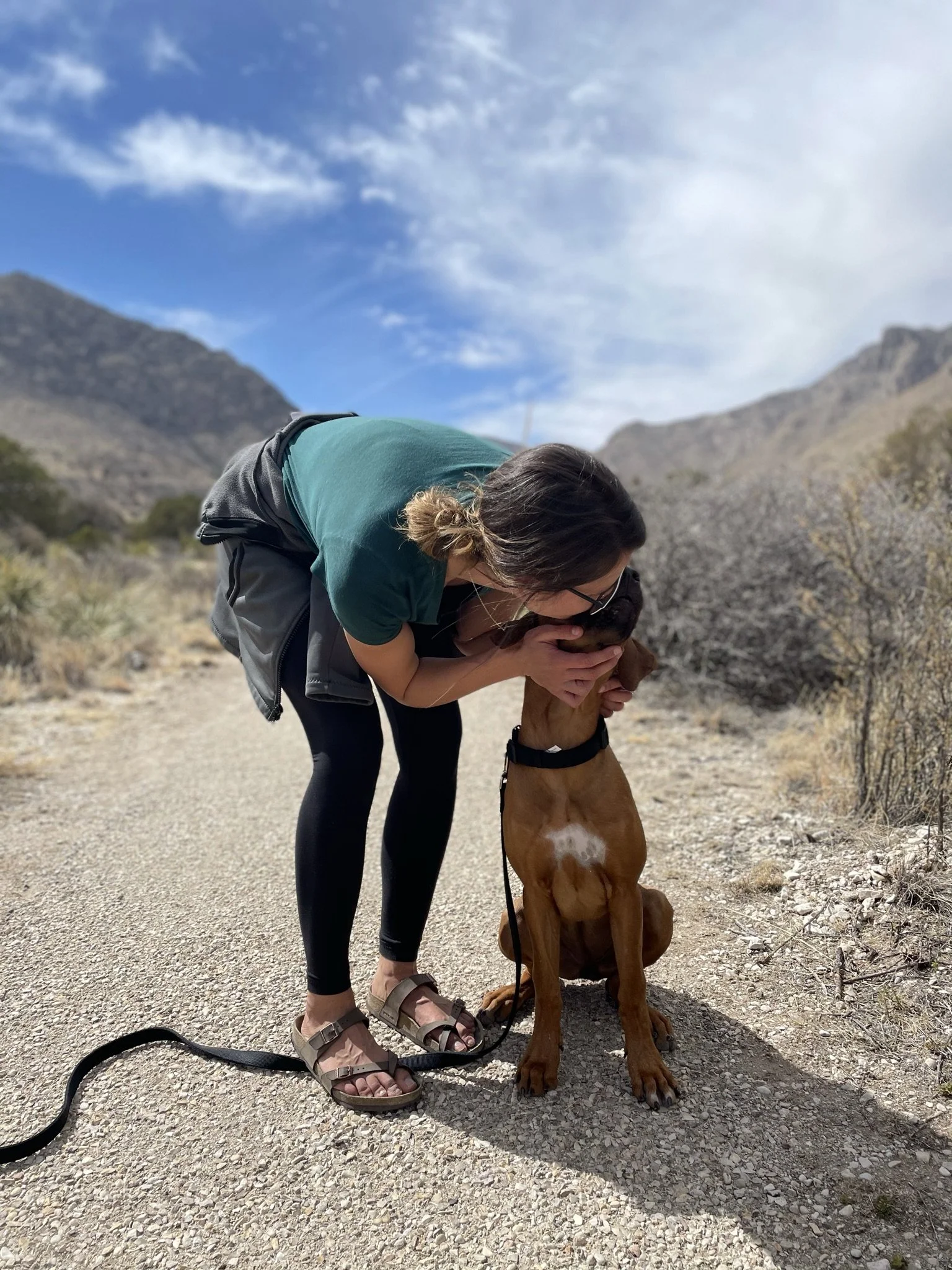
Our first time to Guadalupe Mountains was very quick — literally about an hour long — but deserves honorable mention and a couple pictures because six-month-old Kiya came with us.
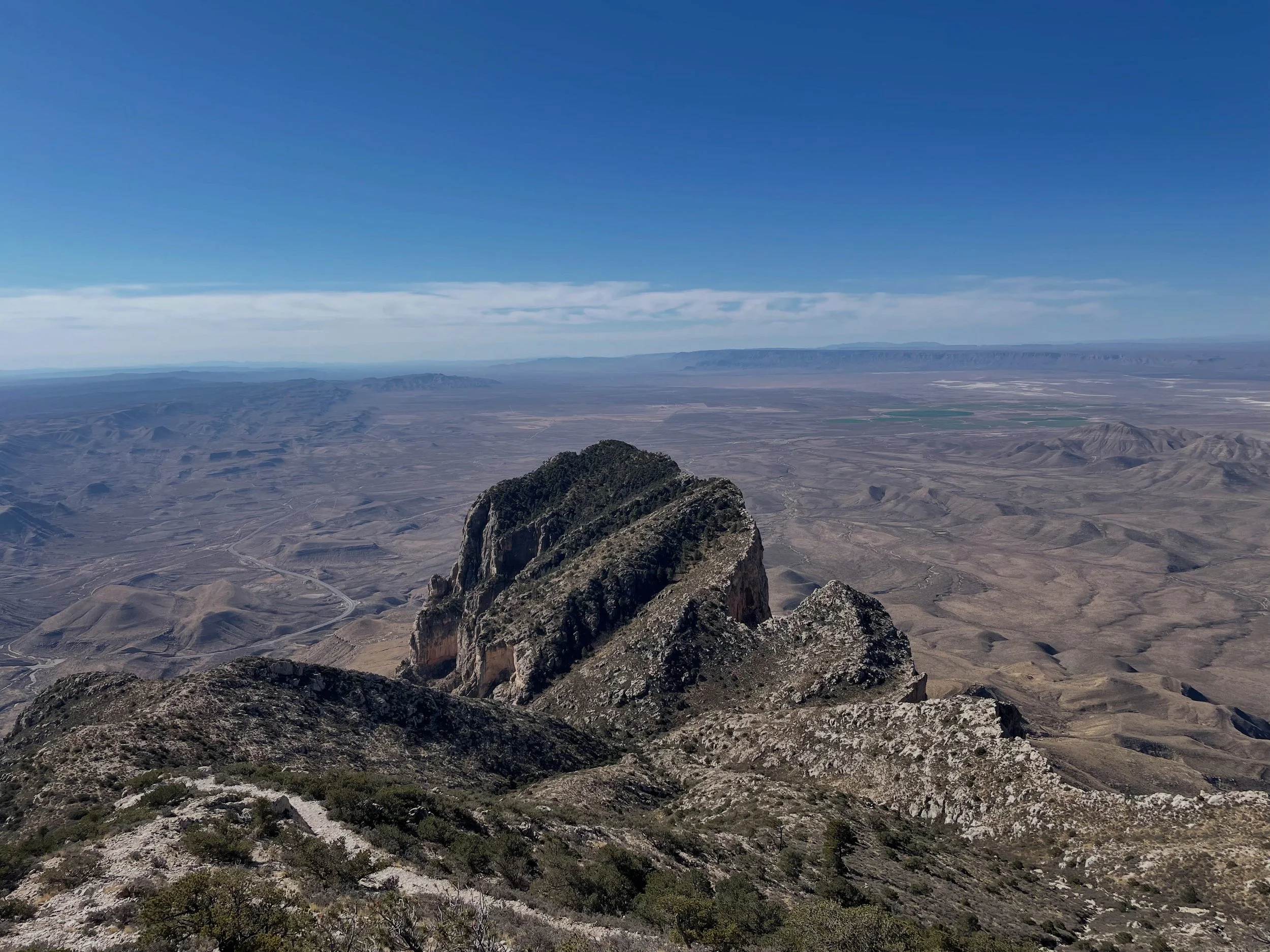
Pictured below:
El Capitan peak.
The cutest puppy that’s ever lived exploring Pinery Trail (the only dog-friendly trail in the park, right next to Pine Springs Visitor Center).
Trip 2 | March 2025
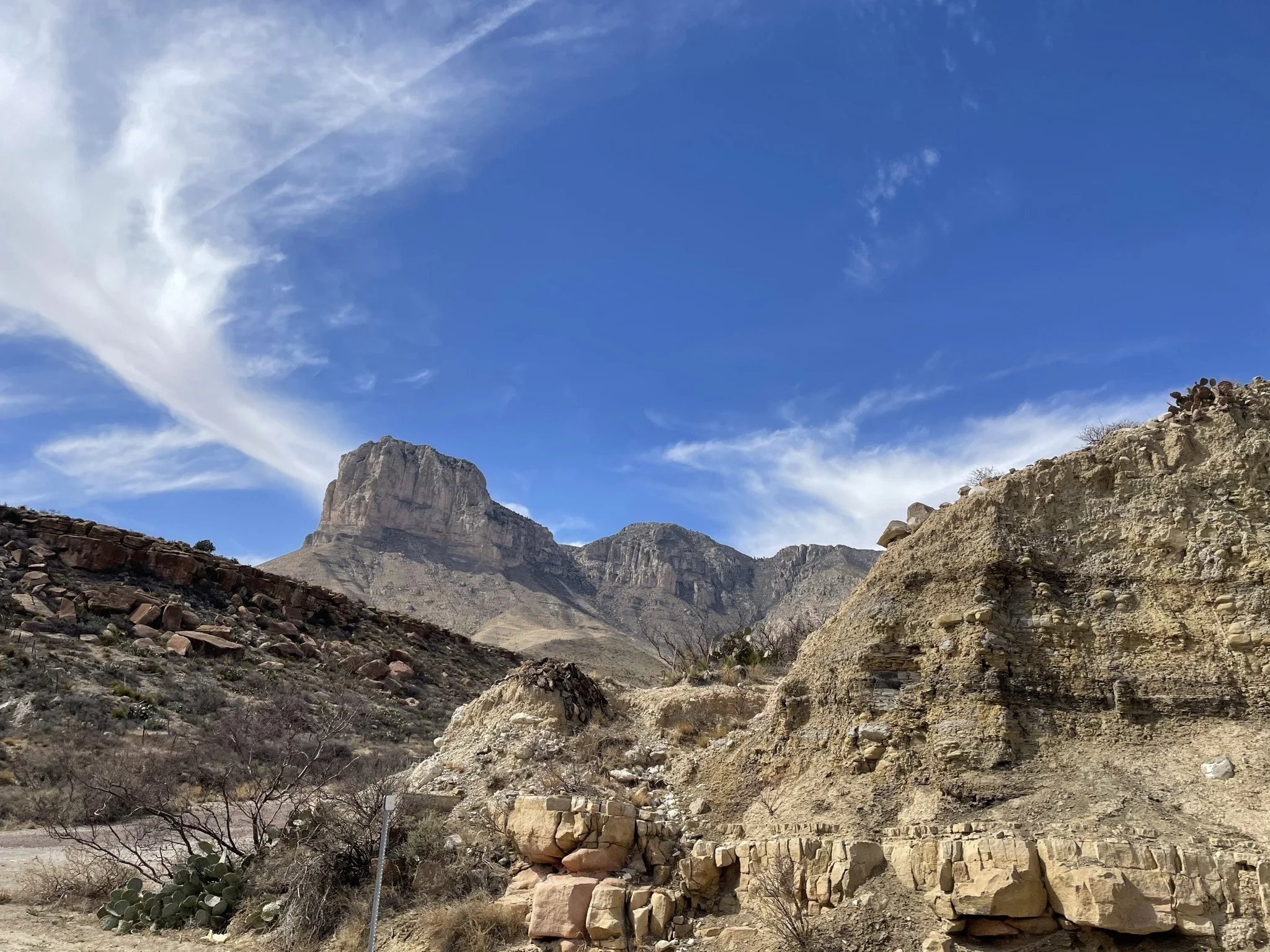
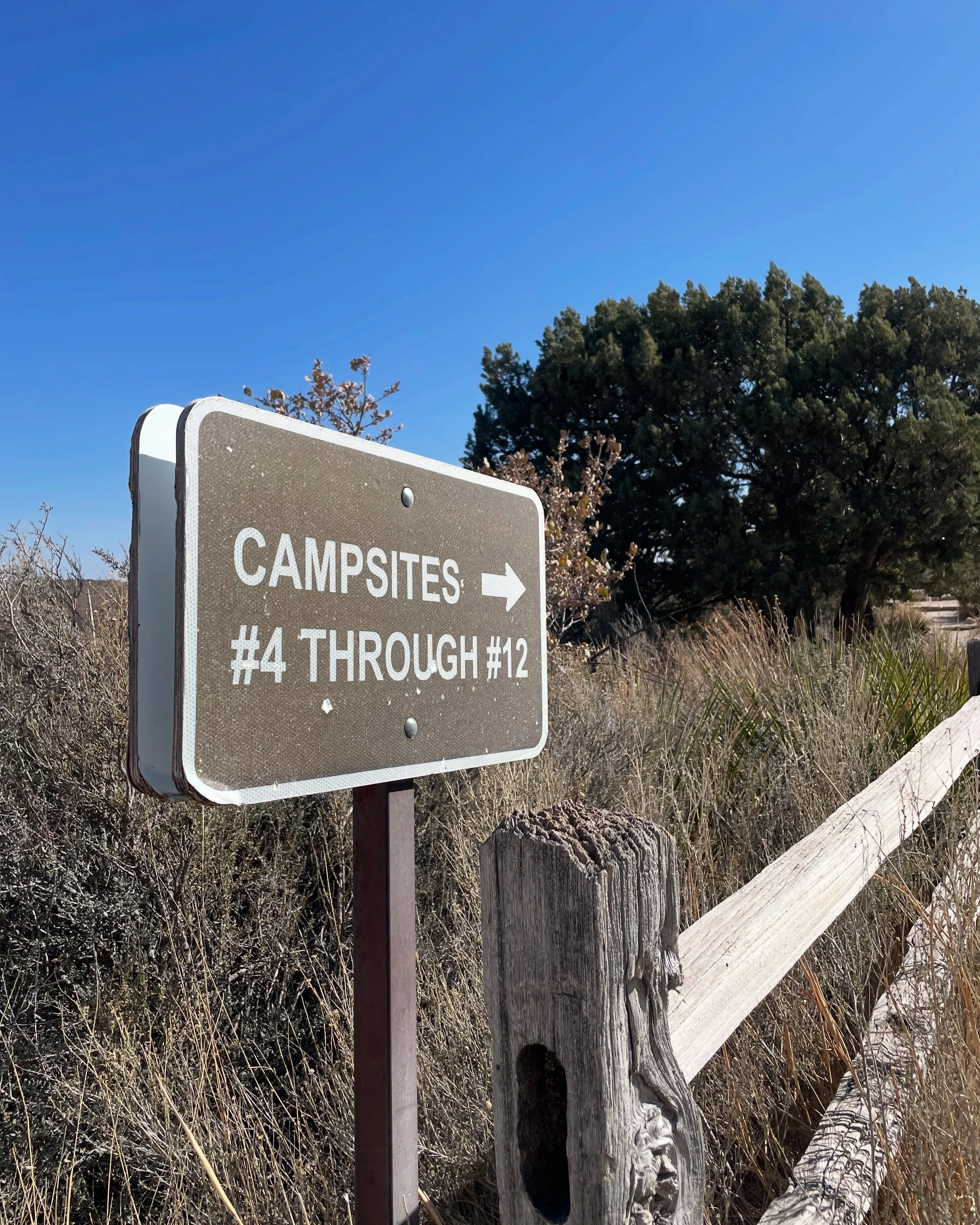
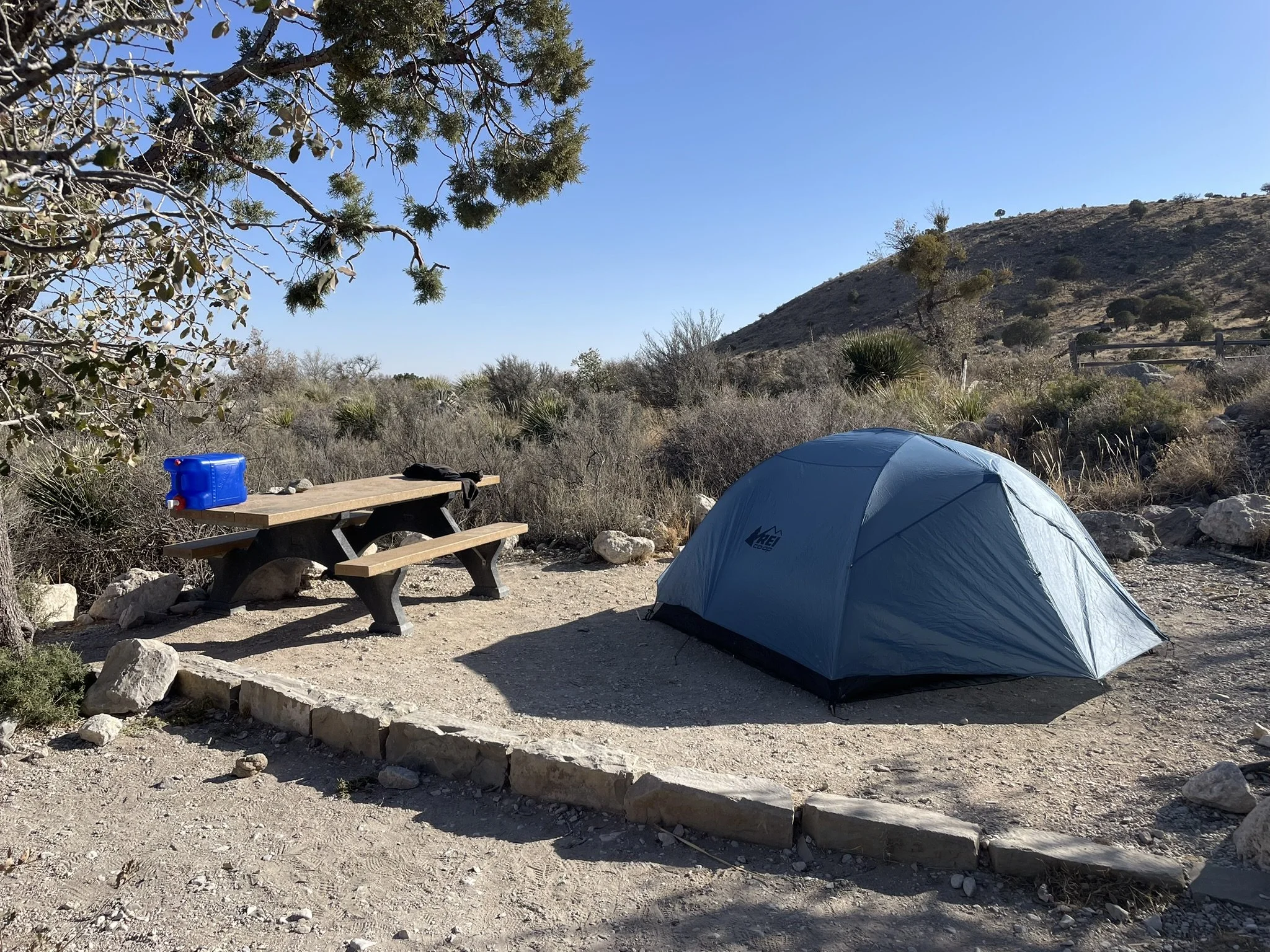
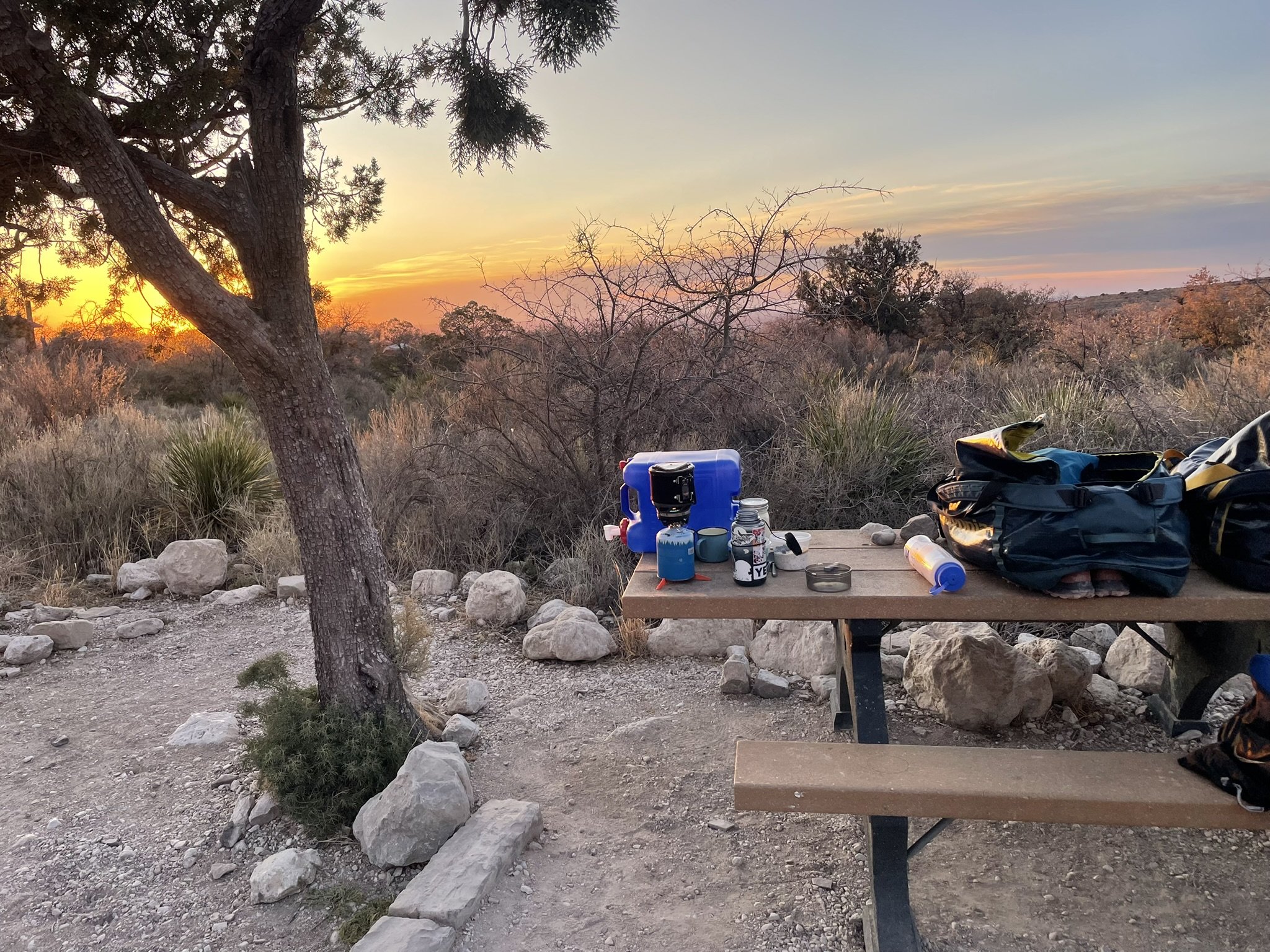
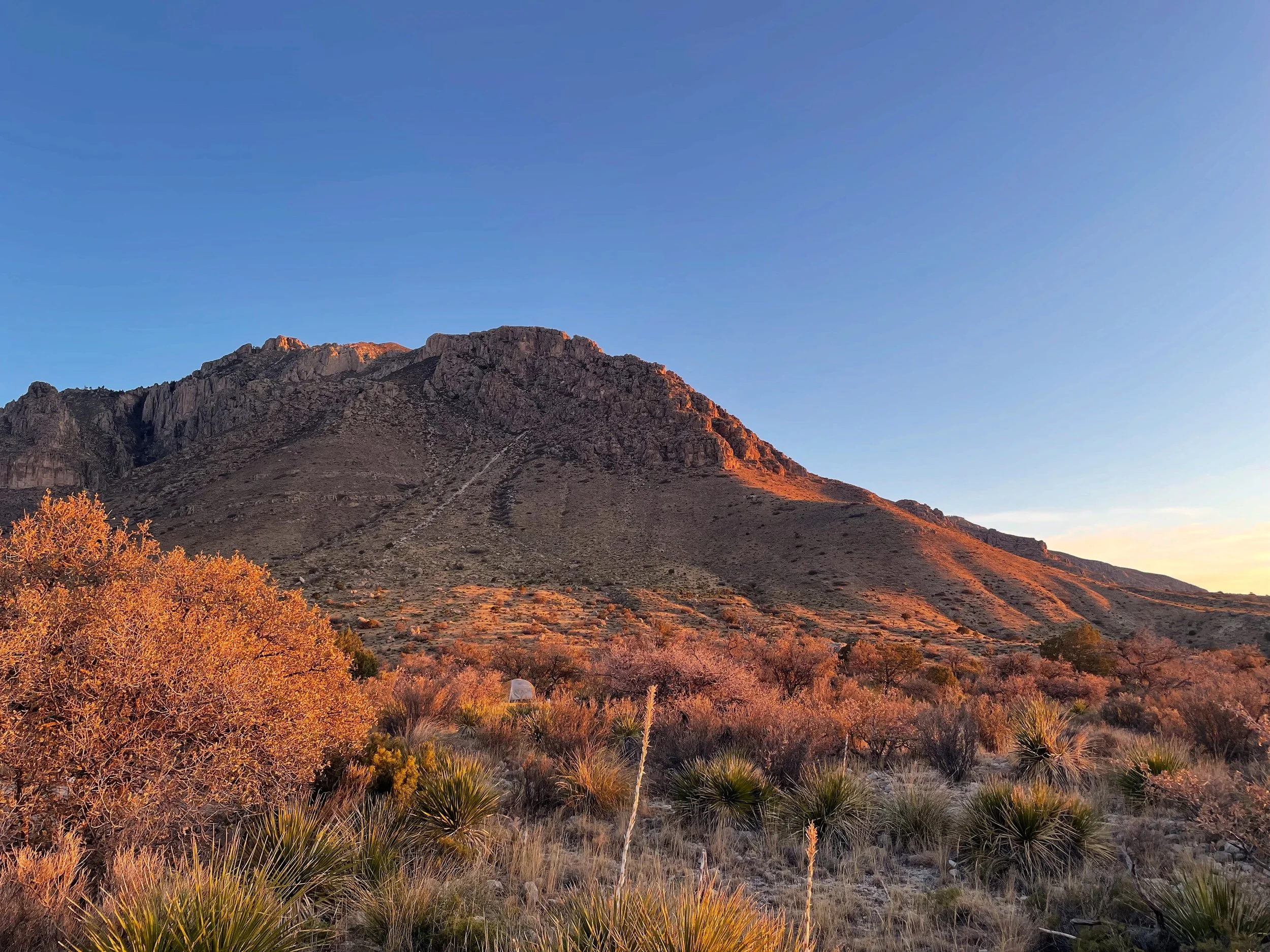
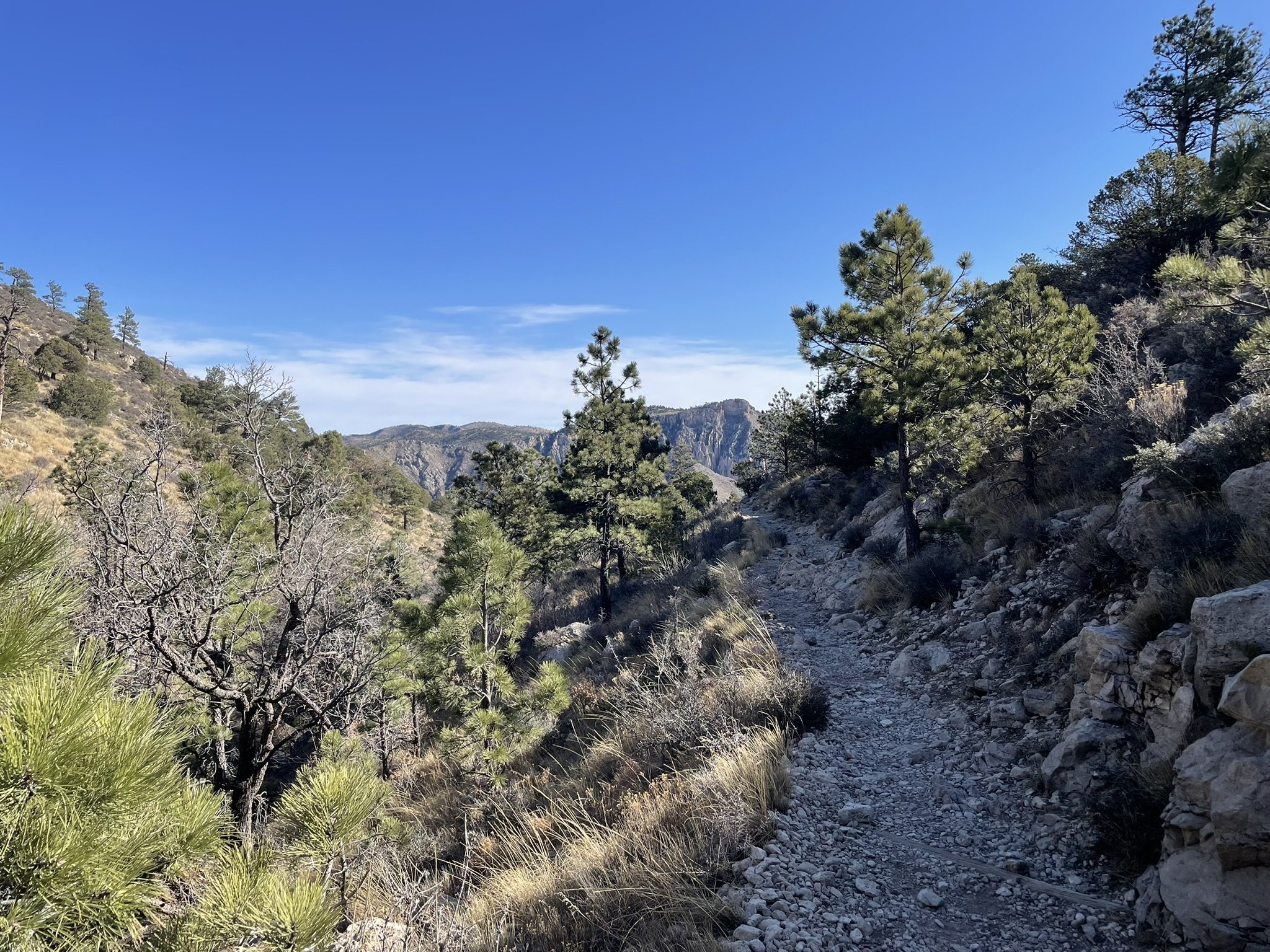
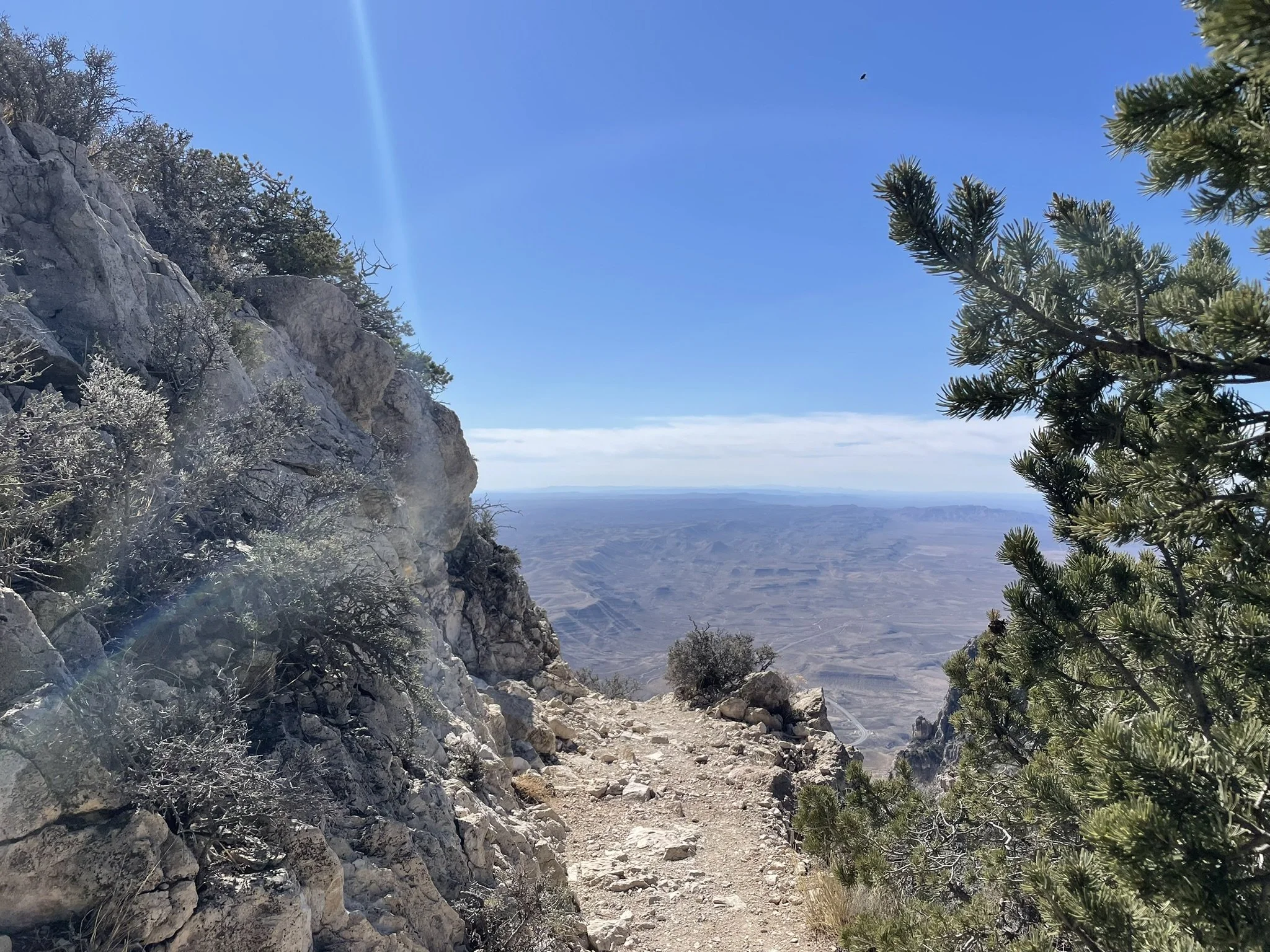
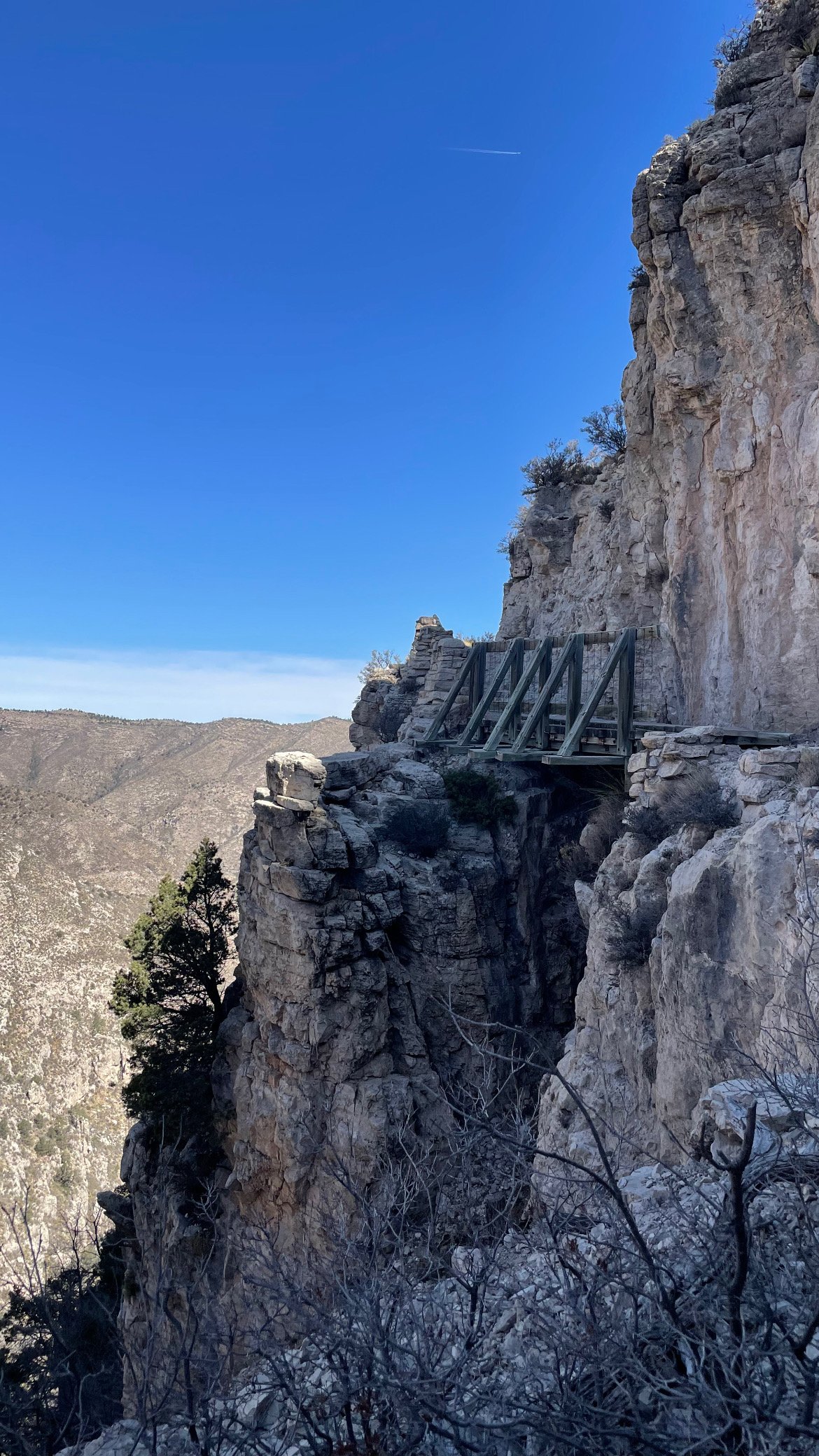
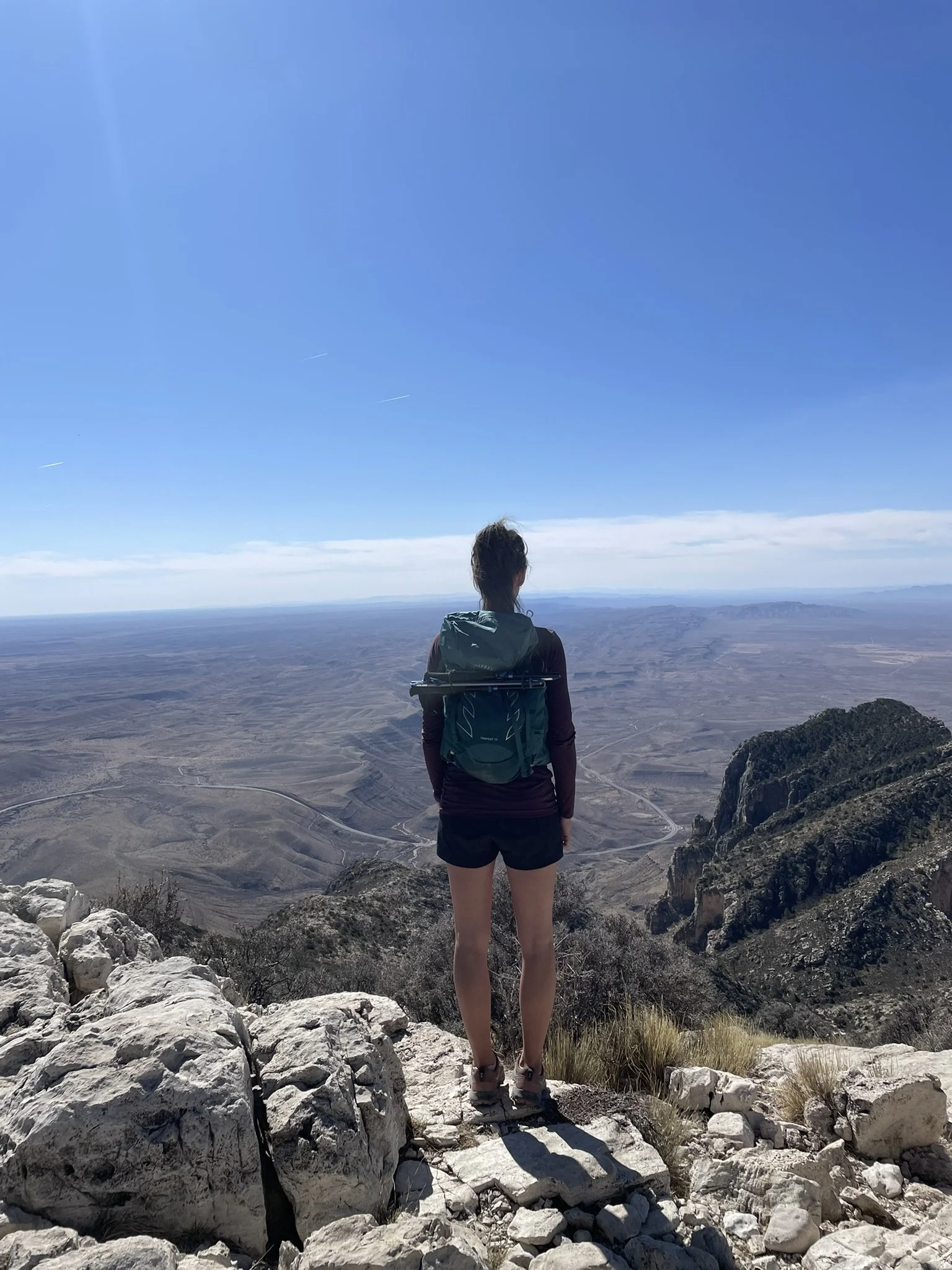
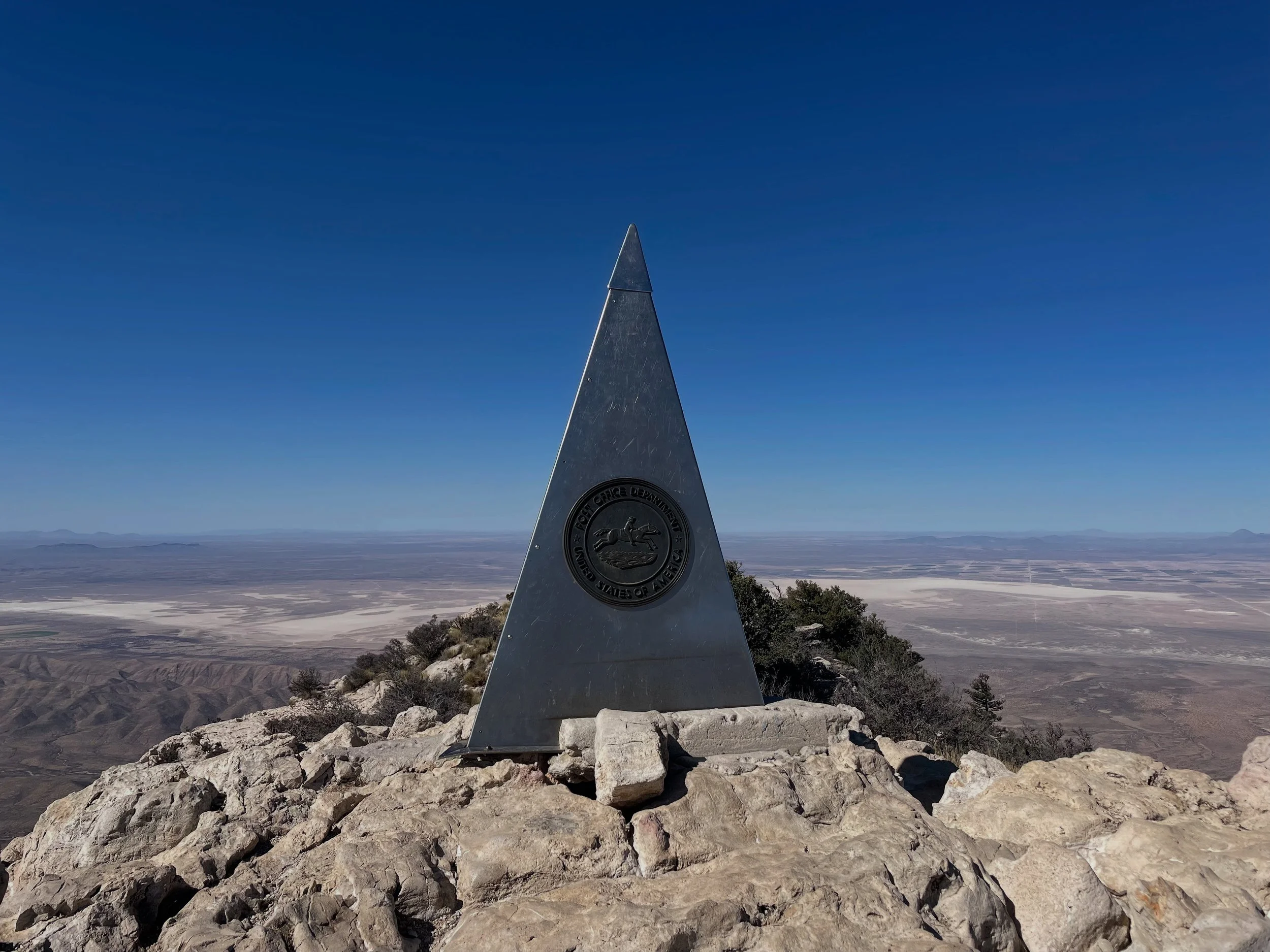
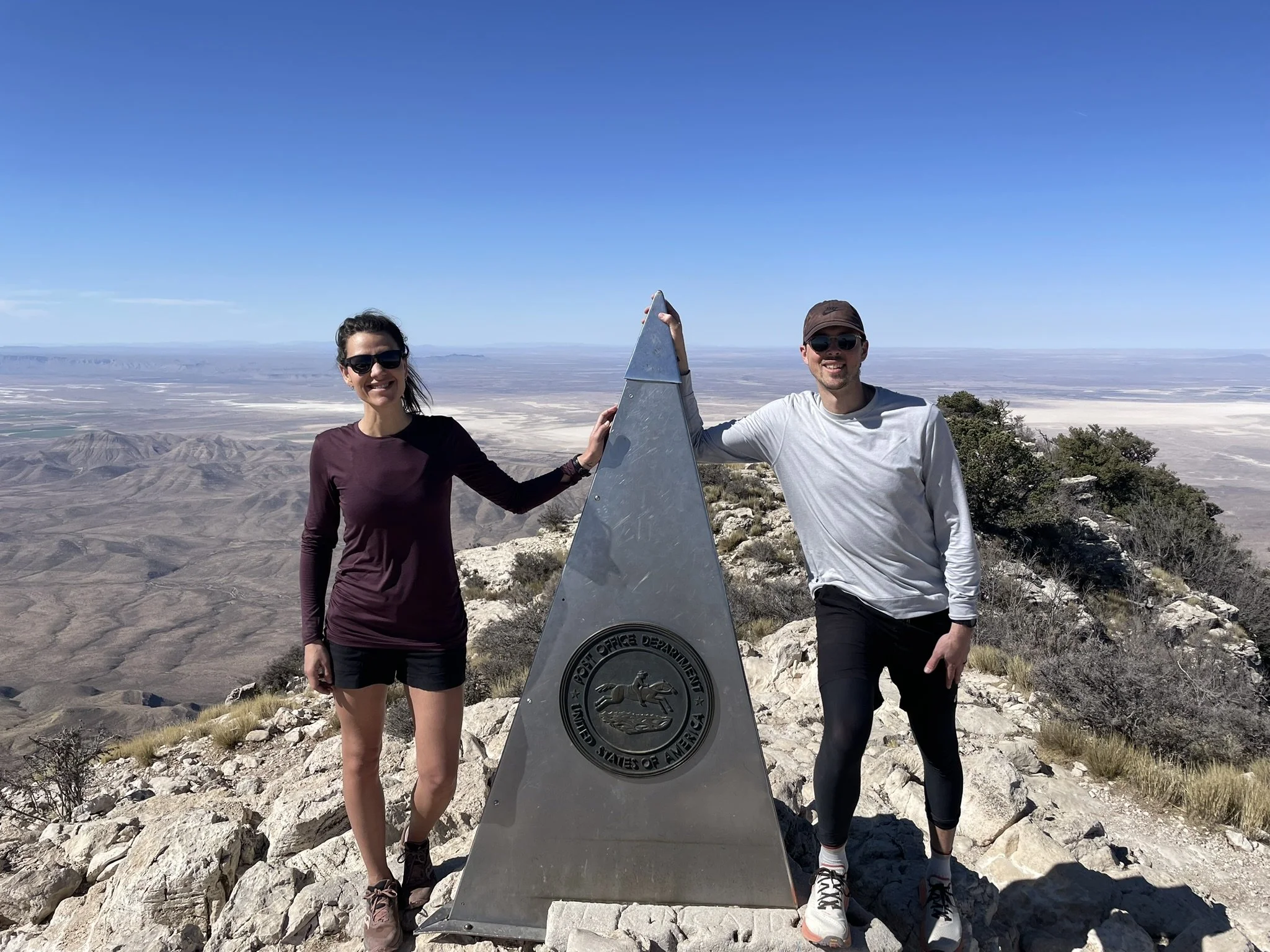
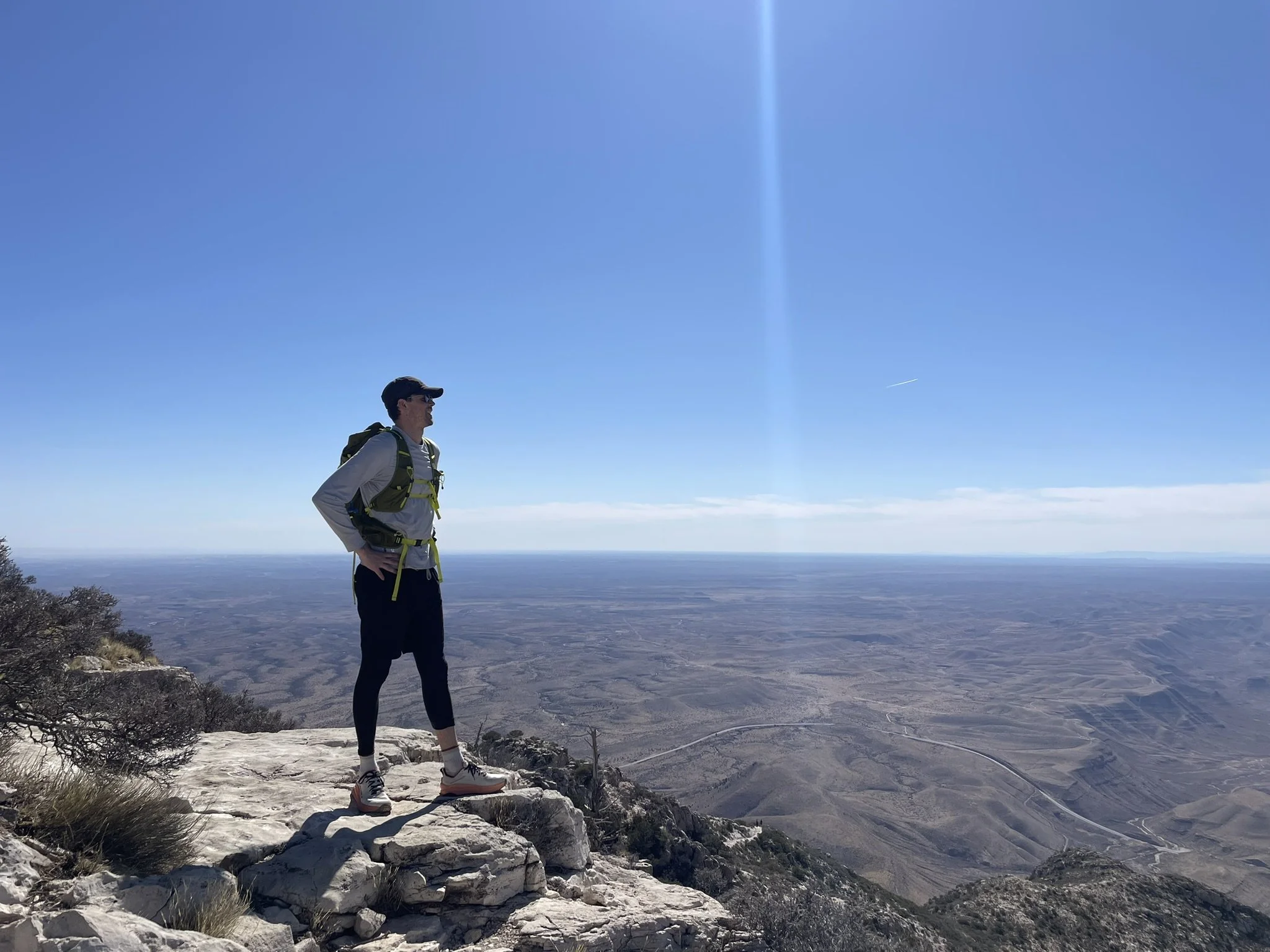
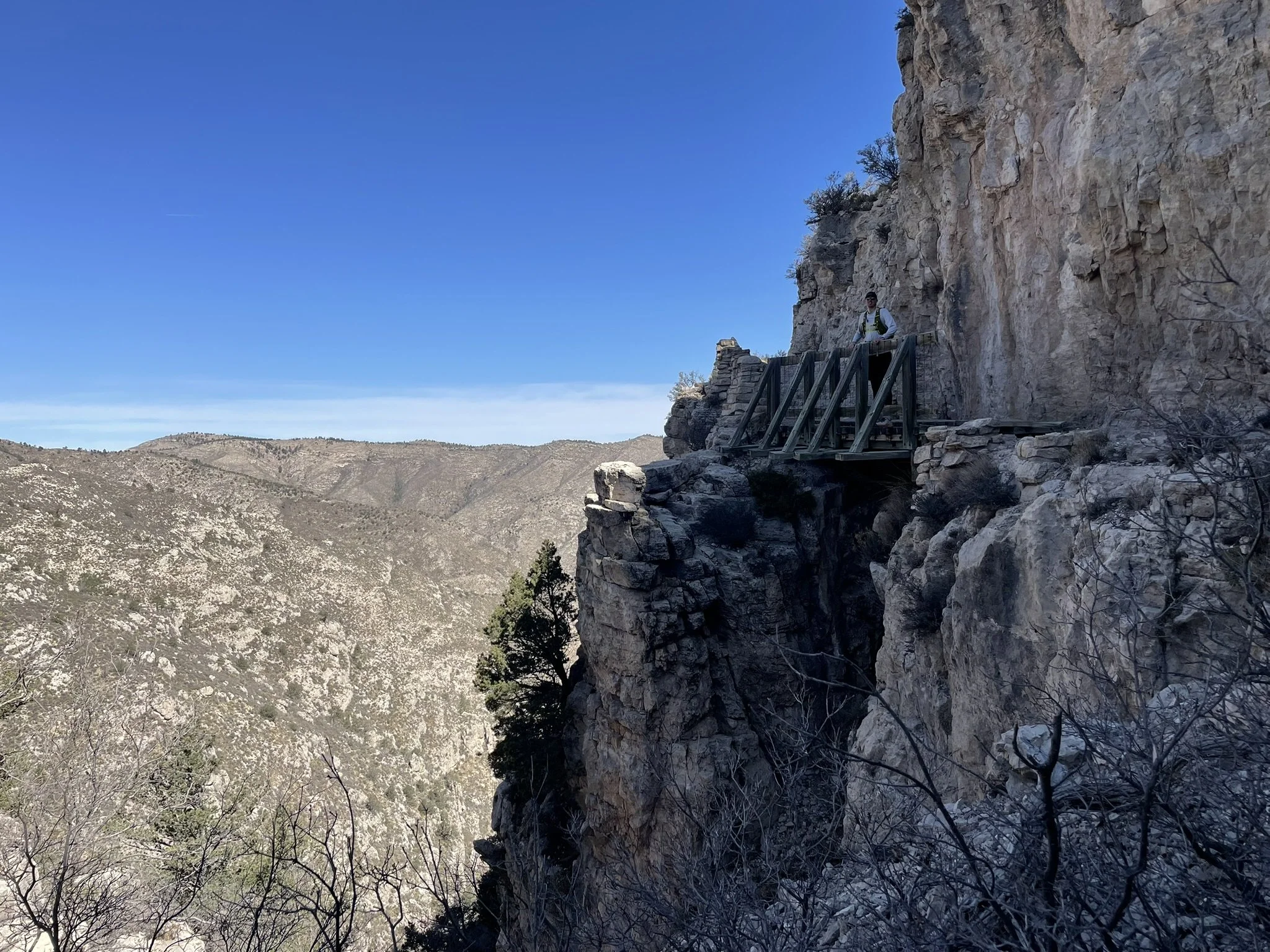
Our second visit was more substantive, including both a night of camping in Pine Springs Campground as well as a 8.5 mile hike to the summit of Guadalupe Peak, the highest point in Texas.
Pictured below:
Pine Springs Campground.
Views from the hike up Guadalupe Peak.
White Sands
Park 18 | April 2021
Part + Park 2 (of 3) on yet another spring break trip.
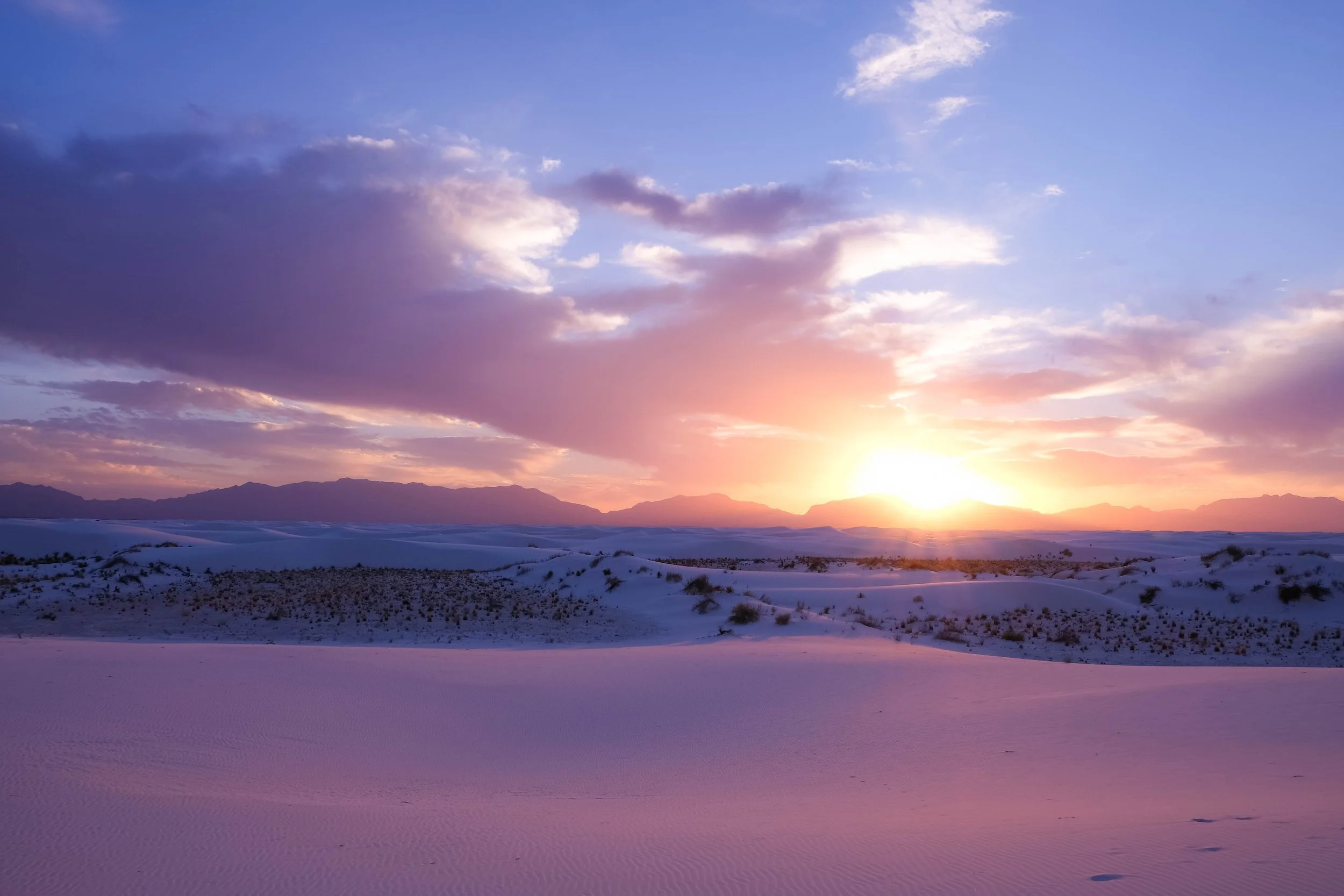
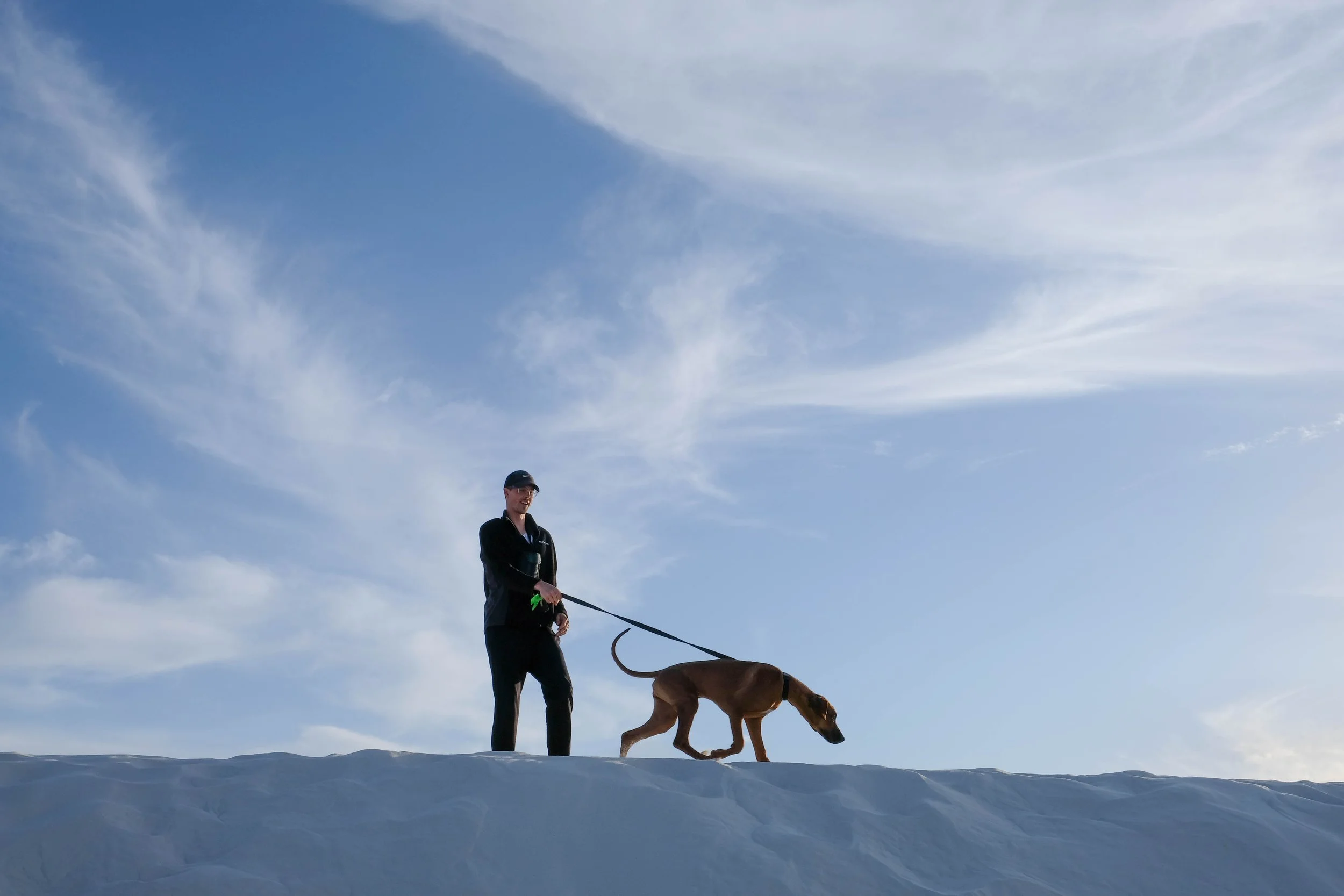
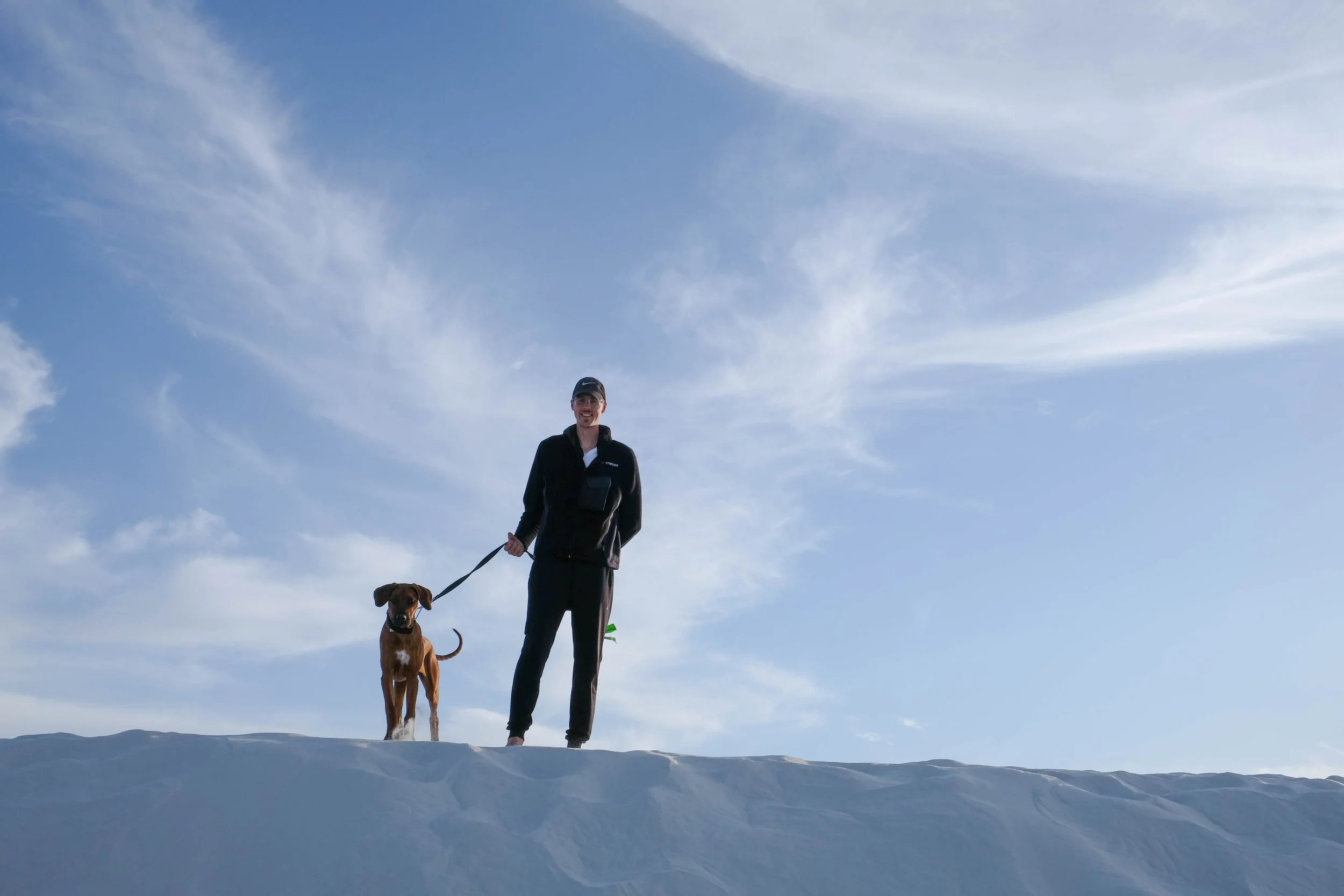
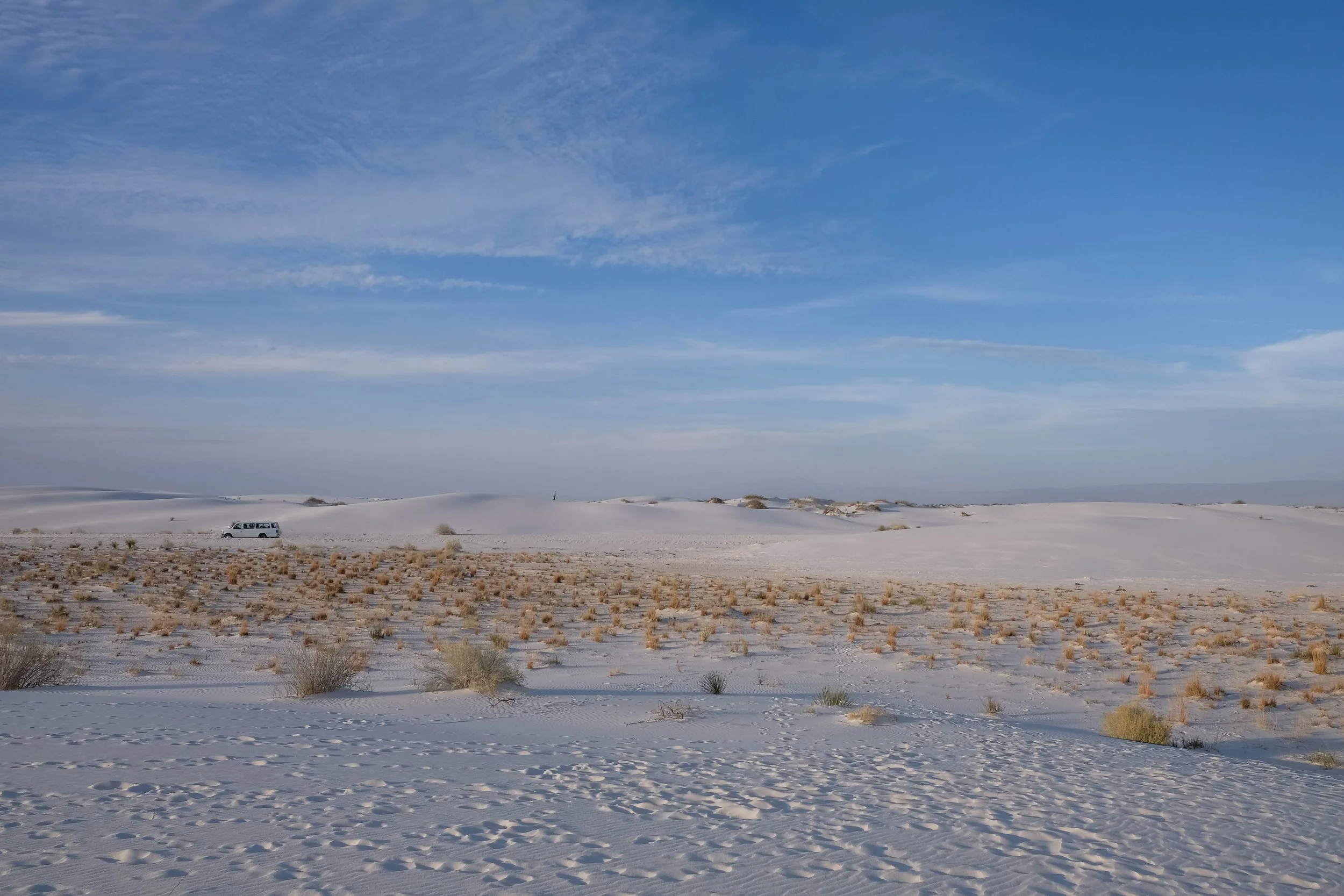
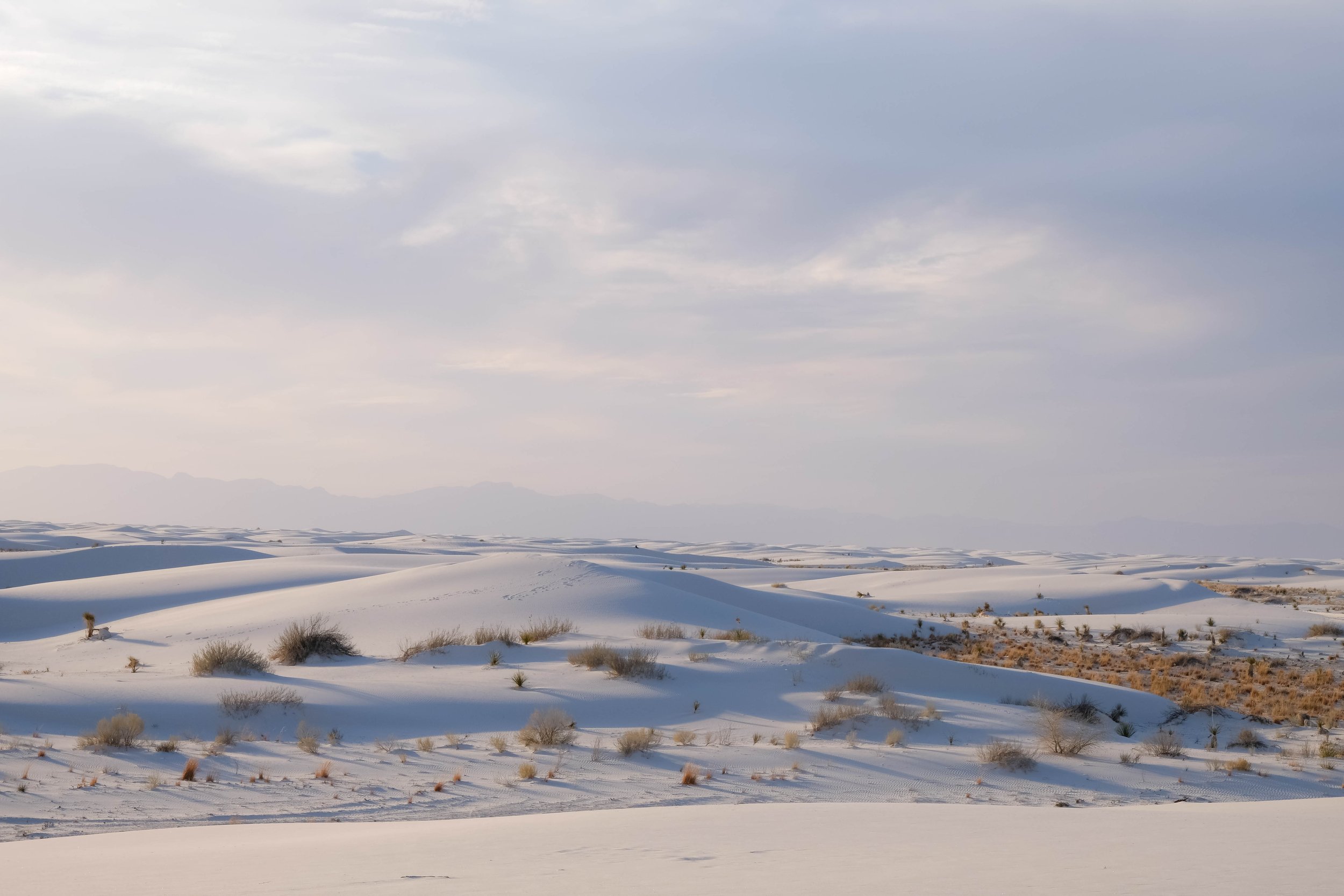
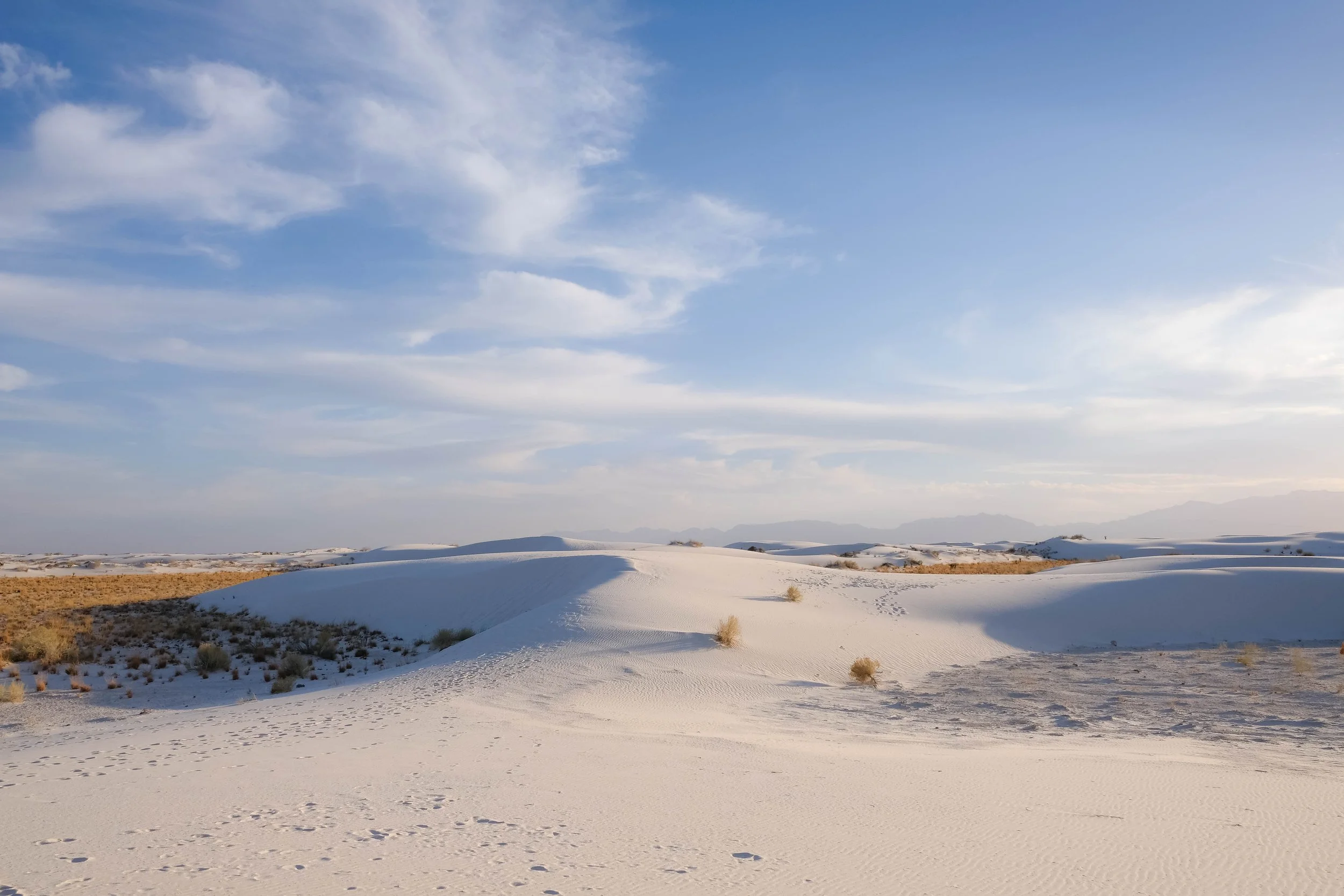
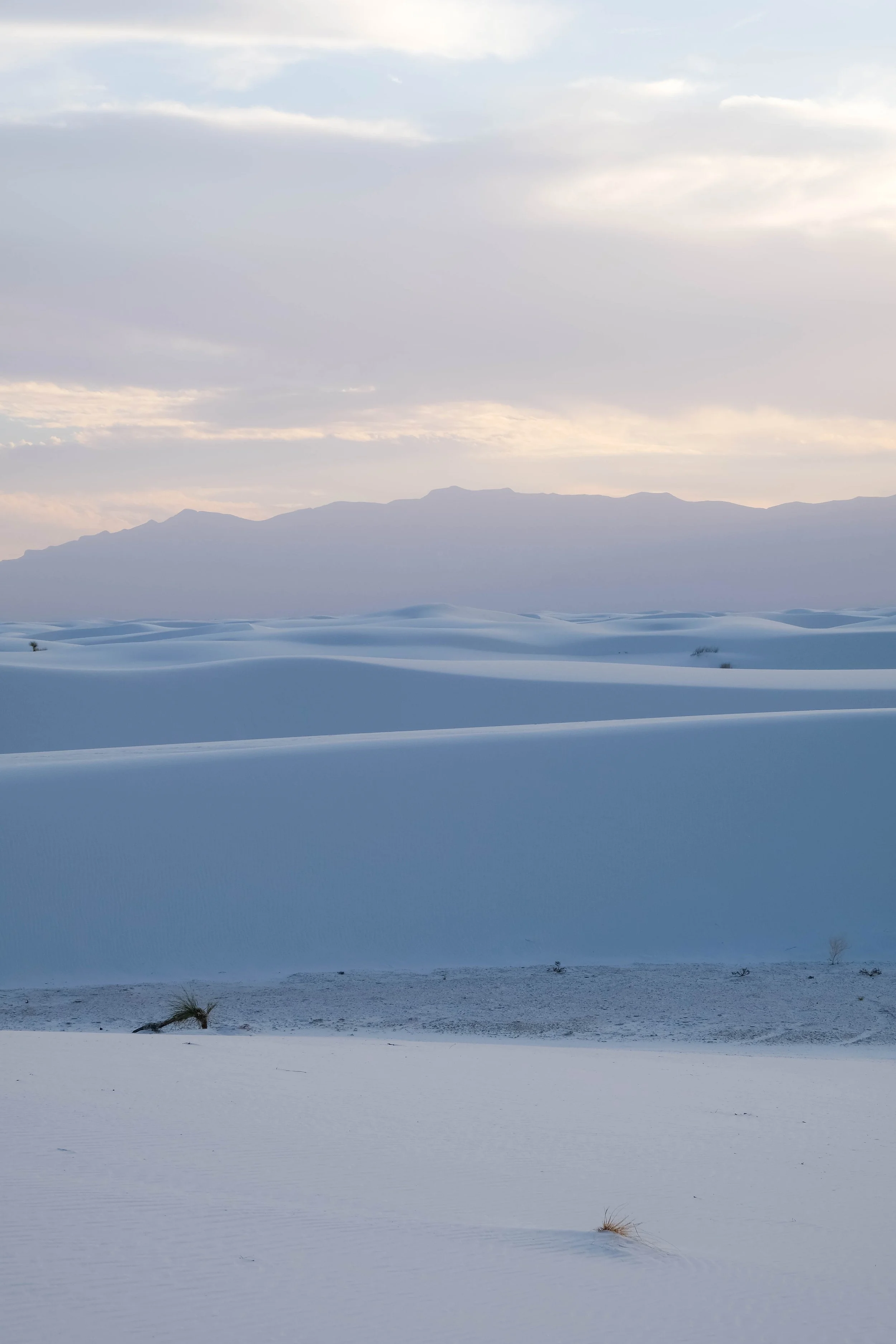
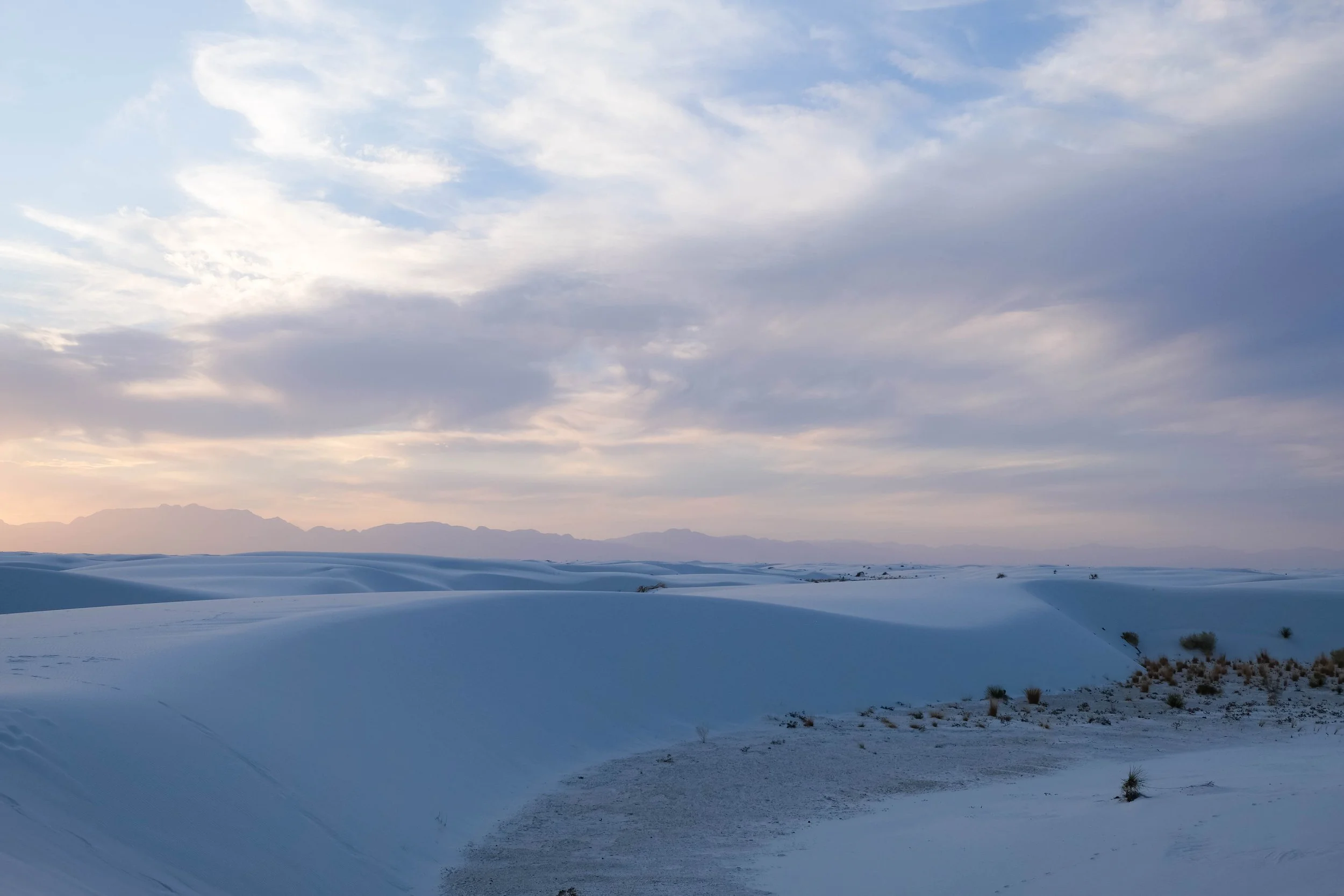
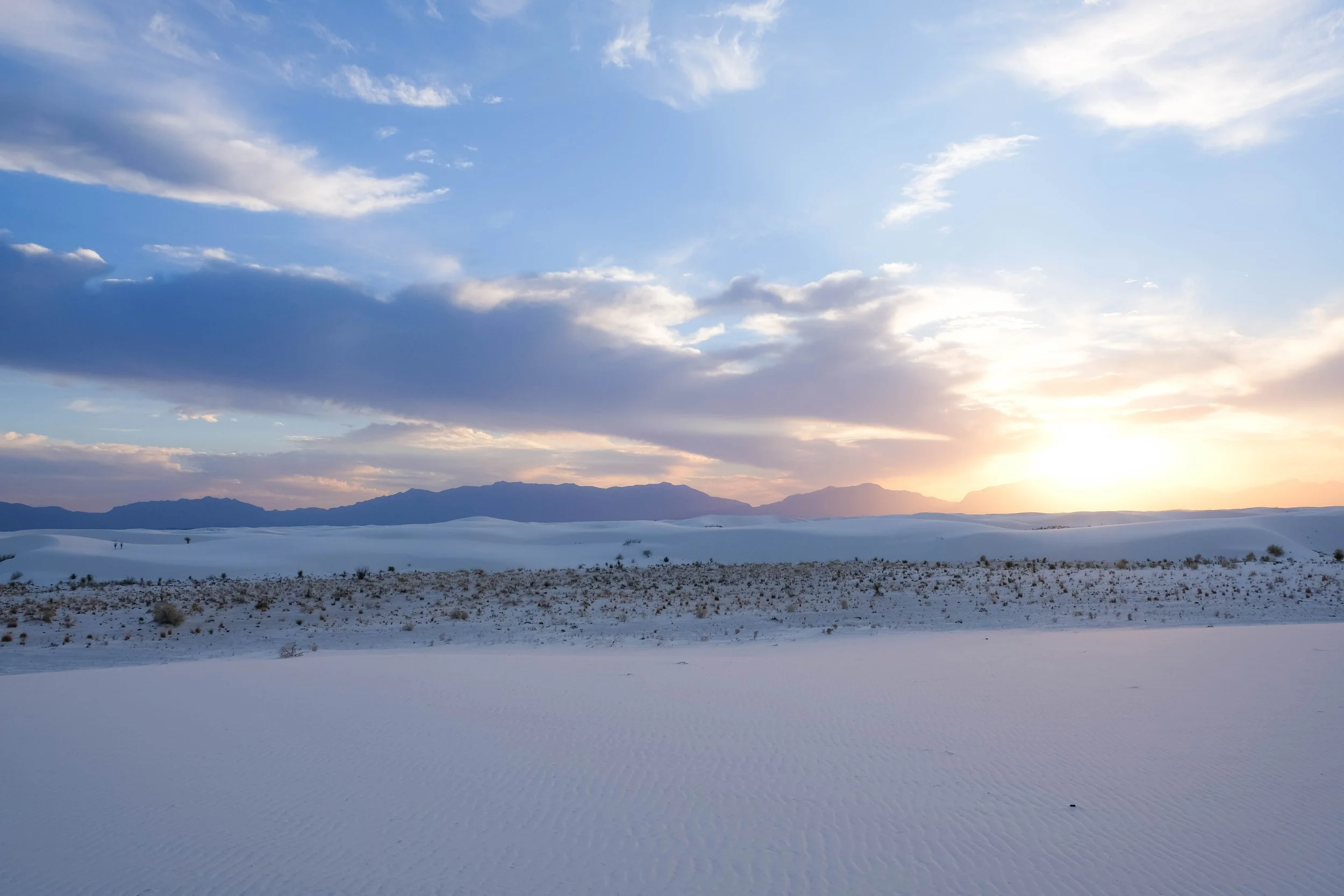
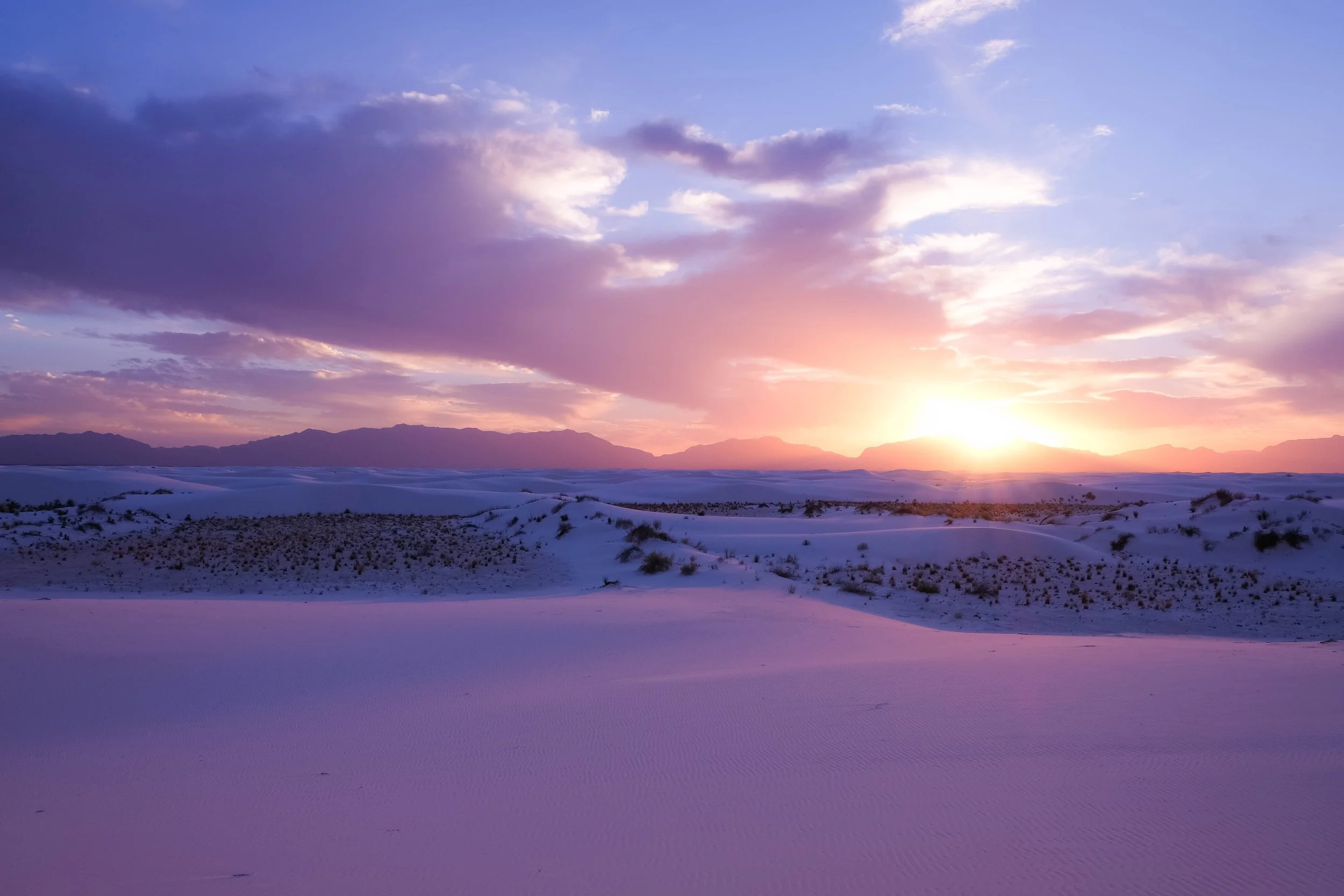
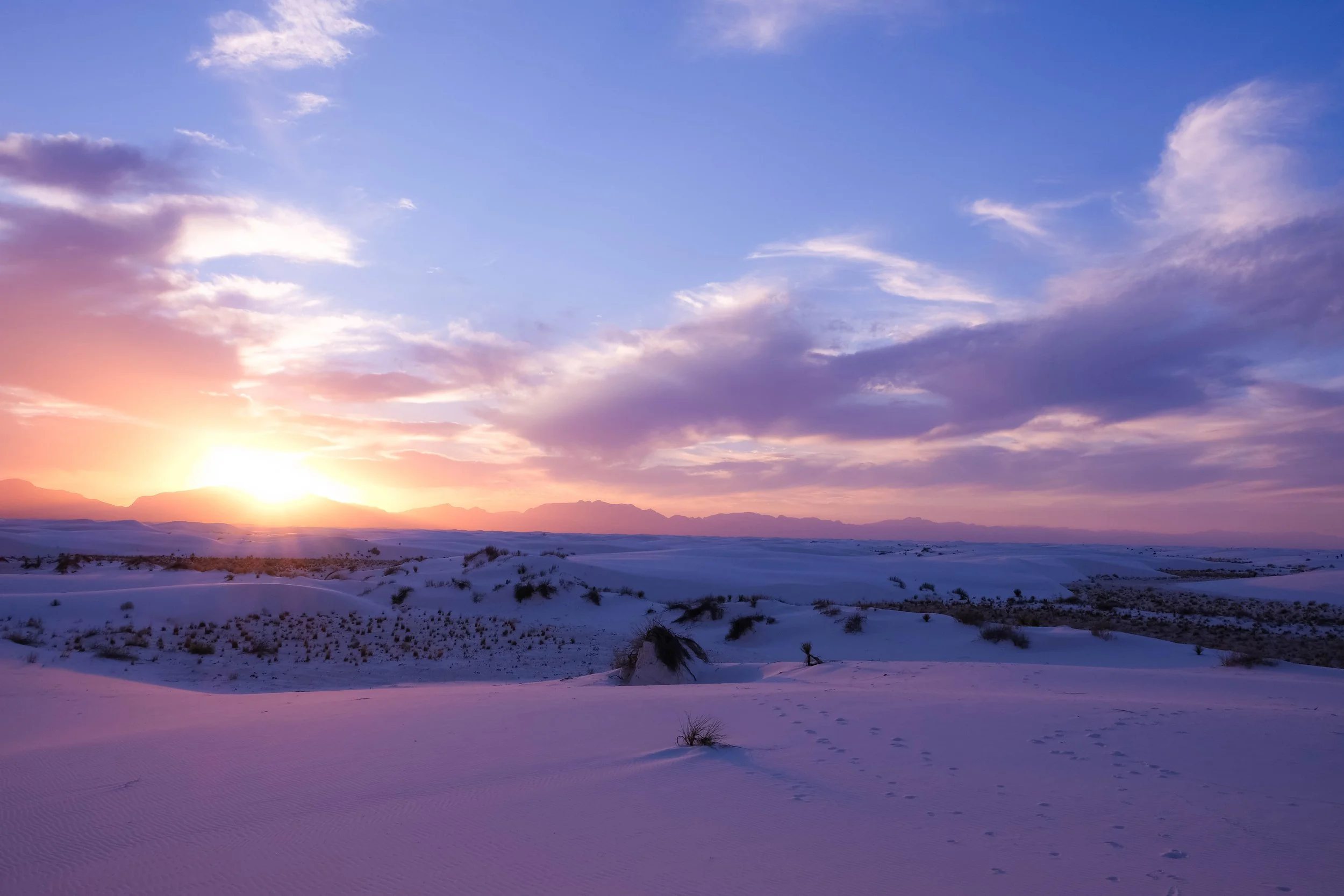
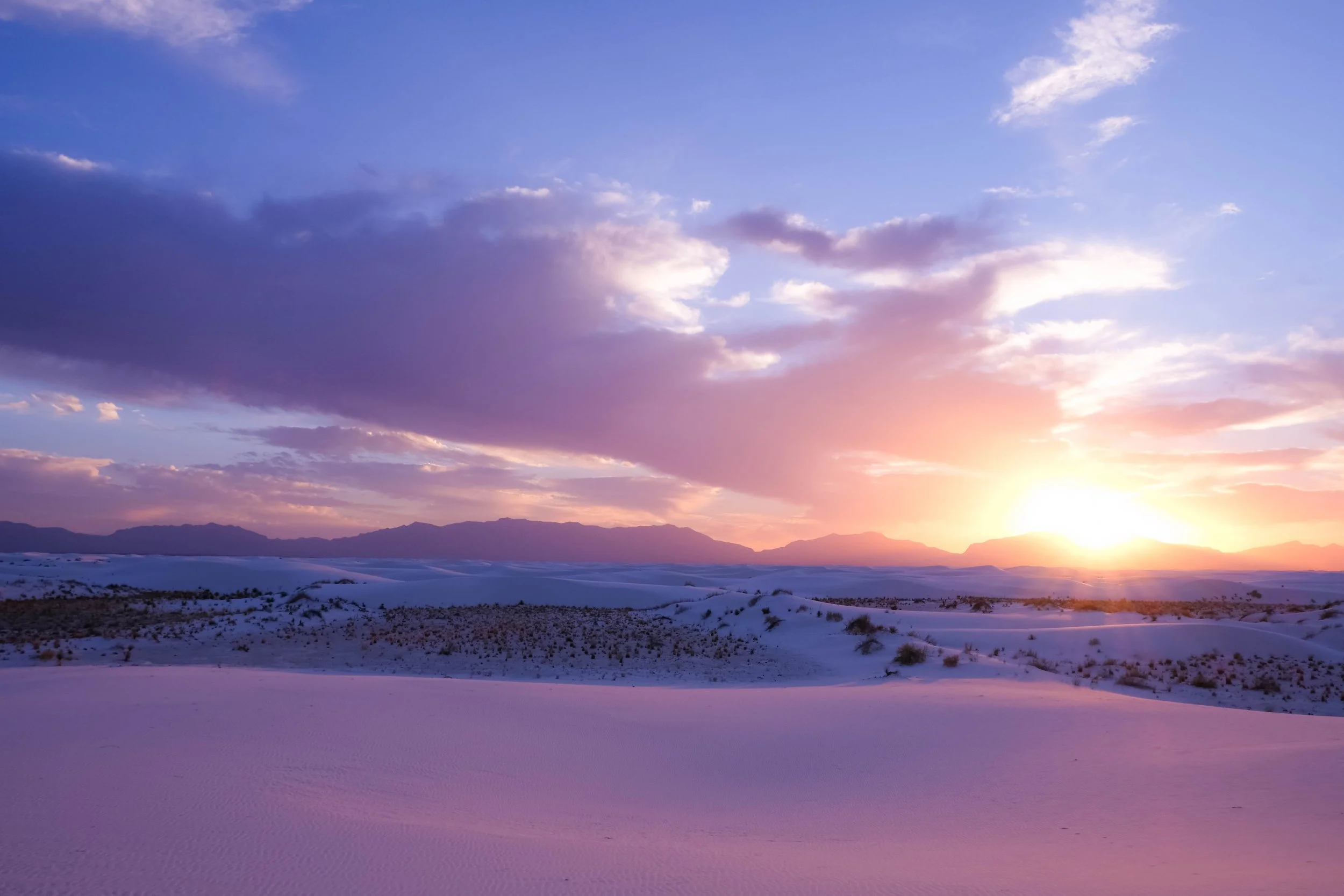
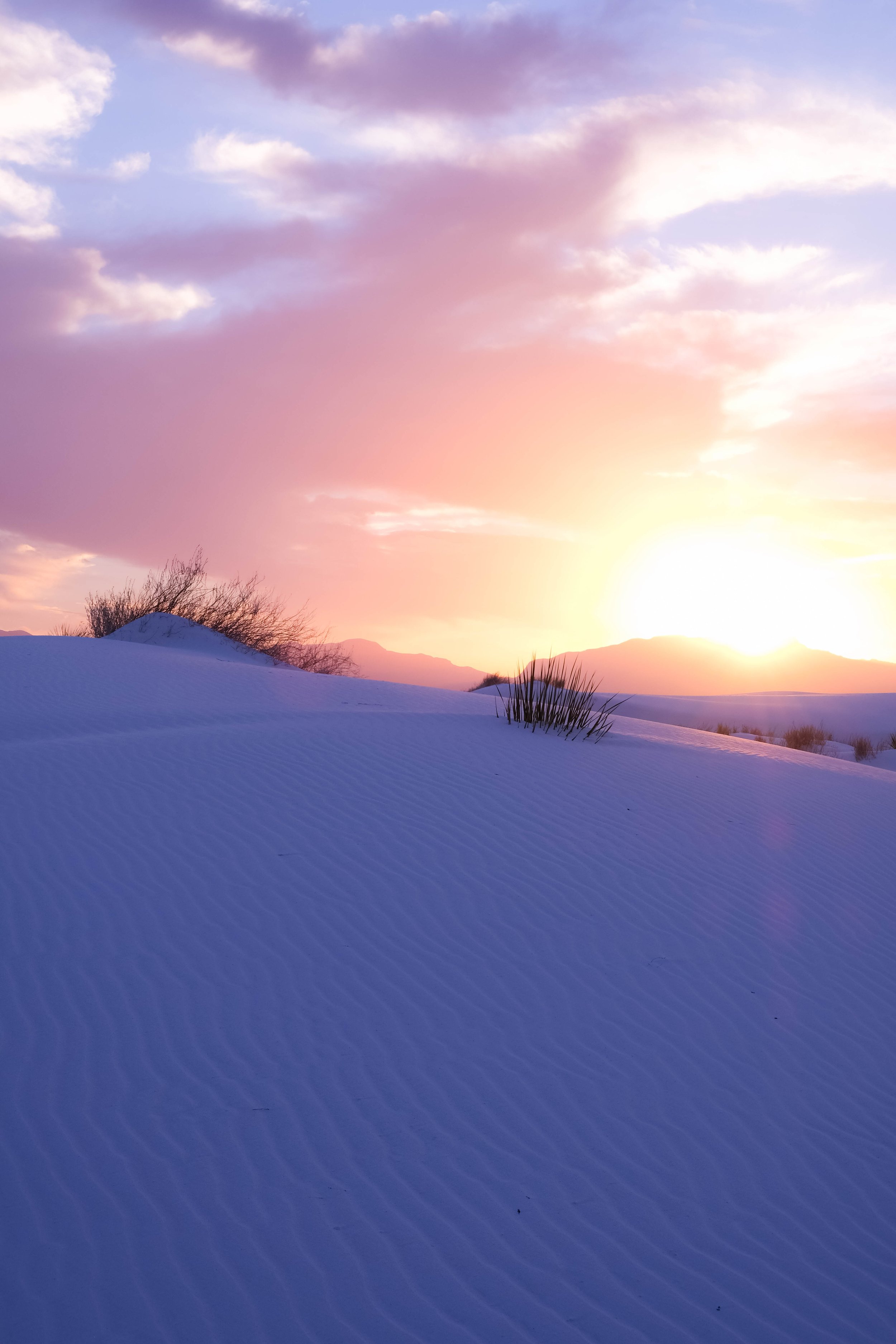
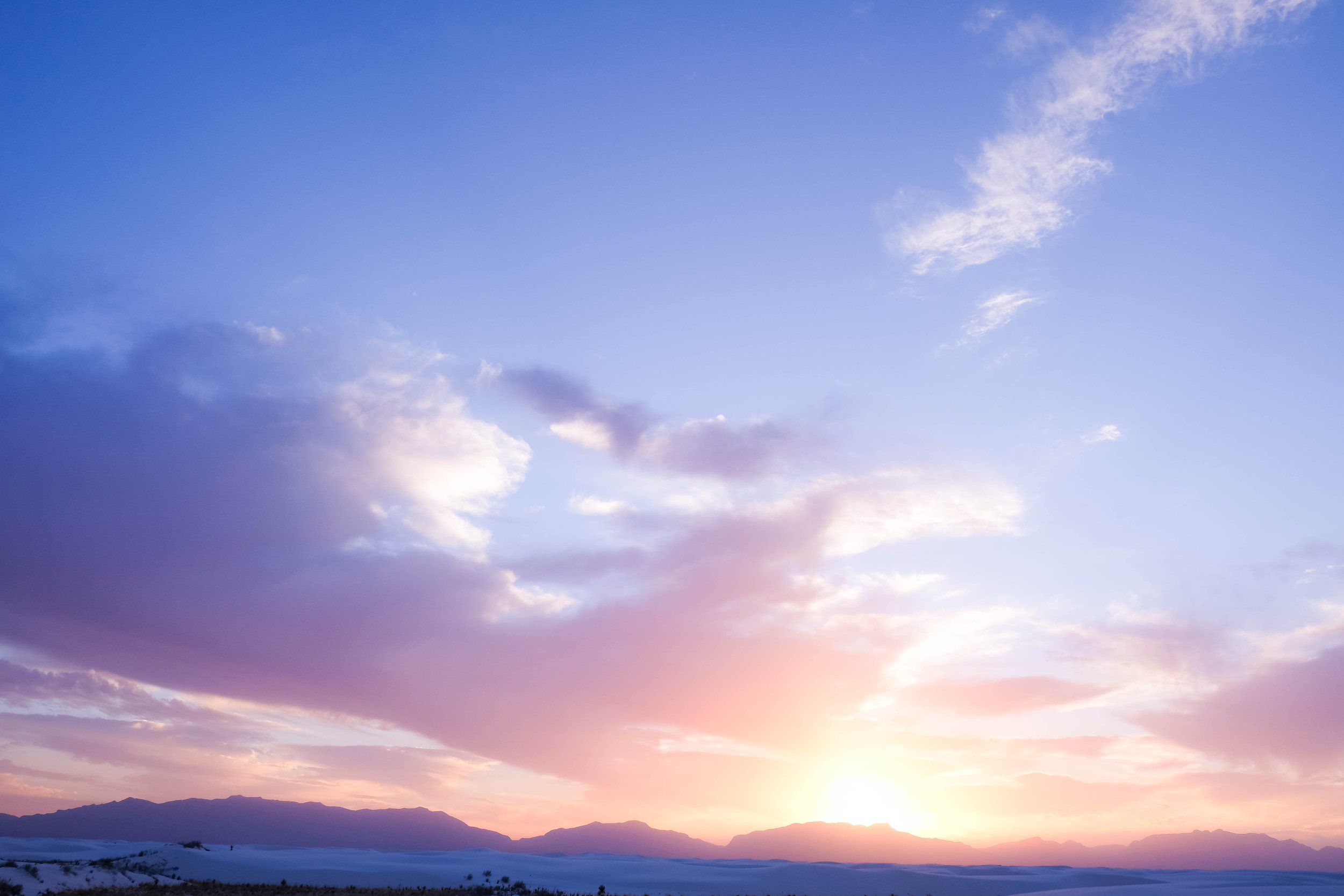
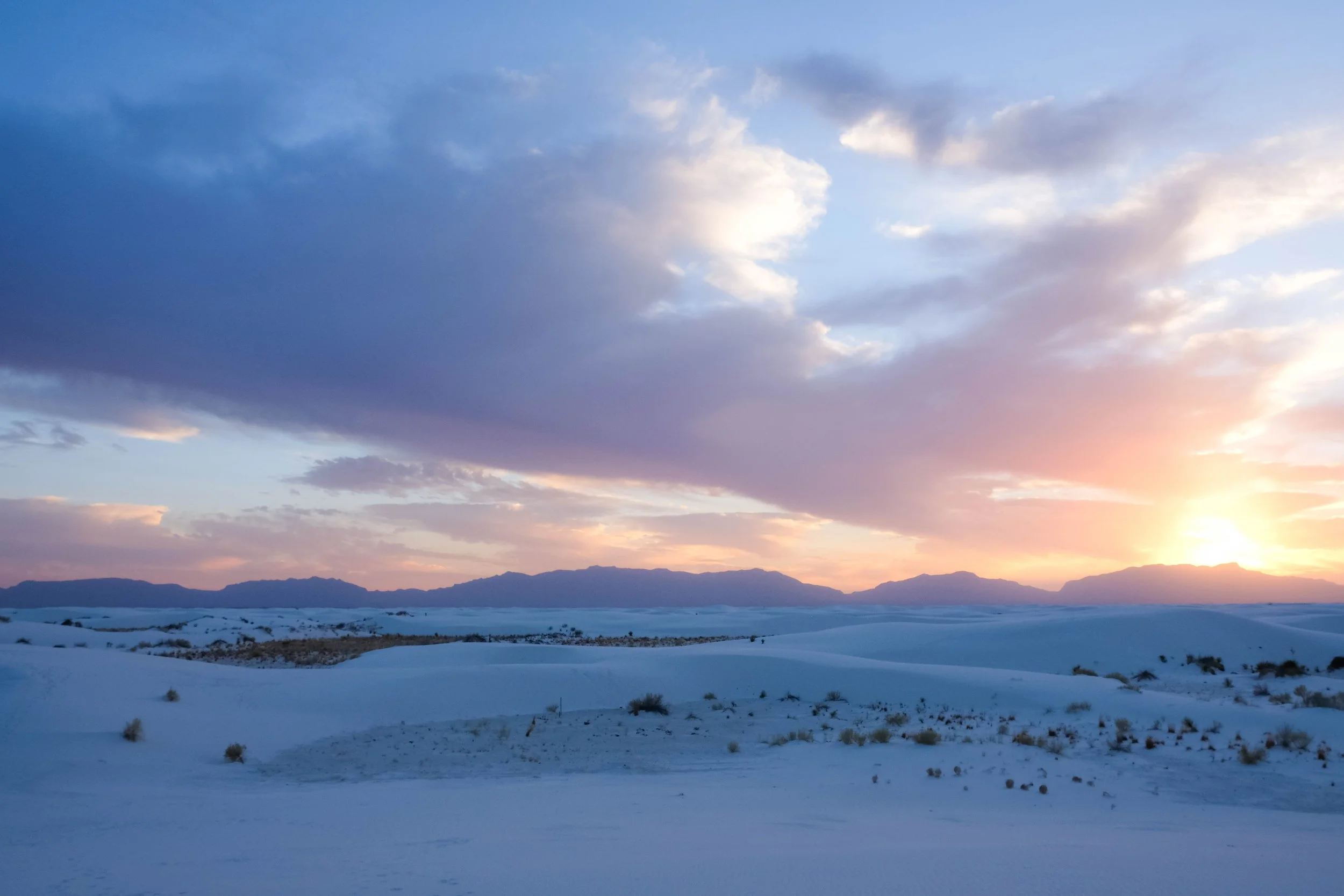
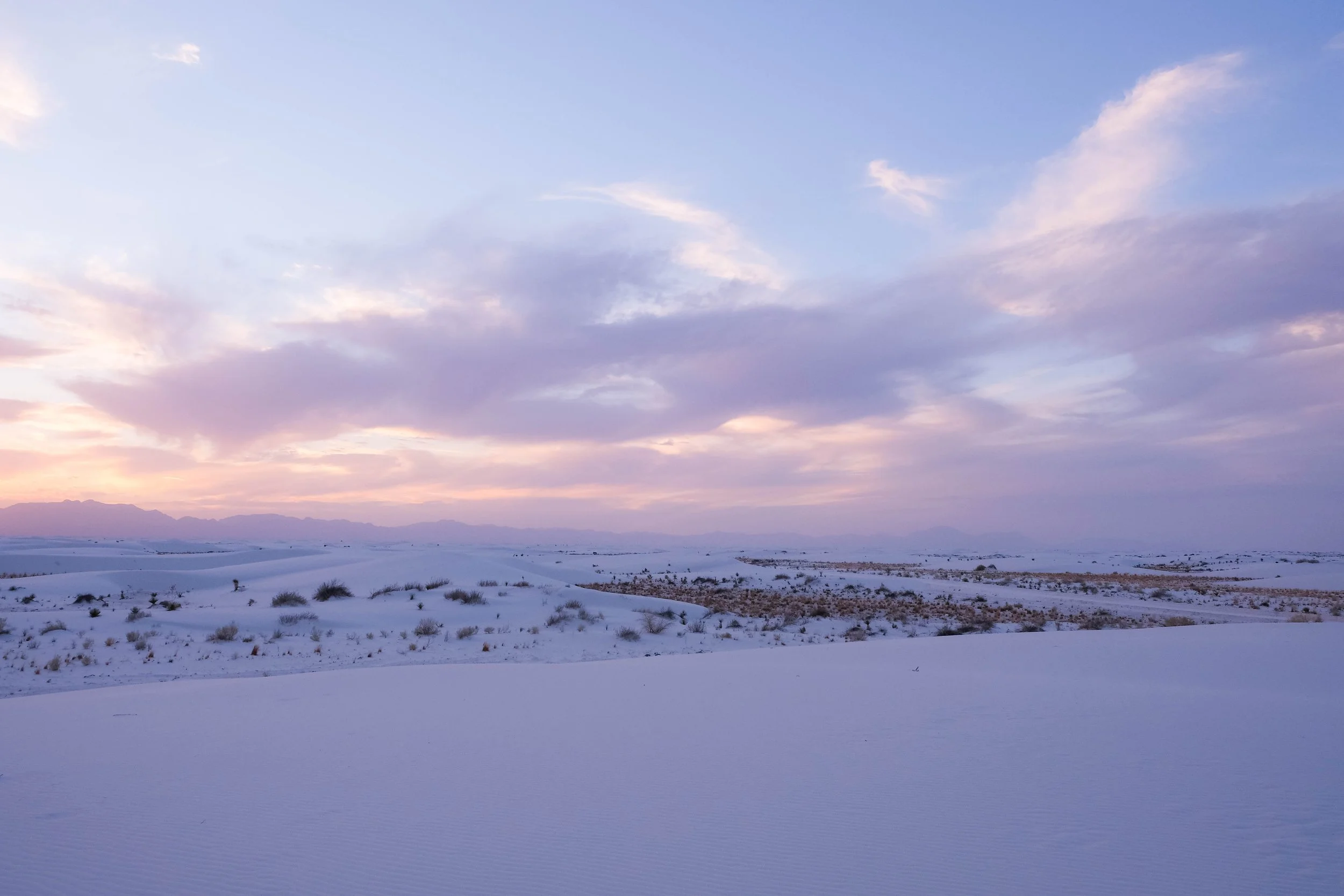
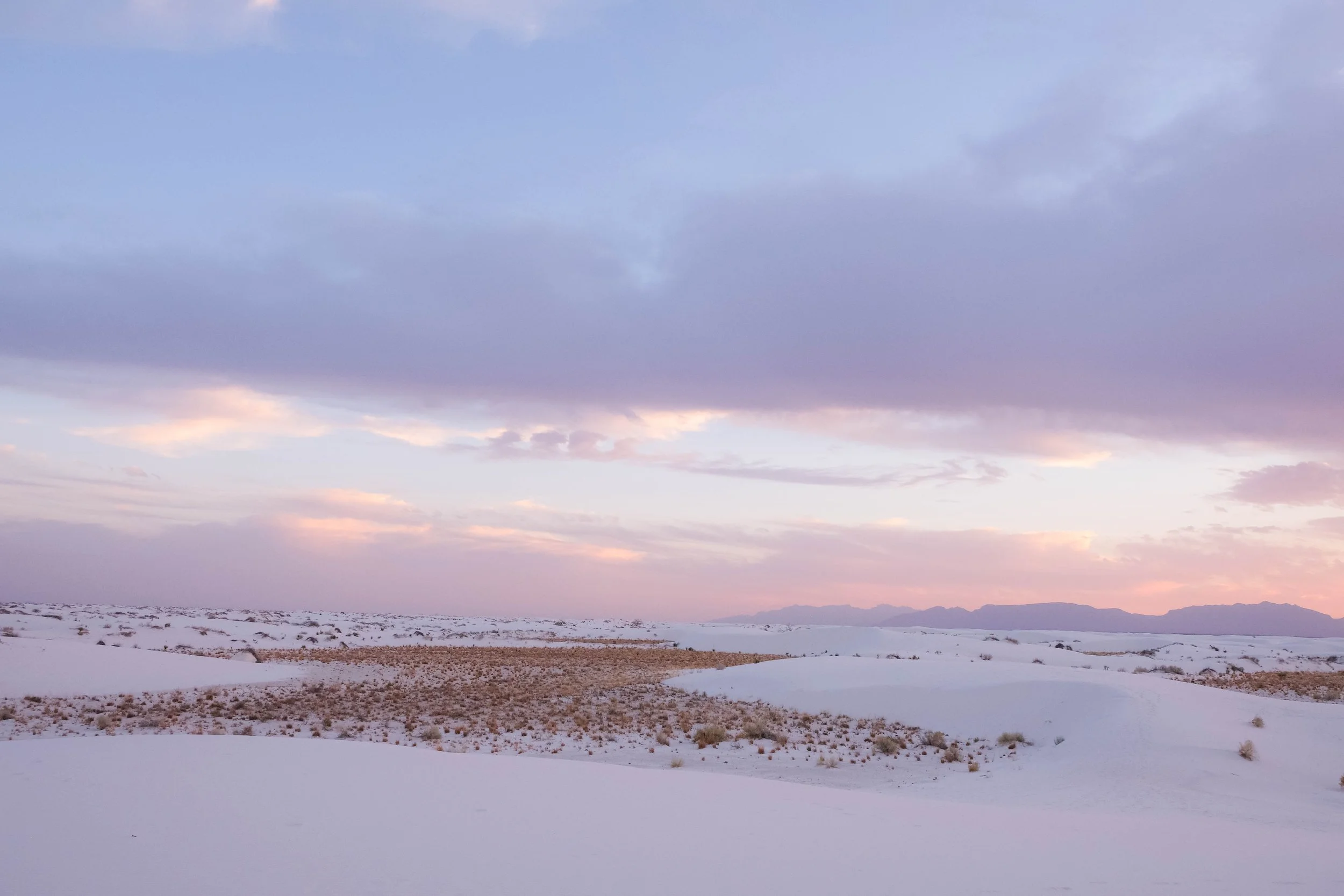
To date, these are some of my favorite images that I’ve ever taken. I’m guilty of overusing the word “magical” when describing nature, but in this case, I would argue that White Sands actually is magical. Gypsum dunes that rise and fall in mesmerizing shapes, blindingly white beneath the midday sun and slowly transformed into blues and purples and pinks and peachy hues as evening approaches. The mountains on the horizon, the clear sky above, and the wind that hauntingly whips through this otherworldly landscape.
My memories here are a peculiar mixture of euphoric and sad. Earlier in the day, I had been given notice of a call I’d receive that evening that I was guessing would not contain pleasant news. I felt a growing sense of dread and anxiety whenever this came to mind, but resolutely tried to shove it away and be present in my experience of this place. I remember staring at the unbelievable beauty of this place as I stood on sand that was literally pink, surrounded by a world awash in color, choosing to soak up every ounce of beauty before facing what I sensed would be a painful conversation. Perhaps it was this looming sensation that heightened my appreciation of this particular moment, watching J and our six-month-old puppy running up and down the dunes and feeling the breeze ruffling my hair; but I also think this was objectively one of the most beautiful sunsets I’ve had the privilege of witnessing.
Eventually the light faded and we took our leave, sliding down the dunes in our bare feet as we headed back to the parking lot. We hadn’t yet made it out of the park when the call I was expecting came through my cell. I can still recall my detached, calm voice as I took in what that conversation held, my eyes barely registering the view around us any longer.
And so that’s White Sands for me: Breathtaking and devastating all at once. I’ve thought a lot about going back — certainly because I would be delighted and grateful to run up and down these bright dunes again, but also because perhaps it would be a good place to sit and alchemize what I felt when I last was there.
I can picture my future self sitting in the sand at sunset again, hugging my knees in to my chest, watching the rippled dunes turn pastel. The wind, still warm from the day yet carrying a hint of nighttime desert chill, caresses my face. I imagine I close my eyes and release to the wind whatever might need to be let go in this specific place, whatever memories or sensations or feelings.
The wind would be gentle as she takes what I offer and mixes it in to the swirling particles of magenta sand. A part of me, forever lost and found in this mournful, quiet, lovely place.

Carlsbad Caverns
Park 17 | March 2021
Part + Park 1 (of 3) on our spring break road trip.
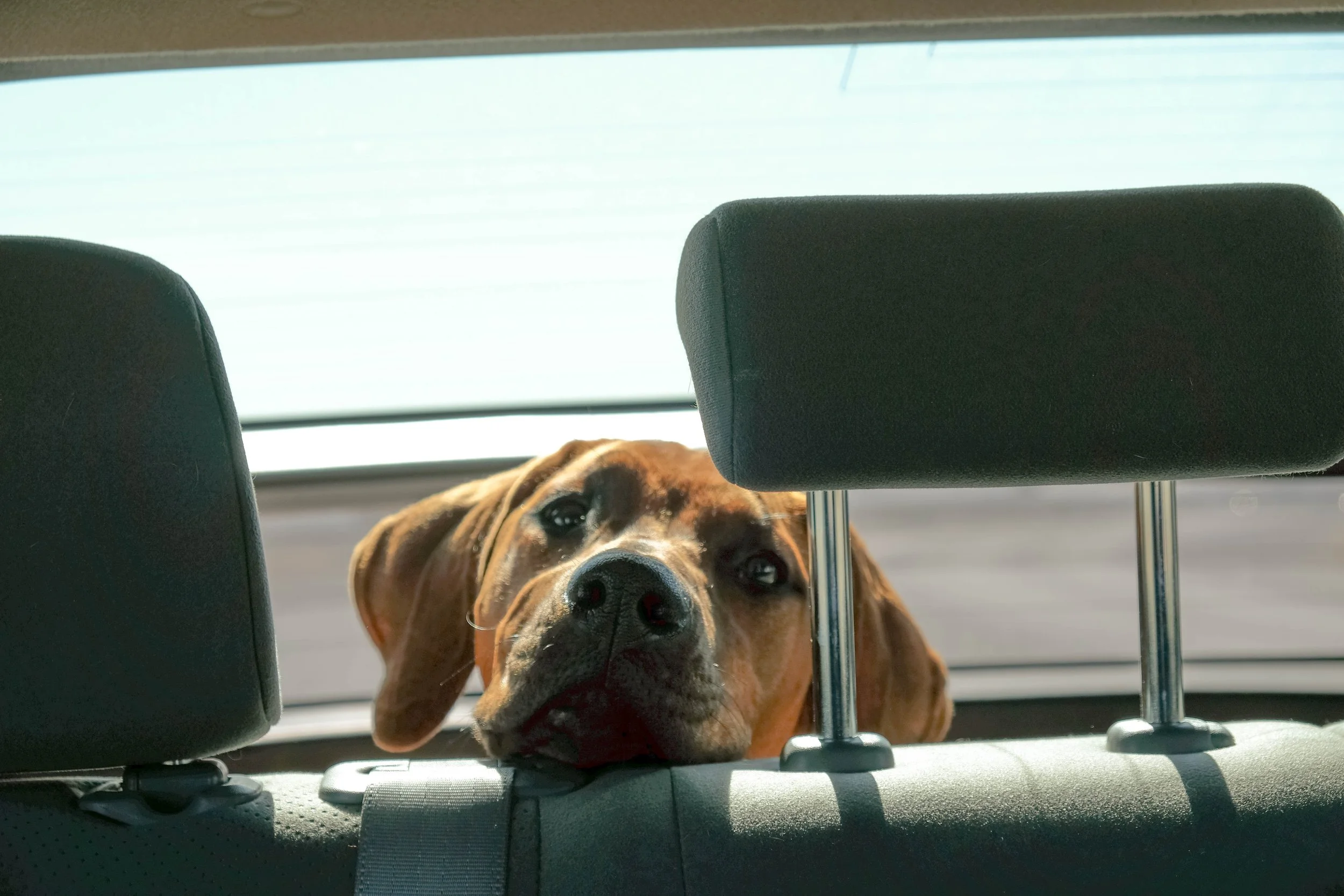
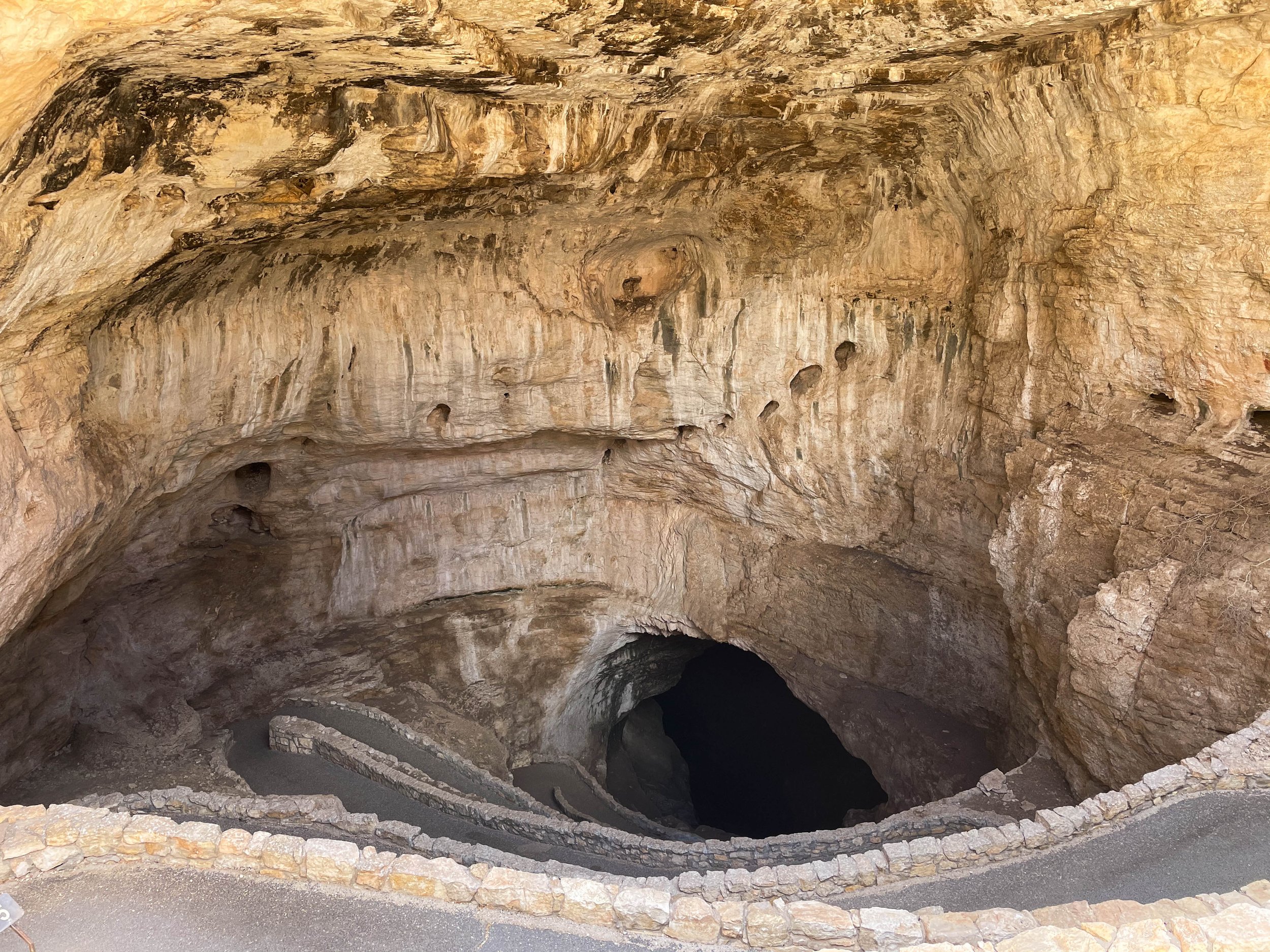
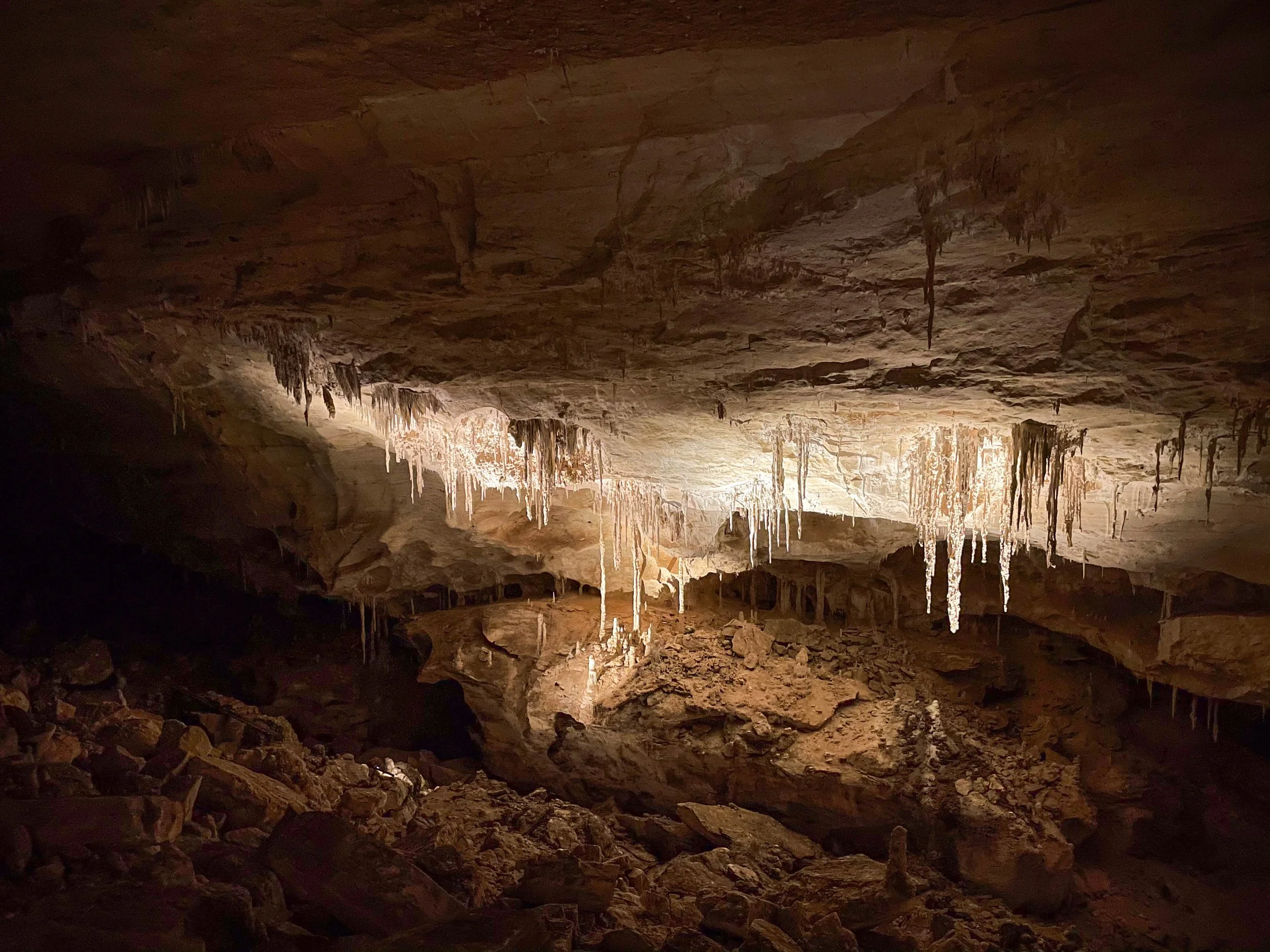
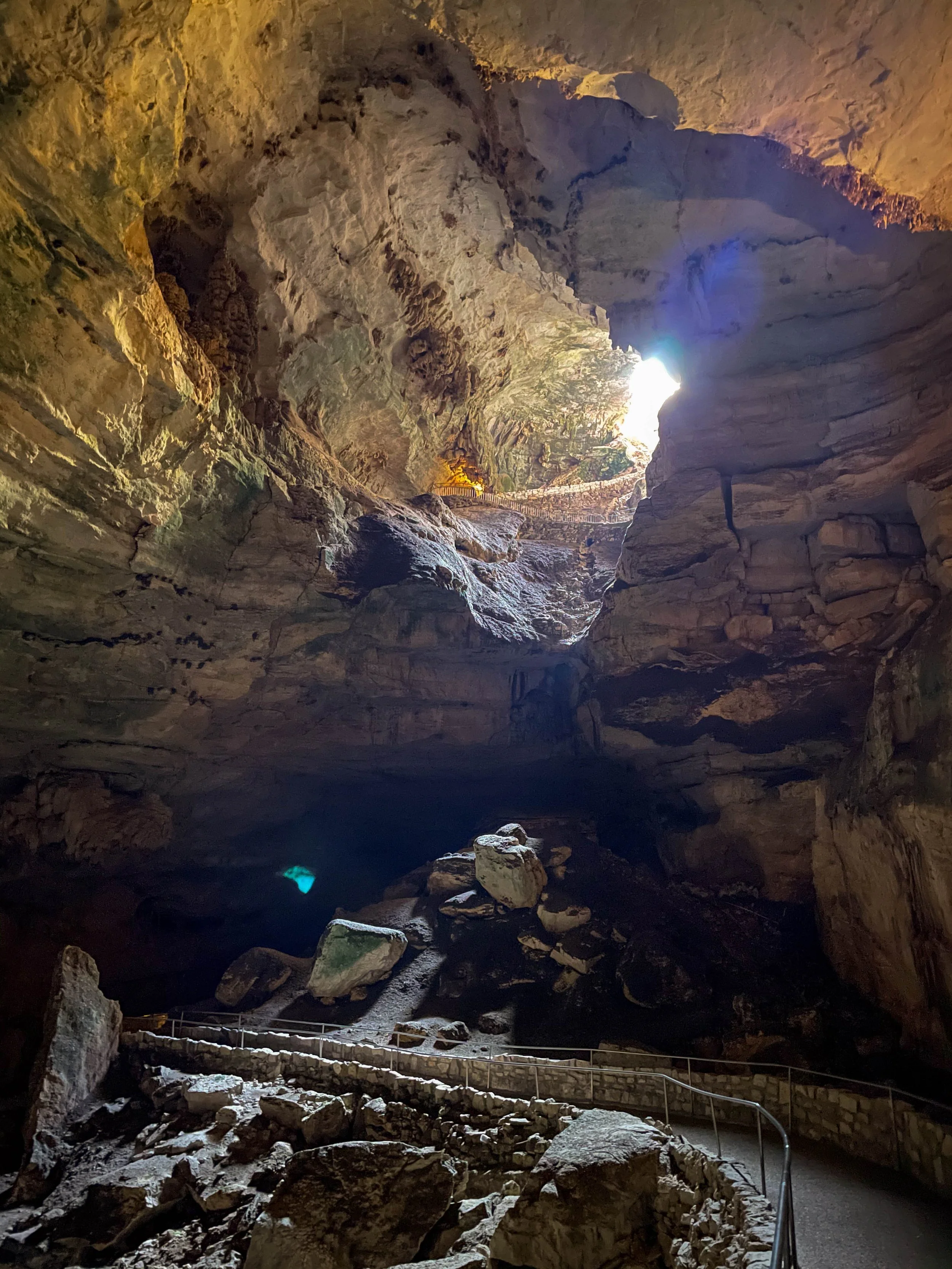
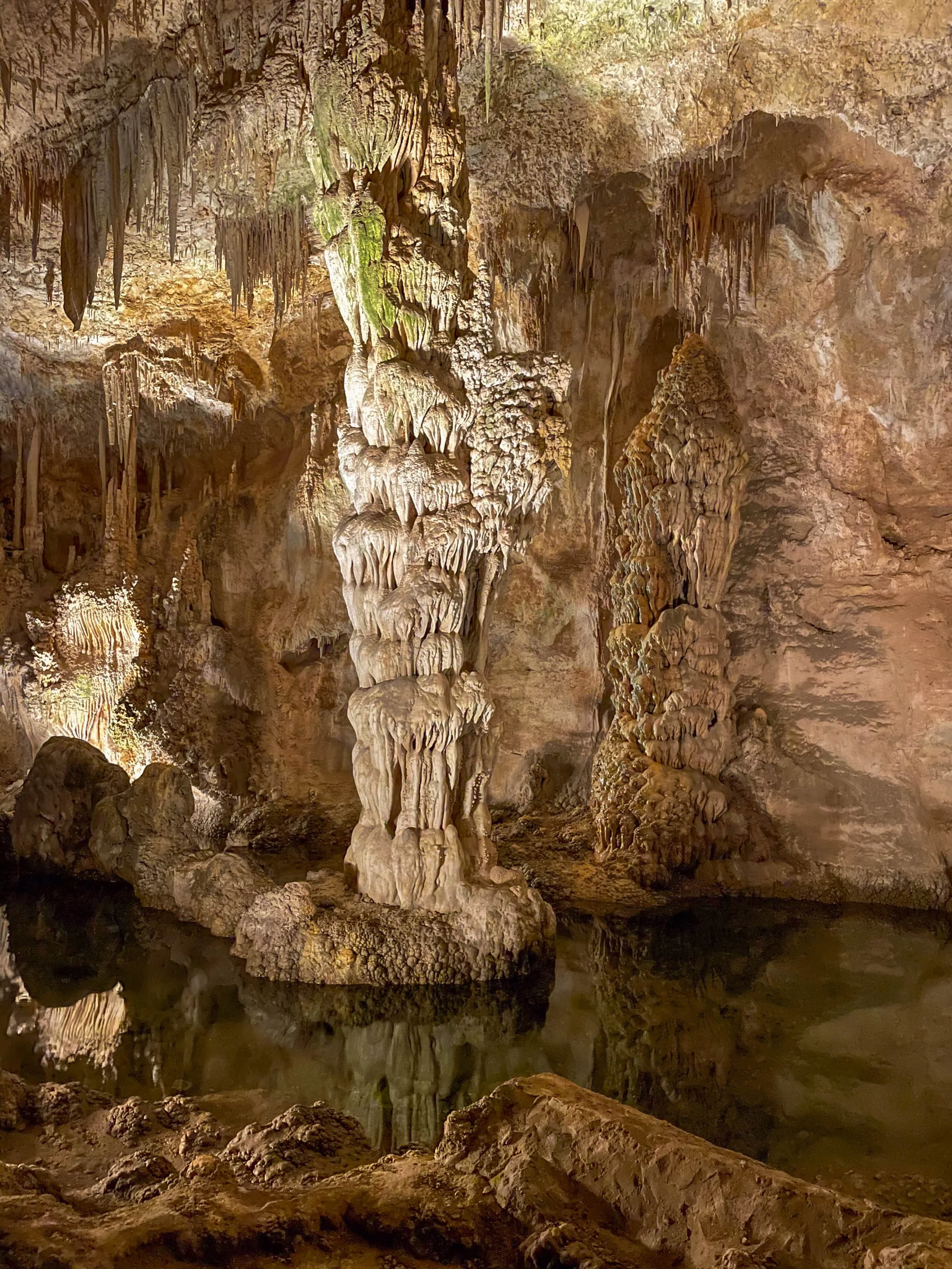
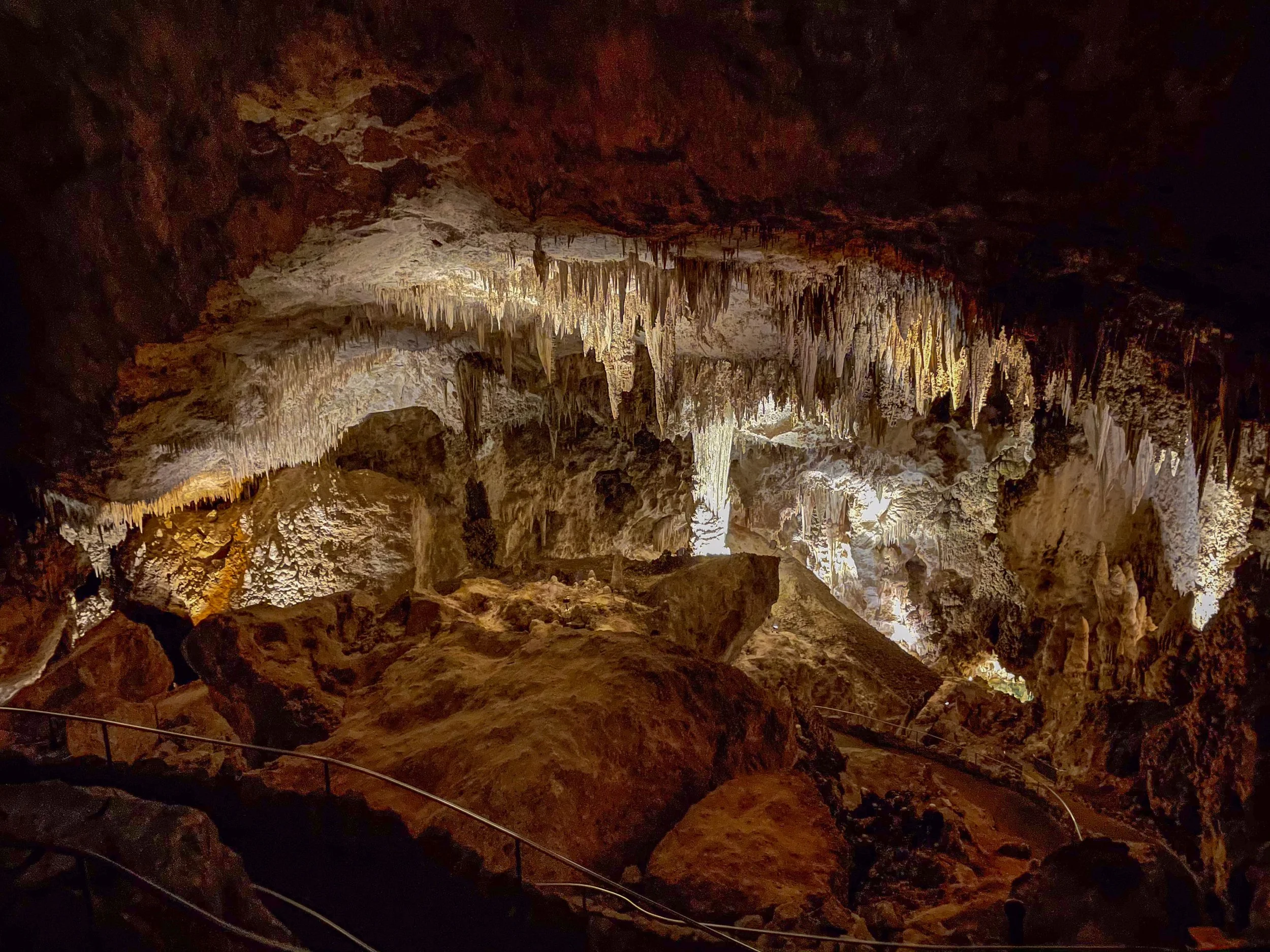
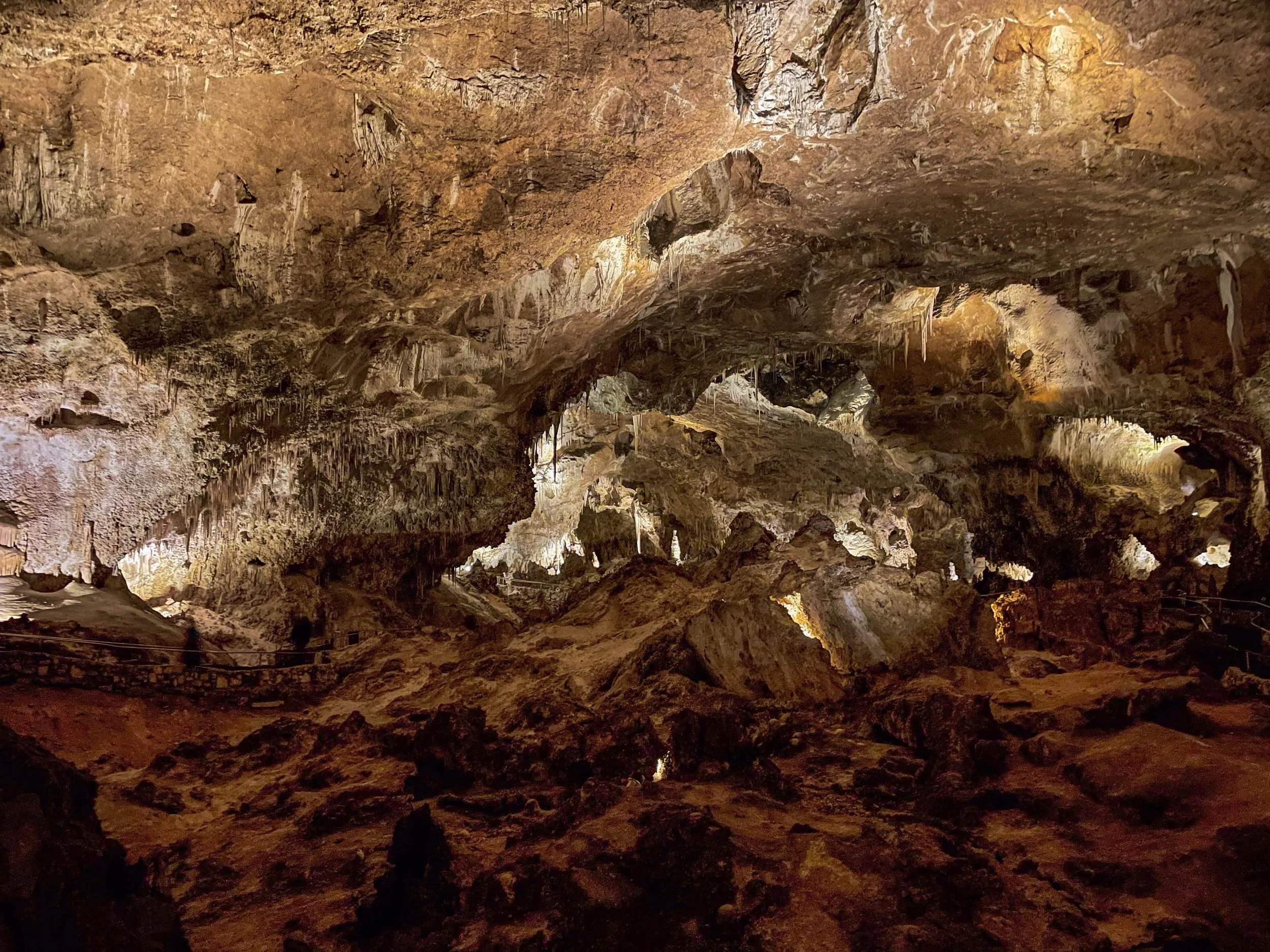
This one found us driving through New Mexico and Texas with a six-month-old puppy in the back of our Prius. Looking back, I have no idea how we managed to fit the three of us larger-than-average beings + all our gear into that vehicle. By the time we reached Carlsbad Caverns, we were ready to stretch our legs. Dogs aren’t allowed in the cave, but we’d researched ahead of time that there was a dog kennel on site where we could check in Kiya. This ended up being a sterile, windowless room with several dog kennels and a staffer on hand to keep an eye on the dogs. I am certain that baby Kiya thought we were permanently abandoning her when we left her in that room and hurried off to start the tour of the caverns. Her innocent, scared little face was seared into my mind and I ended up jogging through the cave, half appreciating the site but mostly just trying to get to the end so I could collect our little pup.
It’s also one of the parks where cell phone pictures are all that we have. Enjoy a few low-res images of this hastily experienced site.
PS — Kiya was completely fine after this experience, but to this day, J will still remind me of how I made him run through the cave to get back to the puppy because I was so distraught to leave her there. Puppy > caves, always and forever for me.
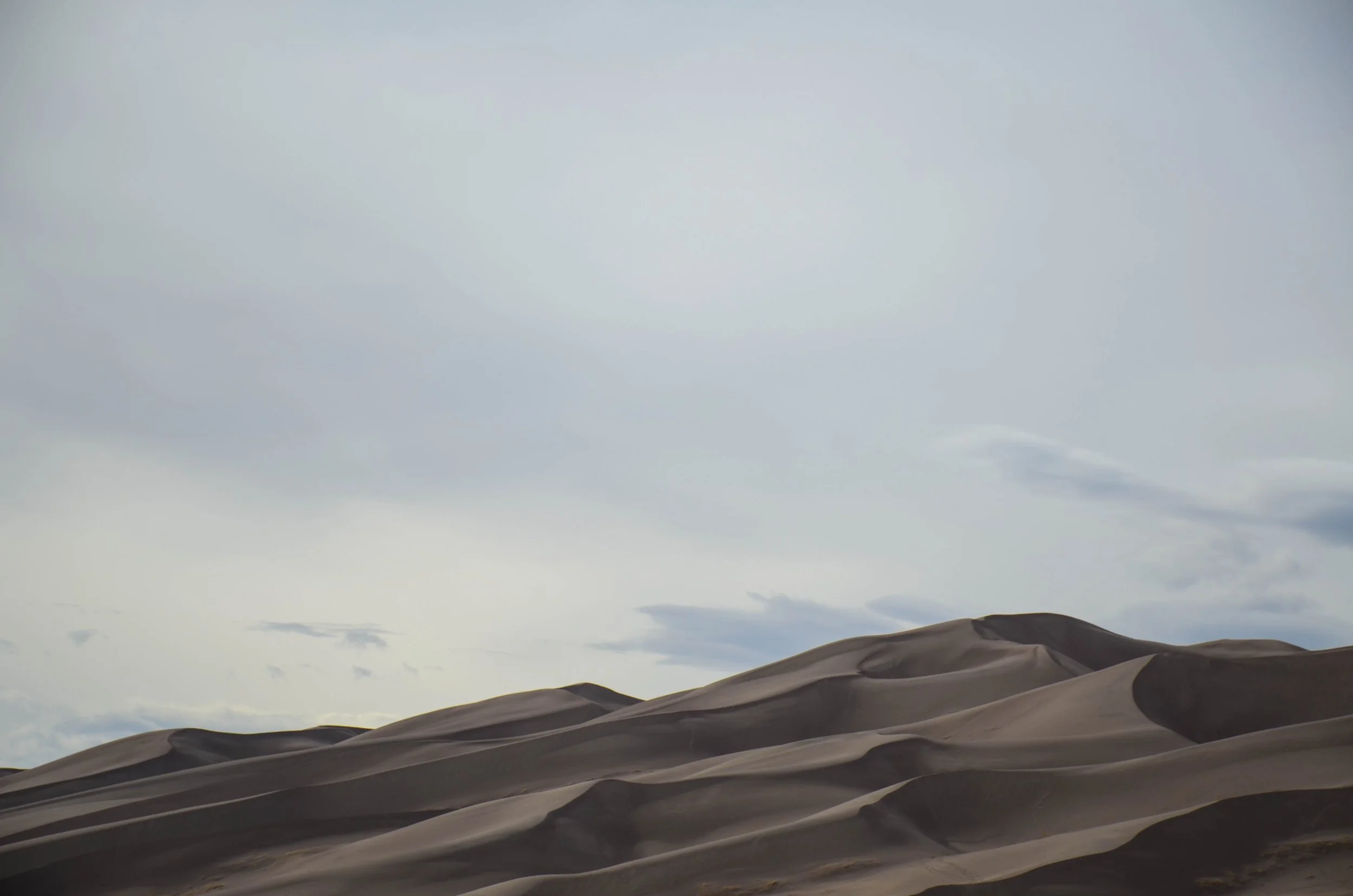
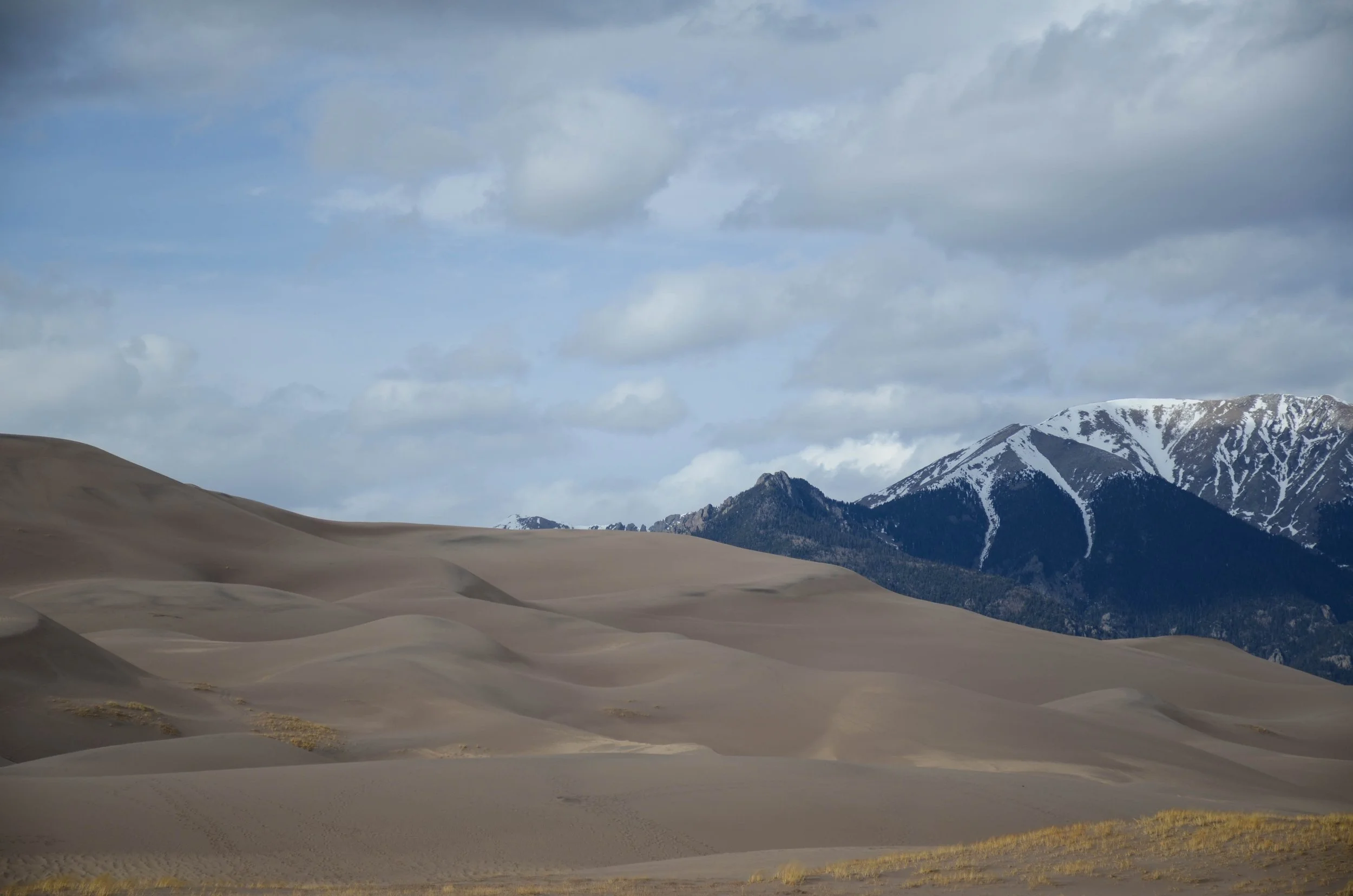
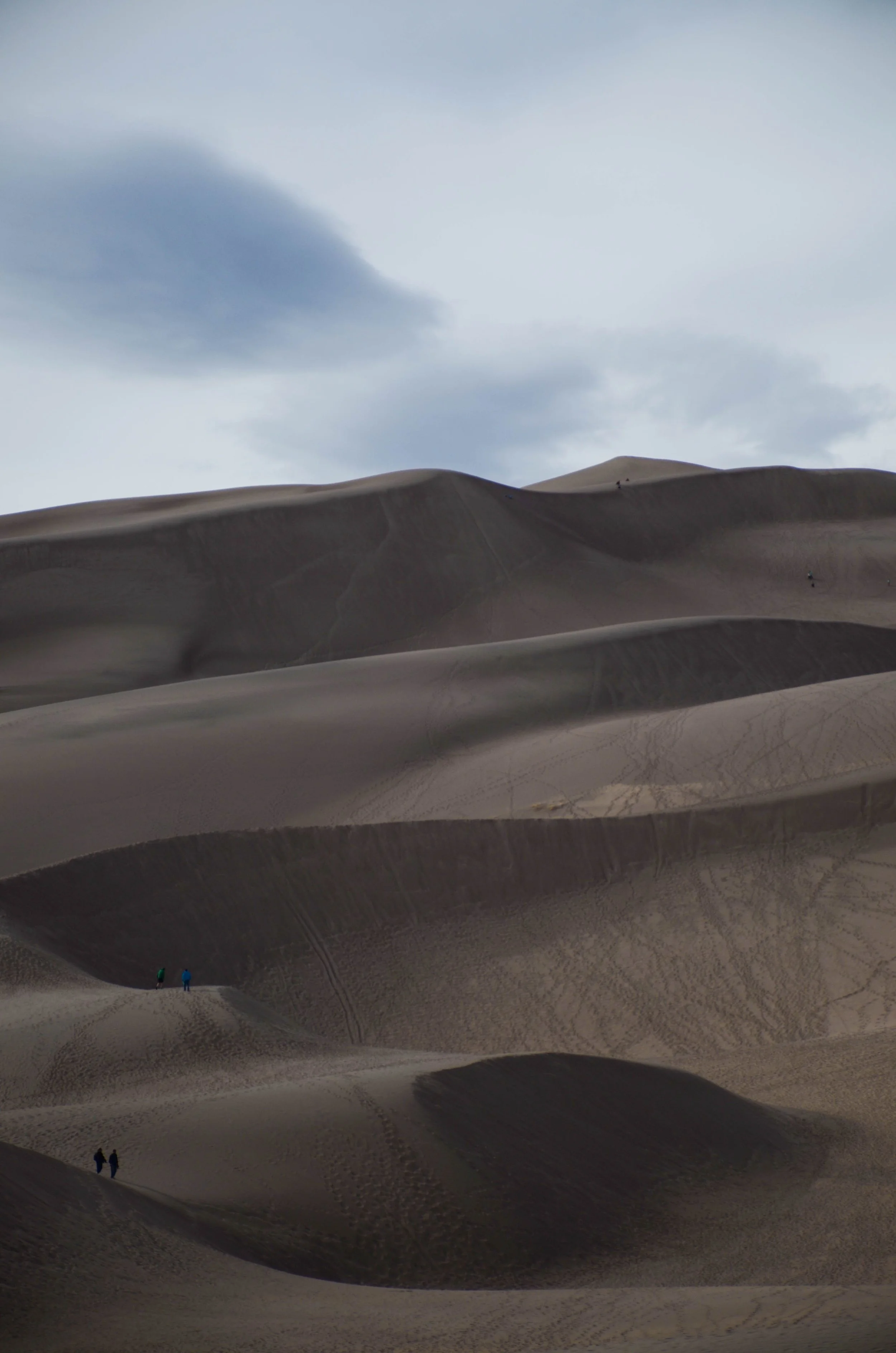
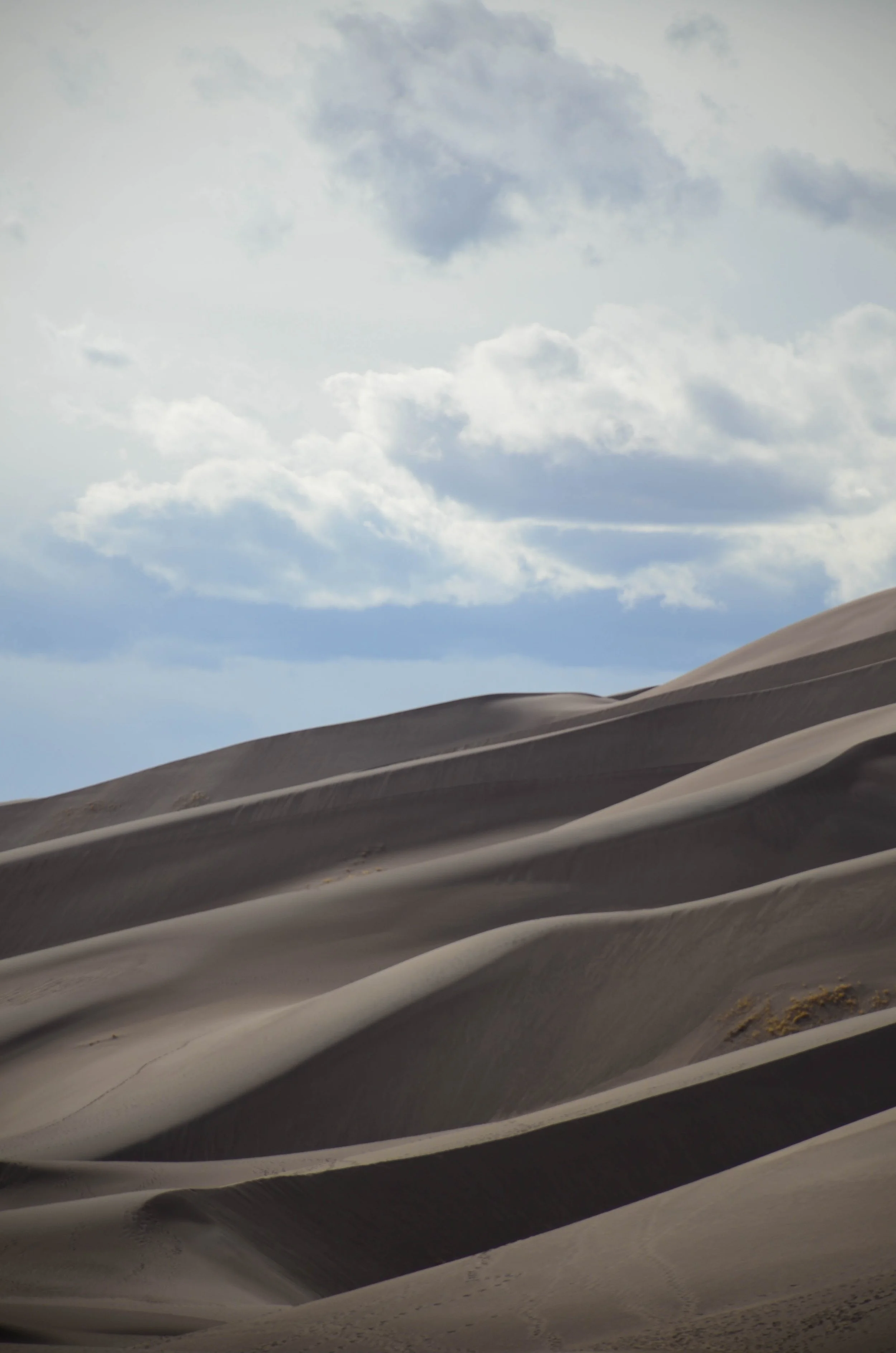
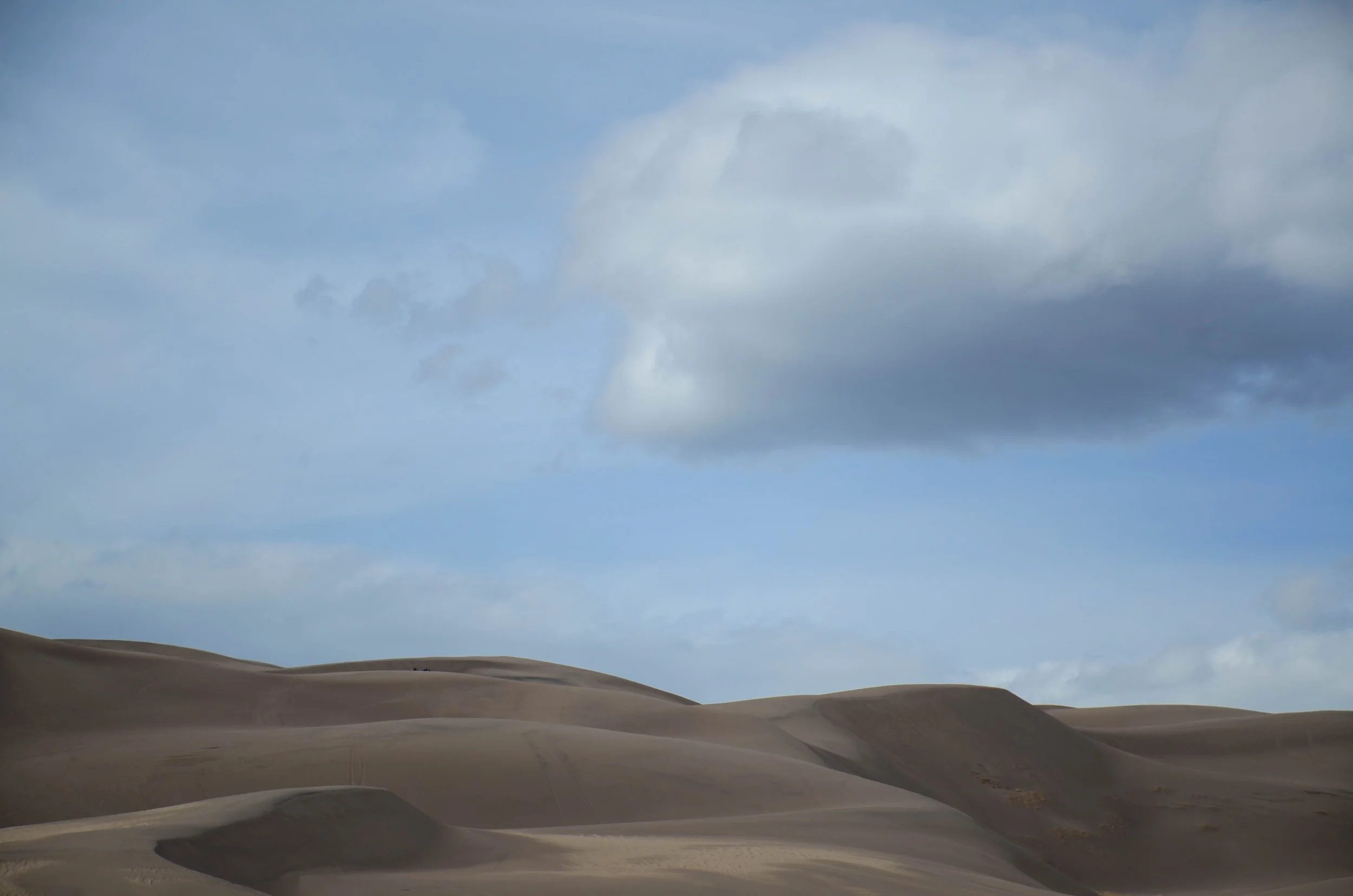
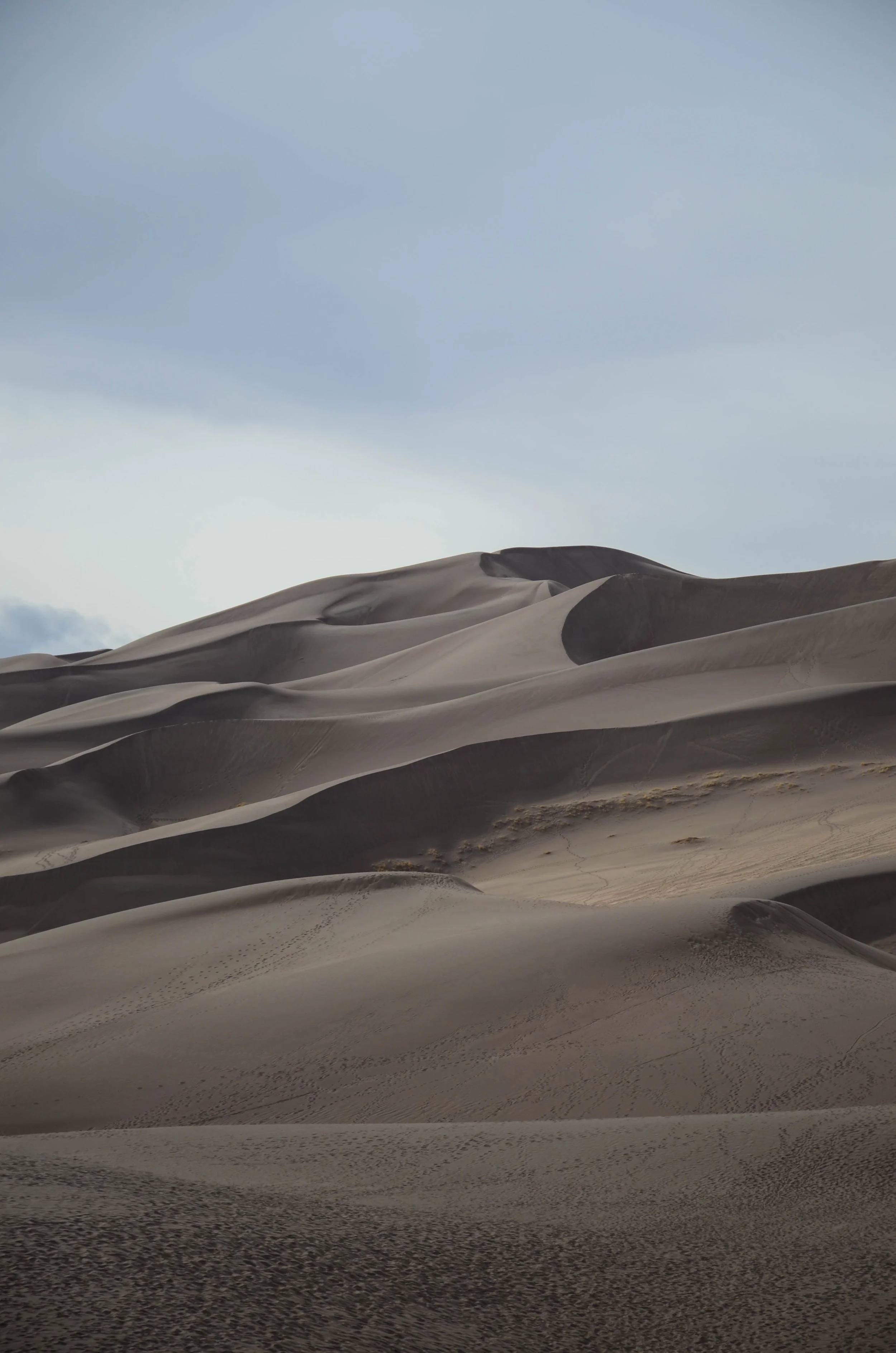
Great Sand Dunes
Park 16 | Multiple visits
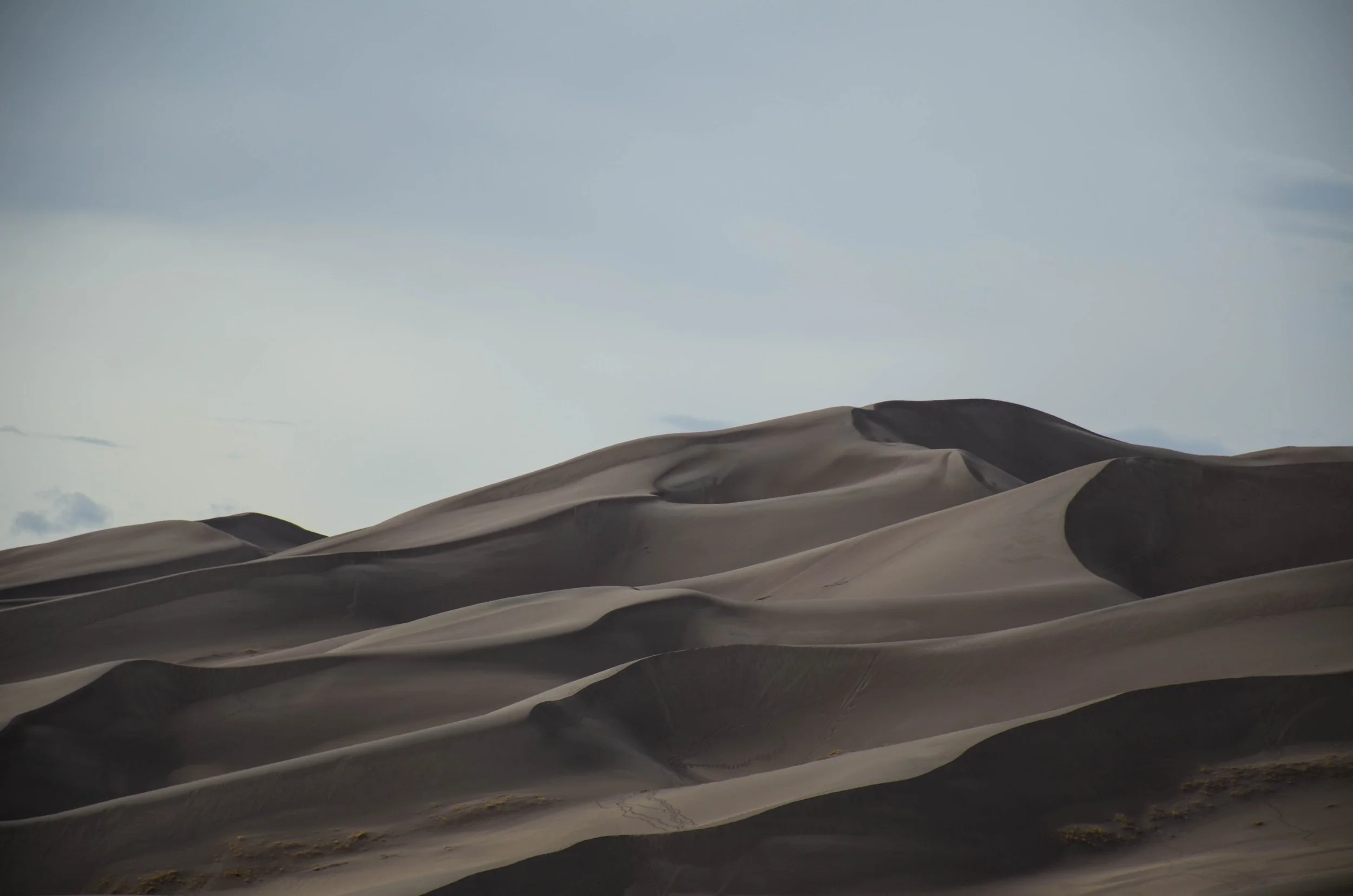
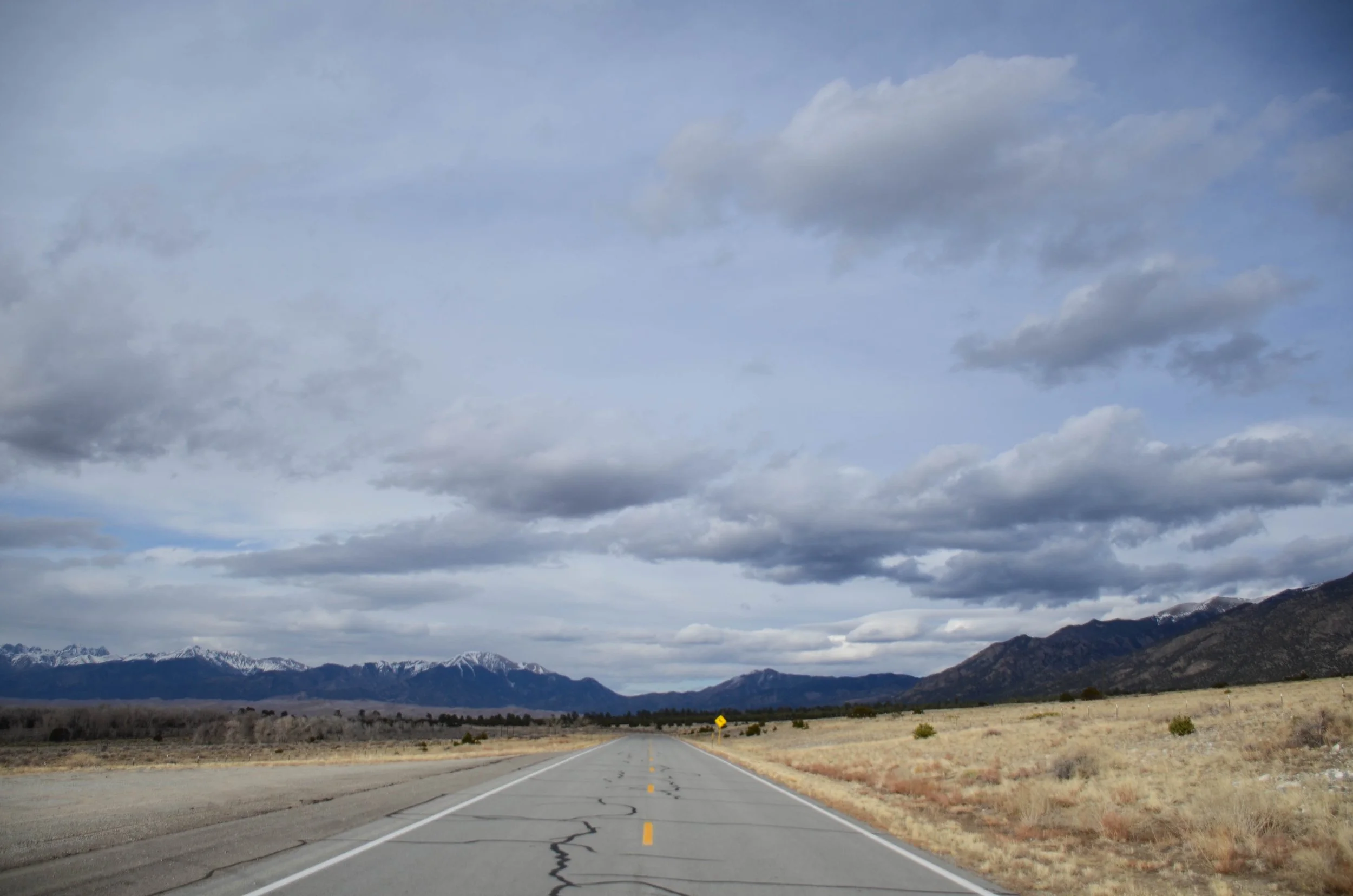
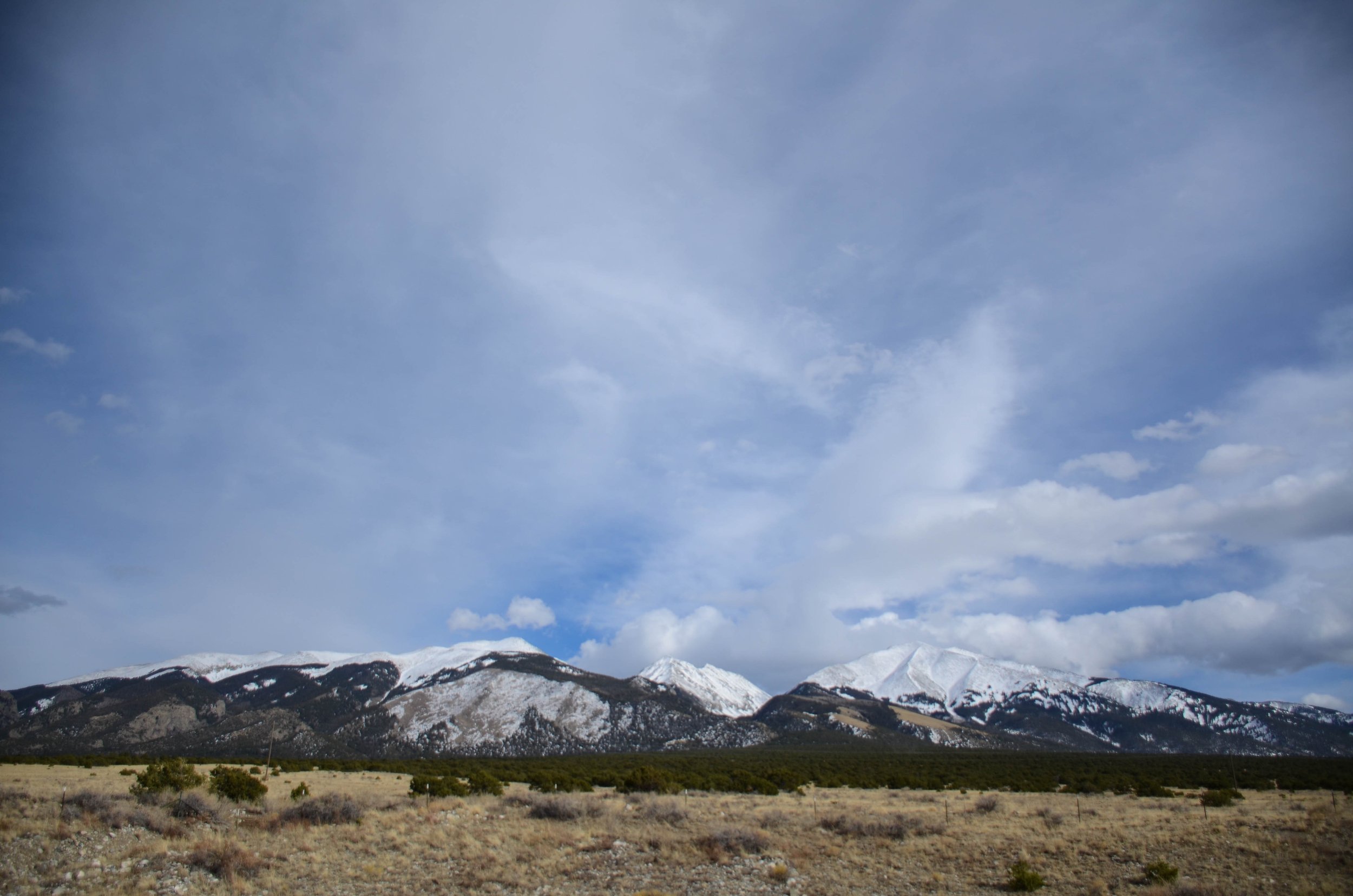
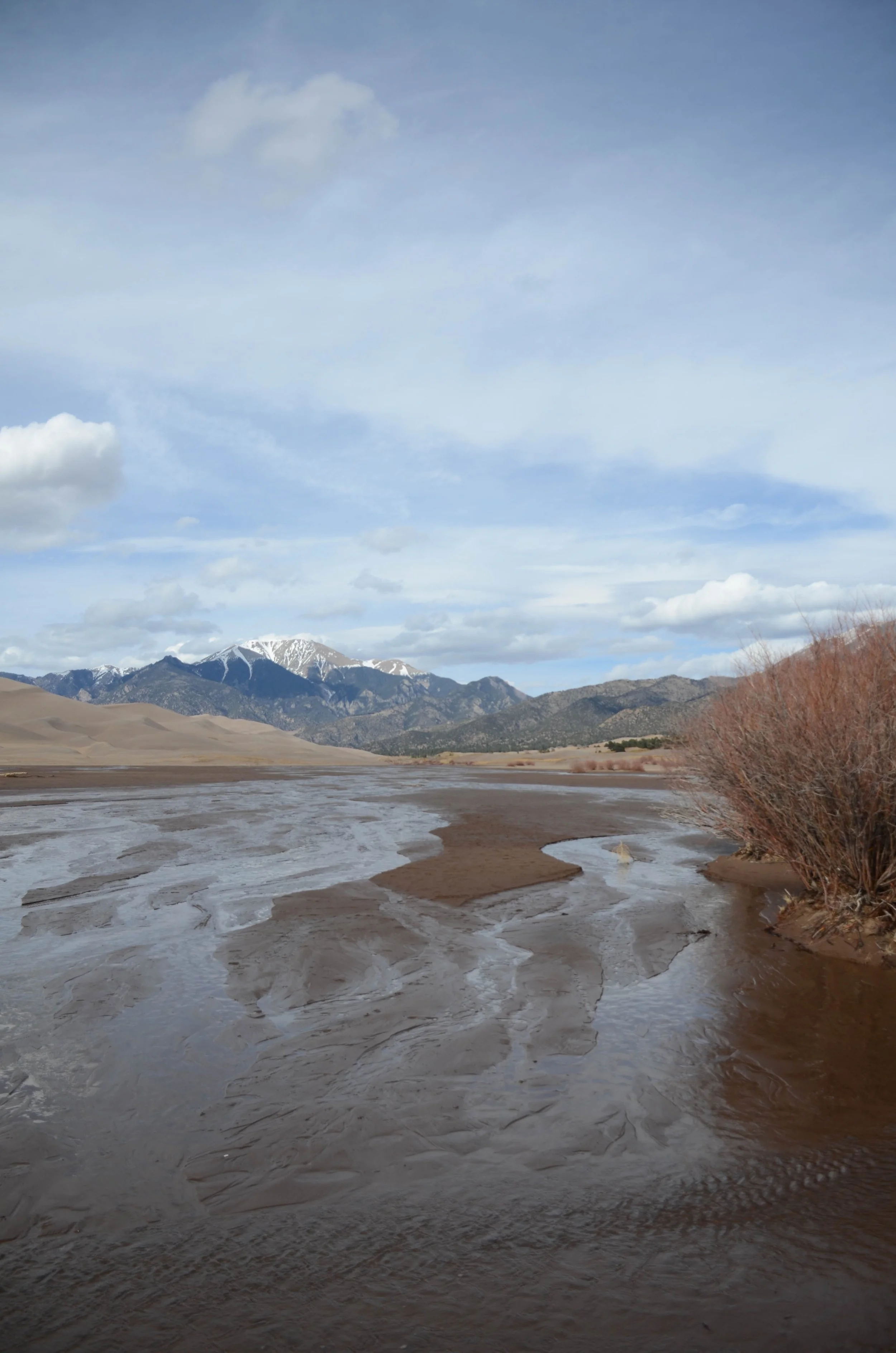
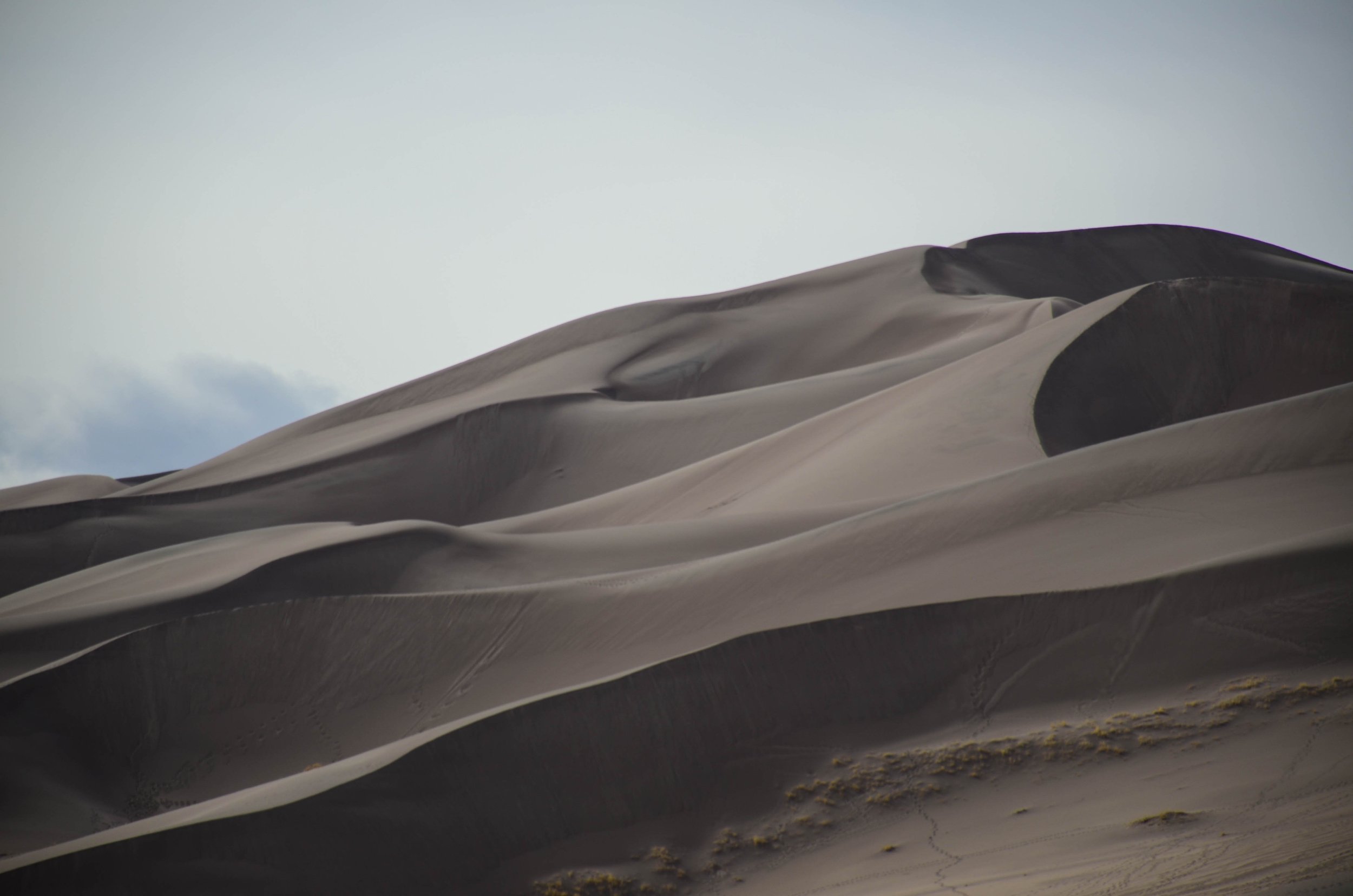
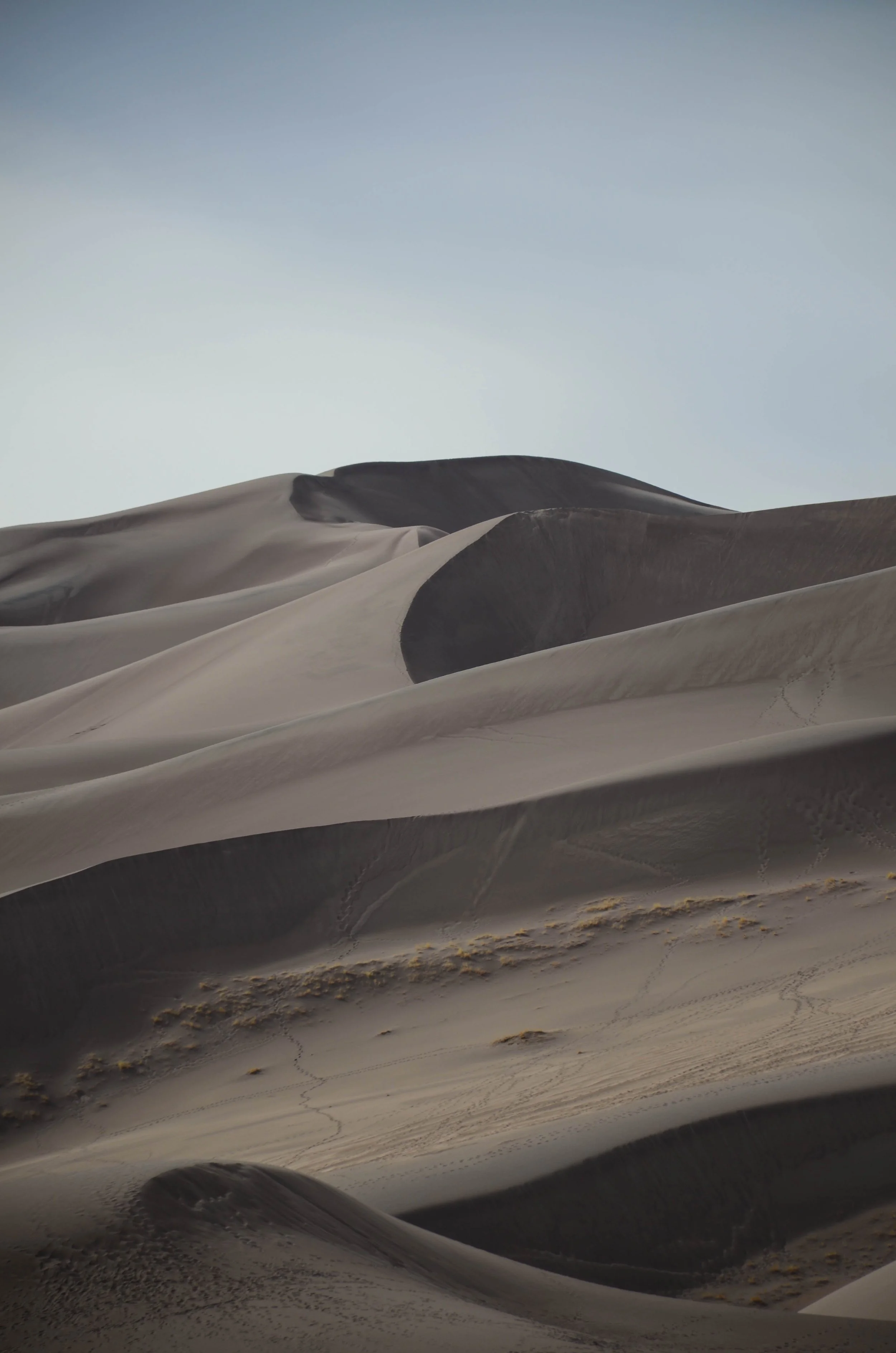
Great Sand Dunes National Park is an otherworldly place. I’ve had the chance to explore it a few times — first in 2016, on a trip back from the Grand Canyon with friends. Next, in November 2020, when J & I were fleeing WiFi and the stress of waiting on the results of the 2020 presidential election. And then once more with Kiya in 2022, on a camping trip to nearby Zapata Falls.
We love the San Luis Valley and all it holds and will rarely pass up an opportunity to visit this place, mesmerized by the way the shape of the sand changes each time: whipped into new peaks and folds by the ever-present wind.

Rocky Mountain
Park 15 | Multiple visits
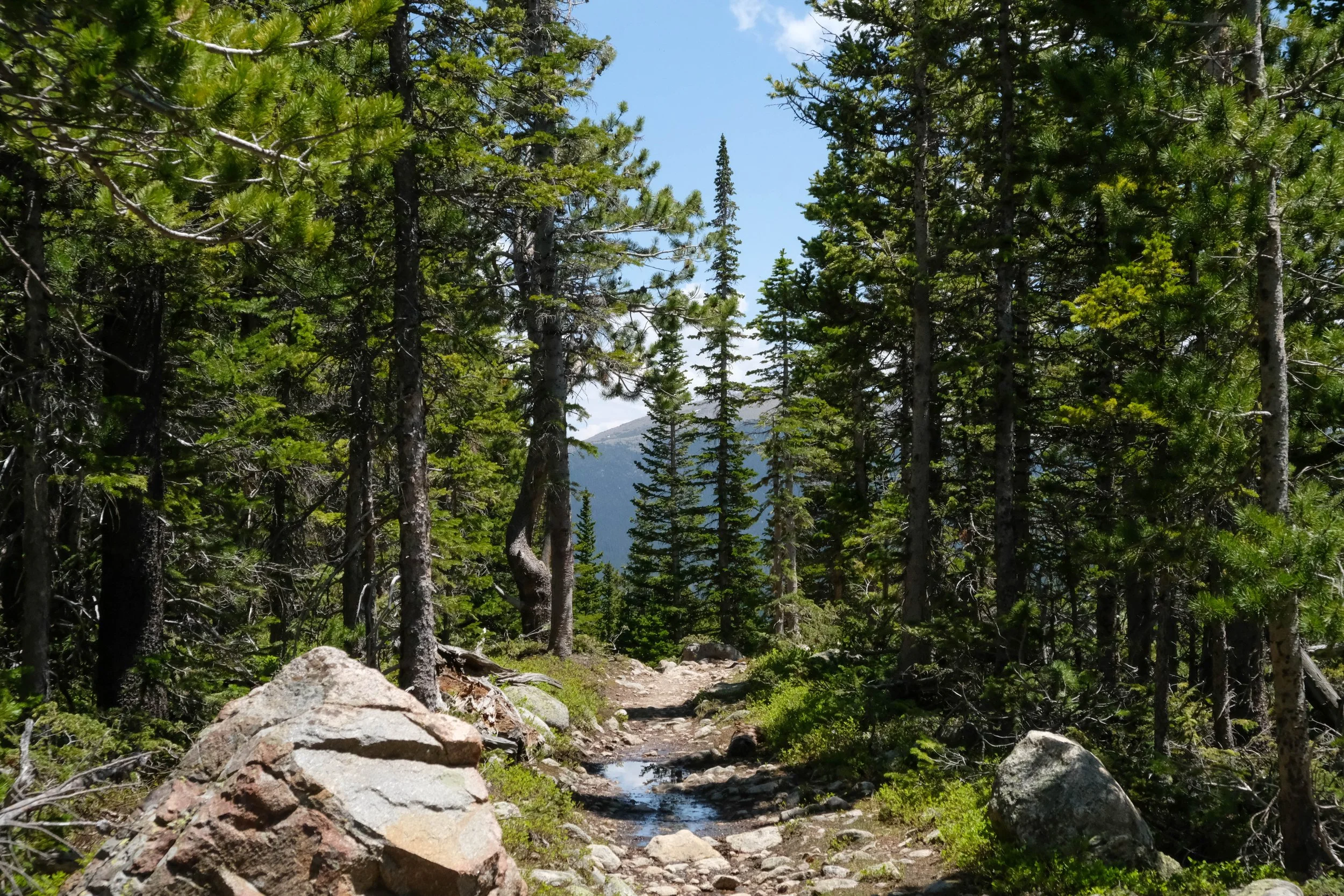
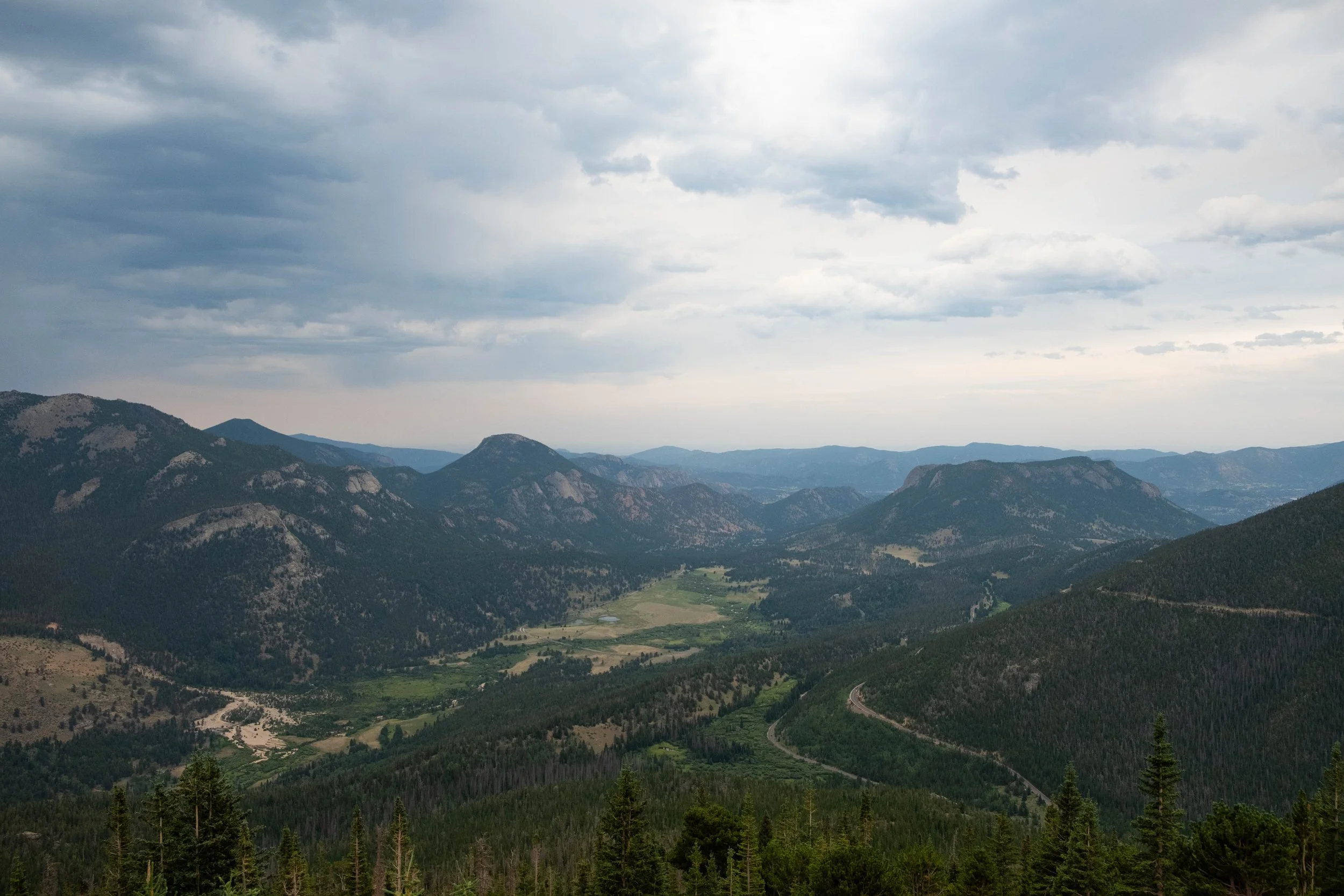
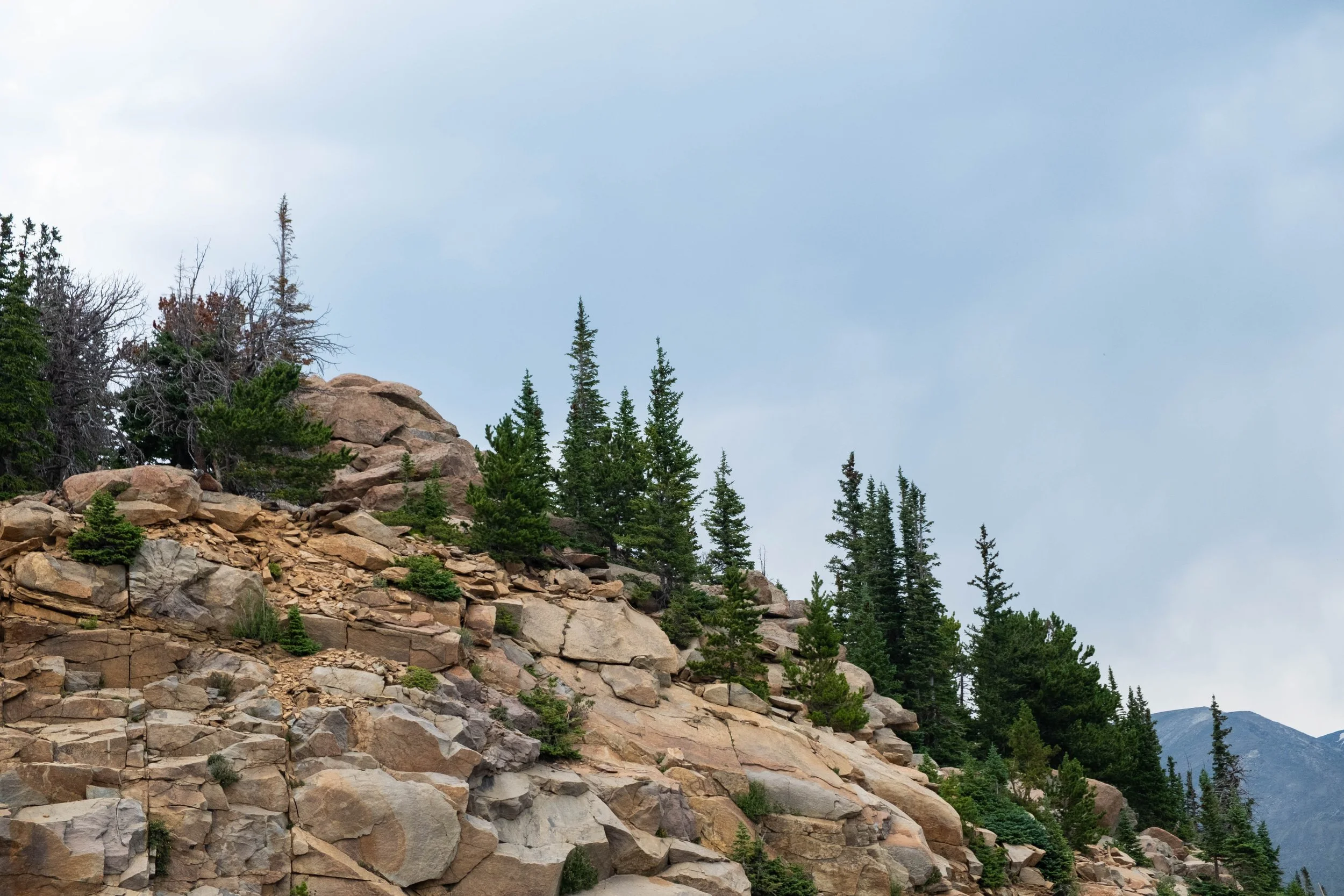
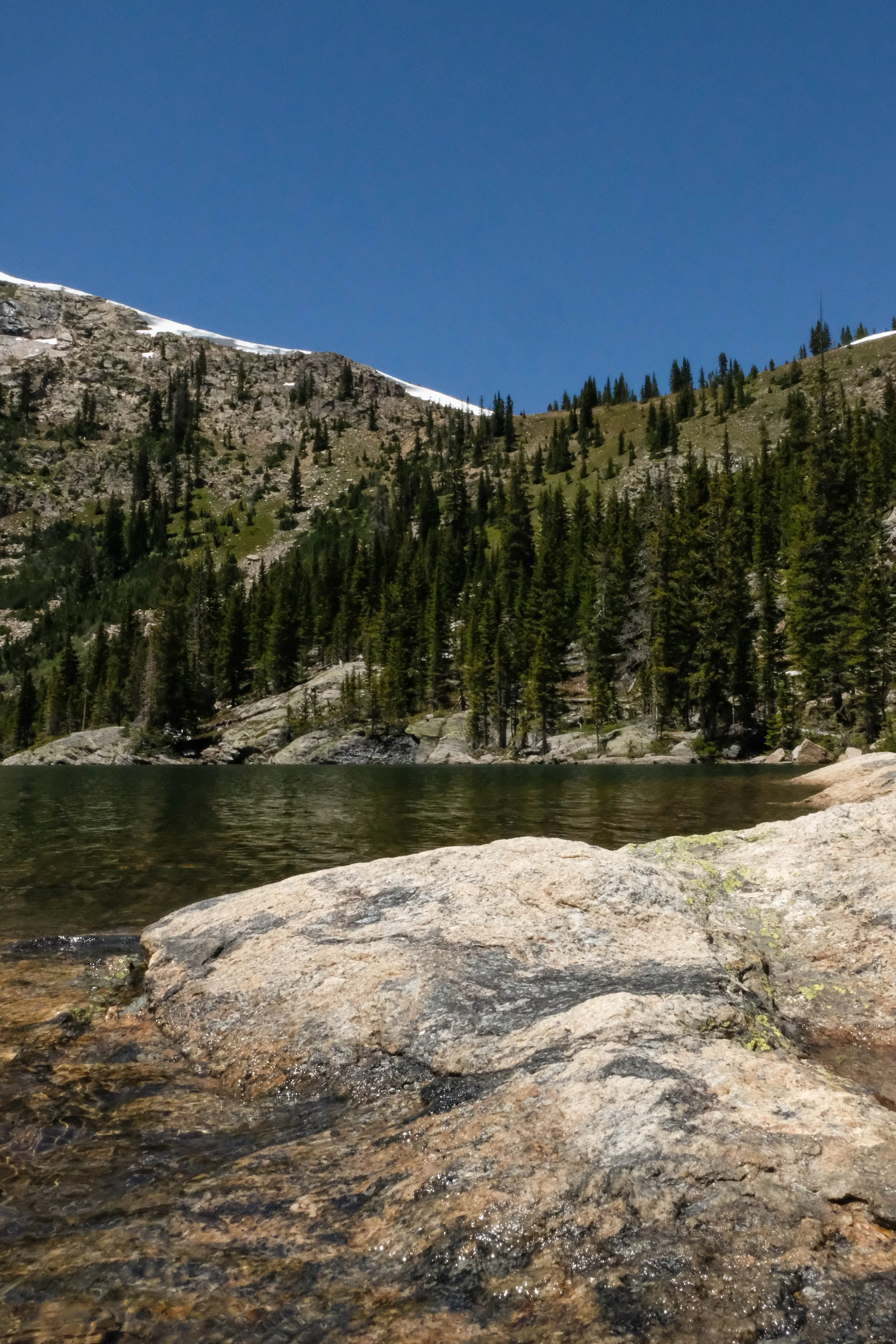
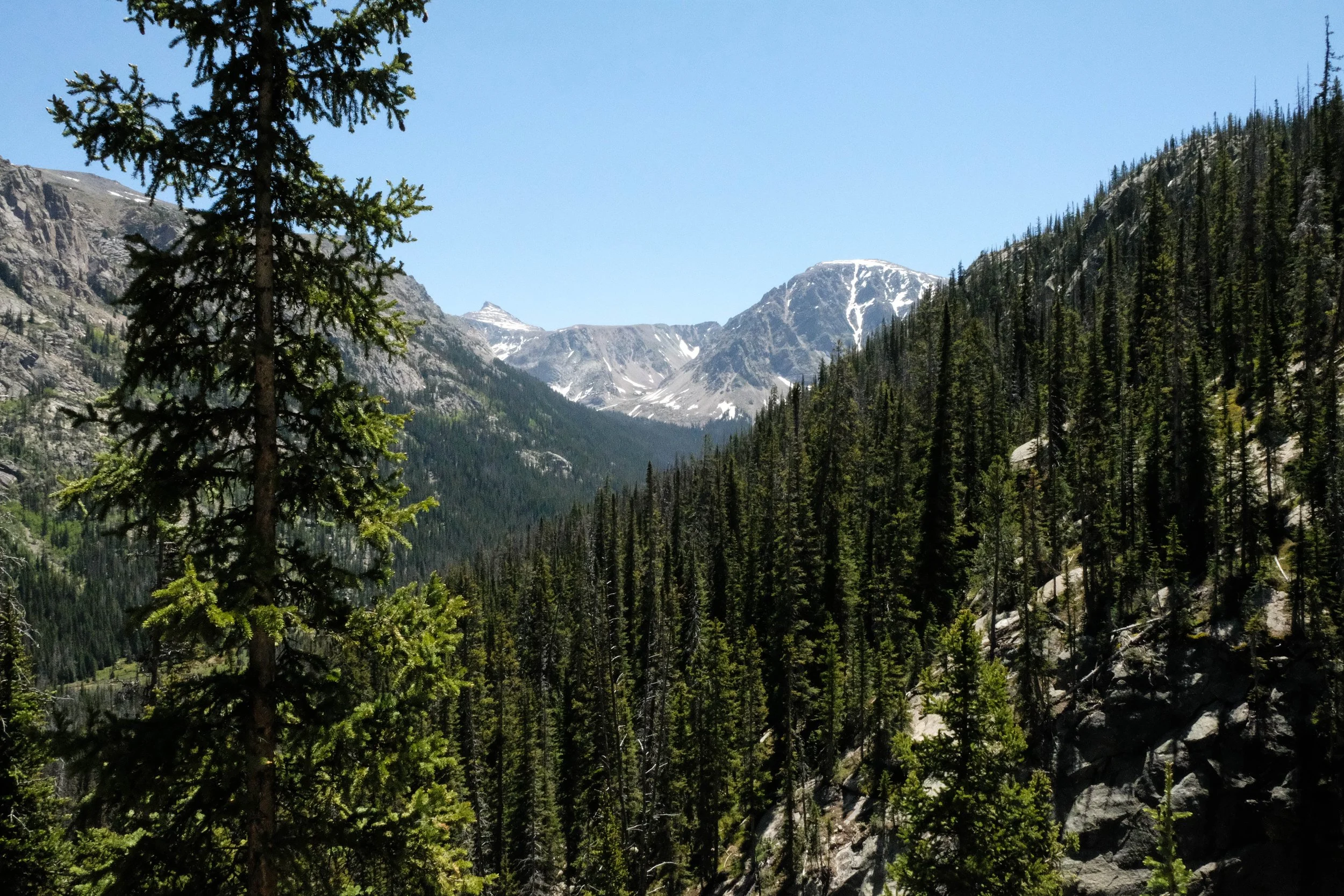
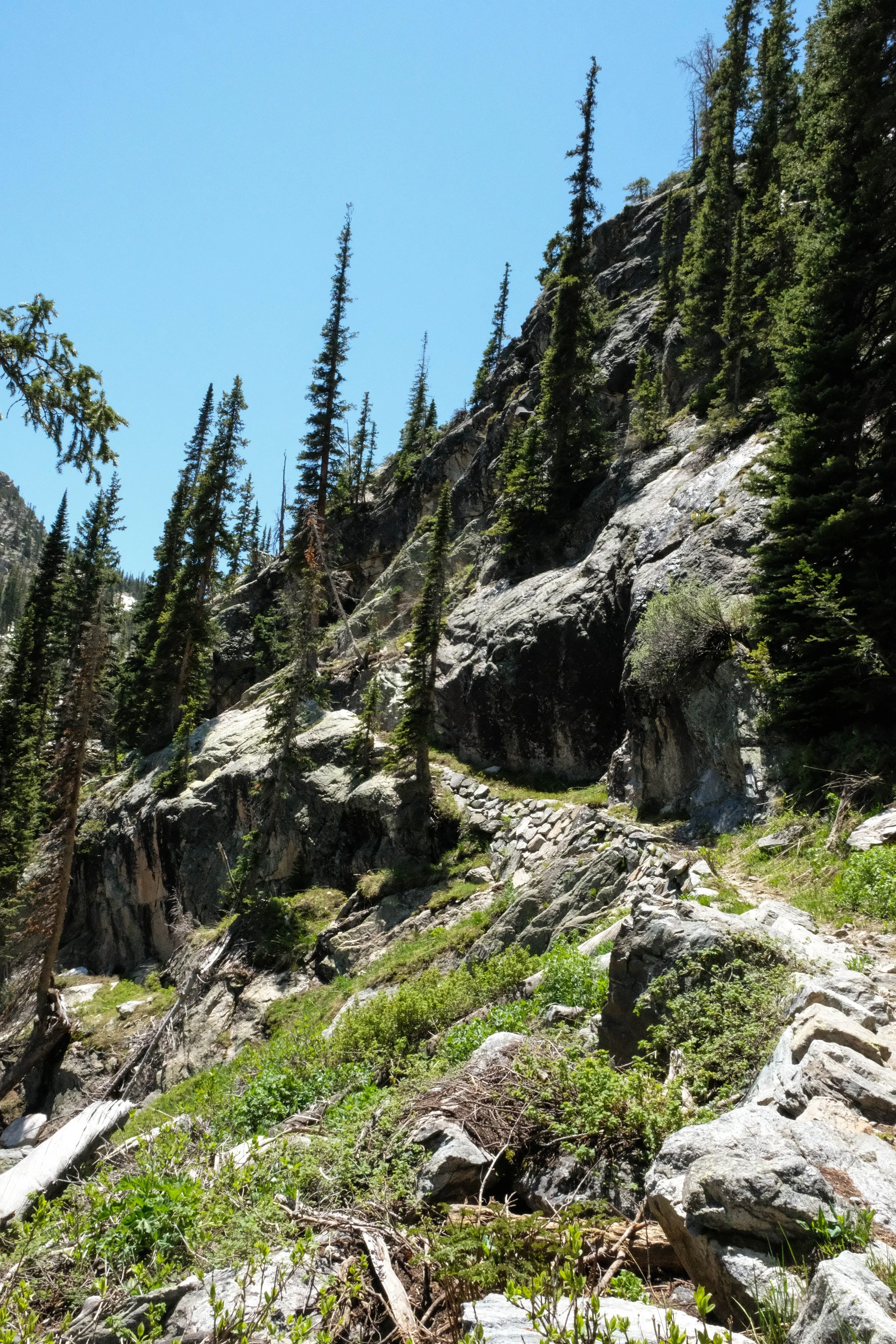
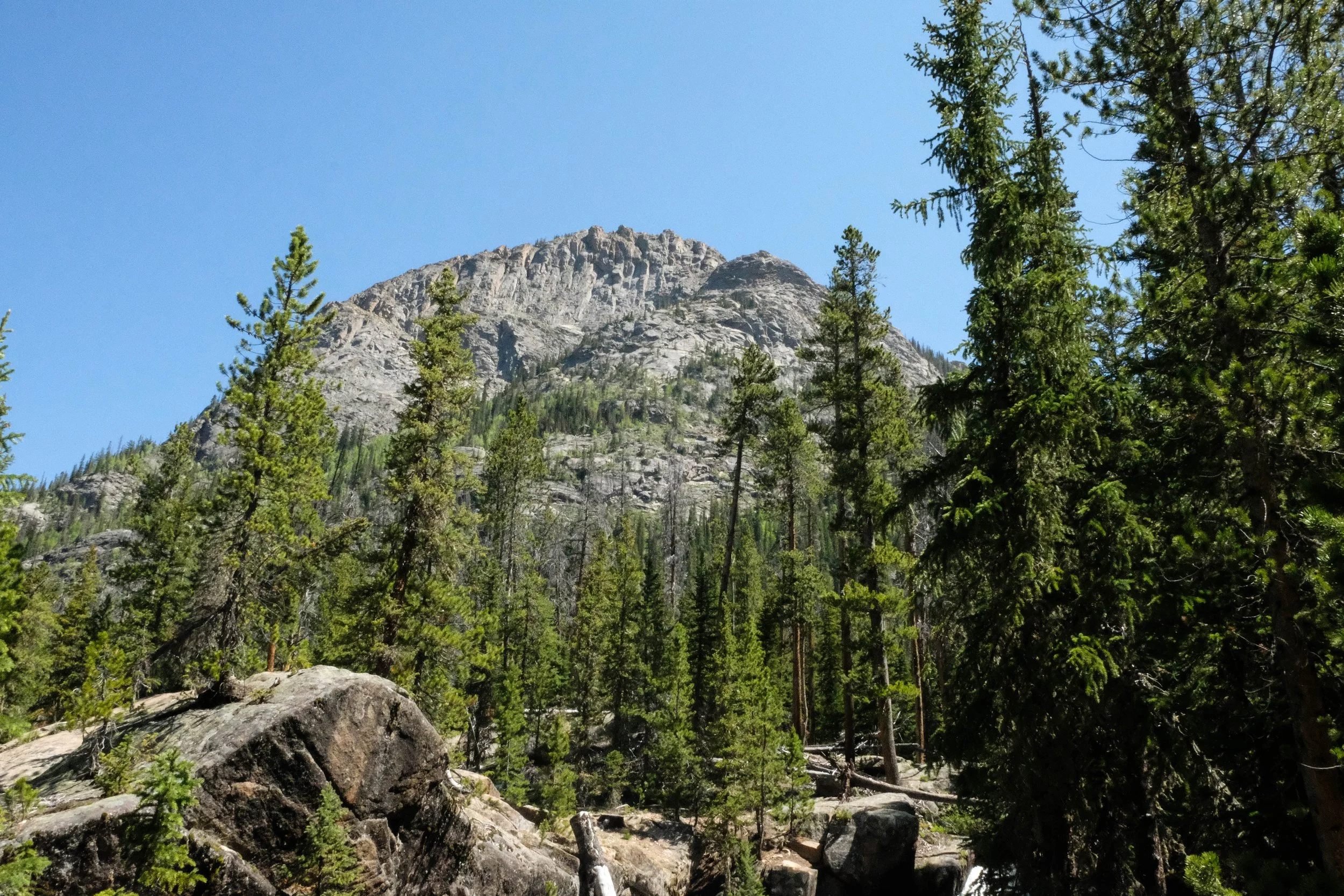
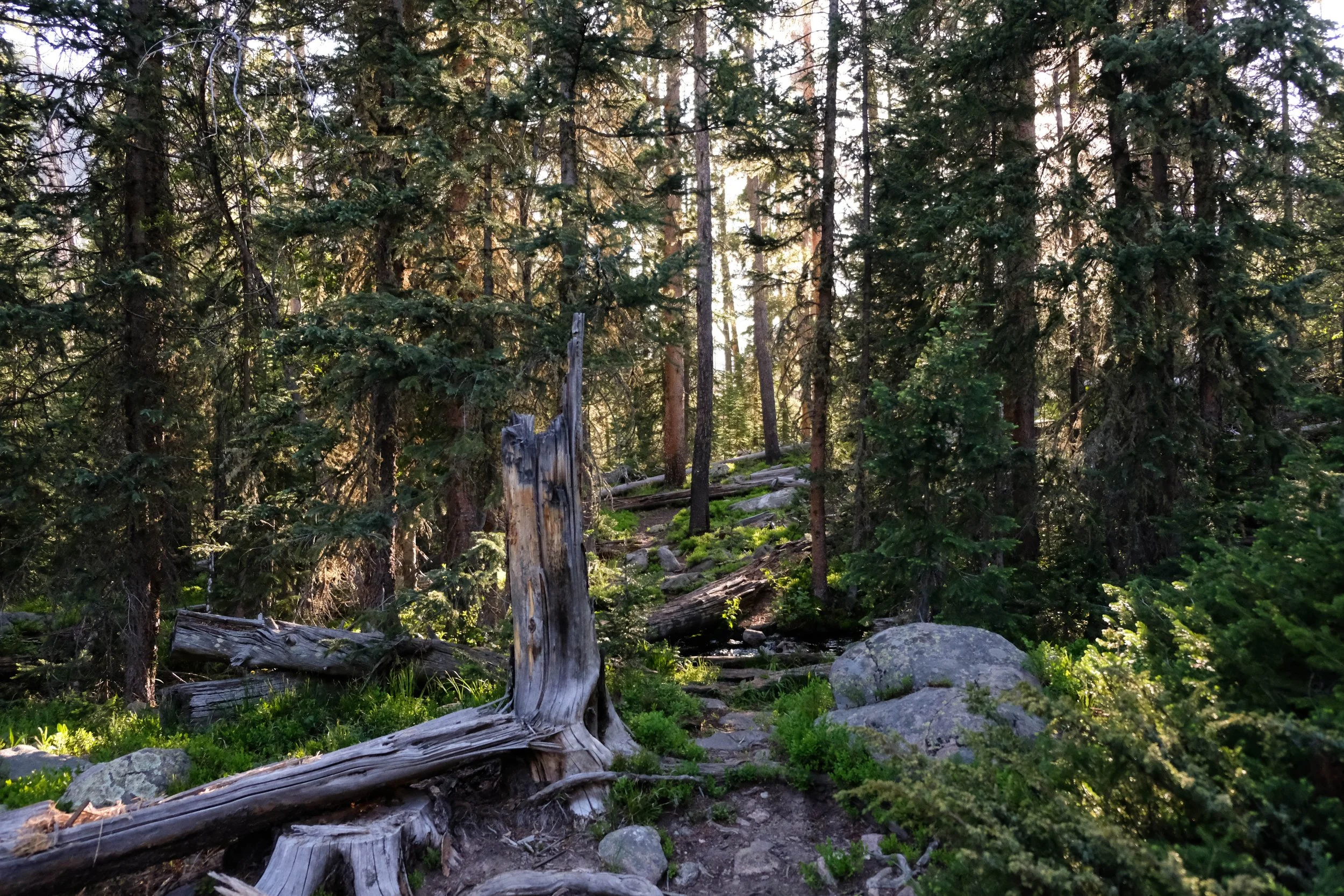
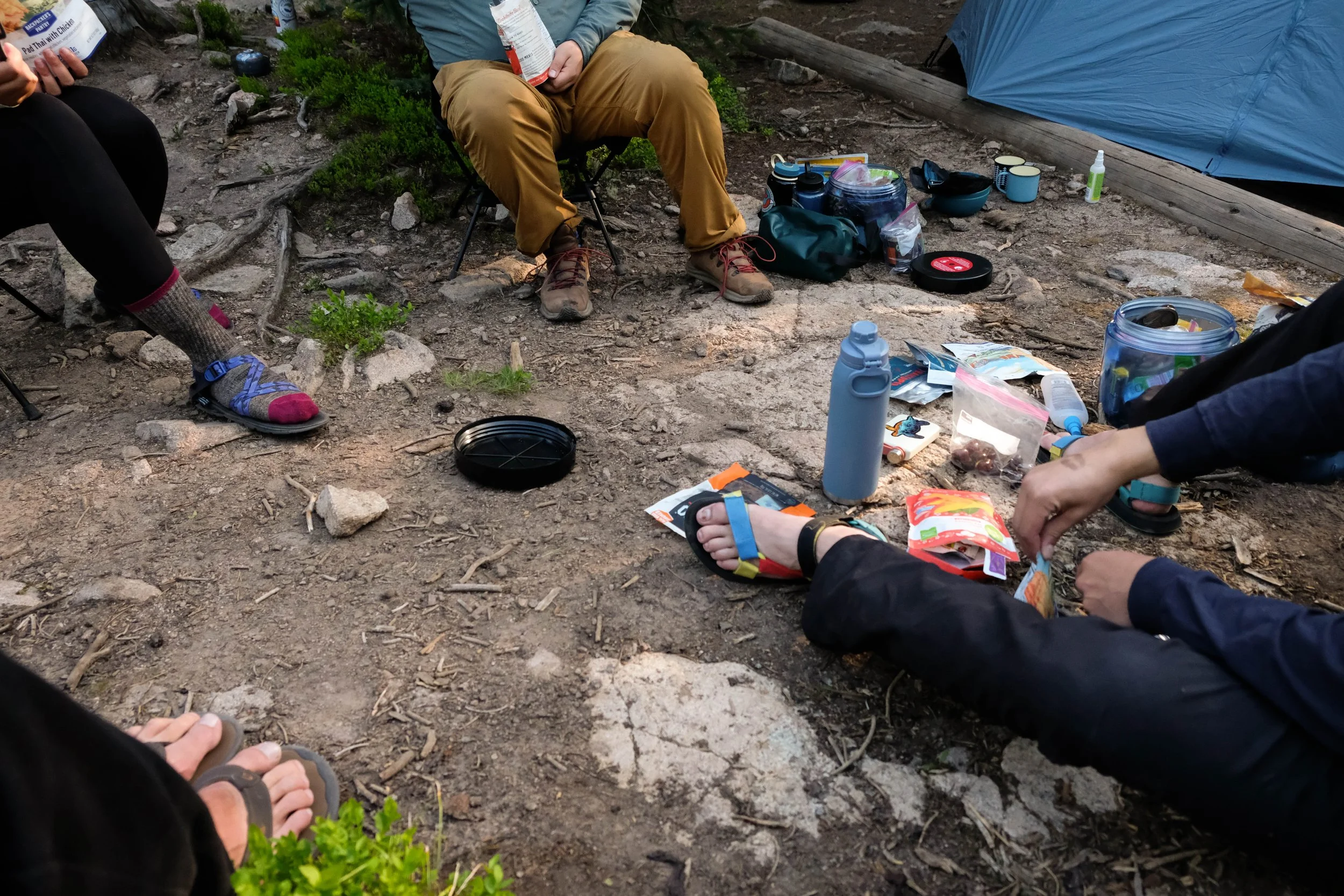
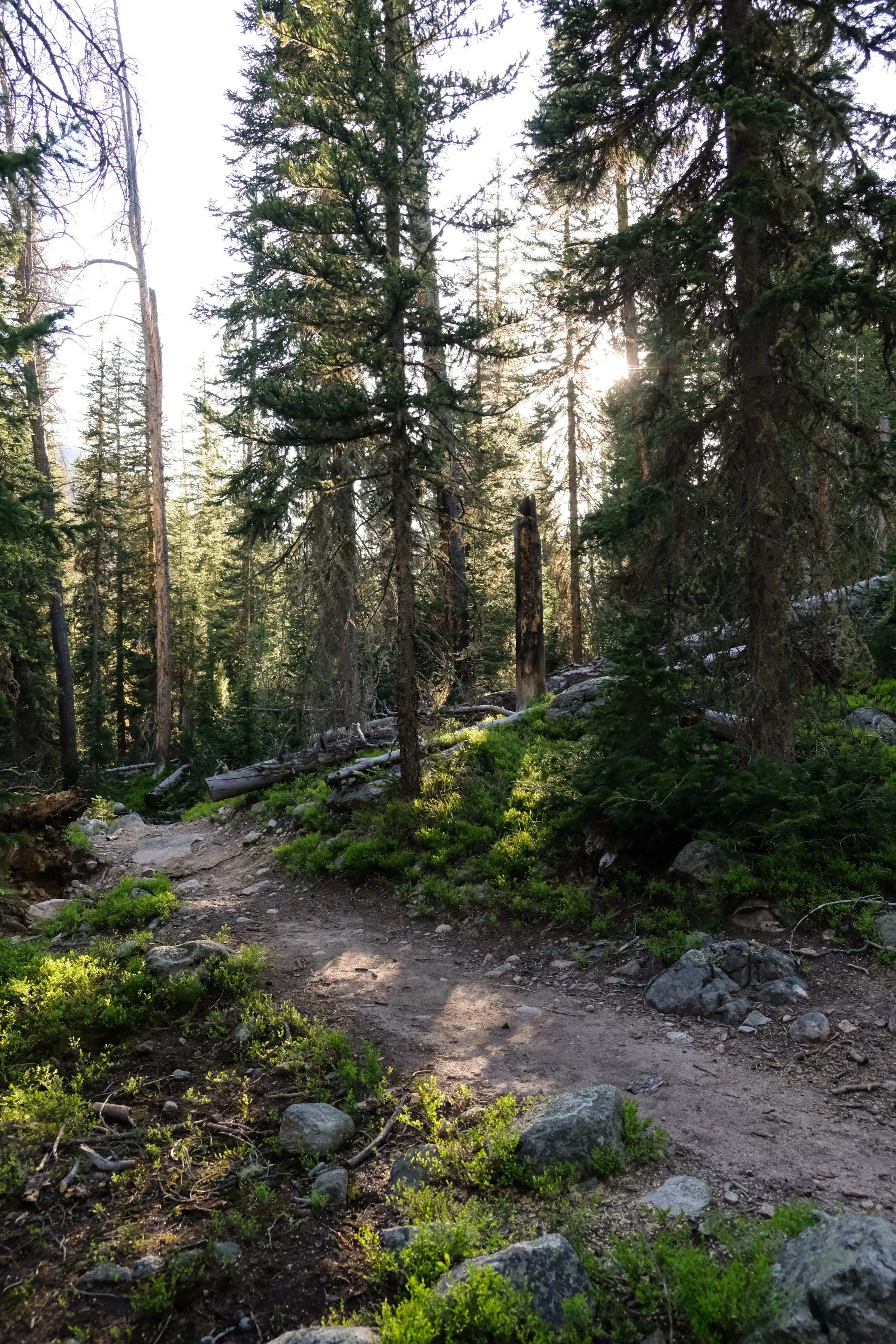
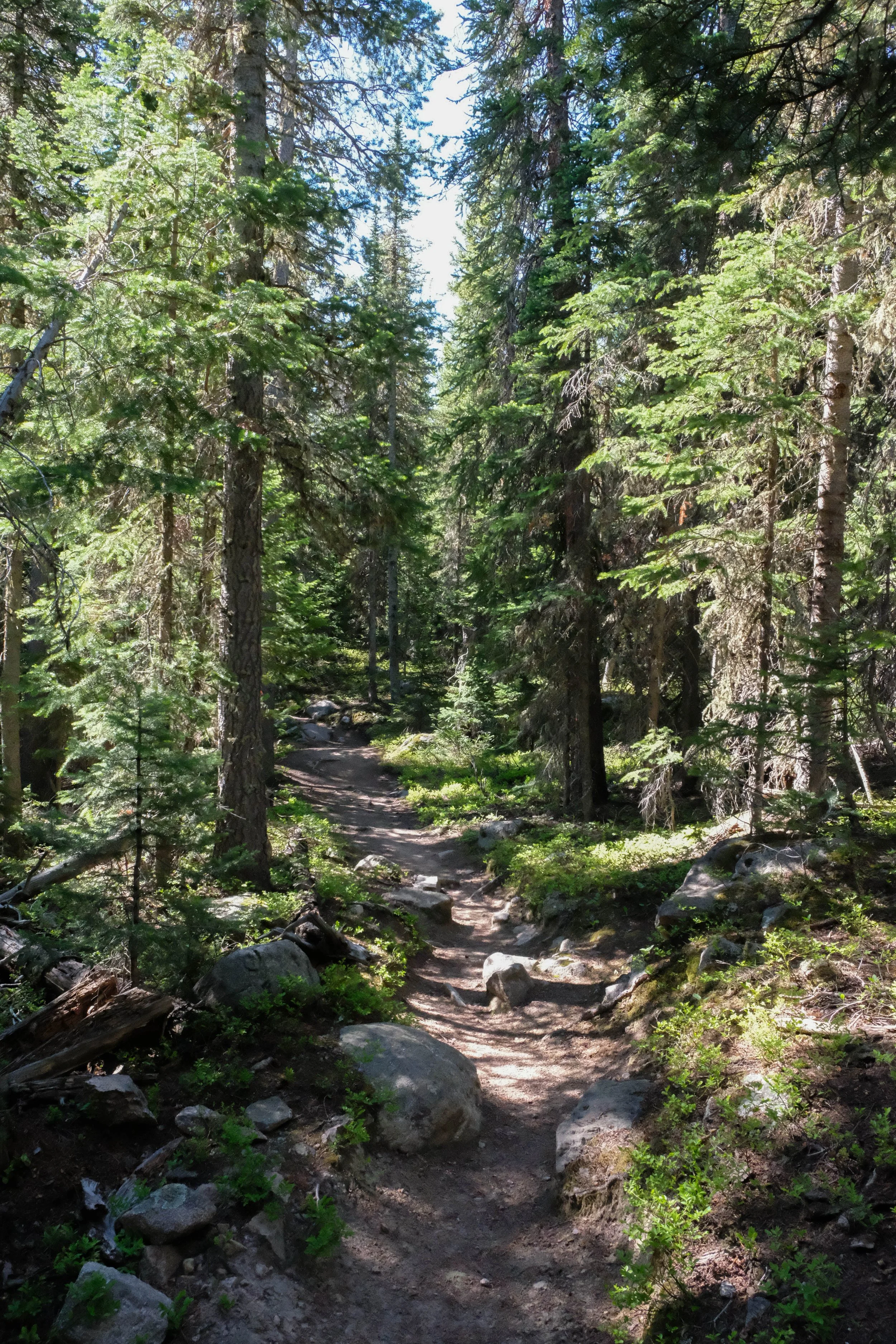
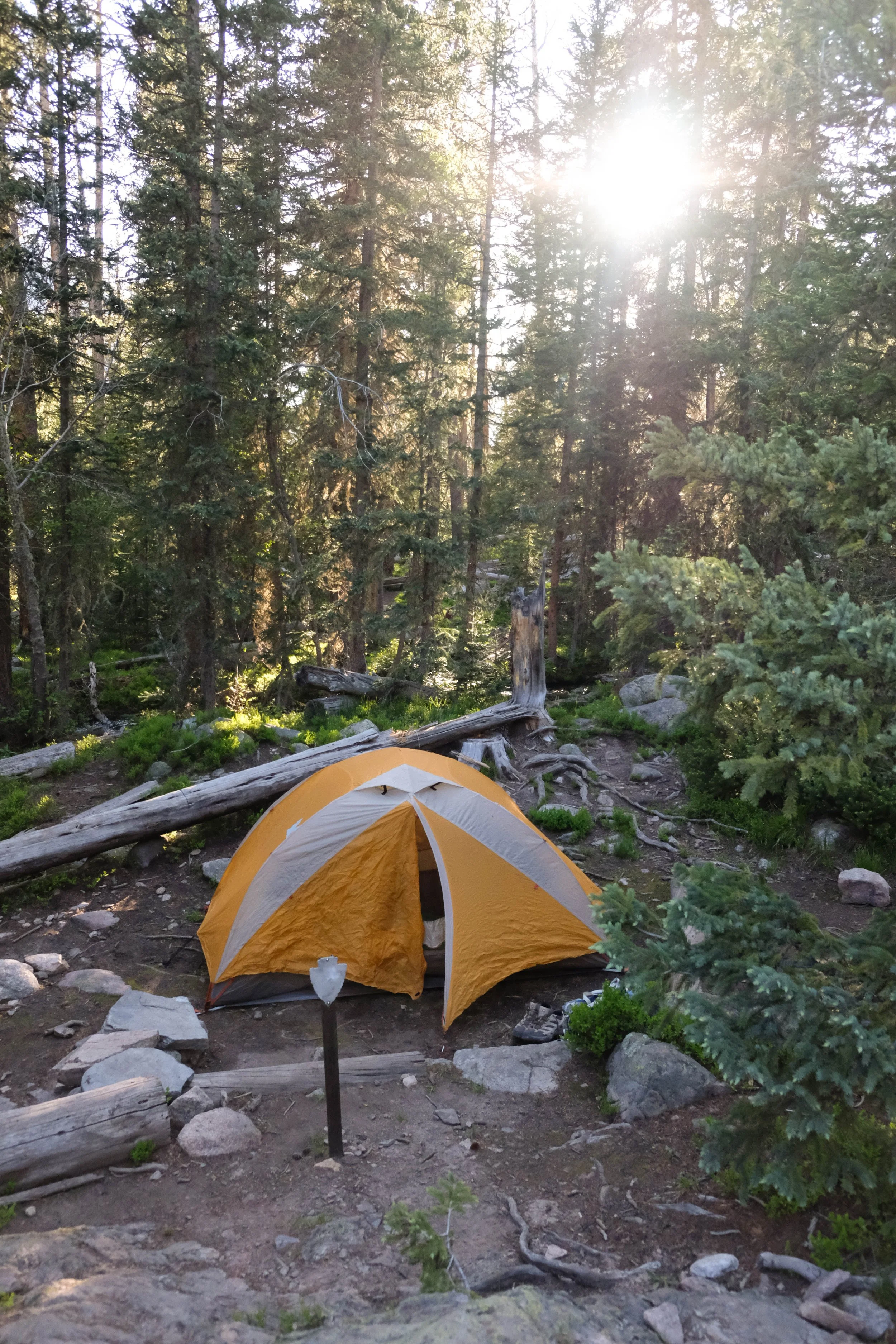
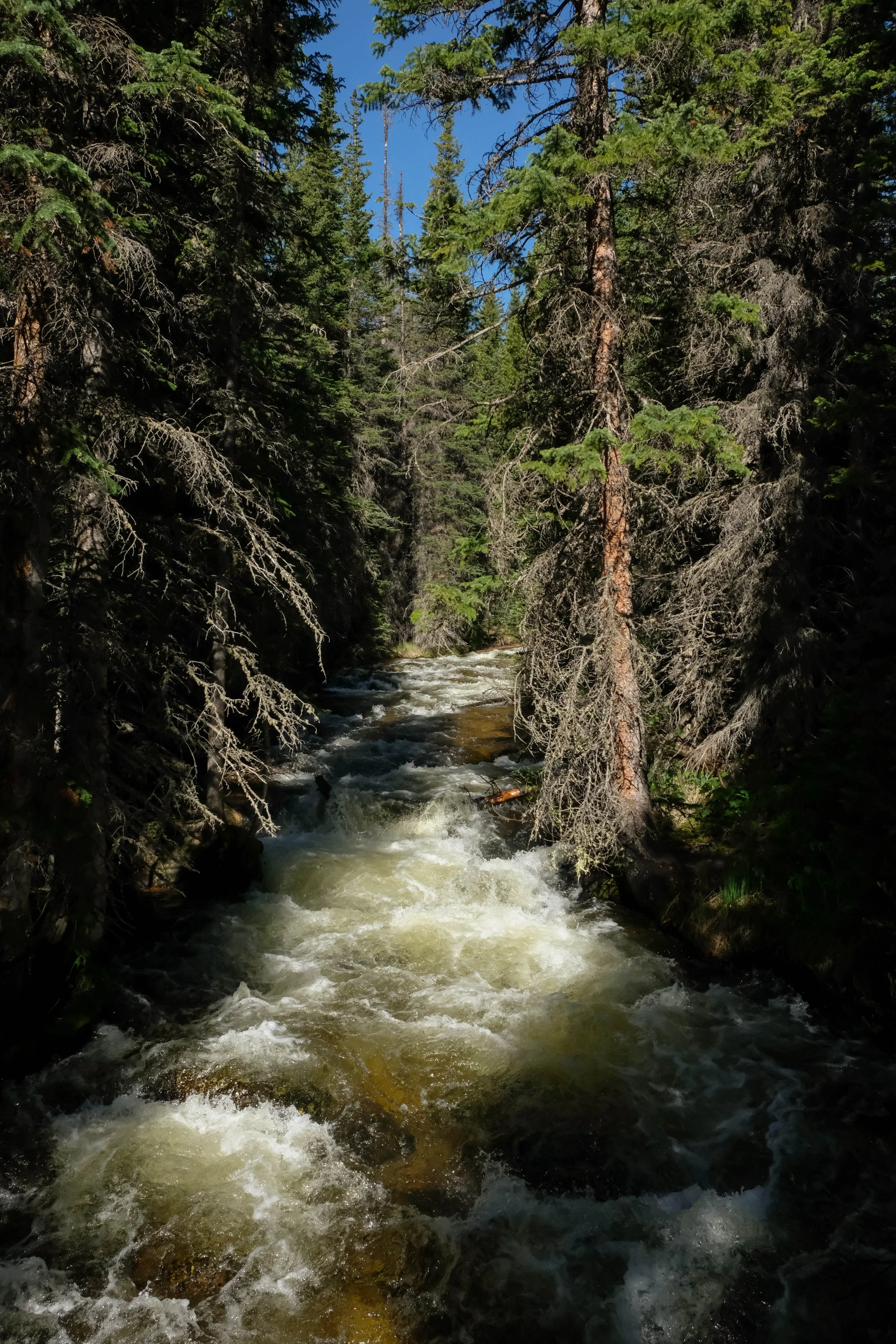
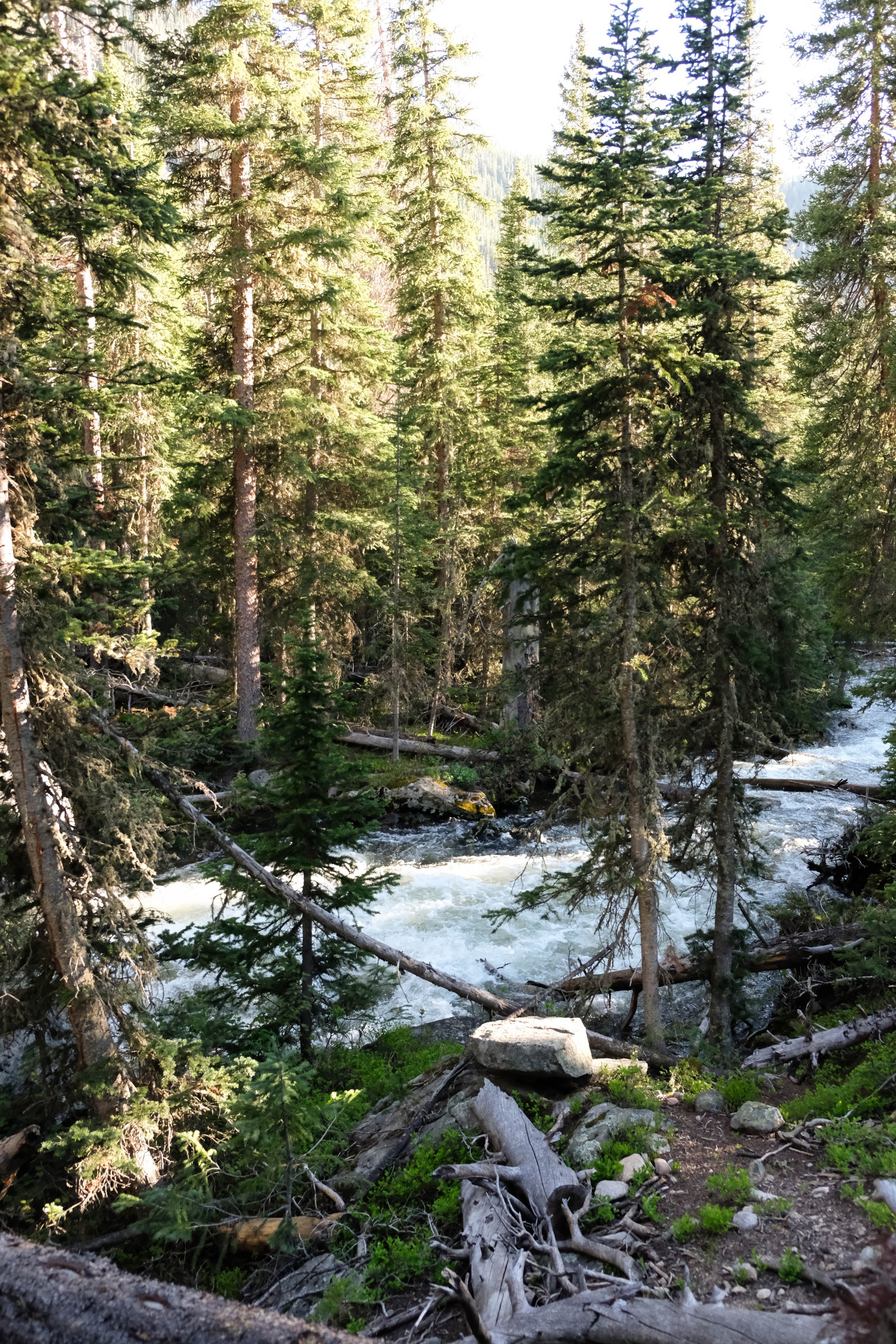
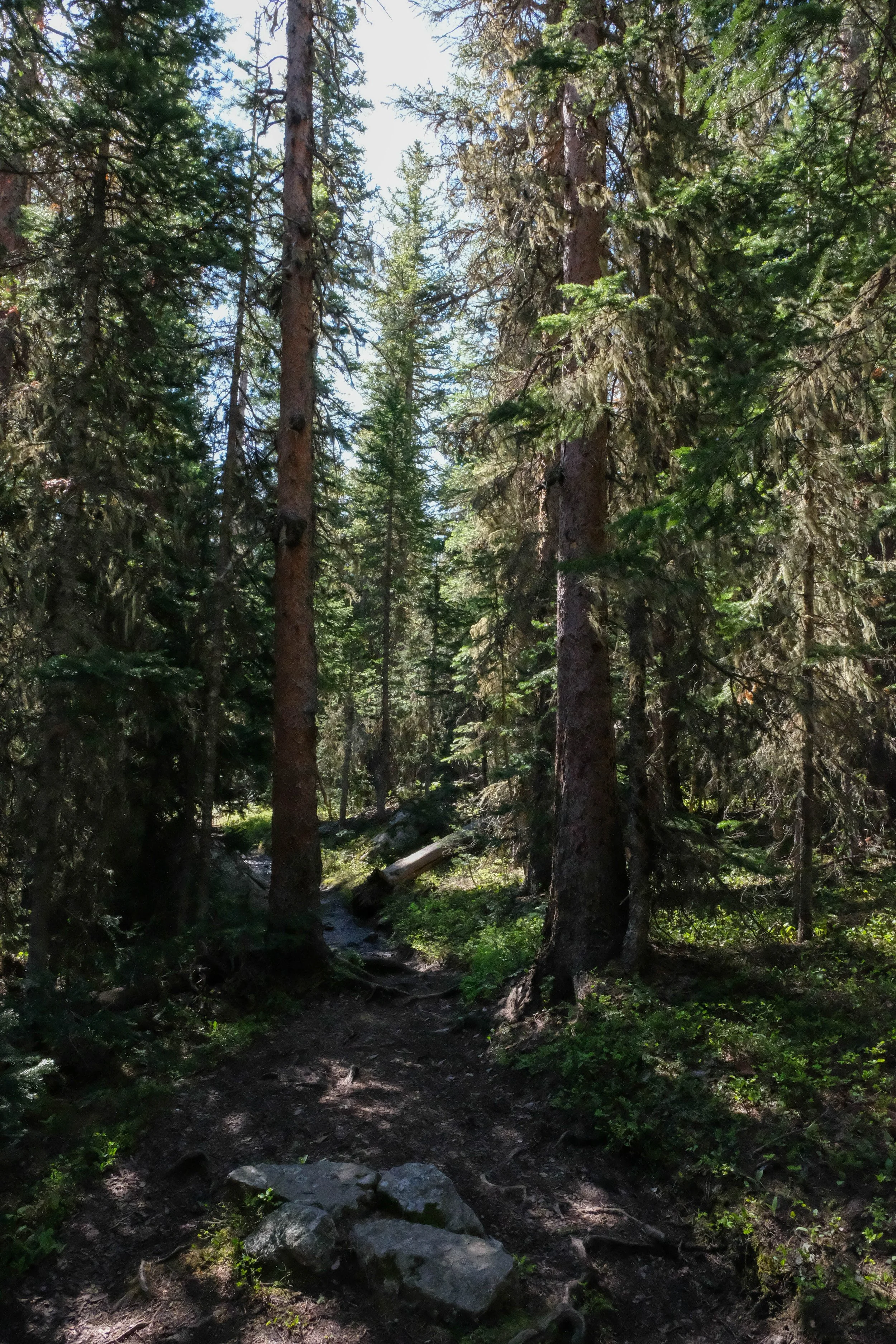
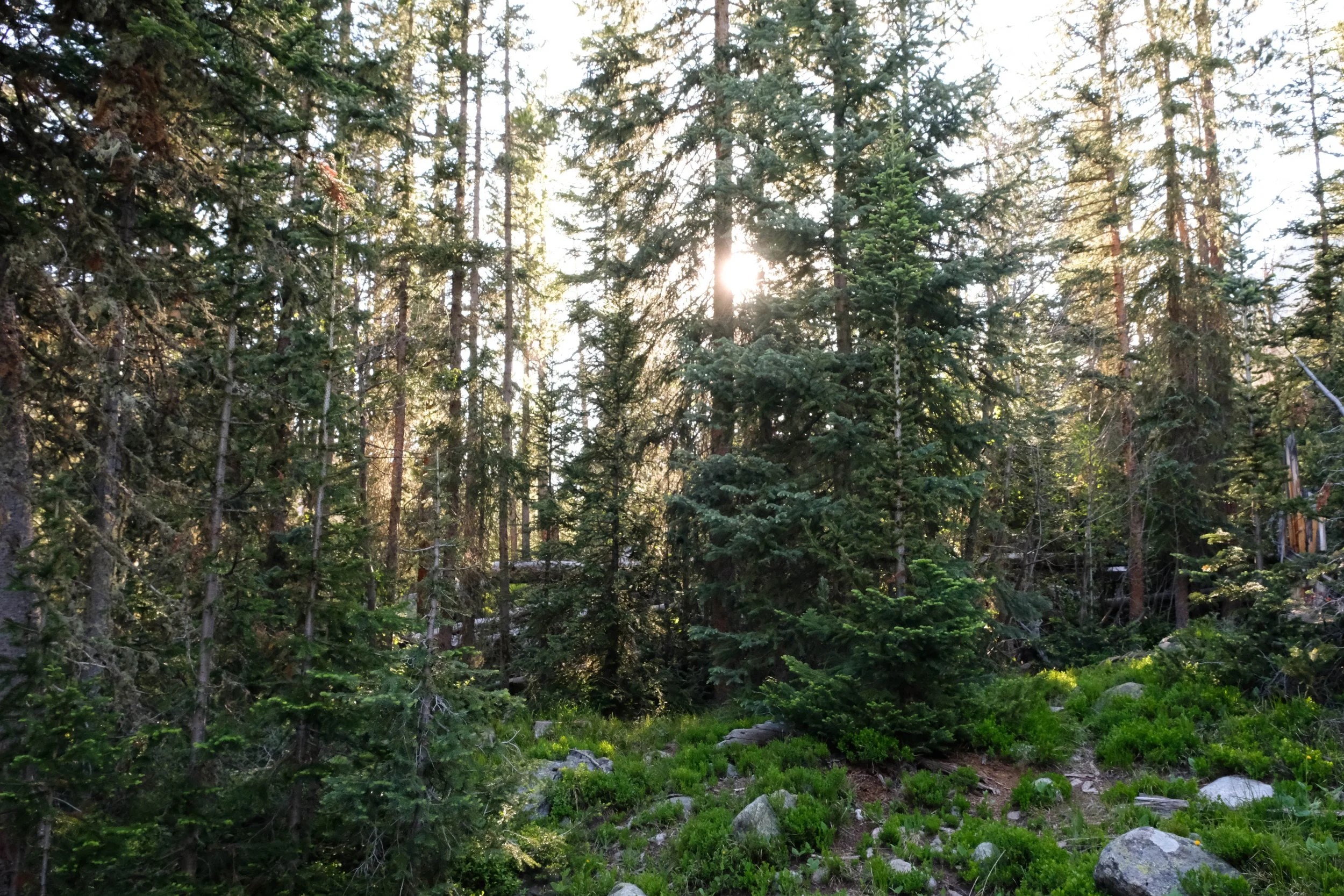
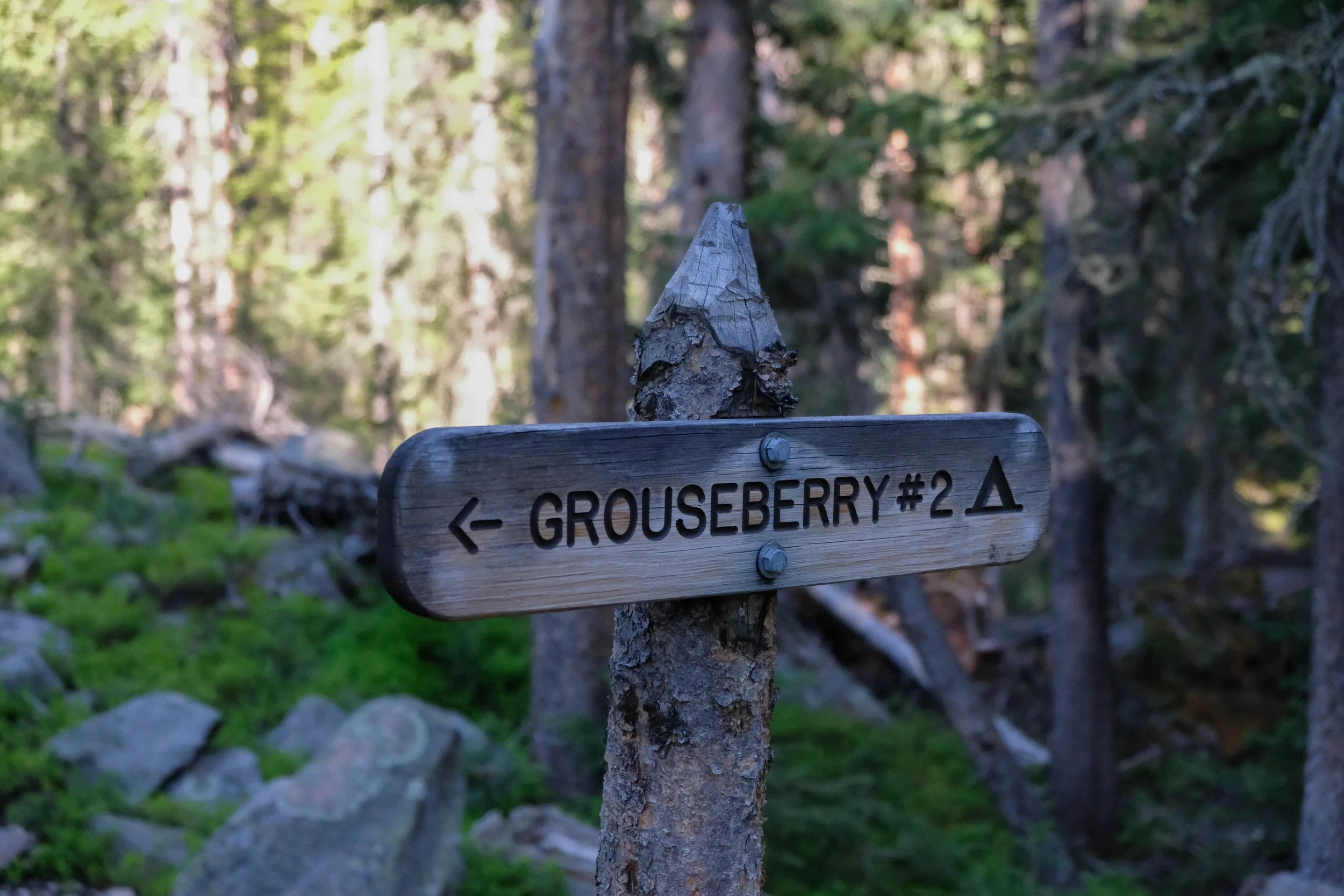
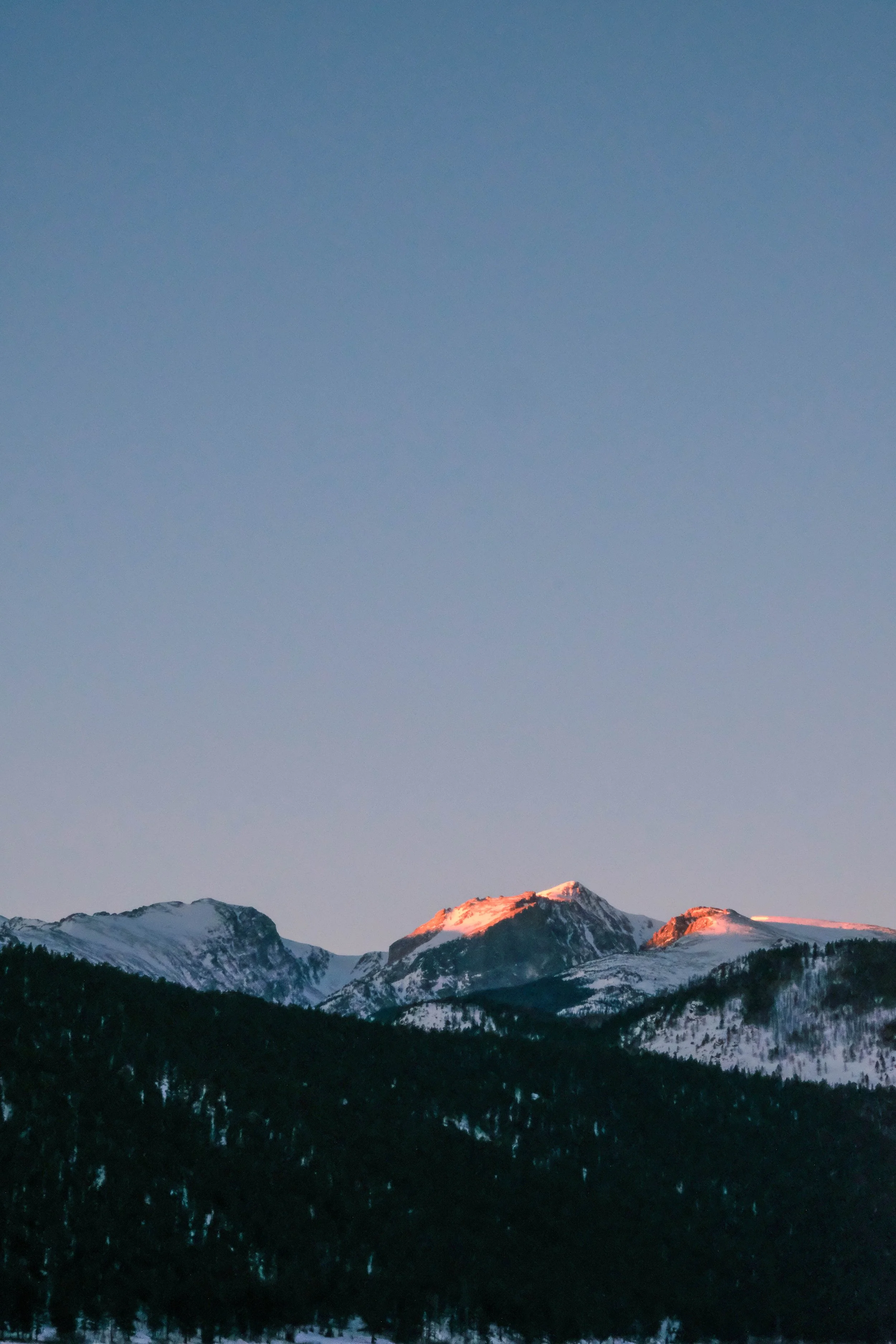
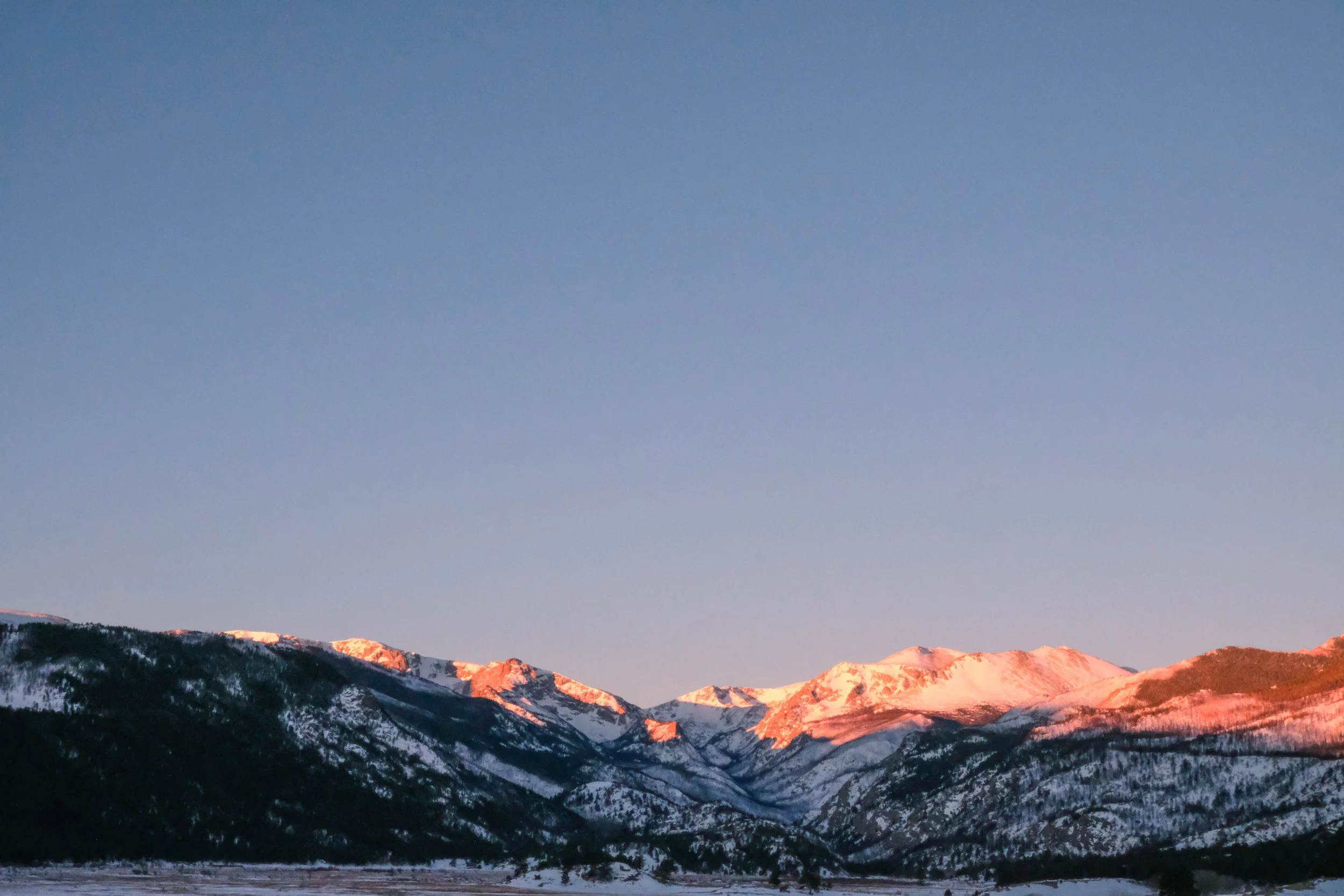
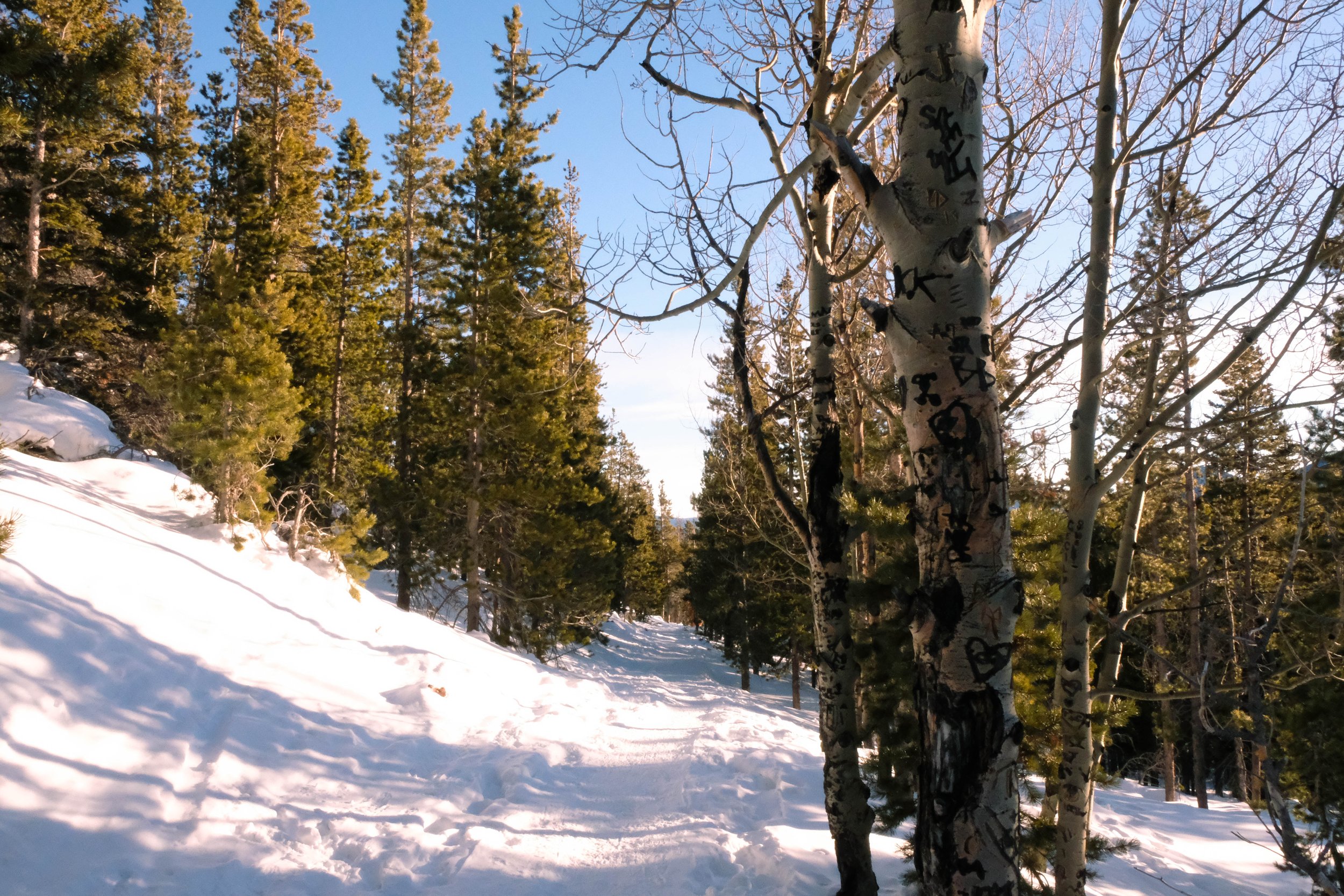
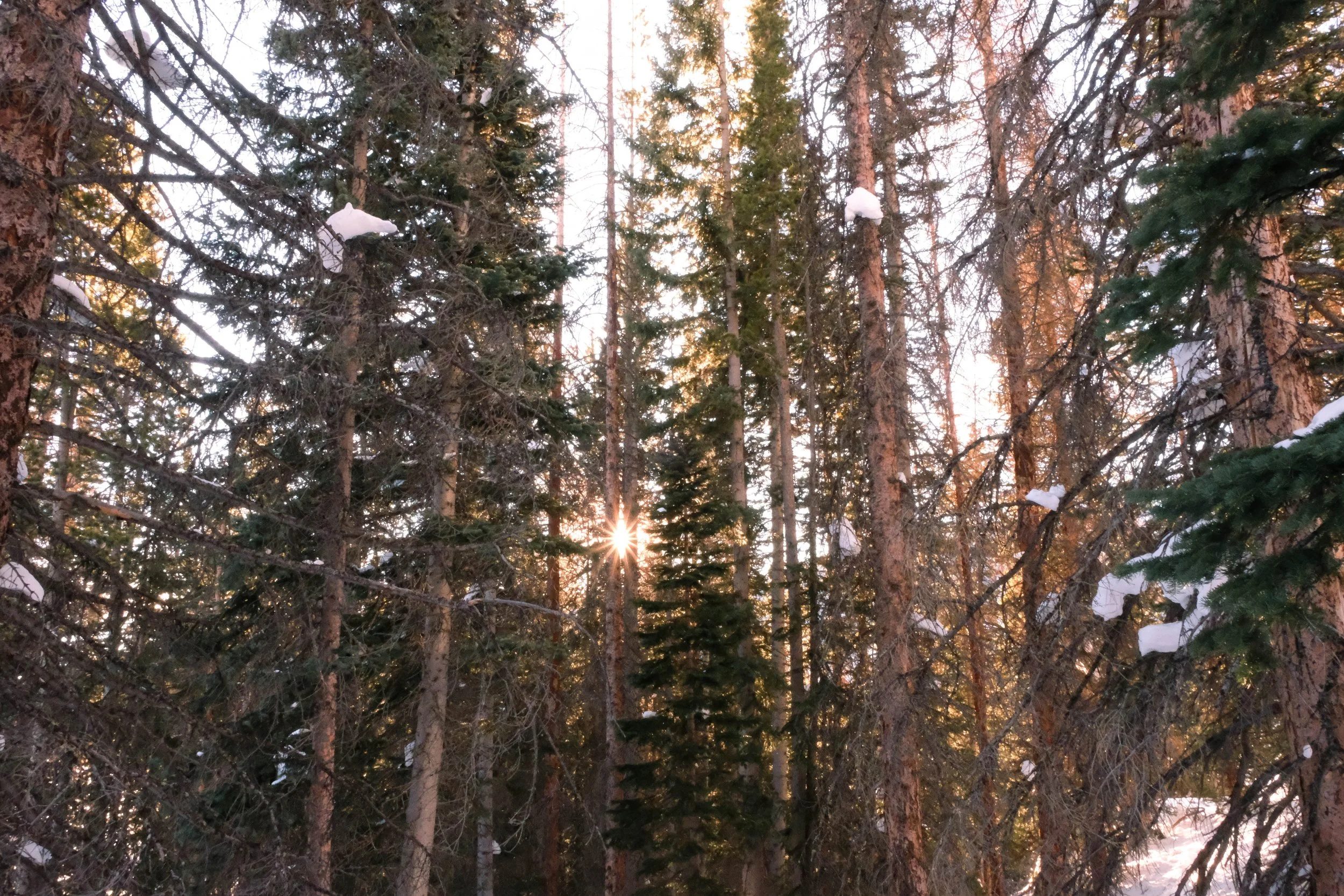
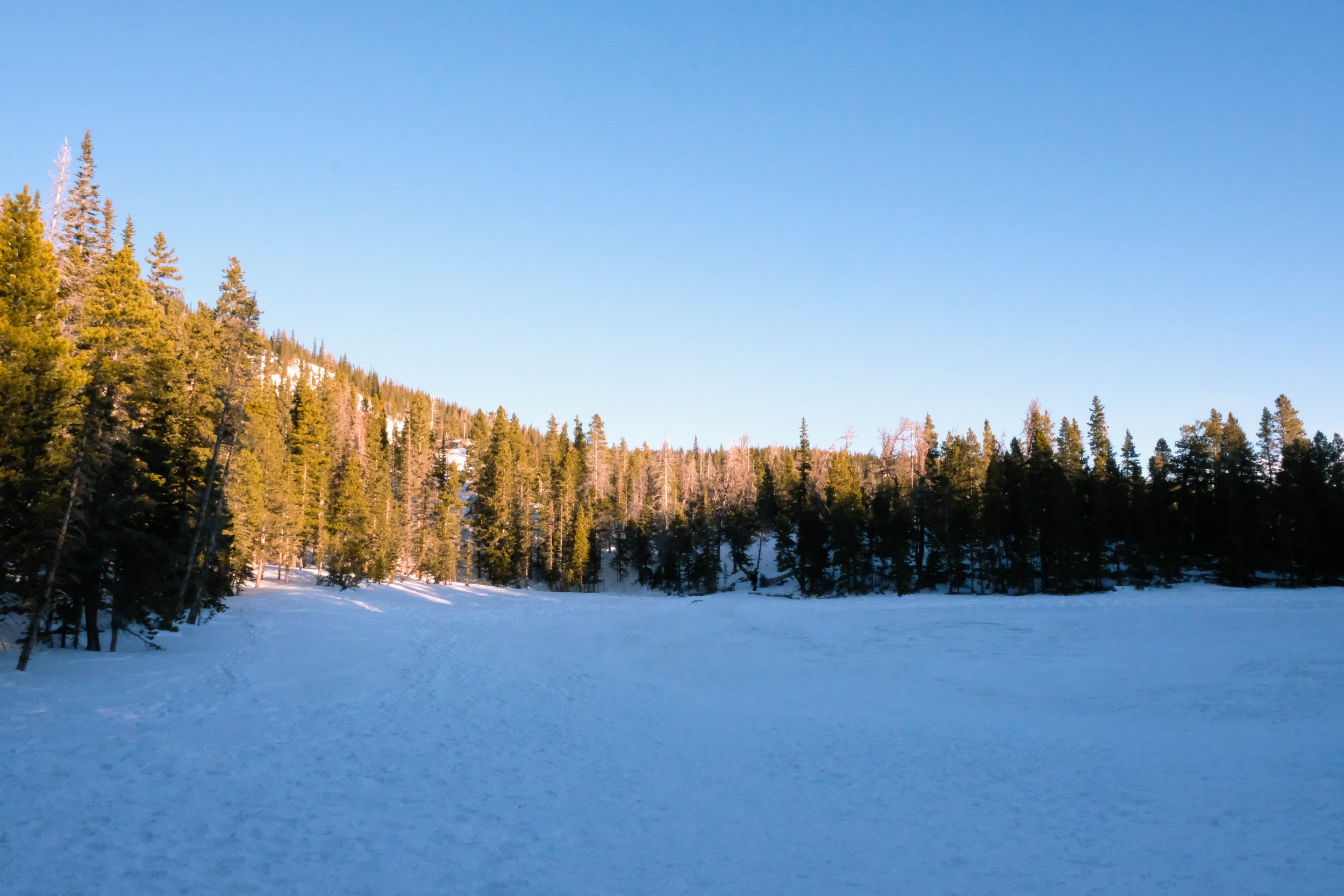
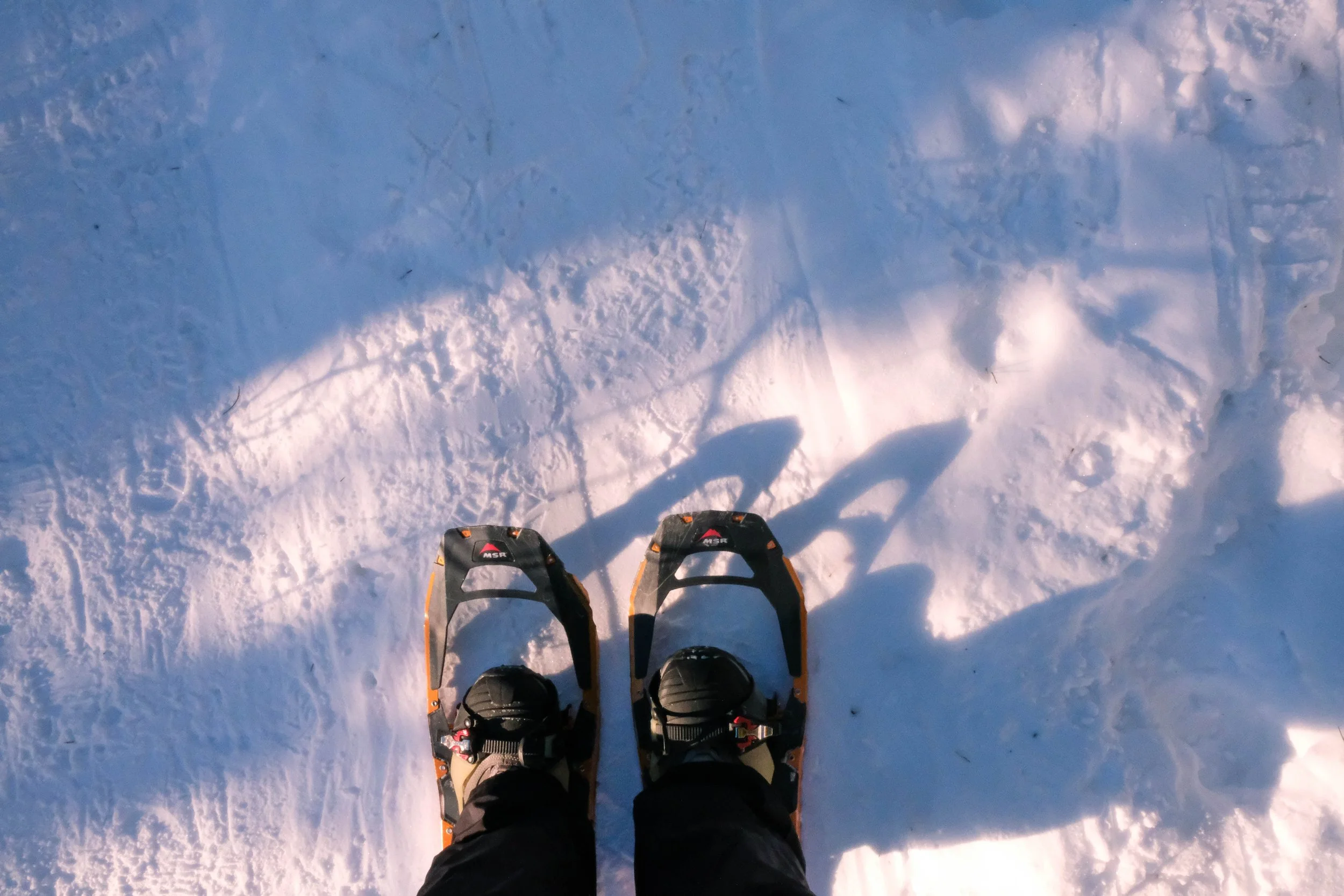
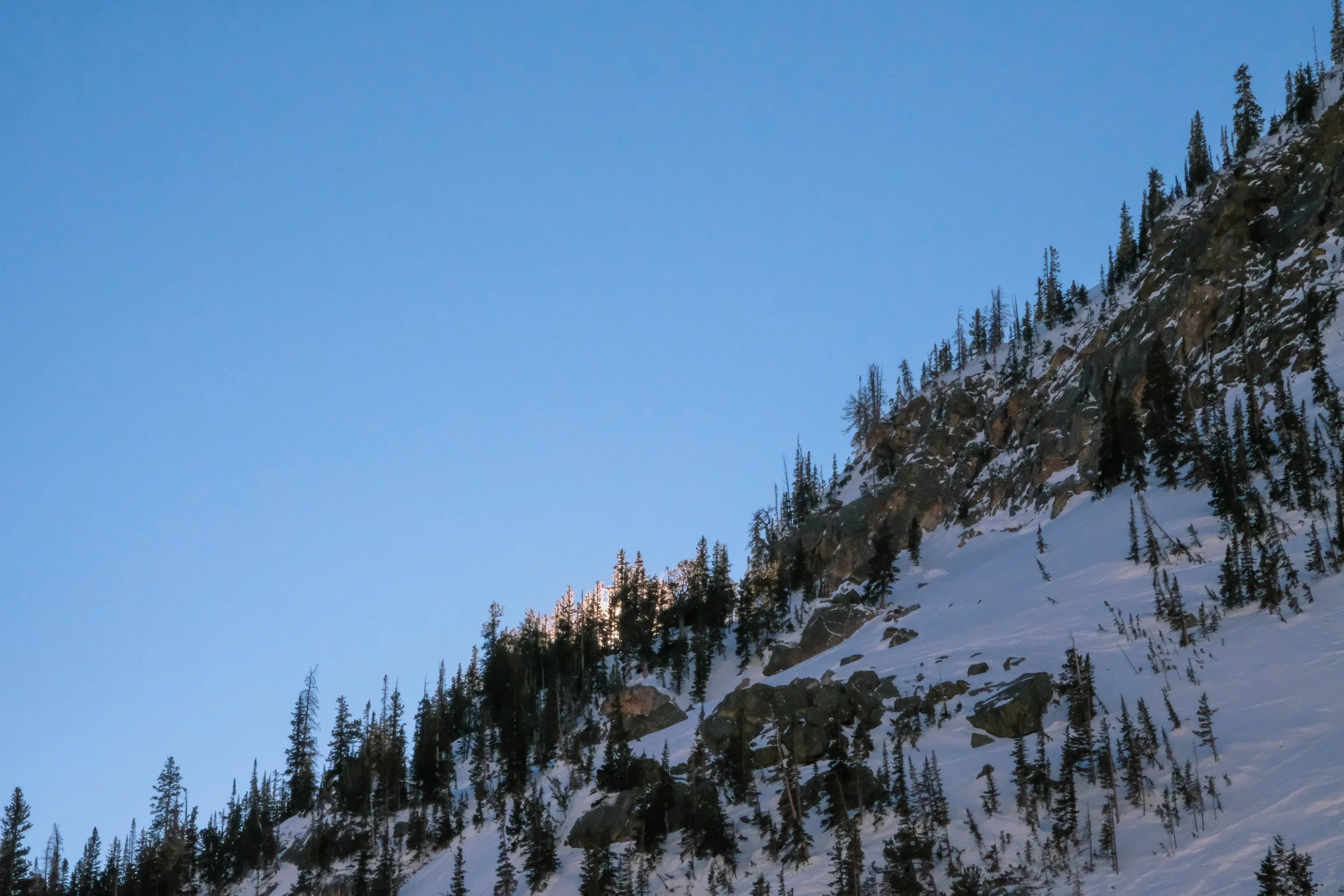
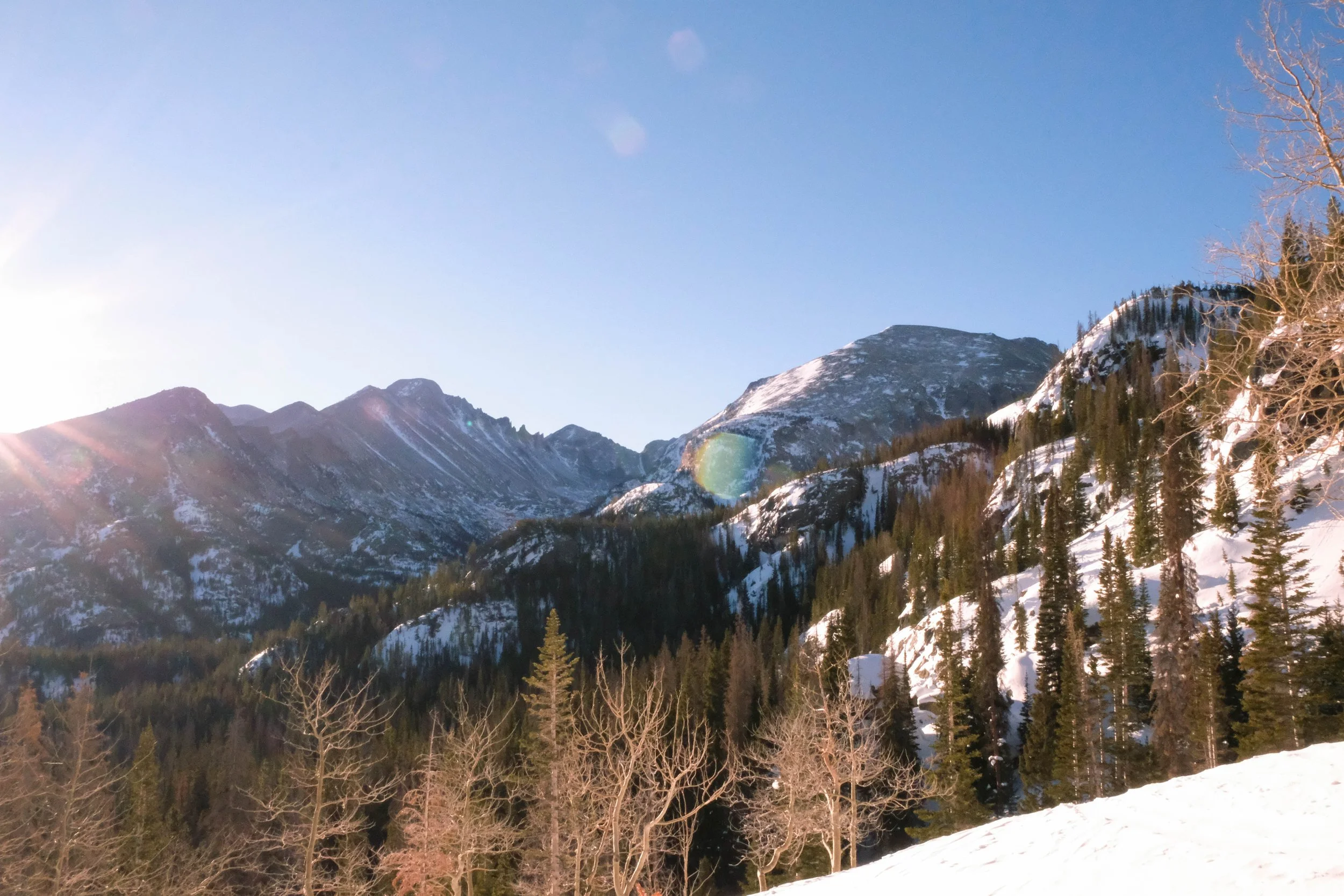
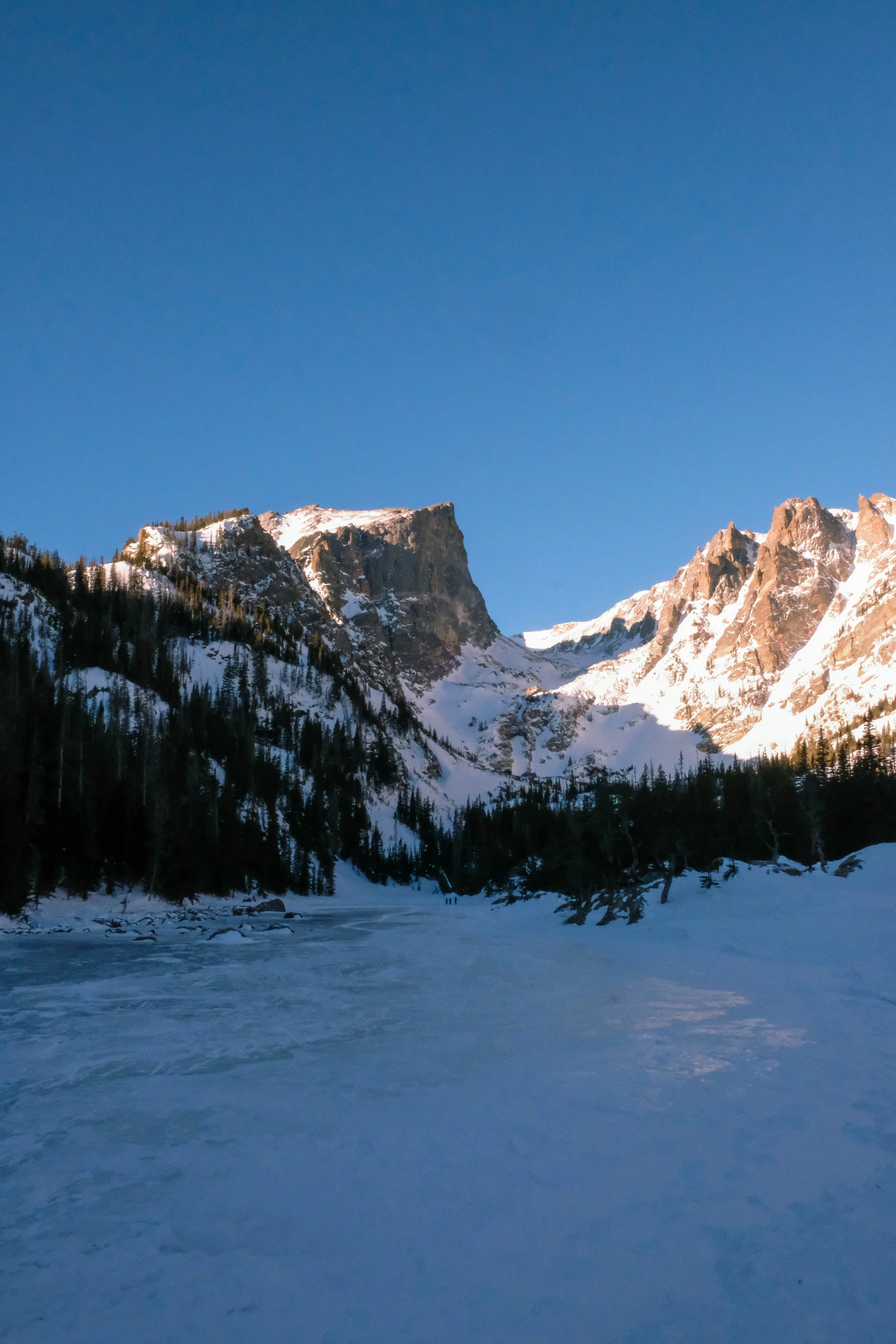
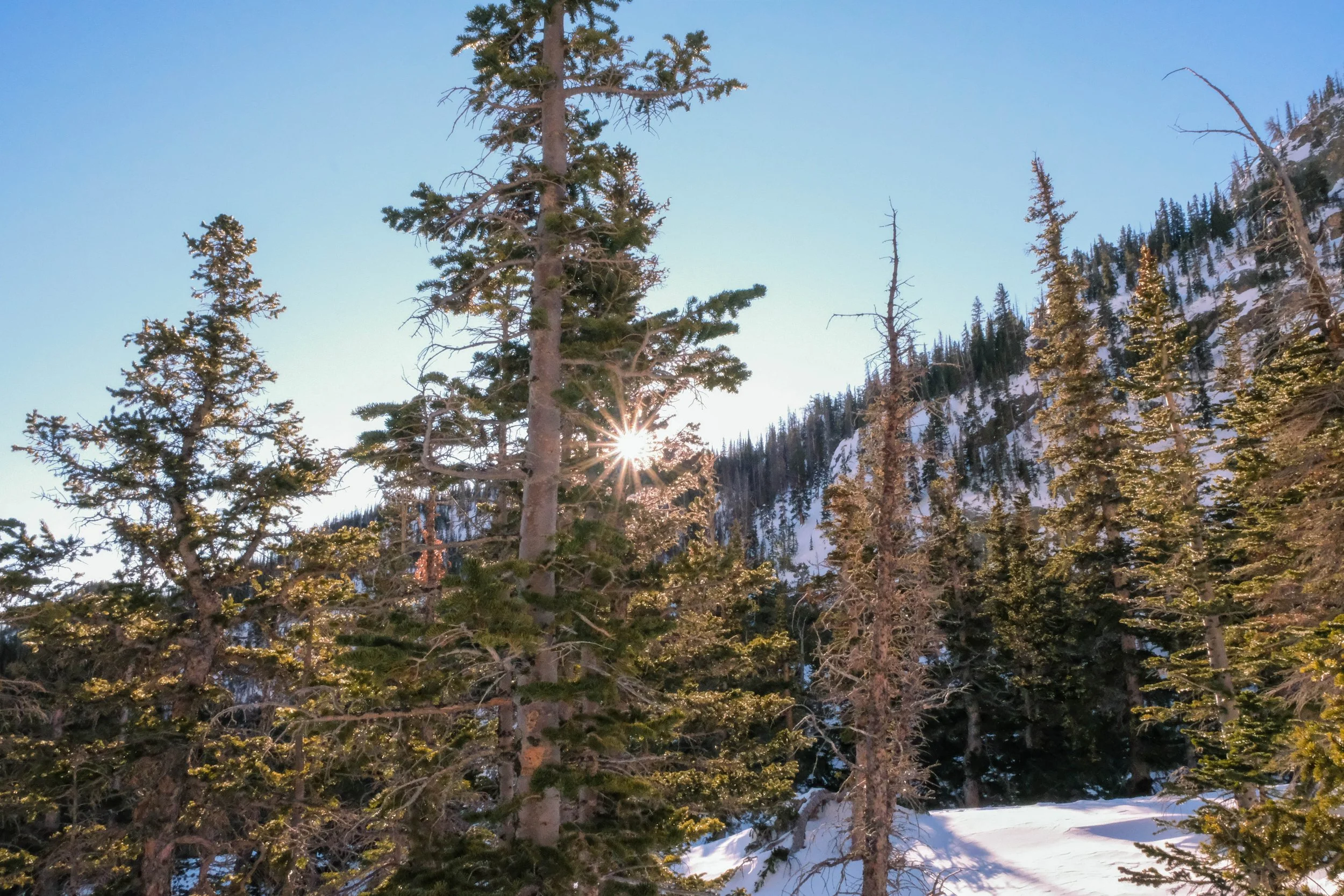
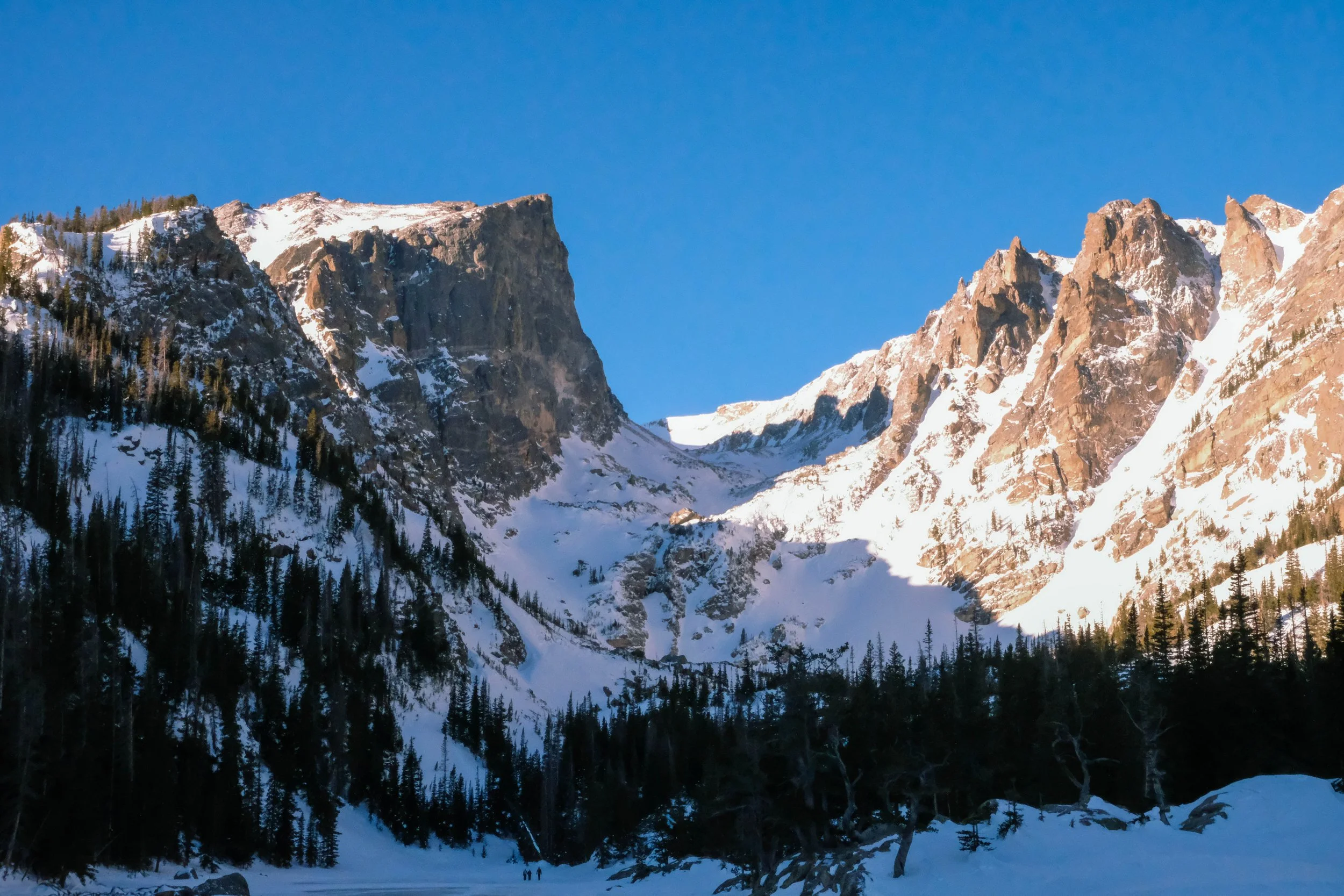
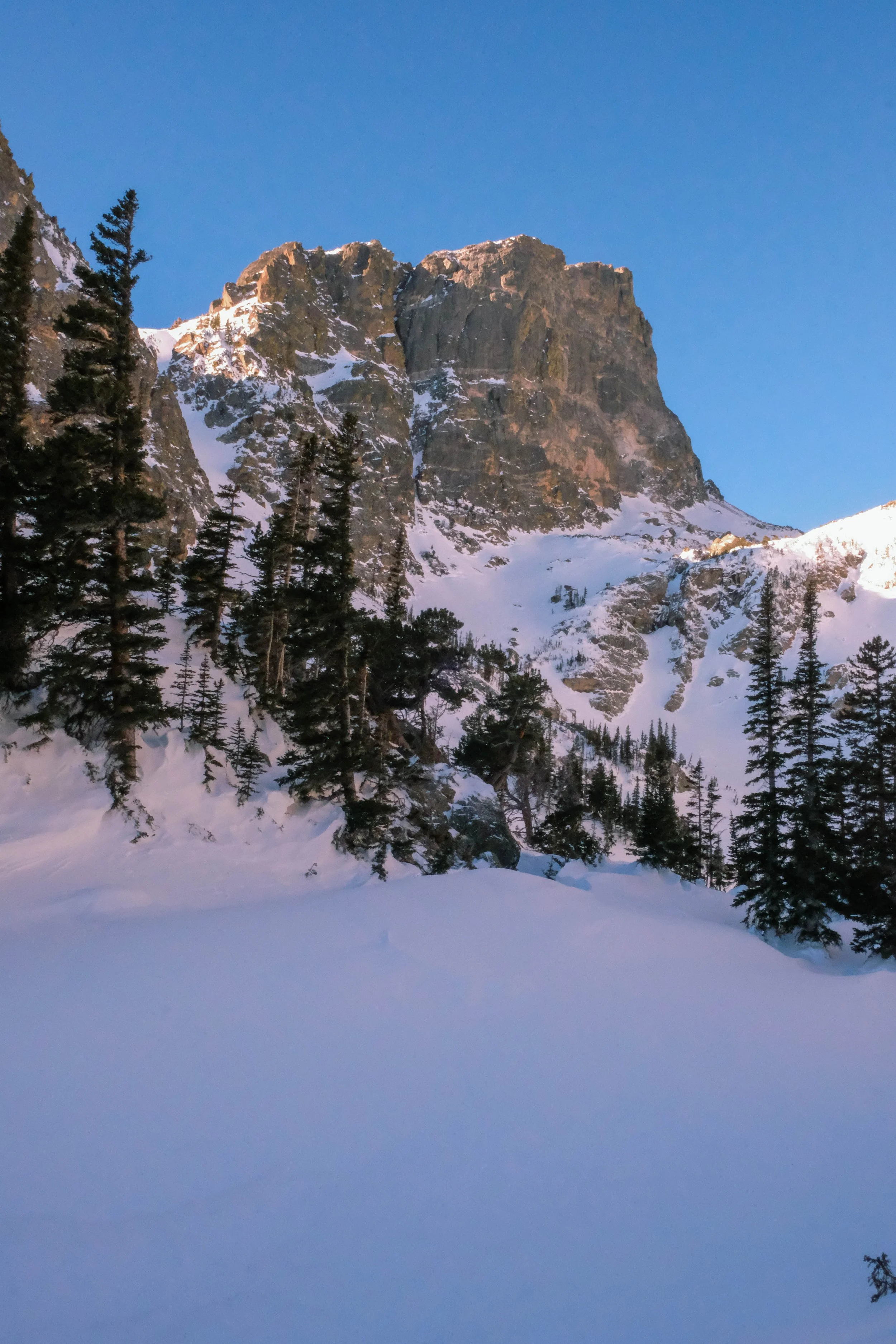
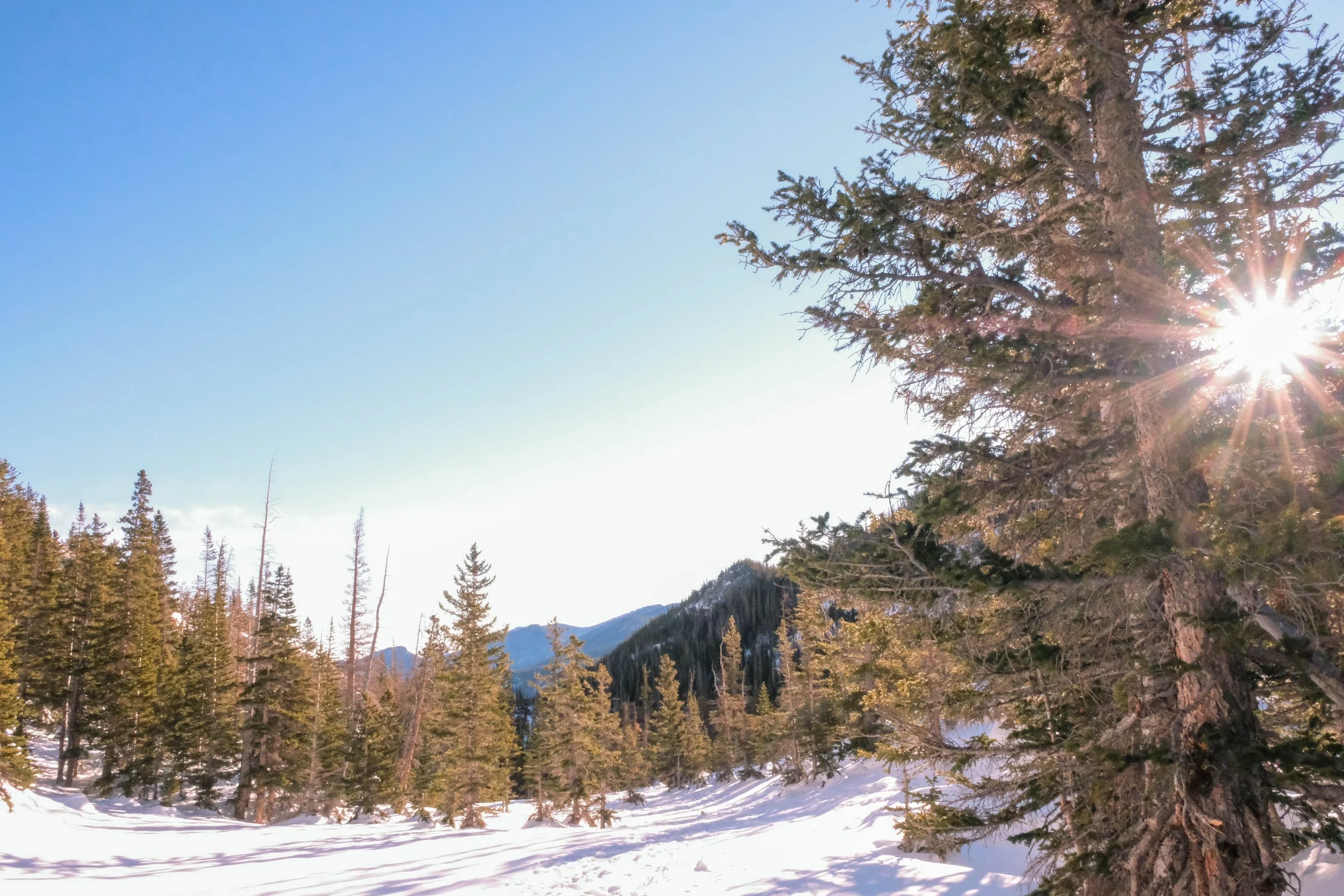
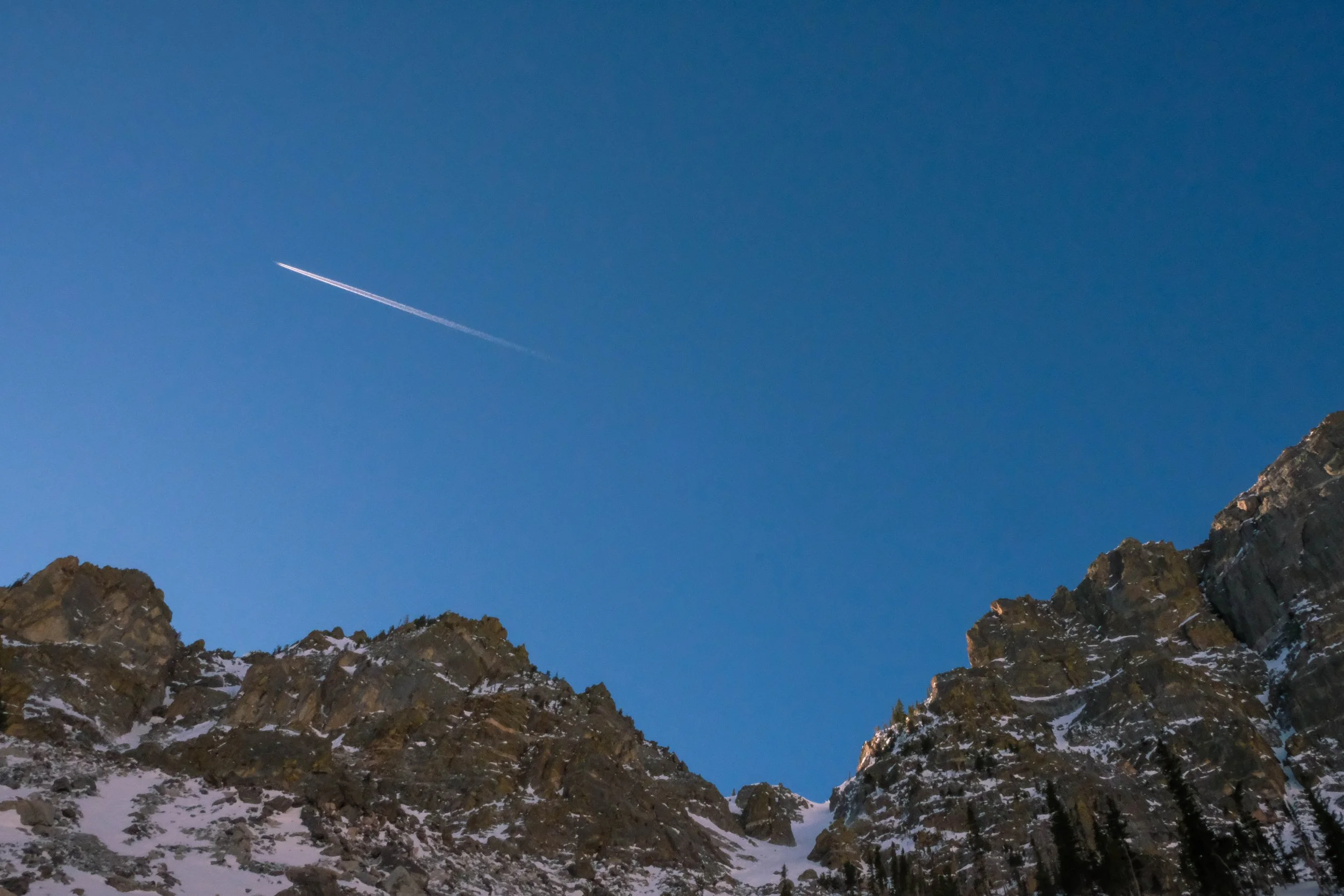
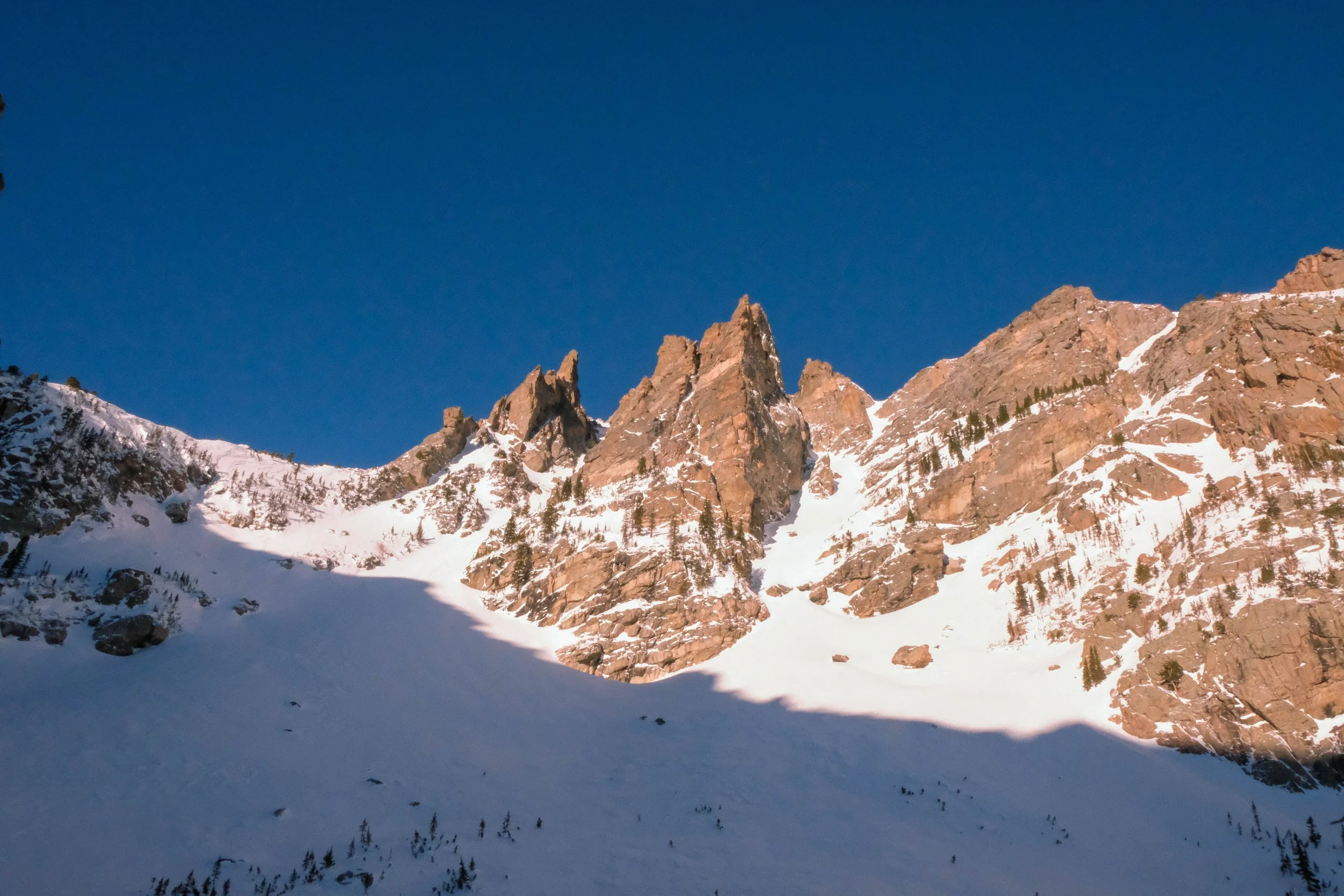
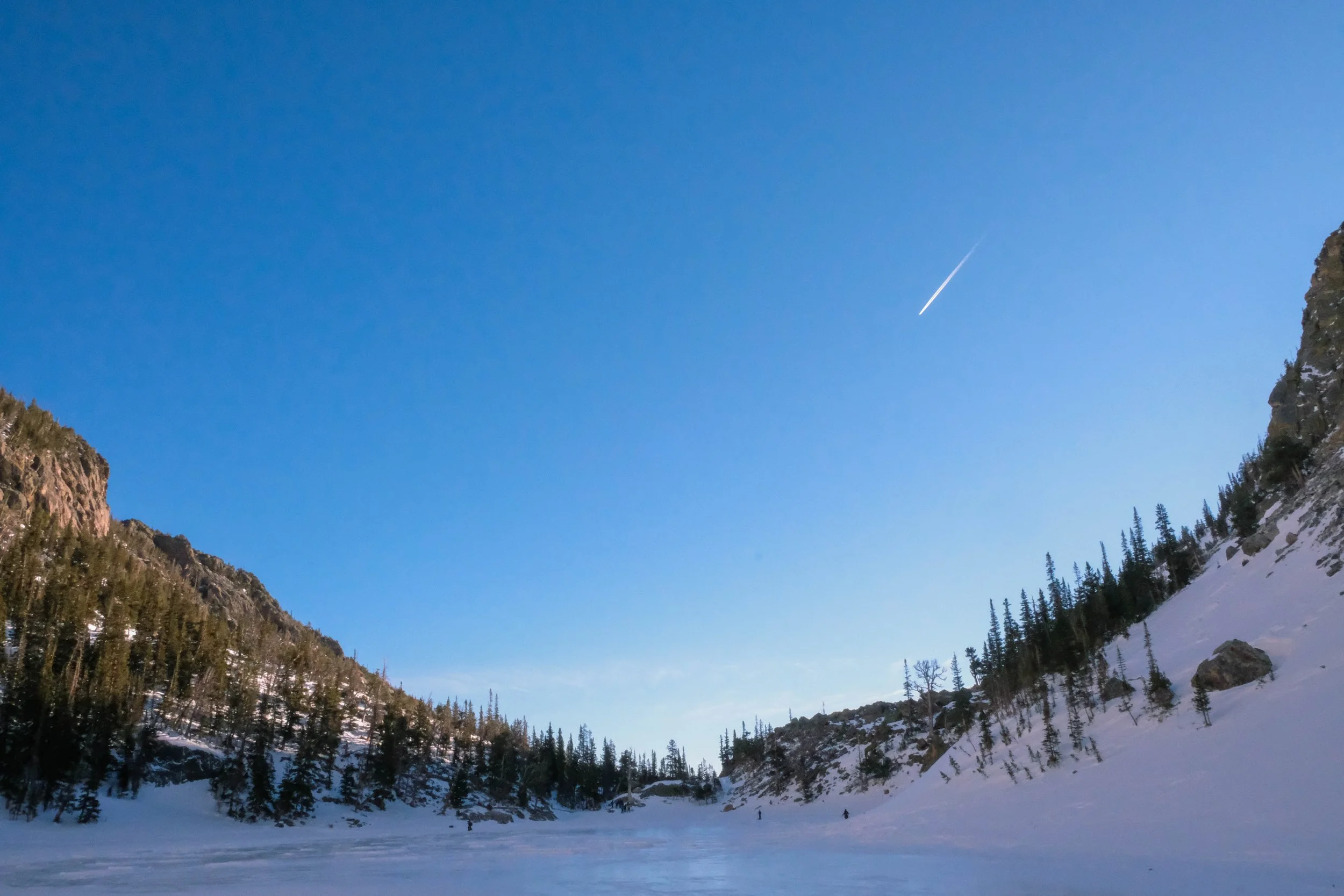
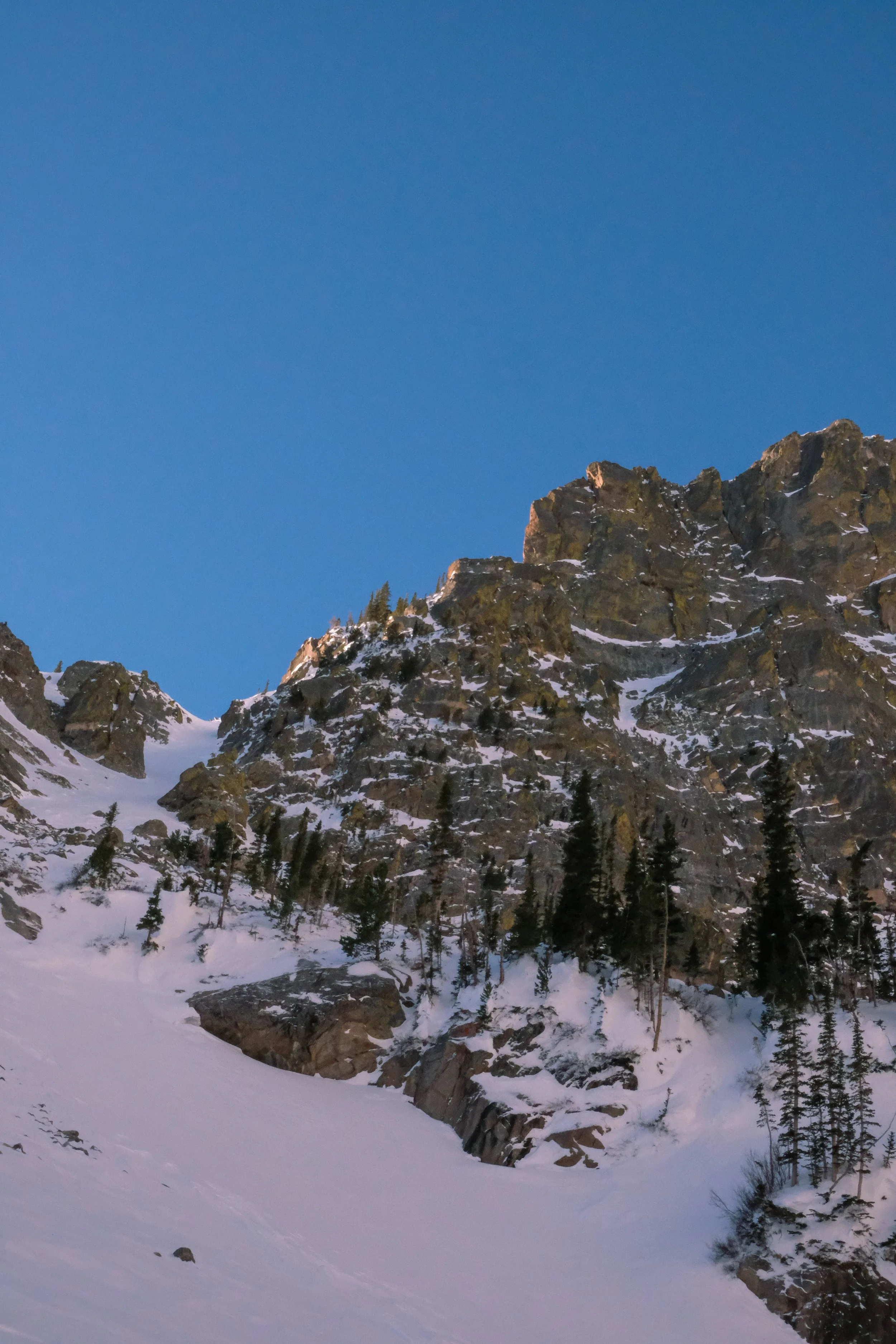
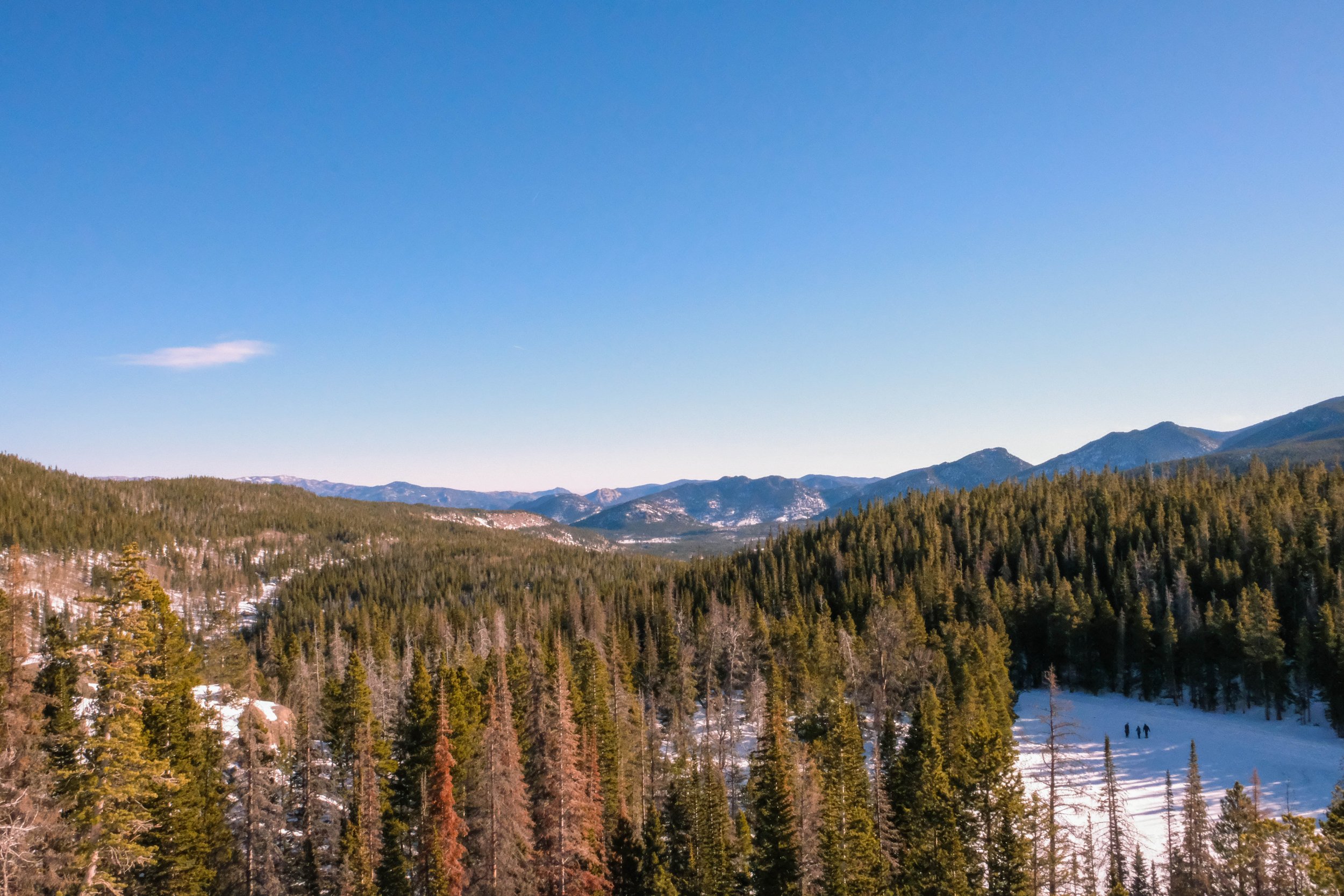
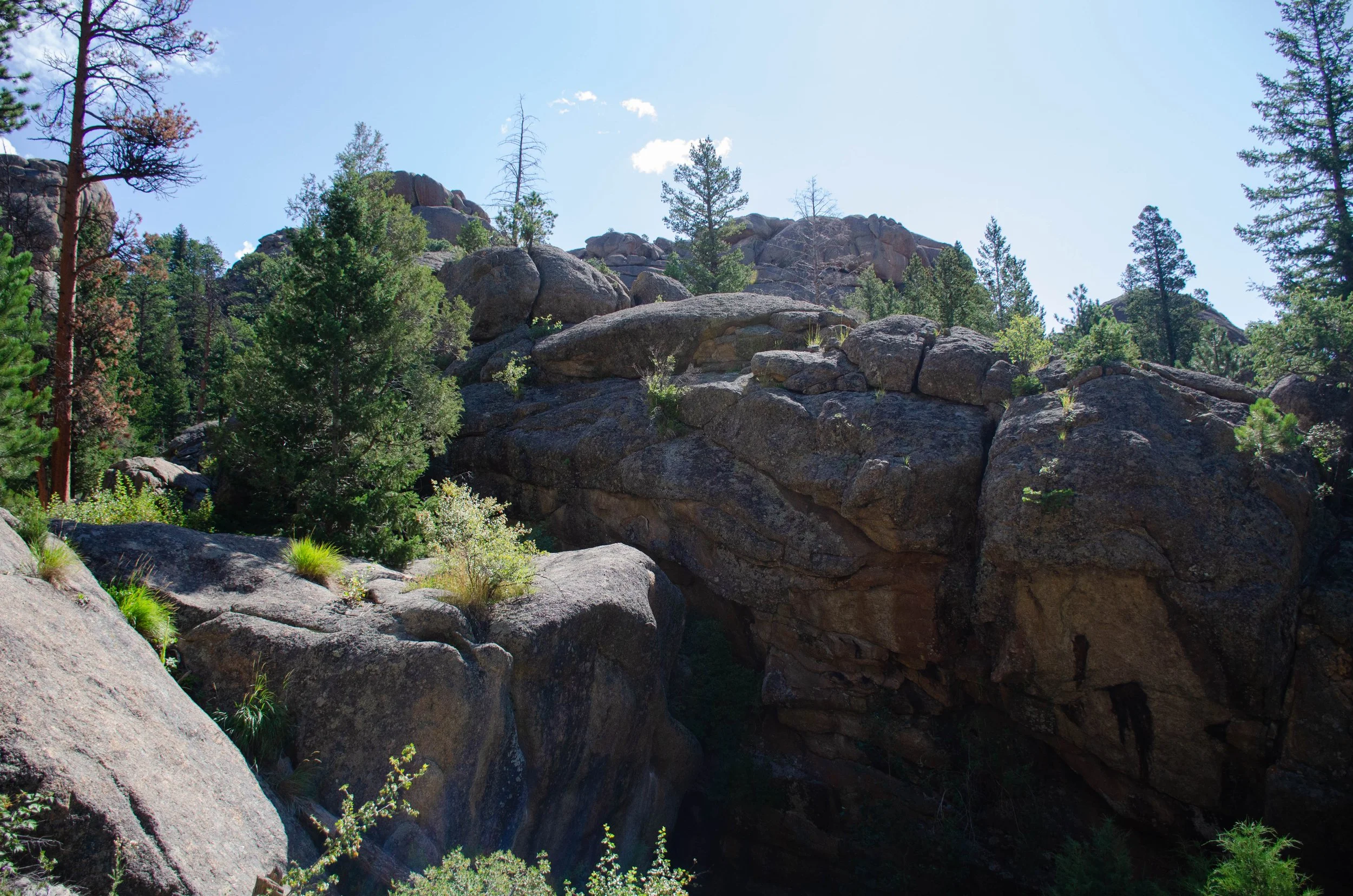
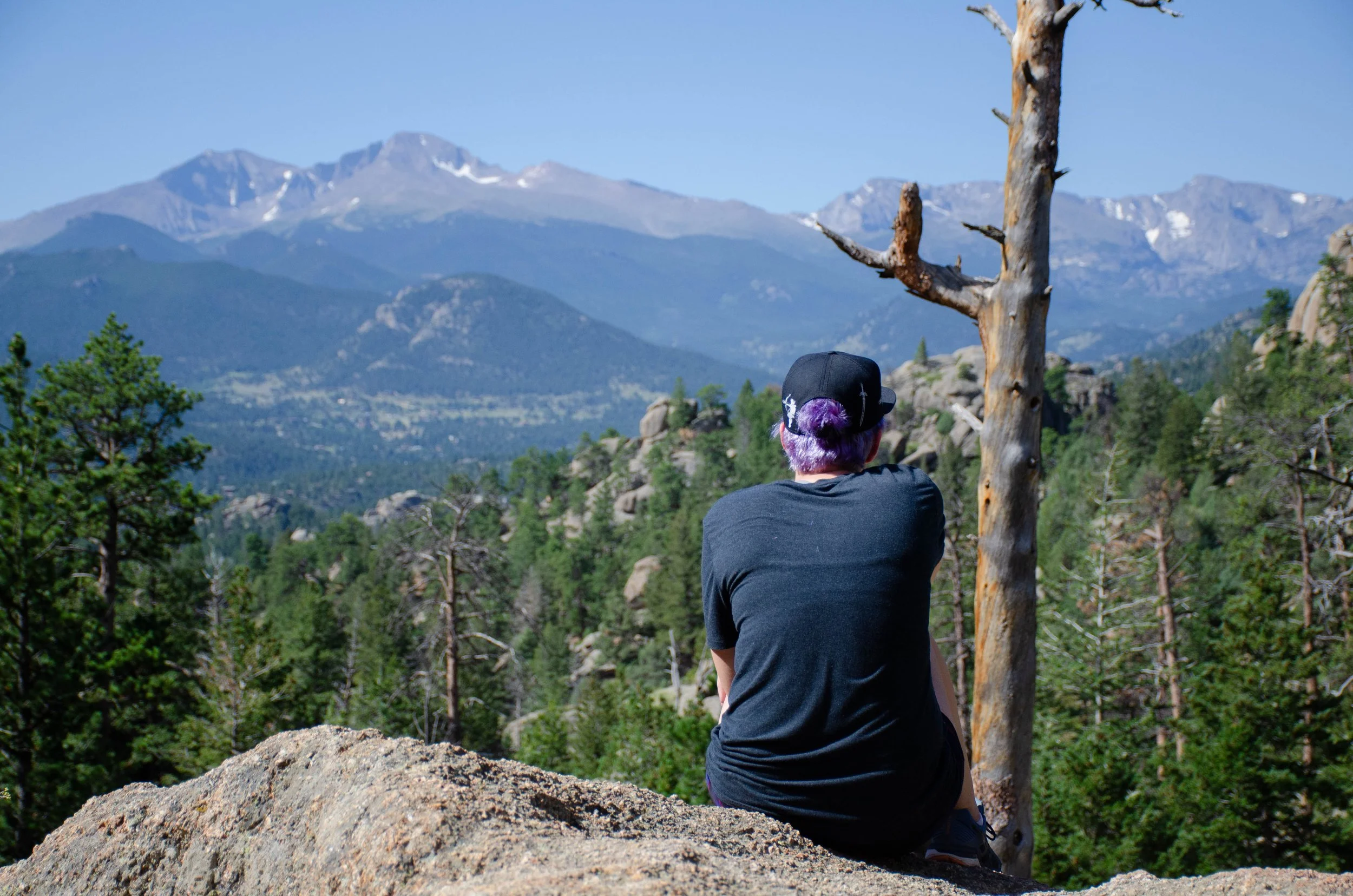
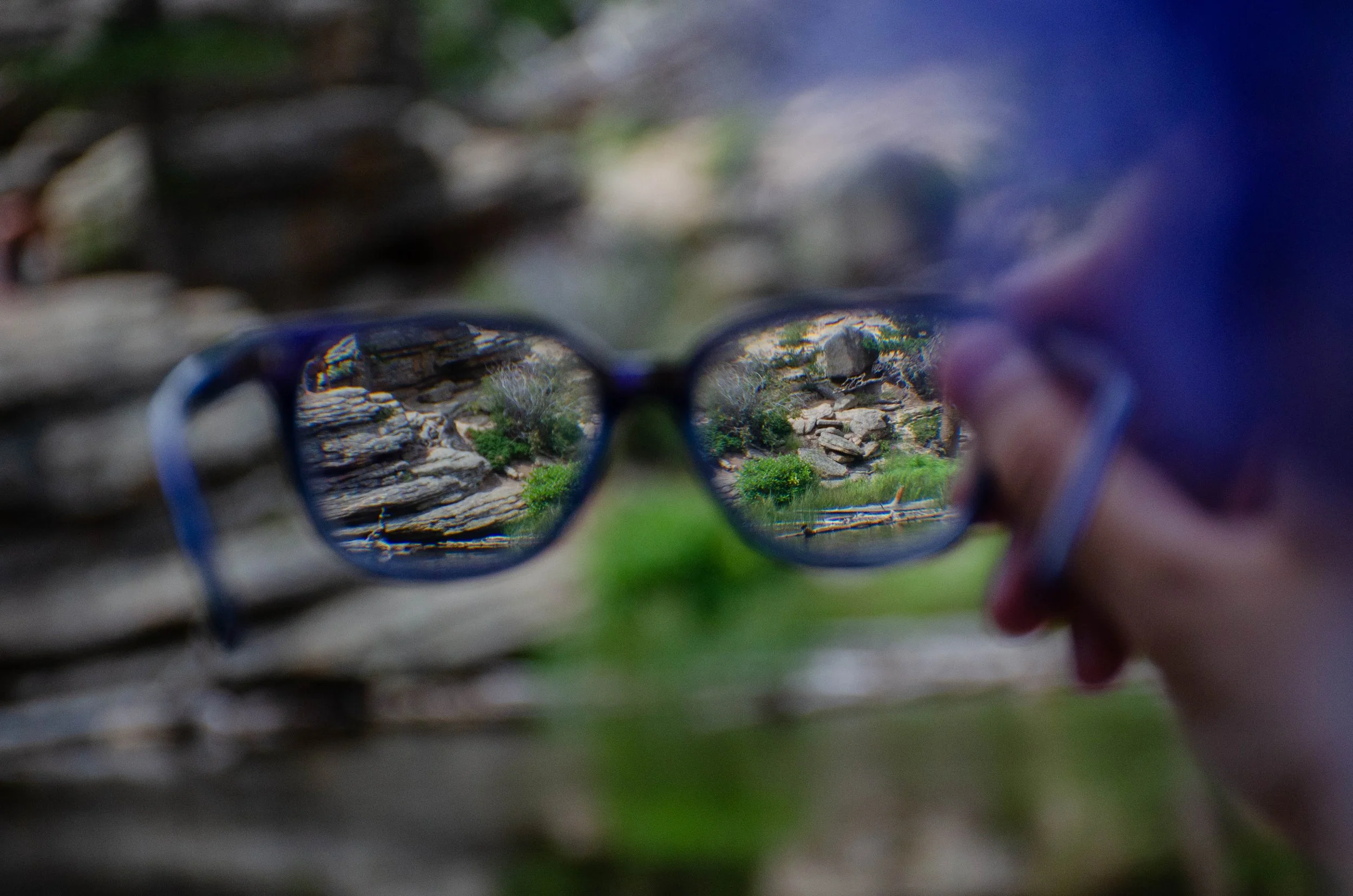
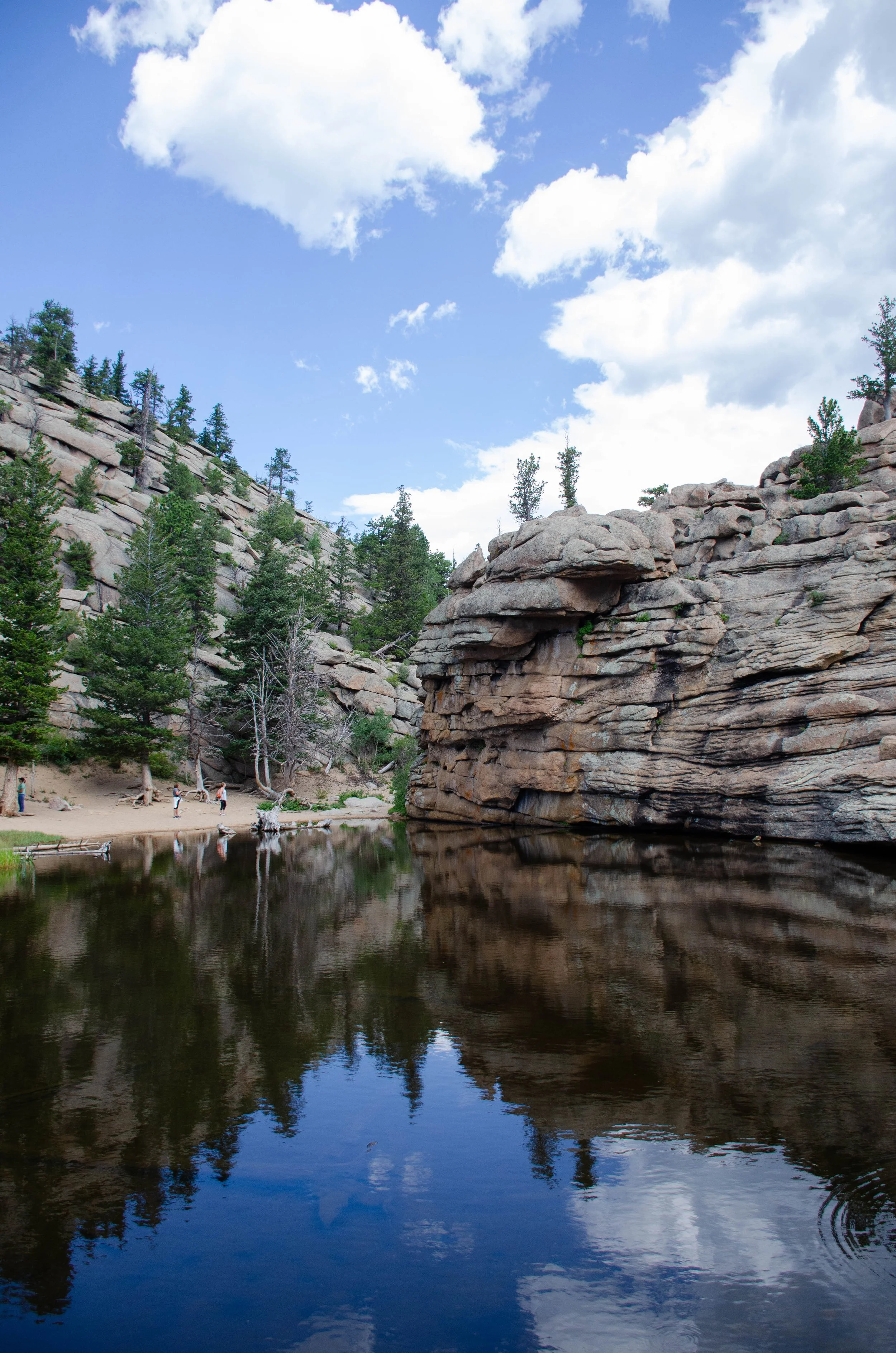
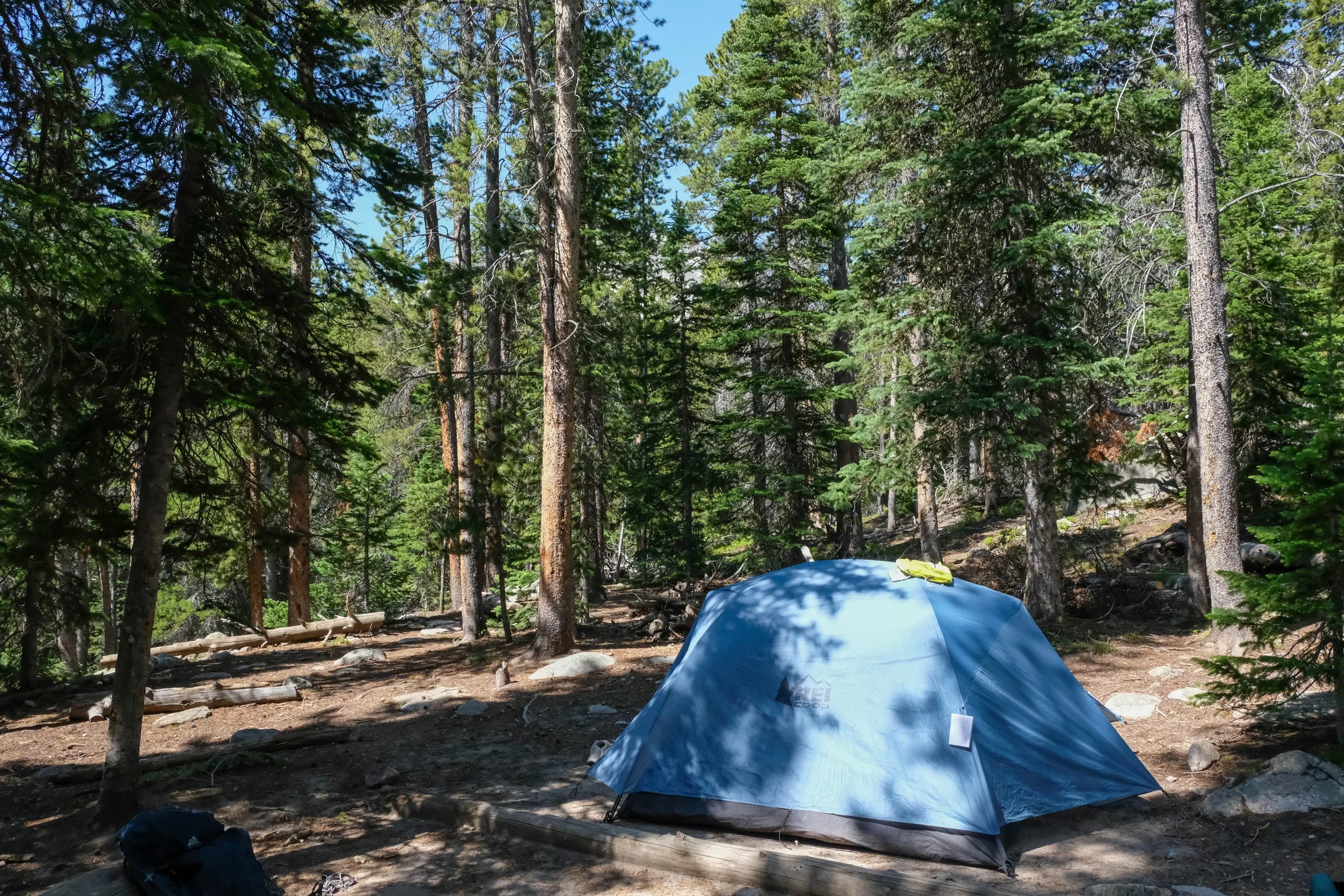
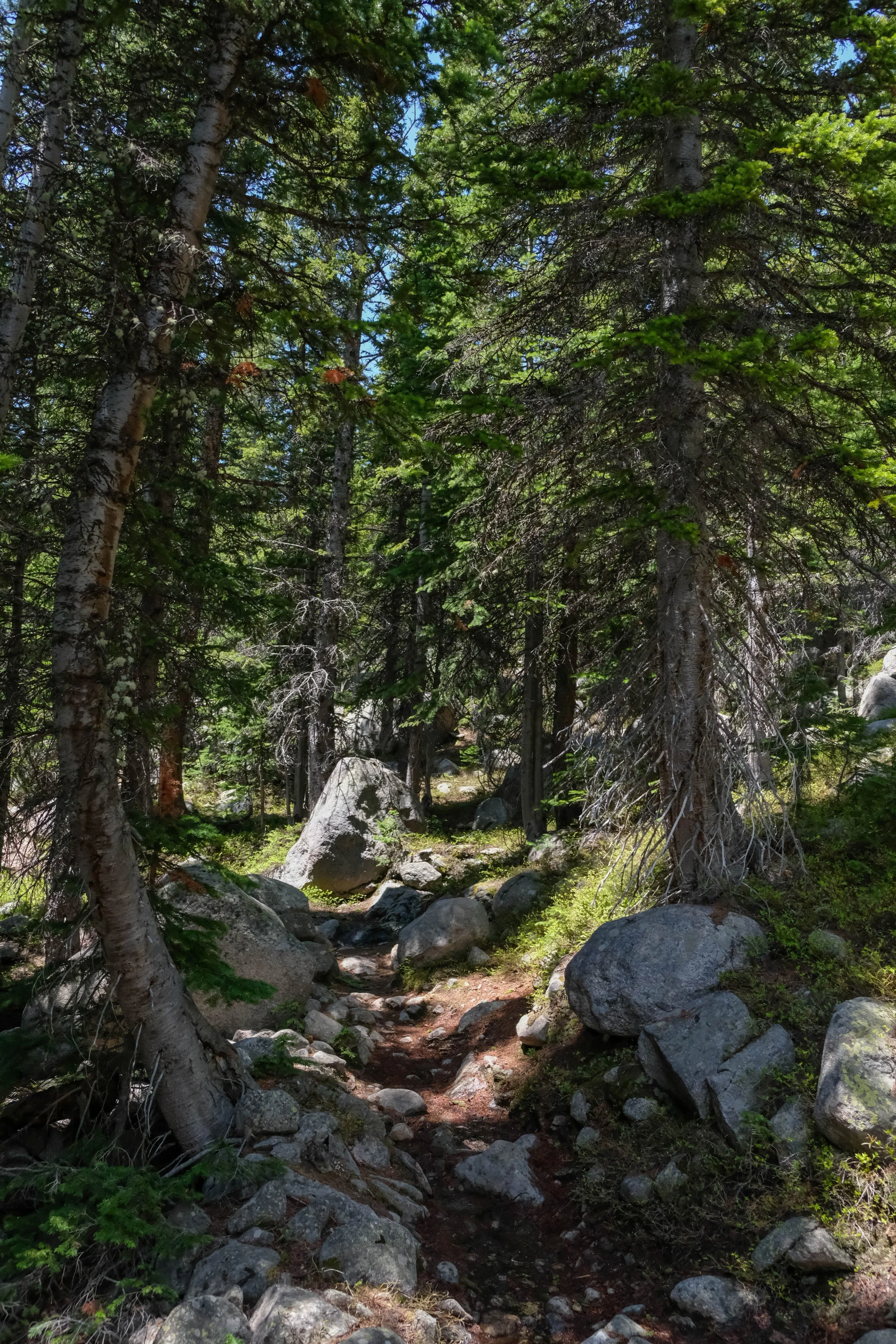
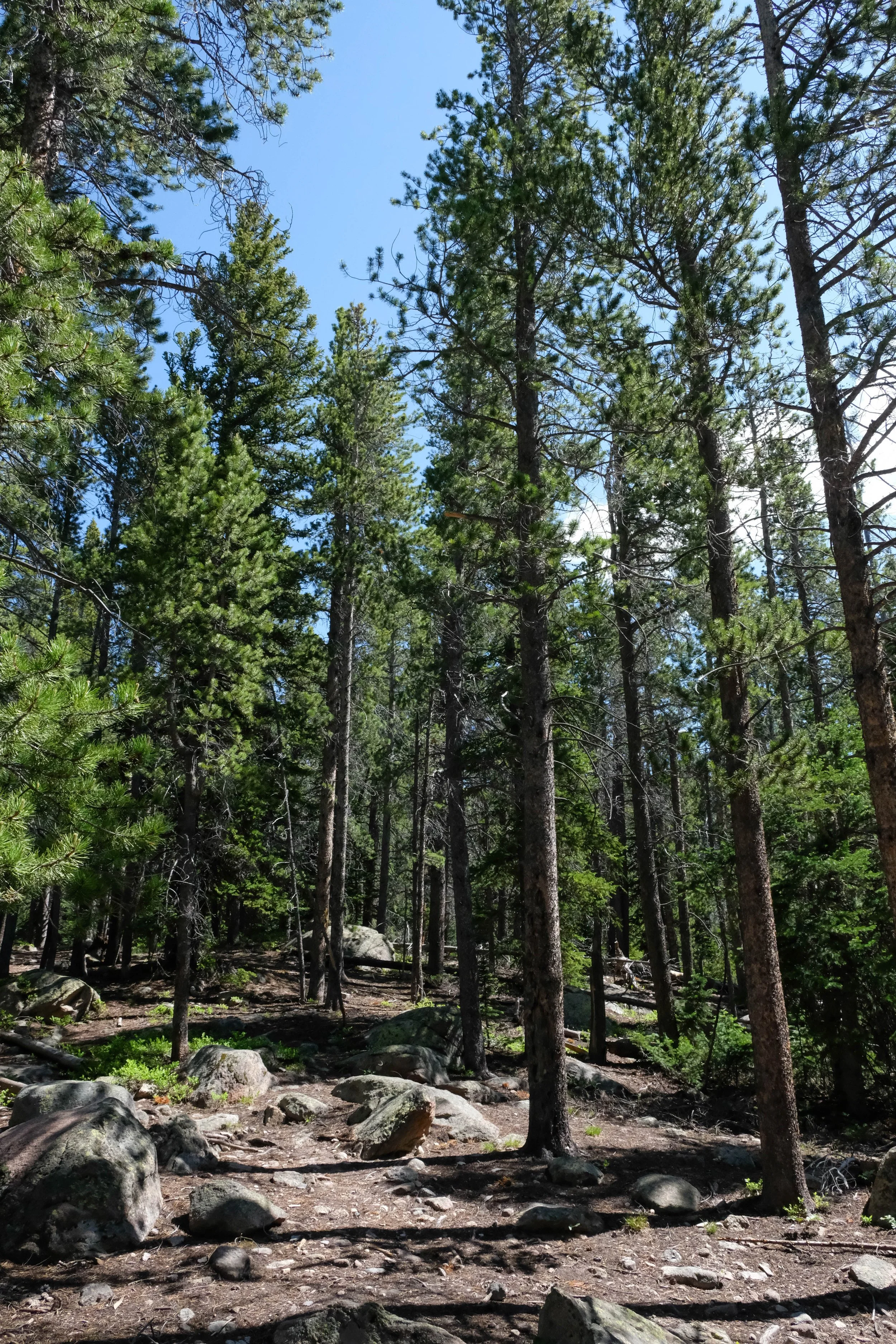
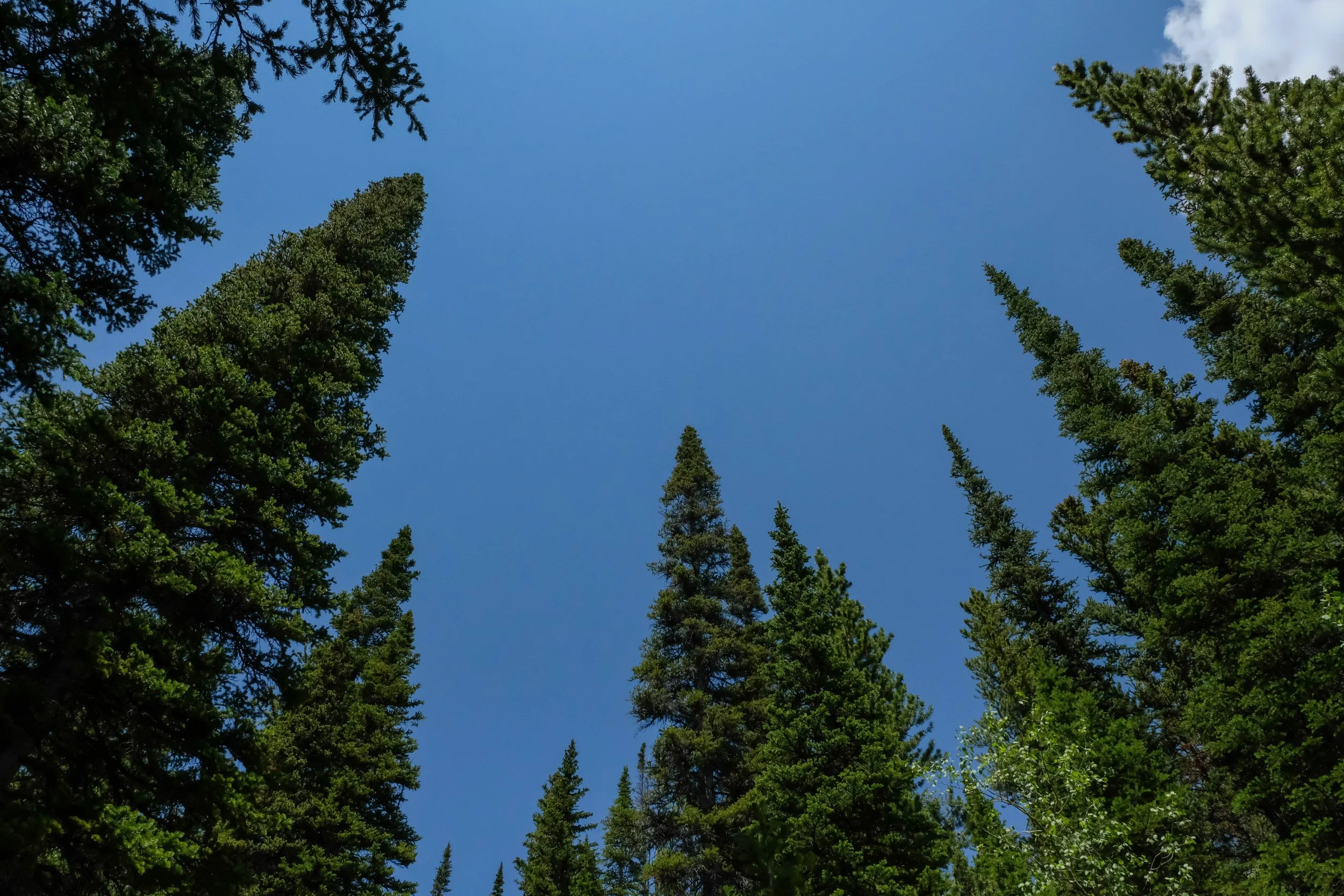
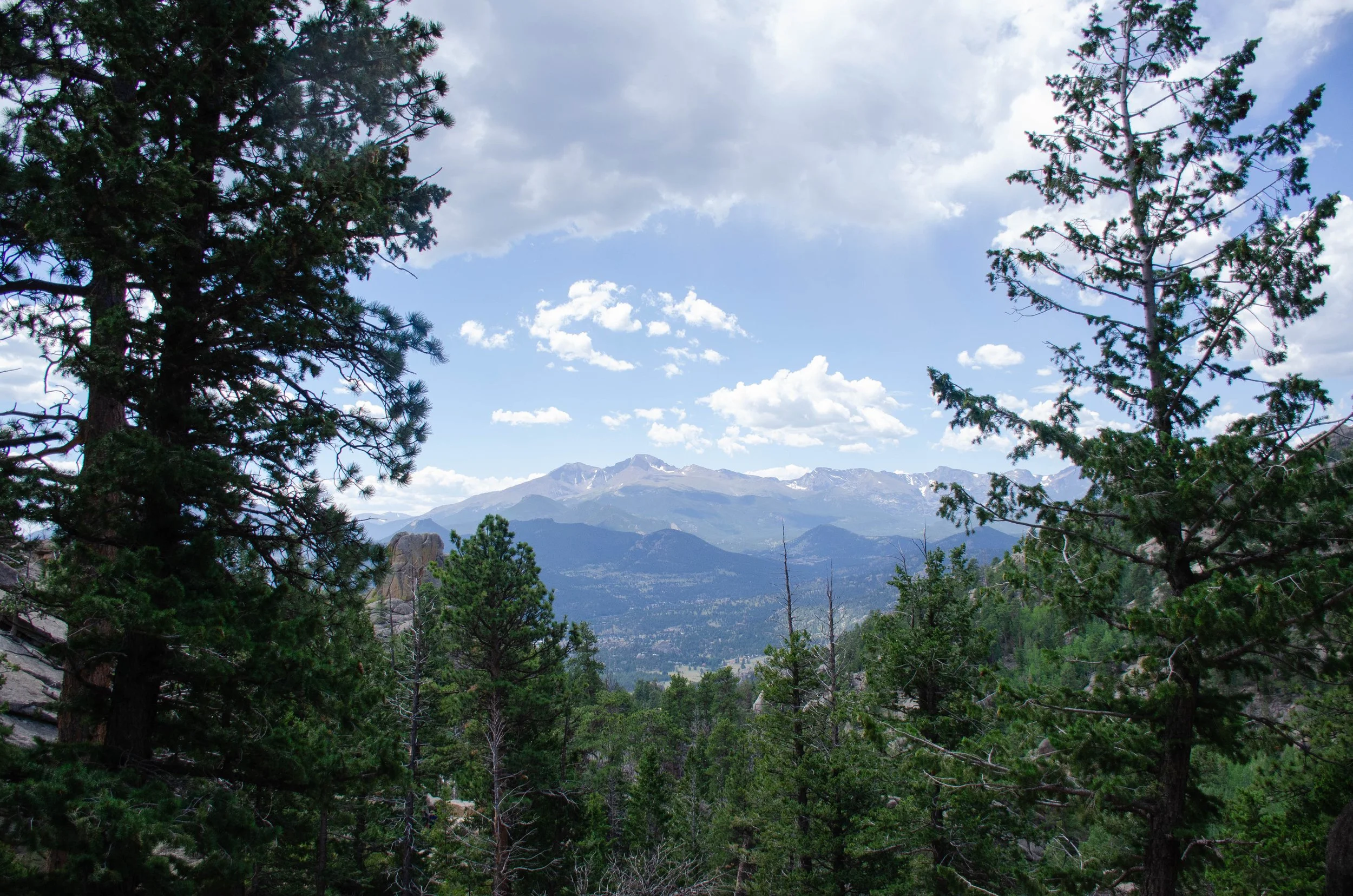
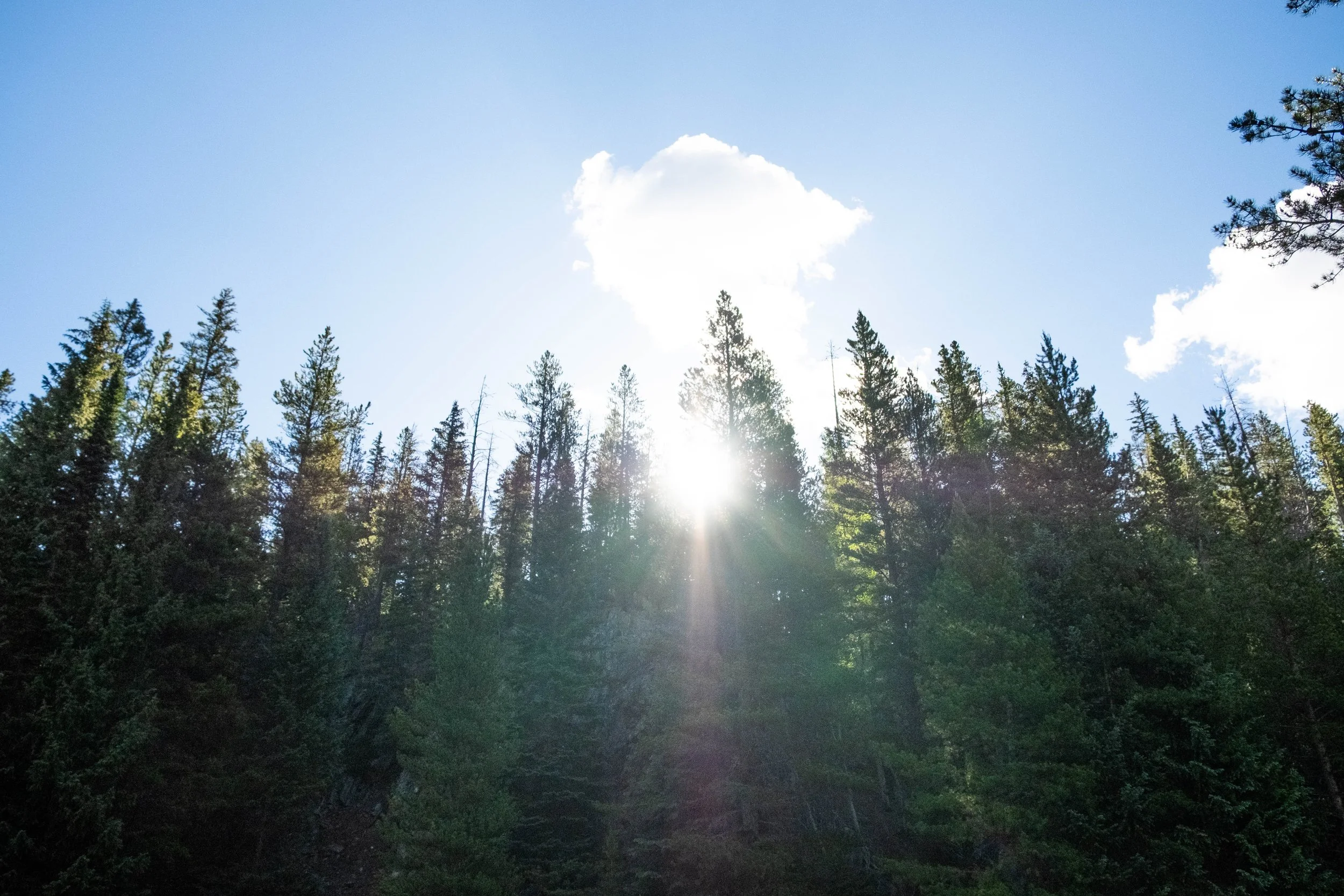
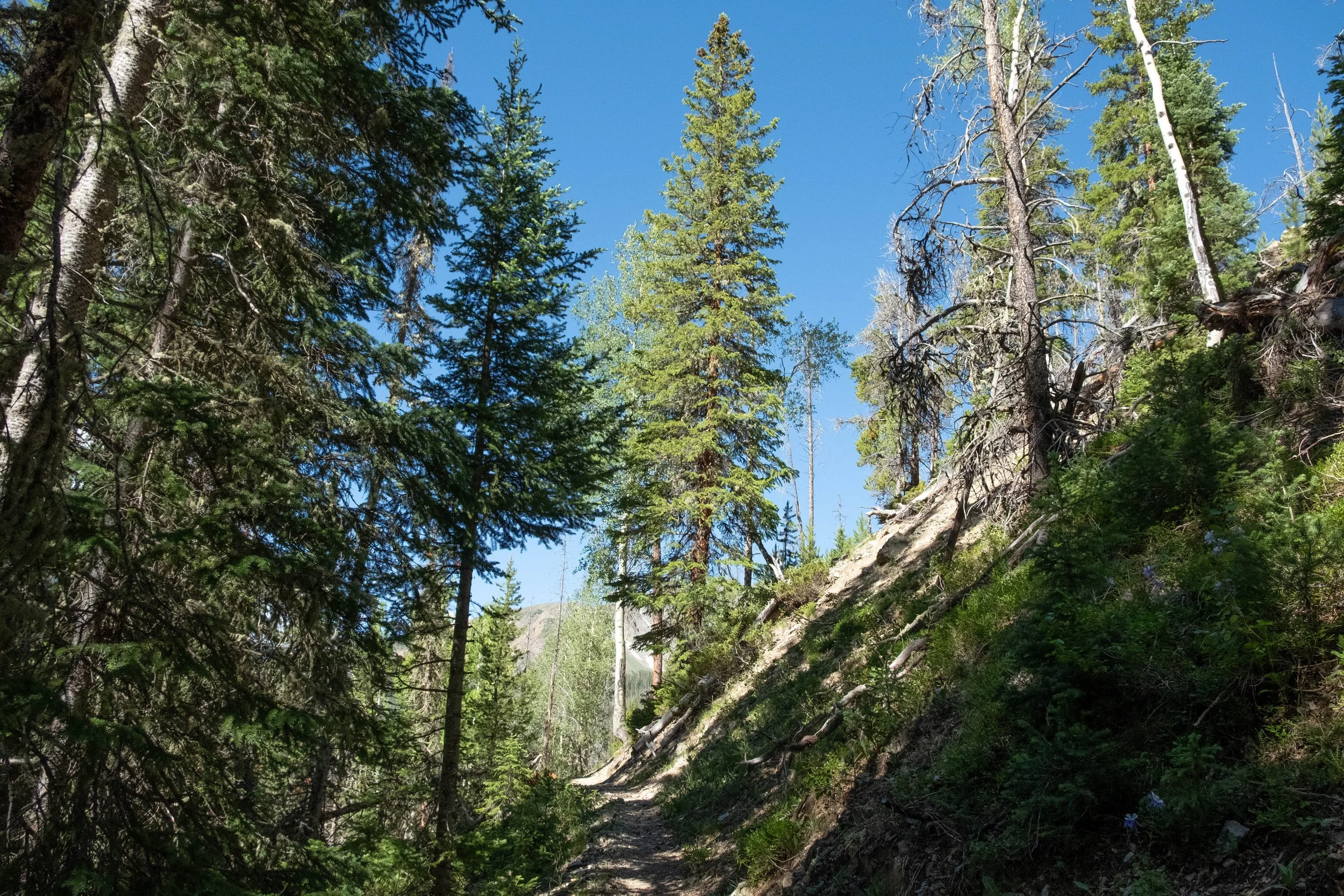
J & I met and still live in Colorado, so Rocky Mountain has become our “home park” for all intents and purposes. There has rarely been a summer we’re not hiking, camping, or backpacking somewhere there. Bear Lake or Gem Lake on the Estes Park side, North and East Inlet trails on the Grand Lake side, the Wild Basin entrance near Nederland are tried and true favorites. We’ve spent several birthdays backpacking here, including my 30th (his 31st) during COVID-19, when my sister and brother-in-law found a way to get to Colorado from Oregon to surprise me with a shared backpacking trip after the stay-at-home orders had been lifted.
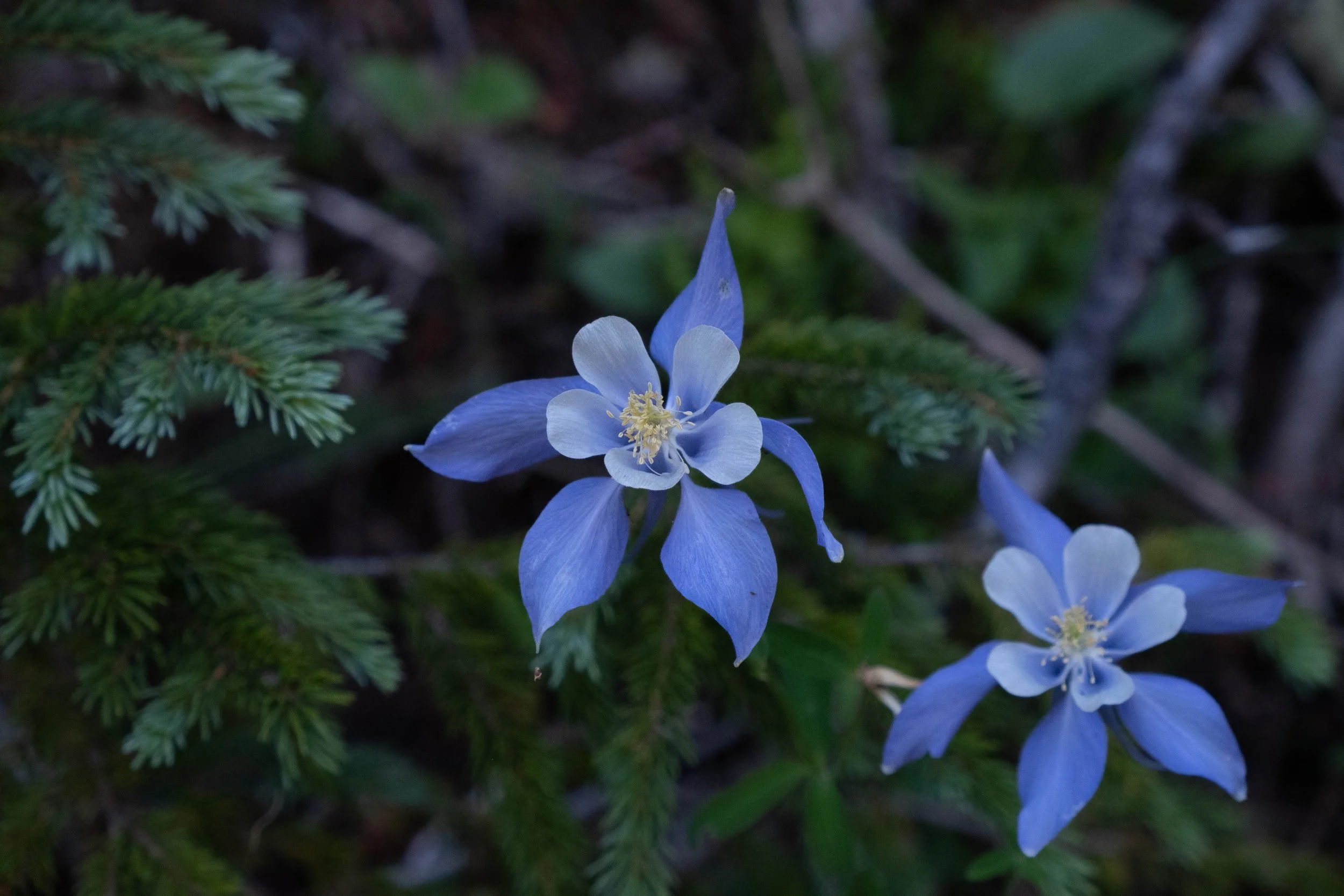
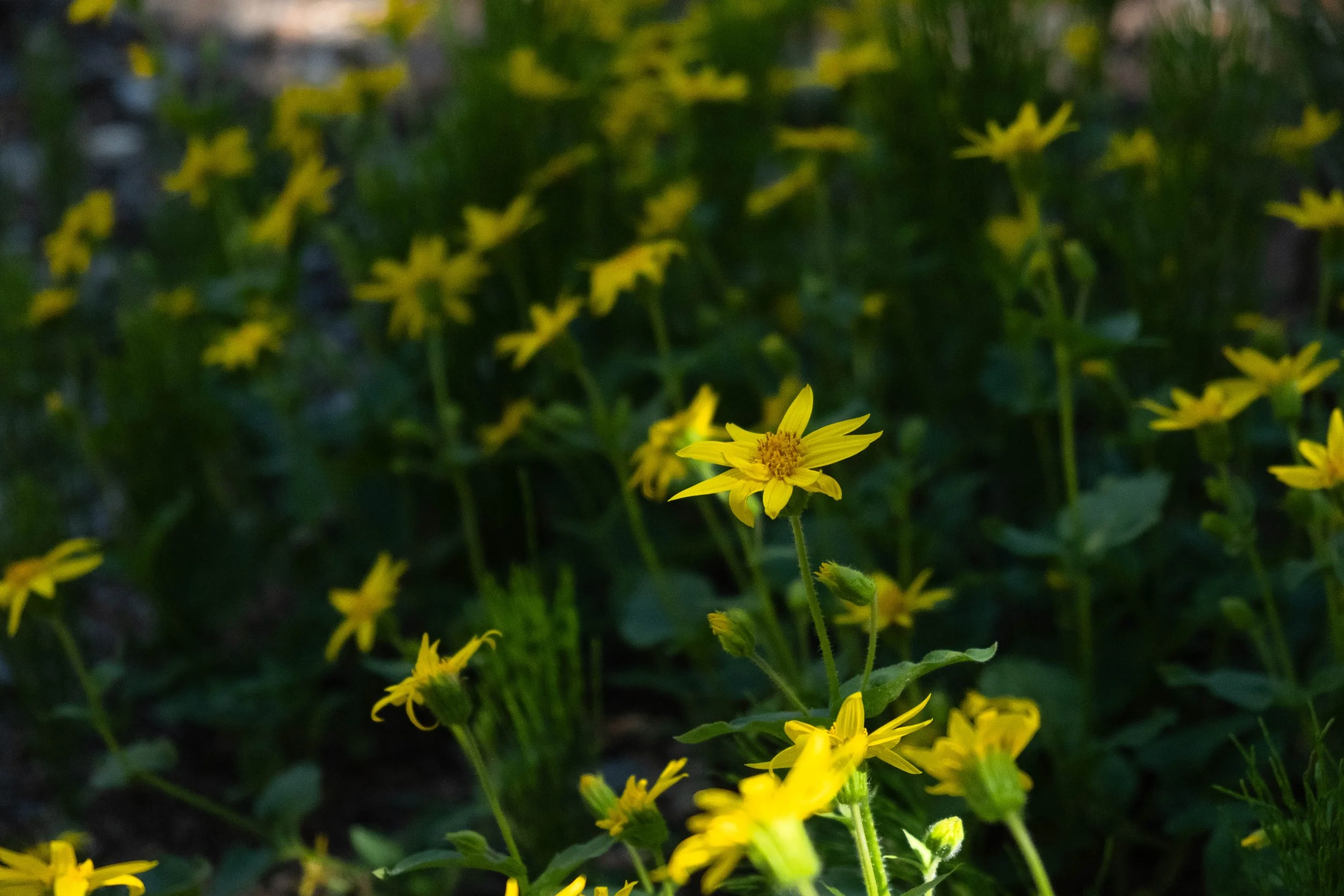
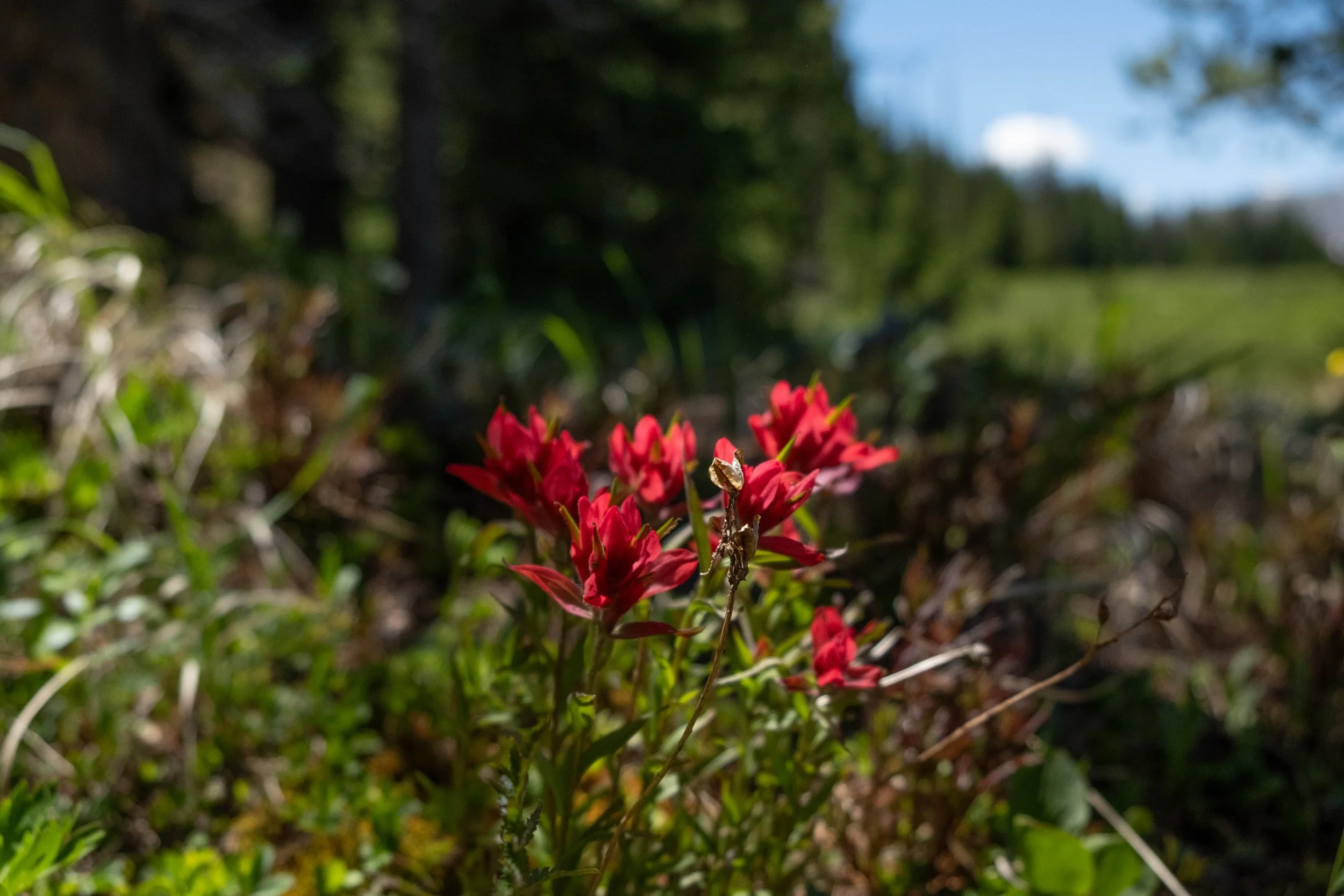
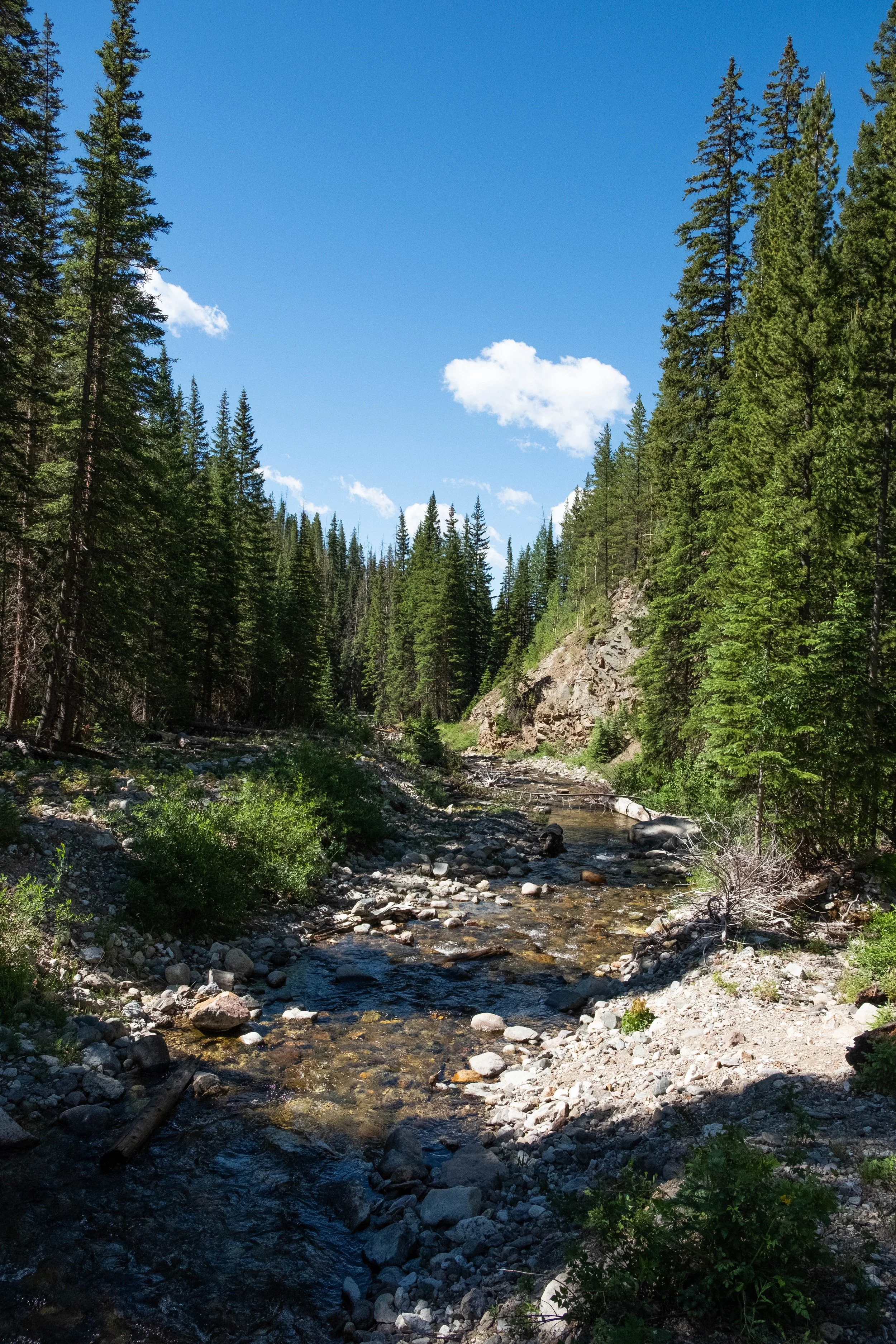
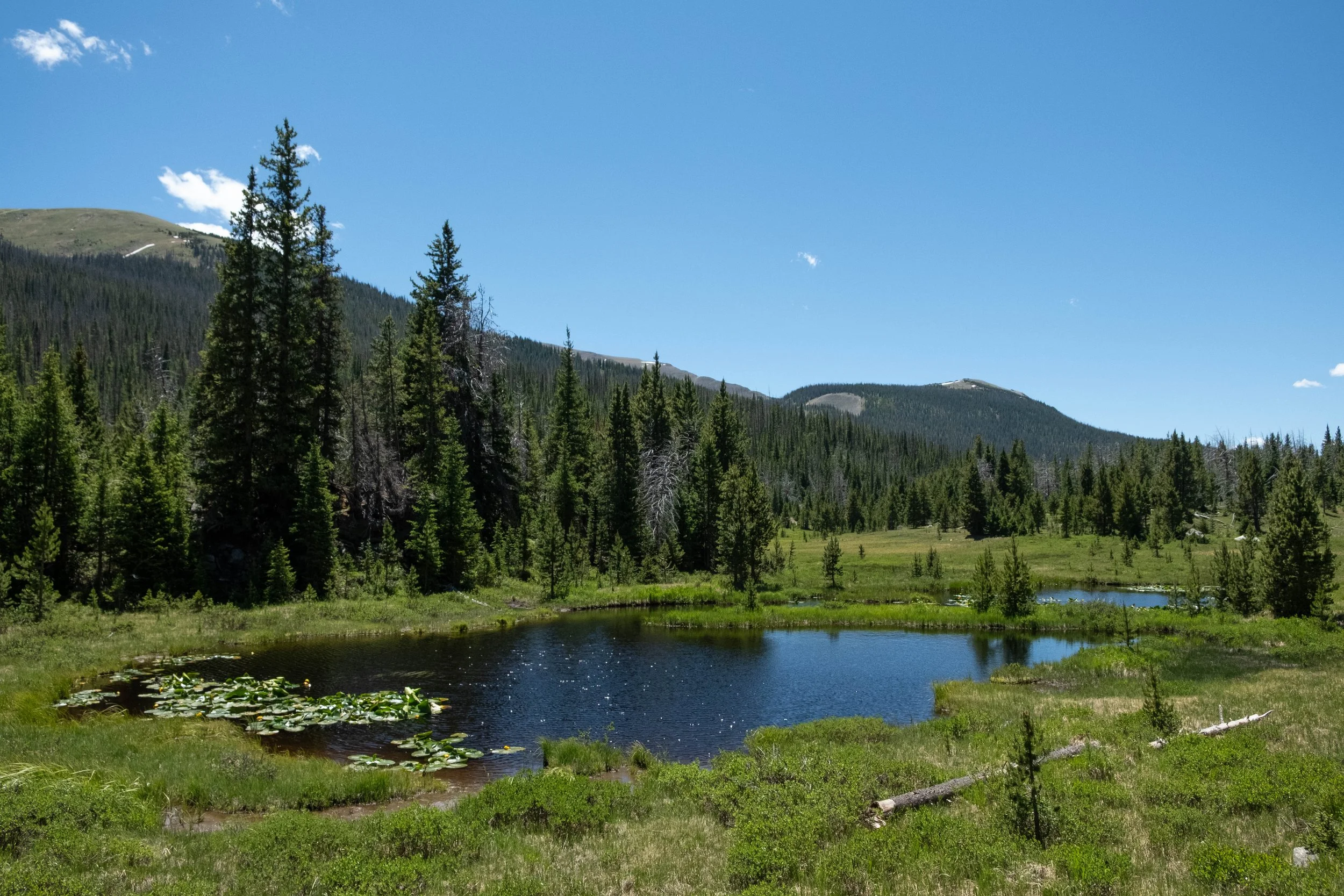
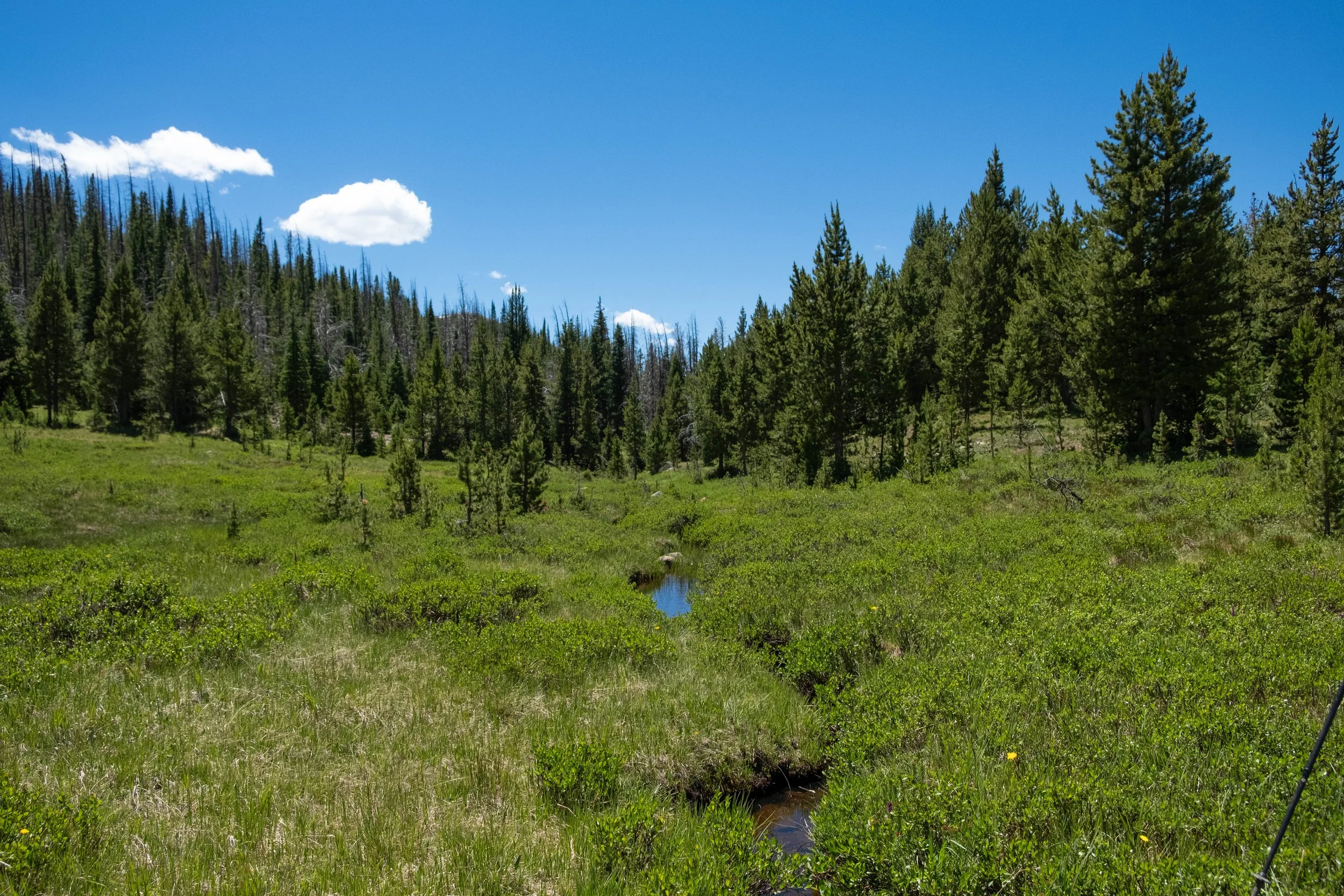
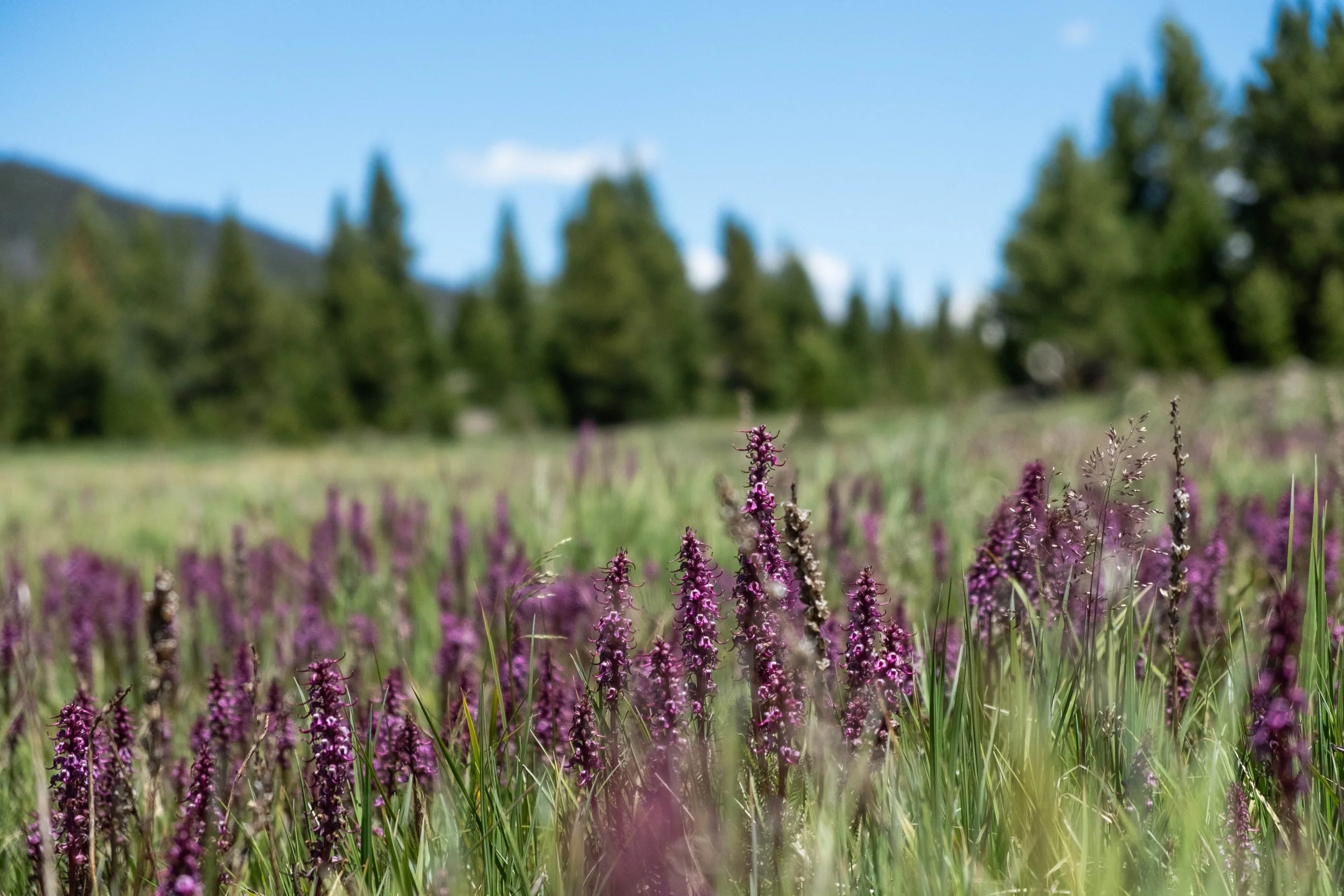
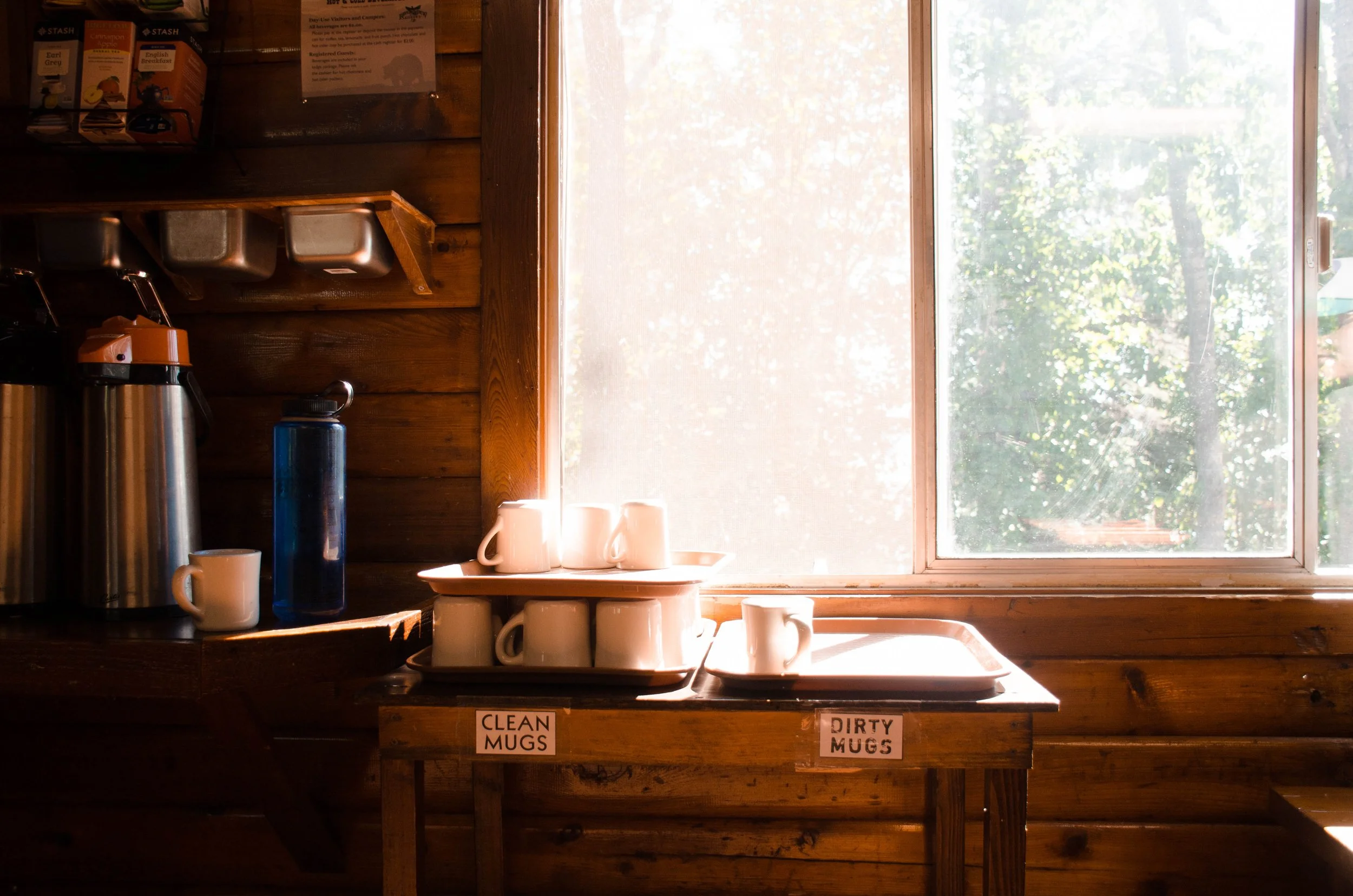
I love so many things about this park. The moose, elk, coyote, and foxes that are abundant, especially in the Kawuneeche Valley. The high alpine lakes, the dry forests that smell of pine, the snowmelt rivers that are always swollen in the spring and run a more mellow pace during the autumn months. All the trails we’ve explored and the ones we haven’t yet but that I would love to. The memories it holds: Many moose encounters, stories shared late at night while sipping honey whiskey or tea from our mugs, gorgeous vistas.
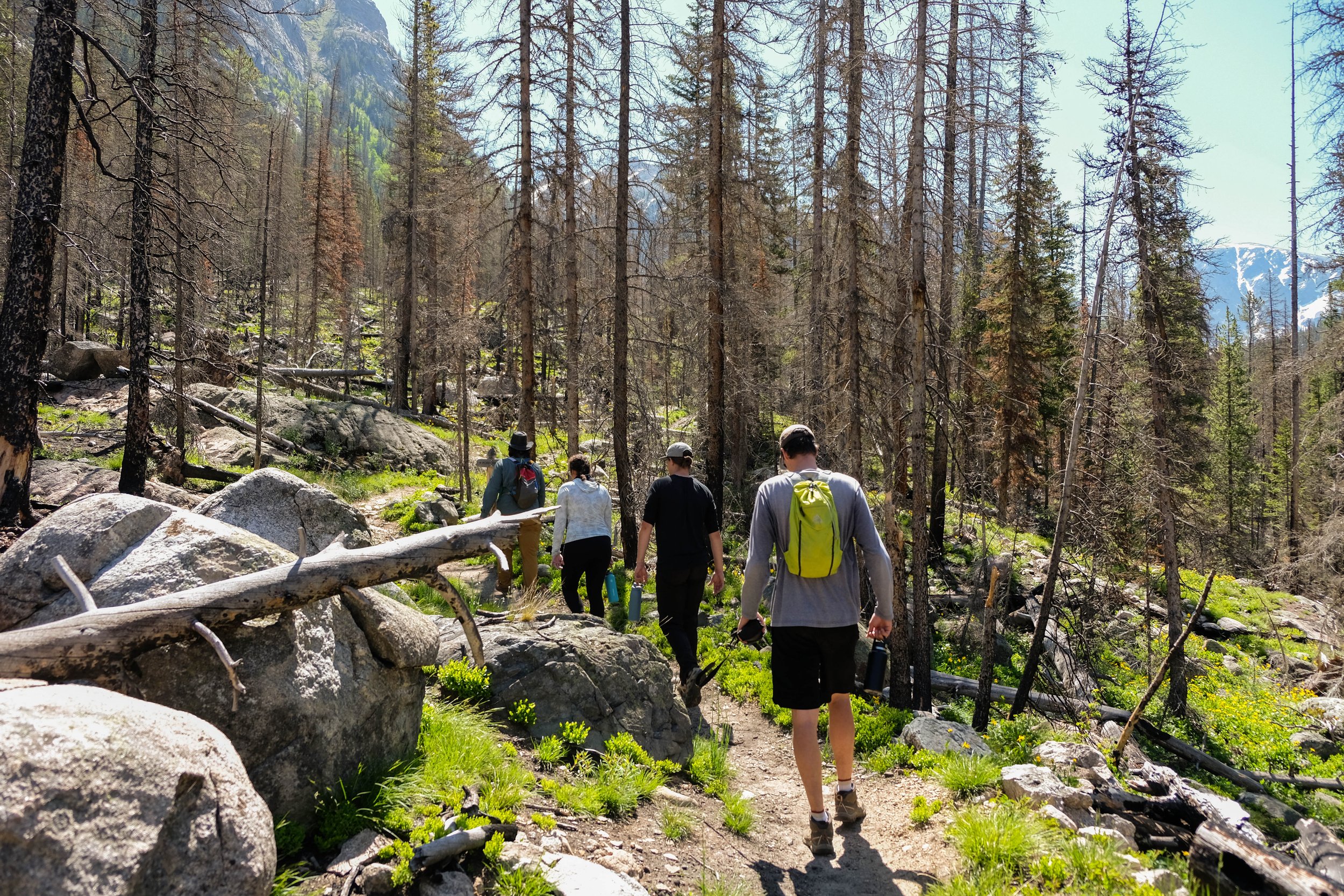
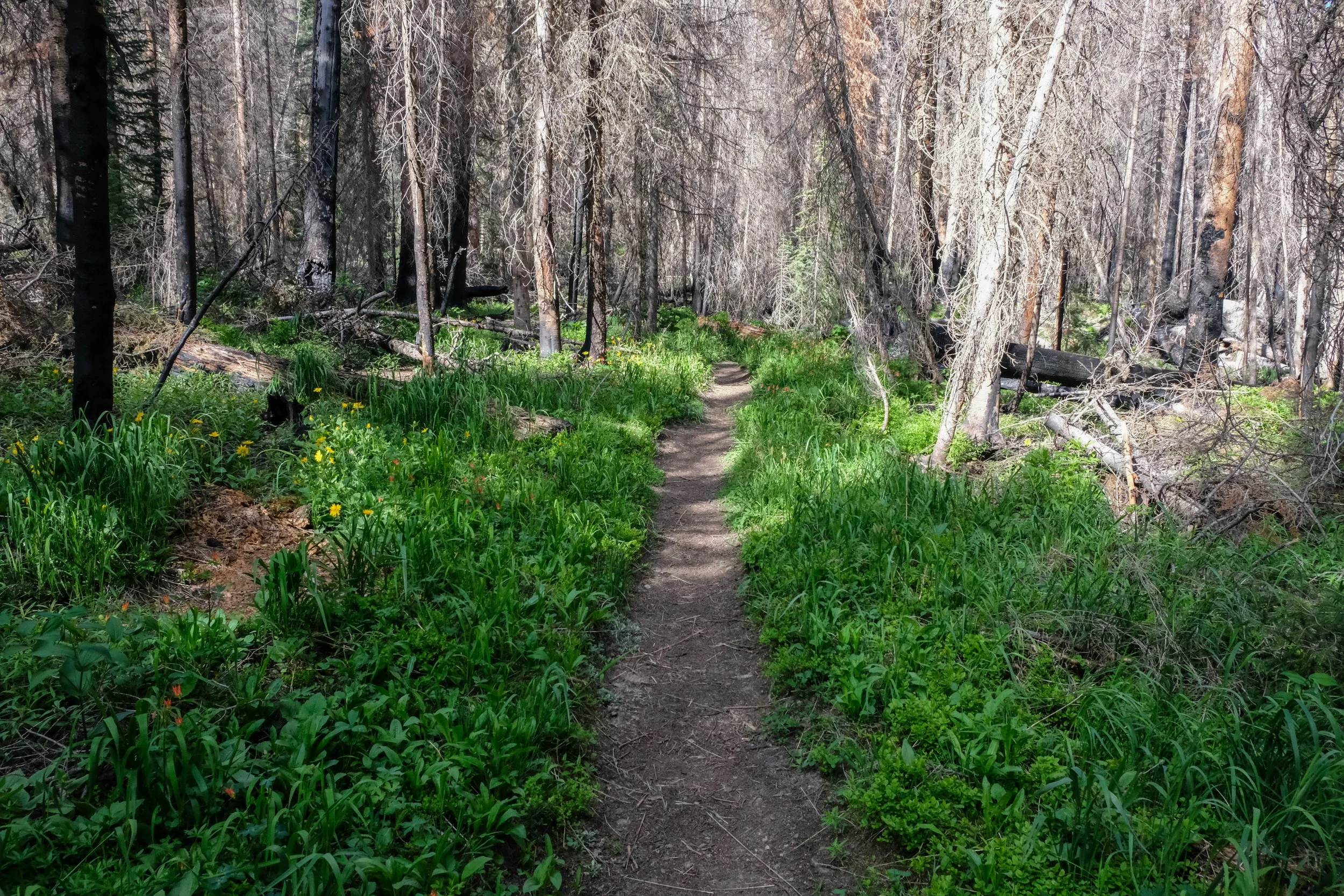
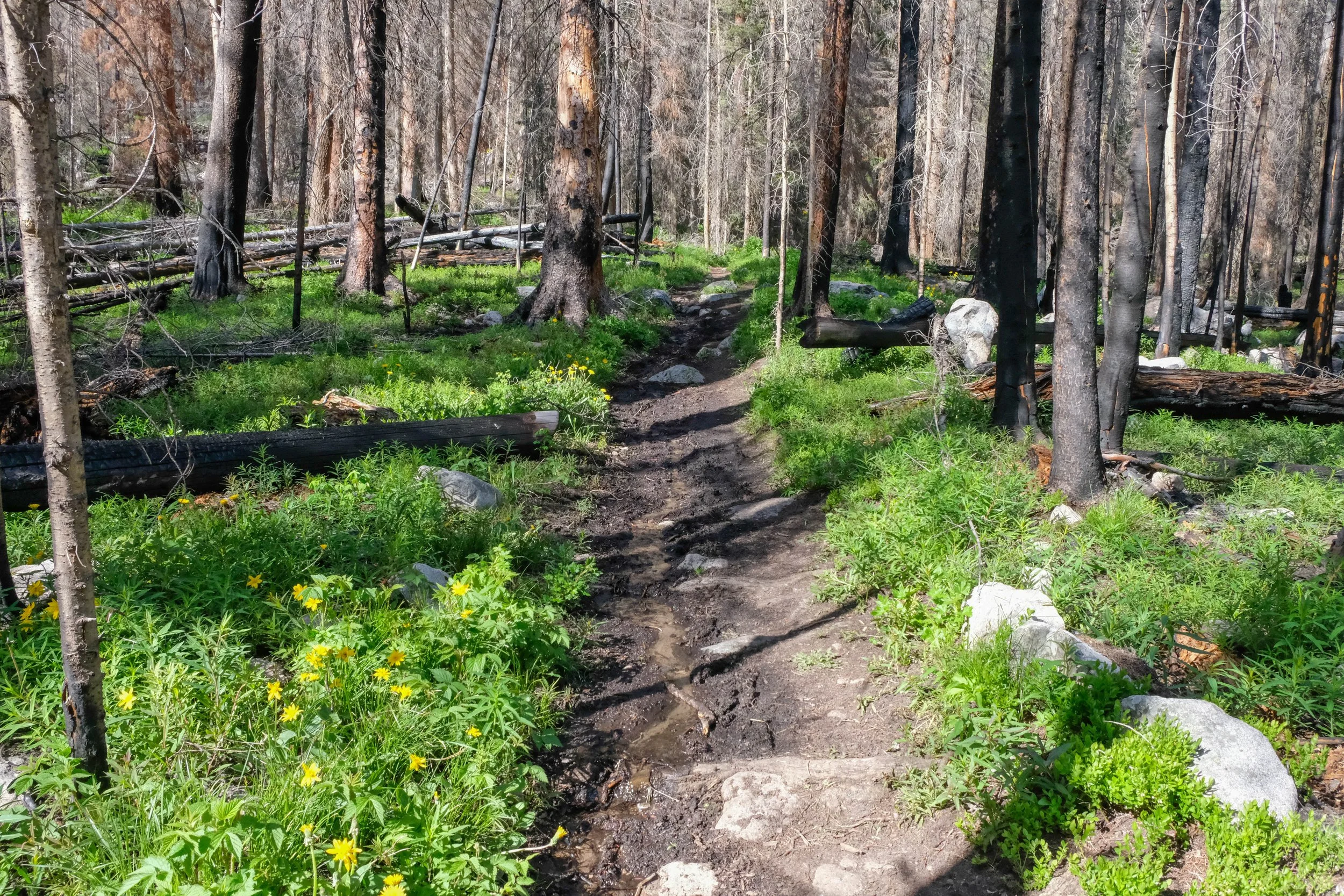
It has also been a place of loss for us. Kawuneeche Valley (the Valley of Coyotes), close to Grand Lake, was ravaged by a terrible wildfire in 2020. Now, for the first couple miles on the North Inlet trail, we walk amid haunting blackened tree trunks. We’ve seen baby trees emerging and the ground cover is recovering over the last couple of summers, but there is a deep grief in knowing we won’t live long enough to see this trail the way it was before the fire. This is true of many places we’ve visited over the years: Waterton National Park in Alberta, Canada; the McKenzie River valley in Oregon. My levels of climate grief have only rose as the years pass. I often wonder how many other beloved forests, trails, cities, and parks may burn due to climate change during my lifetime.
May we act, vote, organize, and engage to protect these beautiful places and the Earth we all share and who gives us life.
Glacier Bay
Park 14 | July 2019
Part + Park 4 (of 4) on our epic adventure to Alaska.
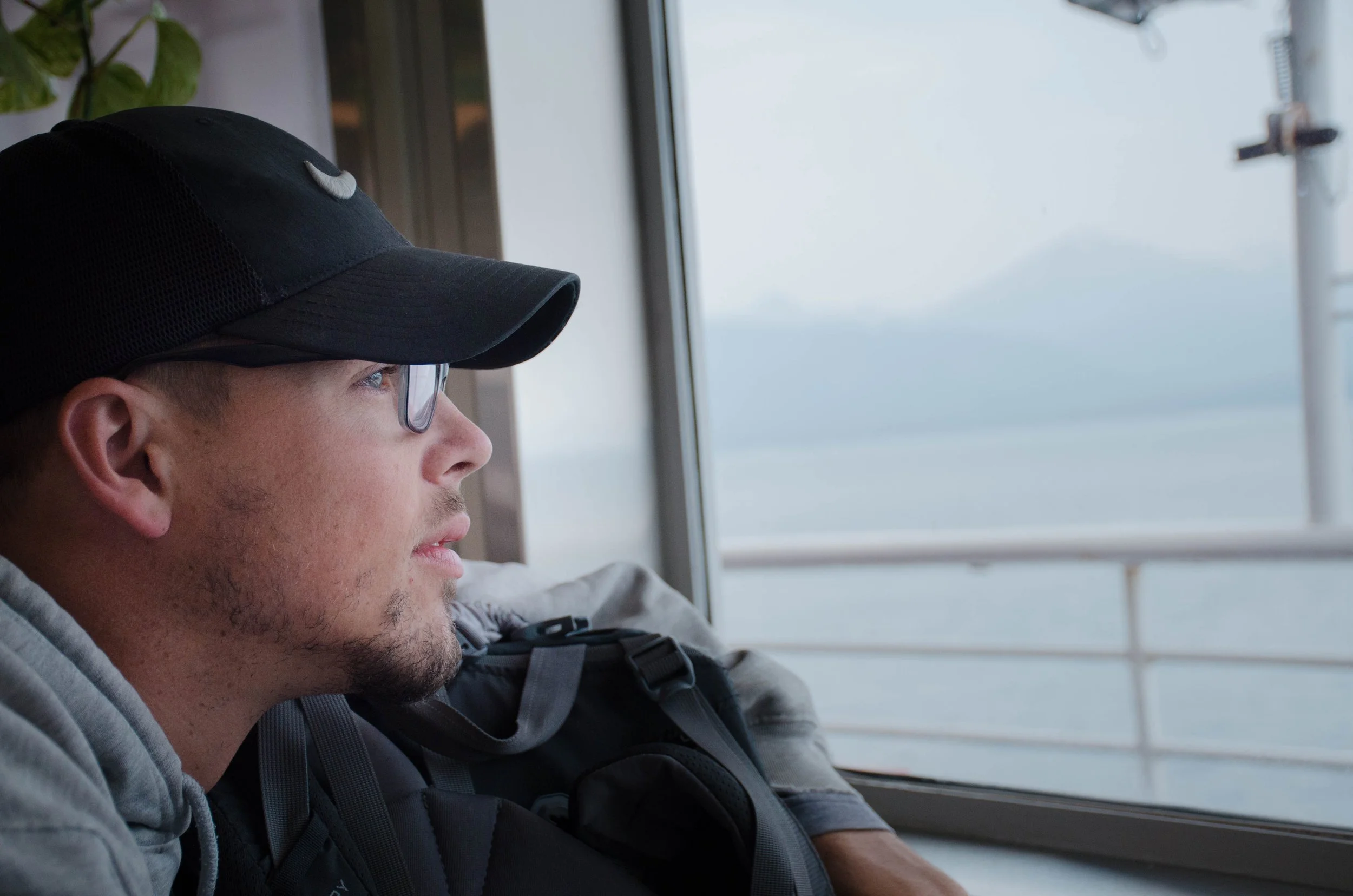
Our journey to Glacier Bay started months prior as we struggled to figure out how to actually reach it. Information was a bit scarce, but we knew there was no way to drive there, so began researching options by boat and plane. We eventually pieced together what felt like a logistical nightmare: First, fly from Anchorage to Juneau. Second, take an early morning Lyft to the ferry dock to board a six-hour ferry from Juneau to Gustavus. Third, catch a “taxi” (which in our case was a rusty 15-passenger van) driven by a weathered, gruff old man whom we’d had to call from Denver to reserve a ride (…since he still manages his entire taxi business via pencil and paper) to get from Gustavus to Bartlett Cove. Fourth, make it to the visitor center in time to complete the mandatory orientation and check into Barlett Cove Campground. Oh, and fifth, don’t forget to confirm with the taxi service the day and time you need to reverse the trip — from Barlett Cove to Gustavus — to get back on the ferry to leave.
Somehow, these details all ended up working out without any issues. The Lyft came on time, the ferry tickets were correct, and I was endlessly relieved when we discovered the man we’d spoken to weeks earlier for the taxi service was an actual real person with an actual real vehicle so we didn’t find ourselves stranded on the ferry dock in Gustavus.
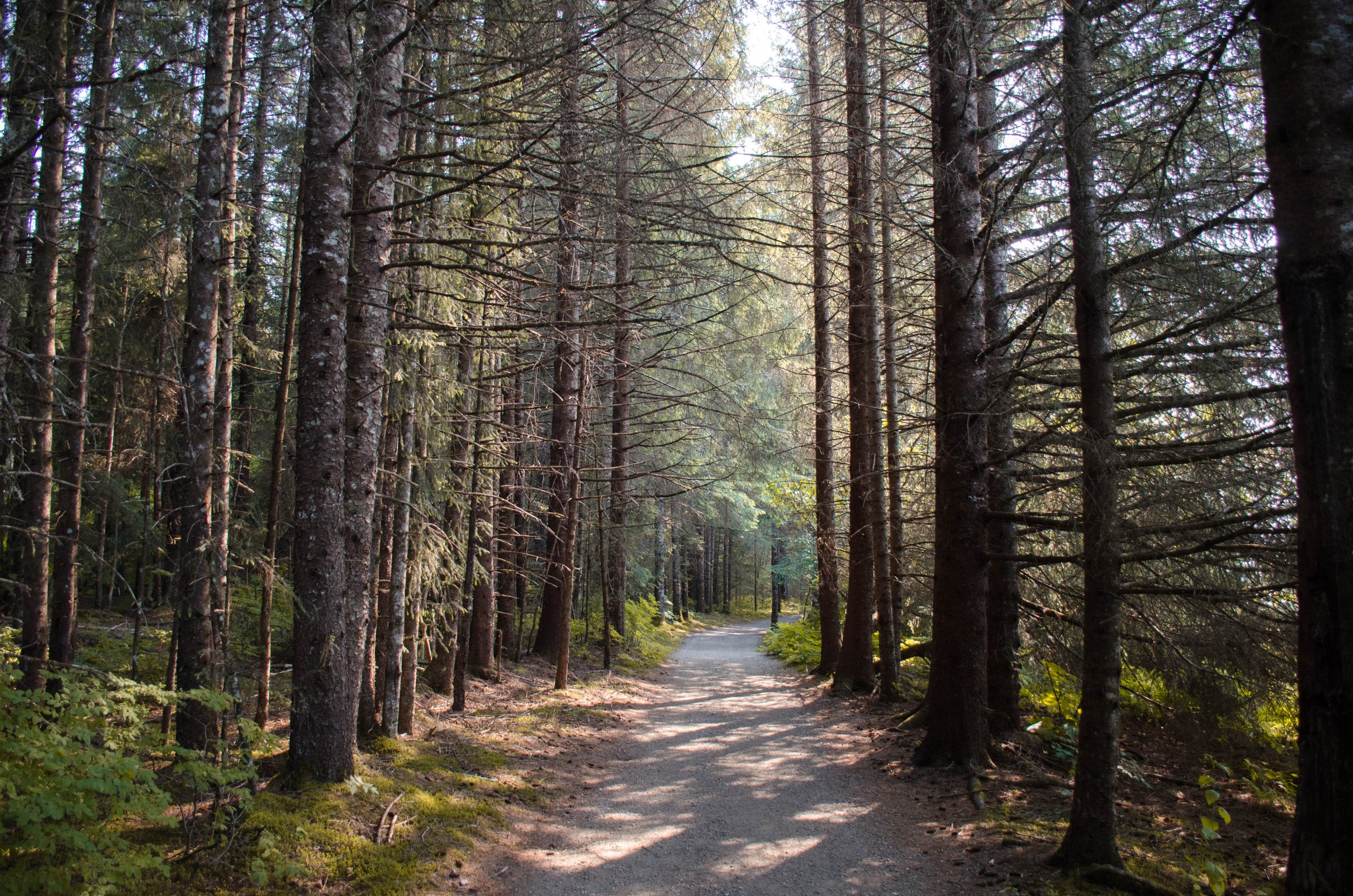
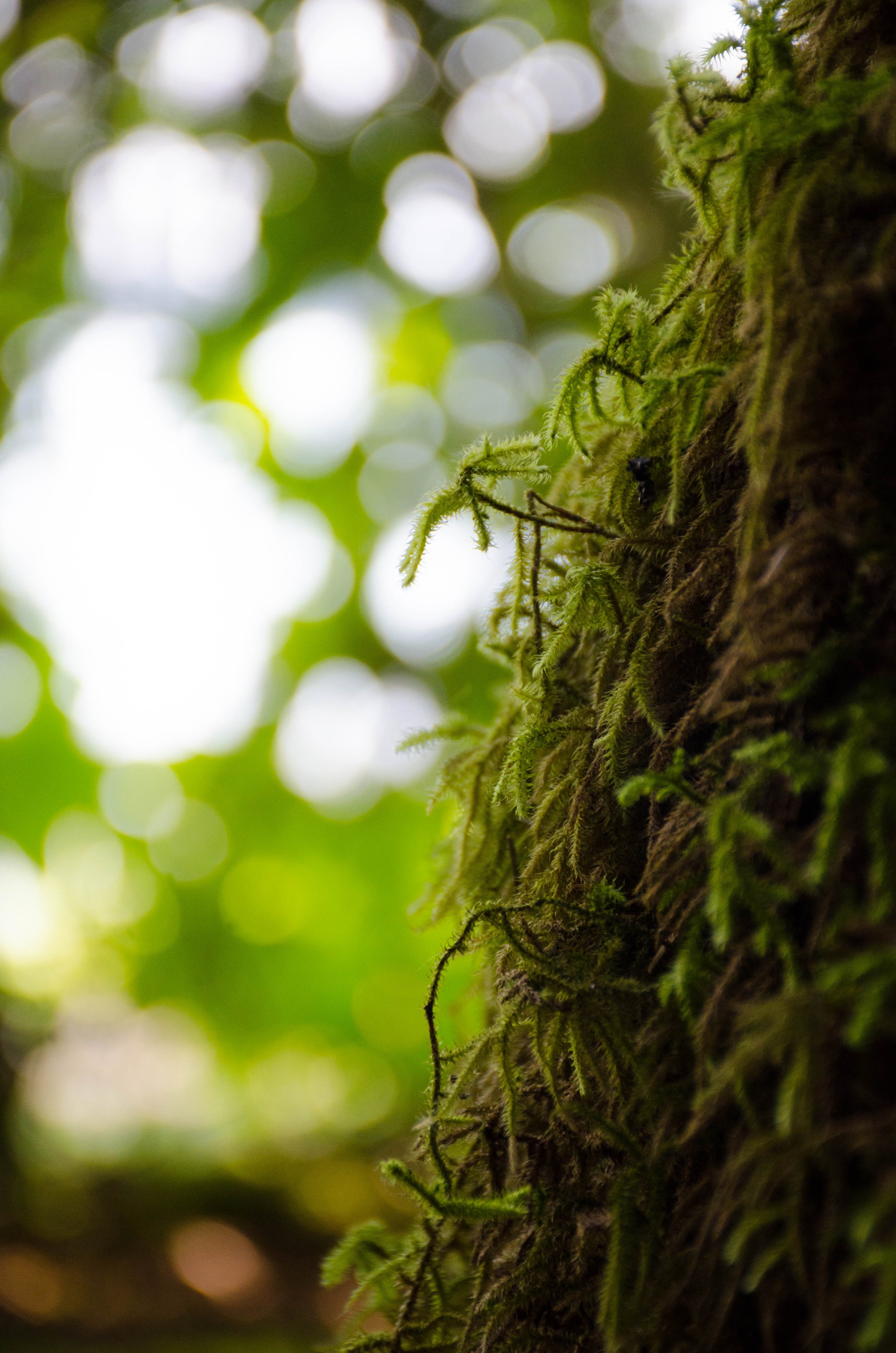
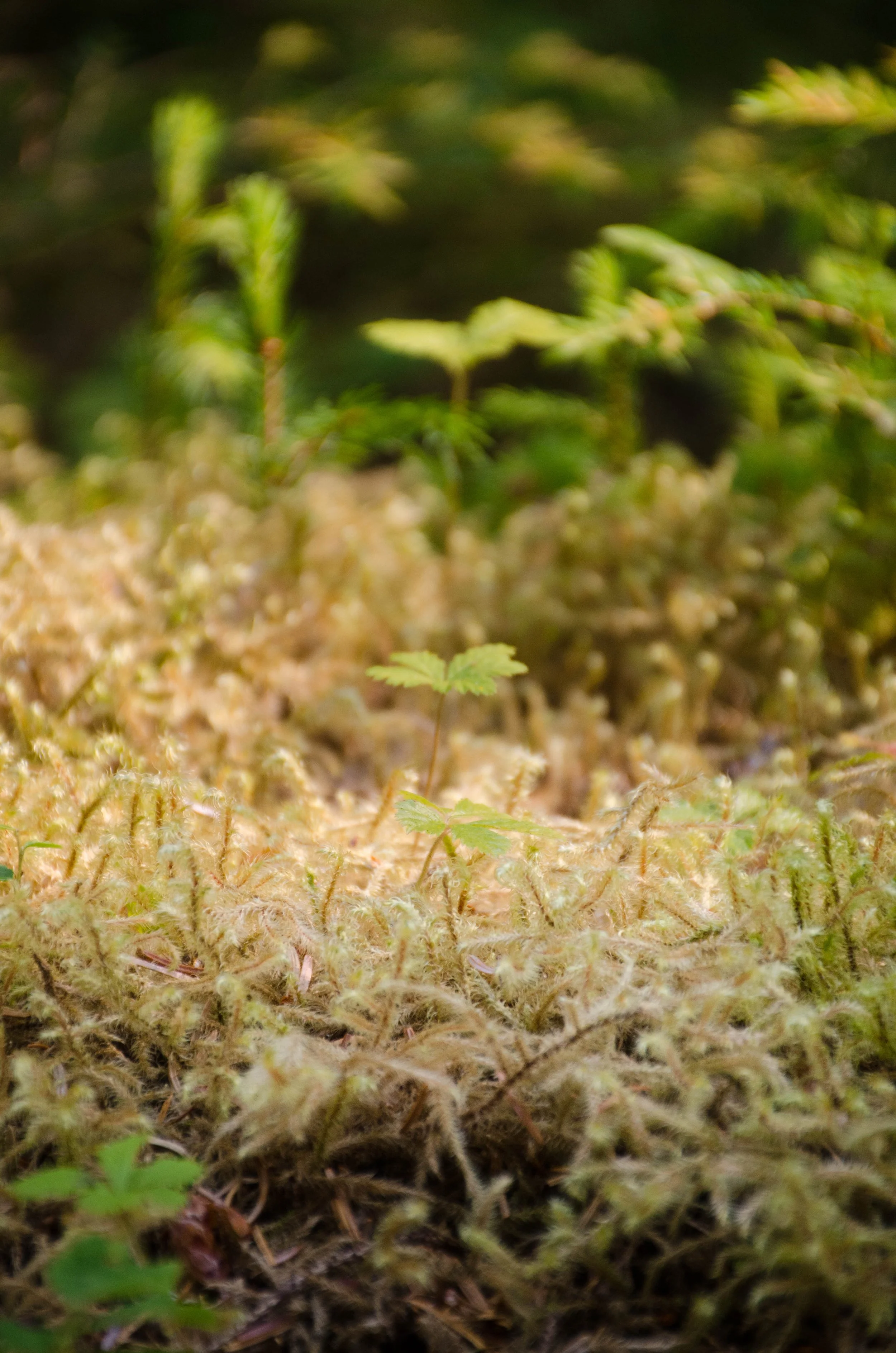
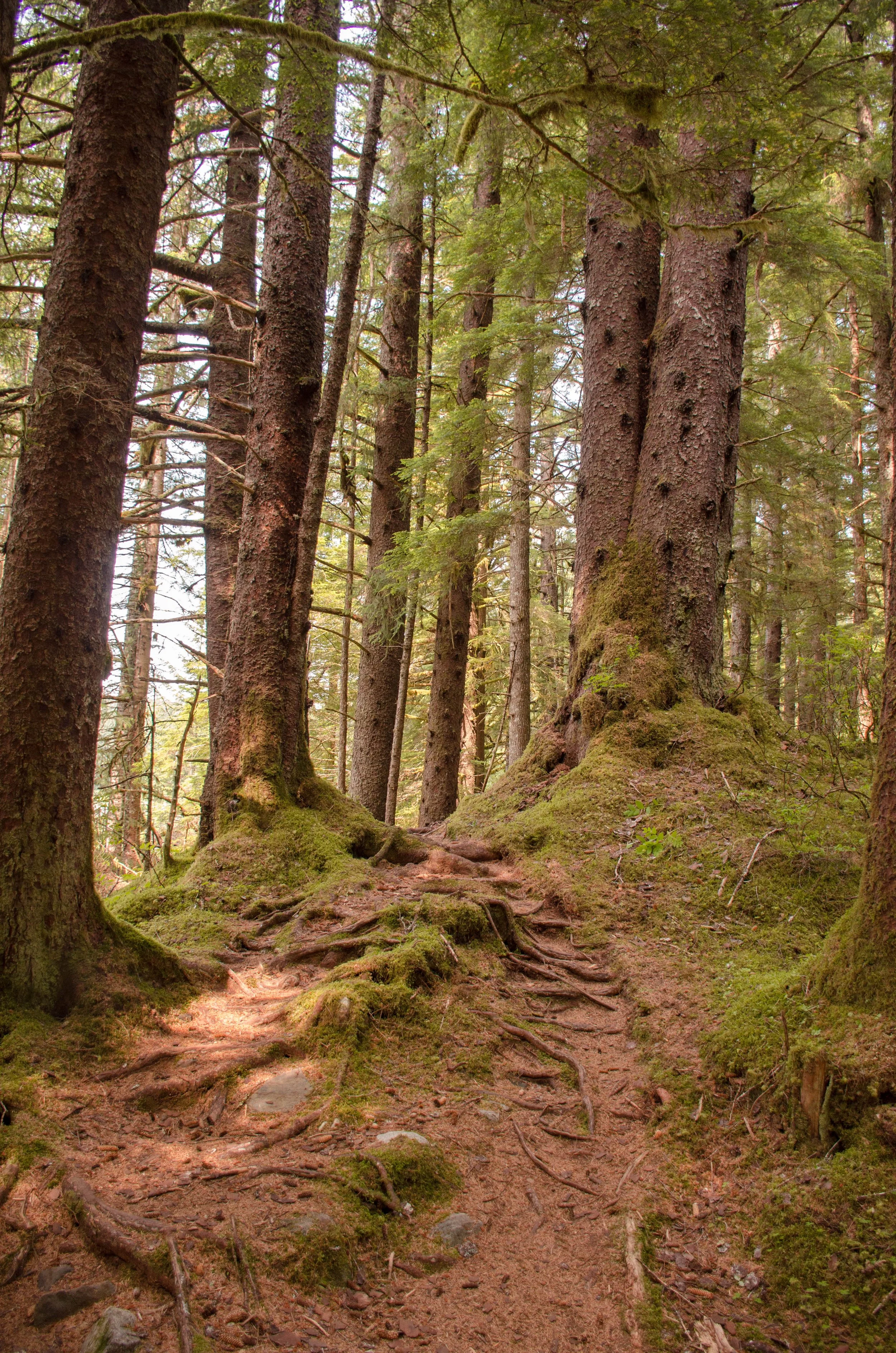
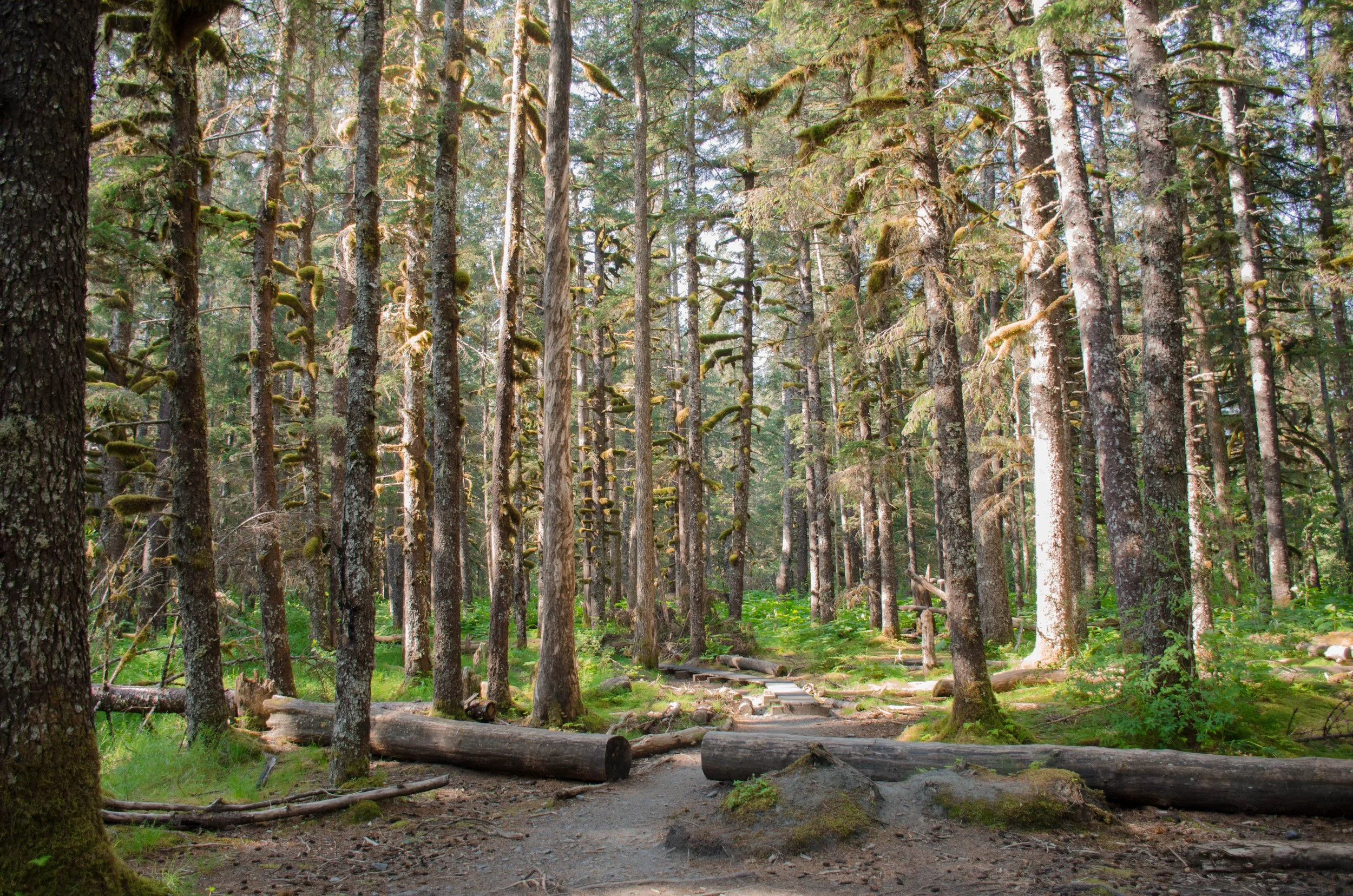
Once we arrived to the campground and pitched our tent, we started to feel giddy that we were actually there. The campground is located in the middle of an incredibly lush old growth coastal forest, directly in sight of the bay. Every night, we were treated to the sound of humpback whales’ loud exhalations and the crack of their fins slapping the surface of the water as they fed beneath the midnight sun. We spent three days here, visiting to the lodge for coffees in the morning, taking the Glacier Bay Boat Tour, and spending hours talking to representatives in Xunaa Shuká Hít, the Huna Tribal House. After many years of ruptured trust, forced displacement, and land theft, the relationship and respect that has been built between the Hoonah Indian Association and the National Park Service to bring the Huna Tribal House into existence in 2016 was one that made a deep impression on us. It was certainly not a linear process, but one that made our experience at Glacier Bay so much deeper and more impactful.
This was our final stop on our three-week trip to Alaska, and we were feeling both the sorrow of it coming to an end as well as the satisfaction and awe of a trip that had included so many beautiful experiences. We left Glacier Bay with full spirits and a sense of calm that I think only comes after spending a few days with these slow, quiet trees.
Until next time, Alaska.
Pictured below:
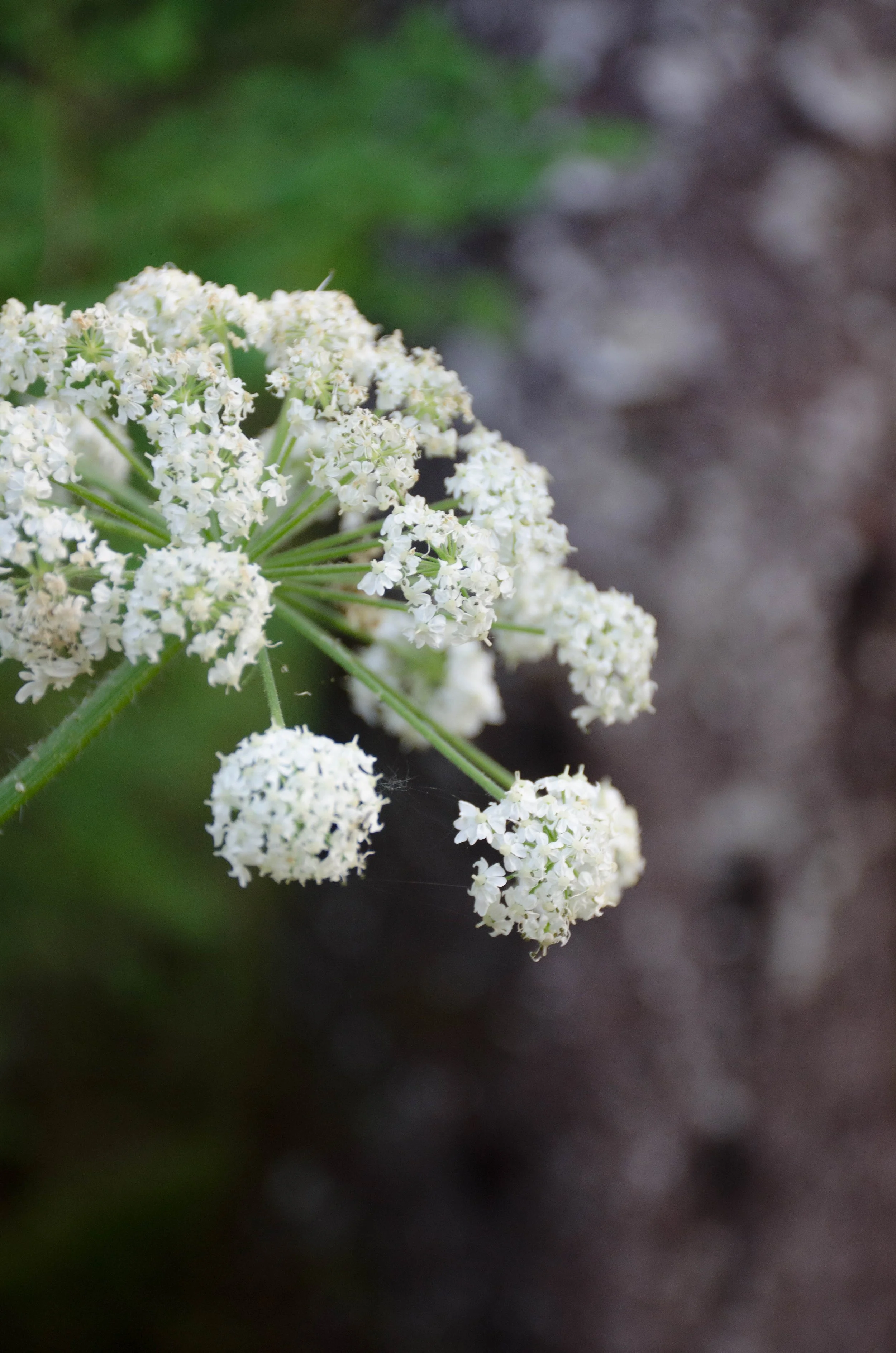
Old growth forest leading to Bartlett Cove Campground, situated near the Glacier Bay Lodge and visitor center.
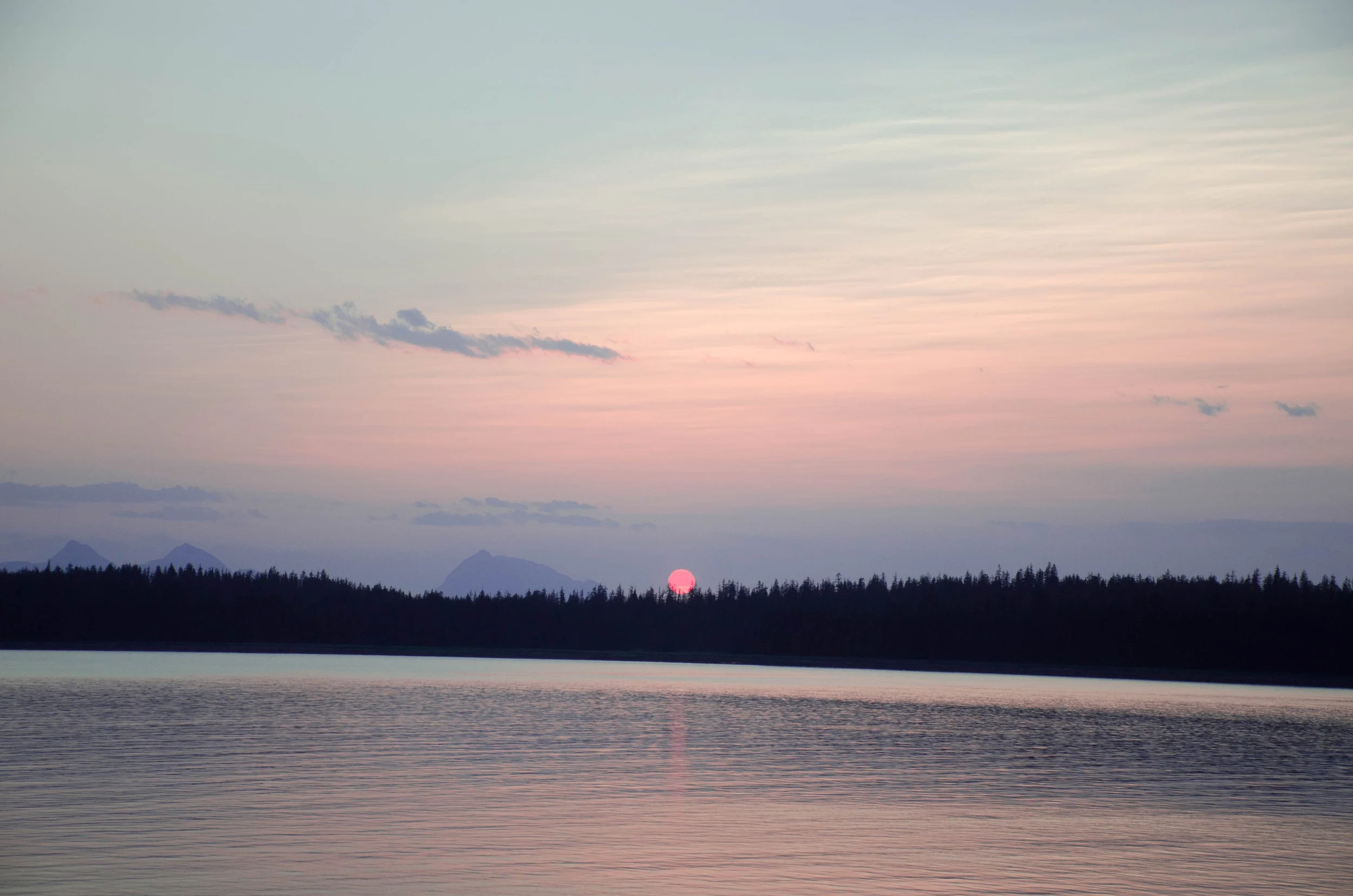
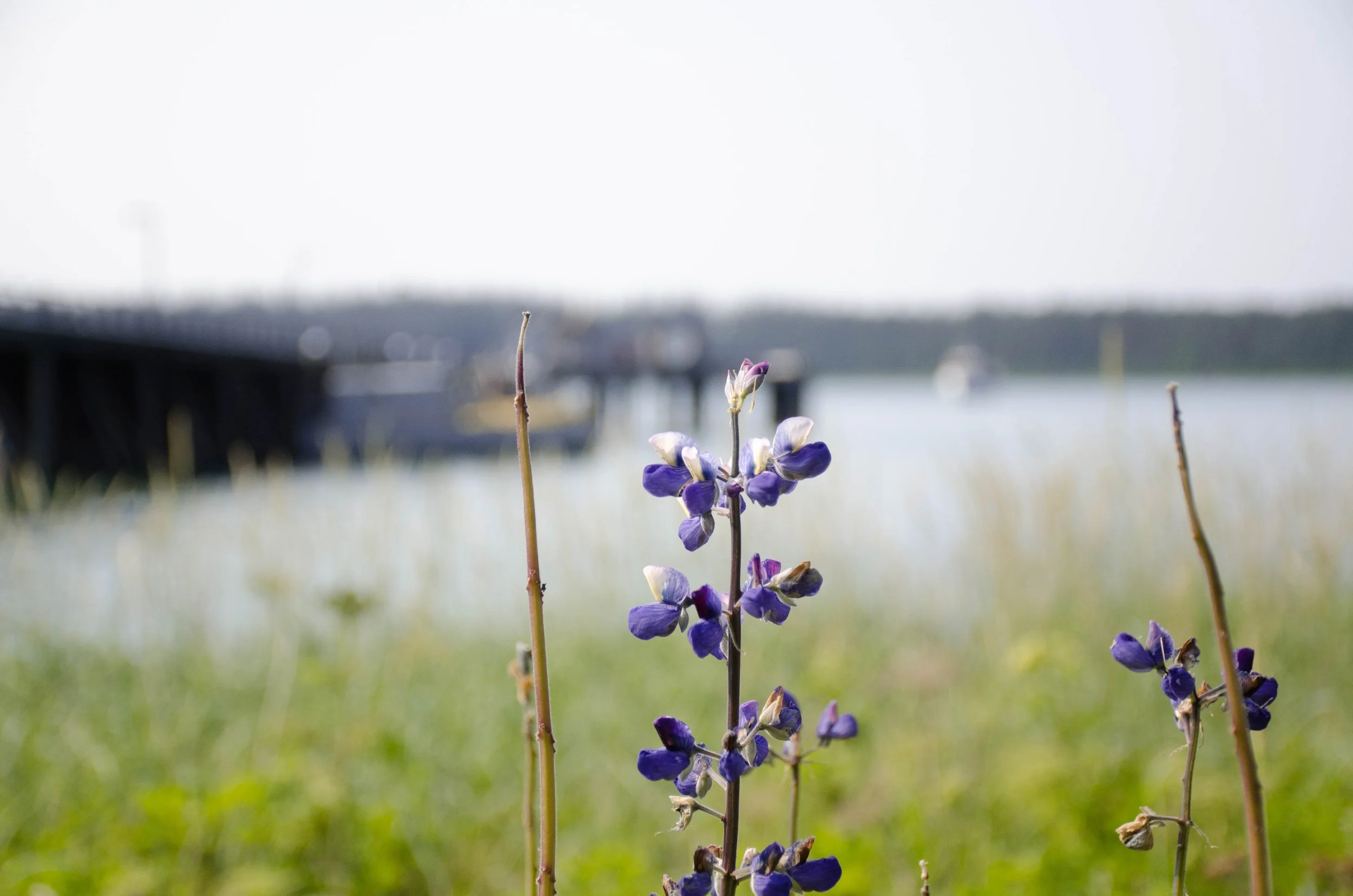
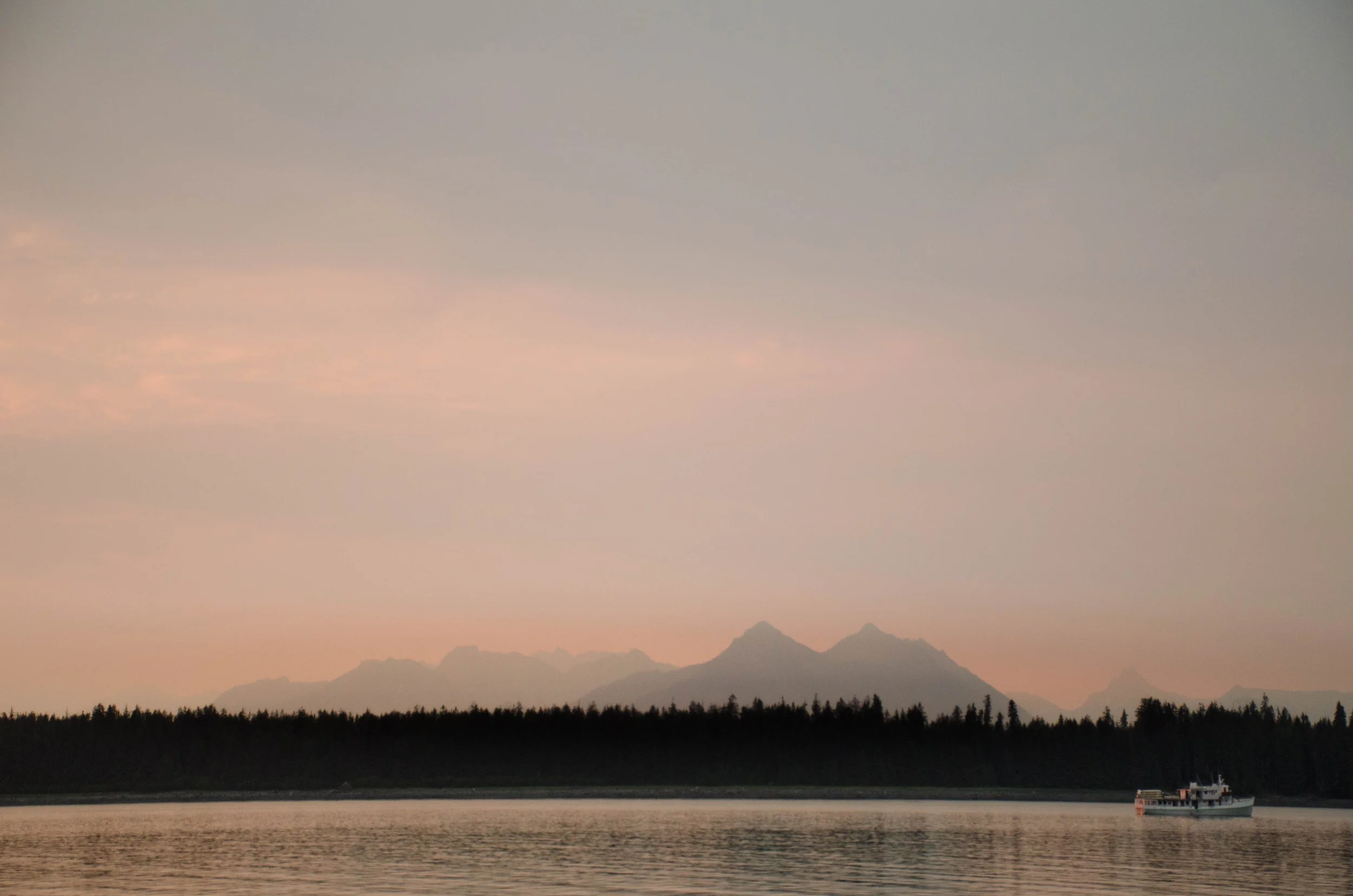
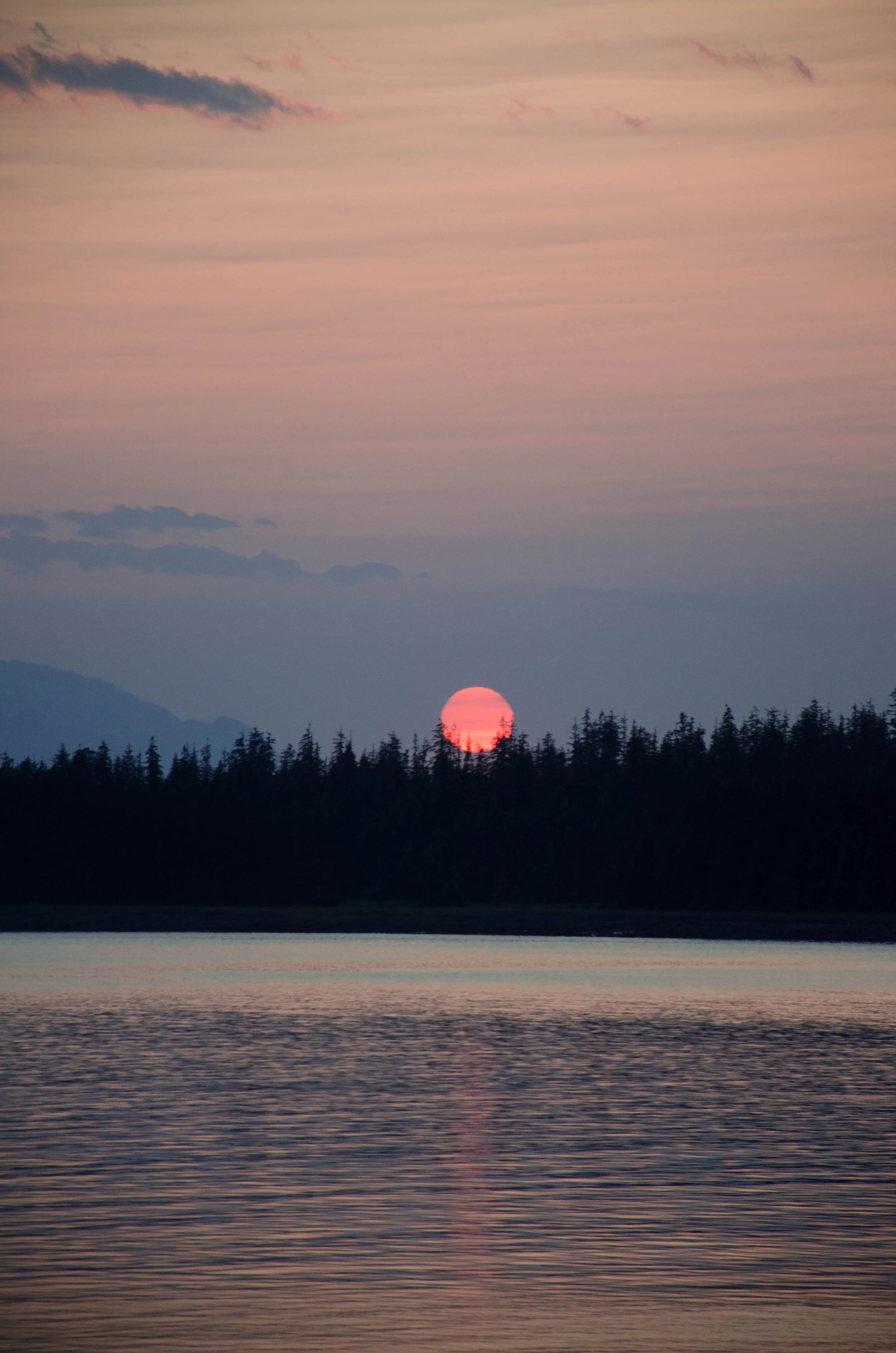
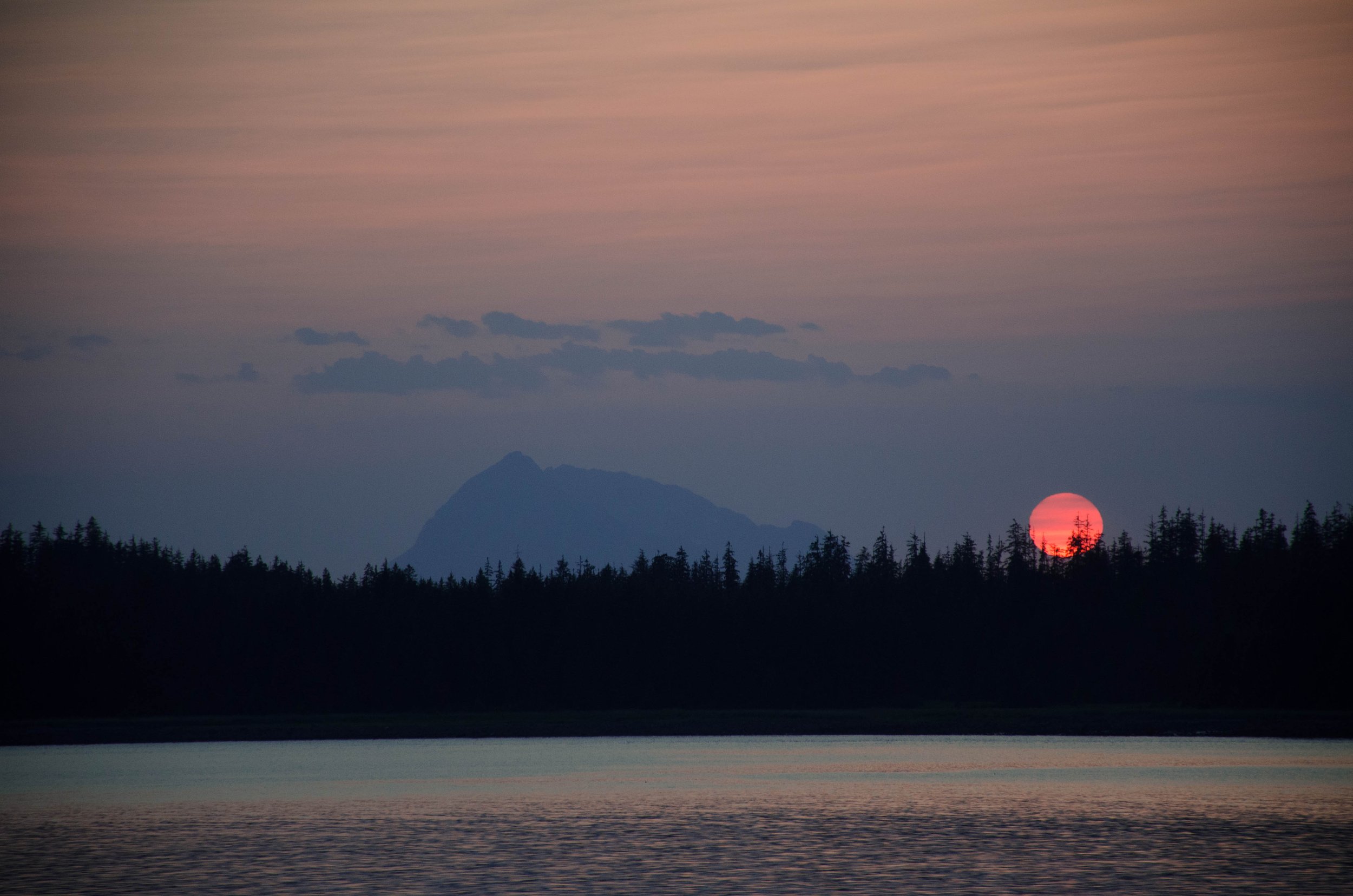
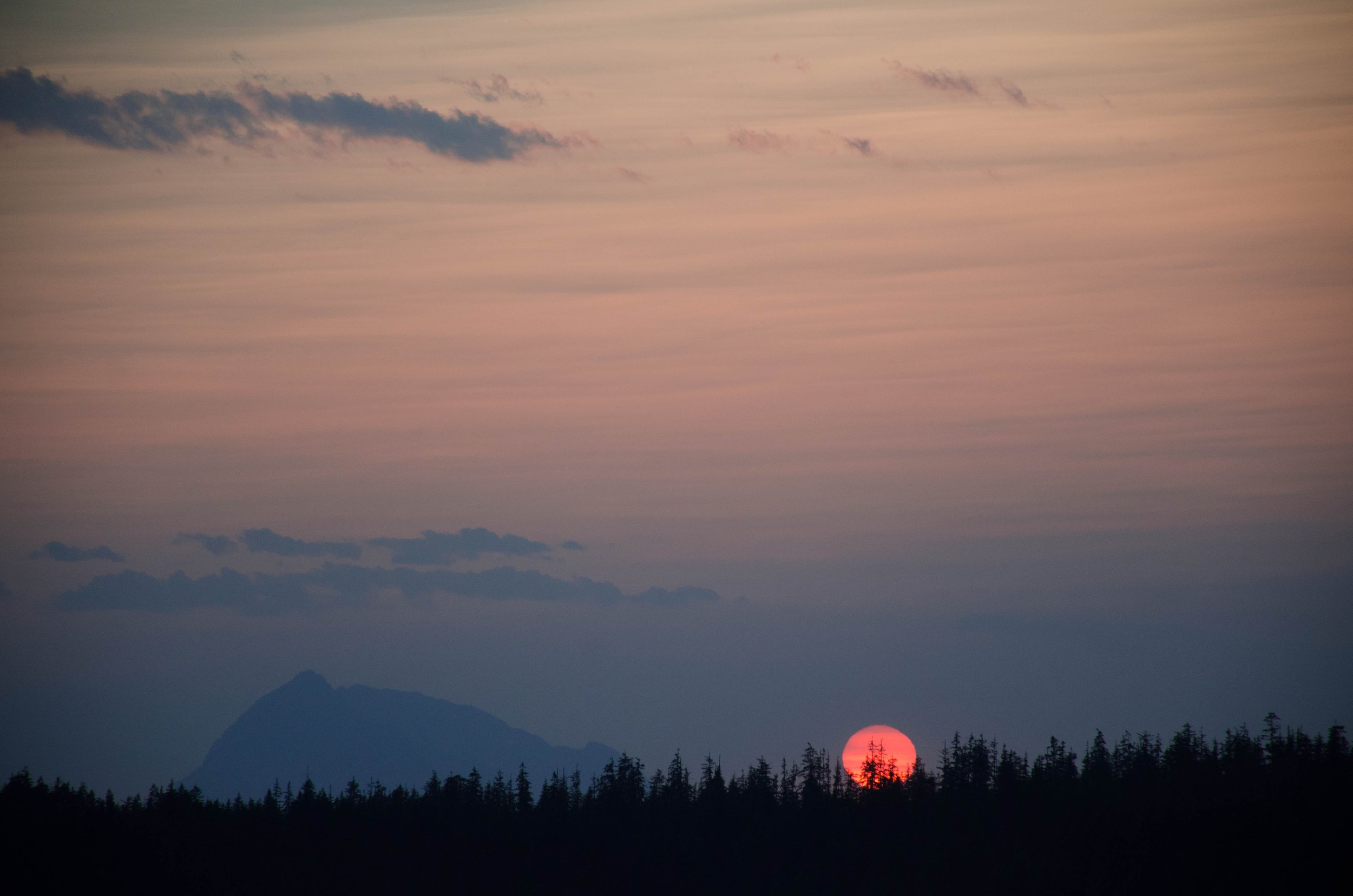
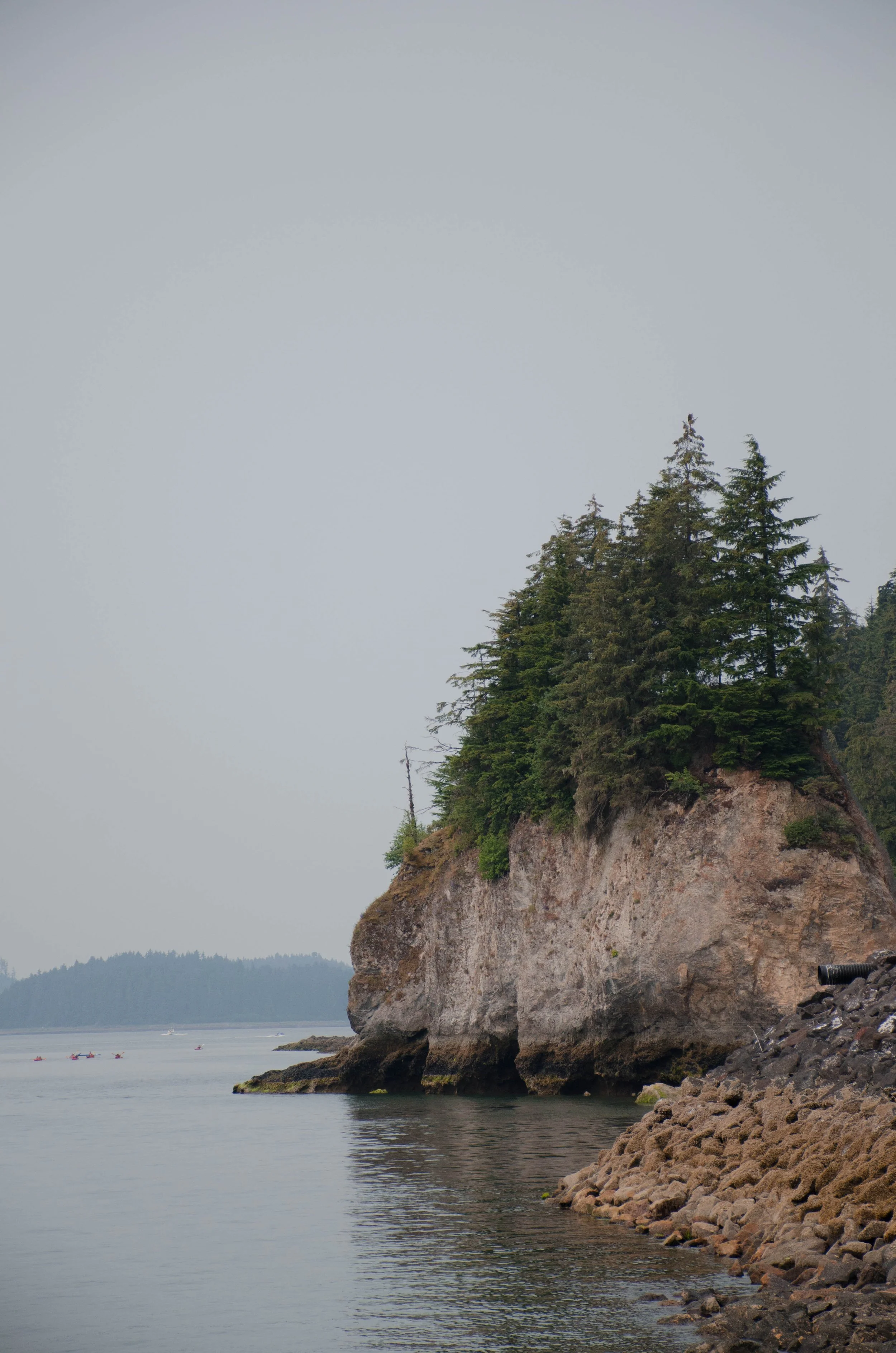
Sunset over Bartlett Cove.
Kenai Fjords
Park 13 | July 2019
Part + Park 3 (of 4) on our epic adventure to Alaska.
We parted way with our friends in Anchorage, grateful for the fun memories and connections that the first half of the trip had held. After an evening in Palmer to visit my aunt and cousin, we drove south toward the City of Seward, which acts as a gateway of sorts to Kenai Fjords National Park.
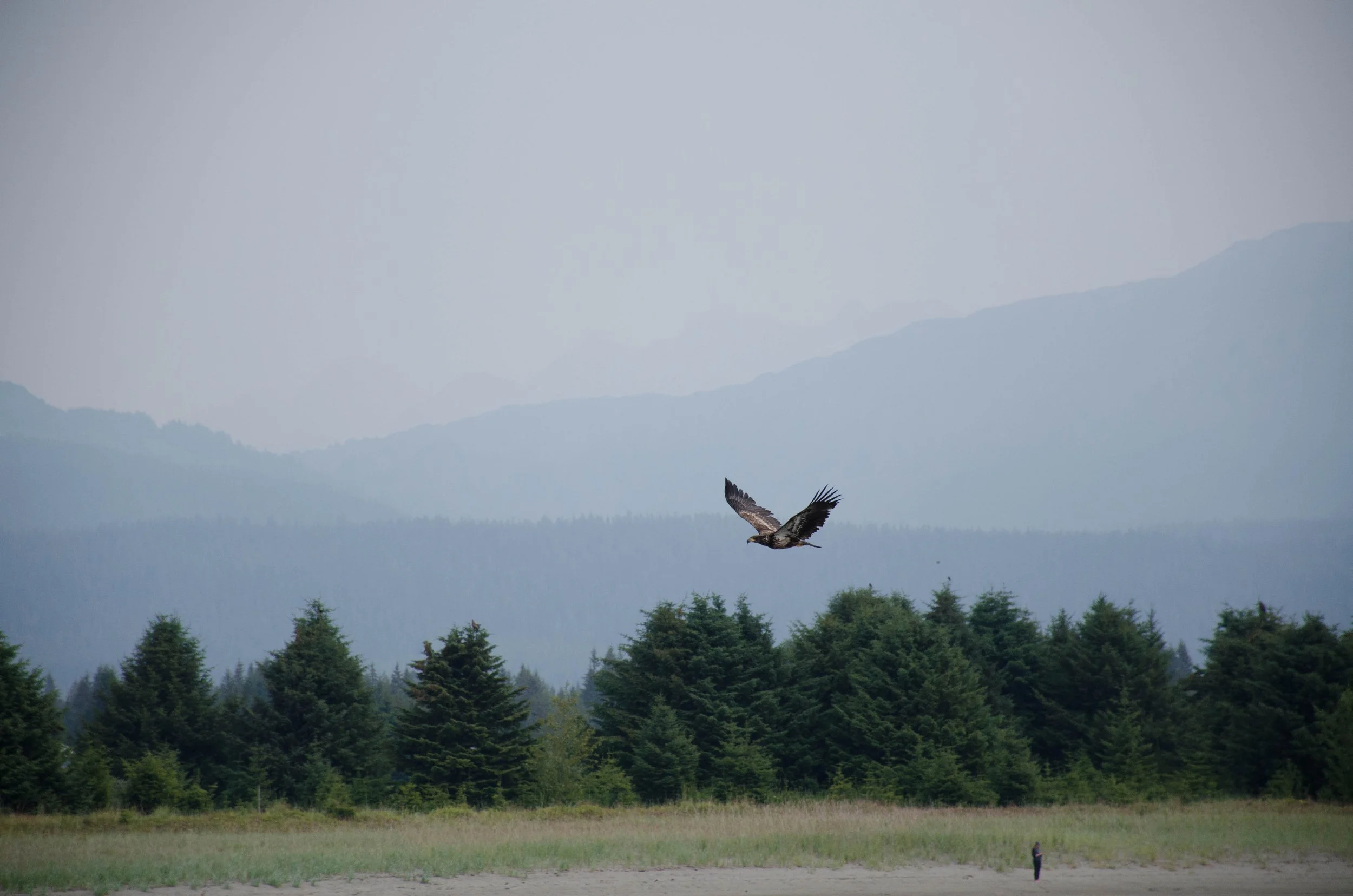
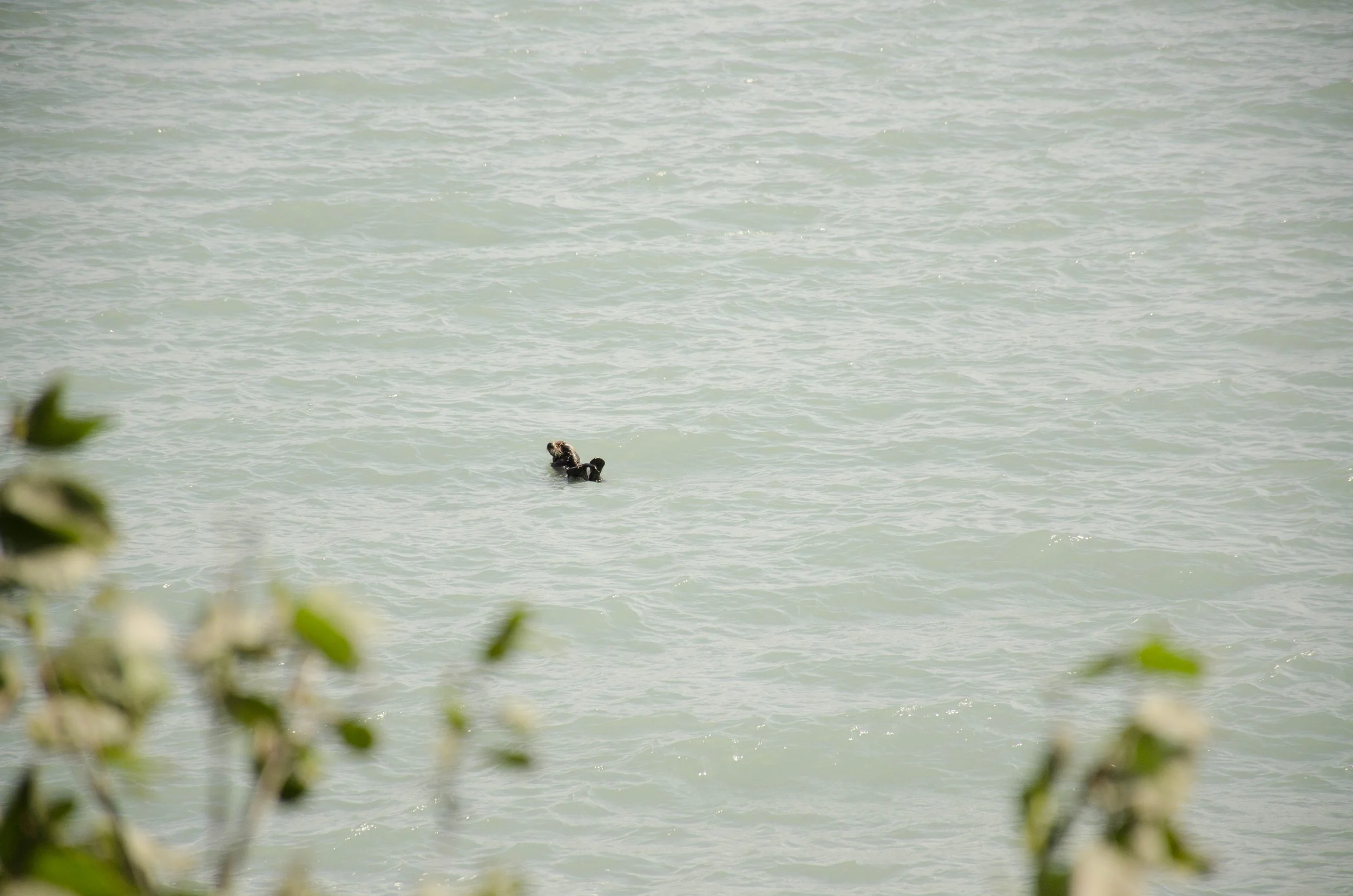
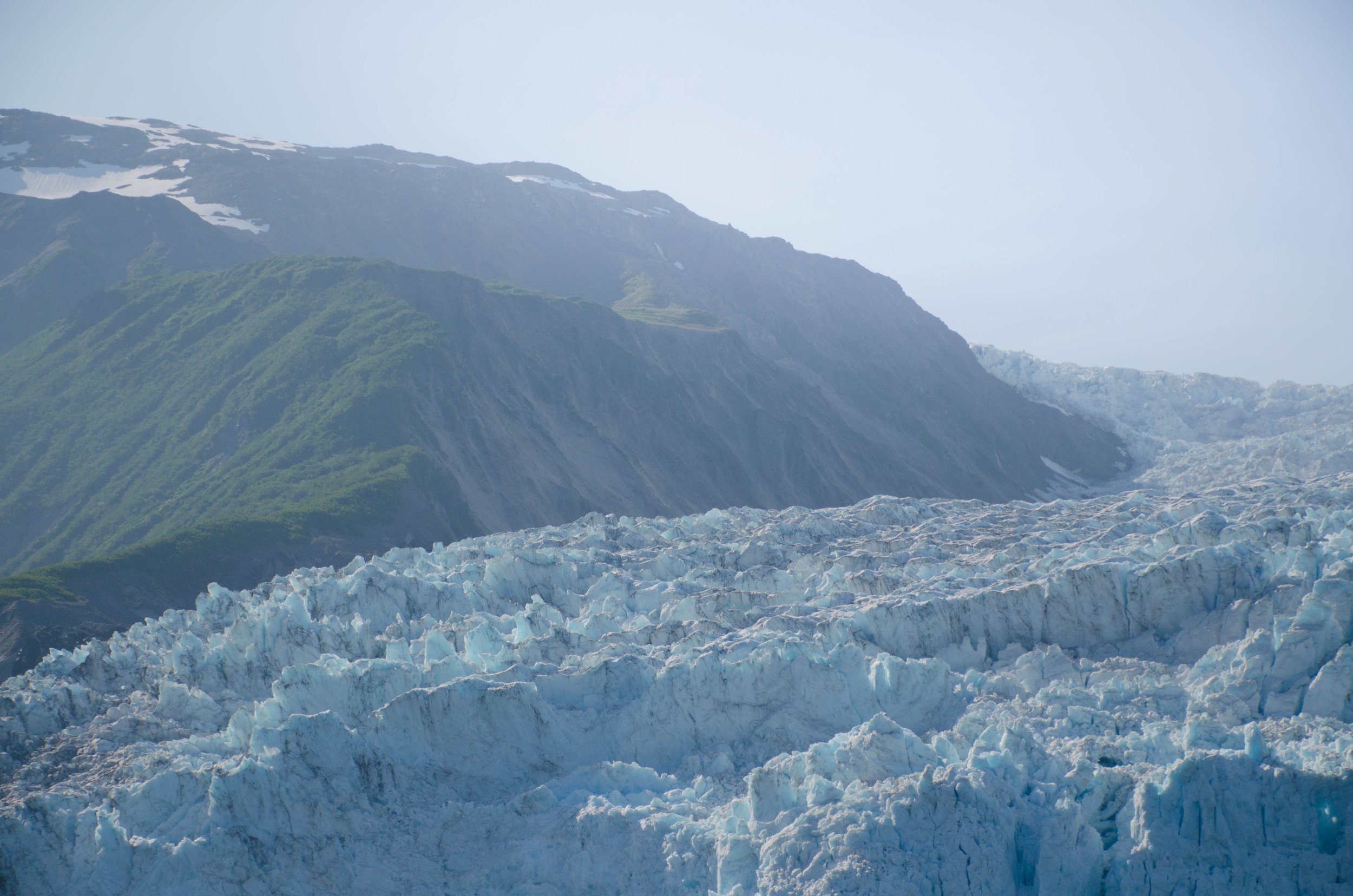
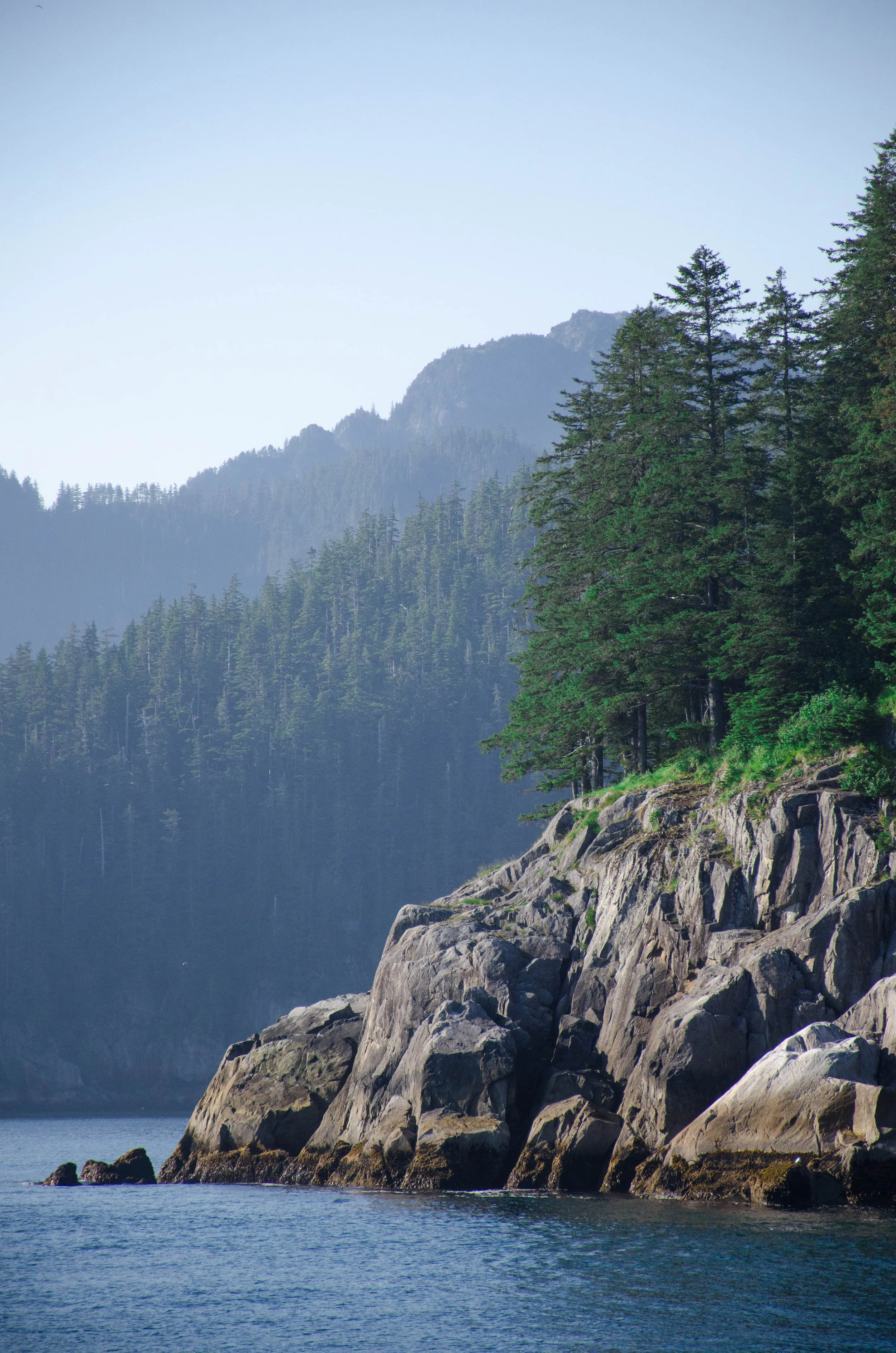
Kenai Fjords was one of the places where my jaw was constantly dropping. It’s a true mountains-meet-sea ecotone: Dramatic coastlines carved by ancient glacial ice slope down toward the deep, abundant waters of Resurrection Bay. Everything was green and blue. Sea otters were like songbirds. We found puffins and sea lions and seals and porpoises and bald eagles.
We spent half of our first day hiking around the Exit Glacier area and considered camping there for the night, even getting so far as to pitch our tent… but after about twenty minutes of being eaten alive by massive mosquitos, we gave up and found camping closer to Seward that was less buggy. We grabbed coffees at Resurrect Art Coffee House almost every day and ate gelato and screamed our lungs out watching a Women’s World Cup soccer match in a local sports bar alongside a lively crowd of other deeply invested spectators. We observed one of the most peculiar Fourth of July traditions I’ve ever been witness to: The Mount Marathon Race, often called “the most grueling 5K on the planet.”
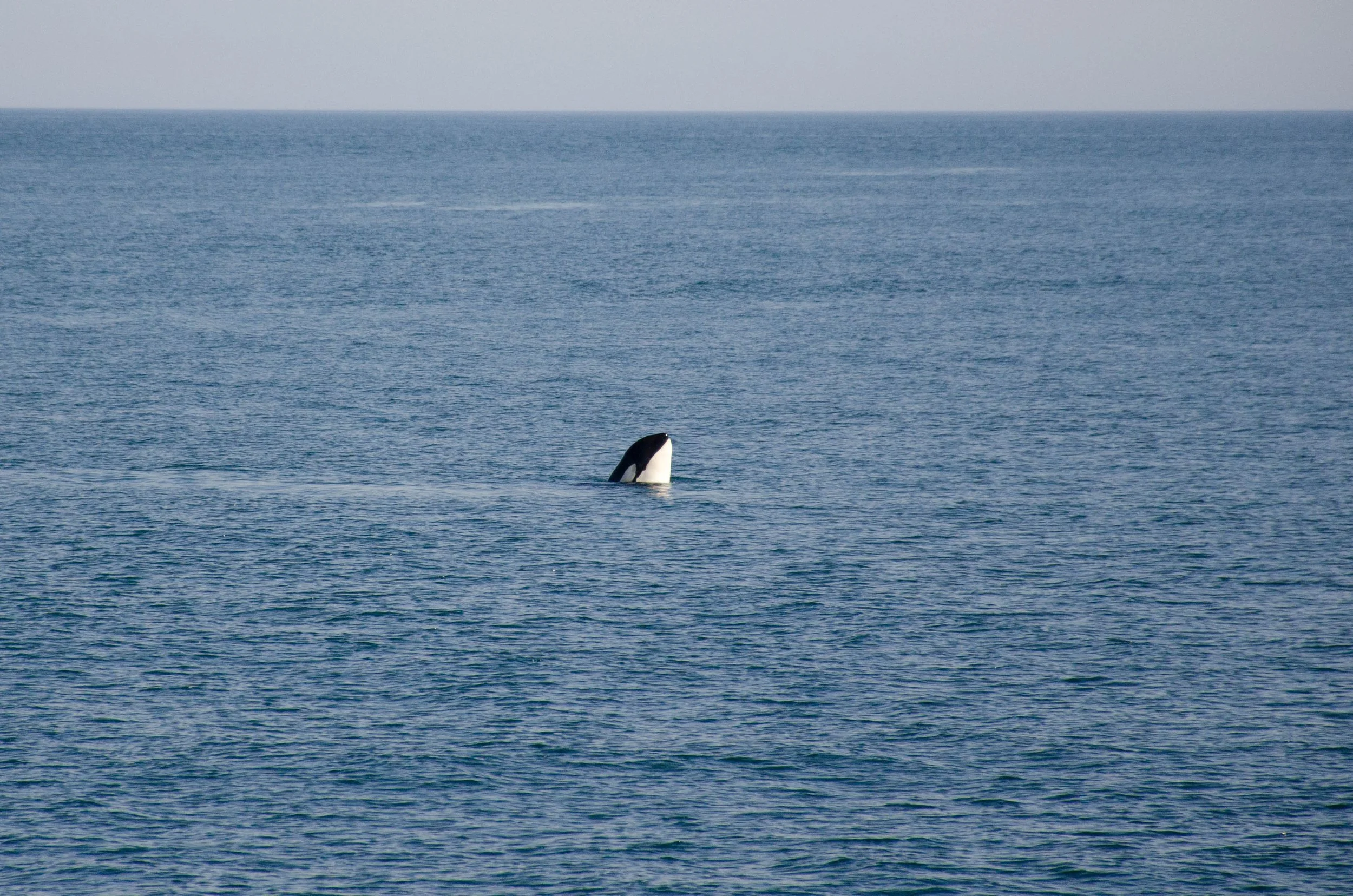
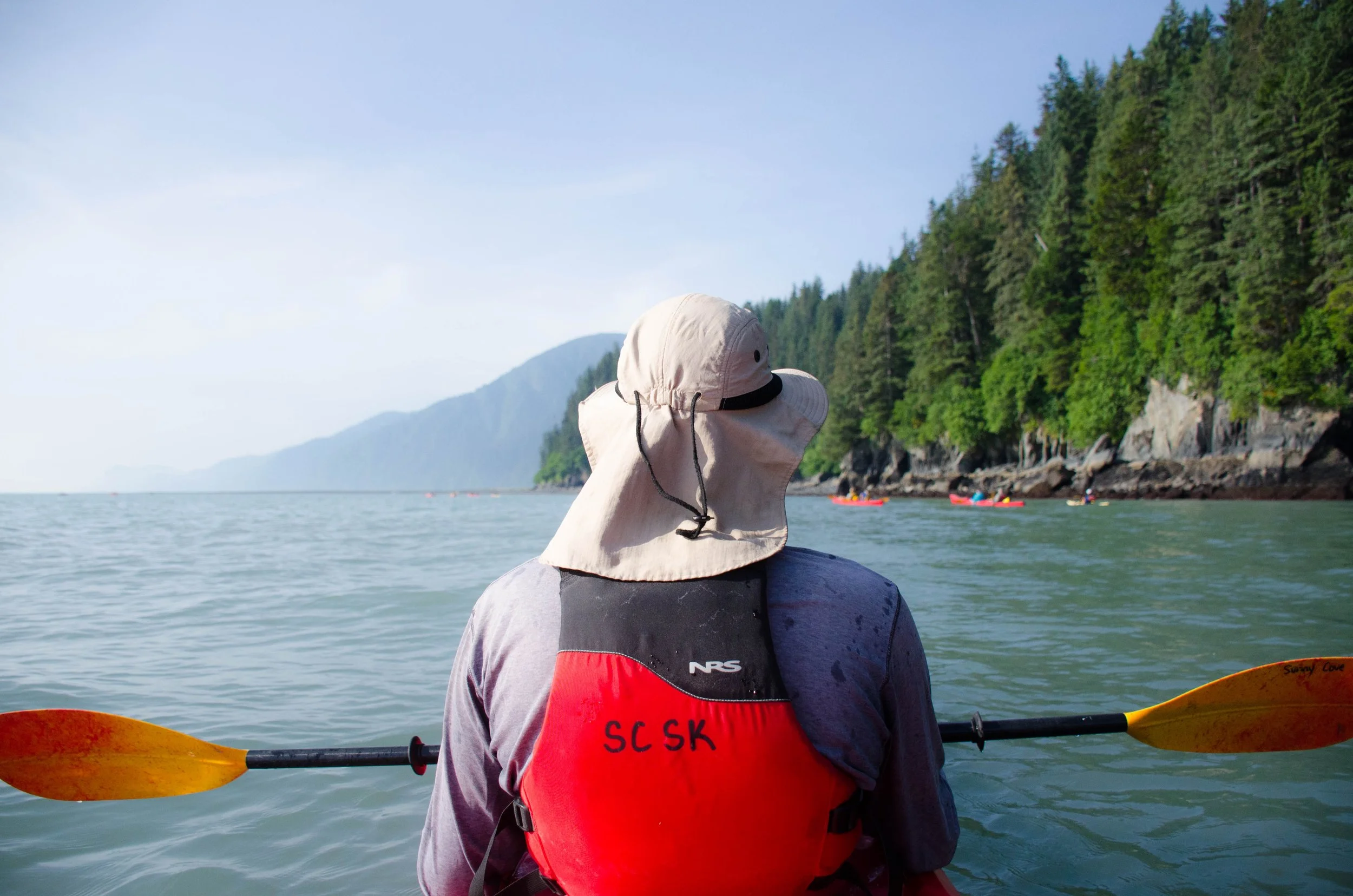
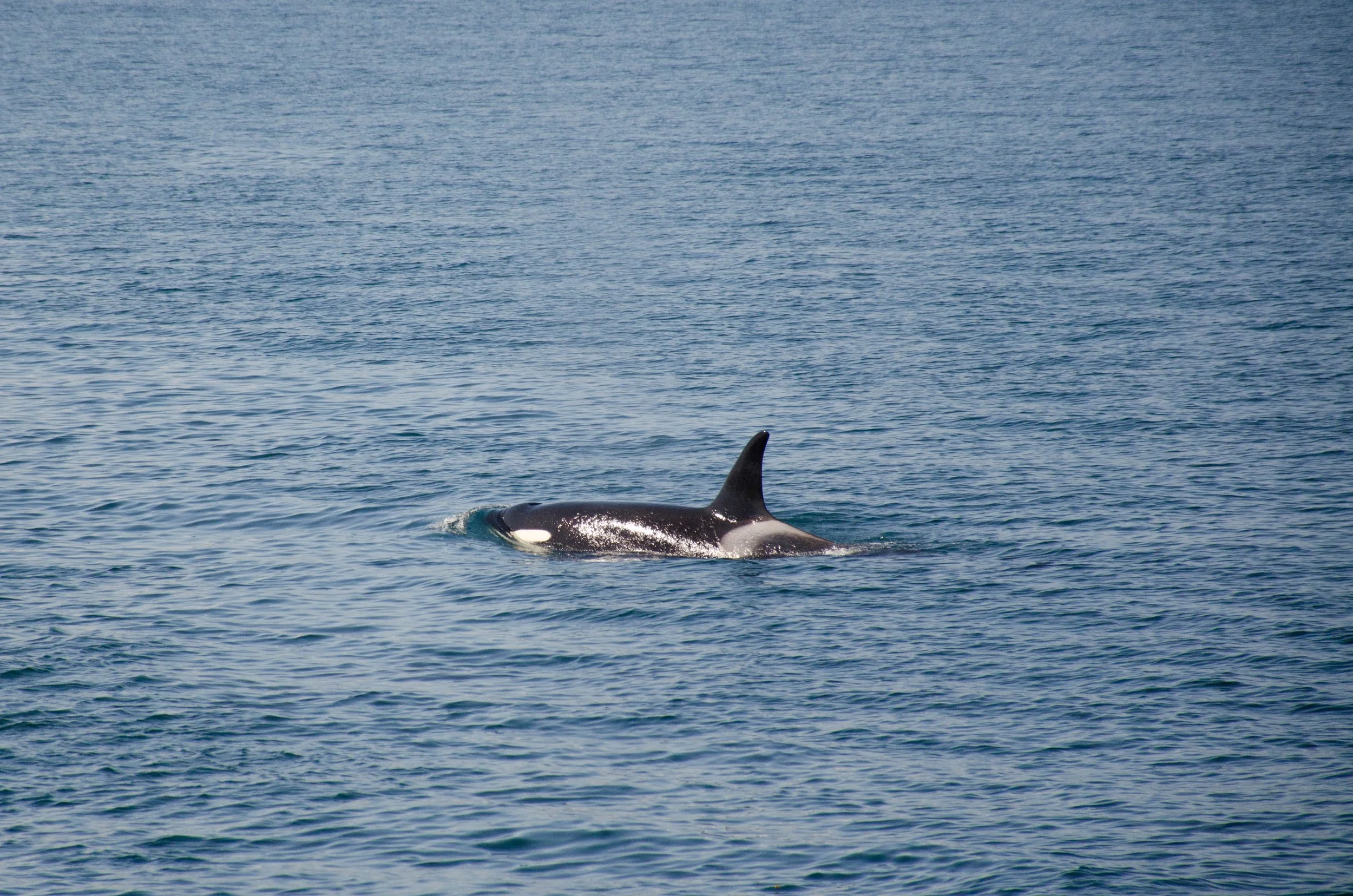
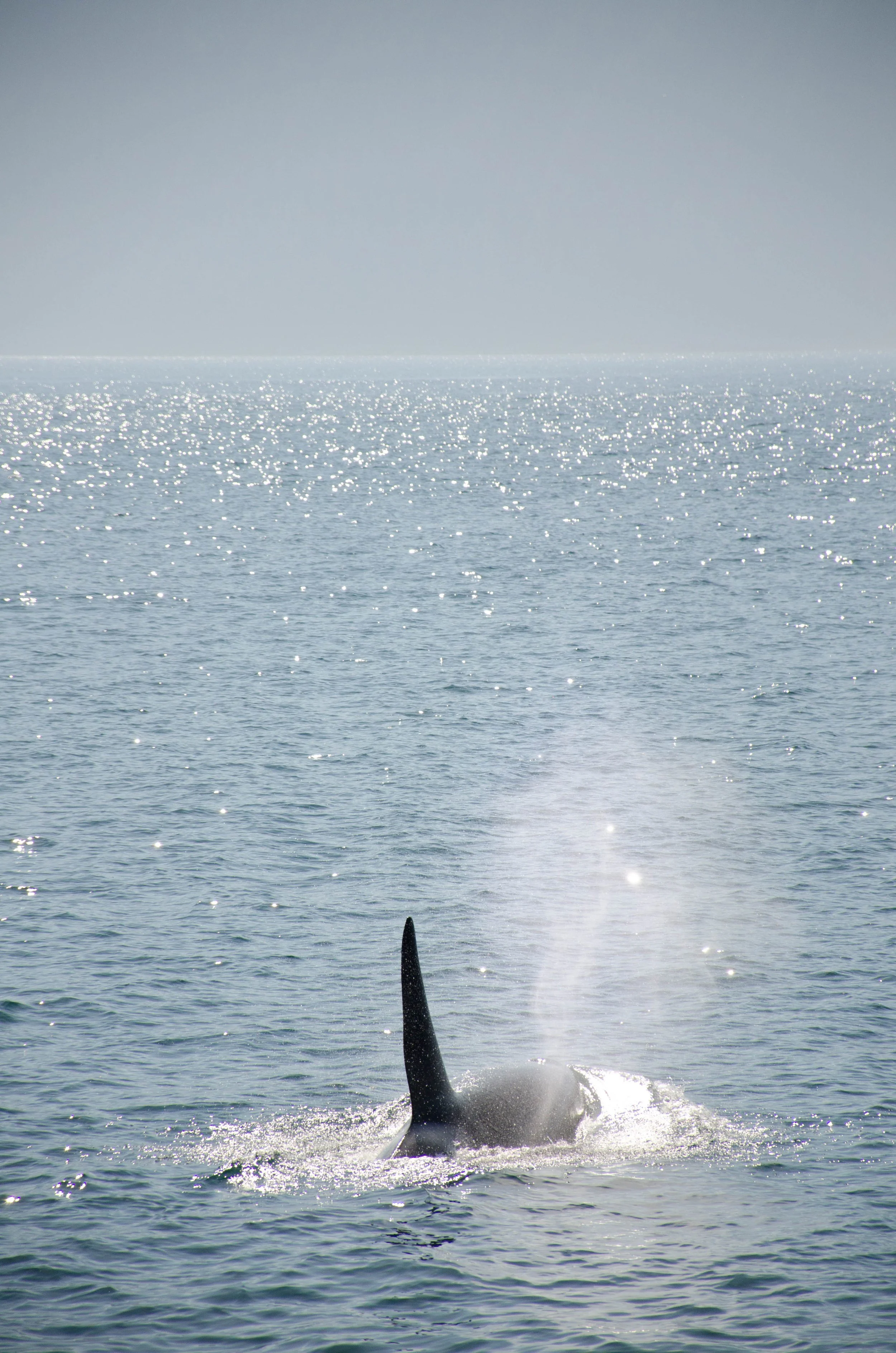
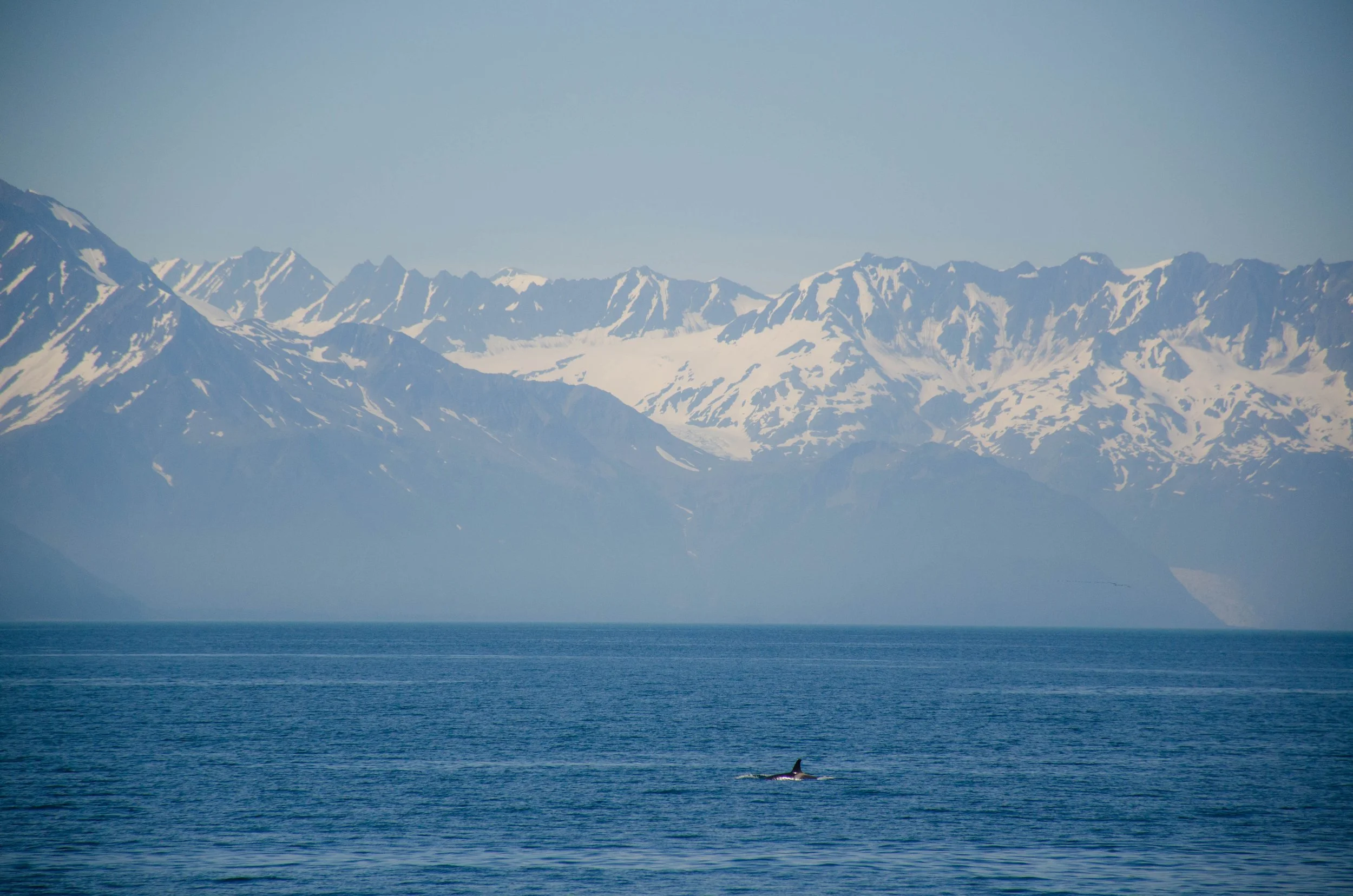
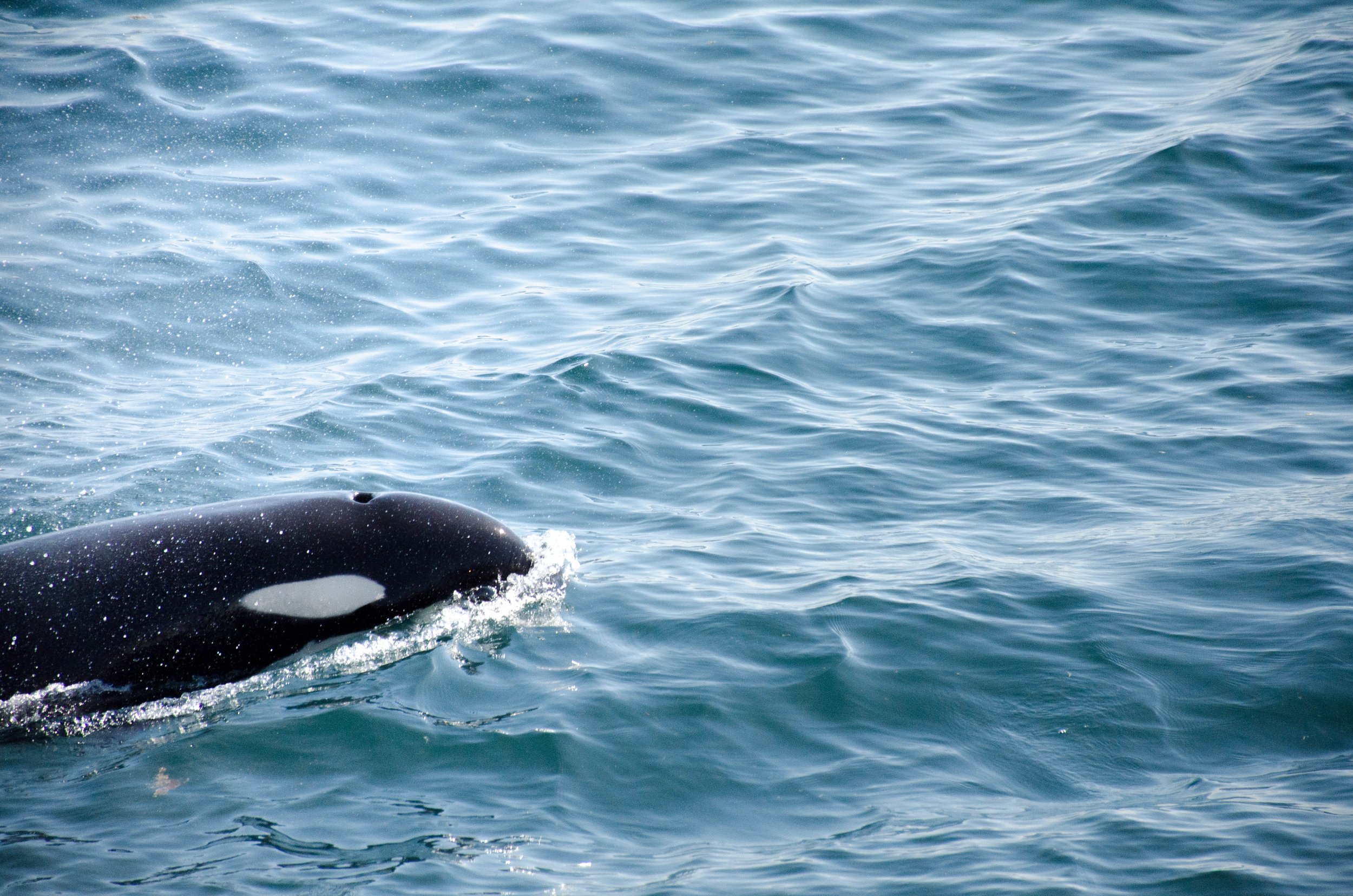
On our last full day, we spent the morning sea kayaking in the bay followed by an evening boat tour of the fjords. This particular boat tour is the reason why this park will perhaps always be one of my favorites, as it led to one of the peak moments of my life: Coming upon a pod of orcas. The moment the captain came on the boat speaker and said, “Well folks, I just saw a dorsal fin… we’re very lucky tonight,” I immediately started crying happy tears as I ran to the edge of the exterior deck and didn’t really stop after that. The boat puttered to a complete stop and silence fell over us all, broken only by the sound of the orcas breathing each time they broke the surface of the water, the wind, and our own quiet, awestruck commentary. We spent twenty magical minutes with this pod of seven or eight individuals (including an adolescent!) swimming around and even beneath the boat. They were curious, elegant, fierce, noble, playful, and mystical. I have no question in my mind as to why they have so often been considered sacred creatures. Just being in their presence caused every part of my inner child to beam.
We packed up our campsite the next morning to head back to Anchorage, return the rental car, and fly to Juneau for the final leg of our journey. We left Kenai Fjords with full hearts.
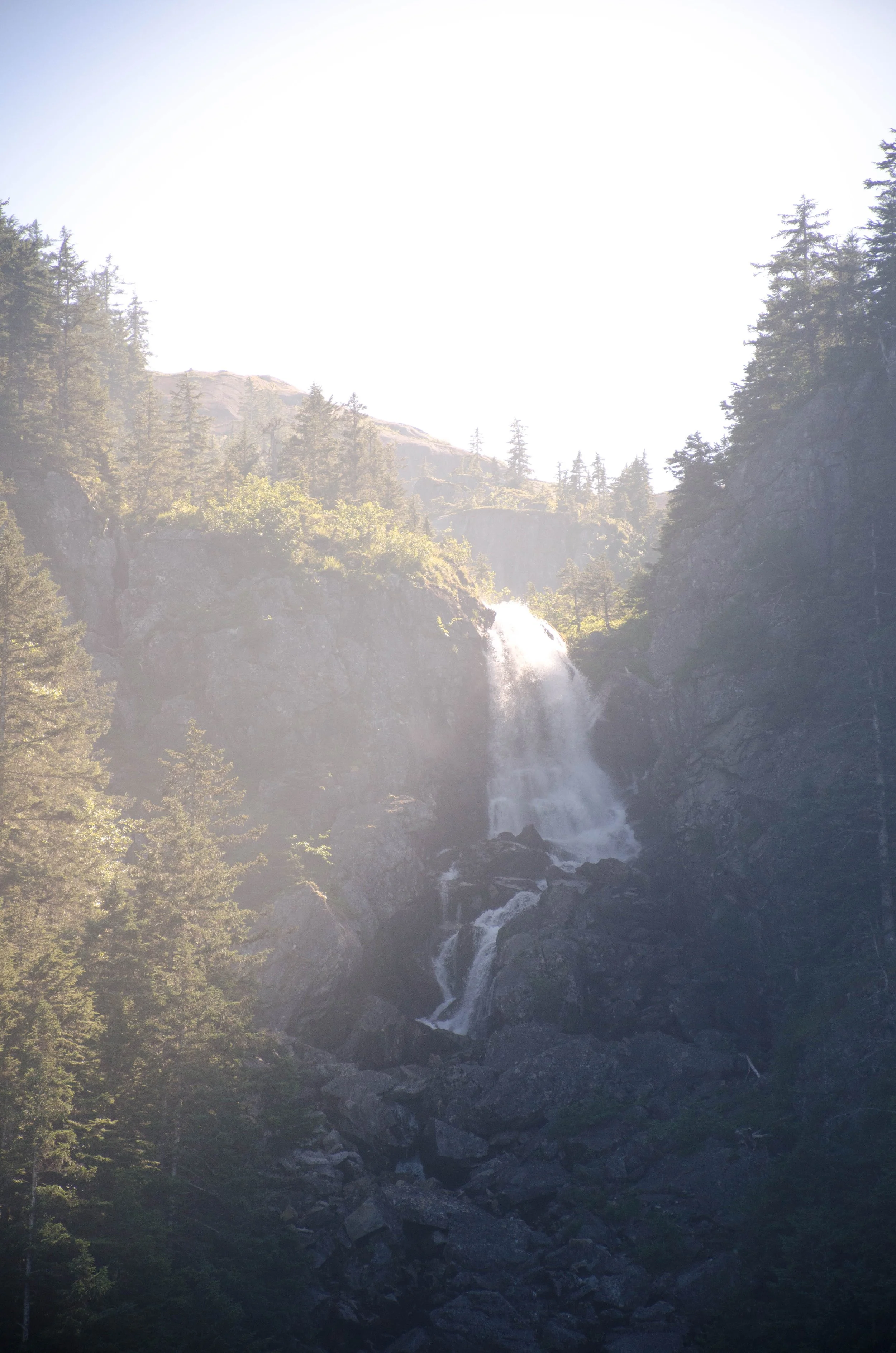
Pictured below:
Sea otters were plentiful near our campground outside of Seward.
Kayaking on Resurrection Bay.
Evening excursion to spot sea life — we were graced with a pod of orcas and I will never be the same.
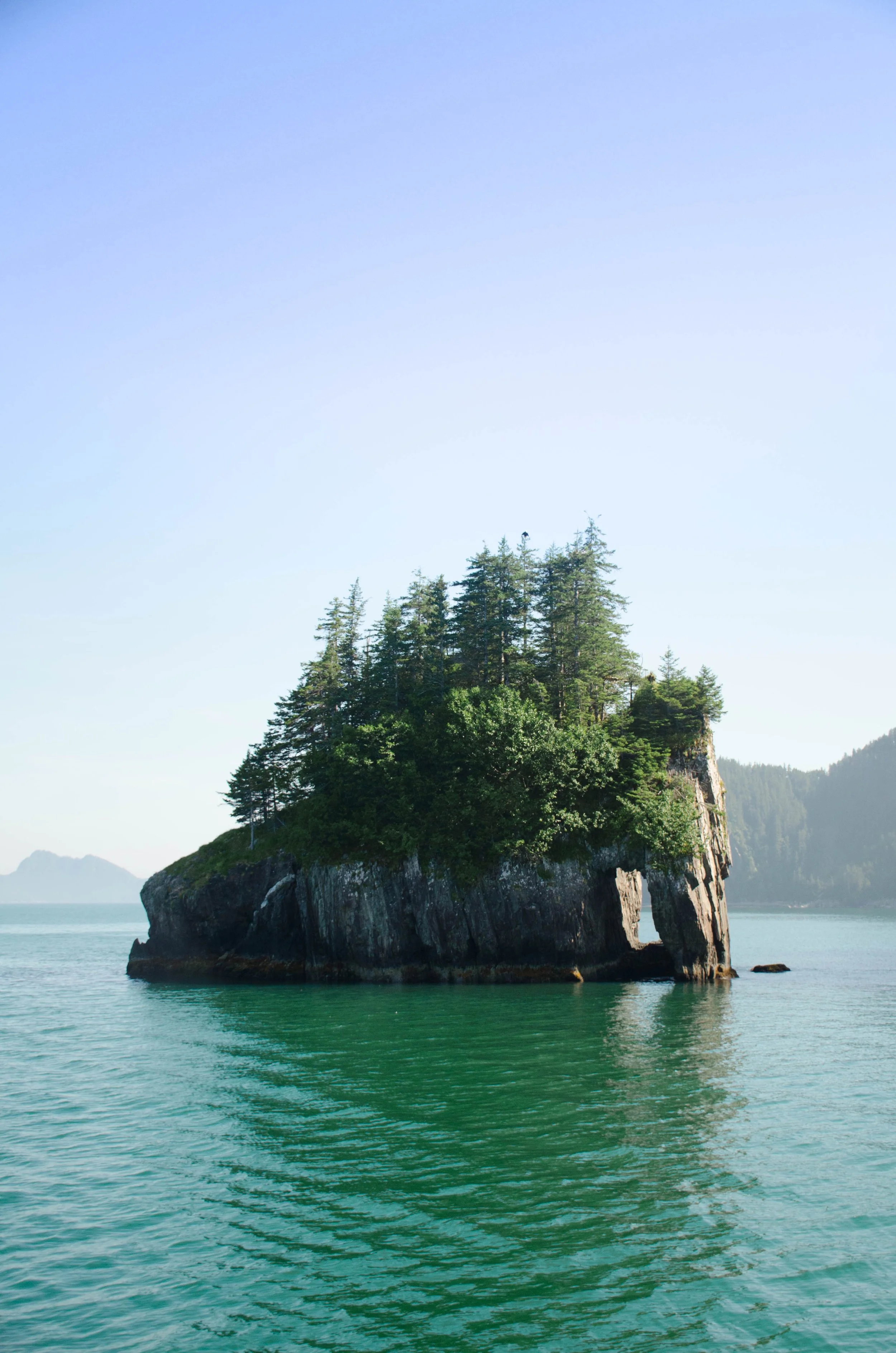
Elephant Rock.
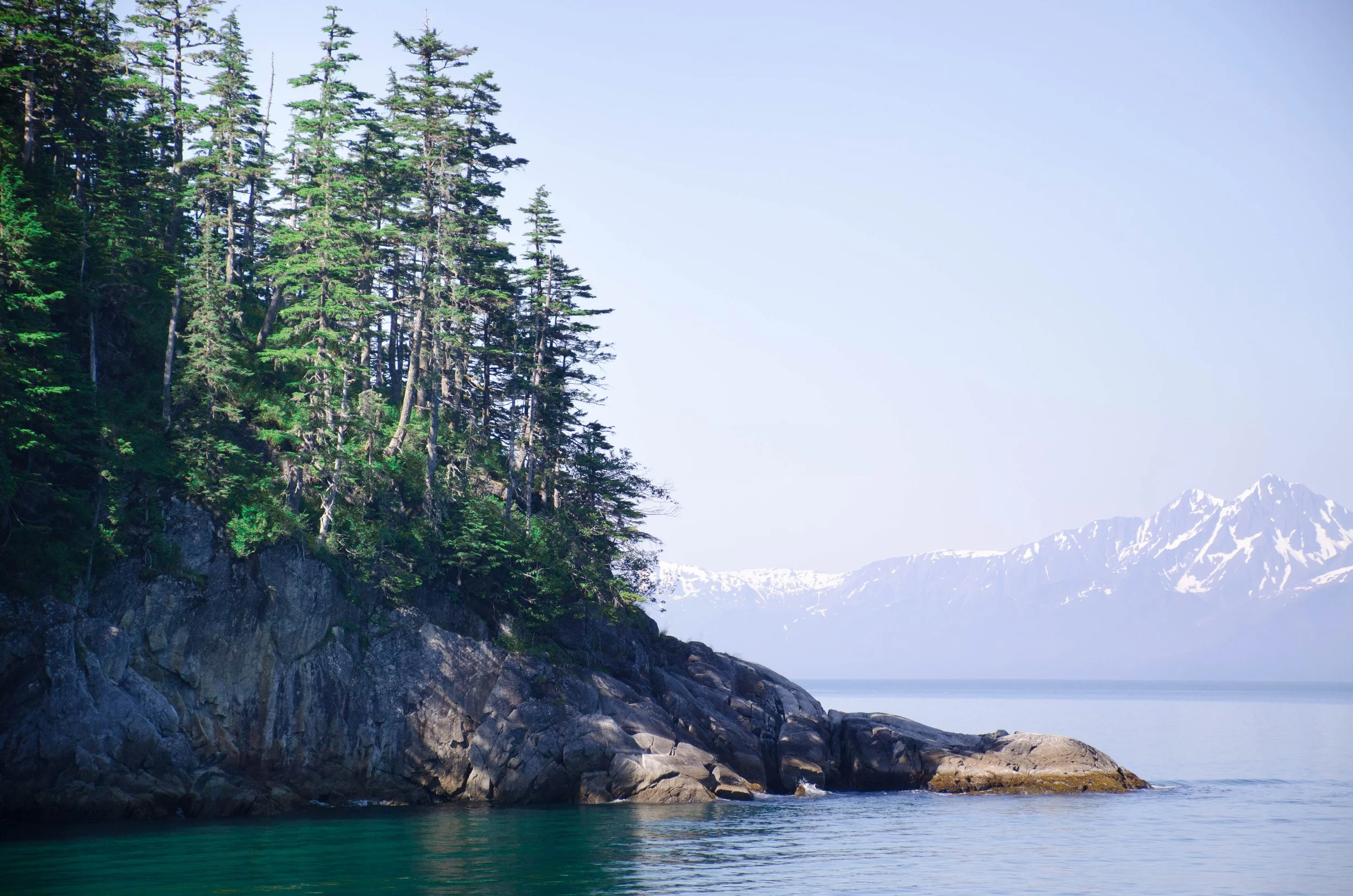
Katmai
Park 12 | June 2019
Part + Park 2 (of 4) on our epic adventure to Alaska.
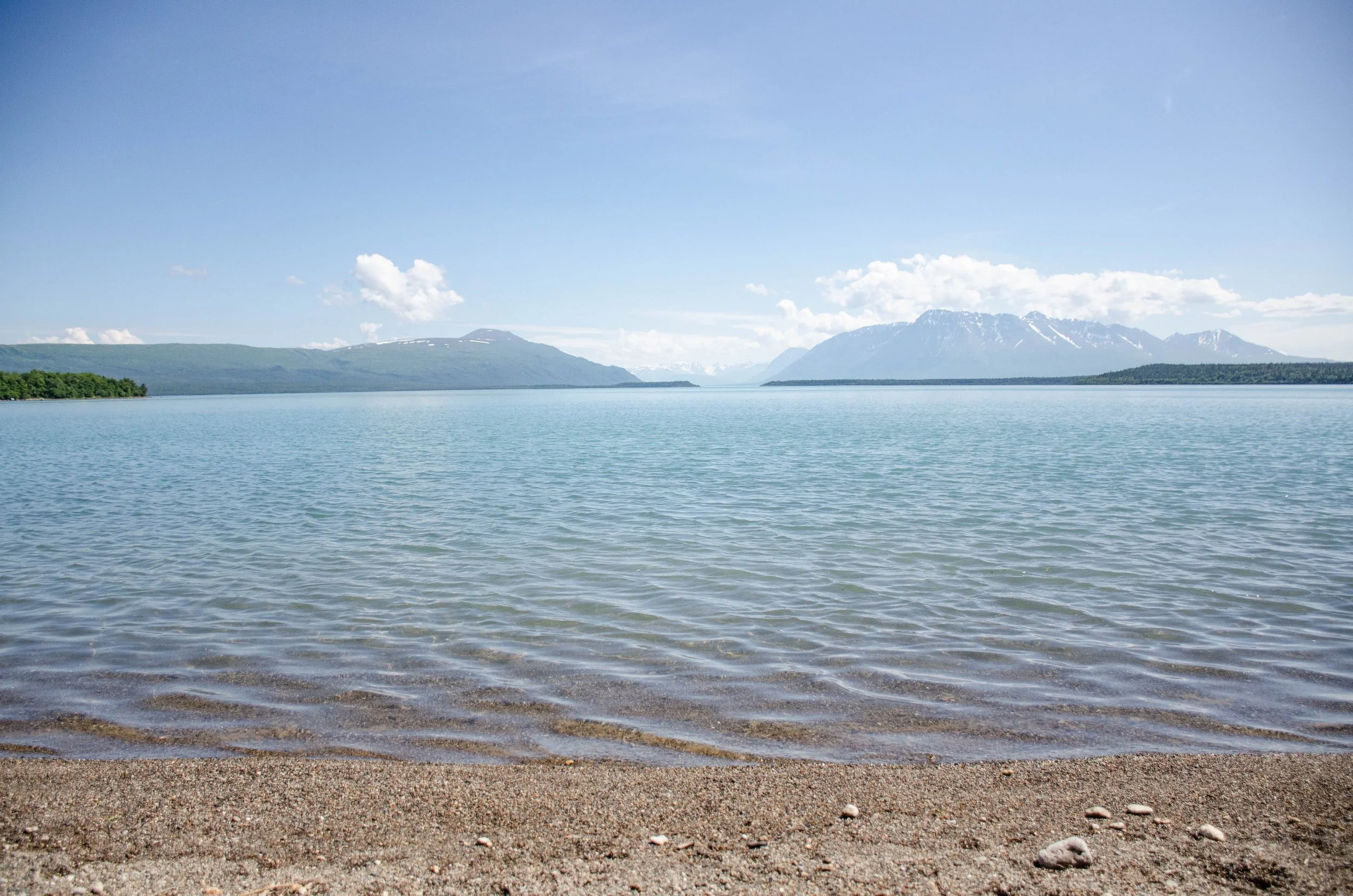
Katmai National Park is pretty close to how I’ve always imagined paradise: Mountains scraping the heavens, sunshine dancing on the water, and humans coexisting peacefully with animals we generally fear.
Our experience here was sublime, but the process of securing our experience here was less so. Katmai is, to put it mildly, very popular. Reservations for Katmai’s lodge open a full 18 months in advance and sell out in seconds. The campground only allows for 60 people to camp each night and those spots also go in seconds. Reservations were set to open approximately six months before our trip and as it happened, that ended up also being the day that our friends (who were also going on the trip) were moving into their new home. I don’t fully recall how it all happened, but I was the person who ended up on my laptop in a coffee shop close to their new place, practically sweating as I prepared to battle for a camping spot for the six of us. The clock clicked to 10am and I scrambled to grab spots for us and get them in the cart. I ended up with spots for all six of us, just a couple days off from our preferred dates. To me, that was a win!
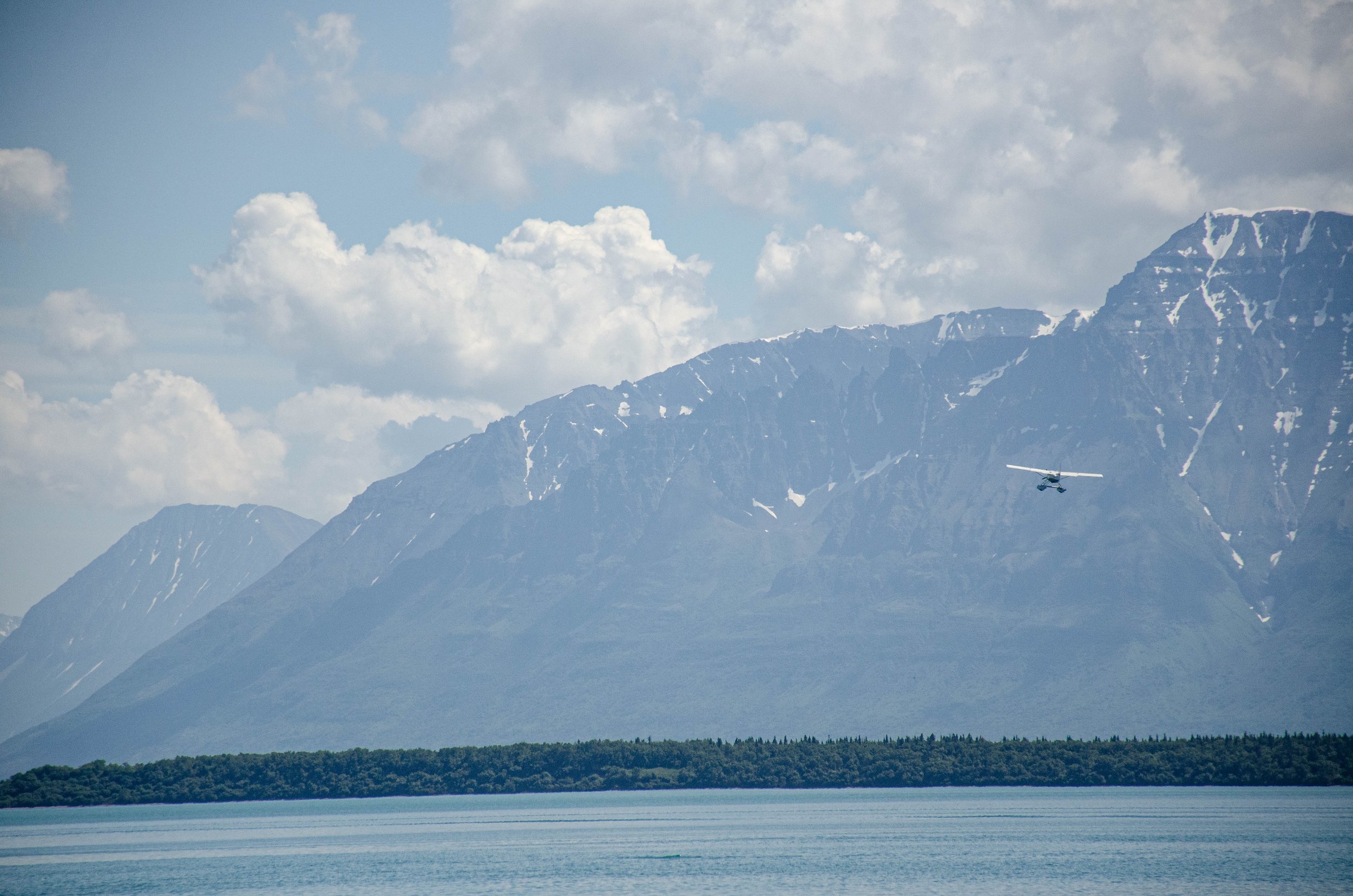
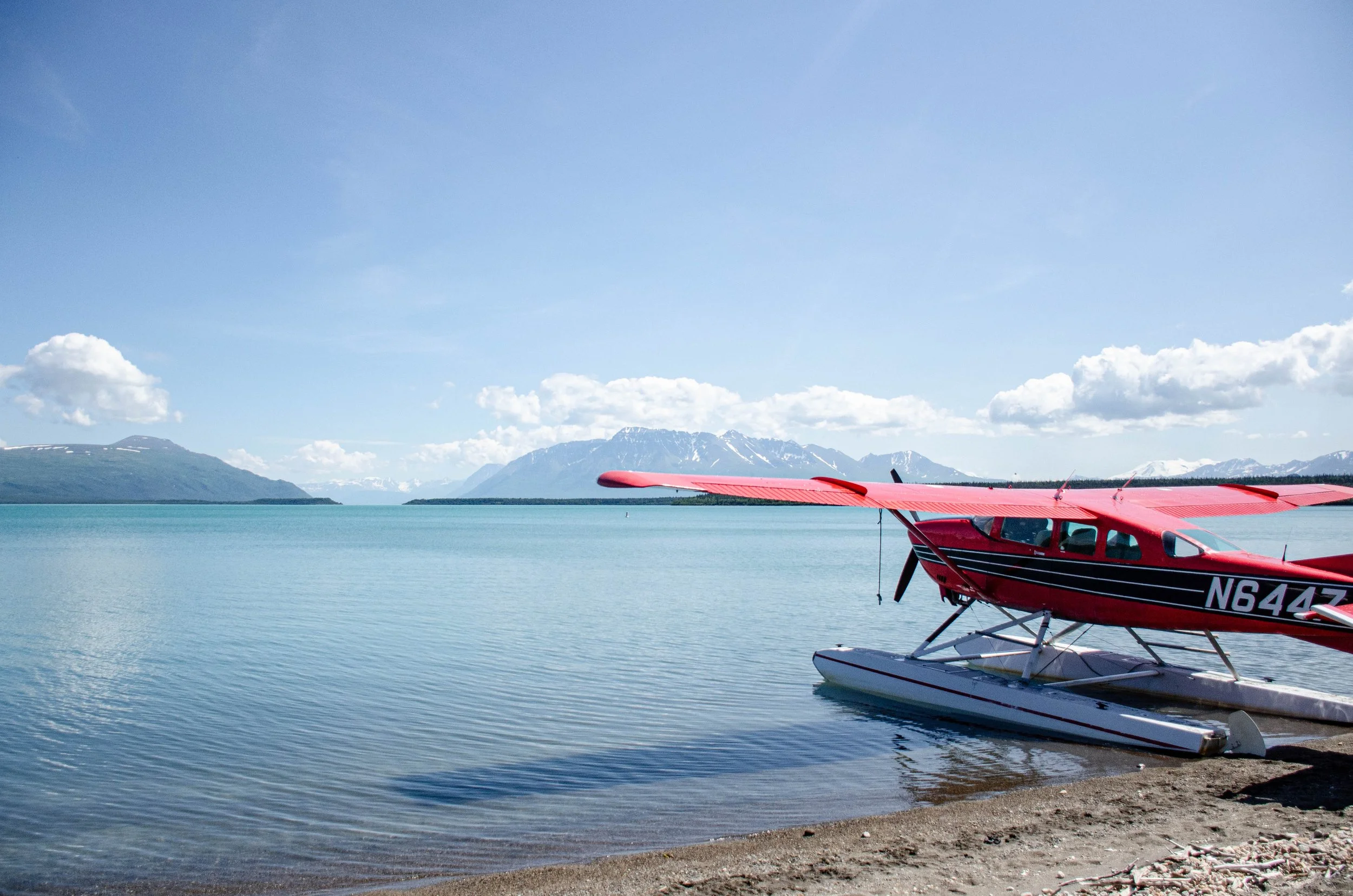
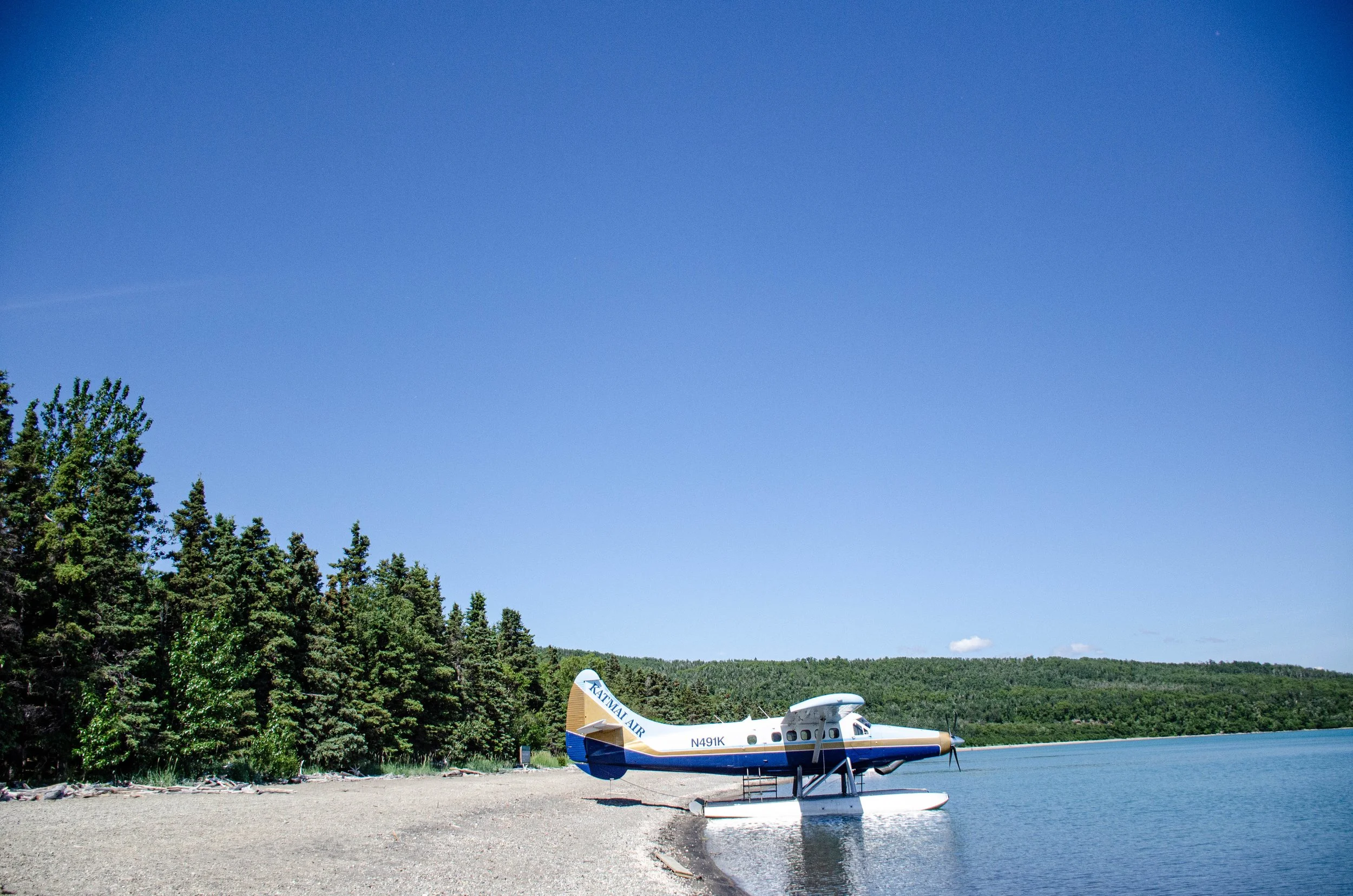
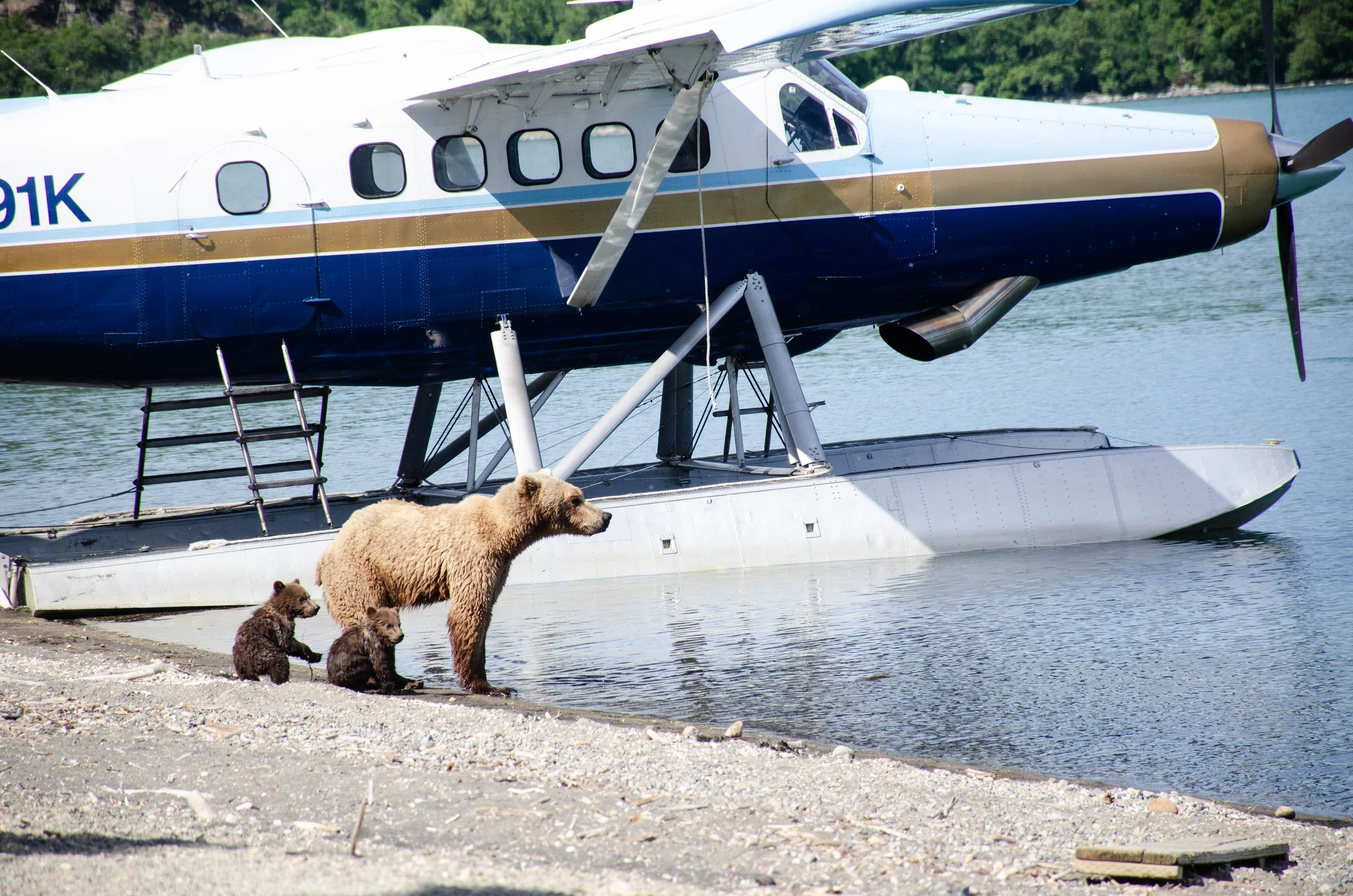
Acquiring campsites were just step one, however. Katmai is unreachable by car. The next thing on our list was to find and align flights for the six of us from Anchorage to King Salmon Airport, where we would disembark and transfer ourselves and all our gear on to a small float plane which would fly us the remainder of the way to Brooks Camp. The float plane options were limited to a couple small companies. Each required us to submit our personal weight + the weight of every piece of luggage we were bringing with us… numbers which we then discovered would be cross-checked in person before we boarded the plane to ensure that weight was evenly distributed.
And so after all this, it felt pretty unbelievable by the time we successfully arrived in King Salmon, boarded the float plane, and found ourselves flying over the gorgeous landscape of the Alaska Peninsula. We had a smooth landing on Naknek Lake next to the mouth of Brooks River and were stunned to see several enormous bears ambling down the beach. This was just the beginning.
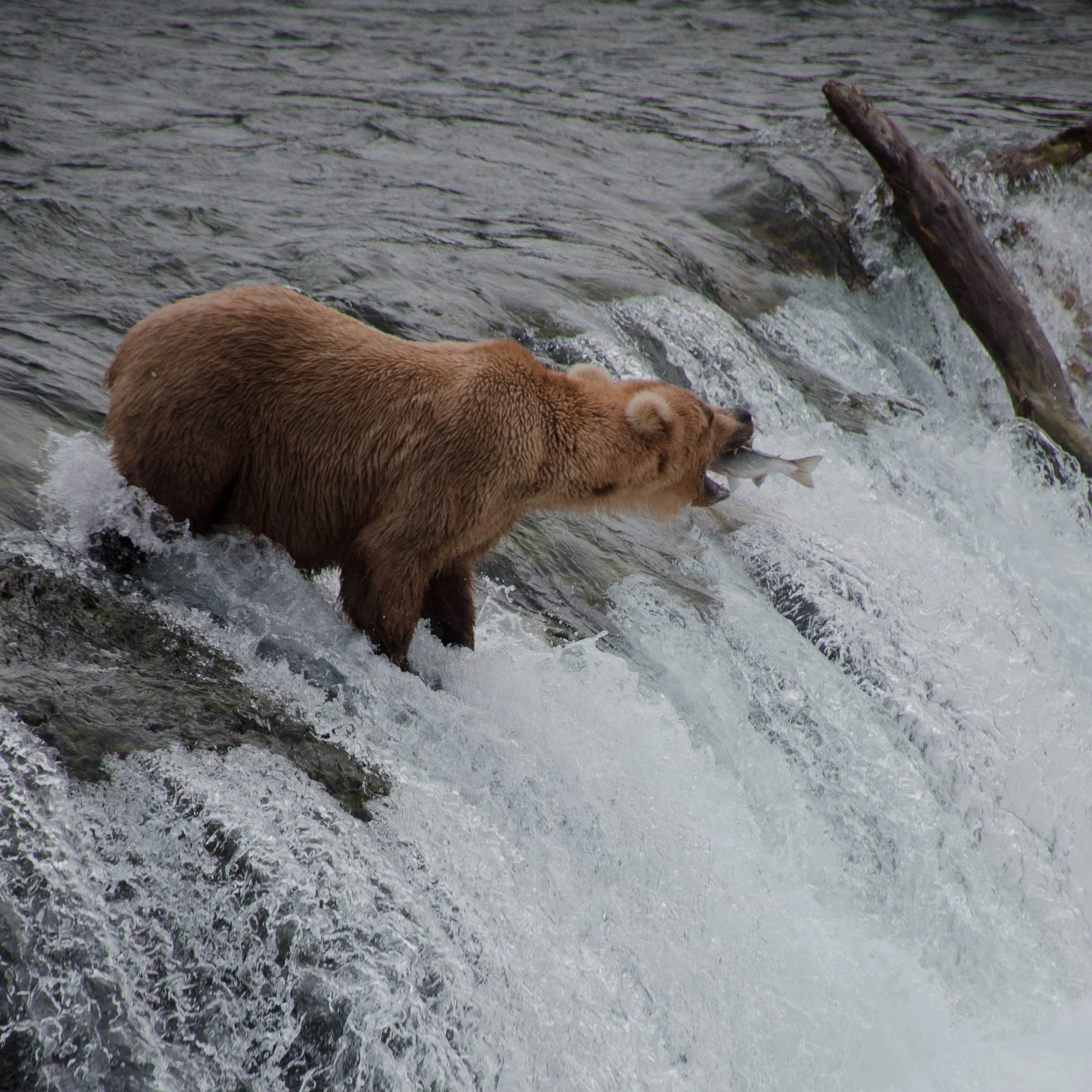
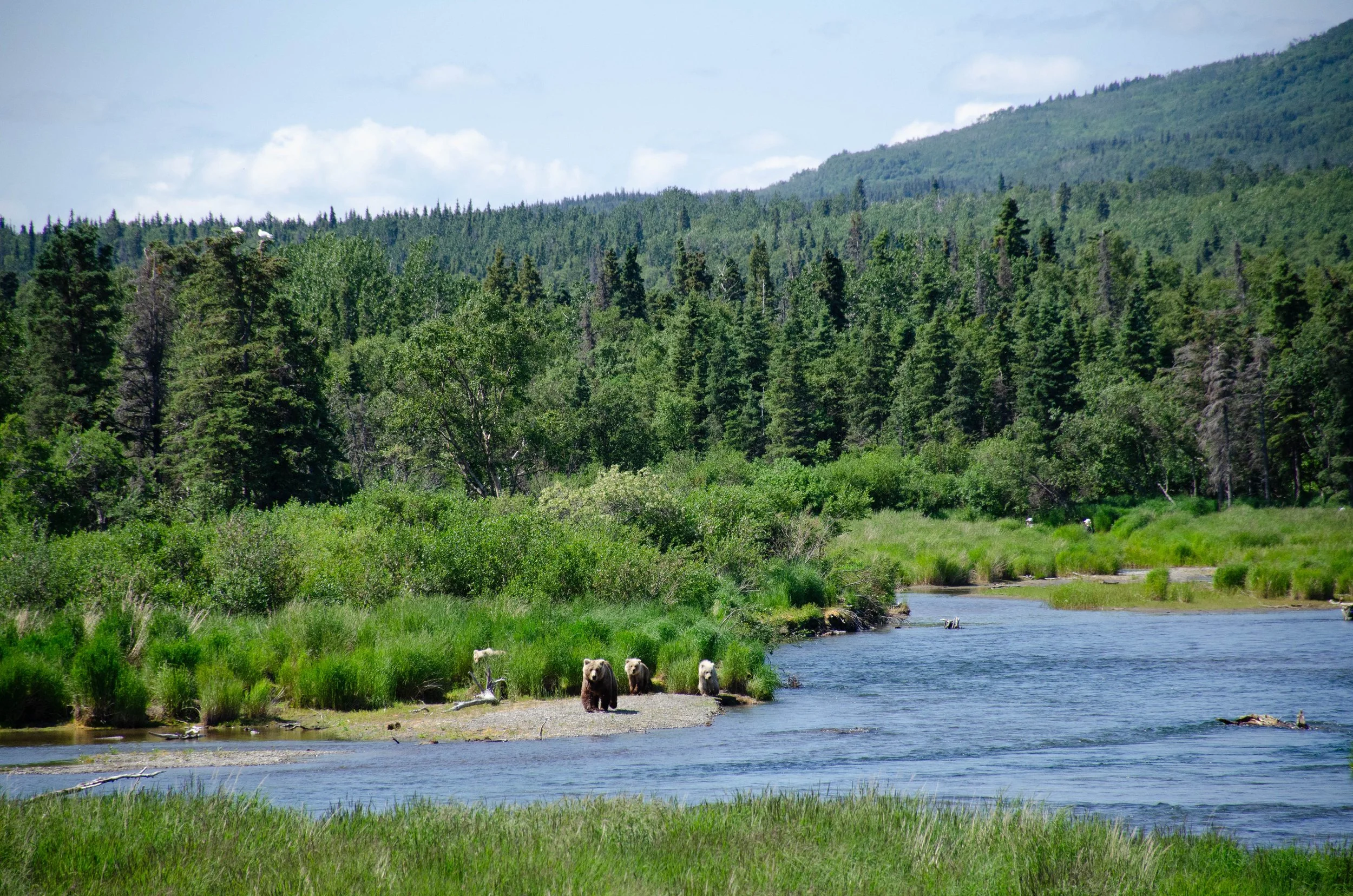
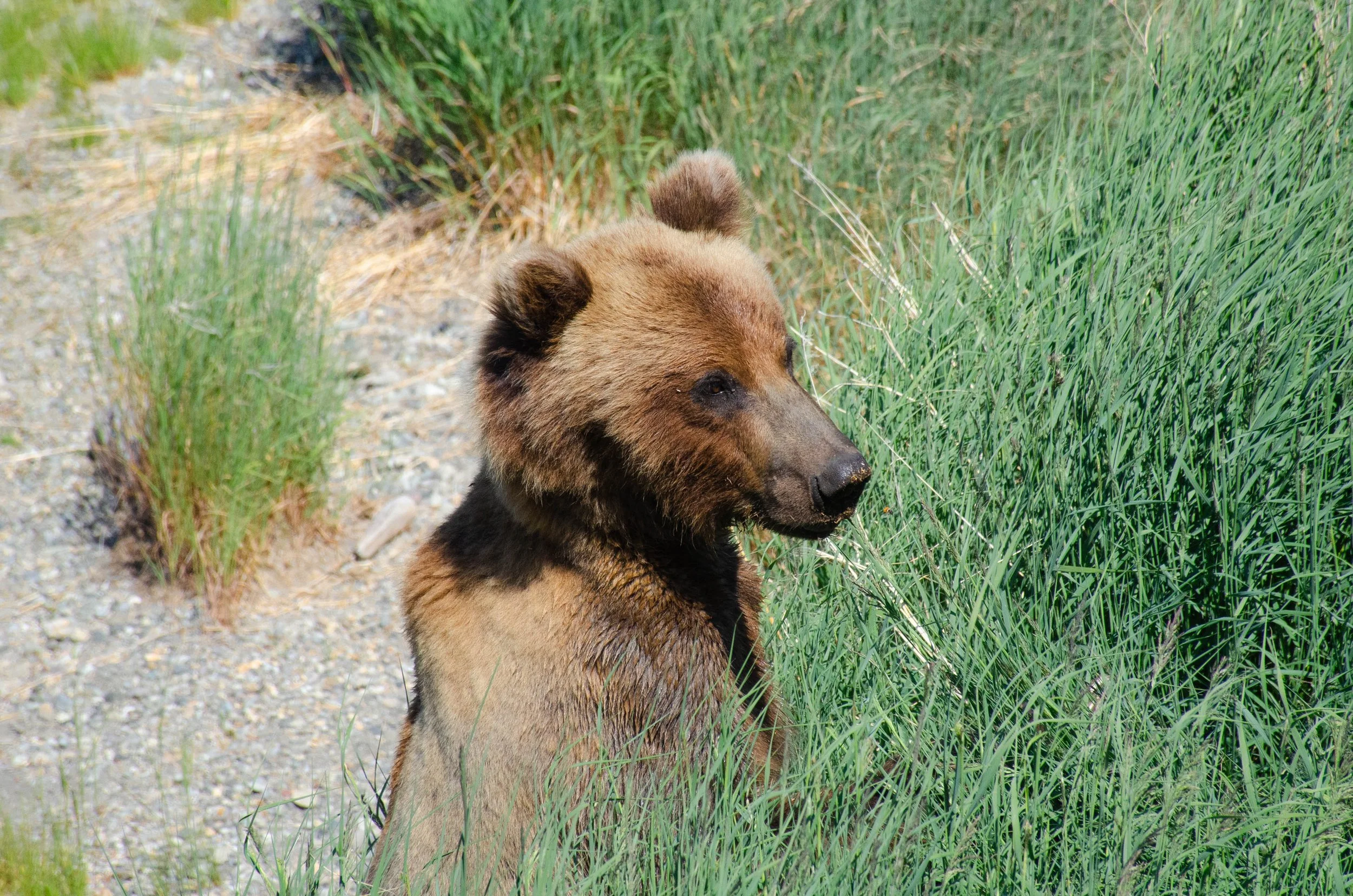
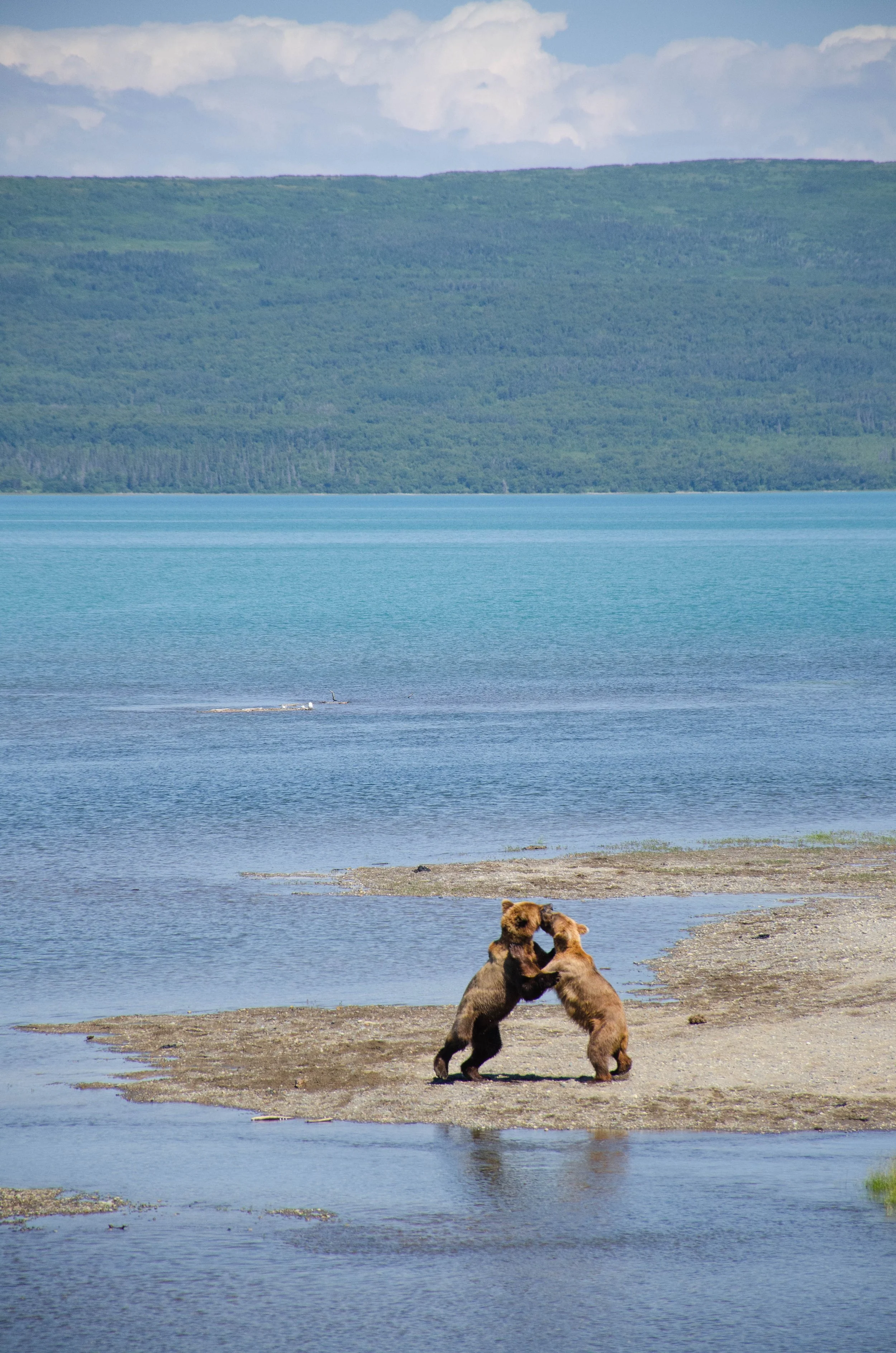
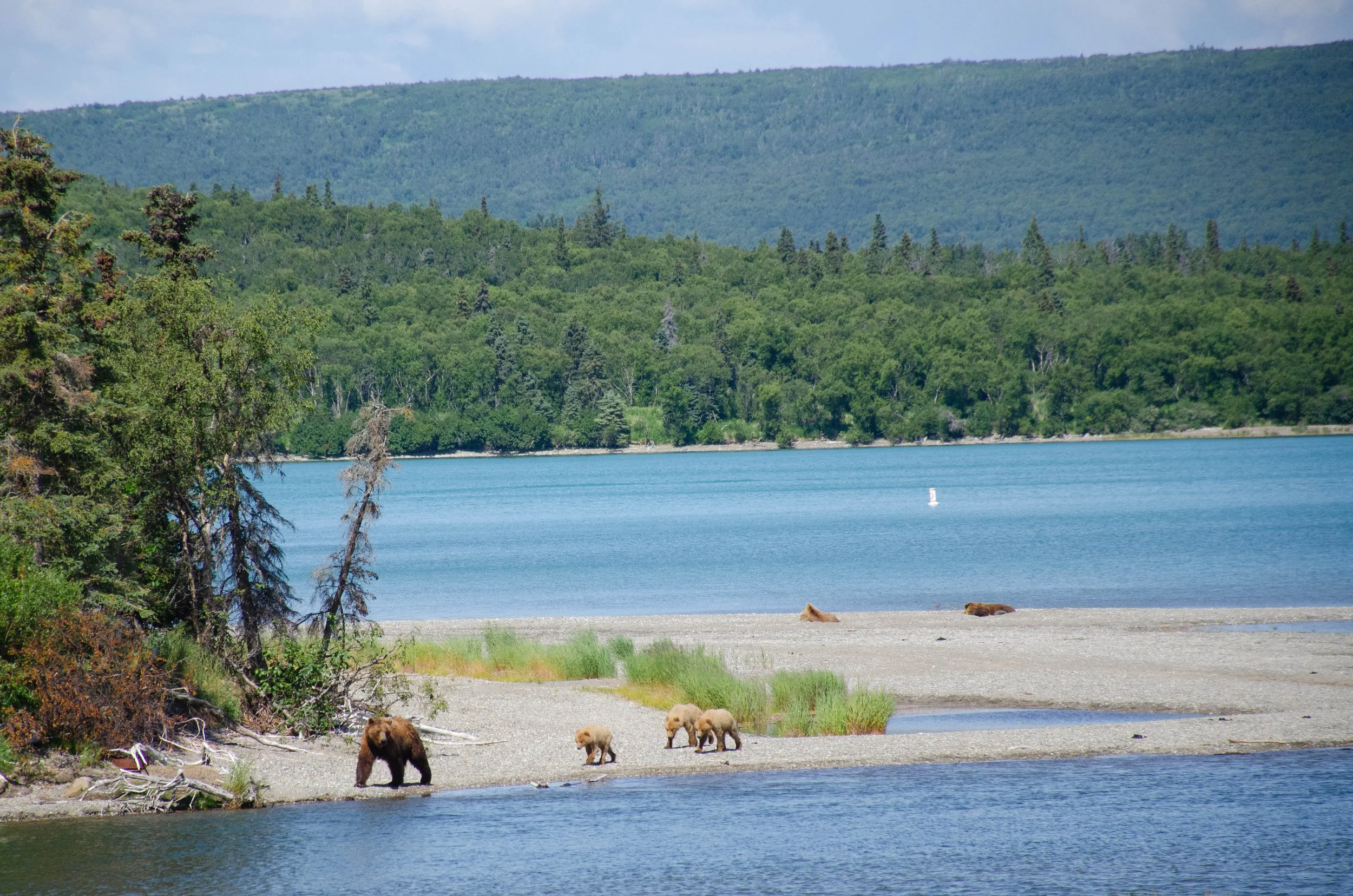
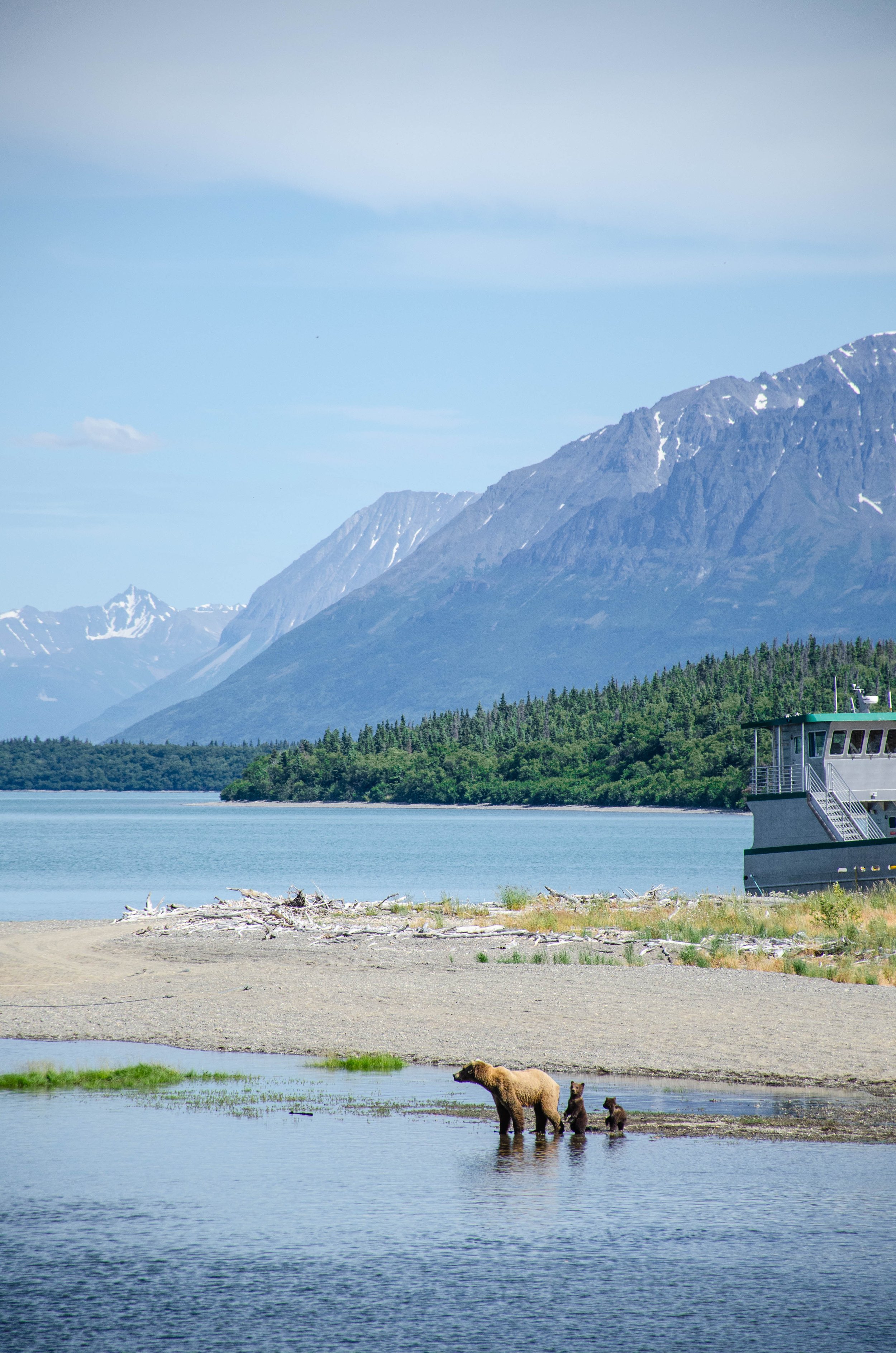
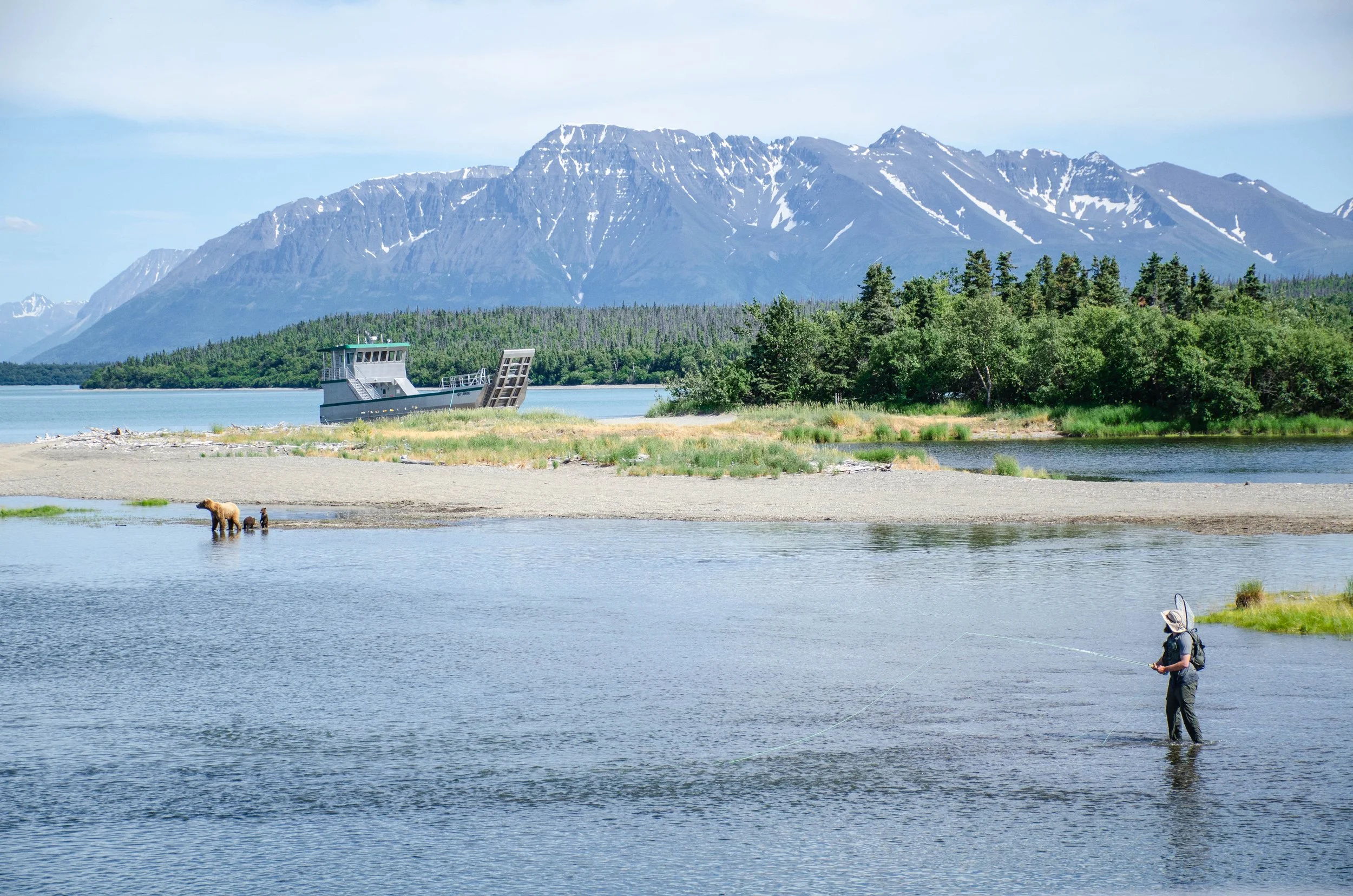
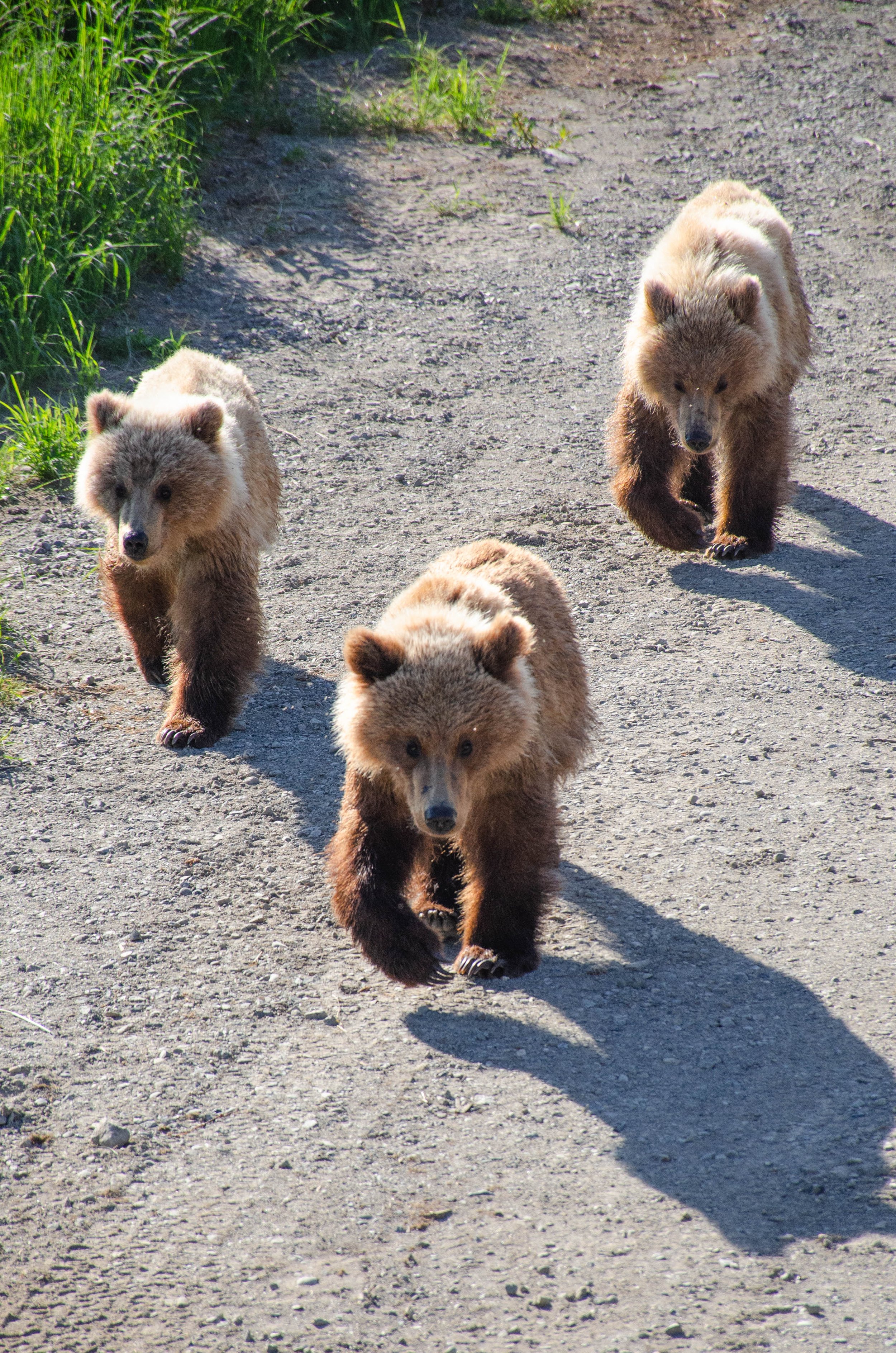
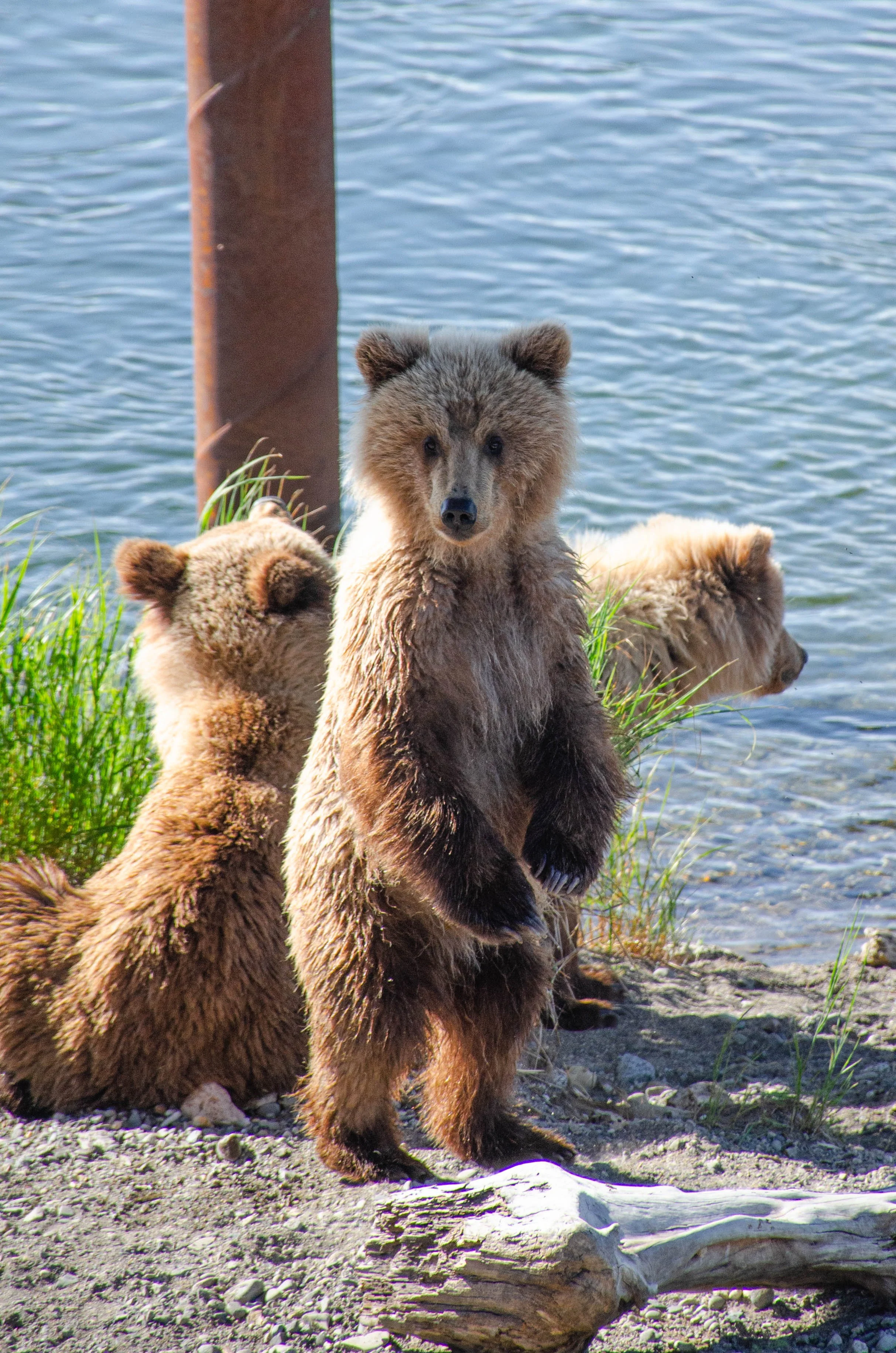
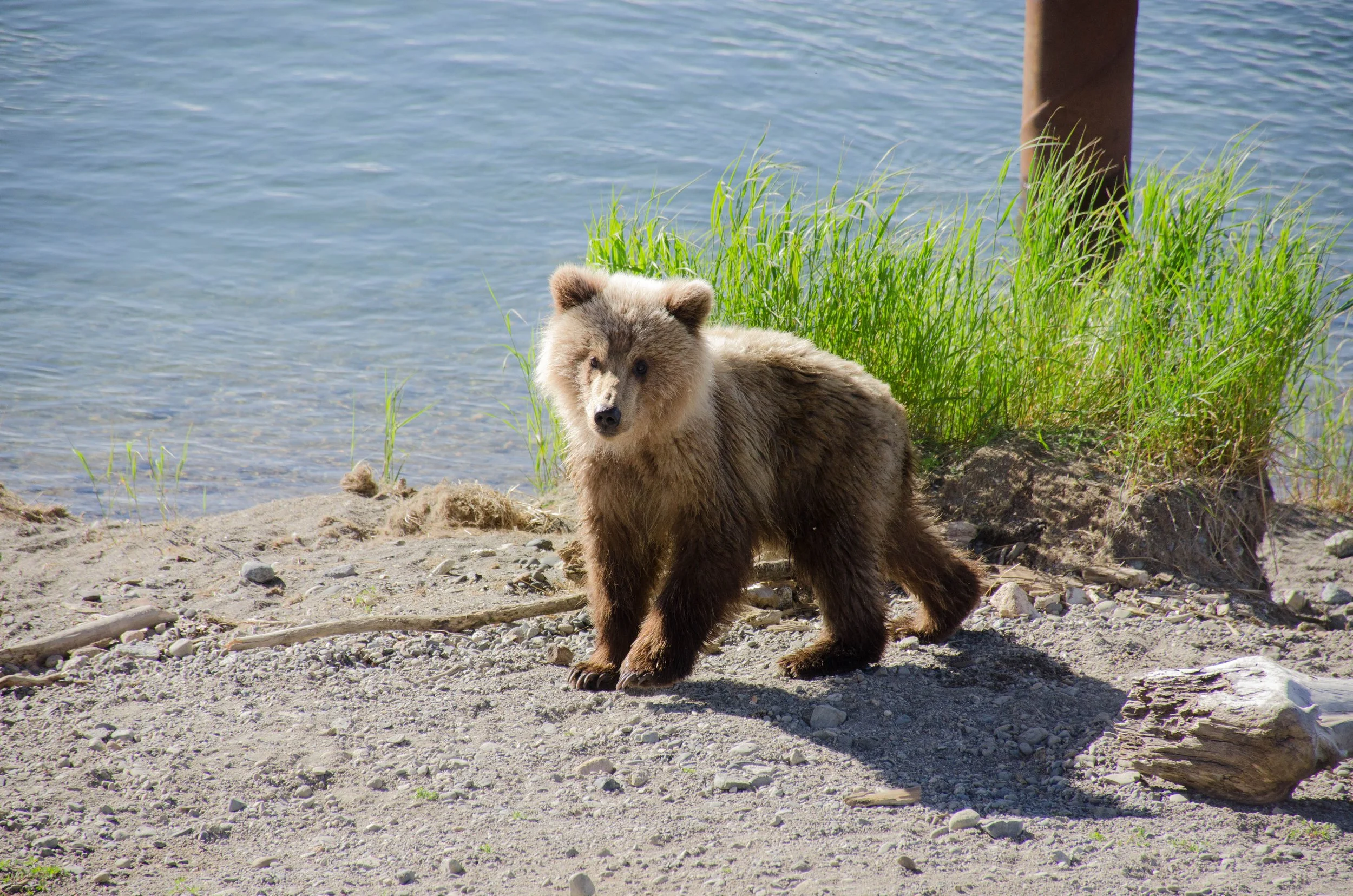
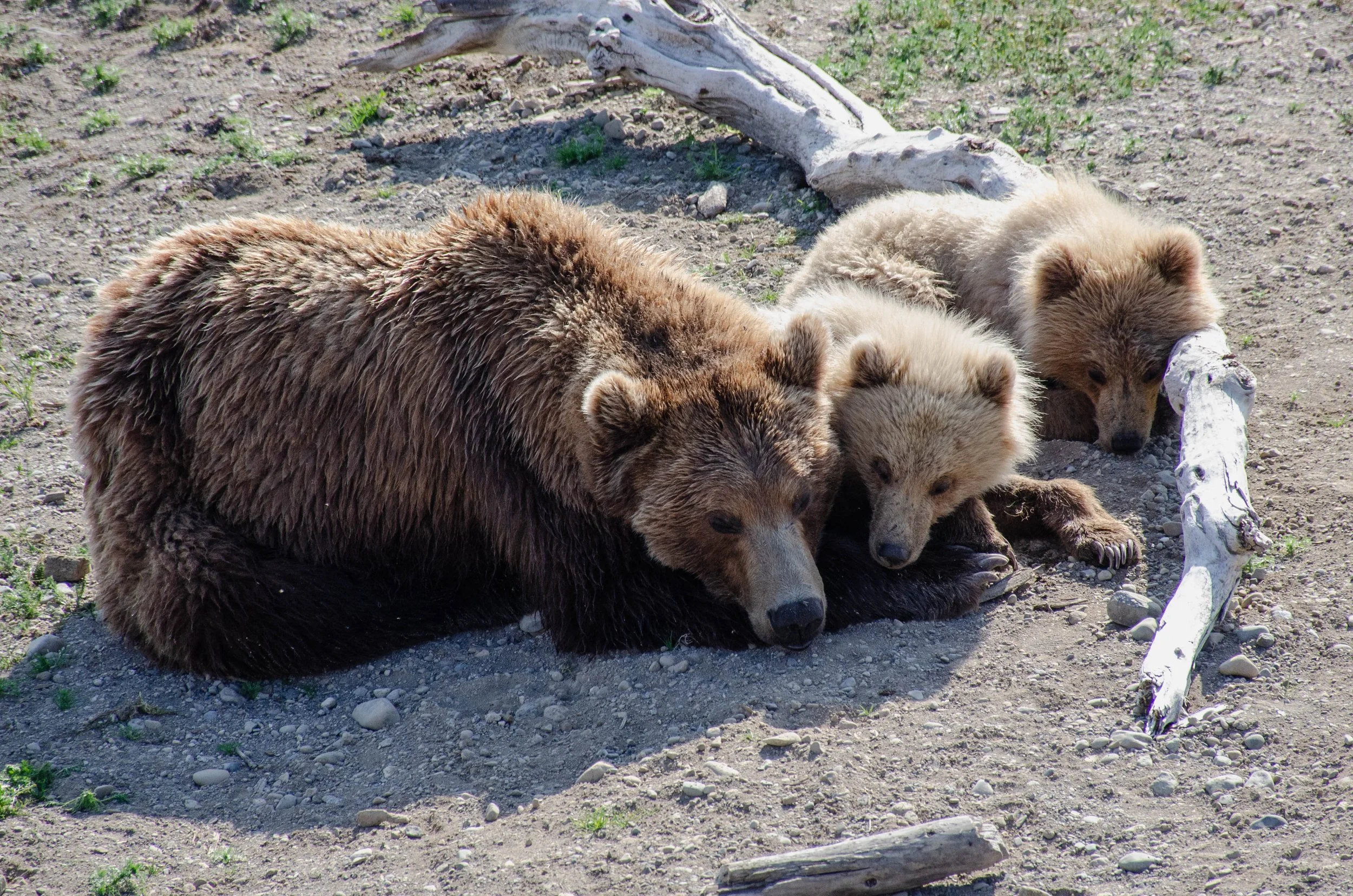
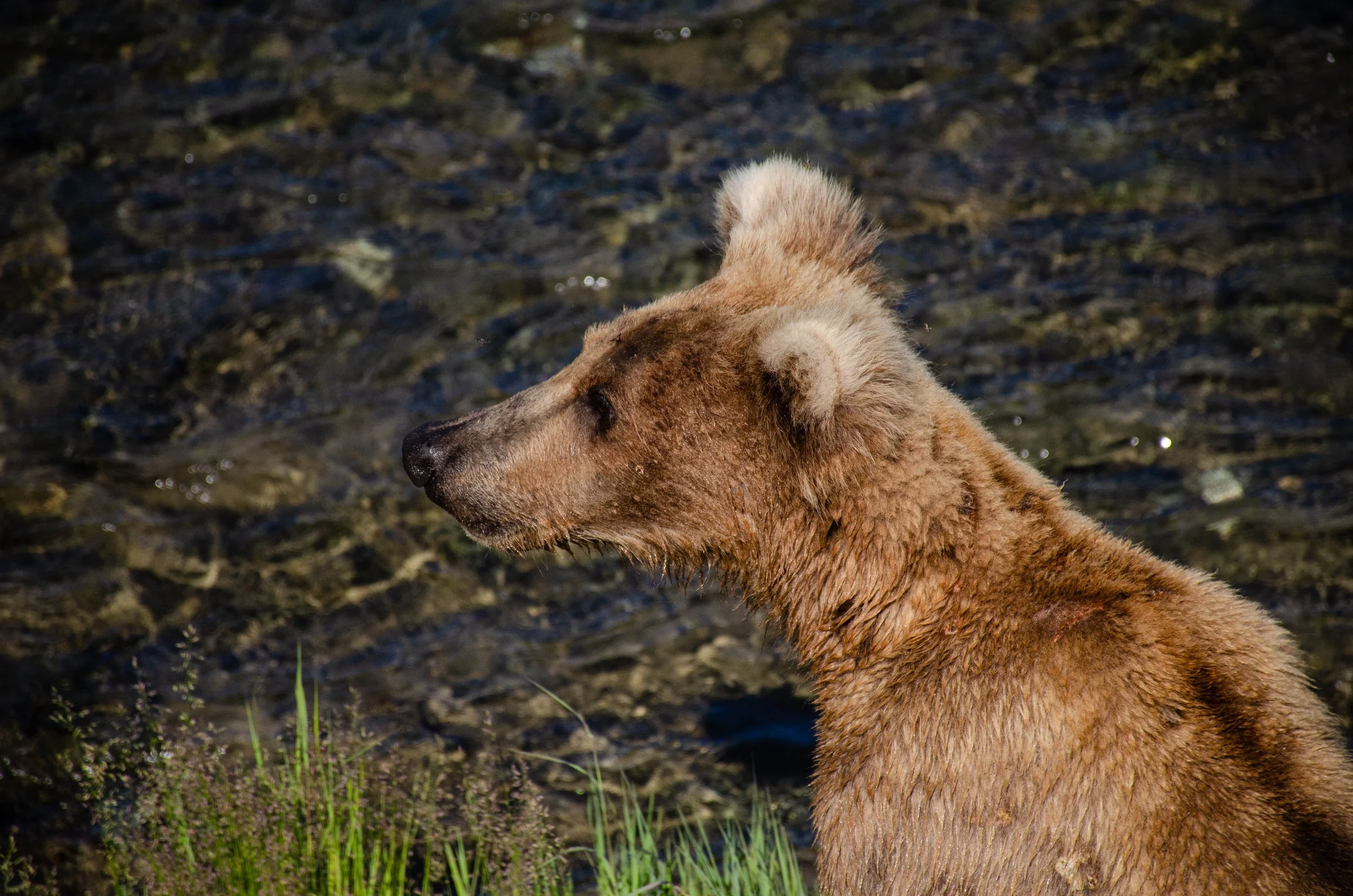
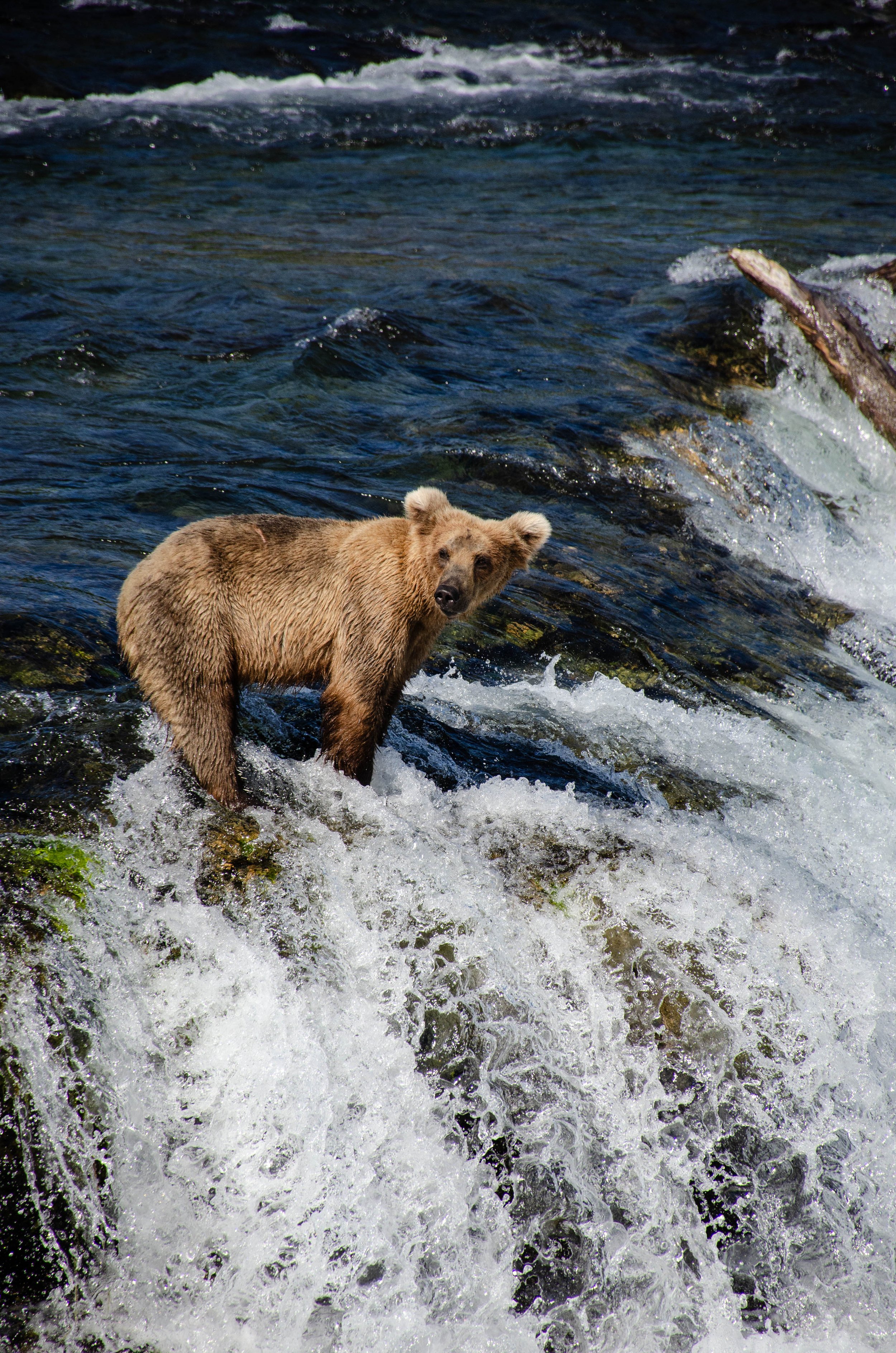
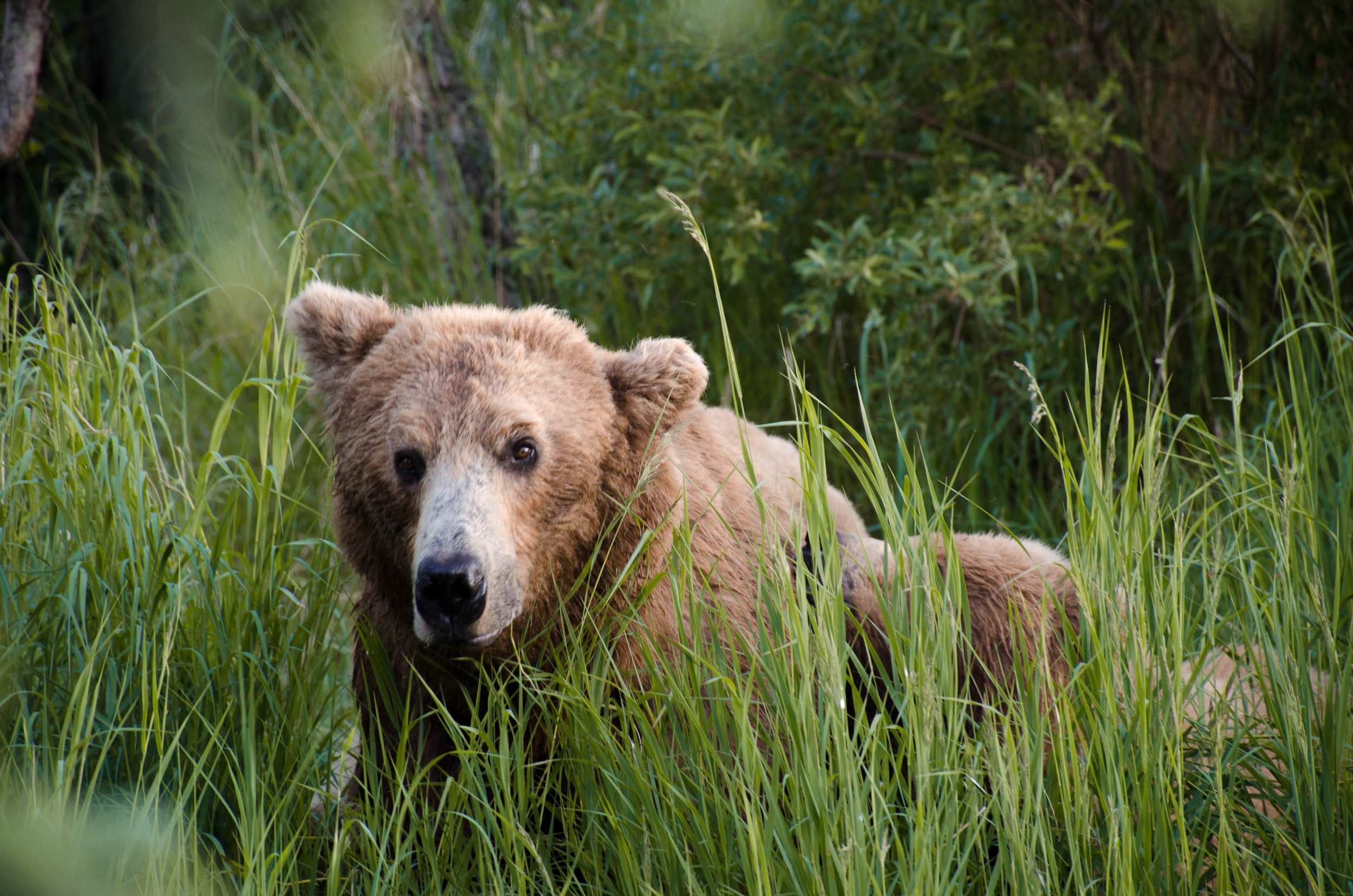
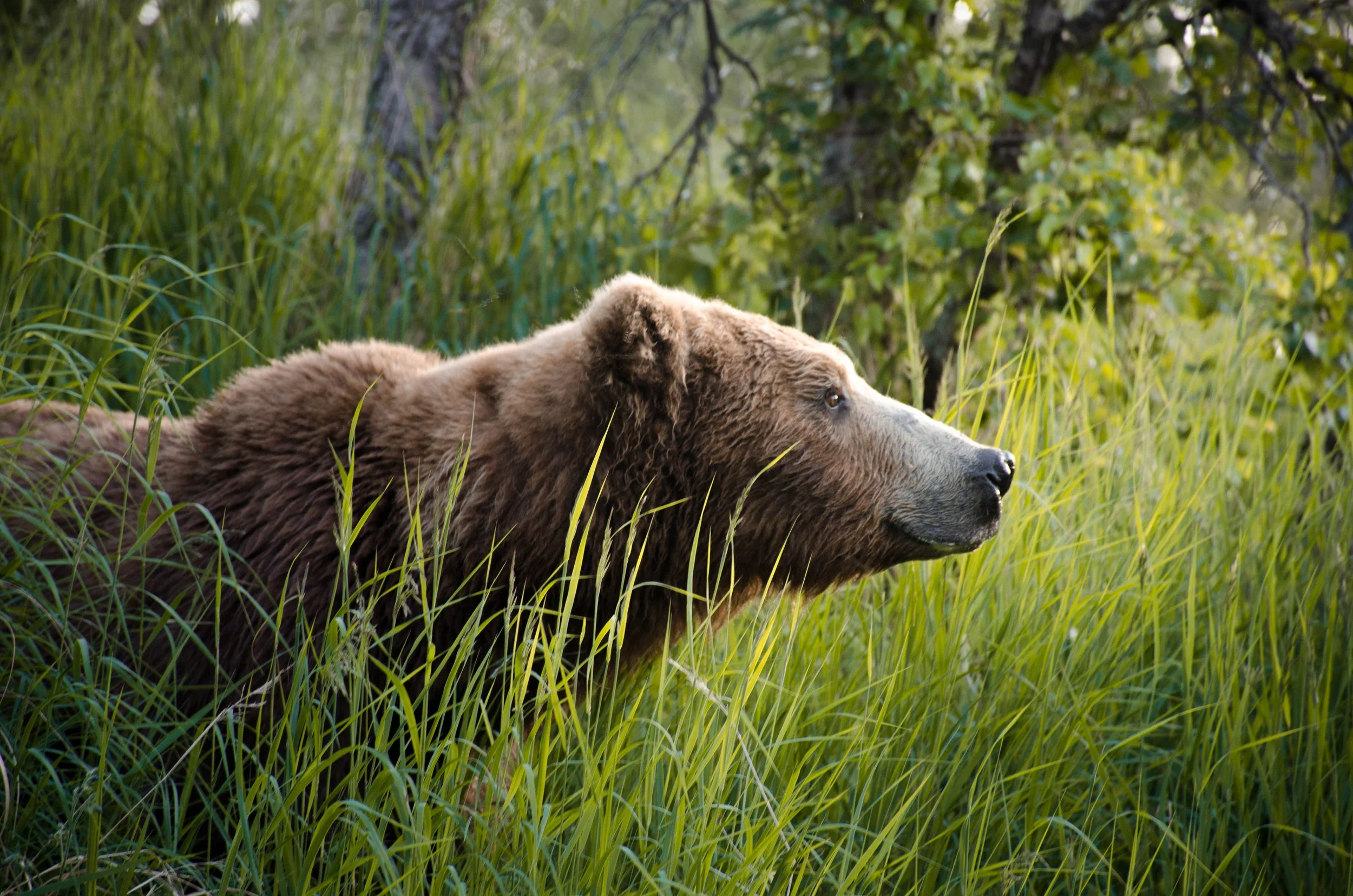
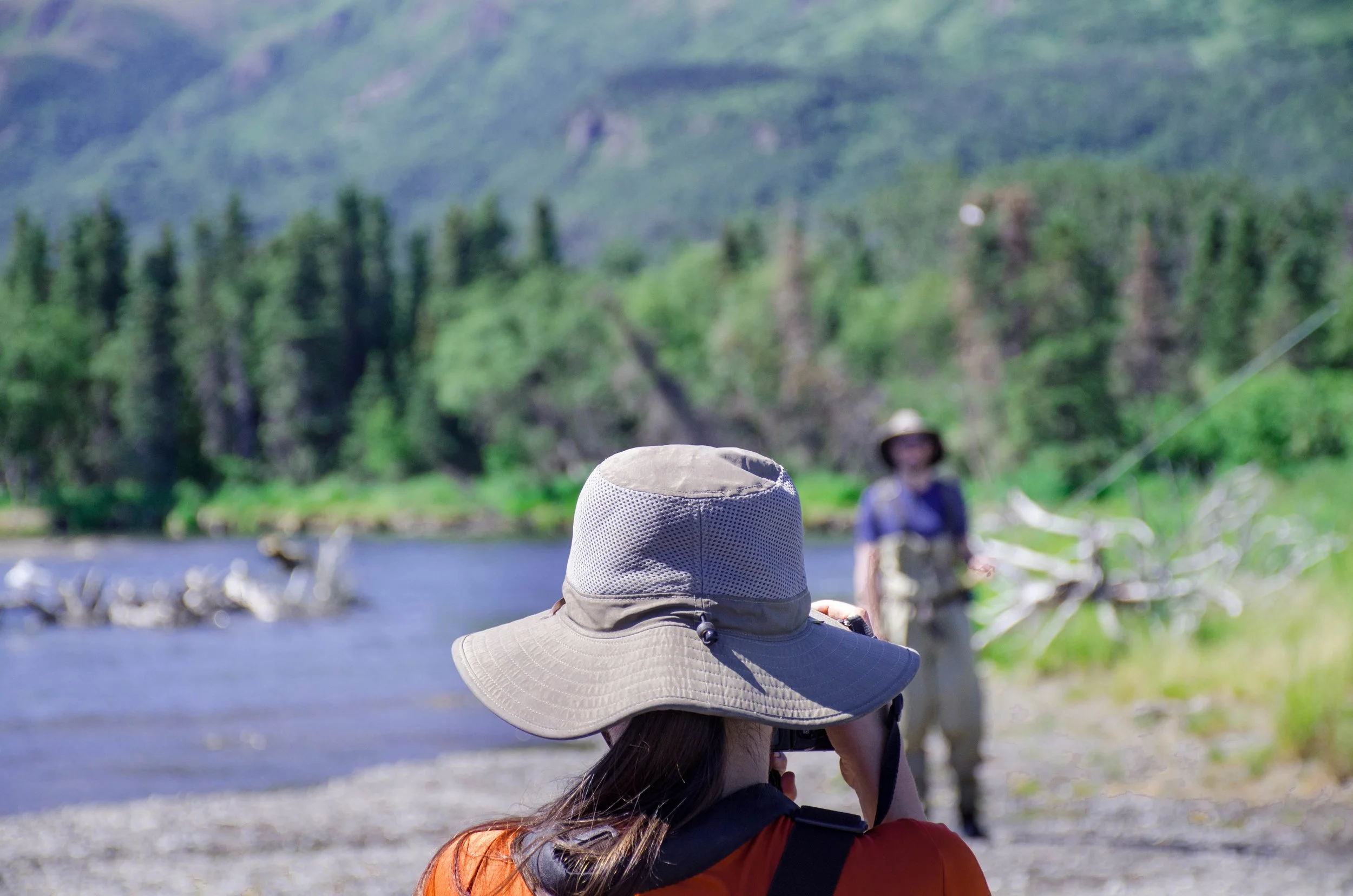
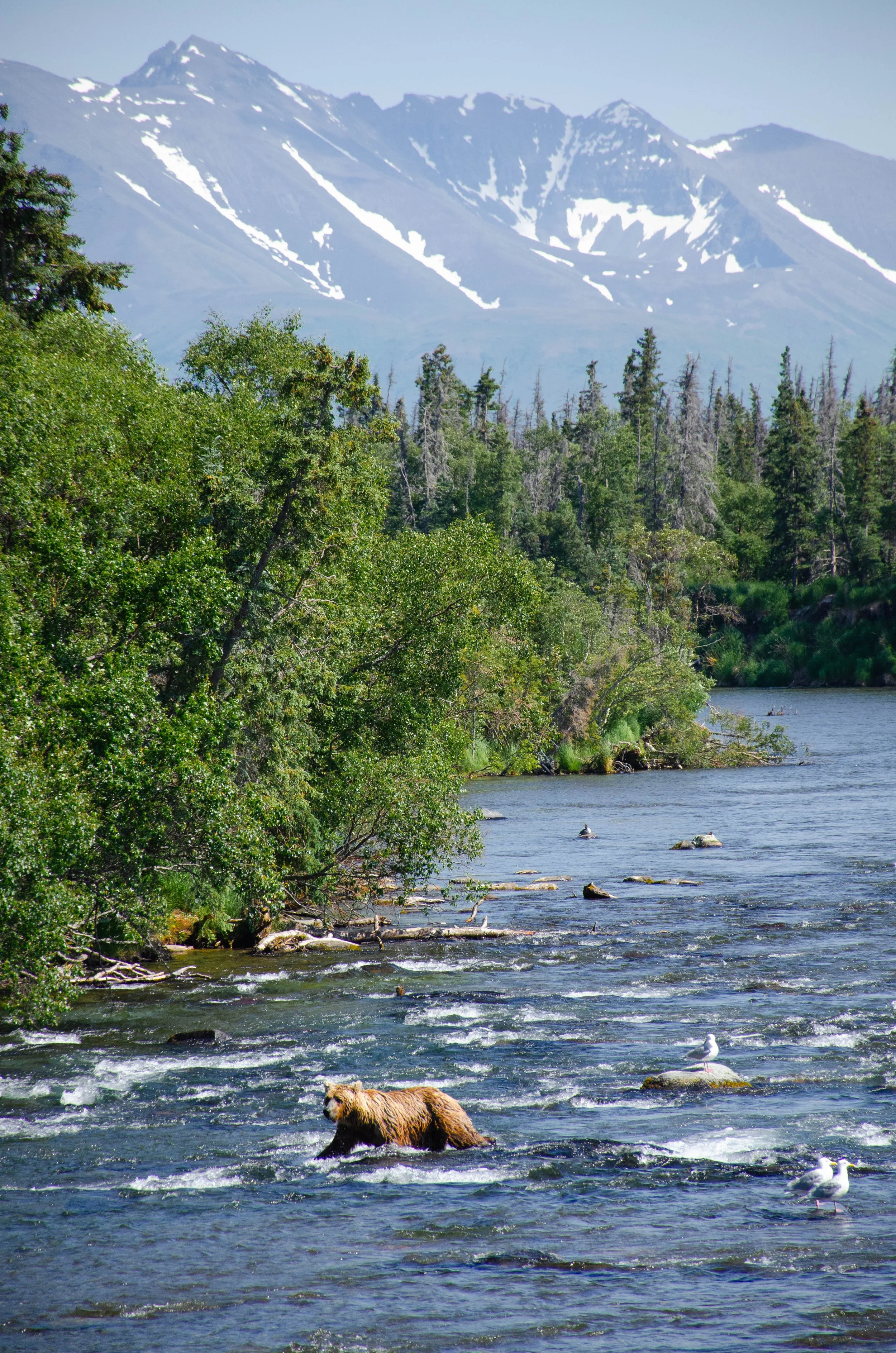
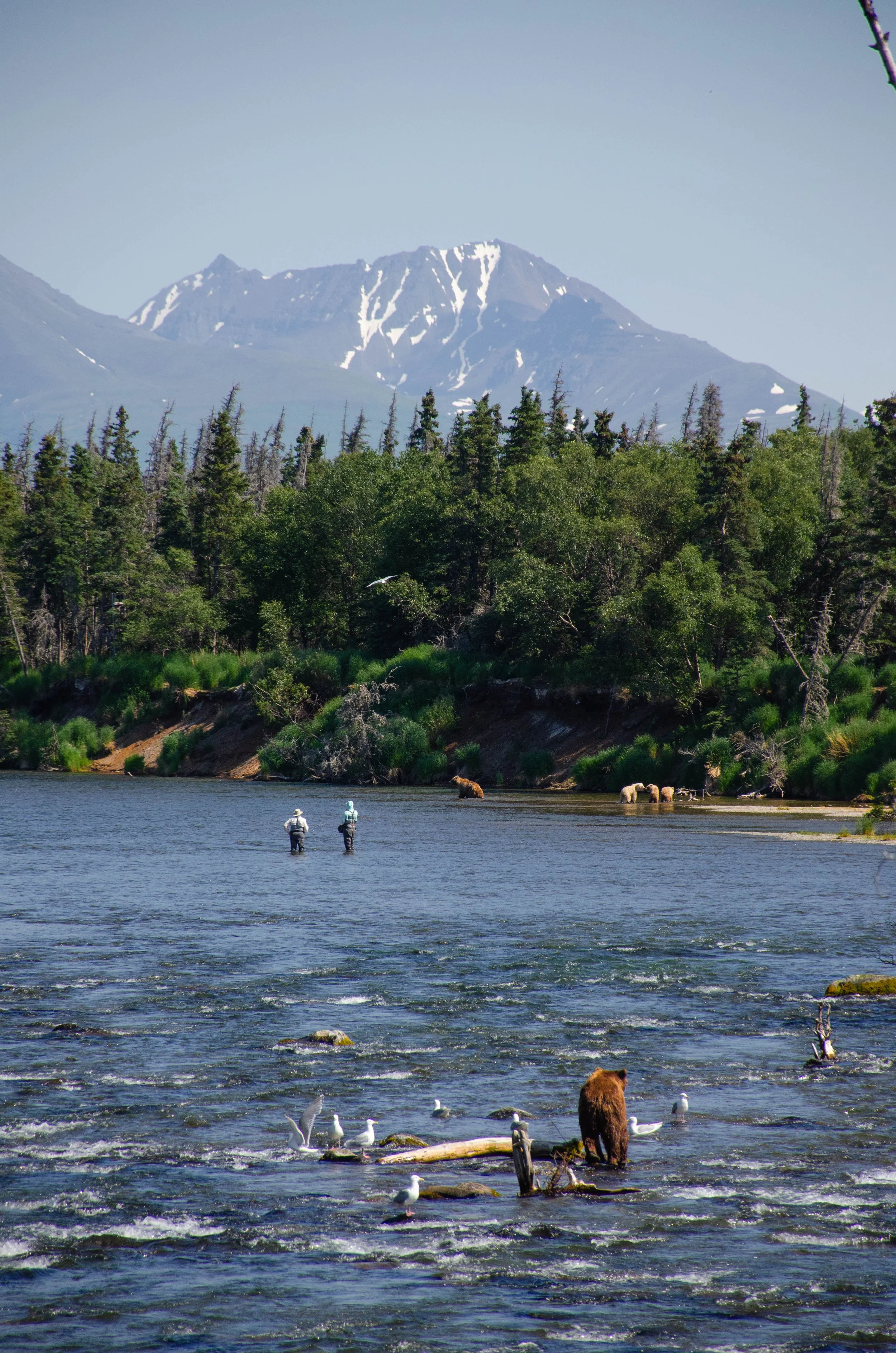
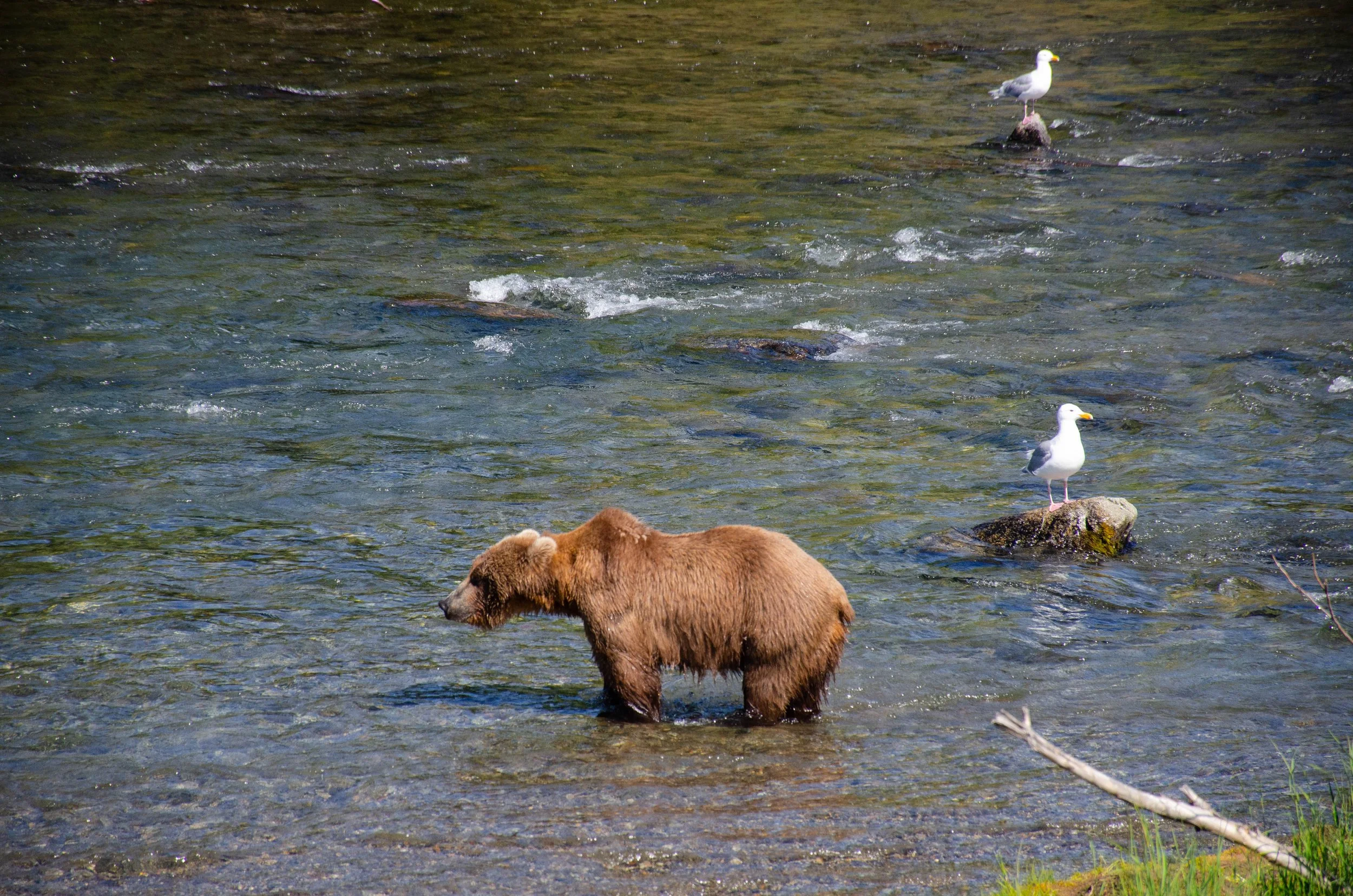
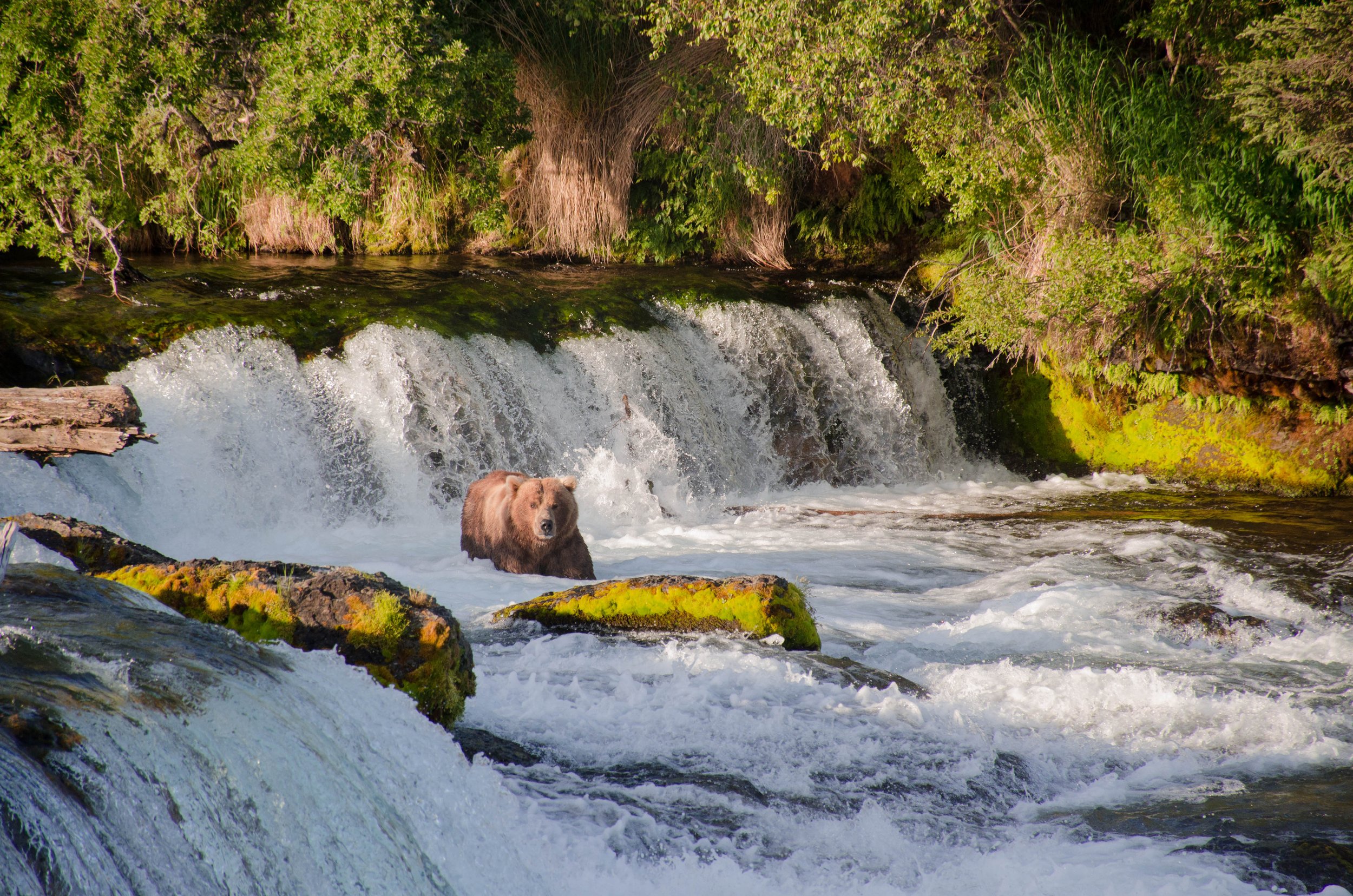
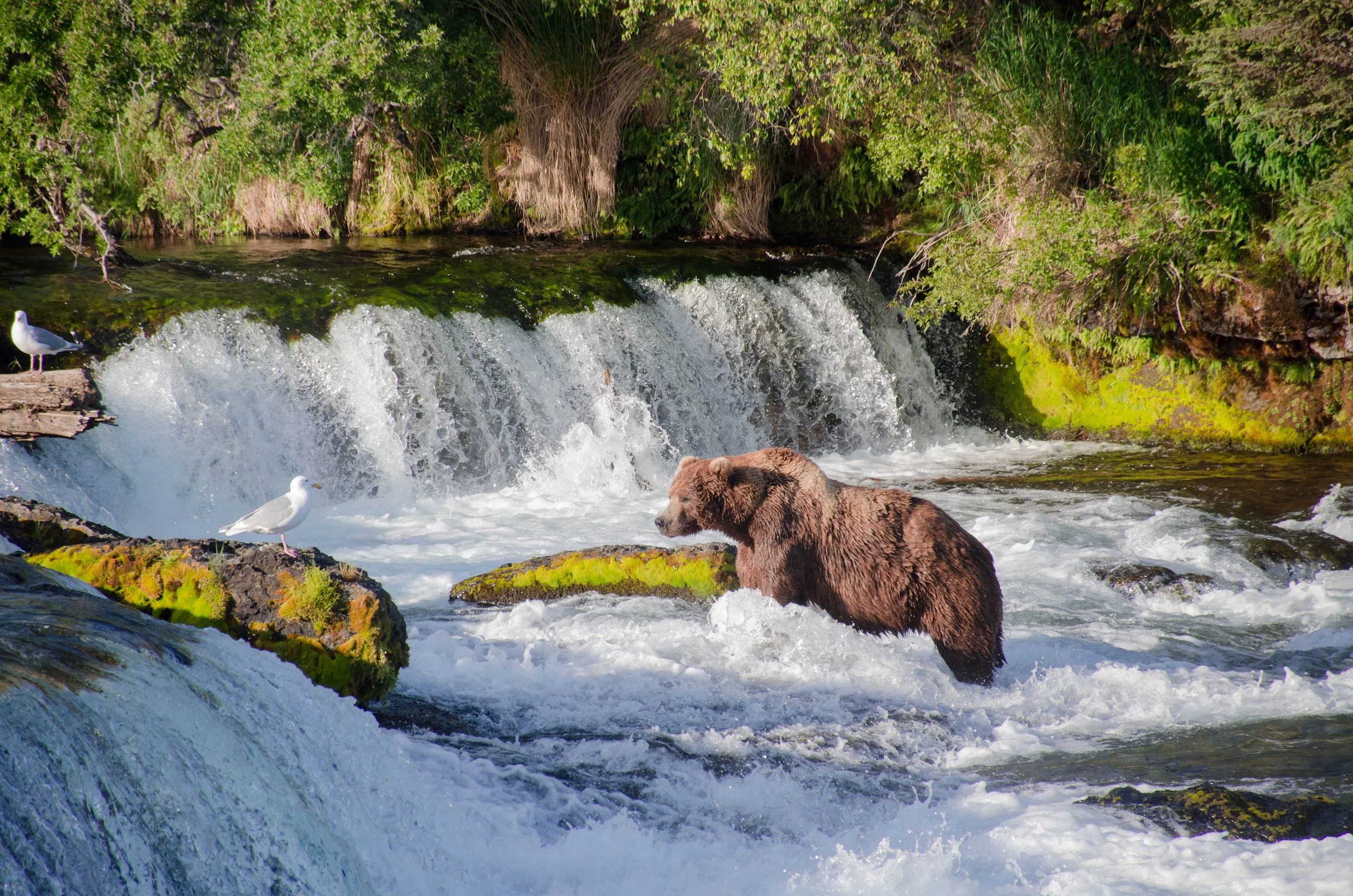
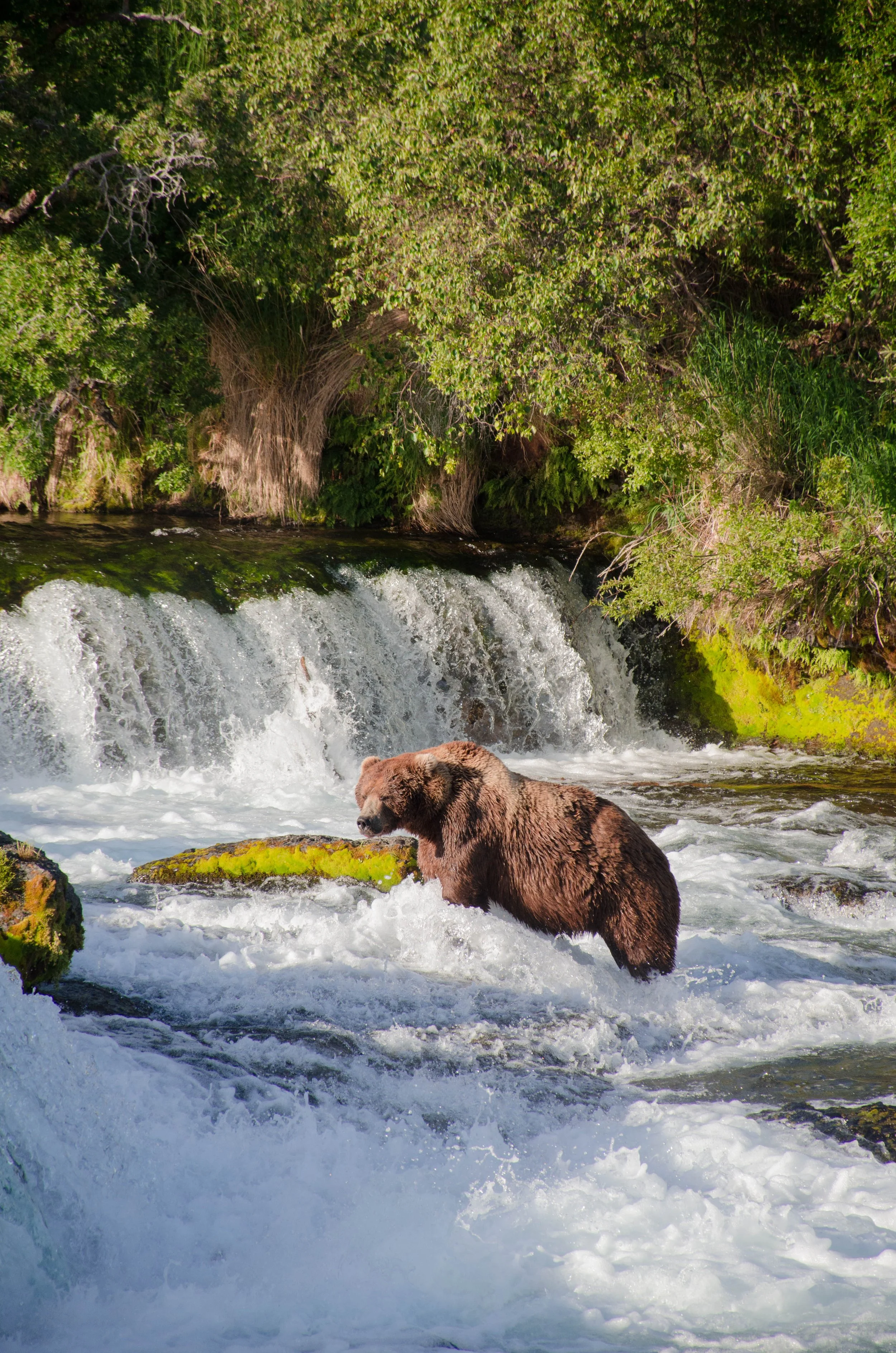
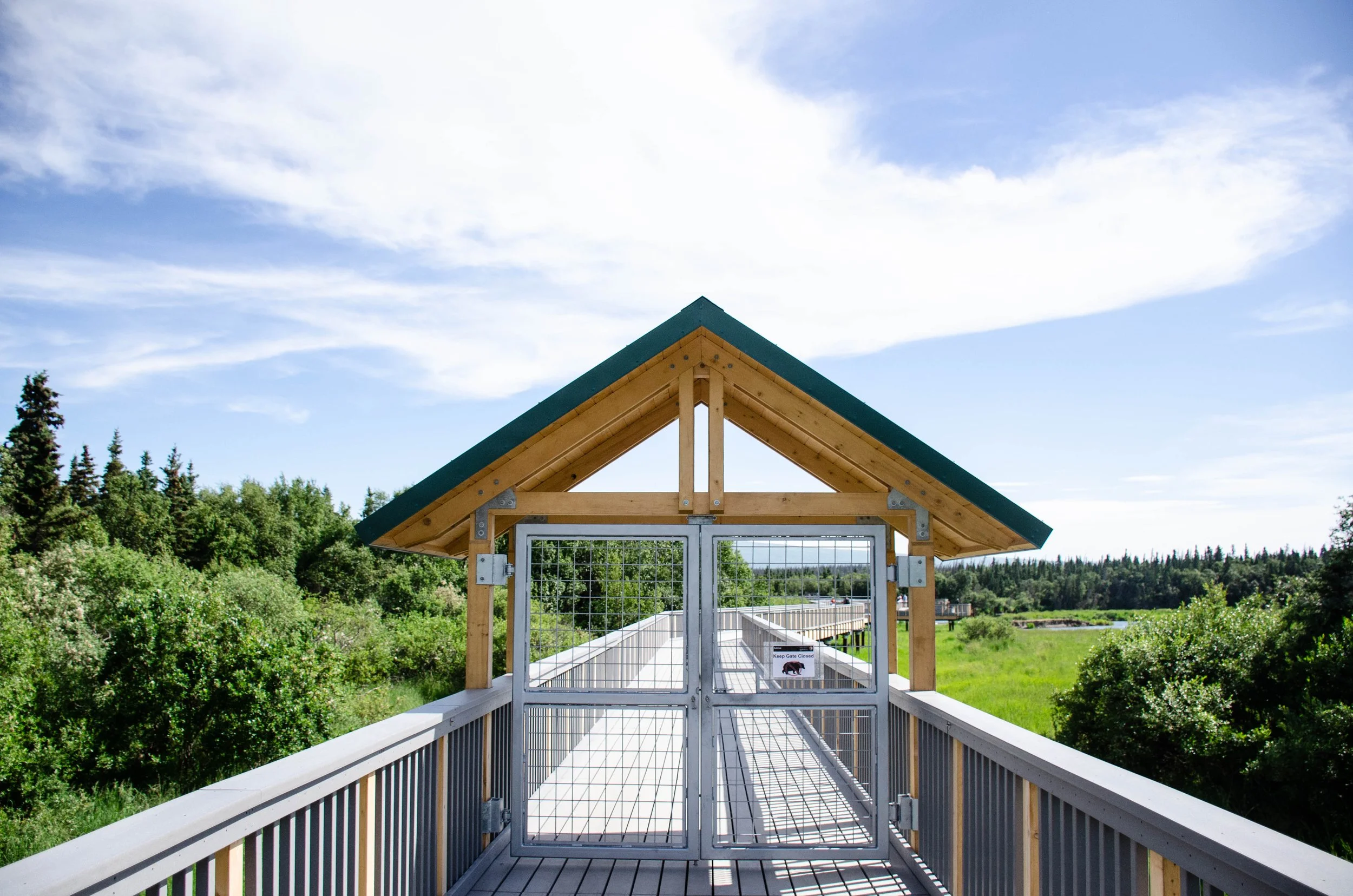
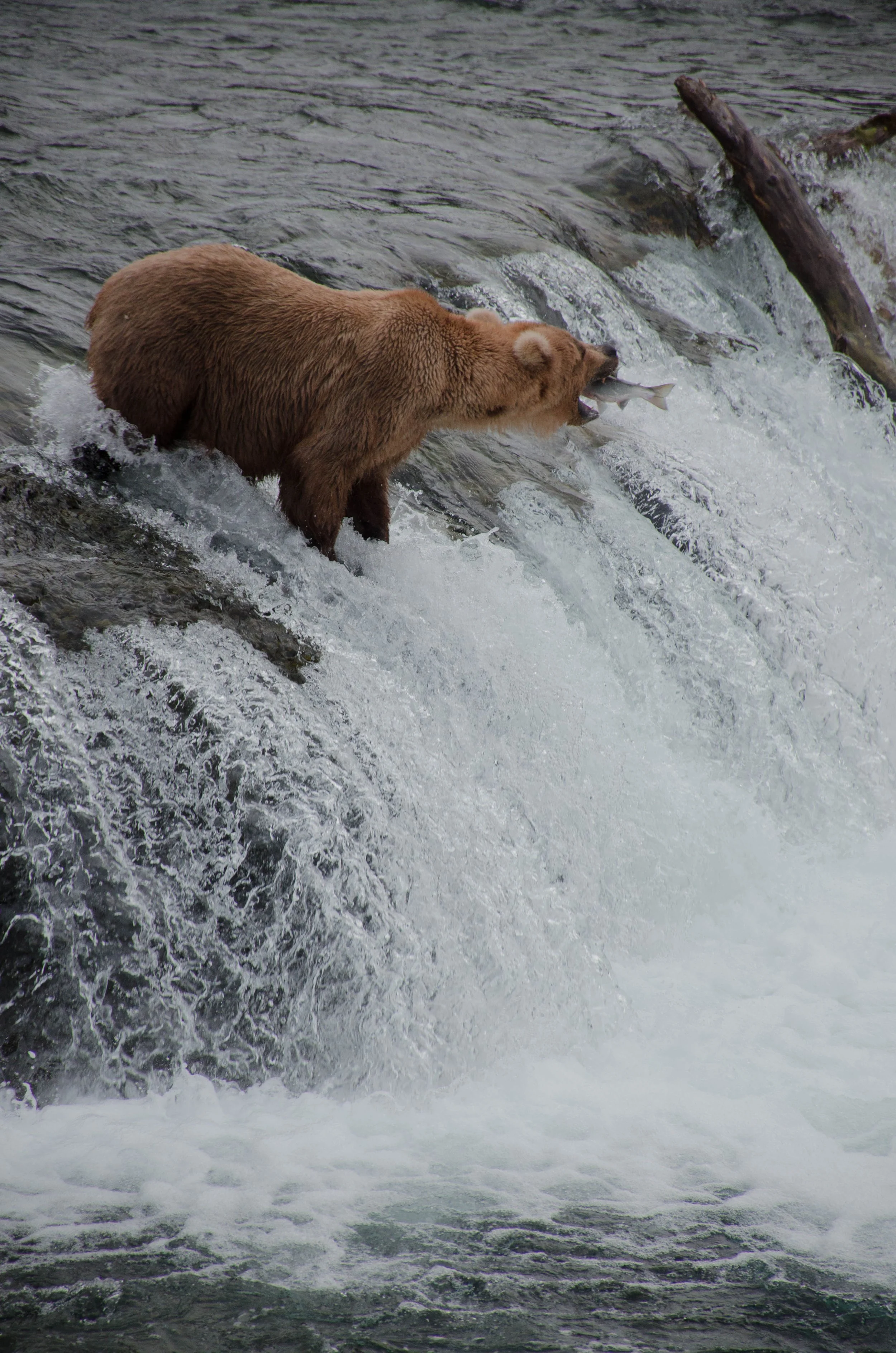
There are a couple things happening simultaneously that contribute to Katmai’s magic: One, the Alaska Peninsula brown bear, sometimes called the coastal brown bear (they are the same species as inland grizzlies but are much larger due differences in habitat and diet), is singularly focused on eating salmon. Two, there are strict rules around Brooks Camp to not carry anything with you that is scented — no snacks, no lip balm, nothing — if you are outside of Brooks Lodge or the campground, which is surrounded by an electric fence. When taken together — bears with little interest in food other than salmon and humans who take particular care not to carry anything that might tempt a bear to think twice — you create an otherworldly type of place where its possible to be in relatively close proximity to the bears, without needing to carry bear spray (it’s still officially recommended) or being terribly afraid you would be attacked. Of course, to be very clear, these are wild animals and anything is possible, but we found that with appropriate caution and awareness, this was a very special place to observe the personalities and habits of these animals.
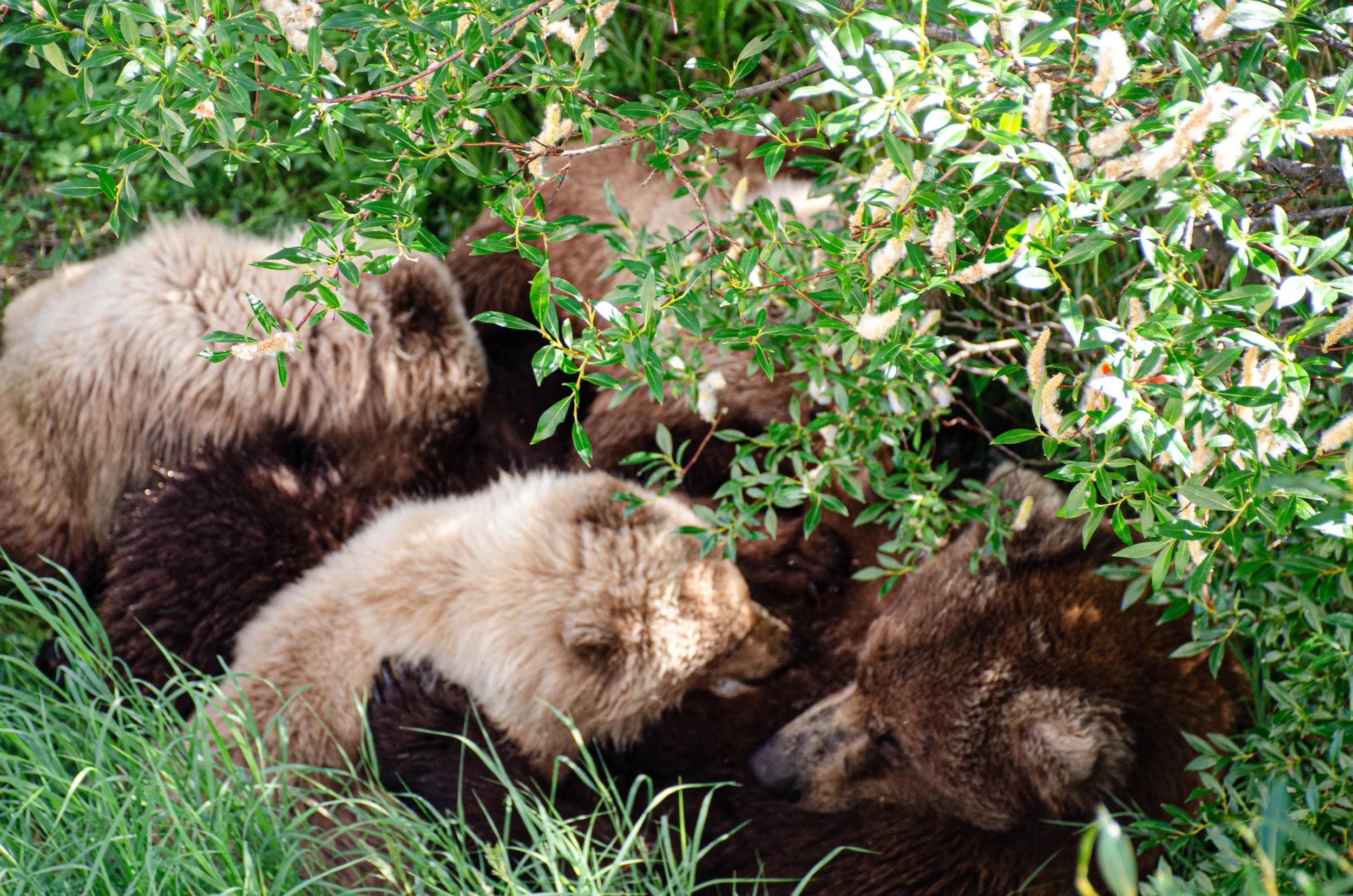
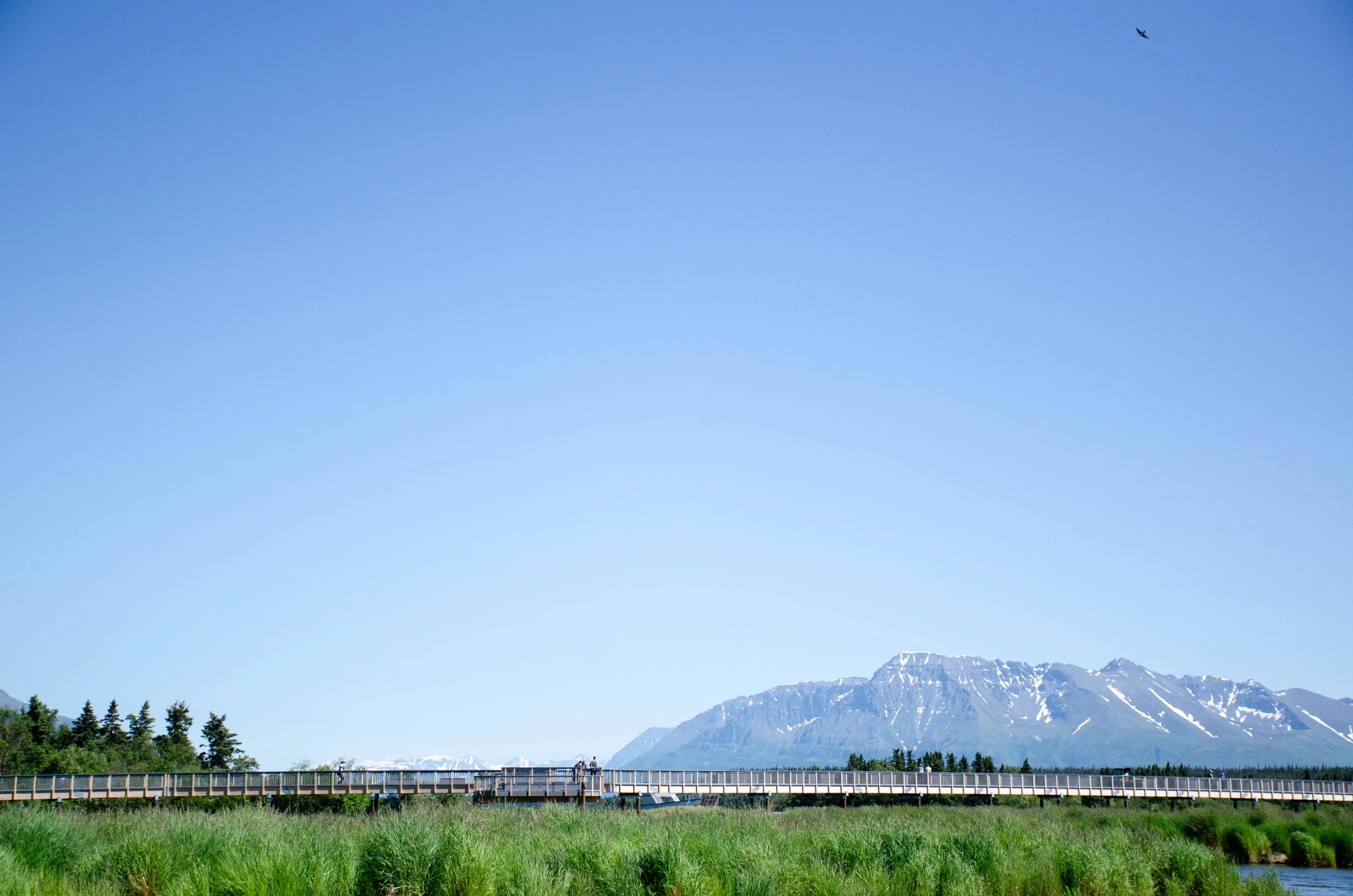
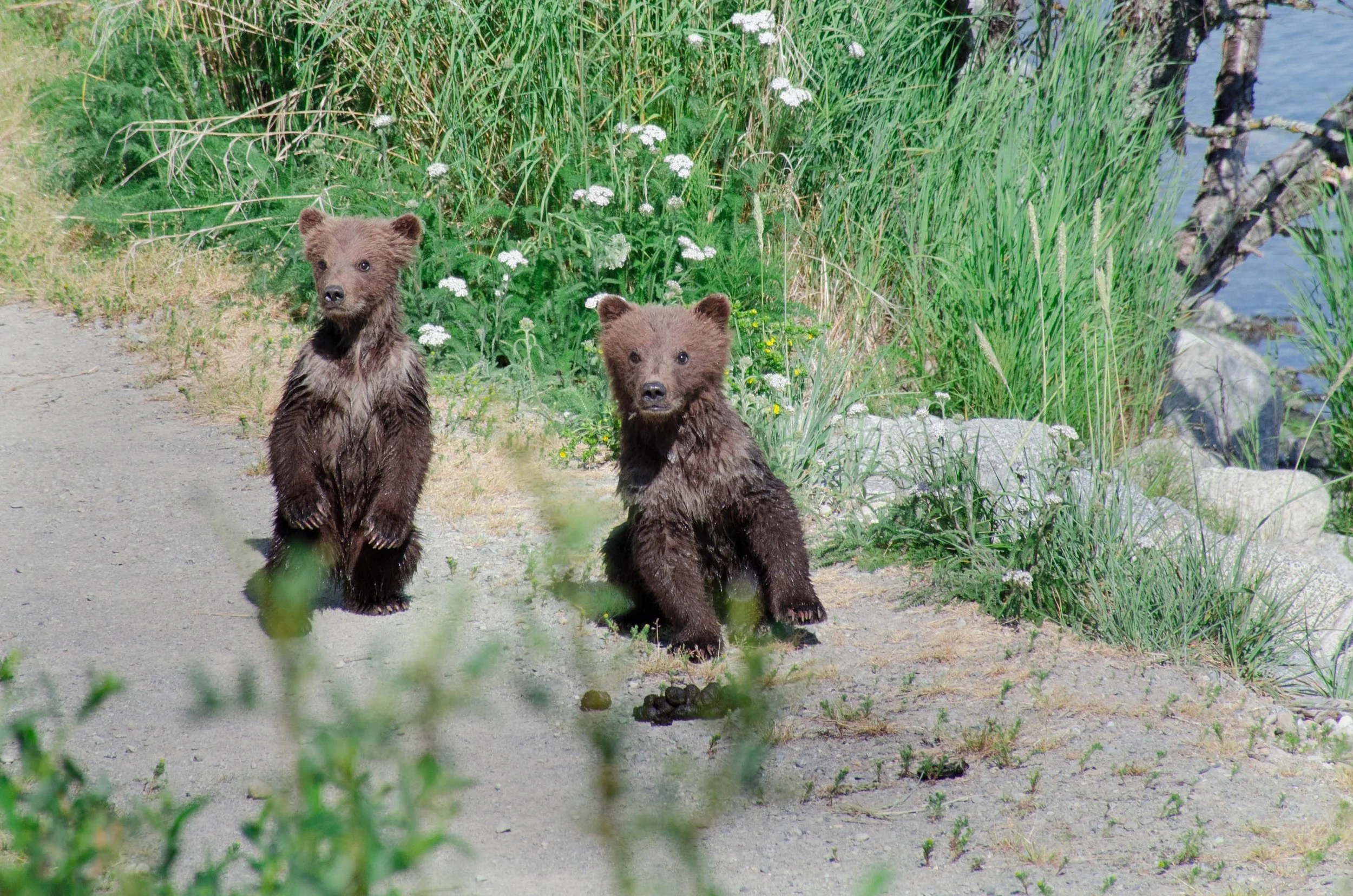
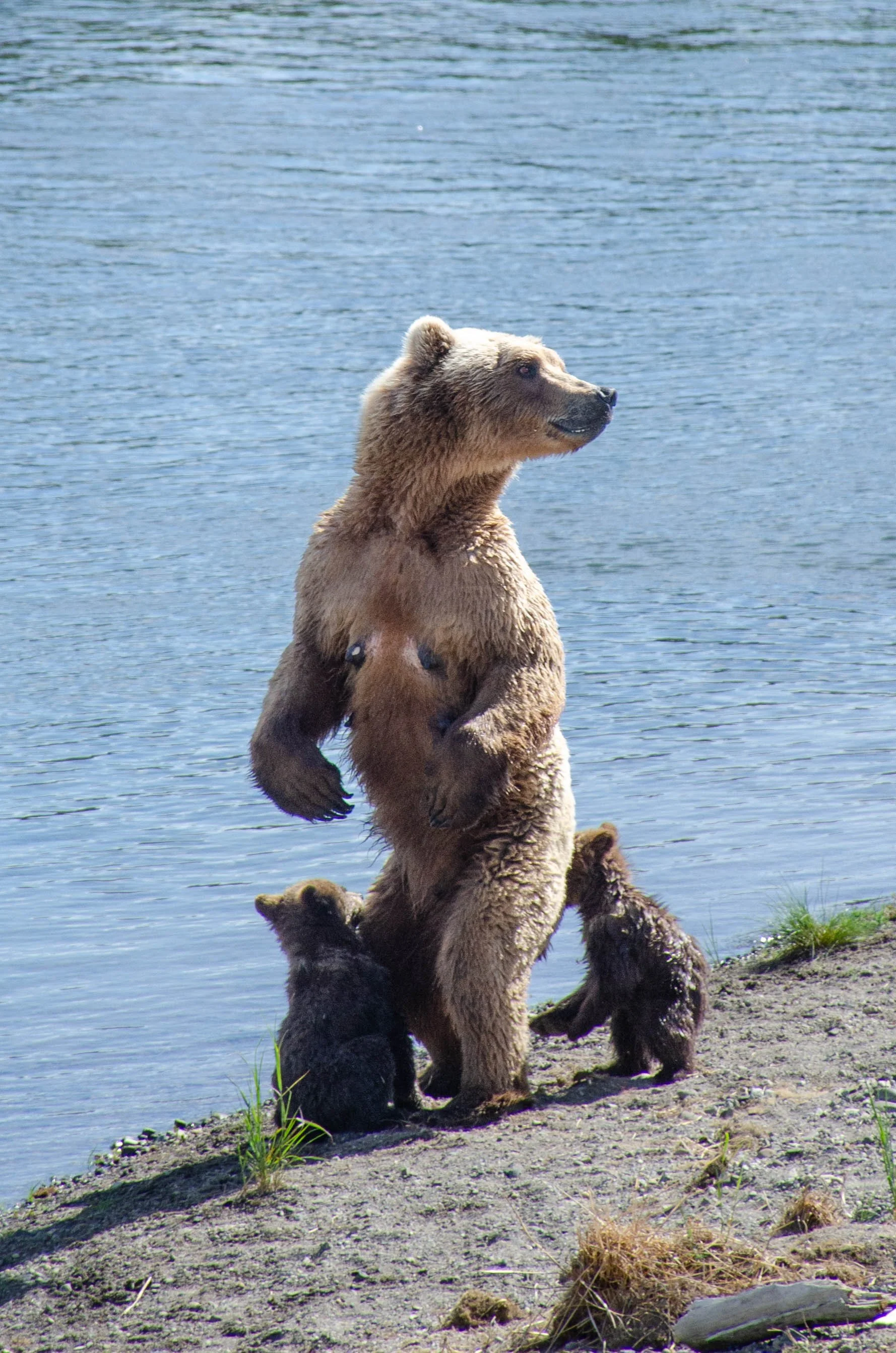
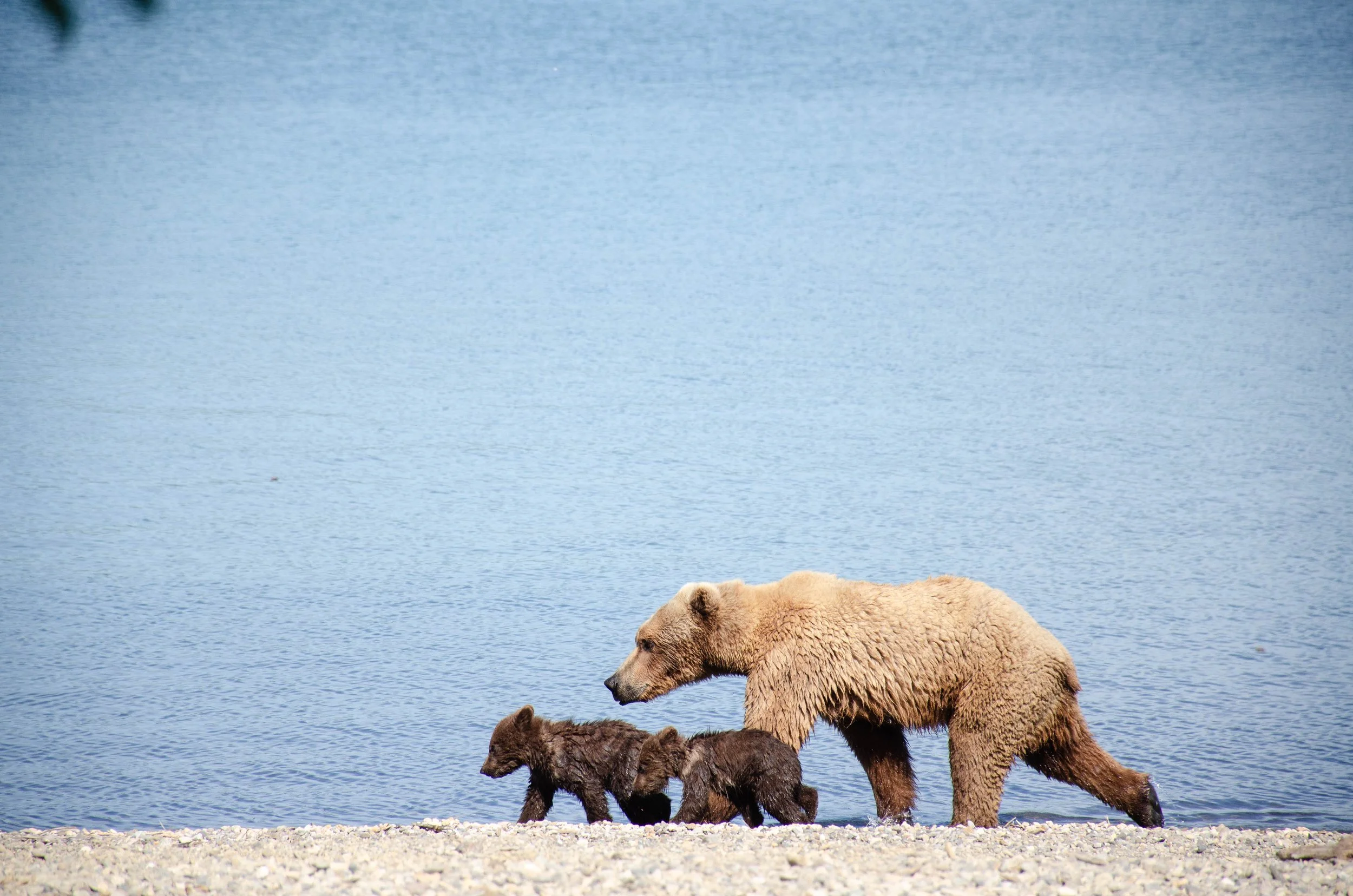
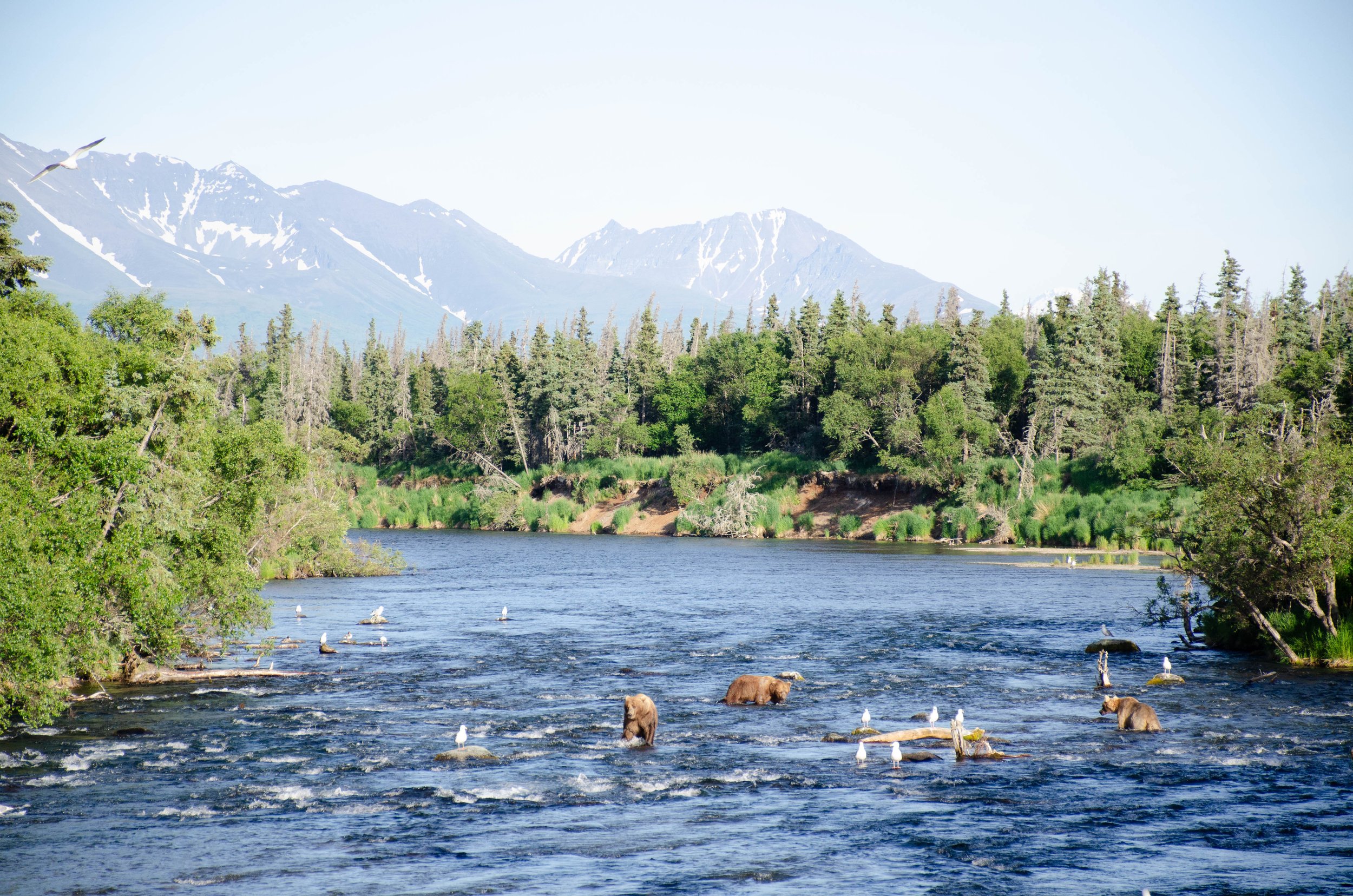
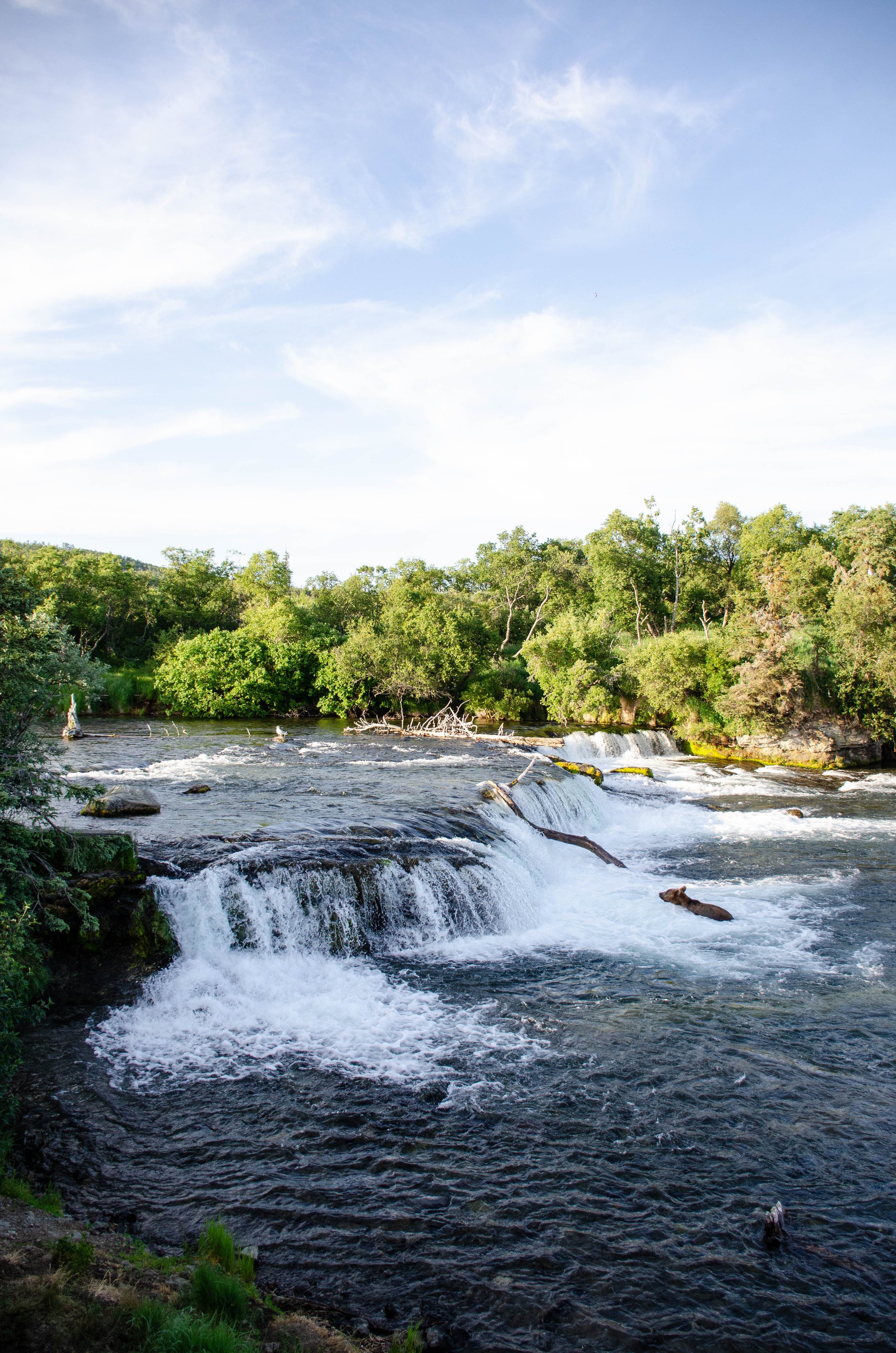
And observe them we did. We witnessed a mother bear nursing her cubs close to the lower river platform bridge and watched endless brown bear politics and negotiations taking place around the best spots to catch salmon under Brooks Falls. J finally got to see the sight he’d long dreamed of: A bear catching a salmon in its mouth and eating it in a river. We squealed over the cuteness of the dark brown “baby baby” bears (those who had just been born weeks earlier) as they clung to their mother’s side and were sobered by the cruelty and intimidation we saw in different bear interactions.
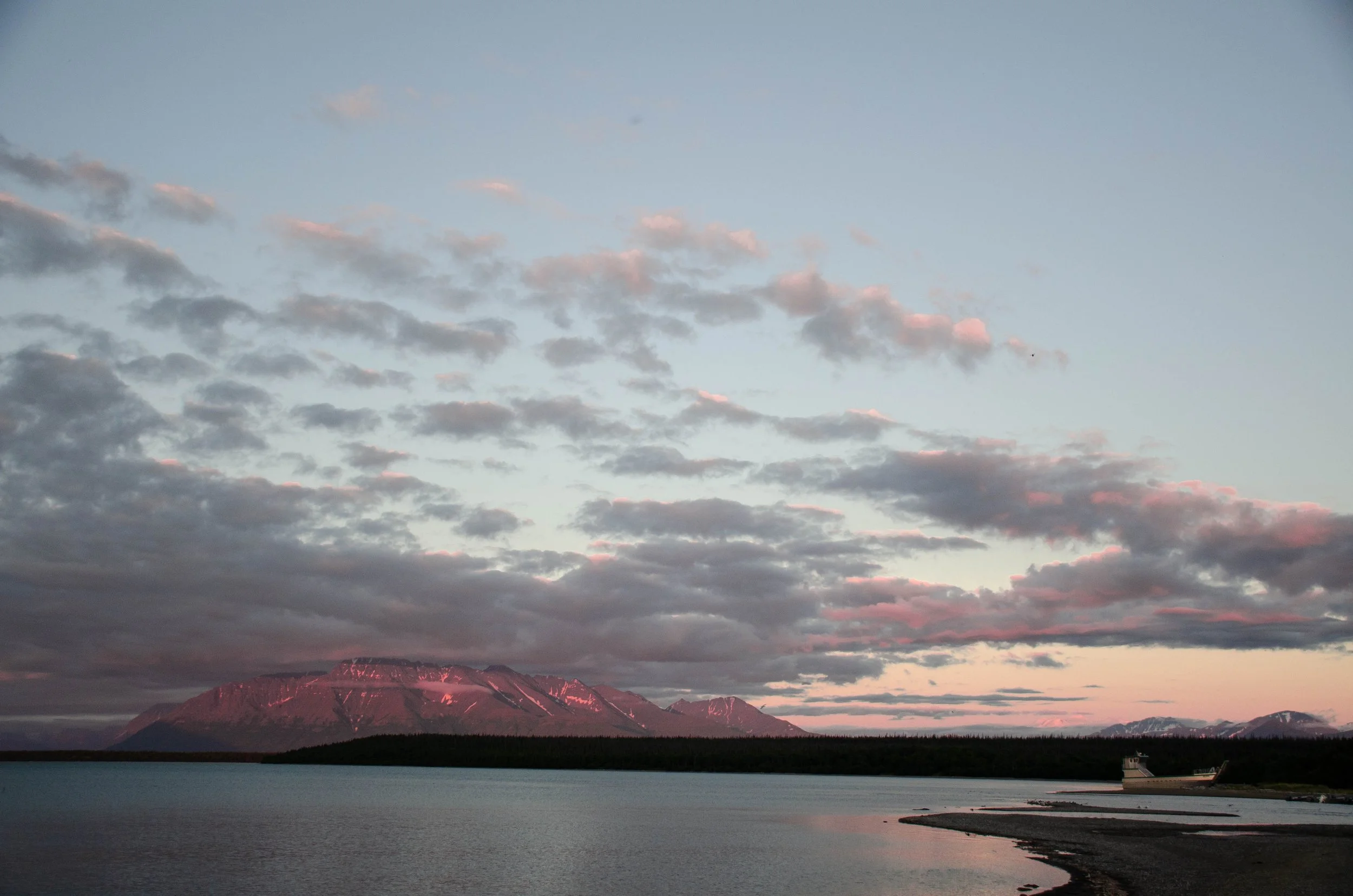
We spent four long, sunshine soaked days here, including a day trip to the Valley of 10,000 Smokes and a June 26 birthday celebration for the ages. It’s wild, but three of us in the group — me, J, and one of his best friends from high school — all have the same birthday. We have dubbed ourselves the June 26 Birthday Club and have spent the day together a few times over the years (we’ve even been carded at Beau Joe’s in Colorado when we all tried to cash in on the free birthday dessert special and shocked the wait staff when our IDs confirmed it really was each of our birthdays), but this was probably our most epic celebration to date. We stayed up late sipping on whiskey from our mugs as the light slowly dimmed over Naknek Lake, reminiscing about our favorite memories from the trip thus far.
All in all, Katmai is place that continues to live large in our mind’s eye, forever imbued with a sense of wonder, respect, and a fair bit of magic.
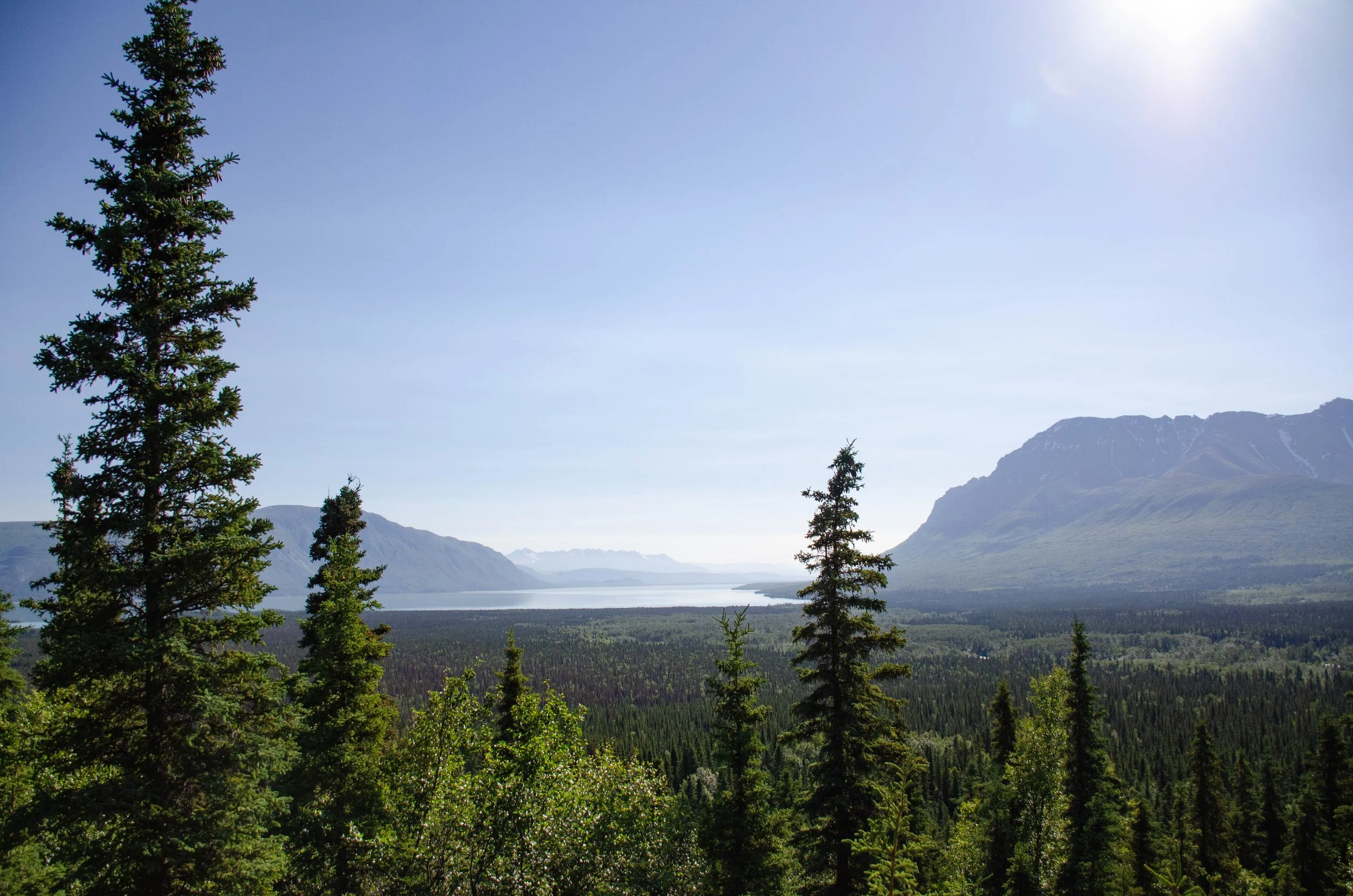
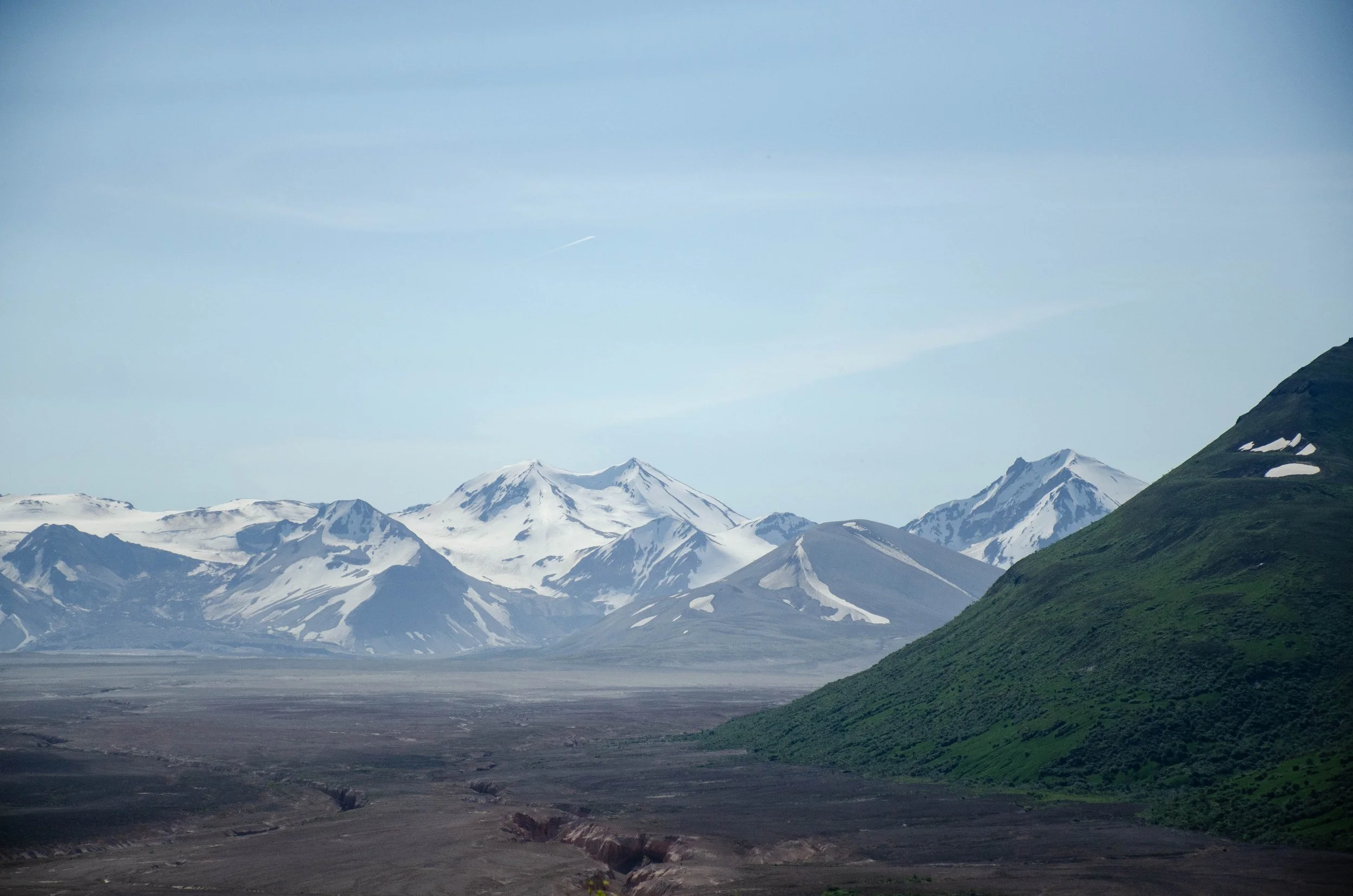
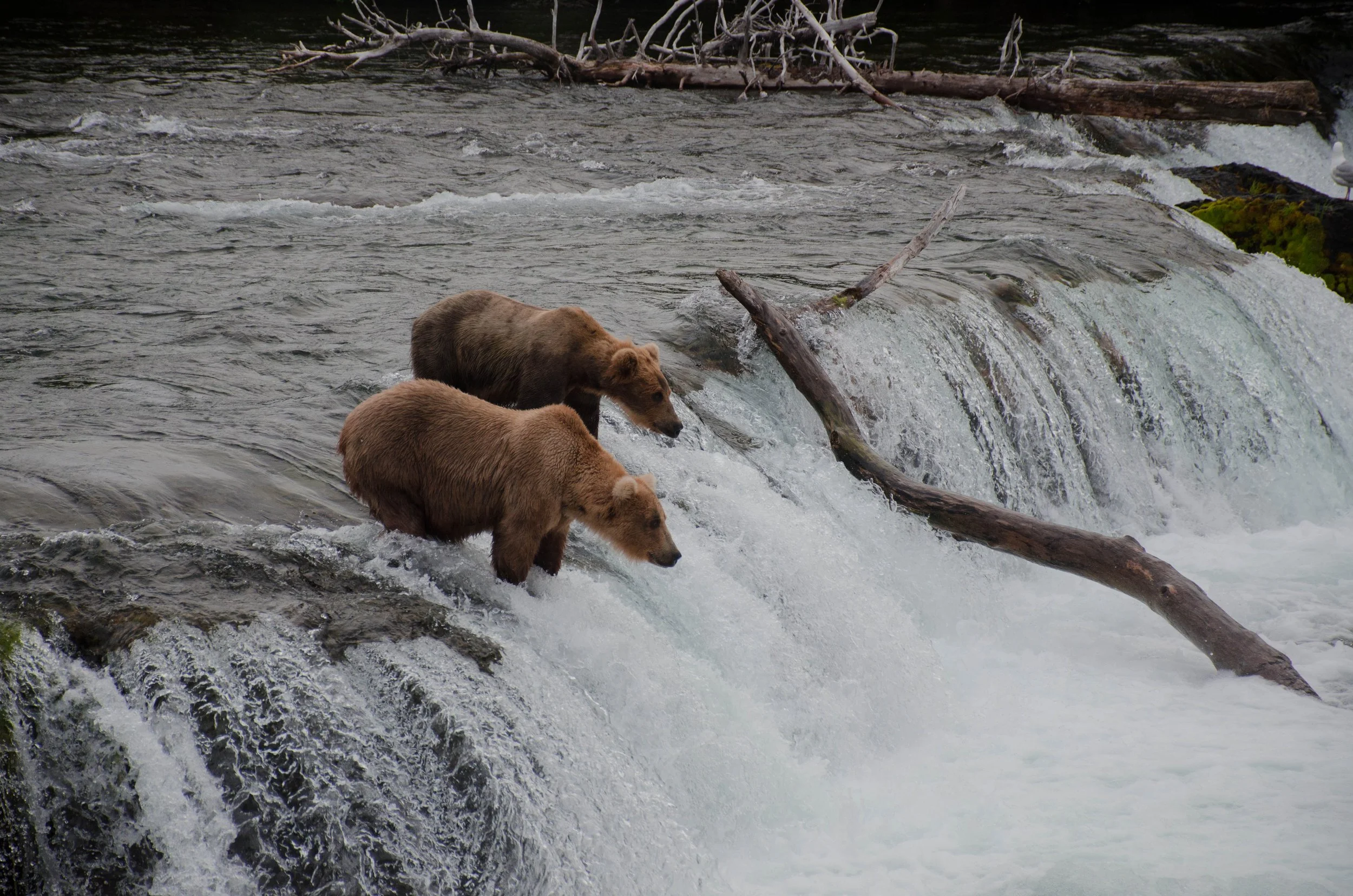
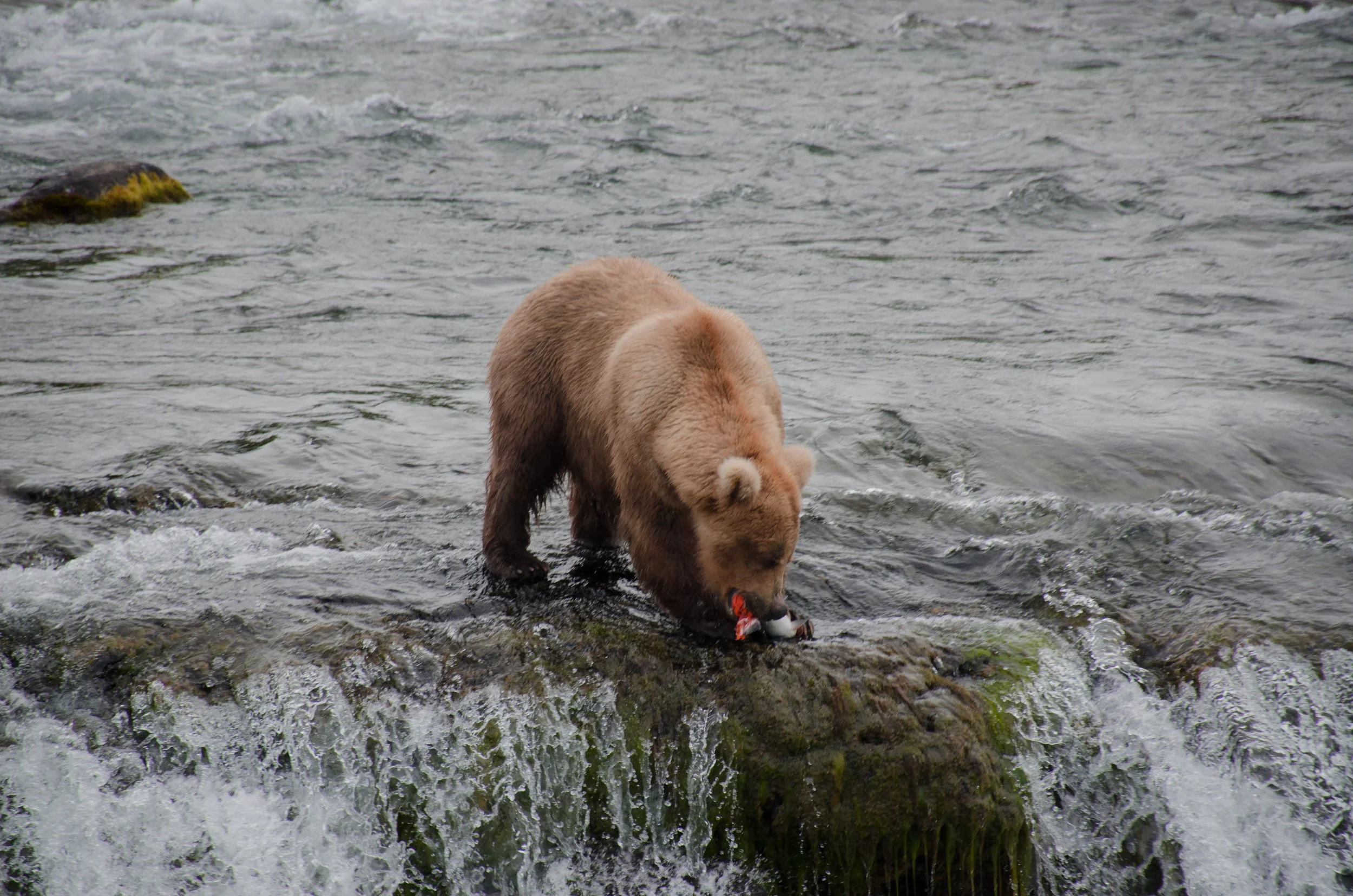
Pictured below:
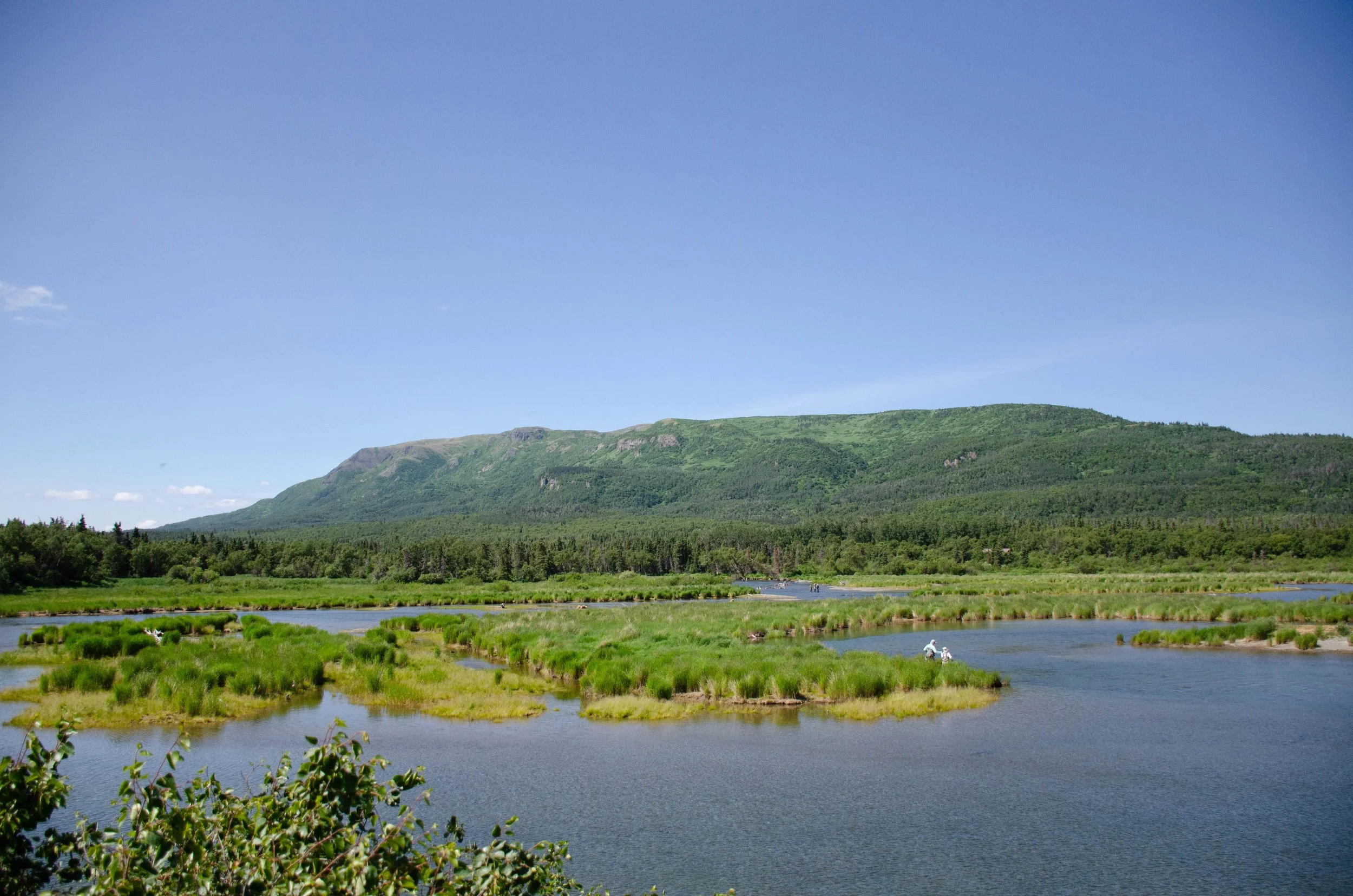
Brooks Campground, positioned next to the Brooks River and on the shores of Naknek Lake.
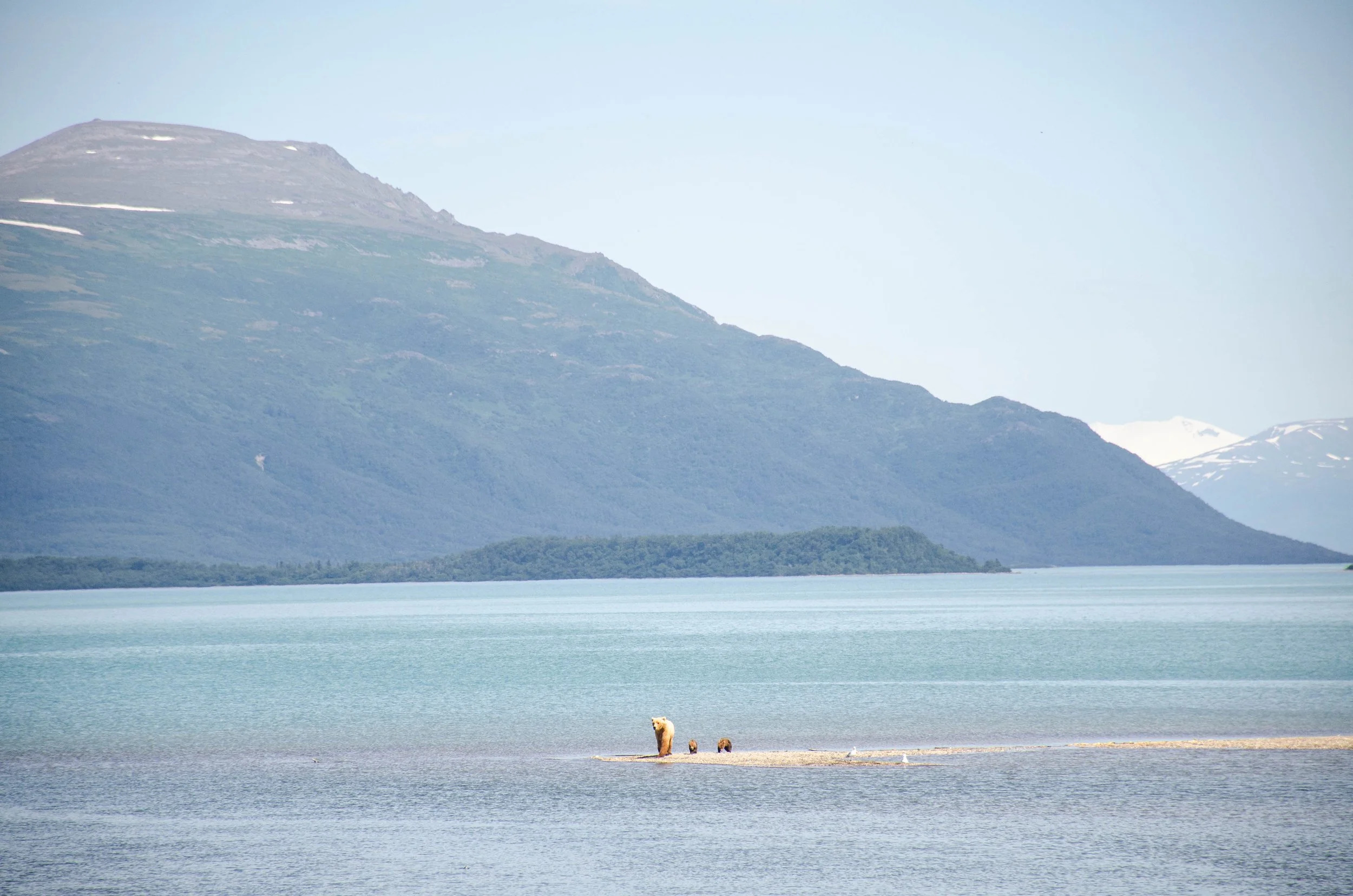
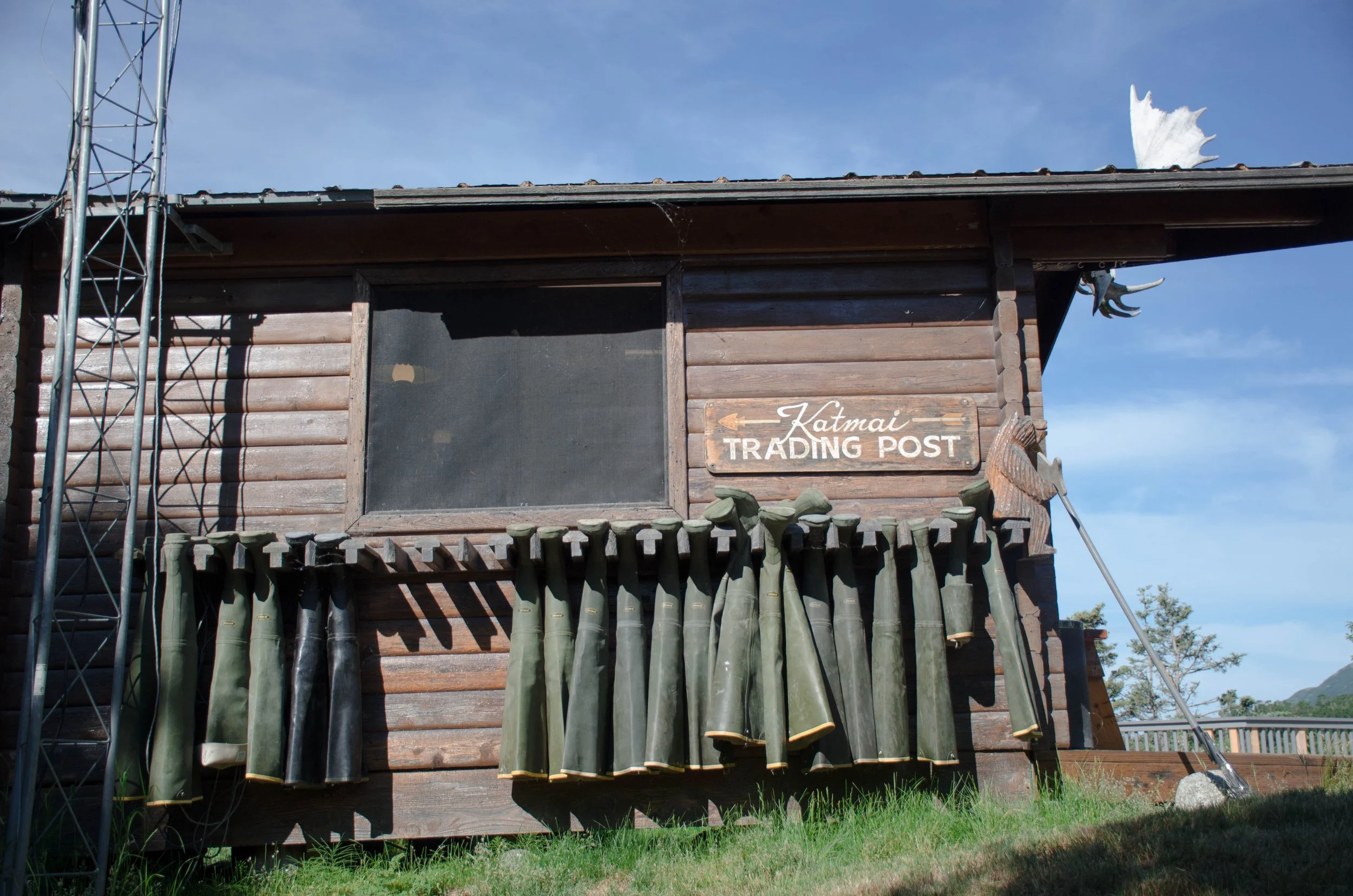
Alaska Peninsula brown bears everywhere one looks — this was one of the wildest nature experiences we’ve ever had.
Valley of 10,000 Smokes.
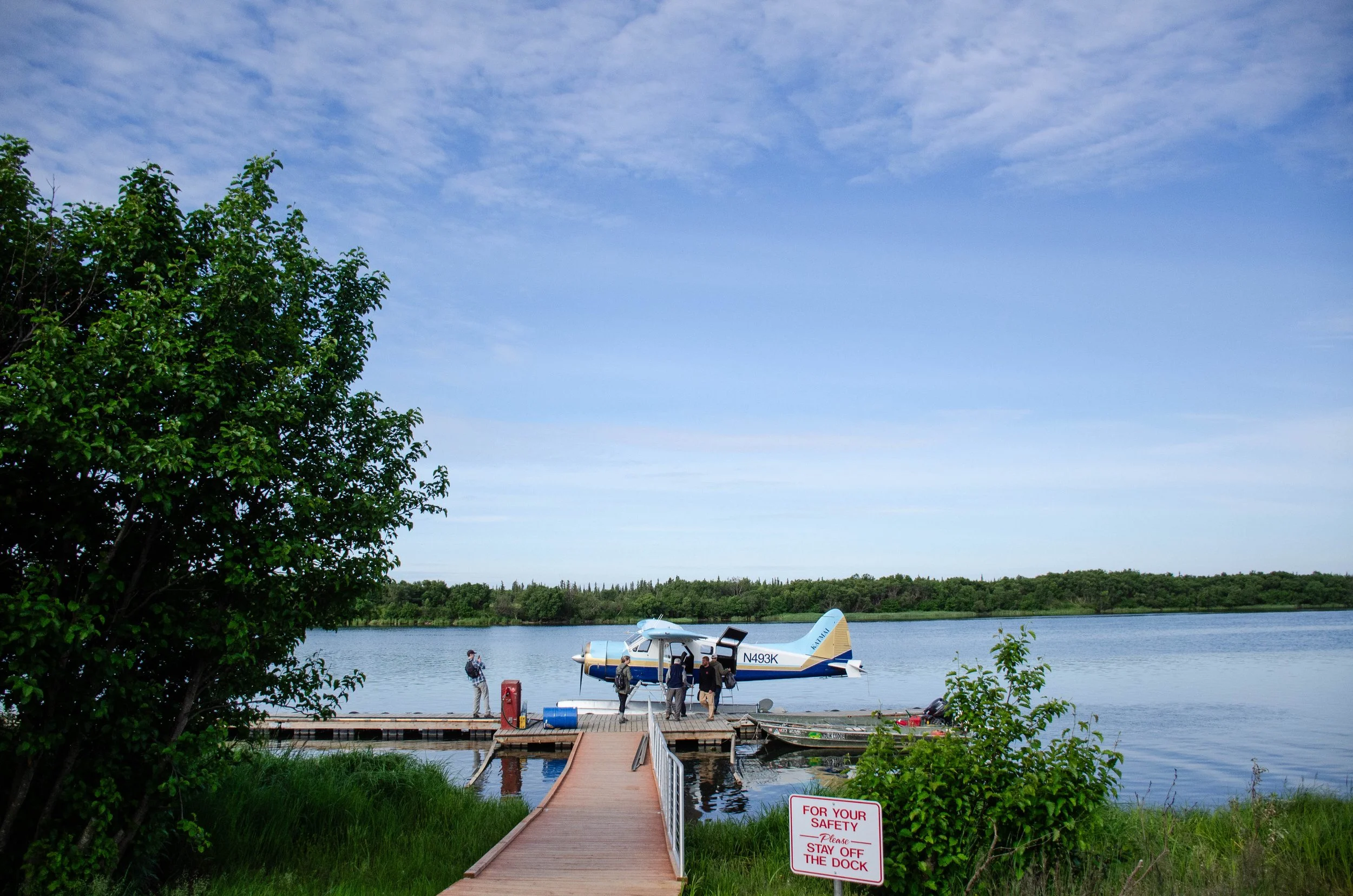
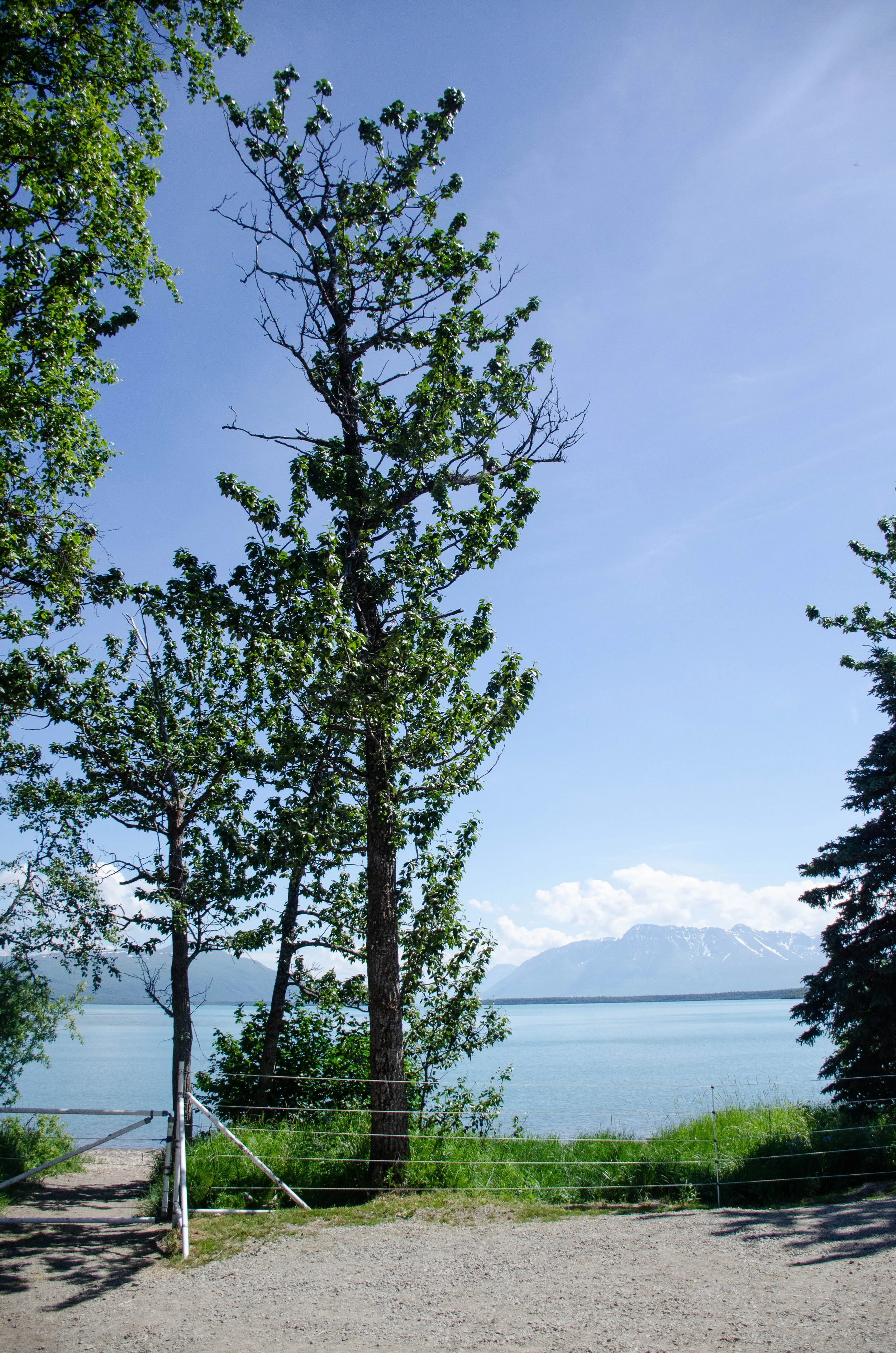
Denali
Park 11 | June 2019
Part + Park 1 (of 4) on our epic adventure to Alaska.
The path to our three-week trip to Alaska began over a bowl of bright green soup shared with friends in Denver.
Well, it actually started a bit before that point, back on our 2018 trip to visit Mesa Verde National Park with good friends (two other couples). We stayed at our friends’ aunt and uncle’s home near Durango, and each guest bedroom was decorated with stunning bear photos, all taken by the uncle. One room was dedicated to the polar bears near Hudson’s Bay, Canada, and the other was filled with images of Alaskan brown bears eating salmon in the middle of an unbelievably gorgeous river. Upon inquiry, we learned that the brown bears pictures had been taken in Katmai National Park. Naturally, this immediately planted a stubborn seed within us to visit both of these places at some point in our lives. (J may or may not have added “see a bear eating salmon in a river” to his life to-do list.)
Fast forward a few months, and we were beginning to plan for J’s 30th birthday the following summer. We considered a host of options for potential trips or experiences, but kept coming back to J’s burning desire to see a bear. “What if we tried for Alaska?” I wondered aloud during one of our discussions. Something about the idea stuck with both of us and before you know it, the seed that was planted on our trip to Mesa Verde was blossoming into a full-blown plan that involved four national parks, a ridiculous amount of logistics, renting out a room in our tiny apartment via Airbnb to make and save extra travel funds, and plotting to pitch the whole thing to our friends to see if we could convince them to come along with us. This bring us to the soup — a savory vegan broccoli cheddar — that we served while making the initial pitch for all of us to go to Alaska together.
Shockingly, our audacious proposal over green soup actually worked. The six of us eventually ironed out a plan to visit the first two parks together (Denali and Katmai), after which the four of them planned to return home while J and I would stay and visit two more parks (Kenai Fjords and Glacier Bay). And so the following June we all convened in Anchorage, stuffed all our backpacks and tents and Goodwill-acquired coolers into the rental van, and drove north to Denali National Park.
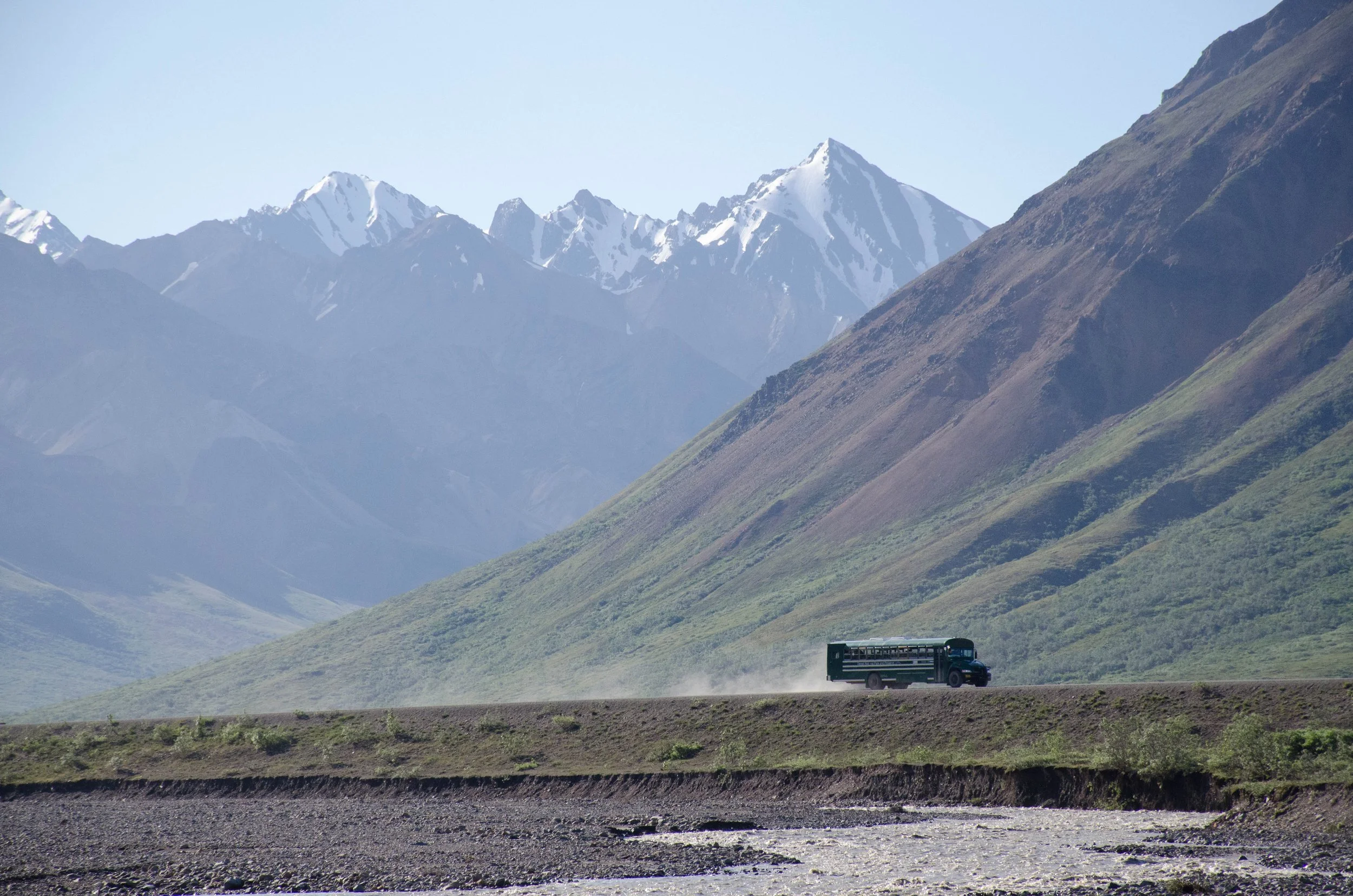
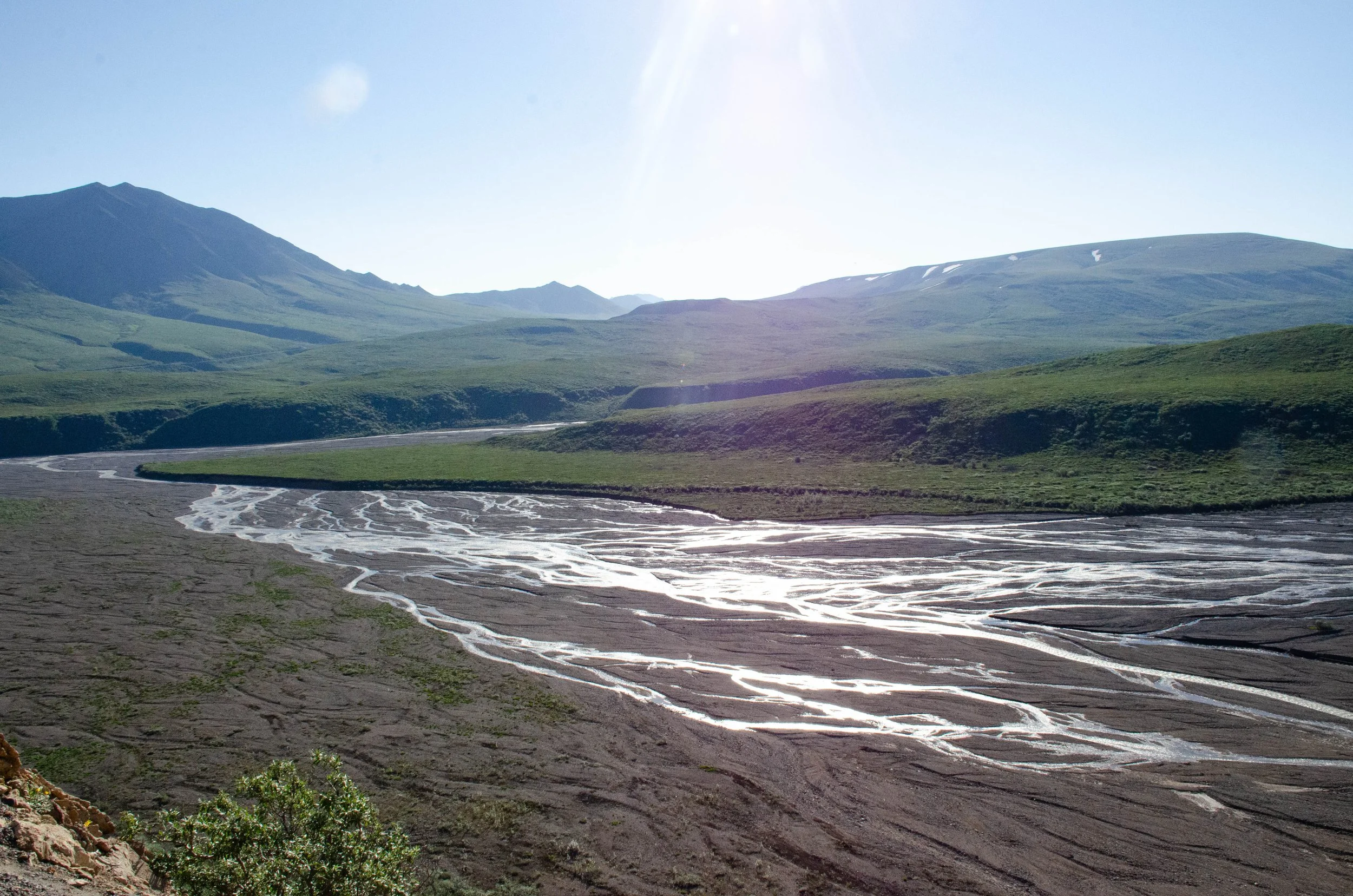
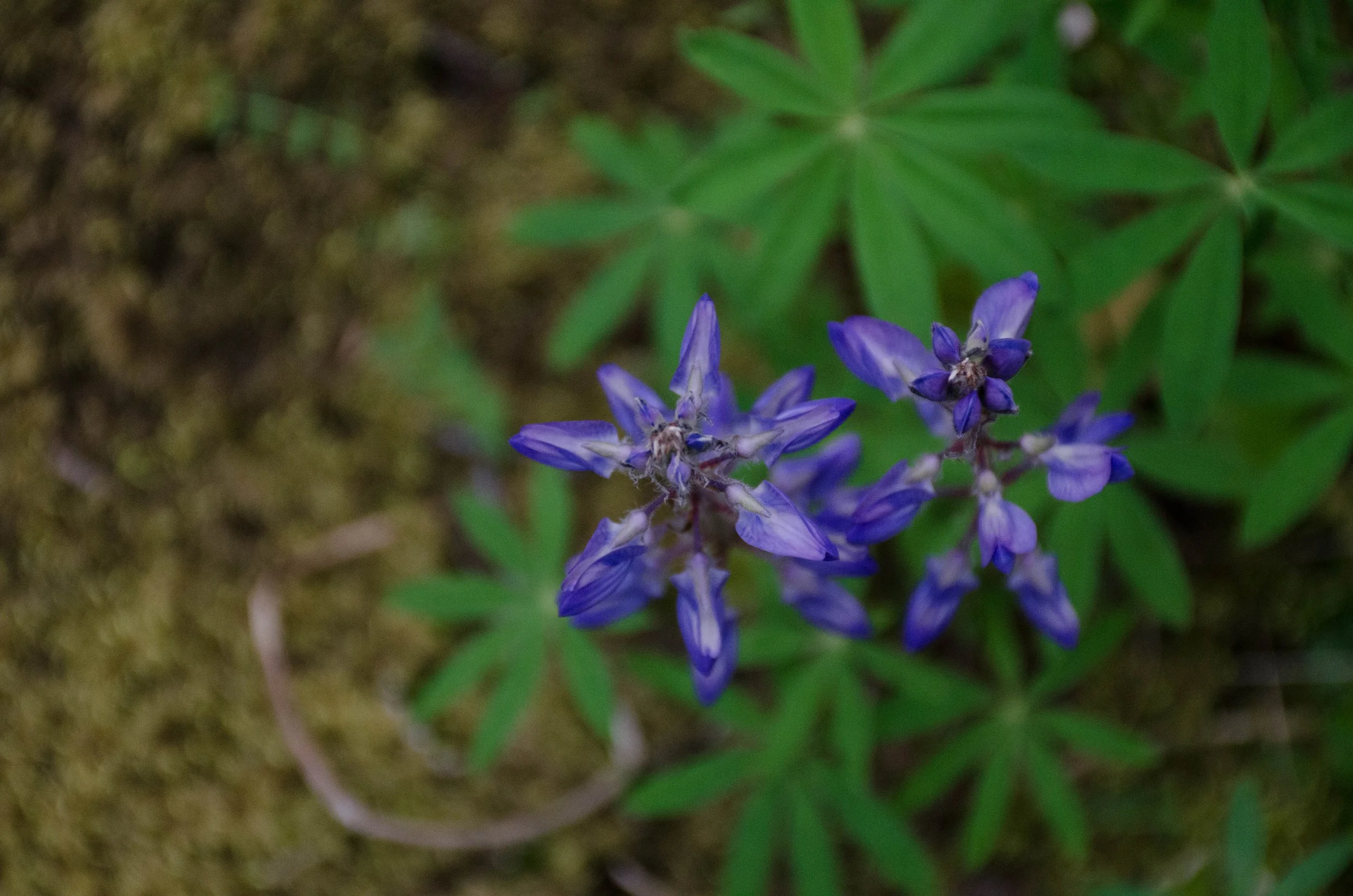
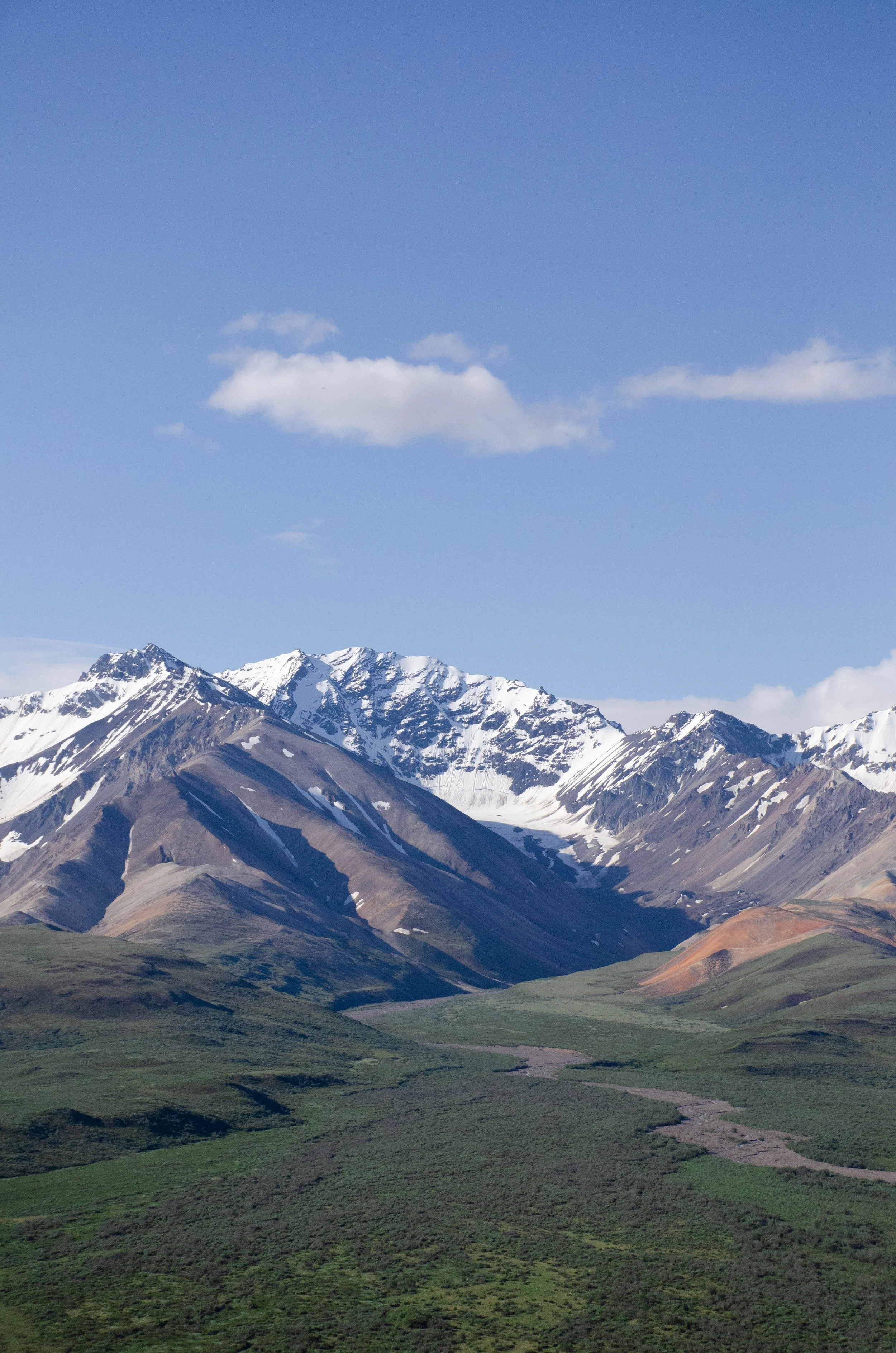
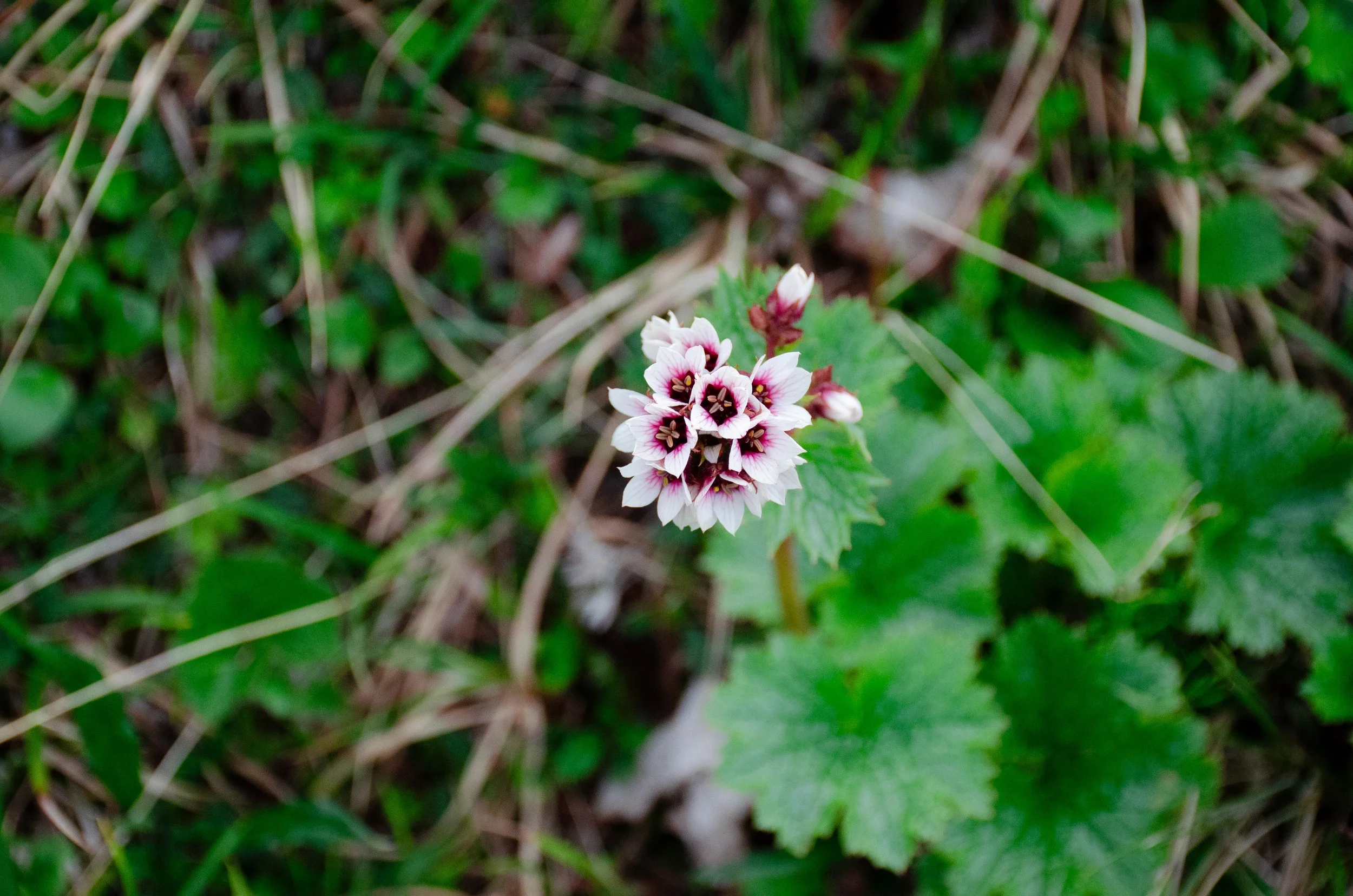
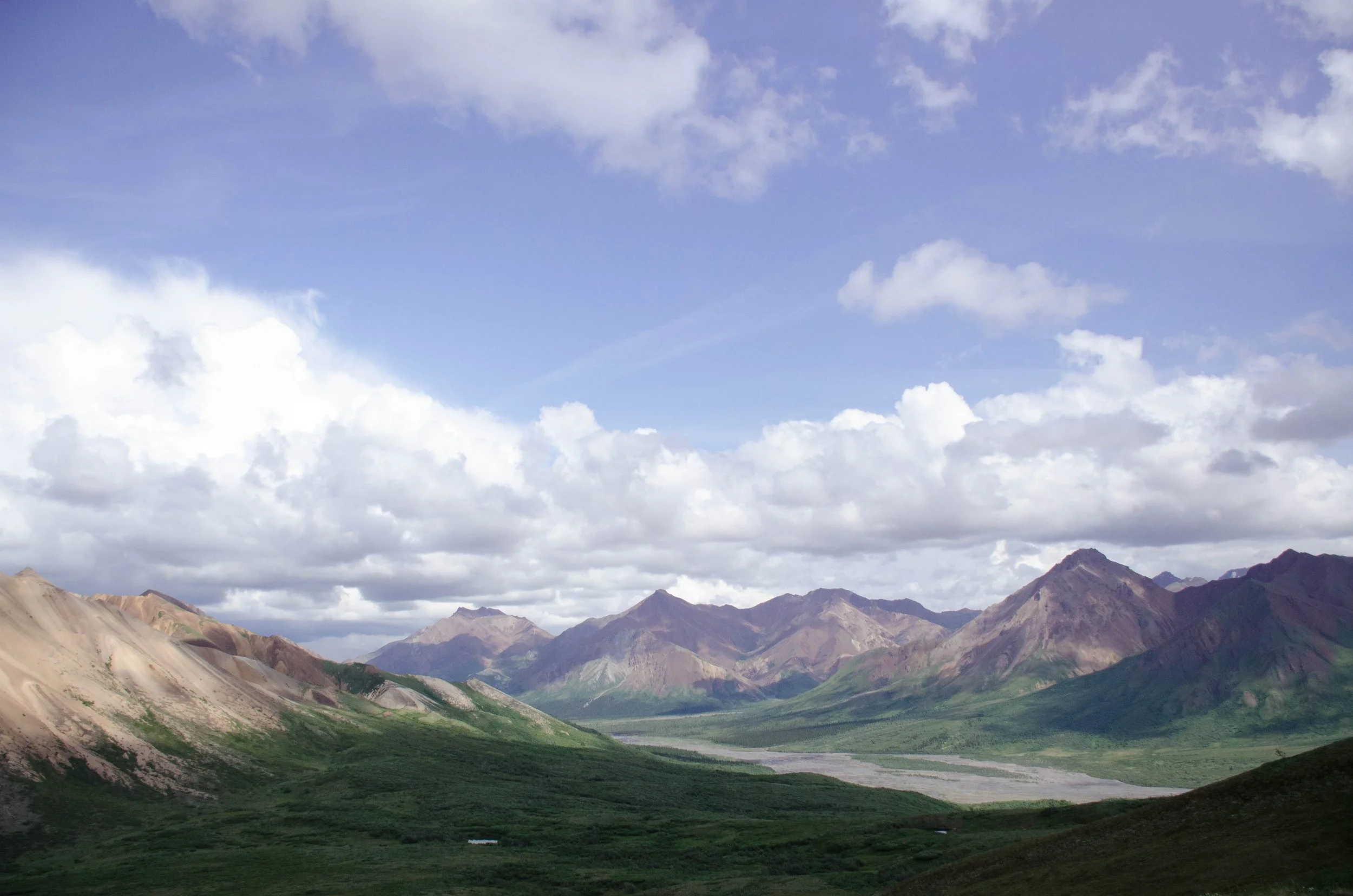
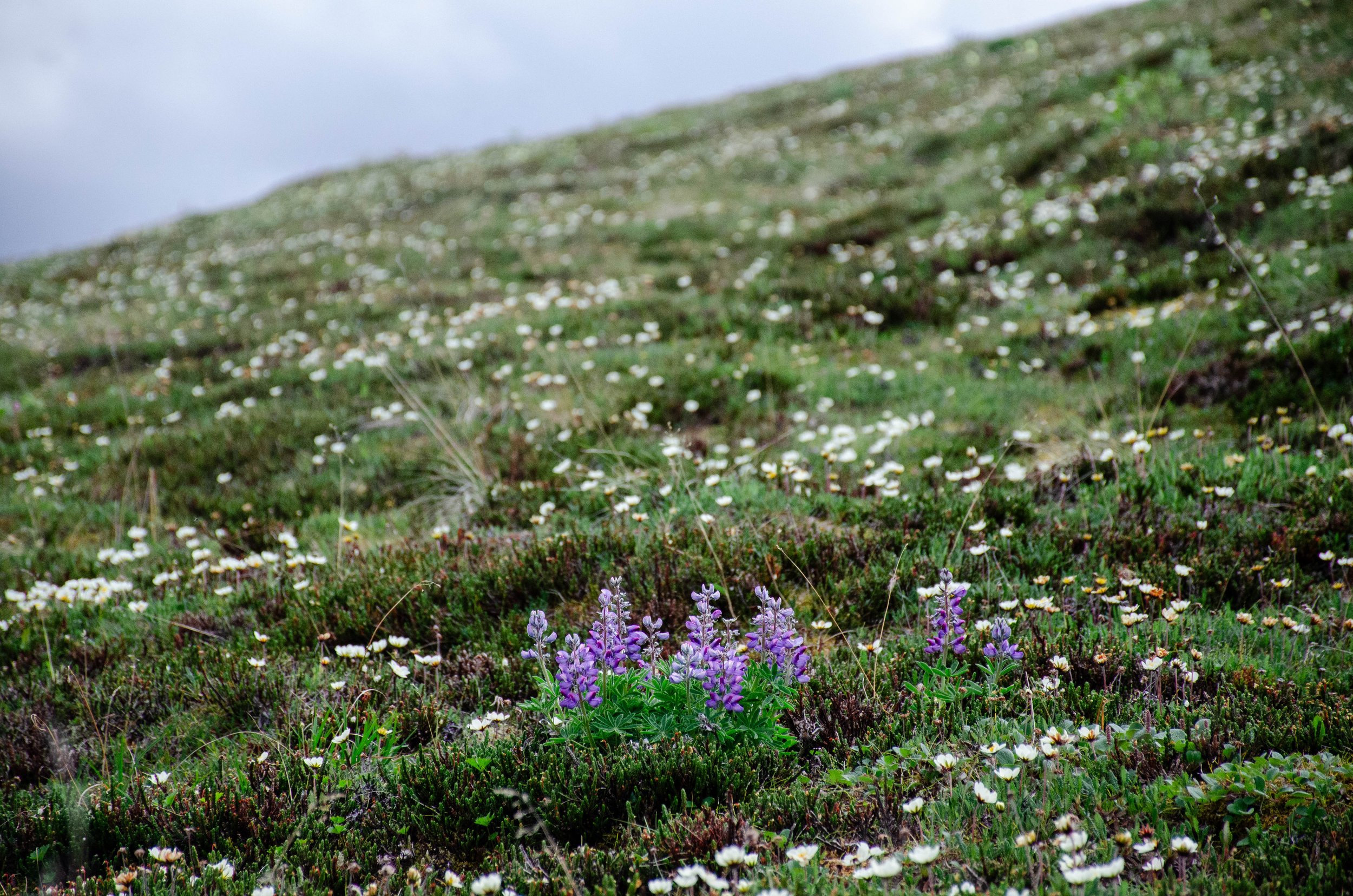
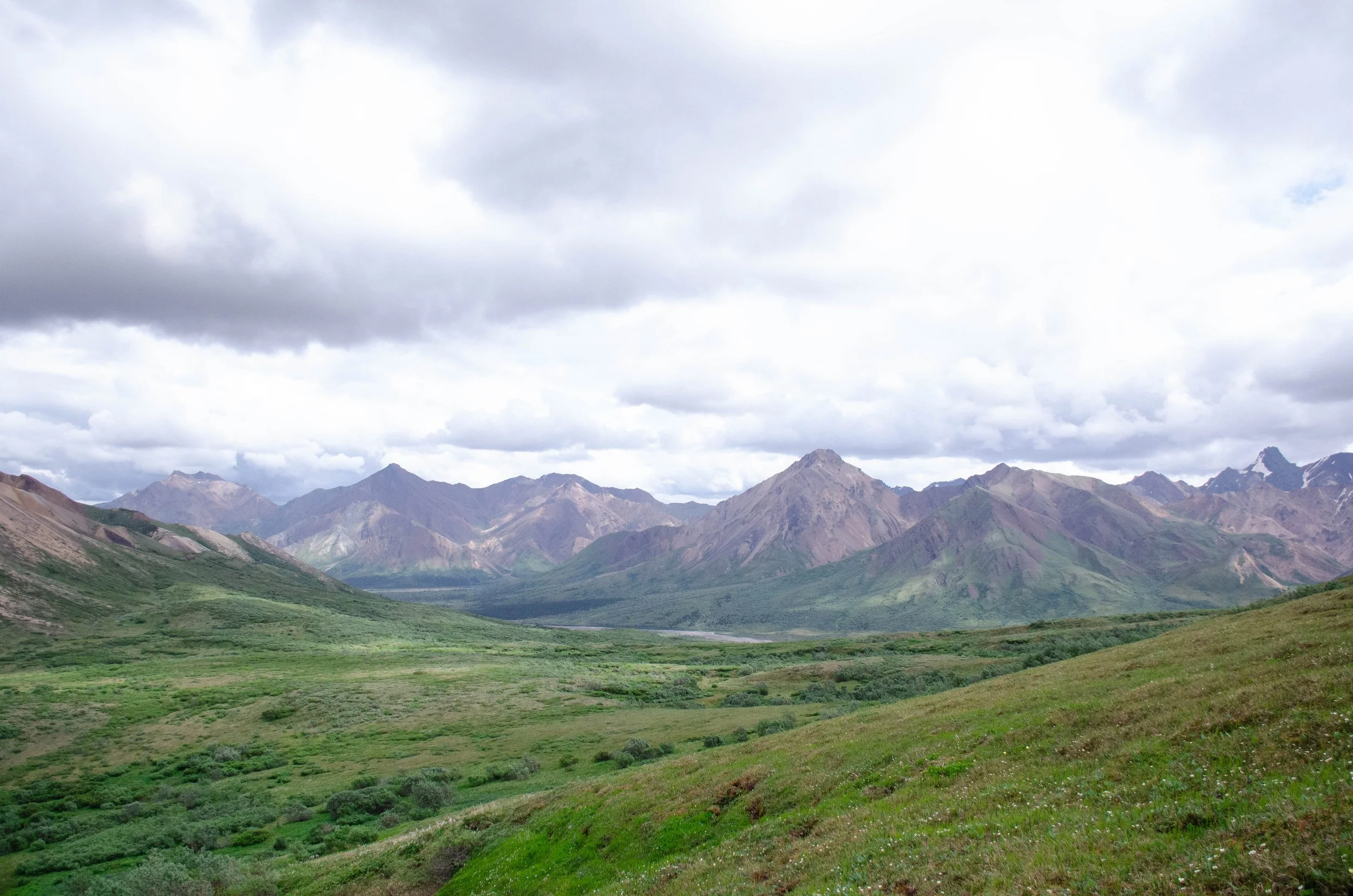
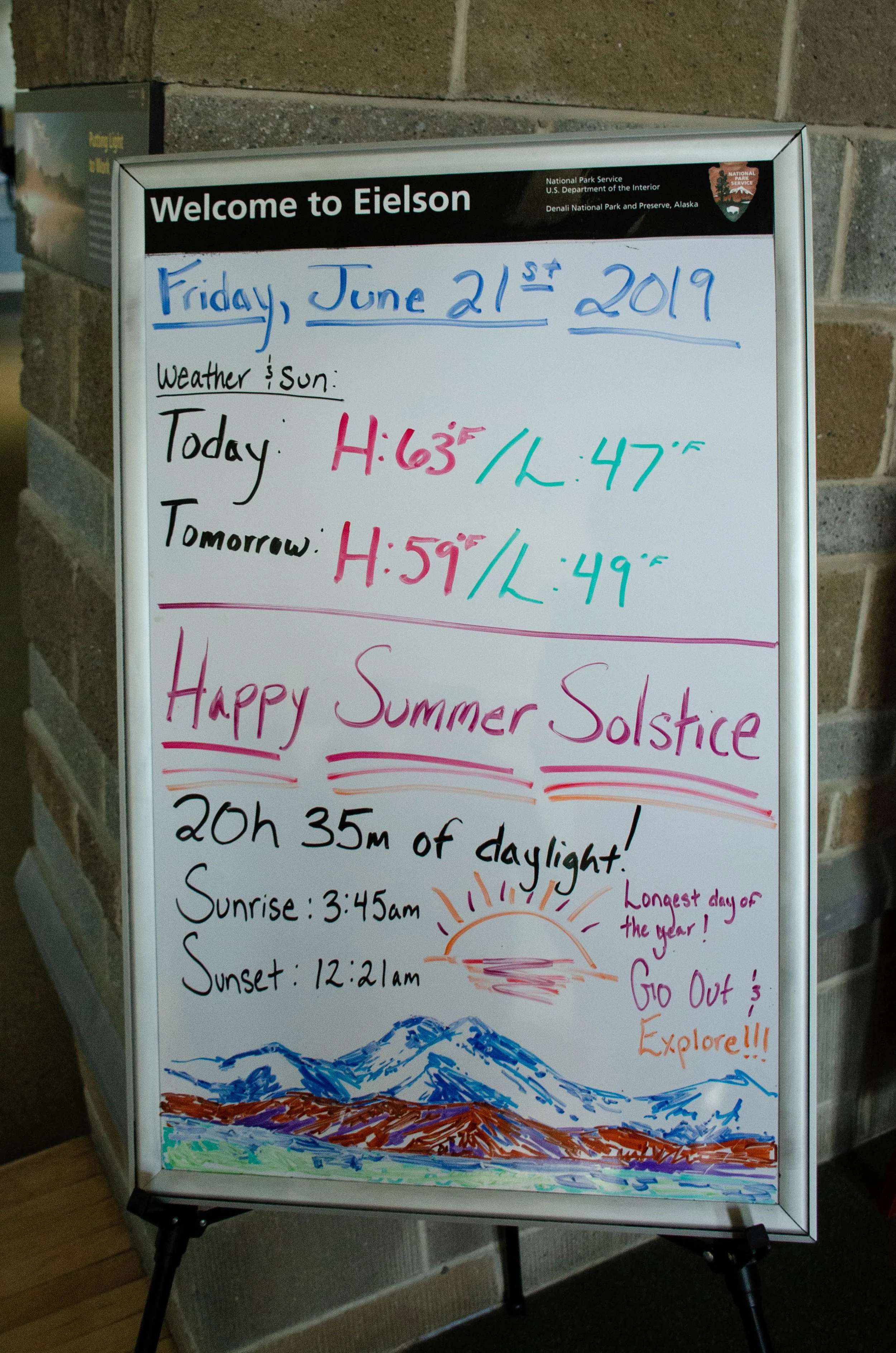
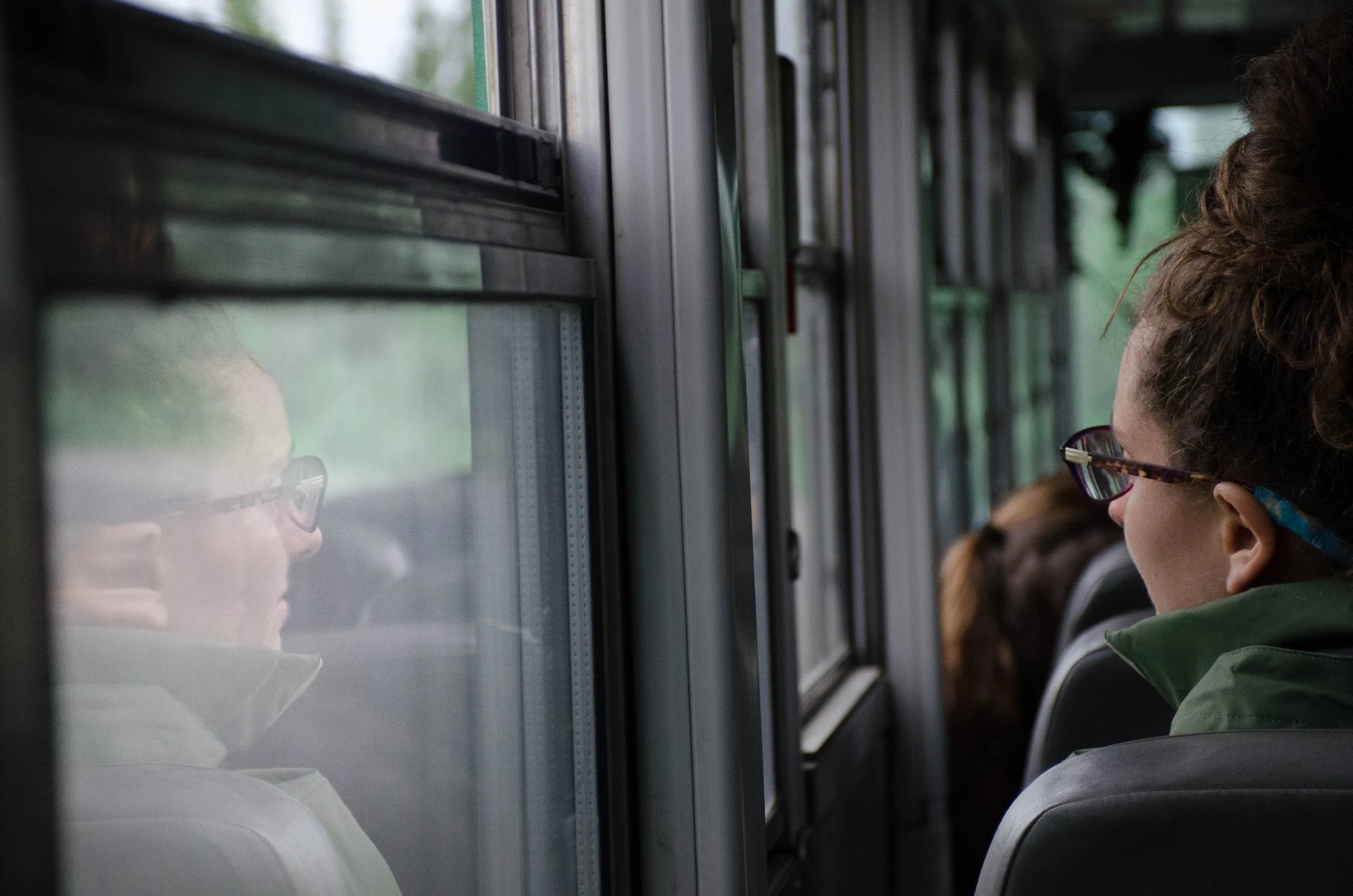
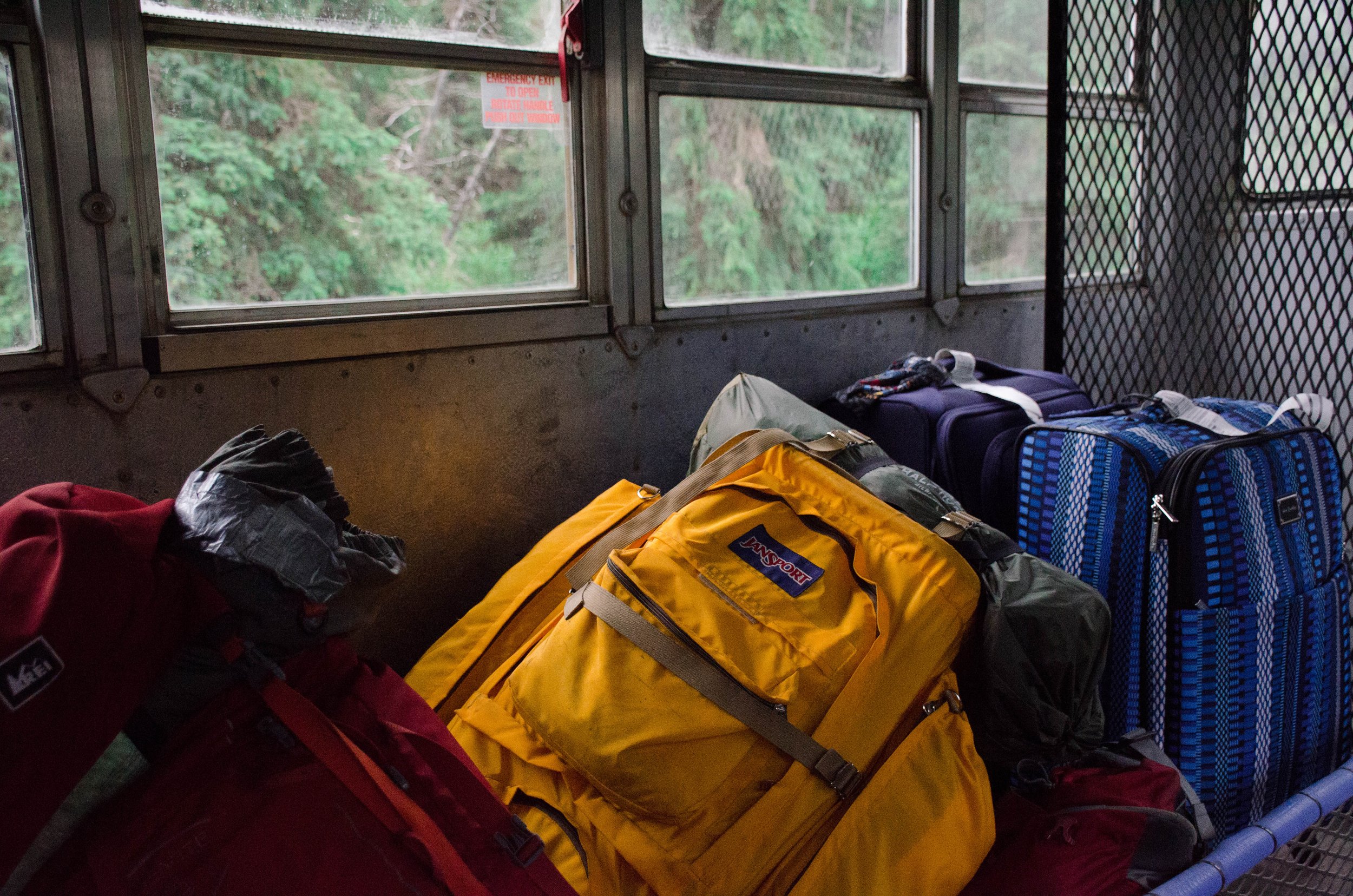
I am so glad we started this trip in Denali. The sheer size and scope of this place is impossible to put into words and feels quintessentially Alaskan. Vast landscapes, hillsides dotted with summer wildflowers, sparkling braided rivers, wildlife in every direction, and a wide open sky with a sun that almost never set at that time of year. Access to Denali is only possible along the long Park Road that snakes through the center of the park toward Wonder Lake. We mostly camped at Teklanika River Campground, which was one of the furthest campgrounds that we were able to drive to; after a certain point, no vehicles are allowed other than the bus shuttles run by the park.
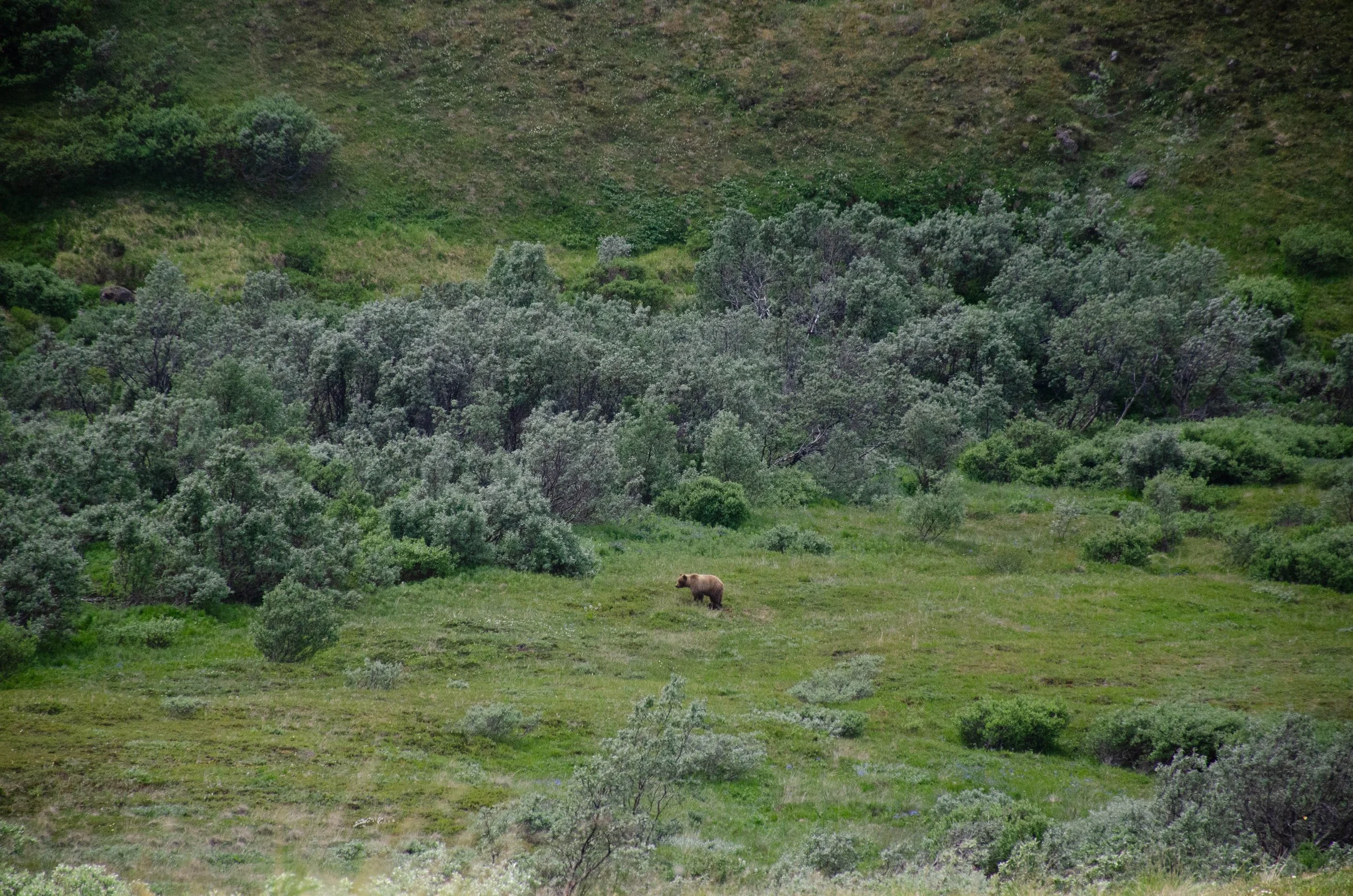
We also squeezed in a night of backpacking which, wildly, was my first ever backpacking experience — quite an introduction since there are no trails to follow in the park and there are a healthy amount of grizzly bears, moose, and wolves in the vicinity. It ended up being a little terrifying (e.g. Did we see a bear from afar while eating dinner? Yep. Did I find bear prints in the sand that were larger than my foot? Sure did. Did a grizzly show up at the outskirts of our campground the morning we woke up? Why yes, that also happened), but it was also peaceful, exhilarating, mesmerizing. We pitched our tents in a wide valley next to a gorgeous river, ate our freeze-dried meals a 100 yards away from that, and brushed our teeth and stored all scented materials in bear canisters another 100 yards away from that, forming a large triangle that mitigated our chances of being approached by a curious/hungry bear (or any other animal). Despite feeling a bit nervy on the hike out since the grizzly who had shown up on the edge of our campsite had left the area on the exact trail we needed to follow to get back to Park Road and a shuttle, we made it out no worse for wear (and I’ve been backpacking every summer since).
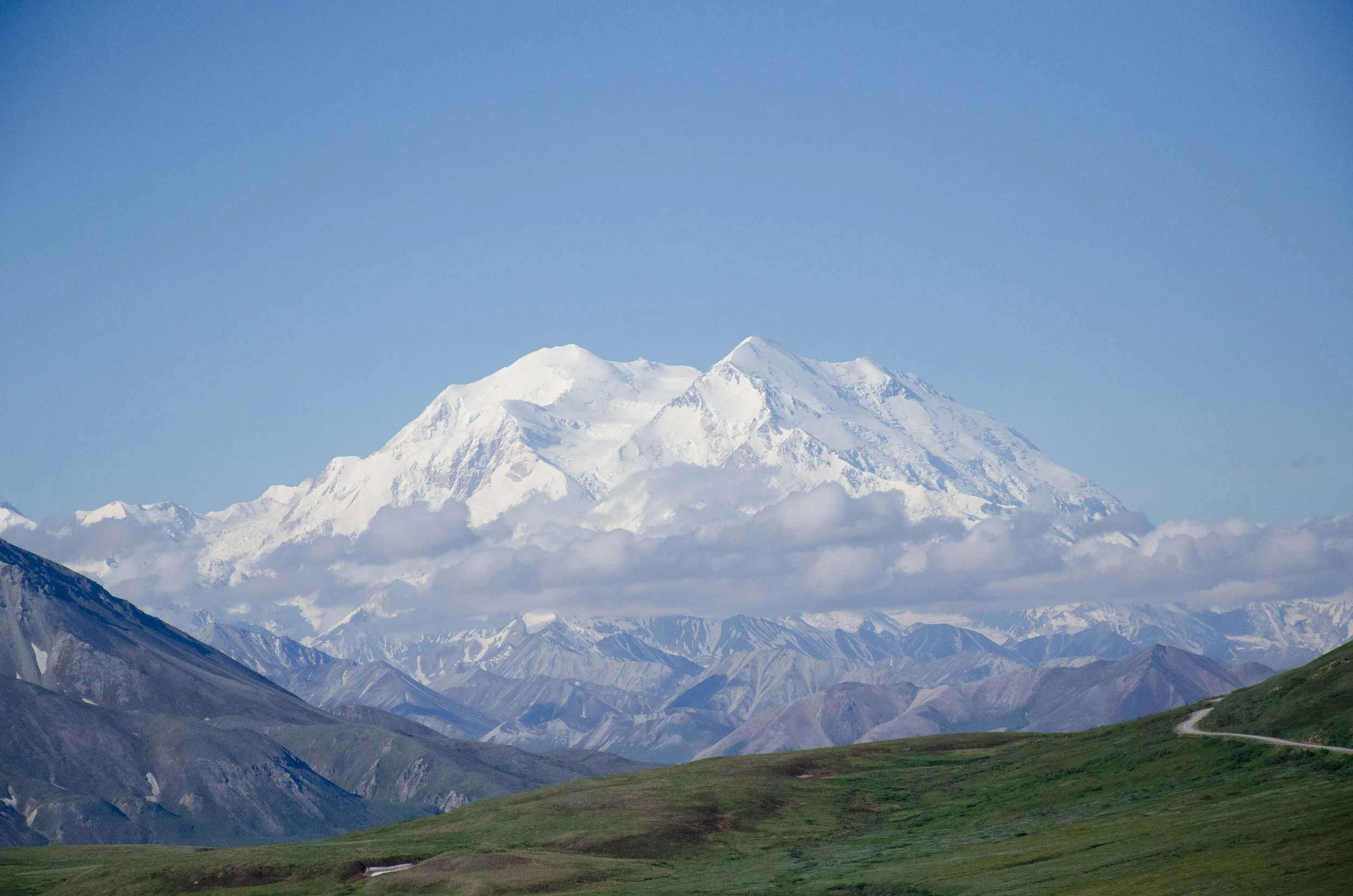
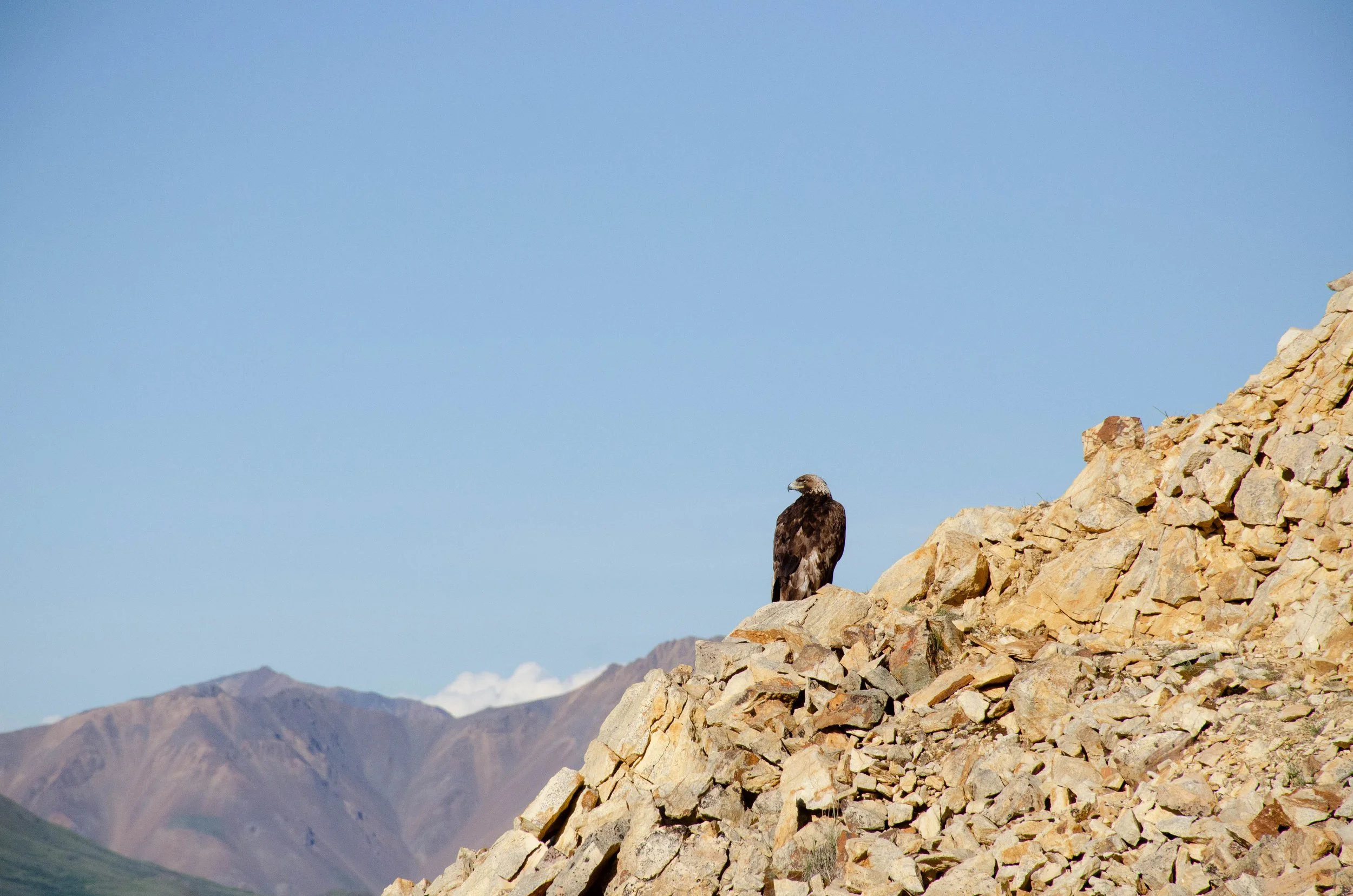
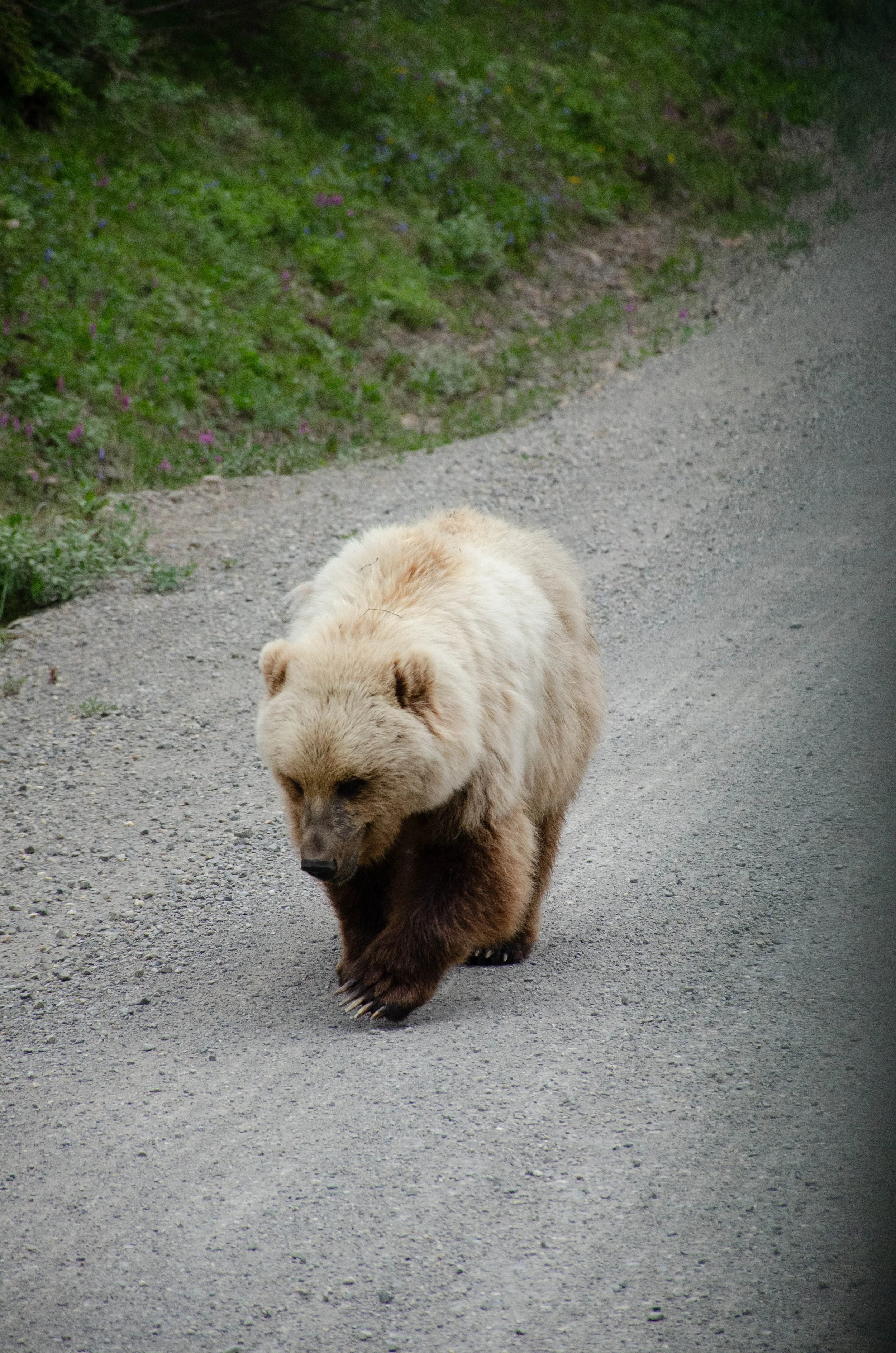
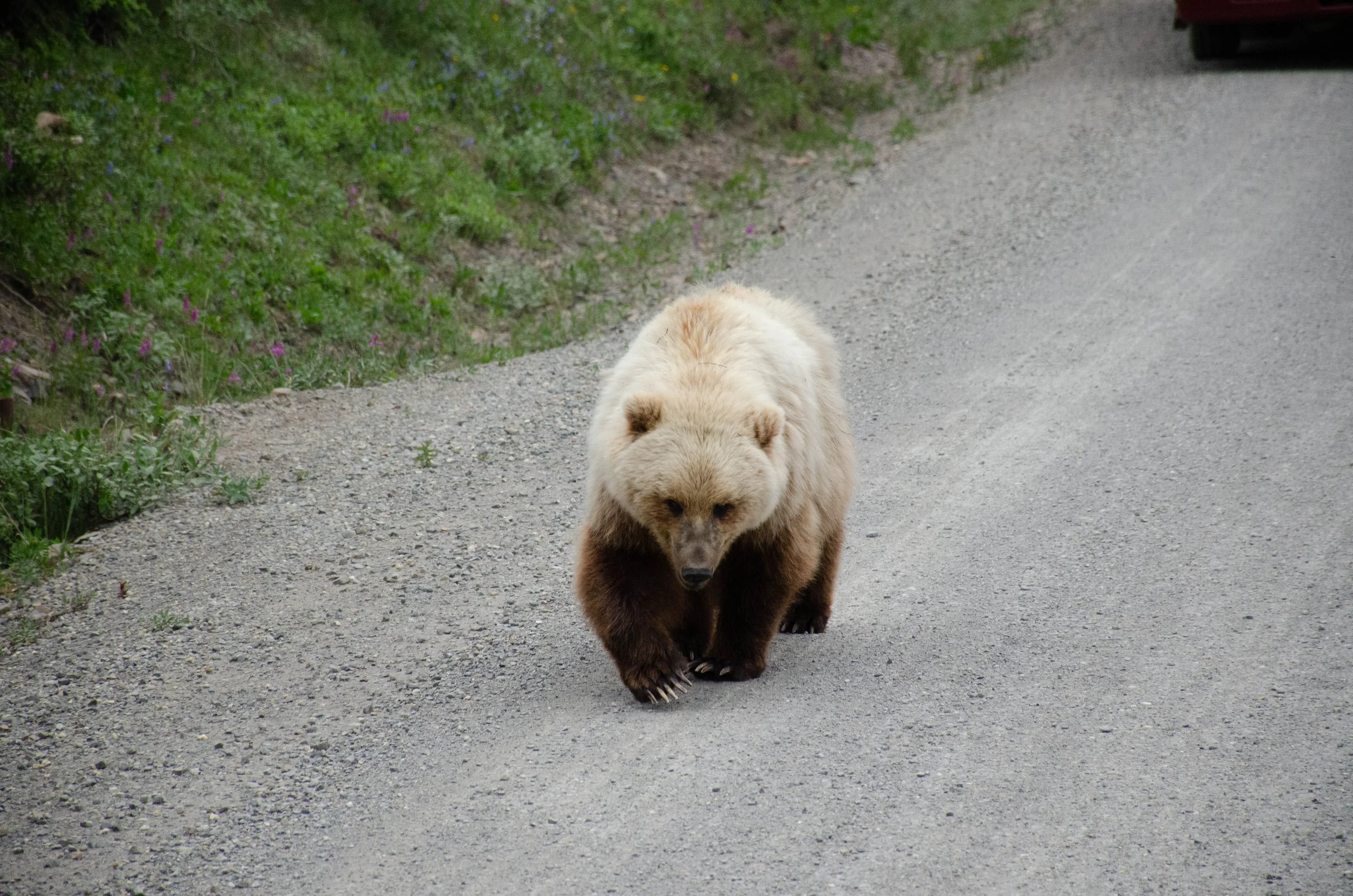
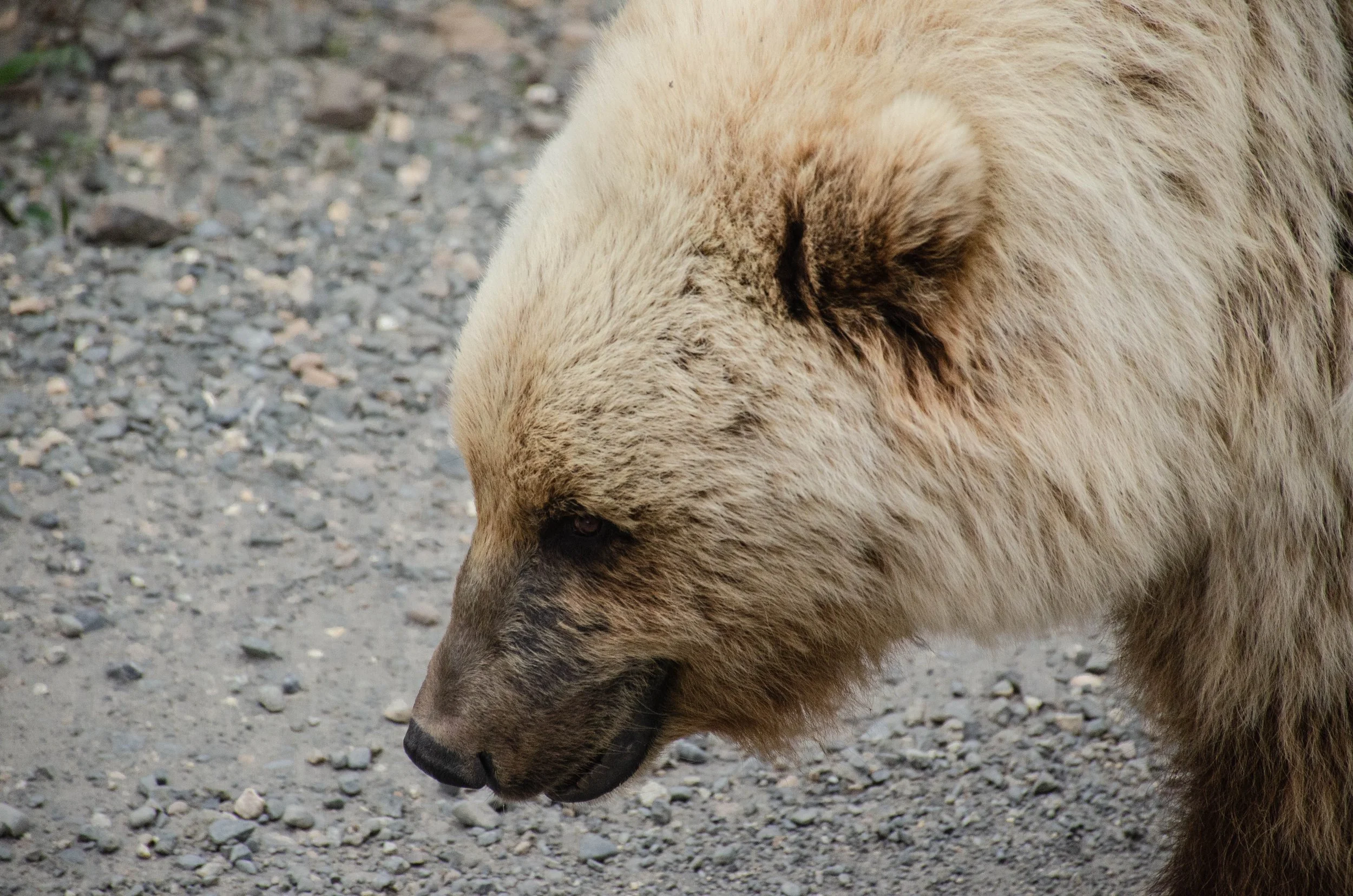
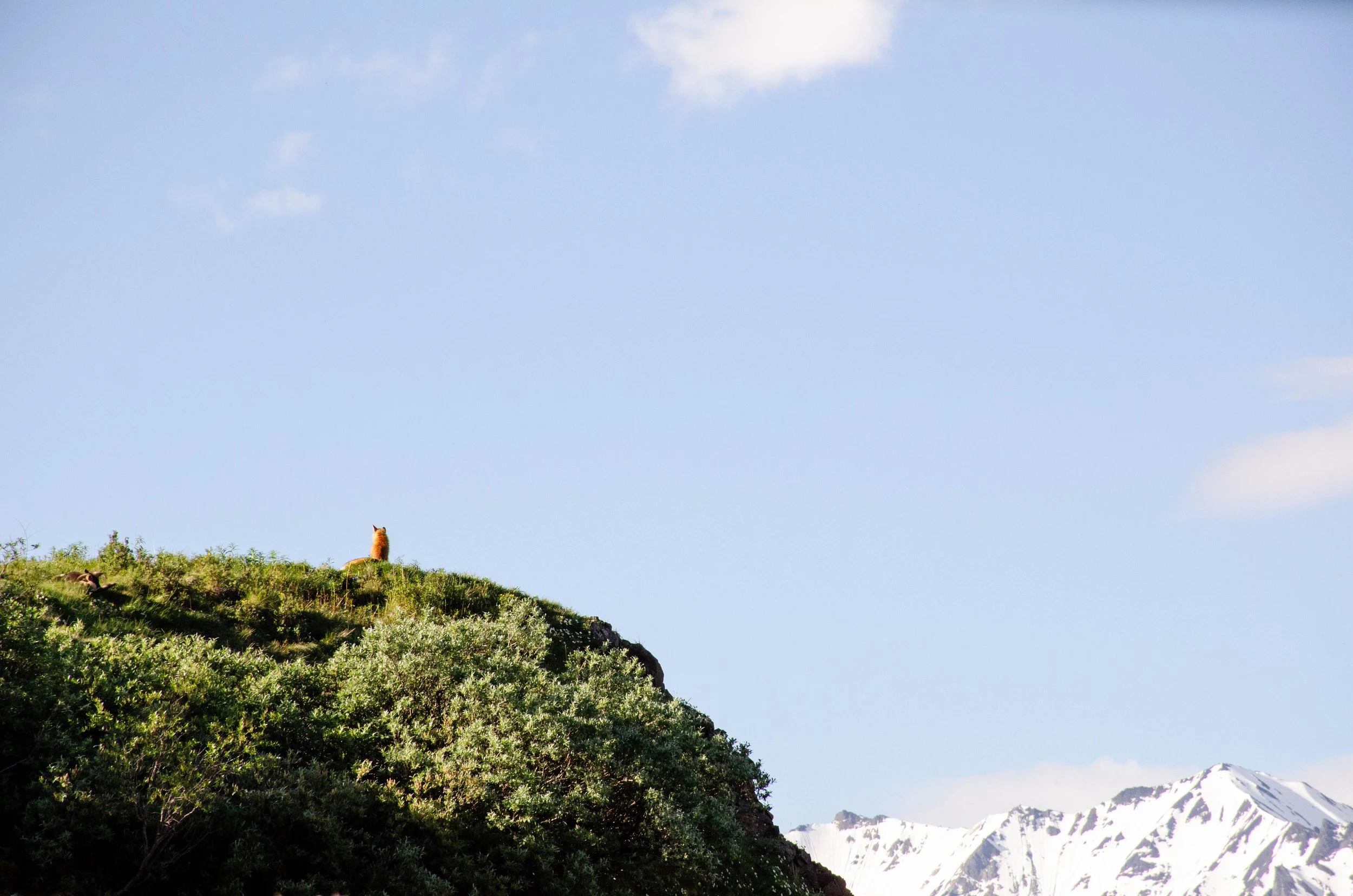
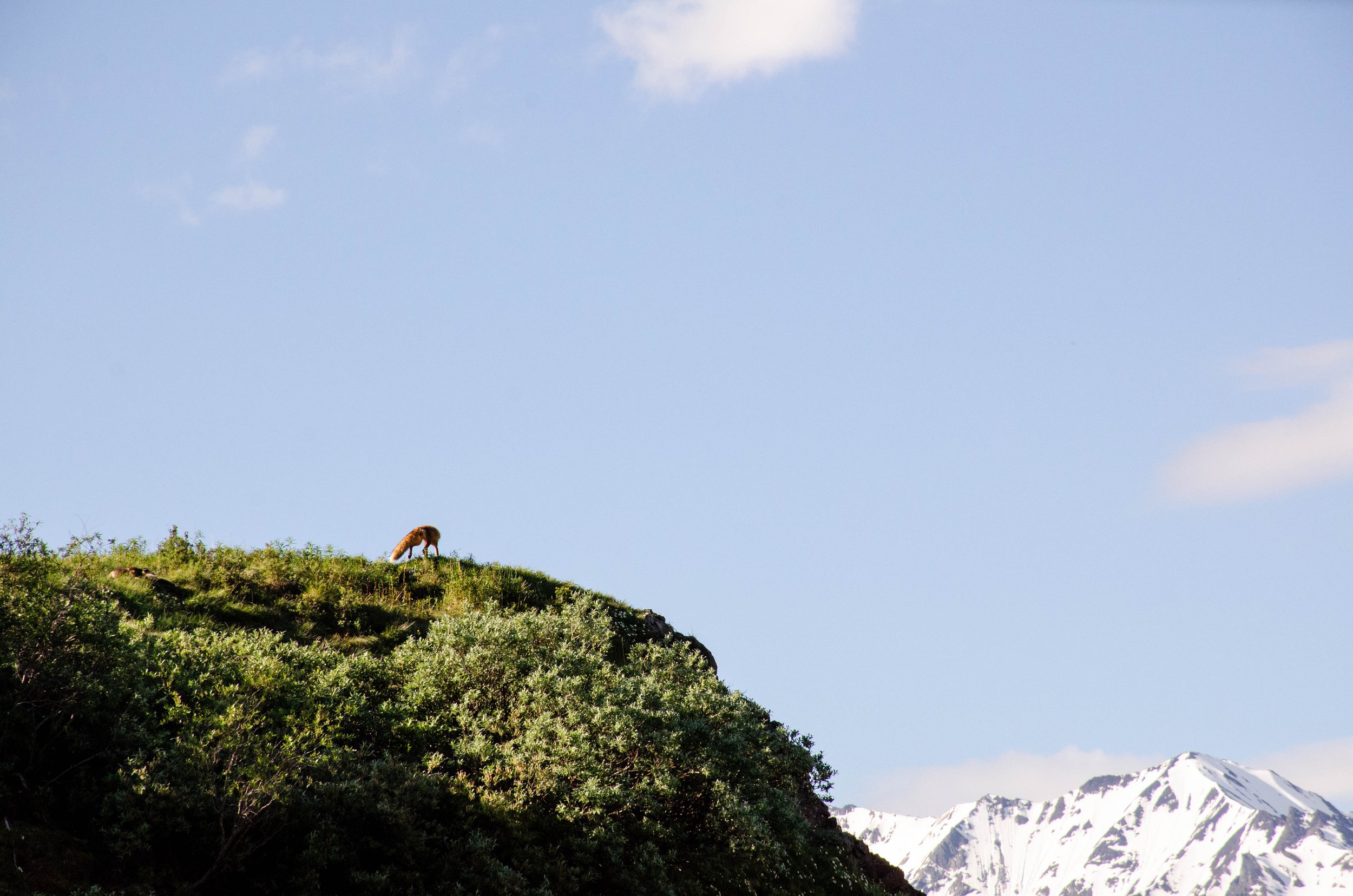
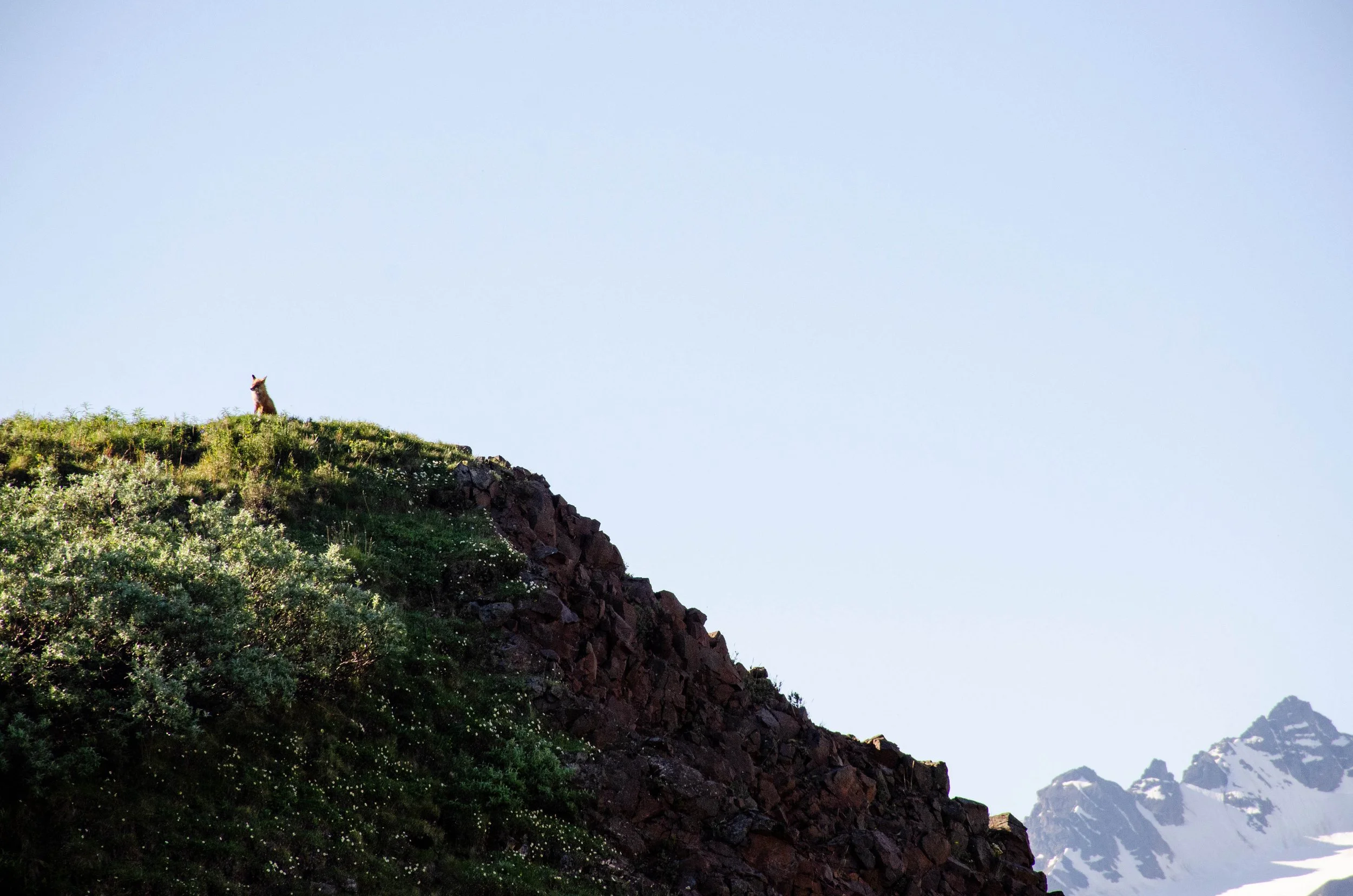
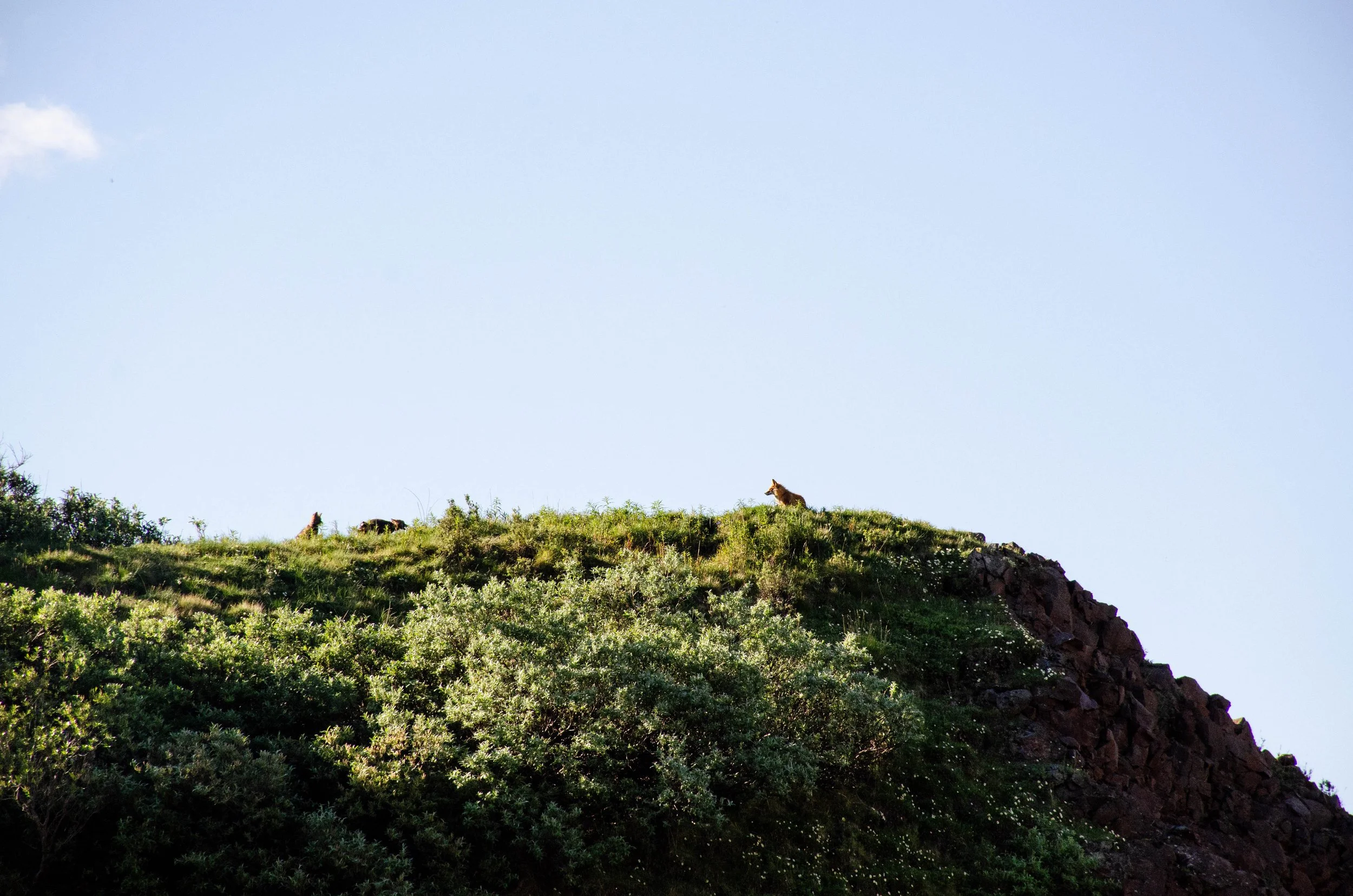
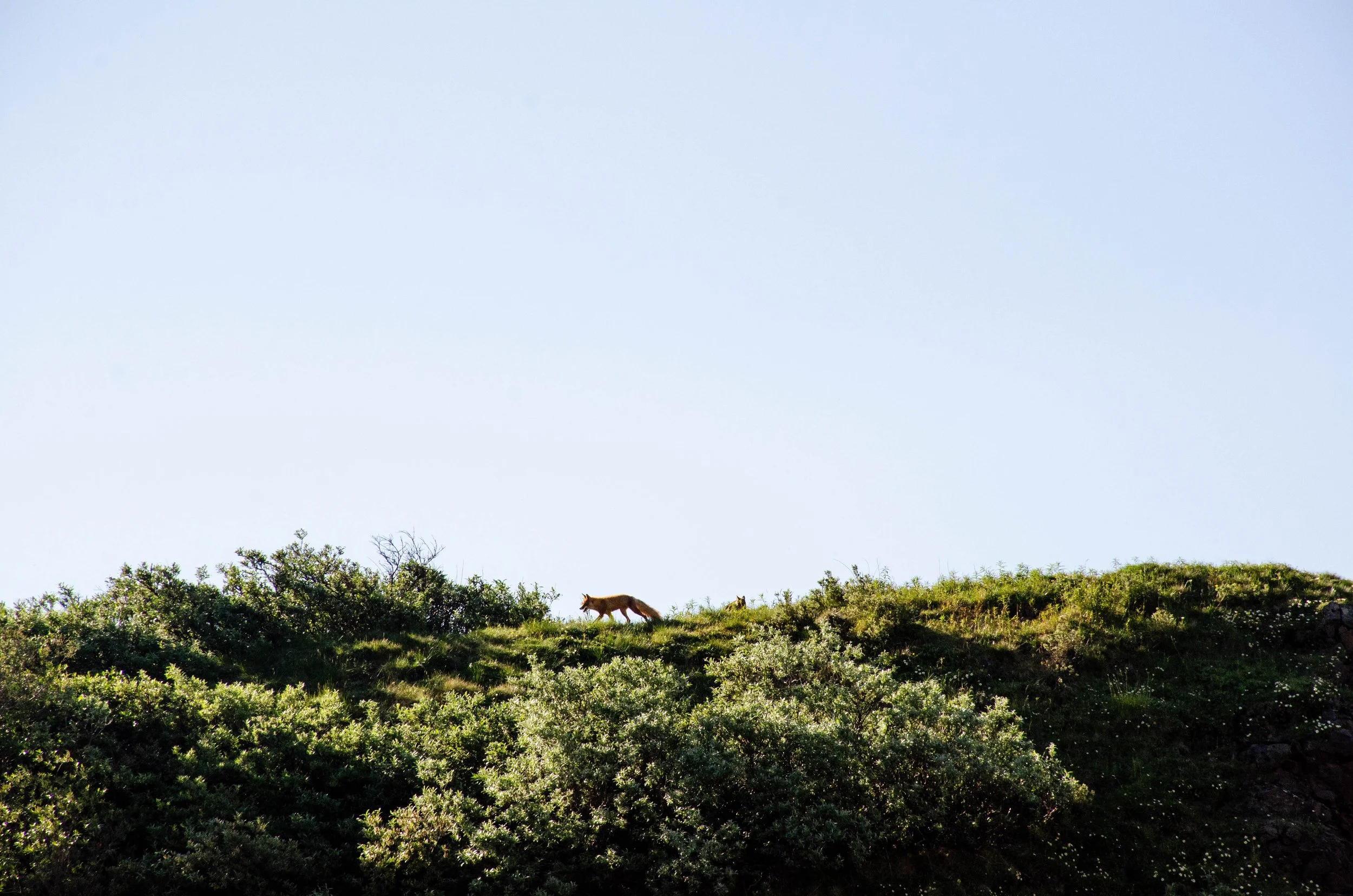
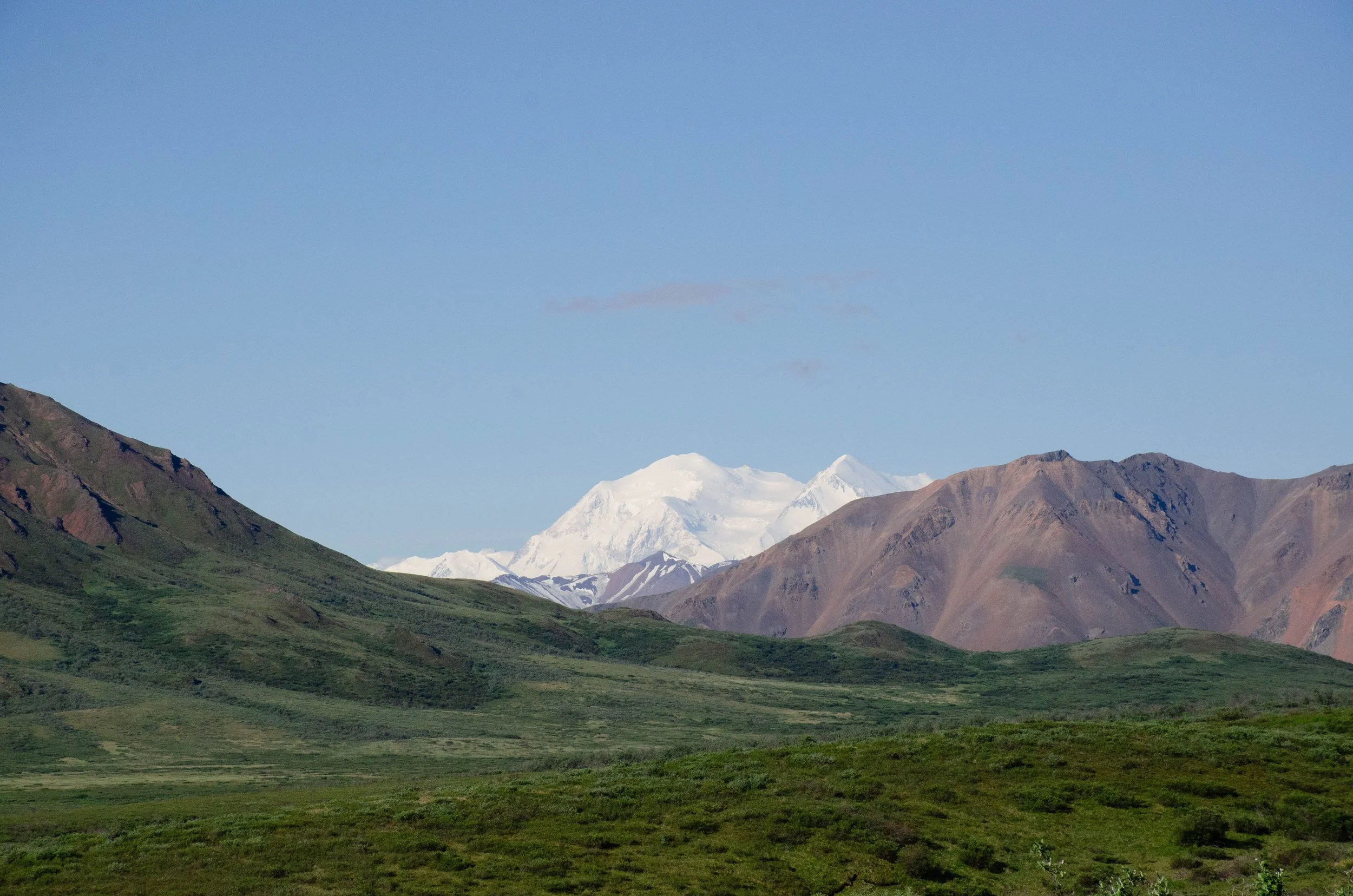
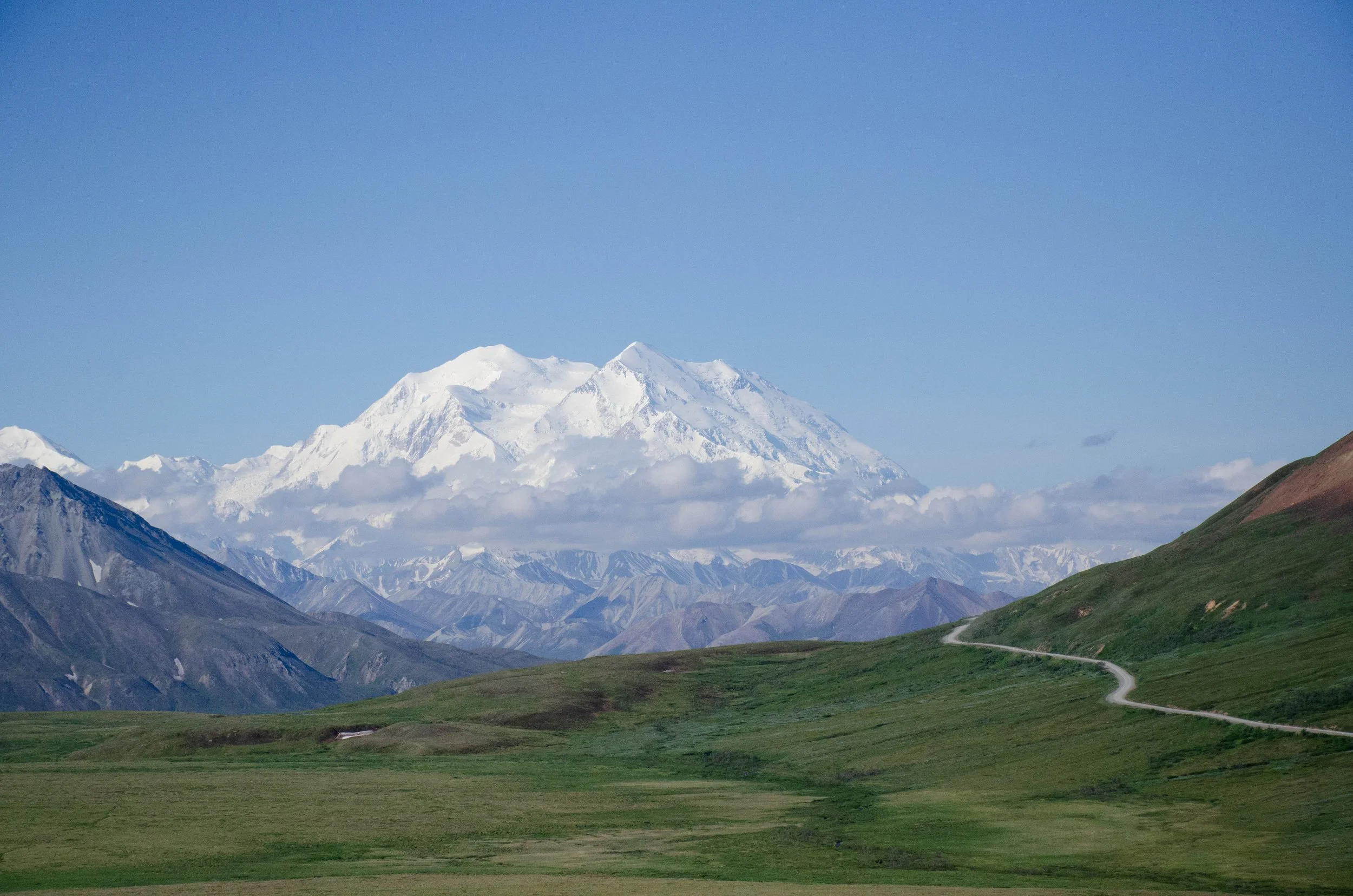
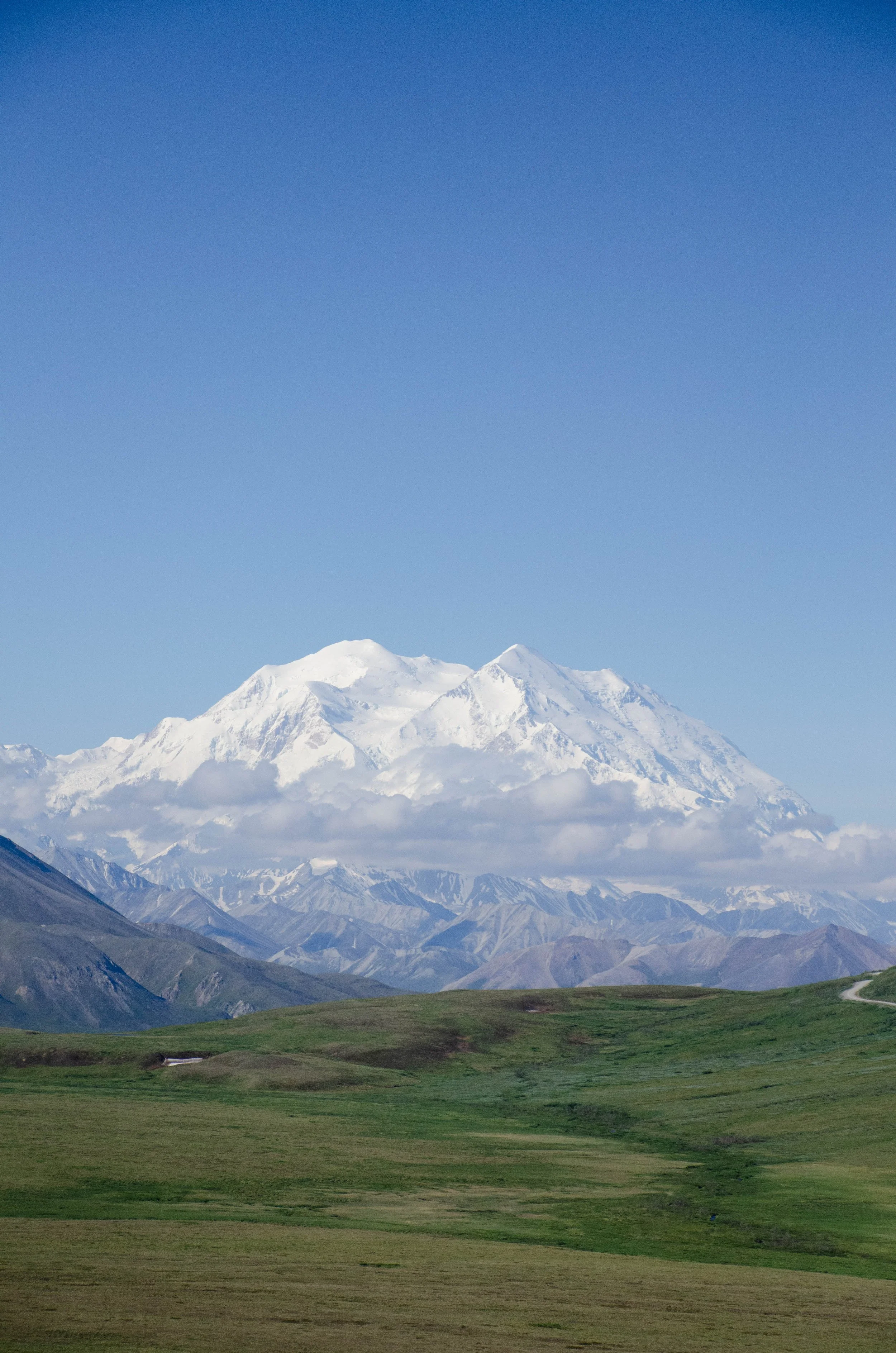
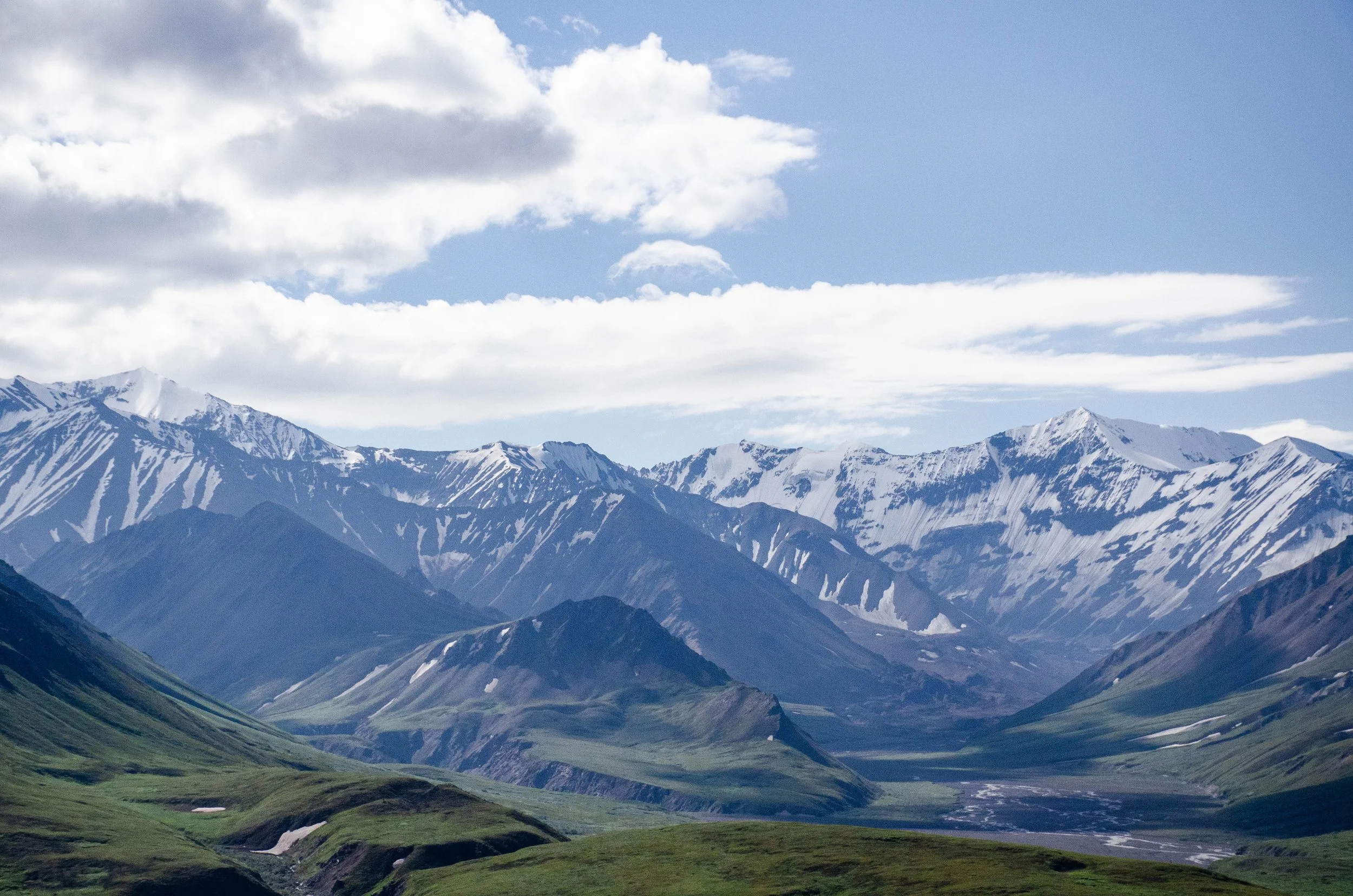
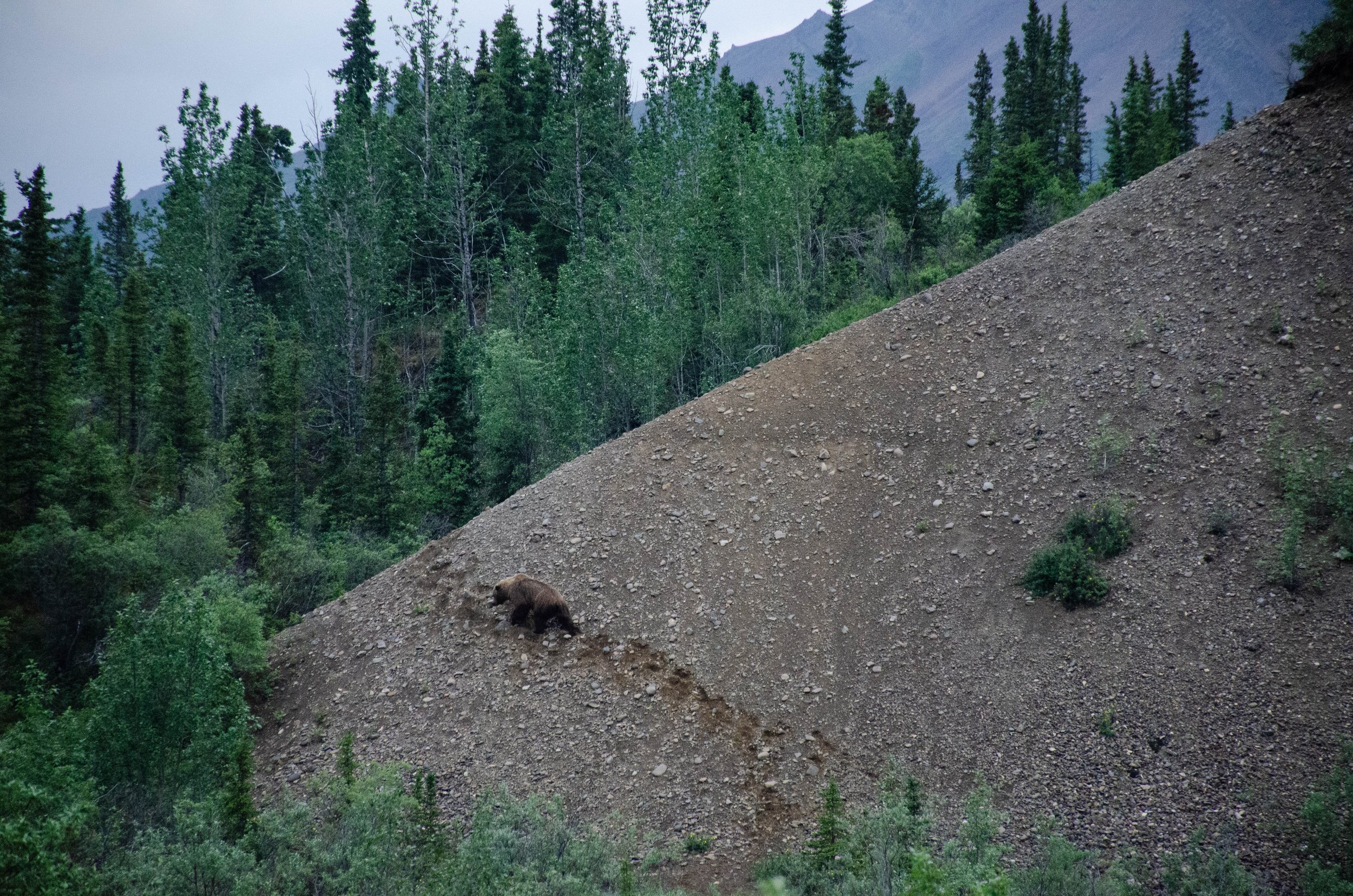
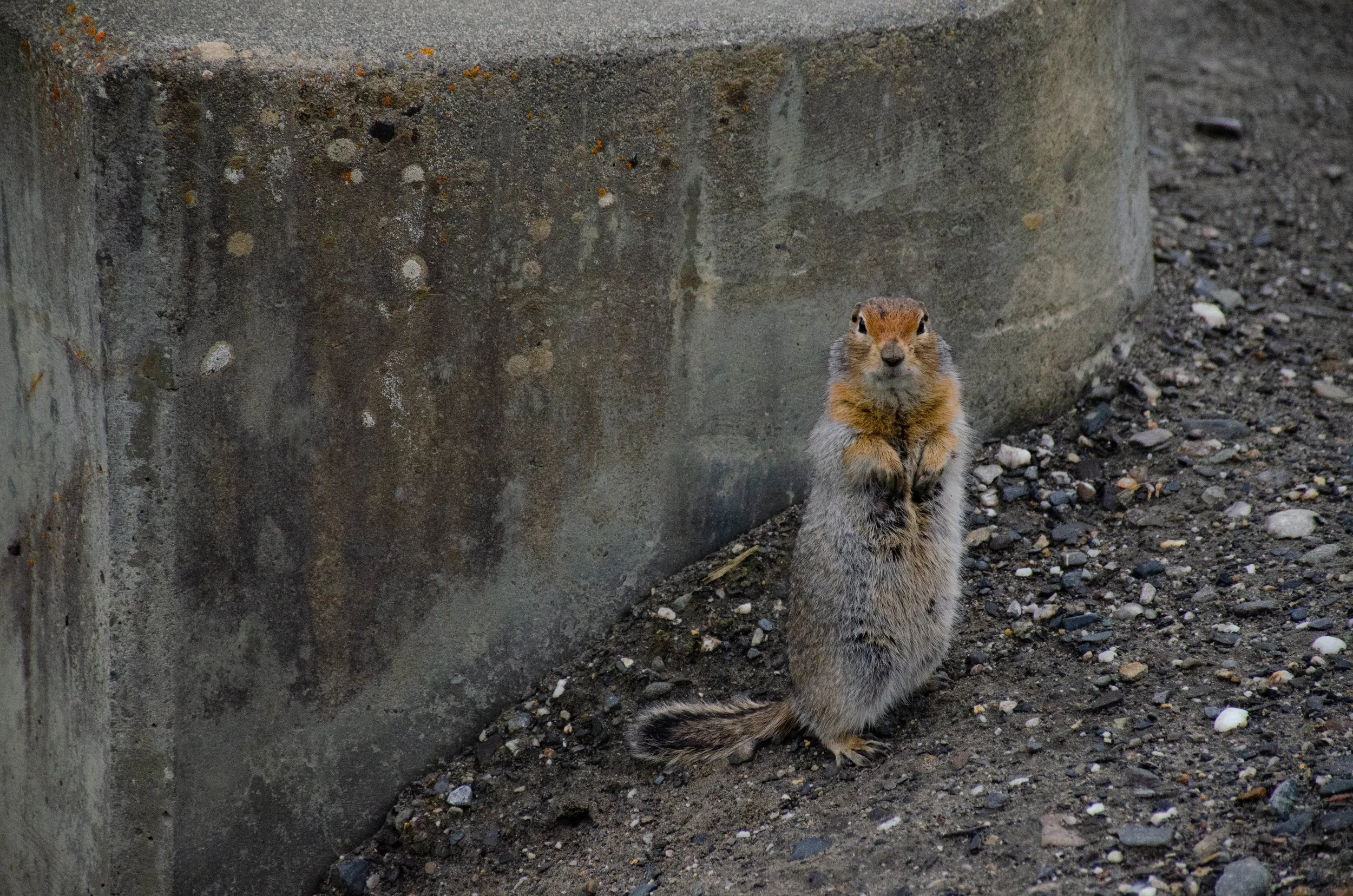
Another experience that stuck with us was the day we devoted to riding the park shuttle from our campground all the way to the end of the road at Wonder Lake. We saw countless moose, Dall sheep, golden eagles, and a grizzly bear walked right by us on the road. A mother fox sat serenely on a hilltop, the early morning light burnishing her bright red coat, four fox kits romping with each other next to her. And then once we made it far enough into the park, we were lucky to have a clear enough day to be gifted with views of Denali herself, a jaw-dropping mountain that dominates the landscape at more than 20,000 feet of elevation. It’s a mountain that truly makes you stop and stare, awed by its presence.
Denali left us grateful and absolutely brimming over with beauty. We’d go back in a heartbeat and feel incredibly fortunate to have explored a few tiny corners of this vast, wild, wonderful place.
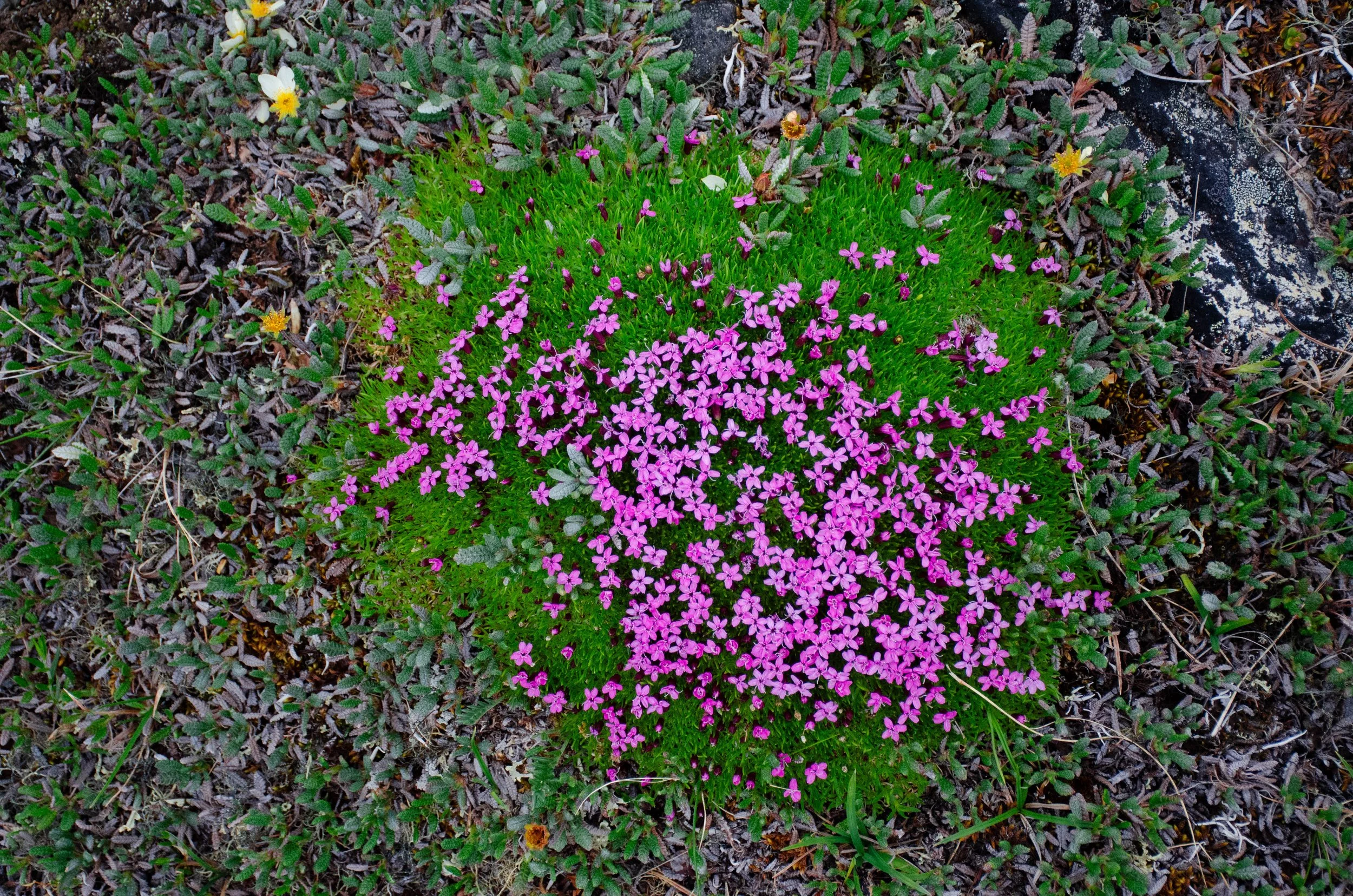
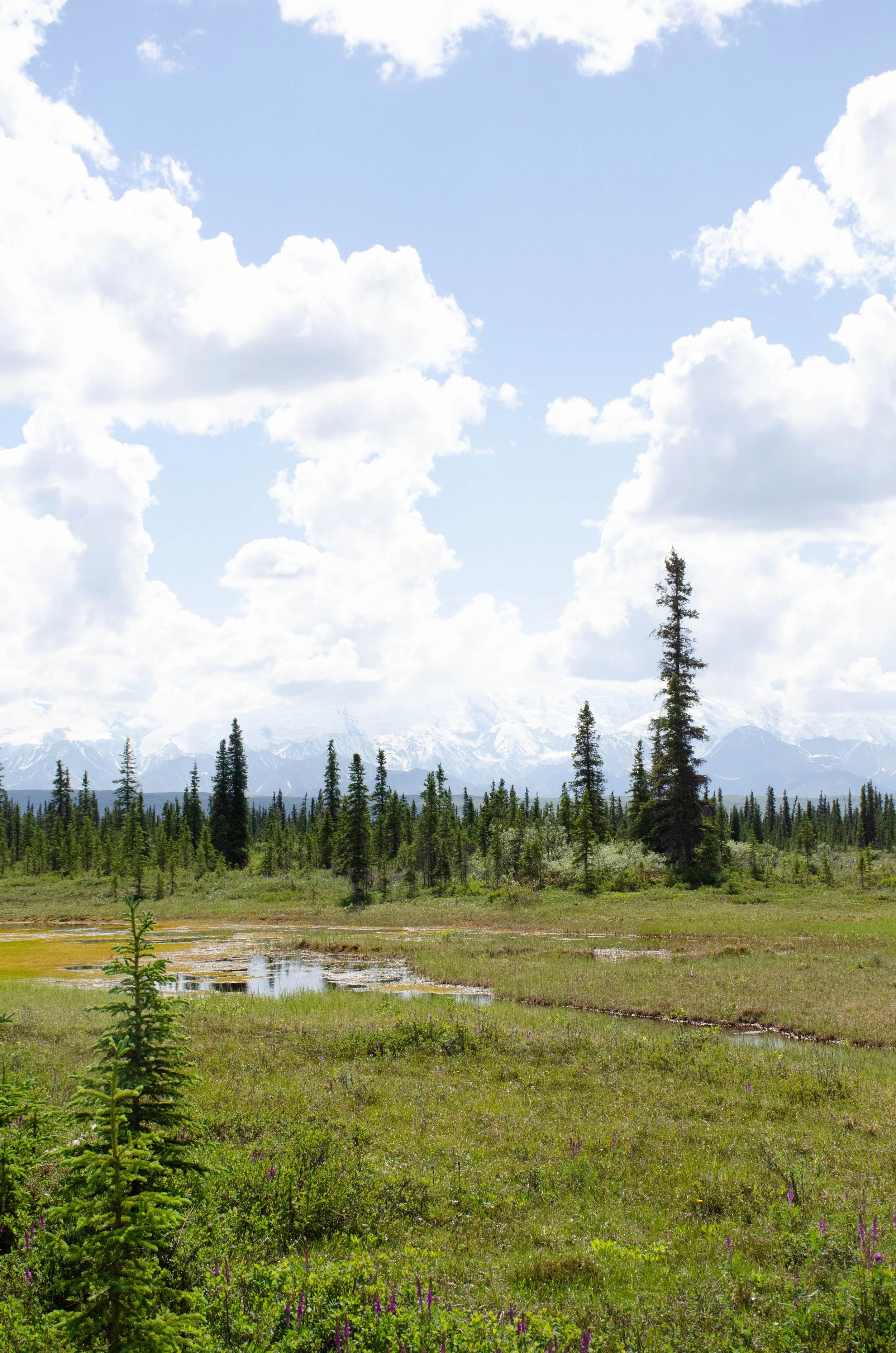
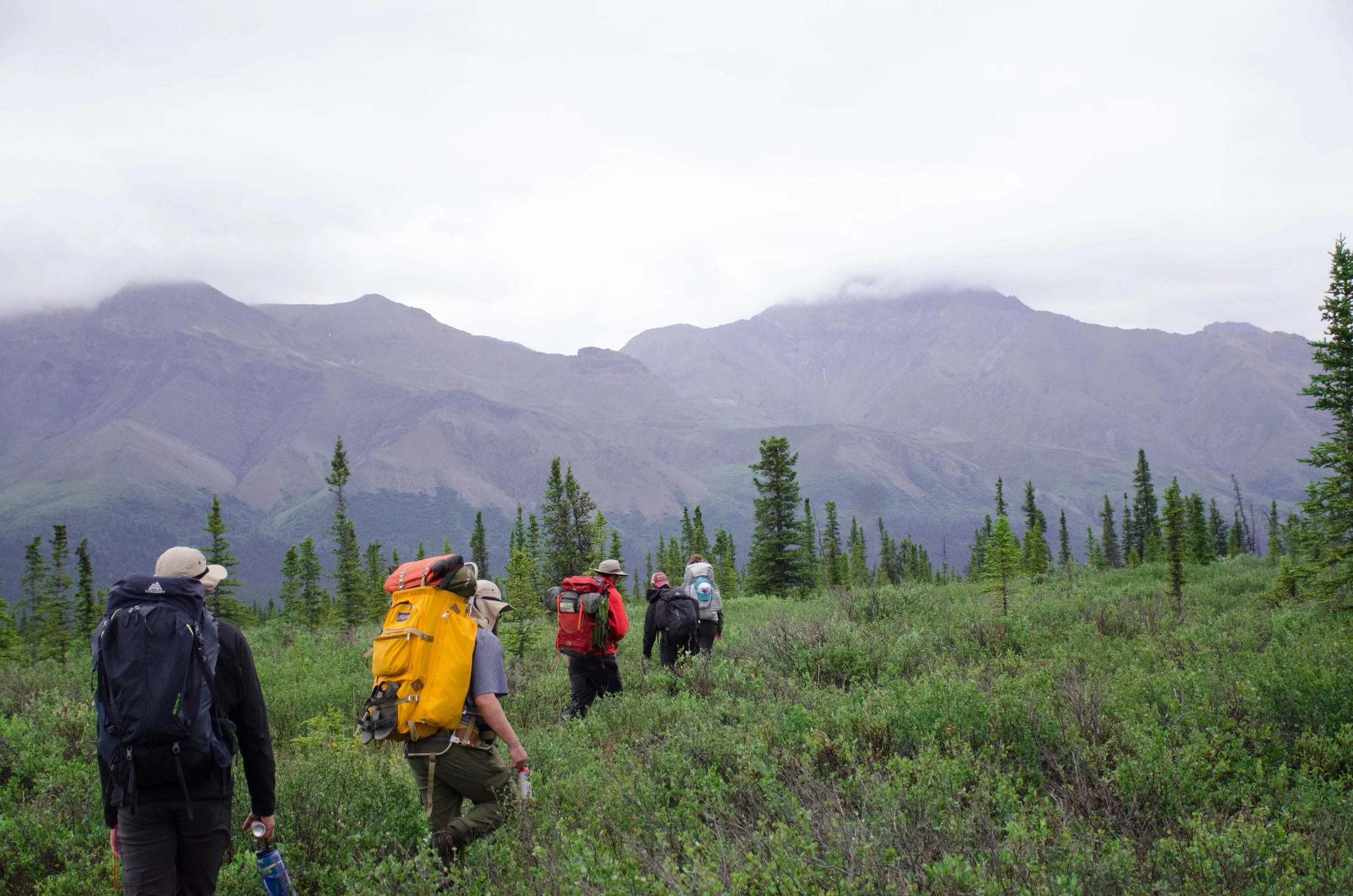
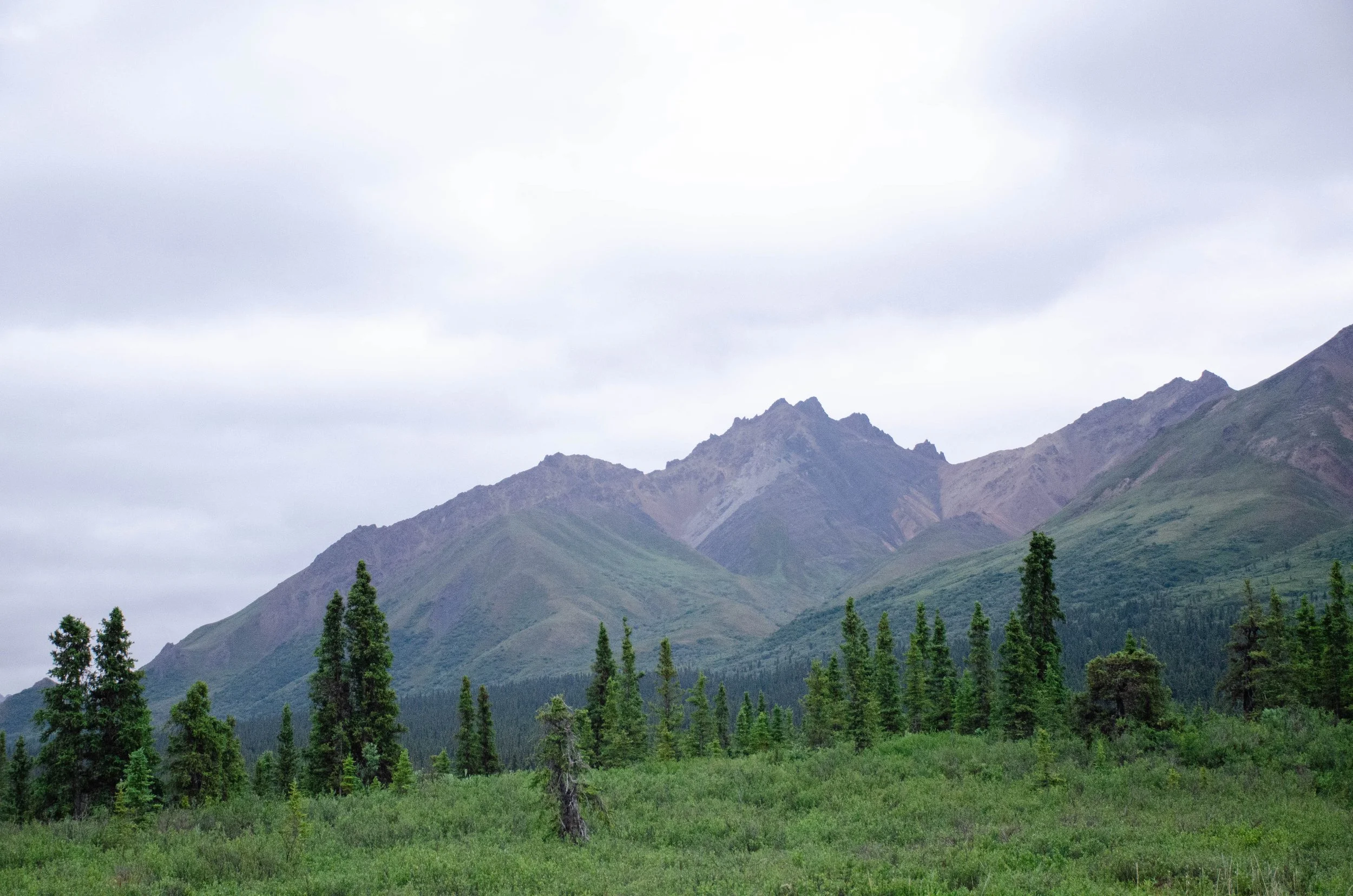
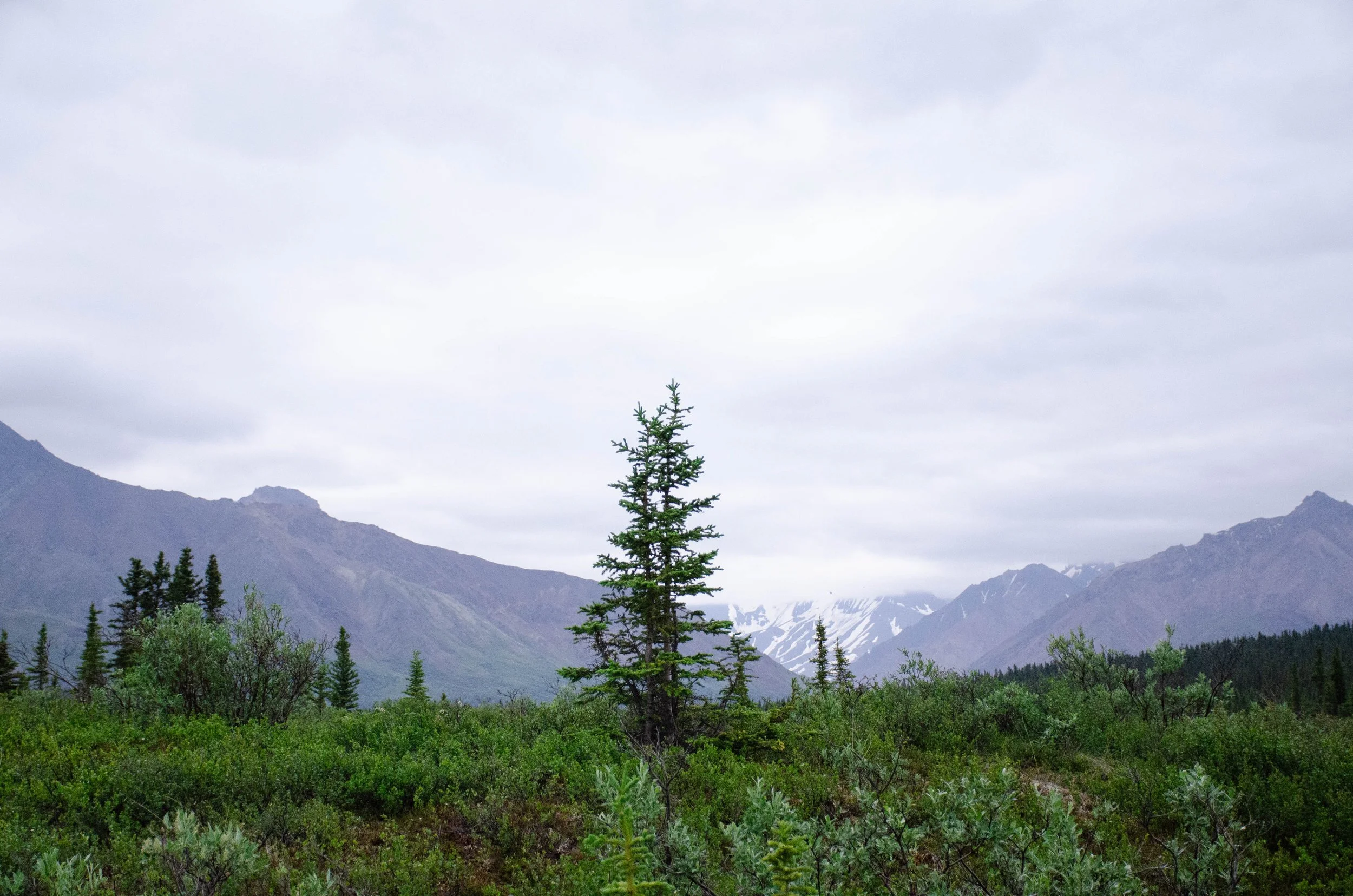
Pictured below:
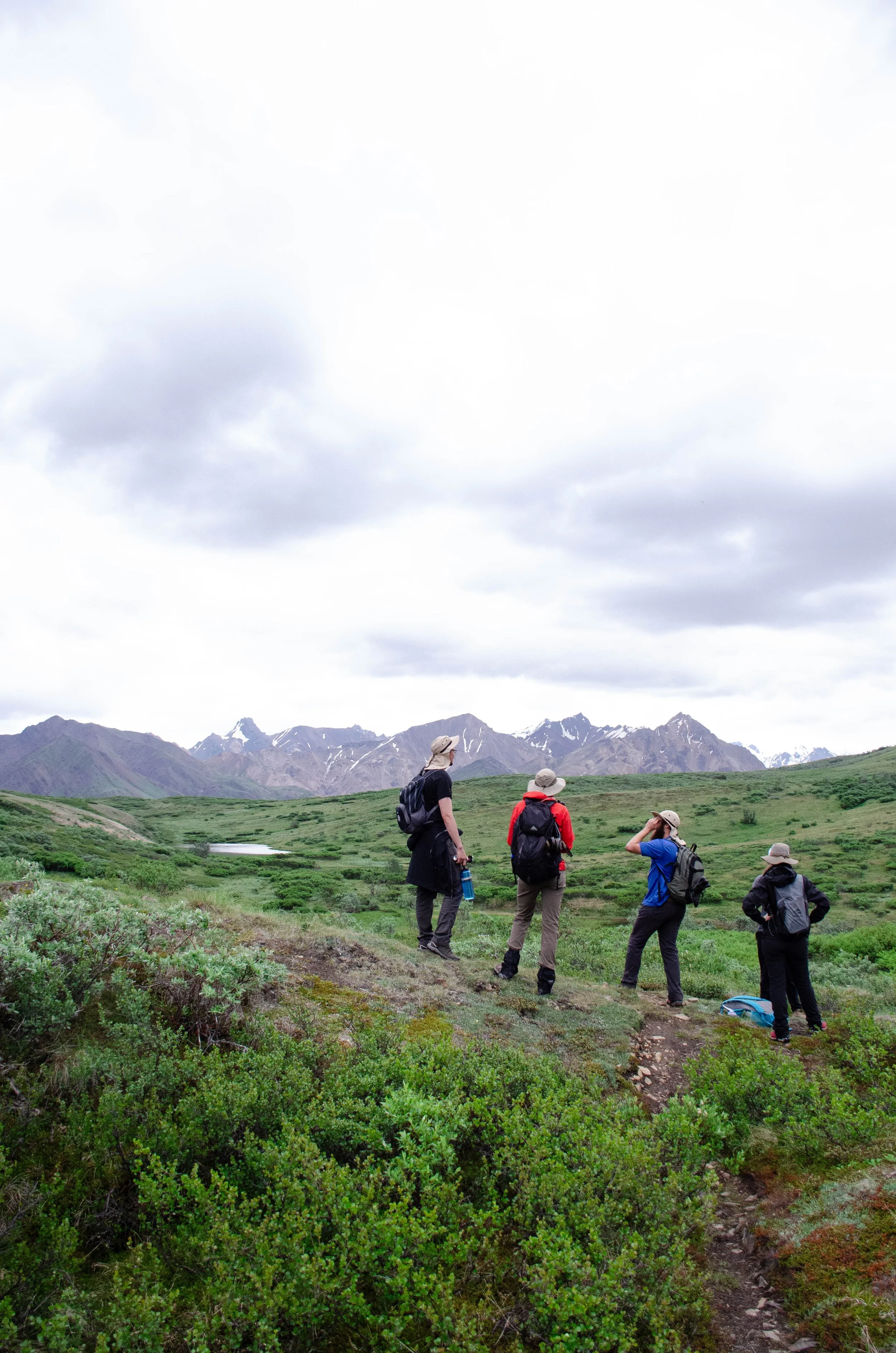
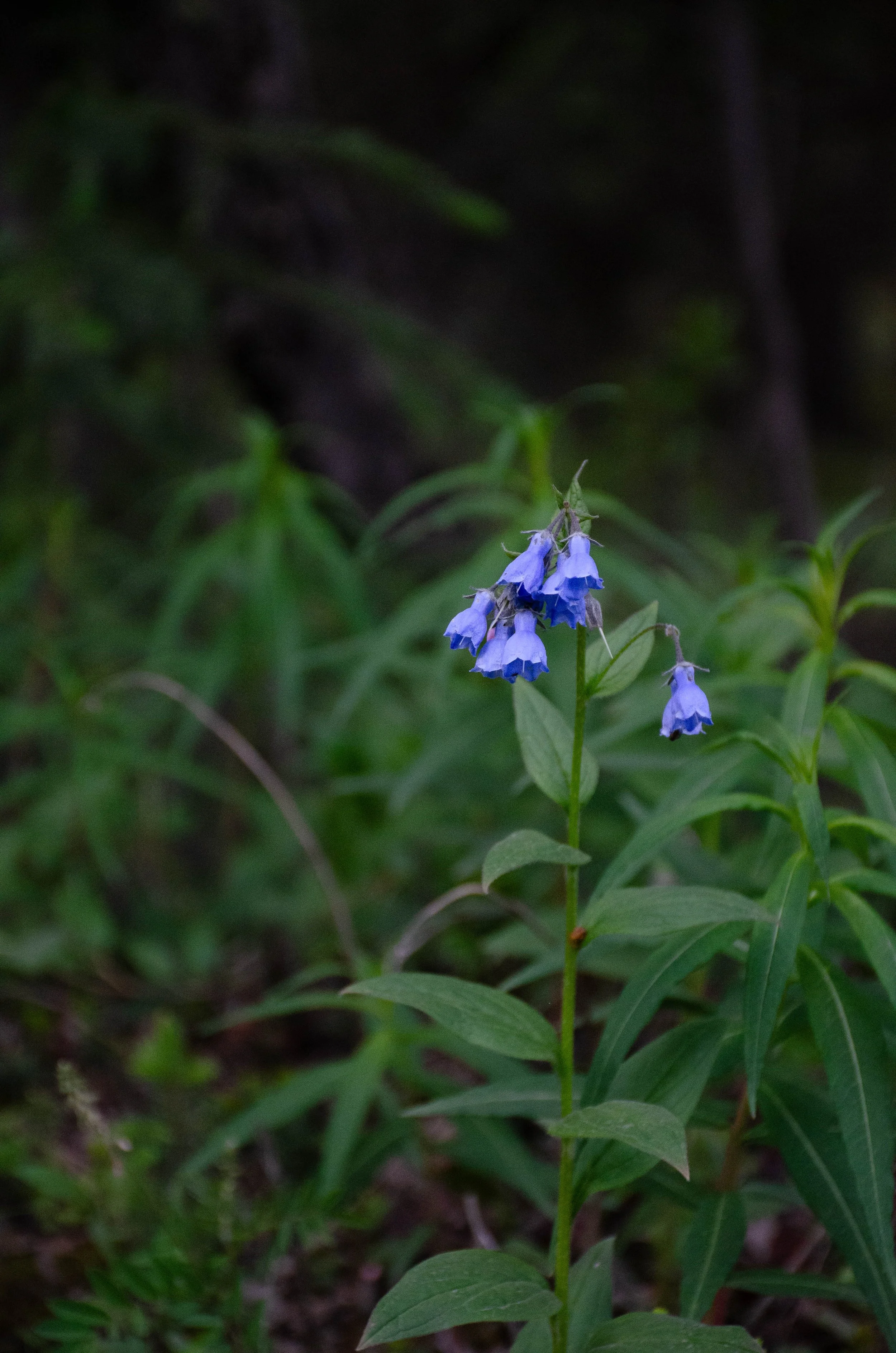
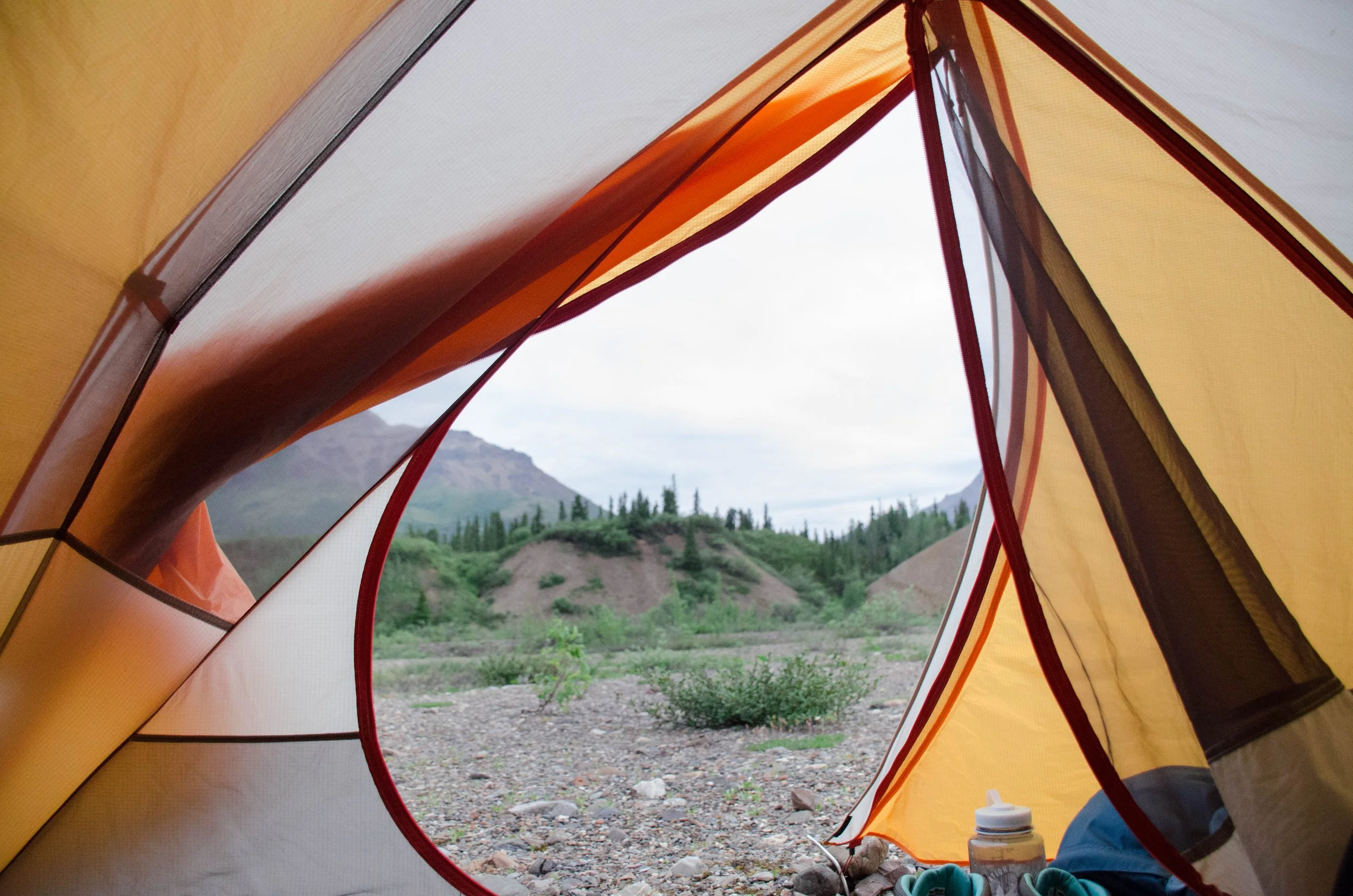
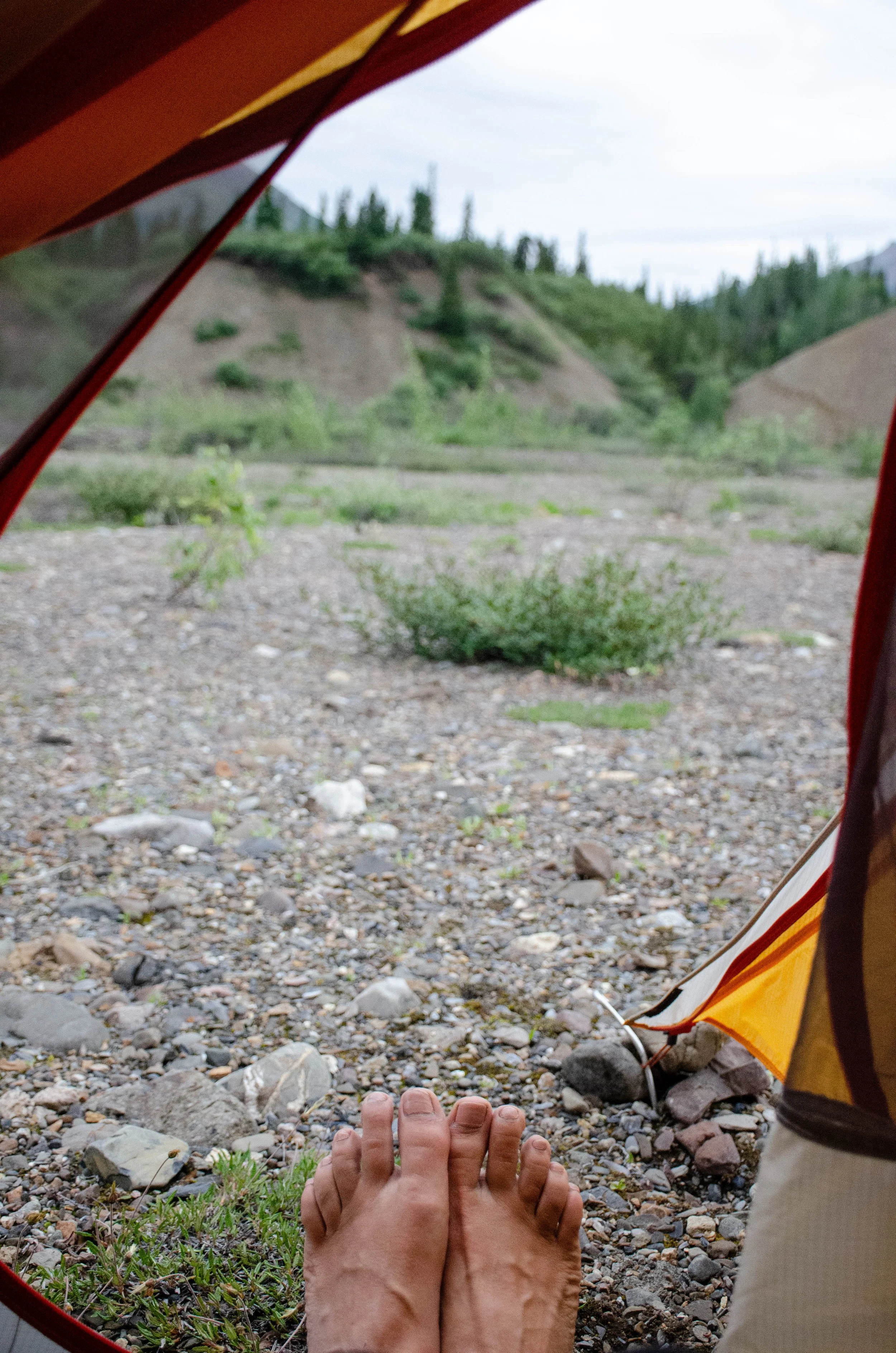
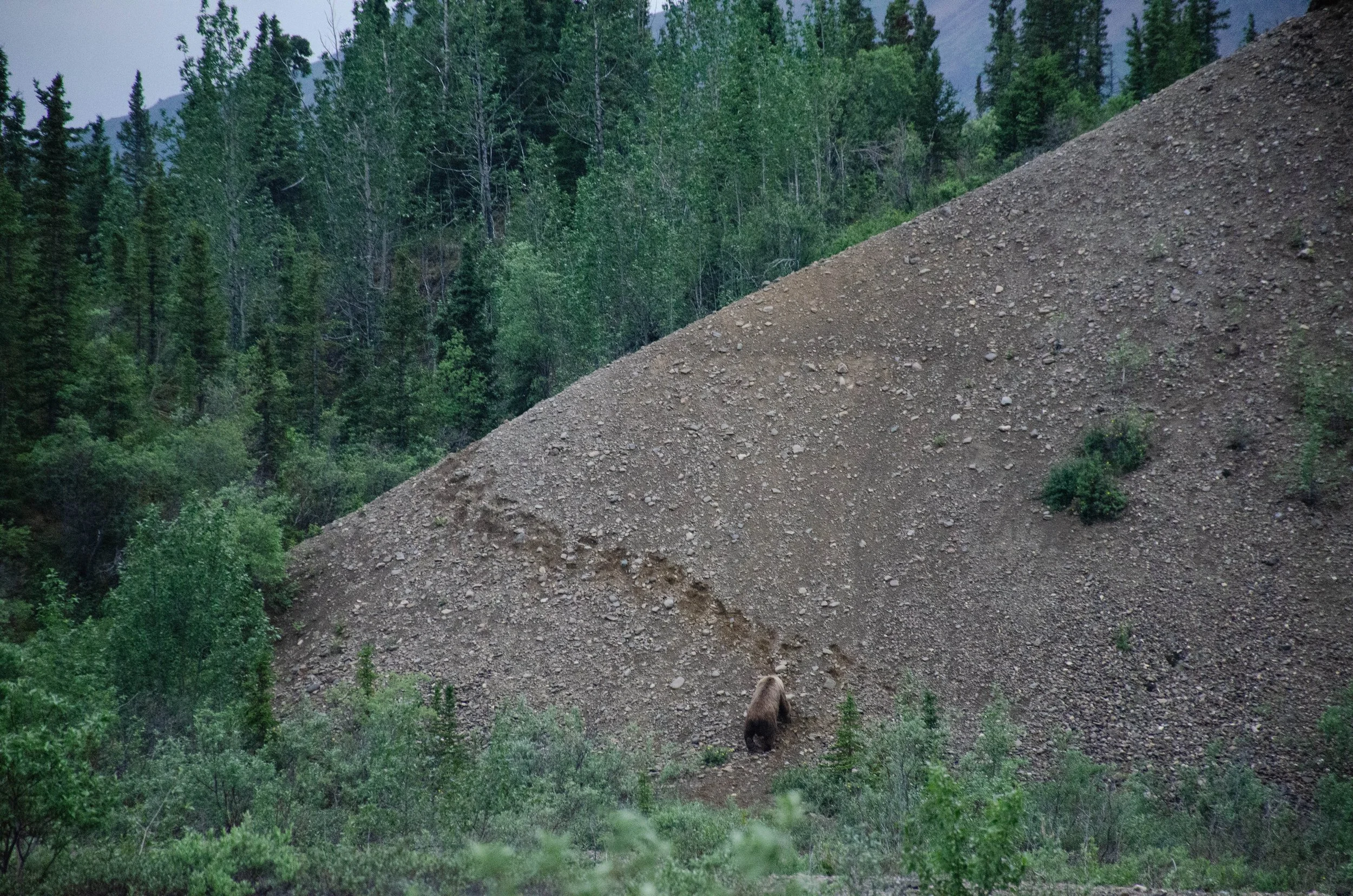
Incredible views and animal sightings along Park Road on the way to Wonder Lake.
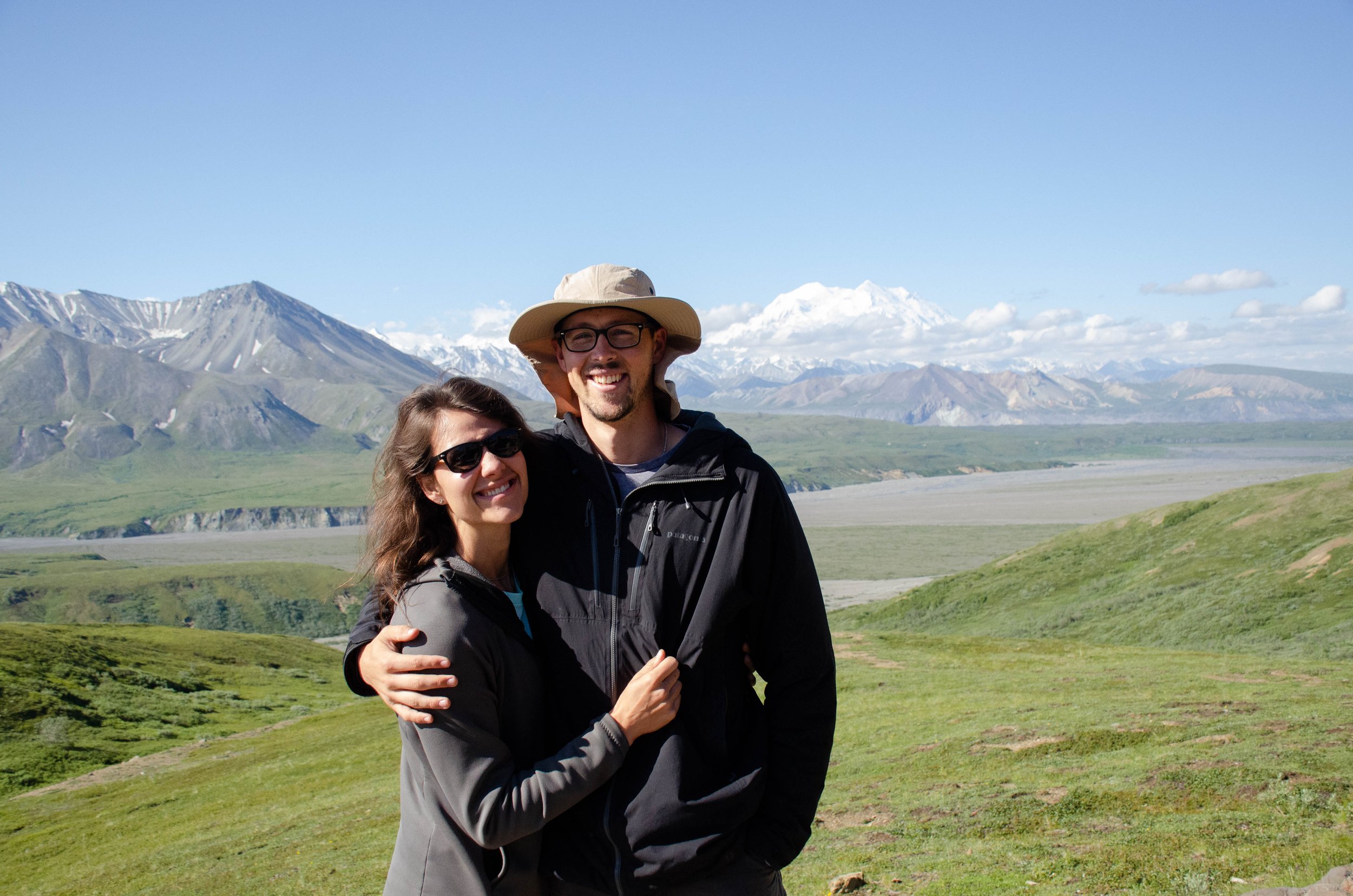
Breathtakingly clear vantage of Denali herself, the highest peak in North America at 20,310 ft.
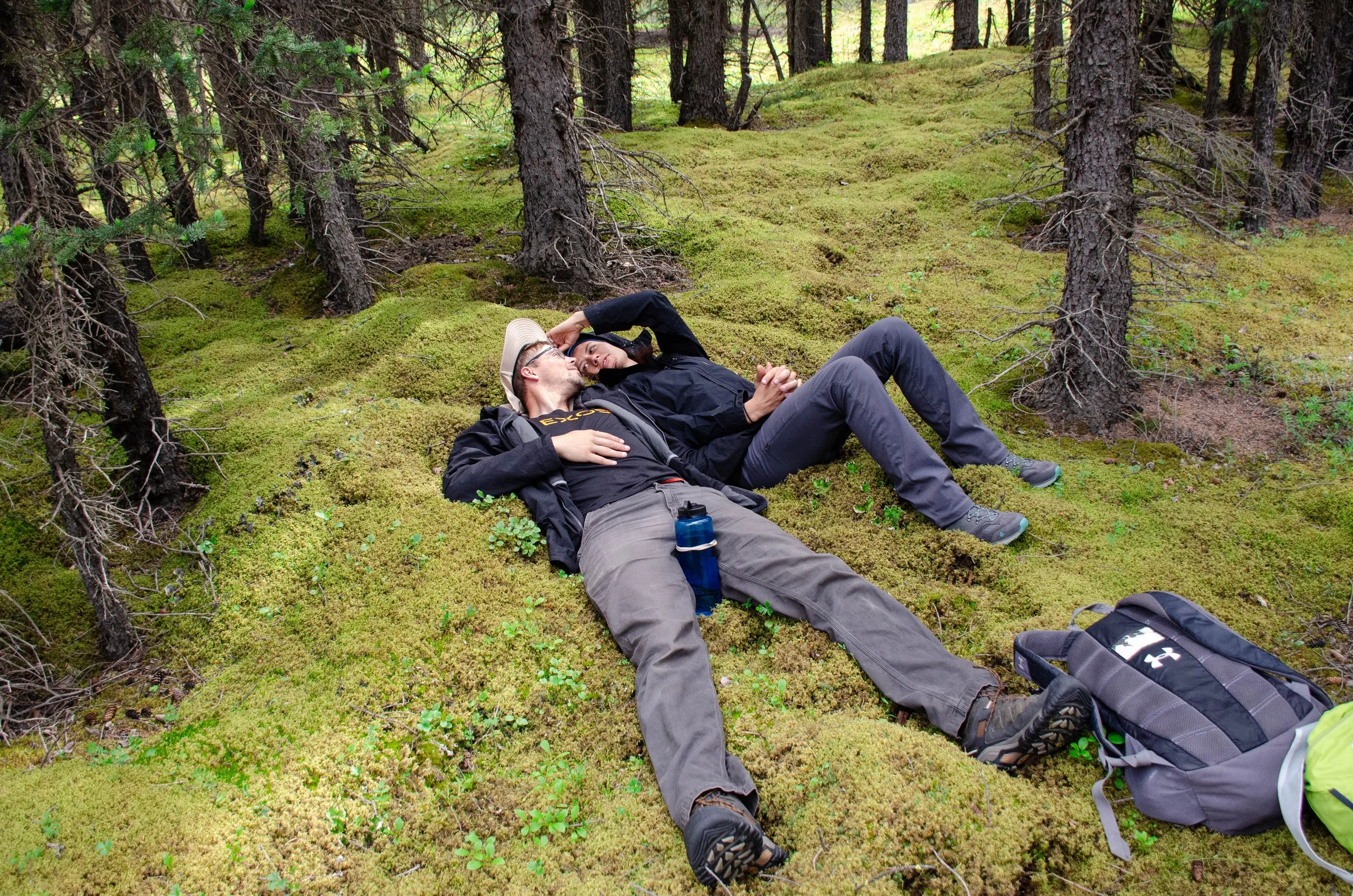
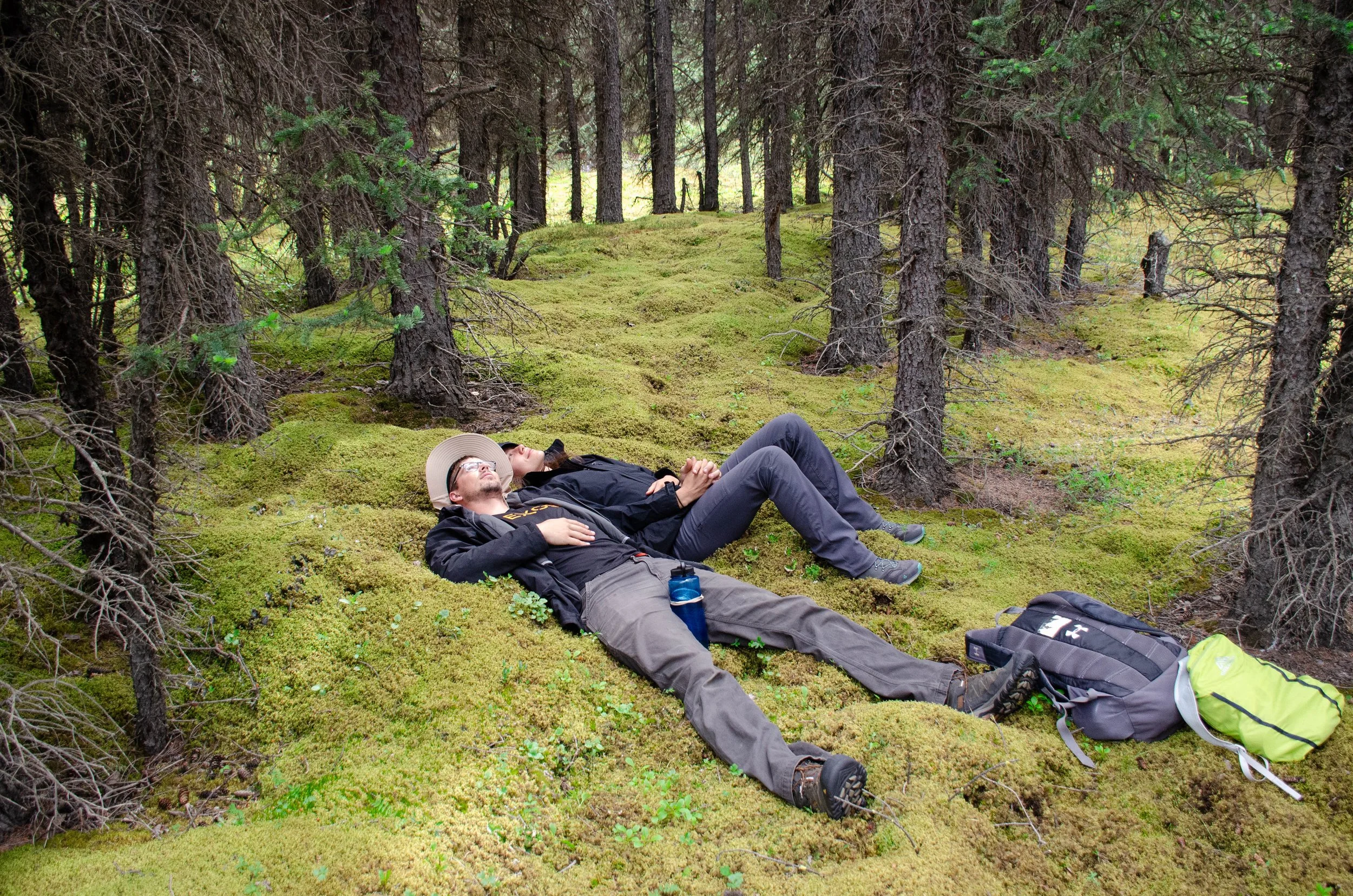
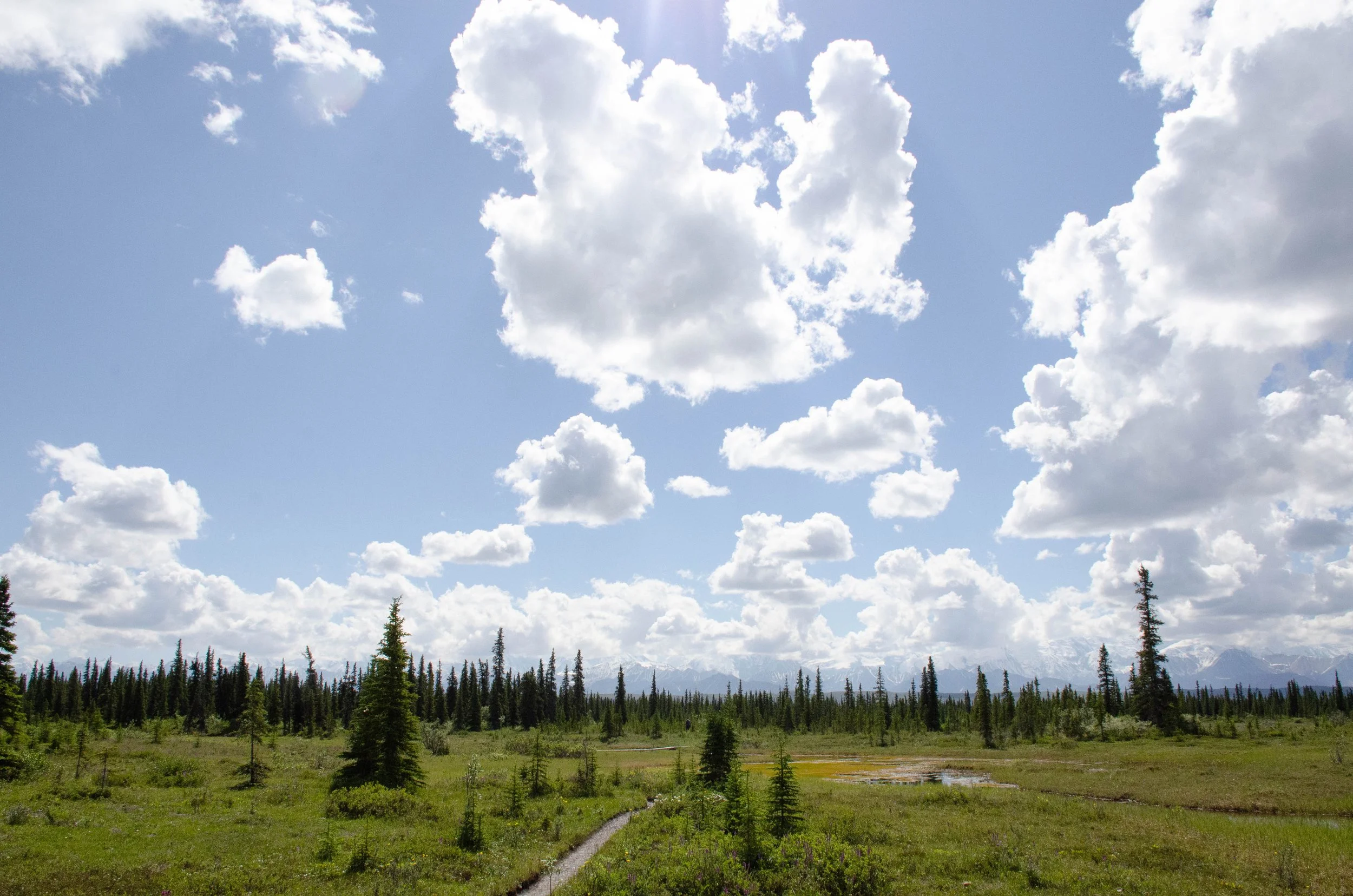
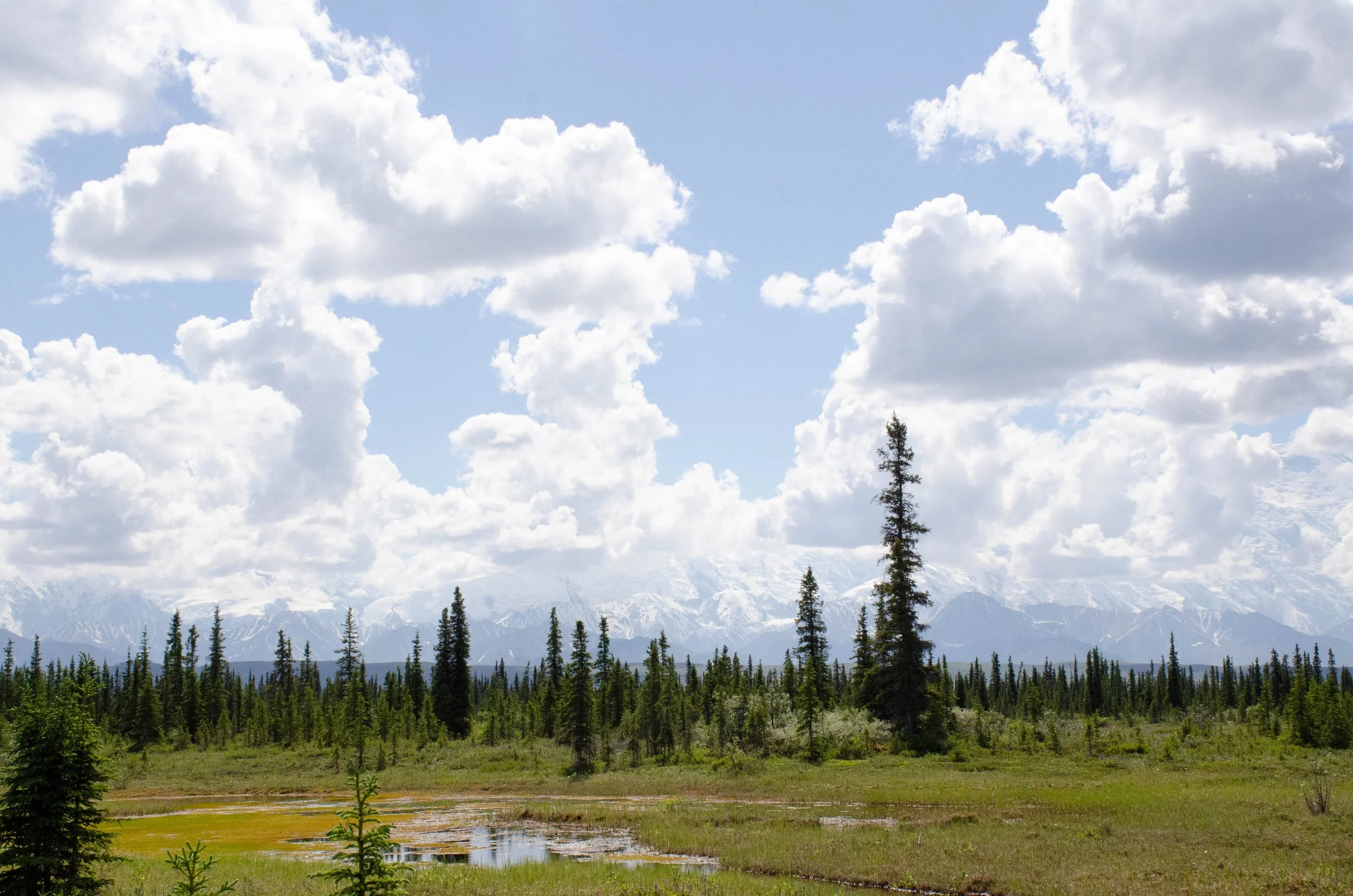
Forest bathing near Teklanika River Campground.
One night of backpacking to sleep next to, if memory serves me, the Teklanika River.

Mammoth Cave
Park 10 | June 2019
We squeezed this park into a long day trip during one of our trips to Southern Illinois to see family.
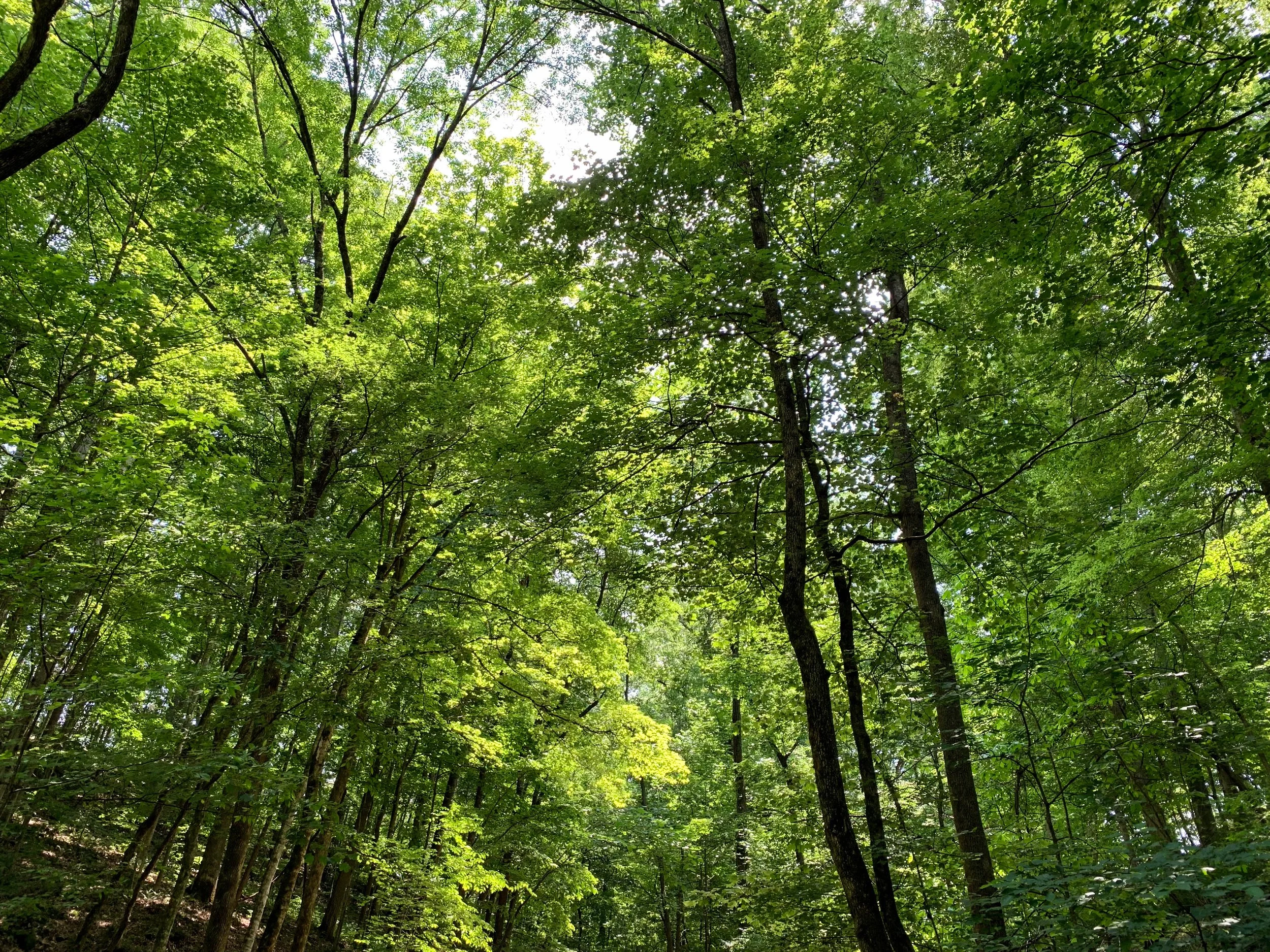
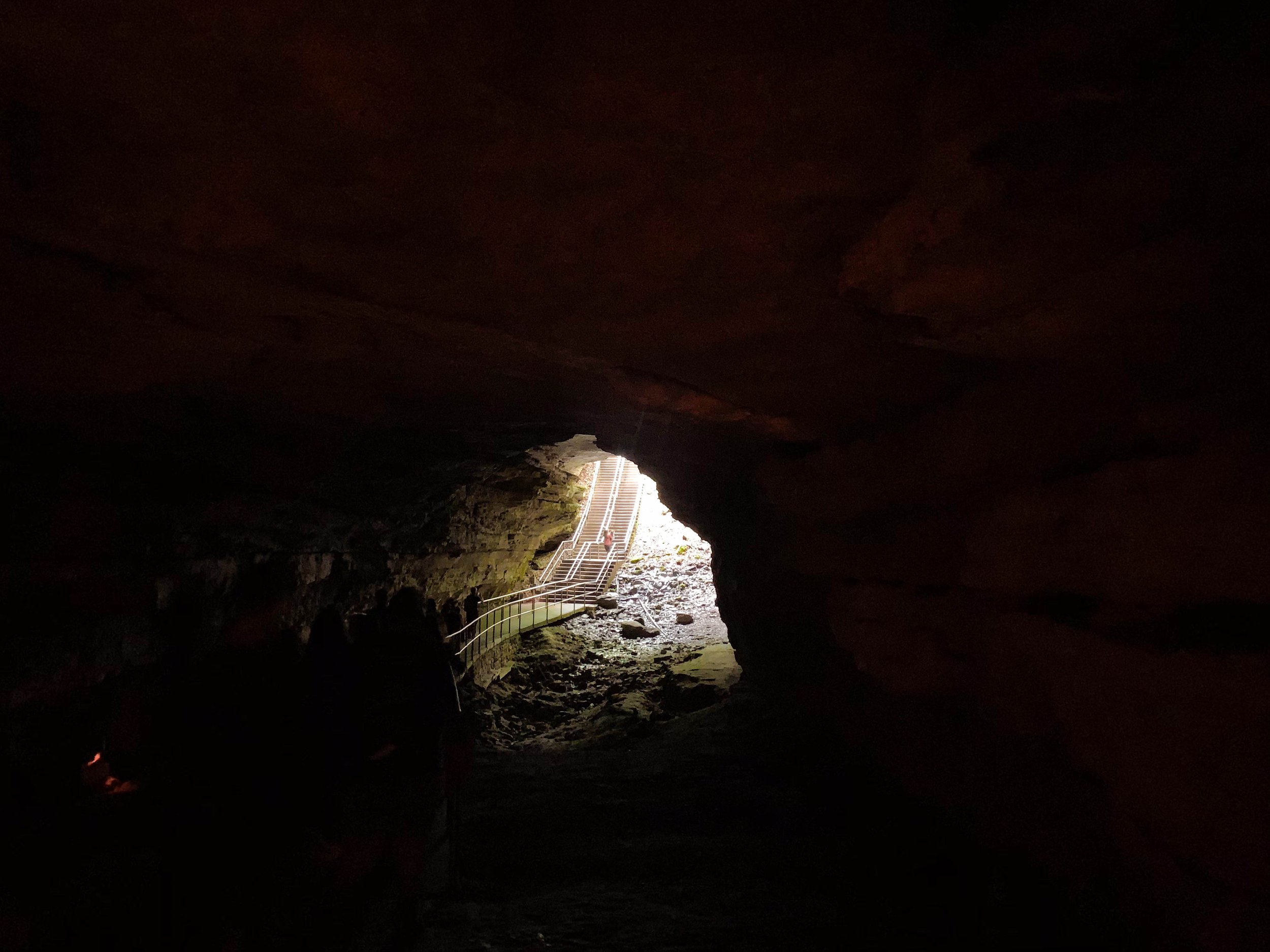
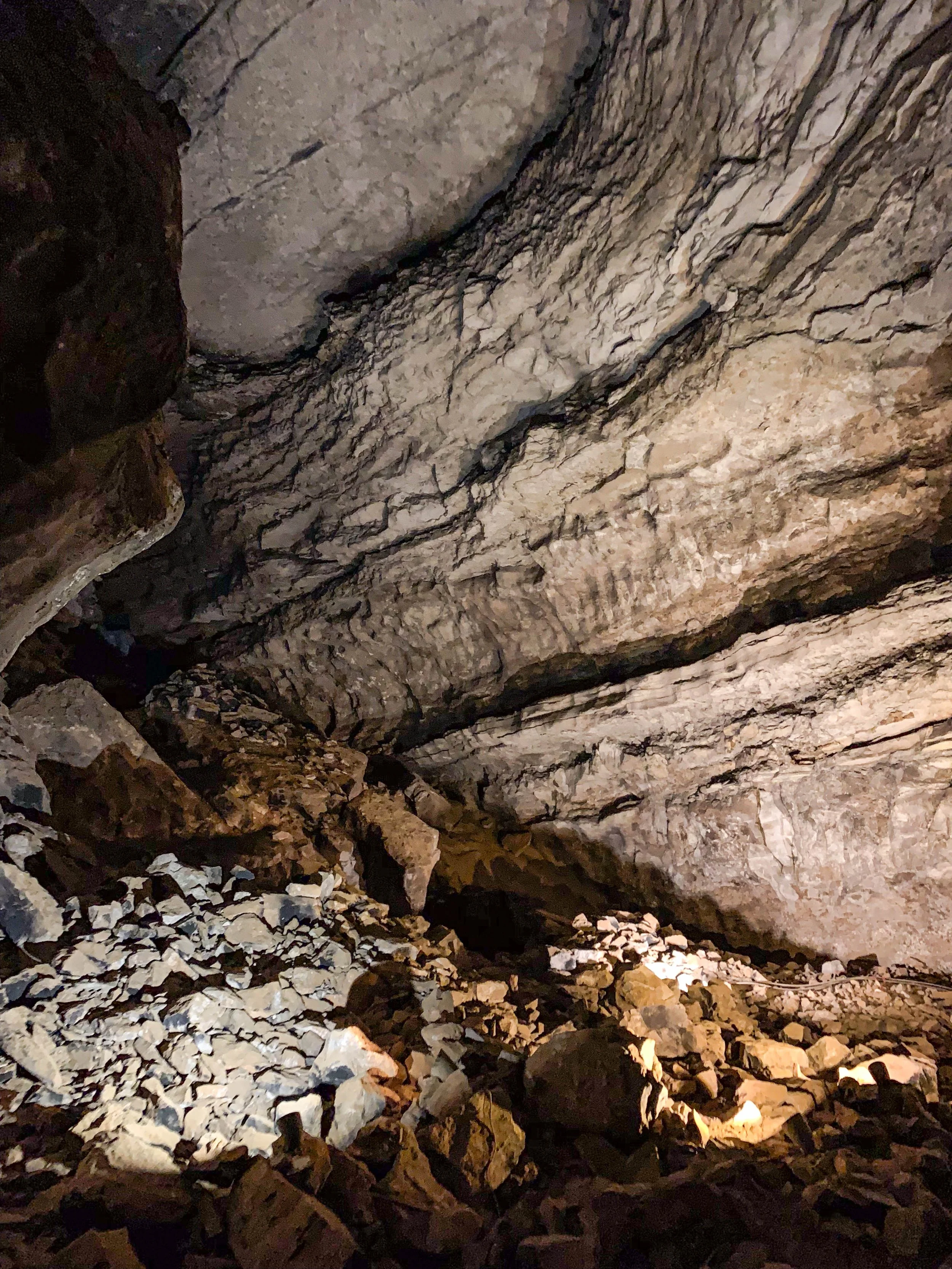
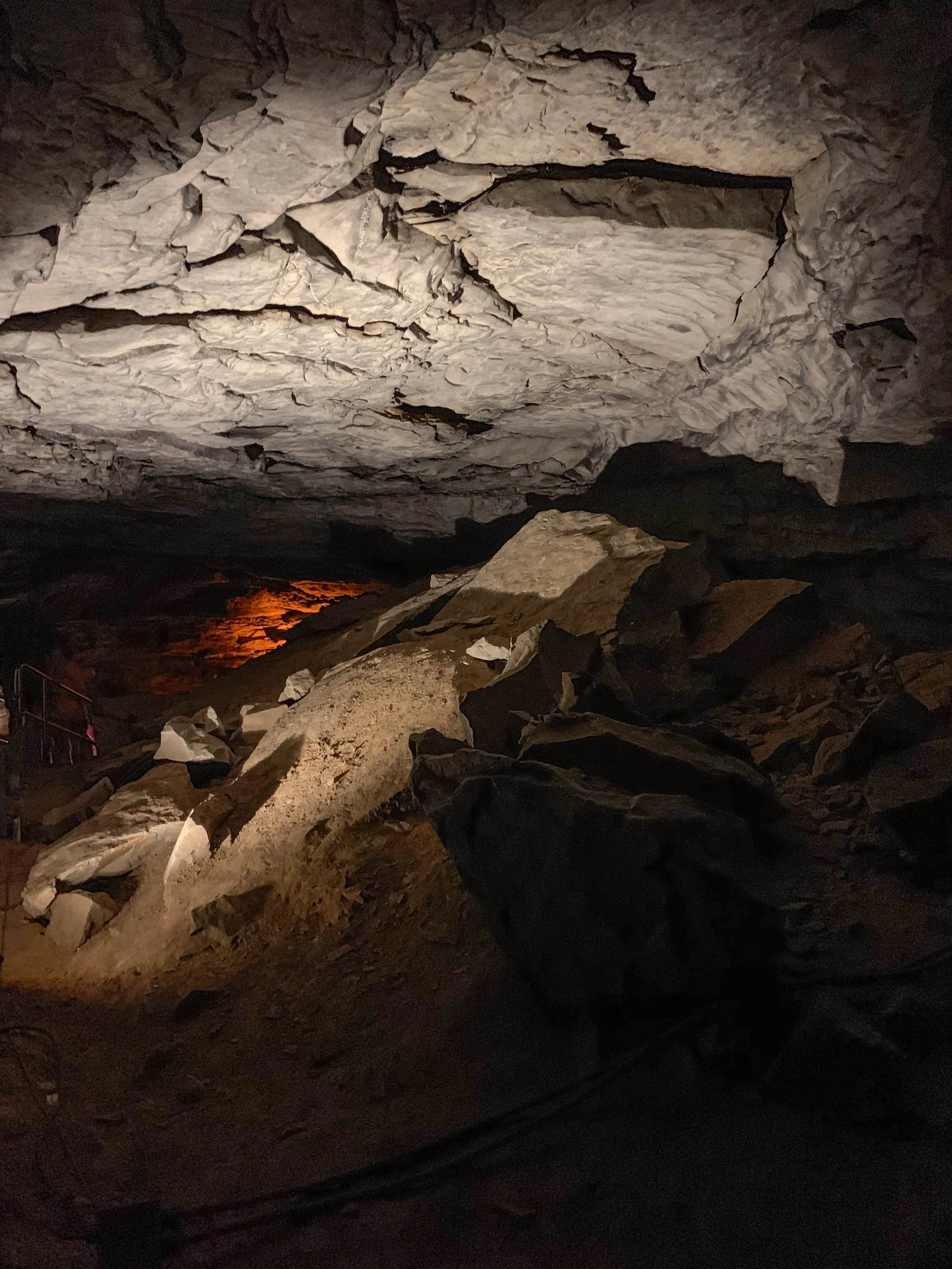
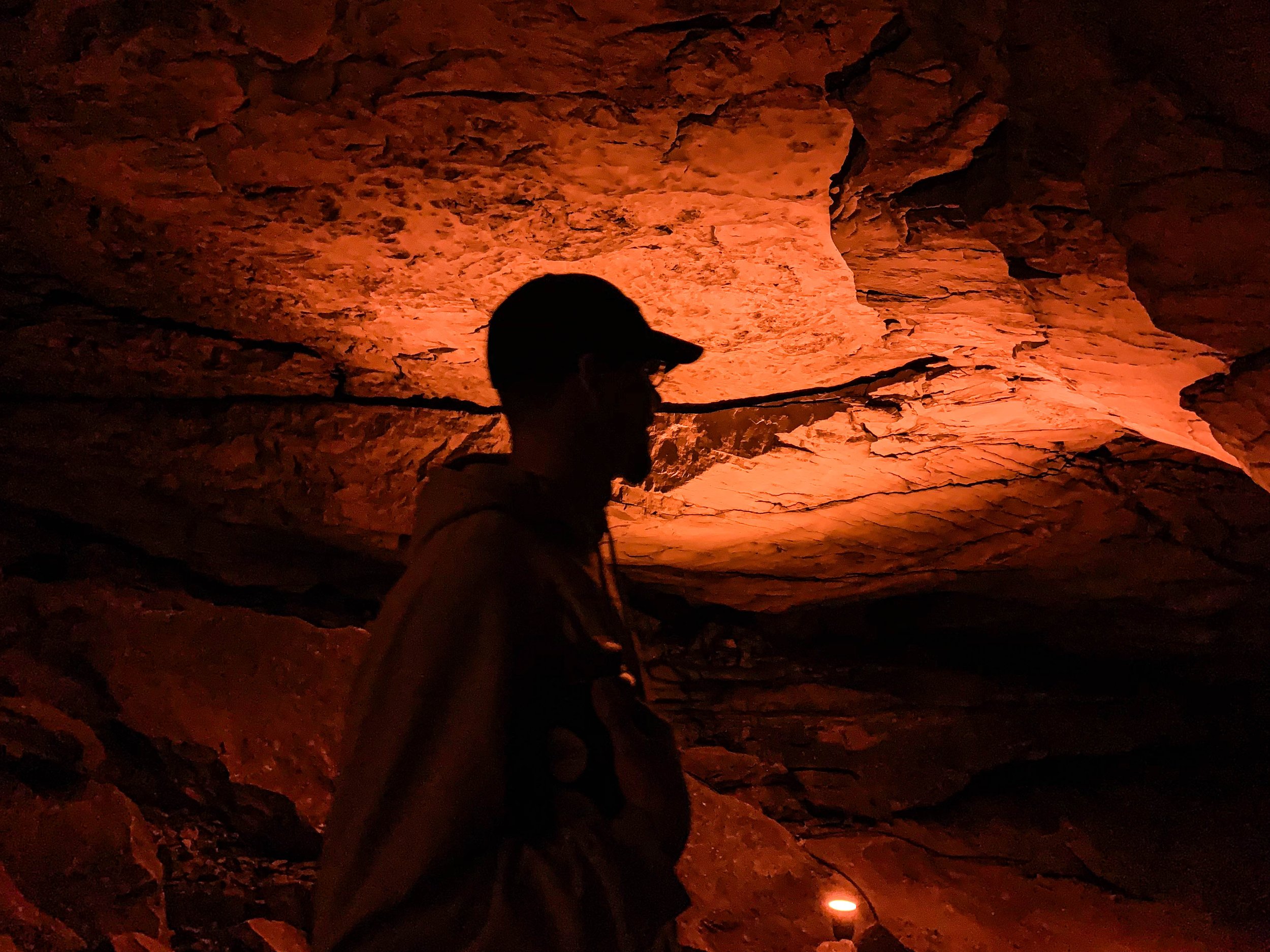
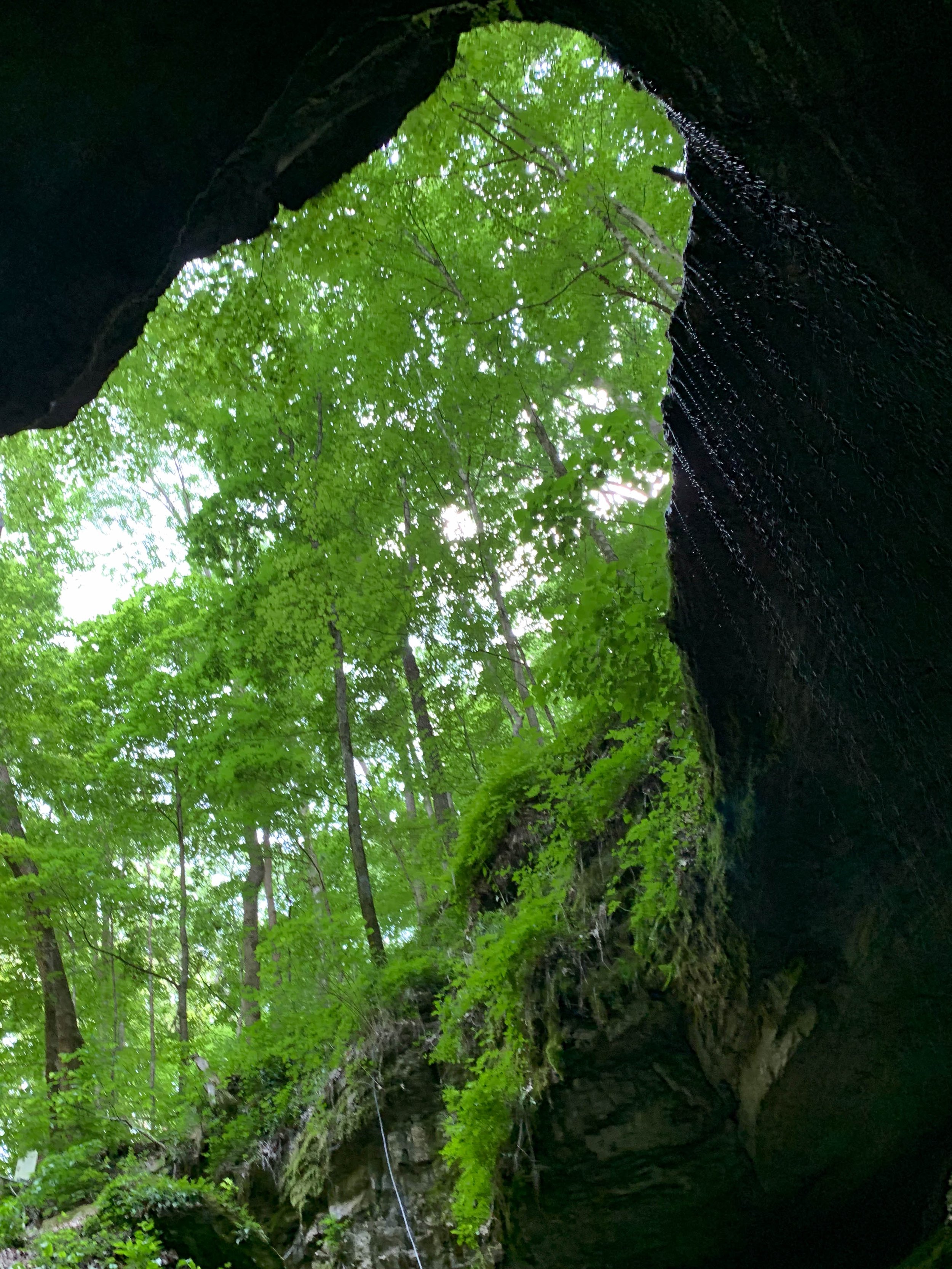
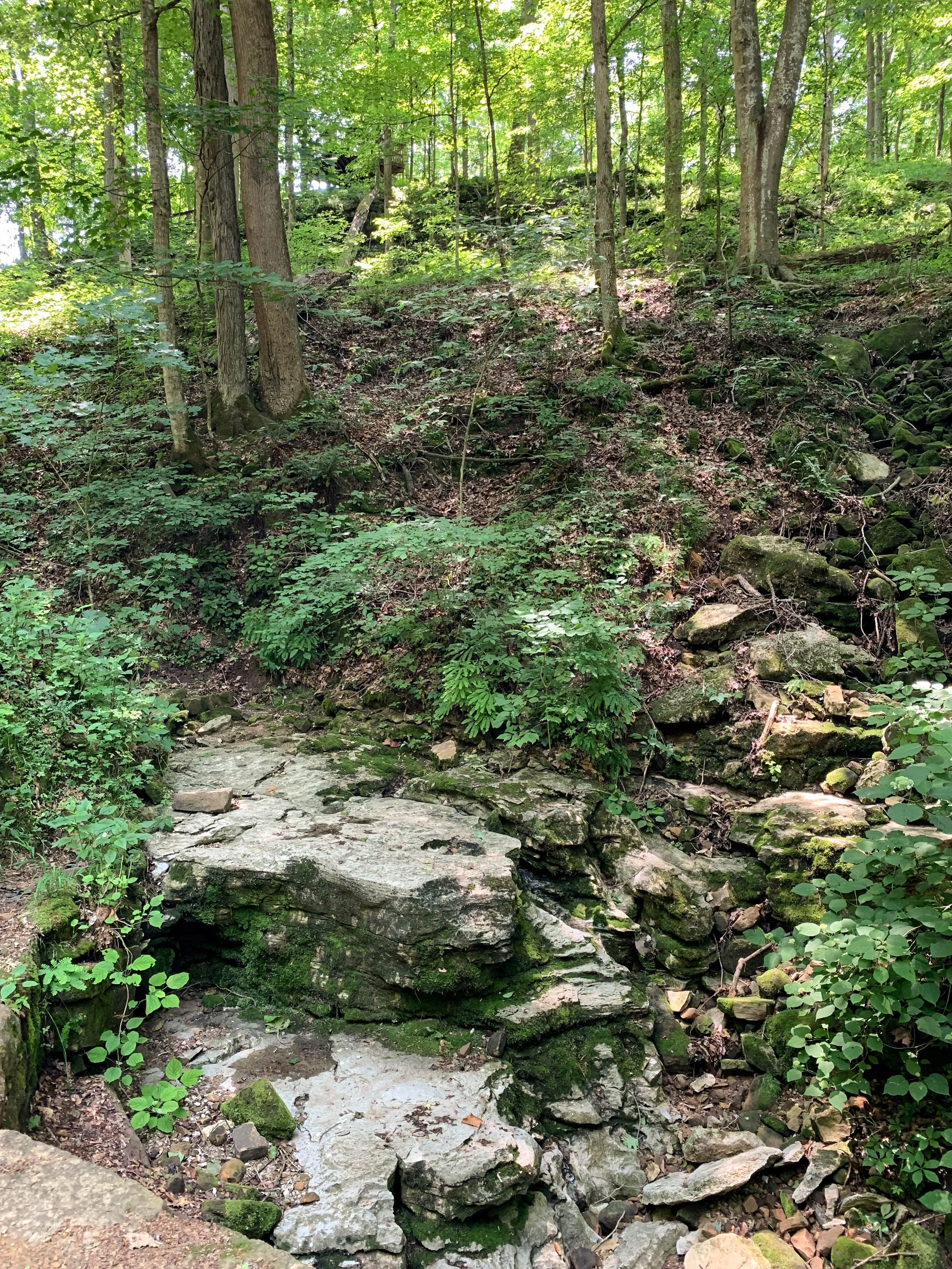
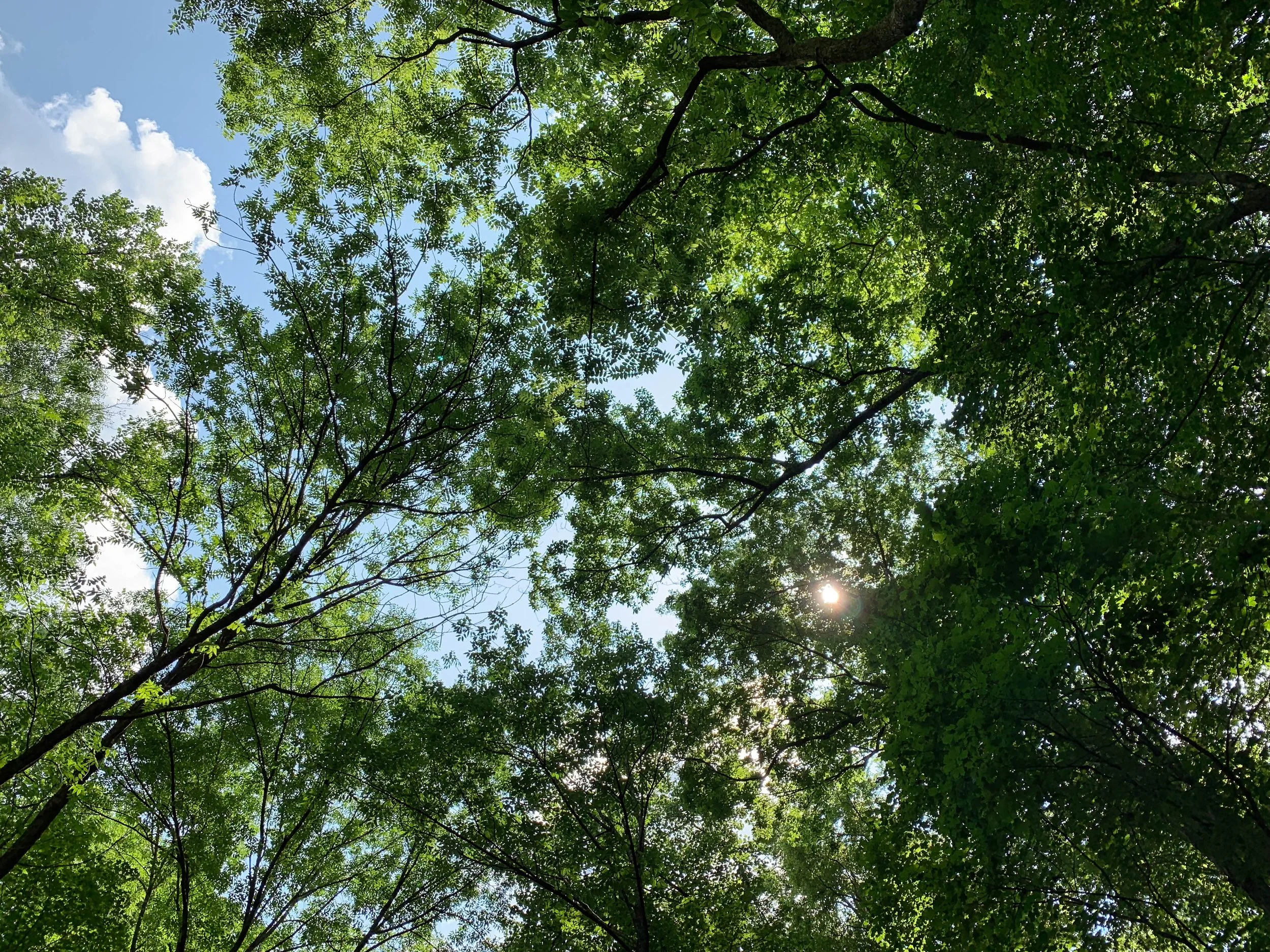
For me, the best part of Mammoth Cave was not actually the cave, but rather the lush green forest it was hidden within (and beneath). Mammoth Cave is impressive. It is the longest cave in the world, for one, and it inspired a sense of awe as we traversed deeper within as part of a daily tour. However, I freely admit that delving deeper into the Earth has never been anywhere close to the top of my list of favorite adventures. My relief was palpable once we finished the tour and emerged back into the soft green sunlight that filtered through the forest canopy. We explored one of the nearby trails and checked out the visitor center before hopping back into the car to begin our trek back to Cobden.
Apparently, no camera for this trip either! Enjoy these low(er) quality iPhone pictures instead.
Crater Lake
Park 9 | July 2018
Part + Park 3 (of 3) on the birthdaymoon road trip.
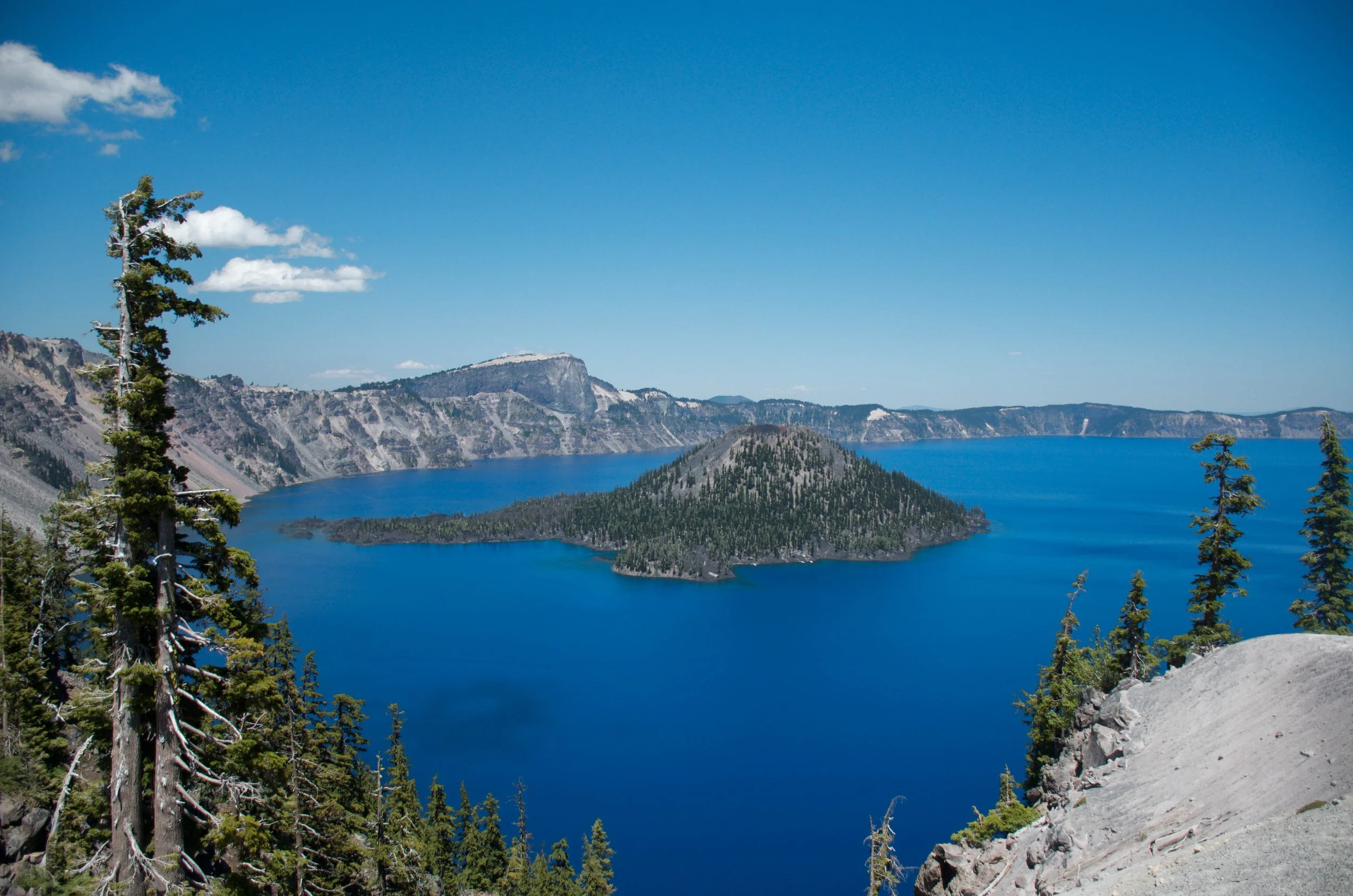
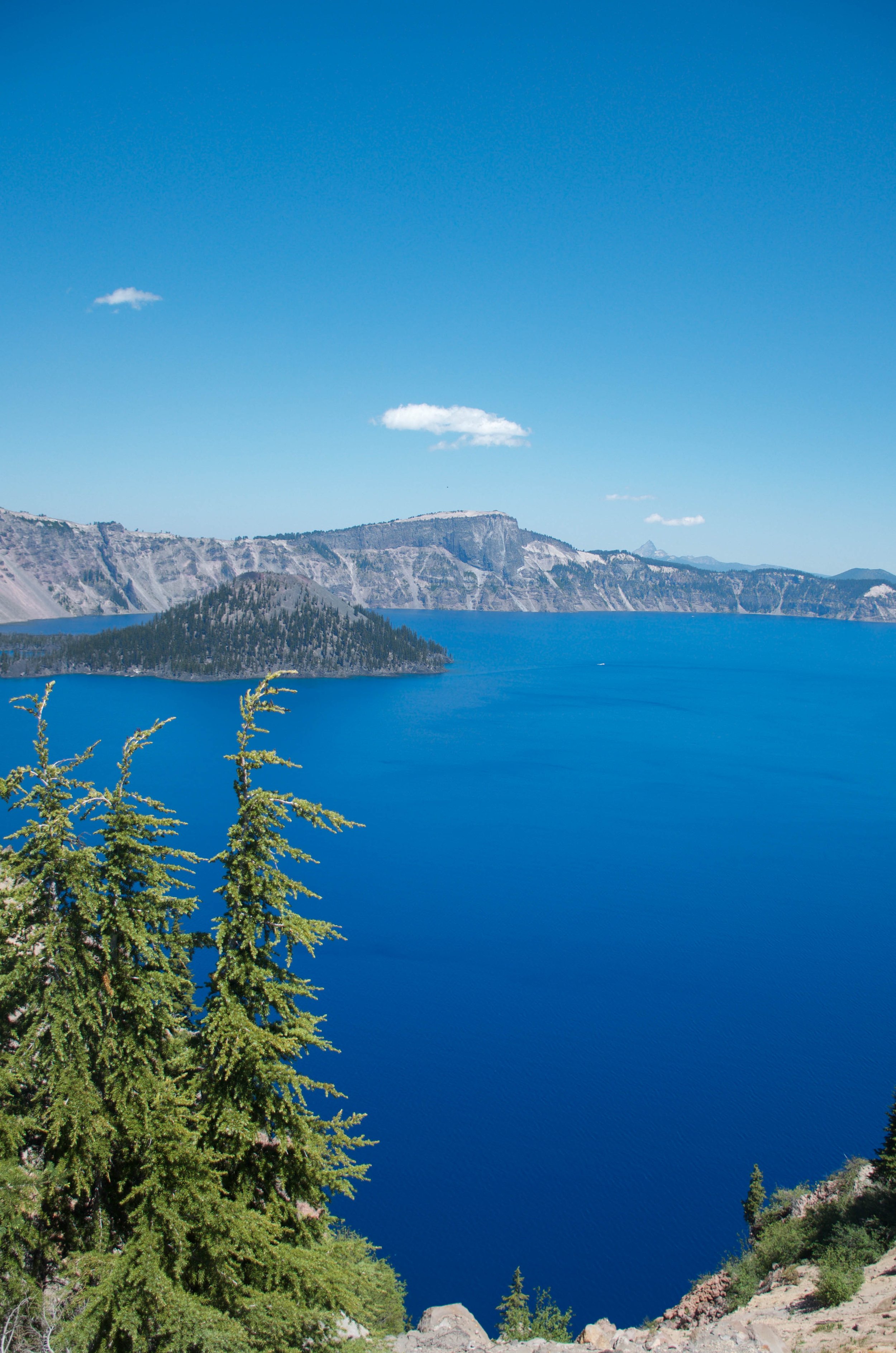
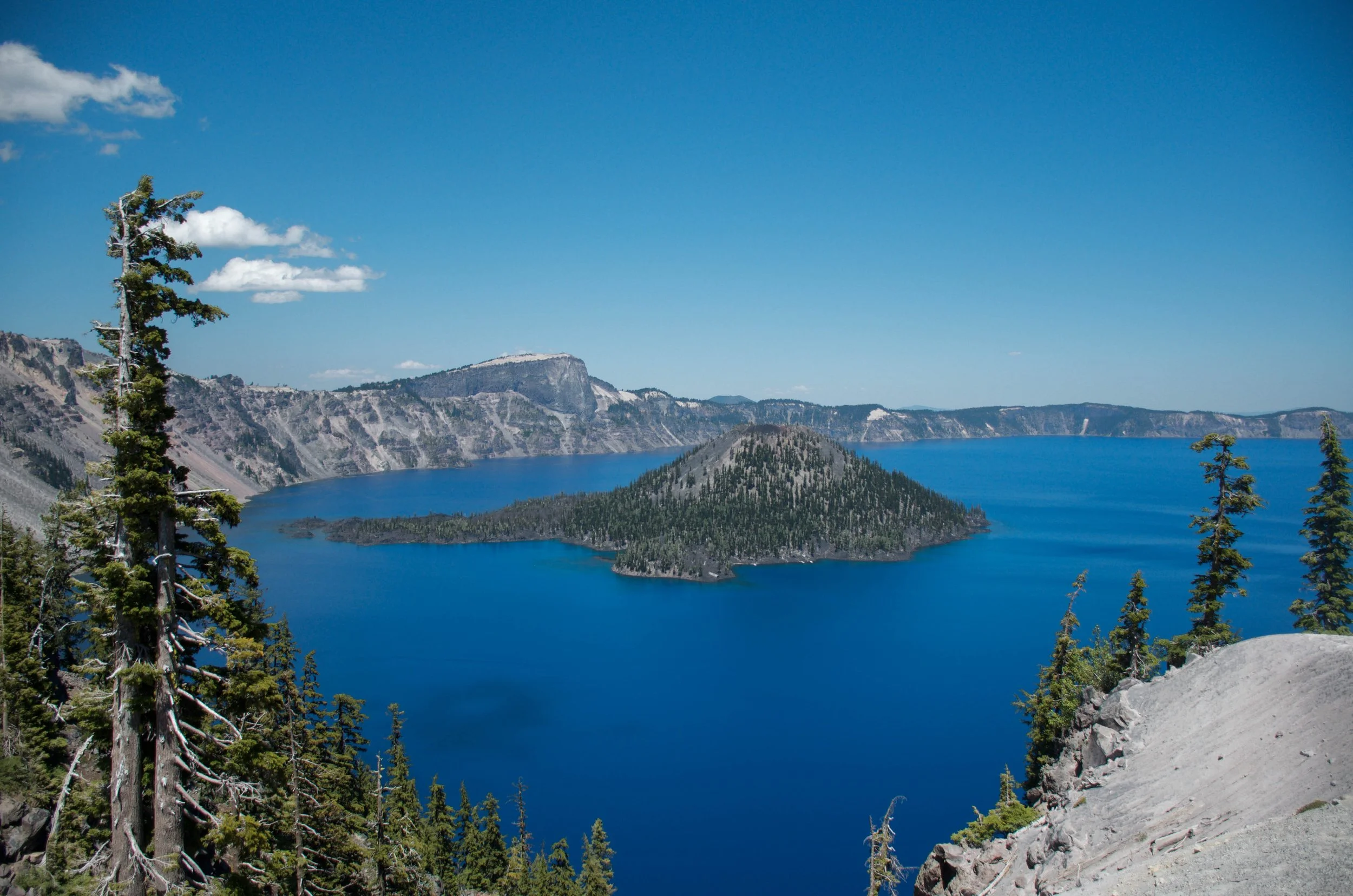
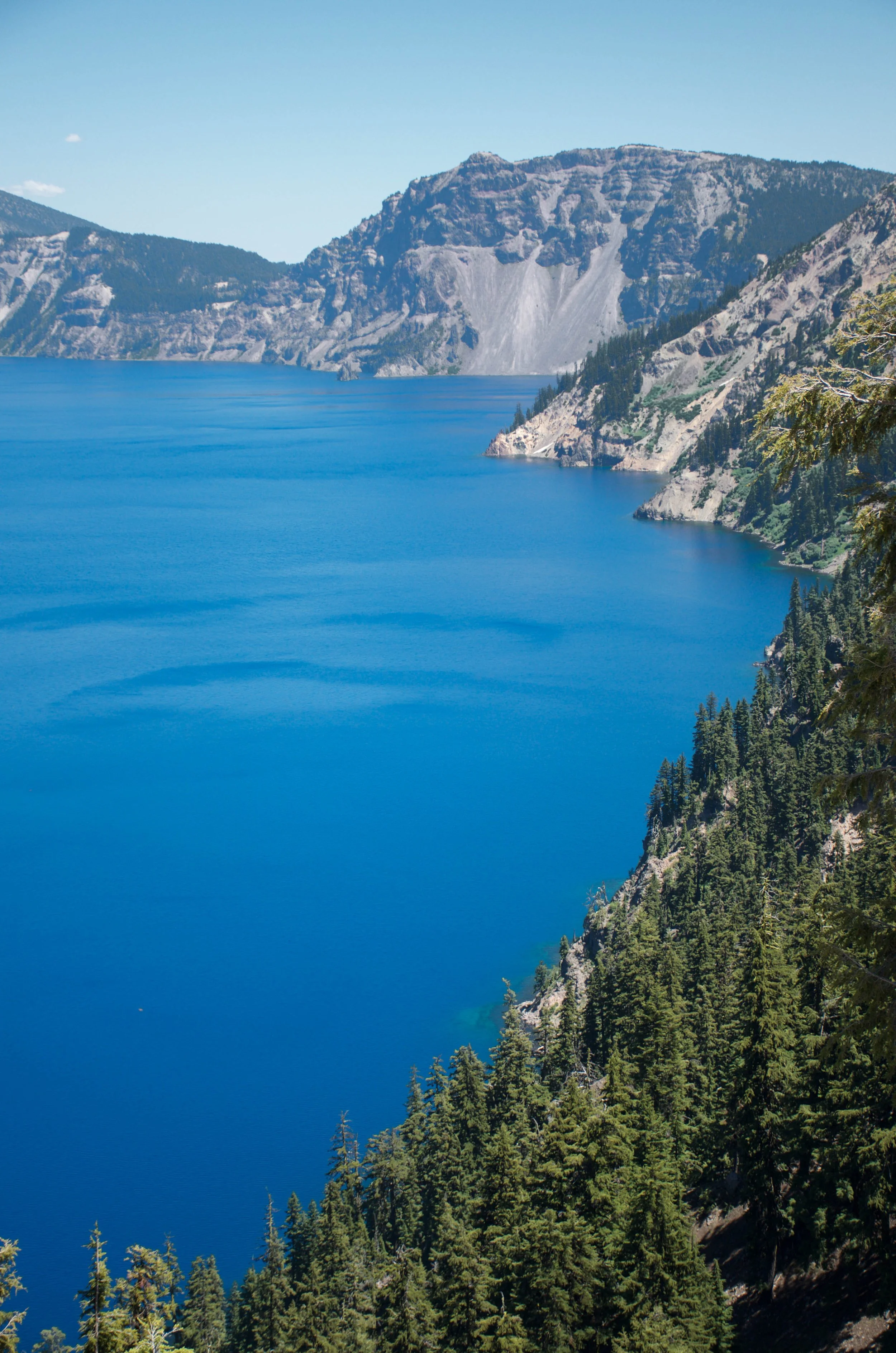
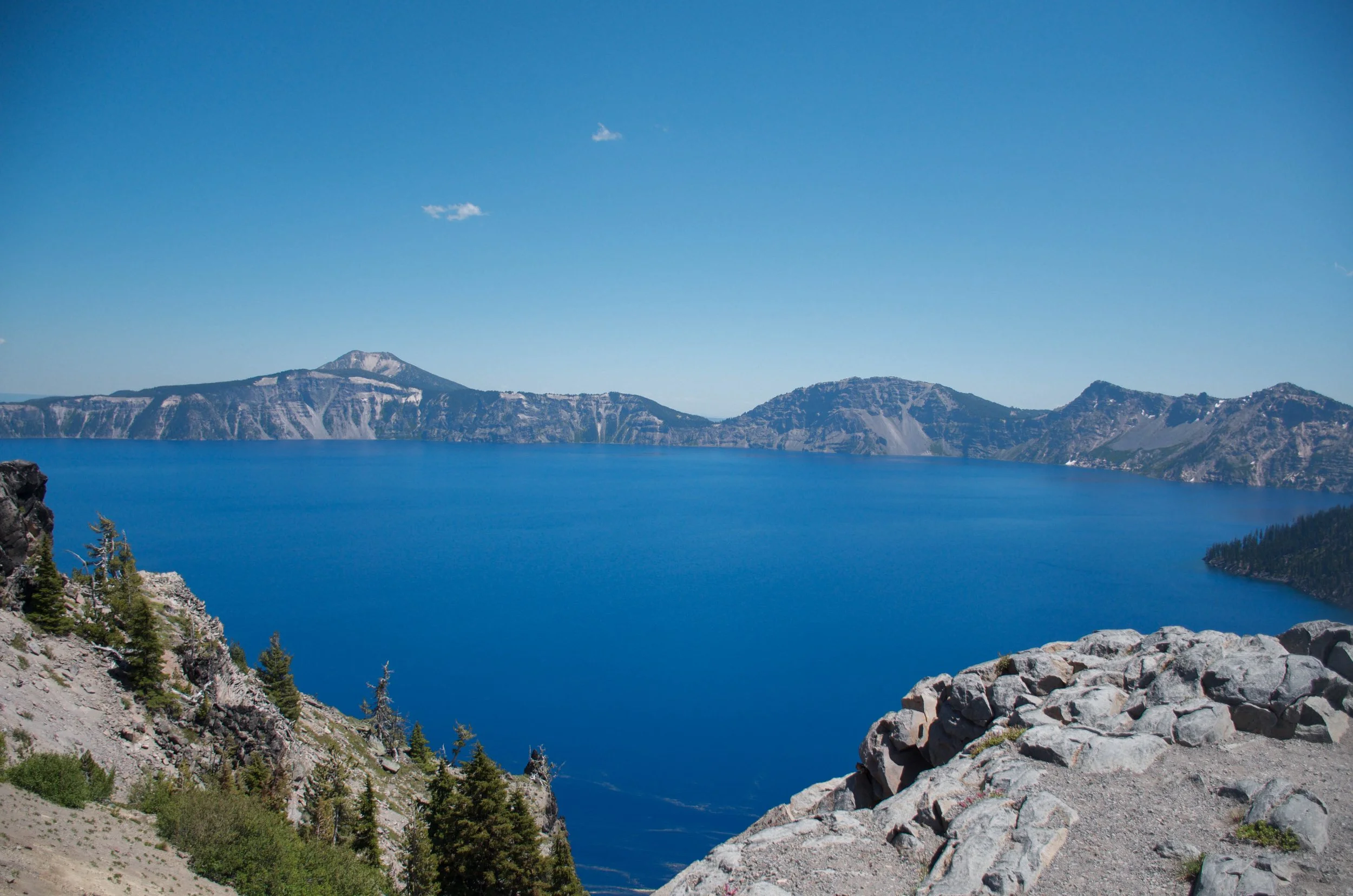
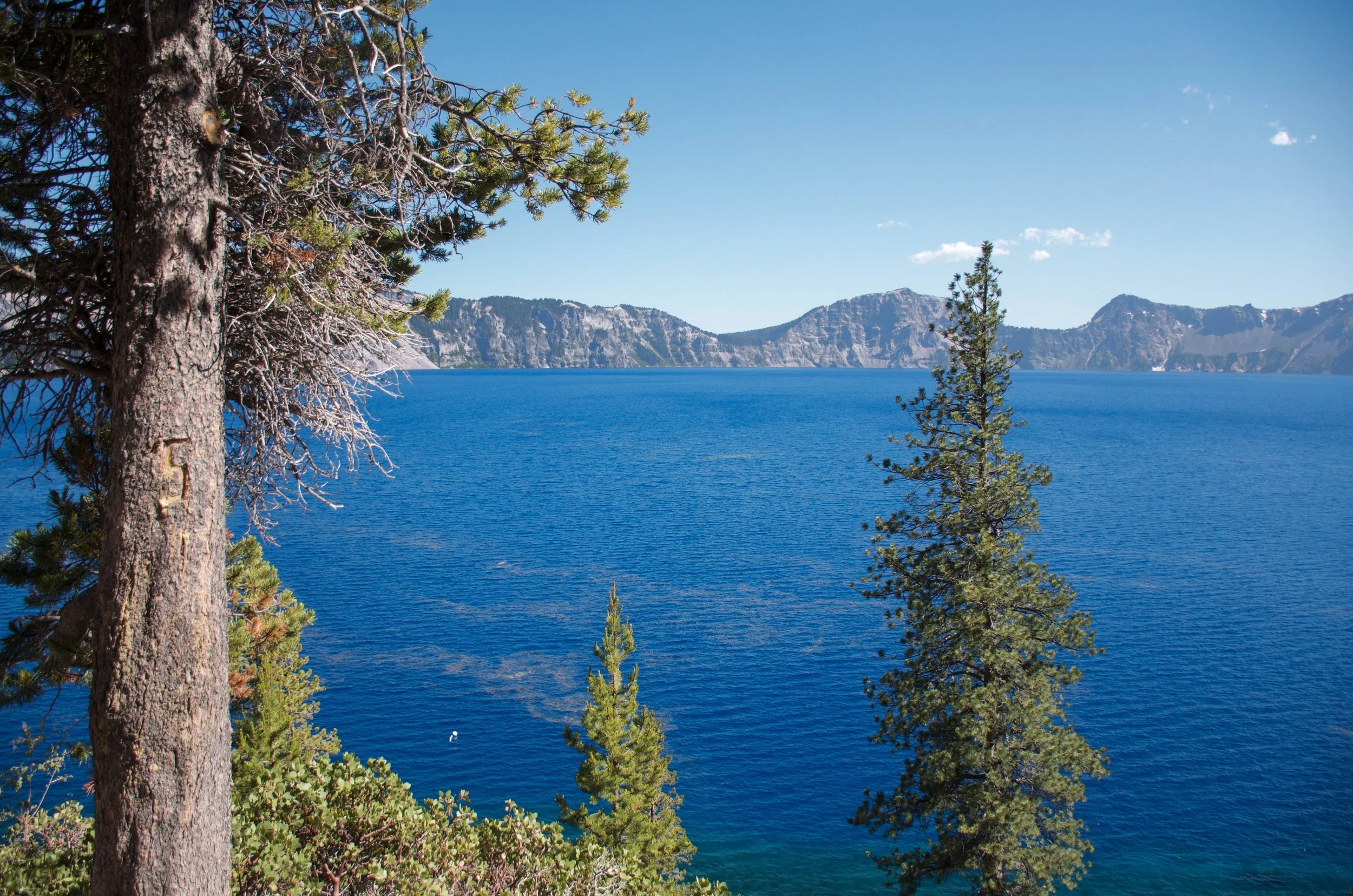
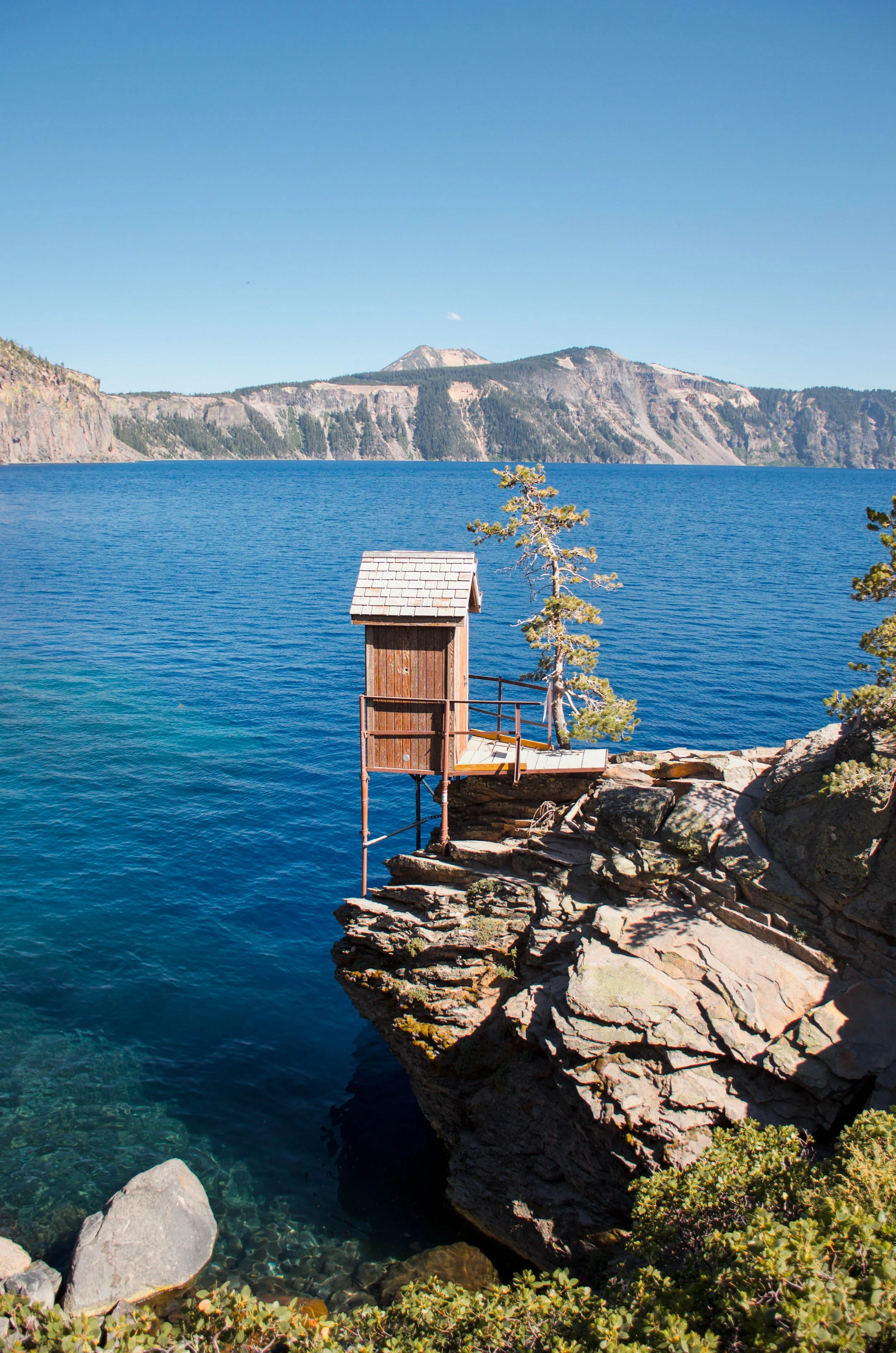
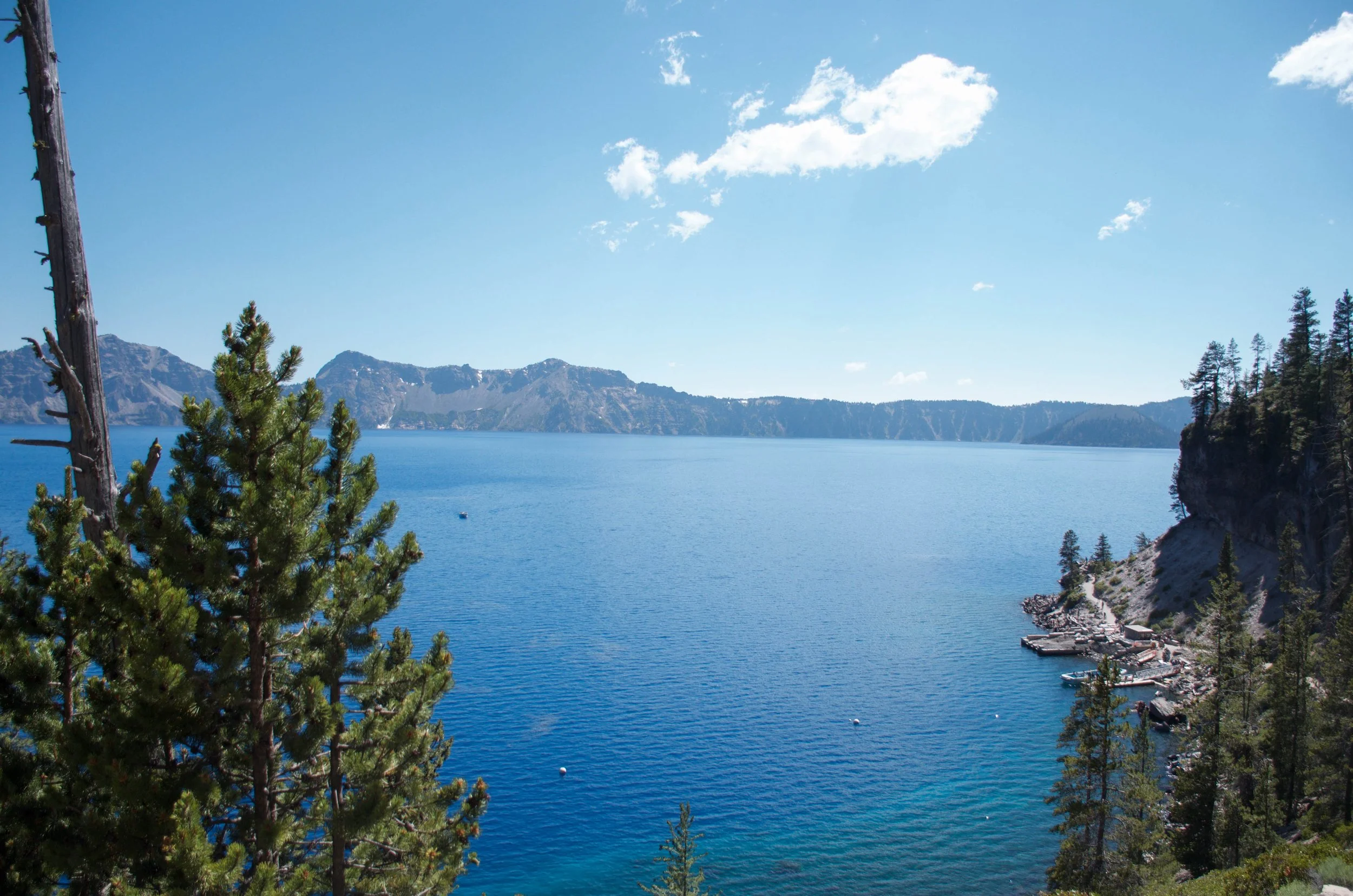
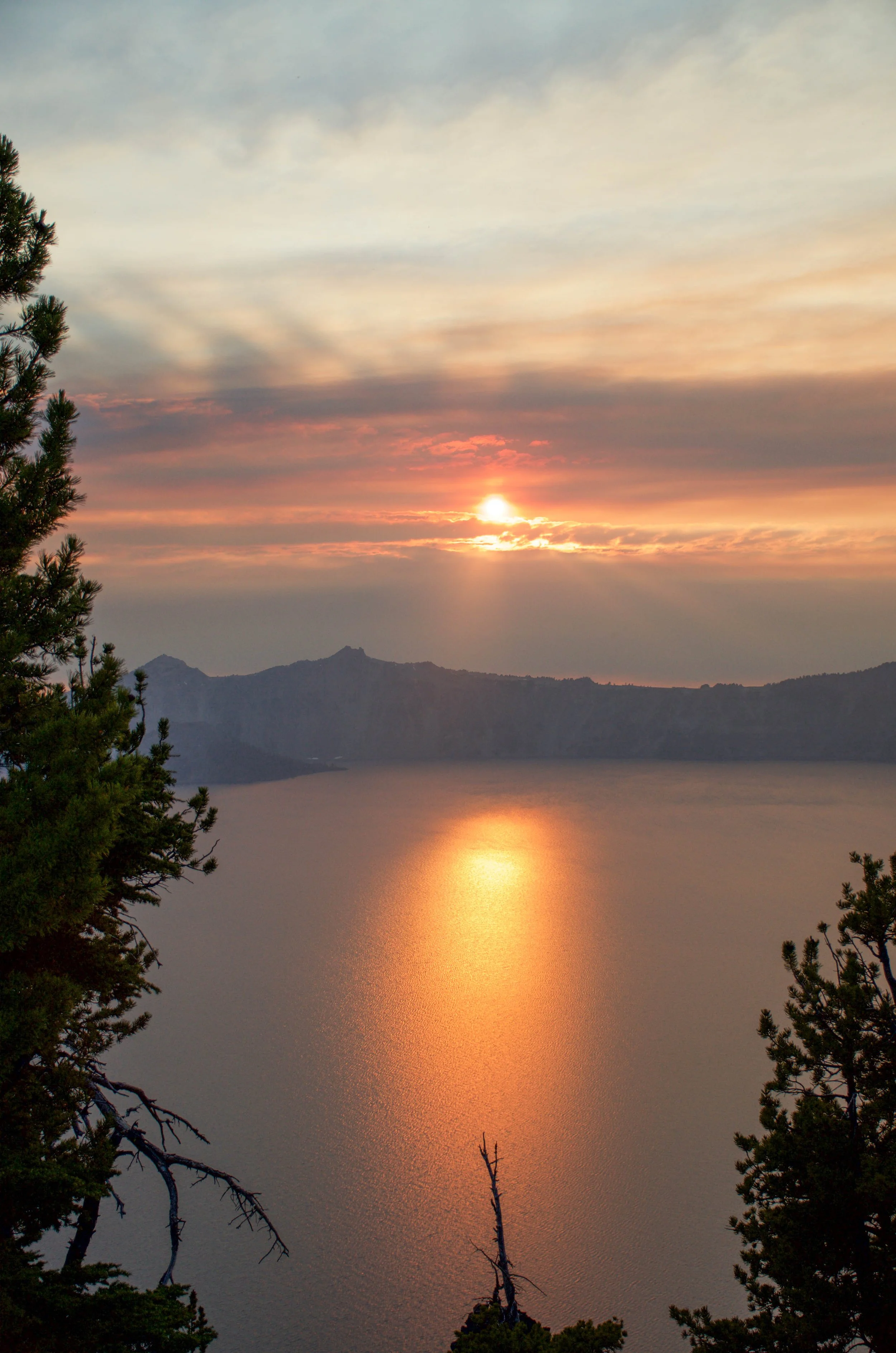
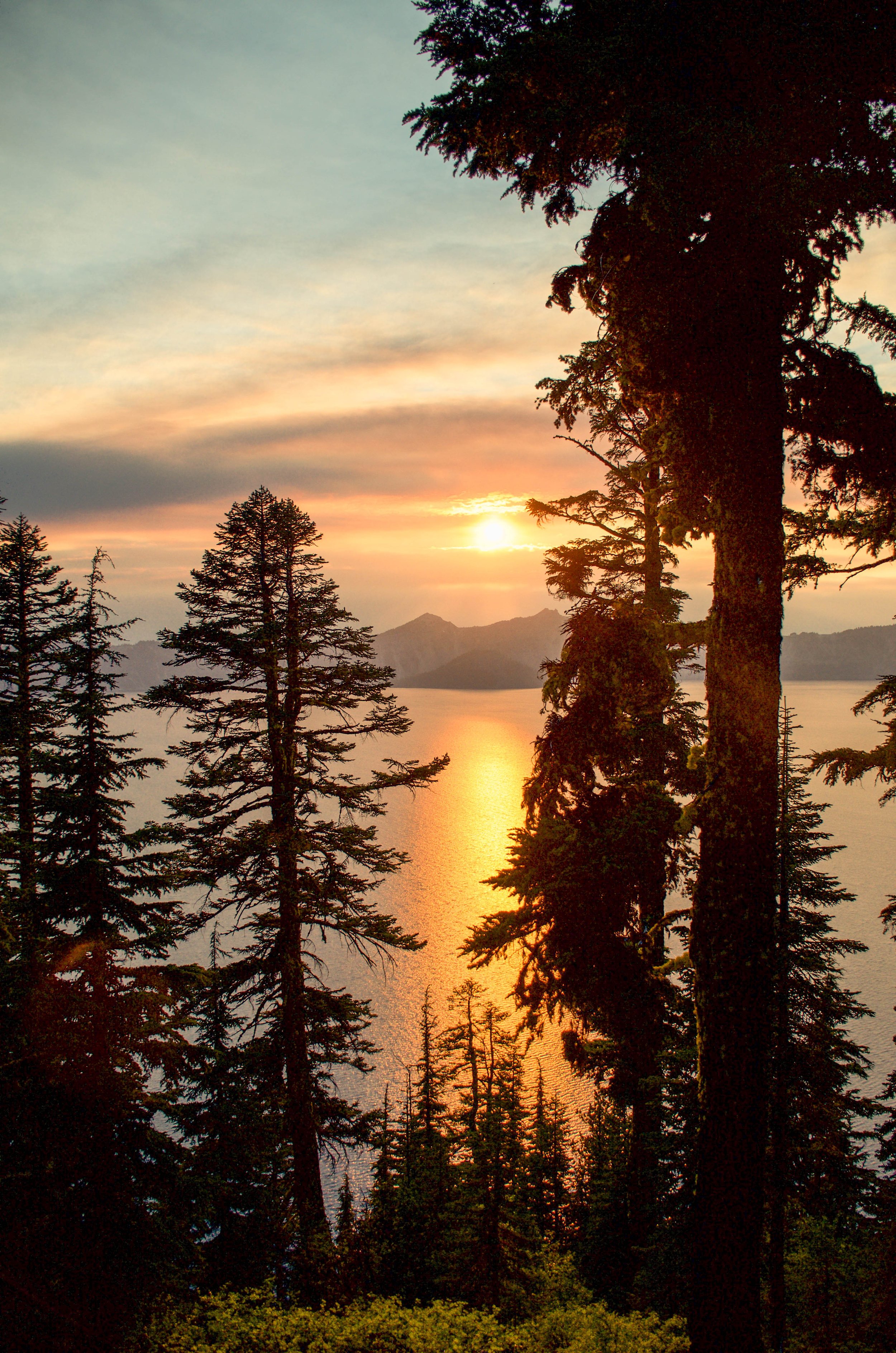
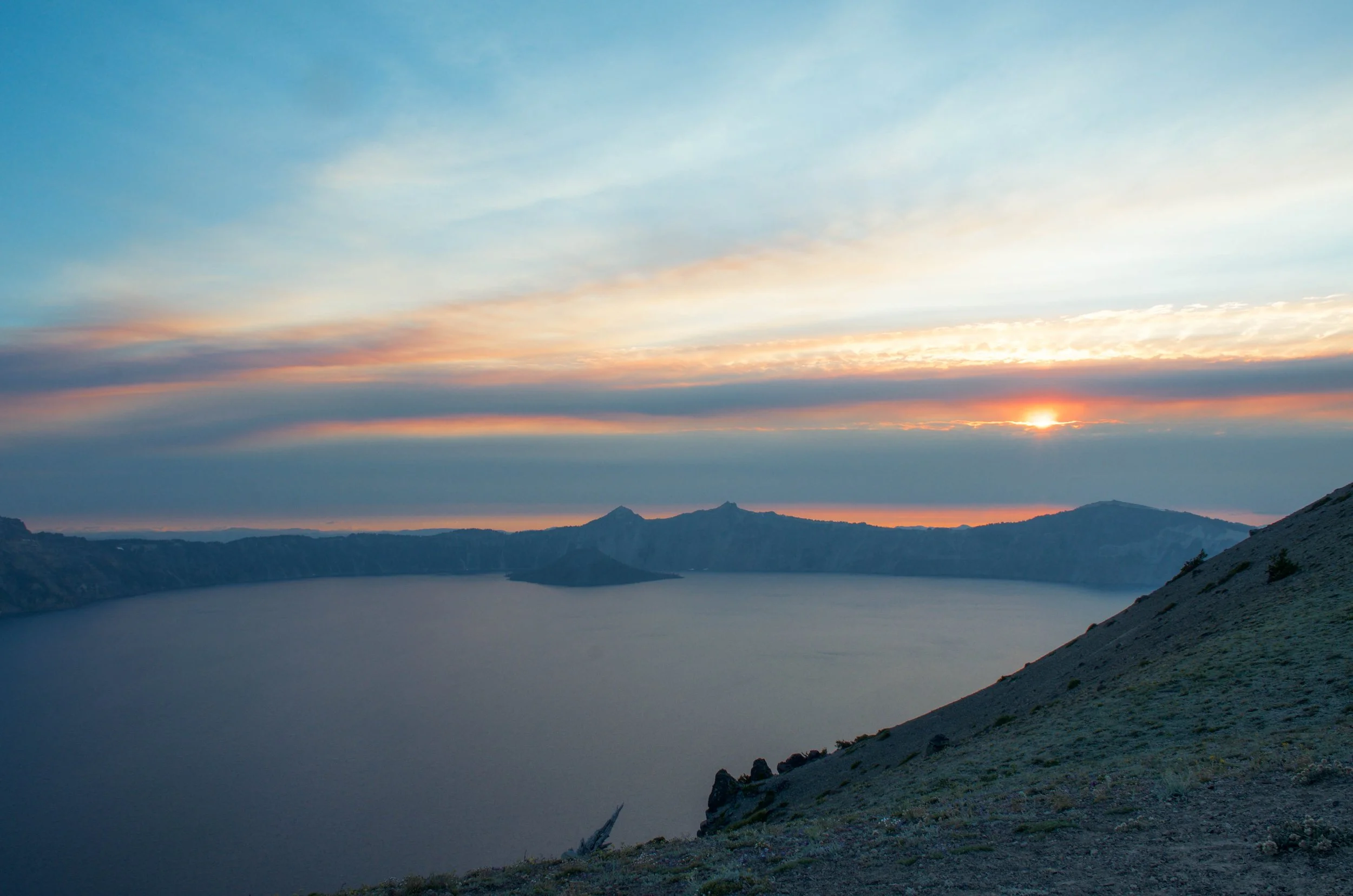
I decided to leave most of these photos untouched/barely touched up, mostly because I still find the deep blue color of the water to look totally unreal and I want to leave it as is. That shade of blue looks fake. The lake is so deep (1900+ ft at its deepest point) that the water actually absorbs the red and orange wavelengths of sunlight while reflecting the blue wavelengths back to the surface, giving it this distinctive hue. Crater Lake really does defy the imagination.
Several of my family members who lived in the Eugene area drove down to spend the afternoon with us here. We caught up over chicken curry salad and walked around Rim Village Historic District before eventually getting into our cars and driving along the western edge of the rim. We eventually made it to our destination: Cleetwood Cove Trailhead, the only access point to get down the water’s edge. After descending the switchbacks, we were ready to join the small crowd of people at the bottom who alternated between jumping in to the icy lake and warming back up on the rocks that made up the shoreline.
I joined J and a few siblings at the edge of the ledge and we leapt in one after the other, each person shrieking as they jumped and gasping after bobbing back to the surface. When it was my turn and I plunged into the water’s cold embrace, I felt like a vise had suddenly gripped my chest, squeezing all the air out of my lungs. I came up gasping with shock and laughing with delight, treading water for a moment to reorient myself before forcing my frozen limbs into motion to swim back to the shore.
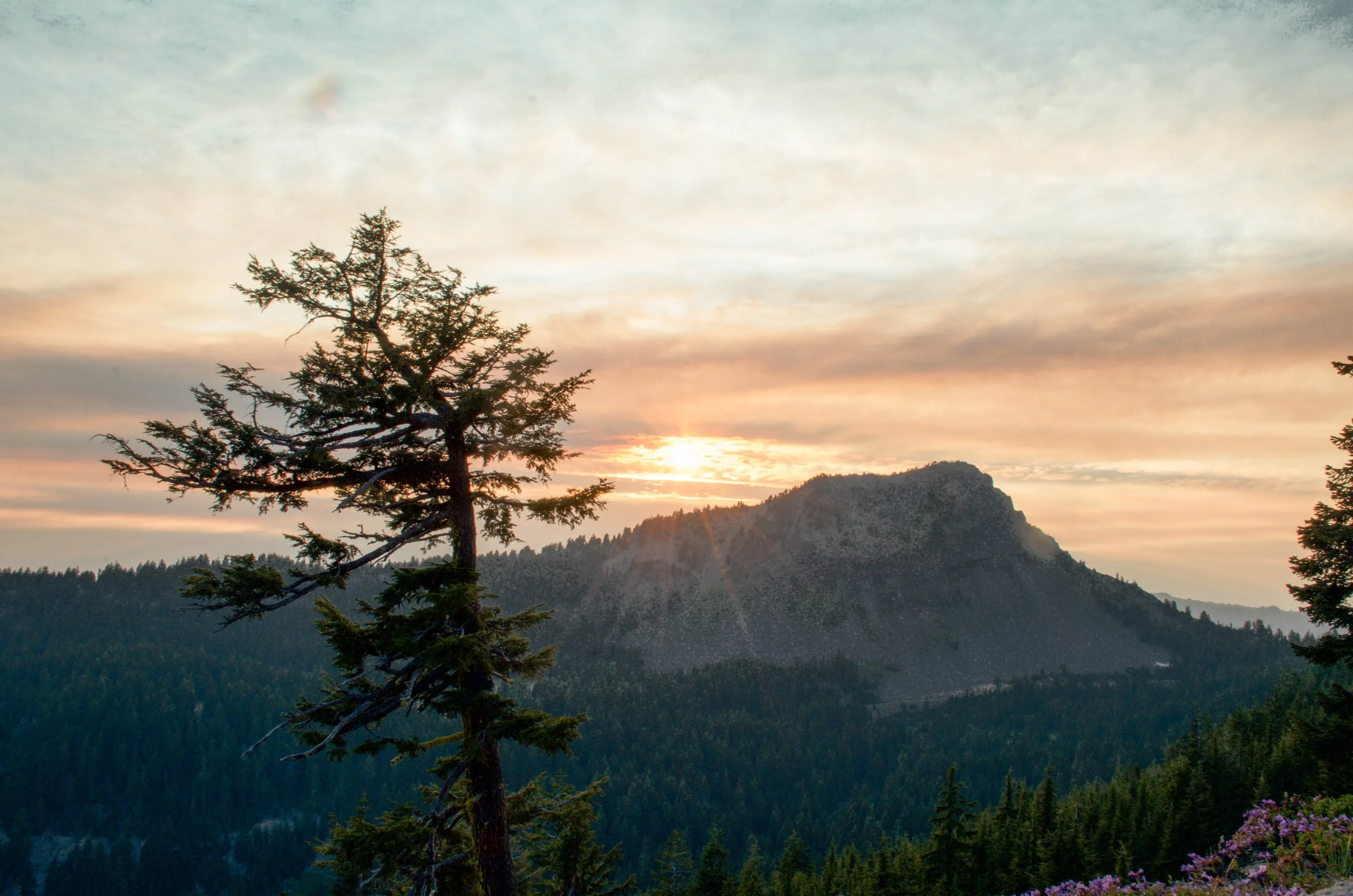
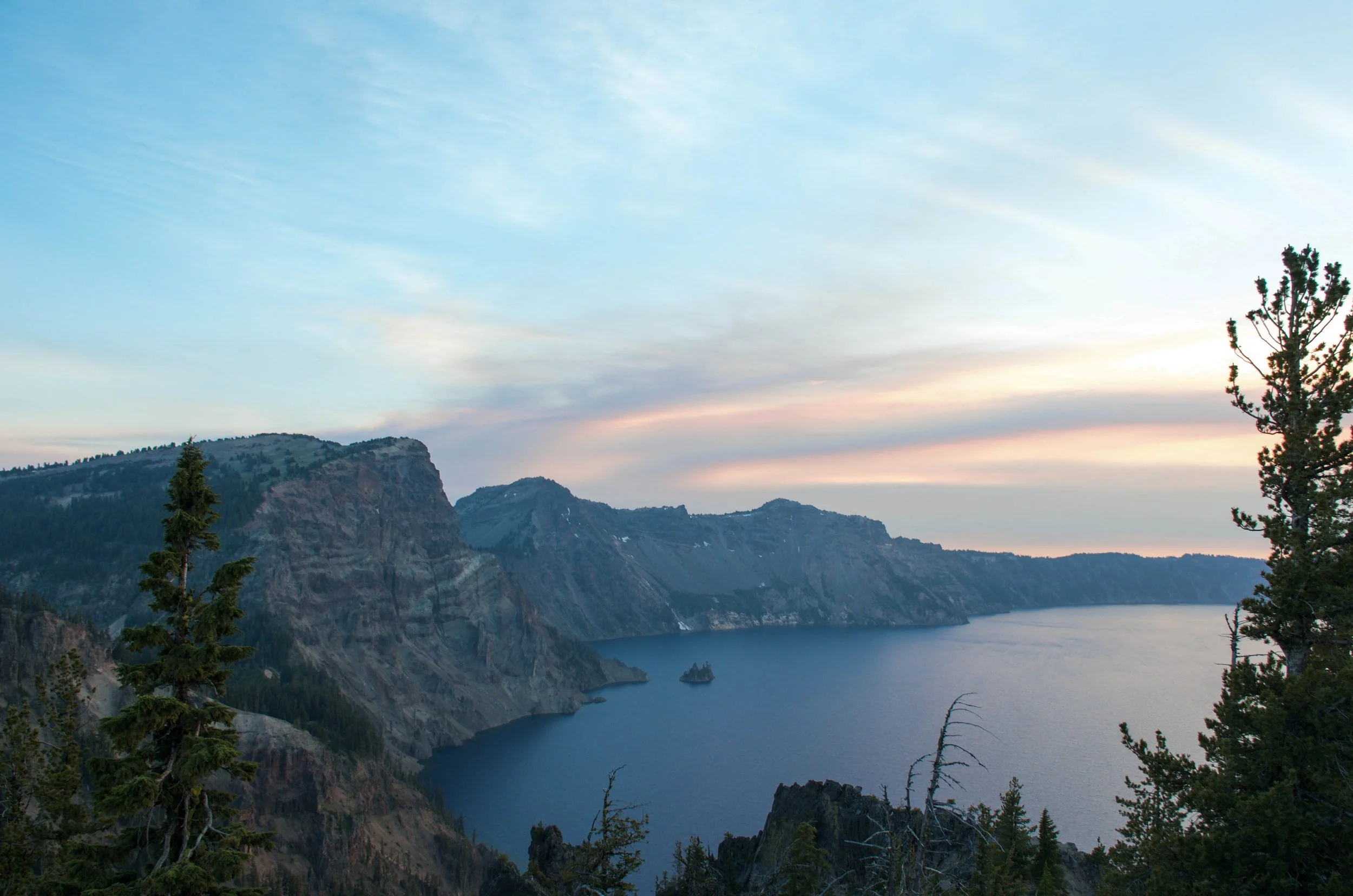
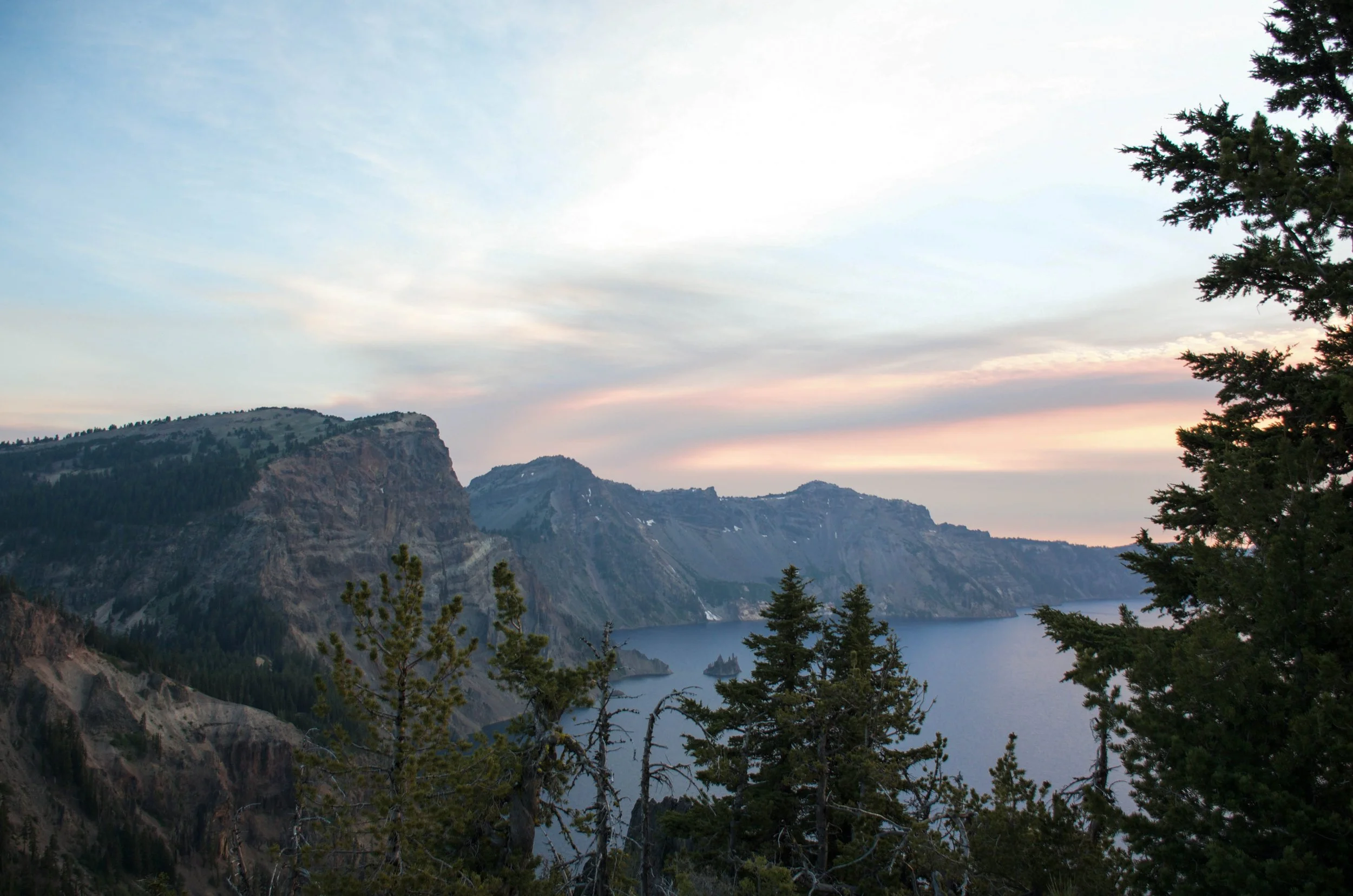
After saying goodbye to the family, we completed our drive around Rim Road with a stop at Cloudcap Overlook for sunset and a classy shared dinner of freeze-dried chili. We slept in Mazama Village Campground and squeezed in a breakfast at Crater Lake Lodge before leaving. One of my favorite memories is from this morning: Peacefully sitting in one of the giant Adirondack chairs on the expansive deck overlooking the lake, cradling a hot cup of coffee and watching the rising sun slowly alter the color of the water from pink to grey to that deep, impossible shade of blue.
Pictured below:
Watchman Overlook.
Cleetwood Cove Trail, the only access point to get down to the water’s edge.
Cloudcap Overlook.
Redwoods
Park 8 | June 2018
Redwoods National Park is the past and present home of the Yurok, Tolowa, Hupa, and Karuk, who have inhabited the redwood forests of California’s North Coast for thousands of years. In 2024, the Yoruk Tribe entered into a historic agreement to acquire land in this region to manage their own historical park, O’ Rew Redwoods Gateway.
Part + Park 2 (of 3) on the birthdaymoon road trip.
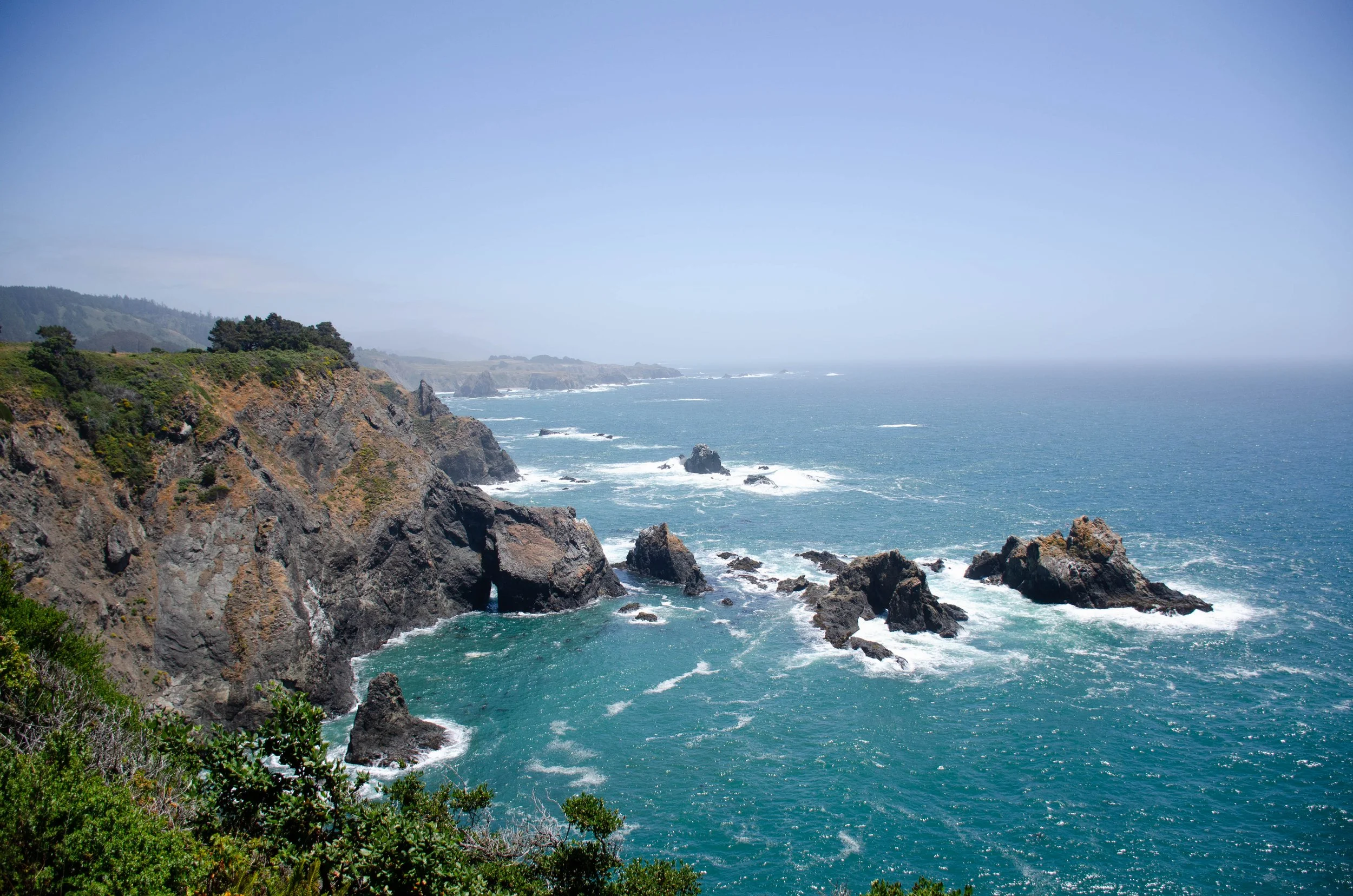
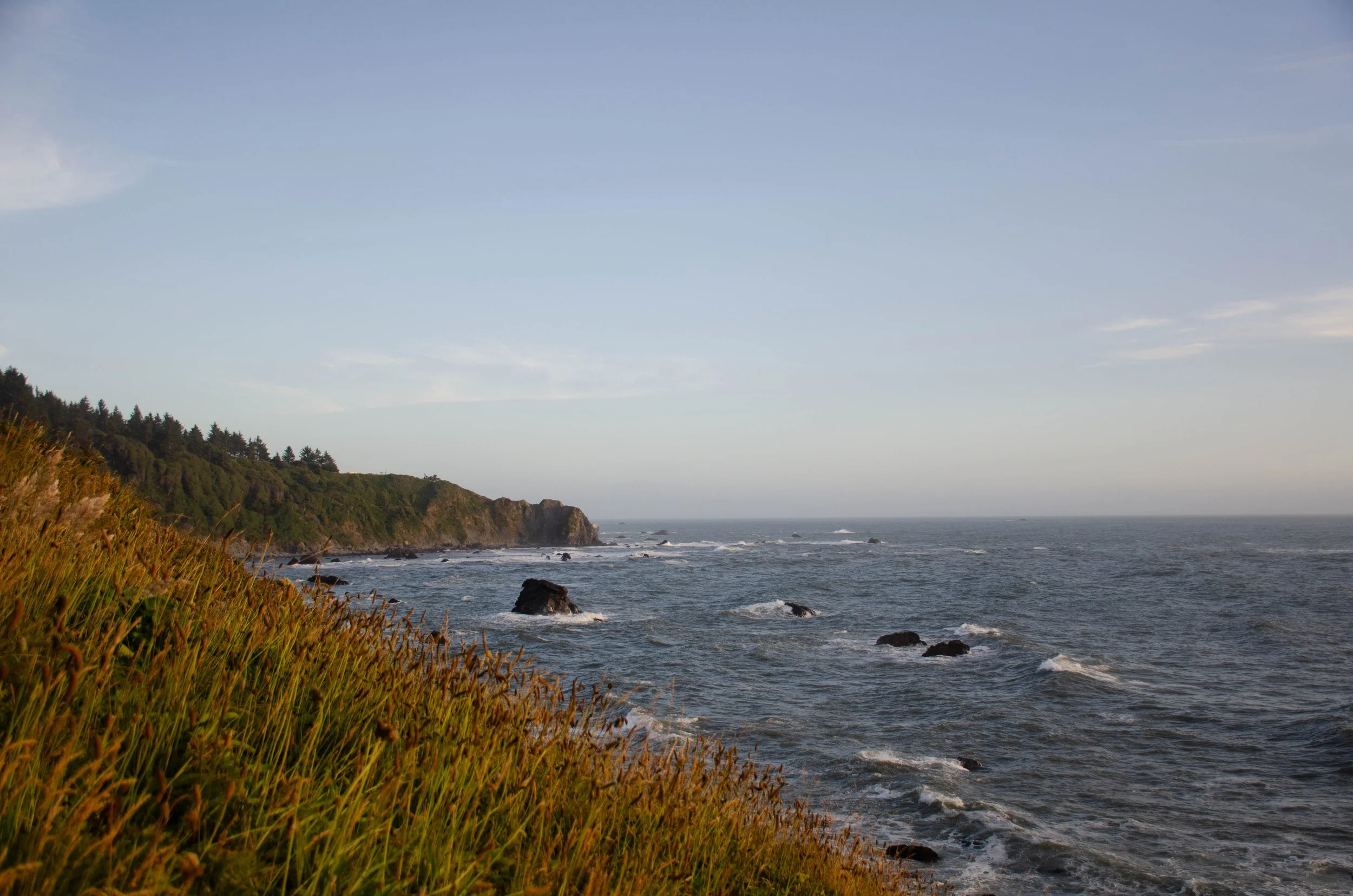
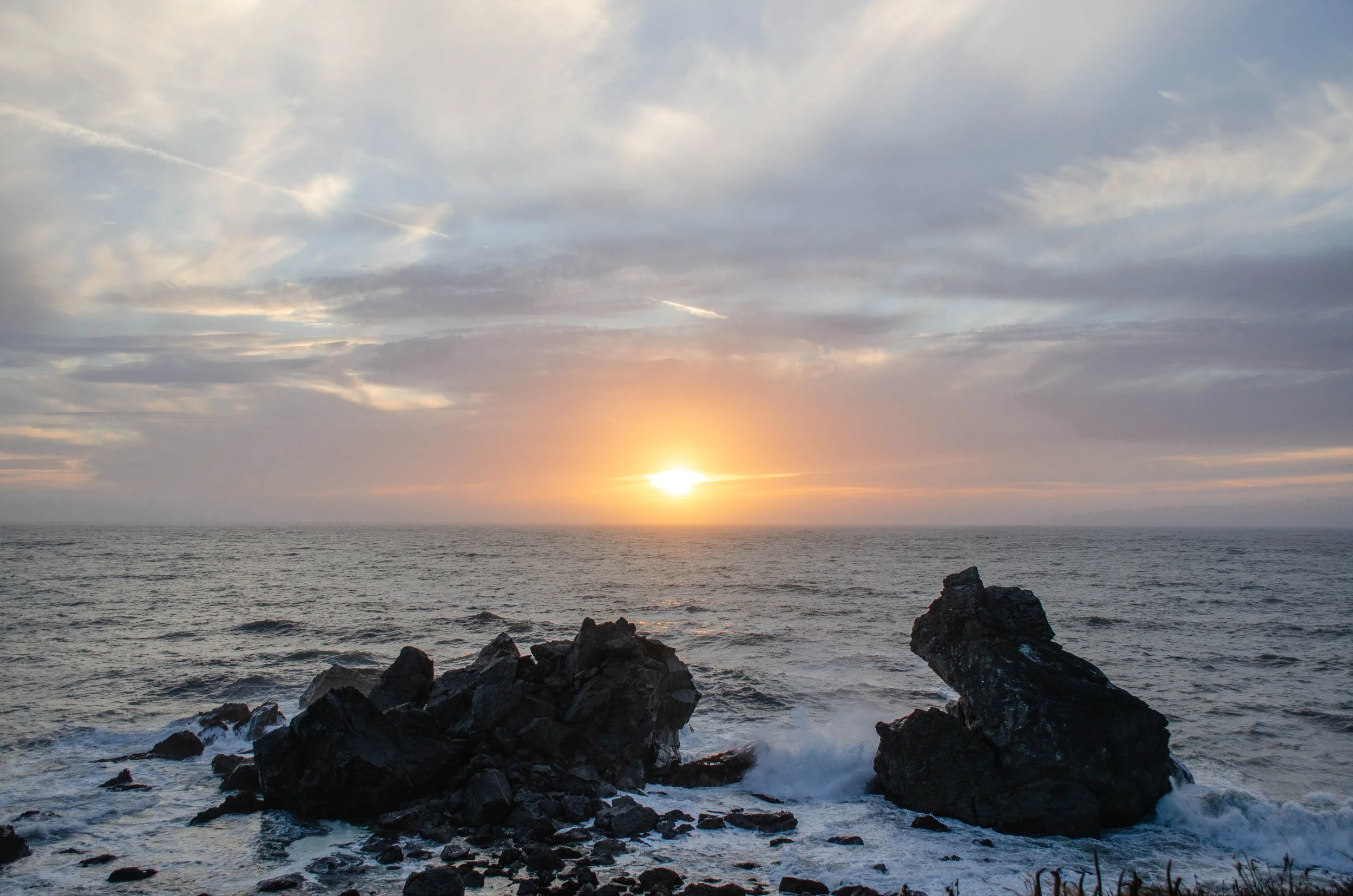
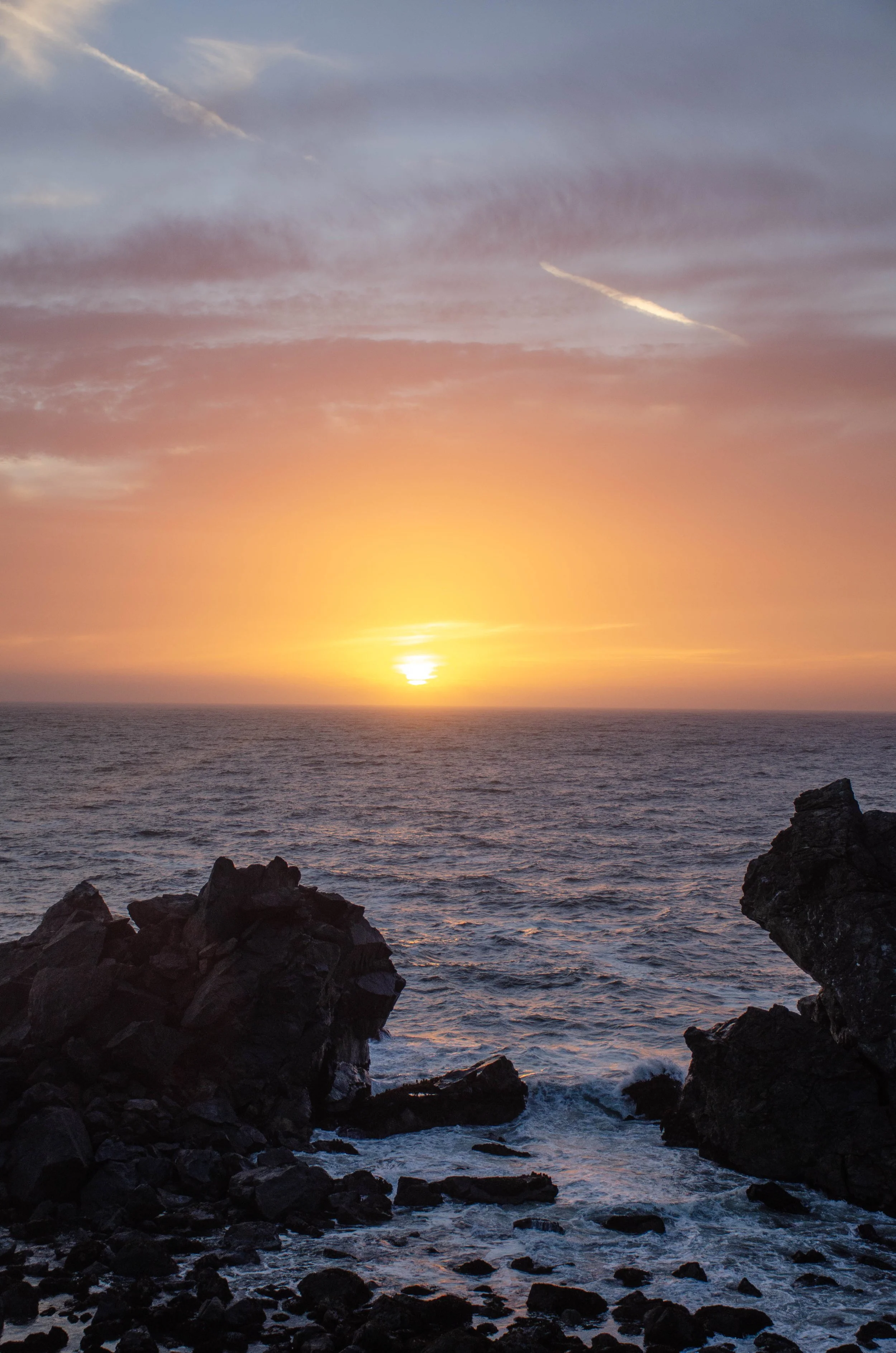
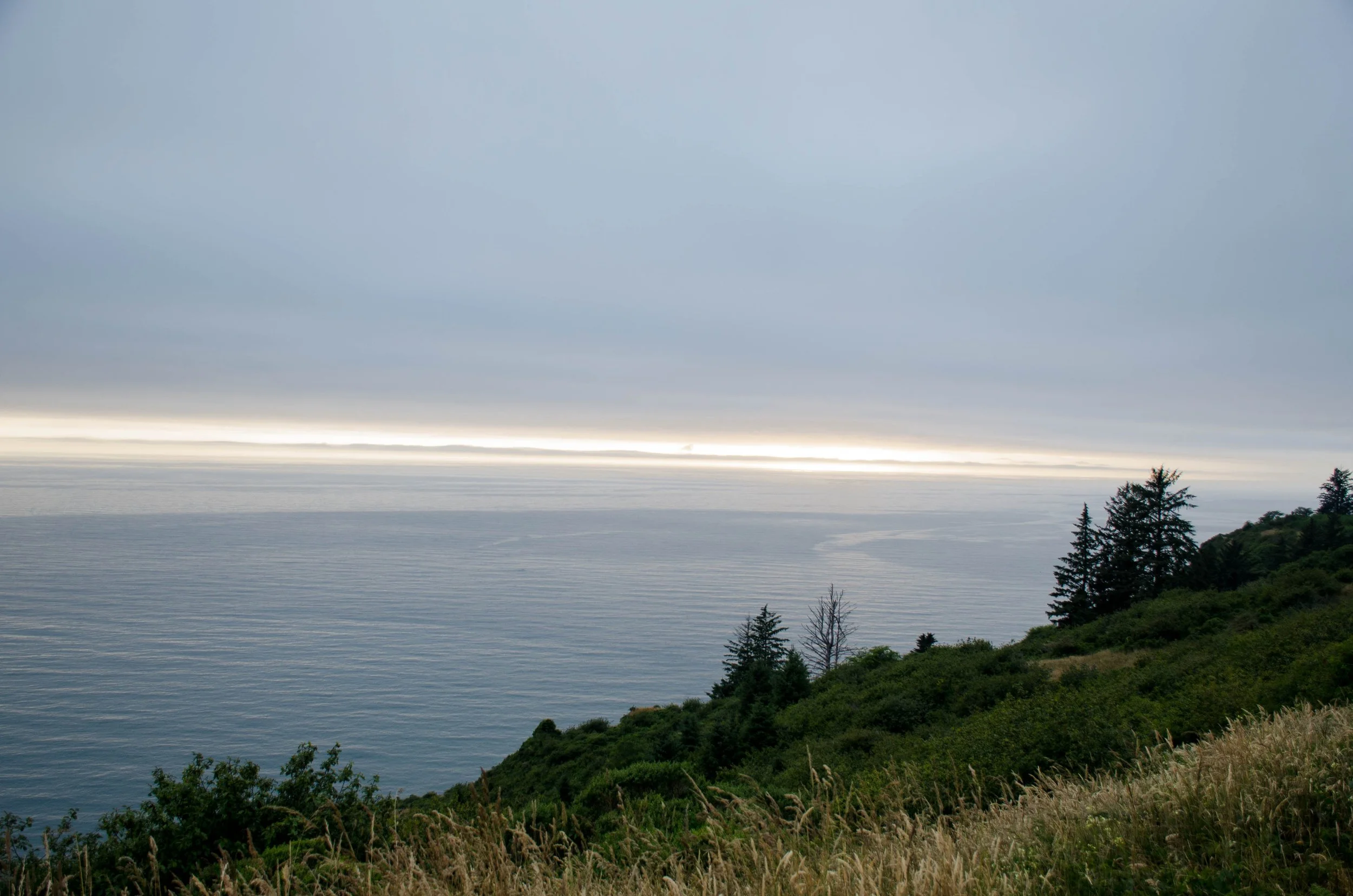
After spending a couple days in San Francisco, we opted to take the long way north along the Pacific Coast: Iconic Highway 1. It was a perfectly sunny day, turning the Pacific a brilliant cerulean punctuated with the crisp white of the sea froth as waves rocked back and forth against the cliffs. We stayed at Sue-meg State Park (previously known as Patrick’s Point). After dinner, we walked a short trail to an outcropping over the ocean to watch the sunset, equipped with wine in our camping mugs and Ghirardelli chocolate from the factory in San Francisco in our pockets. We still regularly count that sunset as one of the most memorable we’ve witnessed together: The sea peaceful and calm, the sky awash with golden light, the wind gentle against our faces.
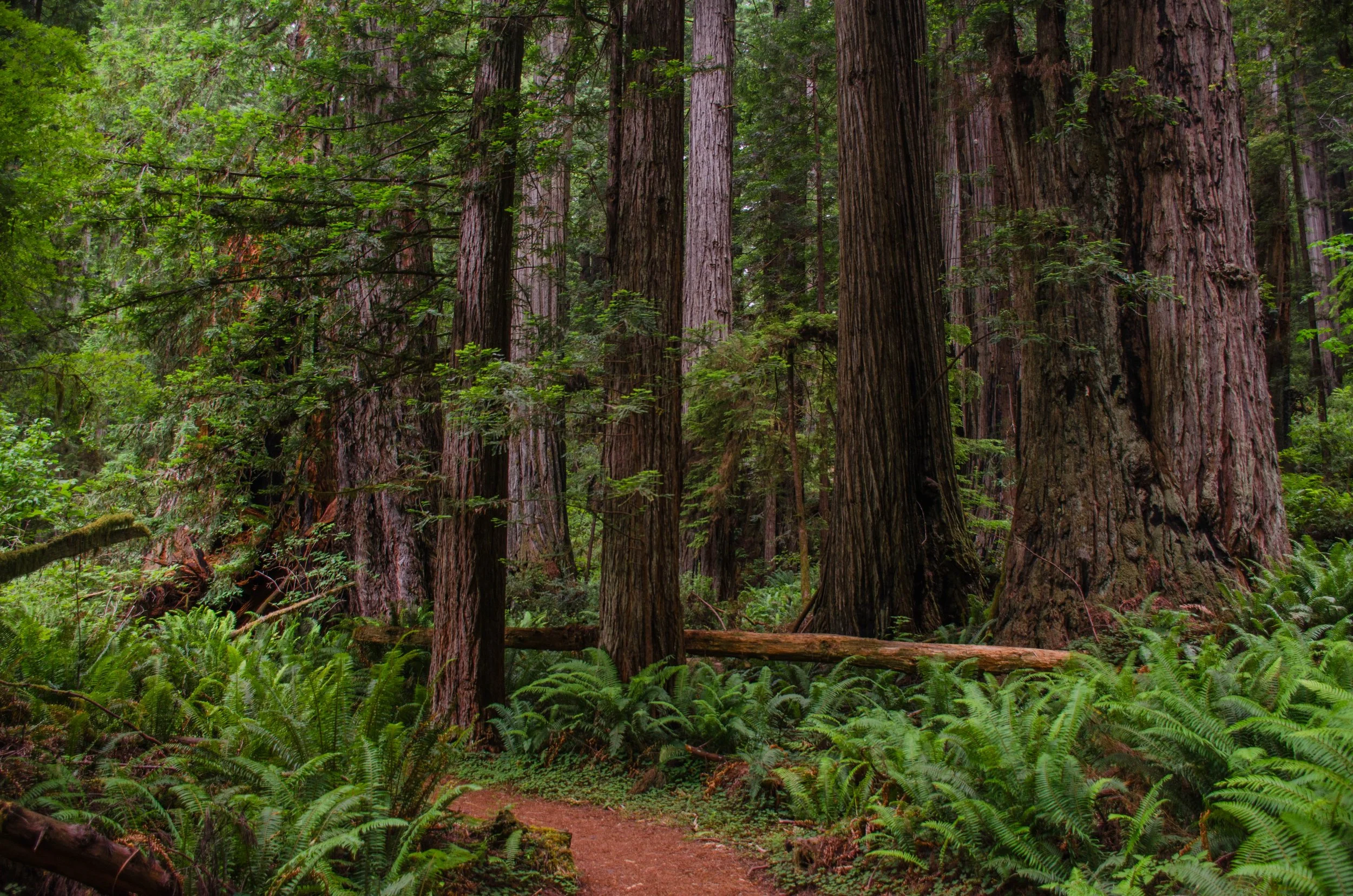
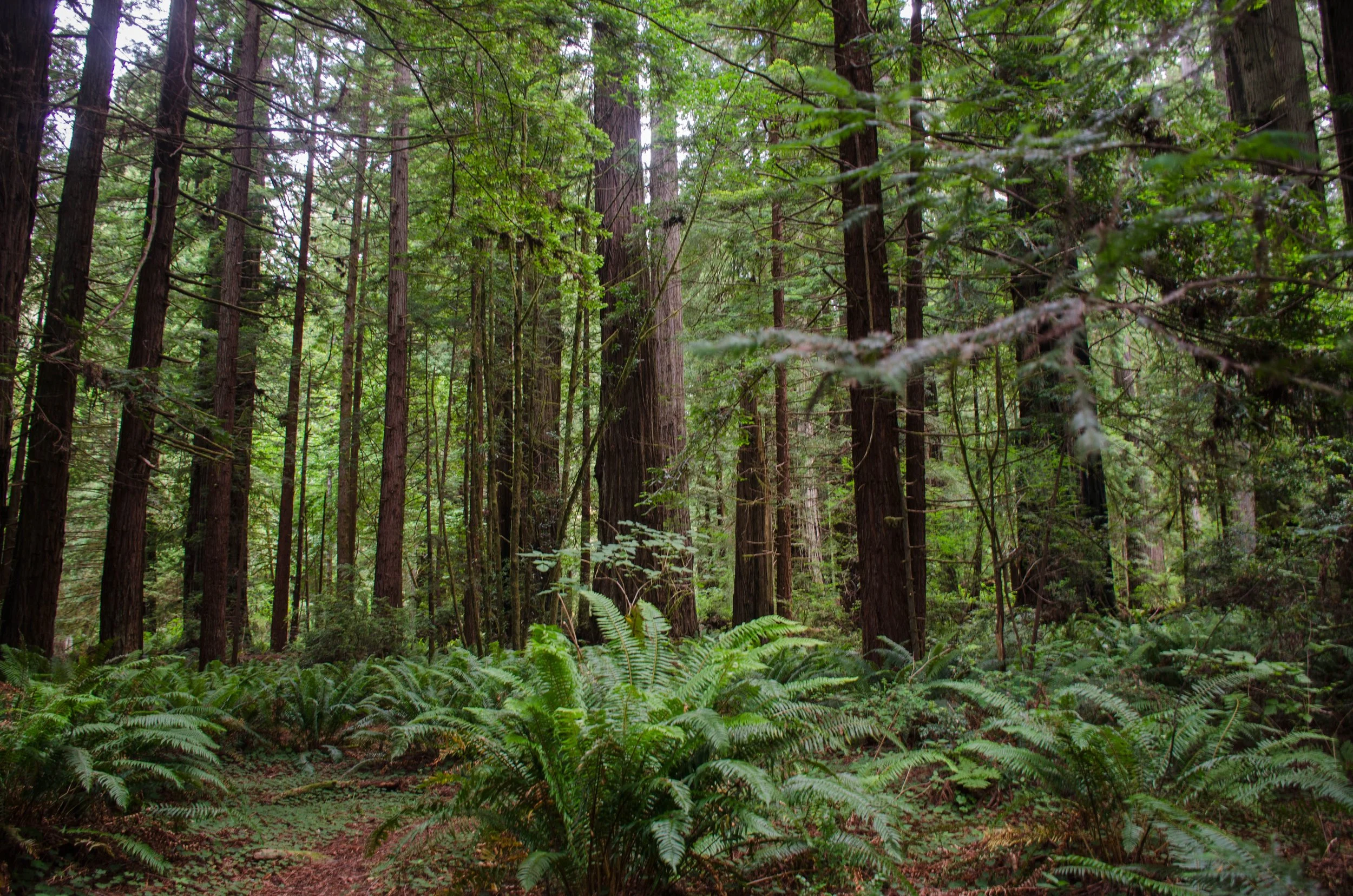
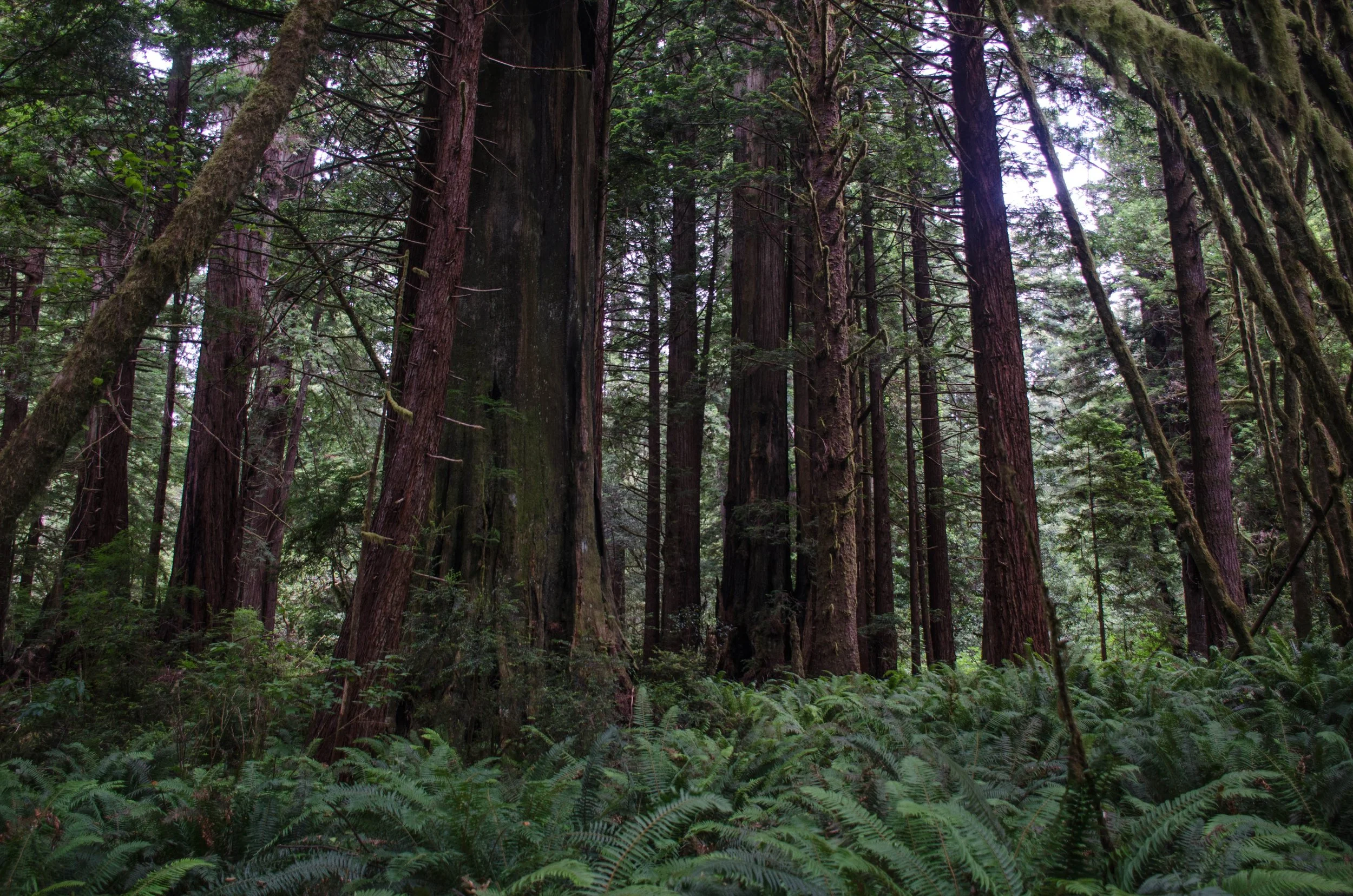
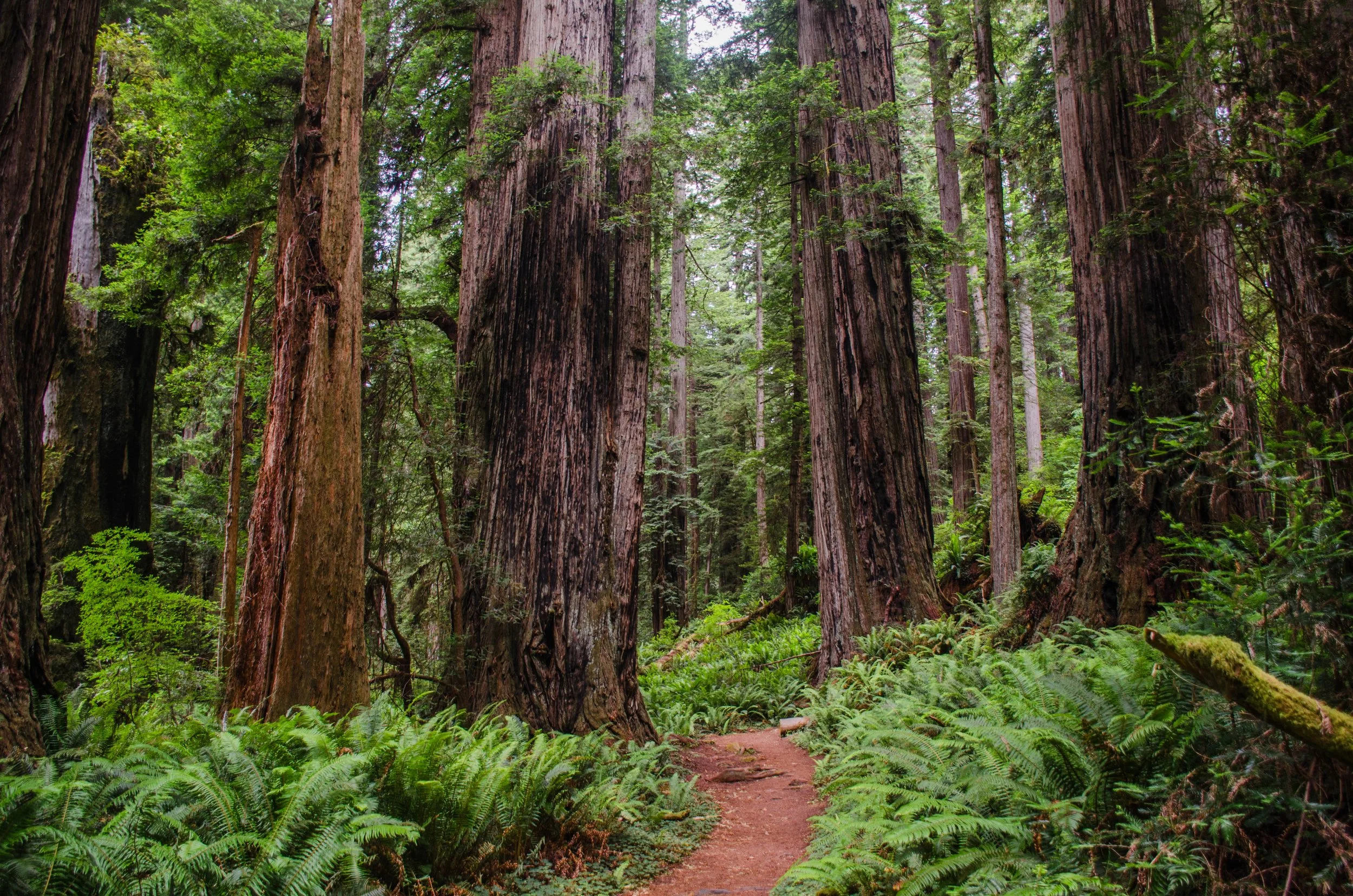
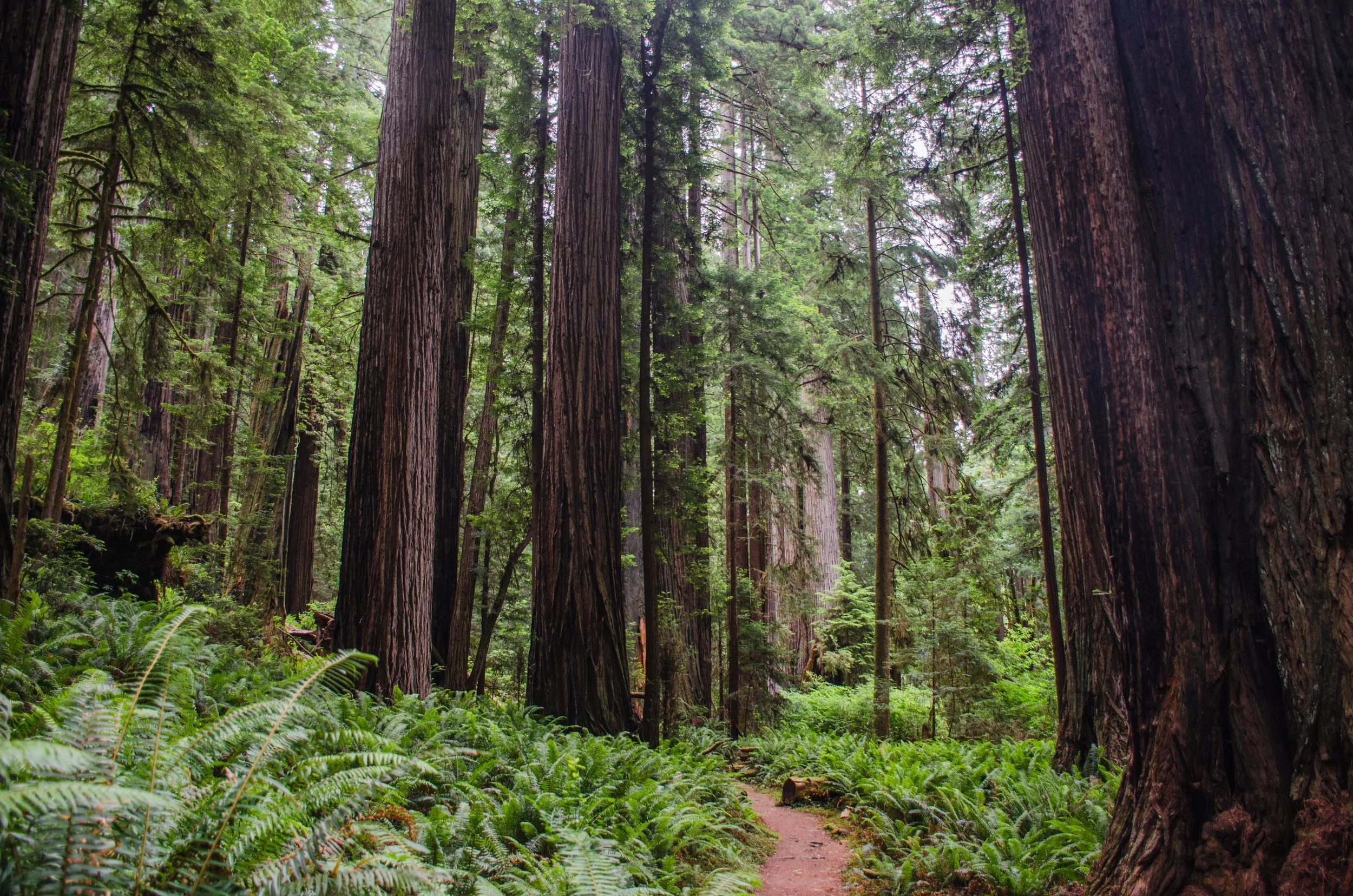
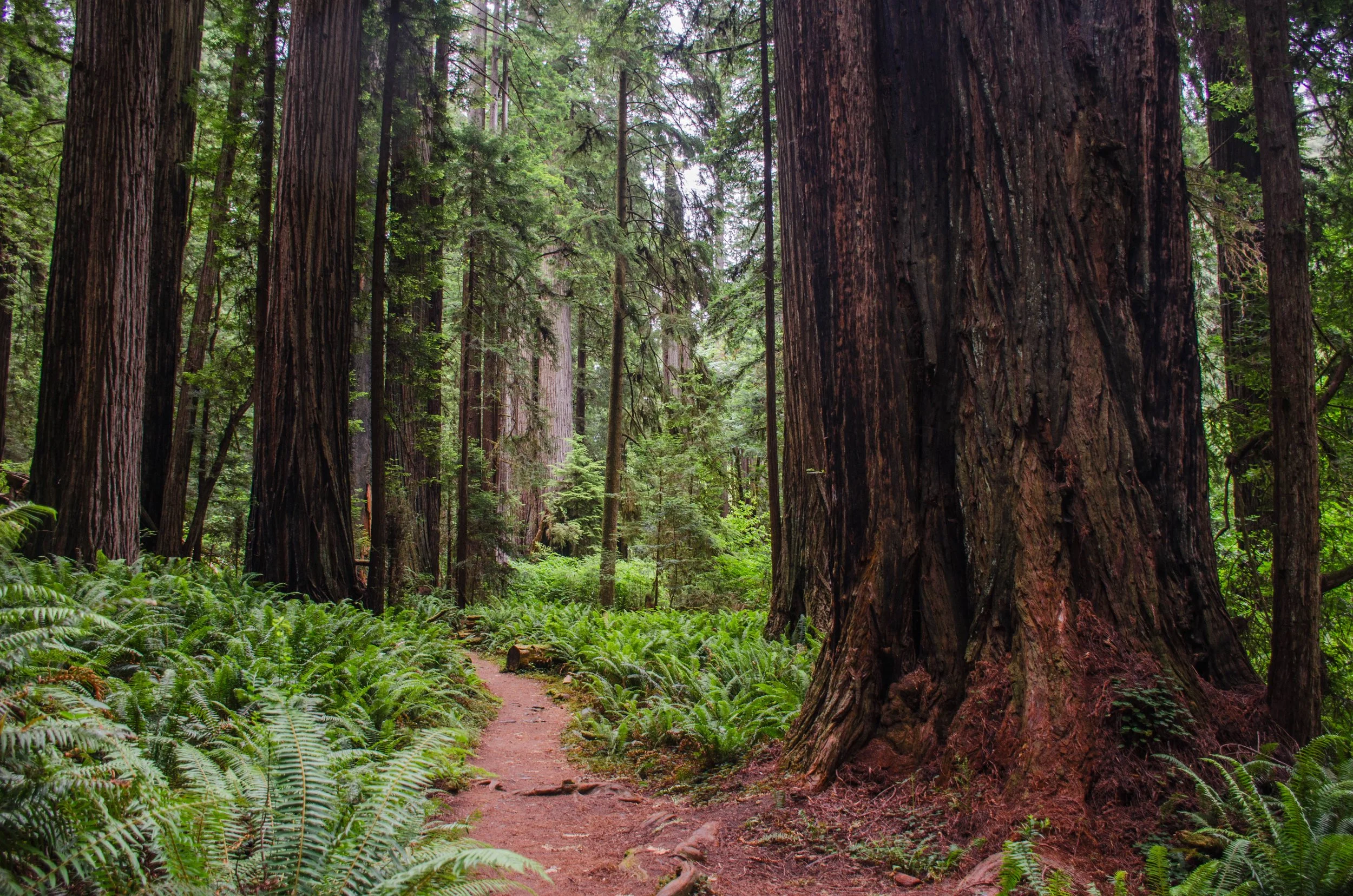
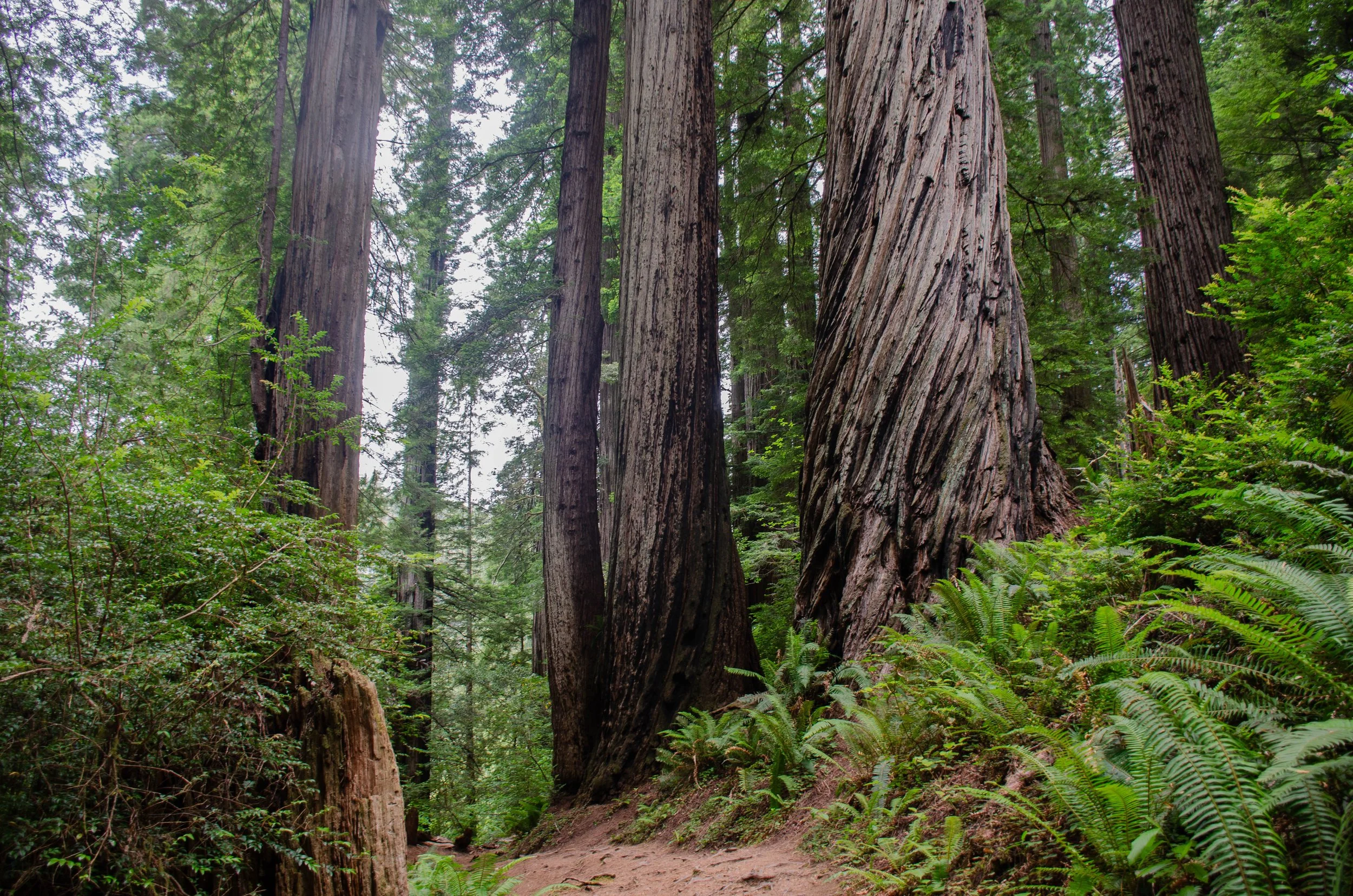
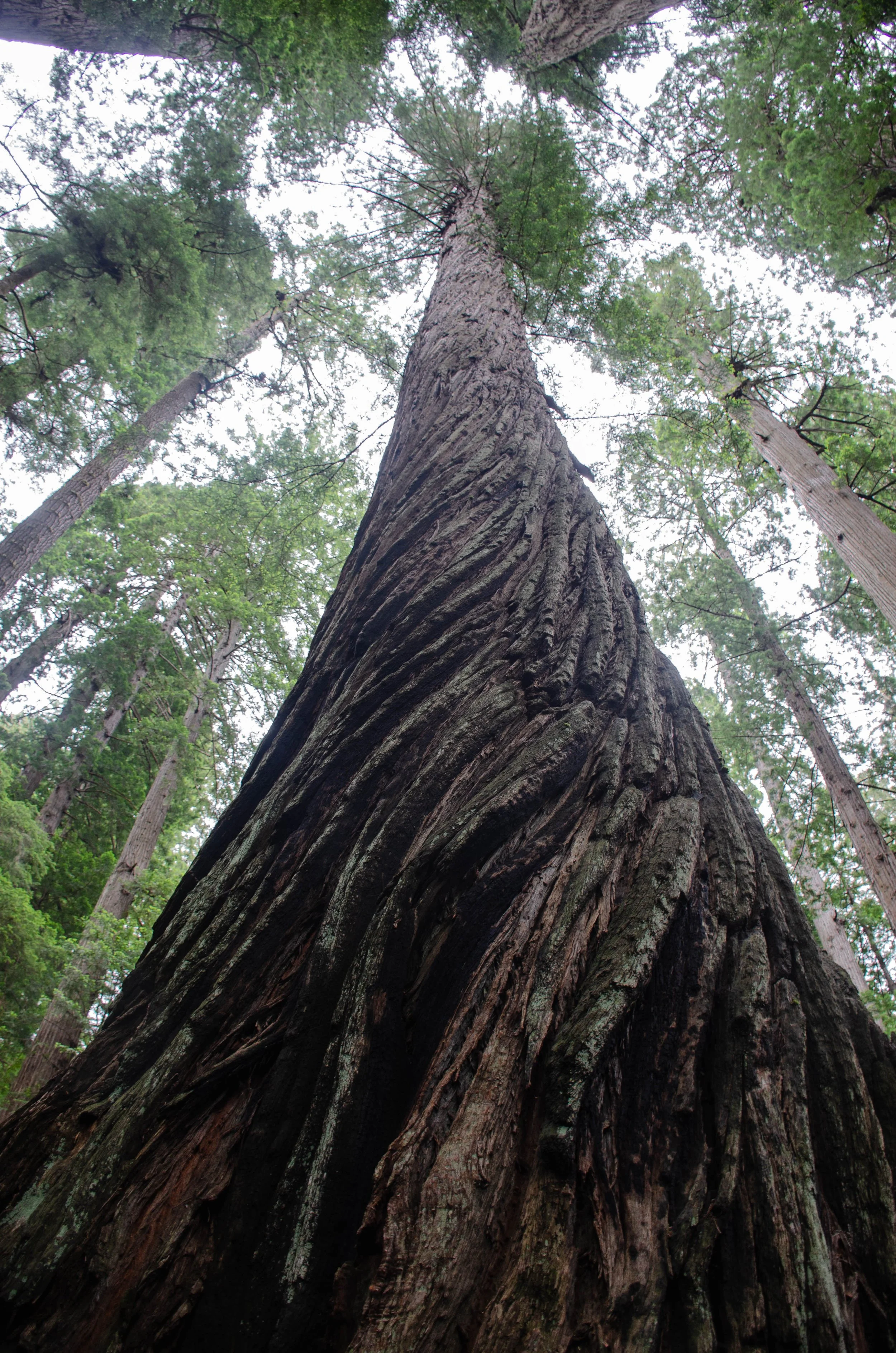
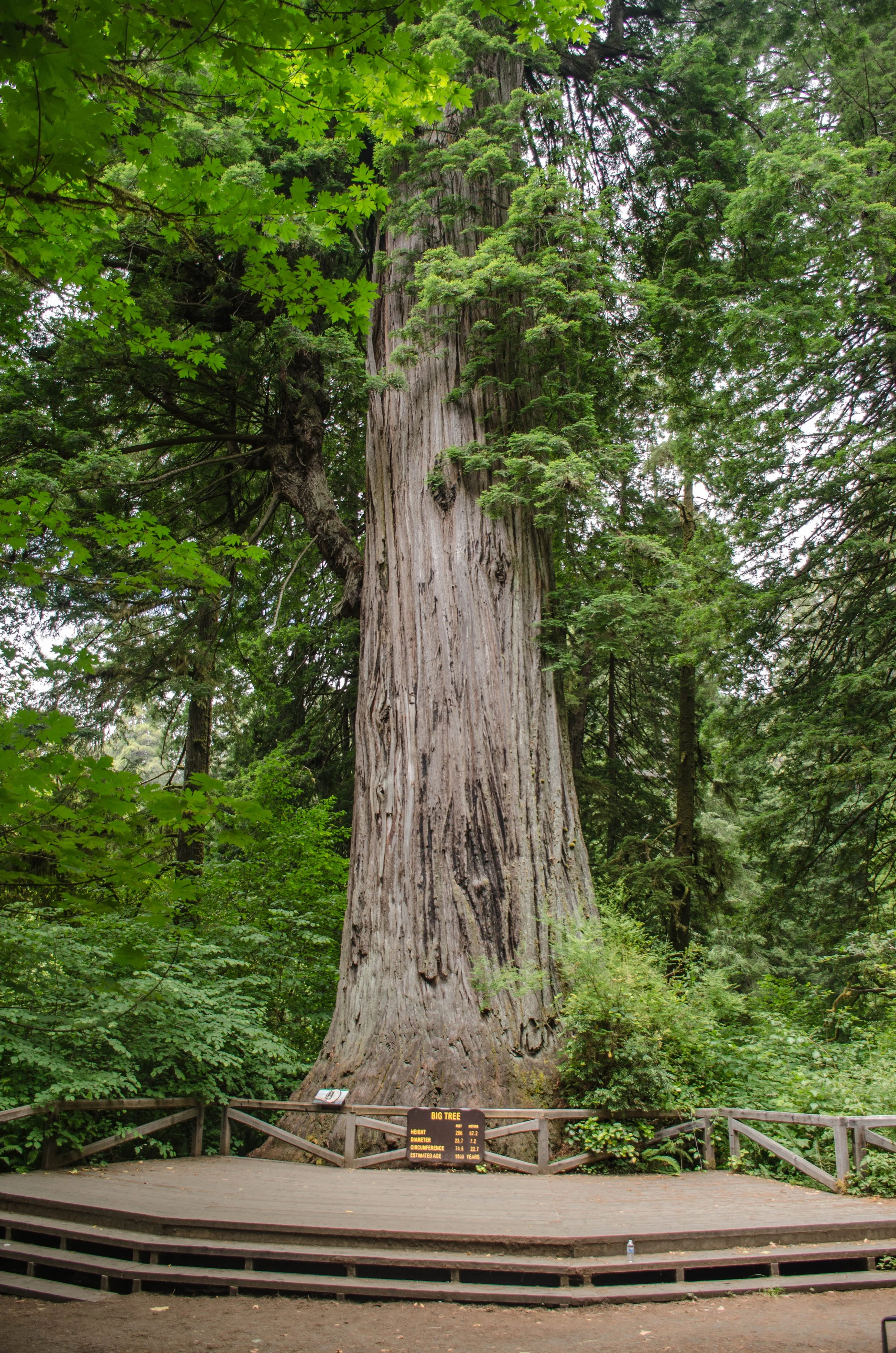
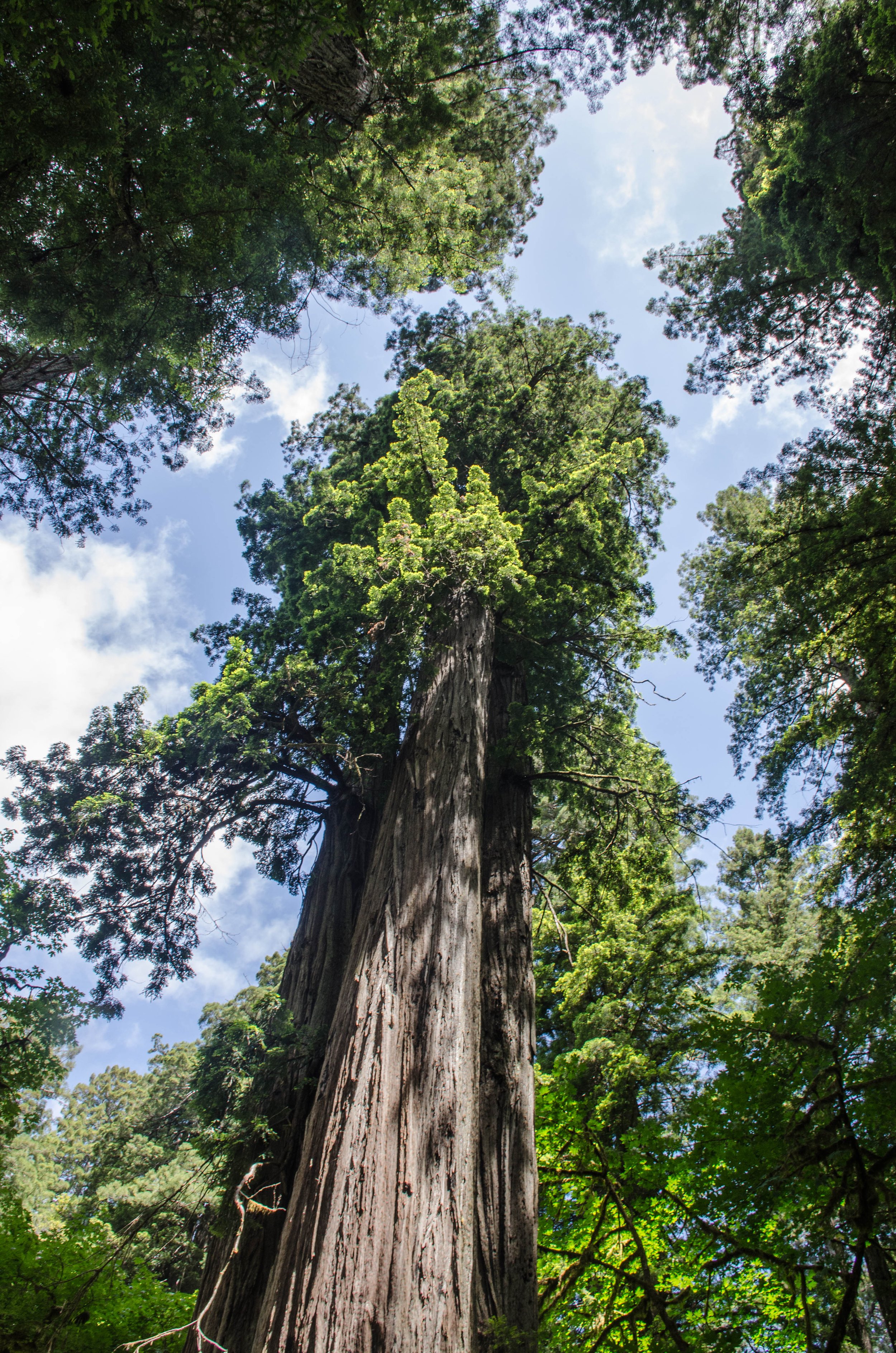
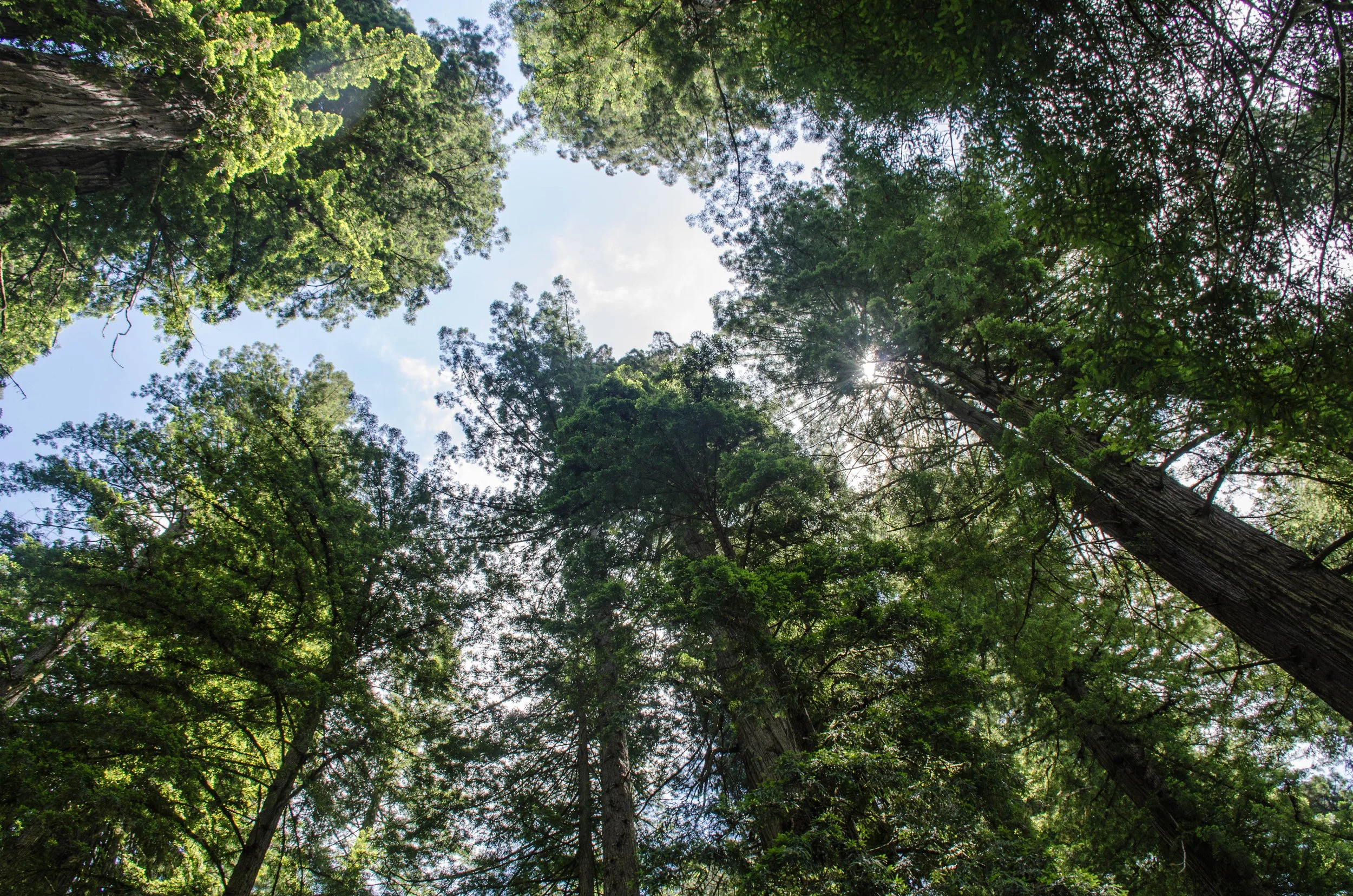
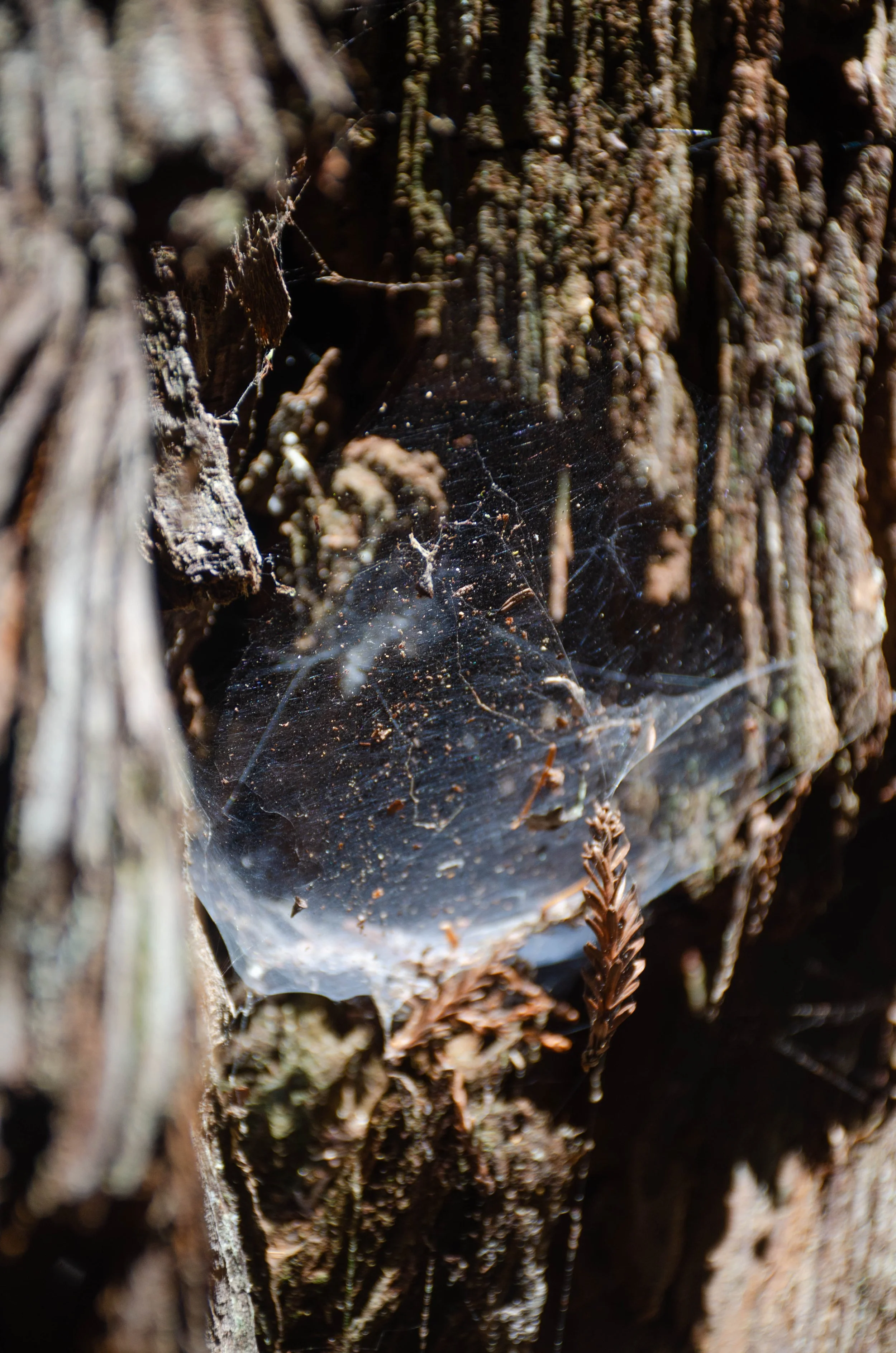
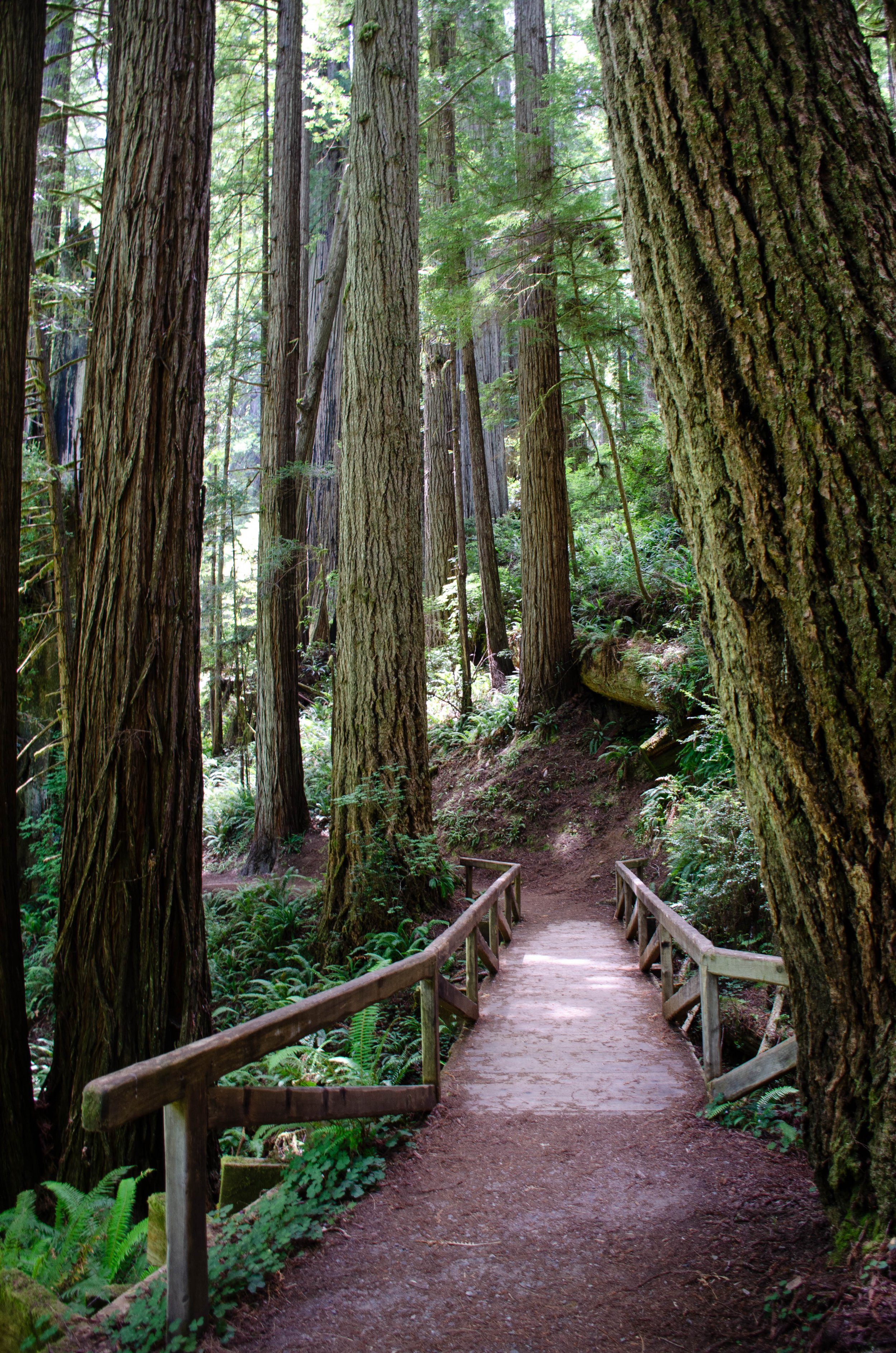
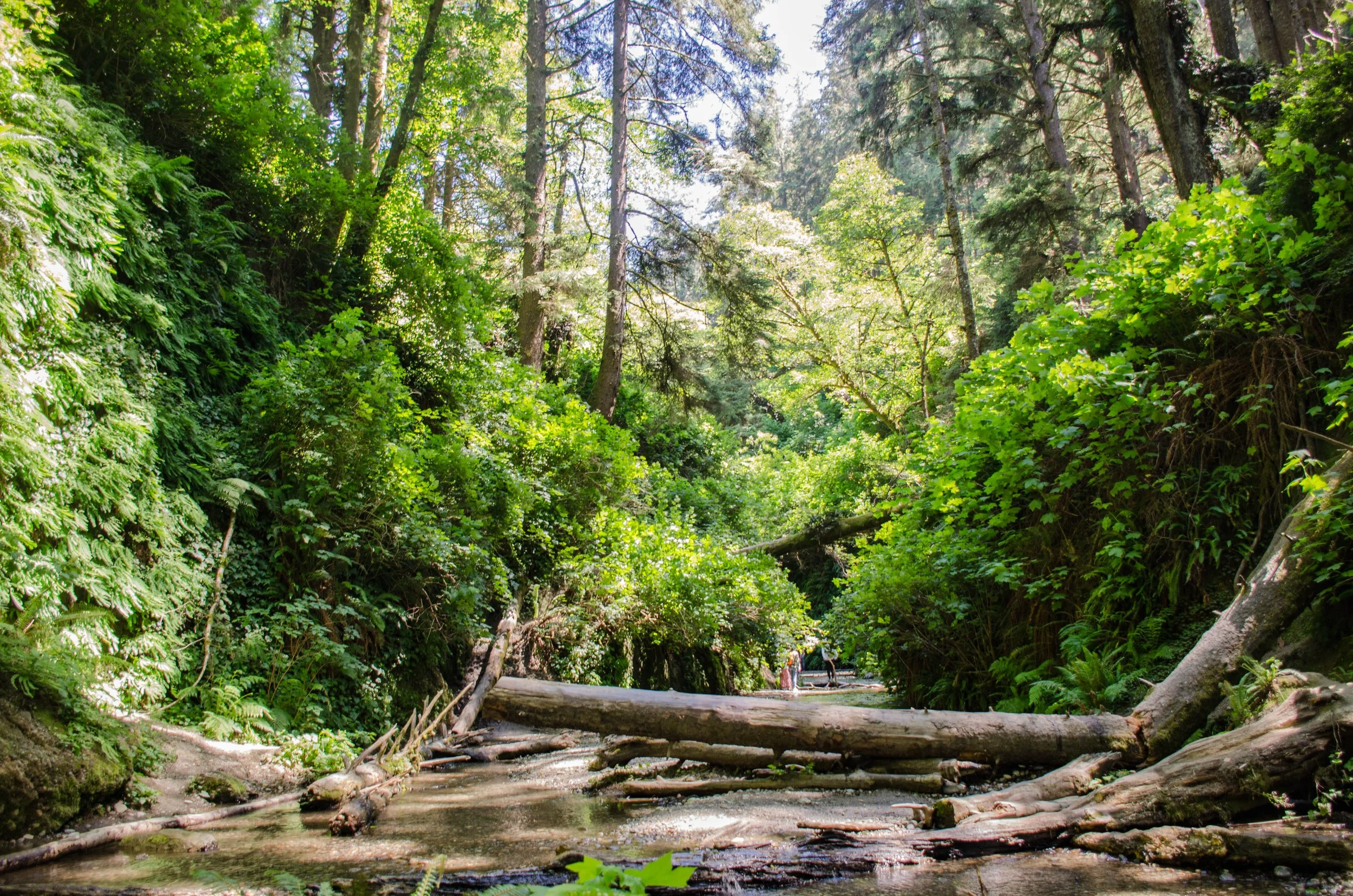
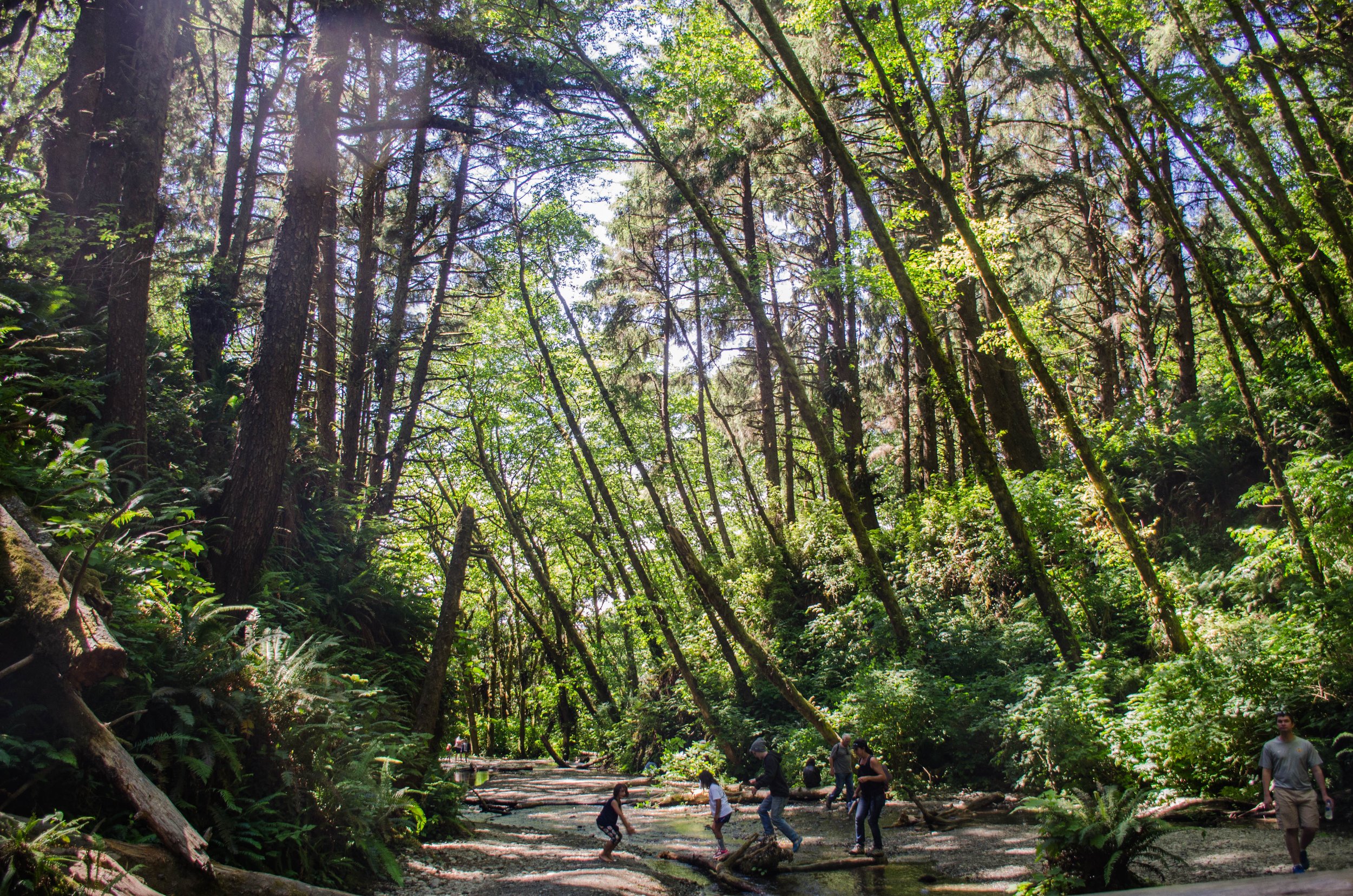
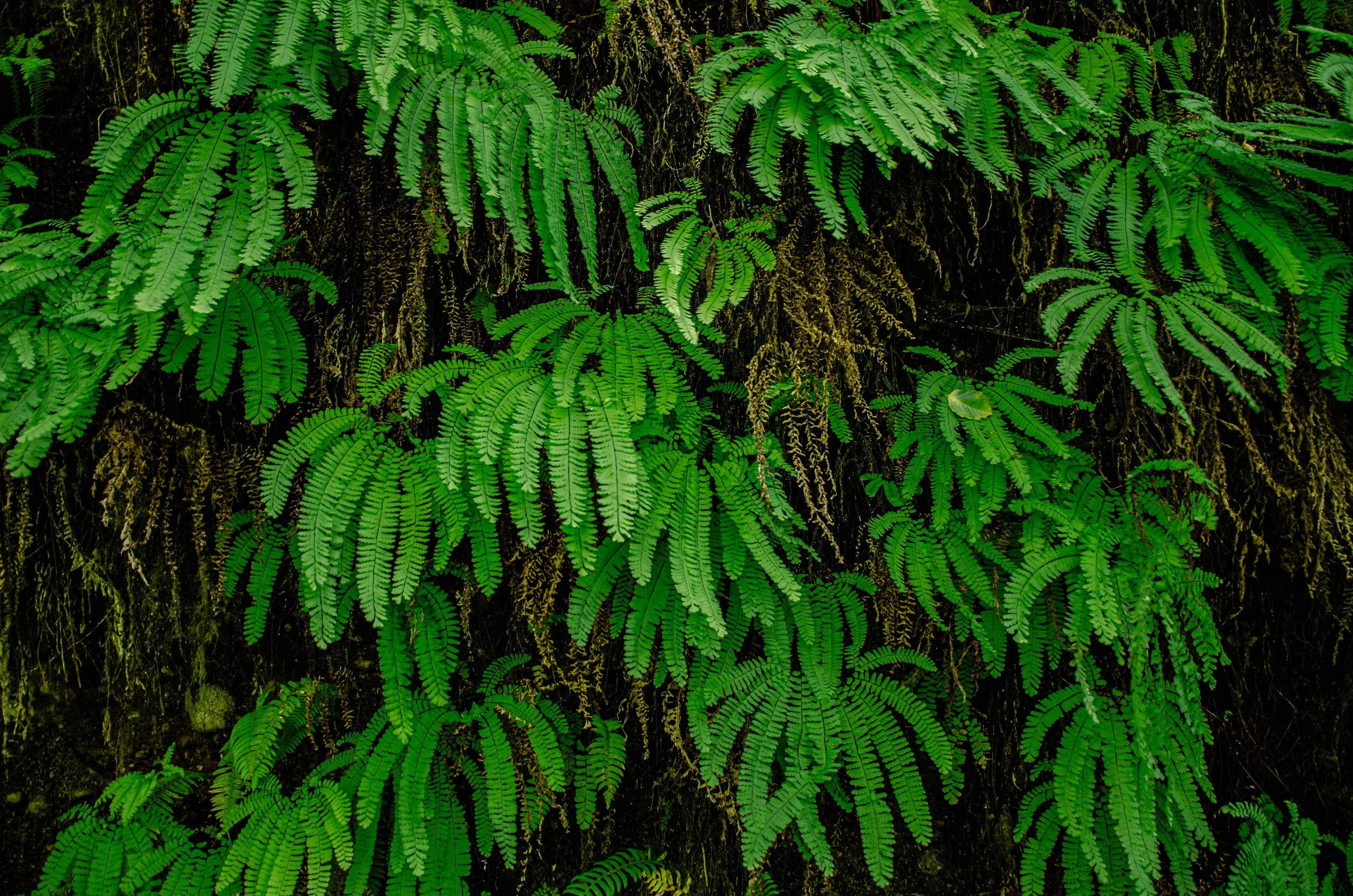
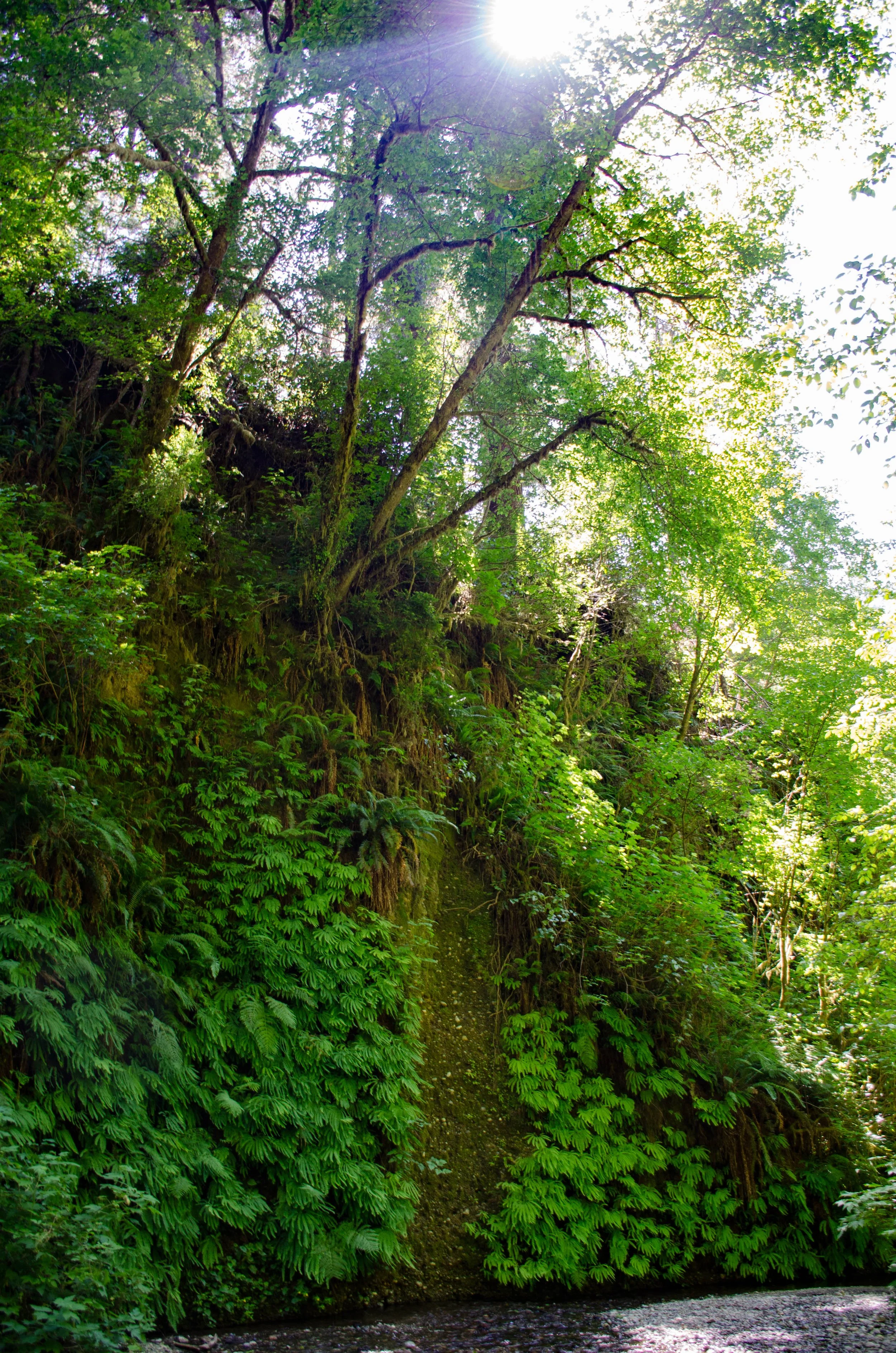
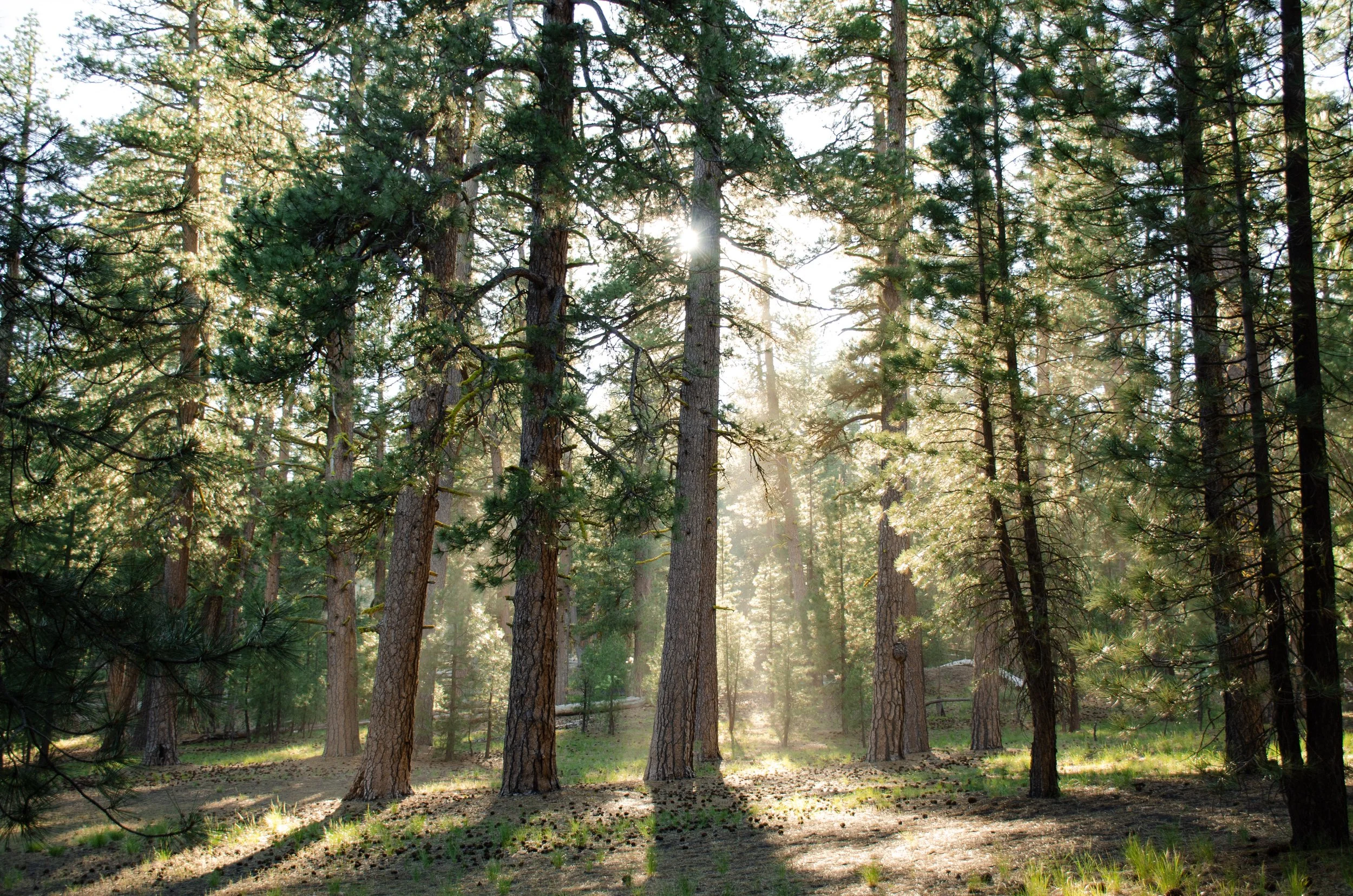
The next day we drove to the redwoods and I struggle to have words to describe how I felt there. It’s a spiritual place, each tree its own cathedral, its roots interlaced with those of each neighboring tree. The hum of the world quieted as we walked on the soft red ground. We observed banana slugs and garter snakes, spiderwebs and walls of ferns. The air was heavy with the smell of tree: earthy and rich and mildly sweet. It was as if time stopped when we were there, something that feels increasingly rare.
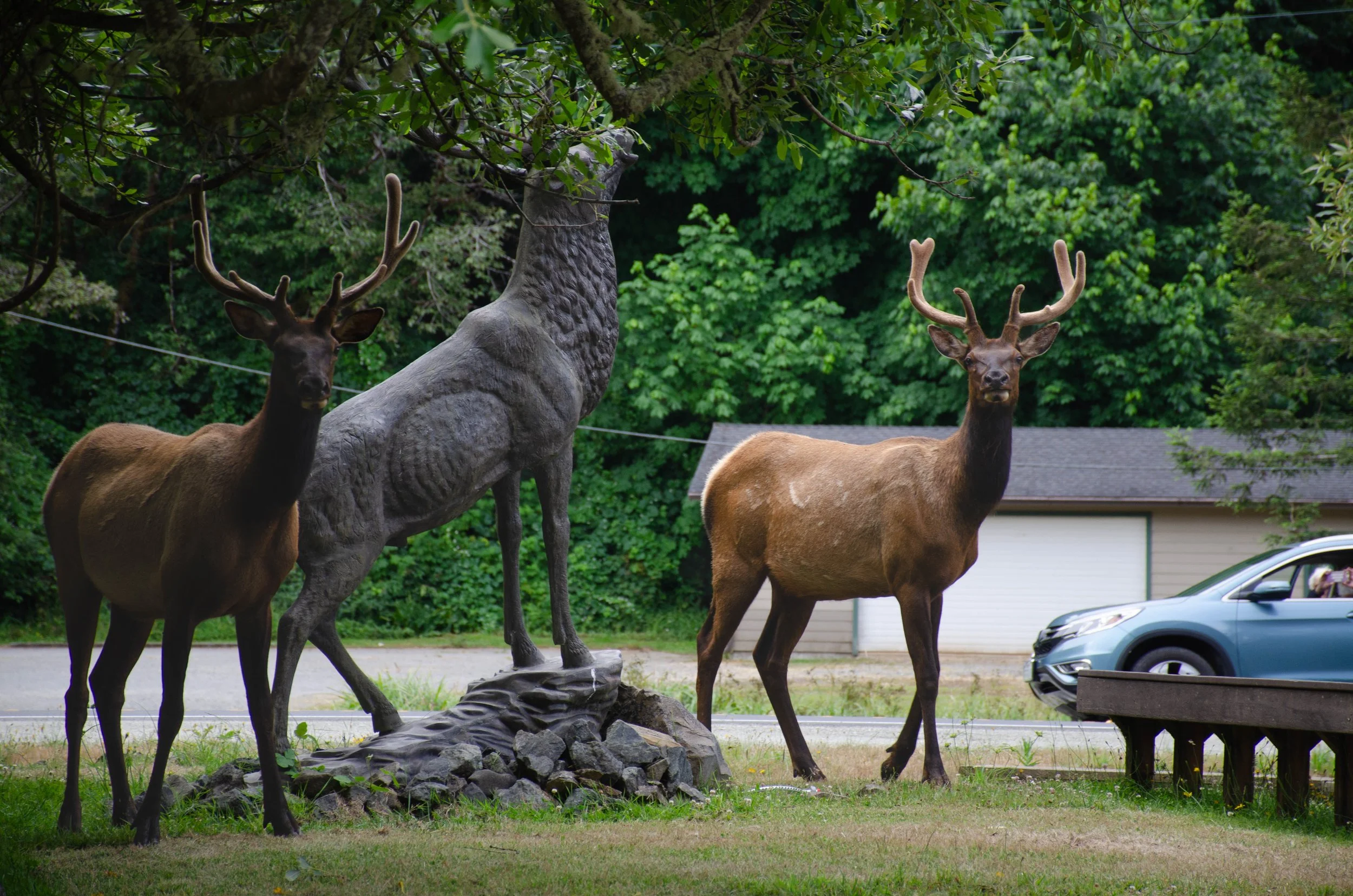
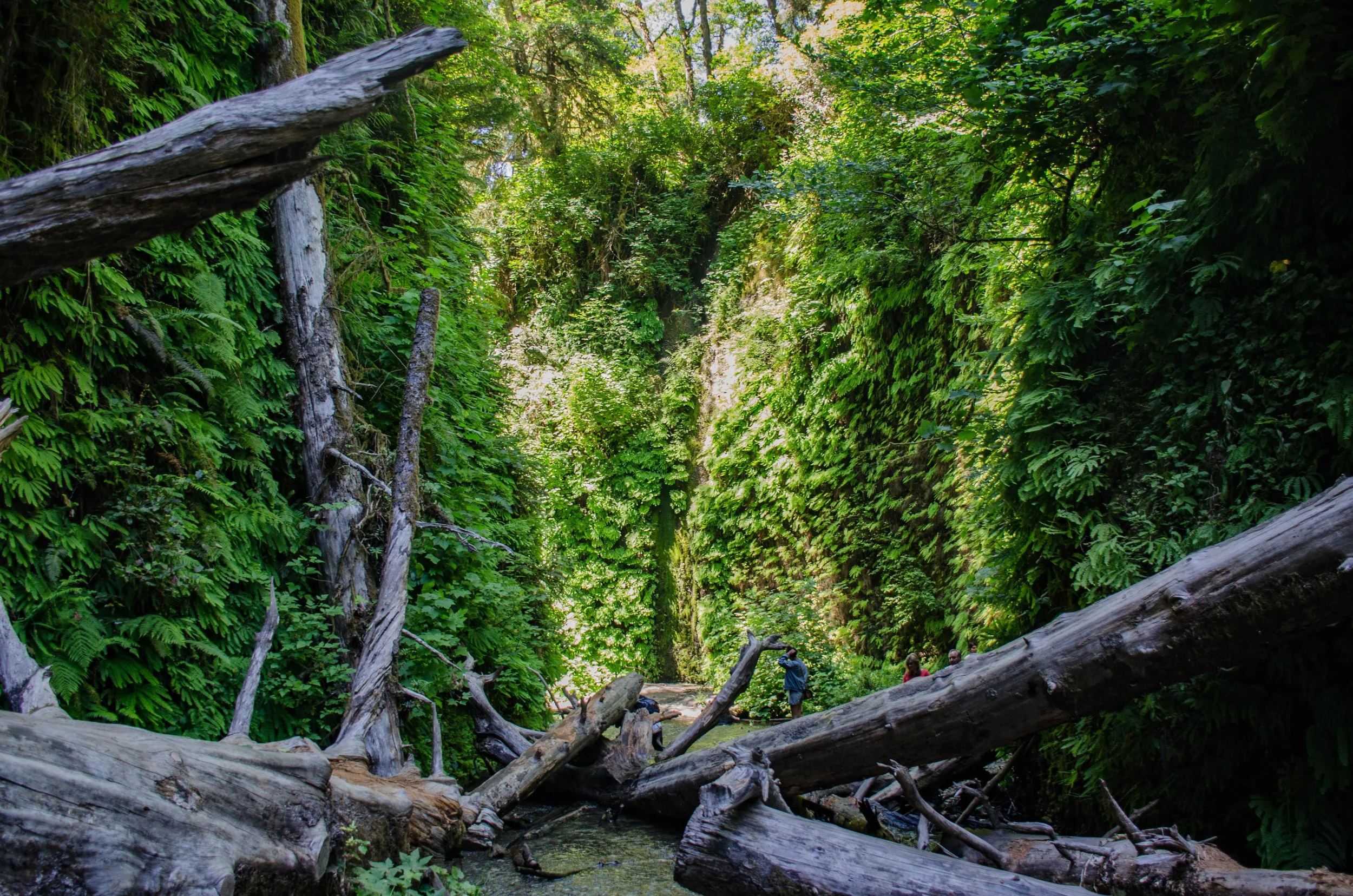
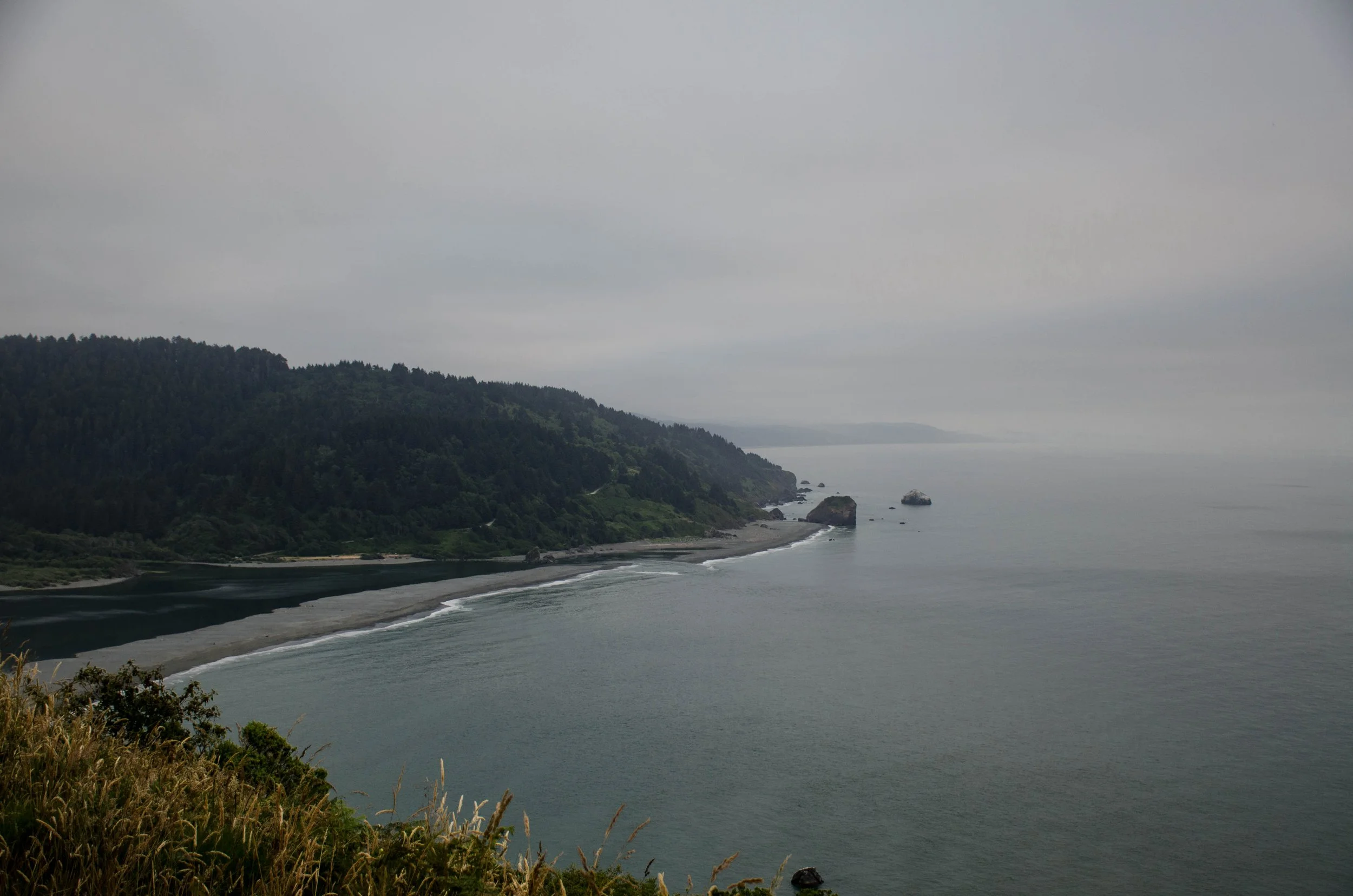
We spent the majority of the day weaving in and out of the trees, exploring nearby Fern Canyon, and marveling at my first sighting of elk on a rocky beach. We eventually reluctantly took our leave so we could make it to our campsite near the mouth of the Klamath River that evening, but it remains a place that left a deep and lasting impression on us both.
Pictured below:
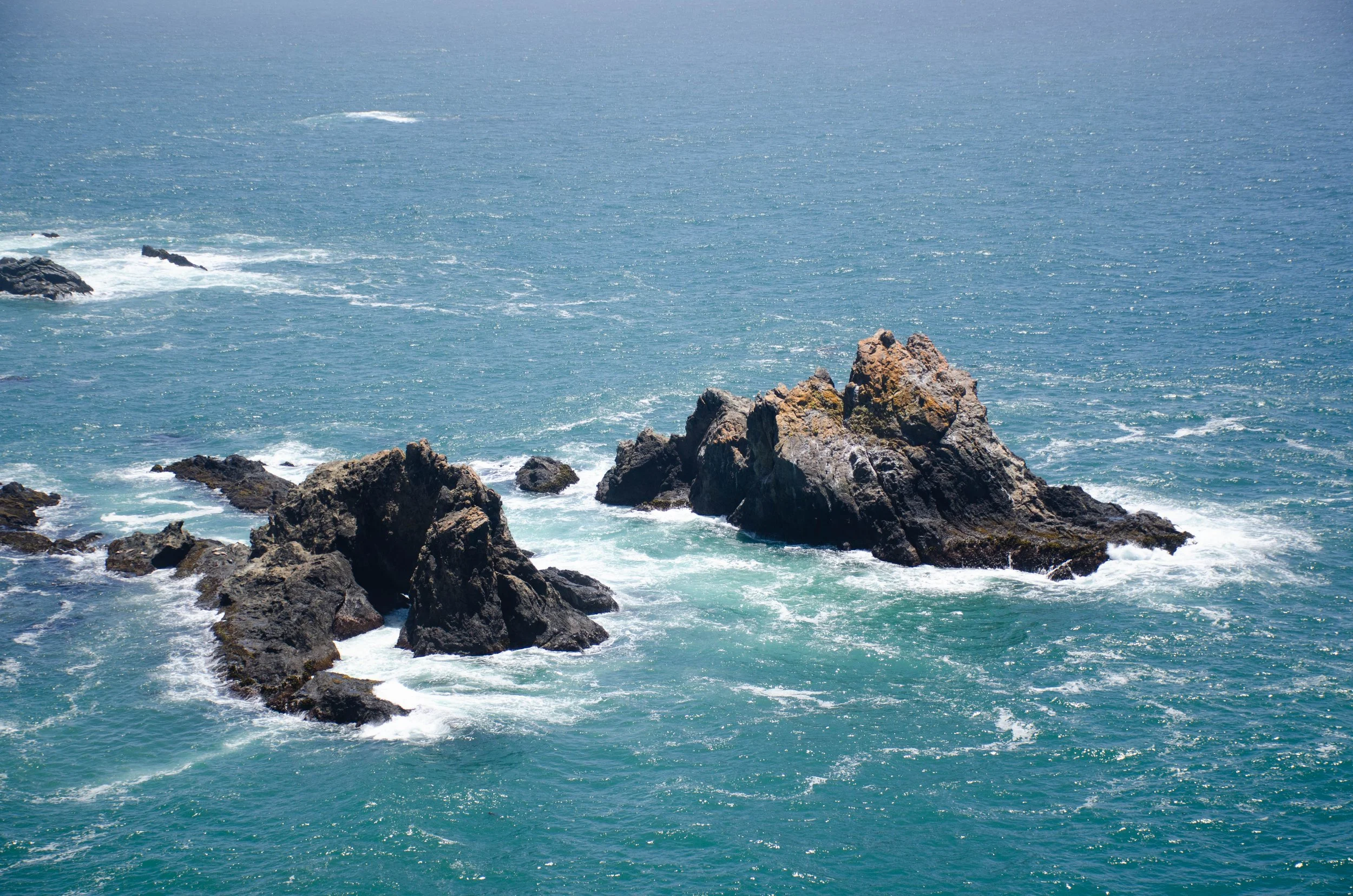
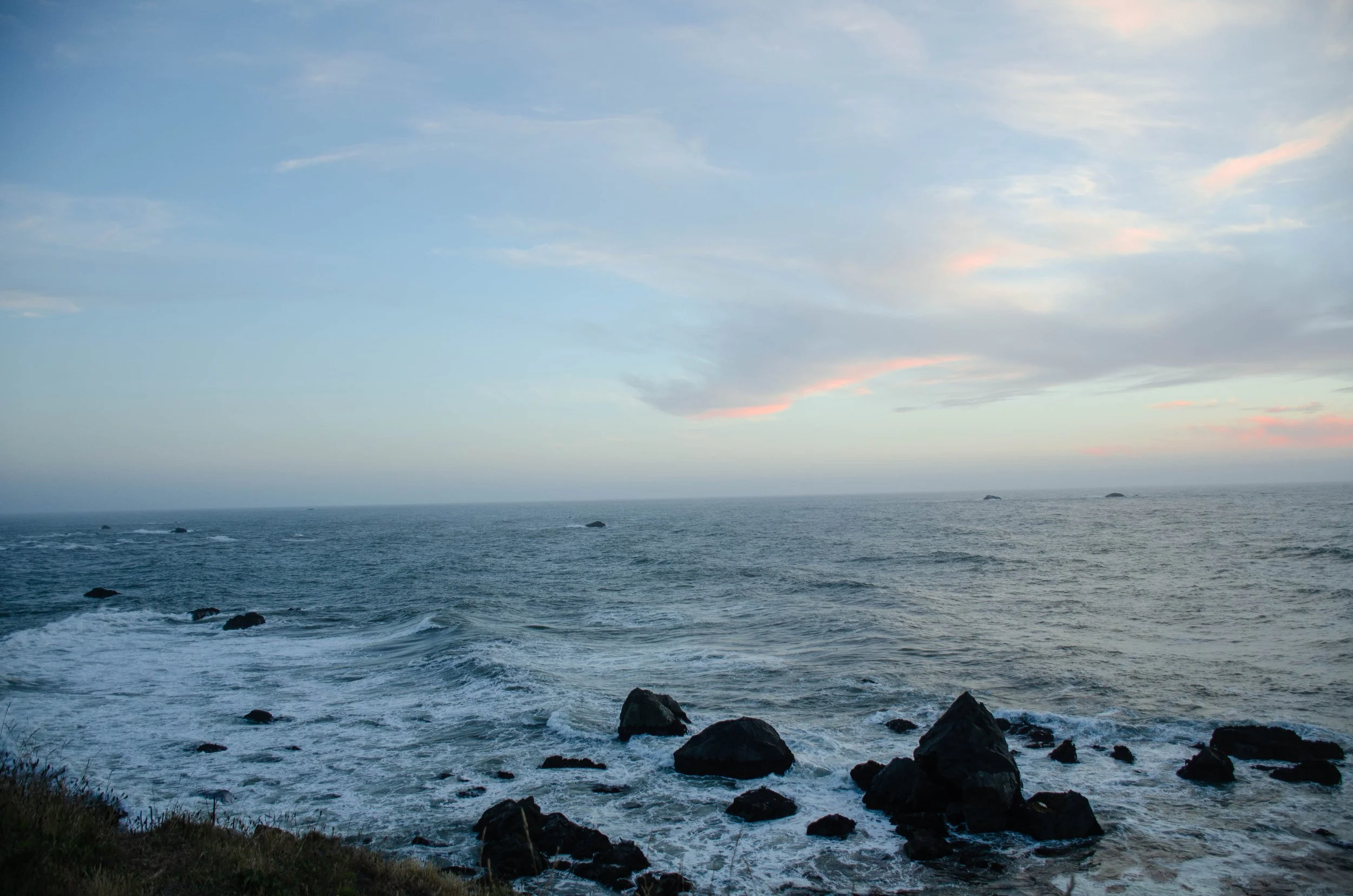
Ocean views from the Pacific Coast Highway.
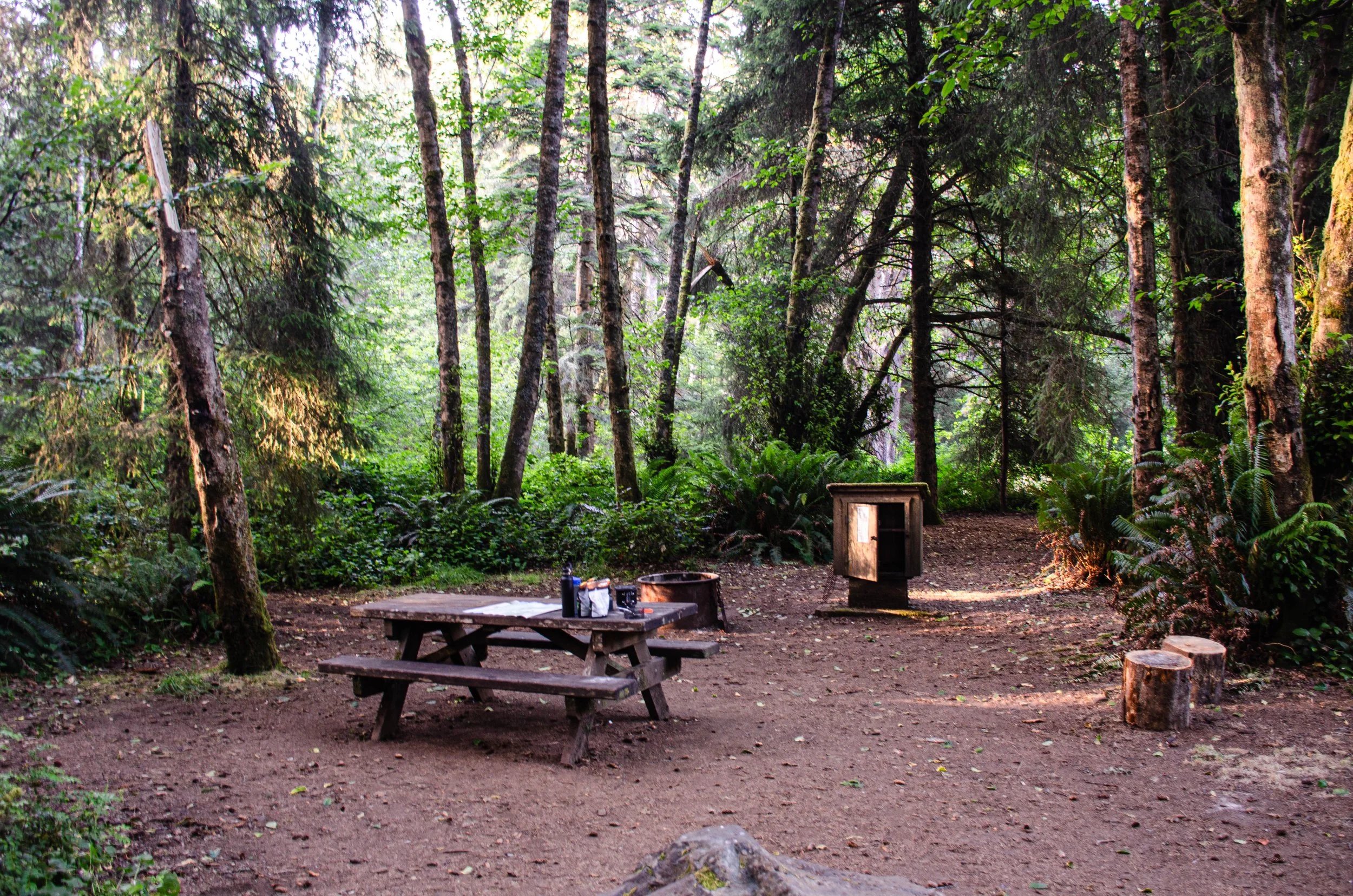
Campground and sunset at Sue-meg State Park, California.
Redwoods National Park, California.
Klamath River Overlook, California.

Lassen Volcanic
Park 7 | June 2018
Part + Park 1 (of 3) on the birthdaymoon road trip.
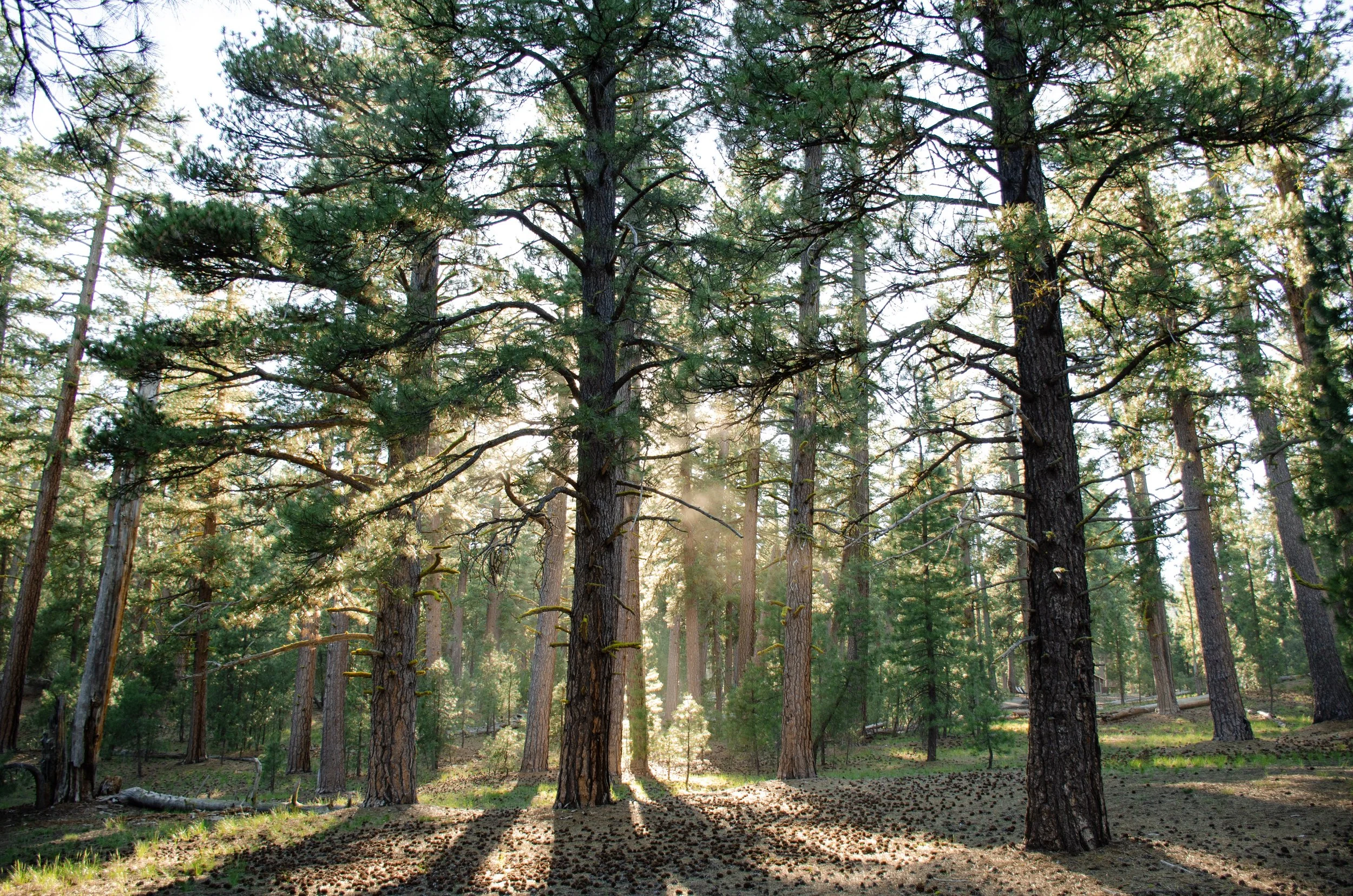
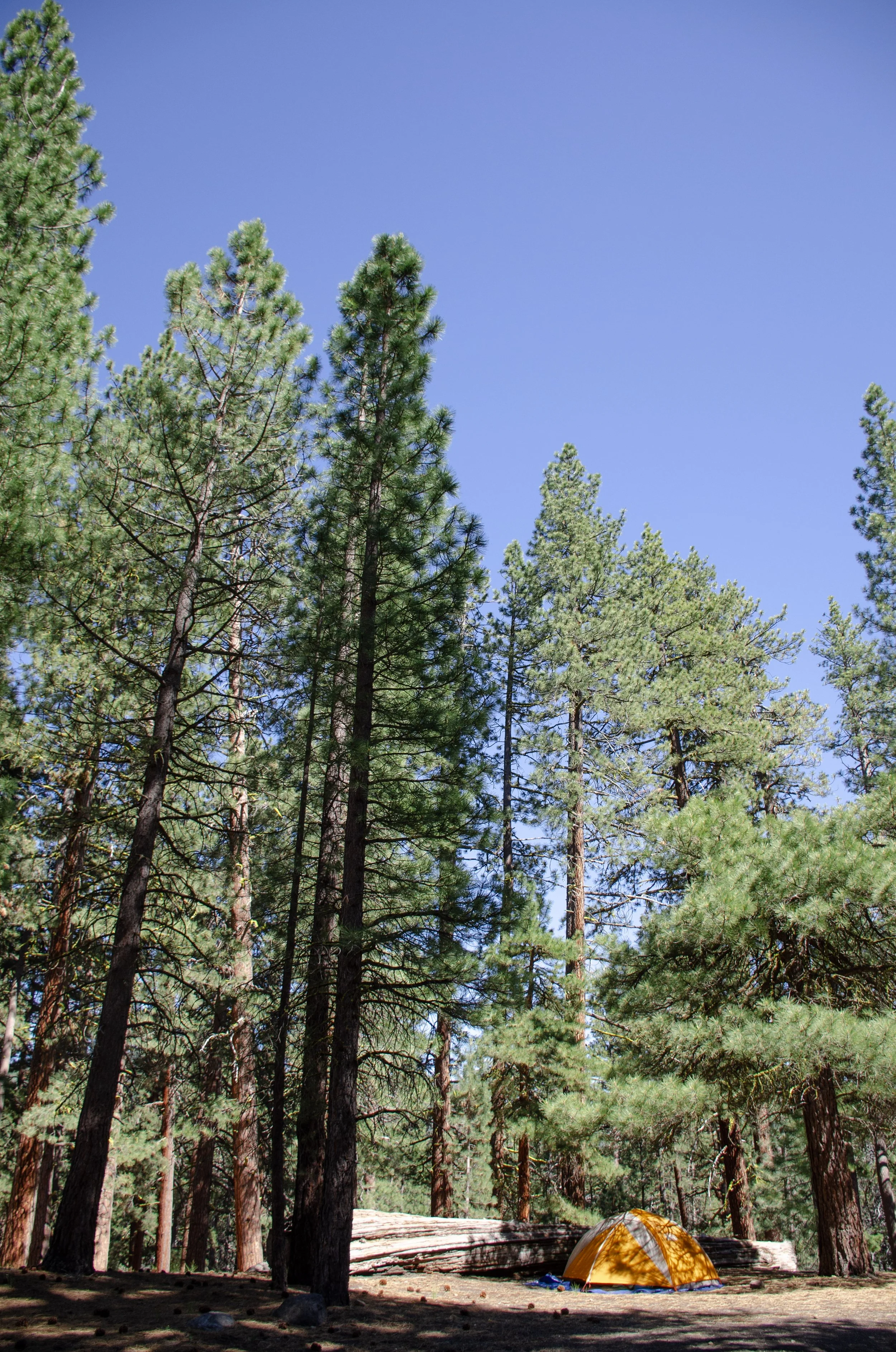
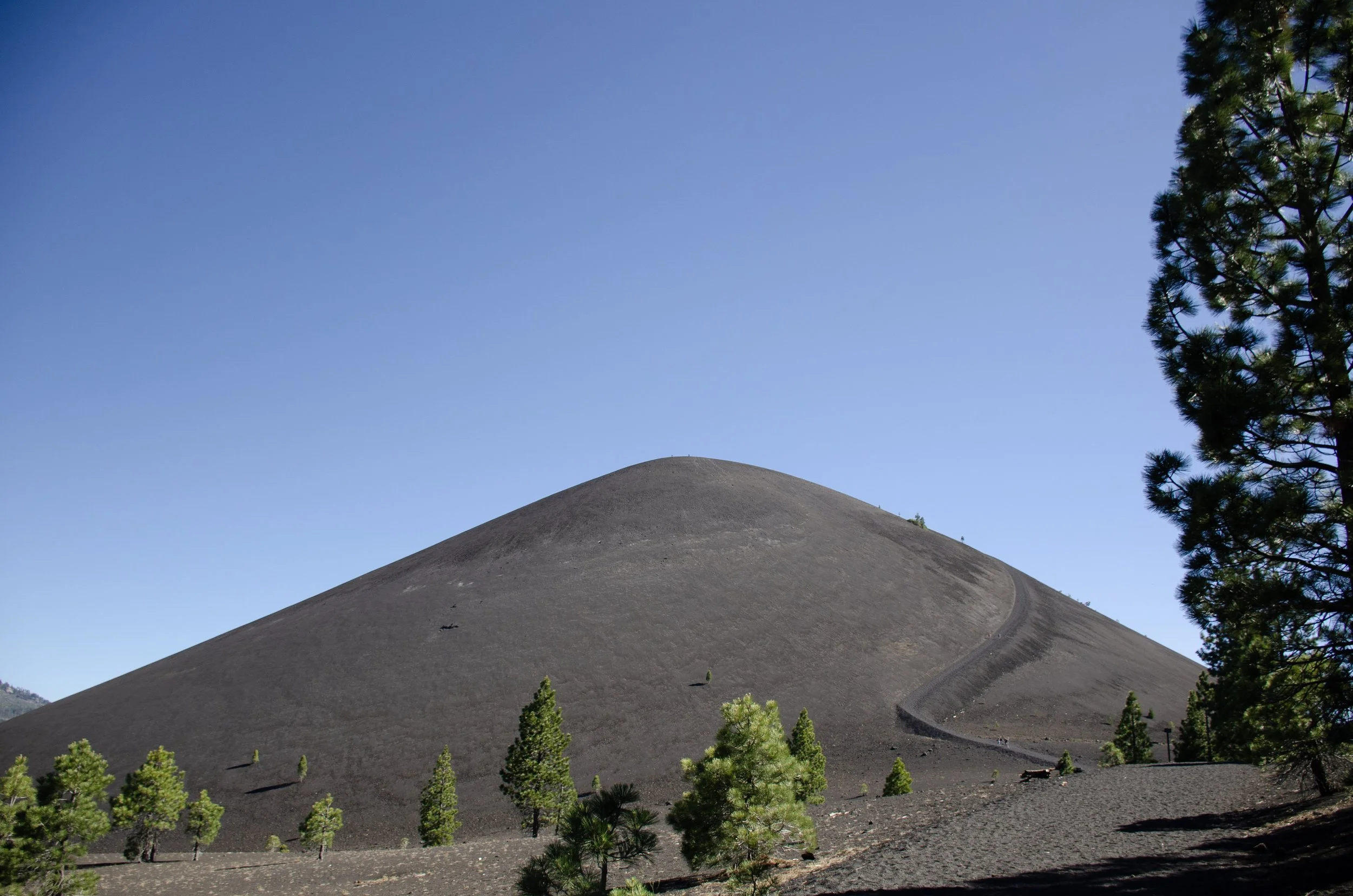
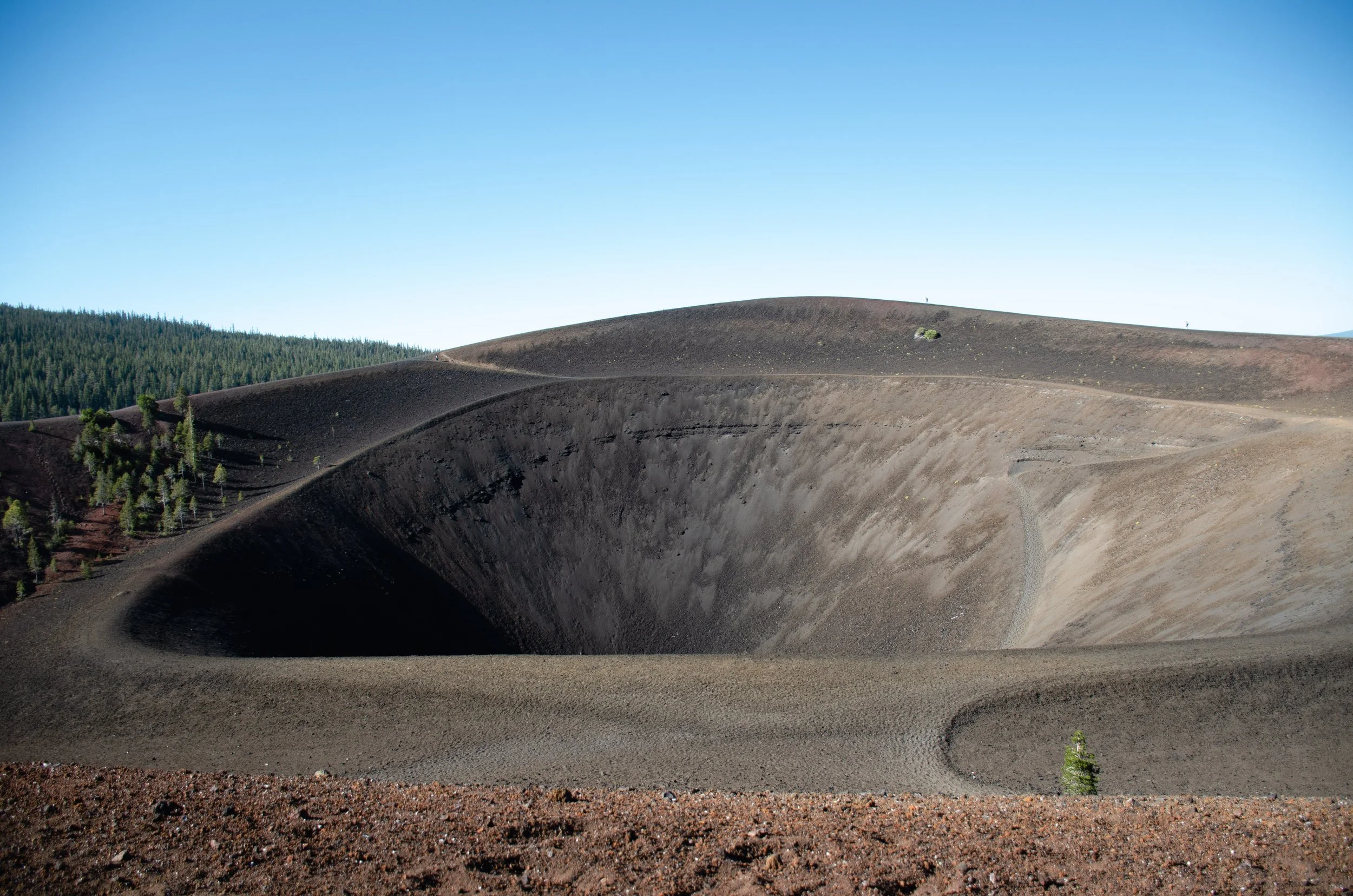
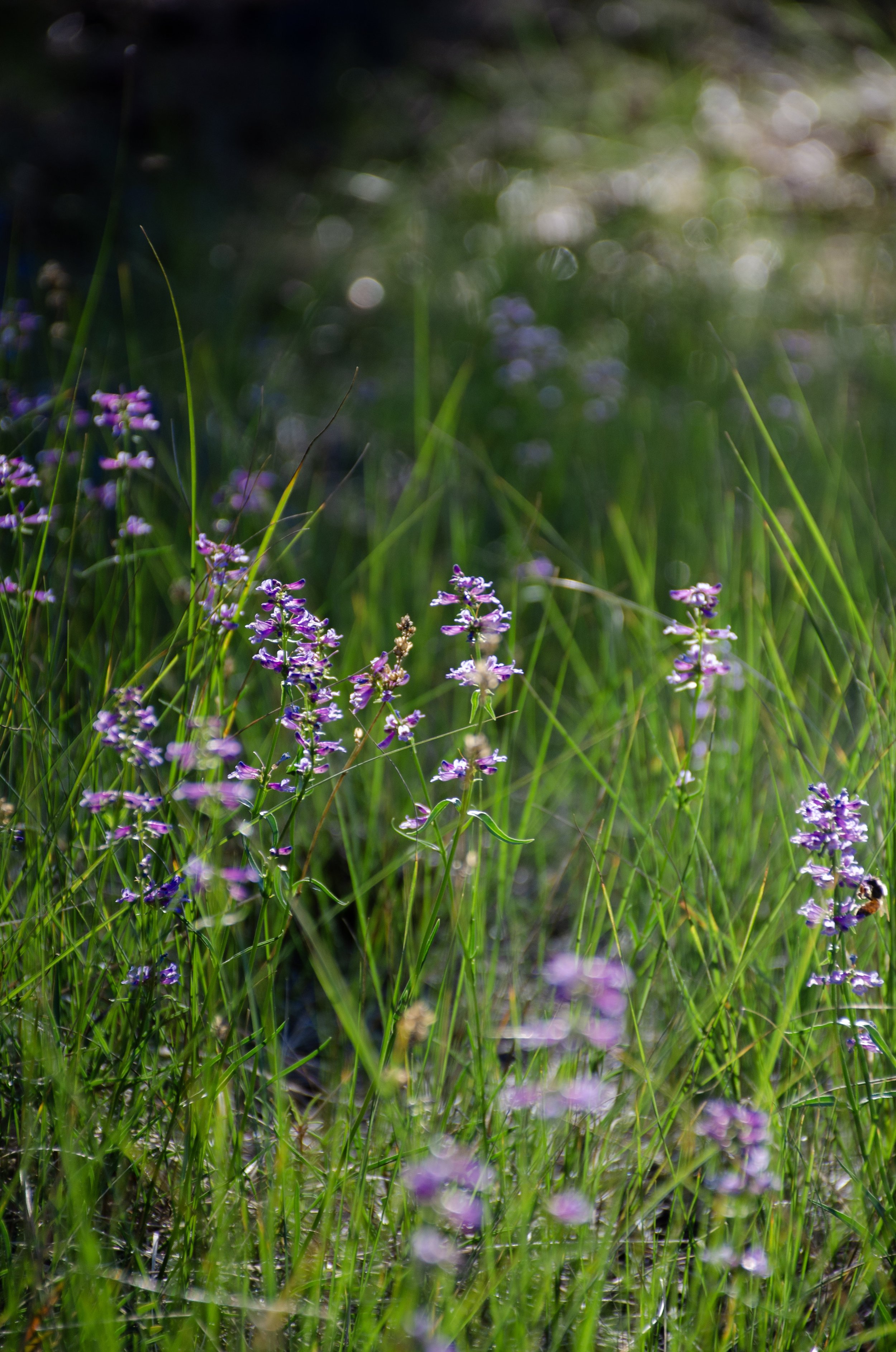
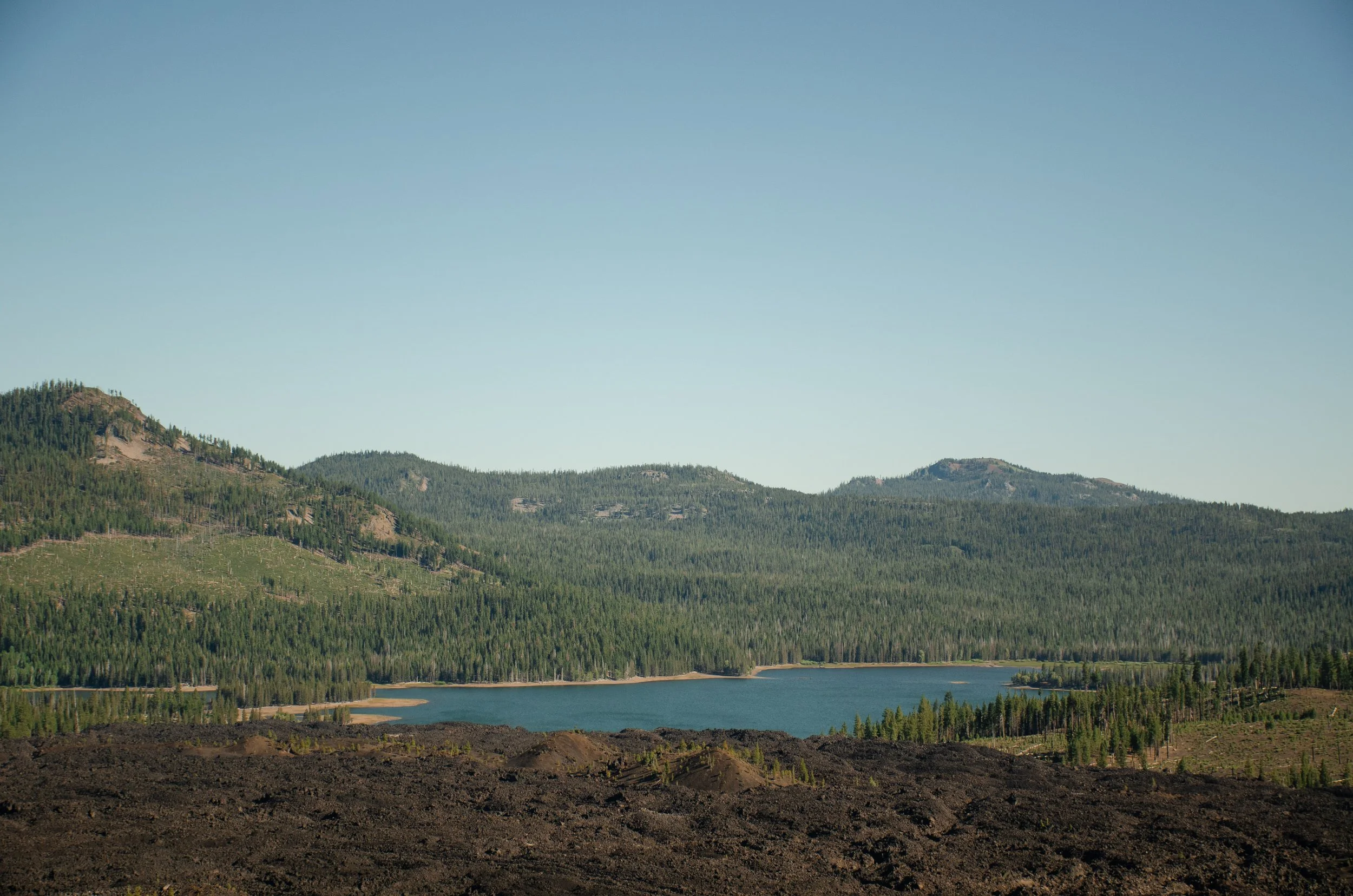
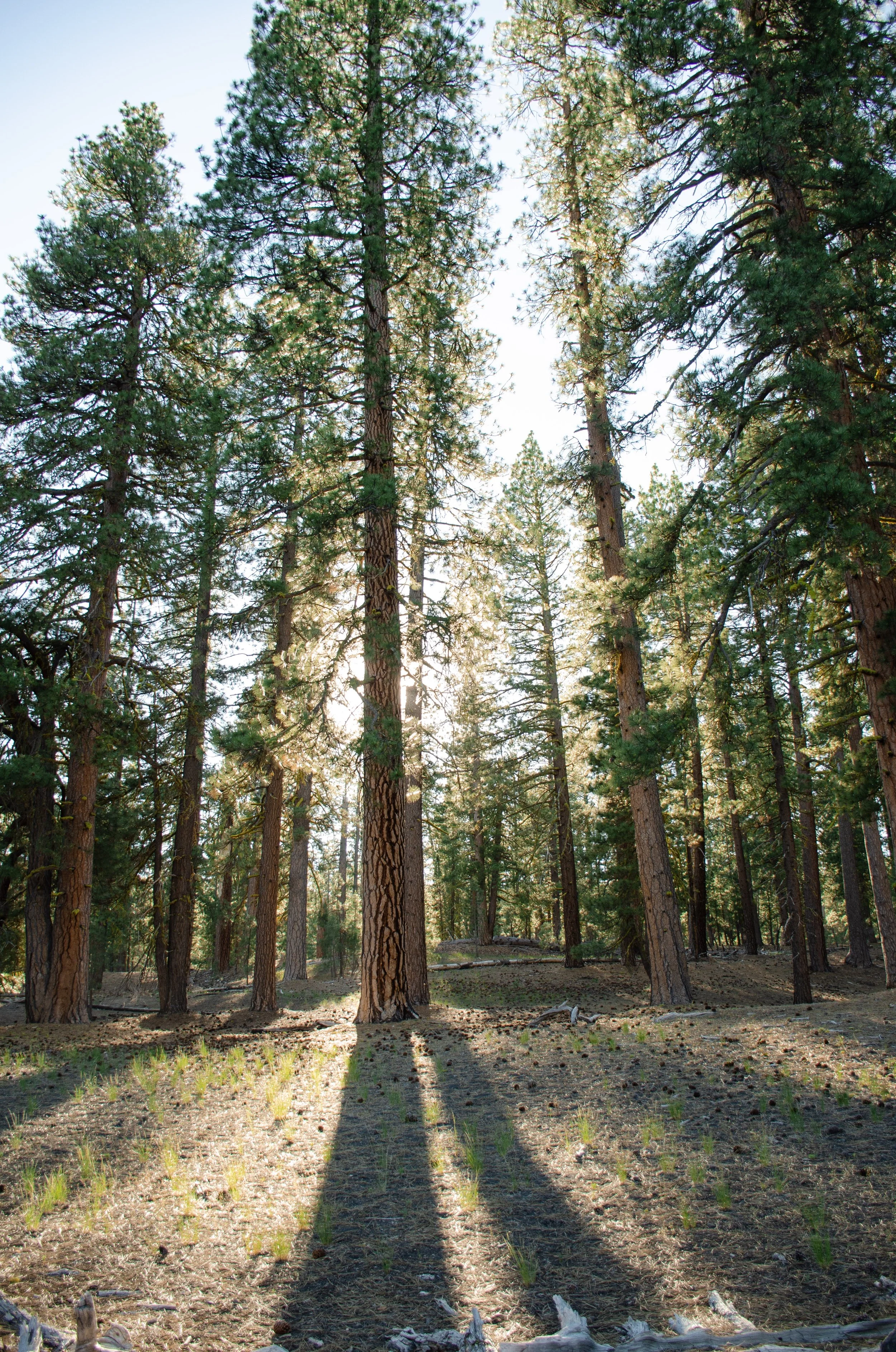
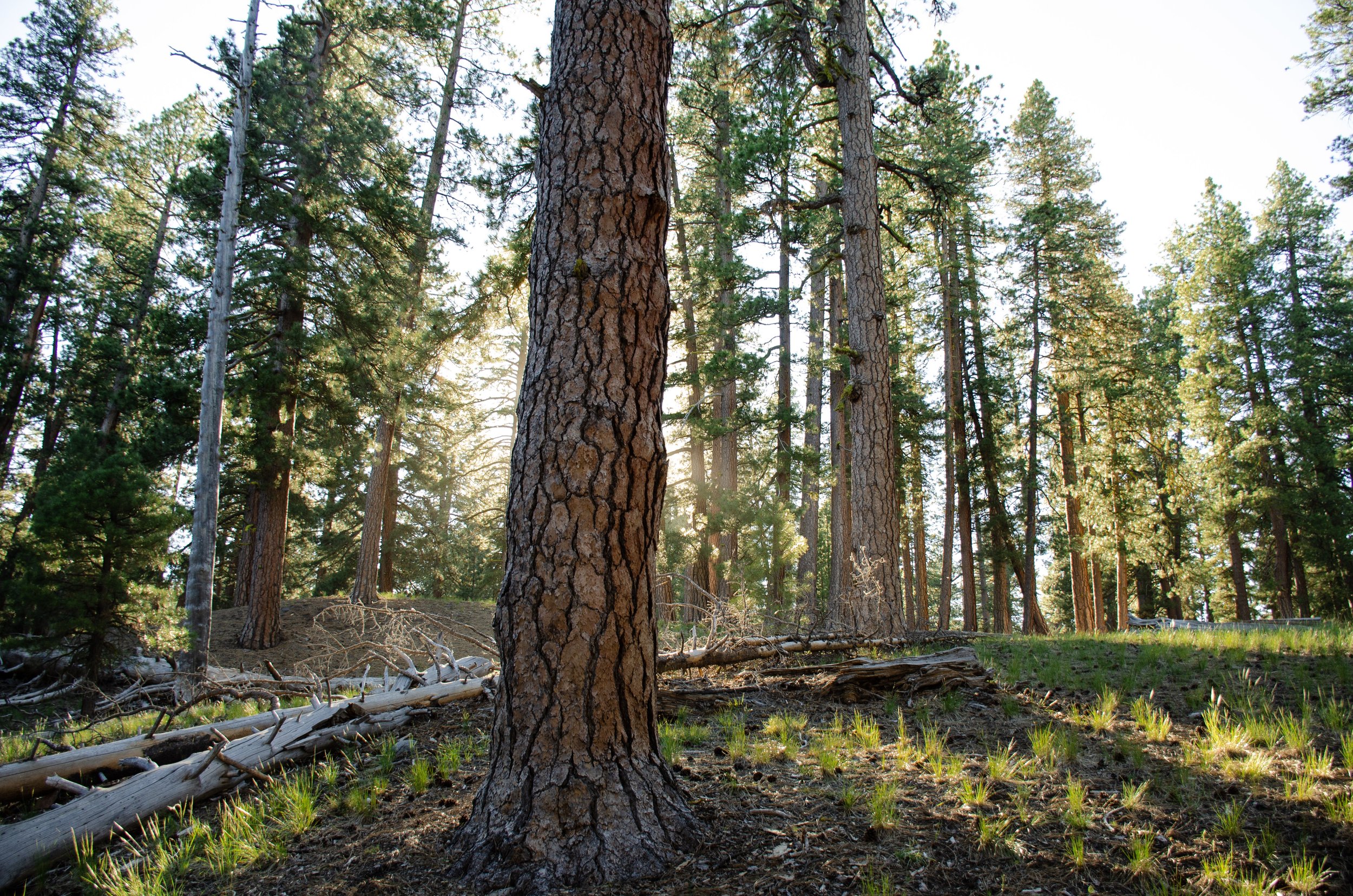
This was a brief one-night stop on our loop through Northern California, but I remember well the smell of the dry, high alpine terrain and the explosion of late spring flowers still flourishing beneath the trees. There are so many incredible trails in this park, but we just managed to squeeze in a short hike to the top of the Cinder Cone, located right beside our campground.
One of our favorite memories came in the morning, as we were leaving the park. A bobcat flew out of the underbrush next to the road and sprinted to the other side just a short way in front of us. We lurched to a full stop, surprised, then started laughed in amazement at the close encounter. Just one tiny taste of the beauty that Lassen Volcanic has to offer.
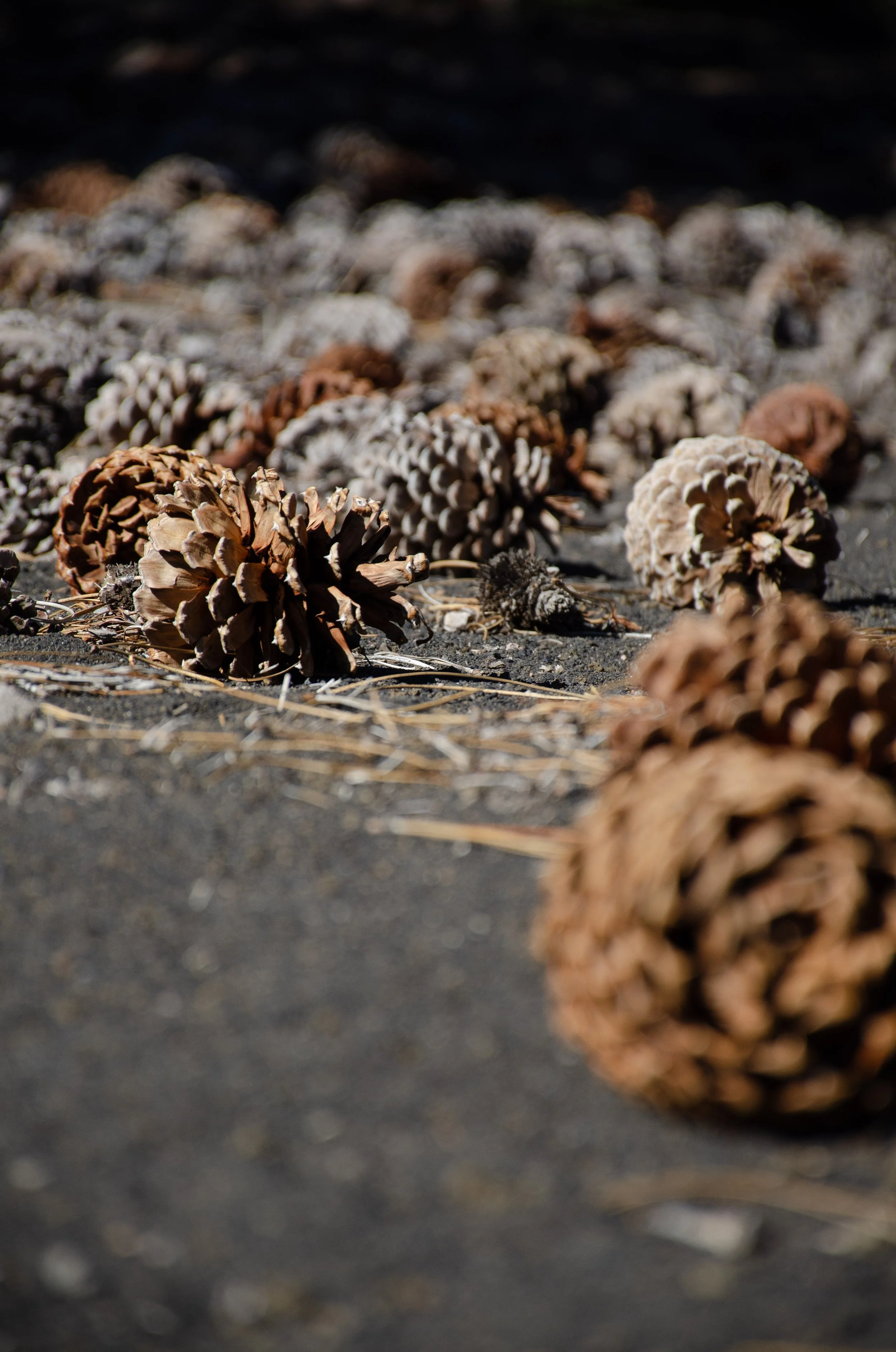
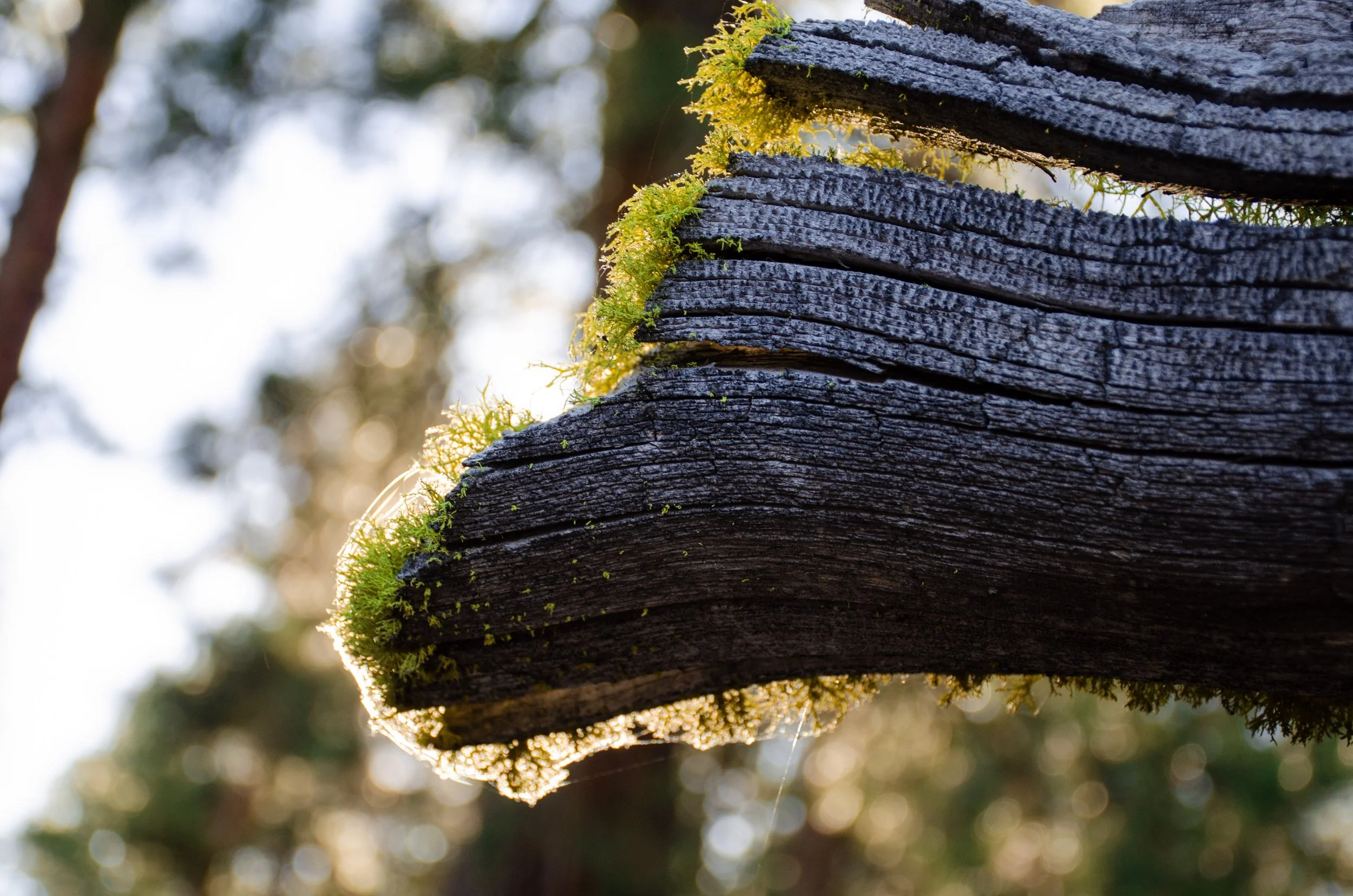
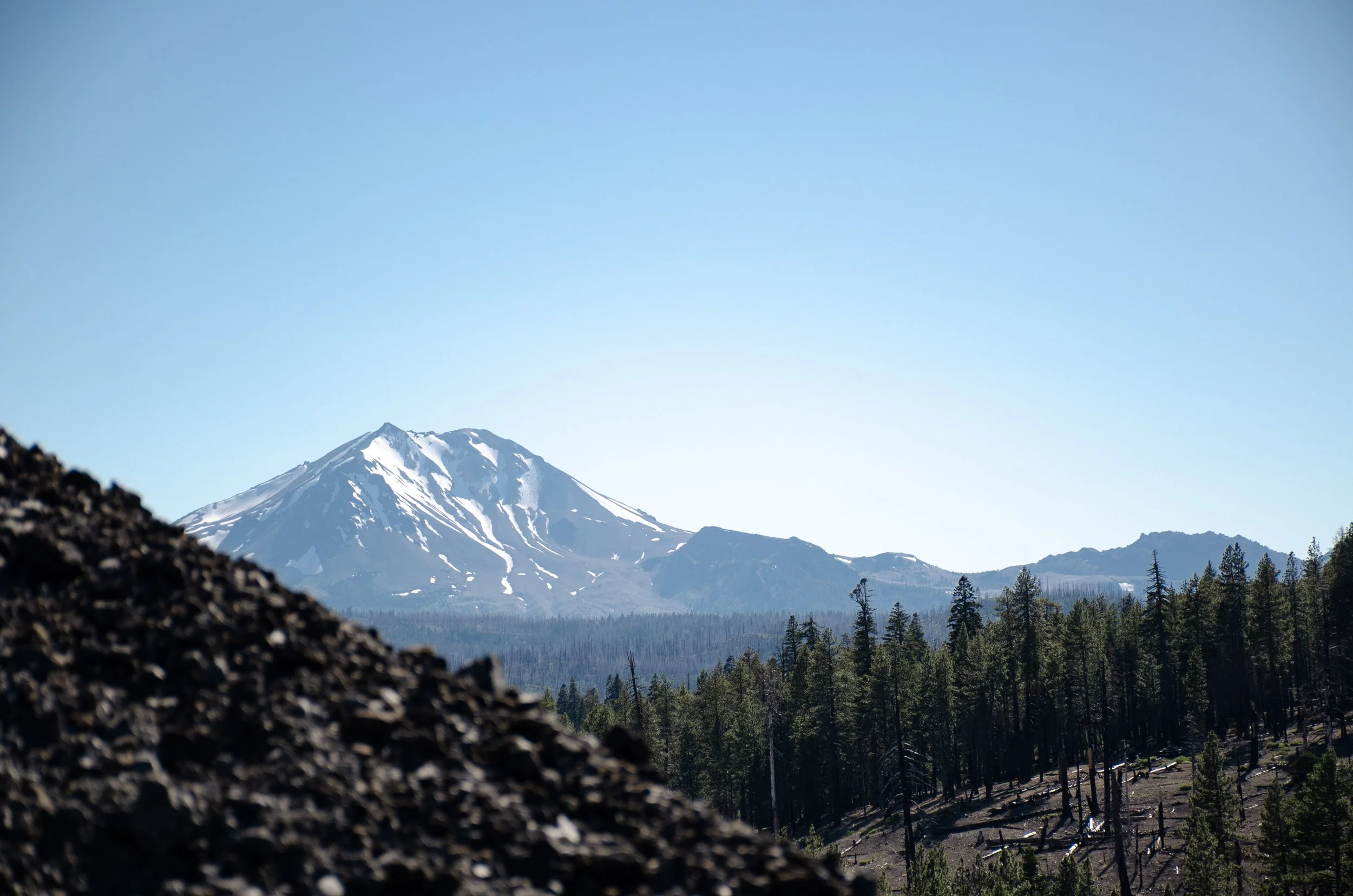
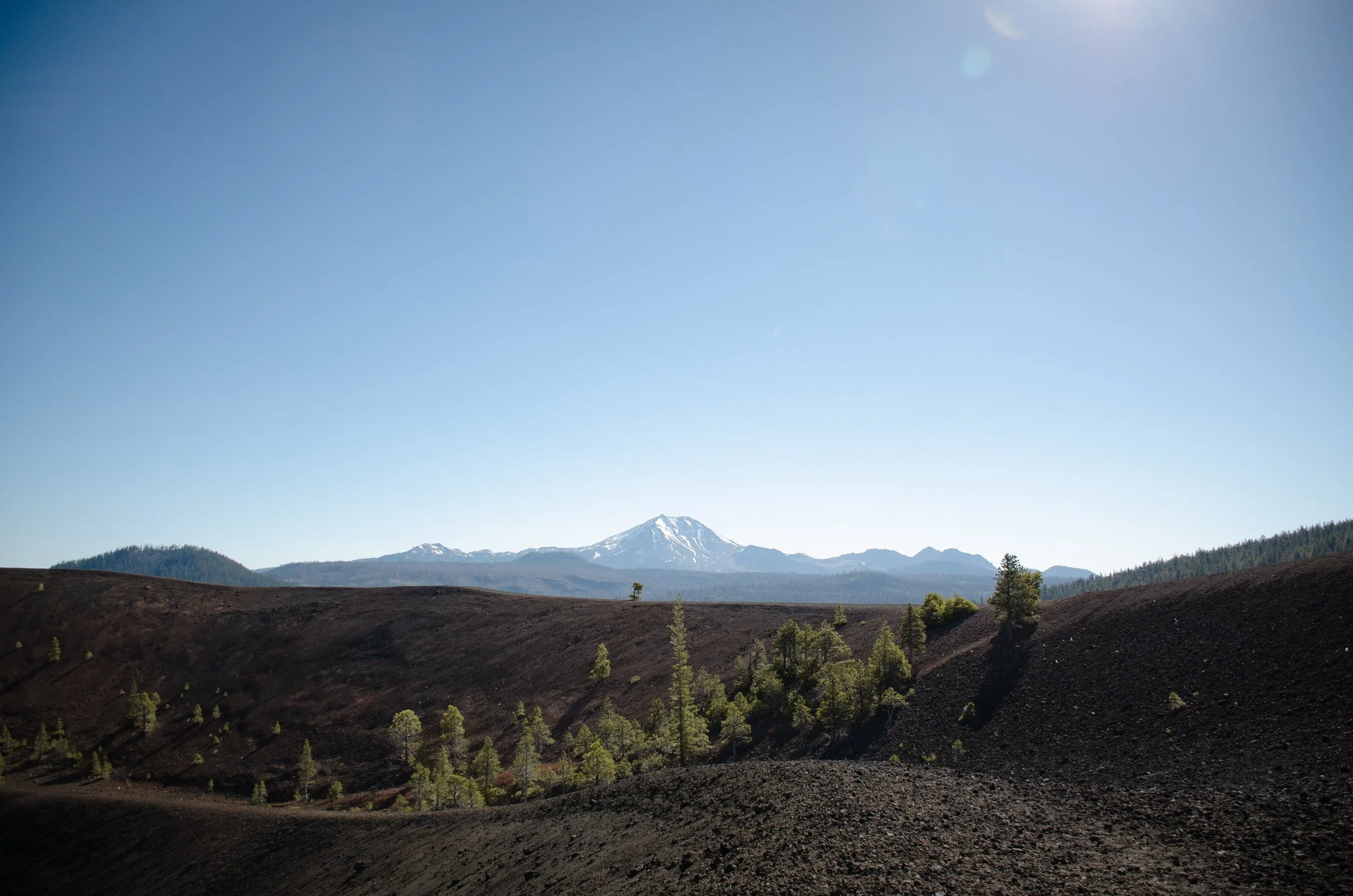
Pictured below:
Butte Lake Campsite.
Cinder Cone hike.
Mesa Verde
Park 6 | May 2018
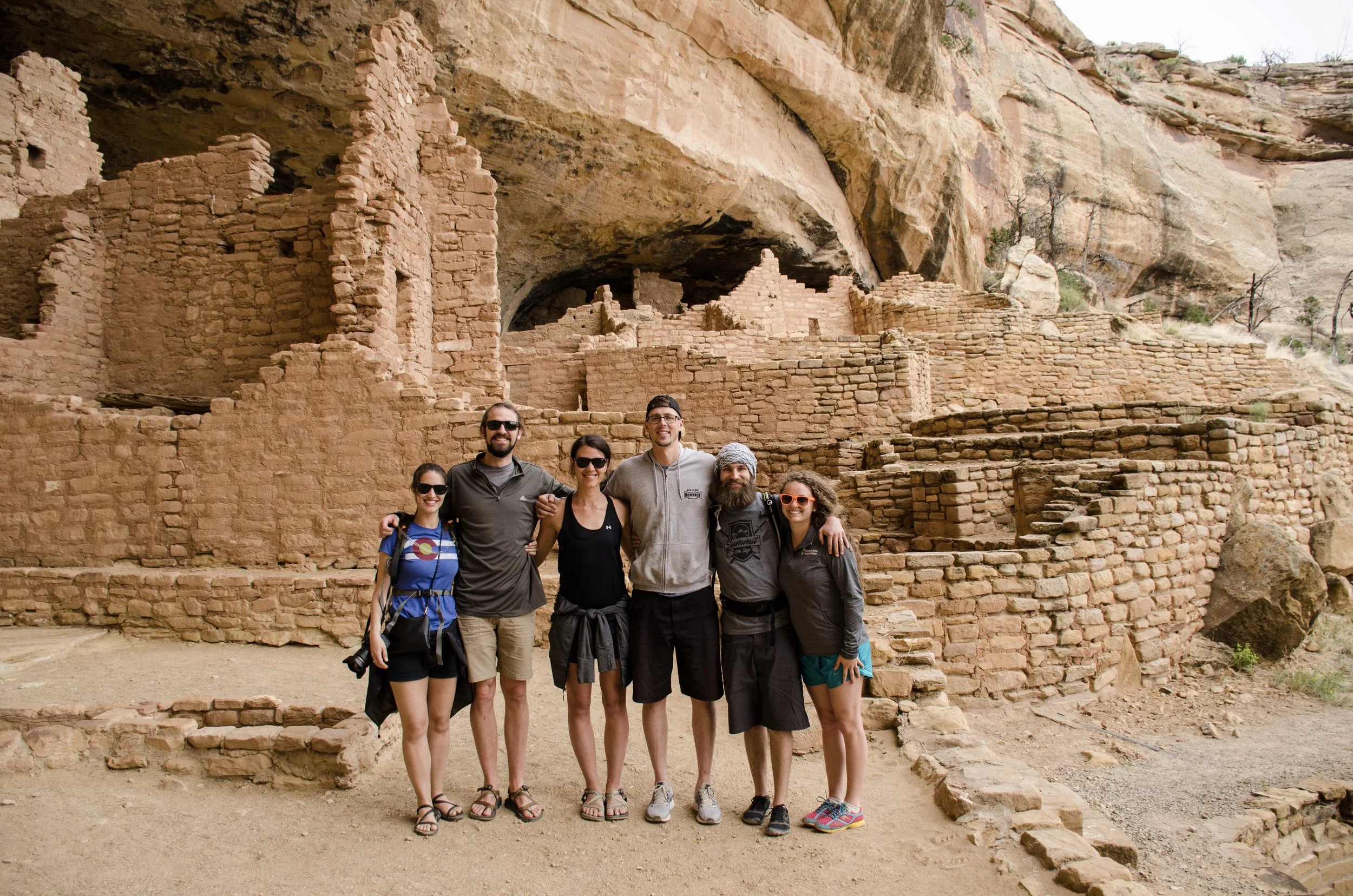
We explored Mesa Verde with two couples who are close friends of ours during a shared weekend in Durango. It turned out to be an unconventional but nevertheless memorable park experience.
To set the scene: First, we stayed up far too late the night before making the drive to the park, discussing/arguing over how early we should leave in order to have the best chance of joining one of the coveted spots on a tour of the cliff dwellings. One couple wanted to be out the door by 6am, certain that the tours would sell out; another wanted to sleep in, feeling it wasn’t that big of a deal and the tours wouldn’t fill up that quickly. At the time, J & I landed somewhere in the middle. (We’ve since honed our skills and recognize that you always always always want to get to any national park early if you want a legitimate chance at a walk-up spot on a tour.)
We ended up leaving after 6am but before 8am, and once we made our way to the visitor center, the first couple was unfortunately proven right: Despite arriving before 9am, all the tours for the day were full. This put a bit of a damper on the morning as we huddled and reassessed our options. After consulting a map, we decided to drive to the trailhead closest to the Cliff Palace, the tour we’d hoped to be on that morning. Even if we couldn’t hike down to see the dwellings ourselves, we figured we could at least explore whatever areas around it were open to day hikers.
After parking our car, we saw a group of perhaps thirty or forty people gathered at near the trailhead. We casually approached and quickly realized that this was the exact tour we’d tried to go on but hadn’t received tickets for. I can’t remember who first pitched the idea of us slipping into the group of people and attempting to join the tour by osmosis, but my rule-following self resisted this immediately. I was overruled. Feeling tentative, I begrudgingly followed our group as we joined the cluster of folks on the tour.
As it turned out, neither of the park rangers checked for tickets, so we avoided being singled out as interlopers. Once we started down the trail on the descent toward the Cliff Palace, I relaxed a little and allowed myself to get swept away in the remarkable history of this place that the park rangers expertly conveyed at various stops along the way.
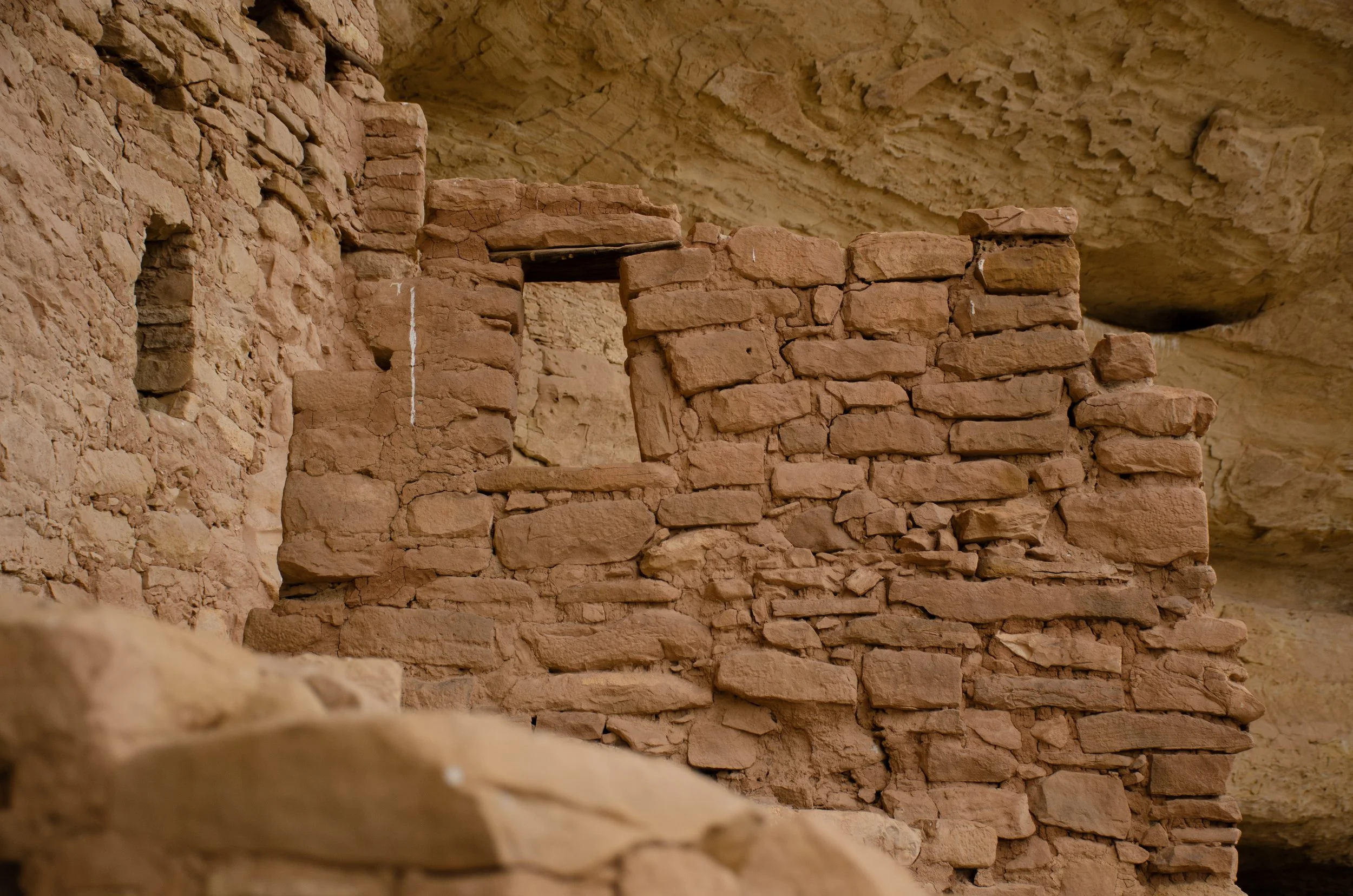
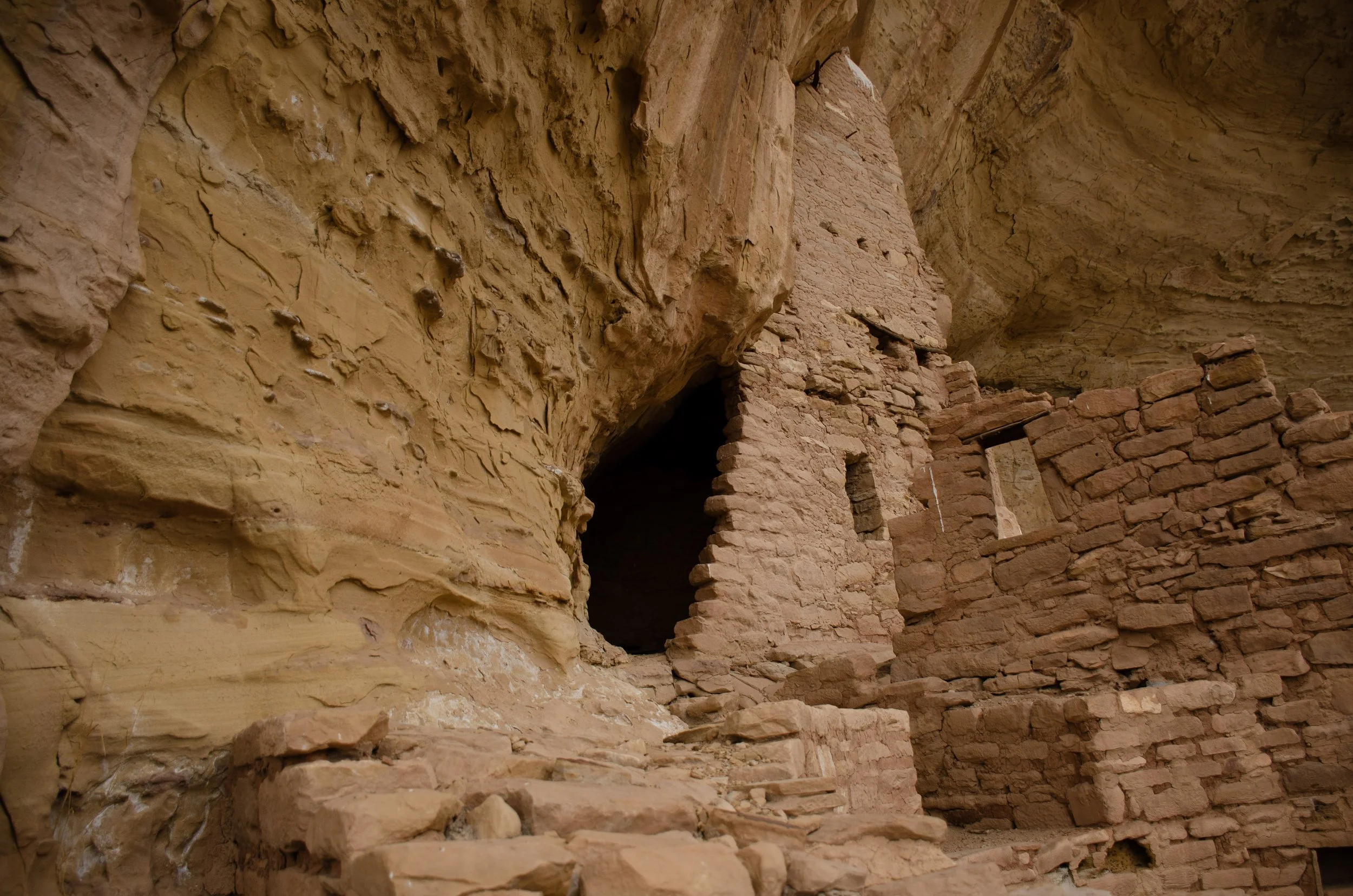
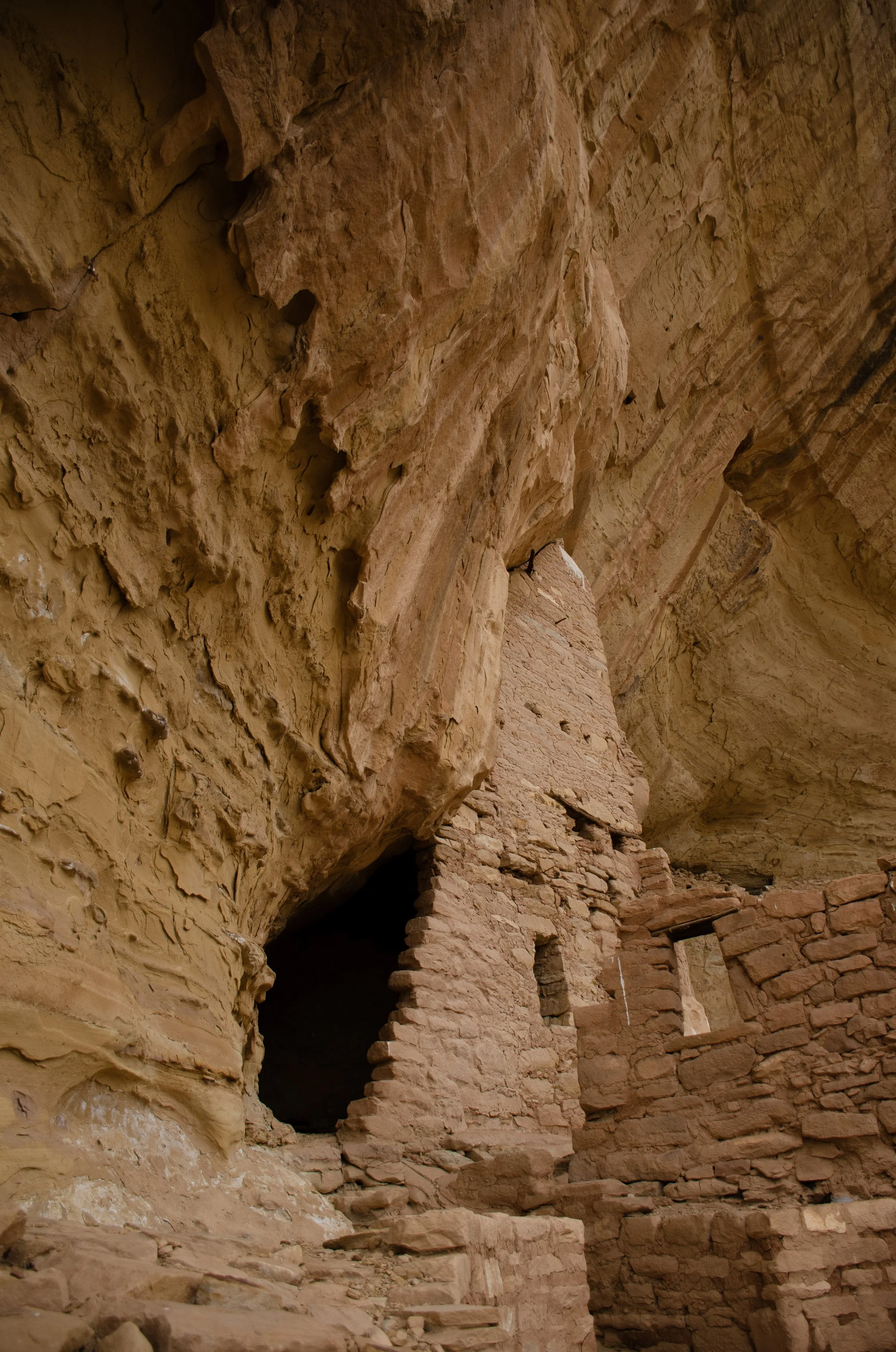
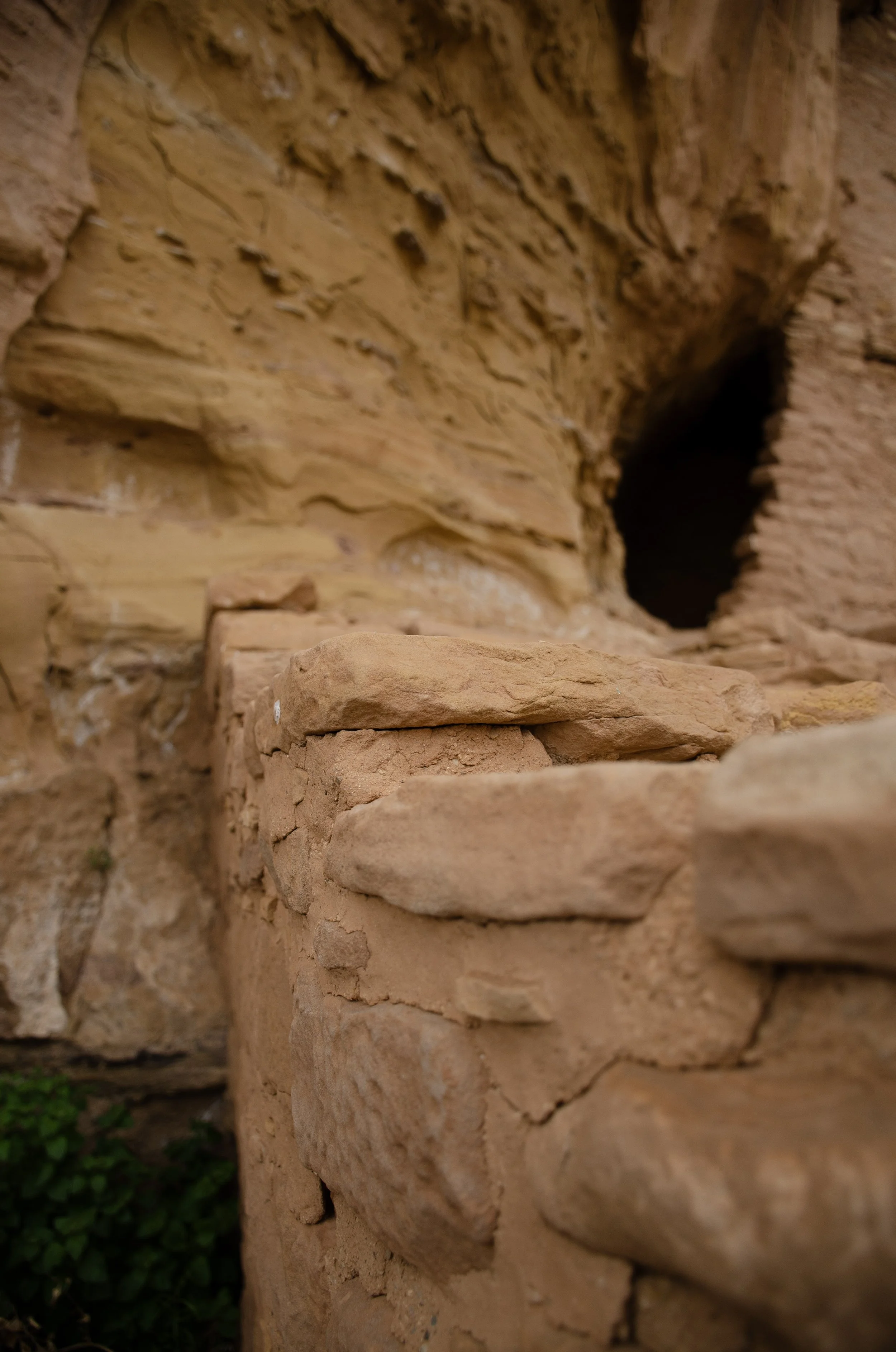
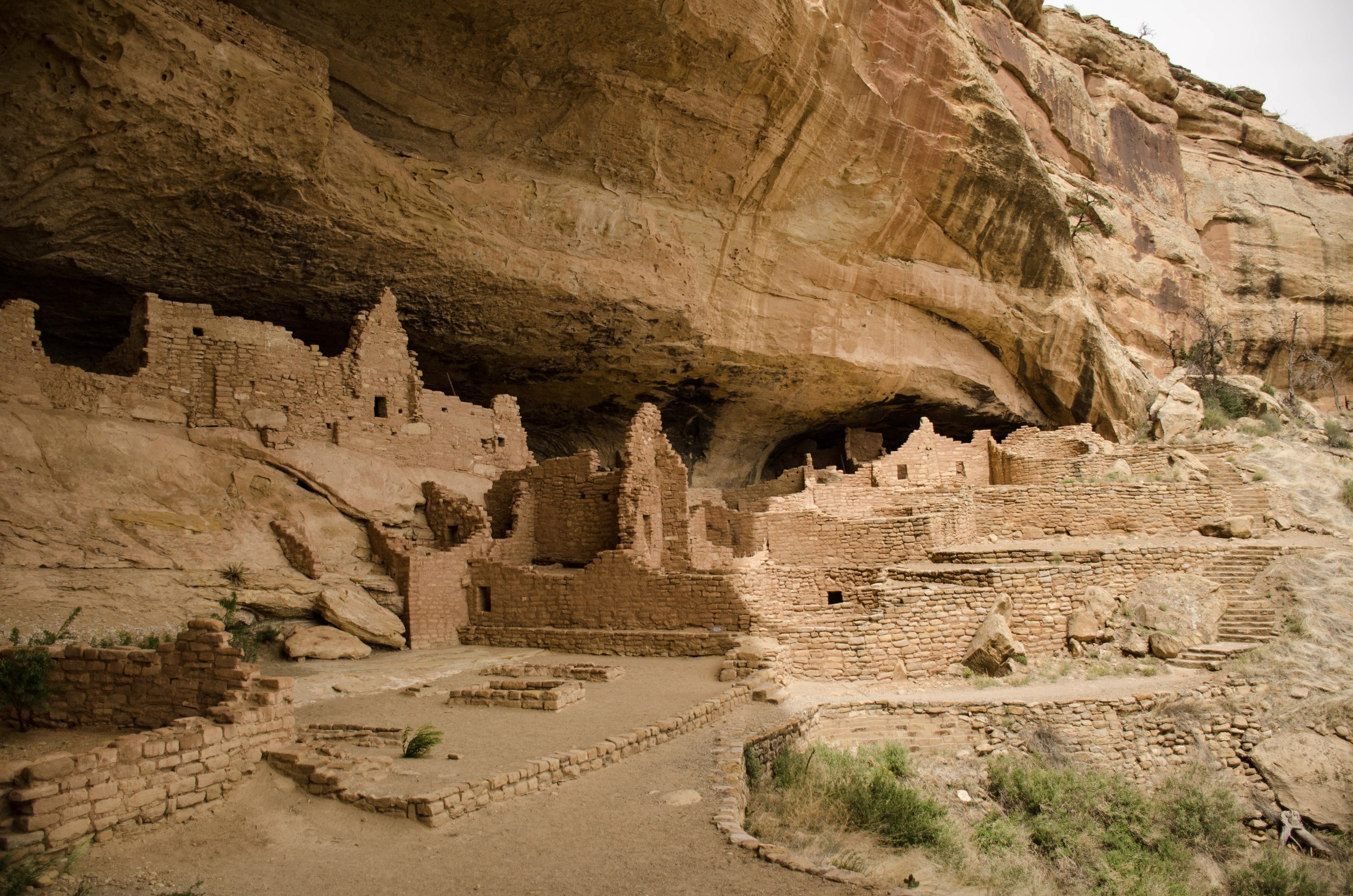
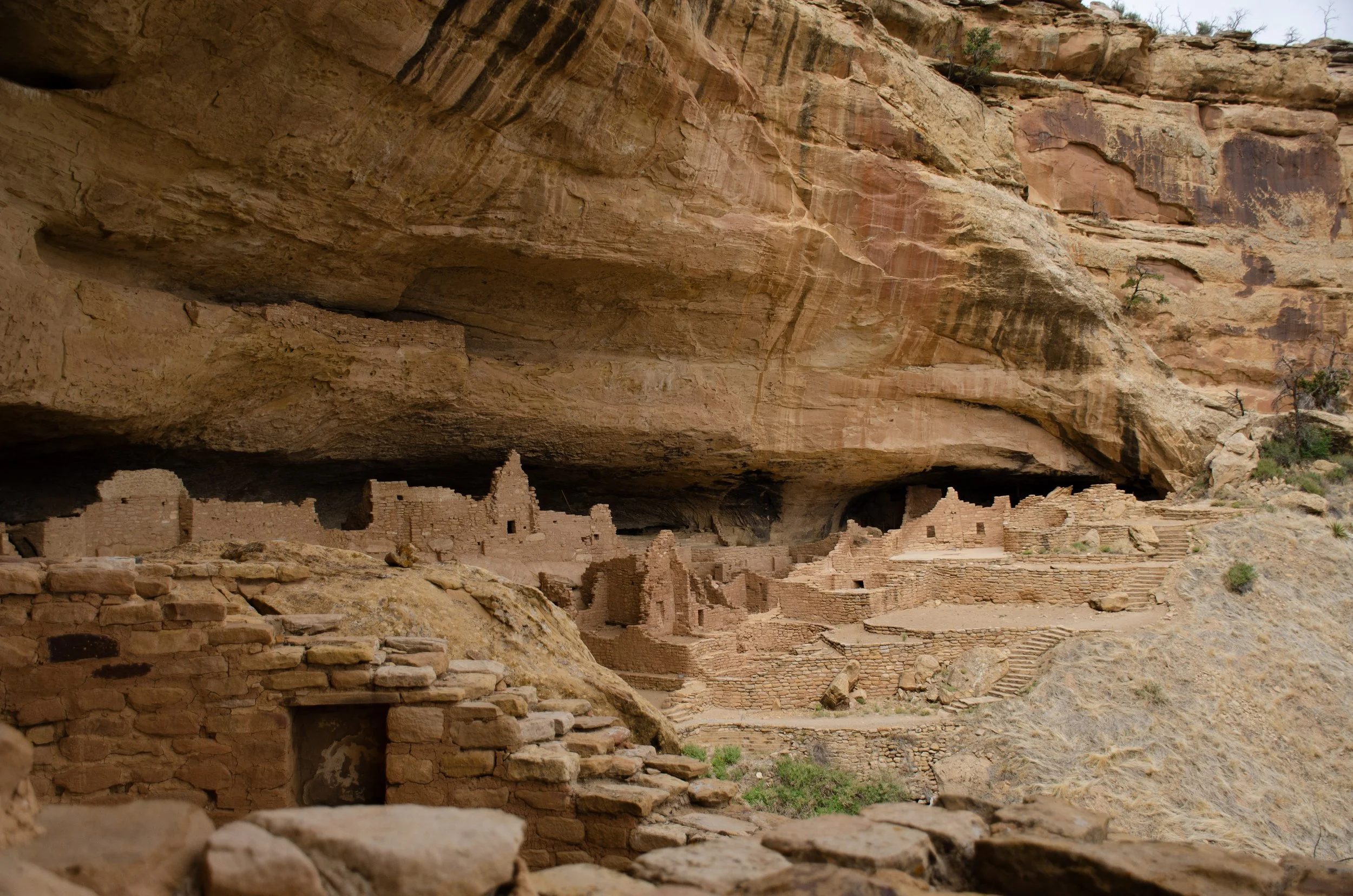
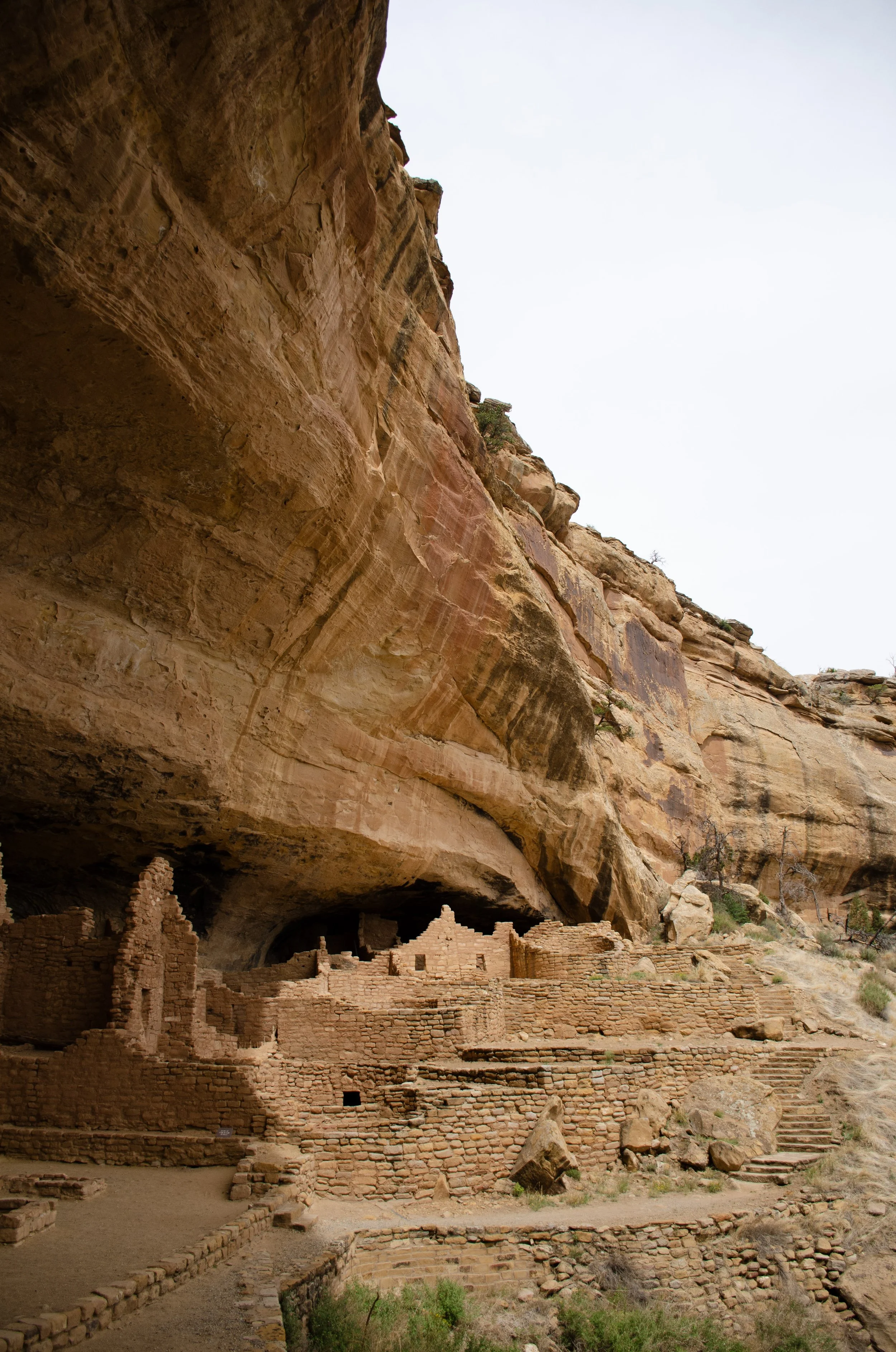
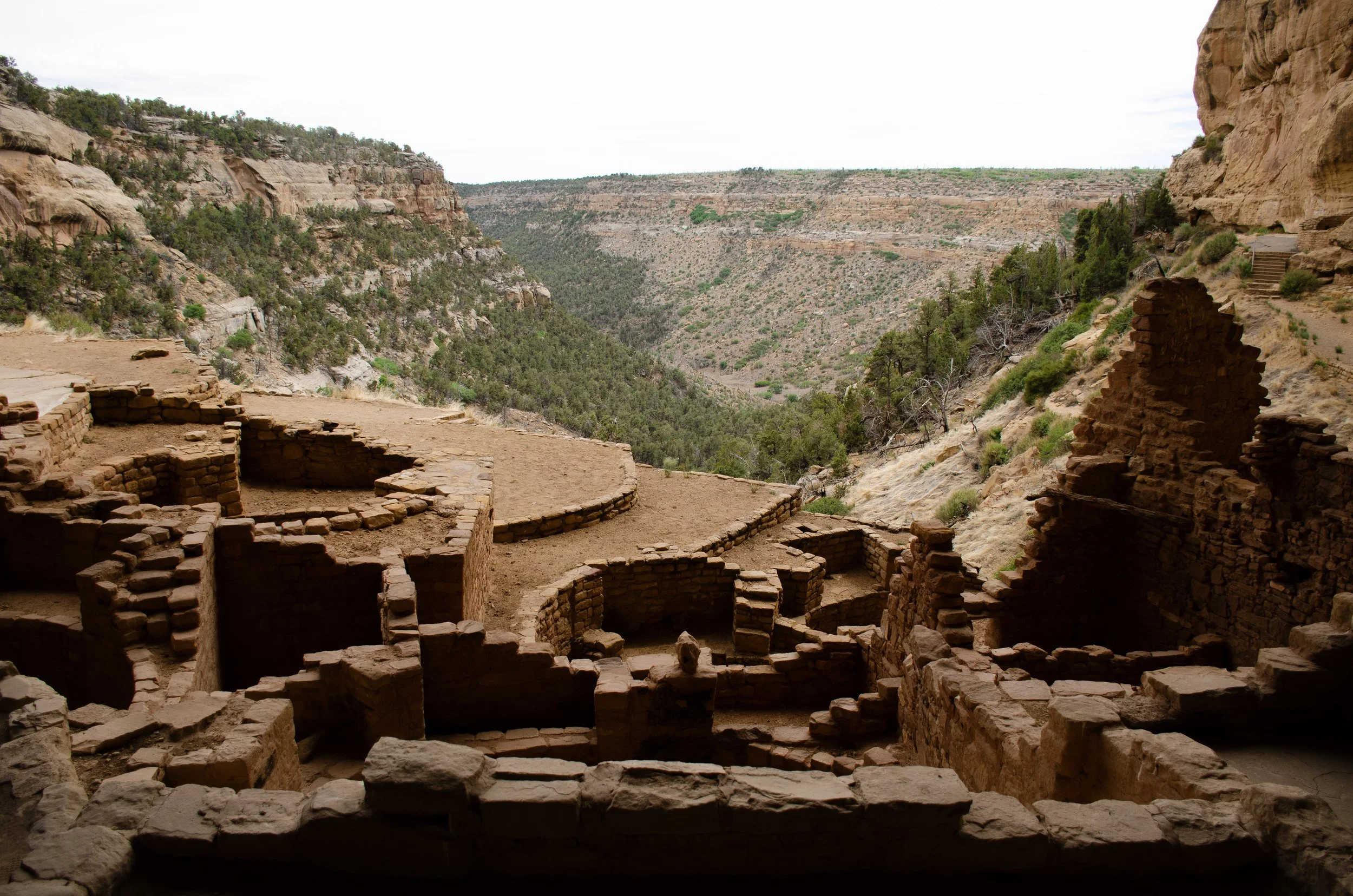
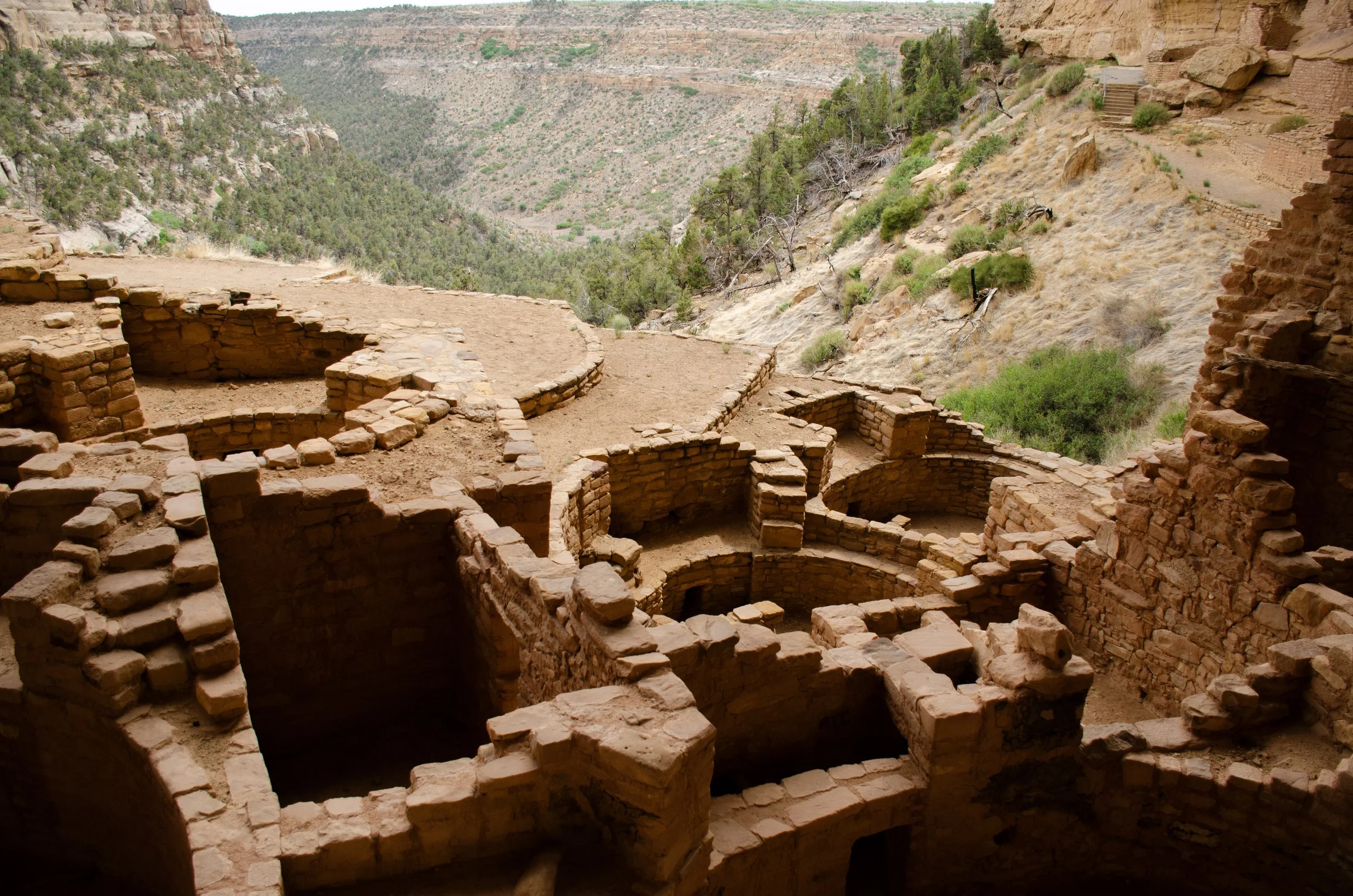
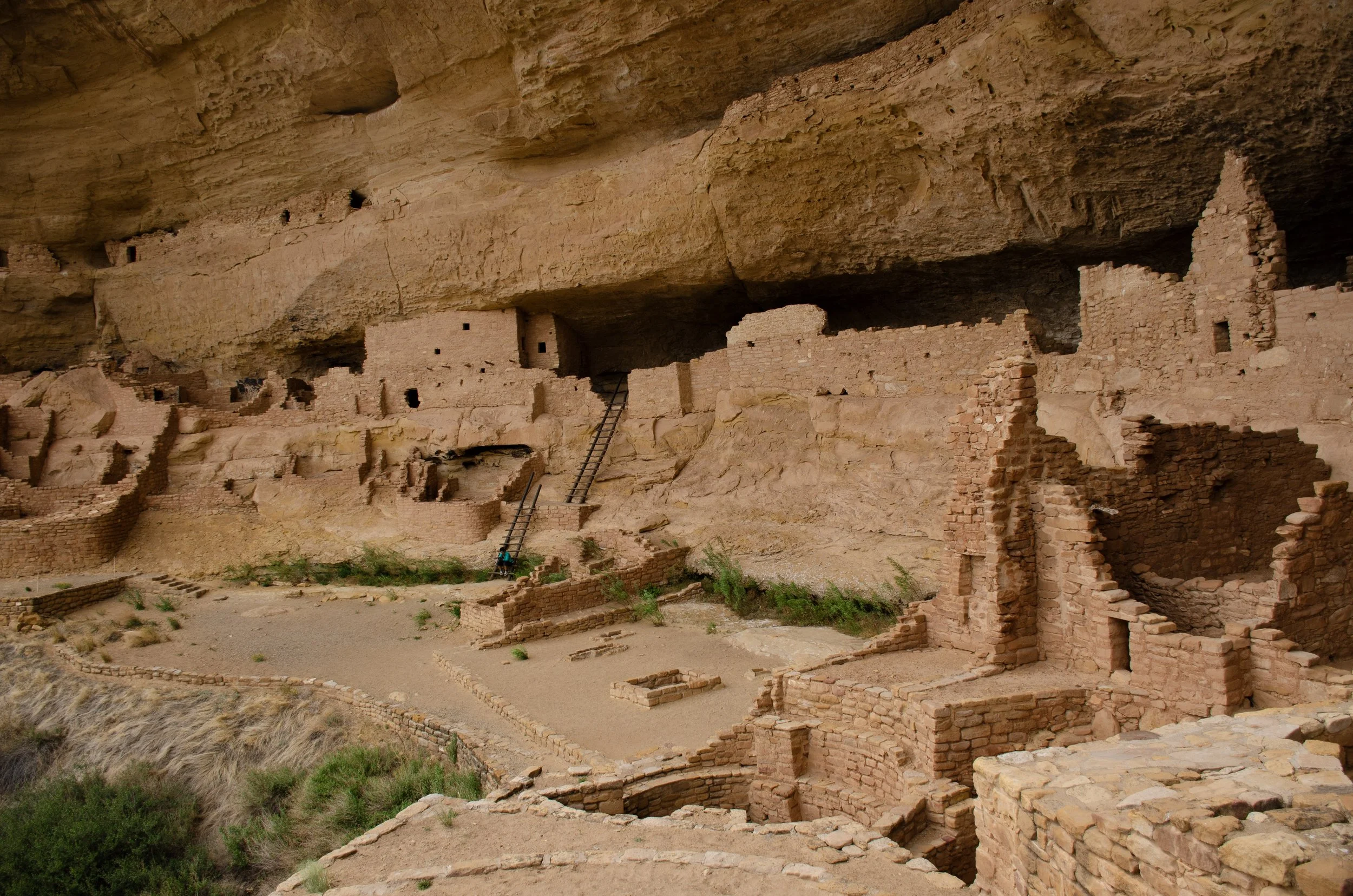
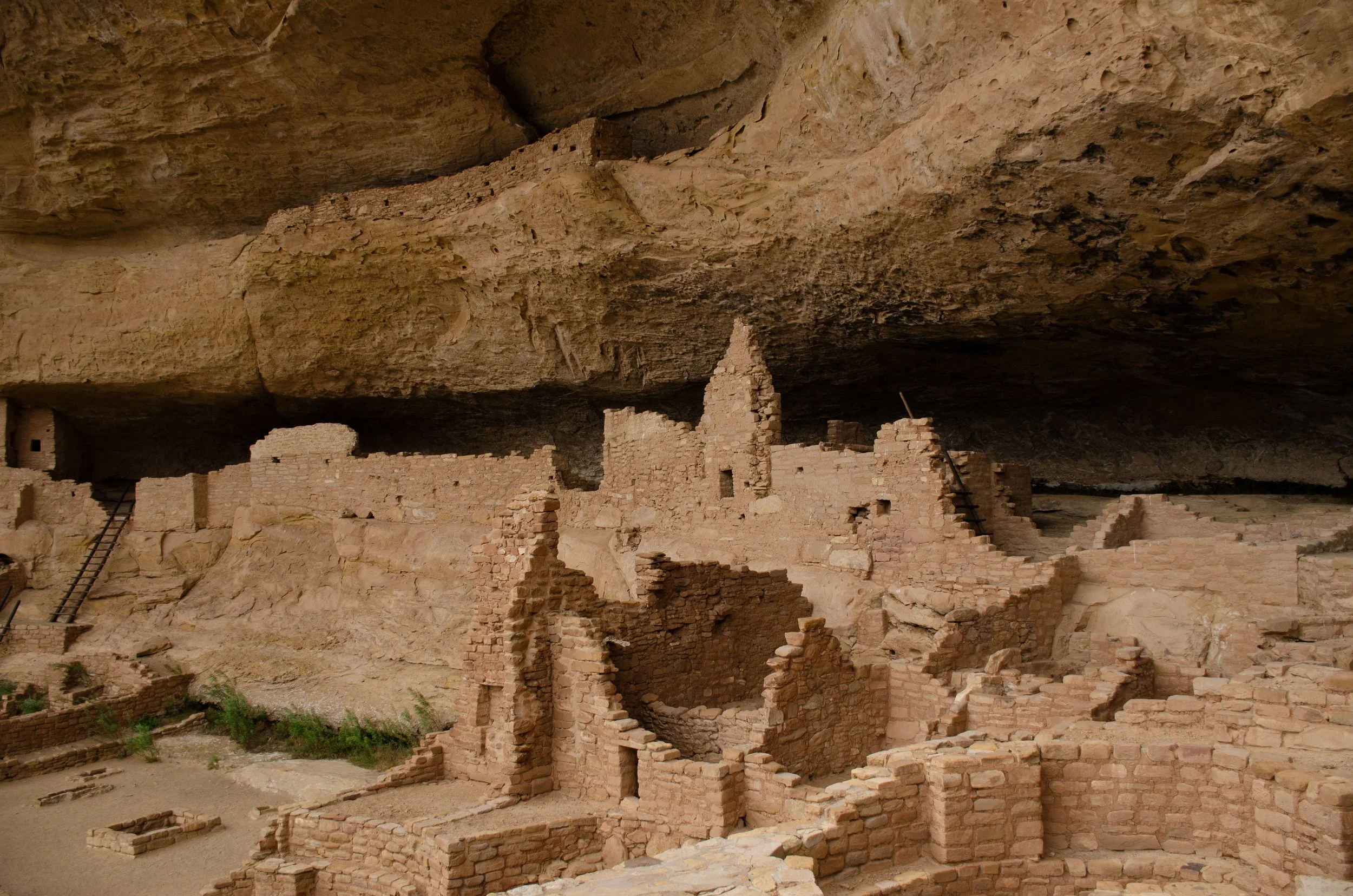
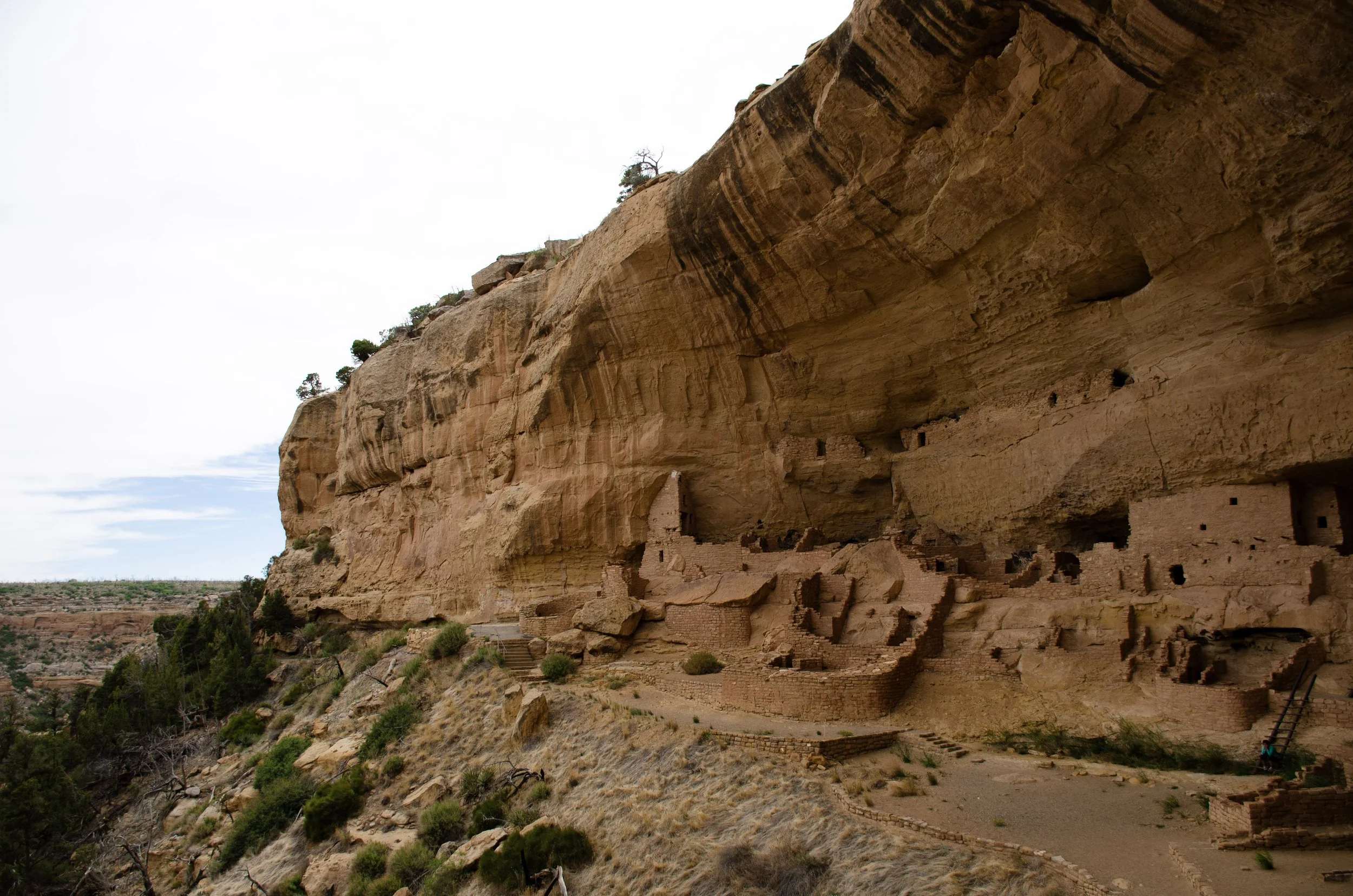
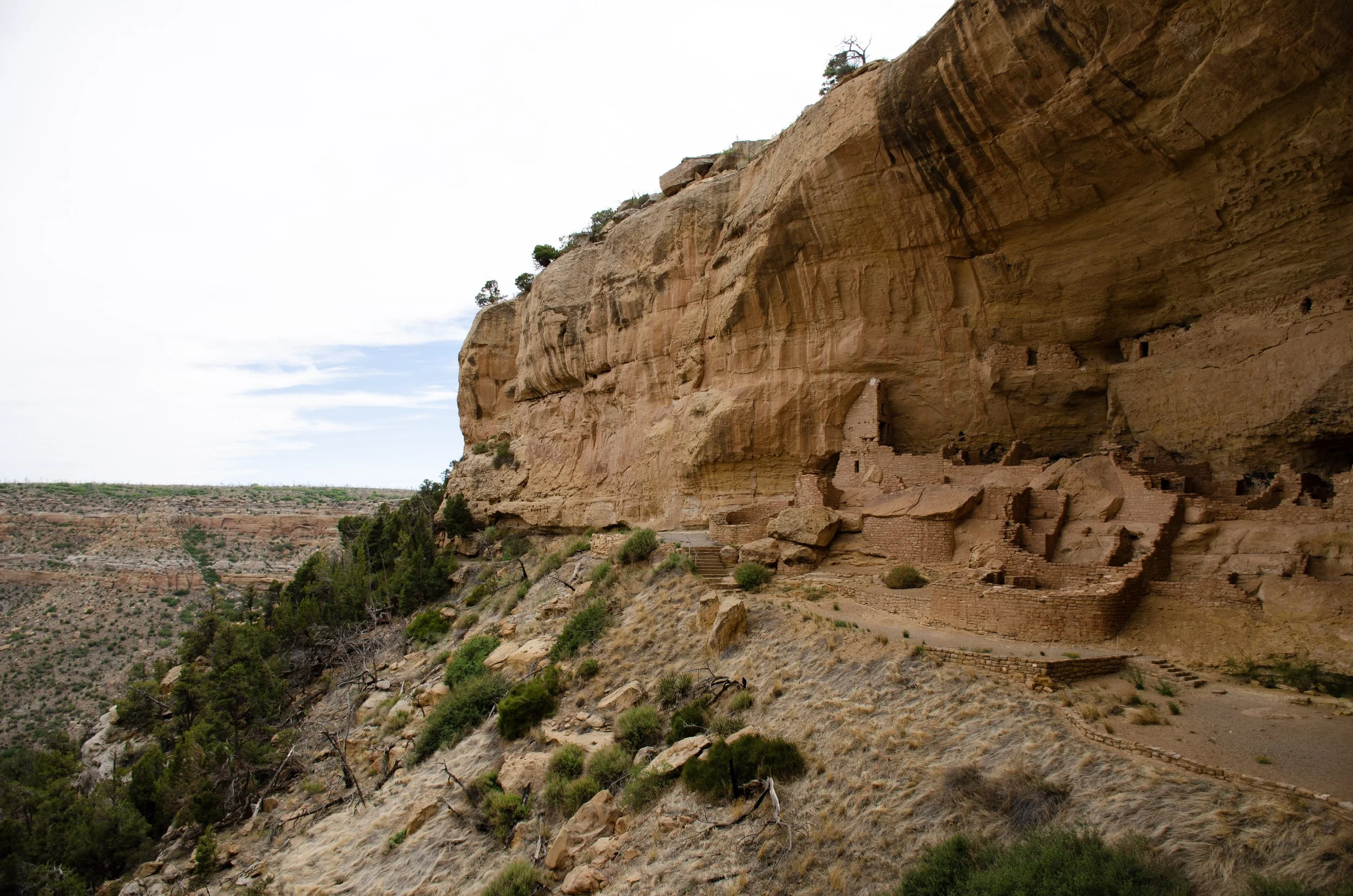
The cliff dwellings of the American Southwest are nothing short of mind blowing. They invite visitors to think critically about the long history of Turtle Island/the United States. No longer do I agree with sentiments I often hear after friends return from Europe — marveling over how many structures they saw that were hundreds or a thousand years old and remarking ruefully on how we (residents of the US) don’t have anything like it in our own country. But have you seen the cliff dwellings of Mesa Verde? I want to respond (and sometimes do). Chaco Canyon? The mounds in Louisiana, Illinois, Oklahoma, Alabama, and more, some of which are estimated to have been built in 3500 BCE? There is deep history and ample evidence of complex societies that lived all over North America. The real thing to examine, I think, is why we deem some ancient structures and societies as more legitimate of memorialization than others.
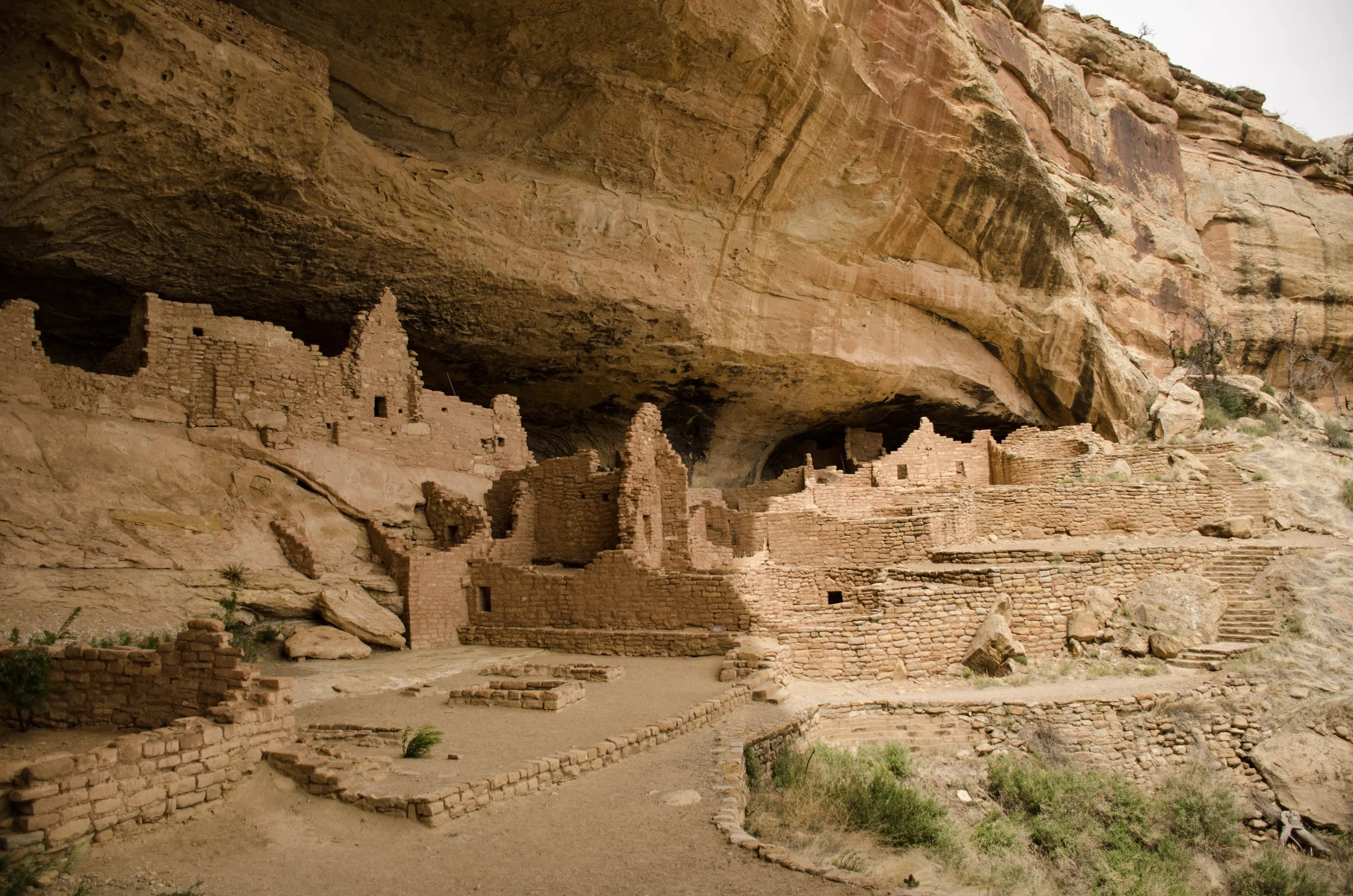
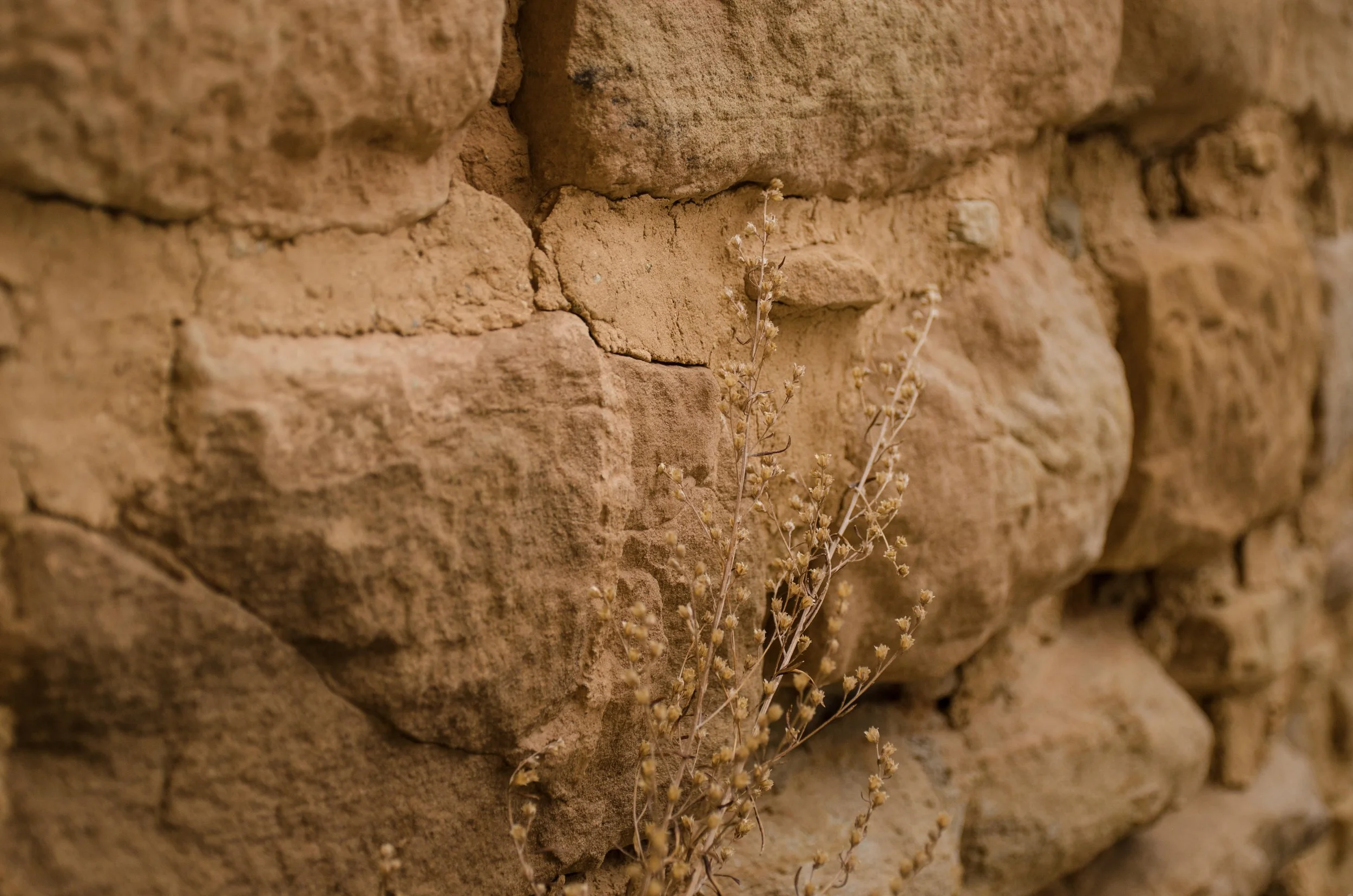
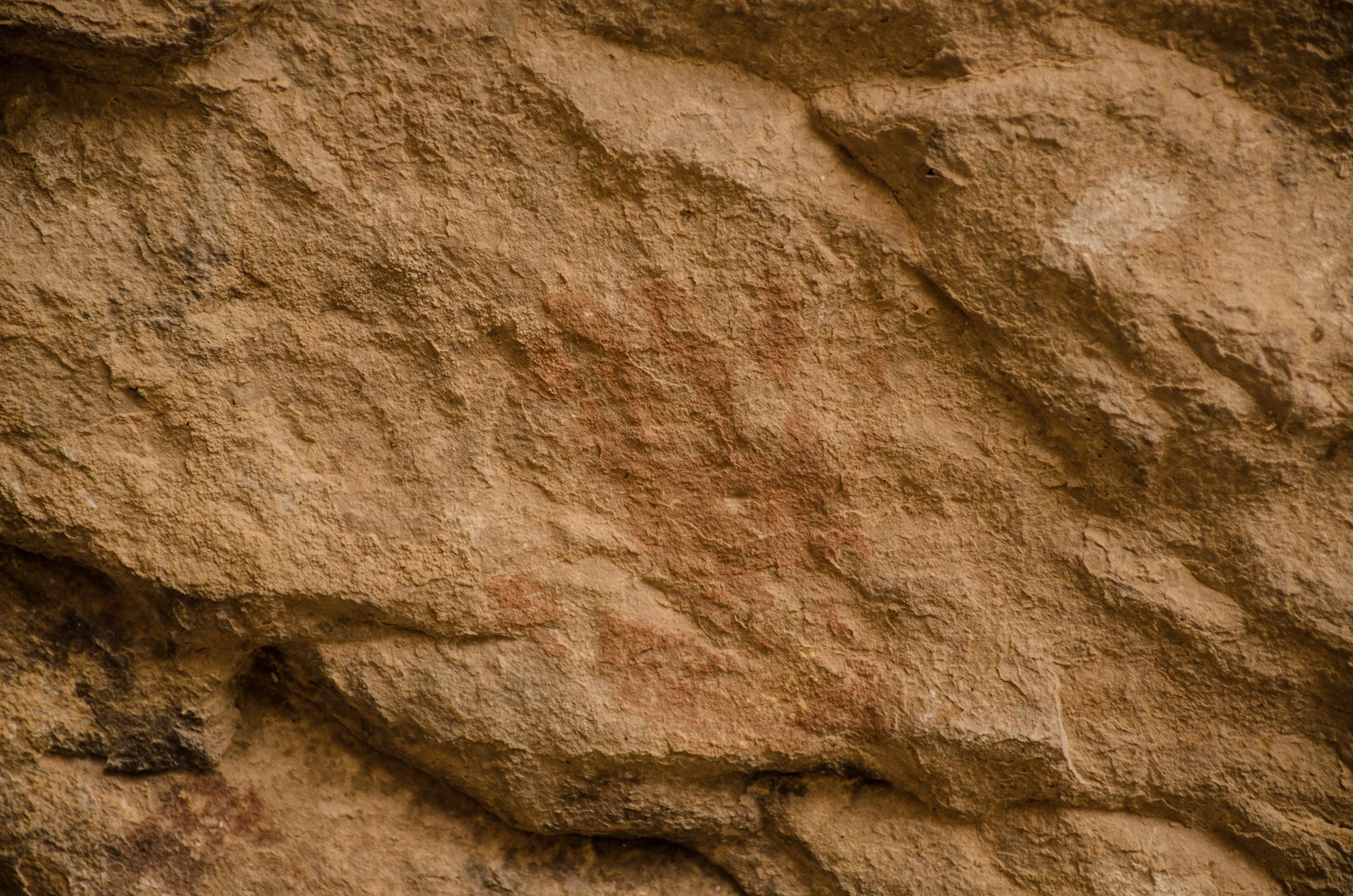
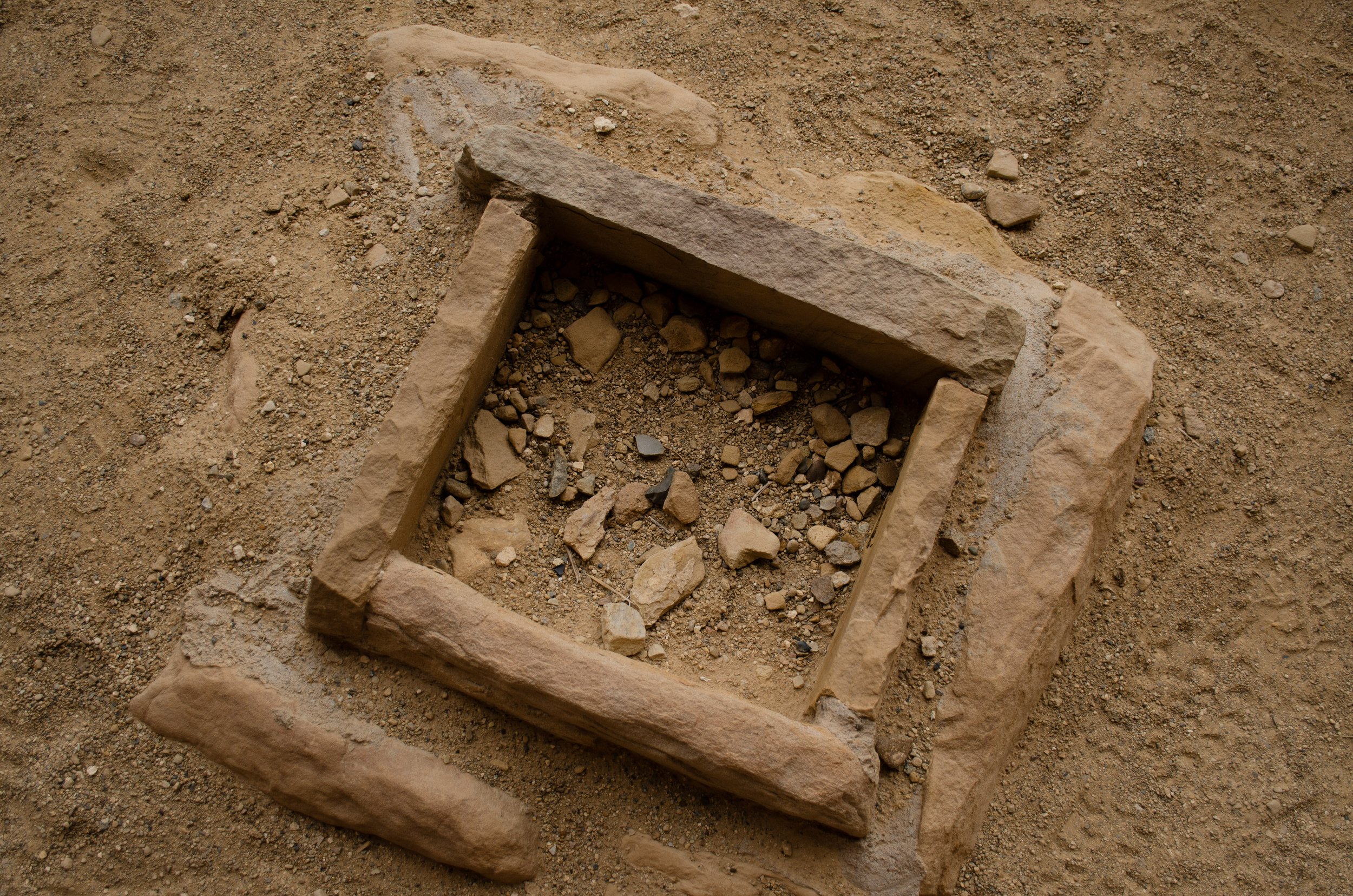
I felt a sense of sacred respect while carefully walking through the preserved Cliff Palace. There is a faint red outline of a hand on the rock wall that I stared at for what felt like several minutes. I wondered who had placed their hand there. Had they coated it in some kind of dye or paint first? What had their life been like? Could they have ever imagined that somebody like me would be staring at that outline of their hand hundreds of years later? I felt a sensation of being both eerily close and eons away from the person who had placed their palm there. I felt similarly when gazing down at a nearby fire pit, thinking about the feet that had stood where mine were now planted, and while ducking beneath low-hanging door frames, curious about all the people who had passed through that doorway and had called this place home.
The ancient Pueblo people who lived in the Mesa Verde region for more than 700 years were eventually forced to leave the area due to a prolonged, severe drought roughly 800 years ago. Looking around, I tried to picture what that decision must have felt like: Families and communities needing to weigh out what to do when water became too scare to sustain life. I wondered what decisions we modern folk will need to make in our own lifetimes as a changing climate is also threatening our livelihoods, opportunities, and futures.
Our time in Mesa Verde was short and included the dubious decision of illicitly joining a tour, but by the end of the day we were all incredibly grateful we’d had the opportunity to visit such an ancient and impactful place. Many thanks to the (at least) 26 Tribes who are associated with the region around Mesa Verde. You can learn their names here. The Crow Canyon Archaeological Center has also published a history of the Peoples of the Mesa Verde Region that was illuminating to me.
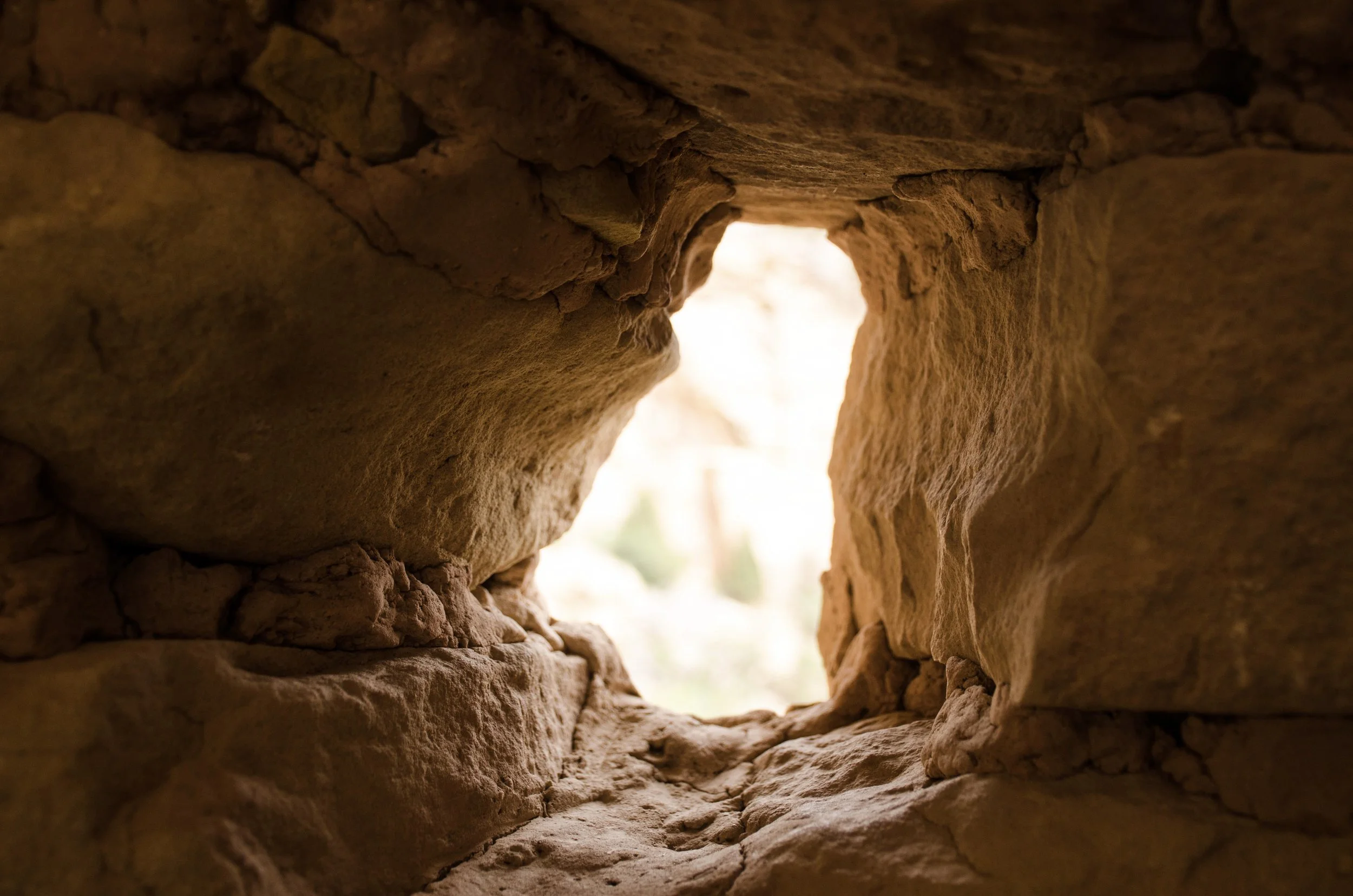
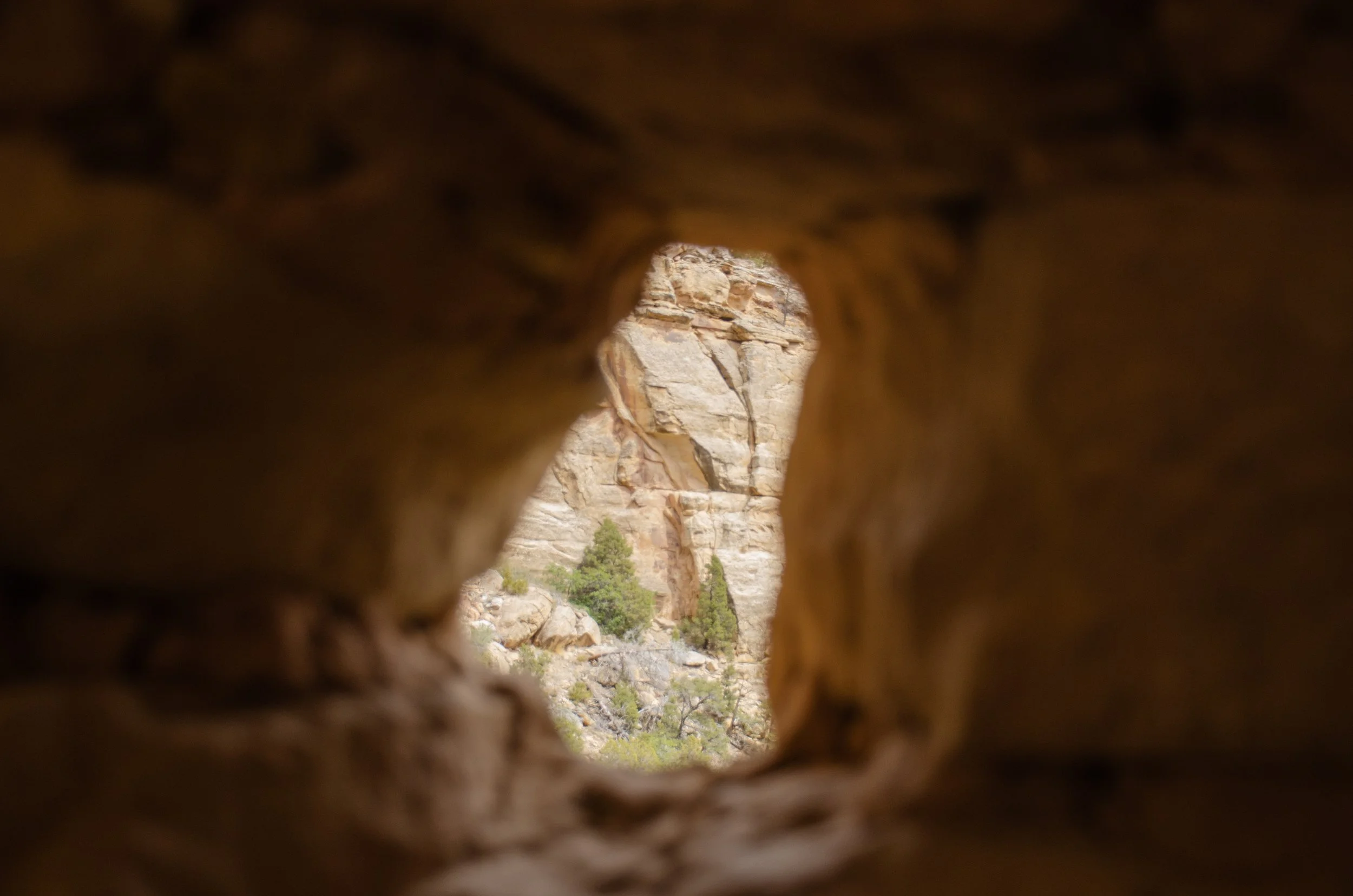
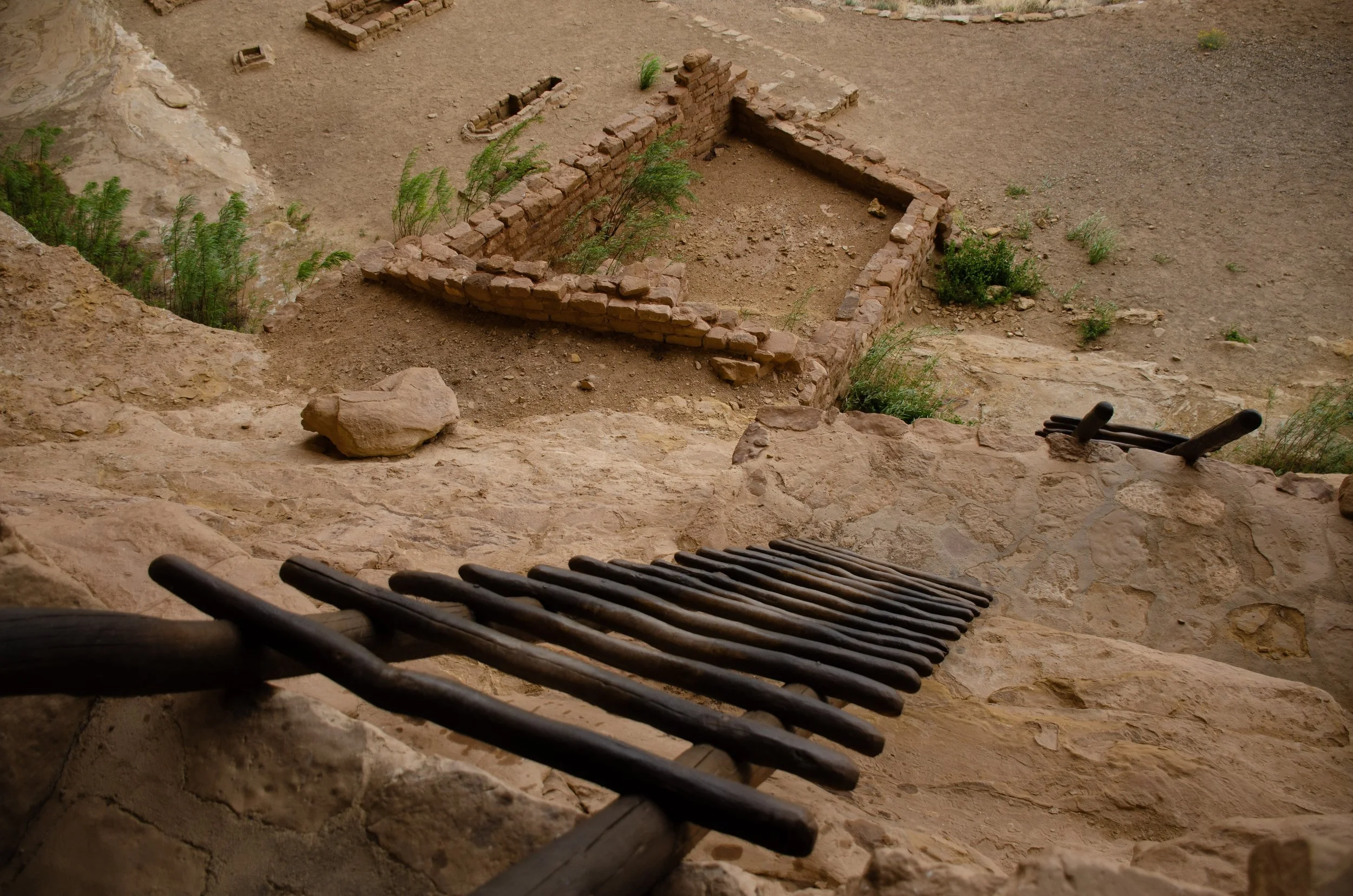
Pictured below:
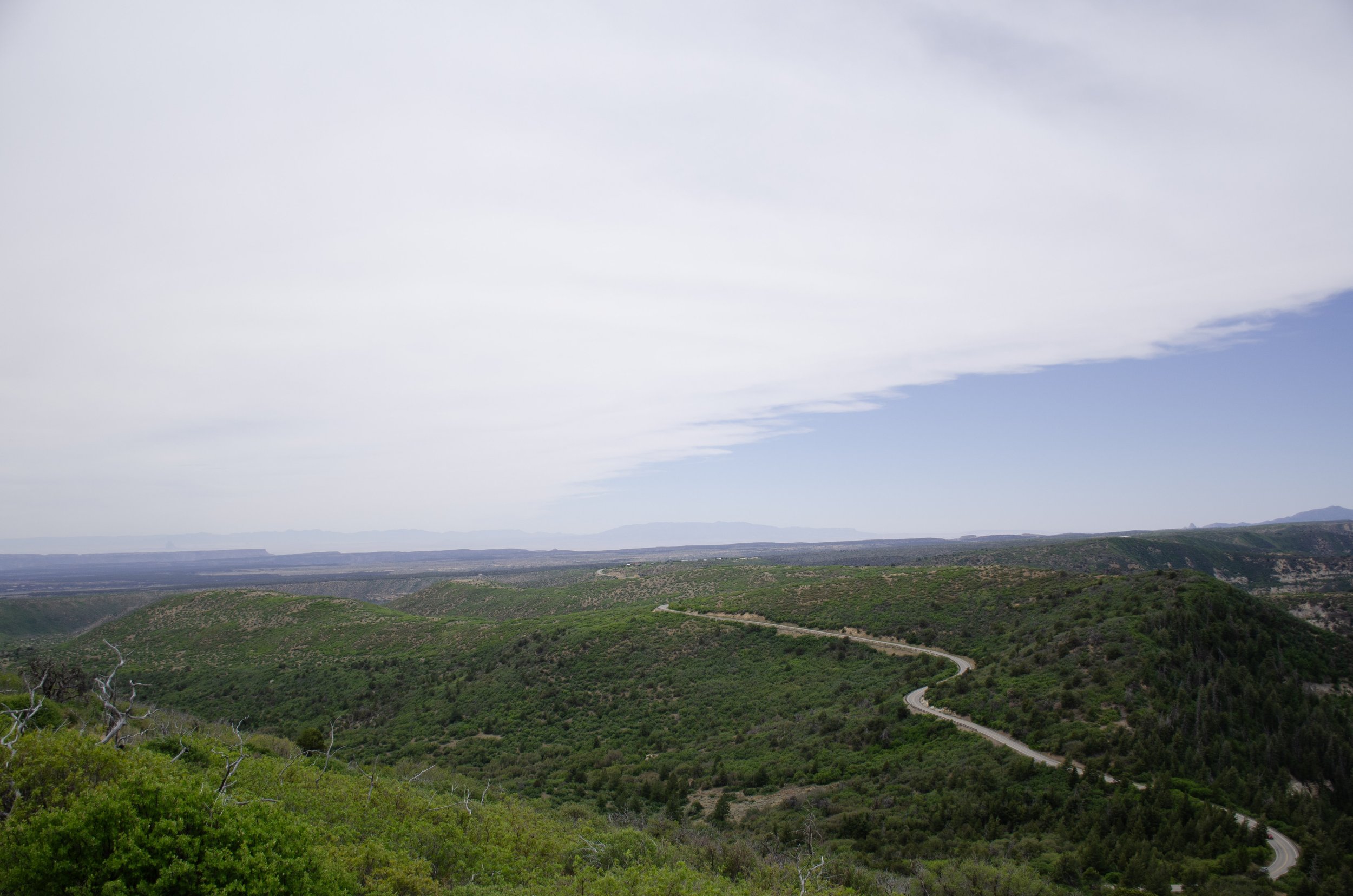
The view from Park Point, located on the drive into the park.
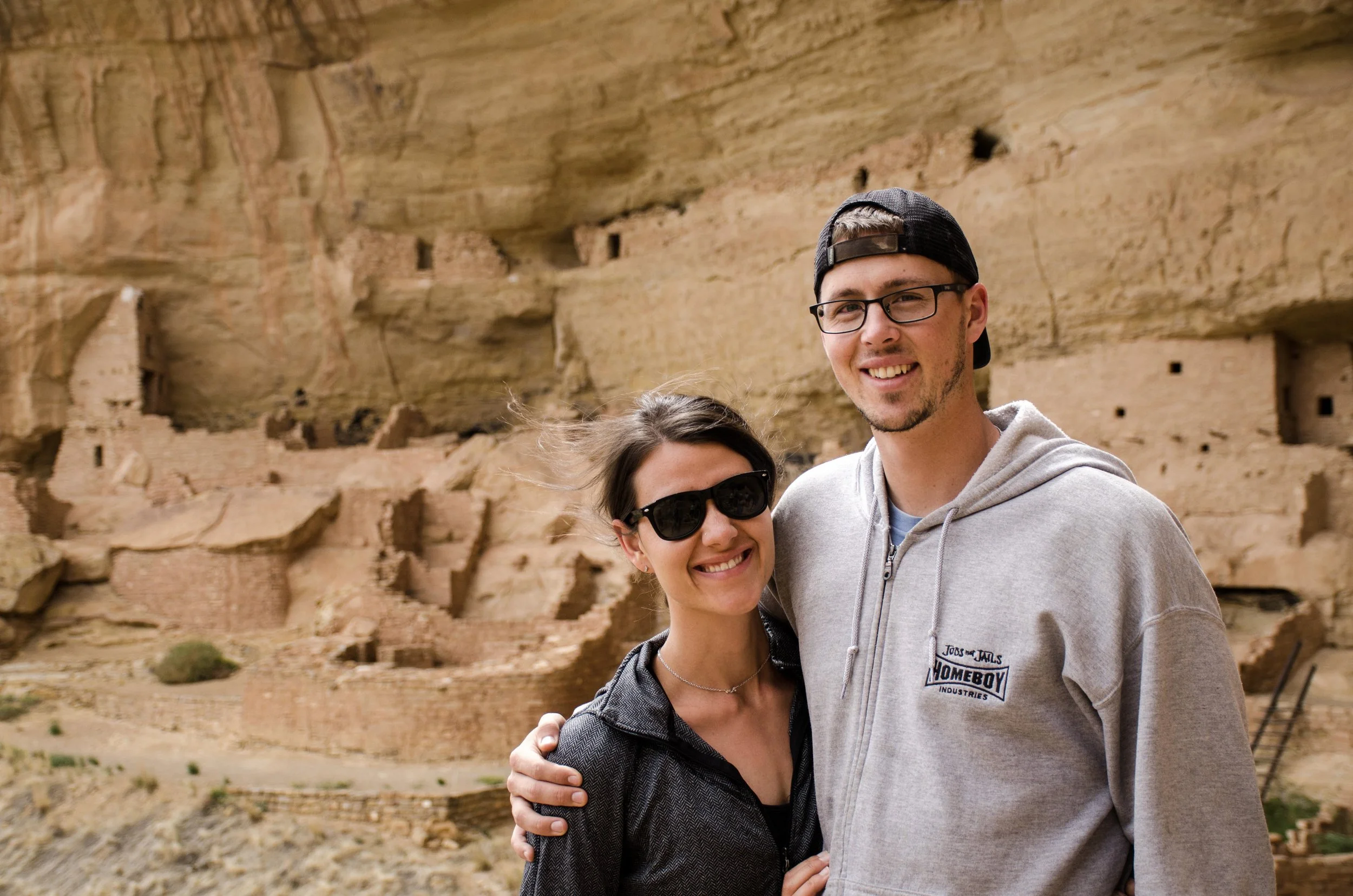
Cliff Palace, the largest known cliff dwelling in North America.
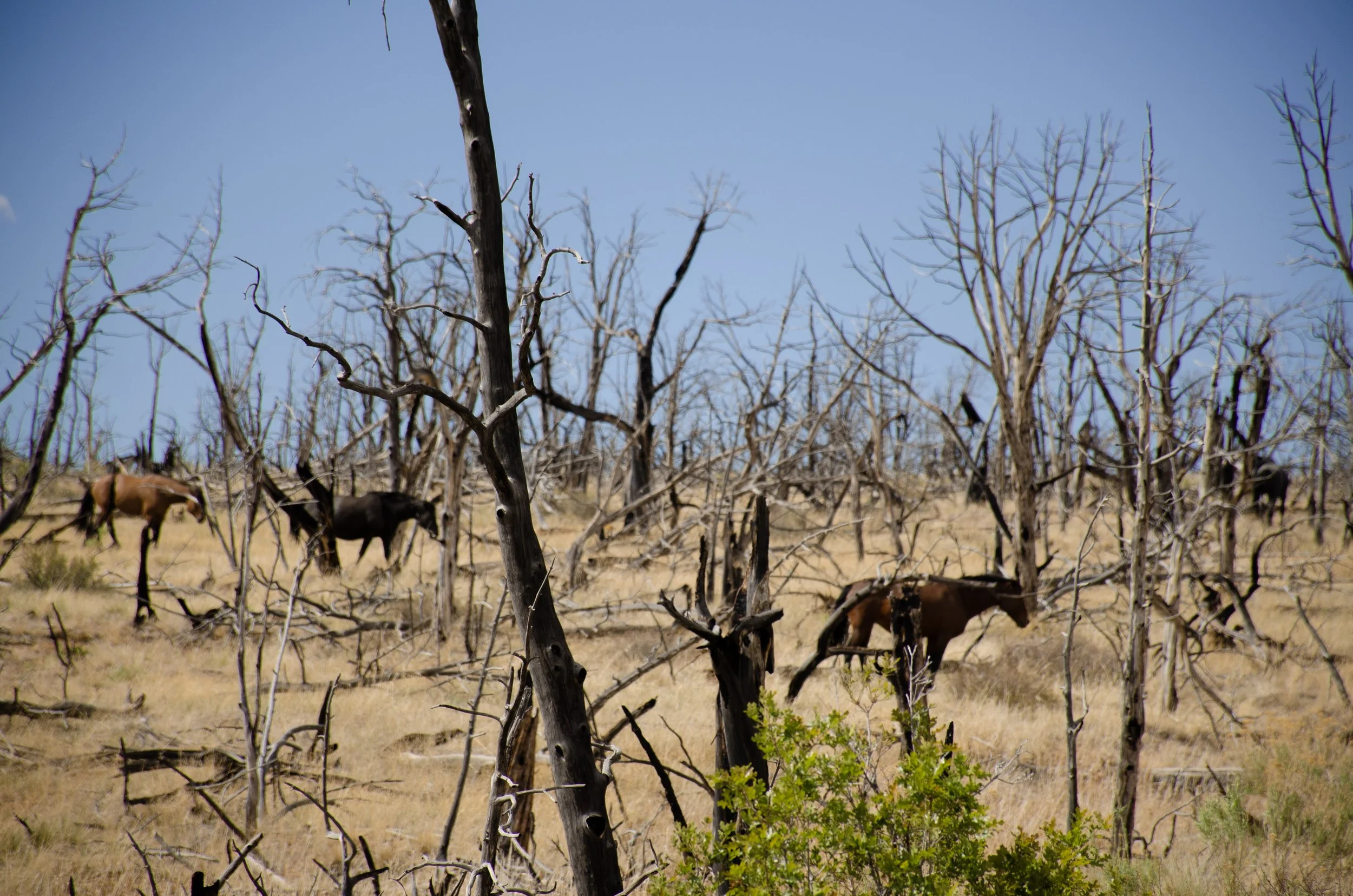
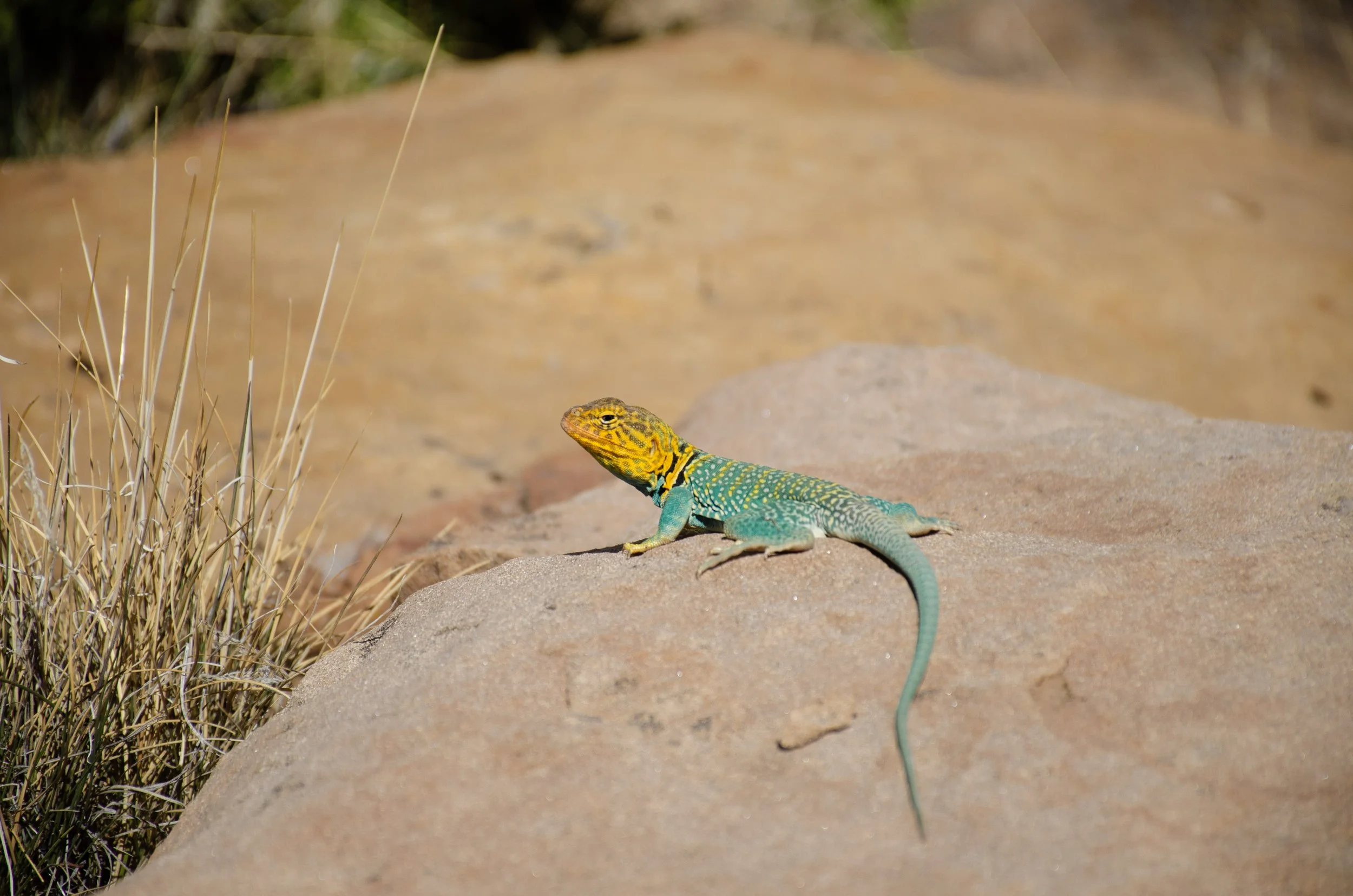
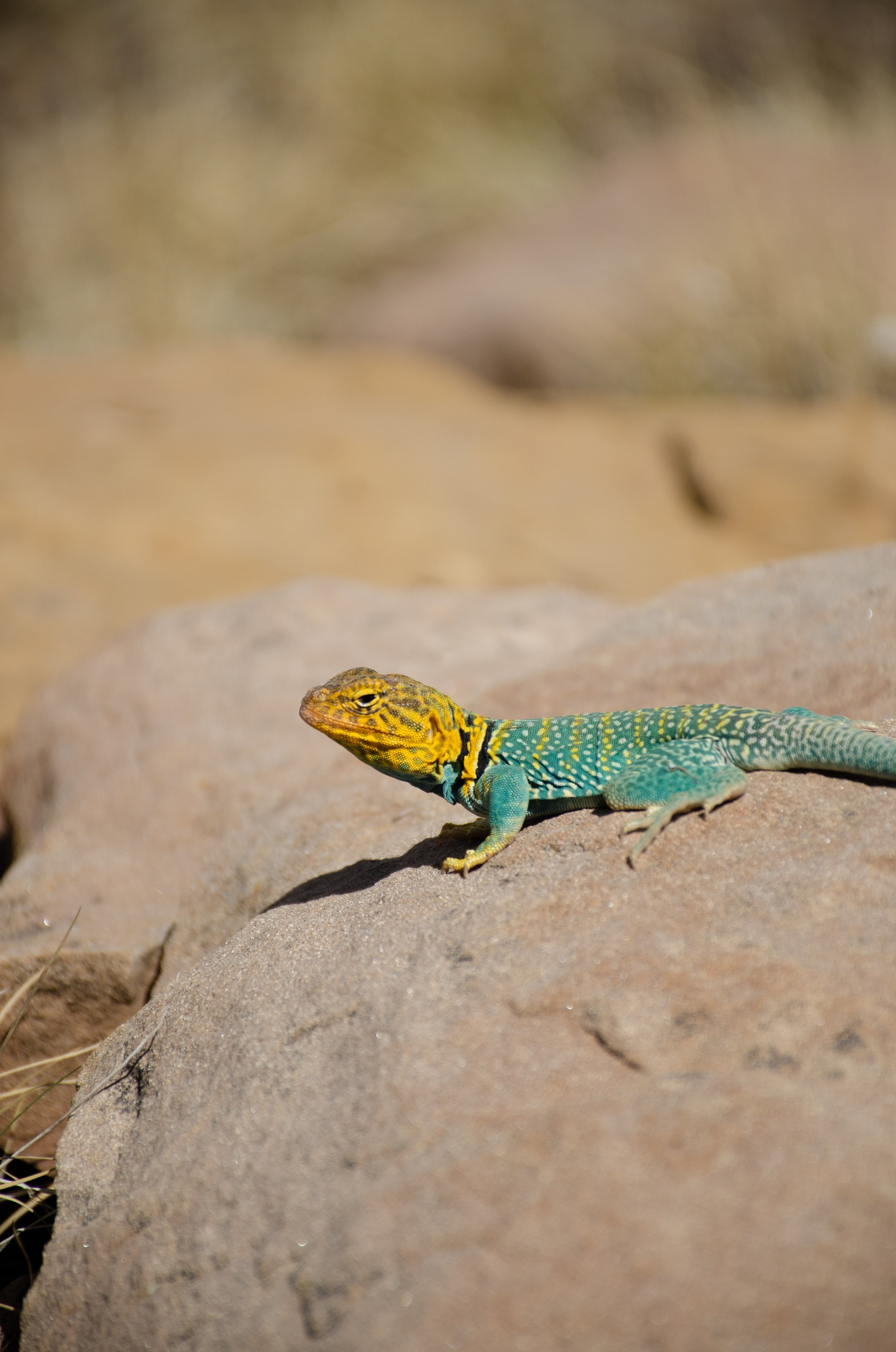
Male collared lizard and wild (feral) horses on Soda Canyon Overlook South Trail.
Glacier
Park 5 | July 2017
Part + Park 3 (of 3) from our summer road trip.
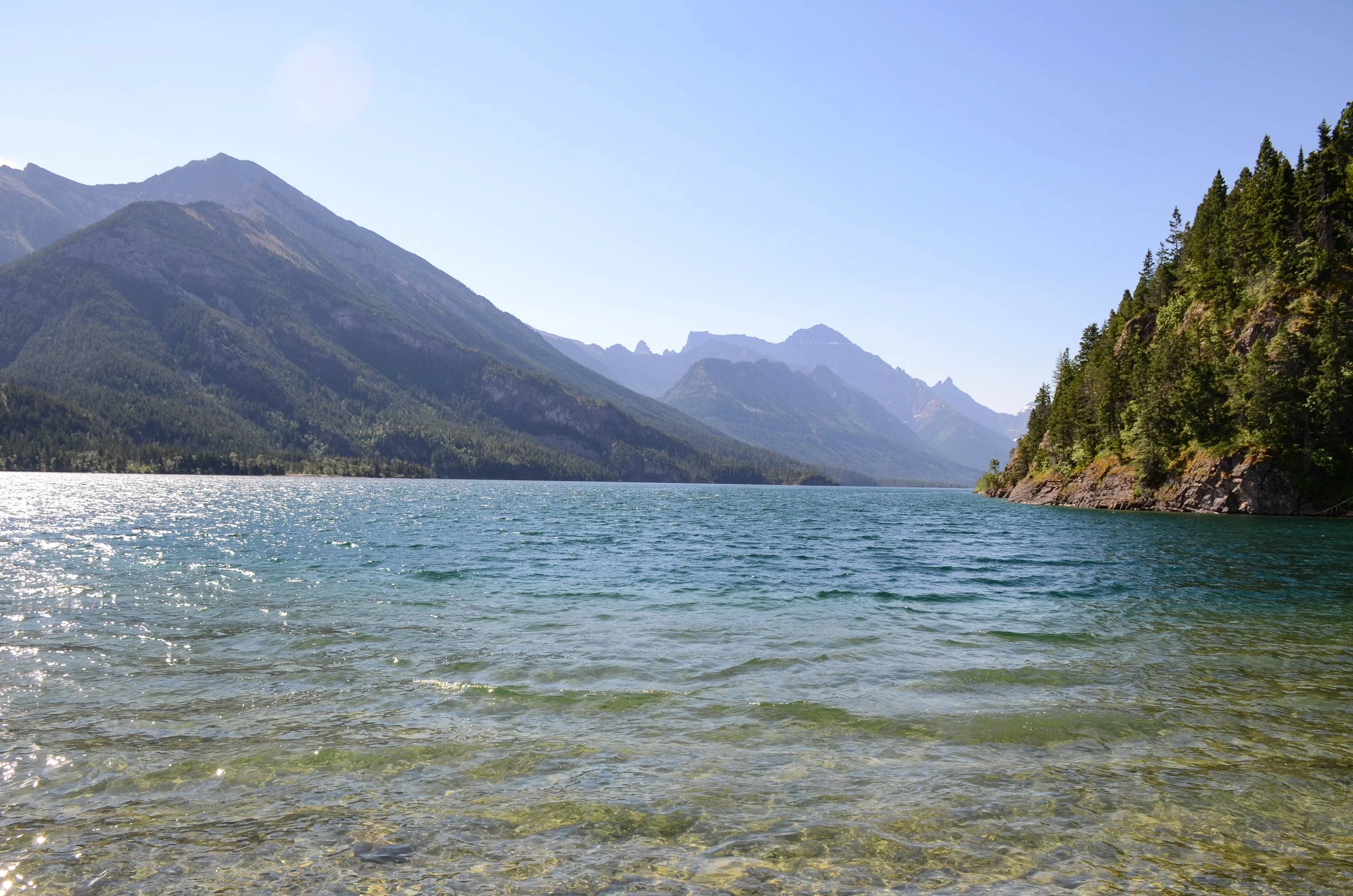
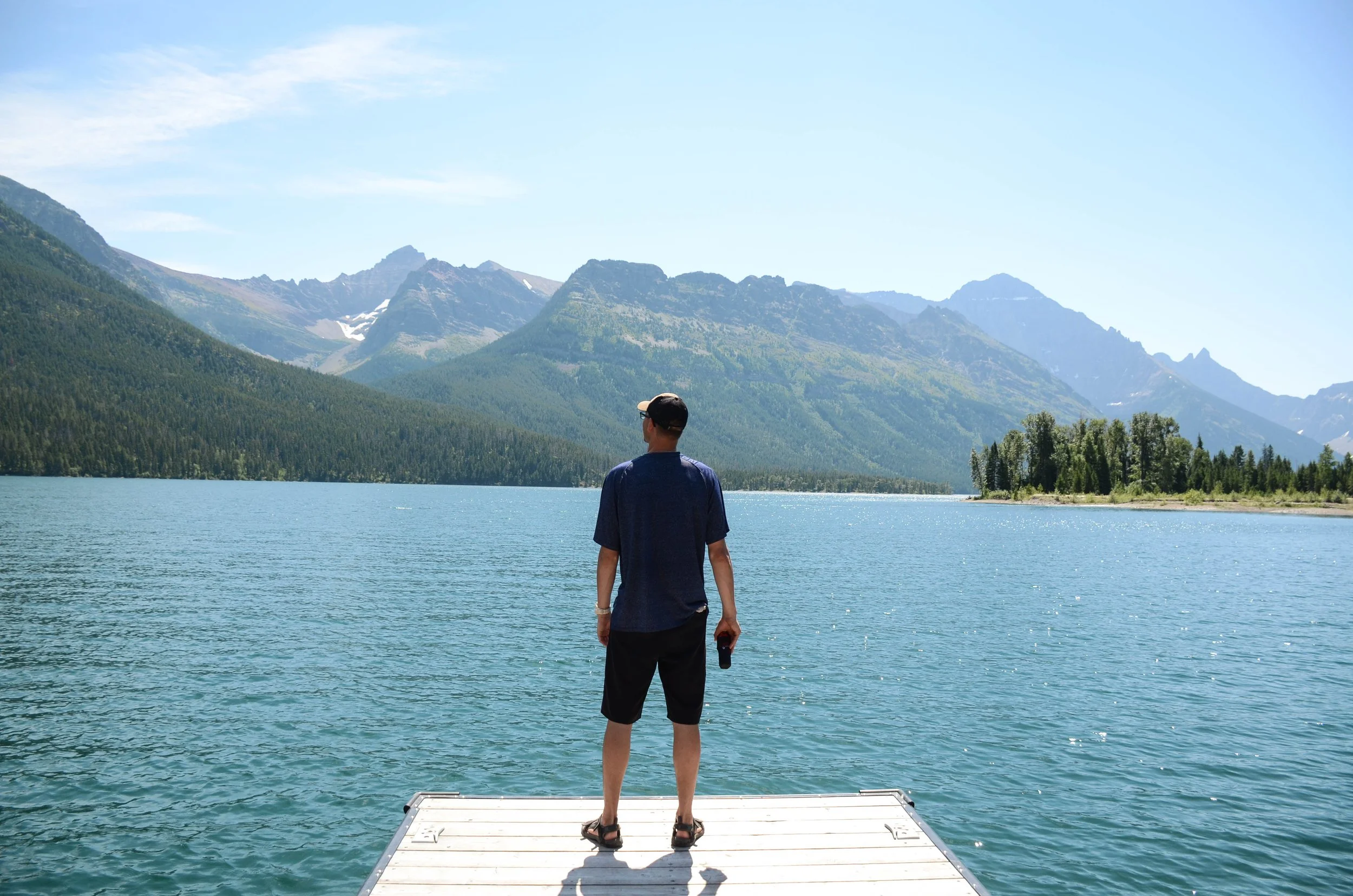
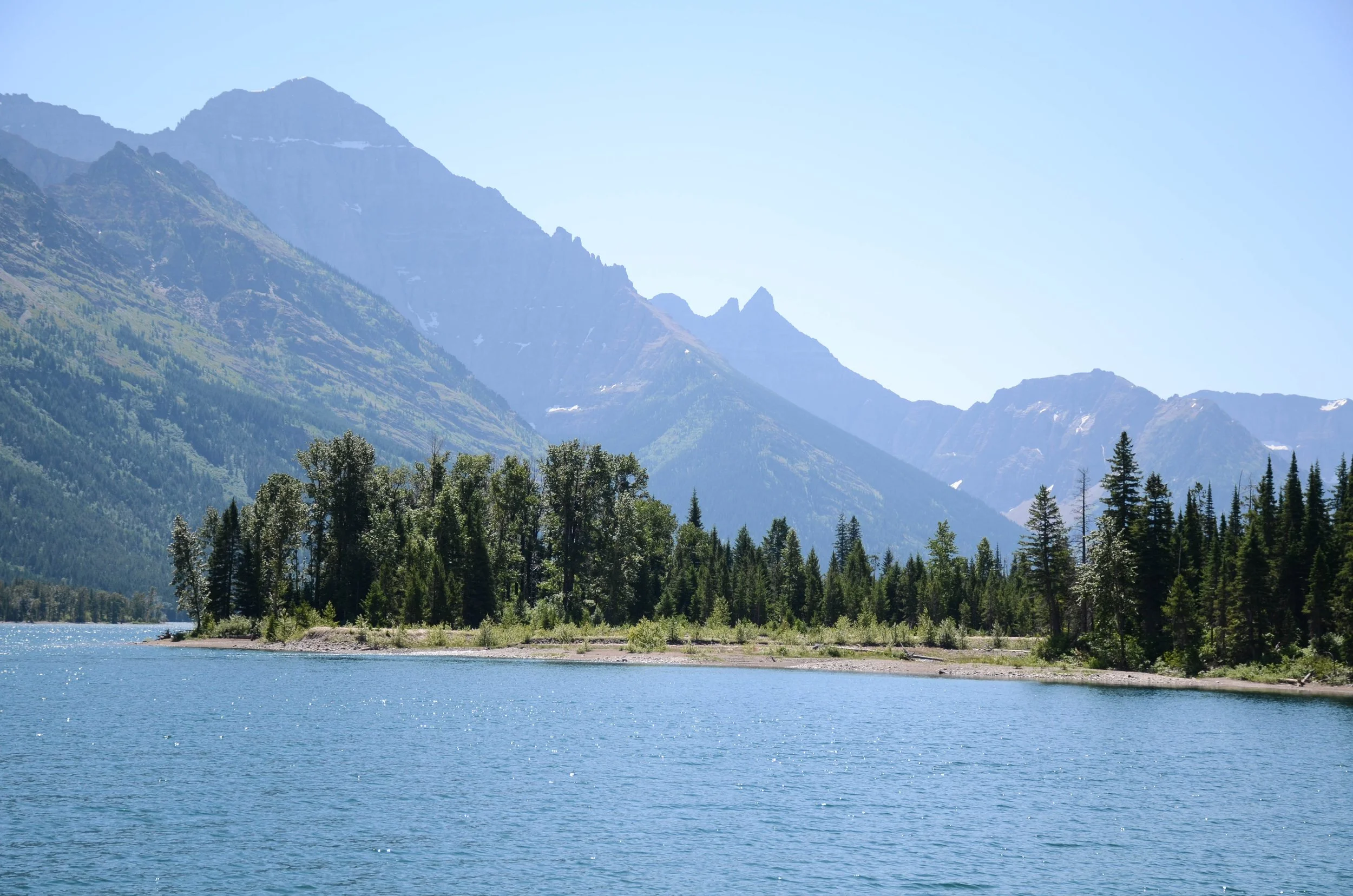
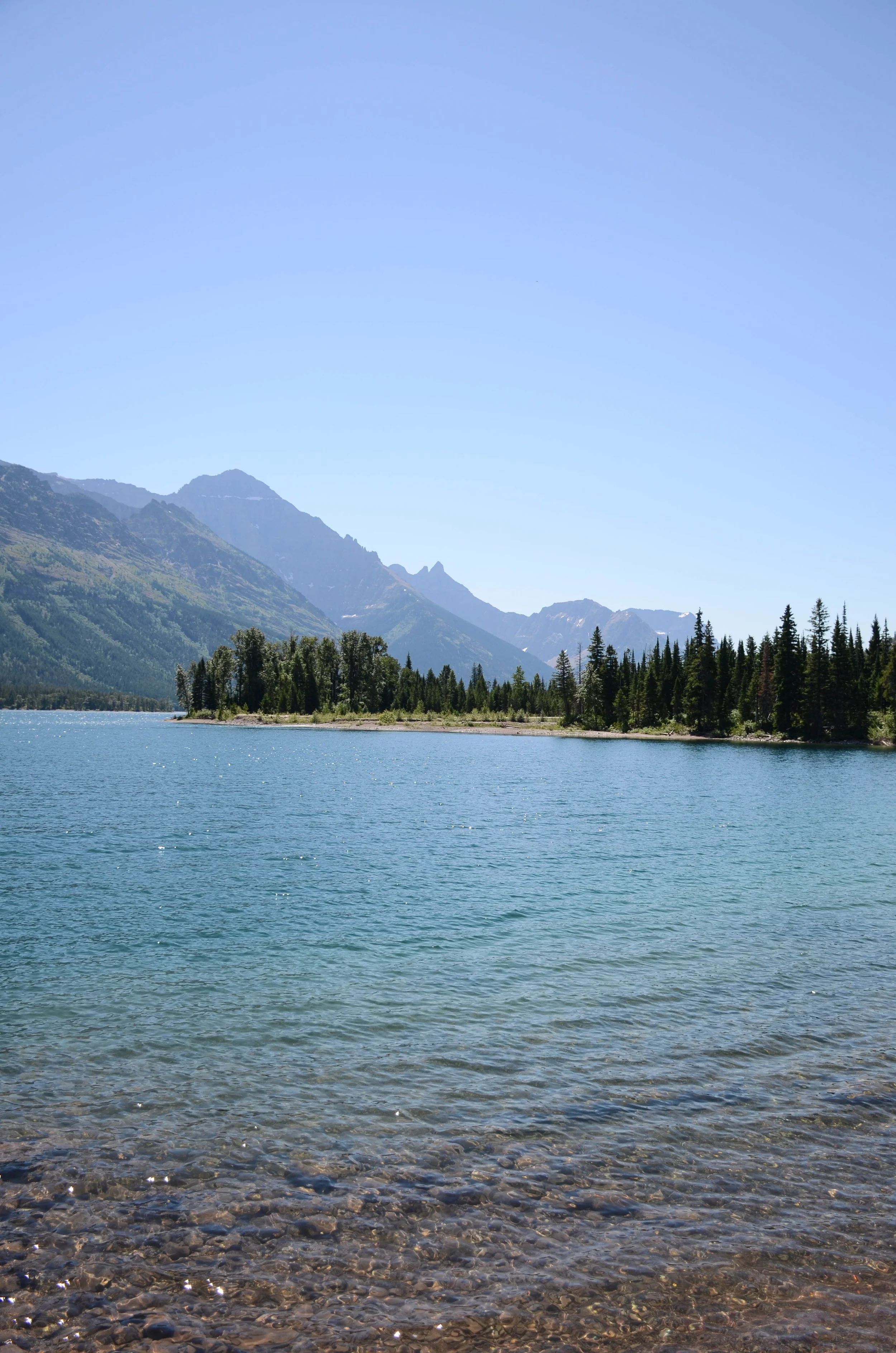
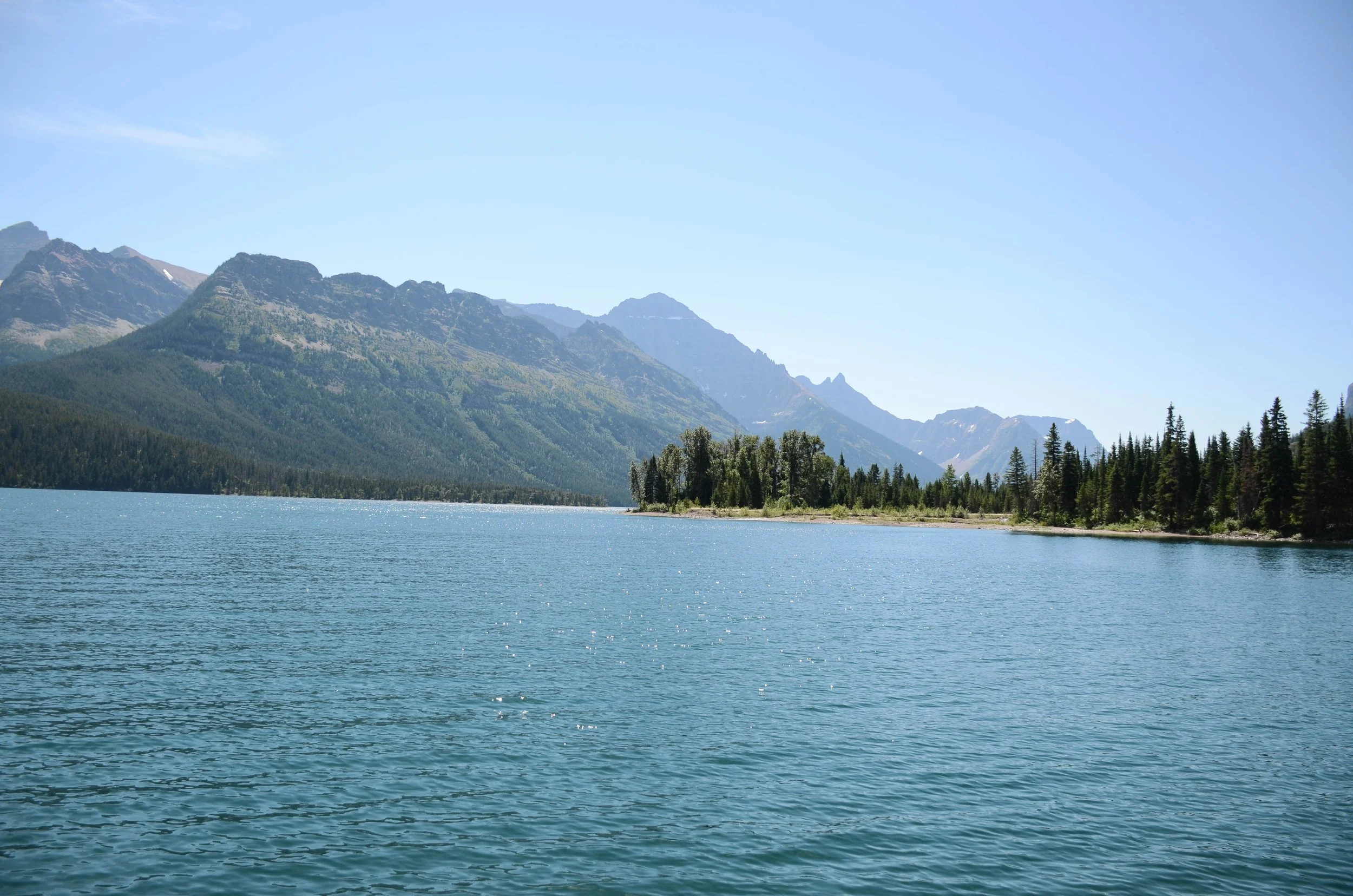
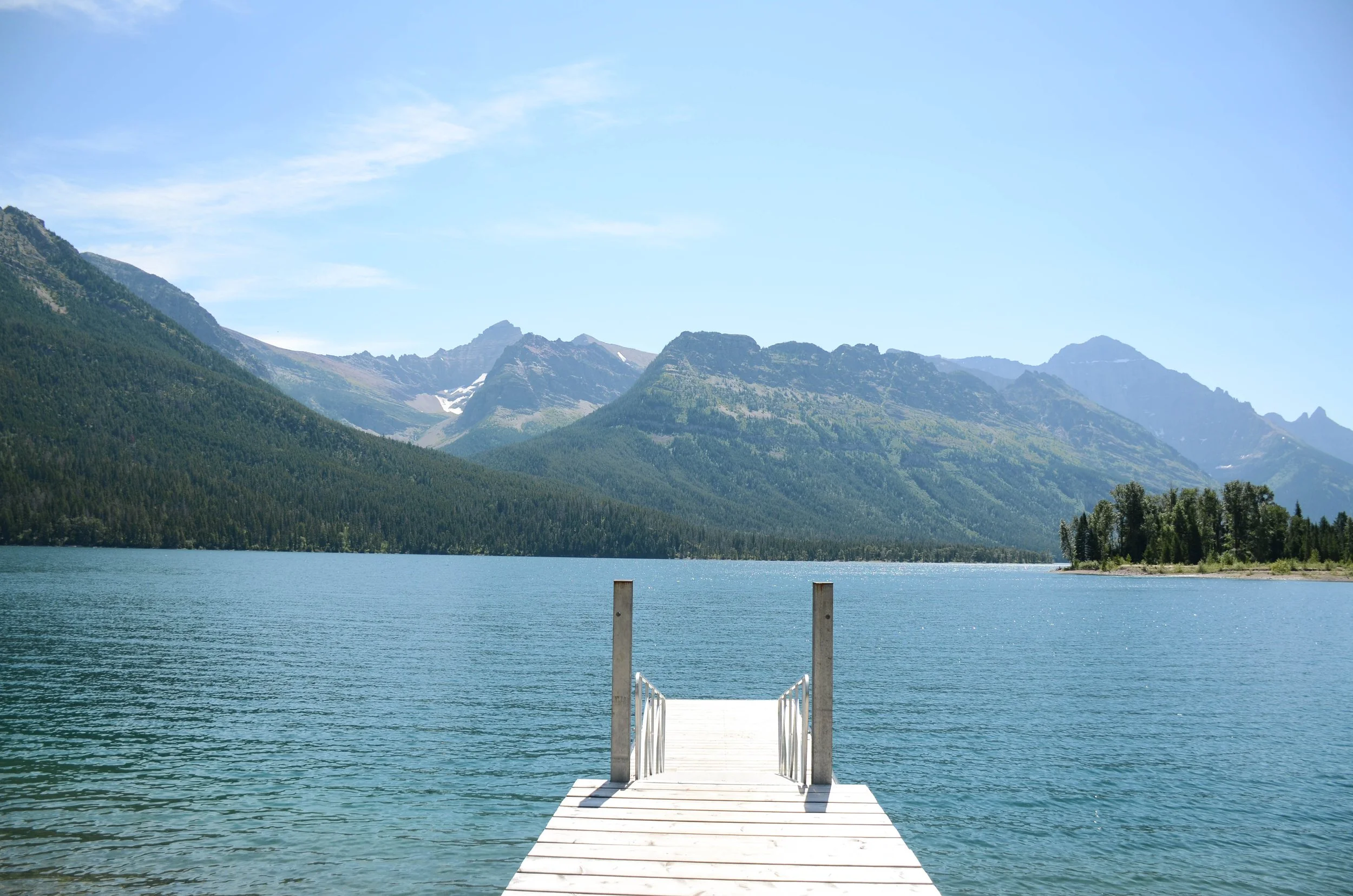
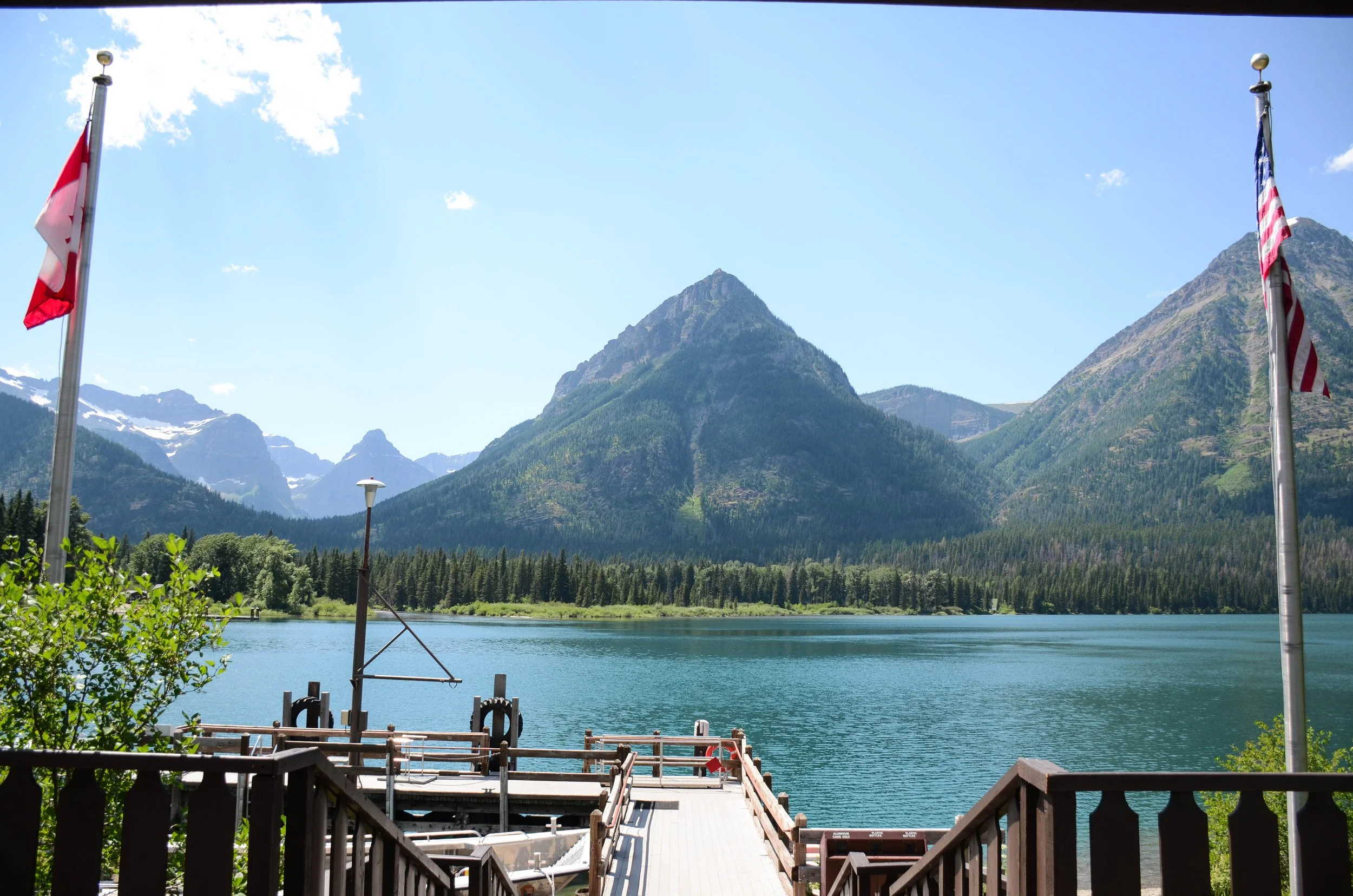
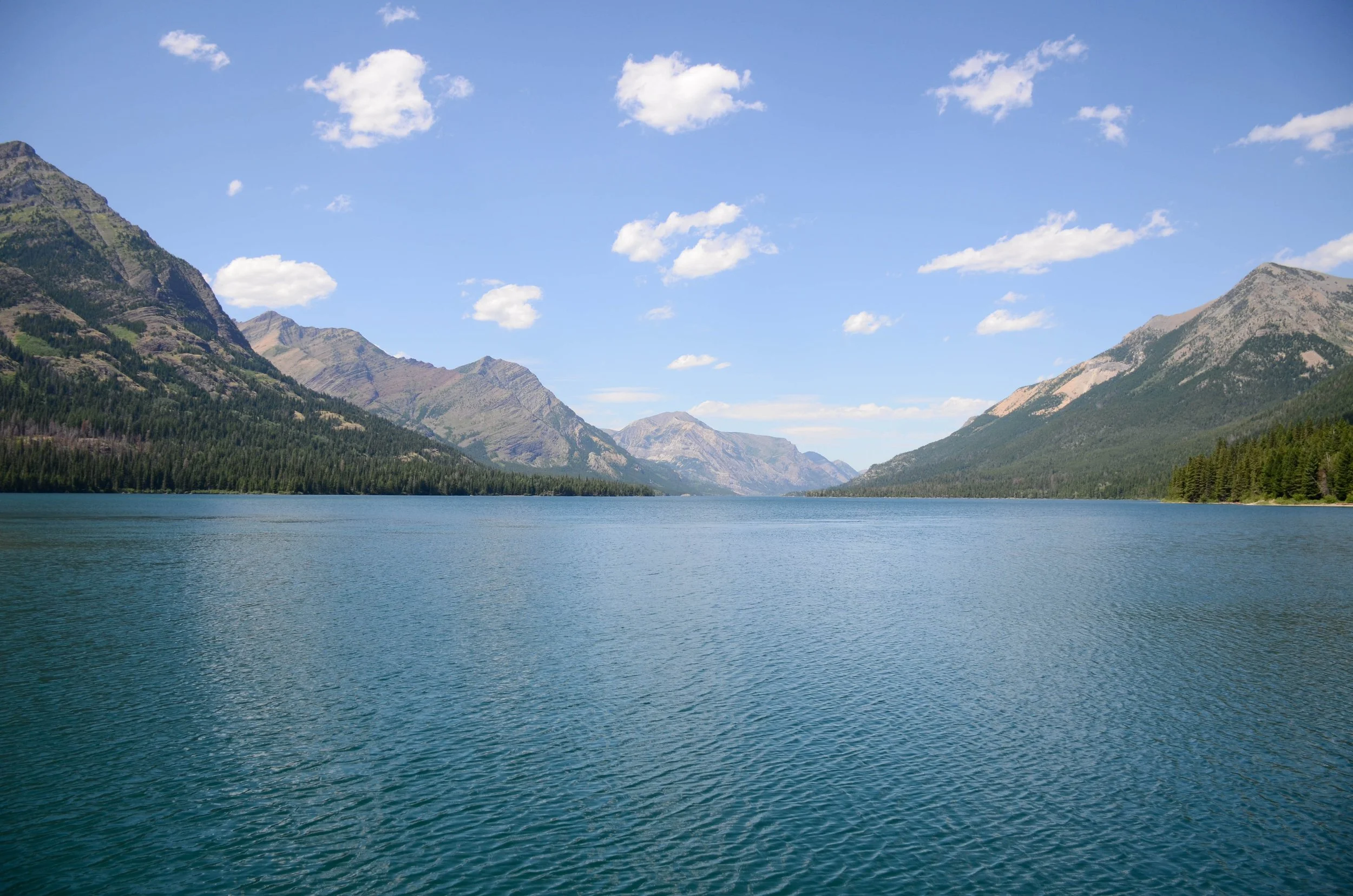
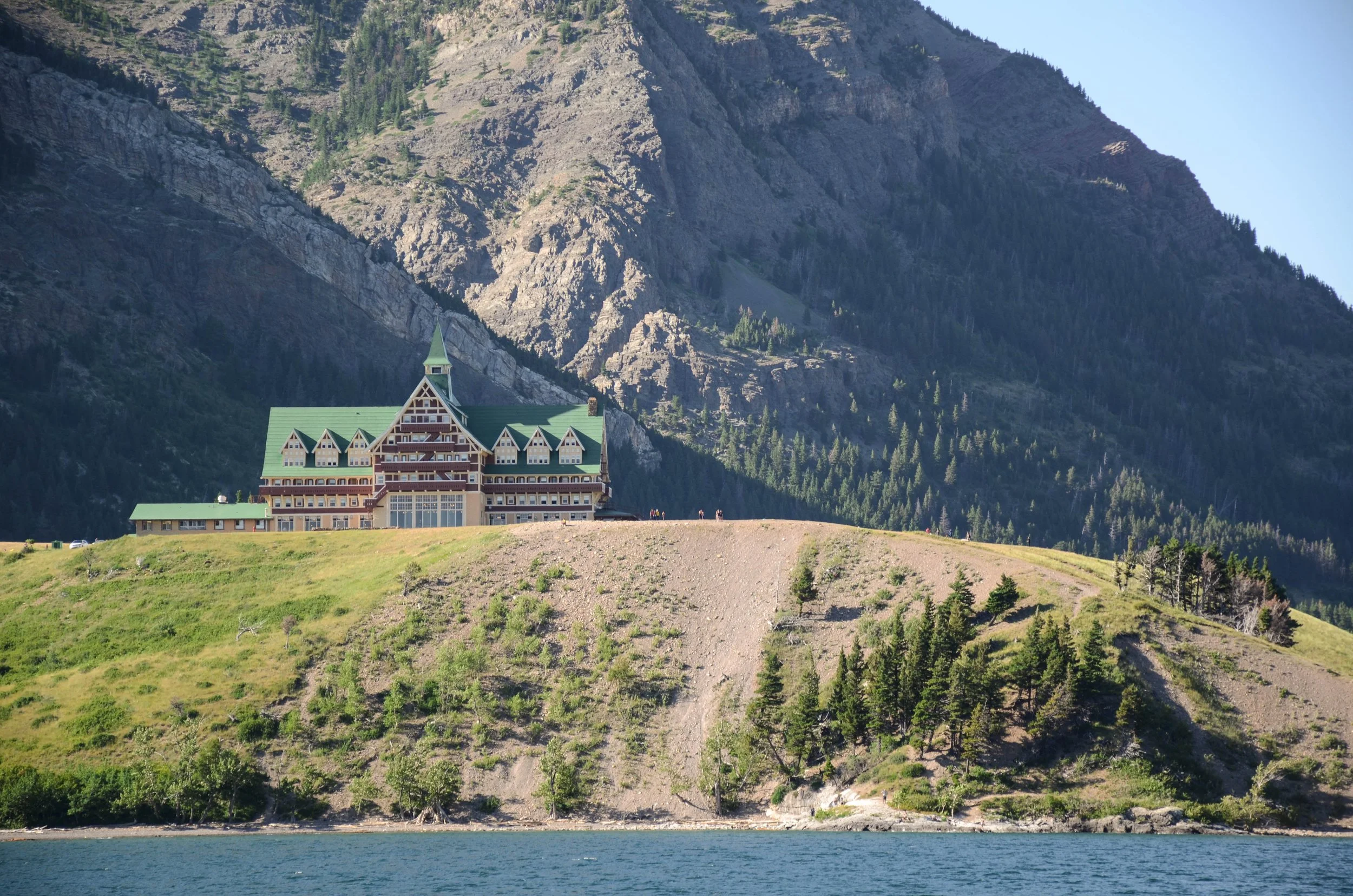
Glacier National Park + special mention of Waterton National Park in Alberta, Canada. J & I kicked off the final leg of this trip by crossing the border to spend two nights in Alberta. I was wildly surprised on the first night to find out my best friend had secretly collaborated with J to meet up with us, a surprise which entailed her driving 12 hours from British Columbia to meet up with us.
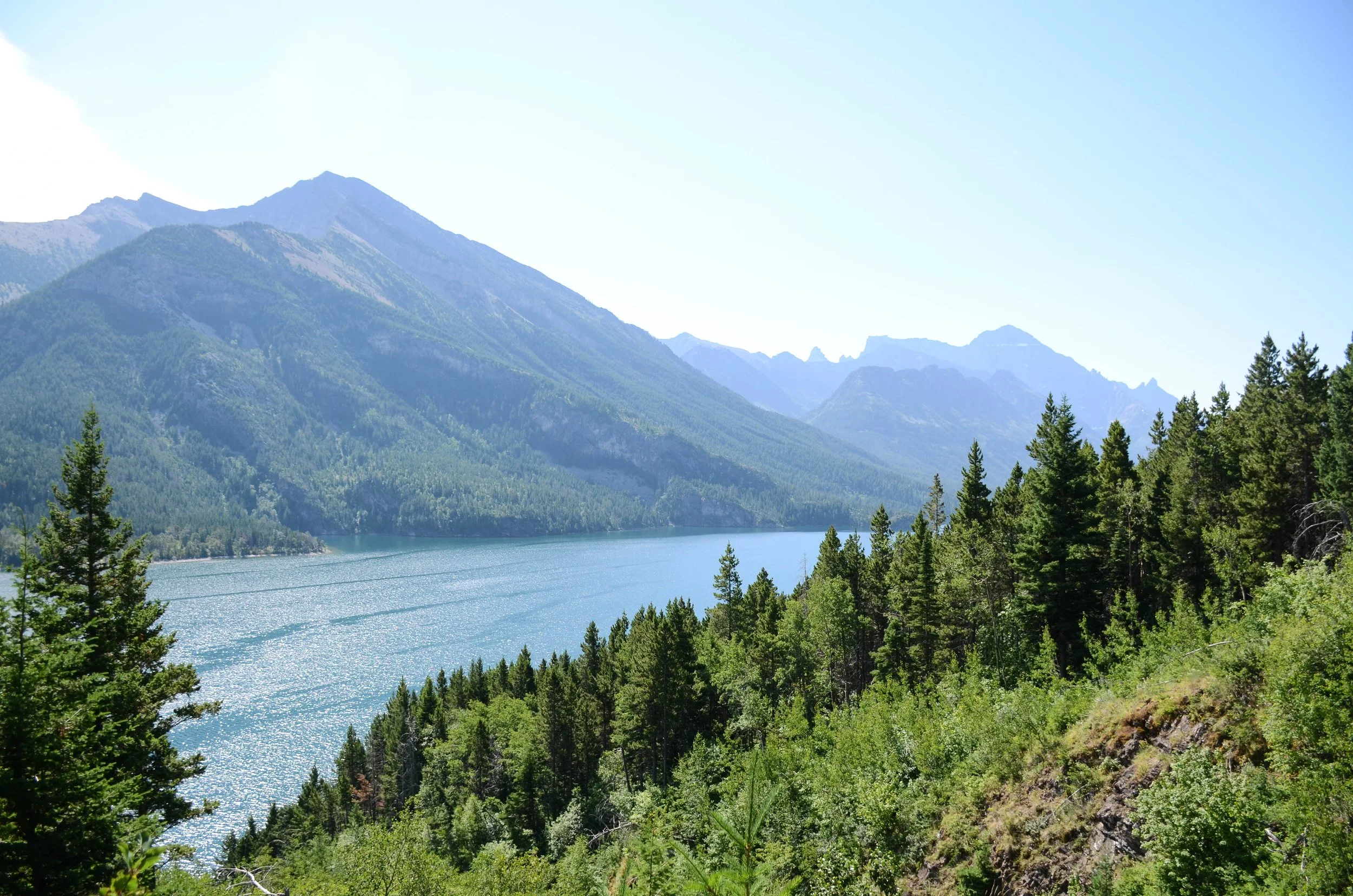
I still look back on this as one of the most memorable and treasured travel memories I have. We camped. We ate pizza and soup and played card games and stayed up late talking and found a cute local coffee shop. We completed a gorgeous nine-mile hike through the International Peace Park, a trail that begins in Waterton NP, crosses the borders between the two countries (and parks), and ends at Goat Haunt in Glacier National Park. It was on this fateful hike that we also encountered a curious black bear who maybe inspired us to eventually break the cardinal bear rule (don’t run) and wade through the lake for part of the hike to give him a wide berth. By the end of the day, we’d named him Percy the Peace Park Bear and planned an entire children’s book series based on his life, as we imagined it.
Once we made it to Goat Haunt, we boarded a boat that took us back to Waterton, just in time to grab drinks at the historic Prince of Wales hotel at sunset. All in all, a perfect day.
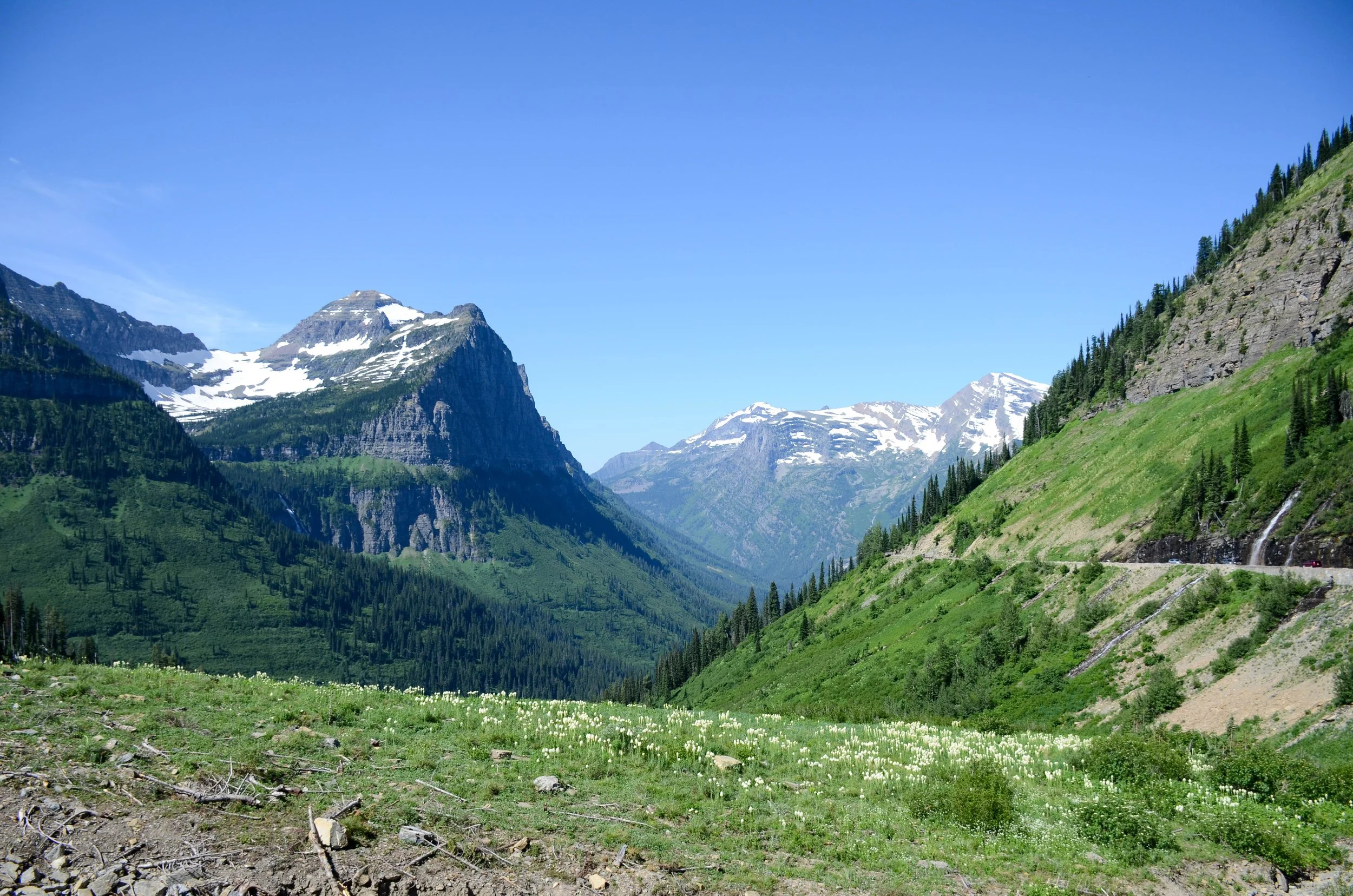
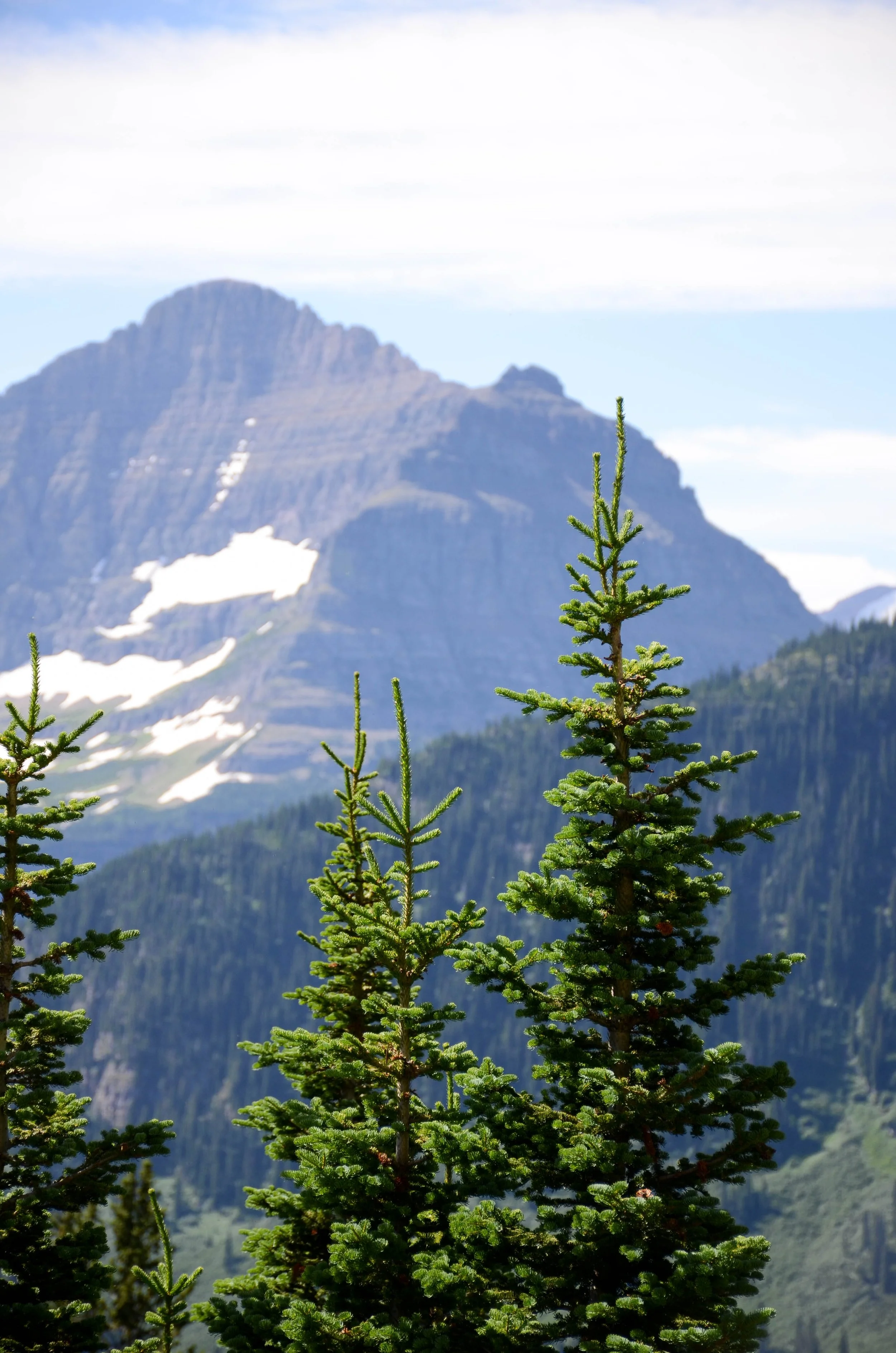
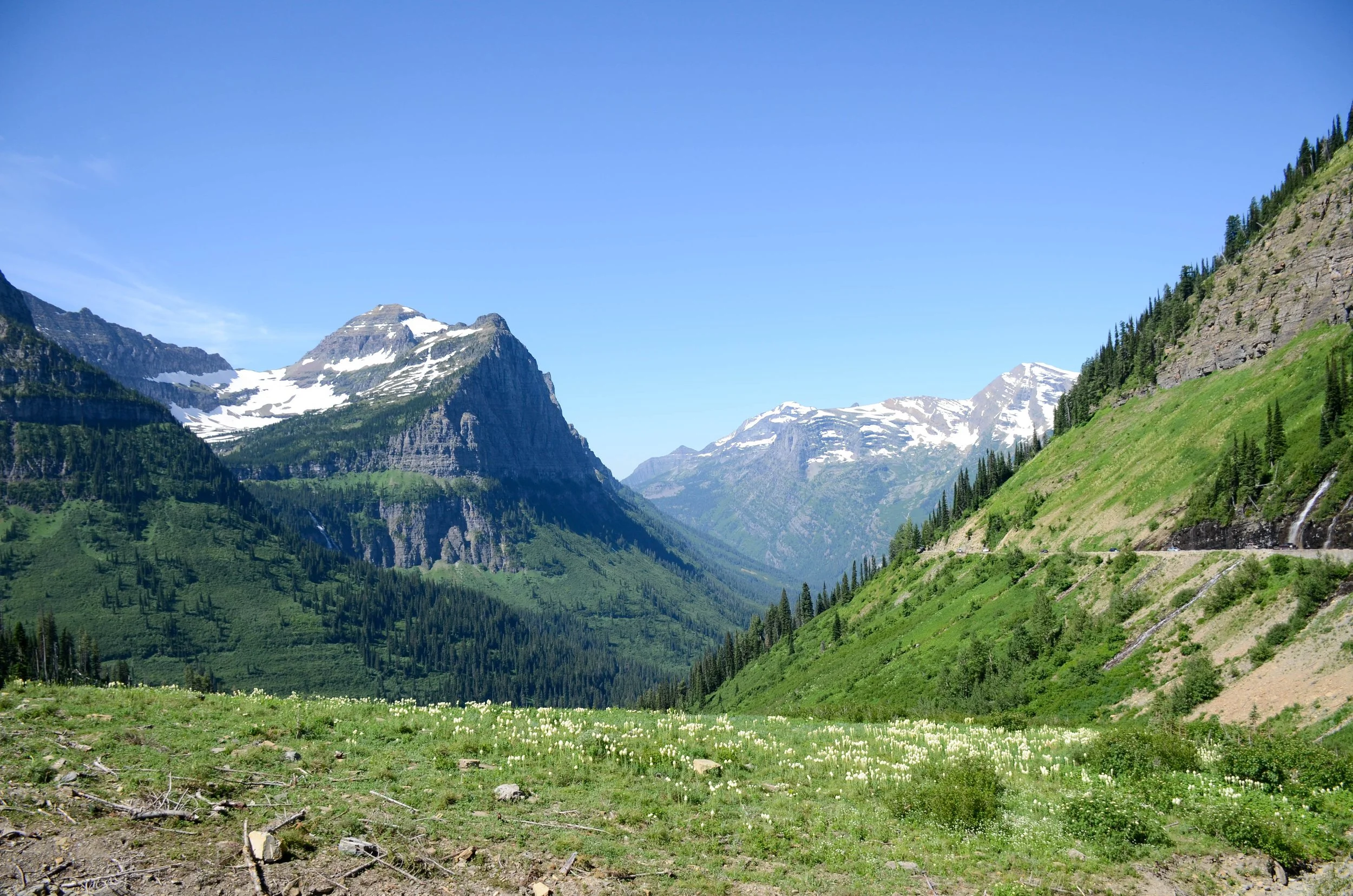
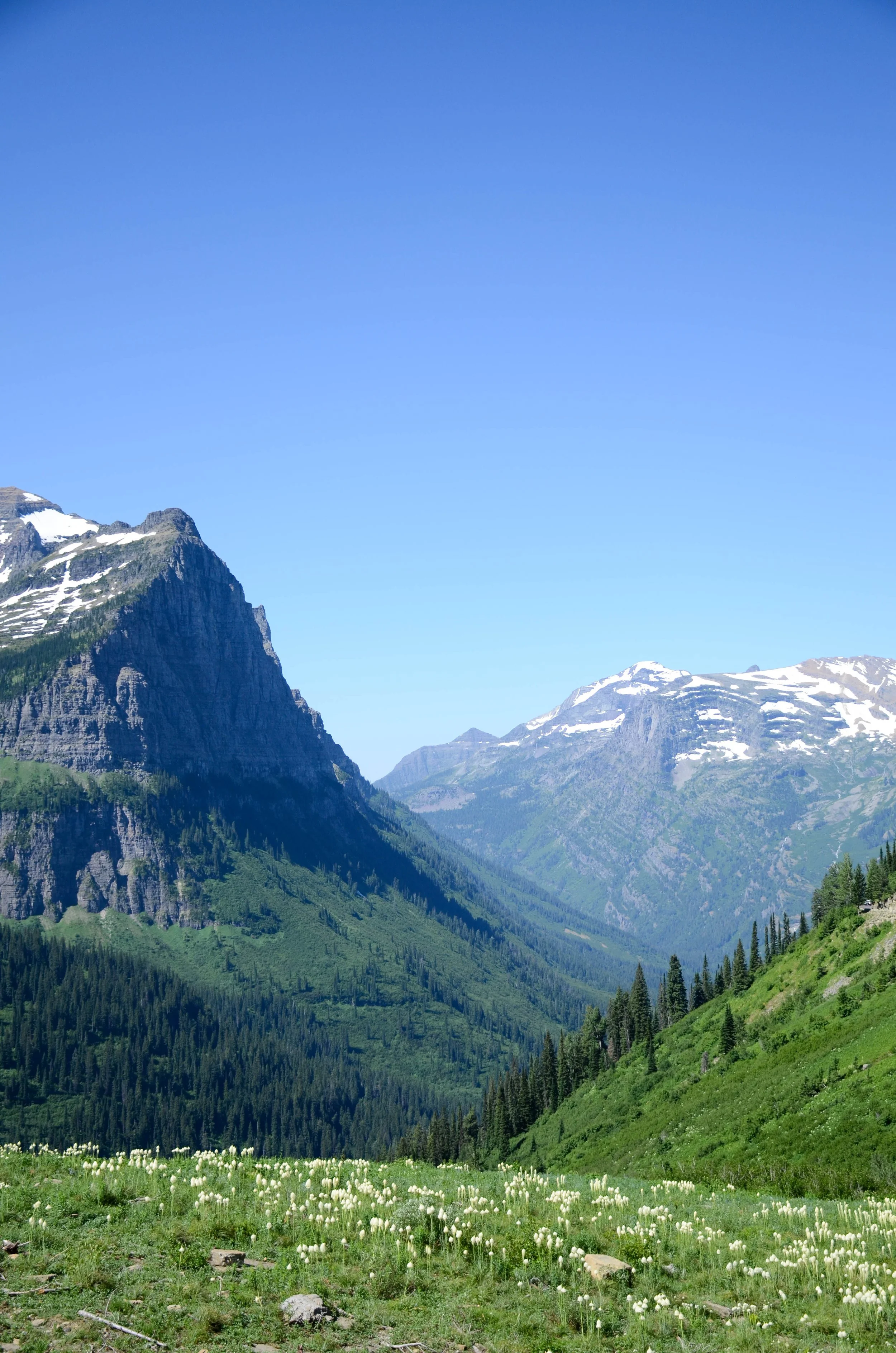
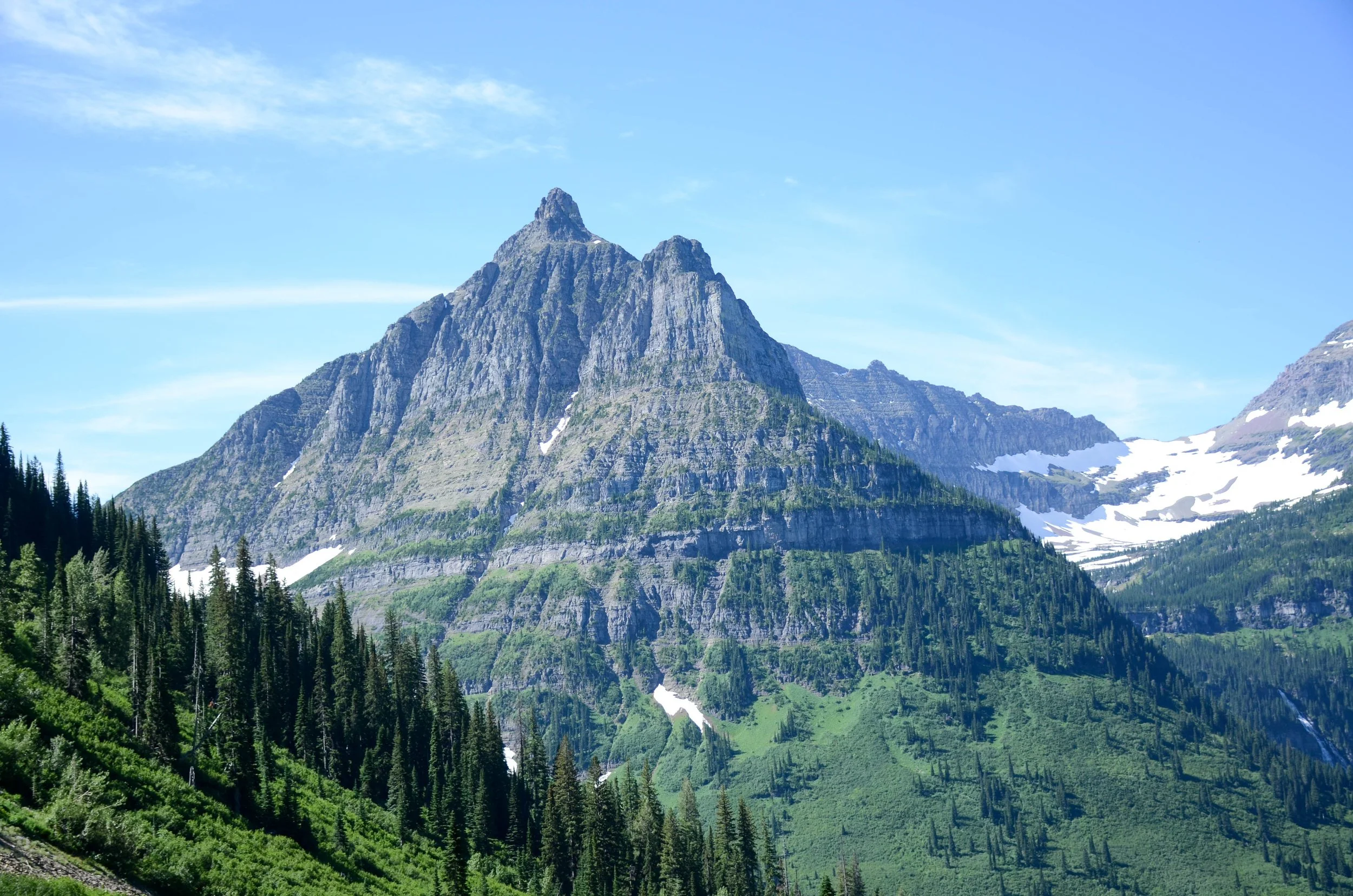
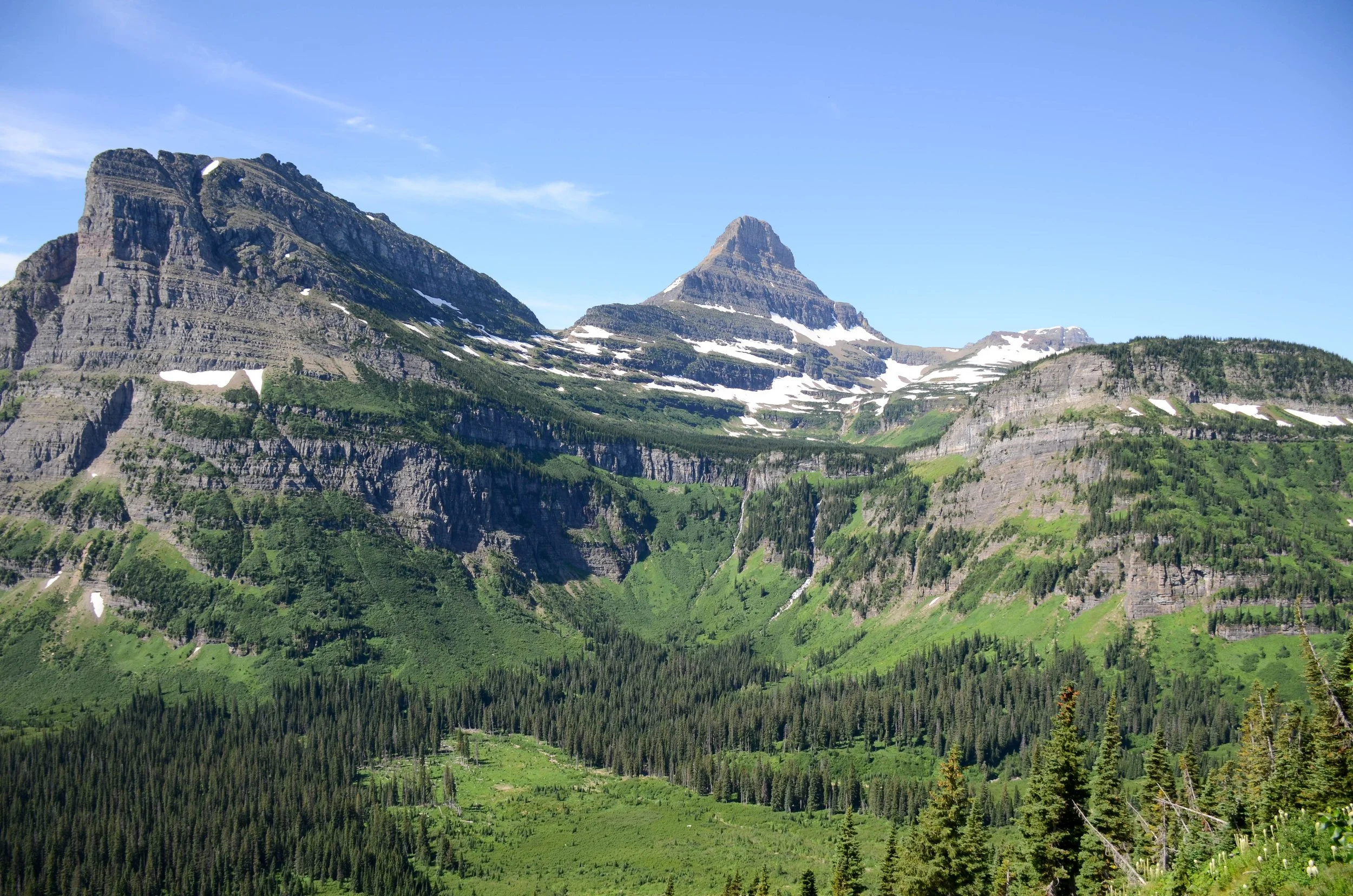
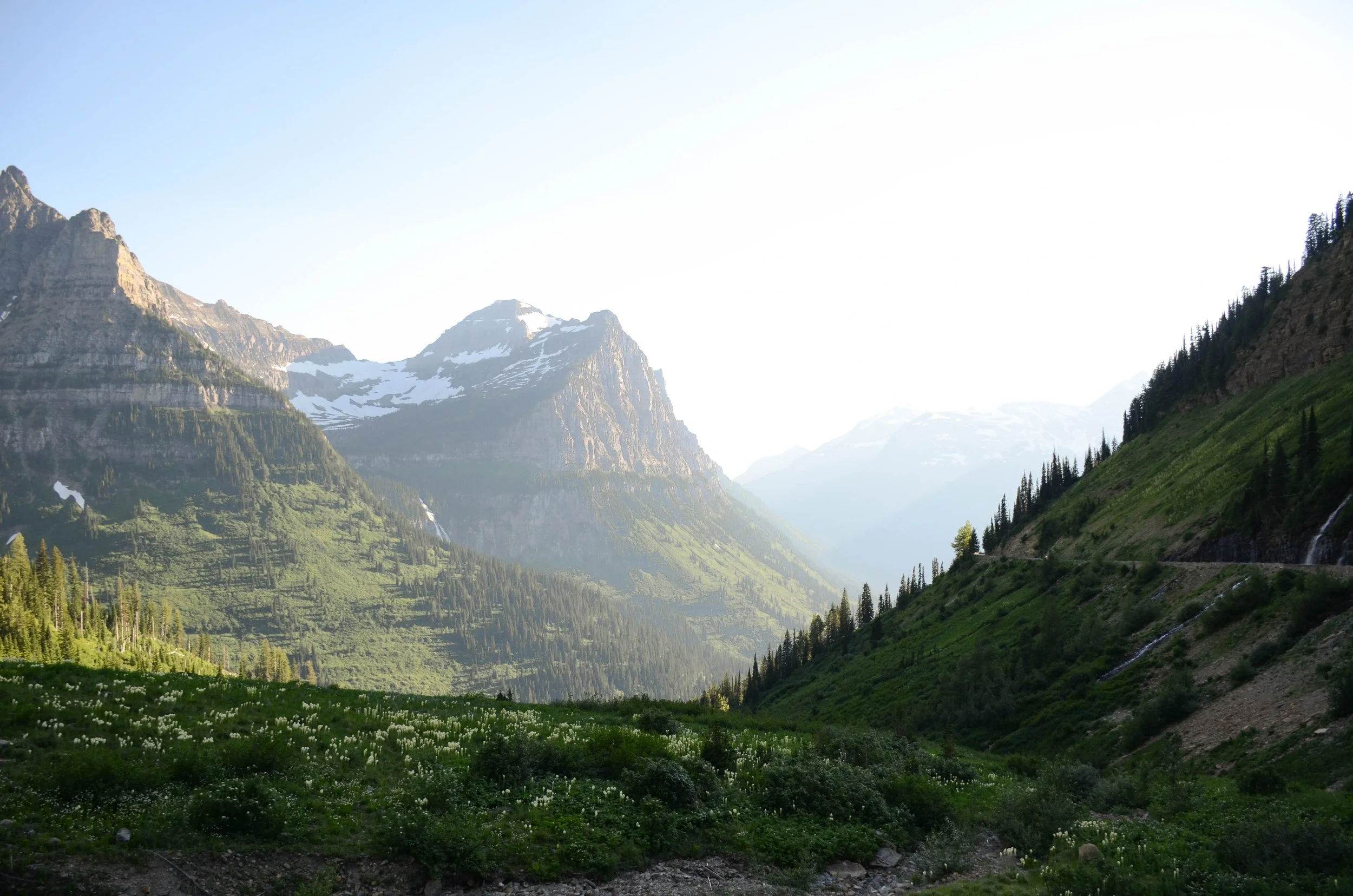
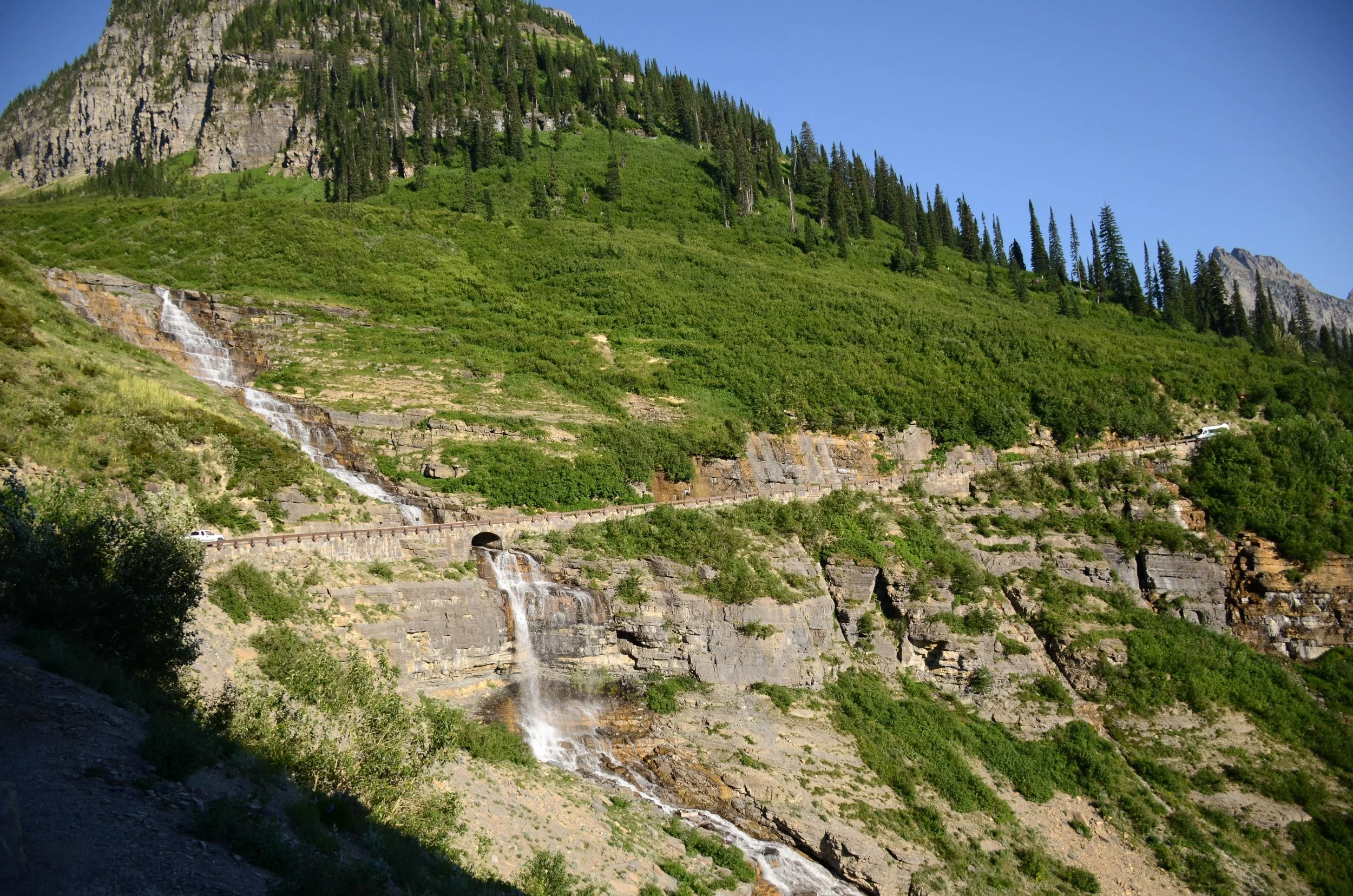
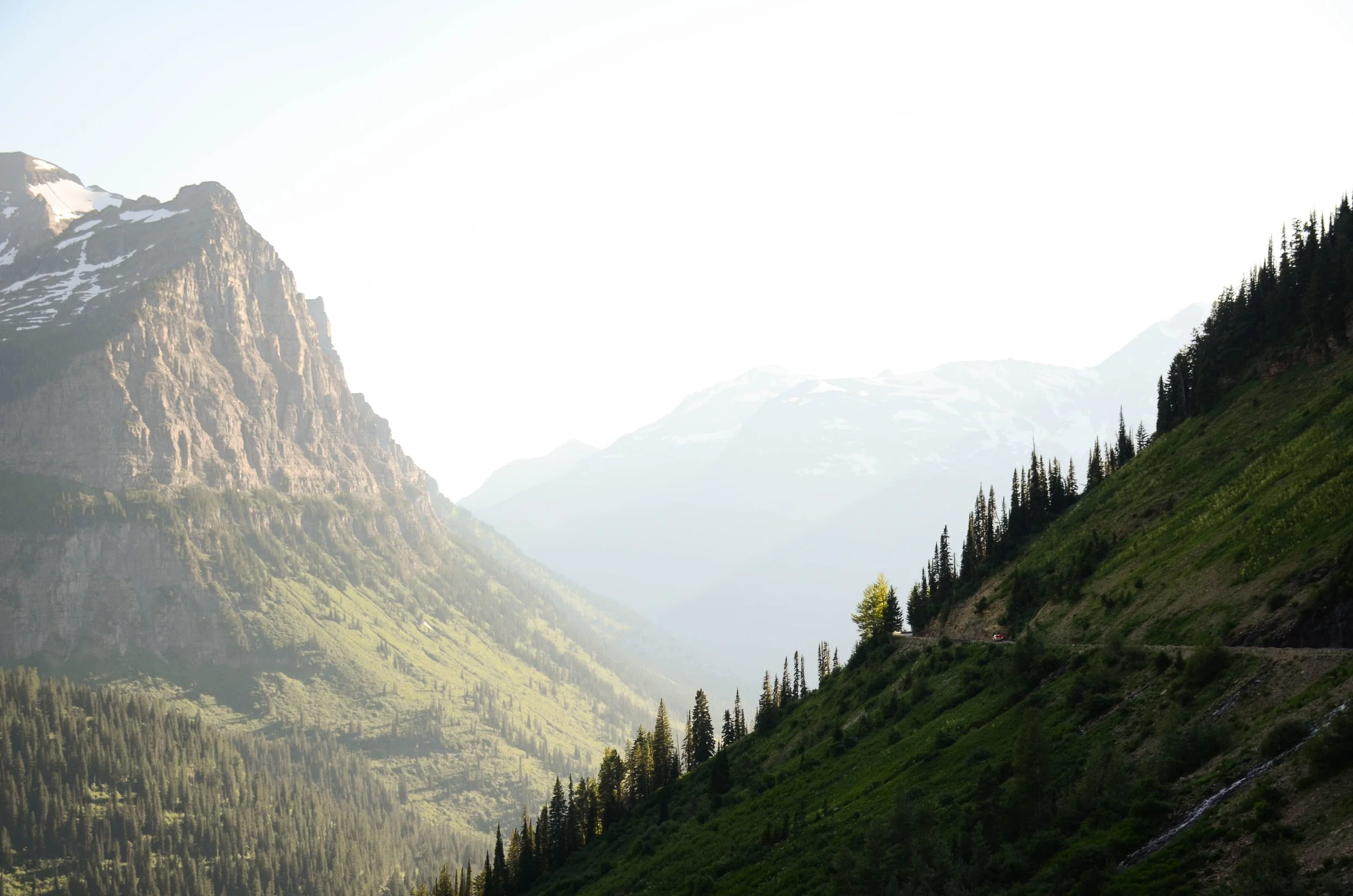
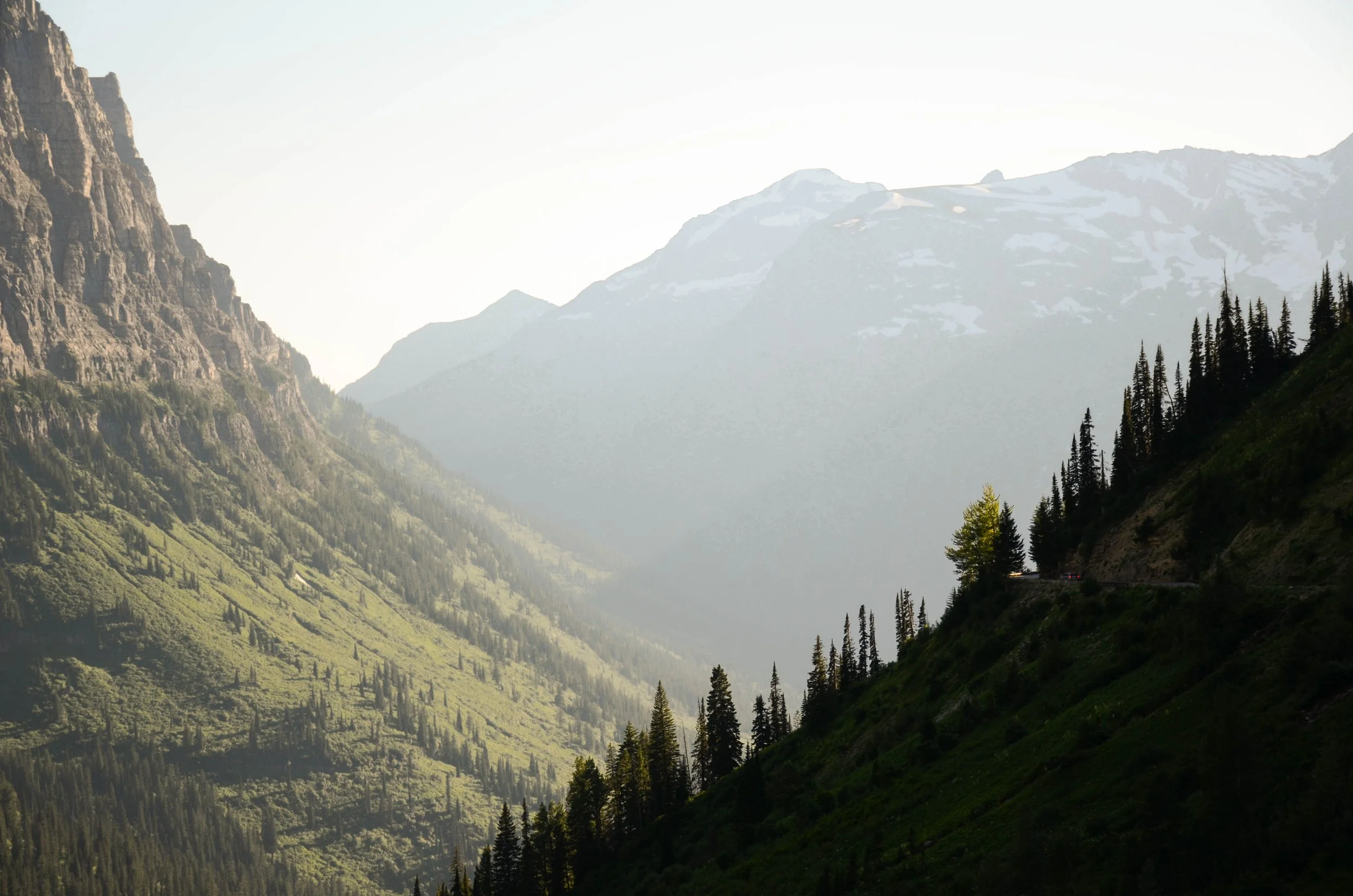
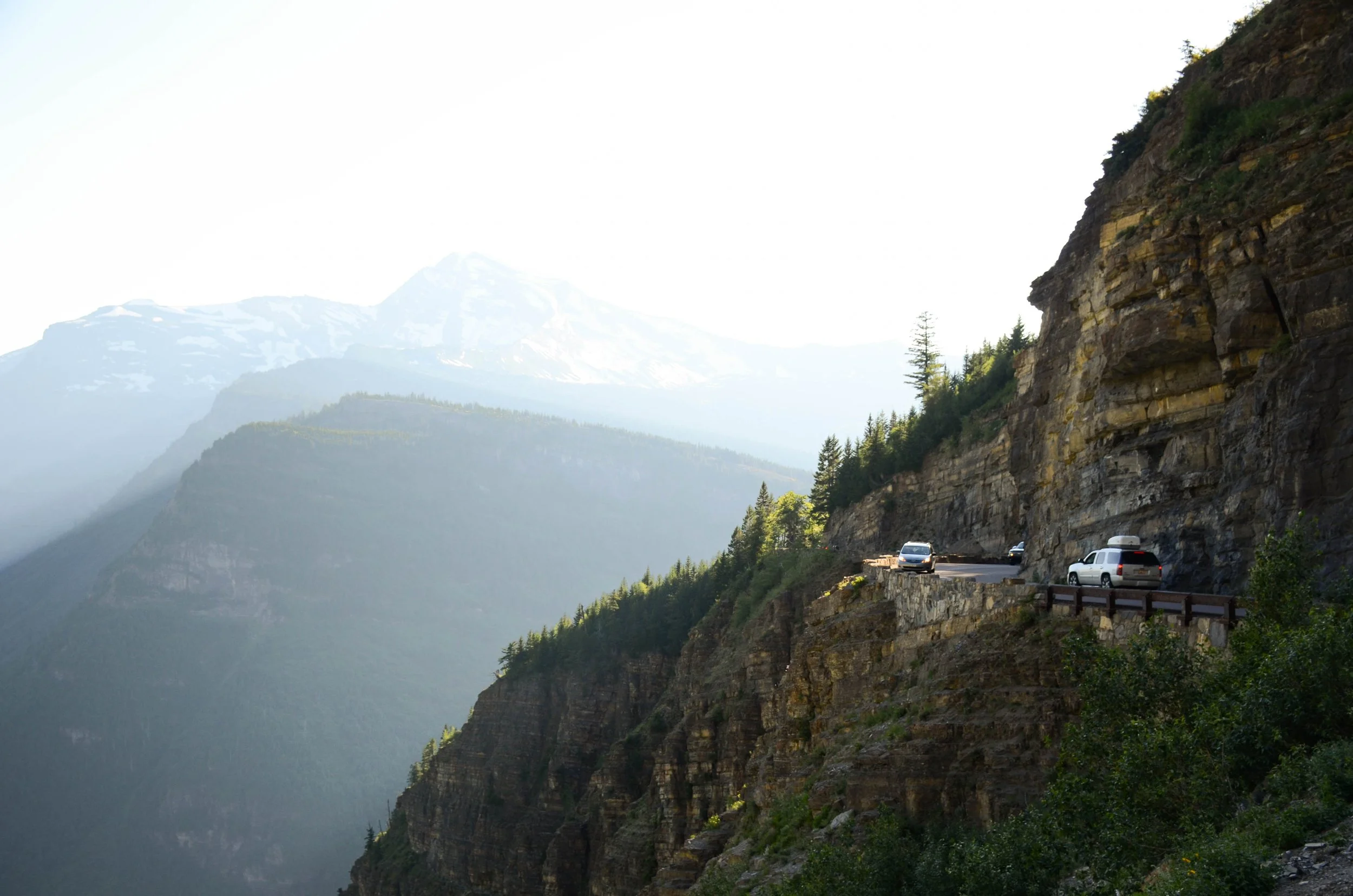
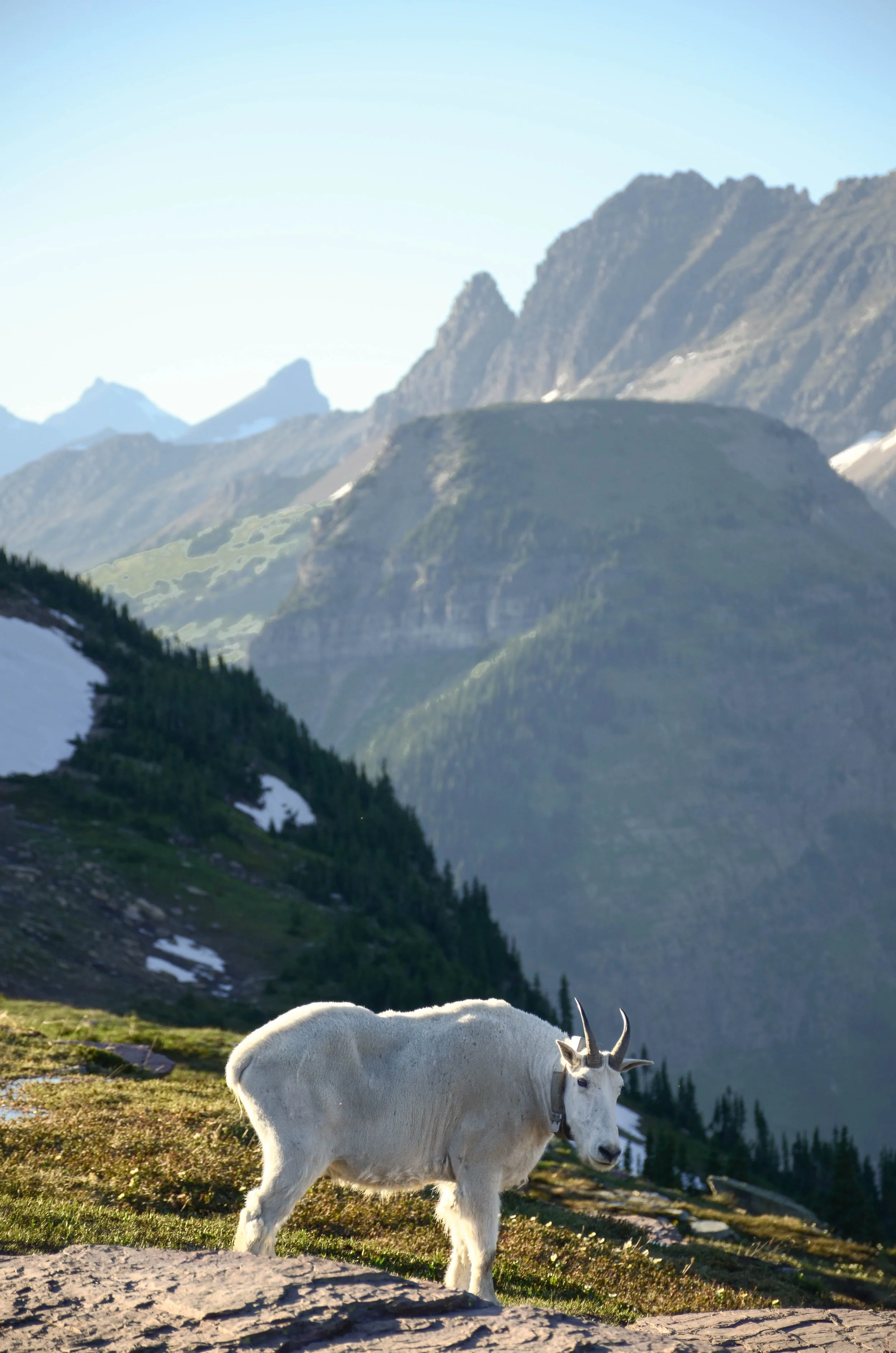
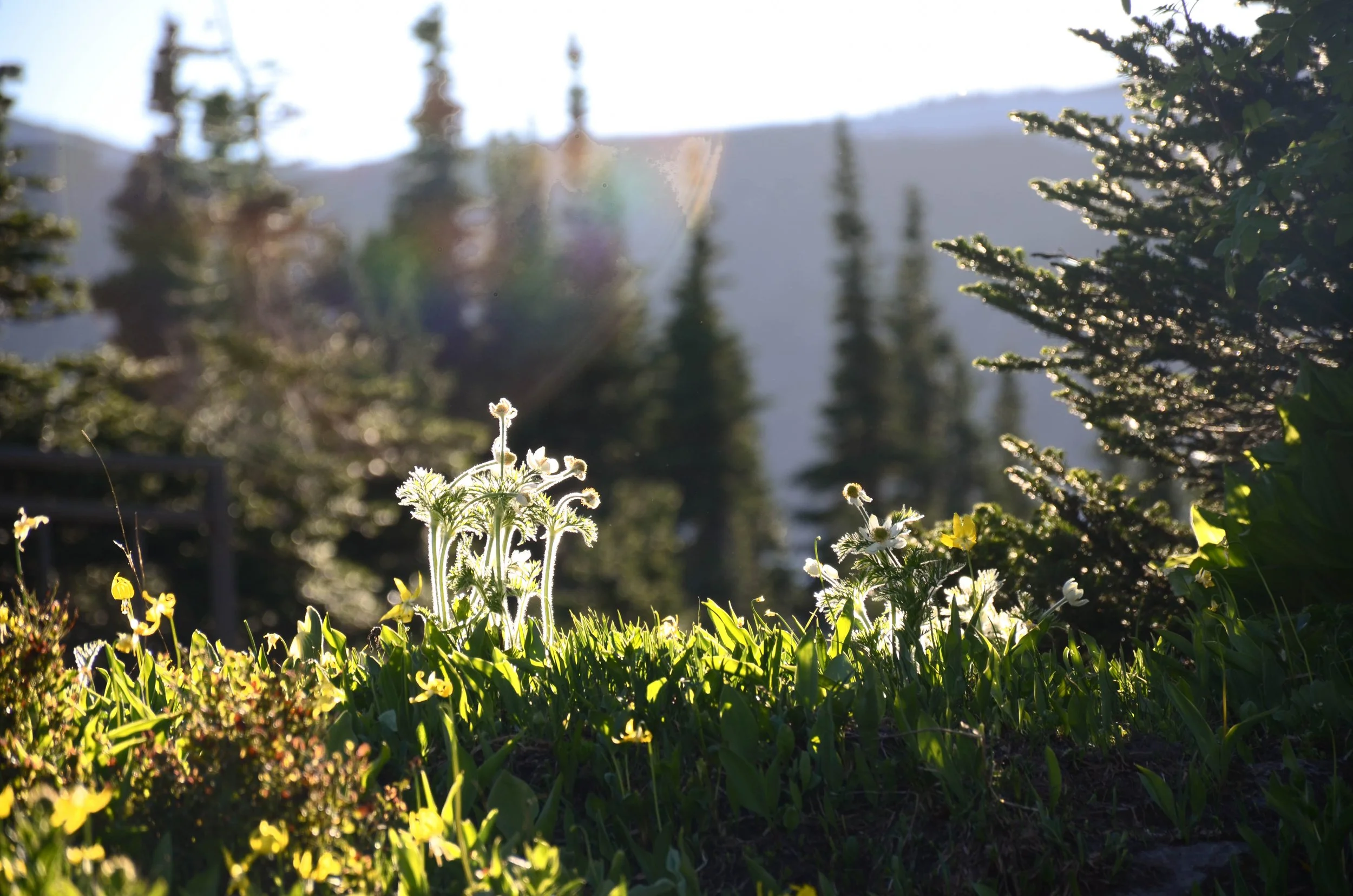
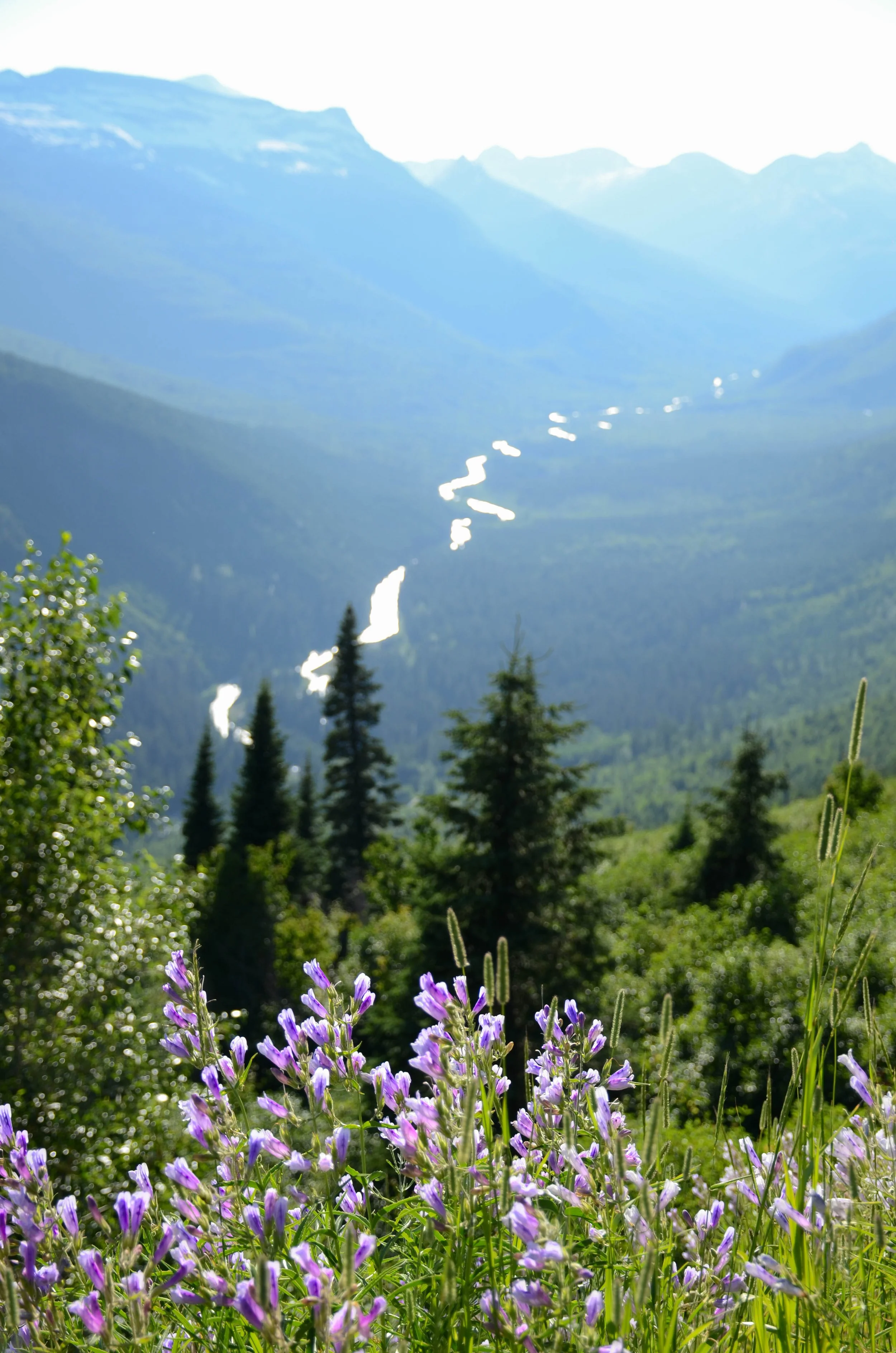
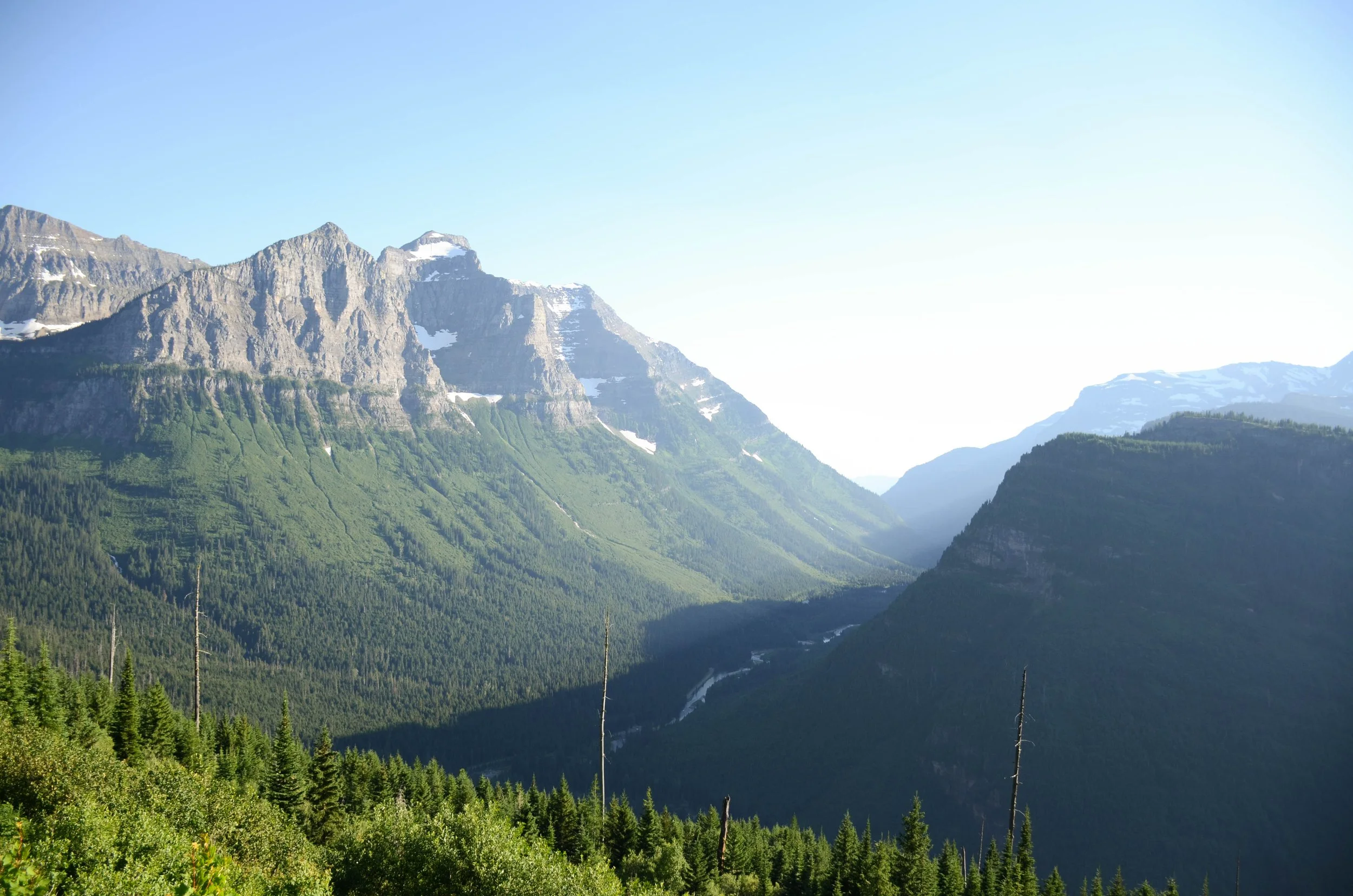
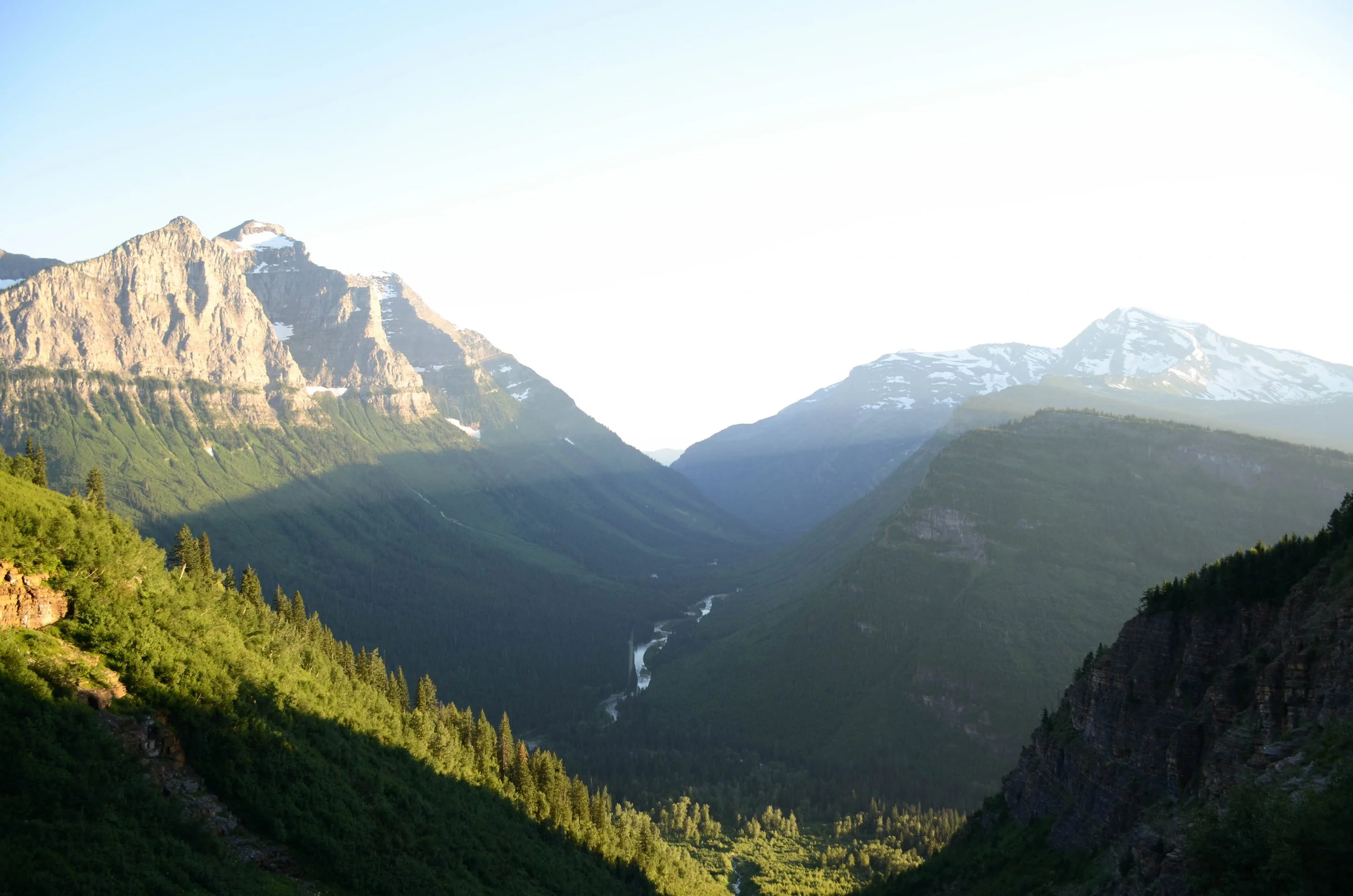
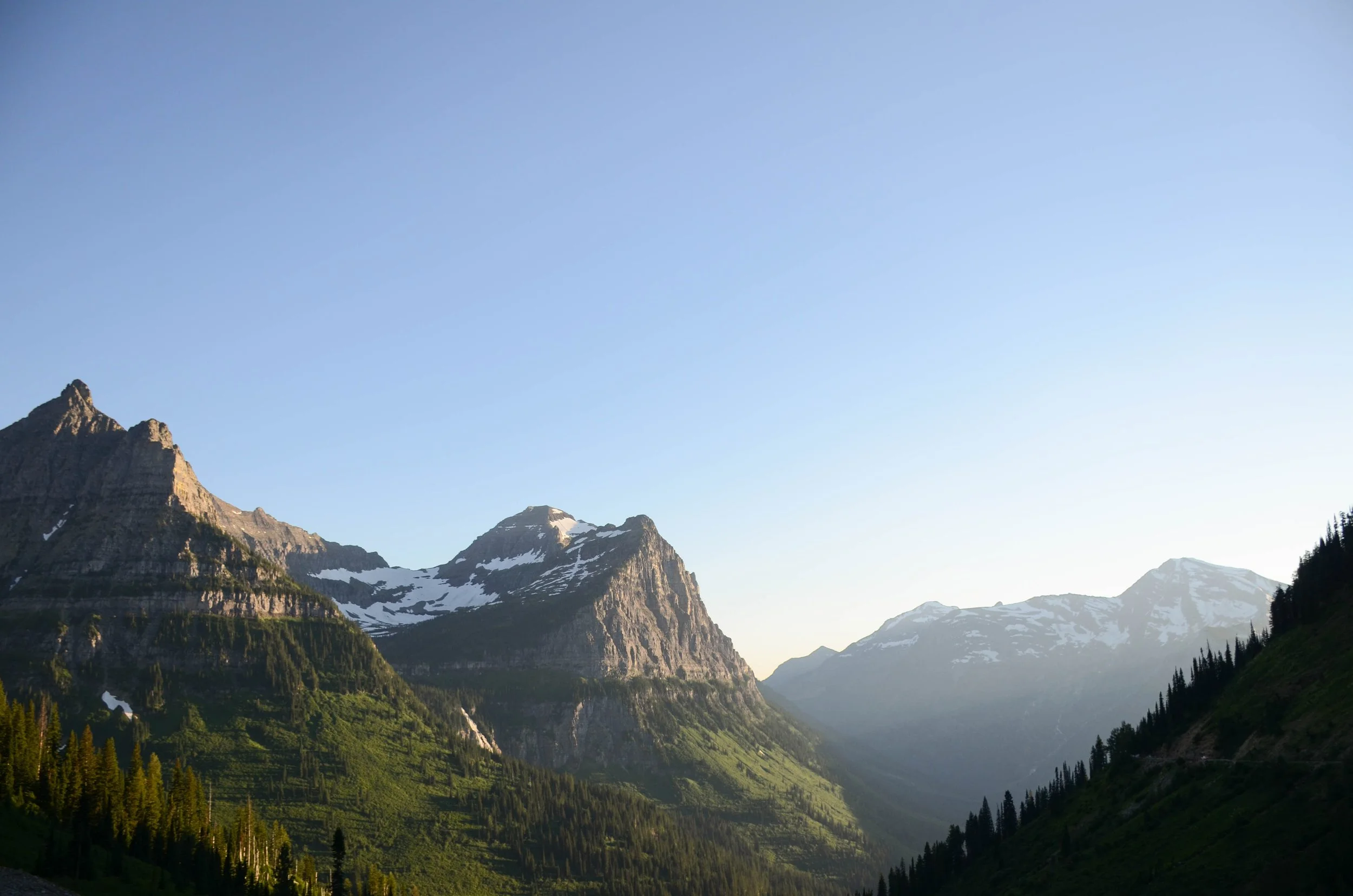
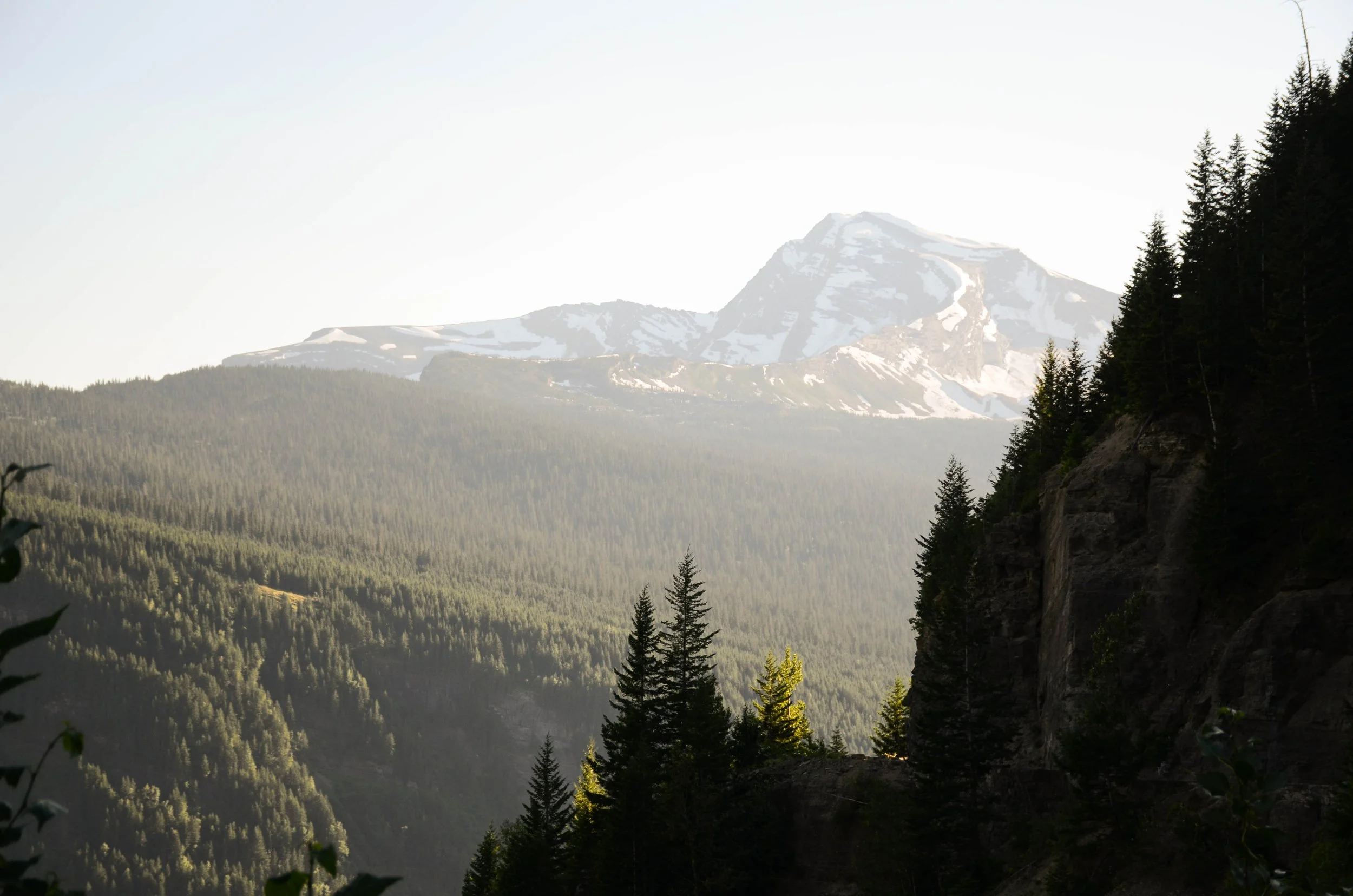
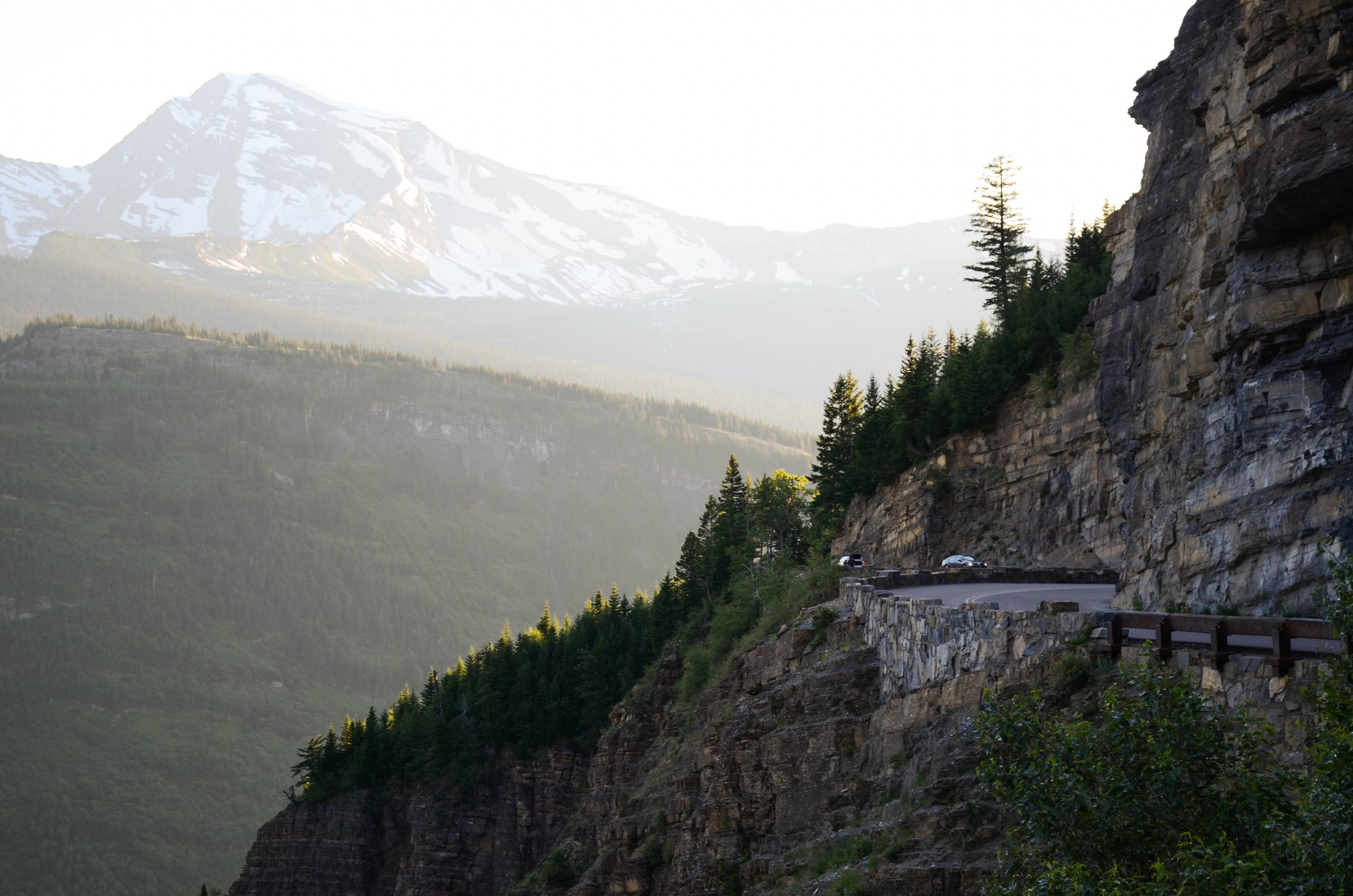
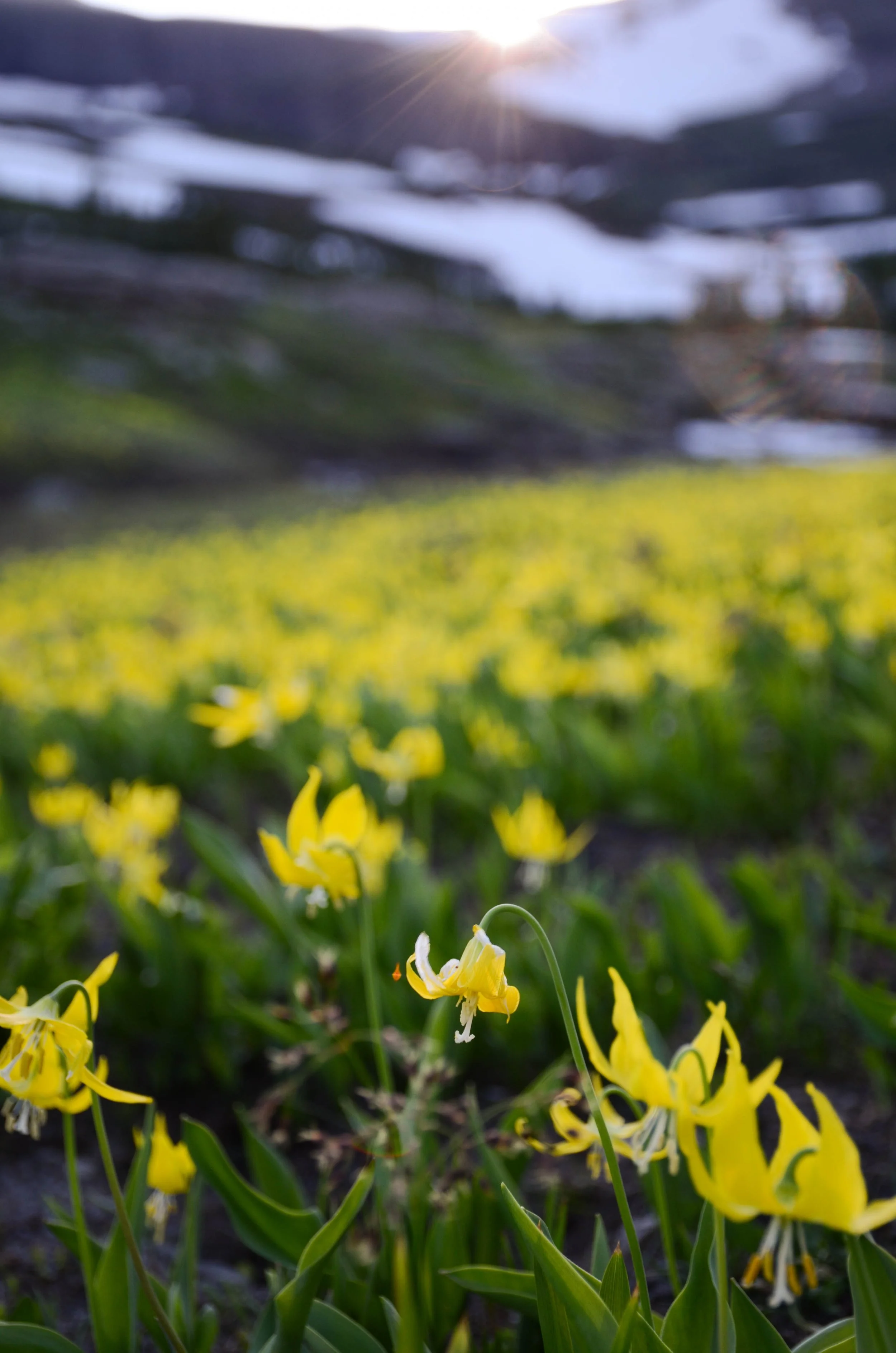
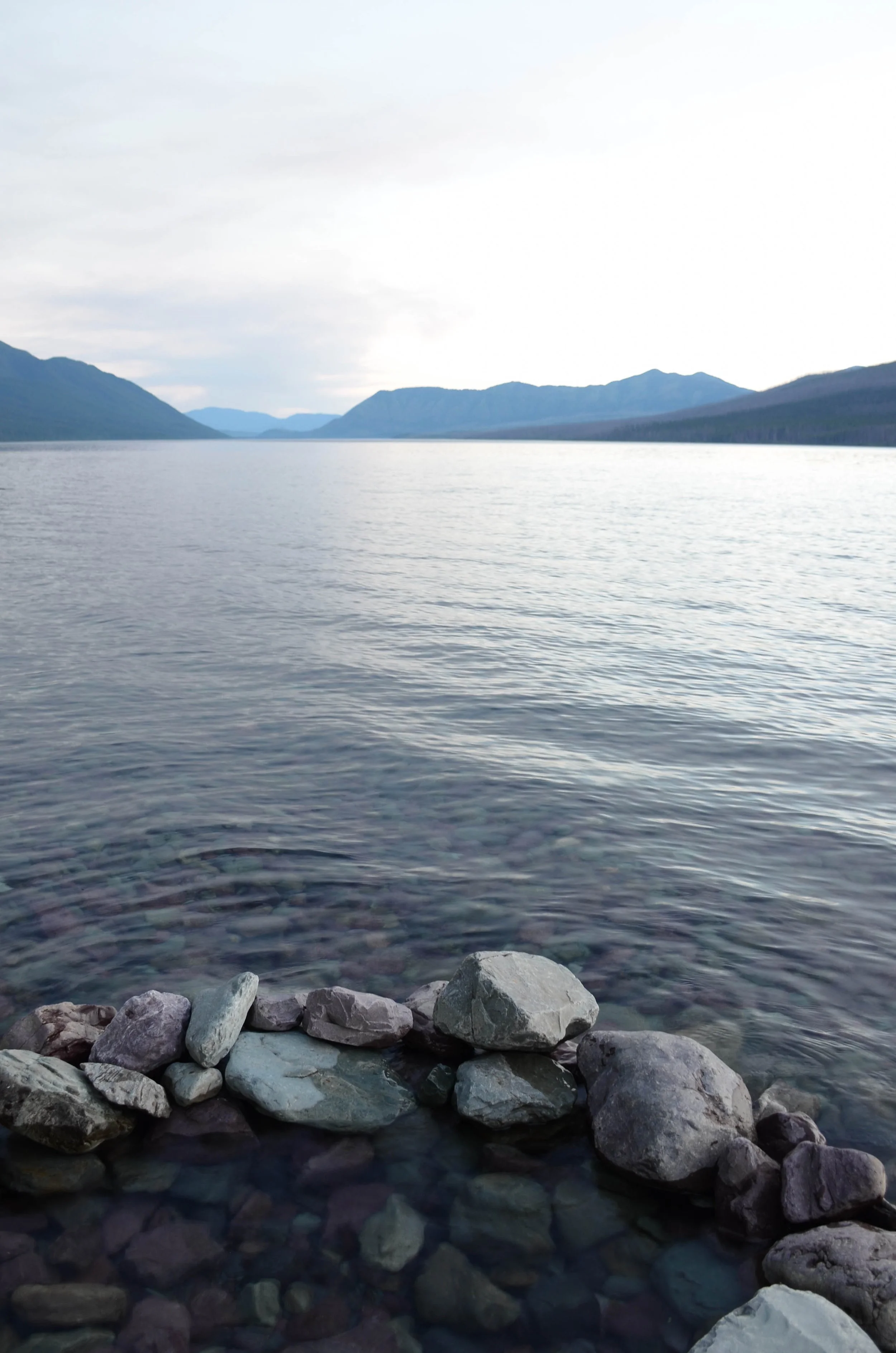
After saying goodbye to my bestie the next morning, we drove south back across the border and entered Glacier National Park, where we stayed the following two nights. This park is so beautiful that it almost hurts to look at the pictures from our drives on the iconic Going-to-the-Sun Road. The mountains were comprised of a stunning combination of emerald green grasses and trees, yellow and white wildflowers sprinkled everywhere like pixie dust, cascading waterfalls, and striated grey rock — visible scars from when heavy glacial ice scraped against bedrock. The geology of this place is astonishing and I felt like everywhere I looked was more magnificent and breathtaking than the last viewpoint.
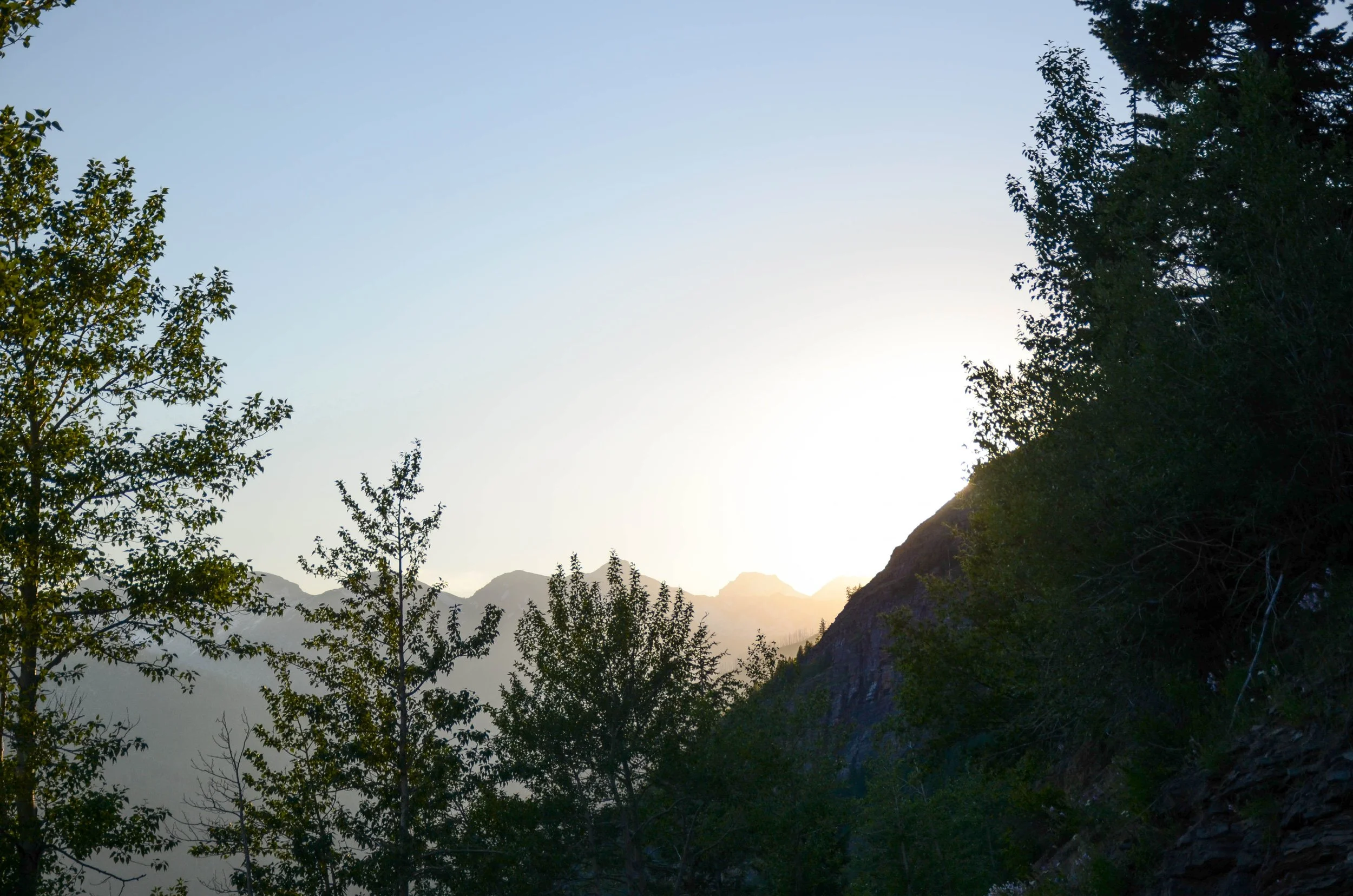
On our last night, we explored Going-to-the-Sun Road until sunset, watching the light shift to a warm yellow glow, sunbeams stretching from one peak to the next and the U-shaped valleys eventually growing dim as night came closer. We knew we had a 16-hour drive back to Denver the next day, and I felt an ache within me that the trip was about to come to a close. Glacier was an otherworldly denouement to what had been our most memorable trip together thus far. It lives up to every bit of its hype.
Pictured below:
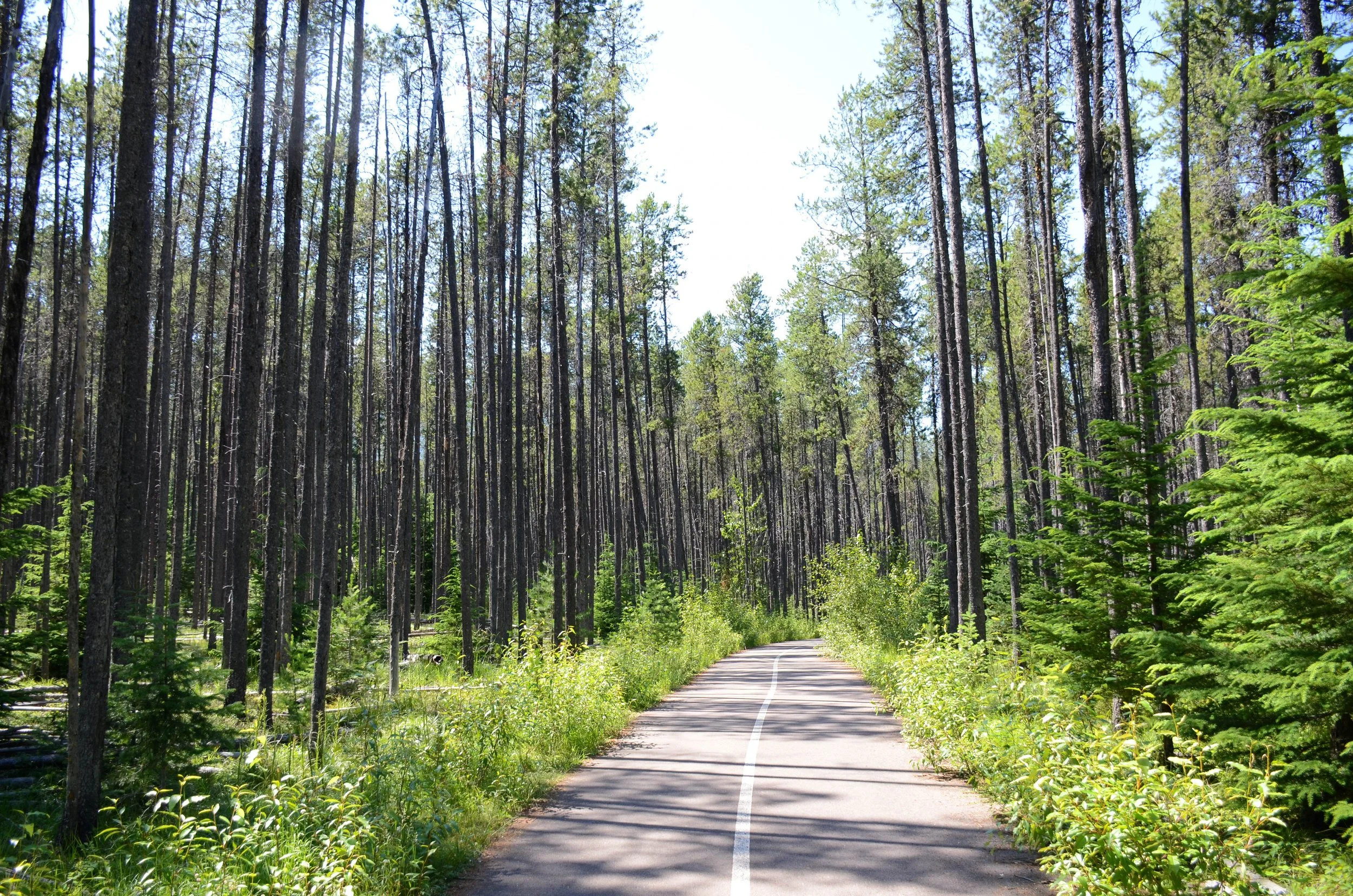
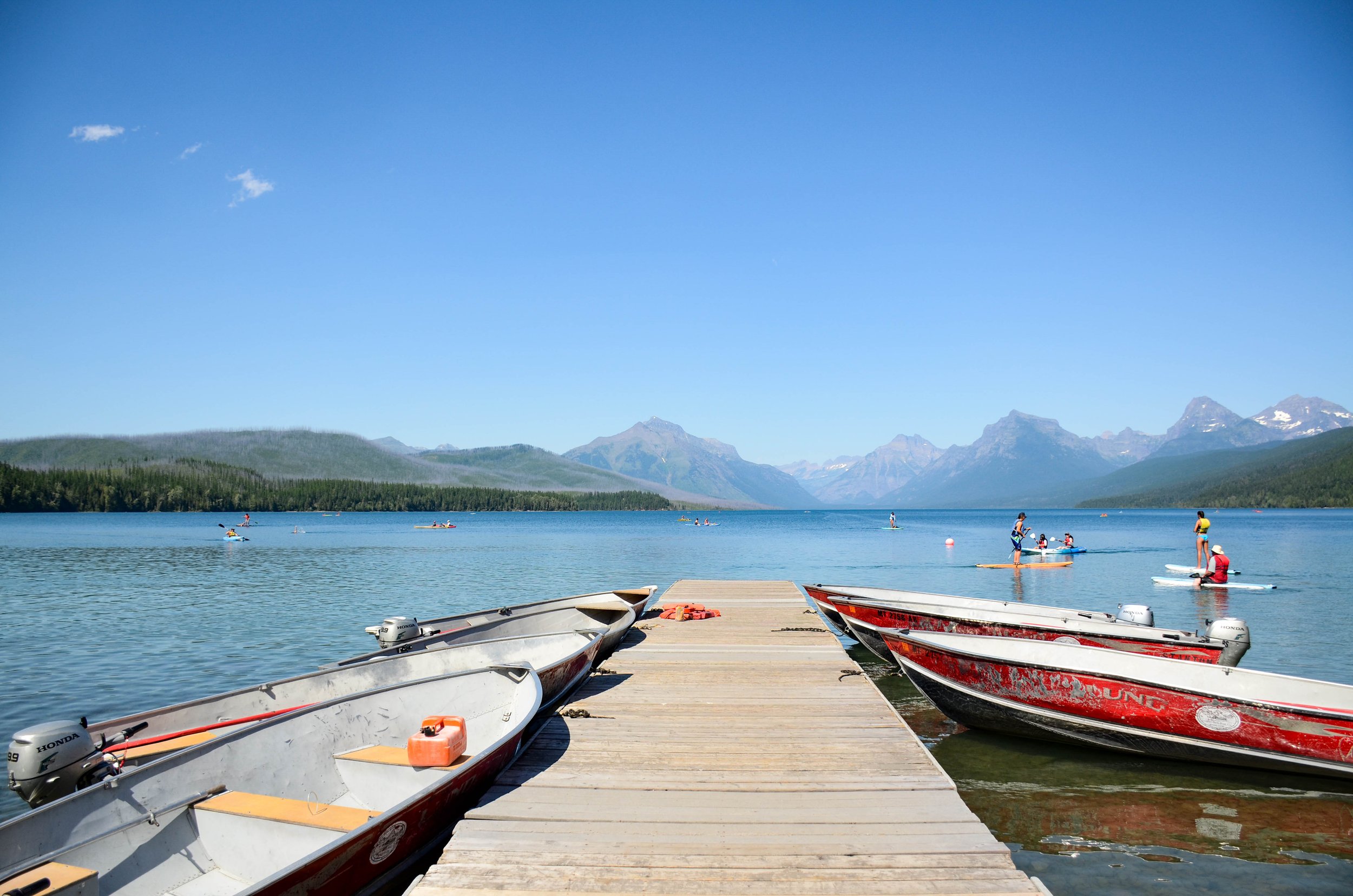
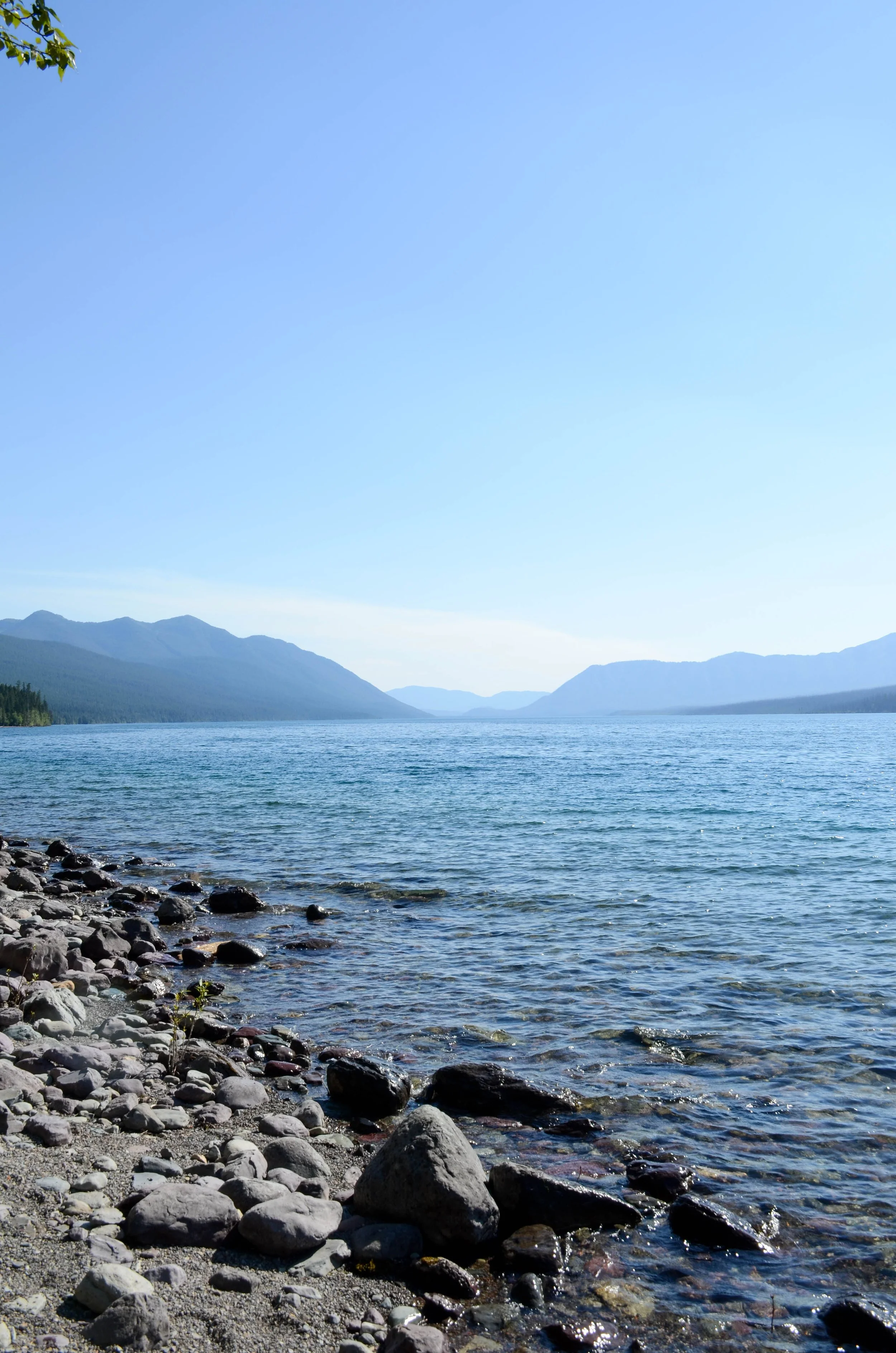
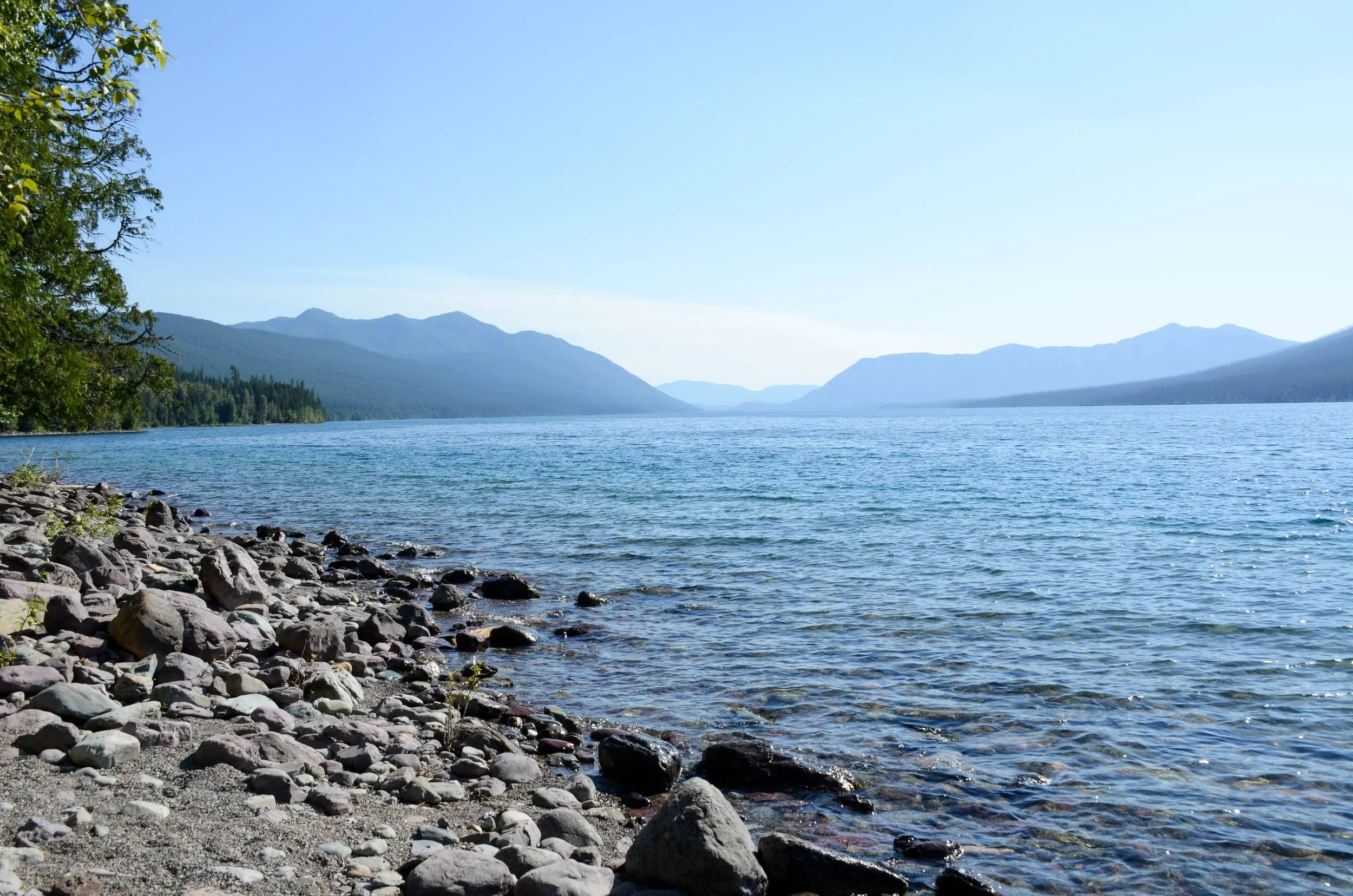
International Peace Park Hike — Alberta, Canada and Montana, USA.
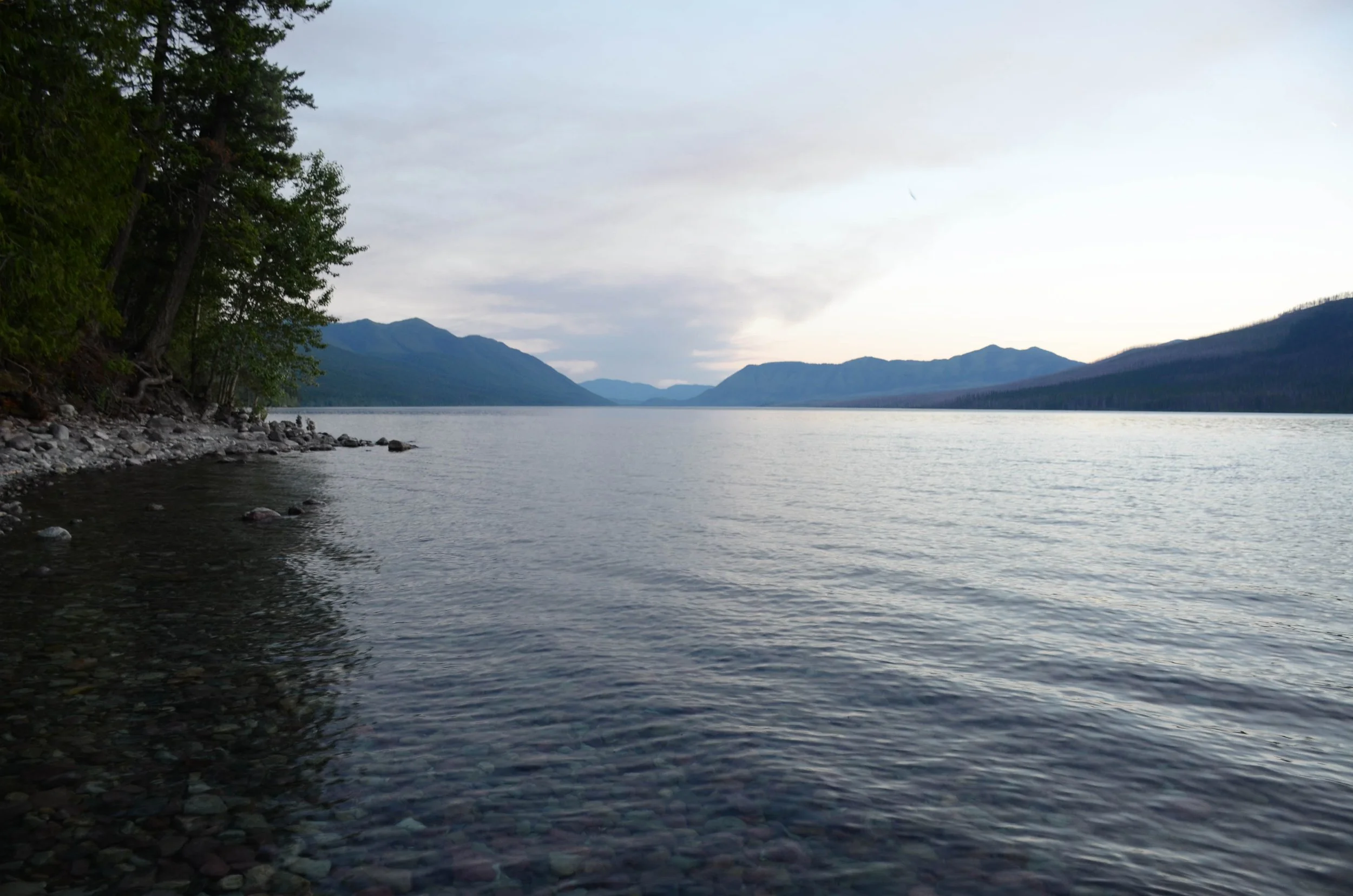
Going-to-the-Sun Road + St. Mary’s Lake. Glacier National Park, Montana.
Yellowstone
Park 4 | July 2017
Part + Park 2 (of 3) on our summer road trip.
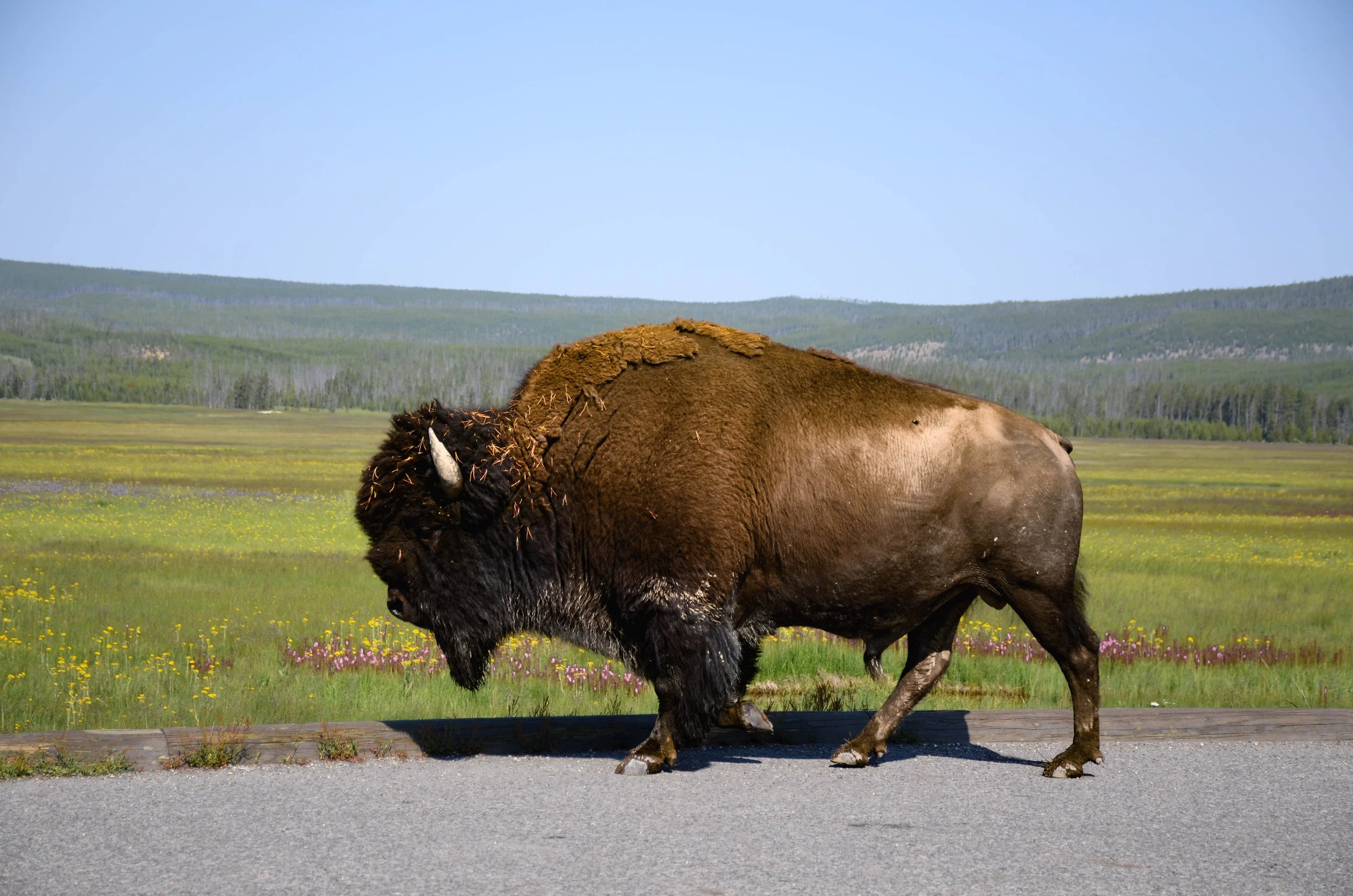
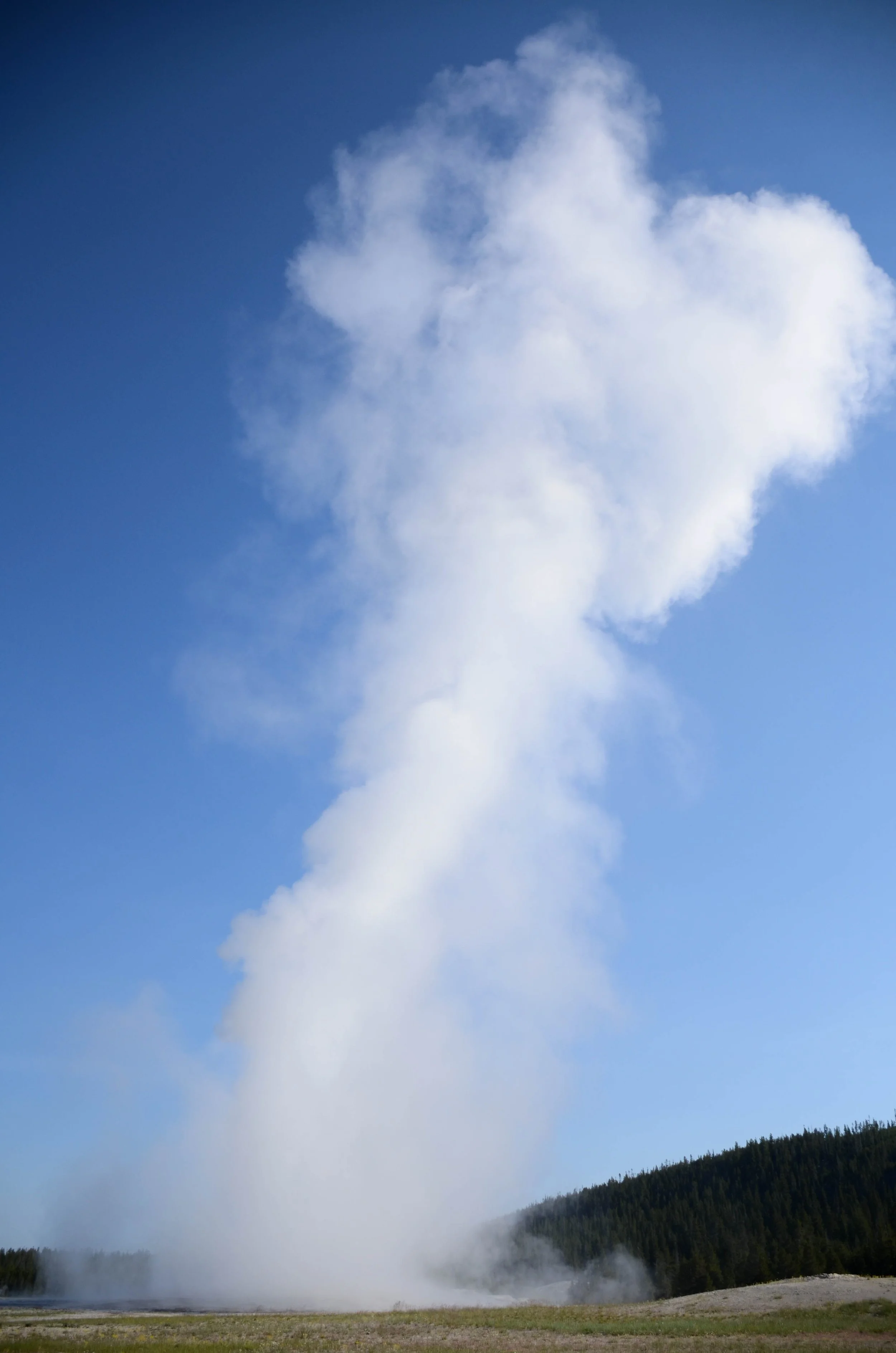
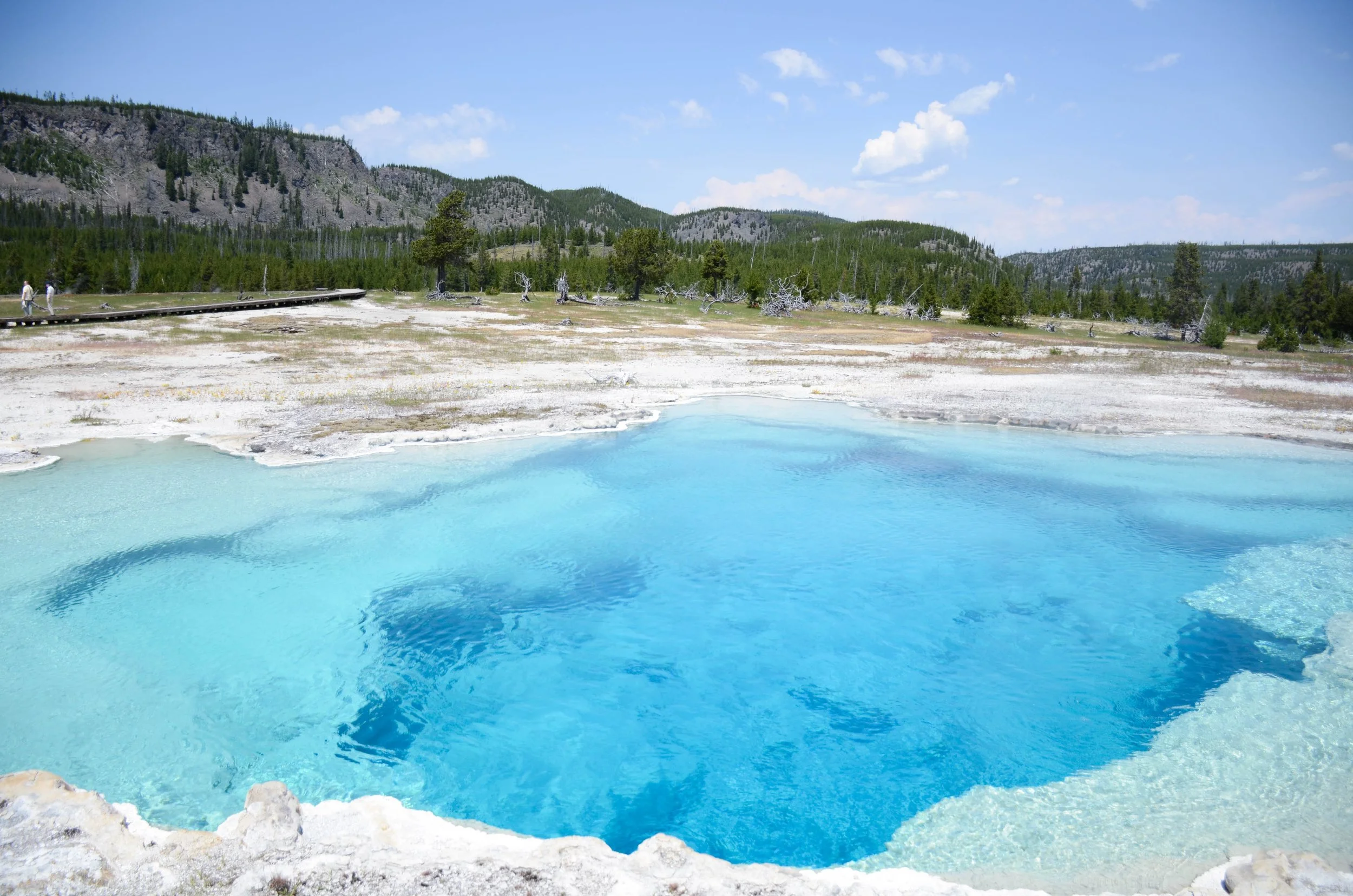
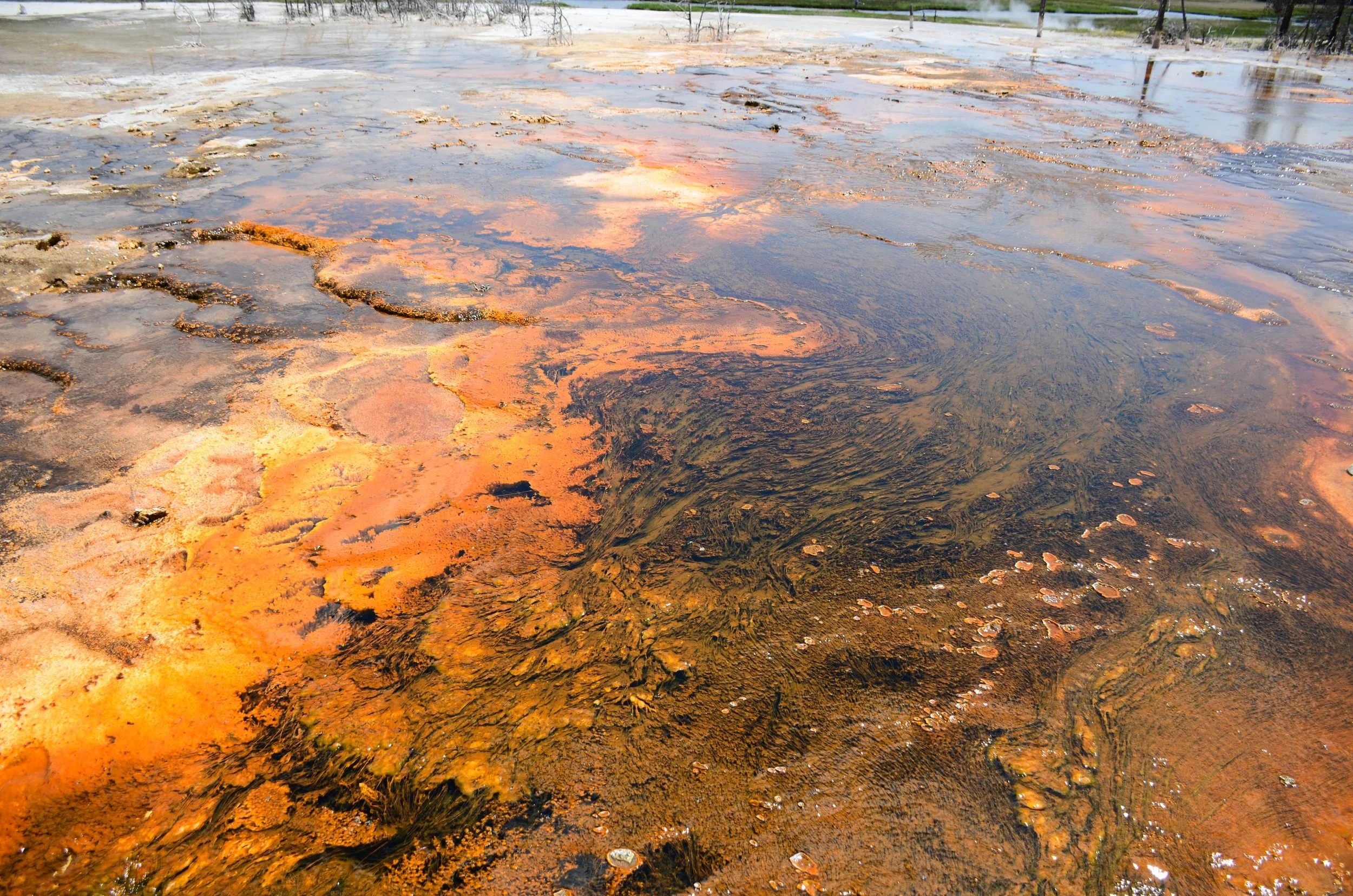
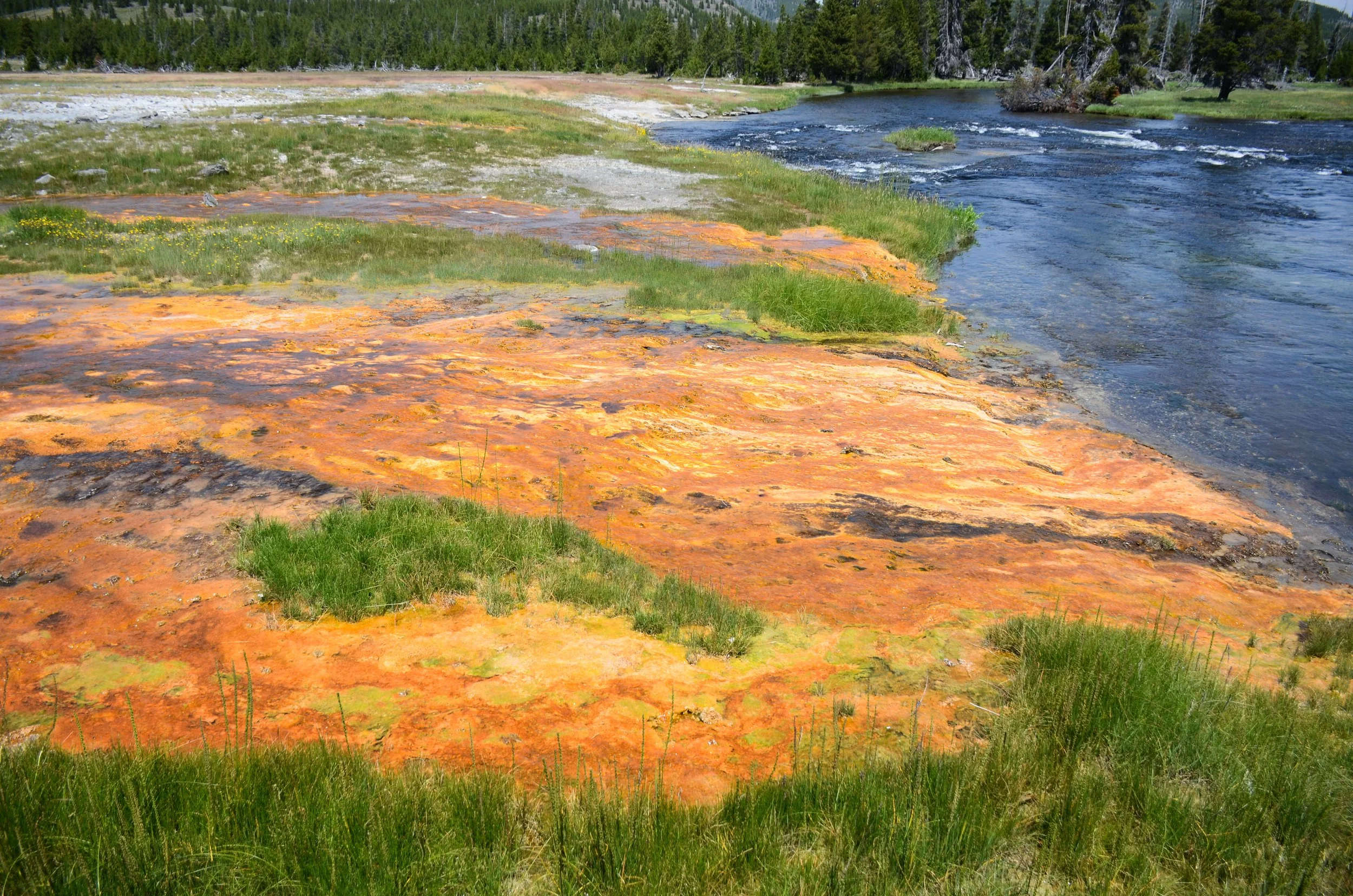
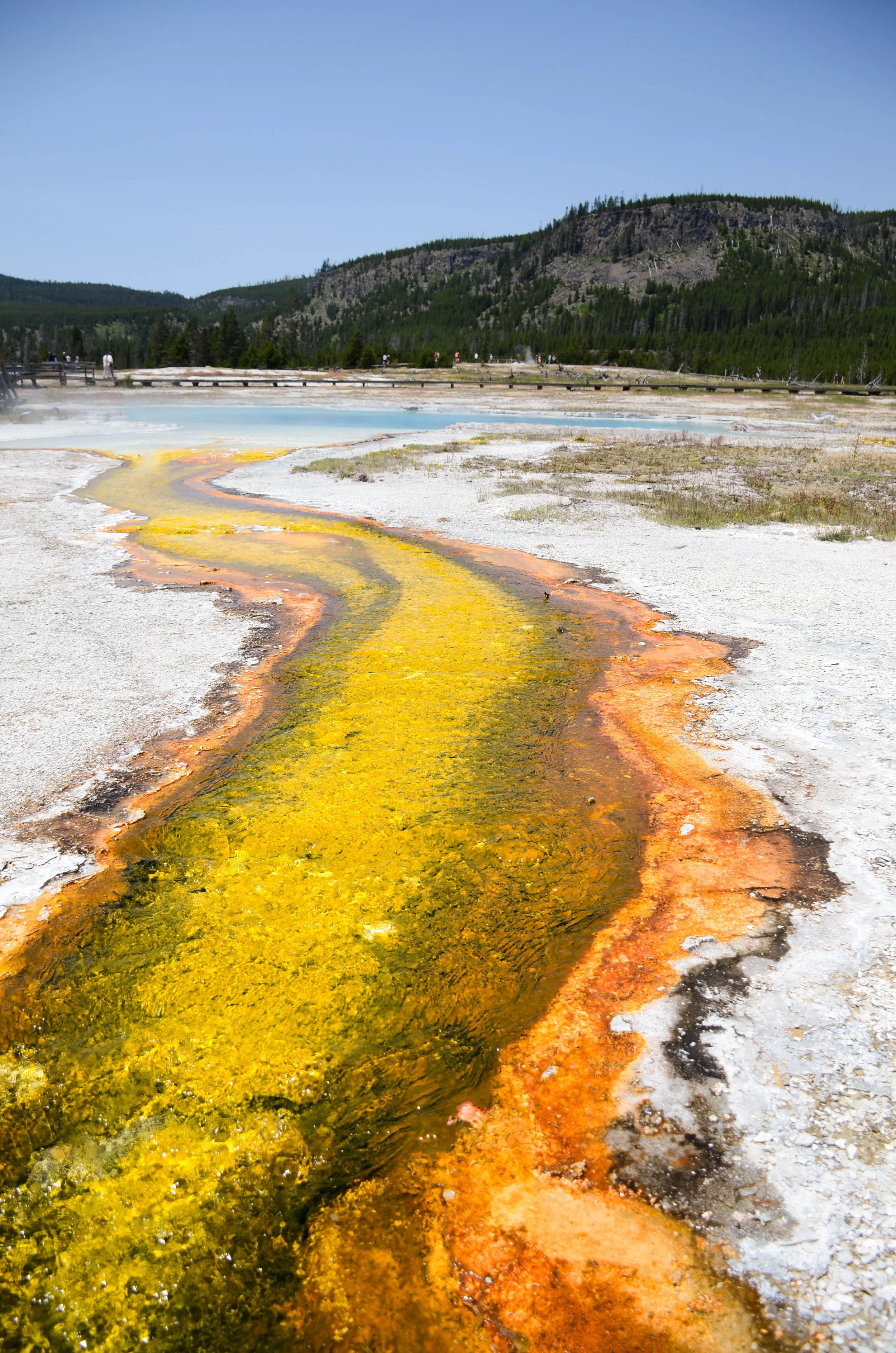
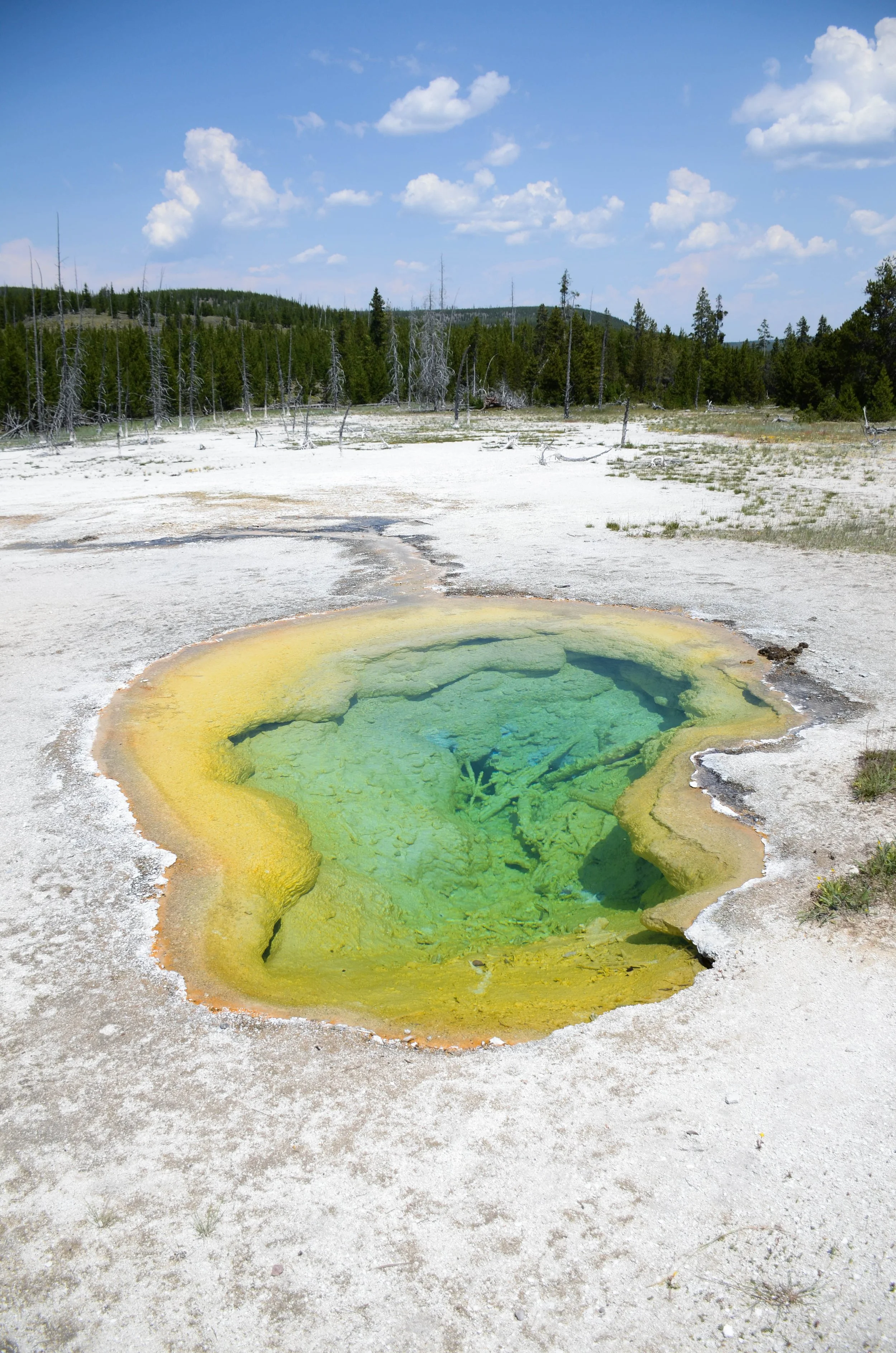
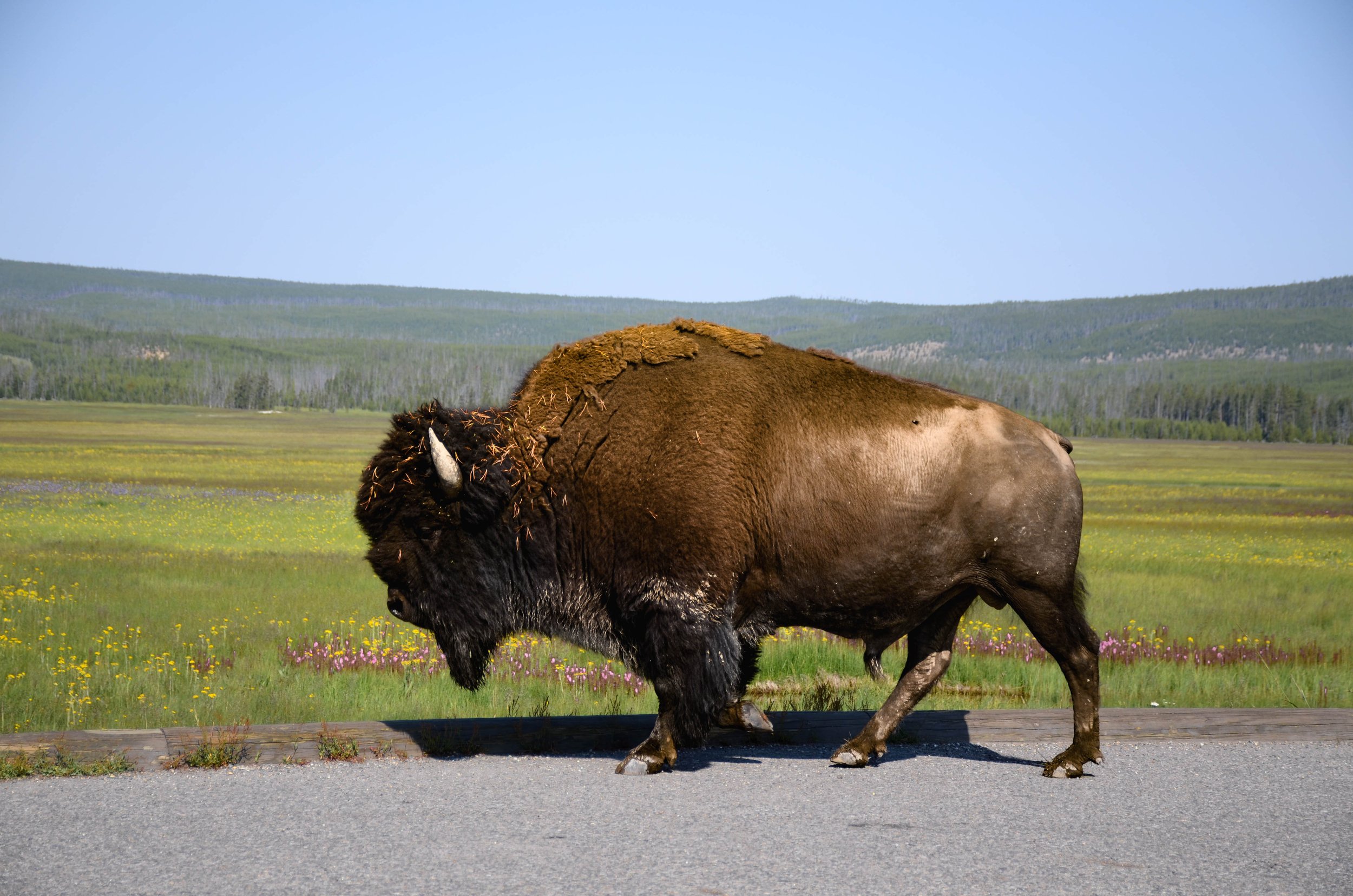
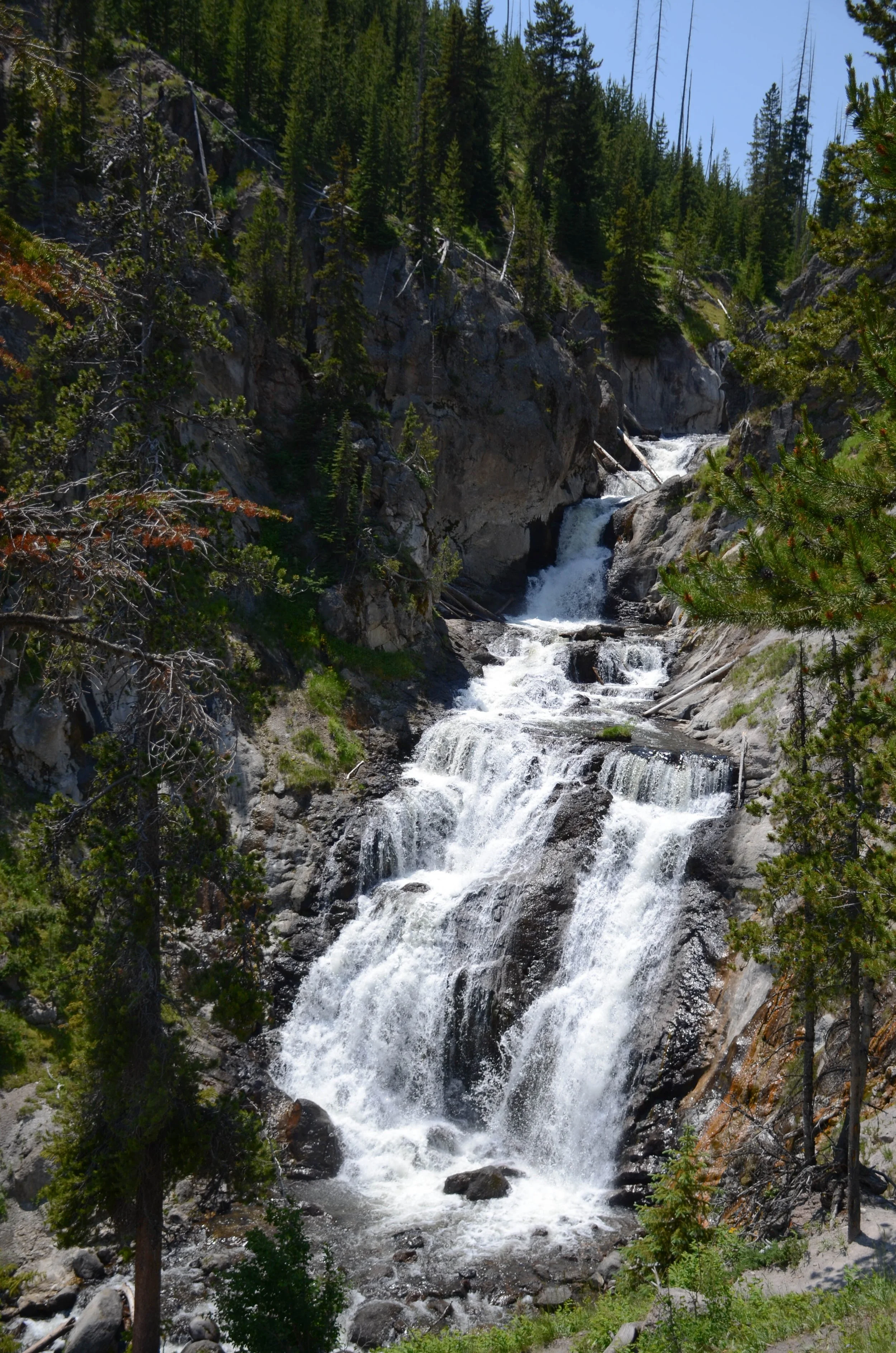
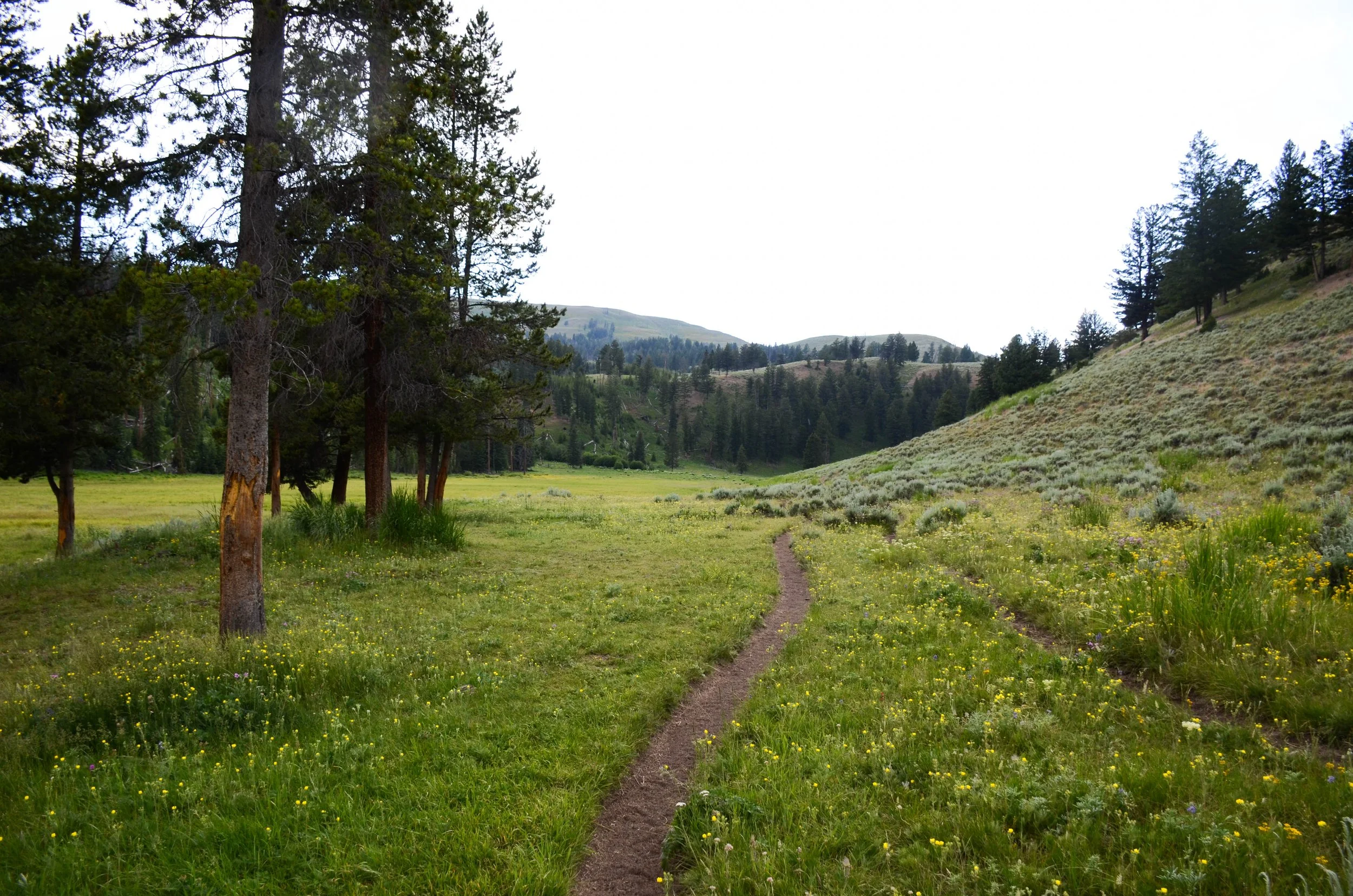
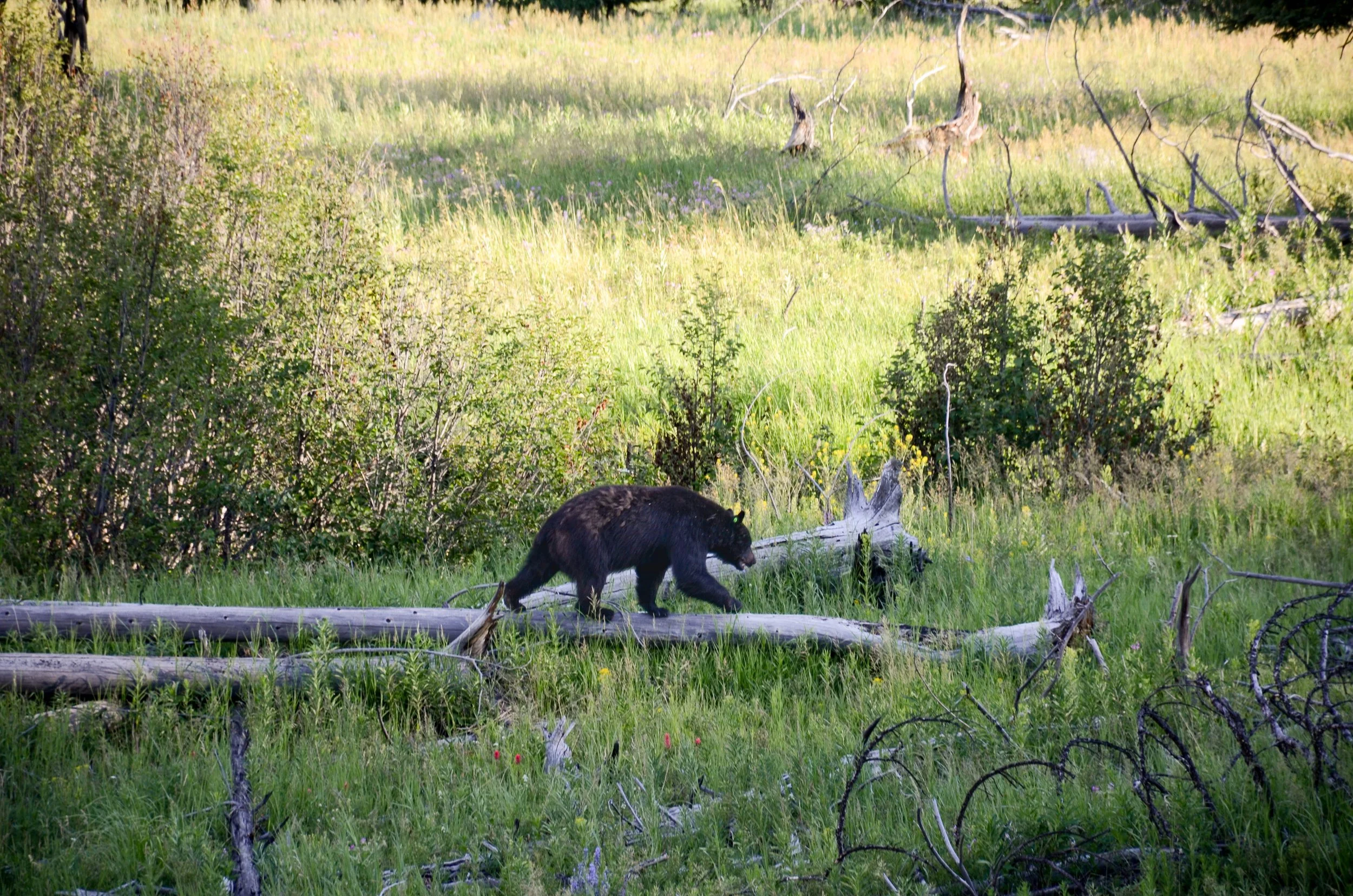
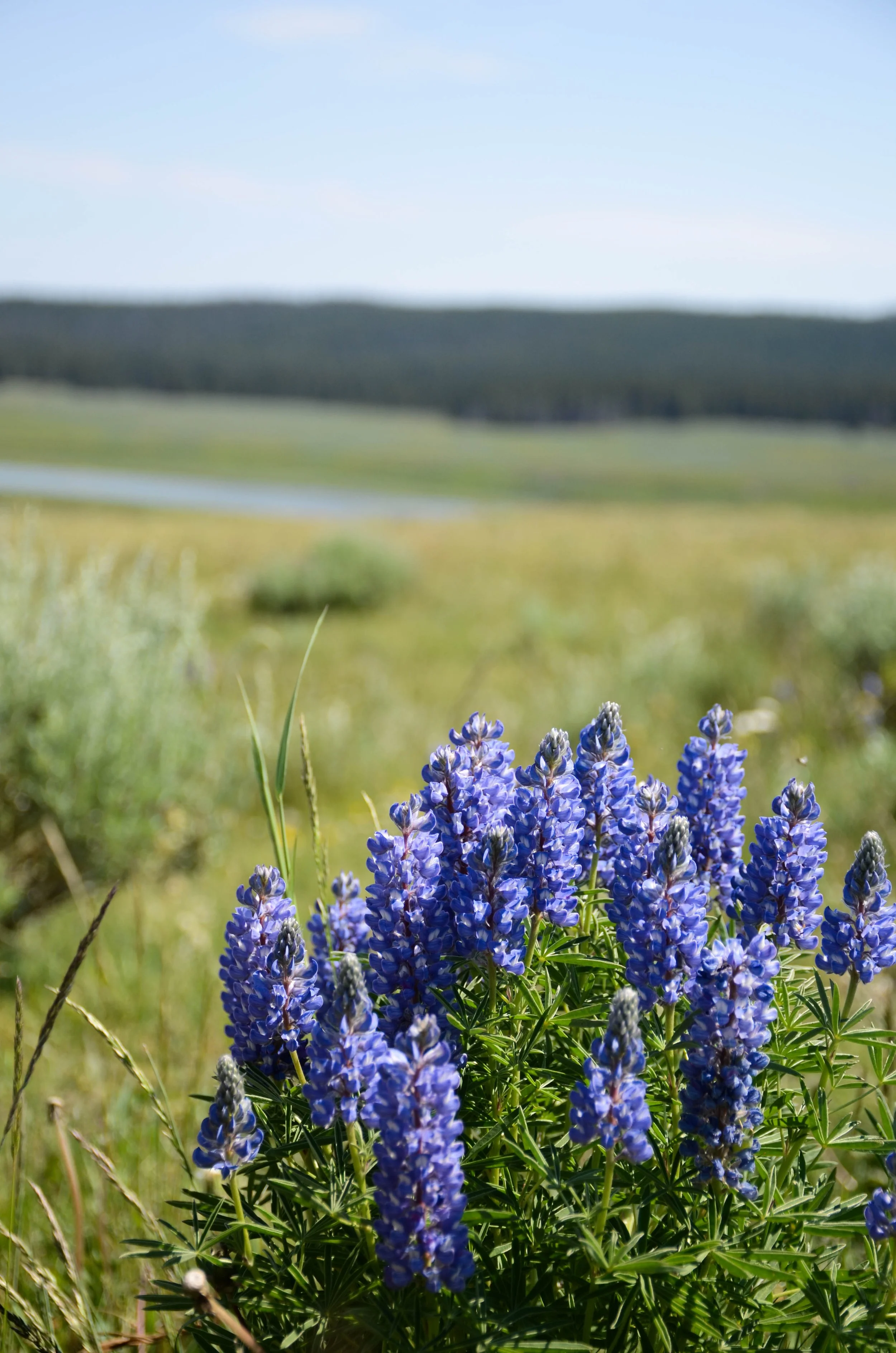
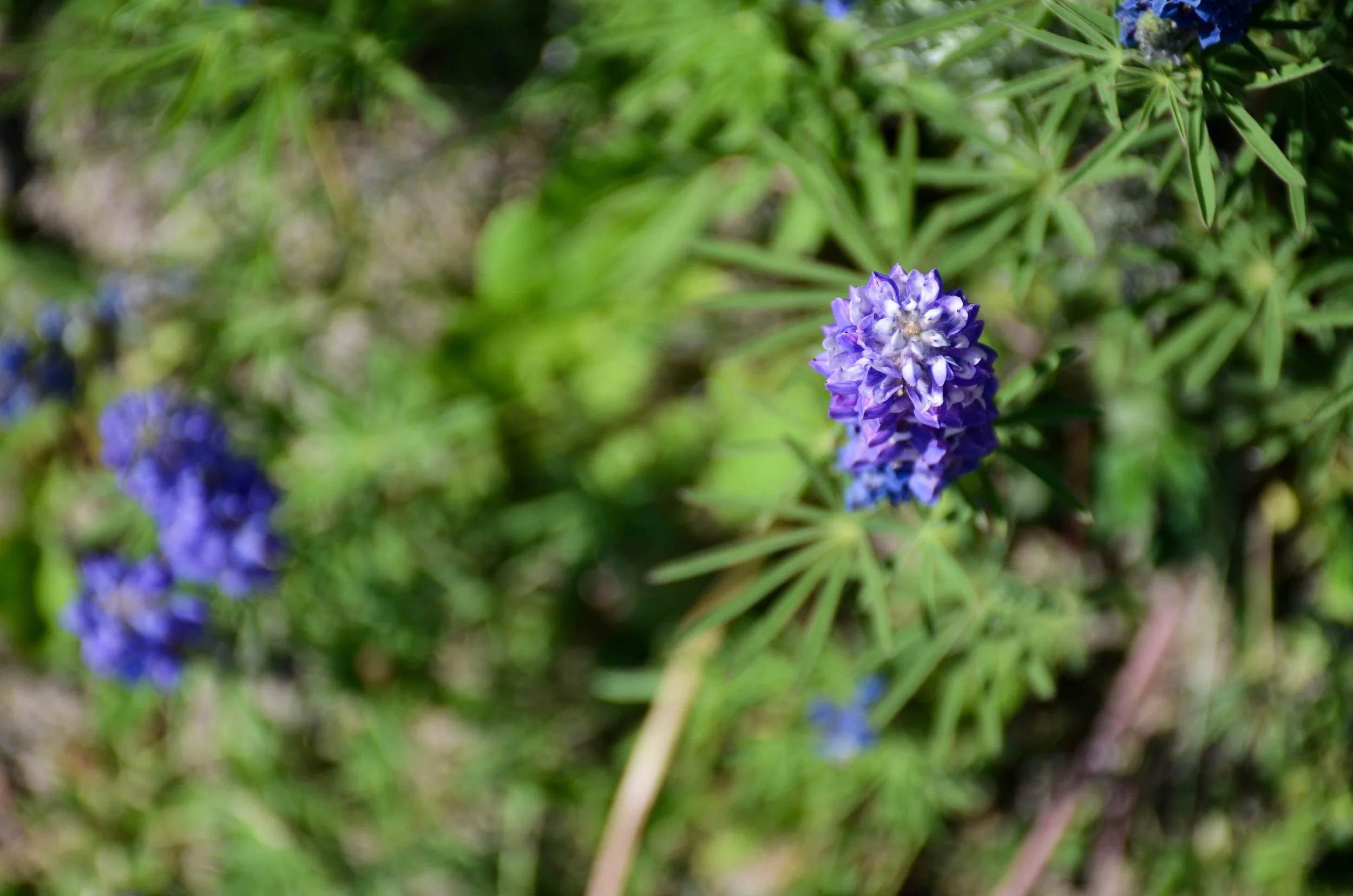
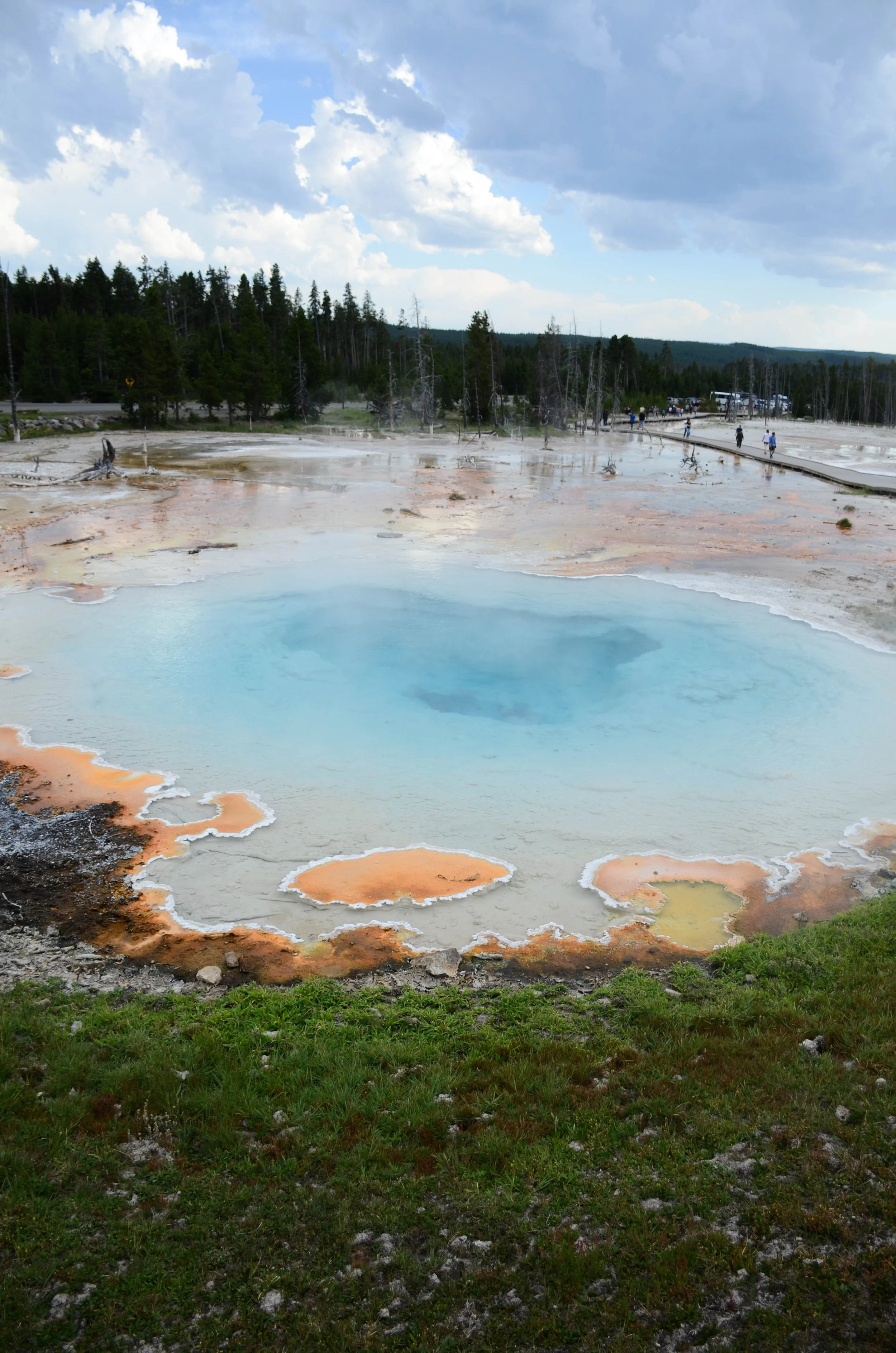
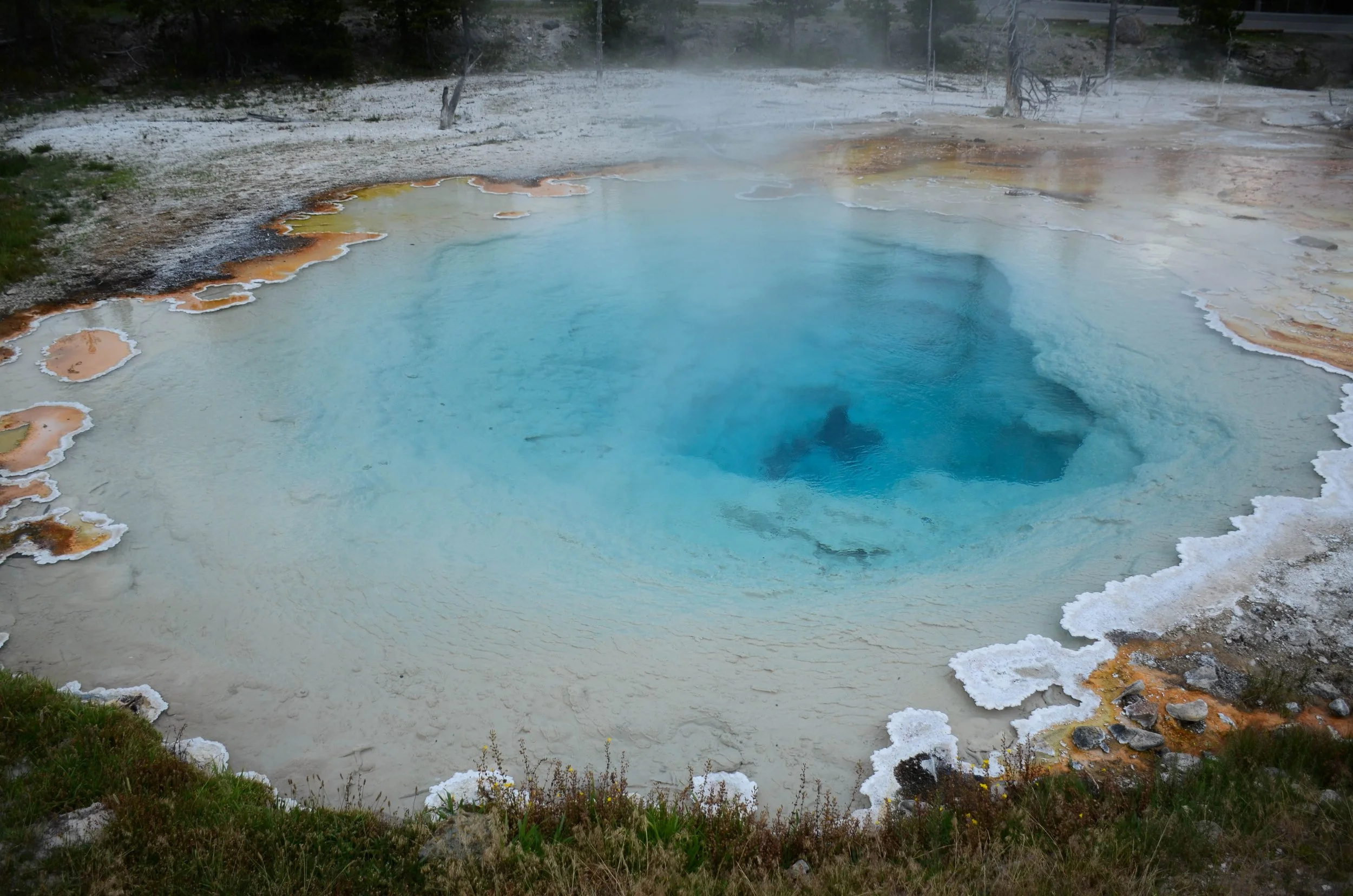
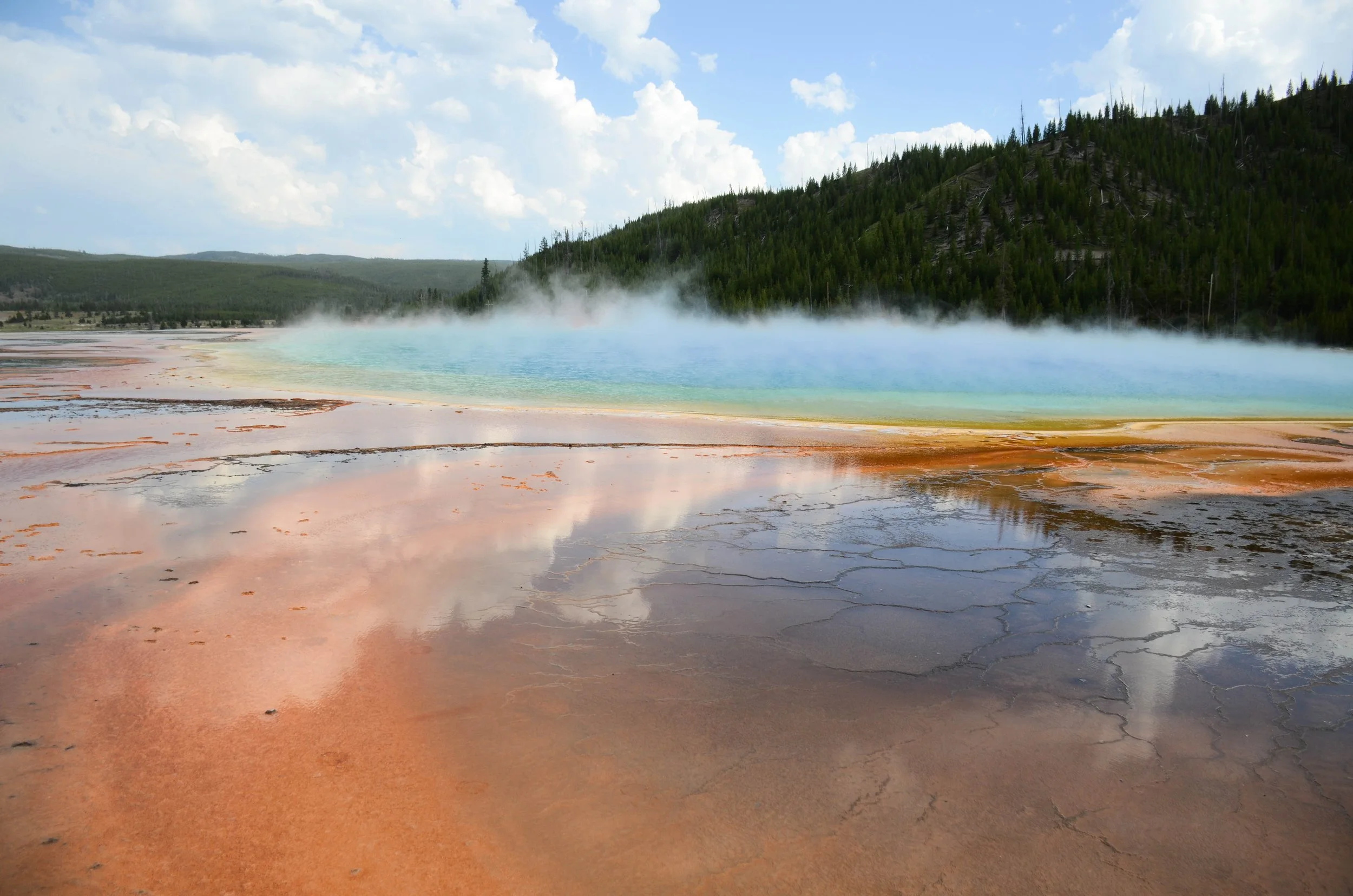
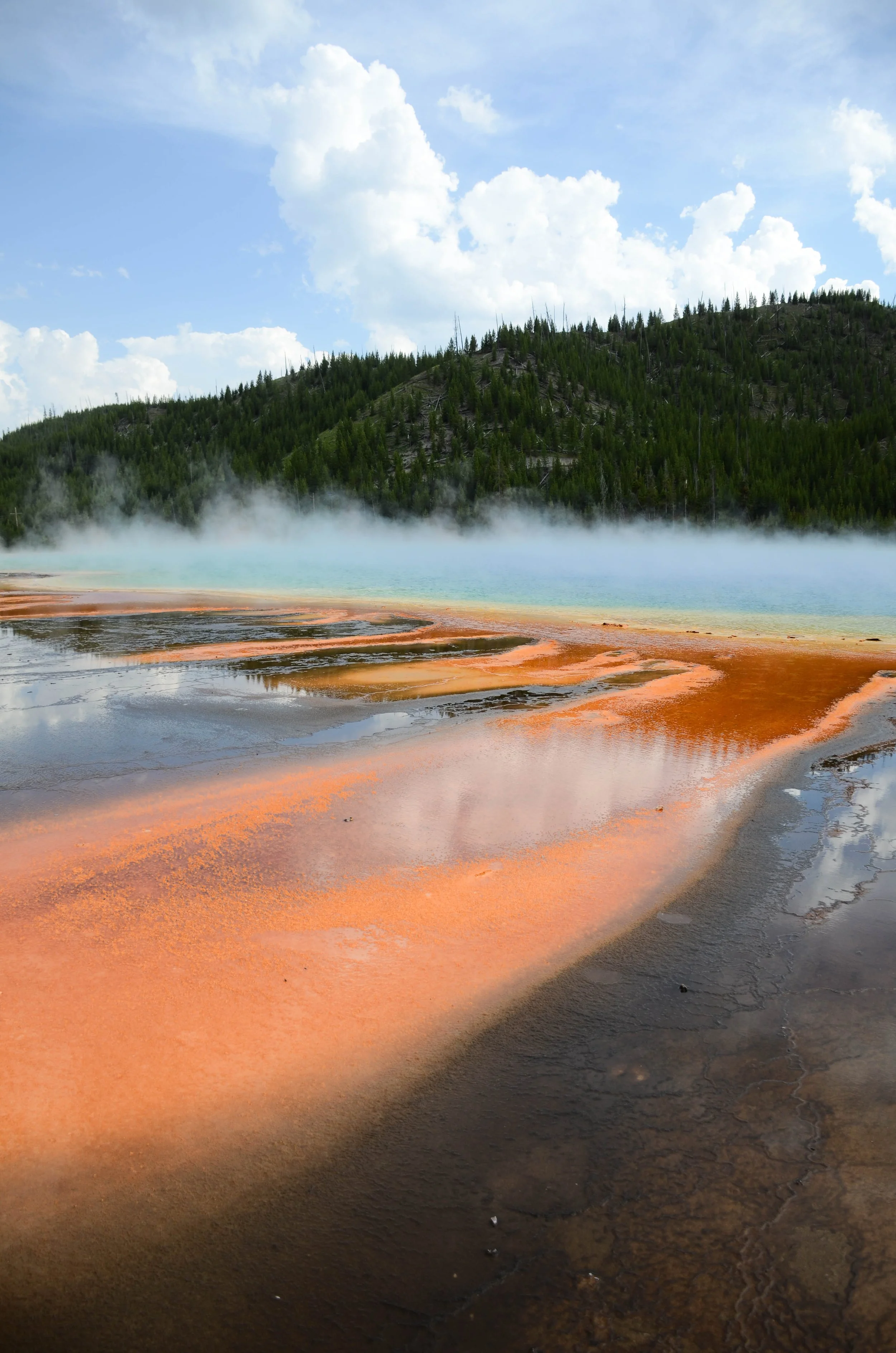
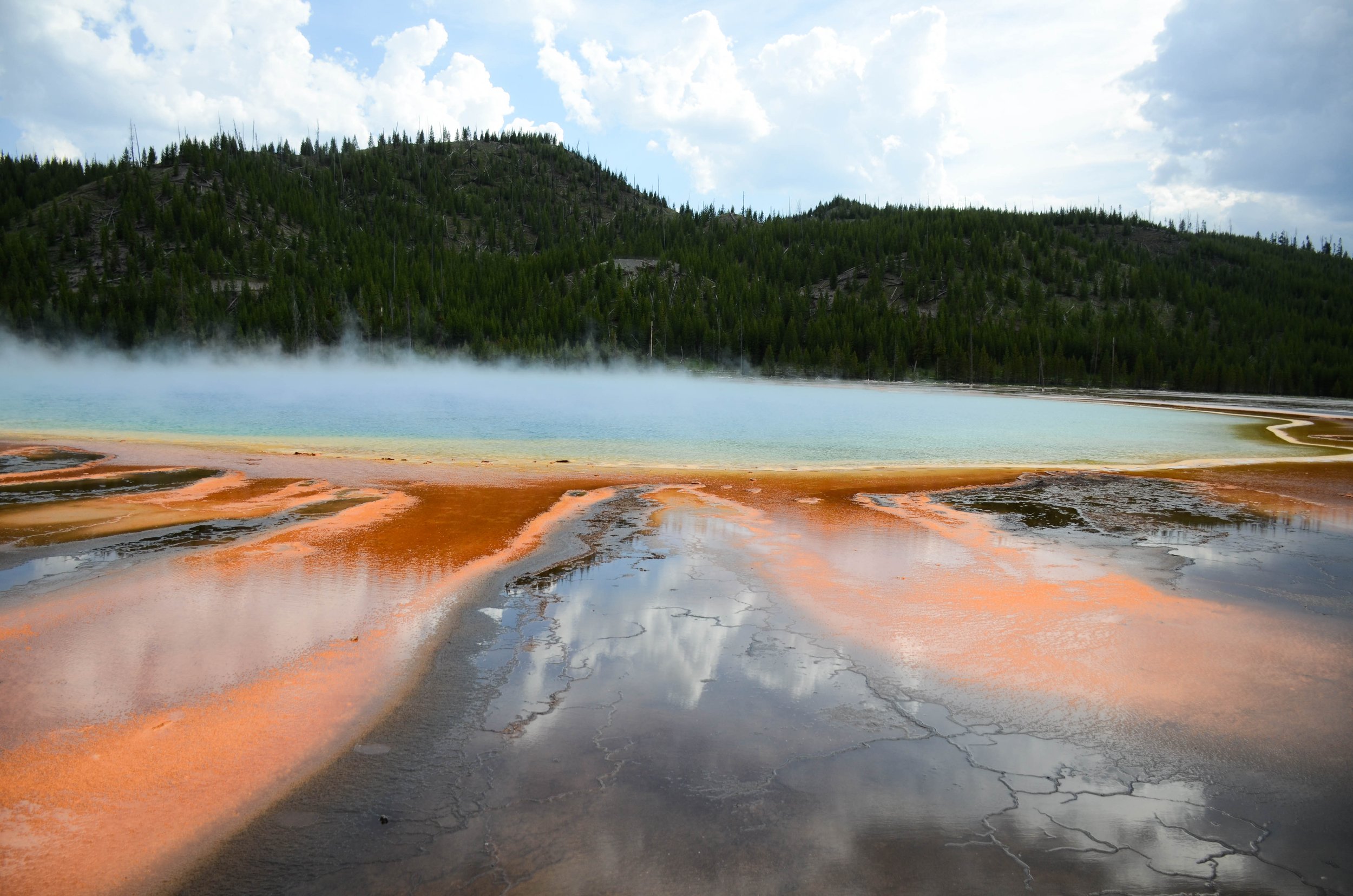
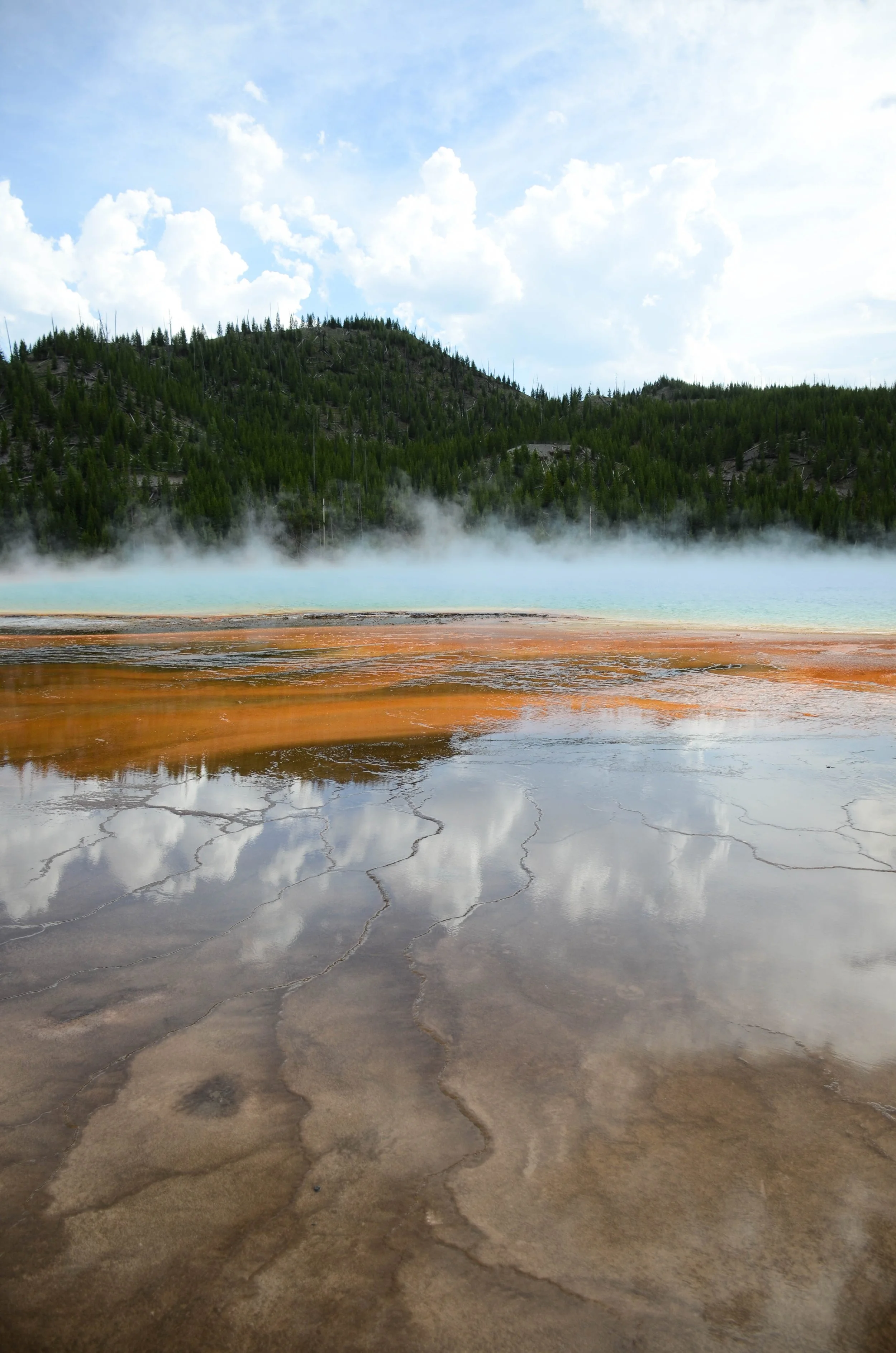
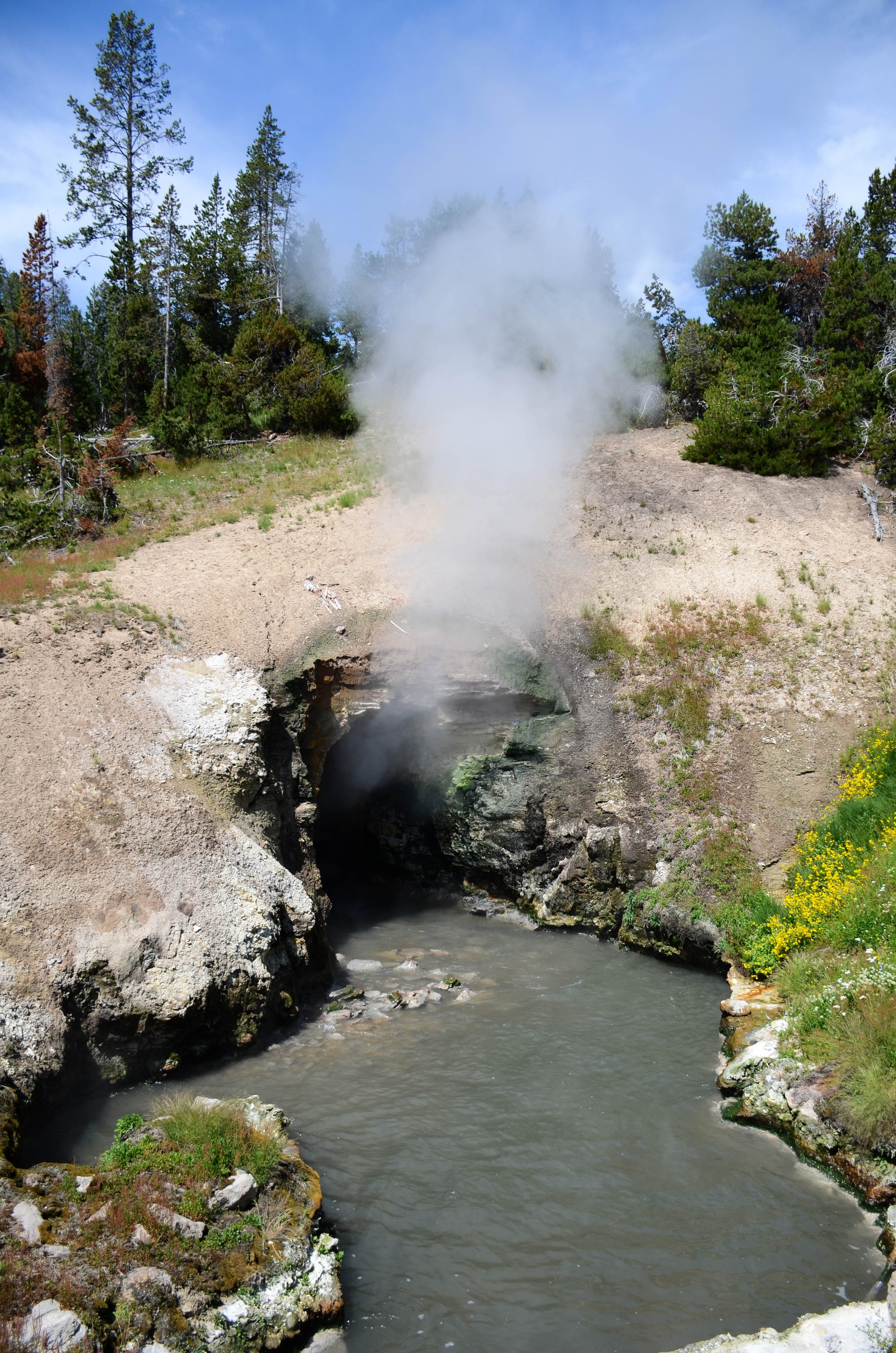
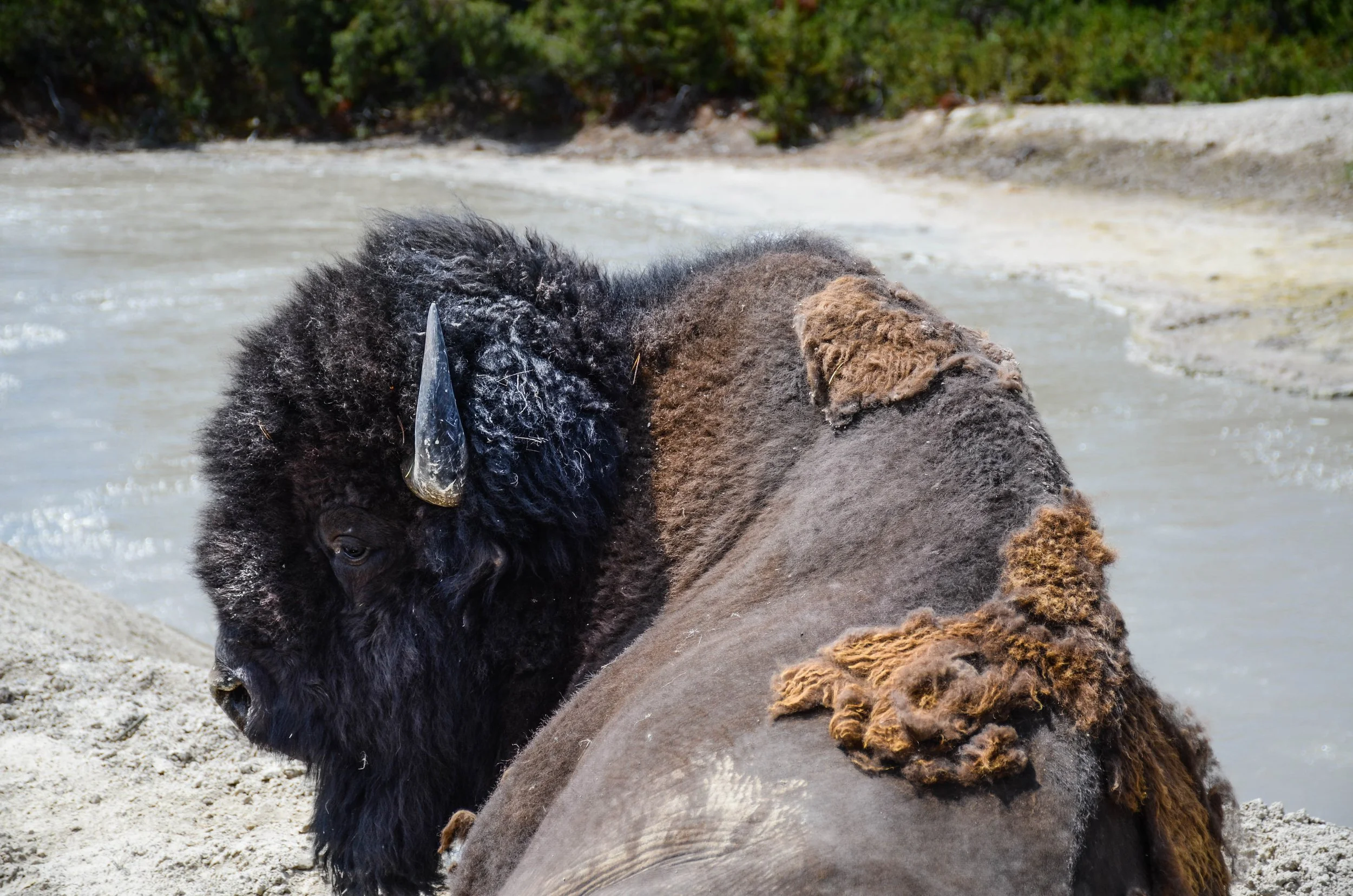
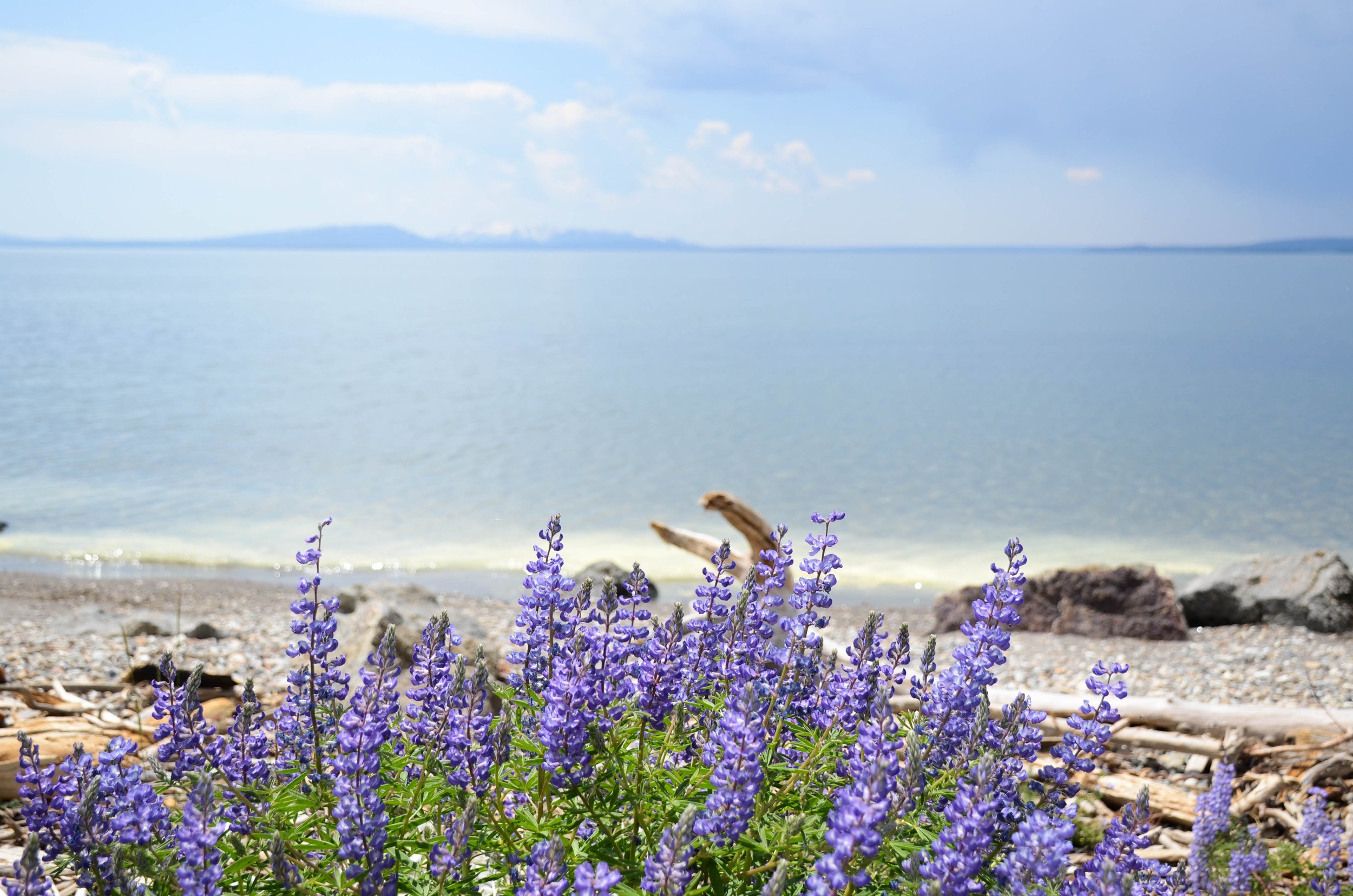
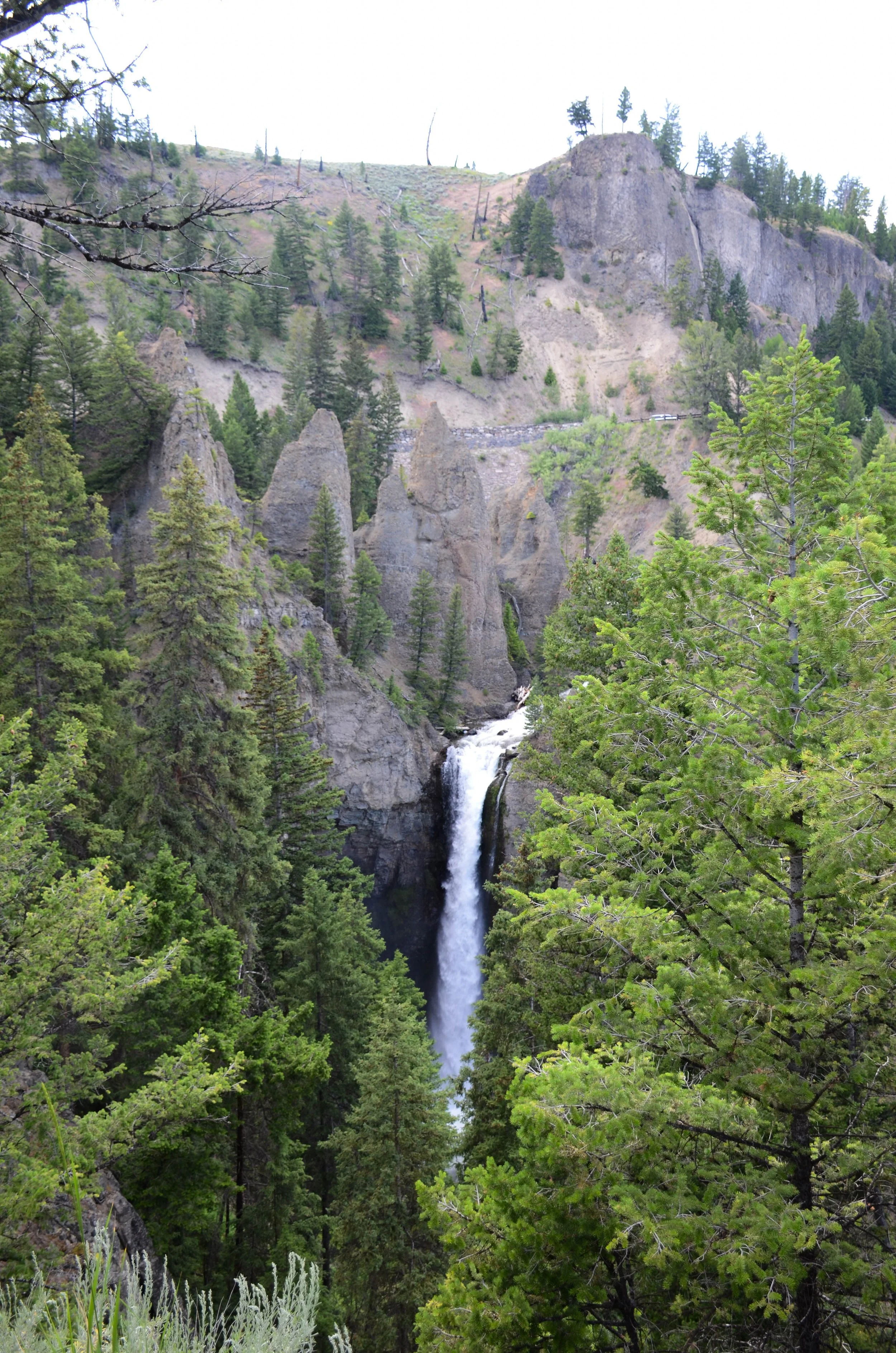
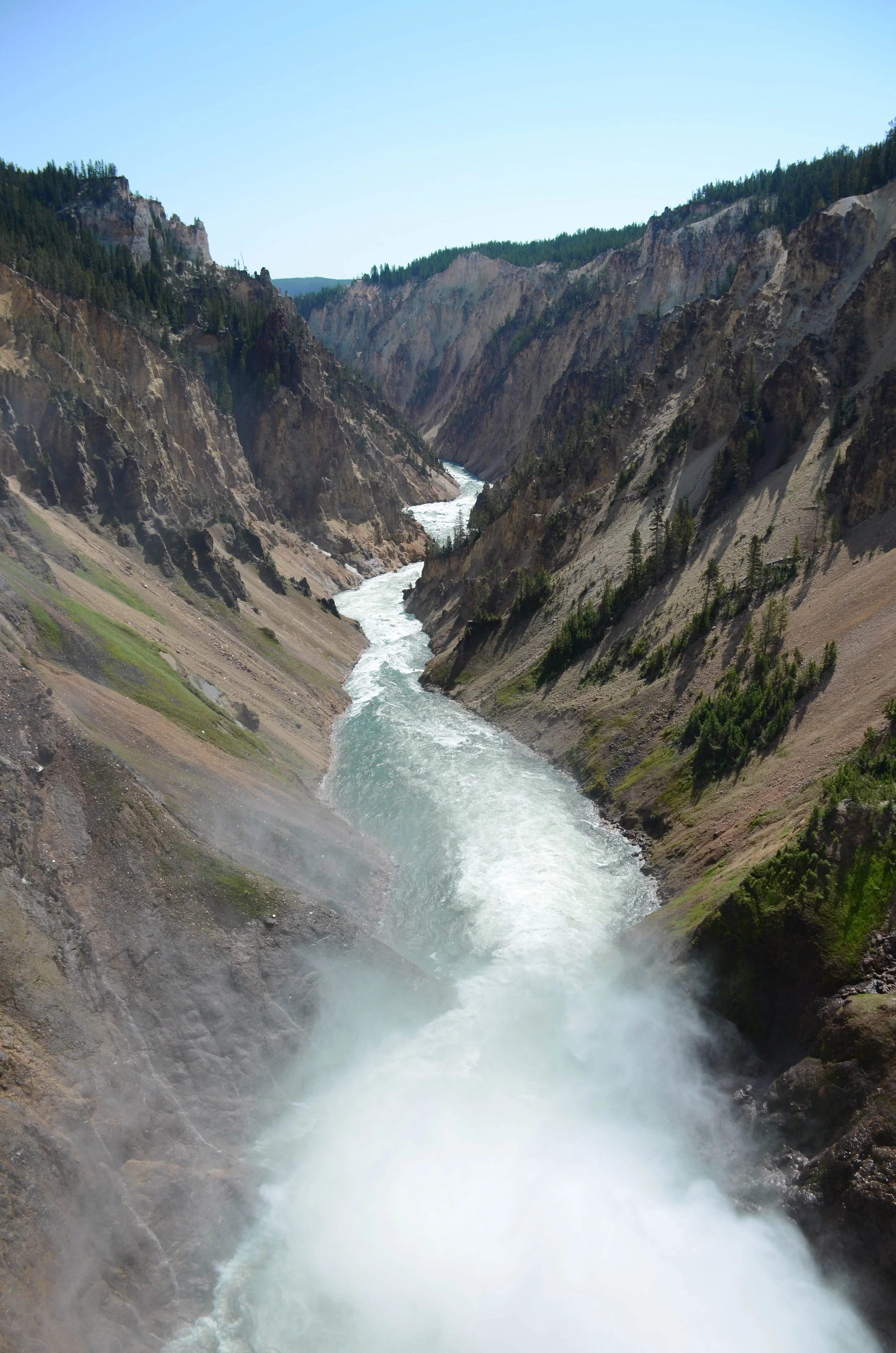
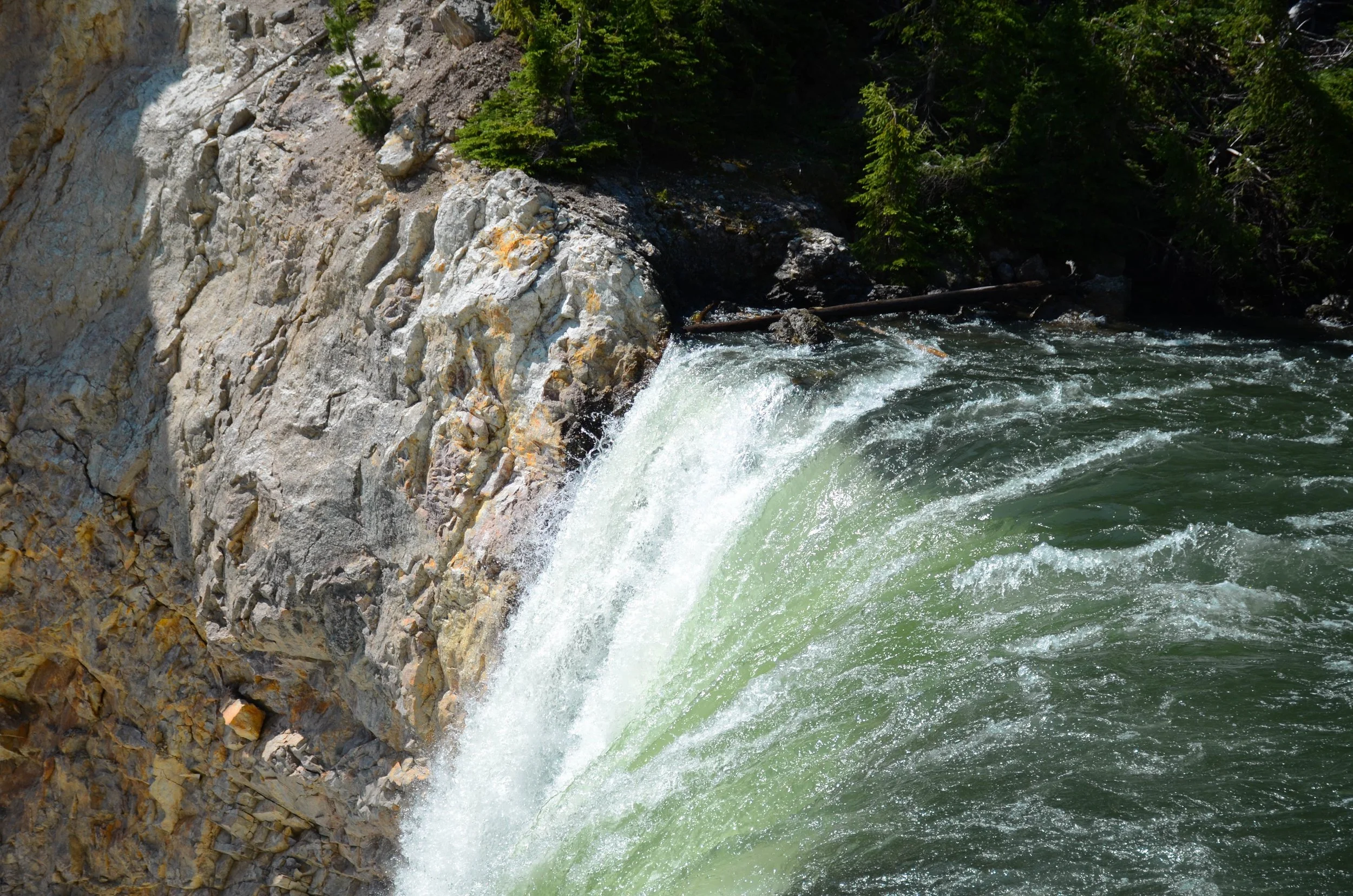
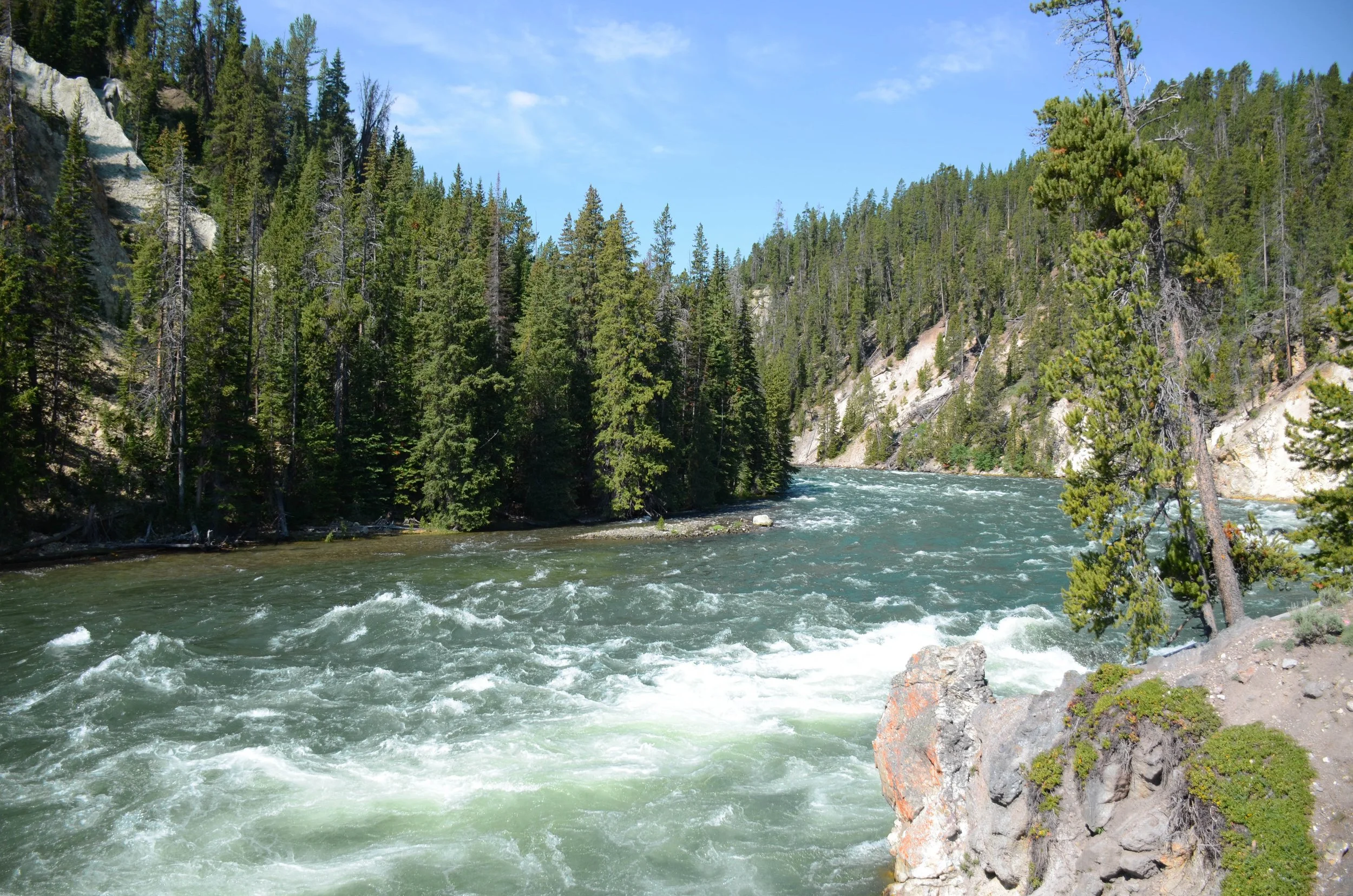
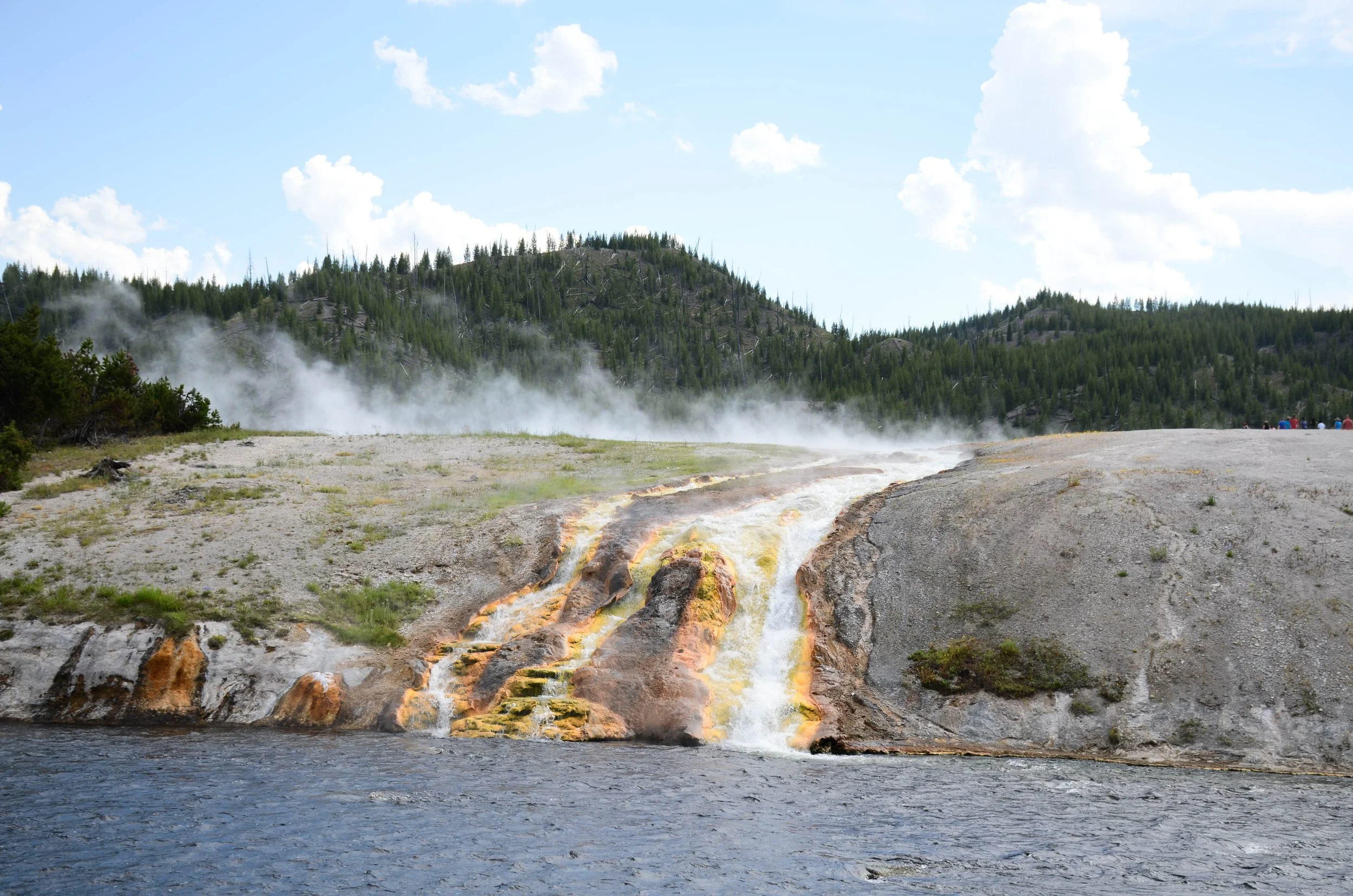
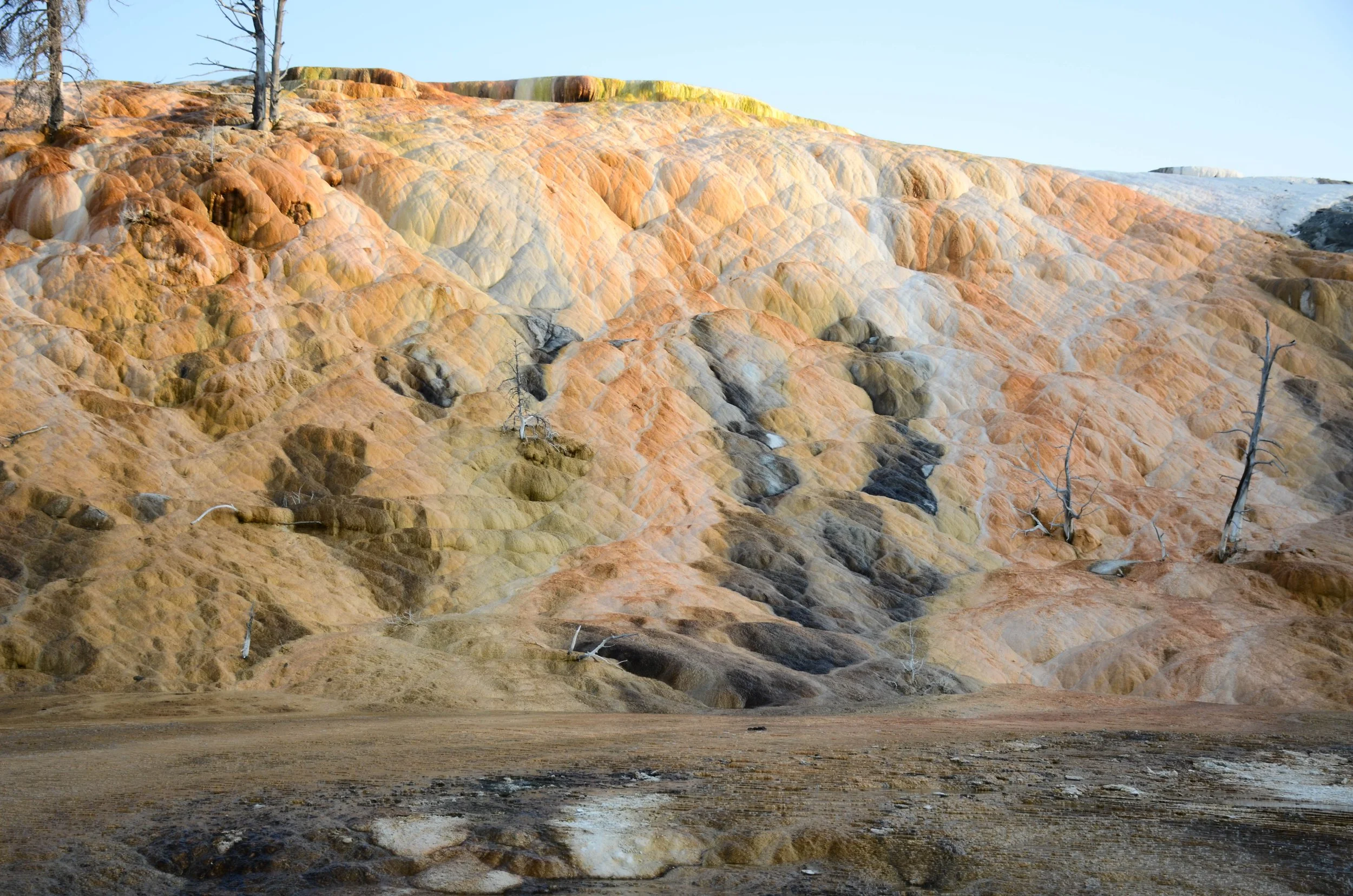
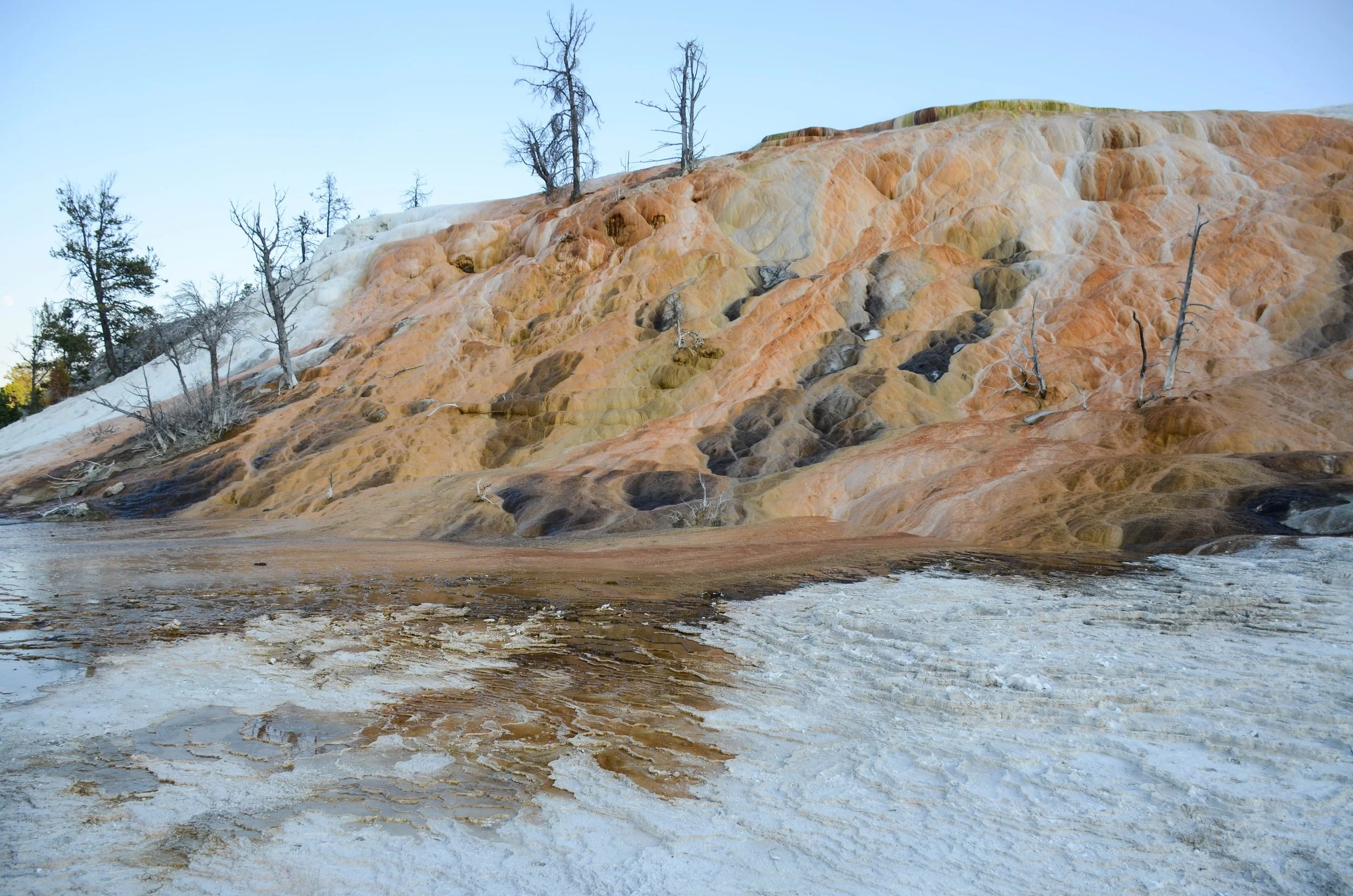
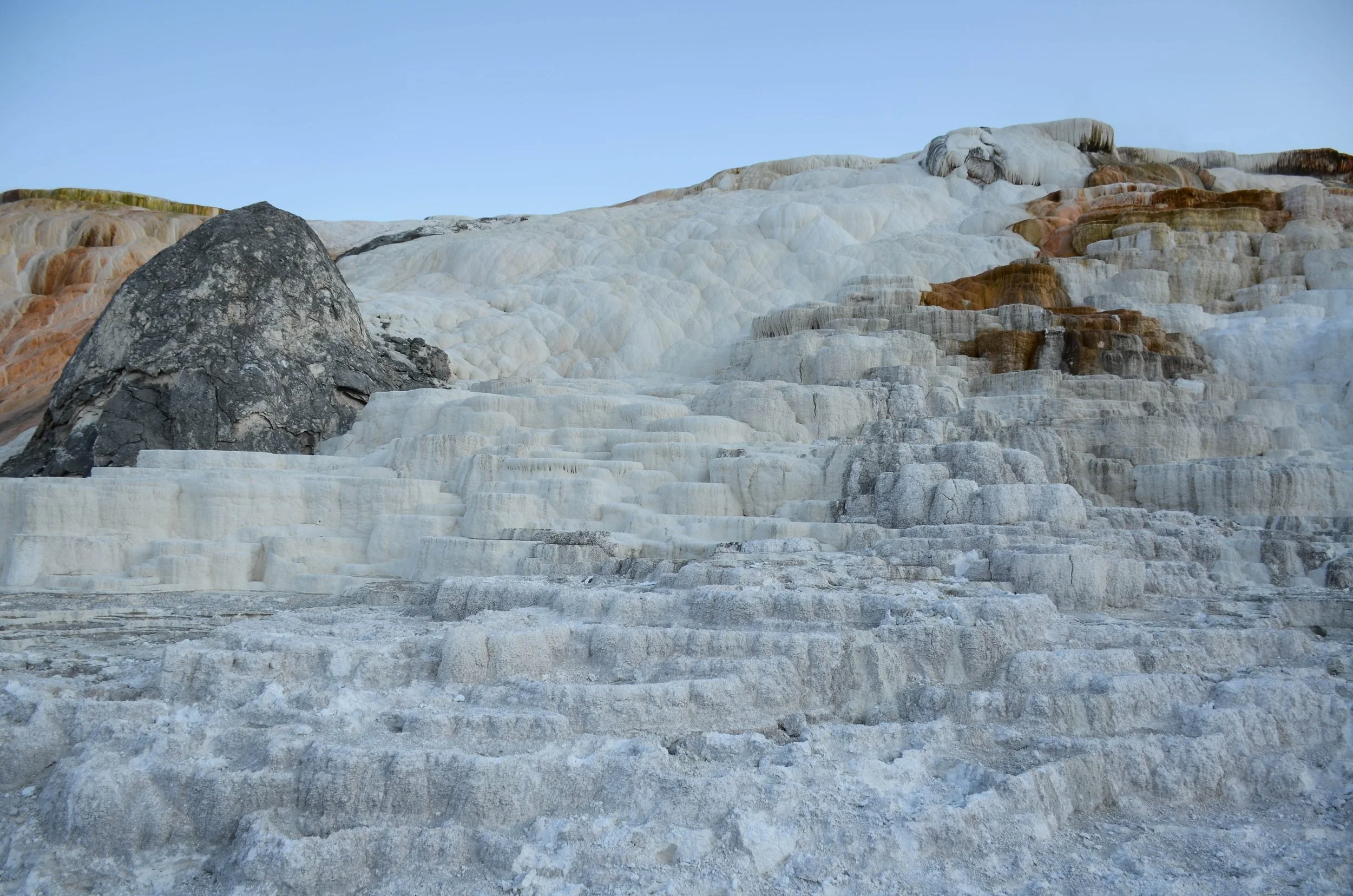
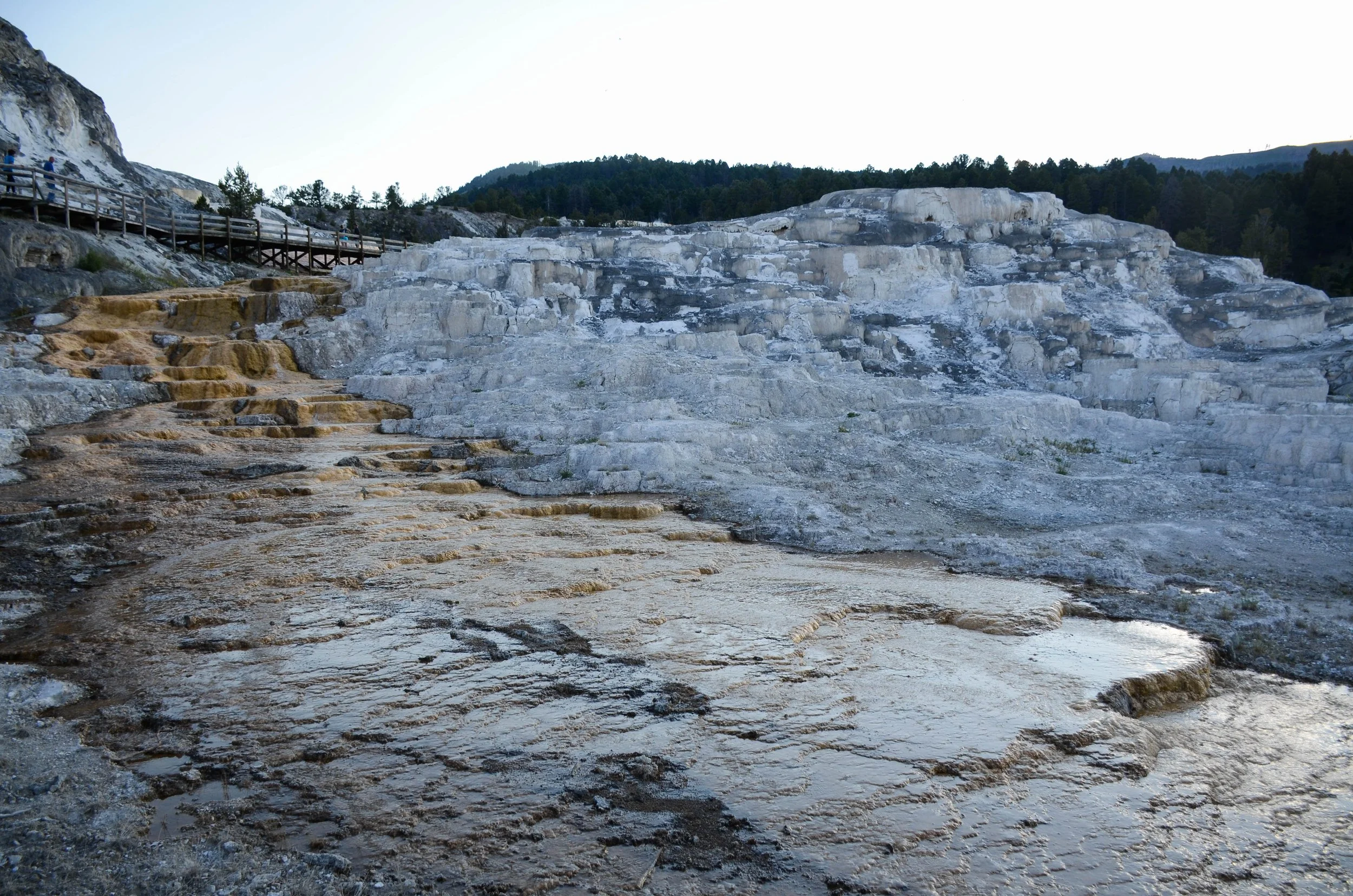
We’ve been to Yellowstone a couple times in our relationship: First as part of this summer trip, and later for our fourth anniversary in early March to see wolves in the Lamar Valley. Both trips have given us a glimpse into the enigmatic, wild, truly unforgettable landscape of the US’s first national park. The dazzling colors in the sulfuric pools, the bison scattered across the hills and meadows and walking on the roads themselves, the steam billowing out of cracks in the earth, the bears and wolves and deer and elk. In the summer, it feels like a place of abundance and plenty. In the winter, a hush comes over the snow-blanketed land, pierced only by the occasional haunting howl of a grey wolf.
The downside of the summer months is that the park is overrun by humans. It is difficult to find solitude if you stay on the beaten path, in a developed campground, or on the paved roadways. The inclusive, spacious parts of myself are happy to see so many people enjoying time outside; other less charitable parts of me chafe when observing people not showing respect and deference to the land and animals we’re all so lucky to share space with. It seems like almost every summer there is another story of somebody getting into an altercation with a bison while trying to take a selfie. And with so many people come other seemingly inevitable impacts, like more trash that can easily pollute the landscape.
One of these days, I’d love the chance to backpack in this park, giving myself the opportunity to find that quietude in the summer that struck me so profoundly on our winter visit. This is certainly a park that could draw you back again and again.
Grand Teton
Park 3 | July 2017
Part + Park 1 (of 3) of our inaugural summer roadtrip.
Summer trips have been a feature in our relationship since we met. This one lined up with J’s summer break from working in a Denver middle school and felt like a way to celebrate our birthdays, which happen to fall on the same day in late June. Grand Teton was our first stop and it did not disappoint.
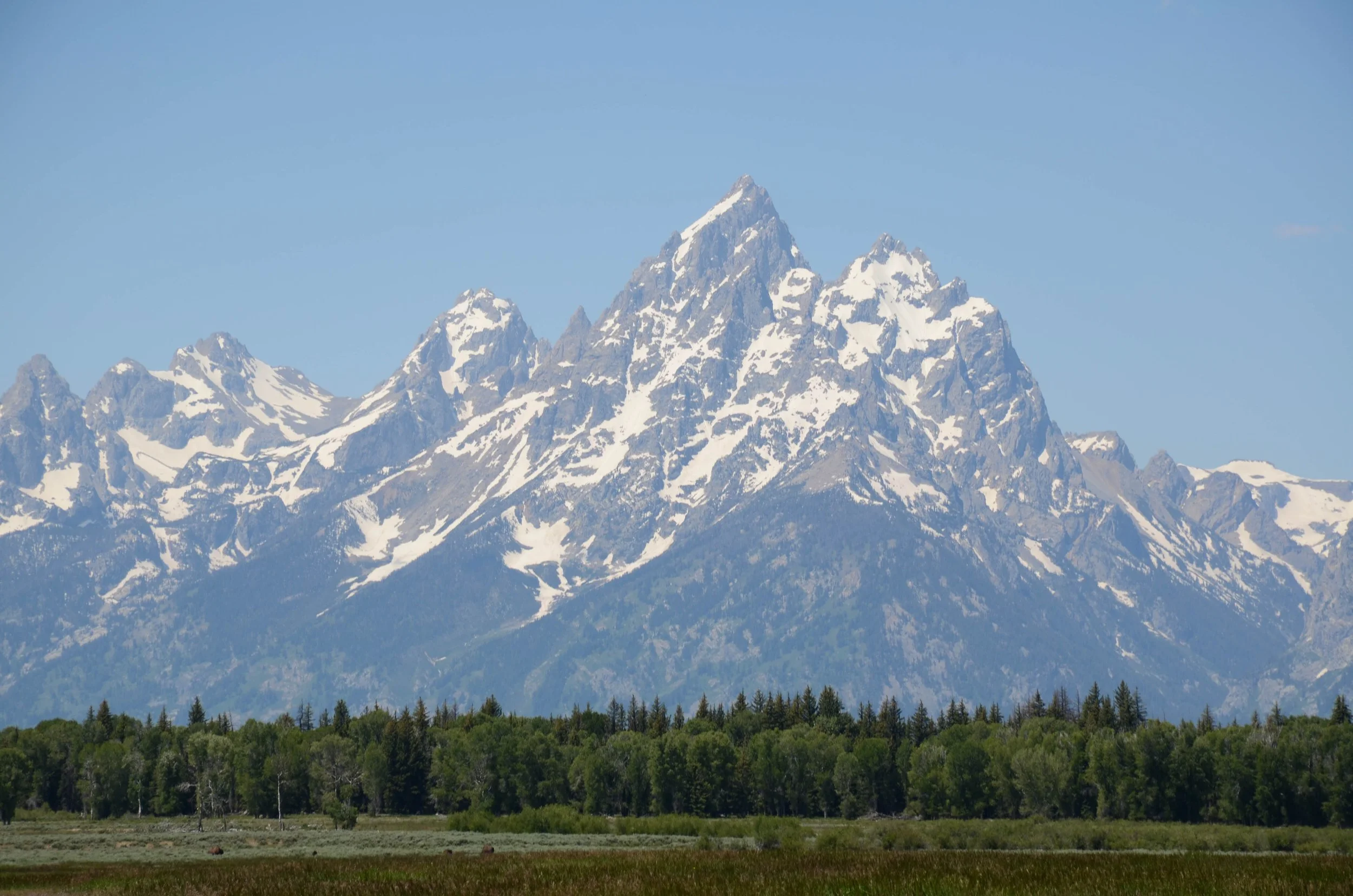
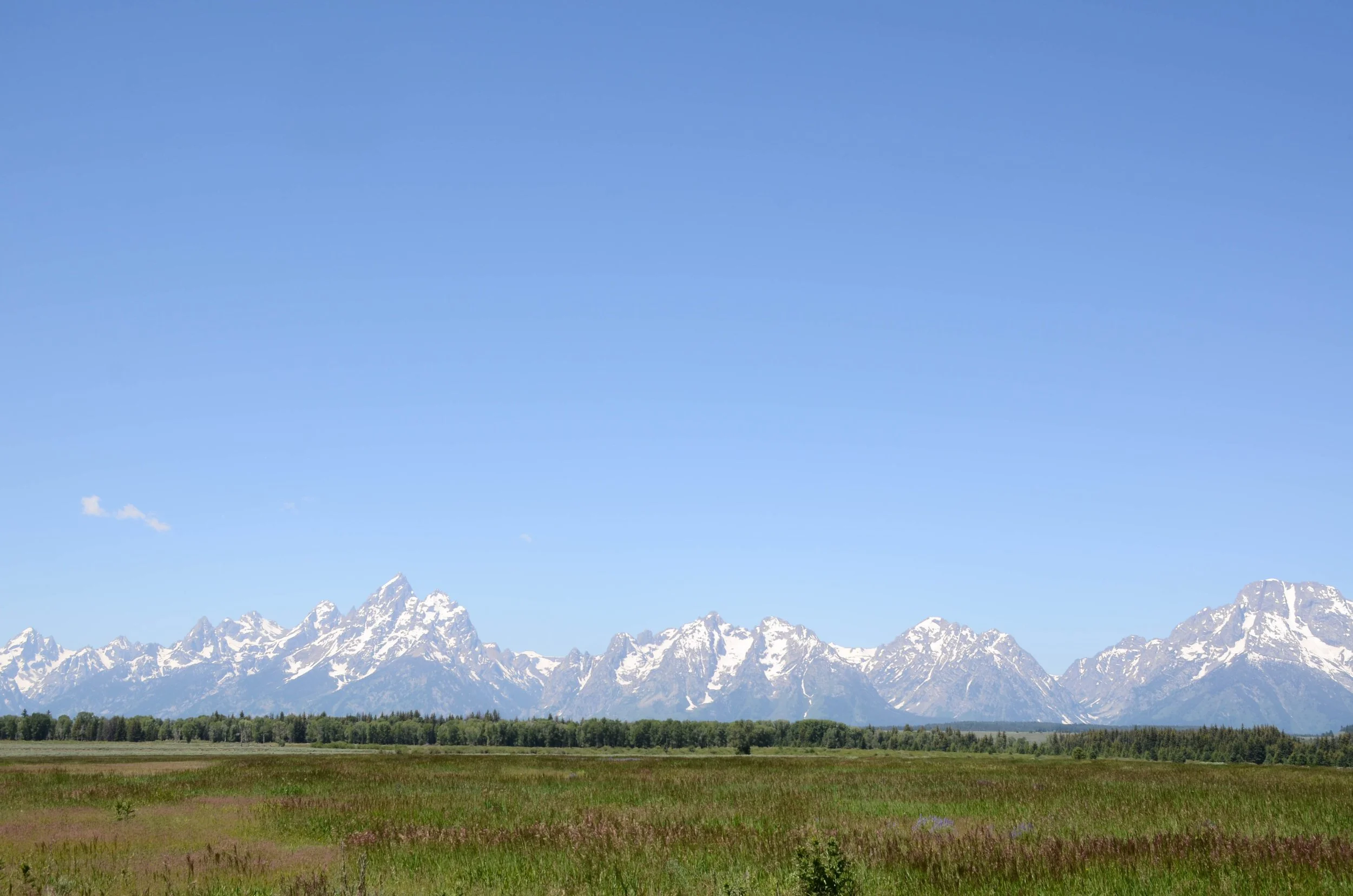
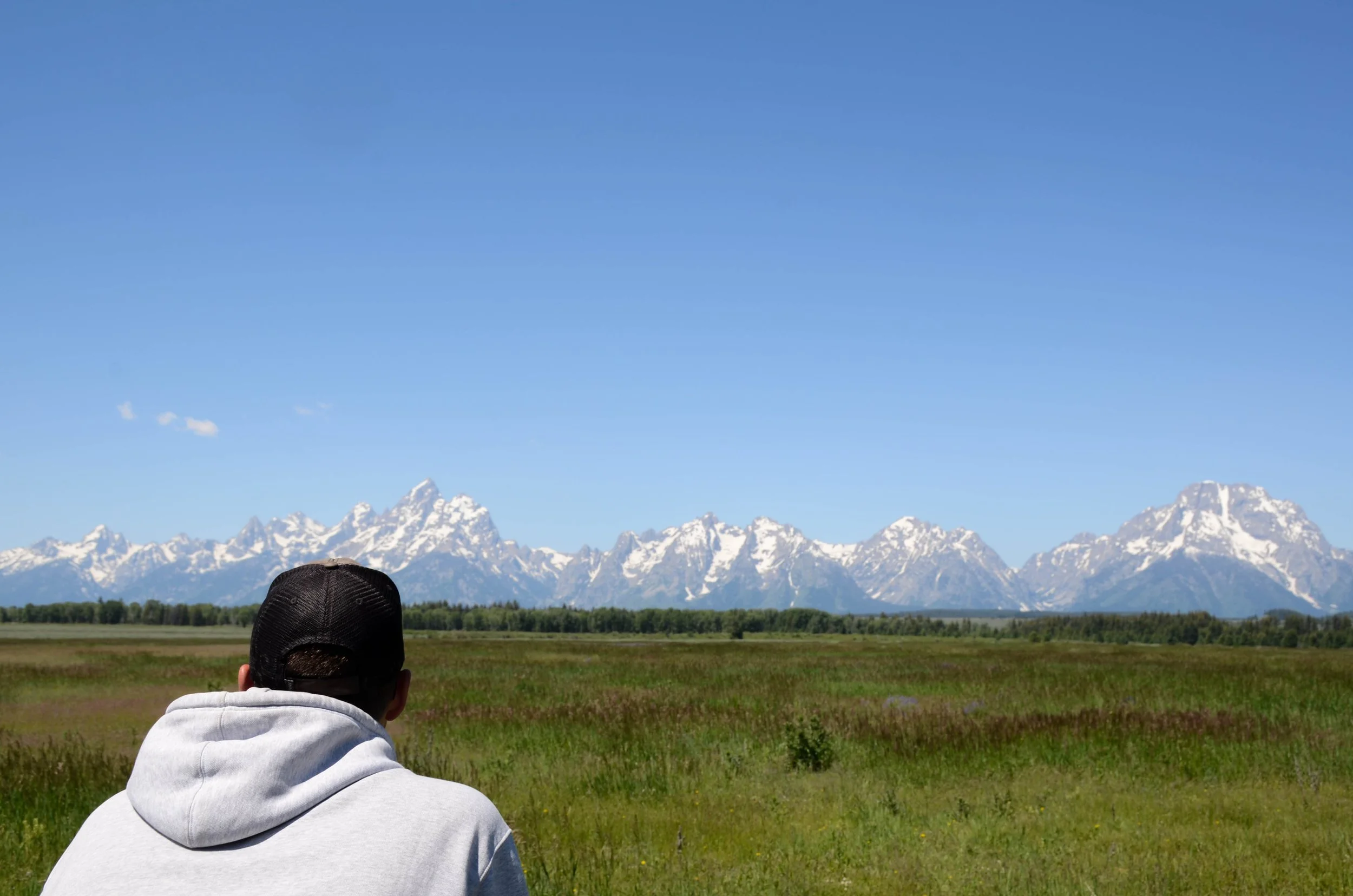
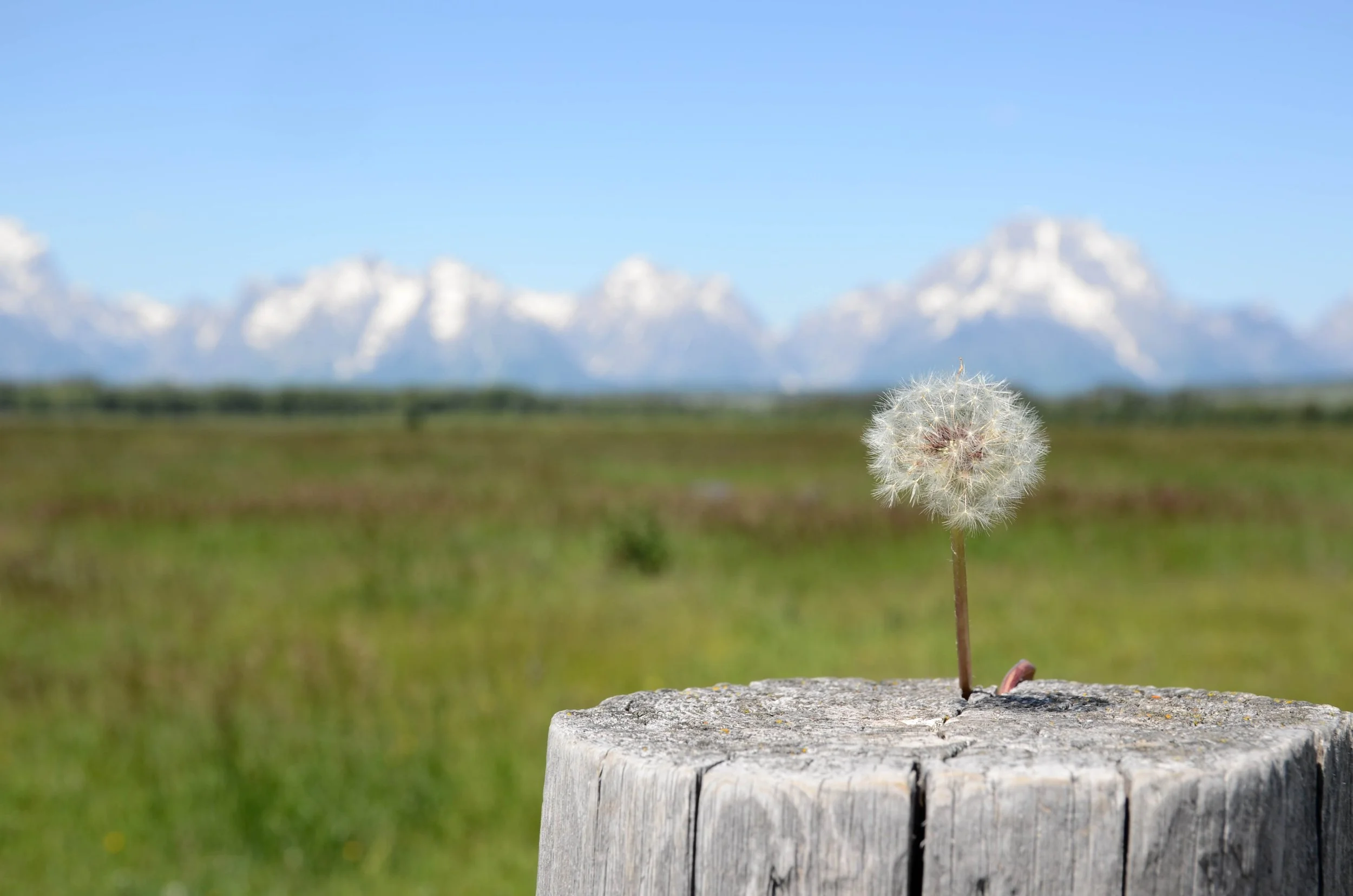
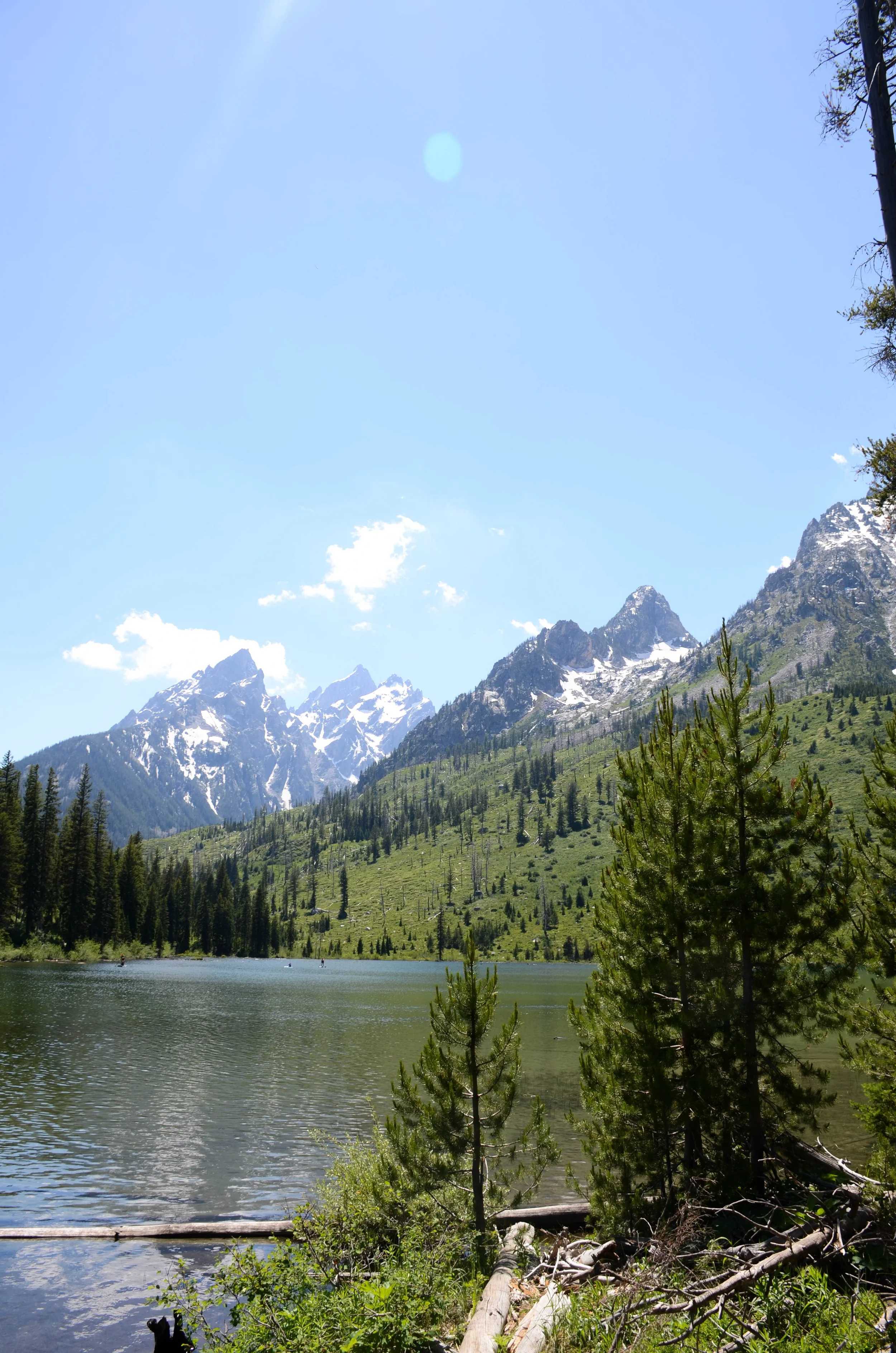
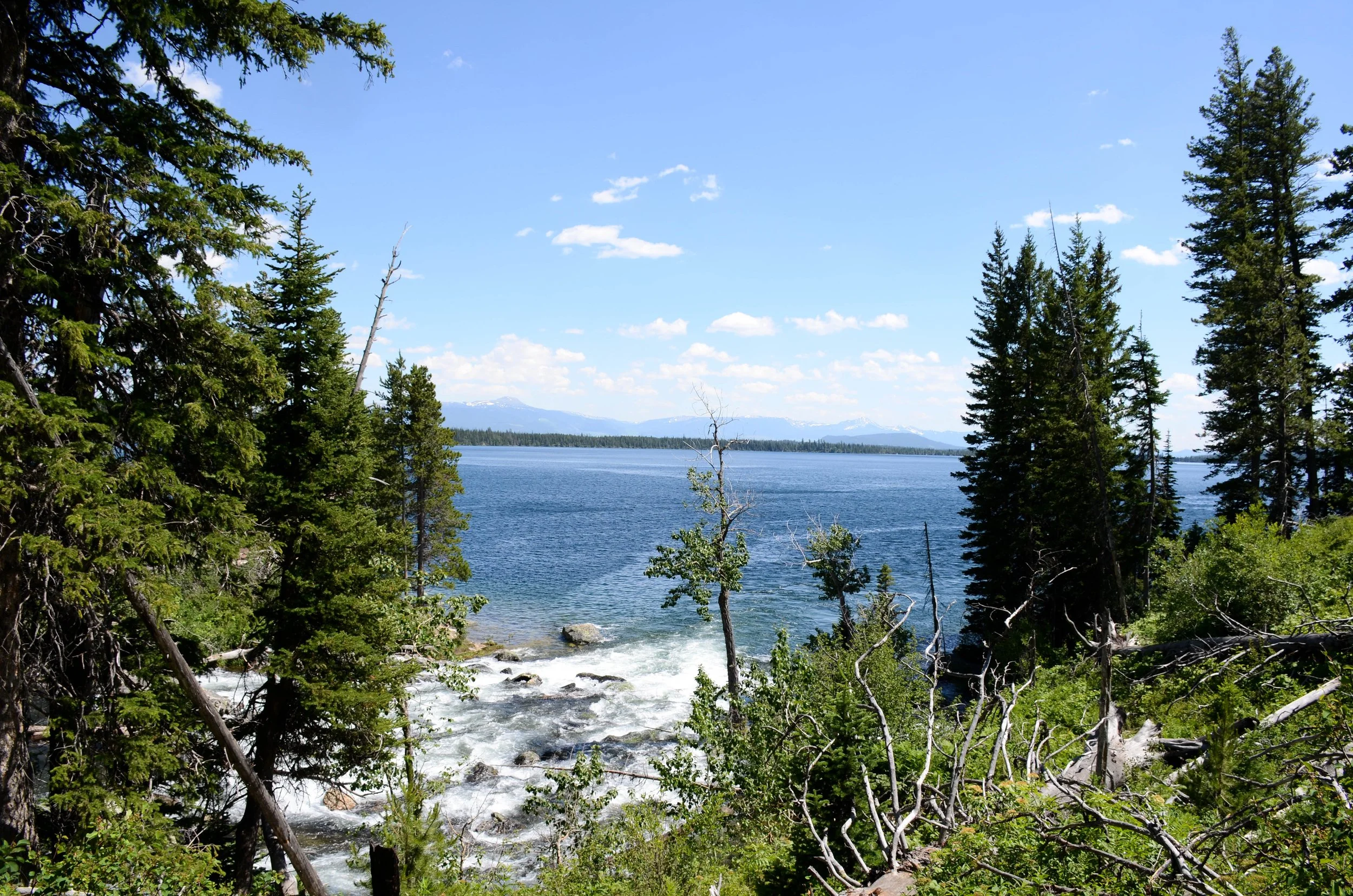
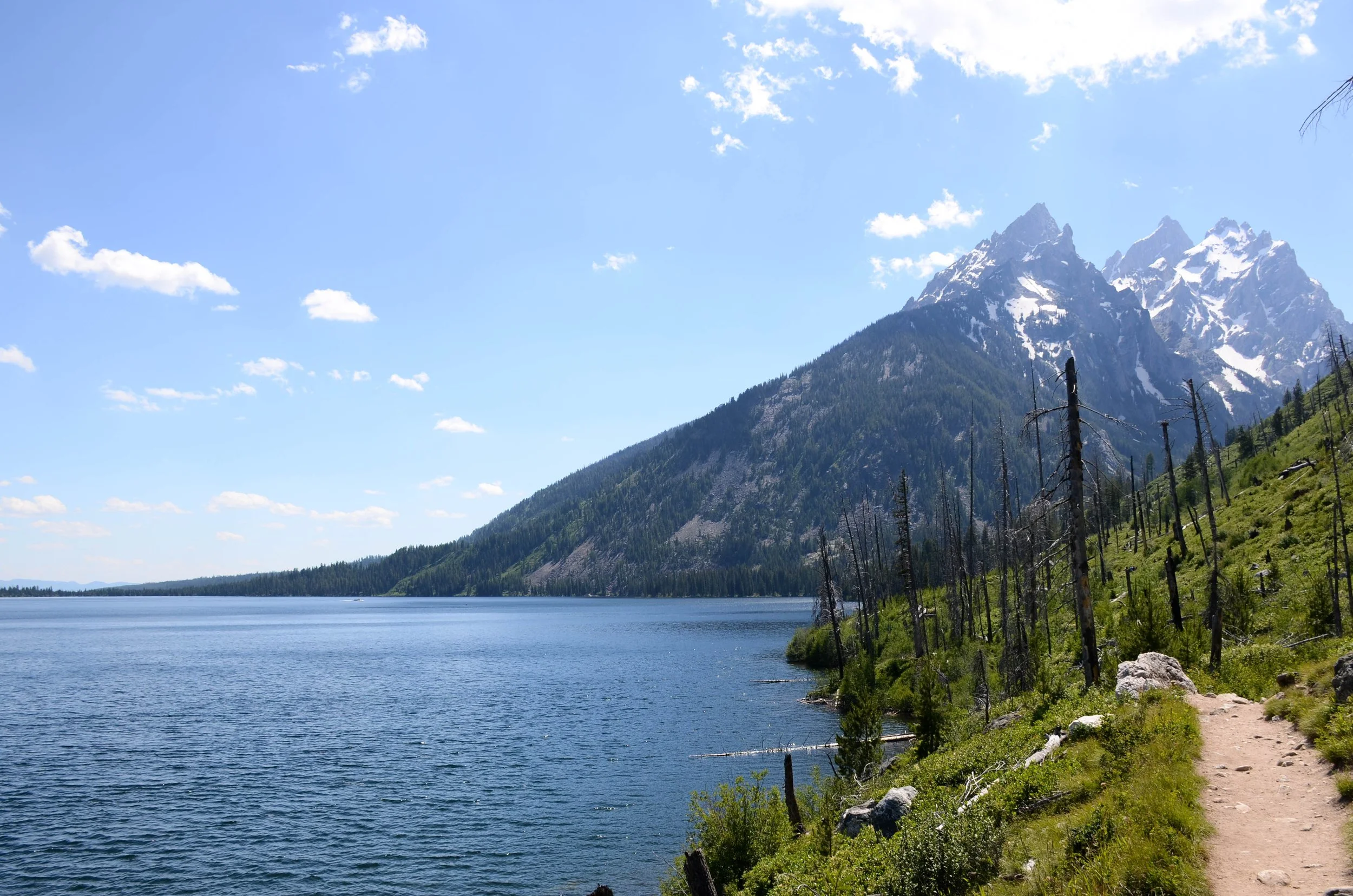
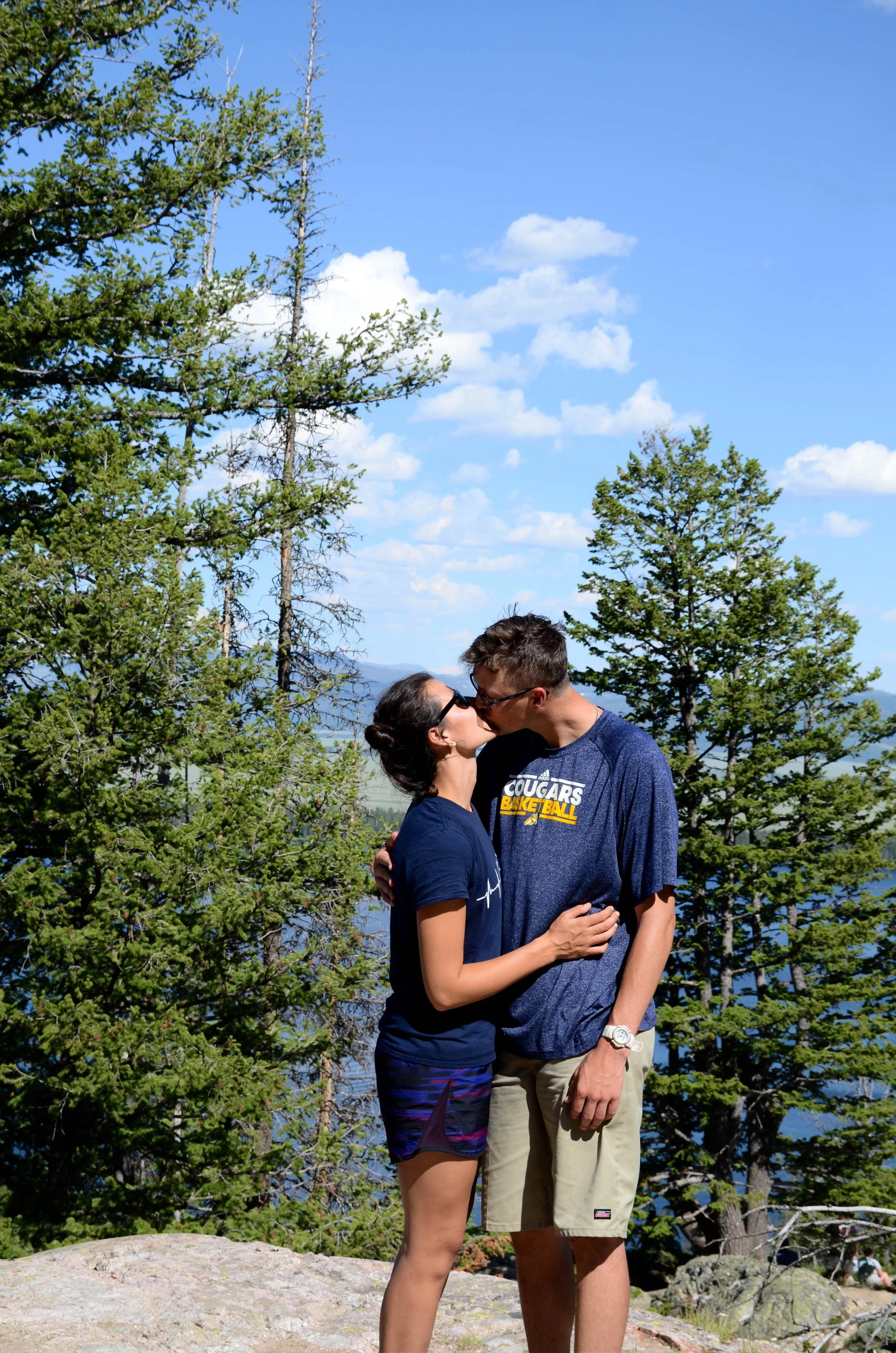
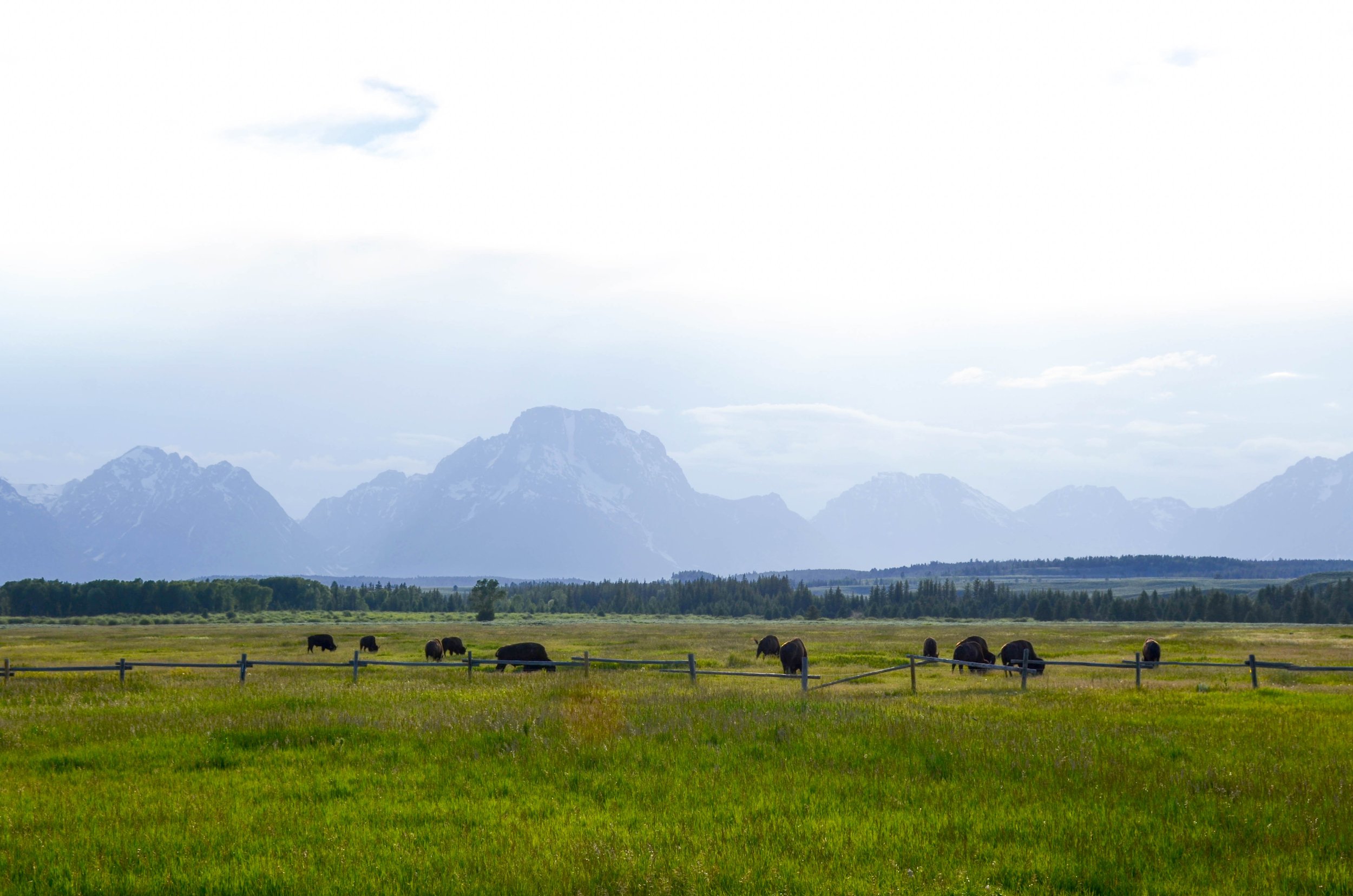
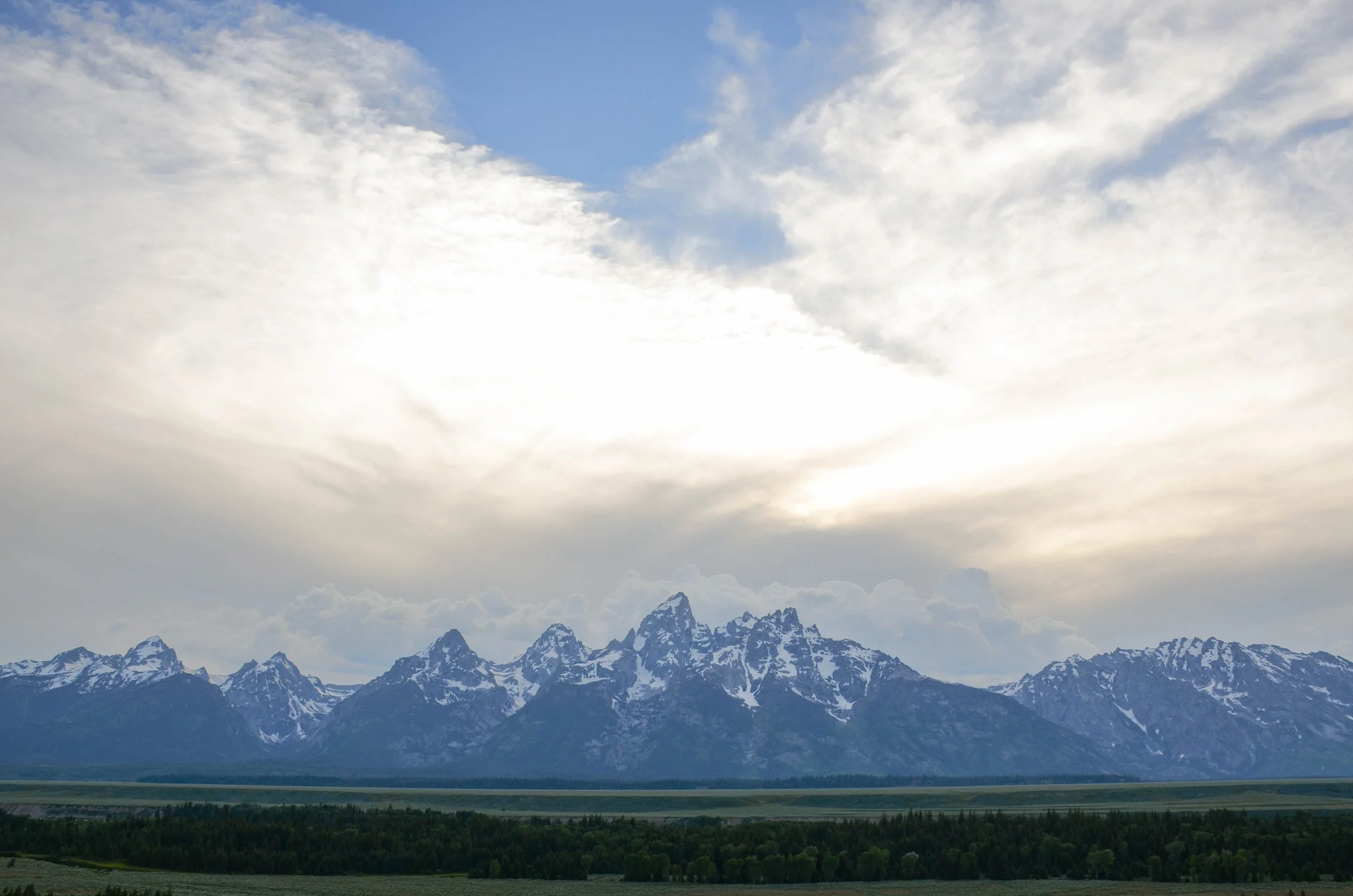
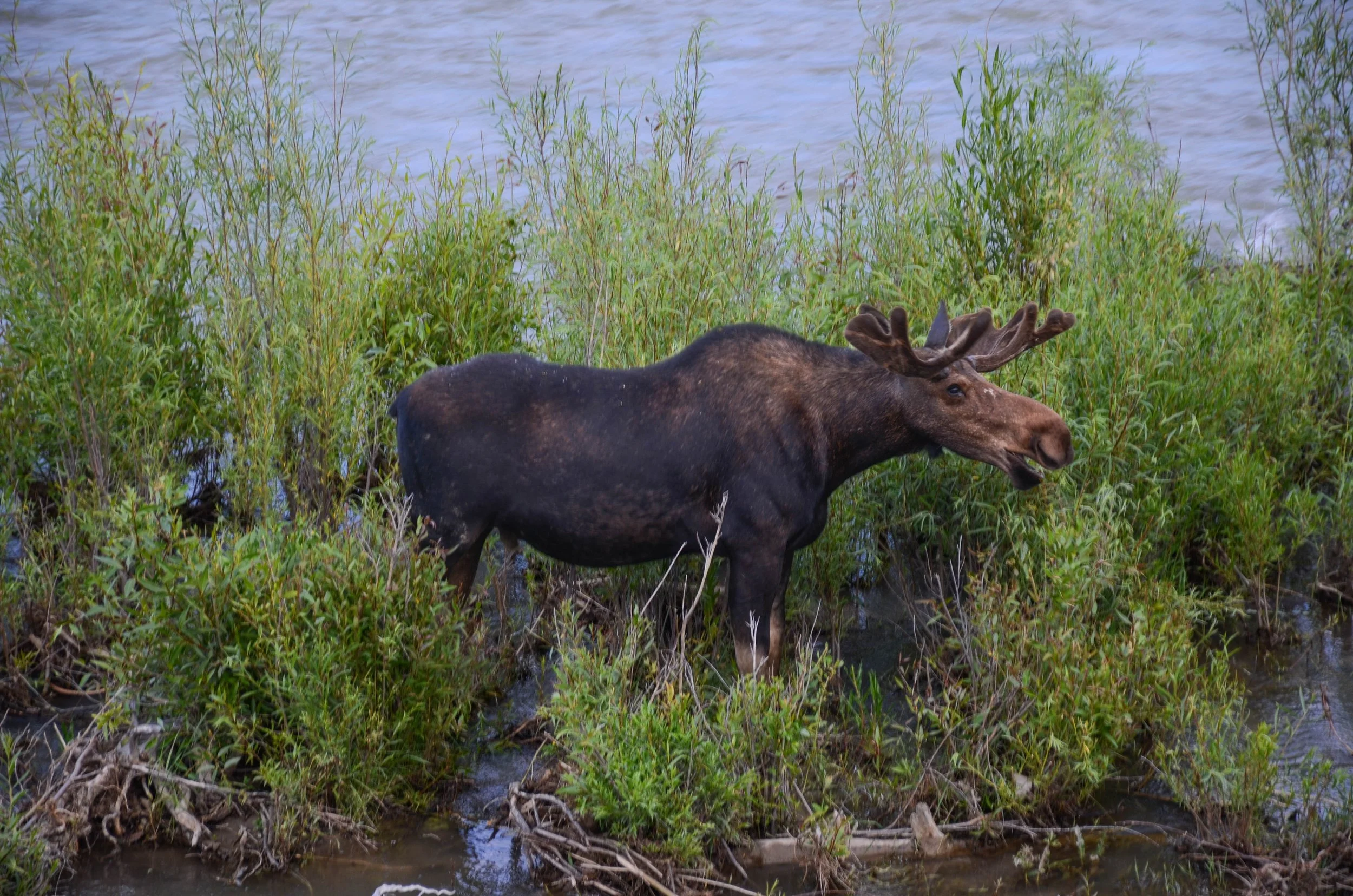
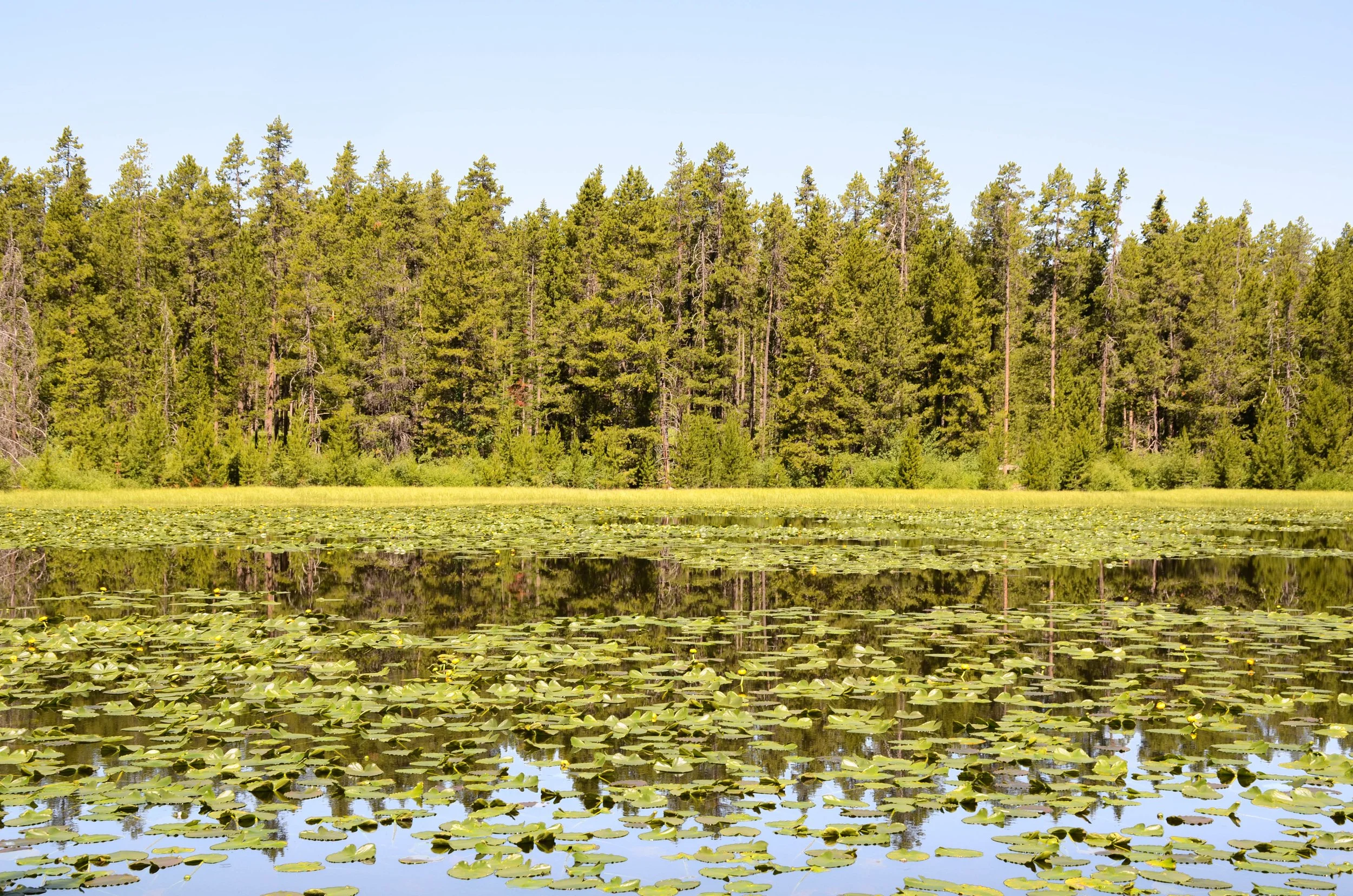
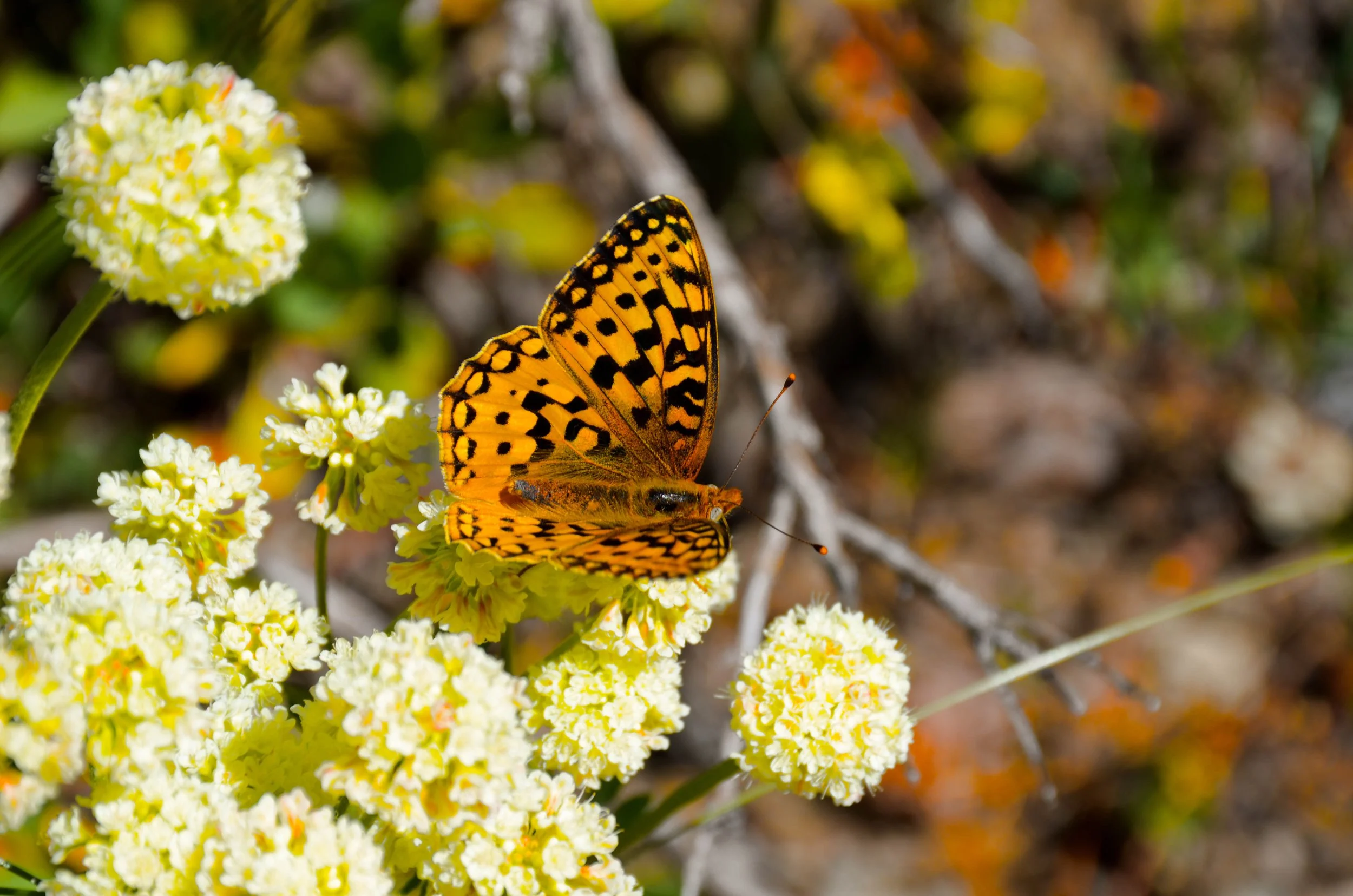
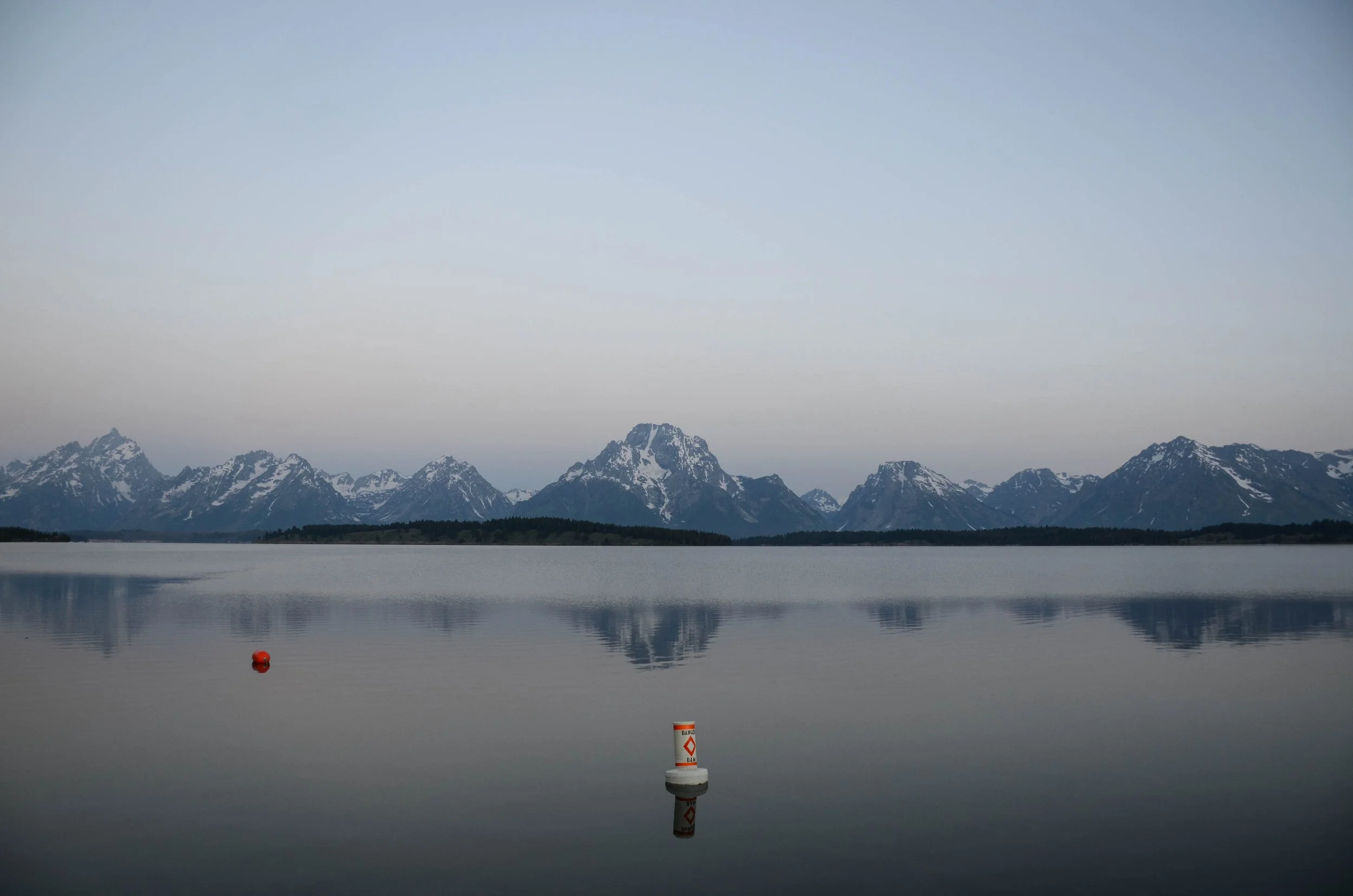
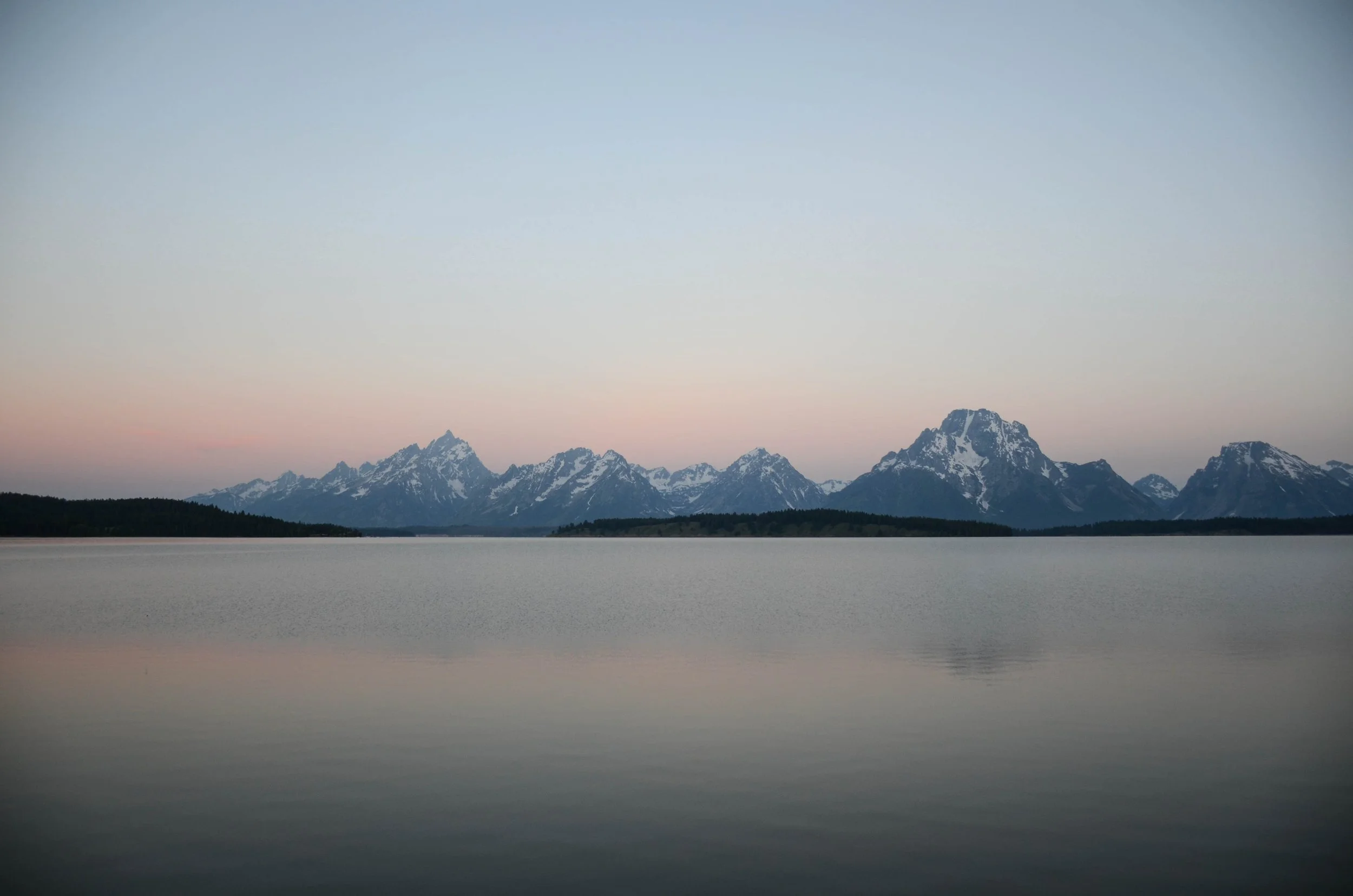
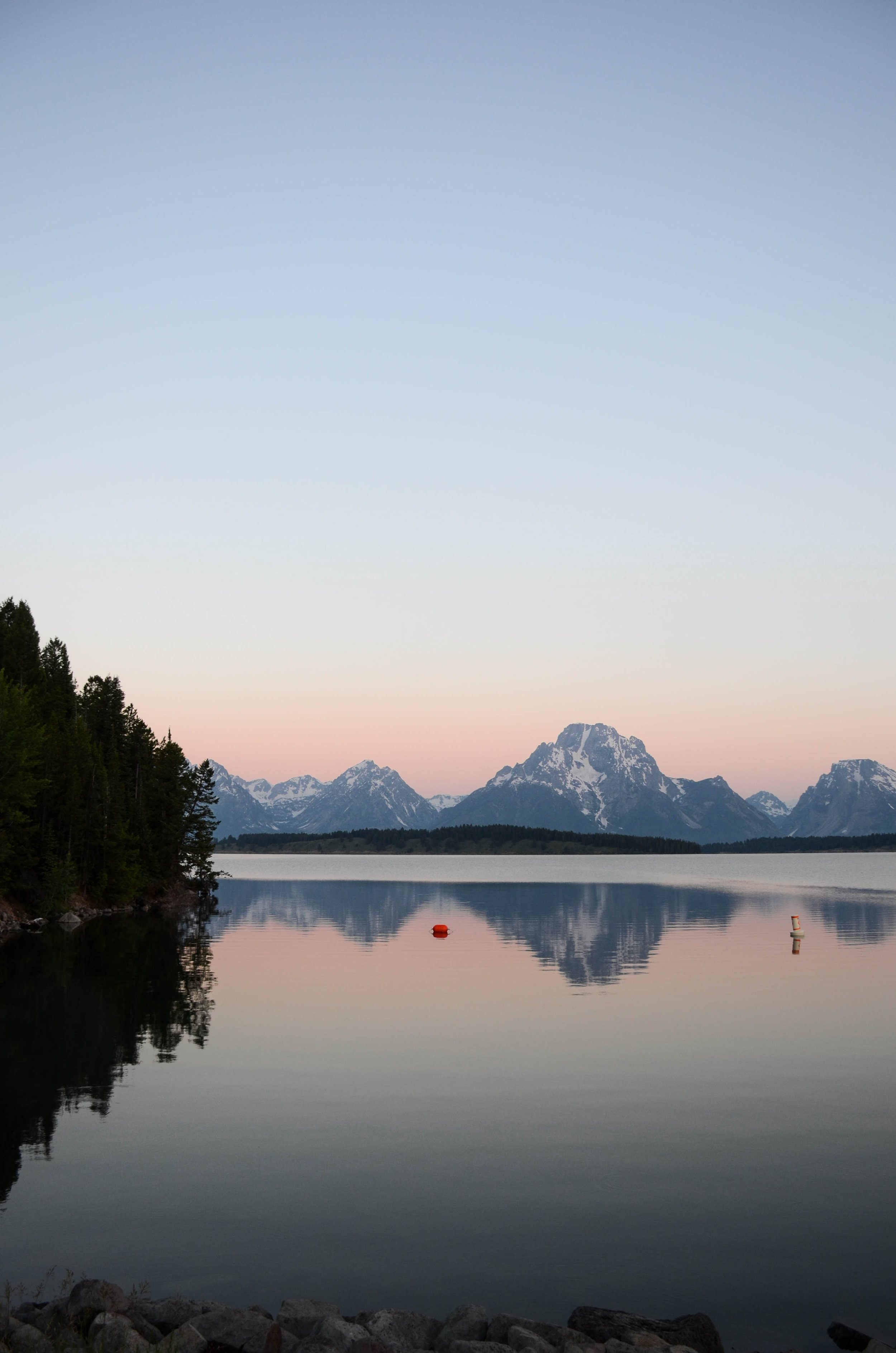
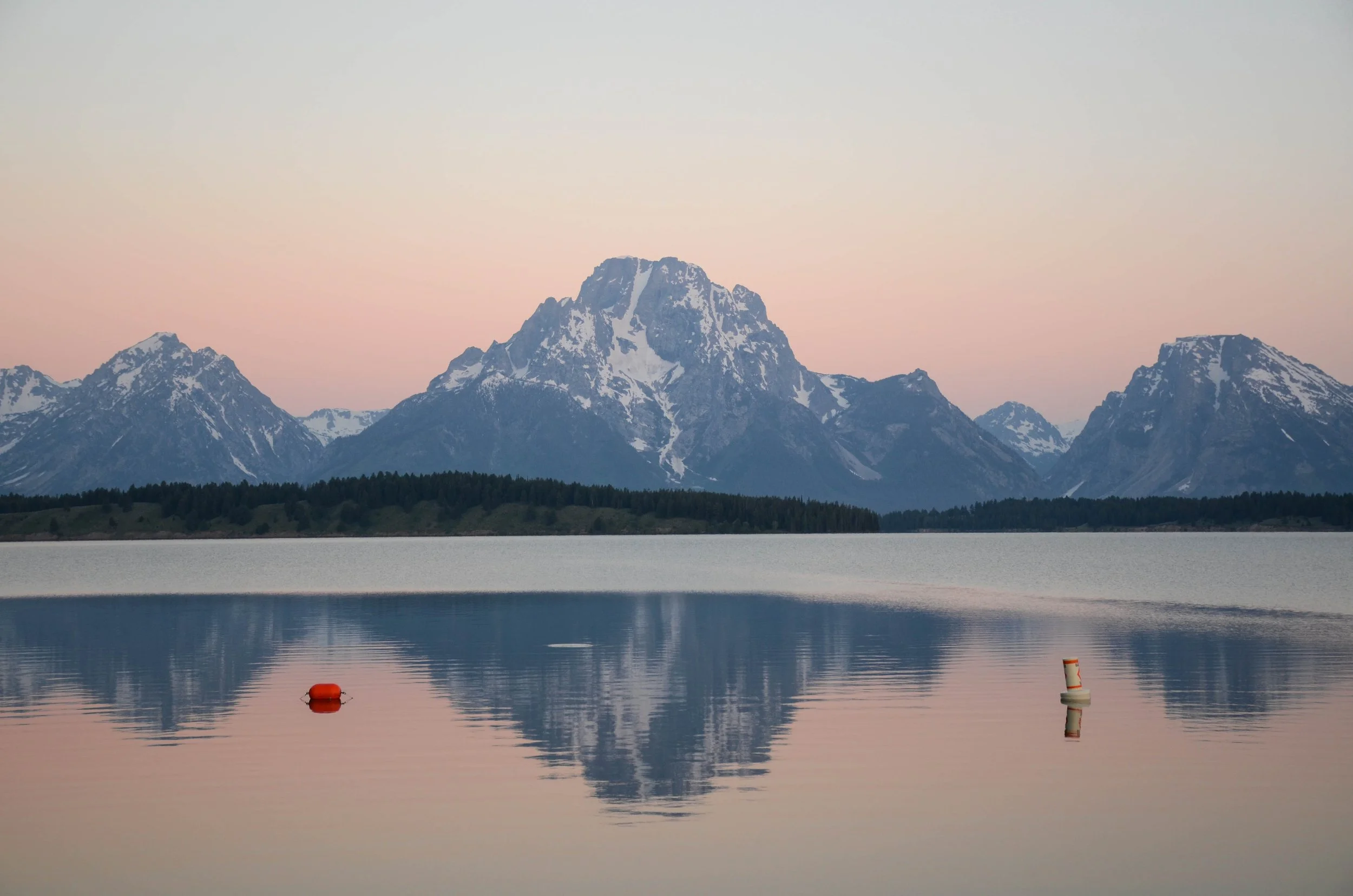
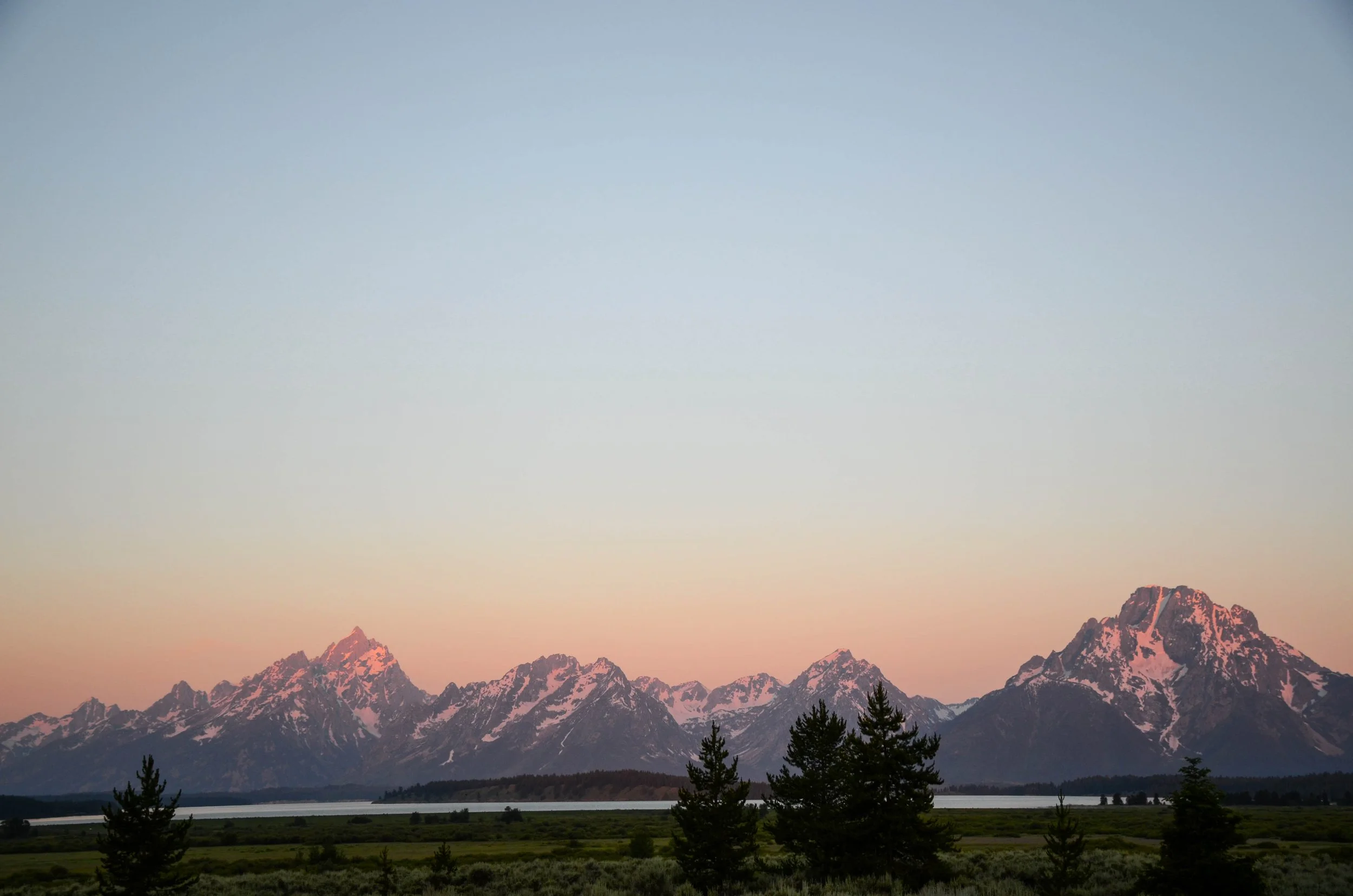
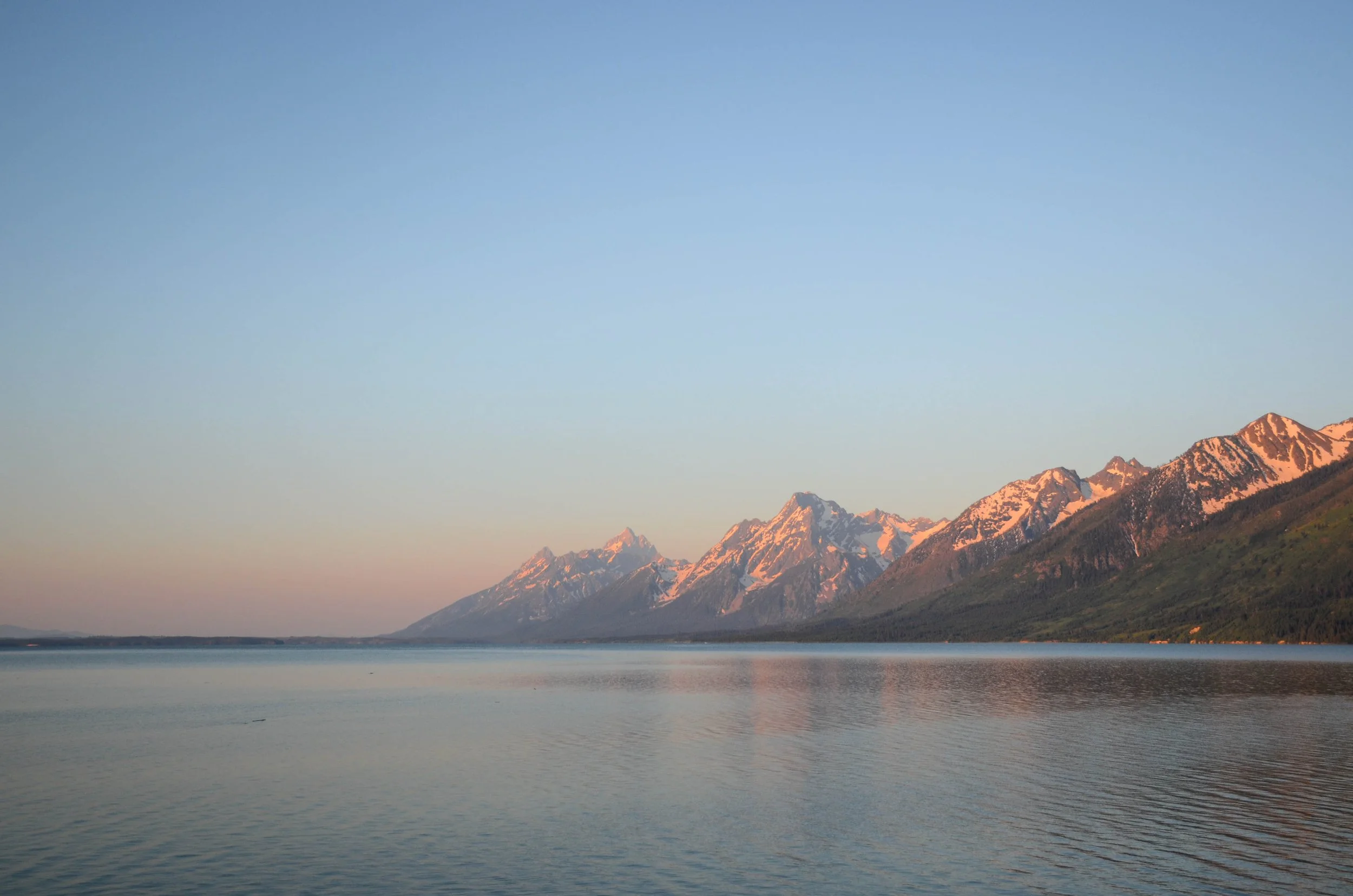
Don’t tell Yellowstone, but if I were forced to choose between the two nearby parks that we experienced back-to-back on this trip, Grand Teton won the top spot in my heart. Seeing the jagged Teton range rise higher and higher in our view as we drove into the park. Hiking alongside (and taking a dip in) Jenny Lake, the sunshine sparkling and dancing on her azure surface. Sunrise over Jackson Lake. Moose sightings almost every night in the river by the Gros Ventre Campground, peaceful trails up to lily pad-covered lakes, exploring nearby Jackson Hole.
We’ve always said we’d love to come back and backpack here, but sadly as of this writing in 2025, we haven’t actualized that return trip quite yet. A girl can dream, and I probably will be until we have the opportunity to come back to this magical place.
Pictured below:
The Teton Range from Gros Ventre Campground.
Jenny Lake.
Sunrise views of Jackson Lake.

Canyonlands
Park 2 | March 2017
Part + Park 2 (of 2) on our first trip through Utah and an upper sliver of Arizona.
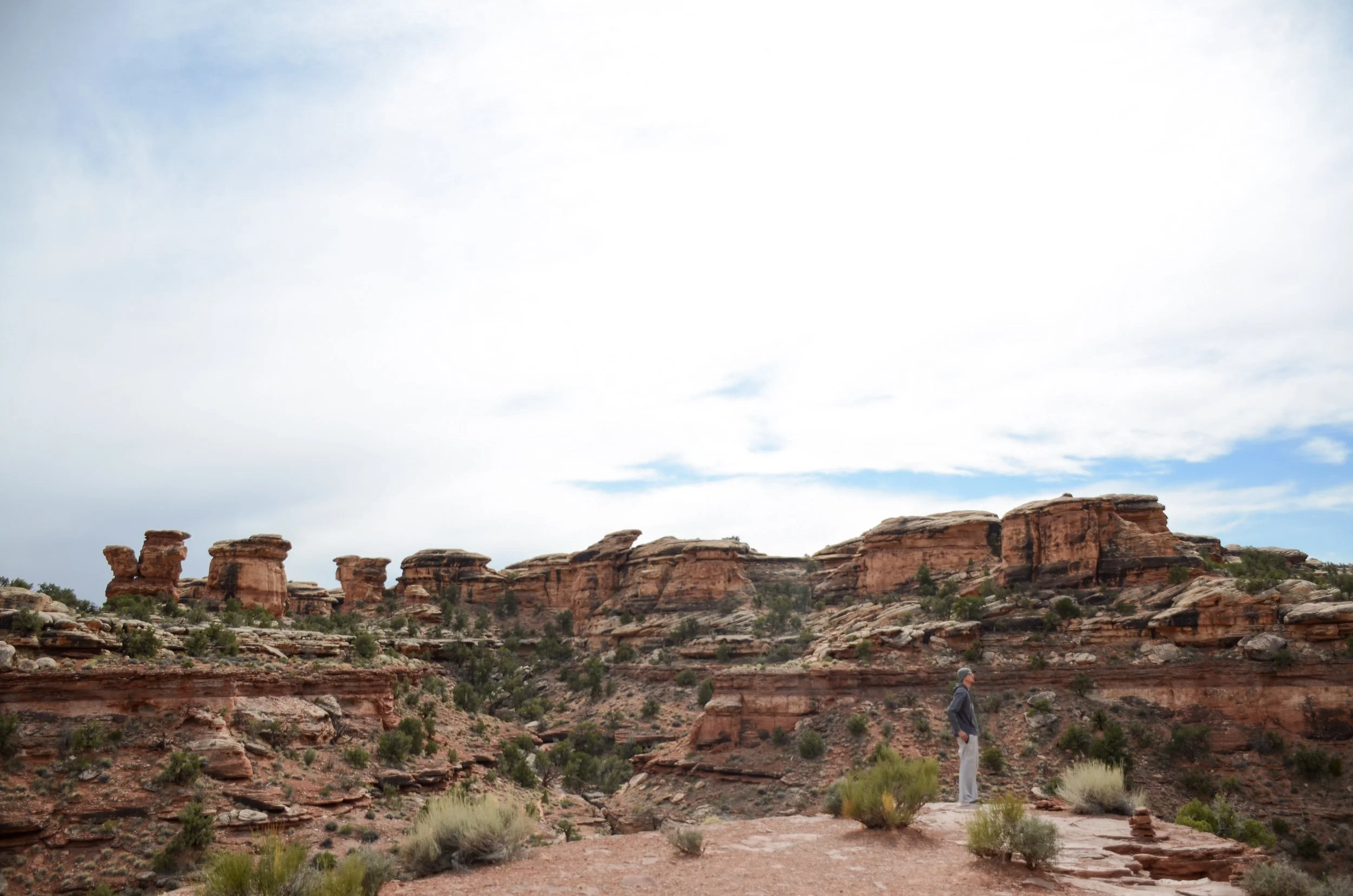
Our time in Canyonlands National Park was brief. A quick hike, a few overlooks, a drive along part of the road that winds its way deeper and deeper into the quiet landscape. Every time we think back to our afternoon here, it makes us laugh, because we also were in the middle of an epic fight and hardly spoke to each other the whole time.
We’d love to return someday and camp or backpack through this rugged landscape. Seeing the confluence of the Green River and Colorado River, a significant spot for anyone interested in water sources and politics of the Southwest, is high on our list.
Pictured below:
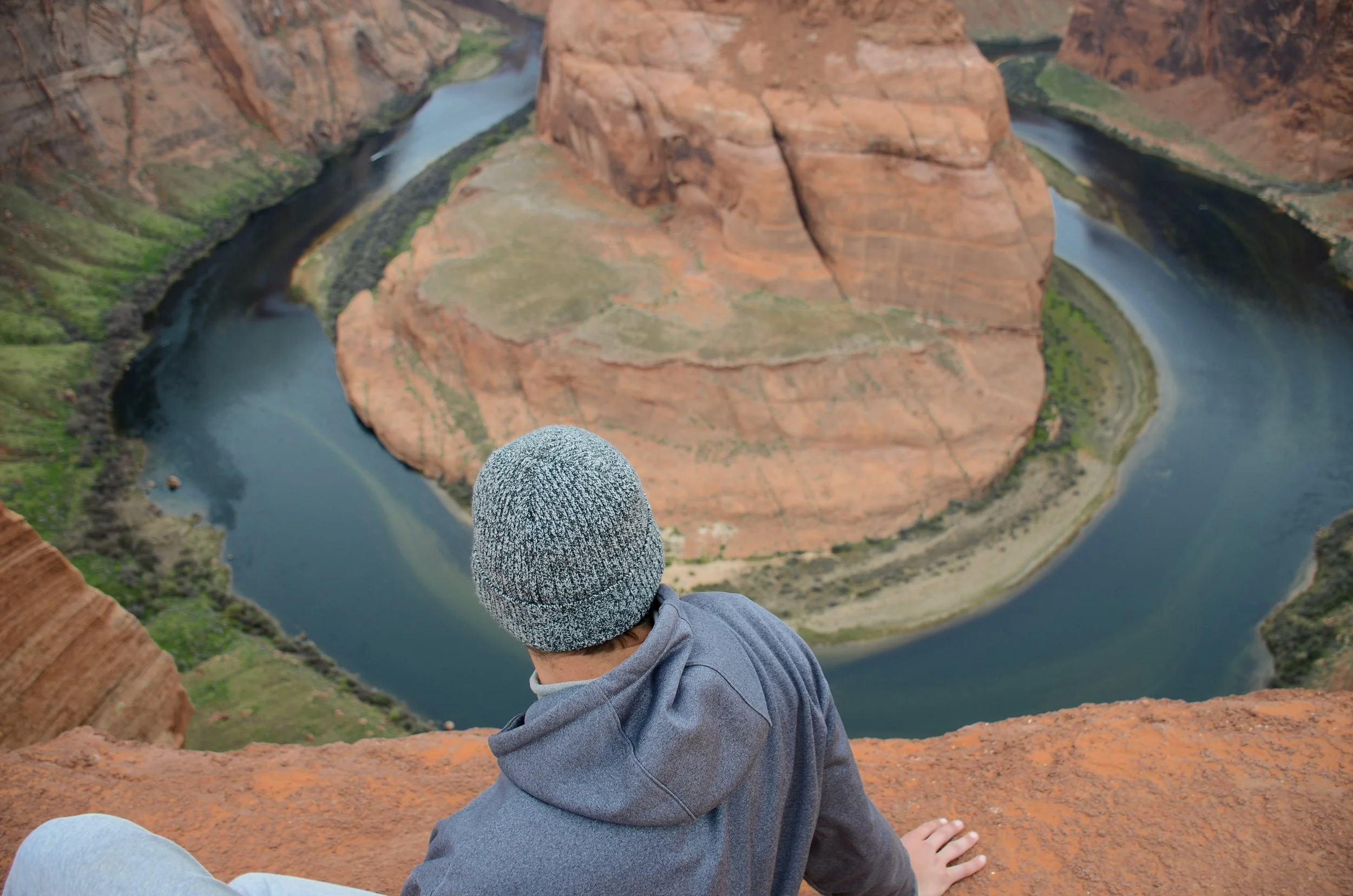
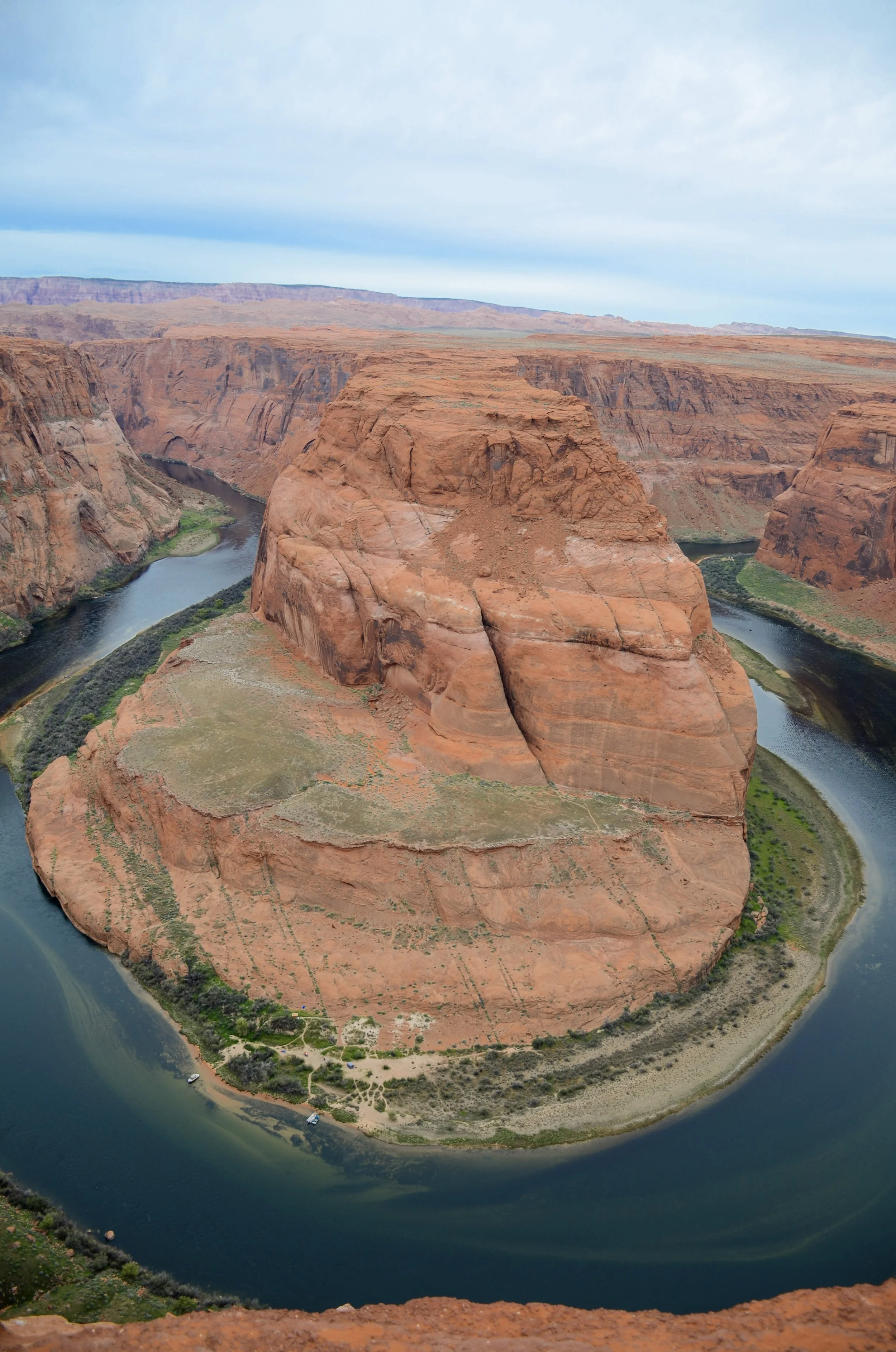
Horseshoe Bend. Arizona.
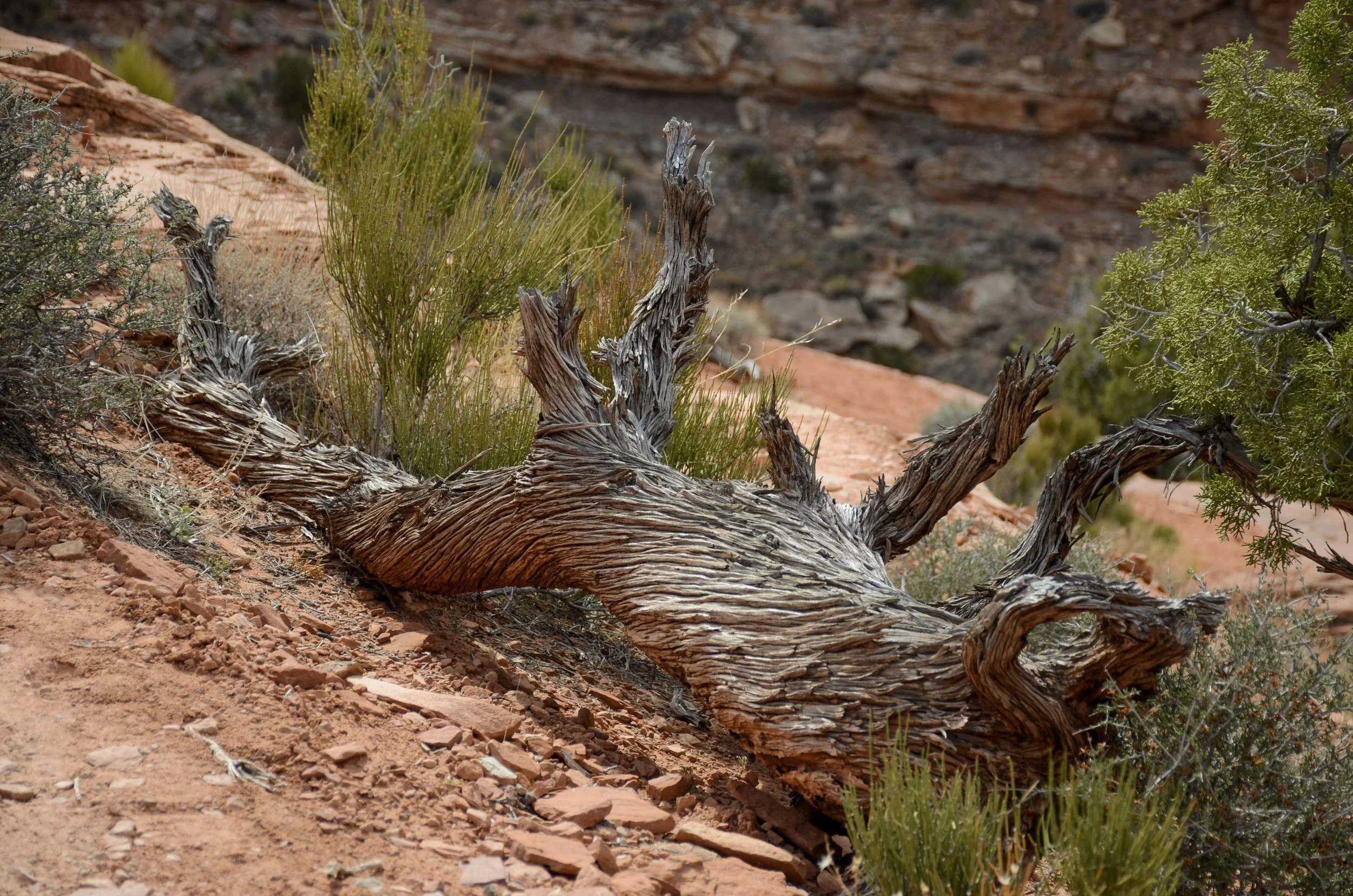
Canyonlands National Park. Utah.
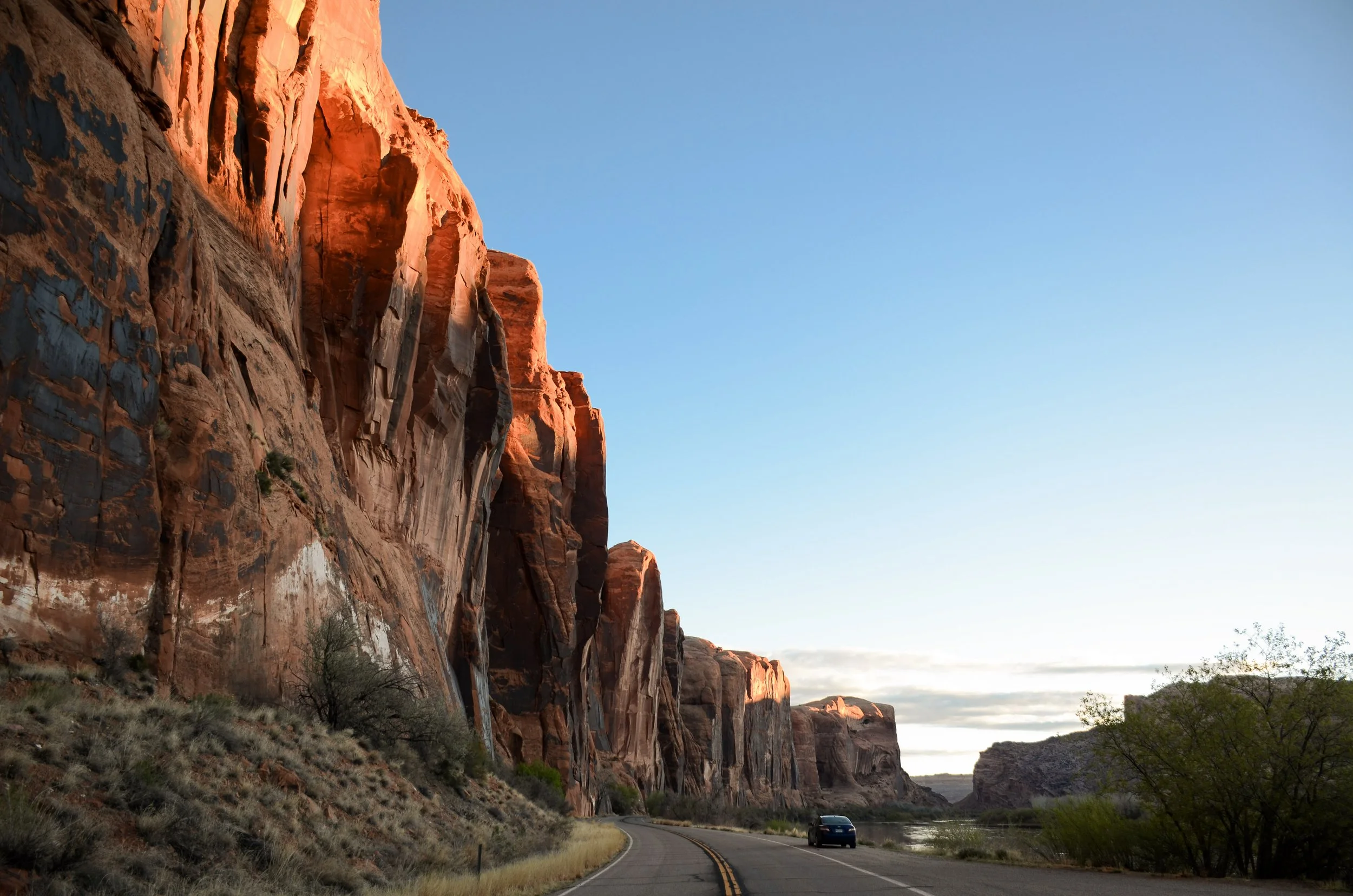
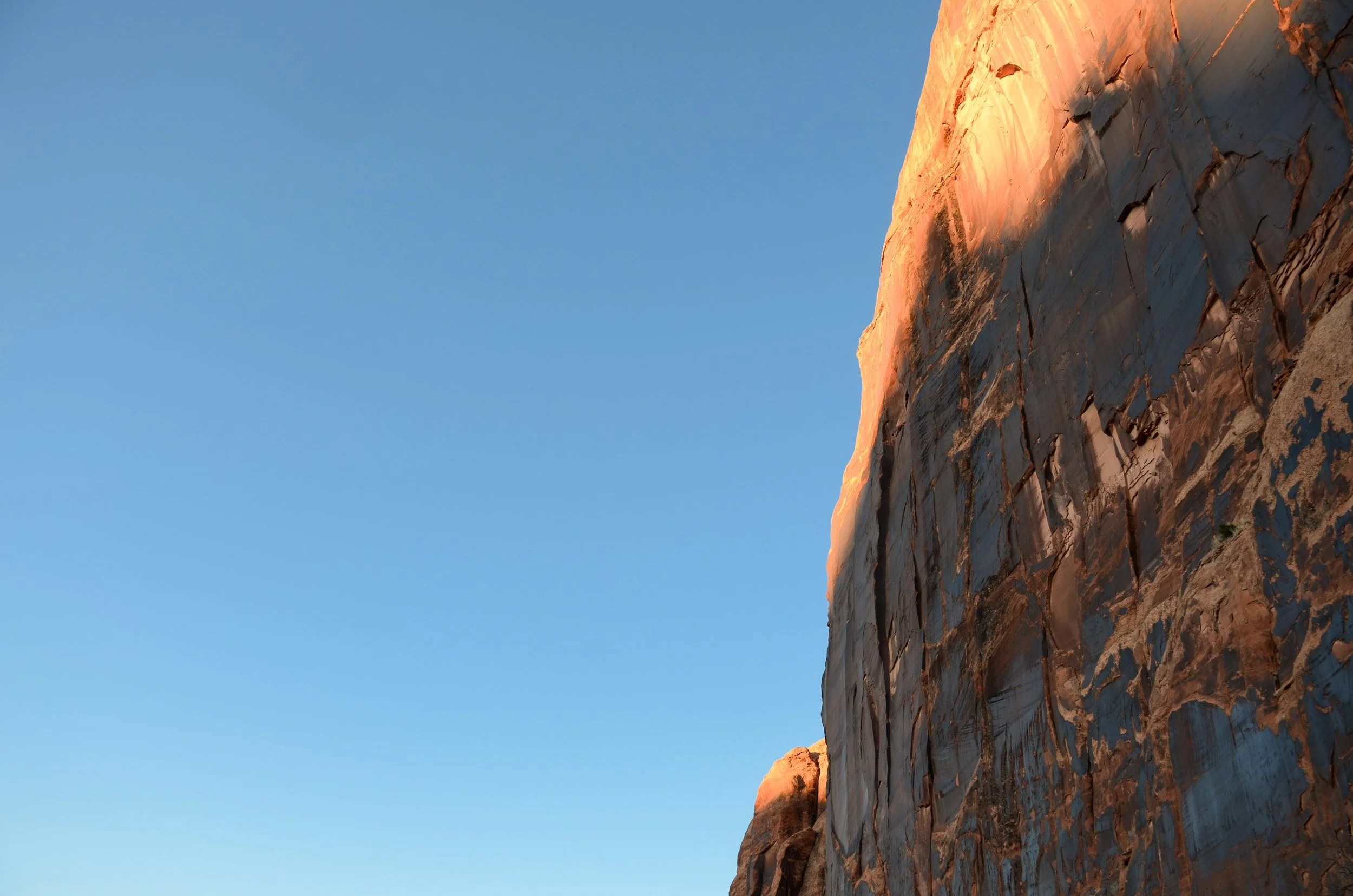
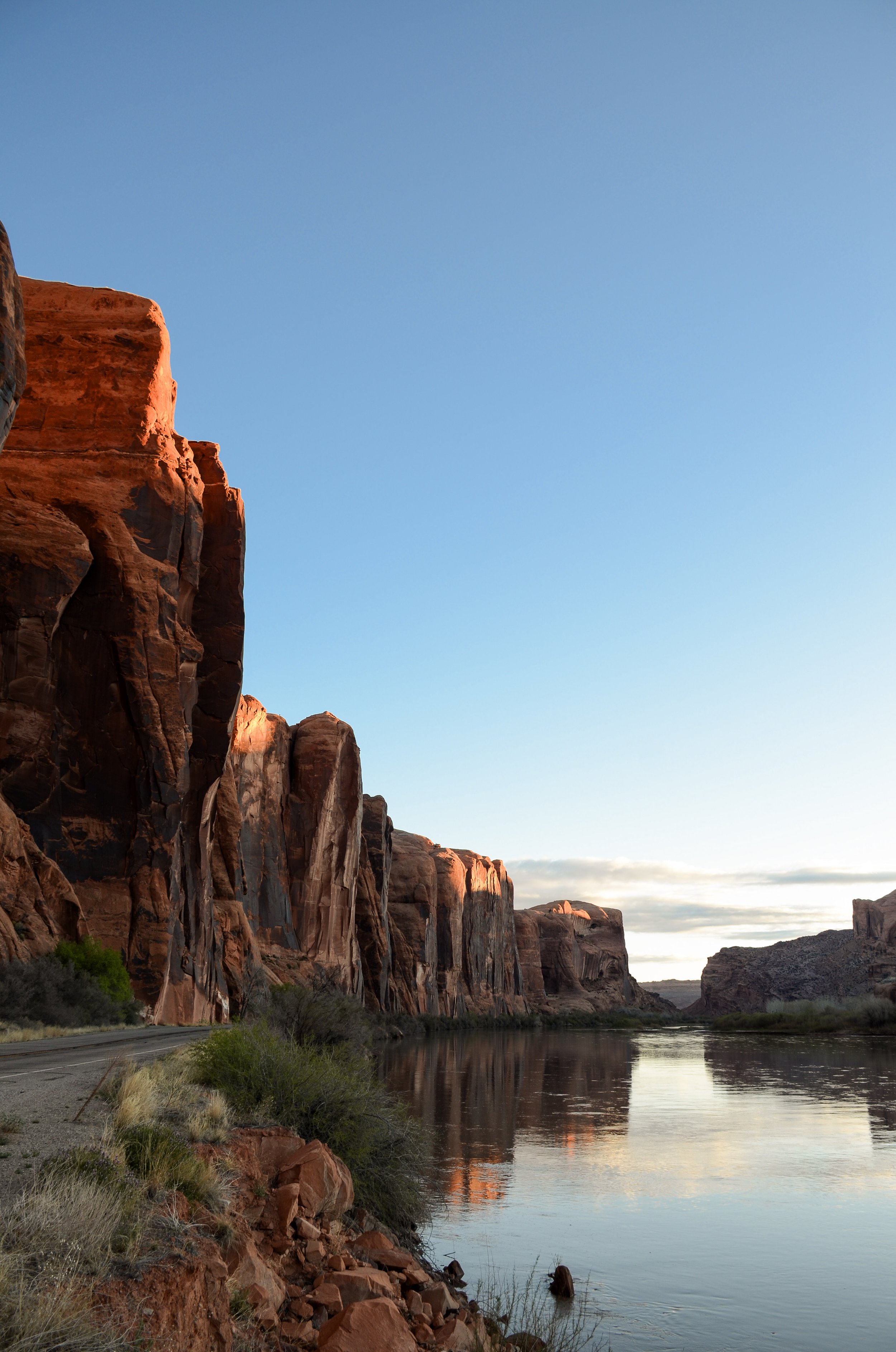
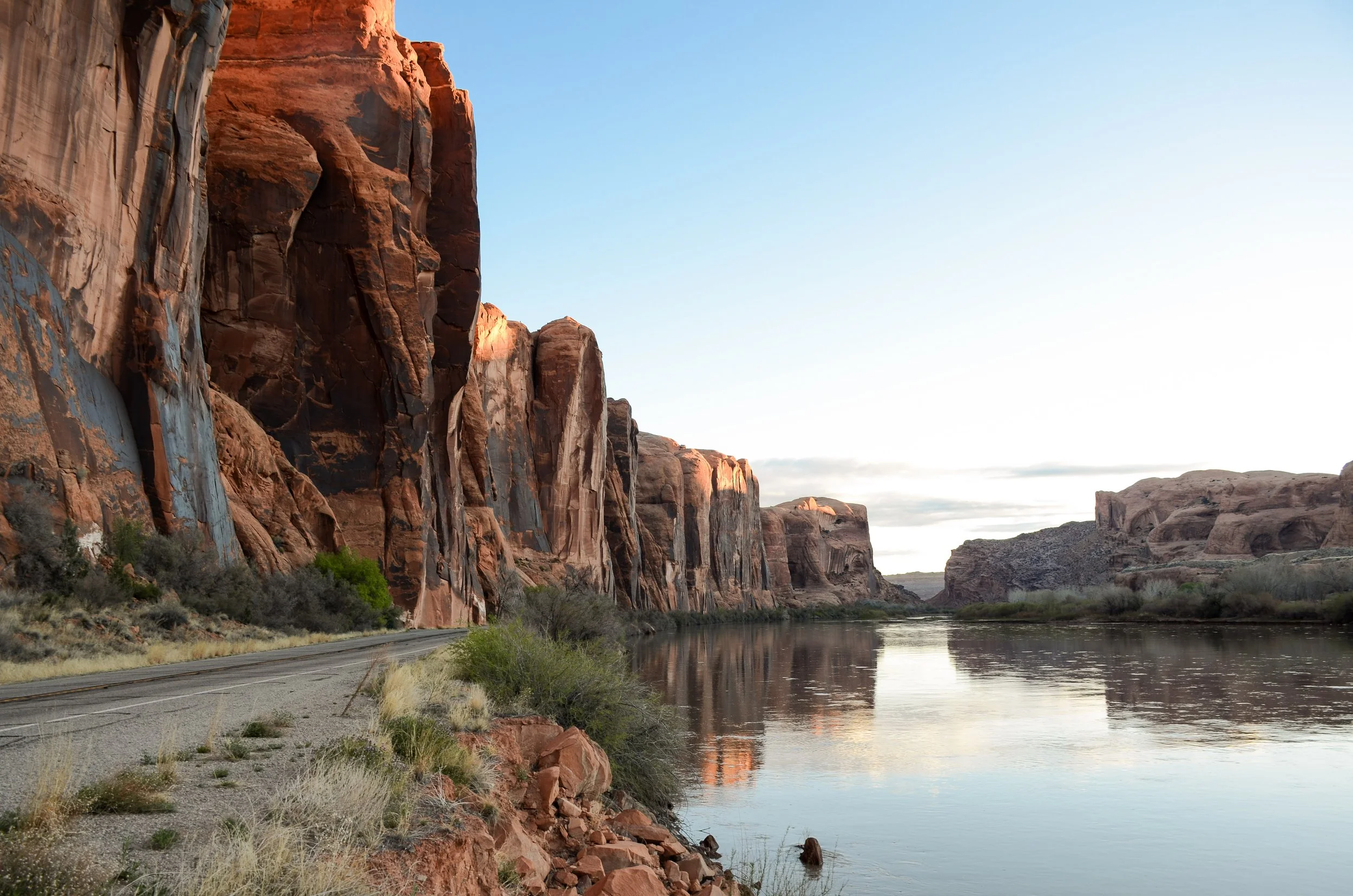
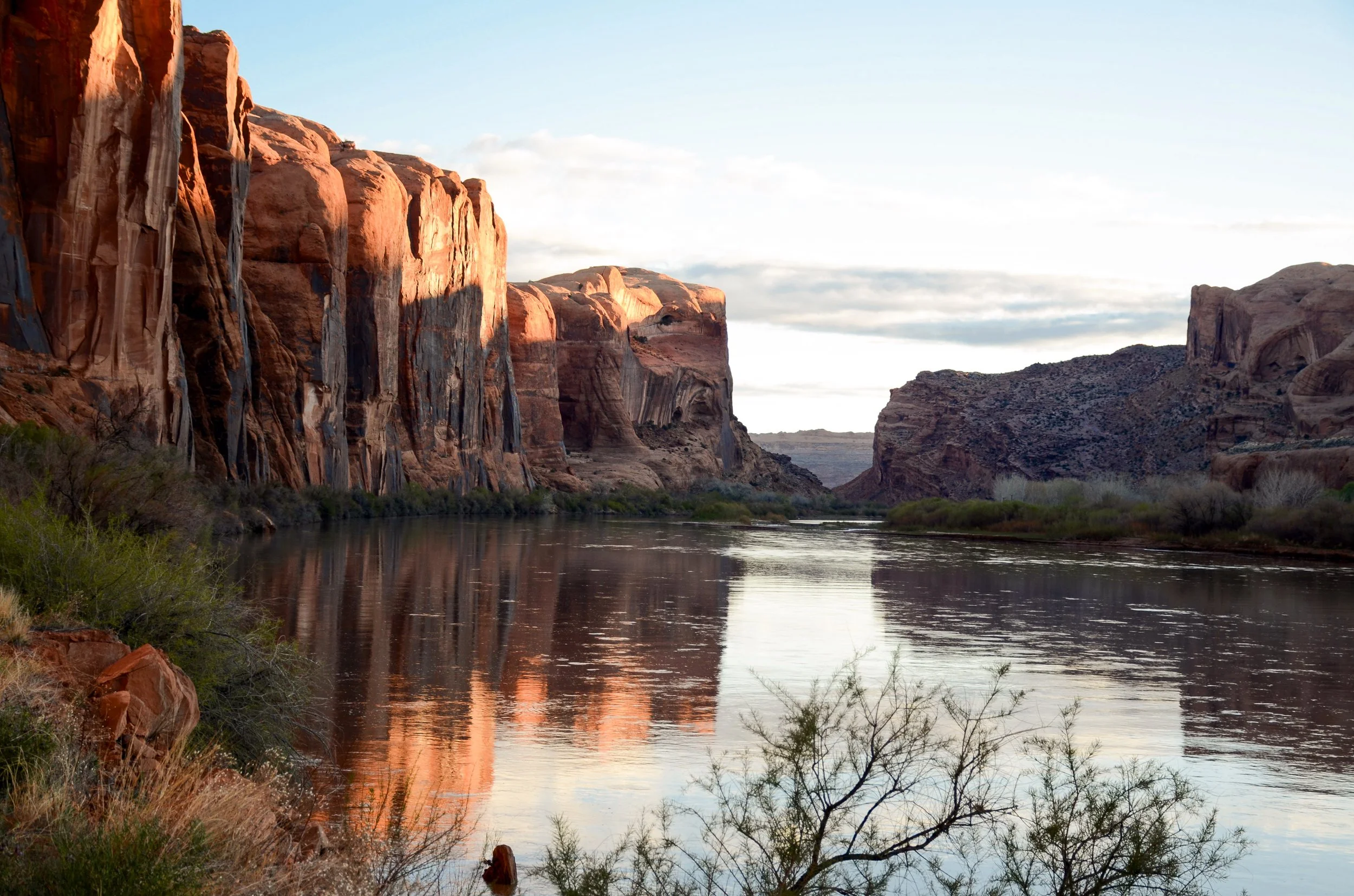
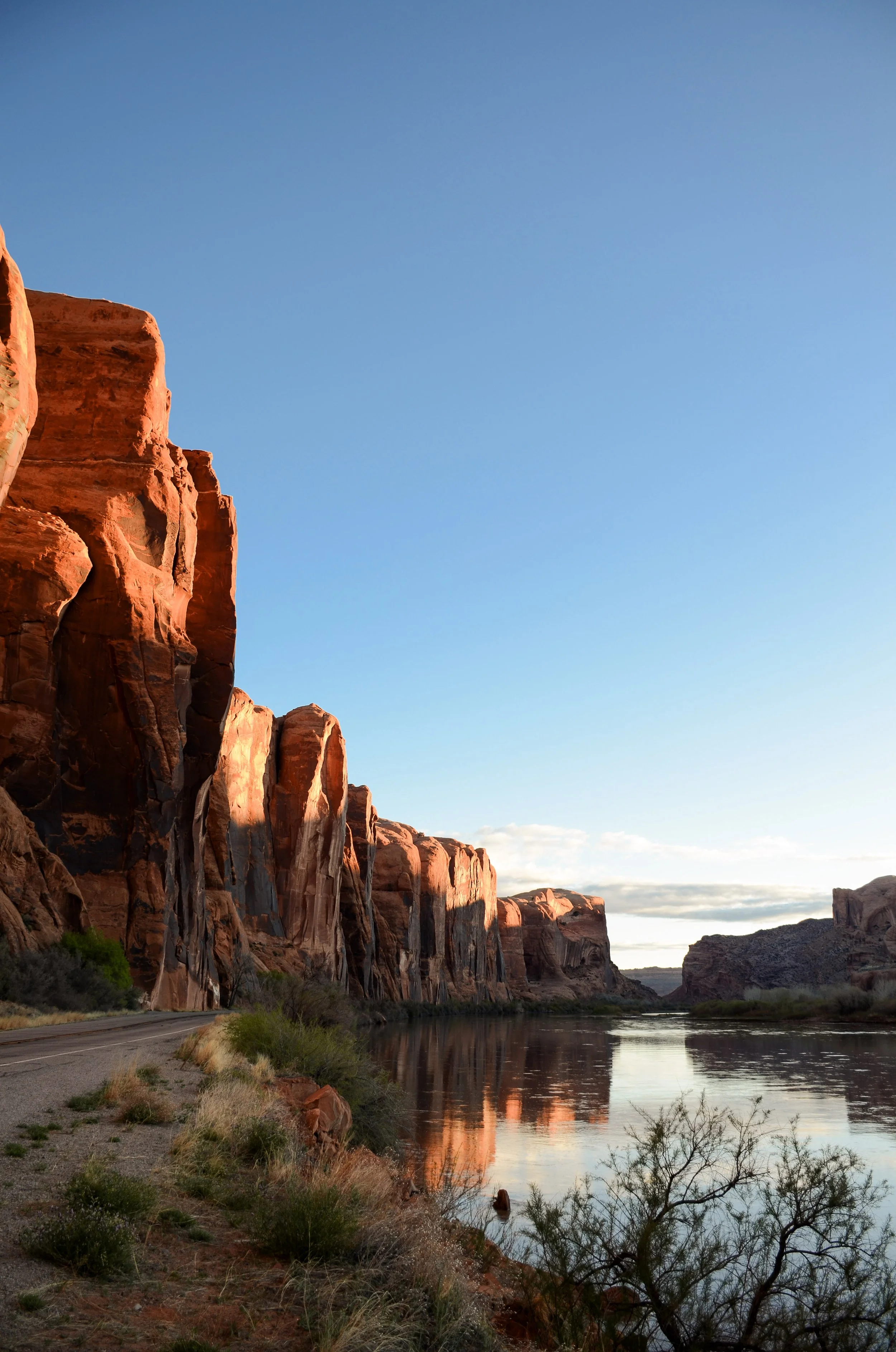
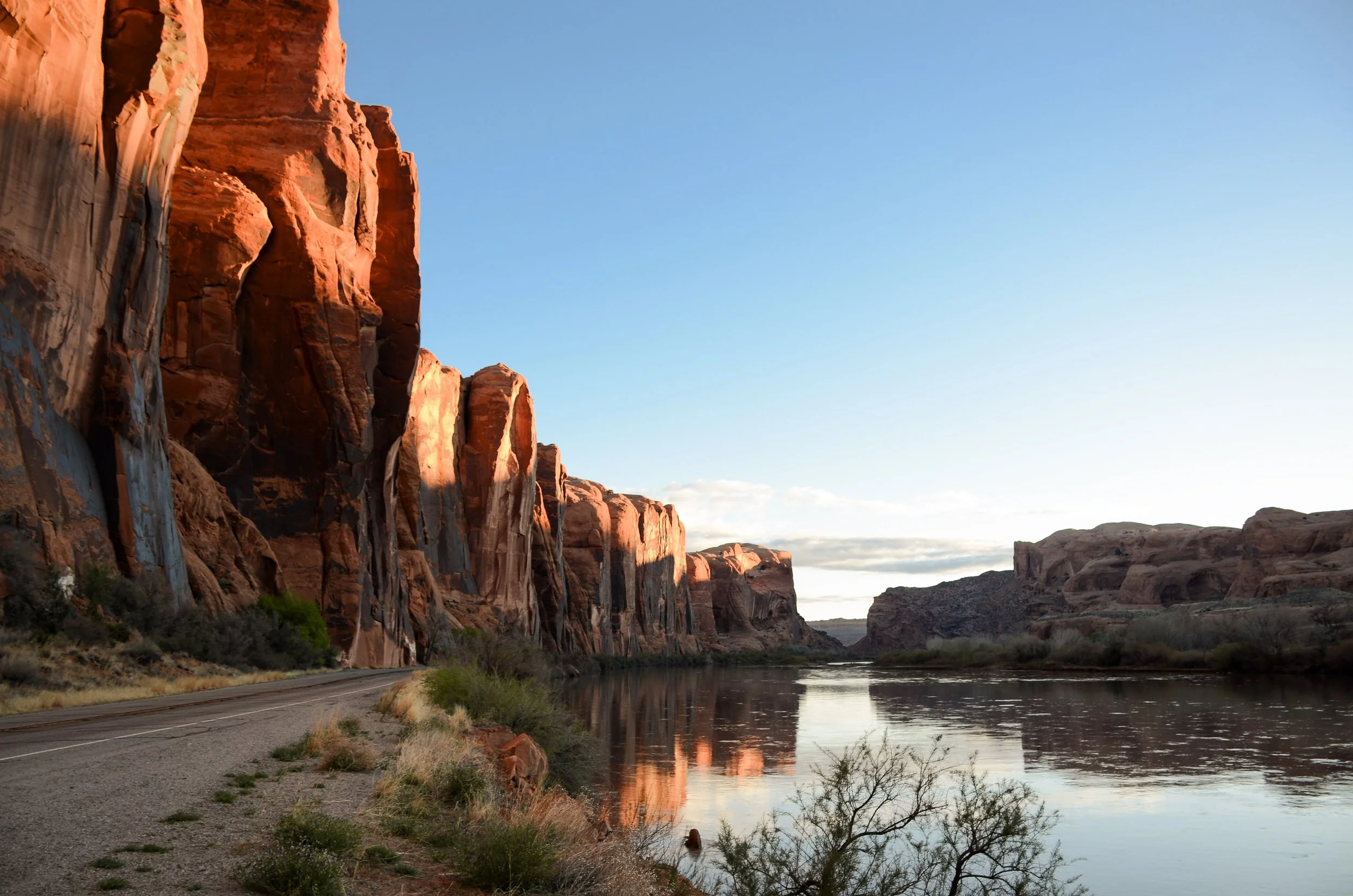
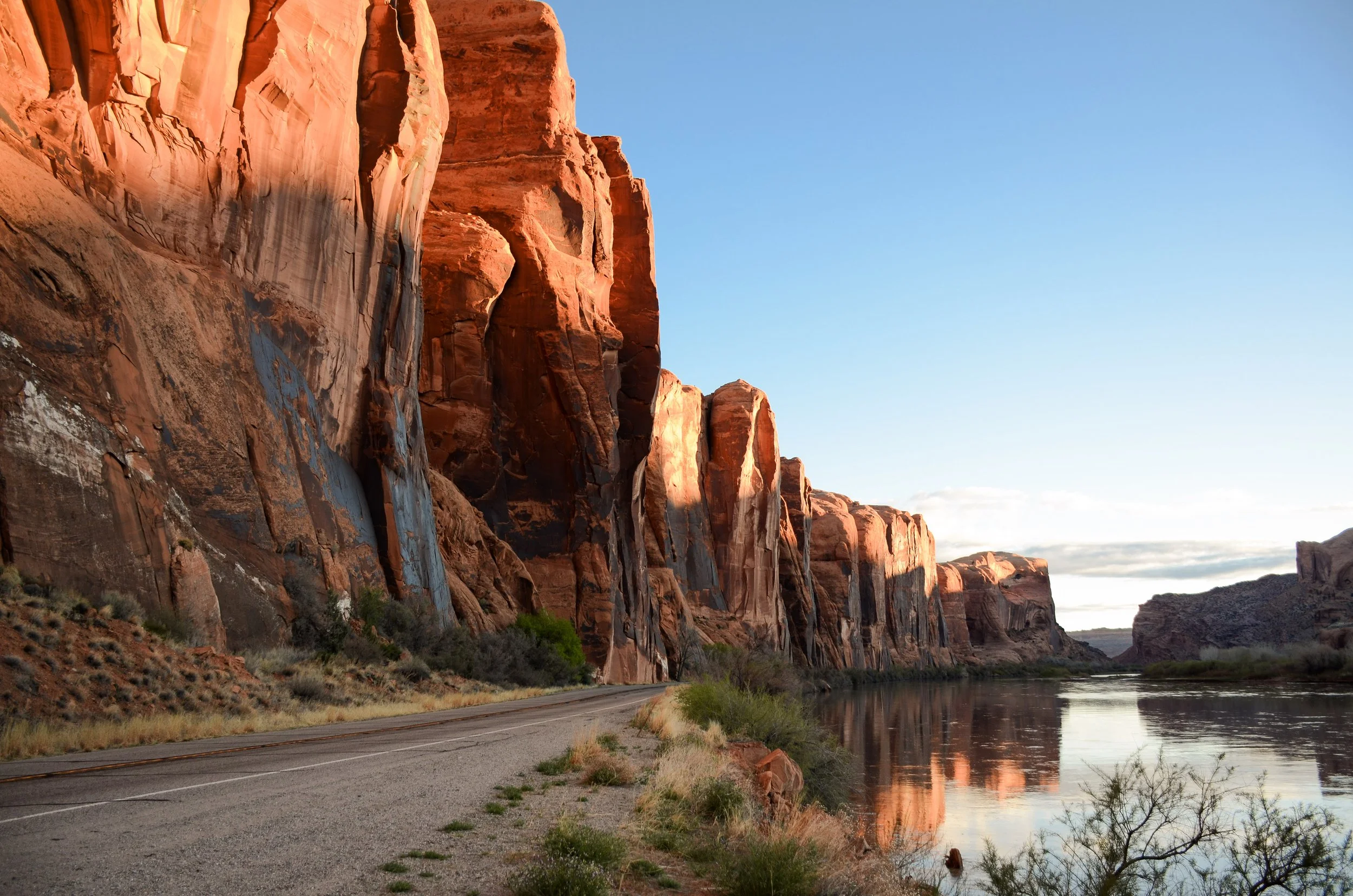
“Wall Street.” Moab, Utah.
Arches
Park 1 | March 2017
Part + Park 1 (of 2) on our first trip through Utah and an upper sliver of Arizona.
This was the trip that started it all.
We’d never camped together, never road tripped together — looking back, between the two of us, we didn’t even own a tent. We borrowed most of the items we used on this trip. Somehow, we squeezed an ambitious road trip across Utah and Arizona into the several days that overlapped between J’s spring break (teaching at a Denver middle school) and my spring break (second year of grad school) overlapped. The rest is history.
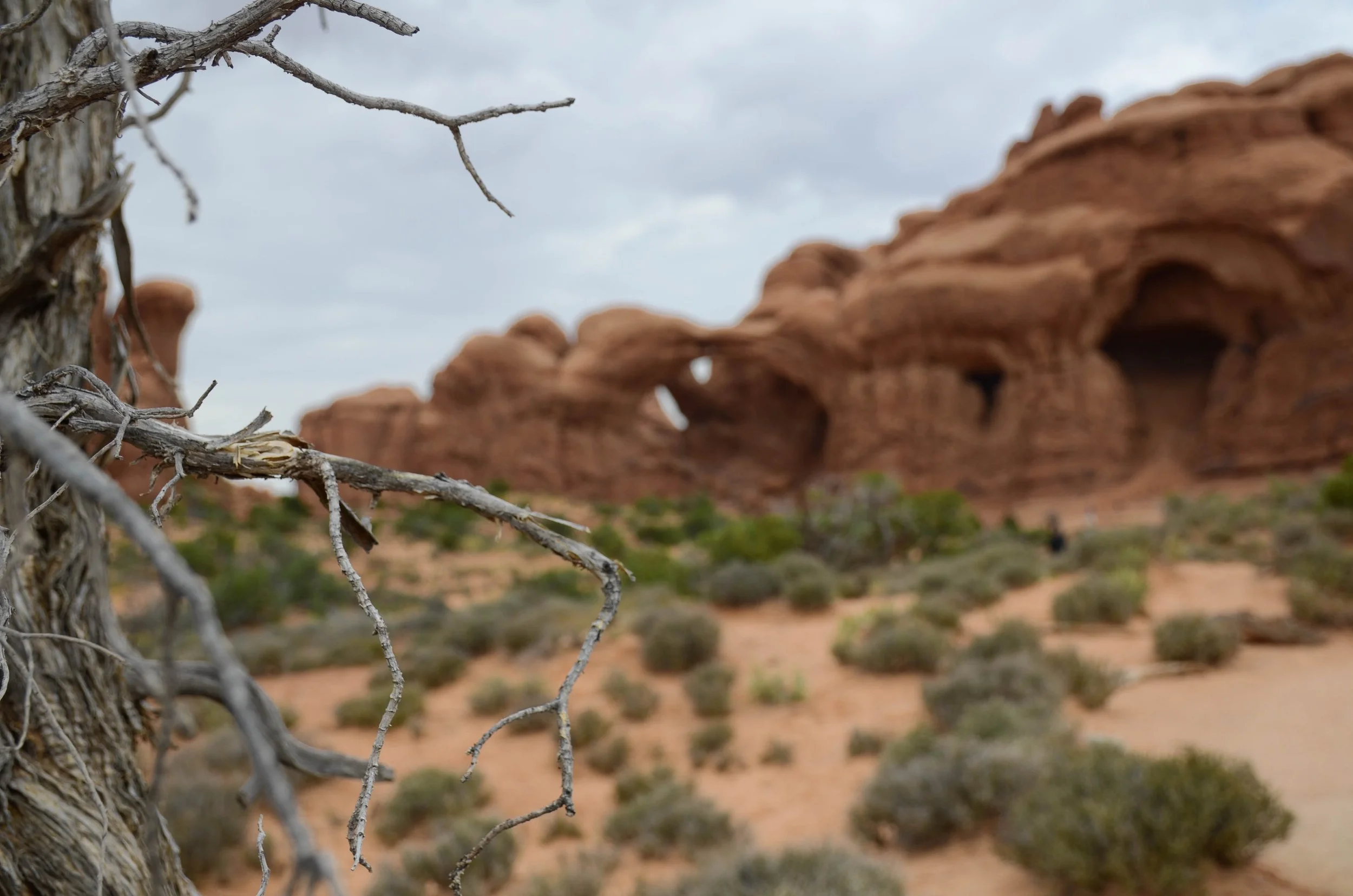
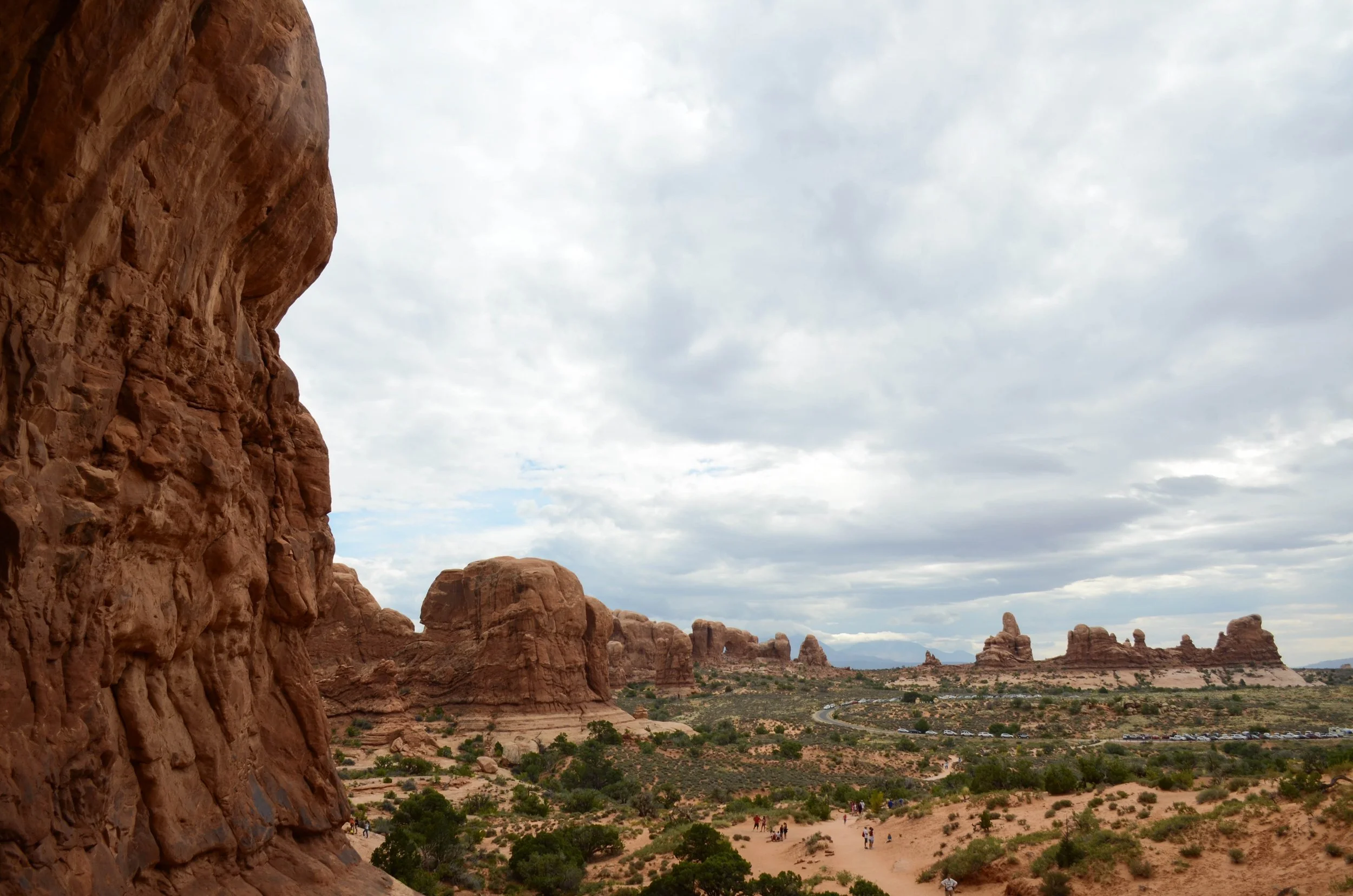
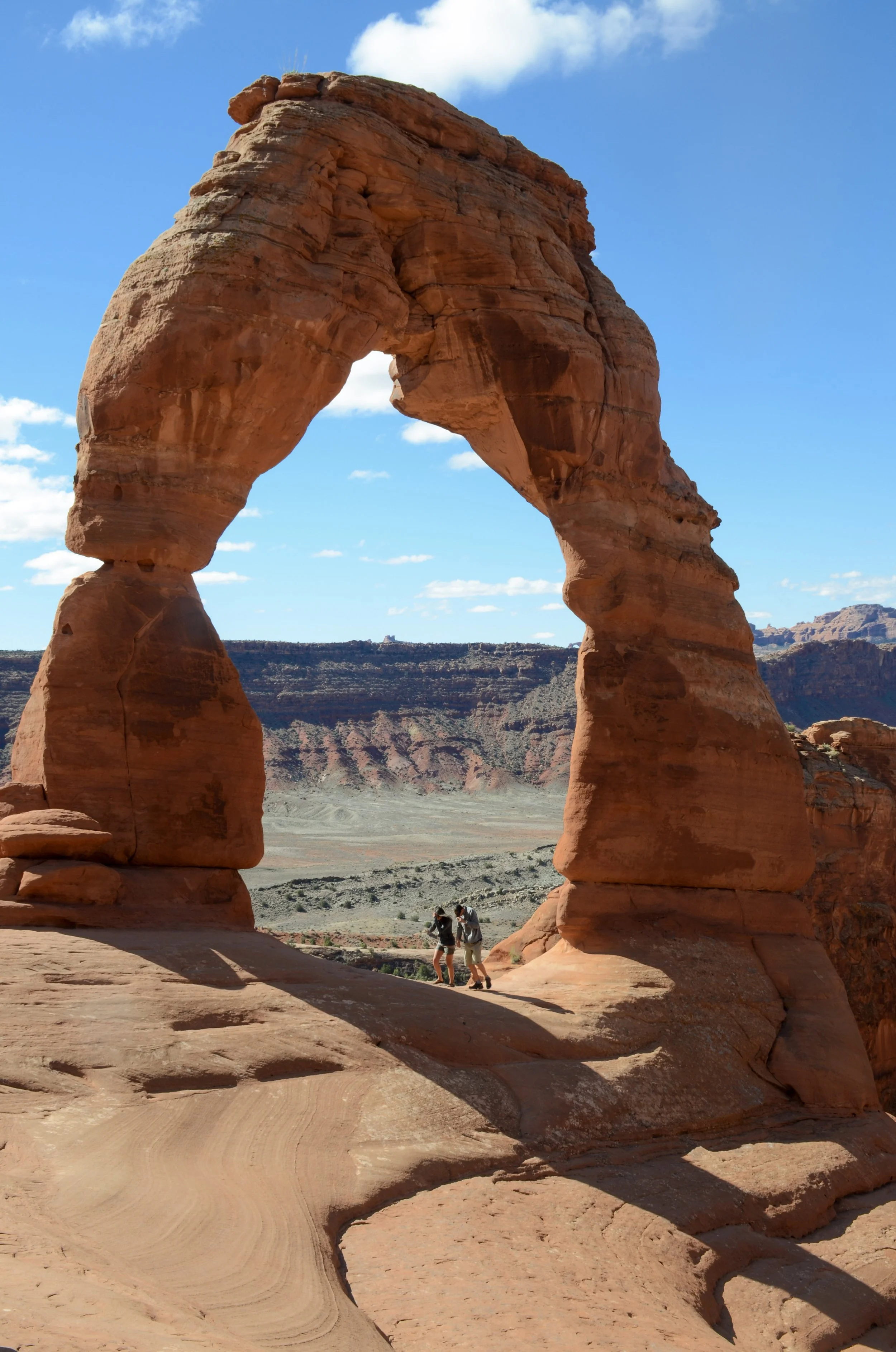
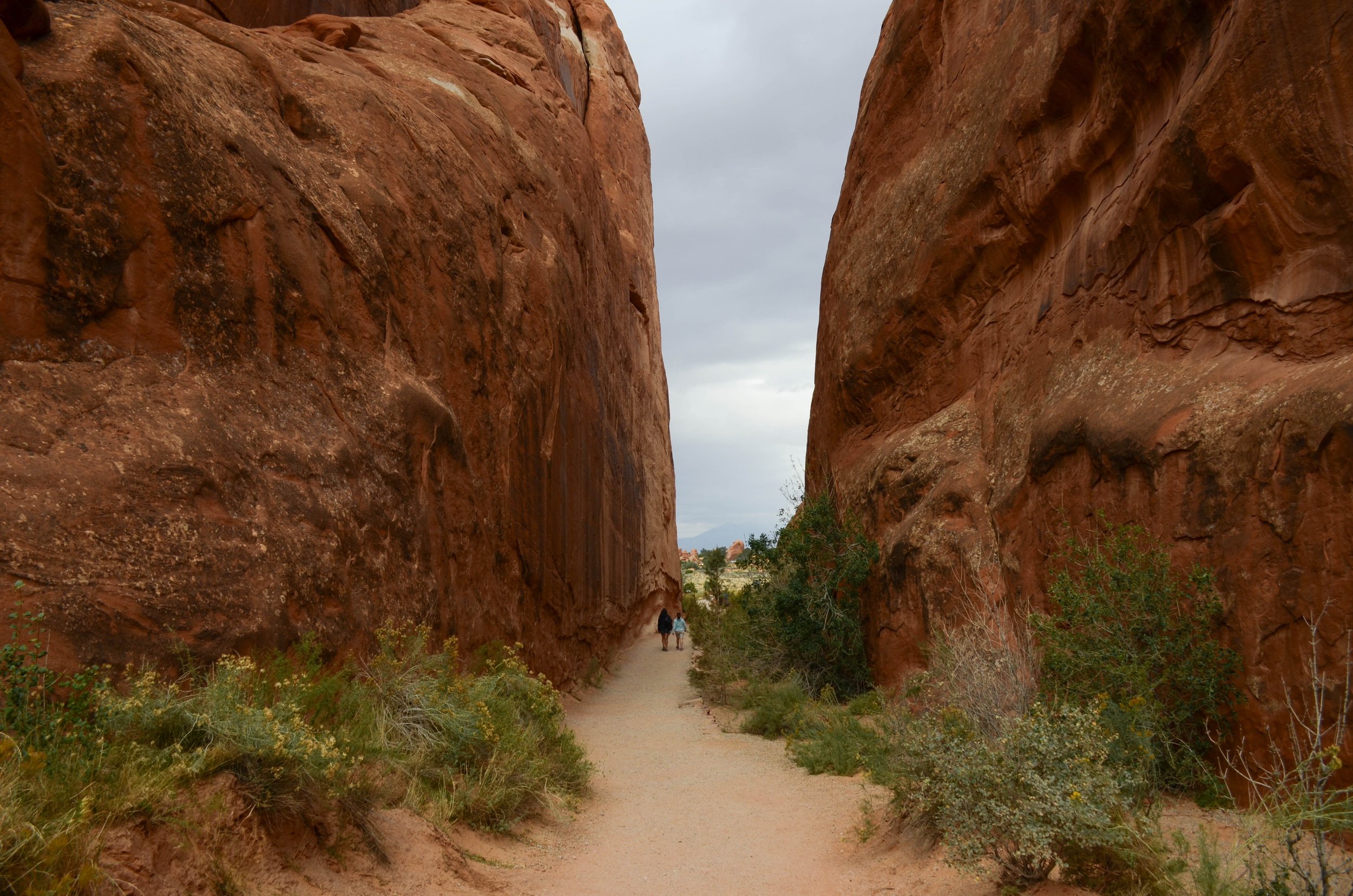
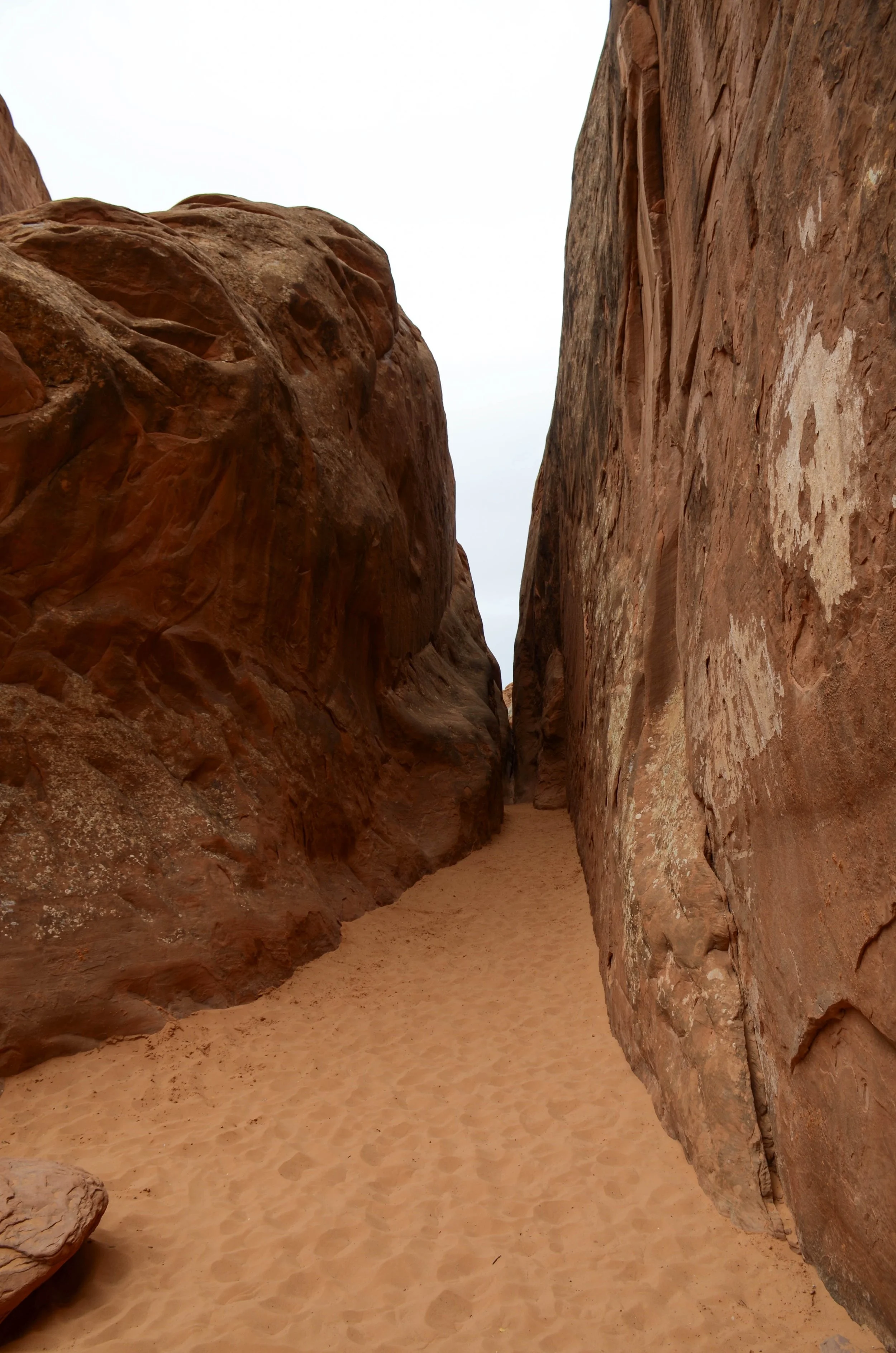
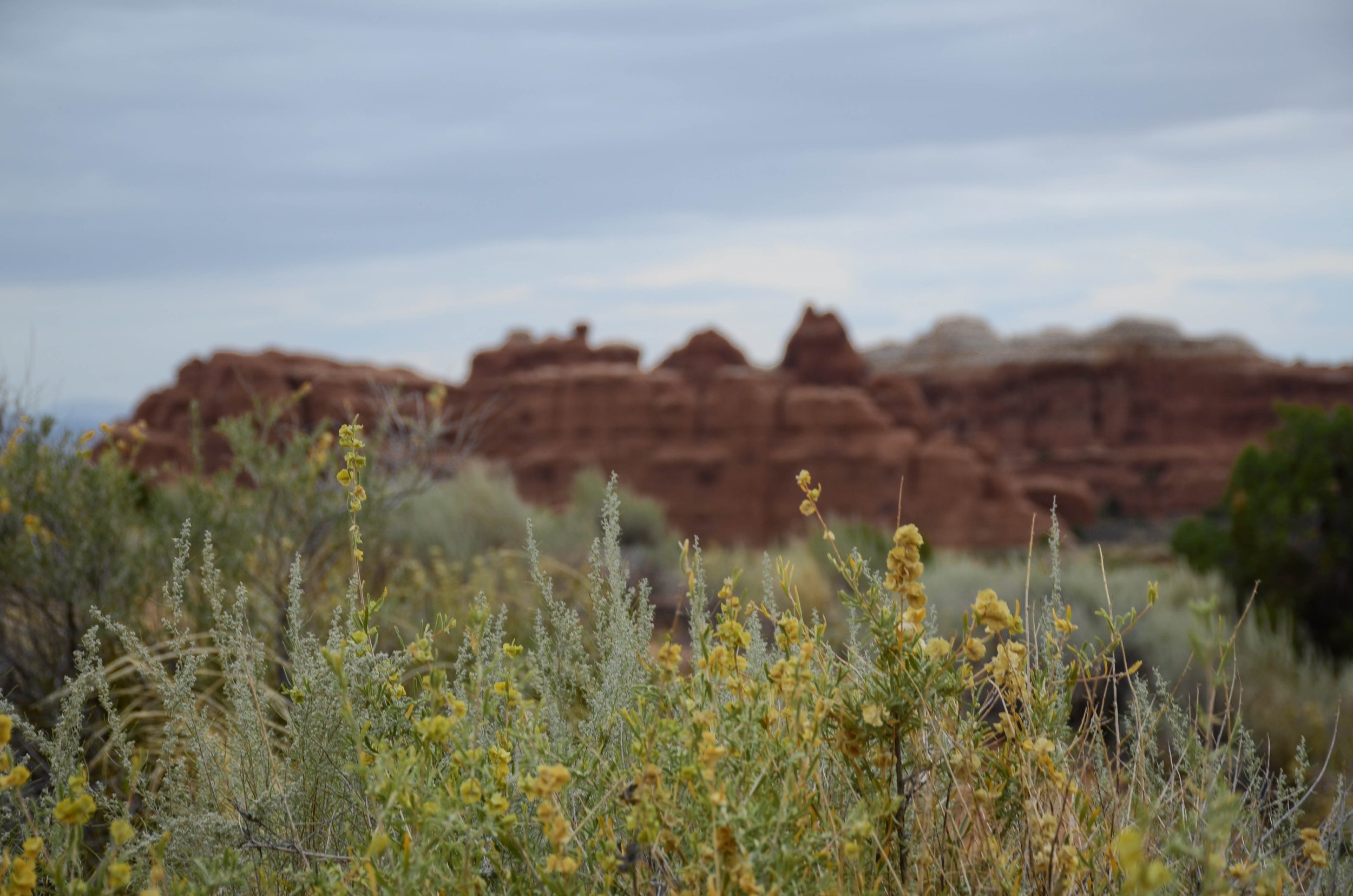
Arches National Park felt like the perfect park for us to start with: Large enough to fill a whole day, small enough to feel manageable. It still has one of the best entrances to a park that we’ve seen yet. Arches Scenic Drive starts at the visitor center, which is located just off Highway 191 as it snakes its way south toward Moab. The narrow entrance road zigzags dramatically up a massive red rock face looming over the highway. We’ve since driven this highway a few times for different trips, and it always pains us to not turn off and head into the park since it’s so close.
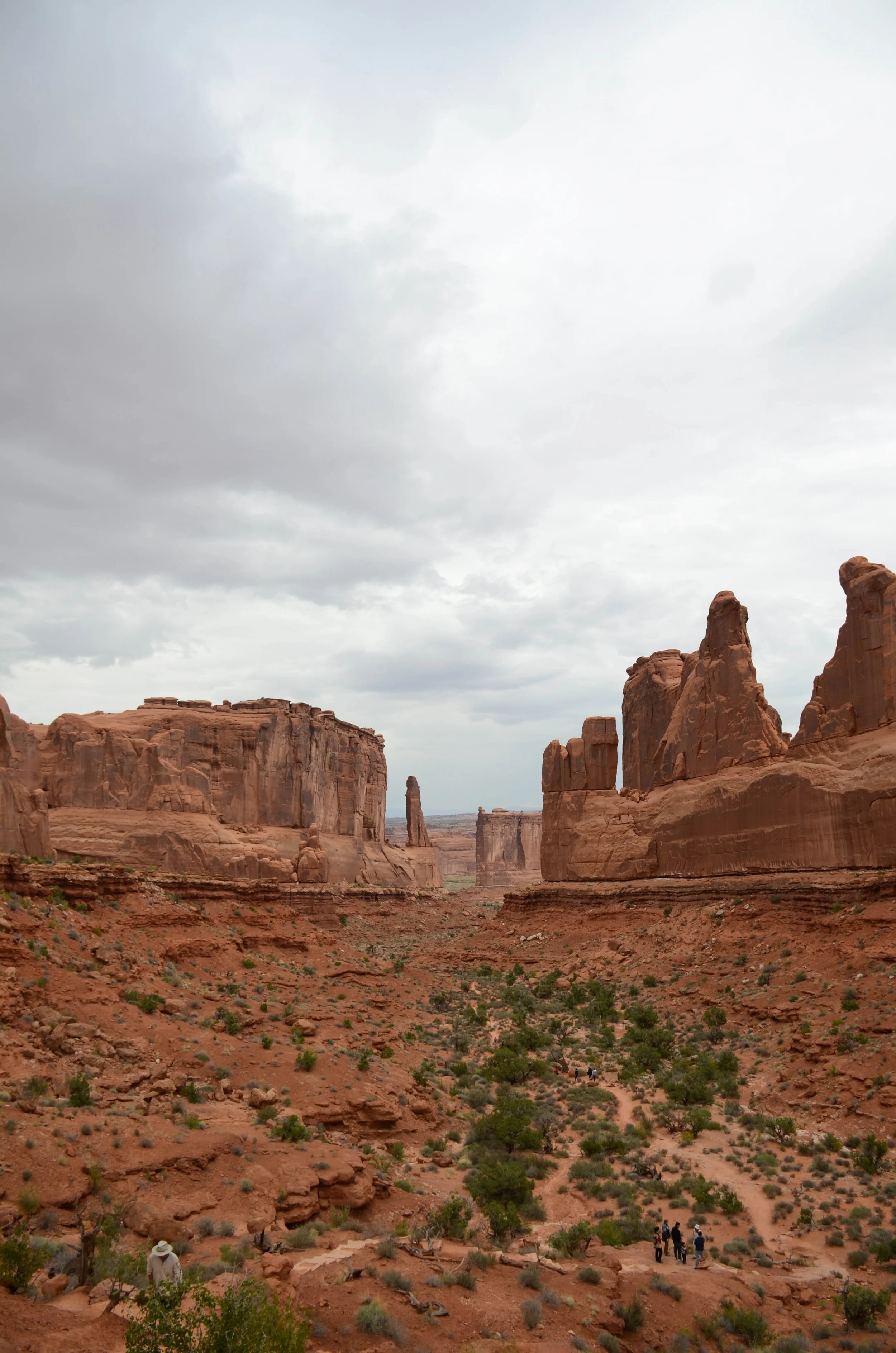
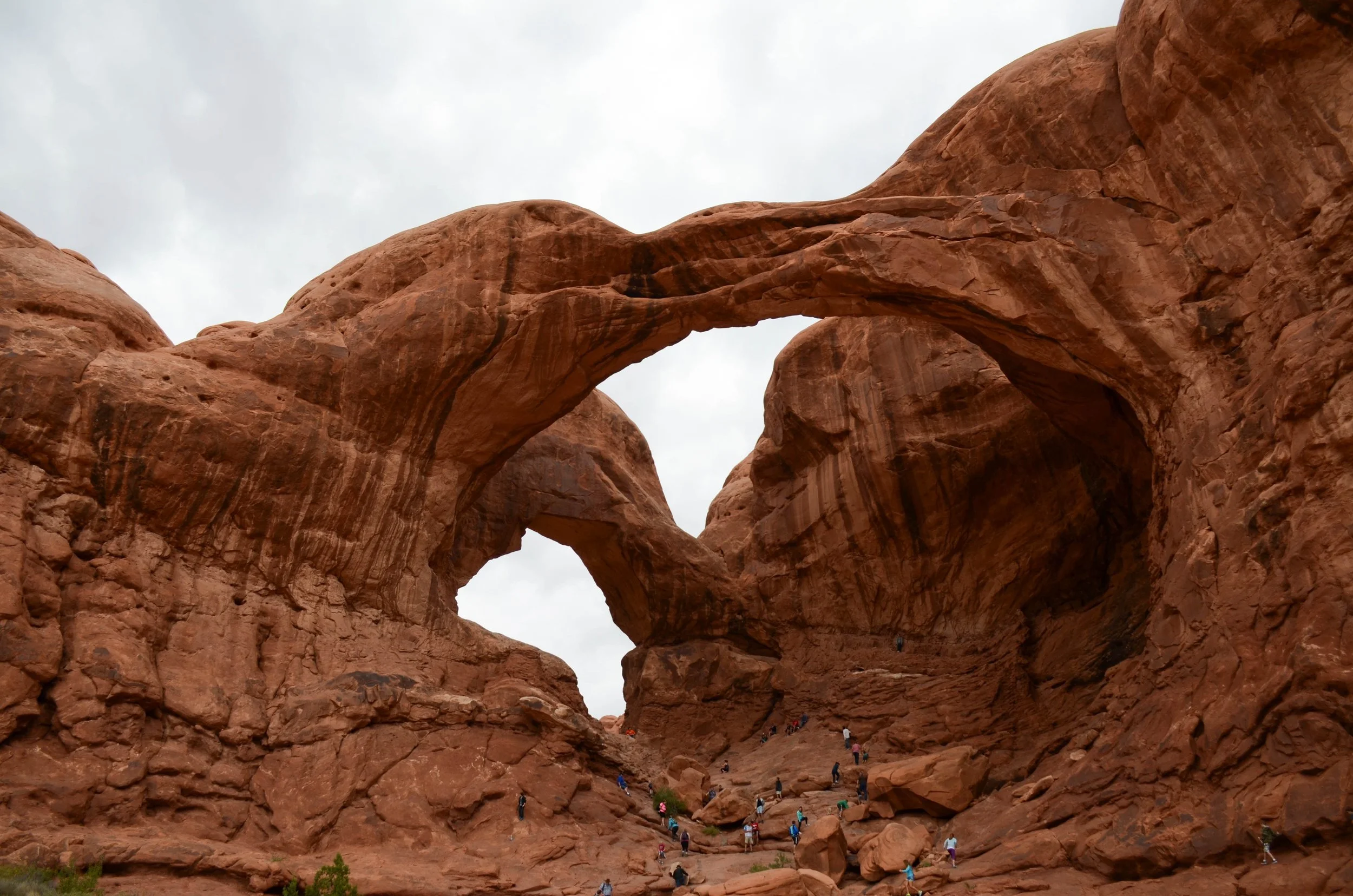
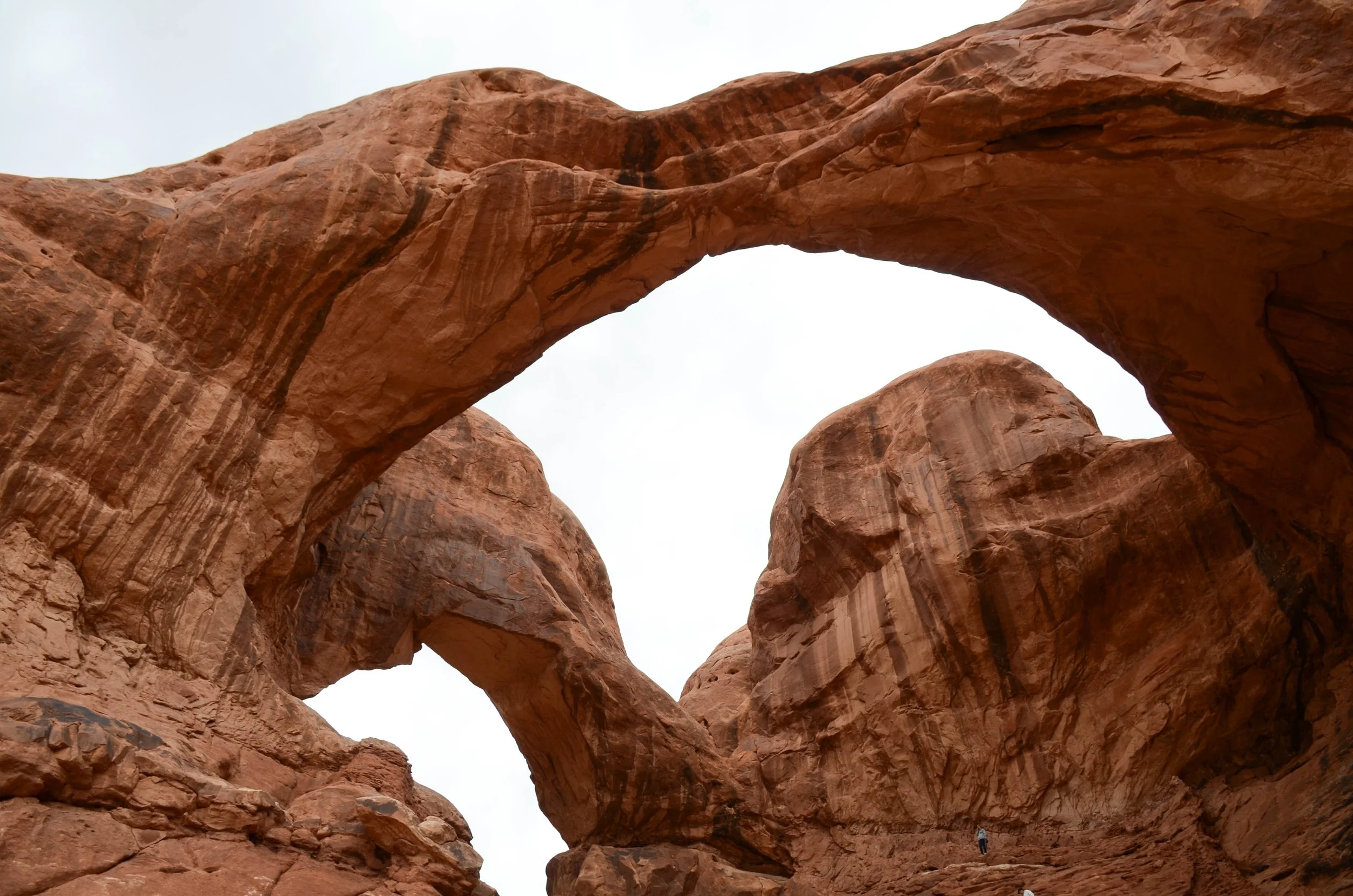
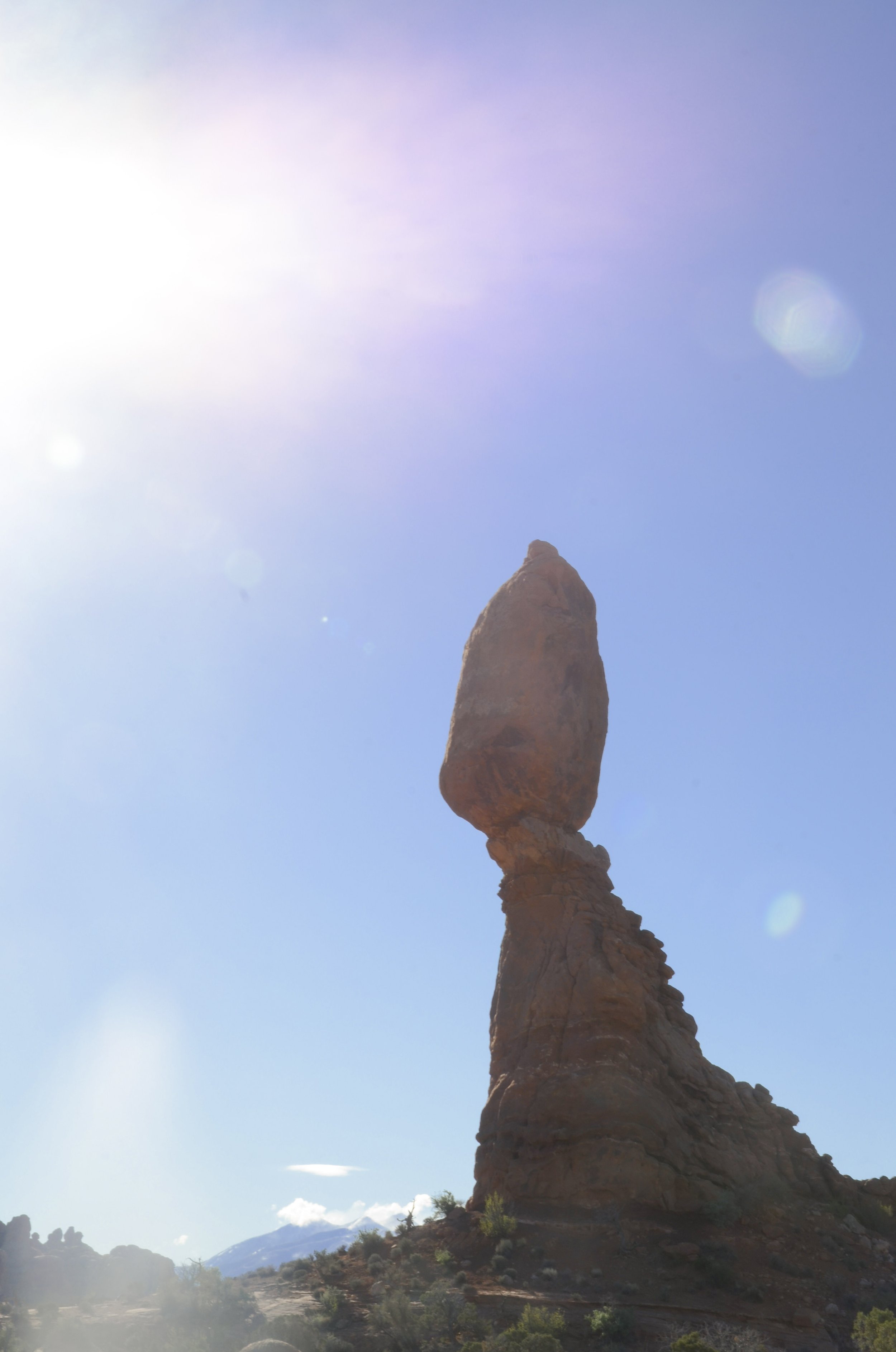
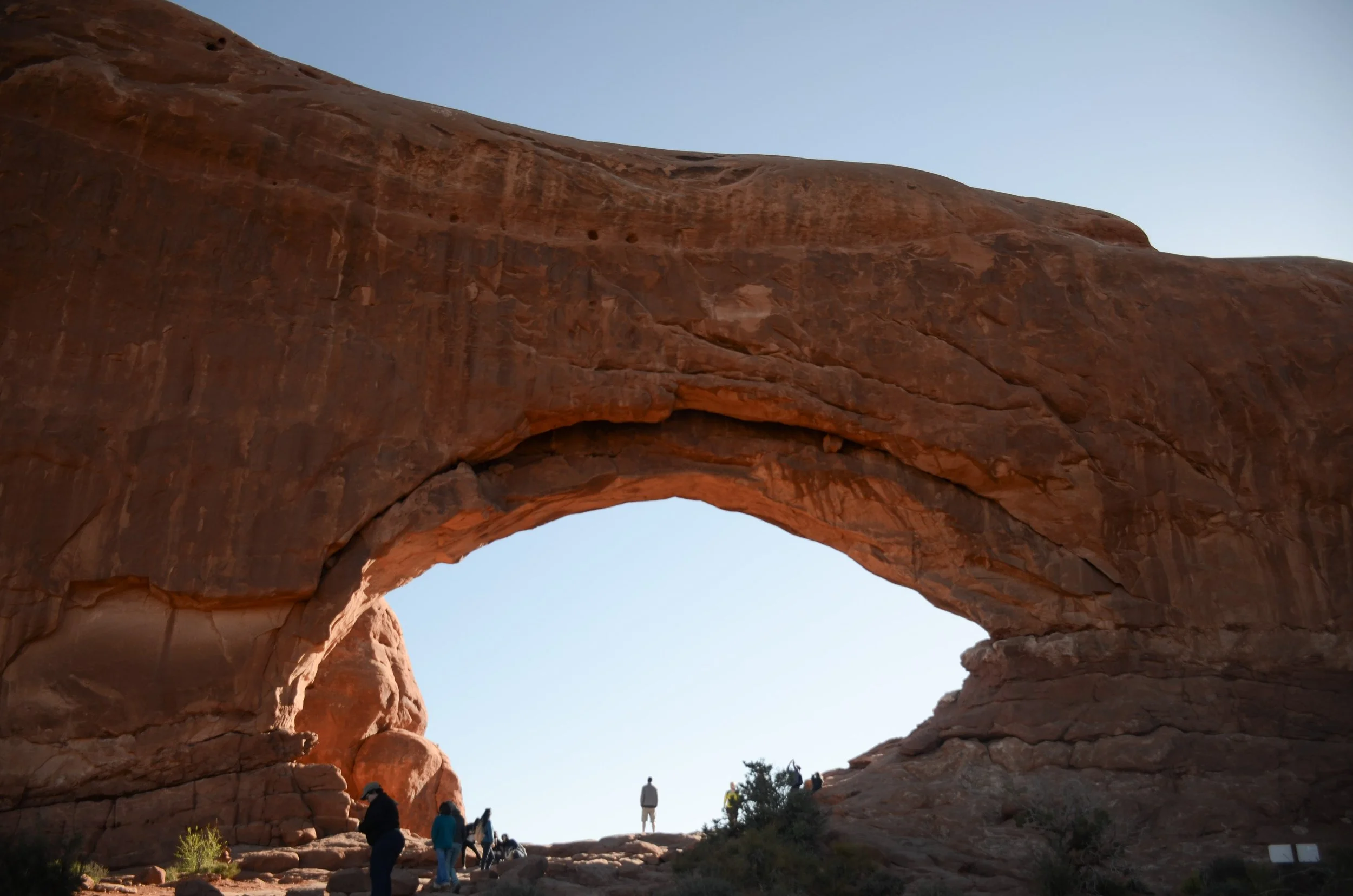
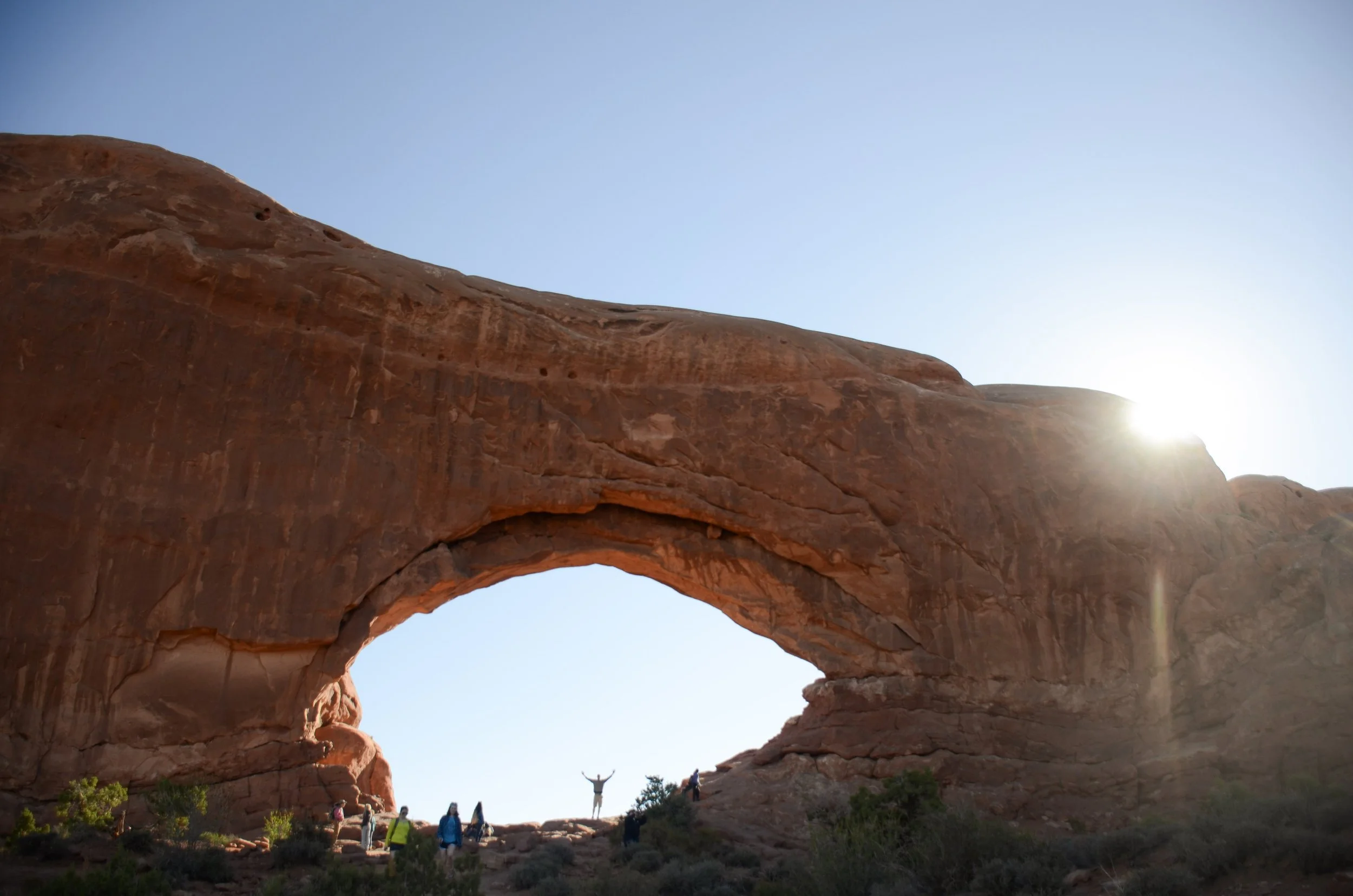
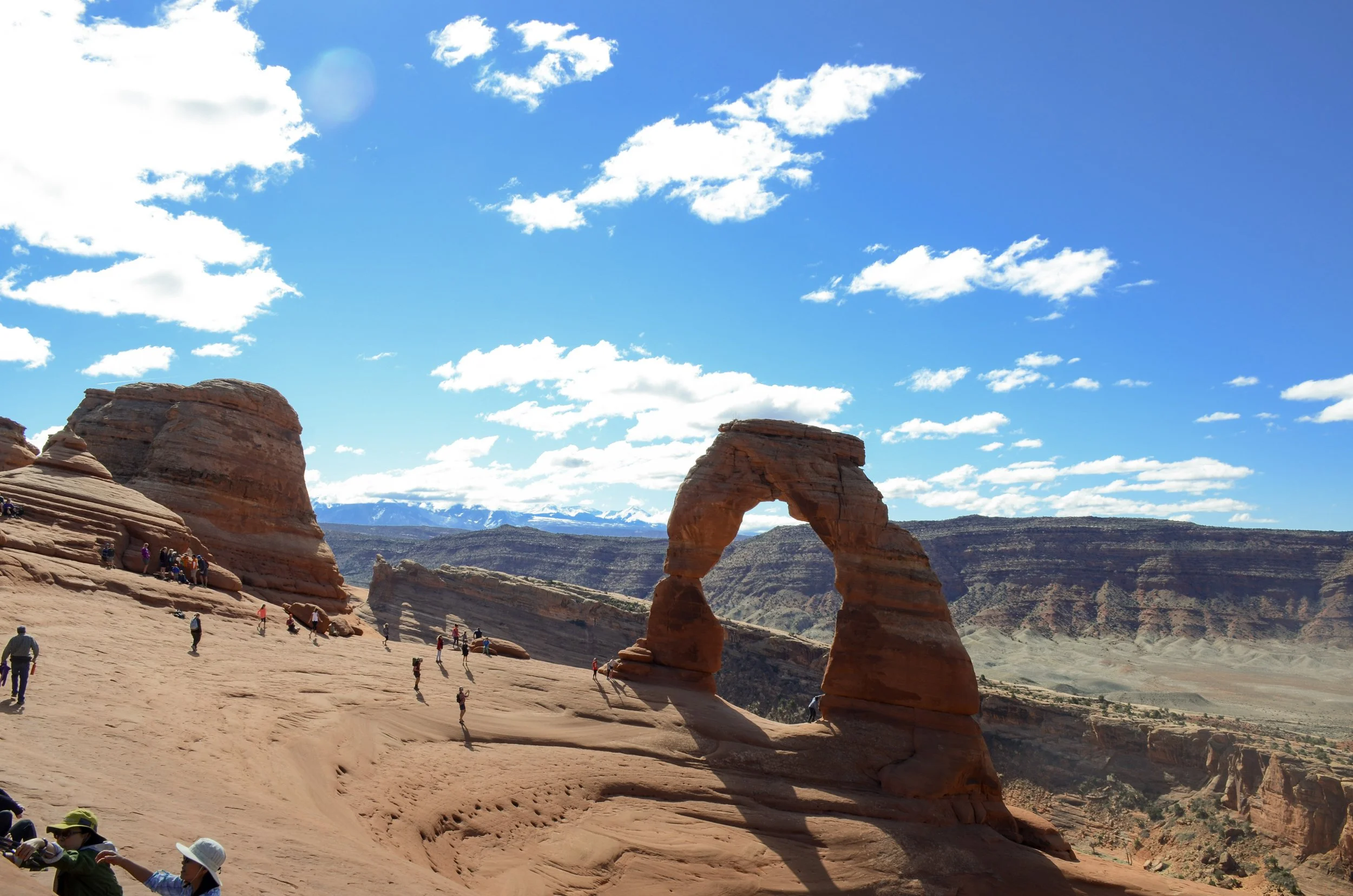
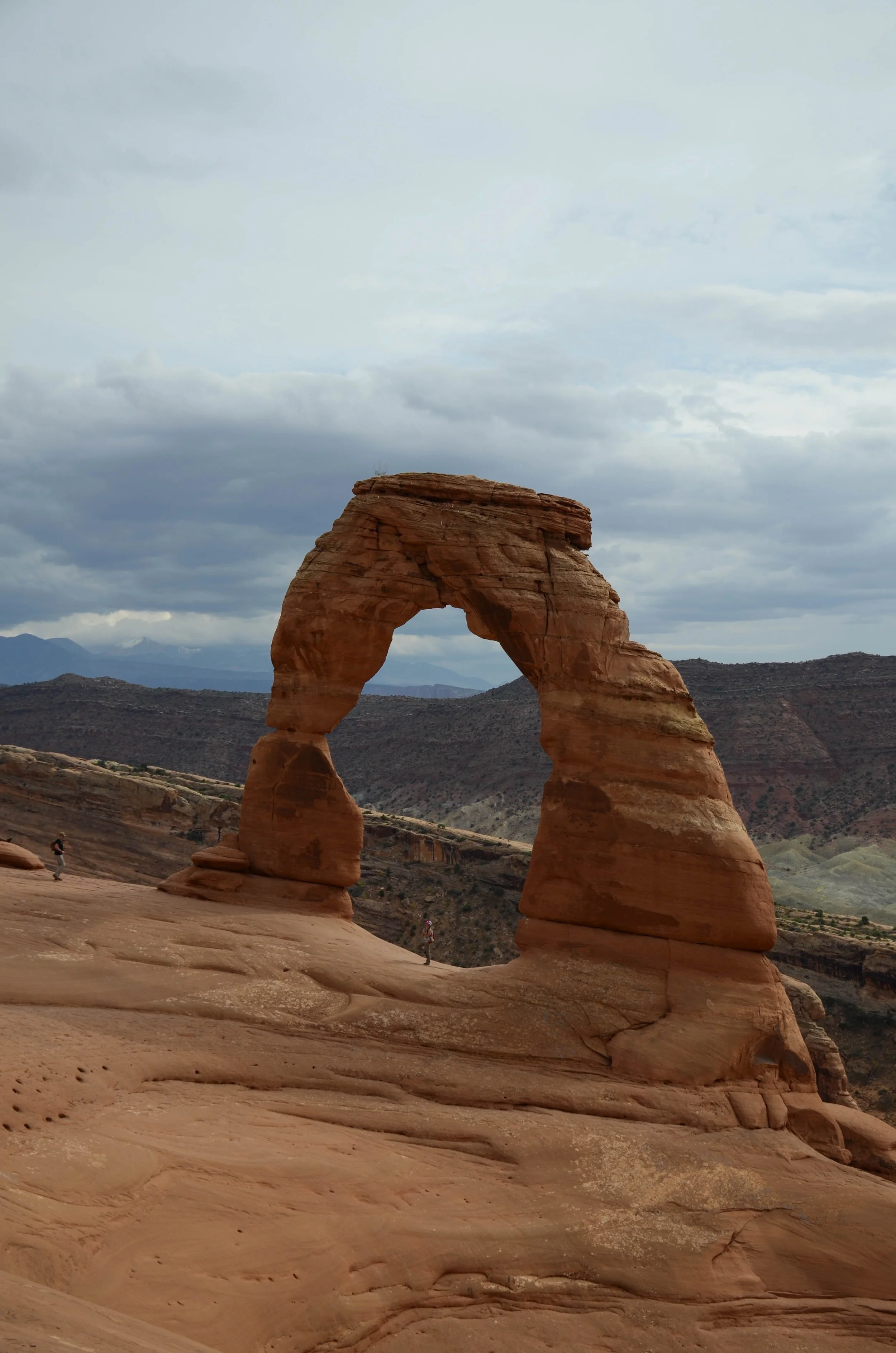
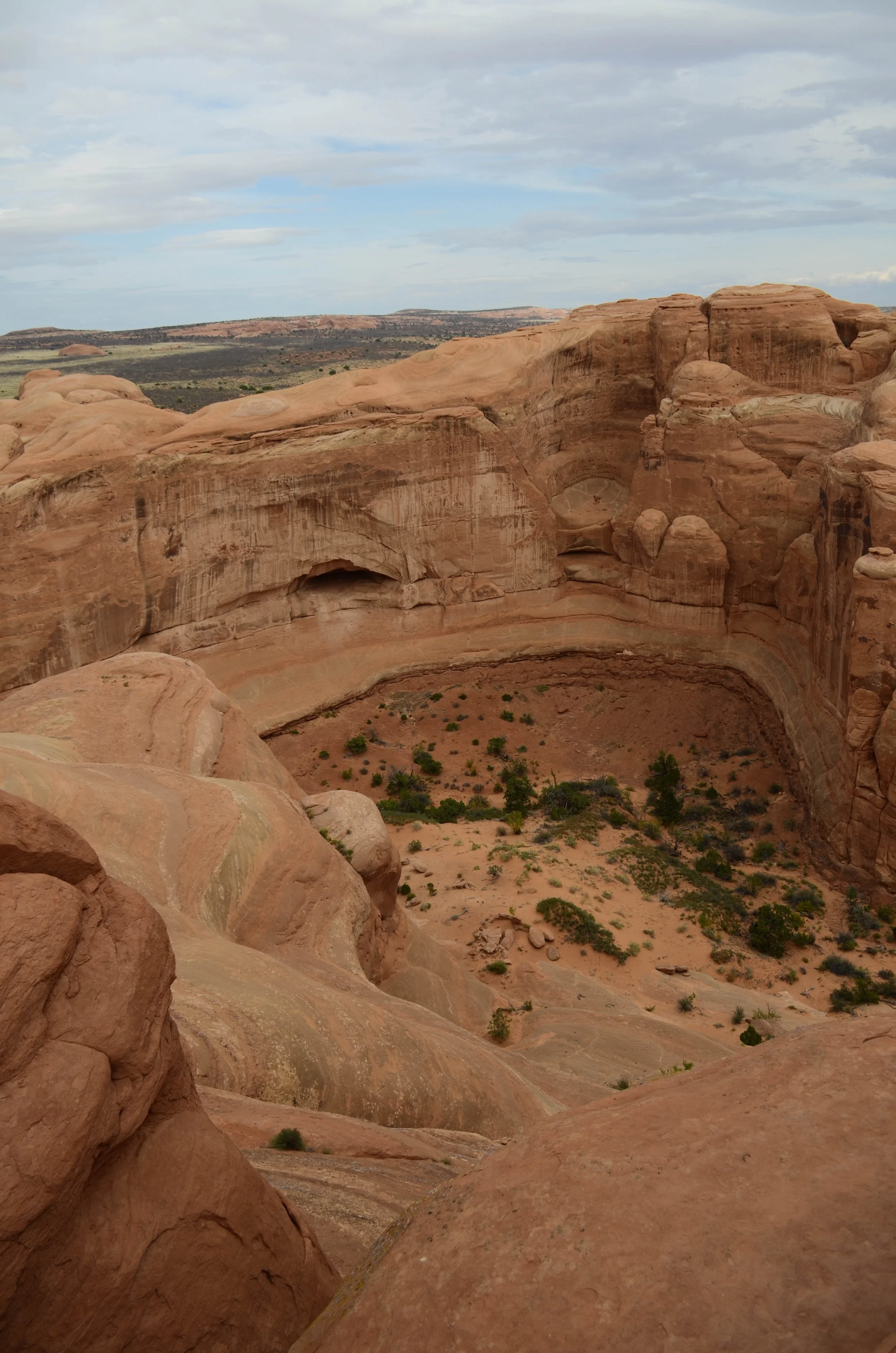
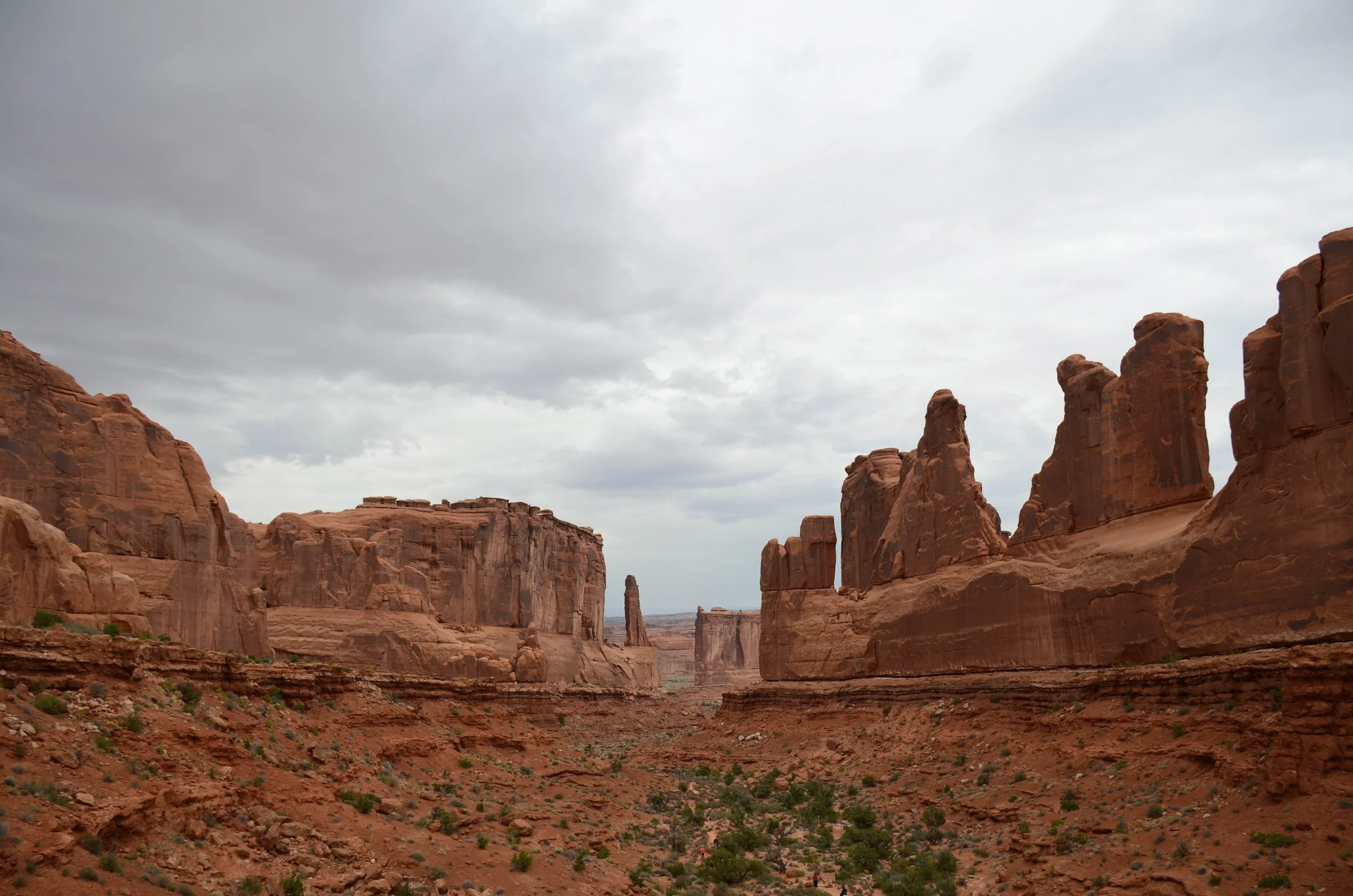
Once you reach the top of the road, the park opens up and many of the iconic rock formations begin coming into view. They have evocative names: Park Avenue, Courthouse Towers, Tower of Babel, The Phallus Pillar, The Eye of the Whale Arch. All owe their form to the particular mixture of wind, precipitation, and erosion that has carved this landscape over millennia into these delightfully varied shapes. We hiked to Delicate Arch, Double Arch, Landscape Arch, Wilson Arch. Clearly, this park was aptly named.
For the purposes of this post, I mixed in photos from a couple different trips to Arches — some from this springtime trip with J, another from a trip with friends the first autumn I lived in Colorado.
Pictured below:
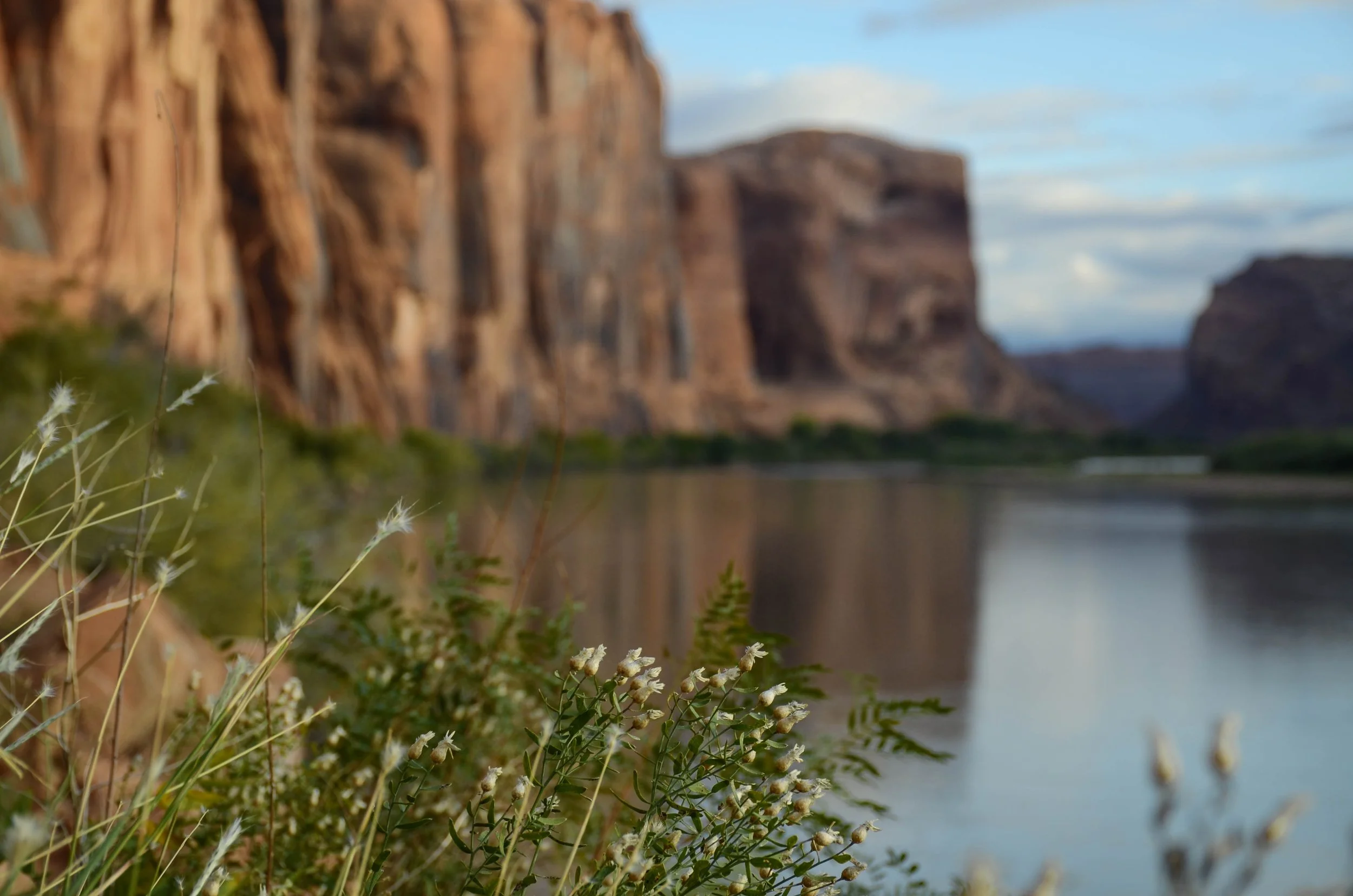
Moab, Utah.
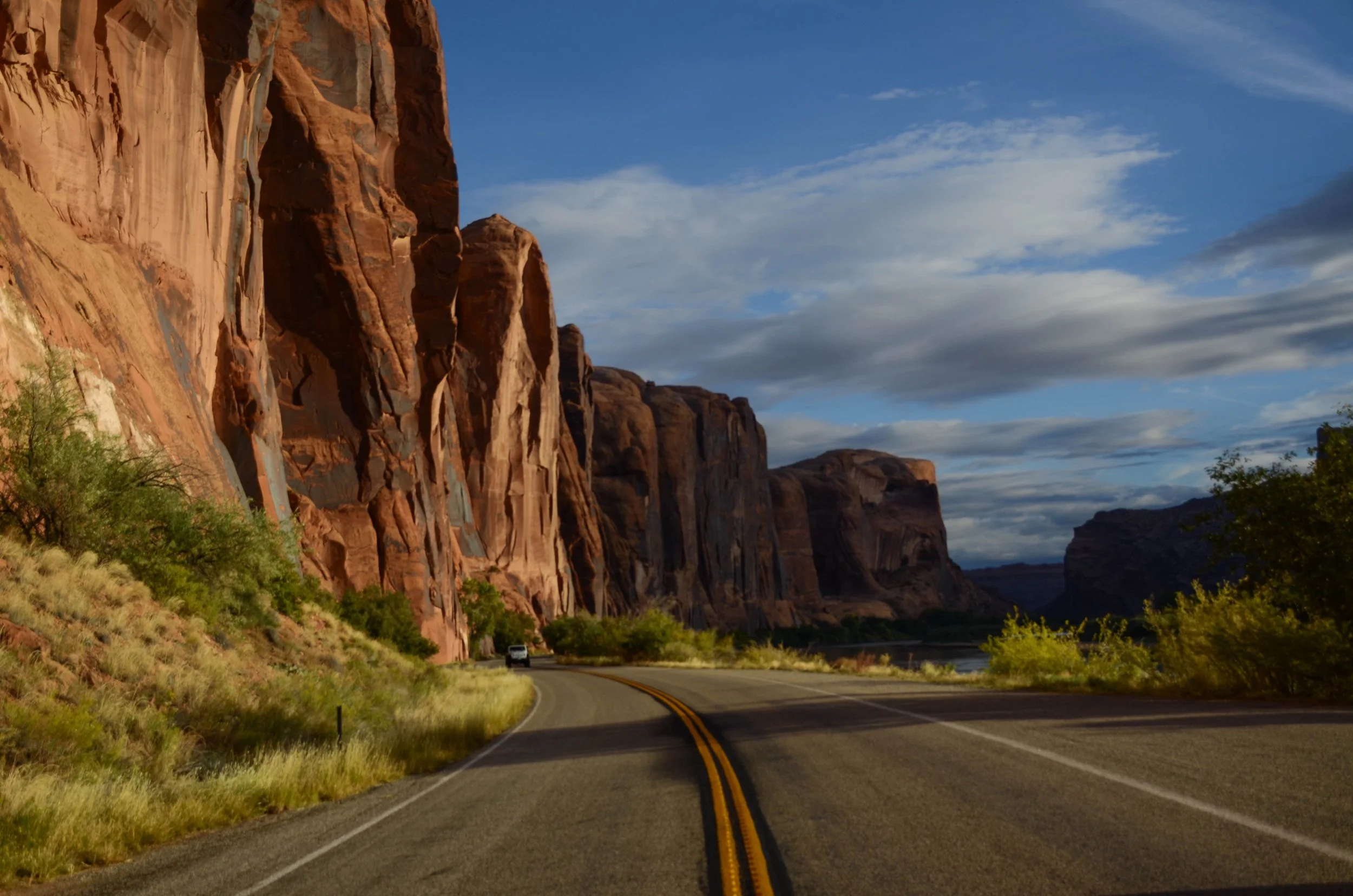
“Wall Street,” Utah.
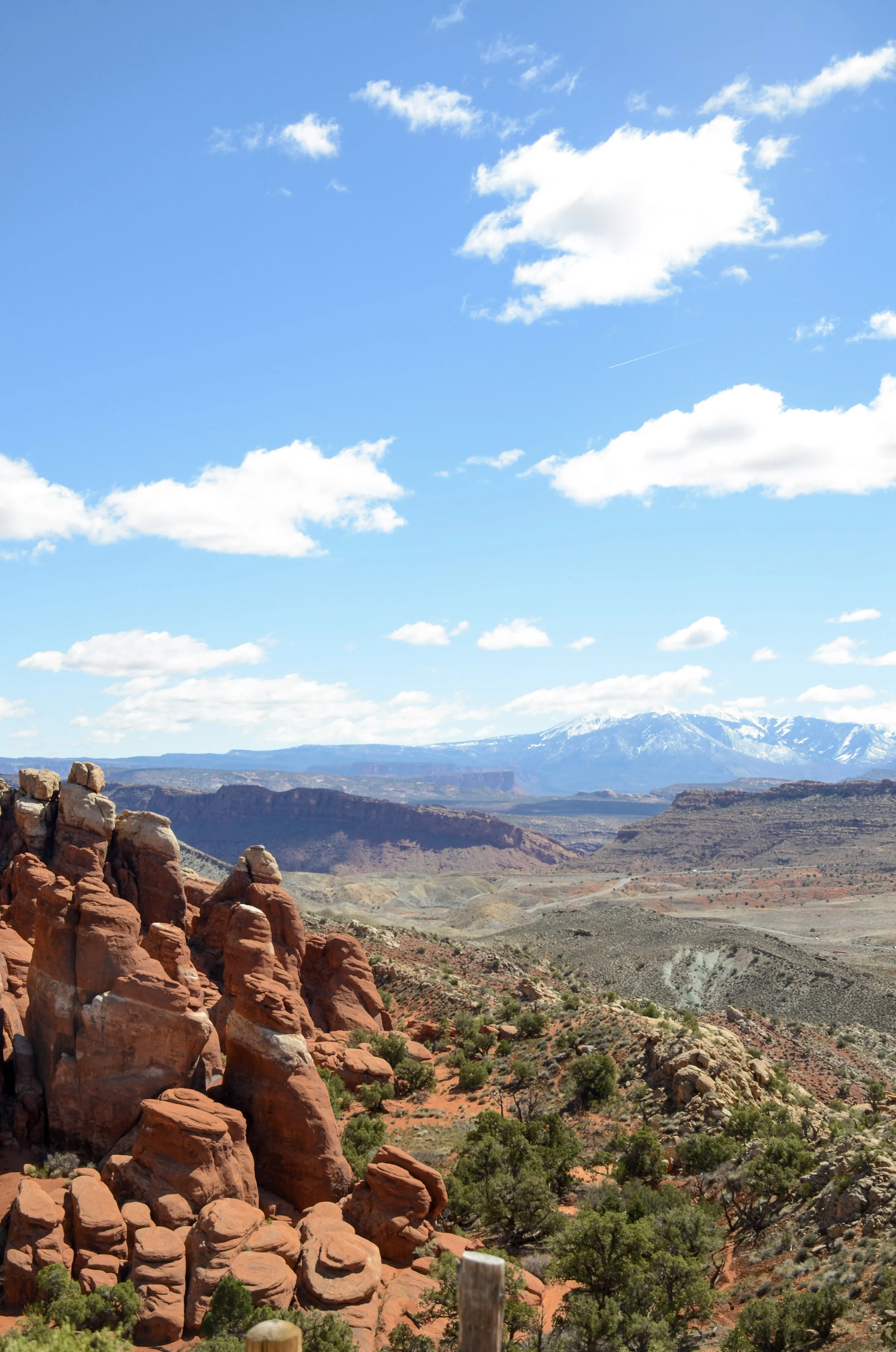
Arches National Park, Utah.
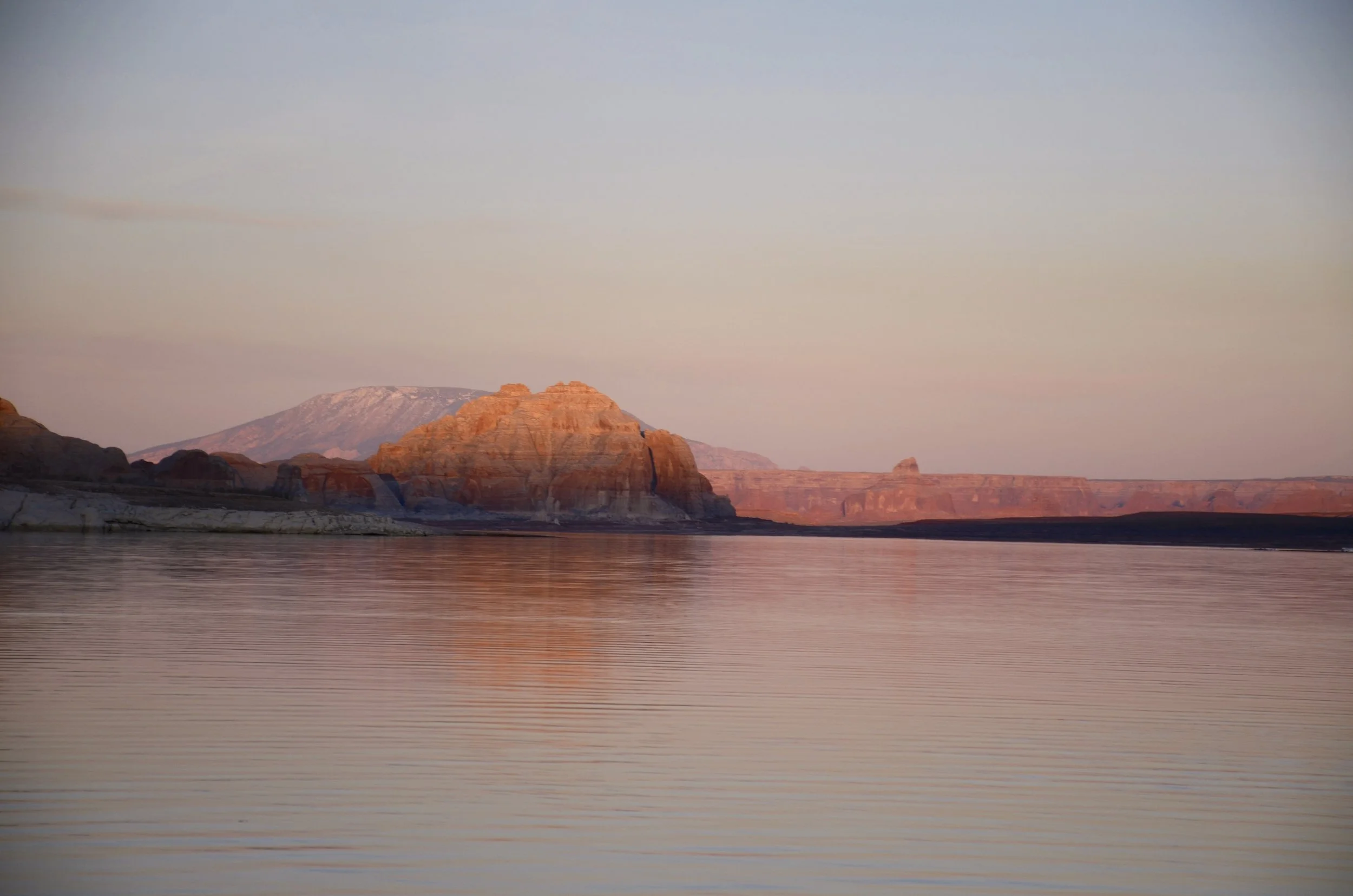
Lake Powell, Arizona.